Unlock your full potential by mastering the most common Volleyball Rules interview questions. This blog offers a deep dive into the critical topics, ensuring you’re not only prepared to answer but to excel. With these insights, you’ll approach your interview with clarity and confidence.
Questions Asked in Volleyball Rules Interview
Q 1. Explain the difference between a fault and a violation.
In volleyball, a fault and a violation are both infractions of the rules, but they differ in their impact on the rally. A fault directly loses the rally for the offending team. Think of it as a major mistake. A violation, on the other hand, is a less serious infraction that might not immediately lose the rally. It often results in a point being awarded to the opposing team or a replay of the serve, depending on the specific rule.
For example, hitting the ball out of bounds is a fault, immediately ending the rally. However, a foot fault (stepping over the serving line) is a violation, resulting in a replay of the serve, not an automatic point for the other team.
Q 2. Describe the procedures for a serving error.
A serving error procedure depends on the nature of the error. If the serving team commits a fault (e.g., hitting the ball into the net, hitting the ball out of bounds), the rally immediately ends and the opposing team gains a point. The receiving team then takes over the serve. If the serving team commits a violation (e.g., foot fault, incorrect serving order), the serve is replayed. No point is awarded, and the serving team attempts the serve again. In all cases, the referee will signal the infraction clearly, and the game will resume according to the described procedure.
Q 3. How is a rally scored?
Volleyball uses a rally scoring system. This means that a point is scored on every rally, regardless of which team served. The rally continues until one team commits a fault (losing the rally) or a violation that results in a point for the opposing team. The team that wins the rally earns a point and the serve. Imagine a back-and-forth exchange of hits—every exchange ends with either a point for one team or a replay. The continuous flow is what makes rally scoring so dynamic.
Q 4. What constitutes a ‘double contact’?
A double contact occurs when a player contacts the ball twice consecutively in a single action. This is different from a player contacting the ball twice in quick succession when the ball has already impacted other players. There are exceptions like blocking, which may include multiple contacts, or if the ball comes off the player’s block and is then re-contacted. The key is that it must be two distinct contacts as part of a single playing action that is deemed double contact. A typical example is a player attempting to set the ball and accidentally hitting it twice before it leaves their hands. This immediately results in a fault. The referee will easily spot it, and the point will shift to the opposing team.
Q 5. Explain the rules regarding substitutions.
Substitutions in volleyball allow teams to replace players on the court. A player can only be substituted during a dead ball, meaning the play has stopped – never during a live rally. Most leagues allow unlimited substitutions, although they are generally limited to designated substitution periods, for example between sets. Each substitution must be reported to the referee by the coach. Players entering the game must be recorded on the official score sheet. The coach needs to make a substitution request and follow the proper procedure, otherwise, it might be deemed illegal.
Q 6. How is a libero used in the game?
The libero is a specialized defensive player with unique rules. The libero wears a contrasting jersey color to help the referee identify them and is permitted to make back-row contacts only, such as receives or digs. They cannot serve, attack at the net, or block. The libero’s role is purely defensive, providing exceptional consistency. Think of them as a super-specialized defensive player. They can be substituted freely without being restricted by the substitution rules for the other players. Their substitution is unlimited and can be done in an instant.
Q 7. Define ‘net touch’ and its implications.
A net touch occurs when a player touches the net during a live play. Generally, a net touch is a fault if it interferes with the play. For instance, if a player’s hand clearly pushes the net, making the play impossible for the opposing team it results in a fault. If, however, the net touch is deemed incidental, meaning it doesn’t impede the other team’s play, it may not be called a fault. The referee’s judgment is critical here; it depends on if the action gave an unfair advantage to the player. This is a crucial moment in a game, and the referee’s expertise is vital in ensuring the fair play of the game.
Q 8. What are the rules regarding antennae contact?
Antennae contact in volleyball is a crucial aspect of determining whether a ball is in or out. Each net post has an antenna, and if the ball touches these antennae during play, it’s considered out. Think of the antennae as the very edge of the playing court extending vertically. Even a slight graze results in a point for the opposing team.
Example: Imagine a hard-driven spike that grazes the antenna on its way down. Regardless of whether the ball subsequently lands in bounds, the referee will immediately call it out because the antennae were touched.
Q 9. What happens if the ball hits the boundary line?
When the ball hits the boundary line, the rule is simple: it’s considered ‘in’. This is true for all lines: the sidelines, the end lines, and even the center line. The ball must go completely outside the lines to be considered ‘out’. It’s like a tennis match; if the ball touches the line, it’s a good shot.
Example: A perfectly placed serve lands precisely on the sideline. The referee will judge this as ‘in’ since the ball landed within the court’s boundaries.
Q 10. How is a point awarded in a game?
In volleyball, a point is awarded to the team that wins a rally. A rally is the sequence of play from the service until the point is decided. There is no side-out system in the most common scoring formats. The rally continues until a fault occurs; this could be an error in serving, a hitting fault on the receiving team, or a ball hitting the floor outside the boundaries of the court. The team that didn’t commit the fault wins the point.
Example: Team A serves, but Team B makes a successful dig and follows with a perfectly executed attack that lands on the opposing court. Team B wins the rally and earns a point.
Q 11. What constitutes a ‘carry’?
A ‘carry’ is a fault that occurs when a player lifts or throws the ball instead of cleanly hitting it. The ball appears to be supported or held by the player’s hand or arm. The ball must be contacted cleanly and without pausing.
Example: A player appears to cradle the ball for a split second in their hand after setting. This is a carry.
Another example: A player scoops the ball upward with their hand instead of performing a clear pass, this will also be called a carry.
Q 12. What are the rules related to the back row players?
Back-row players have specific restrictions on their attacking actions. They are not allowed to attack the ball from the front zone (the area closer to the net, typically the area inside the 3-meter line). They can participate in blocking but cannot take offensive actions from the front zone.
Example: A back-row player attempts to hit a powerful spike from directly in front of the net. This is considered a fault, as they violated the back-row attack rule.
Exception: Back-row players are allowed to attack the ball as long as they jump from behind the attack line.
Q 13. Explain the different types of faults during service.
Several faults can occur during the service. These include:
- Foot fault: The server steps over the service line before contacting the ball.
- Double contact/Double hit: The server makes a second contact with the ball before it hits another player.
- Illegal throw/lift: The ball is tossed or lifted instead of being contacted with a hitting motion.
- Net fault: The ball hits the net and fails to make it over into the court.
- Service into the net: The ball hits the net and falls short of crossing into the opponent’s court.
- Incorrect order of service rotation: Players don’t follow the designated rotation.
These faults result in a loss of the serve (and thus the point, depending on the scoring method used).
Q 14. How is a game won?
A volleyball game is won by the first team to reach a predetermined number of points, typically 25, with a two-point advantage. For example if the score is 25-23 the game is won. If the score reaches 24-24, a rally scoring format requires continuing until one team attains a two-point lead. Many leagues utilize a best-of-five-sets format (the first team to win three sets wins the match).
Q 15. What are the rules for a time-out?
Time-outs in volleyball provide a brief pause in play for teams to strategize or address player needs. Each team is allowed a limited number of time-outs per set, typically two. The duration of a time-out is usually 30 seconds. A time-out is called by the coach or a designated team representative by signaling the referee. The clock stops during a time-out. Once a time-out is called, the referee will signal it officially, and play resumes when the referee deems that the time-out period has concluded. Improper use, such as exceeding the allotted time, or requesting a time-out when it’s not permissible (e.g., during a rally), can result in penalties.
Example: Imagine a team is down by a significant score in the third set. The coach calls a time-out to regroup the players, change strategies, or provide encouragement before the next rally.
Career Expert Tips:
- Ace those interviews! Prepare effectively by reviewing the Top 50 Most Common Interview Questions on ResumeGemini.
- Navigate your job search with confidence! Explore a wide range of Career Tips on ResumeGemini. Learn about common challenges and recommendations to overcome them.
- Craft the perfect resume! Master the Art of Resume Writing with ResumeGemini’s guide. Showcase your unique qualifications and achievements effectively.
- Don’t miss out on holiday savings! Build your dream resume with ResumeGemini’s ATS optimized templates.
Q 16. Explain the procedures for a challenged call.
The challenge system allows coaches to contest referee calls, using video replay to verify their accuracy. Usually, each team has a limited number of challenges per match. To initiate a challenge, the coach must signal the referee within a specified time limit after the disputed call. The referee then reviews the play using available video footage. If the challenge is successful (meaning the call was incorrect), the original call is overturned. However, if the challenge is unsuccessful, the team loses one of its challenges. The referee’s decision on the challenge is final.
Example: A coach believes a ball landed out, and the referee called it in. If the coach hasn’t exhausted their challenges, they can initiate one. The video review might show the ball did, in fact, land out, reversing the call.
Q 17. Describe the process for awarding a match.
A volleyball match is awarded when one team wins a pre-determined number of sets. Typically, a match consists of best-of-five sets (first team to win three sets). A team wins a set by reaching a score of 25 points with a minimum two-point advantage over the opposing team. If the score reaches 24-24 (deuce), play continues until one team achieves a two-point advantage. The fifth set (if necessary) is played to 15 points with a two-point advantage. A team that has already won three sets does not need to play the fifth set.
Example: Team A wins the first two sets 25-23 and 25-20. Team B wins the third set 25-22. Team A then wins the fourth set 25-23, winning the match 3-1.
Q 18. What are the consequences of excessive delay?
Excessive delays in volleyball can result in penalties for the offending team. These delays might include taking too long to serve, substituting players, or responding to referee instructions. The severity of the penalty varies depending on the specific rule violation and the context of the delay. Penalties can range from a warning to a point being awarded to the opposing team. Repeated or egregious delays can result in harsher penalties.
Example: A team excessively delays its serve beyond the allowed time limit multiple times. The referee could warn the team, and if the delays continue, a point will be awarded to the opposing team.
Q 19. How is a player disqualified from a match?
A player can be disqualified from a match for serious misconduct, such as unsportsmanlike behavior, violent conduct, or repeated rule infractions. The referee has the authority to issue such a disqualification. A disqualified player is immediately removed from the game and cannot participate further in the match. Their team will have to continue playing short-handed. The seriousness of the offense dictates whether further disciplinary actions, like suspension from future matches, may also be taken.
Example: A player aggressively argues with the referee, uses offensive language towards the opposing team or audience, or physically assaults another player.
Q 20. What is the difference between a legal and illegal substitution?
A legal substitution involves replacing a player with a teammate during a stoppage in play, adhering to the rules regarding the number of substitutions allowed and the proper procedures communicated through the referee. An illegal substitution occurs when a team attempts a substitution outside the permitted times (e.g., during a rally) or violates the rules regarding the number of permitted substitutions. An illegal substitution can result in penalties for the offending team, such as a point being awarded to the opposing team.
Example: A legal substitution happens when a player is injured and needs to be replaced during a timeout. An illegal substitution occurs if a team tries to substitute a player mid-rally.
Q 21. Explain the rules regarding the use of video replays.
The use of video replays in volleyball is governed by specific rules and is often limited to challenges, as described above. In most professional leagues and higher levels of competition, the referee will use video replay primarily to resolve disputed calls during challenges made by coaches. The use of video replays for other purposes or on regular calls is usually not allowed. The video replay system is intended to ensure fair play and correct referee calls, not to serve as a tool for second-guessing all calls.
Example: During a close play at the net, a coach challenges a line call. The referee then reviews the play using the video replay to determine if the ball landed in or out of bounds.
Q 22. How is a score kept during a volleyball match?
Volleyball scoring is rally-based. This means a point is scored on every rally, regardless of which team served. The team that wins the rally gets a point and the right to serve. The score is displayed as Team A’s score – Team B’s score. For example, a score of 25-23 indicates Team A has 25 points and Team B has 23. In most leagues, matches are best-of-five sets, with sets usually played to 25 points, requiring a two-point advantage to win. The fifth set, if necessary, is typically played to 15 points, also requiring a two-point advantage.
Example: If Team A wins a rally, the score might go from 10-9 to 11-9. Team A now serves.
Q 23. What are the dimensions of a volleyball court?
The standard volleyball court is rectangular, measuring 18 meters long and 9 meters wide. This is consistently applied across international and most national competitions. The area surrounding the court, often referred to as the free zone, must extend a minimum of 3 meters in all directions beyond the court boundaries, allowing players space to move freely and execute plays. This free zone is crucial for safe gameplay and strategic maneuvering.
Visual: Imagine a rectangle. The longer sides are 18 meters, and the shorter sides are 9 meters. The minimum 3-meter free zone surrounds this rectangle.
Q 24. Explain the rules related to the height of the net.
The net height varies depending on the level of competition. For men’s international matches, the net height is 2.43 meters (approximately 8 feet). For women’s international matches, it’s 2.24 meters (approximately 7 feet 4 inches). These heights are strictly regulated to ensure fair play and prevent unfair advantages. Any deviation from these official heights can lead to penalties and potentially impact the outcome of a match. Consistency in net height is paramount for ensuring a level playing field for both teams.
Practical Application: Before any official match, referees always check the net height to guarantee it conforms to the established regulations.
Q 25. How is a rotation enforced?
Rotation in volleyball refers to the clockwise movement of players after a team wins a rally and gains the right to serve. After scoring a point, the entire team rotates one position clockwise. This ensures that each player gets an opportunity to play in each position over the course of the game. The player who served initially moves to the back right position, and the others shift accordingly. This keeps the game fair and prevents any one player from dominating specific areas of the court. Failing to follow the correct rotation results in a penalty.
Example: If player 1 serves and the team wins the rally, Player 1 goes to the back-right position. Player 2 moves to the serving position (back left), etc. The rotation is always clockwise.
Q 26. Describe the procedures for handling injuries during a game.
When an injury occurs, play is immediately stopped. The injured player is attended to by medical personnel, if available, or team staff. The referee will determine the appropriate course of action, which might involve a temporary stoppage of play for treatment or the substitution of the injured player. In serious cases, the match may be suspended until proper medical assistance arrives. The time allowed for injury treatment is at the discretion of the referee, balancing fairness with player safety. The injured player can be substituted. If the injury is so severe that a substitution cannot be made, the game may be forfeited or paused until further action is determined.
Important Note: The priority is always the safety and well-being of the injured player.
Q 27. What are the common hand signals used by officials?
Volleyball officials use various hand signals to communicate calls and decisions to players and spectators. Some common signals include:
- Fault: A raised open hand, often accompanied by pointing to the team that committed the fault.
- Point: A clear, firm signal, usually a pointing gesture towards the scoring team.
- Let: A downward motion of the hand, implying the ball barely touched the line and was a close call.
- Substitution: A circular motion of the hand, to signal a substitution is taking place.
These are just a few examples, and the specific signals can vary slightly depending on the level and governing body of the game. Consistency and clarity of signaling are crucial to smooth game flow.
Q 28. How would you handle a controversial call during a match?
Handling a controversial call requires calm, professional judgment and adherence to the established rules. First, I would review the situation carefully with my fellow officials to ensure we are all in agreement regarding the application of the rule in question. If we still have some discrepancies we would review any available video footage. If after this review we still have a discrepancy, we need to follow the protocol established by the governing body. In many cases, there will be an appeal process to address. If a discrepancy is so large it cannot be reasonably resolved then we must escalate to a higher authority. The key is to maintain fairness, transparency, and respect for all involved parties in this process.
Example: A close call on a net violation would be discussed with fellow officials and video replay might be reviewed before a final decision is made. If the issue is not resolvable this way, the appeals process would be initiated.
Key Topics to Learn for Volleyball Rules Interview
- Fundamental Gameplay: Understanding the basic rules of service, rally scoring, faults, and legal contacts. Practical application: Analyzing game scenarios and identifying rule infractions.
- Advanced Gameplay: Mastering rules regarding substitutions, timeouts, liberos, and antenna violations. Practical application: Officiating practice matches and providing accurate rulings.
- Scoring and Violations: Thorough knowledge of scoring systems, point allocation, and penalty procedures. Practical application: Keeping accurate score during matches and resolving scoring disputes.
- Net and Court Rules: Deep understanding of legal positions on the court, net contact regulations, and boundary infringements. Practical application: Identifying and correcting errors in player positioning during gameplay.
- Refereeing and Officiating: Understanding the role of referees, line judges, and other officials in maintaining fair play. Practical application: Applying rules accurately and consistently during matches.
- Specific Rule Interpretations: Ability to interpret complex rules and apply them to nuanced situations. Practical application: Problem-solving in challenging gameplay situations requiring critical rule analysis.
Next Steps
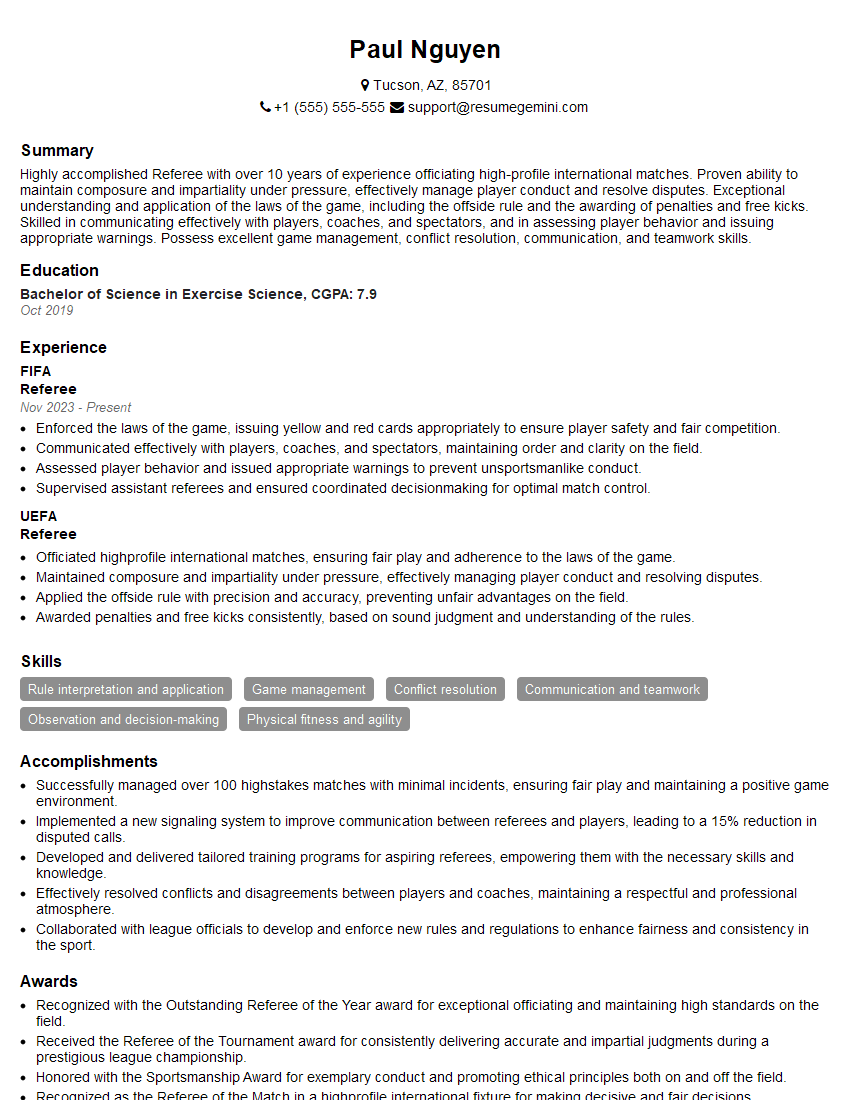
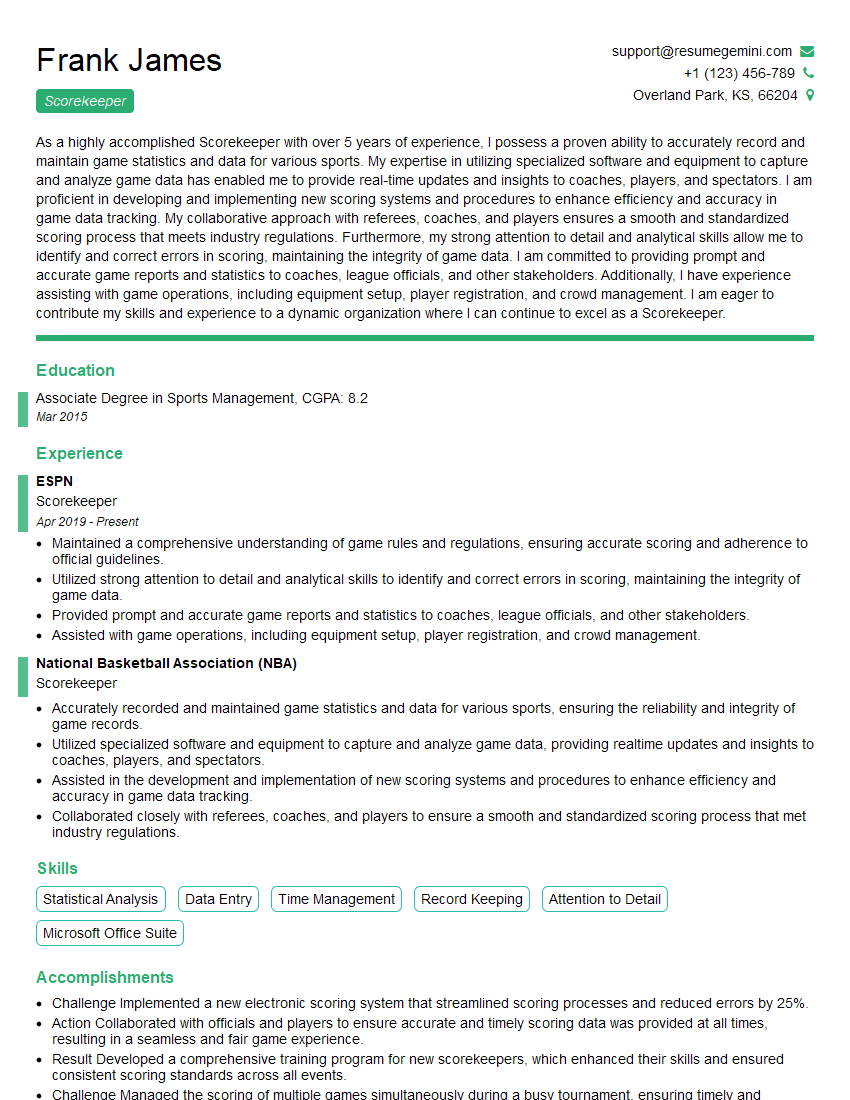
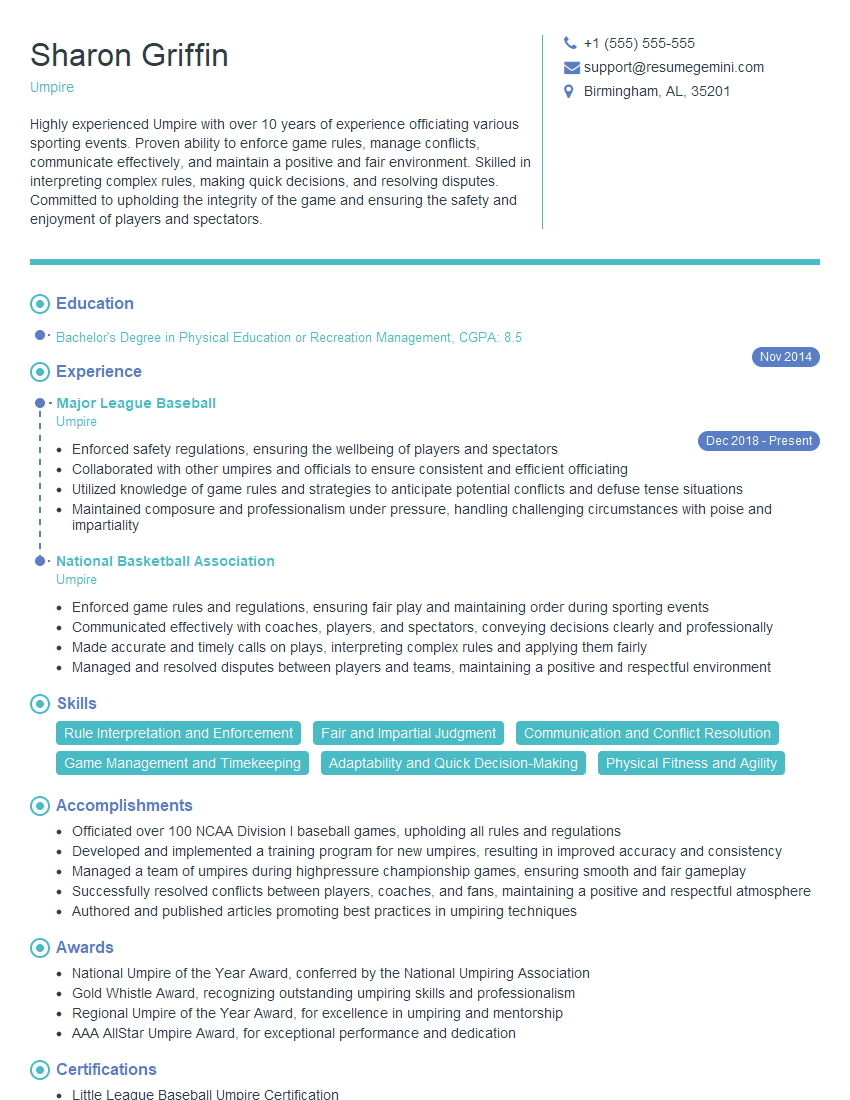
Mastering Volleyball Rules is crucial for career advancement in officiating, coaching, and sports administration. A strong understanding of these rules showcases your expertise and dedication to the sport. To significantly increase your job prospects, create an ATS-friendly resume that highlights your skills and experience effectively. ResumeGemini is a trusted resource that can help you build a professional and impactful resume tailored to the specific demands of your target roles. Examples of resumes tailored to Volleyball Rules expertise are available to help guide you.
Explore more articles
Users Rating of Our Blogs
Share Your Experience
We value your feedback! Please rate our content and share your thoughts (optional).
What Readers Say About Our Blog
Attention music lovers!
Wow, All the best Sax Summer music !!!
Spotify: https://open.spotify.com/artist/6ShcdIT7rPVVaFEpgZQbUk
Apple Music: https://music.apple.com/fr/artist/jimmy-sax-black/1530501936
YouTube: https://music.youtube.com/browse/VLOLAK5uy_noClmC7abM6YpZsnySxRqt3LoalPf88No
Other Platforms and Free Downloads : https://fanlink.tv/jimmysaxblack
on google : https://www.google.com/search?q=22+AND+22+AND+22
on ChatGPT : https://chat.openai.com?q=who20jlJimmy20Black20Sax20Producer
Get back into the groove with Jimmy sax Black
Best regards,
Jimmy sax Black
www.jimmysaxblack.com
Hi I am a troller at The aquatic interview center and I suddenly went so fast in Roblox and it was gone when I reset.
Hi,
Business owners spend hours every week worrying about their website—or avoiding it because it feels overwhelming.
We’d like to take that off your plate:
$69/month. Everything handled.
Our team will:
Design a custom website—or completely overhaul your current one
Take care of hosting as an option
Handle edits and improvements—up to 60 minutes of work included every month
No setup fees, no annual commitments. Just a site that makes a strong first impression.
Find out if it’s right for you:
https://websolutionsgenius.com/awardwinningwebsites
Hello,
we currently offer a complimentary backlink and URL indexing test for search engine optimization professionals.
You can get complimentary indexing credits to test how link discovery works in practice.
No credit card is required and there is no recurring fee.
You can find details here:
https://wikipedia-backlinks.com/indexing/
Regards
NICE RESPONSE TO Q & A
hi
The aim of this message is regarding an unclaimed deposit of a deceased nationale that bears the same name as you. You are not relate to him as there are millions of people answering the names across around the world. But i will use my position to influence the release of the deposit to you for our mutual benefit.
Respond for full details and how to claim the deposit. This is 100% risk free. Send hello to my email id: lukachachibaialuka@gmail.com
Luka Chachibaialuka
Hey interviewgemini.com, just wanted to follow up on my last email.
We just launched Call the Monster, an parenting app that lets you summon friendly ‘monsters’ kids actually listen to.
We’re also running a giveaway for everyone who downloads the app. Since it’s brand new, there aren’t many users yet, which means you’ve got a much better chance of winning some great prizes.
You can check it out here: https://bit.ly/callamonsterapp
Or follow us on Instagram: https://www.instagram.com/callamonsterapp
Thanks,
Ryan
CEO – Call the Monster App
Hey interviewgemini.com, I saw your website and love your approach.
I just want this to look like spam email, but want to share something important to you. We just launched Call the Monster, a parenting app that lets you summon friendly ‘monsters’ kids actually listen to.
Parents are loving it for calming chaos before bedtime. Thought you might want to try it: https://bit.ly/callamonsterapp or just follow our fun monster lore on Instagram: https://www.instagram.com/callamonsterapp
Thanks,
Ryan
CEO – Call A Monster APP
To the interviewgemini.com Owner.
Dear interviewgemini.com Webmaster!
Hi interviewgemini.com Webmaster!
Dear interviewgemini.com Webmaster!
excellent
Hello,
We found issues with your domain’s email setup that may be sending your messages to spam or blocking them completely. InboxShield Mini shows you how to fix it in minutes — no tech skills required.
Scan your domain now for details: https://inboxshield-mini.com/
— Adam @ InboxShield Mini
support@inboxshield-mini.com
Reply STOP to unsubscribe
Hi, are you owner of interviewgemini.com? What if I told you I could help you find extra time in your schedule, reconnect with leads you didn’t even realize you missed, and bring in more “I want to work with you” conversations, without increasing your ad spend or hiring a full-time employee?
All with a flexible, budget-friendly service that could easily pay for itself. Sounds good?
Would it be nice to jump on a quick 10-minute call so I can show you exactly how we make this work?
Best,
Hapei
Marketing Director
Hey, I know you’re the owner of interviewgemini.com. I’ll be quick.
Fundraising for your business is tough and time-consuming. We make it easier by guaranteeing two private investor meetings each month, for six months. No demos, no pitch events – just direct introductions to active investors matched to your startup.
If youR17;re raising, this could help you build real momentum. Want me to send more info?
Hi, I represent an SEO company that specialises in getting you AI citations and higher rankings on Google. I’d like to offer you a 100% free SEO audit for your website. Would you be interested?
Hi, I represent an SEO company that specialises in getting you AI citations and higher rankings on Google. I’d like to offer you a 100% free SEO audit for your website. Would you be interested?