The thought of an interview can be nerve-wracking, but the right preparation can make all the difference. Explore this comprehensive guide to Volume Estimation interview questions and gain the confidence you need to showcase your abilities and secure the role.
Questions Asked in Volume Estimation Interview
Q 1. Explain different methods for volume estimation.
Volume estimation methods vary depending on the shape and accessibility of the object or area being measured. Common techniques include geometric methods, numerical integration methods, and indirect methods utilizing relationships with other measurable parameters.
- Geometric Methods: These are suitable for regularly shaped objects. For example, calculating the volume of a rectangular prism is simply length x width x height. Spheres and cylinders also have straightforward formulas.
- Numerical Integration Methods: These are used for irregularly shaped objects where geometric formulas don’t apply. Techniques like the trapezoidal rule, Simpson’s rule, and more sophisticated methods like Monte Carlo integration can approximate the volume based on sampled data points.
- Indirect Methods: These methods infer volume from other measurements. For instance, the volume of a tree might be estimated using allometric equations relating trunk diameter to volume. Similarly, the volume of a mineral deposit might be estimated from drilling core samples and using geostatistical modeling.
The choice of method depends on the accuracy required, the available data, and the shape of the object.
Q 2. Describe the process of volume calculation using cross-sections.
Volume calculation using cross-sections is a powerful numerical integration technique particularly useful for irregularly shaped objects. Imagine slicing the object into numerous thin, parallel slices (cross-sections). We then determine the area of each cross-section. The volume is approximated by summing the volumes of these individual slices, which are essentially prisms with a known area and height (the thickness of the slice).
Process:
- Data Acquisition: Obtain data representing the cross-sectional areas at regular intervals along the length of the object. This data could be obtained from surveying, imaging, or direct measurements.
- Area Calculation: Calculate the area of each cross-section. This might involve using simple geometric formulas (circles, rectangles, etc.) or more complex methods for irregular shapes.
- Volume Approximation: Apply a numerical integration technique. The simplest is the trapezoidal rule:
Volume ≈ Δx * [ (A1/2) + A2 + A3 + ... + (An/2) ], where Δx is the distance between cross-sections, and Ai is the area of the i-th cross-section. More accurate methods like Simpson’s rule can also be employed. - Error Analysis: Assess the uncertainty in the volume estimate by considering the accuracy of the area measurements and the choice of integration method. Smaller slice thicknesses generally lead to more accurate results.
Example: Estimating the volume of a hill using topographic maps. We can use contour lines as cross-sections, measure their areas, and apply the trapezoidal rule to approximate the volume of the hill above a reference plane.
Q 3. How do you handle uncertainties in volume estimation?
Uncertainties in volume estimation are inherent due to limitations in data acquisition, measurement errors, and the inherent variability of the object or area. To handle these uncertainties, we use statistical and probabilistic methods.
- Error Propagation: Quantify uncertainties in individual measurements (e.g., lengths, areas) and propagate these errors through the volume calculation using techniques like standard error analysis. This gives a range within which the true volume is likely to fall.
- Monte Carlo Simulation: If uncertainties are complex or interdependent, we can simulate many possible scenarios with random variations in input parameters and obtain a distribution of possible volumes. This provides a robust assessment of uncertainty.
- Geostatistics: For spatially distributed volumes (e.g., ore bodies), geostatistical techniques like kriging can account for spatial autocorrelation and uncertainty in sampling.
- Sensitivity Analysis: Investigate the impact of uncertainties in individual input parameters on the final volume estimate. This helps identify parameters requiring more precise measurements.
Documenting and communicating these uncertainties is critical for transparent and responsible volume estimation.
Q 4. What are the limitations of different volume estimation techniques?
Each volume estimation technique has its limitations. Geometric methods are limited to regularly shaped objects. Numerical integration methods are only as accurate as the data used; sparse or noisy data can lead to significant errors. Indirect methods rely on the validity of the underlying relationships used to estimate volume, and these may not always be accurate.
- Geometric Methods: Assume perfect shapes, neglecting irregularities.
- Numerical Integration Methods: Accuracy depends on the density and quality of data; computational costs increase with higher accuracy.
- Indirect Methods: Accuracy depends on the validity of the empirical relationships used; these may vary depending on location or other factors.
Understanding these limitations is essential for choosing the appropriate method and interpreting the results accurately. For example, using a simple geometric formula to estimate the volume of a complex geological formation could lead to a gross oversimplification and significant errors. A thorough understanding of the limitations of each method will enable the selection of the most appropriate method for a given problem.
Q 5. Compare and contrast volumetric and planimetric methods.
Volumetric methods directly measure or estimate the three-dimensional volume of an object, while planimetric methods measure the two-dimensional area, often then multiplied by an assumed depth or height to estimate the volume.
- Volumetric Methods: These use techniques like cross-sectional analysis, 3D scanning, or direct measurement to determine the volume directly. They’re generally more accurate for complex shapes but can be more time-consuming and expensive.
- Planimetric Methods: These utilize maps, aerial photographs, or other 2D representations to measure the area. The volume is then estimated by multiplying this area by an average thickness or height. This is faster and less expensive but less accurate, particularly if the thickness or height varies significantly.
Comparison: Both methods aim to determine volume, but the approach differs fundamentally. Volumetric methods are more direct and generally more accurate, while planimetric methods are simpler but introduce greater uncertainty due to assumptions about depth or height.
Example: Estimating the volume of a gravel pit. A volumetric approach might involve surveying cross-sections and applying numerical integration. A planimetric approach would involve measuring the surface area of the pit on a map and estimating average depth based on boreholes to calculate volume. The volumetric approach will provide a more accurate estimate, especially if the pit has uneven depths.
Q 6. Explain the role of geological models in volume estimation.
Geological models are crucial in volume estimation, especially for subsurface resources like mineral deposits or hydrocarbon reservoirs. These models represent the three-dimensional distribution of geological units, providing the framework for volume calculations.
Role:
- Spatial Representation: Geological models provide a 3D representation of the resource, showing the geometry and spatial extent of different rock types or mineral zones.
- Property Assignment: Geologists assign physical properties to each geological unit (e.g., porosity, density, grade). This information is necessary for calculating the volume and resource quantity.
- Volume Calculation: The model’s geometry and assigned properties are used to calculate volumes. Sophisticated software can perform complex calculations based on the model’s digital representation.
- Uncertainty Assessment: Geological models inherently include uncertainty. The model accounts for this uncertainty by assigning probabilistic parameters and conducting simulations to provide a range of possible volumes.
In summary, geological models are essential for accurate and reliable volume estimation of subsurface resources by providing a 3D spatial framework, and incorporating geological expertise and uncertainty.
Q 7. How do you account for errors and uncertainties in your estimations?
Accounting for errors and uncertainties is critical for responsible volume estimation. This involves a multi-faceted approach that starts during data acquisition and continues through to reporting.
- Data Quality Control: Rigorous quality control procedures are implemented during data acquisition to minimize measurement errors. This might include repeated measurements, instrument calibration, and data validation checks.
- Error Propagation Analysis: Propagate uncertainties in individual measurements through the calculation using statistical methods. This allows for quantifying the uncertainty in the final volume estimate.
- Sensitivity Analysis: Identify input parameters that have the most significant influence on the final volume. Focusing on improving the accuracy of these high-impact parameters is a cost-effective way to reduce uncertainty.
- Validation and Verification: Whenever possible, independent validation of the estimates is performed. This might involve comparing results with independent measurements or using different estimation techniques.
- Transparent Reporting: The final report should clearly document all sources of error and uncertainty, providing a realistic assessment of the confidence in the volume estimates. This ensures transparency and enables informed decision-making.
By following these steps, we aim to provide not just a volume estimate, but also a clear understanding of its limitations and associated uncertainties.
Q 8. Describe your experience with various software for volume estimation.
My experience with volume estimation software spans a wide range of tools, from basic spreadsheet programs like Excel, which I use for simpler calculations and visualizations, to advanced geostatistical software packages such as ArcGIS, Leapfrog Geo, and Surpac. Each has its strengths. Excel is great for quick calculations and initial data analysis, but for complex geological models and large datasets, specialized software is crucial. ArcGIS offers powerful spatial analysis tools and visualization capabilities, allowing for detailed mapping and 3D model creation. Leapfrog Geo excels in handling complex geological structures, providing intuitive workflows for model building and volume calculations. Surpac is particularly strong in mine planning and design, offering advanced tools for resource estimation and scheduling. My proficiency extends to using these tools to import, process, and analyze diverse data types, including point clouds from LiDAR surveys, drill hole data, and cross-sections.
Q 9. How do you validate your volume estimations?
Validating volume estimations is critical to ensure accuracy and reliability. My validation process typically involves a multi-step approach. First, I perform internal checks, verifying the data input and the computational procedures used by the software. This often involves comparing results from different estimation methods (e.g., Inverse Distance Weighting vs. Kriging) to identify any discrepancies. Second, I compare estimated volumes with independent data sources, such as historical production records or previous surveys. For example, if I’m estimating the volume of ore in a mine, I’ll compare my estimation to the actual ore extracted over a certain period. Finally, I conduct uncertainty analysis to quantify the inherent variability in the estimation. This might involve calculating confidence intervals or performing sensitivity analysis to assess the impact of various factors on the overall uncertainty. A thorough validation process helps establish confidence in the results and highlights potential areas for improvement.
Q 10. Explain the importance of data quality in accurate volume estimation.
Data quality is paramount in accurate volume estimation. Think of it like baking a cake: if your ingredients are flawed, your cake will be flawed. Similarly, inaccurate or incomplete data will lead to inaccurate volume estimations. Issues like errors in coordinate measurements, incorrect sample assays, or inconsistent data formats can significantly impact the final results. For instance, a small error in the elevation of a drill hole sample can dramatically alter the calculated volume of a ore body. My approach involves rigorous data cleaning and validation steps, including checking for outliers, addressing missing data points, and ensuring data consistency across all datasets. I also use visualization techniques to identify spatial patterns and anomalies within the data that might indicate errors or inconsistencies. Only with high-quality data can we trust the results of our volume estimation.
Q 11. How do you deal with missing data in volume estimation?
Missing data is a common challenge in volume estimation projects. My strategies for handling missing data depend on the nature and extent of the missing information. If the missing data is relatively sparse and randomly distributed, I might use interpolation techniques such as Inverse Distance Weighting (IDW) or Kriging to estimate the missing values. IDW estimates the value of a missing point based on the weighted average of nearby known points, while Kriging uses statistical models to account for spatial autocorrelation. However, if the missing data is systematic or extensive, more sophisticated techniques might be necessary, including data augmentation or model-based imputation. In some cases, the best approach might be to flag the areas with missing data, acknowledging the limitations in the estimation in those specific areas and clearly communicating the uncertainty associated with the estimates.
Q 12. What are the key factors influencing the accuracy of volume estimation?
Several factors influence the accuracy of volume estimation. First, the quality and spatial distribution of the input data are crucial, as discussed earlier. The density and spacing of data points significantly impact the resolution and reliability of the estimation. Second, the chosen estimation method plays a vital role; the appropriateness of the method depends on the geological setting and the characteristics of the data. Third, the complexity of the geological model significantly affects accuracy. For example, estimating the volume of a simple, tabular ore body is less complex than estimating the volume of a highly faulted and folded ore body. Lastly, the inherent uncertainty in geological data, such as the variability in ore grade, also contributes to the inaccuracy of the estimations. A robust volume estimation process explicitly acknowledges and quantifies this uncertainty.
Q 13. Explain the concept of kriging in volume estimation.
Kriging is a geostatistical method that uses spatial autocorrelation to estimate the values at unsampled locations. It’s like predicting the height of a mountain range based on knowing the heights at a few points. Instead of simply averaging the values of nearby points (as in IDW), Kriging considers the spatial correlation between data points. It builds a model that describes the spatial variability of the data and uses this model to predict the values at unsampled locations. Kriging provides not only an estimate of the value but also a measure of the uncertainty associated with that estimate (the kriging variance). Different types of Kriging exist, such as ordinary Kriging and universal Kriging, each tailored to different types of spatial variability. Kriging is particularly useful in situations with spatially correlated data, like ore grade estimation in mining or soil property mapping.
Q 14. How do you select the appropriate estimation method for a given project?
Selecting the appropriate estimation method is a critical decision that depends on several factors. The choice should be guided by the specific characteristics of the project, including the data quality and distribution, the geological complexity of the deposit, and the desired level of accuracy. For instance, simple methods like IDW are suitable for relatively simple geological settings and datasets with uniformly distributed data points. Kriging is preferable for more complex geometries and spatially autocorrelated data. For highly complex geological models with significant structural features, advanced methods like stochastic simulation might be necessary. Before selecting a method, I carefully evaluate the data, analyze its spatial characteristics, and consider the project objectives. Sometimes, a combination of techniques might be the most effective strategy. The ultimate goal is to select the method that provides the most accurate and reliable volume estimation while acknowledging and quantifying the uncertainty involved.
Q 15. Describe your experience with different types of geological deposits.
My experience encompasses a wide range of geological deposits, including sedimentary, igneous, and metamorphic formations. In sedimentary deposits, I’ve worked extensively with clastic rocks like sandstones and conglomerates, crucial in oil and gas reservoirs, as well as carbonate rocks like limestones and dolomites, often significant for both hydrocarbon and mineral resources. Igneous deposits, such as porphyry copper deposits or kimberlites (diamond sources), require a different approach due to their complex intrusive nature. Finally, with metamorphic deposits, I’ve worked with various orebodies formed through regional or contact metamorphism. Each type demands a unique understanding of its geological history, structural controls, and alteration patterns, directly impacting the accuracy of volume estimations.
For example, in a sandstone reservoir, porosity and permeability are key parameters influencing hydrocarbon volume. Understanding the depositional environment (e.g., river, delta, marine) helps predict these properties spatially. In a porphyry copper deposit, the distribution of mineralization is controlled by hydrothermal alteration zones and the geometry of intrusive bodies, requiring detailed geological modeling.
Career Expert Tips:
- Ace those interviews! Prepare effectively by reviewing the Top 50 Most Common Interview Questions on ResumeGemini.
- Navigate your job search with confidence! Explore a wide range of Career Tips on ResumeGemini. Learn about common challenges and recommendations to overcome them.
- Craft the perfect resume! Master the Art of Resume Writing with ResumeGemini’s guide. Showcase your unique qualifications and achievements effectively.
- Don’t miss out on holiday savings! Build your dream resume with ResumeGemini’s ATS optimized templates.
Q 16. How do you incorporate geological variability in your estimations?
Geological variability is a central challenge in volume estimation. Ignoring this can lead to significant errors. We address this through geostatistical techniques. These methods allow us to model the spatial distribution of geological properties (grade, porosity, thickness) based on limited data points from drilling, sampling, or geophysical surveys. Kriging, for instance, is a powerful interpolation technique that considers the spatial correlation of data. We also use techniques like sequential Gaussian simulation to create multiple equiprobable realizations of the geological model, providing a range of possible volumes, rather than a single deterministic estimate. This probabilistic approach better represents the uncertainty inherent in geological systems.
Imagine trying to estimate the volume of a chocolate chip cookie based on only seeing a few chips. Geostatistics helps us ‘fill in the gaps’ while acknowledging our uncertainty about the chip distribution.
Q 17. Explain your understanding of reserve classification (e.g., proven, probable, possible).
Reserve classification is a critical aspect of resource evaluation, categorizing resources based on the level of geological certainty and economic feasibility. ‘Proven reserves’ represent the highest confidence category, with a high probability of extraction under current economic and operational conditions. This often involves demonstrable production data or high-quality data from closely spaced boreholes. ‘Probable reserves’ have a moderate degree of certainty, usually requiring more inference and interpretation. Finally, ‘Possible reserves’ are speculative, based on geological concepts and less reliable data; their extraction is uncertain.
Think of it like an investment: proven reserves are like cash in the bank, probable reserves are like a well-diversified stock portfolio, and possible reserves are like a high-risk venture.
Q 18. What are the common challenges you face in volume estimation projects?
Common challenges include data scarcity and quality, particularly in remote or unexplored areas. The cost and logistical difficulties of acquiring sufficient data often limit the accuracy of estimations. Another challenge is the inherent uncertainty associated with geological models; even with extensive data, interpreting the subsurface remains complex. Complex geological structures, such as faults and unconformities, can introduce significant uncertainty. Furthermore, the economic aspects, including commodity prices and operational costs, also influence the classification and valuation of resources.
For example, in a deep-sea mining project, accessing data is incredibly expensive and challenging, making accurate volume estimation difficult.
Q 19. How do you present your volume estimation results to stakeholders?
Presenting volume estimation results to stakeholders requires clarity, transparency, and effective communication. We typically use a combination of visual aids (maps, cross-sections, 3D models) and numerical summaries (tables, statistics). This provides a comprehensive view of the resource, including the estimated volumes, uncertainties, and associated risks. Critically, we emphasize the probabilistic nature of the estimates, presenting a range of potential outcomes rather than a single point estimate. We also explain the underlying assumptions, limitations, and methodologies used in the estimation process.
A simple analogy would be providing a house buyer with not just the square footage, but also a range of possible square footage based on uncertainties in measurements and a clear explanation of any unusual features.
Q 20. Describe your experience with volume estimation in [Specific Industry, e.g., mining, oil and gas].
My extensive experience in the mining industry focuses on various orebody types, including porphyry copper, gold deposits, and iron ore. In porphyry copper deposits, I’ve used geostatistical modeling to estimate ore tonnage and grade, integrating geological mapping, drillhole data, and geophysical surveys. This often involves complex 3D modeling of irregularly shaped orebodies. In gold deposits, the focus might be on vein modeling, requiring careful interpretation of structural geology and alteration patterns. For iron ore, the emphasis is on large-scale resource estimation, often using simpler techniques given the relatively uniform nature of the deposits. Each deposit type necessitates a tailored approach based on its specific geological characteristics and mining methods.
Q 21. How do you ensure the consistency and reliability of your estimations?
Consistency and reliability are paramount. We achieve this through rigorous quality control at each stage of the process, starting with data validation and verification. We utilize industry-standard software and follow established best practices. Independent audits and peer reviews are essential to ensure the robustness of our methods and results. Transparency in documentation and clear communication of uncertainties are key to building trust and confidence in our estimations. Finally, continuous improvement and learning from past projects are crucial for enhancing the reliability and accuracy of future estimations.
Imagine building a house – regular inspections and adherence to building codes ensure its structural integrity; similarly, rigorous processes ensure the reliability of our volume estimations.
Q 22. Explain your understanding of statistical methods used in volume estimation.
Statistical methods are crucial for robust volume estimation, allowing us to move beyond simple geometric calculations and account for the inherent uncertainty in geological data. Common methods include:
- Kriging: This geostatistical technique predicts values at unsampled locations, considering both the distance and the spatial correlation between data points. It’s ideal for creating continuous surfaces from scattered sample data, like ore grades in a mine.
- Inverse Distance Weighting (IDW): A simpler method that assigns weights to data points based on their distance from the prediction location. Closer points have higher weights. While easier to implement than kriging, it doesn’t explicitly model spatial autocorrelation.
- Indicator Kriging: Used when dealing with categorical data, like rock types. It predicts the probability of a particular category at unsampled locations.
- Monte Carlo Simulation: This probabilistic approach generates multiple possible realizations of the ore body based on the statistical distribution of the data, allowing for a range of volume estimates and associated uncertainty.
The choice of method depends on the data quality, spatial distribution, and the desired level of accuracy. For instance, kriging is preferred when spatial autocorrelation is significant, while IDW might suffice for preliminary estimations or when data is sparse.
Q 23. How do you incorporate spatial autocorrelation in your estimations?
Spatial autocorrelation, the tendency for nearby data points to be more similar than those farther apart, is a critical factor in accurate volume estimation. Ignoring it leads to biased and unreliable results. We incorporate spatial autocorrelation primarily through geostatistical methods like kriging. Kriging models the spatial correlation using a variogram, which plots the semivariance against the distance between data points. The variogram provides insights into the spatial structure of the data, allowing us to weight data points appropriately during estimation. For example, a variogram exhibiting strong spatial correlation at short distances would result in a kriging model that gives higher weights to nearby data points during interpolation, reflecting the observed spatial pattern. In practice, this means the resulting volume estimation will be more realistic and less prone to spurious fluctuations compared to methods that ignore spatial autocorrelation.
Q 24. Describe your experience with different types of volume estimation software (e.g., Leapfrog Geo, Surpac).
I have extensive experience with several volume estimation software packages, including Leapfrog Geo and Surpac. Leapfrog Geo excels in its intuitive 3D modeling capabilities and its ability to handle complex geological datasets. I’ve used it extensively for resource estimation projects, particularly where geological interpretation is crucial, leveraging its powerful visualization tools and its seamless integration with various geostatistical techniques. Surpac, on the other hand, is a powerful tool for mine planning and design, offering robust capabilities for volume calculations, grade control, and production scheduling. I’ve utilized Surpac for projects requiring precise volume measurements and efficient reporting, often integrating it with GIS data for detailed analysis. My experience spans the complete workflow, from data import and quality control to model building, estimation, and reporting in both platforms.
Q 25. How do you handle outliers in your data?
Outliers in volume estimation data can significantly skew results. My approach involves a multi-step process:
- Identification: I use visual inspection of histograms and scatter plots, as well as statistical methods such as box plots and Z-score calculations, to identify potential outliers.
- Investigation: Once identified, outliers are investigated. This might involve checking the original data source for errors, re-analyzing the sample location, or confirming the accuracy of the assay results. Sometimes, a seemingly outlying value might represent a genuine geological feature.
- Treatment: Depending on the investigation’s findings, outliers might be:
- Removed: If errors are confirmed.
- Transformed: Applying logarithmic or other transformations to reduce their influence.
- Retained: If deemed genuine geological variations, though their impact on the estimation is carefully considered and documented.
- Sensitivity Analysis: After addressing outliers, I perform sensitivity analyses to assess their impact on the final volume estimation, quantifying the uncertainty introduced by their presence or absence.
This ensures that the final volume estimate is robust and reflects the true uncertainty associated with the data.
Q 26. Explain the impact of scale on volume estimation.
Scale significantly impacts volume estimation. At a smaller scale, detailed geological features can be explicitly modeled, potentially leading to more accurate but also more localized volume estimates. However, this approach requires significantly more data and effort. At a larger scale, detailed features are smoothed out, resulting in simpler models and potentially less accurate but more generalized estimates. The level of detail required is dictated by the project’s purpose. For instance, detailed small-scale modeling is essential for mine planning and grade control, while a larger-scale estimation might suffice for initial resource assessment.
Choosing the appropriate scale involves careful consideration of data availability, the project’s objectives, and the acceptable level of uncertainty. This often involves a trade-off between accuracy and the effort involved in data acquisition and modeling.
Q 27. How do you ensure the quality control of your volume estimations?
Quality control is paramount. My approach involves:
- Data Validation: Thoroughly checking data for errors, inconsistencies, and outliers, using both automated checks and visual inspection.
- Model Validation: Comparing estimated values to independent data sets (if available) and performing cross-validation techniques to assess model reliability.
- Uncertainty Quantification: Estimating the uncertainty associated with the final volume estimation through methods such as Monte Carlo simulation and geostatistical error propagation.
- Peer Review: Seeking independent review of the methodology and results by experienced professionals.
- Documentation: Maintaining meticulous records of all data, methods, and results, ensuring transparency and traceability.
By implementing these measures, I can ensure that the volume estimation is reliable, accurate, and fit for its intended purpose.
Q 28. Describe a situation where you had to revise your initial volume estimation and explain why.
In one project involving a porphyry copper deposit, my initial volume estimation, based on a relatively simple geological model, significantly underestimated the ore body’s size. Further geological investigation, including additional drilling and re-interpretation of existing geophysical data, revealed a previously unrecognized fault zone that significantly altered the ore body’s geometry. This new information necessitated a revised geological model, which, when incorporated into the volume estimation process, resulted in a substantially higher volume estimate. The discrepancy highlighted the importance of iterative model refinement based on new data and the need for thorough geological understanding in resource estimation. The revised estimate, supported by the new data and refined model, provided a more realistic and reliable figure for planning future mine development.
Key Topics to Learn for Volume Estimation Interview
- Fundamental Geometric Shapes: Understanding volume calculations for cubes, spheres, cylinders, cones, and prisms is foundational. Practice applying formulas and visualizing these shapes in various contexts.
- Irregular Shapes and Approximation Techniques: Learn methods for estimating volumes of irregularly shaped objects, such as using water displacement or approximating with simpler geometric shapes. This demonstrates practical problem-solving skills.
- Dimensional Analysis and Unit Conversions: Mastering unit conversions (cubic meters to liters, cubic feet to gallons, etc.) is crucial for accurate calculations and clear communication of results.
- Volume Estimation in Different Fields: Explore applications in diverse fields like construction (material quantity estimation), logistics (shipping container capacity), manufacturing (production planning), and environmental science (water resource management). This showcases your adaptability and broad understanding.
- Error Analysis and Uncertainty: Understand how to assess the uncertainty in volume estimations due to measurement errors or approximation techniques. This highlights your attention to detail and analytical rigor.
- Advanced Techniques (Optional): Depending on the seniority of the role, you may wish to explore more advanced topics such as integral calculus for complex shapes or statistical methods for analyzing volume data.
Next Steps
Mastering volume estimation is a highly valuable skill, opening doors to diverse and rewarding career opportunities across various industries. A strong grasp of these concepts demonstrates your analytical abilities, problem-solving skills, and practical application of theoretical knowledge – all highly sought-after qualities by employers.
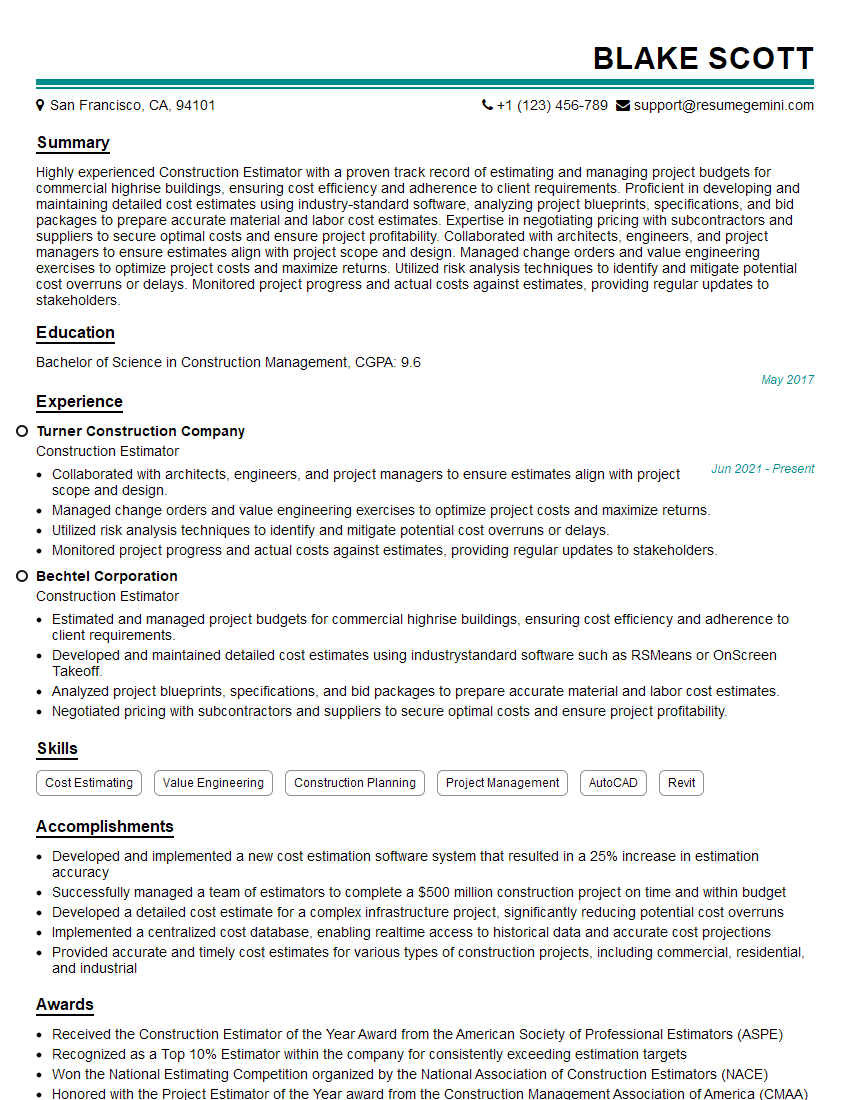
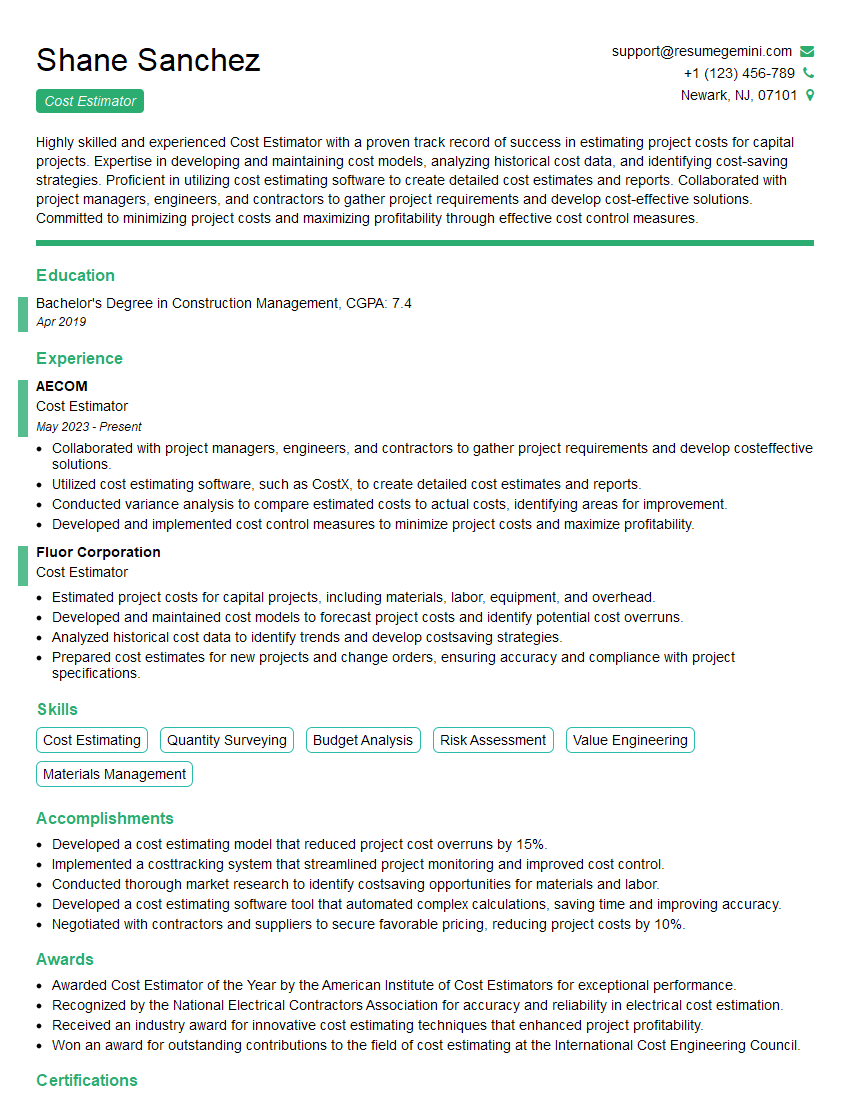
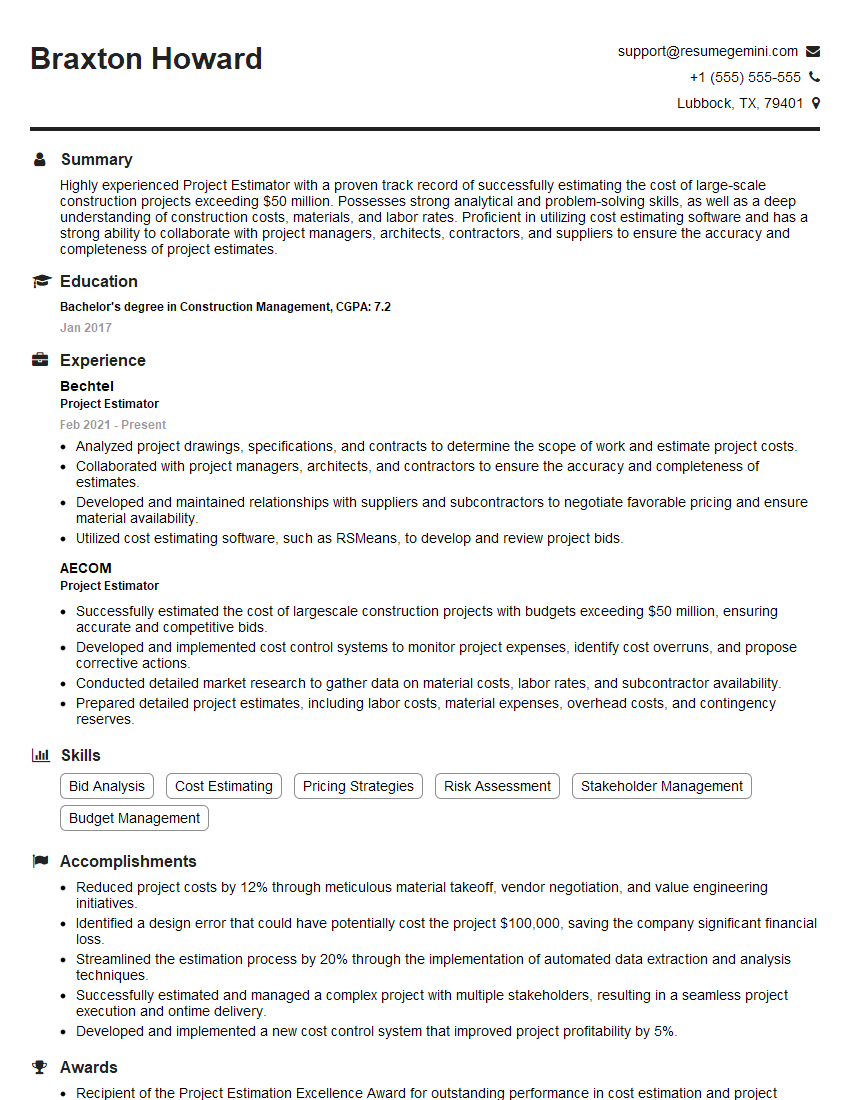
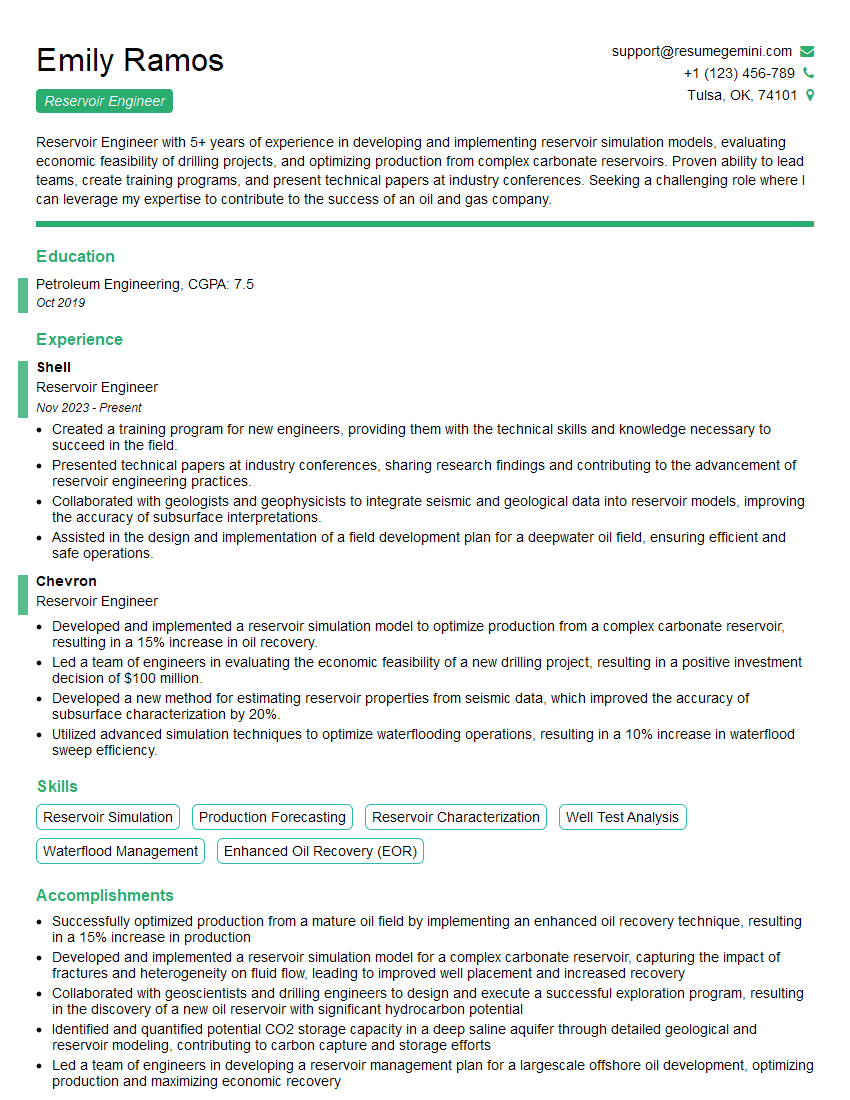
To significantly boost your job prospects, create an ATS-friendly resume that highlights your relevant skills and experience effectively. ResumeGemini is a trusted resource to help you build a professional and impactful resume that gets noticed. We provide examples of resumes tailored to Volume Estimation to help guide you through the process. Take the next step towards your dream career – build your best resume today!

Explore more articles
Users Rating of Our Blogs
Share Your Experience
We value your feedback! Please rate our content and share your thoughts (optional).
What Readers Say About Our Blog
Hello,
we currently offer a complimentary backlink and URL indexing test for search engine optimization professionals.
You can get complimentary indexing credits to test how link discovery works in practice.
No credit card is required and there is no recurring fee.
You can find details here:
https://wikipedia-backlinks.com/indexing/
Regards
NICE RESPONSE TO Q & A
hi
The aim of this message is regarding an unclaimed deposit of a deceased nationale that bears the same name as you. You are not relate to him as there are millions of people answering the names across around the world. But i will use my position to influence the release of the deposit to you for our mutual benefit.
Respond for full details and how to claim the deposit. This is 100% risk free. Send hello to my email id: [email protected]
Luka Chachibaialuka
Hey interviewgemini.com, just wanted to follow up on my last email.
We just launched Call the Monster, an parenting app that lets you summon friendly ‘monsters’ kids actually listen to.
We’re also running a giveaway for everyone who downloads the app. Since it’s brand new, there aren’t many users yet, which means you’ve got a much better chance of winning some great prizes.
You can check it out here: https://bit.ly/callamonsterapp
Or follow us on Instagram: https://www.instagram.com/callamonsterapp
Thanks,
Ryan
CEO – Call the Monster App
Hey interviewgemini.com, I saw your website and love your approach.
I just want this to look like spam email, but want to share something important to you. We just launched Call the Monster, a parenting app that lets you summon friendly ‘monsters’ kids actually listen to.
Parents are loving it for calming chaos before bedtime. Thought you might want to try it: https://bit.ly/callamonsterapp or just follow our fun monster lore on Instagram: https://www.instagram.com/callamonsterapp
Thanks,
Ryan
CEO – Call A Monster APP
To the interviewgemini.com Owner.
Dear interviewgemini.com Webmaster!
Hi interviewgemini.com Webmaster!
Dear interviewgemini.com Webmaster!
excellent
Hello,
We found issues with your domain’s email setup that may be sending your messages to spam or blocking them completely. InboxShield Mini shows you how to fix it in minutes — no tech skills required.
Scan your domain now for details: https://inboxshield-mini.com/
— Adam @ InboxShield Mini
Reply STOP to unsubscribe
Hi, are you owner of interviewgemini.com? What if I told you I could help you find extra time in your schedule, reconnect with leads you didn’t even realize you missed, and bring in more “I want to work with you” conversations, without increasing your ad spend or hiring a full-time employee?
All with a flexible, budget-friendly service that could easily pay for itself. Sounds good?
Would it be nice to jump on a quick 10-minute call so I can show you exactly how we make this work?
Best,
Hapei
Marketing Director
Hey, I know you’re the owner of interviewgemini.com. I’ll be quick.
Fundraising for your business is tough and time-consuming. We make it easier by guaranteeing two private investor meetings each month, for six months. No demos, no pitch events – just direct introductions to active investors matched to your startup.
If youR17;re raising, this could help you build real momentum. Want me to send more info?
Hi, I represent an SEO company that specialises in getting you AI citations and higher rankings on Google. I’d like to offer you a 100% free SEO audit for your website. Would you be interested?
Hi, I represent an SEO company that specialises in getting you AI citations and higher rankings on Google. I’d like to offer you a 100% free SEO audit for your website. Would you be interested?
good