The right preparation can turn an interview into an opportunity to showcase your expertise. This guide to Voyage Management and Cost Control interview questions is your ultimate resource, providing key insights and tips to help you ace your responses and stand out as a top candidate.
Questions Asked in Voyage Management and Cost Control Interview
Q 1. Explain the process of voyage planning from origin to destination.
Voyage planning is a meticulous process that begins with defining the origin and destination ports. It’s akin to meticulously planning a road trip, but on a much larger and more complex scale. We use specialized software and consider numerous factors.
- Route Planning: We identify the optimal route, considering factors like weather forecasts, potential canal transits (Suez, Panama), and piracy risks. We might choose a slightly longer route to avoid a known high-risk area, even if it means a small increase in fuel cost.
- Port Selection: We evaluate ports based on efficiency, cost (port dues, handling fees), and availability of berths. A seemingly small delay in one port can ripple through the entire schedule.
- ETA Calculation: We calculate the Estimated Time of Arrival (ETA) based on the selected route, anticipated vessel speed, and potential delays. This is crucial for timely delivery and minimizing demurrage (charges for late arrival).
- Documentation: We prepare all necessary documentation, including voyage orders, charter party agreements, and port clearances. These ensure smooth operations and compliance with regulations.
- Risk Assessment: We conduct a thorough risk assessment, identifying potential problems and developing contingency plans for things such as unforeseen weather changes or equipment malfunctions.
For example, during the Suez Canal blockage in 2021, we had to quickly re-route vessels, impacting ETAs and necessitating communication with clients and cargo stakeholders.
Q 2. How do you optimize vessel speed to balance fuel consumption and delivery time?
Optimizing vessel speed is a delicate balancing act between fuel efficiency and on-time delivery. Think of it like driving – you can get there faster by speeding, but you’ll burn more fuel and potentially damage your vehicle. We use sophisticated software and data analysis techniques.
- Speed Optimization Software: We employ software that takes into account factors like weather, sea conditions, and fuel prices to calculate the optimal speed for each leg of the voyage. These tools model fuel consumption at different speeds, considering hull friction and wave resistance.
- Fuel Price Analysis: We constantly monitor bunker prices at various ports and adjust our voyage plans if significant price variations offer potential savings.
- Weather Routing: This involves adjusting the vessel’s speed and course in response to weather conditions to minimize fuel consumption and risk. For instance, slowing down in a heavy storm may reduce fuel waste and prevent potential damage.
- Data Analysis: We analyze historical voyage data to identify patterns and trends. This helps in refining our speed optimization strategies and predicting potential delays.
For example, during periods of high fuel prices, we might opt for a slightly slower speed, accepting a marginal increase in delivery time to save a significant amount on fuel costs.
Q 3. Describe your experience with different chartering strategies (e.g., time charter, voyage charter).
My experience encompasses various chartering strategies, each with its own advantages and disadvantages. Choosing the right strategy depends on market conditions, cargo availability, and the length of the contract.
- Time Charter: In a time charter, we lease a vessel for a fixed period (e.g., six months, one year). The charterer pays a daily rate, and the owner covers operational expenses (except crew). This offers predictability and stability but lacks flexibility for sudden market changes. It’s like renting an apartment – you pay rent for a set period.
- Voyage Charter: In a voyage charter, the vessel is chartered for a single voyage, from origin to destination. The charterer pays a fixed freight rate for the entire trip. This is more flexible but requires careful negotiation of the contract terms and potential market price fluctuations. It’s like hiring a taxi – you pay for a specific journey.
- Bareboat Charter: In a bareboat charter, we lease a vessel without crew. This provides maximum control, but the charterer takes on all responsibility for operation and maintenance, requiring significant expertise. It is the equivalent of buying a car – you take full responsibility and ownership
I’ve successfully negotiated both time and voyage charters, leveraging market intelligence to secure favorable terms. In a recent voyage charter, we successfully secured a lower freight rate by strategically timing our contract negotiation during a period of lower market demand.
Q 4. What are the key cost components in a voyage and how do you control them?
Key cost components in a voyage include fuel, port charges, canal dues, agency fees, crew costs, and potential cargo-related expenses. Effective cost control requires a multi-faceted approach.
- Fuel Cost Control: This is the largest expense. We optimize speed, route planning, and bunker procurement to minimize fuel consumption and leverage market trends for fuel price benefits. The use of efficient software and analytical tools are also critical.
- Port Charges: We minimize port charges by selecting cost-effective ports and negotiating favorable terms with port authorities.
- Canal Dues: We thoroughly evaluate the cost of canal transit against potential savings in fuel or time and select the most economical option.
- Agency Fees: We select reputable but cost-effective agents in each port to streamline operations and reduce agency expenses.
- Crew Costs: We ensure that crew costs are managed within budget through appropriate contracts and efficient crew management.
- Cargo-Related Expenses: We work closely with cargo handlers to minimize loading and unloading time and expenses, and also strive for efficient cargo planning and handling to avoid damages and additional costs.
For instance, by carefully negotiating port call durations, we were able to reduce waiting time and lower port charges significantly in a recent project.
Q 5. How do you handle unexpected events like port congestion or bad weather?
Handling unexpected events requires proactive planning, swift decision-making, and excellent communication.
- Port Congestion: If we encounter port congestion, we communicate proactively with the charterer and cargo interests. We explore alternative ports, adjust our ETA accordingly, and develop contingency plans, such as arranging for off-dock storage, where feasible.
- Bad Weather: We use weather routing software to navigate around severe weather, adjusting speed and course to ensure safety and minimize delays. We also communicate these changes to all stakeholders and prepare for potential delays and rerouting.
- Equipment Malfunction: We have contingency plans in place for equipment failures. This includes communication with the ship’s engineers, and if necessary, arranging for repairs at the nearest suitable port.
- Geopolitical Risks: We monitor global events that may affect our voyages. If a security issue arises, we will actively review the route and potentially reroute to minimize risks.
In one instance, we encountered unexpected port congestion due to a major storm. By proactively communicating with the charterer and exploring alternative ports, we mitigated the impact on the delivery schedule.
Q 6. Explain your experience with bunker management and fuel cost optimization.
Bunker management is crucial for fuel cost optimization. It involves strategic purchasing, efficient storage, and careful consumption monitoring.
- Bunker Procurement: We use market intelligence to identify favorable bunker prices and locations. This often involves analyzing historical fuel price trends, current market conditions, and forecasts.
- Bunker Storage: We carefully manage onboard bunker storage to minimize waste and ensure sufficient fuel for the entire voyage. Efficient storage methods help to prevent fuel contamination and extend fuel lifespan.
- Fuel Consumption Monitoring: We track fuel consumption in real-time and compare it to expected values, identifying any discrepancies and taking corrective action if necessary. This may involve reviewing engine performance or adjusting vessel speed.
- Bunker Contracts: We often utilize bunker contracts to lock in fuel prices in advance, hedging against price volatility. This involves assessing market conditions and weighing the advantages and risks of price guarantees.
For example, by carefully monitoring fuel markets and executing a strategic bunker purchase, we saved the company a substantial amount on a recent voyage.
Q 7. How do you monitor and analyze voyage performance against budgets?
Voyage performance monitoring involves comparing actual results against budgeted figures to identify areas of improvement and potential cost savings.
- Key Performance Indicators (KPIs): We monitor KPIs, such as fuel consumption per nautical mile, average speed, port call durations, and total voyage cost.
- Budget Variance Analysis: We analyze variances between actual and budgeted costs, identifying the root causes of any discrepancies. This could involve analyzing variations in weather, speed, port call durations or fuel price changes.
- Reporting and Dashboards: We use reporting tools and dashboards to visually track performance and identify potential issues in real-time. These dashboards may incorporate interactive charts to monitor key variables over time.
- Continuous Improvement: We continuously analyze voyage performance data to refine our strategies, improve efficiency, and reduce costs. This might include using machine learning techniques to predict future cost trends.
In one case, by analyzing voyage performance data, we identified inefficiencies in port operations which enabled us to negotiate more favorable terms with agents in the future, reducing costs consistently.
Q 8. Describe your experience with freight rate negotiation and contract management.
Freight rate negotiation and contract management are crucial for optimizing voyage costs. My approach involves a multi-stage process, starting with thorough market research to understand prevailing rates and identify potential opportunities. I leverage my extensive network of contacts within the shipping industry to gather intelligence on market trends and competitor pricing.
During negotiations, I utilize data-driven insights, including historical freight rates, fuel price forecasts, and port congestion information, to support my proposals. I prioritize building strong, long-term relationships with carriers, fostering collaboration and trust that ultimately leads to more favorable terms.
Contract management involves meticulous attention to detail. I ensure all contractual obligations are clearly defined, including payment terms, liability clauses, and service levels. I regularly review contracts to identify potential risks and opportunities for improvement and proactively manage disputes to minimize disruptions.
For instance, in one instance, by carefully analyzing historical data and projecting fuel surcharges, I negotiated a long-term contract with a carrier that resulted in a 15% reduction in our annual freight costs compared to the previous year’s spot market rates.
Q 9. How do you use technology (e.g., voyage optimization software) to improve efficiency?
Technology plays a vital role in enhancing voyage efficiency. I routinely employ voyage optimization software, which utilizes advanced algorithms and real-time data to analyze various factors such as weather patterns, fuel consumption, port schedules, and canal transit times. This allows for the identification of the most efficient routes, minimizing fuel expenditure and transit time.
These systems often provide insights into potential delays, enabling proactive mitigation strategies. For example, I’ve used software to reroute a vessel around an unexpected tropical storm, preventing significant delays and associated costs. Furthermore, these tools facilitate seamless communication and data sharing across different teams involved in the voyage, such as chartering, operations, and finance.
Example Data Point: A voyage optimization software might suggest a slightly longer route that avoids a high-traffic area, resulting in a net reduction in overall travel time due to less congestion.Q 10. Explain your understanding of Incoterms and their impact on cost allocation.
Incoterms (International Commercial Terms) are standardized trade terms that define responsibilities and costs between buyer and seller in international trade. They significantly impact cost allocation, determining which party bears the responsibility for freight, insurance, and other charges. Understanding these terms is paramount in managing costs effectively.
For example, under CIF (Cost, Insurance, and Freight), the seller is responsible for arranging shipment and paying freight and insurance up to the named port of destination. However, under FOB (Free on Board), the seller’s responsibility ends once the goods are loaded onto the vessel at the named port of shipment; the buyer then assumes responsibility for all subsequent costs.
Incorrectly interpreting Incoterms can lead to significant financial disputes. A clear understanding of which party is liable for which costs is crucial during contract negotiation and throughout the voyage to avoid unexpected expenses and potential conflicts.
Q 11. How do you manage risk associated with voyage delays and disruptions?
Managing voyage delays and disruptions necessitates a proactive approach incorporating risk assessment and mitigation strategies. I begin by identifying potential risks such as adverse weather conditions, port congestion, geopolitical instability, and equipment malfunctions.
To mitigate these risks, I employ several strategies. These include using weather routing software, engaging with multiple carriers to have alternative options available, securing cargo insurance to cover potential losses, and maintaining open communication with all relevant stakeholders to facilitate rapid response to unforeseen circumstances. Contingency planning, which outlines alternative solutions for anticipated disruptions, is also crucial.
For example, securing alternative transportation methods like rail or trucking in case of port congestion has proven invaluable. Furthermore, establishing strong communication channels with port authorities and other relevant parties helps us obtain timely updates and anticipate potential delays effectively.
Q 12. How do you ensure compliance with relevant regulations and standards?
Compliance with regulations is non-negotiable. I ensure adherence to various international and national regulations concerning maritime safety, environmental protection, and trade. This involves staying updated on the latest regulations from organizations such as the International Maritime Organization (IMO) and relevant national authorities.
My approach includes regularly reviewing our operational procedures to ensure they comply with the latest standards. We conduct thorough documentation of all aspects of voyages, including cargo manifests, crew certifications, and safety inspections. I also collaborate with legal experts and compliance officers to ensure that our practices remain compliant. Any deviations are addressed immediately to avoid penalties or legal repercussions.
Regular audits and internal checks provide an added layer of assurance in this regard.
Q 13. Describe your experience with performance reporting and KPI tracking.
Performance reporting and KPI (Key Performance Indicator) tracking are crucial for monitoring voyage efficiency and identifying areas for improvement. I utilize a range of KPIs, including on-time delivery rates, fuel consumption per nautical mile, vessel utilization, and cost per unit of cargo.
Data is collected from various sources such as voyage management systems, accounting software, and carrier reporting systems. This data is then analyzed to produce regular performance reports, highlighting areas of strength and weakness. These reports are used to identify trends, measure progress against targets, and inform decision-making related to future voyages and cost optimization.
For example, tracking fuel consumption per nautical mile allows us to identify inefficiencies and opportunities for fuel savings, potentially through improved vessel maintenance, route optimization, or even negotiating more favorable bunker fuel contracts.
Q 14. How do you identify and mitigate potential cost overruns during a voyage?
Identifying and mitigating potential cost overruns requires a multi-pronged approach, beginning with accurate budgeting and forecasting. This involves analyzing historical data, market trends, and anticipated challenges to create realistic cost projections. Regular monitoring of expenses against the budget is crucial.
Strategies for mitigation include negotiating favorable contracts with carriers and suppliers, implementing cost-saving measures such as optimizing fuel consumption, and ensuring efficient cargo handling. Contingency planning for unexpected events, such as equipment failures or delays, is also essential. Proactive communication and collaboration with all stakeholders is vital in identifying and addressing potential problems before they escalate into significant cost overruns.
For instance, by implementing a fuel-efficient sailing strategy and negotiating a fixed-price bunker fuel contract, I successfully avoided significant cost overruns during a period of volatile fuel prices.
Q 15. Explain your experience with different types of cargo and their handling requirements.
My experience encompasses handling a wide variety of cargo, each demanding specific handling procedures to ensure safety and prevent damage. This includes:
- Dry Bulk Cargo: Such as grains, coal, and ores. Handling requires careful consideration of cargo weight distribution to prevent shifting and potential vessel instability. We use trim calculations and specialized loading plans to optimize stability and minimize stress on the vessel’s structure. For example, segregating different grain types prevents spoilage and potential contamination.
- Liquid Bulk Cargo: Including crude oil, chemicals, and liquefied gases. The critical aspects here are ensuring proper tank cleaning between different cargo types to avoid cross-contamination and maintaining temperature control for sensitive products. Precise loading and unloading procedures, along with rigorous quality control checks, are paramount. For instance, incorrect temperature control in a liquefied gas shipment could lead to dangerous pressure build-up.
- Containerized Cargo: This is the most common type, encompassing everything from manufactured goods to perishable items. Efficient container handling is crucial, utilizing crane operations, yard management, and proper documentation to track and manage each container. Careful consideration is needed for the stowage plan to optimize weight distribution and to account for the fragility of certain goods.
- Breakbulk Cargo: This involves handling individual pieces of cargo, requiring specialized equipment and meticulous planning. It might include project cargo like heavy machinery, requiring secure lashing and specific handling techniques to prevent damage during transit. Thorough risk assessment and detailed securing procedures are essential here.
My experience involves not just theoretical knowledge but hands-on experience in coordinating these operations, ensuring adherence to international maritime regulations and the specific requirements of each cargo type.
Career Expert Tips:
- Ace those interviews! Prepare effectively by reviewing the Top 50 Most Common Interview Questions on ResumeGemini.
- Navigate your job search with confidence! Explore a wide range of Career Tips on ResumeGemini. Learn about common challenges and recommendations to overcome them.
- Craft the perfect resume! Master the Art of Resume Writing with ResumeGemini’s guide. Showcase your unique qualifications and achievements effectively.
- Don’t miss out on holiday savings! Build your dream resume with ResumeGemini’s ATS optimized templates.
Q 16. How do you collaborate with other departments (e.g., sales, operations) to ensure efficient voyage management?
Effective voyage management necessitates seamless collaboration across departments. I actively engage with:
- Sales: Early collaboration with the sales team ensures voyage planning aligns with customer requirements, including delivery deadlines, cargo specifications, and port preferences. This prevents potential conflicts or delays later in the process. I also provide realistic voyage estimates based on market conditions and operational capabilities.
- Operations: Close coordination with operations is vital for vessel scheduling, port calls, crew management, and cargo handling. Regular updates and feedback loops ensure smooth execution. For example, I’ll work with operations to optimize port stays based on real-time vessel arrival times and berth availability.
- Chartering: For chartered vessels, collaboration with chartering ensures the selected vessel meets the cargo requirements and voyage profile. Negotiating optimal charter rates and contract terms impacts the overall voyage cost.
This collaborative approach fosters a shared understanding of goals and challenges, facilitating proactive problem-solving and optimal voyage execution. Regular meetings, transparent communication channels, and shared documentation systems are key to this process. For instance, using a shared online platform allows all stakeholders to access the most up-to-date voyage information simultaneously.
Q 17. What are your strategies for improving communication and coordination within the team?
Improving team communication and coordination is paramount for efficient voyage management. My strategies include:
- Regular Team Meetings: Scheduled meetings provide a forum for updates, problem-solving, and collaborative decision-making. We utilize clear agendas and action items to ensure focused discussions.
- Transparent Communication Channels: Utilizing project management software, email, instant messaging, and phone calls allows for efficient and timely information exchange. Clear communication protocols and regular progress reports enhance transparency.
- Open Feedback Culture: Encouraging open feedback and suggestions creates a supportive environment where team members feel comfortable raising concerns and proposing improvements. We utilize anonymous feedback mechanisms to encourage honest input.
- Cross-Training: Cross-training helps team members understand each other’s roles and responsibilities, improving coordination and cooperation. It also allows for better flexibility in handling workload fluctuations.
By fostering a culture of collaboration and open communication, we build strong relationships and improve the overall efficiency of the team. For instance, adopting a standardized communication protocol avoids misunderstandings related to technical terms.
Q 18. How do you deal with conflicting priorities during voyage planning?
Conflicting priorities are inevitable in voyage planning. My approach involves a structured process:
- Prioritization Matrix: I use a prioritization matrix to evaluate competing priorities based on urgency and importance. This helps objectively assess which tasks need immediate attention.
- Resource Allocation: Once priorities are established, resources (personnel, time, budget) are allocated accordingly. This might involve reallocating tasks or seeking additional support.
- Trade-off Analysis: When necessary, trade-off analyses are conducted to evaluate the implications of each option. The chosen option is the one that minimizes the overall negative impact.
- Stakeholder Communication: Transparent communication with stakeholders is essential throughout the process. This keeps everyone informed about potential delays or compromises and builds consensus.
For example, if a quicker, less fuel-efficient route is requested by a client, I’d perform a trade-off analysis, weighing the cost of fuel against the value of meeting the faster delivery time. This might involve discussing alternatives with the client to reach a mutually beneficial solution.
Q 19. Describe your experience with forecasting fuel prices and their impact on voyage cost.
Forecasting fuel prices is critical for controlling voyage costs. My approach combines several methods:
- Market Analysis: I monitor global fuel markets, considering factors like oil production, geopolitical events, and seasonal demand. This provides a broad overview of price trends.
- Historical Data Analysis: Analyzing historical fuel price data reveals patterns and fluctuations. Statistical models can predict future prices with a certain degree of accuracy.
- Fuel Price Indices: Utilizing established fuel price indices (e.g., bunker indices) provides reliable benchmarks and forecasts. These indices reflect market trends and regional variations.
- Expert Opinions: Consulting with fuel market experts provides valuable insights and alternative perspectives.
These forecasts are incorporated into voyage cost estimations, allowing us to make informed decisions about routing and speed optimization. For instance, if fuel prices are predicted to rise sharply, we might consider adjusting the voyage plan to prioritize fuel efficiency. Conversely, if prices are expected to fall, we may choose a faster, less fuel-efficient route to prioritize speed.
Q 20. How do you use data analysis to identify areas for cost reduction?
Data analysis is instrumental in identifying areas for cost reduction. I employ several techniques:
- Voyage Performance Analysis: Analyzing historical voyage data, including fuel consumption, speed, port delays, and weather conditions, helps identify inefficiencies. This might highlight vessels consistently underperforming or routes with excessive delays.
- Cost Breakdown Analysis: Detailed cost breakdowns, categorized by fuel, port charges, canal dues, etc., pinpoint areas consuming the largest share of the budget. This allows focused efforts to reduce those costs.
- Route Optimization: Analyzing historical route data, incorporating weather forecasts and real-time traffic information, can identify more efficient routes that minimize distance and fuel consumption. This often involves using specialized voyage optimization software.
- Predictive Modeling: Predictive models can forecast future costs based on various factors. This enables proactive measures to mitigate potential cost overruns.
For instance, by analyzing port delay data, we may identify specific ports consistently causing delays, prompting us to investigate improvements in port operations or explore alternative ports. Likewise, analyzing fuel consumption across different vessels can identify outliers requiring maintenance or crew training.
Q 21. What are your skills in using voyage management software?
I possess extensive experience with various voyage management software applications, including:
- Voyage Planning Software: Proficient in using software packages that optimize voyage routes, considering factors like weather, fuel consumption, and port constraints. This allows me to create efficient and cost-effective voyage plans.
- Cargo Management Systems (CMS): Experienced in utilizing CMS to track cargo movement, manage documentation, and monitor container status throughout the voyage. This ensures accurate tracking and prevents potential delays.
- Fleet Management Systems: Skilled in using fleet management software to monitor vessel performance, track fuel consumption, and optimize vessel scheduling. This provides valuable data for cost control and operational efficiency.
- Electronic Logbook Systems: Familiar with electronic logbook systems that simplify record-keeping, improve data accuracy, and streamline compliance with international regulations.
My skills encompass not just using the software but also interpreting the data it generates, to make informed decisions, identify trends, and improve operational efficiency. I’m also proficient in configuring and customizing these systems to meet specific operational requirements. For example, I can configure reporting dashboards to monitor key performance indicators (KPIs) in real-time.
Q 22. How do you assess the financial feasibility of a voyage before it begins?
Assessing the financial feasibility of a voyage requires a thorough pre-voyage analysis. This involves estimating all anticipated costs and comparing them to projected revenue. Think of it like creating a detailed budget for a large project.
- Estimating Costs: This includes fuel consumption (based on historical data and anticipated weather conditions), port charges (varying by location and vessel size), canal dues (if applicable), crew wages, insurance premiums, maintenance and repairs, and agency fees. We also factor in potential unforeseen expenses, creating a contingency buffer – a safety net for unexpected events.
- Projecting Revenue: This depends on the freight rate agreed upon with the charterer, the volume of cargo carried, and any potential surcharges or bonuses. We use market analysis and historical data to predict the most likely freight rate for the specific trade route and time of year.
- Profitability Analysis: By subtracting the total estimated costs from the projected revenue, we determine the expected profit margin. We’ll typically run sensitivity analyses to see how profit changes if some cost factors (like fuel prices) increase or decrease. If the profit margin is acceptable relative to the risk involved, the voyage is deemed financially feasible.
For example, I once worked on a voyage where initial projections showed a slim profit margin. By negotiating a slightly higher freight rate and securing a more fuel-efficient route, we improved the profitability significantly. This highlights the importance of detailed planning and proactive negotiation.
Q 23. How do you handle disputes with charterers or other stakeholders?
Disputes with charterers or other stakeholders are unfortunately common in the shipping industry. My approach is to prioritize open communication and collaboration. A swift resolution is key to minimizing disruptions and financial losses.
- Clear Contractual Agreements: Preventing disputes starts with having clear, comprehensive contracts that address all aspects of the voyage, including responsibilities, liabilities, and dispute resolution mechanisms. Ambiguity is the enemy of a smooth transaction.
- Documentation and Evidence: Meticulous record-keeping is crucial. This includes maintaining detailed logs of communication, cargo handling procedures, and any incidents that occur during the voyage. Strong documentation serves as solid evidence in case of a dispute.
- Negotiation and Mediation: I always try to resolve disputes through direct negotiation with all parties involved. If this fails, mediation by a neutral third party is often effective in finding a mutually acceptable solution.
- Arbitration or Litigation: If all else fails, we resort to formal arbitration or litigation as stipulated in the contract. This is usually a last resort due to the time and cost involved.
In one instance, we had a dispute with a charterer over cargo damage. By presenting detailed documentation, including photos and surveyor reports, we were able to successfully negotiate a fair settlement without resorting to legal action. It’s all about proving your case effectively.
Q 24. Explain your experience with different types of vessels and their operational characteristics.
My experience encompasses various vessel types, each with unique operational characteristics and cost implications.
- Container Ships: These are highly efficient for transporting standardized cargo in large volumes. Operational characteristics include high cargo capacity, specialized handling equipment, and reliance on port infrastructure for efficient loading and unloading. Cost management focuses on optimizing container utilization, minimizing port dwell time, and efficient fuel consumption.
- Bulk Carriers: Designed for transporting dry bulk commodities like grain, ore, and coal, these vessels require different operational expertise for cargo loading and securing. Costs are heavily influenced by factors like cargo density, loading/unloading port infrastructure, and potential trim issues.
- Tankers: Used for transporting liquid cargo (crude oil, chemicals, etc.), these ships require specialized equipment and crew trained in handling hazardous materials. Operational costs depend significantly on the type of cargo, cleaning requirements, and compliance with stringent safety regulations.
- General Cargo Ships: Versatile vessels handling various non-containerized cargoes, these ships demand adaptable cargo securing techniques and loading procedures. Cost management centers around optimizing cargo mix for space utilization and minimizing handling times.
Understanding these nuances is vital for effective voyage planning and cost optimization. For instance, the choice of vessel type significantly impacts fuel efficiency, port charges, and the overall voyage cost.
Q 25. Describe your experience with cargo claims and how to mitigate risks.
Cargo claims are a significant risk in shipping. My approach to handling them involves proactive risk mitigation and efficient claim management.
- Prevention through Proper Documentation: Thorough inspection of cargo upon loading and unloading, accompanied by detailed documentation, including photos and condition reports, is paramount. This reduces the likelihood of disputes.
- Swift Response to Incidents: In case of cargo damage or loss, immediate investigation and reporting are crucial. This prevents the situation from worsening and provides essential evidence for any potential claim.
- Collaboration with Surveyors and Experts: Engaging independent surveyors to assess damage and prepare detailed reports is essential for a strong claim. They provide unbiased evidence which is invaluable.
- Negotiation and Settlement: I aim to resolve claims through negotiation with insurers and other parties involved. Legal action is only considered as a last resort.
I recall a case where a shipment of machinery sustained damage. By quickly involving a surveyor, we had a comprehensive report, allowing us to negotiate a fair settlement with the insurer, minimizing the financial impact on the client.
Q 26. How do you ensure the safety and security of the vessel and crew during a voyage?
Ensuring the safety and security of the vessel and crew is paramount. This involves adhering to international regulations and implementing robust safety management systems.
- Compliance with SOLAS and other regulations: Strict adherence to the Safety of Life at Sea (SOLAS) Convention and other relevant international regulations is non-negotiable. This includes regular inspections, maintenance, and crew training.
- Risk Assessment and Management: Proactive identification and mitigation of potential risks, including piracy, bad weather, and equipment failures, through voyage planning and contingency plans, are crucial.
- Crew Training and Competency: Well-trained and competent crew members are the first line of defense. Regular training drills and competency assessments are vital.
- Vessel Security: Implementing appropriate security measures, including access control, surveillance systems, and communication protocols, is vital for deterring and responding to threats.
- Communication and Reporting: Clear and regular communication between the crew, shore management, and relevant authorities is crucial for coordinating emergency responses.
For example, we implemented a new security protocol following a near-miss incident, enhancing crew awareness and response capabilities. Proactive safety measures save lives and reduce operational disruptions.
Q 27. Describe your experience with implementing and improving cost control procedures.
Implementing and improving cost control procedures requires a holistic approach involving continuous monitoring, analysis, and optimization.
- Budgeting and Forecasting: Developing accurate budgets based on historical data, market analysis, and voyage-specific factors is the foundation of cost control. Regularly reviewing and adjusting budgets based on actual performance is crucial.
- Fuel Efficiency: Fuel is a major expense. Implementing strategies like optimized speed management, hull cleaning, and regular engine maintenance can significantly reduce fuel consumption.
- Port Optimization: Minimizing port dwell time and choosing efficient ports can reduce port charges, agency fees, and other related expenses.
- Inventory Management: Efficient management of spare parts and supplies minimizes waste and reduces costs.
- Data Analysis and Reporting: Regularly analyzing operational data to identify areas for improvement and implementing corrective actions is crucial. This could involve using specialized voyage management software.
In a previous role, I implemented a new fuel management system that resulted in a significant reduction in fuel consumption, demonstrating the impact of well-designed cost-control measures. It wasn’t just about saving money, it was about enhancing our environmental footprint, too.
Key Topics to Learn for Voyage Management and Cost Control Interview
- Voyage Planning & Optimization: Understanding route planning, scheduling, and optimization techniques to minimize costs and transit times. Consider the impact of fuel consumption, port fees, and weather conditions.
- Cargo Handling & Management: Efficient cargo loading, unloading, and storage procedures. Analyze the impact of different handling methods on costs and potential damage.
- Fuel Management & Consumption: Strategies for fuel efficiency, including route optimization, speed management, and hull maintenance. Analyze fuel price fluctuations and their impact on budgets.
- Port & Terminal Operations: Knowledge of port charges, handling fees, and potential delays. Explore strategies for minimizing port dwell times and associated costs.
- Cost Accounting & Budgeting: Developing and managing budgets, tracking expenses, and analyzing variances. Understanding key performance indicators (KPIs) related to voyage costs.
- Risk Management & Mitigation: Identifying and assessing potential risks (e.g., weather, piracy, geopolitical events) and developing mitigation strategies to minimize financial impact.
- Contract Negotiation & Management: Understanding and negotiating contracts with charterers, suppliers, and other stakeholders. Analyzing contract terms and their financial implications.
- Data Analysis & Reporting: Utilizing data analysis techniques to identify cost-saving opportunities and to generate reports for management.
- Regulatory Compliance: Adherence to relevant international maritime regulations and safety standards. Understanding the financial implications of non-compliance.
Next Steps
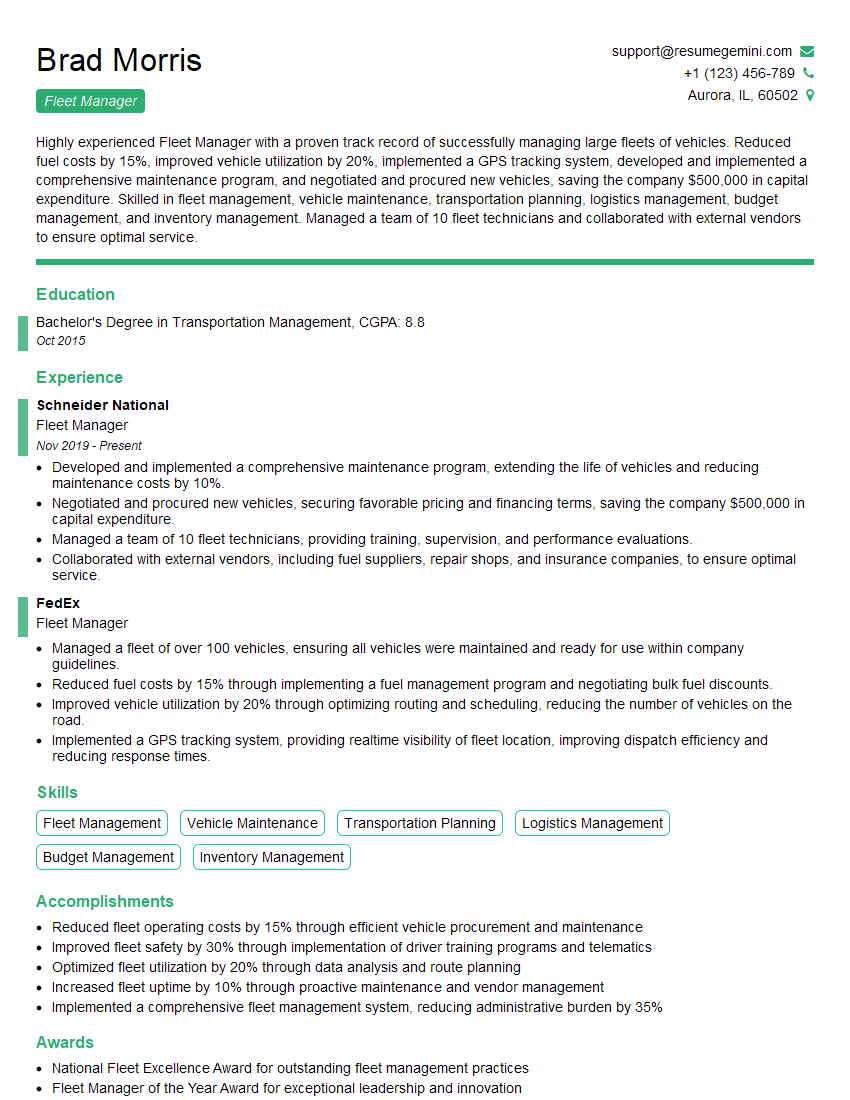
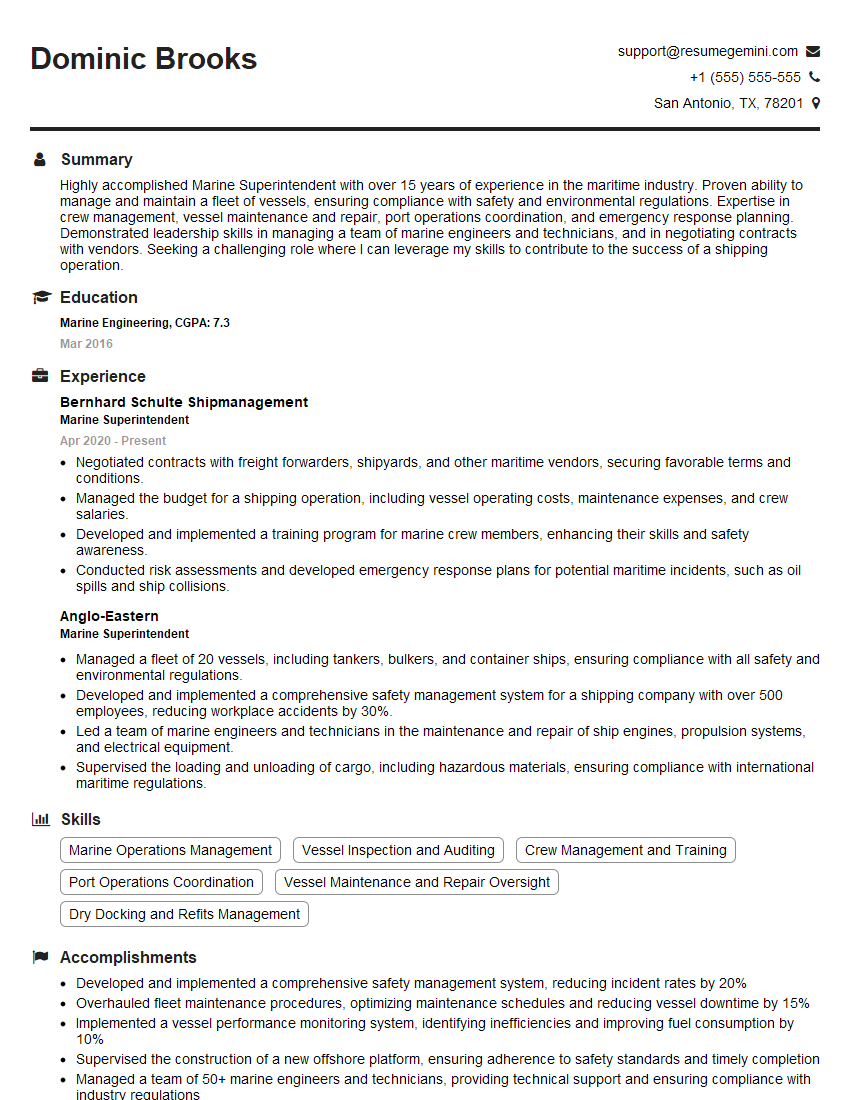
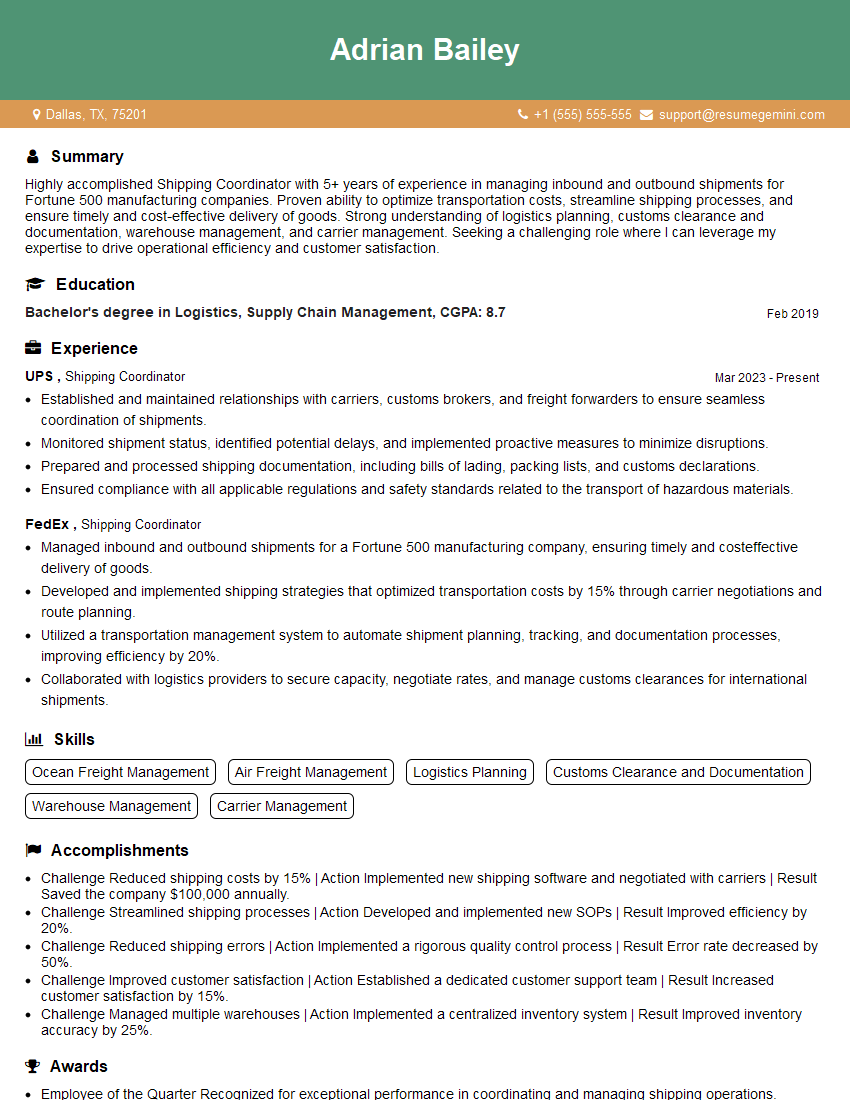
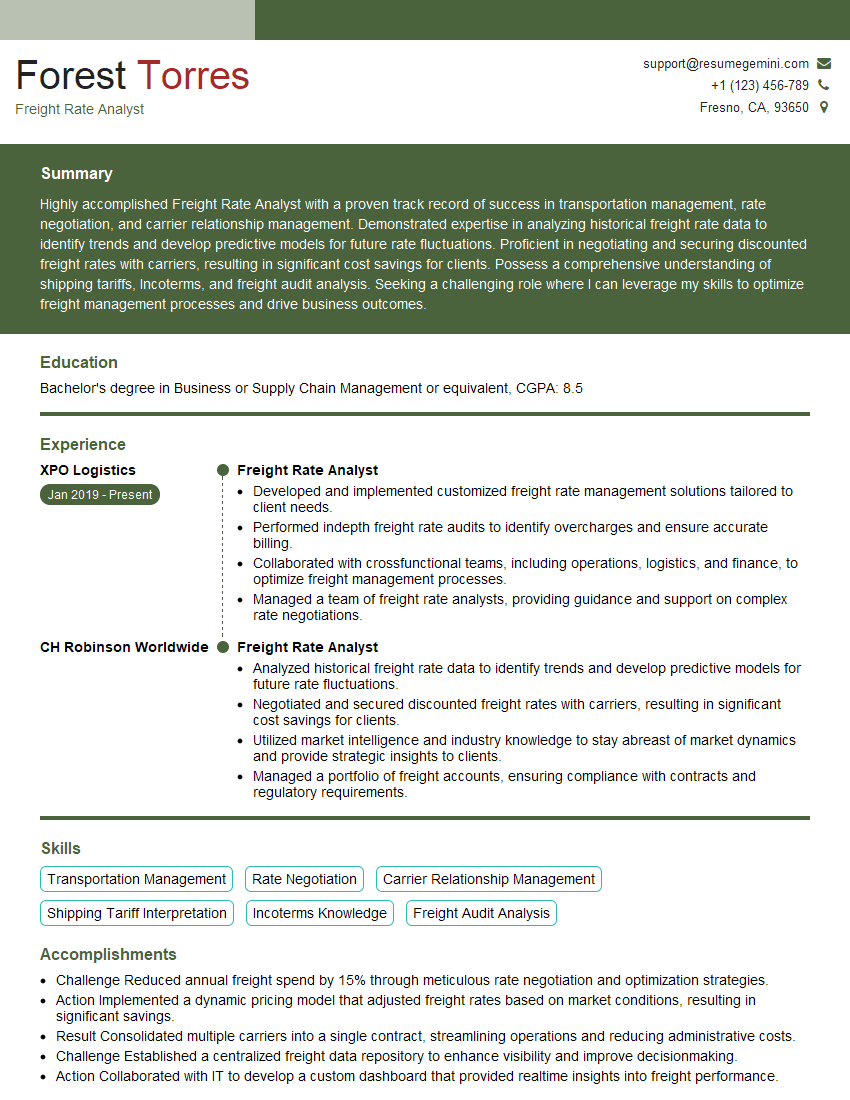
Mastering Voyage Management and Cost Control is crucial for career advancement in the maritime industry, opening doors to higher-level roles with increased responsibility and compensation. A well-crafted resume is your first step toward securing these opportunities. An ATS-friendly resume, optimized for Applicant Tracking Systems used by recruiters, significantly increases your chances of getting noticed. ResumeGemini is a trusted resource that can help you build a professional and impactful resume tailored to your specific skills and experience. Examples of resumes tailored to Voyage Management and Cost Control are available to guide you. Take the time to build a strong resume – it’s an investment in your future success.
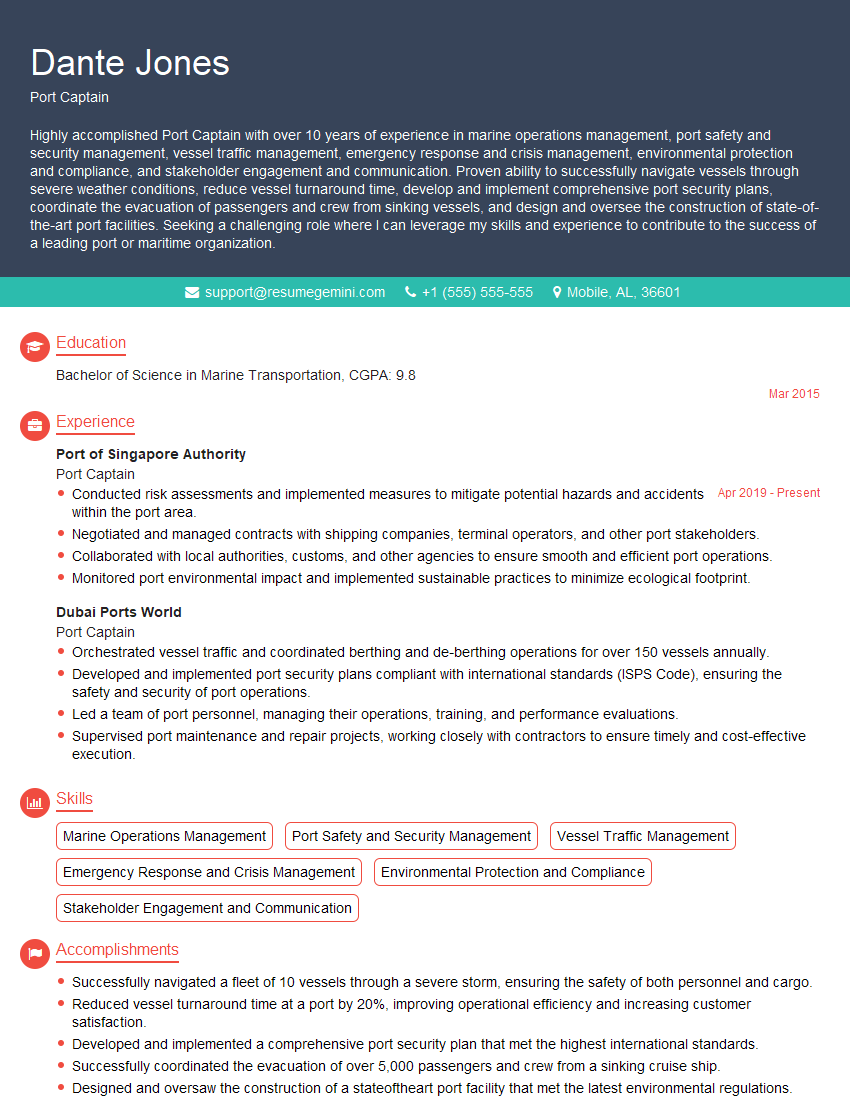
Explore more articles
Users Rating of Our Blogs
Share Your Experience
We value your feedback! Please rate our content and share your thoughts (optional).
What Readers Say About Our Blog
Attention music lovers!
Wow, All the best Sax Summer music !!!
Spotify: https://open.spotify.com/artist/6ShcdIT7rPVVaFEpgZQbUk
Apple Music: https://music.apple.com/fr/artist/jimmy-sax-black/1530501936
YouTube: https://music.youtube.com/browse/VLOLAK5uy_noClmC7abM6YpZsnySxRqt3LoalPf88No
Other Platforms and Free Downloads : https://fanlink.tv/jimmysaxblack
on google : https://www.google.com/search?q=22+AND+22+AND+22
on ChatGPT : https://chat.openai.com?q=who20jlJimmy20Black20Sax20Producer
Get back into the groove with Jimmy sax Black
Best regards,
Jimmy sax Black
www.jimmysaxblack.com
Hi I am a troller at The aquatic interview center and I suddenly went so fast in Roblox and it was gone when I reset.
Hi,
Business owners spend hours every week worrying about their website—or avoiding it because it feels overwhelming.
We’d like to take that off your plate:
$69/month. Everything handled.
Our team will:
Design a custom website—or completely overhaul your current one
Take care of hosting as an option
Handle edits and improvements—up to 60 minutes of work included every month
No setup fees, no annual commitments. Just a site that makes a strong first impression.
Find out if it’s right for you:
https://websolutionsgenius.com/awardwinningwebsites
Hello,
we currently offer a complimentary backlink and URL indexing test for search engine optimization professionals.
You can get complimentary indexing credits to test how link discovery works in practice.
No credit card is required and there is no recurring fee.
You can find details here:
https://wikipedia-backlinks.com/indexing/
Regards
NICE RESPONSE TO Q & A
hi
The aim of this message is regarding an unclaimed deposit of a deceased nationale that bears the same name as you. You are not relate to him as there are millions of people answering the names across around the world. But i will use my position to influence the release of the deposit to you for our mutual benefit.
Respond for full details and how to claim the deposit. This is 100% risk free. Send hello to my email id: lukachachibaialuka@gmail.com
Luka Chachibaialuka
Hey interviewgemini.com, just wanted to follow up on my last email.
We just launched Call the Monster, an parenting app that lets you summon friendly ‘monsters’ kids actually listen to.
We’re also running a giveaway for everyone who downloads the app. Since it’s brand new, there aren’t many users yet, which means you’ve got a much better chance of winning some great prizes.
You can check it out here: https://bit.ly/callamonsterapp
Or follow us on Instagram: https://www.instagram.com/callamonsterapp
Thanks,
Ryan
CEO – Call the Monster App
Hey interviewgemini.com, I saw your website and love your approach.
I just want this to look like spam email, but want to share something important to you. We just launched Call the Monster, a parenting app that lets you summon friendly ‘monsters’ kids actually listen to.
Parents are loving it for calming chaos before bedtime. Thought you might want to try it: https://bit.ly/callamonsterapp or just follow our fun monster lore on Instagram: https://www.instagram.com/callamonsterapp
Thanks,
Ryan
CEO – Call A Monster APP
To the interviewgemini.com Owner.
Dear interviewgemini.com Webmaster!
Hi interviewgemini.com Webmaster!
Dear interviewgemini.com Webmaster!
excellent
Hello,
We found issues with your domain’s email setup that may be sending your messages to spam or blocking them completely. InboxShield Mini shows you how to fix it in minutes — no tech skills required.
Scan your domain now for details: https://inboxshield-mini.com/
— Adam @ InboxShield Mini
support@inboxshield-mini.com
Reply STOP to unsubscribe
Hi, are you owner of interviewgemini.com? What if I told you I could help you find extra time in your schedule, reconnect with leads you didn’t even realize you missed, and bring in more “I want to work with you” conversations, without increasing your ad spend or hiring a full-time employee?
All with a flexible, budget-friendly service that could easily pay for itself. Sounds good?
Would it be nice to jump on a quick 10-minute call so I can show you exactly how we make this work?
Best,
Hapei
Marketing Director
Hey, I know you’re the owner of interviewgemini.com. I’ll be quick.
Fundraising for your business is tough and time-consuming. We make it easier by guaranteeing two private investor meetings each month, for six months. No demos, no pitch events – just direct introductions to active investors matched to your startup.
If youR17;re raising, this could help you build real momentum. Want me to send more info?
Hi, I represent an SEO company that specialises in getting you AI citations and higher rankings on Google. I’d like to offer you a 100% free SEO audit for your website. Would you be interested?
Hi, I represent an SEO company that specialises in getting you AI citations and higher rankings on Google. I’d like to offer you a 100% free SEO audit for your website. Would you be interested?