Unlock your full potential by mastering the most common Waste Management Teamwork interview questions. This blog offers a deep dive into the critical topics, ensuring you’re not only prepared to answer but to excel. With these insights, you’ll approach your interview with clarity and confidence.
Questions Asked in Waste Management Teamwork Interview
Q 1. Describe your experience collaborating with diverse teams in a waste management setting.
My experience working with diverse teams in waste management spans various roles, from supervising sanitation crews to managing recycling plant operations. I’ve consistently found that success hinges on understanding and appreciating individual strengths and perspectives. For example, in one project involving the implementation of a new composting facility, my team comprised engineers, community outreach specialists, and sanitation workers. Each member brought unique skills – the engineers handled the technical aspects, the outreach team ensured community buy-in, and the sanitation workers provided crucial on-the-ground insights into practical challenges. By fostering open communication and creating a safe space for everyone to contribute, we successfully launched the facility ahead of schedule and under budget.
Another example involved coordinating with a team that included individuals from different cultural backgrounds. To ensure effective communication, I implemented clear communication protocols, including regular multilingual briefings and the use of visual aids where necessary. This strategy not only streamlined operations but also boosted team morale by making everyone feel valued and included.
Q 2. Explain a time you had to resolve a conflict within your waste management team.
During the launch of a new waste sorting system, a conflict arose between the operations team and the data analytics team. The operations team felt the new system was overly complex and time-consuming, while the data analytics team emphasized its long-term efficiency benefits. To resolve this, I facilitated a structured meeting where each team presented their perspectives. I actively listened to their concerns, reframed their opposing viewpoints to highlight shared goals (improving overall waste management efficiency), and led a brainstorming session to identify practical solutions. This included adjusting the system’s training protocols and implementing a phased rollout instead of an immediate, full-scale deployment. The conflict transformed into a collaborative problem-solving session, resulting in a smoother transition and improved team cohesion.
Q 3. How do you ensure effective communication within a waste management team?
Effective communication in a waste management team is paramount for safety, efficiency, and morale. My approach is multifaceted. First, I establish clear communication channels – daily briefings, regular team meetings, and readily available communication platforms (e.g., dedicated group chat). Second, I emphasize clear and concise messaging, avoiding jargon and using visual aids where appropriate (especially when dealing with complex technical procedures). Third, I promote active listening and feedback. This includes conducting regular check-ins with individual team members to address any concerns or challenges. Finally, I regularly review and refine communication protocols based on feedback and changing project needs, ensuring the system is constantly adapted for optimal clarity and responsiveness.
Q 4. What strategies do you use to foster teamwork and collaboration in a high-pressure waste management environment?
High-pressure waste management environments demand strong teamwork. I employ several strategies: First, I foster a culture of mutual respect and trust through consistent positive reinforcement and recognition of achievements, no matter how small. Second, I encourage open communication and collaboration, including brainstorming sessions where everyone feels empowered to share ideas. Third, I prioritize team-building activities to create strong interpersonal bonds and improve collaboration outside of formal project settings. Examples include team lunches, informal gatherings and participation in community events related to waste management. Finally, I delegate responsibilities fairly, ensuring that everyone feels valued and capable. This strategy also reduces the workload on individual team members, mitigating stress and enhancing efficiency.
Q 5. Describe your approach to delegating tasks within a waste management team.
My approach to delegation centers on understanding individual team members’ skills and strengths. I carefully assess each task, considering the complexity, required expertise, and available time. I then assign tasks to individuals best equipped to handle them, ensuring that everyone has a fair workload aligned with their capabilities. For example, if a task requires specialized knowledge in hazardous waste handling, I would assign it to a team member with the relevant certifications and experience. This approach not only ensures efficiency but also empowers team members by showcasing trust in their abilities. I always provide clear instructions, set deadlines, and offer support throughout the process. Regular check-ins and feedback loops help maintain momentum and ensure tasks are completed to a high standard.
Q 6. How do you handle disagreements or conflicting priorities within your team?
Disagreements and conflicting priorities are inevitable in any team environment. My approach involves a structured conflict resolution process. First, I encourage open dialogue to understand each perspective. Second, I work to identify the root cause of the conflict and clarify the goals of each party. Third, I facilitate a collaborative brainstorming session to explore possible solutions that address everyone’s concerns. This involves actively listening, reframing negative statements into constructive suggestions, and ensuring that all viewpoints are considered. Fourth, we collaboratively agree on a plan of action with clear responsibilities and timelines. Throughout this process, I maintain a neutral and supportive role, acting as a facilitator rather than a judge.
Q 7. How do you motivate and inspire team members in a waste management context?
Motivating and inspiring a waste management team requires understanding their needs and celebrating their contributions. I regularly acknowledge and appreciate their hard work, both individually and as a team. I set clear, achievable goals and provide regular feedback to track progress. I focus on fostering a positive and supportive work environment where team members feel valued and respected. Publicly recognizing achievements – through team meetings, newsletters or small tokens of appreciation – is also essential. I also highlight the positive impact their work has on the community and the environment. Seeing the tangible benefits of their efforts is a significant motivator, reinforcing their sense of purpose and dedication.
Q 8. Explain your experience with team-based problem-solving in waste management operations.
Team-based problem-solving is crucial in waste management, where challenges often require diverse skill sets and perspectives. My experience involves consistently leveraging collaborative approaches to tackle issues ranging from optimizing waste collection routes to resolving equipment malfunctions and implementing new recycling programs. For example, when facing a significant increase in landfill waste, I led a team brainstorming session. We used a structured approach, starting with defining the problem, then generating solutions using techniques like brainstorming and SWOT analysis. We evaluated each solution based on feasibility, cost, and environmental impact before choosing the most effective solution, which in this case, involved a public awareness campaign combined with adjustments to collection routes. This multi-faceted approach, requiring collaboration between operations, marketing, and community relations, led to a noticeable reduction in landfill waste within six months.
Q 9. How do you assess the performance of your waste management team?
Assessing team performance involves a multi-pronged approach combining quantitative and qualitative metrics. Quantitative measures include things like: on-time performance (collection rates, processing times), waste diversion rates (recycling and composting success), safety incident rates, and adherence to budget. However, equally important are qualitative measures such as teamwork, problem-solving skills, communication effectiveness, and adherence to company values and safety protocols. I regularly conduct team meetings and individual check-ins to gather feedback, discuss challenges, and track progress. We utilize performance management systems that track key performance indicators (KPIs) and provide regular feedback. For example, we might track the number of successful recycling initiatives or the reduction in complaints from residents. These data points, combined with anecdotal evidence from observation and team feedback, offer a holistic view of team performance.
Q 10. Describe a time you successfully implemented a new process to improve team efficiency in waste management.
To improve efficiency in our waste sorting facility, we implemented a new process using color-coded bins and a revised sorting procedure. Previously, sorting was inefficient due to inconsistent labeling and a lack of clear instructions. The new system involved: 1) Introducing color-coded bins for different waste streams (e.g., blue for paper, green for glass, etc.), 2) Developing clear visual aids and step-by-step guides for each sorting station, and 3) Implementing a training program for all team members. The result was a significant increase in sorting accuracy and a substantial reduction in contamination. This led to higher recycling rates, reduced processing time, and a notable decrease in the amount of waste sent to landfills. The success of this implementation highlights the importance of clear communication, proper training, and a well-defined workflow in optimizing team efficiency within a waste management operation.
Q 11. How do you build trust and rapport within your waste management team?
Building trust and rapport is essential for effective teamwork. I focus on creating an environment of open communication, mutual respect, and shared goals. This involves: 1) Regularly acknowledging and appreciating individual and team contributions, 2) fostering open dialogue where team members feel comfortable sharing ideas and concerns, 3) actively listening to feedback and addressing concerns promptly, and 4) leading by example, demonstrating integrity and commitment to the team’s success. For instance, I regularly participate in team-building activities and social events to foster camaraderie outside of the work environment. This informal interaction can significantly improve relationships and build stronger working bonds, leading to improved team cohesion and performance.
Q 12. How do you manage workload distribution effectively within a waste management team?
Effective workload distribution requires careful consideration of individual skills, experience, and availability. I use a combination of techniques: 1) Regular task assignments based on each team member’s strengths and experience, 2) prioritizing tasks based on urgency and importance using techniques like a Kanban board, 3) actively monitoring workload and making adjustments as needed to prevent burnout and ensure fair distribution. For instance, using a project management tool can visually represent the tasks and who is assigned to them, allowing for easy monitoring of progress and potential bottlenecks. This ensures that tasks are distributed fairly and avoids overloading any one individual. Open communication channels allow team members to flag any workload issues proactively.
Q 13. How do you ensure your team adheres to safety regulations and procedures?
Safety is paramount in waste management. Ensuring adherence to regulations and procedures involves: 1) Regular safety training sessions covering relevant regulations and best practices, 2) providing appropriate personal protective equipment (PPE) and ensuring its proper use, 3) conducting regular safety inspections of equipment and work areas, 4) implementing a robust incident reporting system and investigating all accidents thoroughly to prevent recurrence. Furthermore, regular communication regarding safety protocols is crucial. We often use visual aids like posters and checklists to reinforce best practices. Creating a culture where safety is everyone’s responsibility – with consequences for unsafe behavior – is a crucial component of maintaining a secure work environment.
Q 14. Describe your experience with using technology to enhance teamwork in waste management.
Technology plays a significant role in enhancing teamwork in waste management. We utilize route optimization software to plan efficient collection routes, reducing fuel consumption and improving response times. GPS tracking systems on collection vehicles provide real-time location data, allowing for better coordination and monitoring of progress. Furthermore, mobile apps facilitate communication and data sharing within the team. We also use software for scheduling, reporting, and analyzing waste data, enabling informed decision-making and improvements to overall efficiency. For example, we’ve integrated a system where drivers can report issues and submit photos directly from their mobile devices, streamlining issue resolution. This enhanced communication and data availability have significantly increased the efficiency and safety of our operations.
Q 15. How do you handle situations where team members are not meeting expectations?
Addressing unmet expectations starts with open communication and clear performance standards. I believe in a proactive approach, not a reactive one. First, I ensure that individual roles and expectations are clearly defined and understood, documented, and regularly reviewed. If a team member isn’t meeting expectations, I initiate a private conversation, focusing on specific examples rather than generalizations. We collaboratively identify the root cause of the underperformance – is it a lack of training, insufficient resources, unclear instructions, personal issues, or something else? Together, we create a performance improvement plan (PIP) with measurable goals, timelines, and support mechanisms. Regular check-ins are crucial to monitor progress and provide ongoing guidance and support. If the situation doesn’t improve despite these interventions, more formal disciplinary actions may be necessary, always following company policy and procedures.
For example, if a team member consistently misses deadlines for sorting recyclable materials, I wouldn’t simply reprimand them. Instead, I’d discuss the issue, explore potential reasons (e.g., insufficient staff, malfunctioning equipment, unclear sorting guidelines), and work with them to devise solutions such as improved training, additional resources, or process optimization.
Career Expert Tips:
- Ace those interviews! Prepare effectively by reviewing the Top 50 Most Common Interview Questions on ResumeGemini.
- Navigate your job search with confidence! Explore a wide range of Career Tips on ResumeGemini. Learn about common challenges and recommendations to overcome them.
- Craft the perfect resume! Master the Art of Resume Writing with ResumeGemini’s guide. Showcase your unique qualifications and achievements effectively.
- Don’t miss out on holiday savings! Build your dream resume with ResumeGemini’s ATS optimized templates.
Q 16. What are your strategies for maintaining a positive and productive work environment within your team?
Maintaining a positive and productive work environment is paramount in waste management, where teamwork is critical for efficiency and safety. My strategies revolve around fostering open communication, mutual respect, and a shared sense of purpose. This includes regular team meetings, not just for task updates, but also for brainstorming sessions, problem-solving, and team-building activities. I encourage open dialogue, active listening, and constructive feedback. Recognizing and celebrating successes, both big and small, is important to boost morale. We also establish clear communication channels, ensuring everyone feels comfortable voicing concerns or suggestions without fear of retribution. Furthermore, prioritizing employee well-being through initiatives such as flexible work arrangements, safety training, and stress management resources, contributes significantly to a positive and productive atmosphere. A clean and organized workspace also makes a big difference.
For instance, we might have a monthly ‘Waste Warriors’ award to recognize exceptional contributions, or an informal team lunch to celebrate project completion. Another example is conducting regular safety briefings to ensure that everyone is aware of and adheres to safety protocols.
Q 17. Describe a time you successfully mentored or trained a new team member in waste management.
I recently mentored a new graduate in waste management. She possessed strong theoretical knowledge but lacked practical experience in waste sorting and handling. My approach involved a phased mentoring program. First, I provided shadowing opportunities, allowing her to observe experienced team members and learn by doing. Then, I assigned her increasingly challenging tasks, starting with simpler sorting tasks and gradually introducing her to more complex processes like waste characterization and data analysis. I provided regular feedback, offering both constructive criticism and positive reinforcement. We also conducted regular one-on-one sessions to discuss her progress, address any concerns, and clarify any doubts. Through this structured mentorship, she quickly developed proficiency in waste management practices and became a valuable team member. Her confidence grew, and she eventually took on a leadership role in training new recruits.
Q 18. How do you facilitate effective meetings and decision-making within your waste management team?
Effective meetings are crucial for efficient decision-making. I structure meetings with a clear agenda, distributed beforehand to allow team members to prepare. I encourage active participation from everyone, fostering a collaborative environment where all voices are heard. We utilize various decision-making techniques, depending on the complexity of the issue. For instance, we might use brainstorming for generating ideas, nominal group technique for prioritizing options, or cost-benefit analysis for evaluating alternatives. I ensure that meeting minutes are recorded, distributed, and reviewed to confirm everyone is on the same page. And, importantly, we focus on time management, sticking to the allotted time and focusing on achieving the meeting’s objectives.
For example, when facing a challenge in optimizing our recycling process, we held a brainstorming session where each member contributed ideas. We then used a voting system to prioritize the most promising solutions before analyzing their cost-effectiveness.
Q 19. How do you ensure that all team members understand their roles and responsibilities?
Clarity of roles and responsibilities is fundamental to a well-functioning team. At the outset, I ensure that each team member receives a detailed job description outlining their key tasks, responsibilities, and reporting lines. We hold introductory sessions to discuss these in detail, providing opportunities for questions and clarification. We also use visual tools such as organizational charts and process flow diagrams to illustrate how different roles interrelate. Regular performance reviews provide opportunities to discuss roles and responsibilities, allowing for adjustments based on changing team dynamics and project needs. Open communication and clear lines of reporting ensure that everyone understands who to contact for support, guidance, or escalation of issues.
Q 20. Describe your experience with conflict resolution strategies in a waste management team.
Conflict is inevitable in any team, but its management is key. My approach to conflict resolution is based on proactive communication and collaborative problem-solving. I encourage open dialogue where team members can express their perspectives respectfully. I act as a neutral facilitator, ensuring that all voices are heard and that emotions are managed constructively. We work together to identify the root cause of the conflict and explore mutually acceptable solutions. I use active listening, empathy, and mediation techniques to guide the process. In some cases, involving HR may be necessary for particularly complex or persistent conflicts, but I prefer to resolve issues internally whenever possible.
For example, if two team members disagreed on the best method for waste disposal at a particular site, I’d facilitate a discussion where they could articulate their points of view, present data to support their proposals, and explore compromises or alternative solutions. The goal is not to find a ‘winner’, but to find the best solution for the team.
Q 21. How do you address performance issues within your waste management team?
Addressing performance issues requires a fair, consistent, and supportive approach. I start by documenting observed performance issues with specific examples and evidence. Then, I schedule a private meeting with the team member to discuss the concerns in a constructive manner. The focus is on understanding the root causes of the performance issue – are there obstacles hindering their success, or is there a need for additional training or support? We collaboratively develop a performance improvement plan (PIP) with clear, measurable goals, timelines, and the necessary support. Regular check-ins are scheduled to track progress, provide feedback, and offer further assistance. If the situation doesn’t improve despite these interventions, further disciplinary actions may be necessary, always adhering to company policies and procedures.
Q 22. How do you maintain team morale and motivation during challenging situations?
Maintaining team morale and motivation, especially in the demanding environment of waste management, requires a multi-pronged approach. It’s not just about offering incentives; it’s about fostering a sense of shared purpose and appreciation.
Regular Recognition and Appreciation: Publicly acknowledging individual and team accomplishments, no matter how small, goes a long way. This could be a simple ‘thank you’ for going the extra mile, a team lunch, or a formal award ceremony for exceeding targets. For instance, I once awarded a ‘Cleanest Route’ award to a team that consistently exceeded recycling targets for their designated area.
Open Communication and Feedback: Creating a safe space for team members to share concerns and suggestions is crucial. Regular team meetings, both formal and informal, where everyone feels heard, are essential. I always encourage open dialogue, even when discussing challenging issues like hazardous waste handling procedures.
Shared Goals and Vision: Ensuring everyone understands the bigger picture and how their individual roles contribute to the overall success is vital. We regularly remind our team of how our work impacts the environment and community. Seeing the direct positive impact of their efforts significantly boosts motivation.
Empowerment and Development: Providing opportunities for professional growth through training, mentorship, or leadership roles can significantly boost morale. I’ve personally mentored several junior team members, fostering their skills and confidence. This not only benefits the individual but also the entire team.
Work-Life Balance: Recognizing that our employees have lives outside work is critical. Encouraging breaks, time off, and flexible work arrangements whenever possible creates a healthier and more motivated team.
Q 23. Describe your experience in leading and guiding a waste management team to achieve a specific goal.
In my previous role, my team faced the challenge of significantly reducing landfill waste within six months. We adopted a three-phase approach:
Phase 1: Assessment and Planning: We conducted a thorough audit of our current waste streams, identifying areas for improvement. This involved analyzing waste composition, tracking waste generation rates, and pinpointing inefficiencies. We created detailed, measurable goals, including specific reduction targets for different waste types.
Phase 2: Implementation and Training: We implemented new waste segregation and sorting procedures, introducing color-coded bins and clear labeling. We provided comprehensive training to all team members on the new procedures, emphasizing the importance of proper waste handling and safety protocols. We also incorporated feedback from the team during this stage, tweaking our approach to address any difficulties.
Phase 3: Monitoring and Improvement: We closely monitored our progress, tracking key performance indicators (KPIs) such as landfill diversion rates and recycling percentages. We held regular meetings to analyze the data, identify challenges, and make necessary adjustments. This iterative approach allowed us to continuously refine our strategies and exceed our initial goals, resulting in a 25% reduction in landfill waste within the six-month timeframe.
Q 24. How do you incorporate feedback to improve team performance and collaboration?
Incorporating feedback is crucial for continuous improvement. I employ a multi-faceted approach:
Regular Feedback Sessions: I conduct both one-on-one and group feedback sessions. One-on-ones allow for personalized feedback and address individual concerns, while group sessions facilitate open discussion and identify shared challenges.
360-degree Feedback: To gain a holistic perspective, we occasionally use 360-degree feedback, where team members provide feedback not only to their supervisor but also to their peers. This provides a well-rounded view of individual and team performance.
Performance Reviews: Formal performance reviews offer an opportunity to assess progress against set goals, identify areas for improvement, and provide constructive feedback. I emphasize a balance of constructive criticism and positive reinforcement.
Actionable Feedback: I ensure that feedback is not simply a one-way communication; it’s a dialogue. I actively listen to the feedback received, ask clarifying questions and work collaboratively with the team members to develop an action plan for improvement. Feedback without action is useless.
Q 25. How do you measure the success of your waste management team’s efforts?
Measuring the success of a waste management team involves evaluating several key performance indicators (KPIs):
Waste Diversion Rate: This measures the percentage of waste diverted from landfills through recycling, composting, and other alternative disposal methods. A higher rate signifies better waste management practices.
Recycling Rate: This specifically tracks the percentage of recyclable materials successfully recycled. It shows the team’s proficiency in separating and processing recyclable materials.
Landfill Waste Reduction: This KPI monitors the reduction in the amount of waste sent to landfills. It’s a key indicator of overall waste management effectiveness.
Compliance with Regulations: Adherence to all relevant environmental regulations and safety standards is paramount, and compliance rates are a crucial metric.
Cost Efficiency: We also assess cost efficiency by analyzing the cost per ton of waste managed. Lower costs indicate effective resource utilization.
Employee Safety: The number of accidents and injuries provides a measure of the team’s safety performance. A strong safety record is a crucial indicator of success.
By consistently monitoring these KPIs, we gain valuable insights into our team’s performance and identify areas for improvement.
Q 26. What are some of the challenges of teamwork in a waste management setting, and how have you addressed them?
Teamwork in waste management presents unique challenges:
Hazardous Materials Handling: Working with hazardous waste requires stringent safety protocols and specialized training. Maintaining a high level of awareness and ensuring adherence to safety regulations is paramount.
Physical Demands: The job is physically demanding, requiring long hours and strenuous tasks. Addressing physical strain and potential injuries is vital. We achieve this through proper training on lifting techniques and providing ergonomic equipment.
Varied Skill Levels: Teams often consist of individuals with varying skill levels and experience. Addressing this requires tailored training and mentorship programs. We regularly pair experienced team members with newer ones for on-the-job training.
Weather Conditions: Waste management operations often occur outdoors, exposing workers to harsh weather conditions. Providing appropriate protective gear and flexible scheduling is essential.
Addressing these challenges requires a proactive approach that combines robust safety protocols, ongoing training, open communication, and a strong emphasis on teamwork and mutual support.
Q 27. How do you adapt your team management style to meet the needs of different individuals and situations?
My management style is adaptable, influenced by situational leadership theory. I believe in tailoring my approach to suit individual needs and circumstances.
Supportive Leadership: With less experienced team members, I provide clear guidance and support, offering regular feedback and coaching. This ensures they feel confident and capable.
Delegative Leadership: For highly skilled and motivated individuals, I prefer a delegative approach, empowering them to take ownership of their tasks and make decisions independently. This fosters autonomy and strengthens their skills.
Transformational Leadership: In challenging situations, I adopt a transformational leadership style, inspiring and motivating the team through shared vision and strong communication. I focus on fostering a collaborative environment where team members feel valued and empowered.
Situational Awareness: I continuously assess the situation and individual needs, adjusting my approach as necessary. This could mean providing more support for a struggling team member or delegating more responsibility to a high-performing individual.
This adaptable approach ensures I can effectively lead and support my team in diverse situations.
Q 28. How do you ensure continuous improvement in your waste management team’s processes and performance?
Continuous improvement is crucial in waste management. We employ a structured approach:
Regular Process Reviews: We conduct periodic reviews of our waste management processes, analyzing efficiency, effectiveness, and safety. This involves examining our workflows, equipment utilization, and resource allocation.
Data Analysis: We collect and analyze data from various sources, including waste generation rates, recycling percentages, and employee feedback. This data-driven approach helps identify areas requiring improvement.
Benchmarking: We regularly benchmark our performance against other successful waste management operations, identifying best practices and opportunities for optimization.
Employee Input: We actively seek input from our team members, encouraging them to suggest improvements to processes, equipment, or safety procedures. Their on-the-ground experience is invaluable.
Training and Development: We invest in ongoing training and development for our team, ensuring they possess the latest knowledge and skills in waste management best practices. This fosters continuous improvement in their performance.
Technology Adoption: We embrace technological advancements to enhance efficiency and effectiveness. This includes exploring new sorting technologies, waste tracking systems, and data analytics tools.
By integrating these methods, we ensure our team is constantly striving to improve its processes and performance, ultimately maximizing efficiency and environmental impact.
Key Topics to Learn for Waste Management Teamwork Interview
- Collaborative Problem-Solving: Understanding how to effectively identify and solve complex waste management challenges within a team environment. This includes brainstorming solutions, prioritizing tasks, and assigning roles efficiently.
- Communication & Coordination: Mastering clear and concise communication within a team, ensuring everyone is informed and on the same page regarding project goals, timelines, and potential roadblocks. Practical application includes experience with daily operational meetings, shift handovers, and emergency response coordination.
- Conflict Resolution & Negotiation: Developing skills in navigating disagreements and finding mutually beneficial solutions amongst team members with diverse perspectives. This could involve addressing safety concerns, resolving equipment conflicts, or managing differing opinions on operational procedures.
- Safety Protocols & Procedures: Demonstrating a thorough understanding and commitment to safety regulations and best practices within the waste management industry, and ensuring team adherence. This involves understanding and promoting safe work practices, hazard identification, and emergency response planning.
- Efficiency & Optimization: Exploring strategies to improve the efficiency of waste management operations through teamwork. This includes optimizing routes, improving waste segregation processes, and implementing innovative solutions for waste reduction and recycling.
- Data Analysis & Reporting: Understanding how to collect, analyze, and interpret data related to team performance and waste management outcomes. This is crucial for continuous improvement and effective reporting to management.
Next Steps
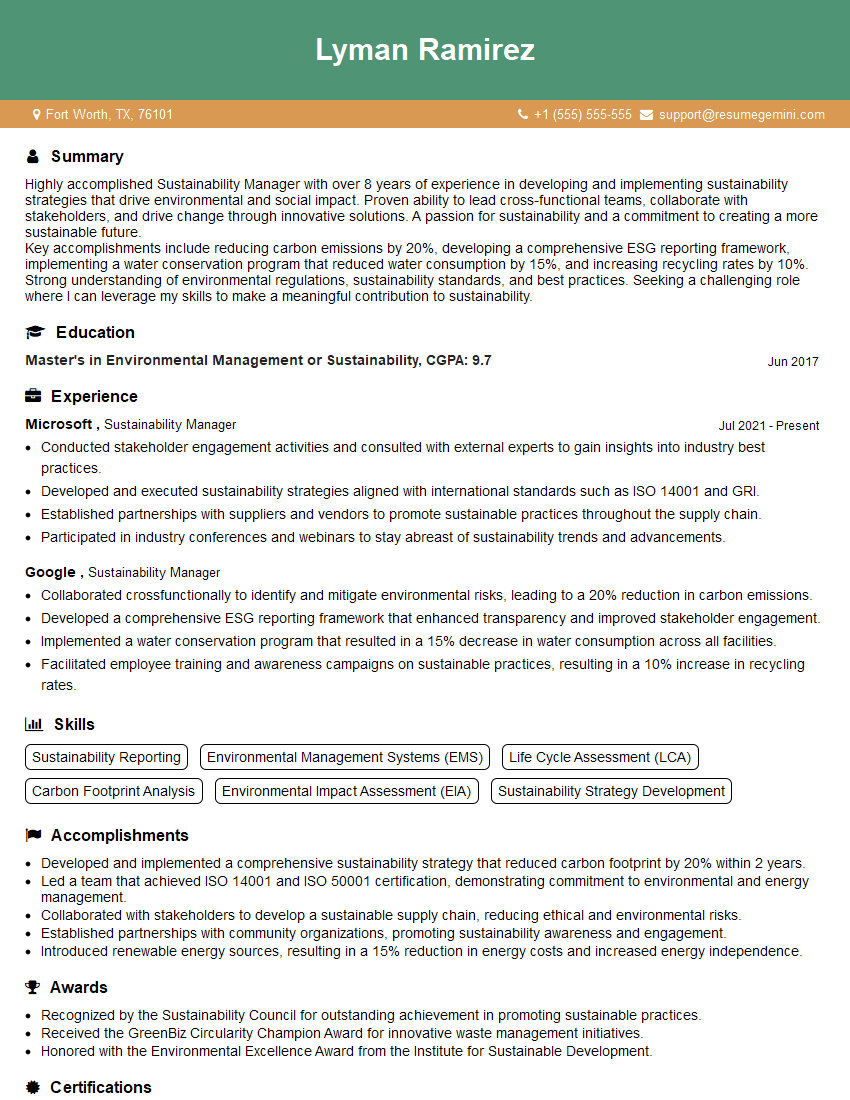
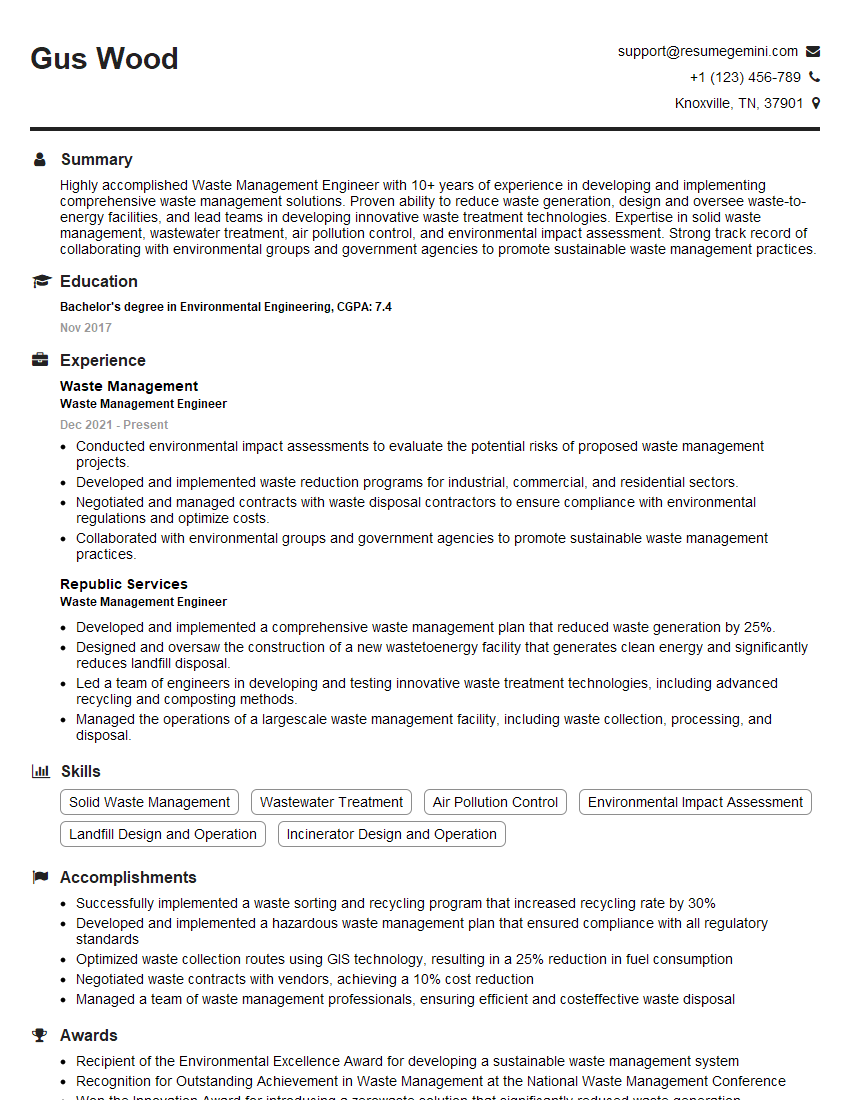
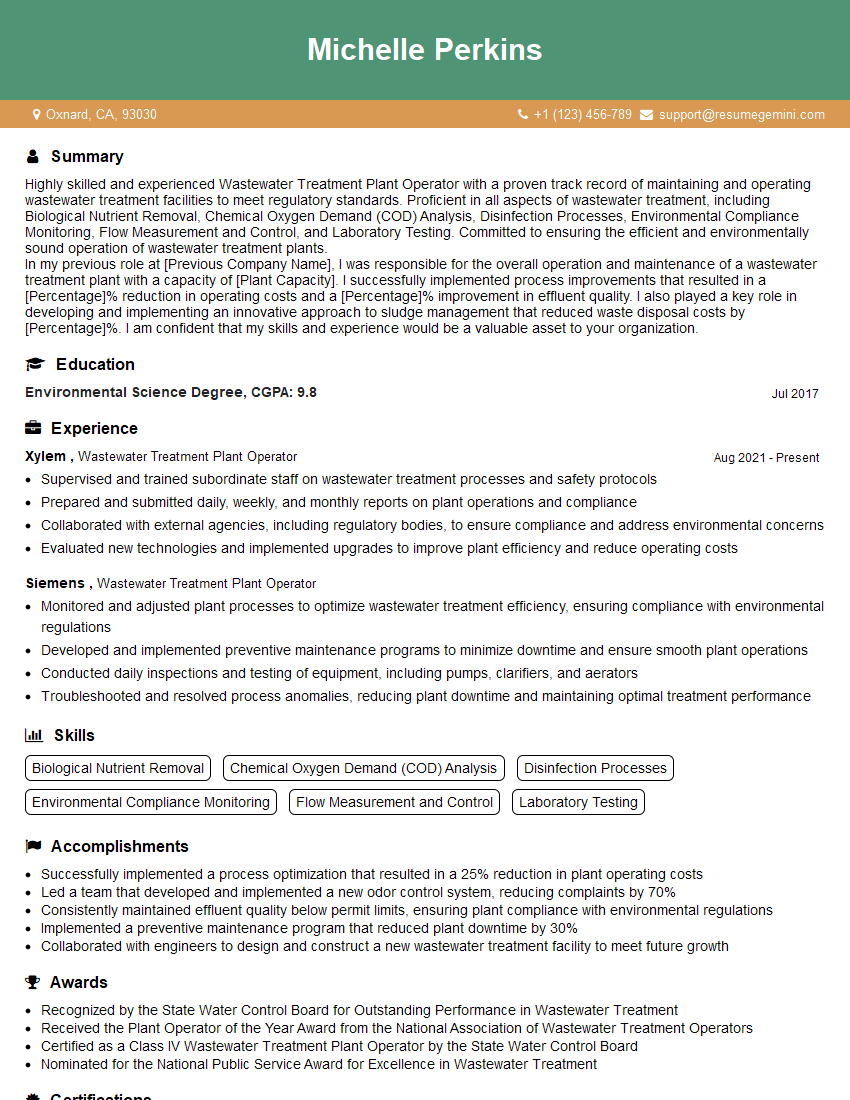
Mastering teamwork in waste management is crucial for career advancement, opening doors to leadership roles and specialized positions. An ATS-friendly resume is your key to unlocking these opportunities. A well-structured resume highlights your relevant skills and experience, ensuring your application gets noticed. To create a standout resume that showcases your abilities in waste management teamwork, we strongly recommend using ResumeGemini. ResumeGemini provides the tools and resources to build a professional resume, and we offer examples of resumes tailored specifically to Waste Management Teamwork to help guide you. Invest time in crafting a compelling resume – it’s your first impression with potential employers.
Explore more articles
Users Rating of Our Blogs
Share Your Experience
We value your feedback! Please rate our content and share your thoughts (optional).
What Readers Say About Our Blog
Attention music lovers!
Wow, All the best Sax Summer music !!!
Spotify: https://open.spotify.com/artist/6ShcdIT7rPVVaFEpgZQbUk
Apple Music: https://music.apple.com/fr/artist/jimmy-sax-black/1530501936
YouTube: https://music.youtube.com/browse/VLOLAK5uy_noClmC7abM6YpZsnySxRqt3LoalPf88No
Other Platforms and Free Downloads : https://fanlink.tv/jimmysaxblack
on google : https://www.google.com/search?q=22+AND+22+AND+22
on ChatGPT : https://chat.openai.com?q=who20jlJimmy20Black20Sax20Producer
Get back into the groove with Jimmy sax Black
Best regards,
Jimmy sax Black
www.jimmysaxblack.com
Hi I am a troller at The aquatic interview center and I suddenly went so fast in Roblox and it was gone when I reset.
Hi,
Business owners spend hours every week worrying about their website—or avoiding it because it feels overwhelming.
We’d like to take that off your plate:
$69/month. Everything handled.
Our team will:
Design a custom website—or completely overhaul your current one
Take care of hosting as an option
Handle edits and improvements—up to 60 minutes of work included every month
No setup fees, no annual commitments. Just a site that makes a strong first impression.
Find out if it’s right for you:
https://websolutionsgenius.com/awardwinningwebsites
Hello,
we currently offer a complimentary backlink and URL indexing test for search engine optimization professionals.
You can get complimentary indexing credits to test how link discovery works in practice.
No credit card is required and there is no recurring fee.
You can find details here:
https://wikipedia-backlinks.com/indexing/
Regards
NICE RESPONSE TO Q & A
hi
The aim of this message is regarding an unclaimed deposit of a deceased nationale that bears the same name as you. You are not relate to him as there are millions of people answering the names across around the world. But i will use my position to influence the release of the deposit to you for our mutual benefit.
Respond for full details and how to claim the deposit. This is 100% risk free. Send hello to my email id: lukachachibaialuka@gmail.com
Luka Chachibaialuka
Hey interviewgemini.com, just wanted to follow up on my last email.
We just launched Call the Monster, an parenting app that lets you summon friendly ‘monsters’ kids actually listen to.
We’re also running a giveaway for everyone who downloads the app. Since it’s brand new, there aren’t many users yet, which means you’ve got a much better chance of winning some great prizes.
You can check it out here: https://bit.ly/callamonsterapp
Or follow us on Instagram: https://www.instagram.com/callamonsterapp
Thanks,
Ryan
CEO – Call the Monster App
Hey interviewgemini.com, I saw your website and love your approach.
I just want this to look like spam email, but want to share something important to you. We just launched Call the Monster, a parenting app that lets you summon friendly ‘monsters’ kids actually listen to.
Parents are loving it for calming chaos before bedtime. Thought you might want to try it: https://bit.ly/callamonsterapp or just follow our fun monster lore on Instagram: https://www.instagram.com/callamonsterapp
Thanks,
Ryan
CEO – Call A Monster APP
To the interviewgemini.com Owner.
Dear interviewgemini.com Webmaster!
Hi interviewgemini.com Webmaster!
Dear interviewgemini.com Webmaster!
excellent
Hello,
We found issues with your domain’s email setup that may be sending your messages to spam or blocking them completely. InboxShield Mini shows you how to fix it in minutes — no tech skills required.
Scan your domain now for details: https://inboxshield-mini.com/
— Adam @ InboxShield Mini
support@inboxshield-mini.com
Reply STOP to unsubscribe
Hi, are you owner of interviewgemini.com? What if I told you I could help you find extra time in your schedule, reconnect with leads you didn’t even realize you missed, and bring in more “I want to work with you” conversations, without increasing your ad spend or hiring a full-time employee?
All with a flexible, budget-friendly service that could easily pay for itself. Sounds good?
Would it be nice to jump on a quick 10-minute call so I can show you exactly how we make this work?
Best,
Hapei
Marketing Director
Hey, I know you’re the owner of interviewgemini.com. I’ll be quick.
Fundraising for your business is tough and time-consuming. We make it easier by guaranteeing two private investor meetings each month, for six months. No demos, no pitch events – just direct introductions to active investors matched to your startup.
If youR17;re raising, this could help you build real momentum. Want me to send more info?
Hi, I represent an SEO company that specialises in getting you AI citations and higher rankings on Google. I’d like to offer you a 100% free SEO audit for your website. Would you be interested?
Hi, I represent an SEO company that specialises in getting you AI citations and higher rankings on Google. I’d like to offer you a 100% free SEO audit for your website. Would you be interested?