Cracking a skill-specific interview, like one for Waste Minimization and Zero Waste Programs, requires understanding the nuances of the role. In this blog, we present the questions you’re most likely to encounter, along with insights into how to answer them effectively. Let’s ensure you’re ready to make a strong impression.
Questions Asked in Waste Minimization and Zero Waste Programs Interview
Q 1. Describe your experience with implementing a zero waste program.
In my previous role at Green Solutions Inc., I spearheaded the implementation of a comprehensive zero-waste program for a large office complex. This involved a multi-faceted approach, starting with a thorough waste audit to identify waste streams and quantify waste generation. We then developed a tailored strategy focusing on source reduction, reuse, recycling, composting, and finally, responsible disposal. This included implementing a robust composting system for organic waste, a comprehensive recycling program with clearly labeled bins, and an employee education campaign to promote waste minimization practices. We also switched to reusable alternatives wherever possible, like eliminating single-use plastics and introducing reusable coffee cups. The program’s success was evident in a significant reduction in landfill waste, a boost in employee engagement, and positive media coverage highlighting our commitment to environmental sustainability. We saw a 40% reduction in overall waste within the first year.
Q 2. What are the key performance indicators (KPIs) you would use to measure the success of a waste reduction initiative?
Measuring the success of a waste reduction initiative requires a set of carefully chosen Key Performance Indicators (KPIs). These should track progress across various stages of the waste management process. Some crucial KPIs include:
- Waste Diversion Rate: This measures the percentage of waste diverted from landfills through recycling, composting, and other methods. A higher percentage signifies greater success. For example, a 70% diversion rate means 70% of generated waste is not going to landfills.
- Waste Generation per Capita: Tracking the amount of waste produced per person helps monitor individual impact and identify areas for improvement. A decrease shows effective source reduction strategies.
- Recycling Rate: This specifically tracks the percentage of recyclable materials successfully recycled. A higher rate indicates a well-functioning recycling program.
- Composting Rate: Similar to the recycling rate, but focuses on organic waste successfully composted.
- Landfill Waste: Tracking the volume of waste sent to landfills directly highlights the effectiveness of overall waste reduction efforts. A consistent decrease is ideal.
- Employee Participation Rate: Measuring engagement through surveys or participation in waste reduction initiatives shows the program’s effectiveness in changing behaviours.
By monitoring these KPIs, we can gain valuable insights into program effectiveness, identify areas needing improvement and showcase the positive environmental and financial impacts of the initiatives.
Q 3. Explain the difference between recycling, composting, and landfilling.
Recycling, composting, and landfilling are all methods of waste disposal, but they differ significantly in their environmental impact and processes:
- Recycling: This involves processing used materials (paper, plastic, metal, glass) to create new products. It conserves resources, reduces landfill burden, and lowers energy consumption compared to creating new materials from raw sources. Think of turning aluminum cans into new cans.
- Composting: This is the natural decomposition of organic materials (food scraps, yard waste) into nutrient-rich humus. This enhances soil fertility, reduces methane emissions from landfills (where organic waste decomposes anaerobically), and creates valuable compost for gardening or landscaping. It’s like nature’s way of recycling organic matter.
- Landfilling: This involves burying waste in designated areas. While a necessary component of waste management, it’s the least environmentally friendly option. Landfills can leach harmful substances into groundwater, generate methane (a potent greenhouse gas), and occupy valuable land. It’s basically storing waste for a long period of time.
Ideally, a comprehensive waste management strategy prioritizes source reduction, reuse, recycling, and composting before resorting to landfilling as a last resort.
Q 4. How would you approach reducing food waste in a large cafeteria?
Reducing food waste in a large cafeteria requires a multi-pronged approach focusing on prevention, recovery, and education. Here’s a strategy:
- Improved Forecasting and Ordering: Implement a robust inventory management system and accurate demand forecasting to minimize food overproduction. Analyze historical data to predict daily needs more precisely.
- Portion Control: Offer smaller portion sizes, allowing individuals to choose what they want rather than providing excess.
- Menu Planning: Focus on creating menus with popular items, and reduce menu variety to avoid food spoilage from less-popular dishes.
- Donation & Composting: Partner with local food banks or charities to donate excess edible food. Establish an effective composting program for unavoidable food scraps.
- Staff Training: Train cafeteria staff on proper food handling, storage, and waste minimization techniques.
- Signage and Awareness Campaigns: Use signage and posters to educate patrons about the importance of reducing food waste and guide them to take appropriate actions (choosing smaller portions, avoiding unnecessary waste).
Regular monitoring and analysis of food waste are crucial to refine strategies and ensure their effectiveness. This is a continuous improvement process.
Q 5. What are some common barriers to implementing waste minimization programs, and how can they be overcome?
Several barriers can hinder the implementation of waste minimization programs. Addressing these requires a strategic and proactive approach:
- Lack of Awareness and Engagement: Many individuals are unaware of the environmental and financial benefits of waste reduction. Overcoming this involves education campaigns, workshops, and clear communication highlighting the positive impacts.
- Lack of Resources: Implementing comprehensive programs requires funding for infrastructure (recycling bins, composting systems), equipment, and staff training. Securing funding through grants, internal budgets, or sponsorships is crucial.
- Resistance to Change: People often resist changes to established routines. Addressing this involves engaging stakeholders early in the process, explaining the benefits clearly, and fostering collaboration. Incentivizing participation can also be helpful.
- Inadequate Infrastructure: Lack of proper recycling and composting facilities can hamper waste diversion efforts. Collaborating with local authorities to improve waste management infrastructure is essential.
- Contamination of Recyclables: Improper sorting and contamination of recycling streams can render materials unrecyclable. Clear labeling, education, and potential financial penalties for contamination can help improve sorting practices.
Addressing these barriers requires a well-planned, communicated, and supported program that demonstrates clear value for all stakeholders.
Q 6. Describe your experience with waste audits and their benefits.
Waste audits are crucial for understanding the composition and quantity of waste generated by an organization. My experience involves conducting various audits, ranging from manual sorting of waste samples to using advanced waste characterization techniques. This involved a meticulous process of weighing and categorizing different waste streams – identifying what materials made up the waste, and in what quantities. The benefits are significant:
- Data-Driven Decision Making: Audits provide accurate data to inform strategies. Knowing the types and quantities of waste allows for targeted interventions.
- Benchmarking and Goal Setting: Audits provide a baseline to measure progress and set realistic goals for waste reduction. This allows progress tracking over time.
- Identifying Opportunities for Improvement: Audits highlight areas where waste reduction efforts can be most effective, such as focusing on specific materials or processes.
- Demonstrating ROI: By quantifying waste reduction, audits can show the financial benefits of waste minimization programs, such as savings on disposal fees and increased revenue from material recovery.
A well-conducted waste audit is the foundation for a successful waste minimization program.
Q 7. What are different waste diversion strategies?
Waste diversion strategies aim to reduce the amount of waste sent to landfills. These strategies include:
- Source Reduction: This focuses on preventing waste generation in the first place, such as using less packaging, designing products for durability and repairability, and promoting reusable items instead of disposables.
- Reuse: Finding new applications for existing items instead of discarding them, such as reusing containers, donating used clothing, or repurposing materials.
- Recycling: Processing used materials to create new products, as discussed earlier.
- Composting: Decomposing organic materials to create a soil amendment.
- Anaerobic Digestion: Breaking down organic waste in the absence of oxygen to produce biogas (renewable energy) and digestate (fertilizer).
- Energy Recovery: Incinerating waste to generate energy, although this should be considered only after maximizing other diversion methods due to potential emissions concerns.
- Waste-to-Product: Converting waste materials into new products, such as turning plastic waste into construction materials.
The best waste diversion strategies often involve a combination of these methods, tailored to the specific waste stream and context.
Q 8. How do you prioritize waste reduction initiatives within budget constraints?
Prioritizing waste reduction initiatives within budget constraints requires a strategic approach. We need to balance ambitious goals with financial realities. I typically start by conducting a thorough waste audit to identify the biggest waste generators and their associated costs. This provides a data-driven basis for prioritization. Then, I focus on initiatives with the highest return on investment (ROI). For example, improving recycling programs often has a low upfront cost but yields significant savings on disposal fees. Similarly, reducing single-use plastics can save money on purchasing and waste disposal over the long run. I also look for opportunities to leverage existing resources. Perhaps employees can participate in a composting program, reducing waste disposal expenses while promoting environmental stewardship. Finally, I propose a phased implementation plan, starting with high-impact, low-cost projects to demonstrate early wins and build momentum before tackling more expensive initiatives. This approach builds confidence and secures further investment.
Q 9. What is your familiarity with different waste stream analysis methods?
I’m experienced with various waste stream analysis methods, including manual sorting, automated sorting using sensors, and material flow analysis (MFA). Manual sorting involves physically separating waste into different categories to determine composition. This method is straightforward but labor-intensive and prone to human error. Automated sorting uses technologies like near-infrared (NIR) spectroscopy to identify and separate materials, offering higher accuracy and efficiency but with higher capital investment. Material flow analysis is a more comprehensive approach that tracks the flow of materials through the entire system, from extraction to disposal, to identify hotspots and areas for improvement. This often involves data collection, modeling, and system dynamics. I’ve used all three methods in various projects, choosing the most appropriate based on the project’s scope, budget, and data needs. For example, in a smaller office setting, manual sorting might suffice. However, for a large manufacturing facility, automated sorting and MFA would be more suitable.
Q 10. Explain the concept of circular economy and its relevance to waste management.
The circular economy is a model of production and consumption that aims to keep resources in use for as long as possible, extracting maximum value from them, and then recovering and regenerating products and materials at the end of each service life. This contrasts with the traditional linear economy (take-make-dispose). In the context of waste management, the circular economy emphasizes waste prevention, reuse, recycling, and recovery. It shifts the focus from waste disposal to resource management. For example, instead of landfilling plastic bottles, a circular economy approach would promote reusable bottles, enhanced recycling technologies to recover the plastic, and the development of new products from recycled plastic. This reduces environmental impact, saves resources, and can create new economic opportunities. The relevance is immense: it fundamentally redefines how we manage waste, shifting it from a cost center to a potential source of value and innovation.
Q 11. How would you engage employees in a waste reduction program?
Engaging employees is crucial for the success of any waste reduction program. I use a multi-pronged approach. Firstly, I start by communicating the program’s goals clearly and transparently, explaining the benefits to both the environment and the organization. I then involve employees in the design and implementation of the program. This participatory approach fosters a sense of ownership and buy-in. I organize workshops and training sessions to educate employees on proper waste sorting and disposal techniques. We might also introduce gamification elements, such as competitions or rewards for achieving waste reduction targets, to incentivize participation. Regular communication, through newsletters, emails, or team meetings, keeps employees informed of progress and encourages ongoing engagement. Lastly, I celebrate successes and acknowledge employee contributions to reinforce positive behavior and maintain momentum. A successful program is built not just on rules but on a culture of sustainability.
Q 12. What is your experience with developing and implementing waste management policies?
I have extensive experience in developing and implementing waste management policies. My approach typically involves five key steps: (1) conducting a thorough waste audit to identify baseline conditions; (2) setting measurable, achievable, relevant, and time-bound (SMART) waste reduction goals; (3) developing policies and procedures that align with the goals, including clear guidelines for waste sorting, disposal, and recycling; (4) implementing appropriate infrastructure and training programs to support the policies; and (5) monitoring progress, measuring performance, and adjusting the policies as needed. For instance, in a previous role, I developed a comprehensive recycling policy for a large office complex, resulting in a 30% reduction in landfill waste within a year. This involved negotiating with waste haulers, procuring new recycling bins, and providing regular training to employees. Effective waste management policies should be integrated into broader sustainability strategies and reflect the organization’s values and commitments.
Q 13. Describe a time you successfully resolved a waste management challenge.
In a previous project with a food processing plant, we faced a significant challenge managing food waste. Initial efforts focused on employee training and improved storage techniques yielded minimal results. I realized that the problem was more systemic than behavioral. We then conducted a detailed analysis of the production process to identify sources of waste. This revealed inefficiencies in ingredient procurement and recipe optimization, leading to substantial overproduction. By collaborating with production managers, we implemented a just-in-time inventory system and refined recipes to minimize waste generation at the source. We also partnered with a local farm to donate surplus food to reduce landfill waste. This multi-faceted approach resulted in a 60% reduction in food waste, significantly reducing disposal costs and enhancing the company’s sustainability profile. The success highlights the importance of a holistic and data-driven approach to resolving waste management challenges.
Q 14. What are some innovative waste reduction technologies you’re familiar with?
I’m familiar with several innovative waste reduction technologies. Anaerobic digestion is a biological process that converts organic waste into biogas, a renewable energy source, and digestate, a valuable fertilizer. This offers both waste reduction and energy recovery. Another promising technology is chemical recycling, which uses chemical processes to break down plastics into their basic building blocks, allowing for the production of new plastics with improved properties. This addresses the challenge of recycling complex plastics that are difficult to recycle using traditional methods. Furthermore, advanced sorting technologies, using AI and machine learning, can improve the accuracy and efficiency of waste sorting, maximizing the recovery of valuable materials from waste streams. Finally, technologies that focus on waste-to-energy solutions, like plasma gasification, offer an alternative to traditional incineration and landfill, converting waste into energy while minimizing environmental emissions. The choice of technology will depend on the waste stream, its composition, and the project’s specific goals.
Q 15. What are the environmental and economic benefits of waste minimization?
Waste minimization offers significant environmental and economic advantages. Environmentally, it reduces pollution, conserves natural resources, and mitigates climate change by decreasing greenhouse gas emissions associated with waste disposal. Economically, it lowers disposal costs, reduces the need for new resources, and can create opportunities for resource recovery and innovative reuse strategies.
- Reduced Landfill Burden: Minimizing waste directly translates to less material ending up in landfills, lessening the strain on landfill space and reducing the environmental impact of methane emissions from decomposing organic waste.
- Resource Conservation: By reducing waste, we conserve valuable natural resources such as timber, minerals, and water. For example, using recycled paper saves trees and reduces the energy required for pulp production.
- Cost Savings: Waste disposal is expensive. Minimizing waste significantly lowers these costs, freeing up resources for other investments. A company might save money on waste collection fees and landfill tipping fees.
- Increased Efficiency: Waste minimization often leads to improved operational efficiency. Processes are optimized to reduce material waste, leading to leaner, more sustainable operations. For example, a manufacturing plant implementing precision cutting techniques drastically reduces scrap metal.
Career Expert Tips:
- Ace those interviews! Prepare effectively by reviewing the Top 50 Most Common Interview Questions on ResumeGemini.
- Navigate your job search with confidence! Explore a wide range of Career Tips on ResumeGemini. Learn about common challenges and recommendations to overcome them.
- Craft the perfect resume! Master the Art of Resume Writing with ResumeGemini’s guide. Showcase your unique qualifications and achievements effectively.
- Don’t miss out on holiday savings! Build your dream resume with ResumeGemini’s ATS optimized templates.
Q 16. How do you stay updated on the latest trends and regulations in waste management?
Staying abreast of the latest trends and regulations in waste management requires a multi-pronged approach. I actively engage with several key resources:
- Professional Organizations: I’m a member of organizations like the Waste Management & Research Centre (assuming a relevant organization in your region), which provide access to publications, conferences, and networking opportunities with other experts. These events offer invaluable insights into emerging technologies and best practices.
- Government Agencies: I regularly monitor updates from relevant government agencies (like the EPA in the US or equivalent agencies in other countries) responsible for setting waste management regulations. Their websites provide access to new legislation, guidance documents, and case studies.
- Industry Publications and Journals: I subscribe to industry-specific journals and publications that keep me informed about the latest research, technologies, and policy developments in waste management. This allows me to grasp emerging trends and understand the scientific basis behind best practices.
- Online Databases and Resources: I utilize online databases such as those provided by universities and research institutions, to access peer-reviewed research papers and data on waste management practices globally.
This combination of methods allows me to maintain a current understanding of the regulatory landscape and technological advancements in the field.
Q 17. What is your experience with different types of recycling technologies?
My experience encompasses a range of recycling technologies, including:
- Mechanical Recycling: This involves processes like sorting, shredding, and separating materials using physical methods. I have experience overseeing operations involving the mechanical recycling of plastics, paper, and metals, understanding the limitations and efficiencies of various sorting techniques.
- Chemical Recycling: I’m familiar with chemical recycling methods, such as pyrolysis and gasification, which break down materials at a molecular level to recover valuable resources or create fuels. These processes are particularly useful for plastics that are difficult to recycle mechanically.
- Biological Recycling (Composting): I have hands-on experience managing composting facilities, overseeing the process of decomposing organic waste to create compost for soil amendment. This includes understanding various composting methods (aerobic, anaerobic) and quality control measures.
- Advanced Recycling Technologies: I’m aware of emerging technologies like enzymatic depolymerization and microbial-based recycling, though my direct experience is limited. I am actively researching their potential and applications in various waste streams.
My experience is not limited to merely understanding the technologies; I also have expertise in evaluating their cost-effectiveness, environmental impact, and suitability for specific waste streams.
Q 18. How do you handle hazardous waste in a safe and environmentally responsible manner?
Handling hazardous waste requires strict adherence to safety and environmental protocols. My approach involves a multi-step process:
- Identification and Characterization: The first step is accurate identification and characterization of the hazardous waste, determining its composition and toxicity to select appropriate handling and disposal methods. This often involves laboratory analysis.
- Segregation and Containment: Hazardous waste must be segregated from other waste streams and stored in properly labeled, sealed containers to prevent leaks and spills. Storage areas must be secure and meet regulatory requirements.
- Transportation and Disposal: Transportation of hazardous waste is strictly regulated and requires specialized vehicles and permits. Disposal must be carried out by licensed hazardous waste facilities that have the appropriate infrastructure and technologies for safe treatment and disposal.
- Documentation and Reporting: Comprehensive documentation is crucial, including waste manifests, storage records, and disposal records. This information is essential for regulatory compliance and traceability.
- Emergency Preparedness: Having a detailed emergency response plan is vital. This plan includes procedures for handling spills, leaks, and other emergencies, including proper personal protective equipment (PPE) use and emergency contacts.
Throughout the entire process, I prioritize worker safety and environmental protection by ensuring strict adherence to all relevant regulations and best practices.
Q 19. What are the regulatory requirements for waste disposal in your area?
(Note: This answer would need to be tailored to a specific area. The following is a general example):
Regulatory requirements for waste disposal vary significantly by location. In my area, regulations are primarily enforced by [insert local/regional governing body]. Key requirements typically include:
- Waste Characterization and Classification: Accurate classification of waste streams (hazardous, non-hazardous, recyclable) is crucial for determining the appropriate disposal method.
- Licensing and Permits: Waste generators and haulers often require licenses and permits to handle and transport various waste types.
- Waste Management Plans: Many businesses are required to develop and implement detailed waste management plans that outline their approach to waste reduction, reuse, recycling, and disposal.
- Reporting and Record-Keeping: Detailed record-keeping is essential, including tracking waste generation, recycling rates, and disposal methods. Regular reporting to the relevant authorities is often mandated.
- Enforcement and Penalties: Non-compliance with regulations can result in significant penalties, including fines and legal action.
Staying updated on these specific requirements is crucial for maintaining compliance.
Q 20. How do you calculate waste diversion rates?
Waste diversion rate calculates the percentage of waste that is diverted from landfills through recycling, composting, or other alternative waste management methods. The formula is straightforward:
Waste Diversion Rate = (Total Waste Diverted / Total Waste Generated) x 100%
For example, if a city generates 100 tons of waste and diverts 60 tons through recycling and composting, the waste diversion rate is (60/100) x 100% = 60%.
Accurate calculation requires precise data on waste generated and waste diverted. Challenges include consistent data collection across different waste streams and accounting for contamination in recycling streams which reduces the amount of material actually recycled.
Q 21. What is the role of lifecycle assessment in waste management?
Lifecycle assessment (LCA) is a crucial tool in waste management. It’s a comprehensive method for evaluating the environmental impacts of a product or process throughout its entire life cycle, from raw material extraction to end-of-life disposal. In waste management, LCA helps to identify the most environmentally sound options for managing different waste streams.
For example, an LCA might compare the environmental impacts of recycling plastic versus landfilling it, considering factors such as energy consumption, greenhouse gas emissions, water usage, and resource depletion. The results help determine whether recycling is truly a more sustainable choice compared to other options. It’s important to note that the accuracy of an LCA depends heavily on data availability and the scope of the analysis.
In practical terms, LCA informs decision-making regarding waste management strategies, influencing the design of products for better recyclability, promoting sustainable consumption patterns, and guiding policy development for improved waste management practices.
Q 22. What are some strategies for improving source separation of waste?
Improving source separation hinges on making it convenient, clear, and engaging for residents. Think of it like organizing a well-stocked pantry – if everything has its designated place, it’s easier to maintain order.
Clear Labeling and Signage: Using universally understood icons alongside text, clearly label bins for different waste streams (recycling, compost, landfill). Avoid ambiguity – a picture of a banana peel in the compost bin is much more effective than just the word ‘Compost’.
Conveniently Located Bins: Strategically placing bins throughout the community, especially in high-traffic areas, makes participation easier. In apartment buildings, having separate bins on each floor is vastly more effective than a single collection point in the basement.
Educational Campaigns: Regular community workshops, online resources, and engaging infographics can dramatically boost understanding. For instance, explain why certain items, like plastic bags, contaminate recycling and must be disposed of separately.
Targeted Outreach: Tailor your messaging to different demographics. What resonates with young families might not resonate with seniors. Use different communication channels—social media for younger people, community newsletters for older residents.
Incentive Programs: Reward consistent participation through competitions, rebates, or community events for top performers. This gamifies the process and fosters a sense of community involvement.
Q 23. How would you design a composting program for a residential community?
Designing a residential composting program requires a phased approach, focusing on community engagement, infrastructure, and education. Imagine it like building a garden—you need the right soil, tools, and knowledge to nurture its growth.
Community Assessment: Gauge resident interest and participation levels through surveys, focus groups, or town hall meetings. Understand local regulations and available space.
Composting Method Selection: Choose a method suitable for the community size and resources: in-vessel composting (large-scale, centralized facilities), backyard composting (individual bins), or a community composting site (shared space, possibly with volunteer management).
Infrastructure Development: This involves acquiring compost bins (if applicable), establishing collection points, securing a composting site (if not backyard composting), and ensuring regular transportation and processing of organic waste.
Education and Outreach: Provide clear guidelines on what is and is not compostable (avoiding contamination). Use educational materials, workshops, and demonstrations to build community awareness. Regular updates on the compost’s progress and its beneficial use (e.g., in community gardens) further encourage participation.
Monitoring and Evaluation: Track compost production, quality, and community participation. Conduct regular assessments and adjust the program based on feedback and results.
Q 24. Explain your understanding of different waste management hierarchies.
Waste management hierarchies prioritize waste reduction strategies from most to least environmentally preferable. Think of it like a pyramid, with the most sustainable options at the top and least sustainable at the bottom.
Prevention/Reduction: At the top, this focuses on minimizing waste generation through design, product lifecycle management, and reducing consumption. This is the most impactful step. Examples include reusable bags, designing products with fewer components for easier recycling, and buying only what you need.
Reuse: Next, we prioritize reusing items to extend their lifespan. Reusing jars for storage or donating clothes is a good example.
Recycling/Composting: Processing materials to create new products (recycling) or returning organic waste back to the soil (composting). Recycling aluminum cans or composting food scraps are good examples.
Energy Recovery/Incineration: Converting non-recyclable waste into energy. However, this is less sustainable due to potential emissions.
Landfilling: The least desirable option, sending waste to landfills for disposal. This contributes to land pollution and greenhouse gas emissions.
Q 25. What are the key elements of a successful waste management plan?
A successful waste management plan requires a holistic approach, integrating various aspects to achieve its goals. It’s like orchestrating a symphony – every instrument (strategy) must play its part harmoniously.
Clear Goals and Objectives: Define specific, measurable, achievable, relevant, and time-bound (SMART) targets for waste reduction, diversion, and overall environmental impact.
Comprehensive Waste Characterization: Analyze the community’s waste stream to understand its composition and identify opportunities for improved management. This is vital for tailoring the program effectively.
Infrastructure Development: Implement the necessary infrastructure for waste collection, processing, and disposal, such as bins, transfer stations, and recycling facilities. This also involves considering accessibility and logistical efficiency.
Robust Public Education and Engagement: Educate the community about waste reduction strategies, proper waste sorting, and the importance of the program. Community involvement is critical for success.
Regulatory Compliance: Ensure adherence to all relevant local, regional, and national environmental regulations and waste management standards.
Monitoring and Evaluation: Regularly monitor program effectiveness, assess performance against goals, and adapt strategies as needed. This continuous improvement process is key to long-term success.
Financial Sustainability: Secure long-term funding to support the program’s operations and maintenance.
Q 26. How would you measure the effectiveness of a waste education program?
Measuring the effectiveness of a waste education program requires a multi-pronged approach, combining quantitative and qualitative data. It’s like assessing the success of a class—you need both test scores and student feedback.
Pre- and Post-Program Surveys: Assess changes in knowledge, attitudes, and behaviors regarding waste management. This can gauge the impact of the education initiative.
Waste Audits: Compare waste composition before and after the program to determine if there’s been an increase in recycling or composting rates. This provides concrete evidence of behavioral change.
Community Feedback: Gather feedback through focus groups, interviews, or online surveys to assess resident satisfaction and identify areas for improvement.
Participation Rates: Track the number of residents actively participating in waste reduction and recycling programs. This shows the program’s reach and engagement.
Social Media Engagement: Monitor social media activity to understand community perception and reach.
Q 27. What are the ethical considerations related to waste management?
Ethical considerations in waste management are paramount. It’s about ensuring fairness, environmental responsibility, and social justice. It’s not just about disposing of trash; it’s about doing so in a way that considers the consequences for everyone.
Environmental Justice: Ensure that waste management facilities and their potential environmental impacts are not disproportionately located in low-income or marginalized communities.
Worker Safety: Prioritize the health and safety of waste management workers, providing adequate protective equipment and training to minimize risks.
Transparency and Accountability: Be transparent about waste management practices and hold all stakeholders accountable for their environmental responsibility. Open communication and participation build trust.
Intergenerational Equity: Consider the long-term consequences of waste management practices for future generations, ensuring that resources are managed sustainably.
Global Impacts: Recognize the global implications of waste management, particularly the impacts of exporting waste to other countries.
Q 28. How would you manage stakeholder expectations in a waste reduction project?
Managing stakeholder expectations in a waste reduction project is crucial for its success. It requires open communication, transparency, and a proactive approach. Think of it as building a coalition—each stakeholder needs to feel heard and valued.
Early and Consistent Communication: Regularly update stakeholders on project progress, challenges, and successes. This transparency builds trust and reduces uncertainty.
Stakeholder Mapping: Identify key stakeholders (residents, businesses, government agencies, NGOs) and understand their interests and concerns. Tailor communication to resonate with their specific needs.
Collaborative Approach: Involve stakeholders in the decision-making process, inviting feedback and input throughout the project lifecycle. This makes them feel valued and invested in the outcome.
Addressing Concerns Proactively: Anticipate potential concerns and address them transparently. Be prepared to answer difficult questions and provide credible solutions.
Conflict Resolution Mechanisms: Establish processes for addressing disagreements or conflicts effectively and fairly. Mediation or arbitration can be valuable tools.
Regular Feedback Mechanisms: Establish channels for ongoing feedback from stakeholders, allowing for adjustments and improvements based on their insights.
Key Topics to Learn for Waste Minimization and Zero Waste Programs Interview
- Waste Stream Analysis: Understanding the composition of waste generated by different sources (residential, commercial, industrial). Practical application: Developing strategies for waste diversion based on a thorough waste audit.
- Waste Reduction Strategies: Exploring methods for minimizing waste at the source, including source reduction, reuse, and recycling. Practical application: Designing a comprehensive waste reduction plan for a specific organization or community.
- Zero Waste Principles: Deep dive into the philosophy and practical implementation of Zero Waste goals, including composting, anaerobic digestion, and material recovery facilities (MRFs). Practical application: Evaluating the feasibility and cost-effectiveness of different Zero Waste initiatives.
- Lifecycle Assessment (LCA): Analyzing the environmental impact of products and materials throughout their entire life cycle. Practical application: Using LCA to inform decisions on waste management and sustainable procurement.
- Legislation and Regulations: Familiarity with relevant environmental regulations and policies related to waste management. Practical application: Ensuring compliance with local, state, and federal regulations in waste management programs.
- Stakeholder Engagement: Effective communication and collaboration with diverse stakeholders (businesses, community members, government agencies). Practical application: Developing and implementing a community outreach program for a waste reduction initiative.
- Data Analysis and Reporting: Tracking and analyzing waste generation and diversion data to measure program effectiveness. Practical application: Creating compelling reports to demonstrate the success of a waste minimization program.
- Cost-Benefit Analysis: Evaluating the economic viability of various waste management strategies. Practical application: Justifying the investment in waste reduction programs by demonstrating cost savings and environmental benefits.
Next Steps
Mastering Waste Minimization and Zero Waste Programs opens doors to exciting and impactful careers in environmental sustainability. Demonstrating your expertise through a strong resume is crucial for securing your dream role. Creating an ATS-friendly resume is essential to navigate applicant tracking systems and maximize your job prospects. We highly recommend using ResumeGemini to build a professional and effective resume tailored to the specific requirements of Waste Minimization and Zero Waste Programs jobs. ResumeGemini provides examples of resumes designed specifically for this field, giving you a head start in showcasing your skills and experience.
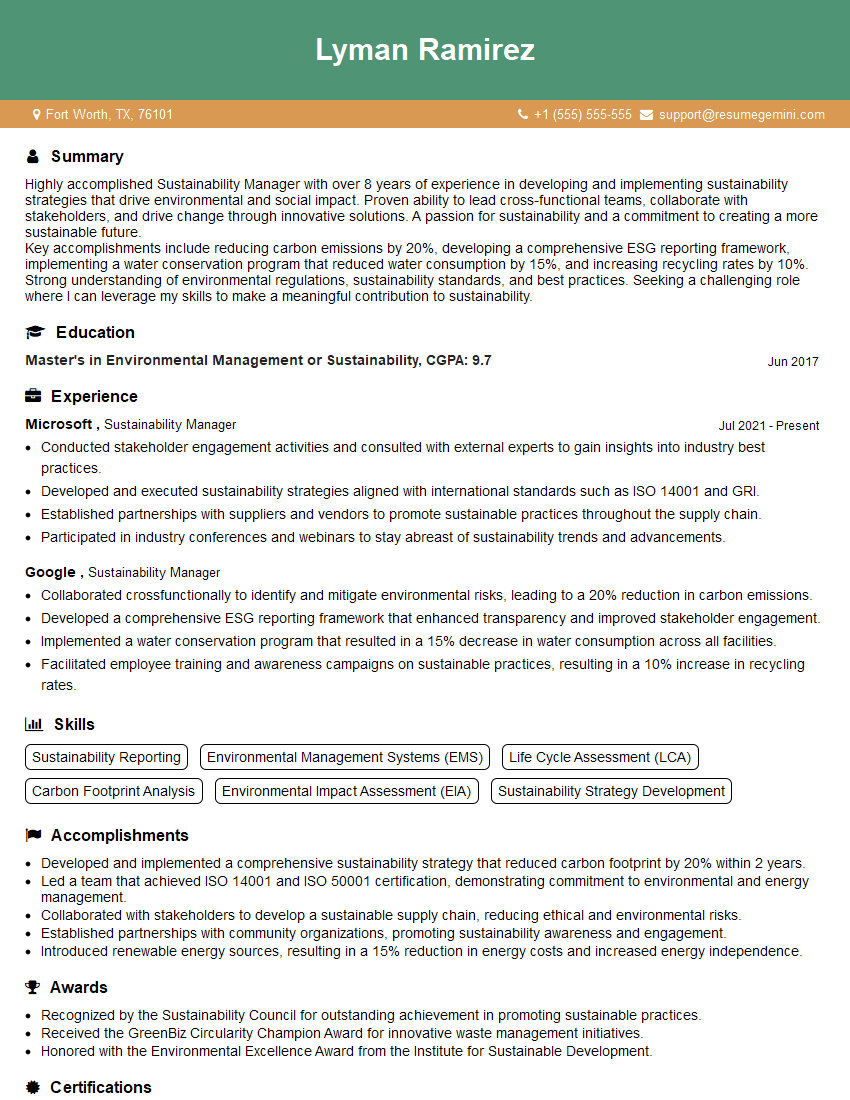
Sustainability Manager Resume Sample
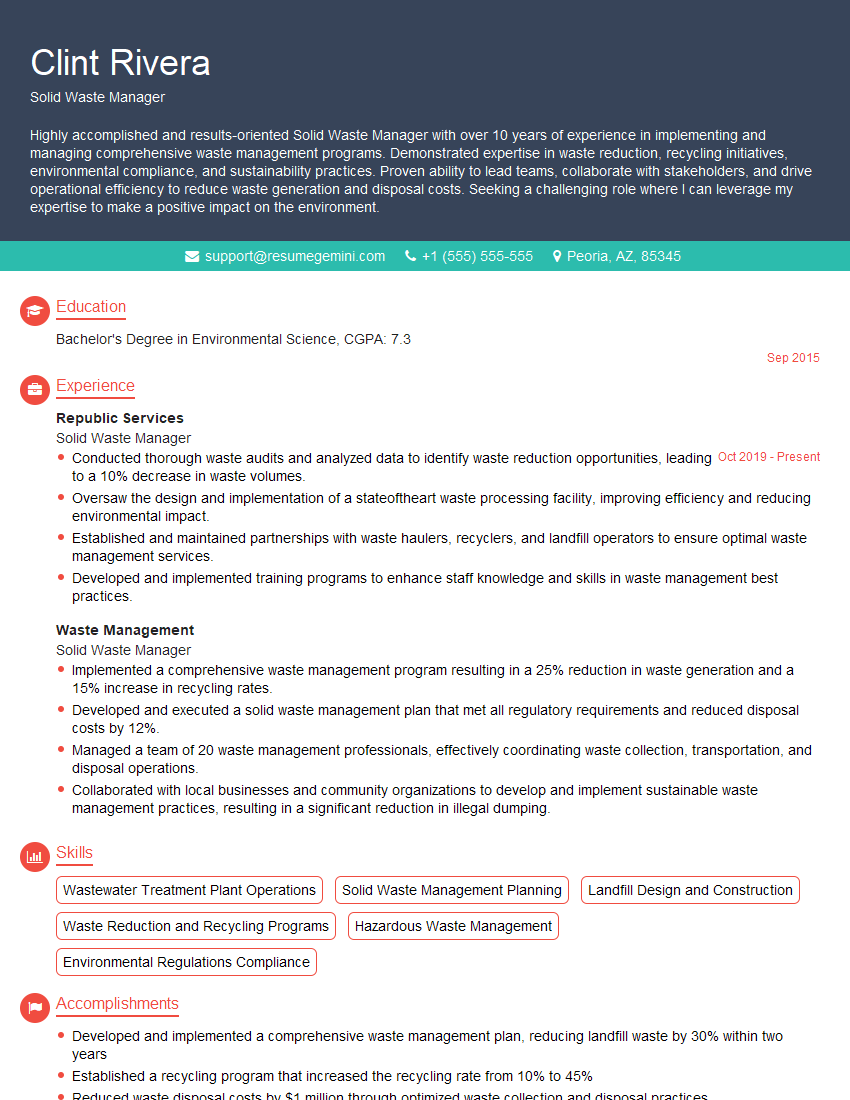
Solid Waste Manager Resume Sample
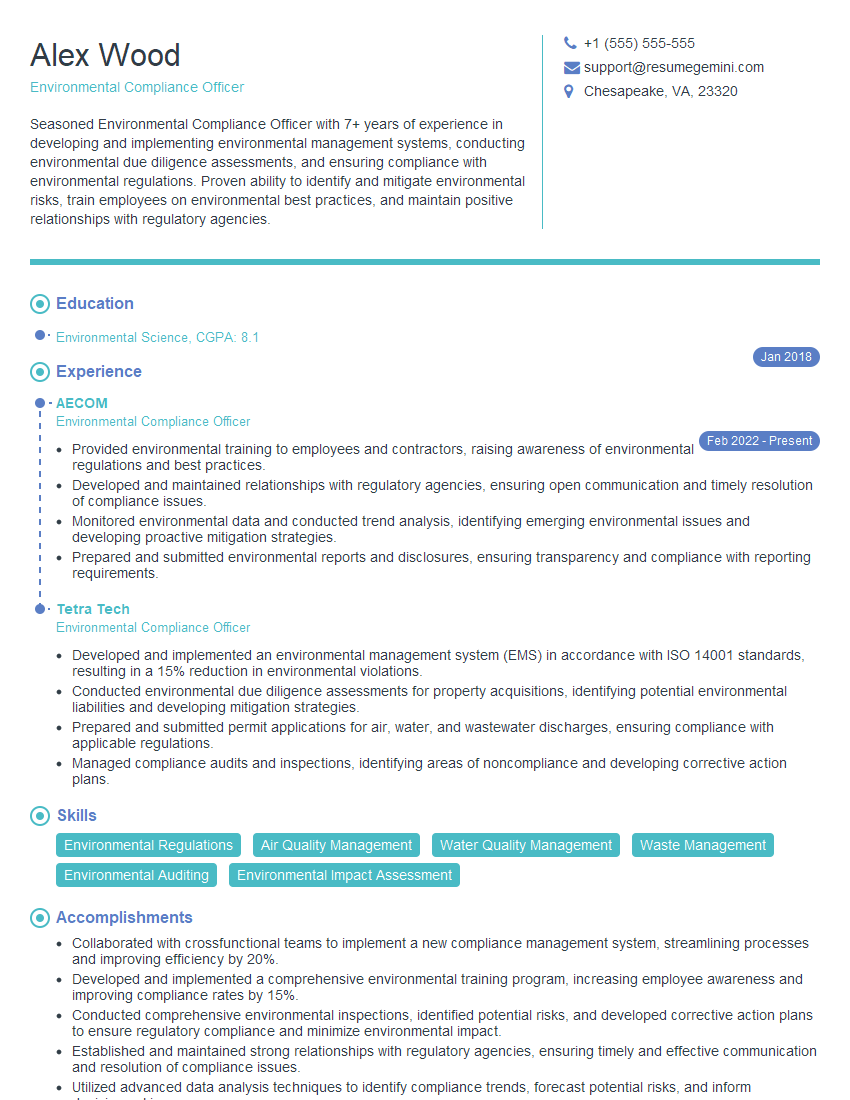
Environmental Compliance Officer Resume Sample
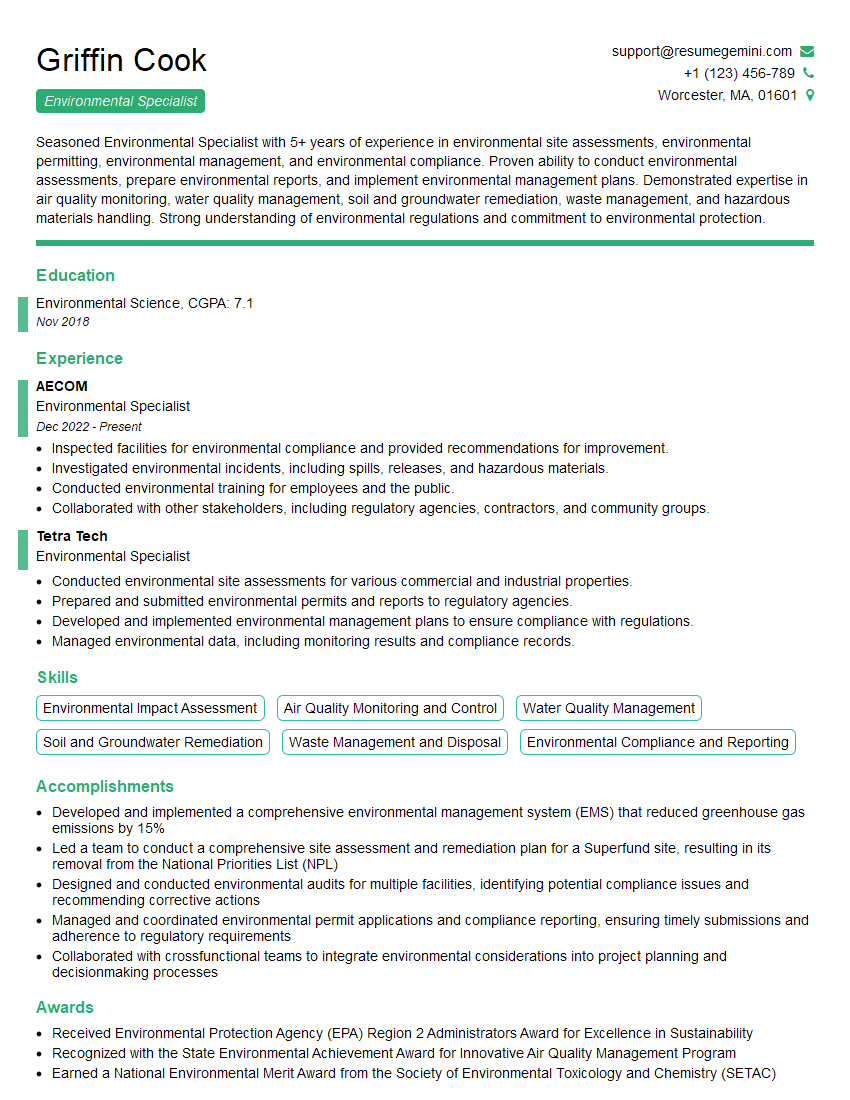
Environmental Specialist Resume Sample
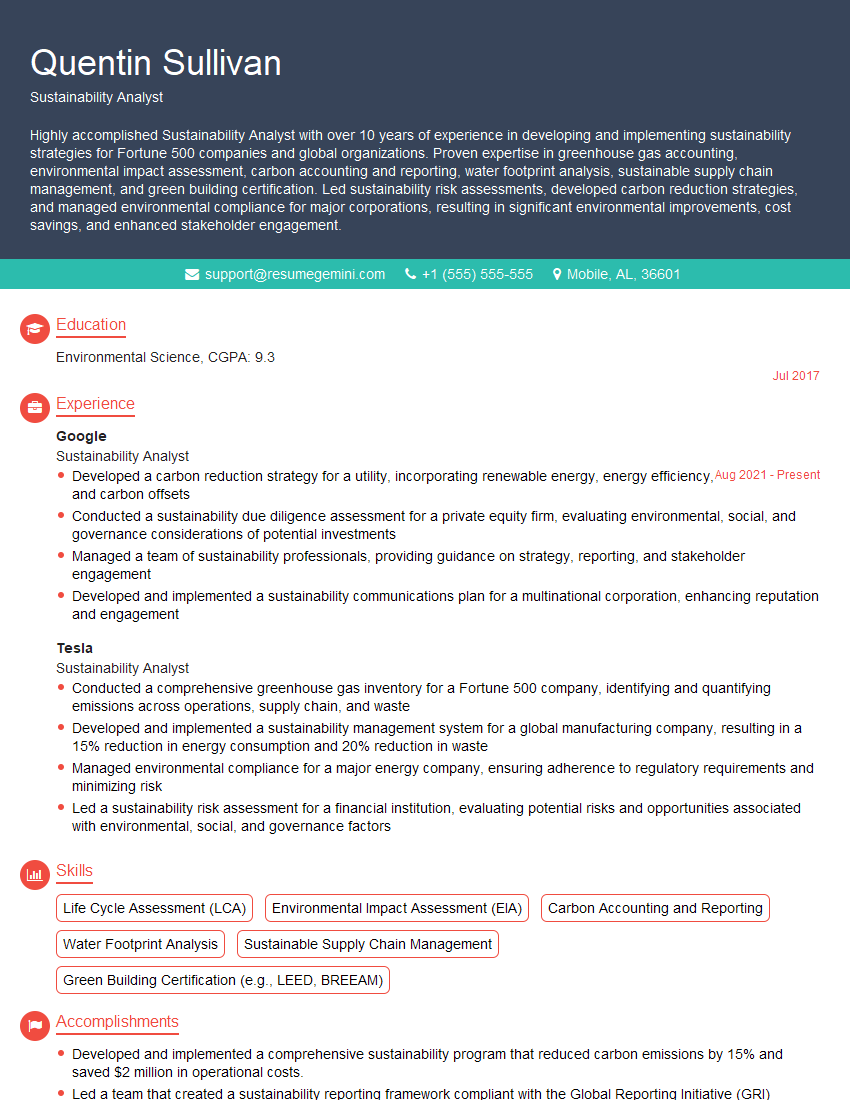
Sustainability Analyst Resume Sample

Sustainability Consultant Resume Sample
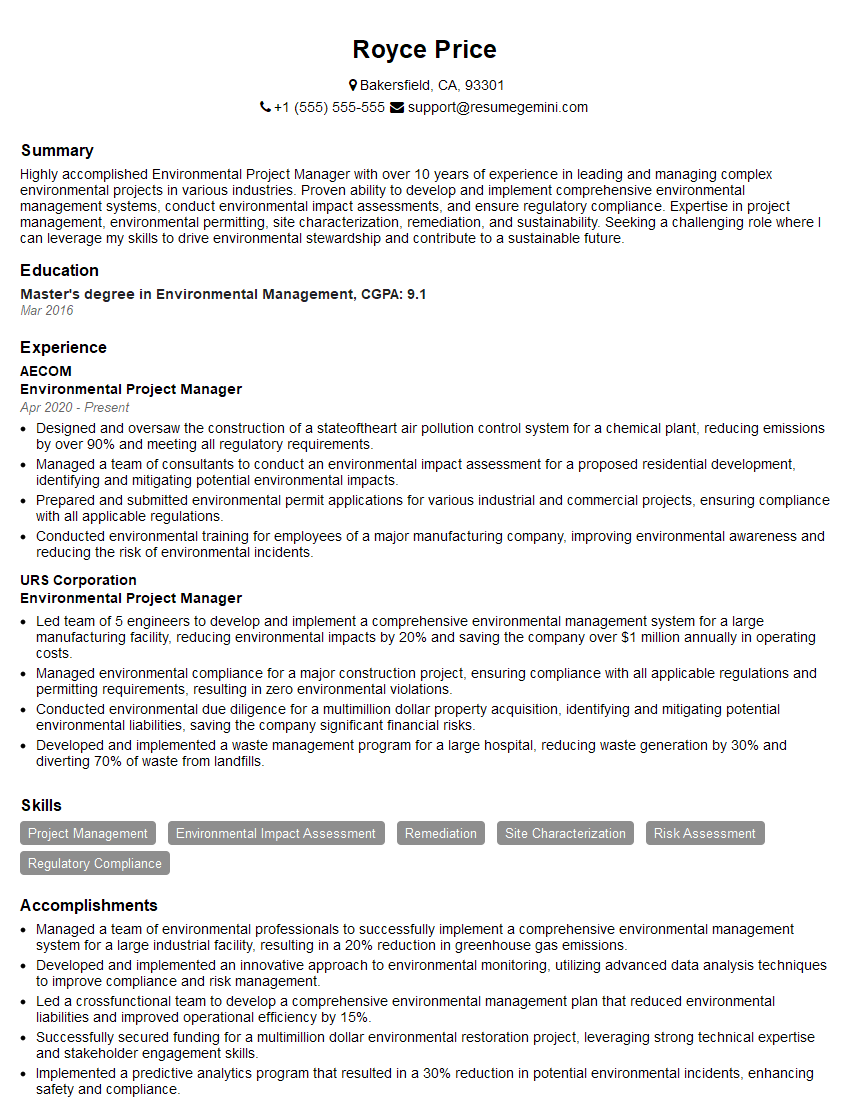
Environmental Project Manager Resume Sample
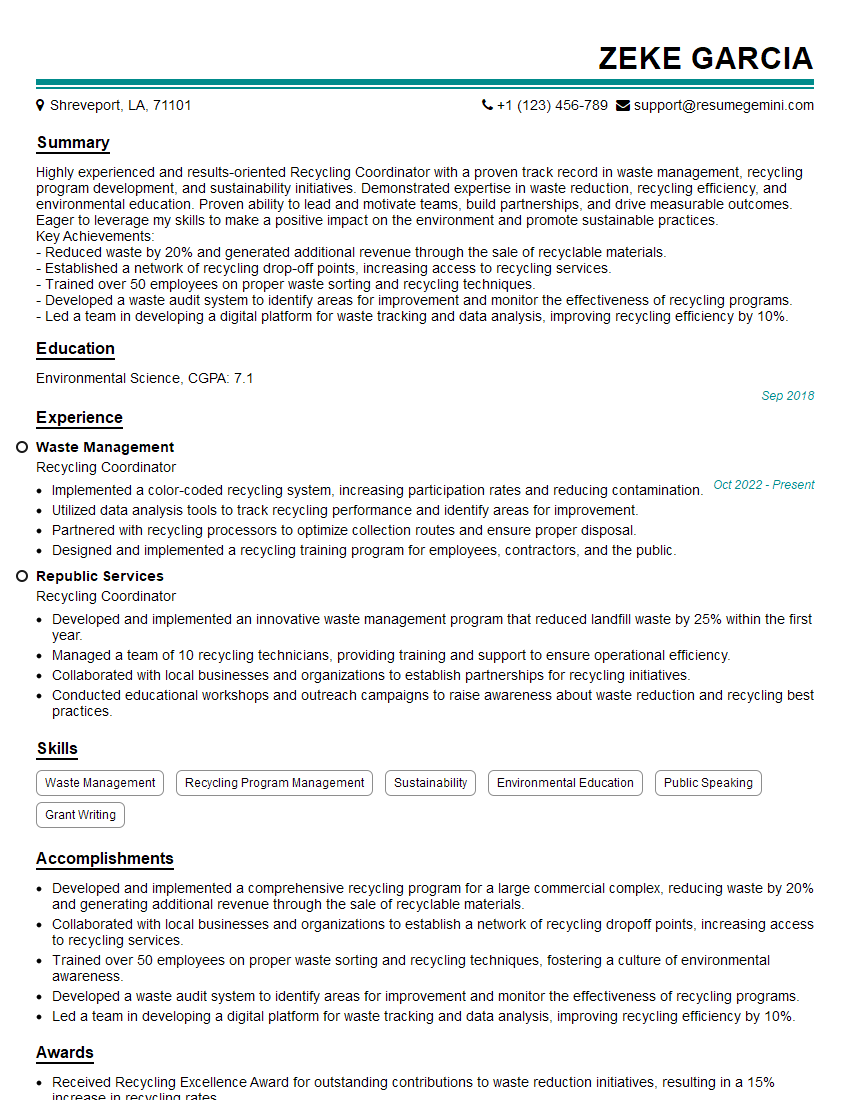
Recycling Coordinator Resume Sample
Explore more articles
Users Rating of Our Blogs
Share Your Experience
We value your feedback! Please rate our content and share your thoughts (optional).
What Readers Say About Our Blog
Attention music lovers!
Wow, All the best Sax Summer music !!!
Spotify: https://open.spotify.com/artist/6ShcdIT7rPVVaFEpgZQbUk
Apple Music: https://music.apple.com/fr/artist/jimmy-sax-black/1530501936
YouTube: https://music.youtube.com/browse/VLOLAK5uy_noClmC7abM6YpZsnySxRqt3LoalPf88No
Other Platforms and Free Downloads : https://fanlink.tv/jimmysaxblack
on google : https://www.google.com/search?q=22+AND+22+AND+22
on ChatGPT : https://chat.openai.com?q=who20jlJimmy20Black20Sax20Producer
Get back into the groove with Jimmy sax Black
Best regards,
Jimmy sax Black
www.jimmysaxblack.com
Hi I am a troller at The aquatic interview center and I suddenly went so fast in Roblox and it was gone when I reset.
Hi,
Business owners spend hours every week worrying about their website—or avoiding it because it feels overwhelming.
We’d like to take that off your plate:
$69/month. Everything handled.
Our team will:
Design a custom website—or completely overhaul your current one
Take care of hosting as an option
Handle edits and improvements—up to 60 minutes of work included every month
No setup fees, no annual commitments. Just a site that makes a strong first impression.
Find out if it’s right for you:
https://websolutionsgenius.com/awardwinningwebsites
Hello,
we currently offer a complimentary backlink and URL indexing test for search engine optimization professionals.
You can get complimentary indexing credits to test how link discovery works in practice.
No credit card is required and there is no recurring fee.
You can find details here:
https://wikipedia-backlinks.com/indexing/
Regards
NICE RESPONSE TO Q & A
hi
The aim of this message is regarding an unclaimed deposit of a deceased nationale that bears the same name as you. You are not relate to him as there are millions of people answering the names across around the world. But i will use my position to influence the release of the deposit to you for our mutual benefit.
Respond for full details and how to claim the deposit. This is 100% risk free. Send hello to my email id: lukachachibaialuka@gmail.com
Luka Chachibaialuka
Hey interviewgemini.com, just wanted to follow up on my last email.
We just launched Call the Monster, an parenting app that lets you summon friendly ‘monsters’ kids actually listen to.
We’re also running a giveaway for everyone who downloads the app. Since it’s brand new, there aren’t many users yet, which means you’ve got a much better chance of winning some great prizes.
You can check it out here: https://bit.ly/callamonsterapp
Or follow us on Instagram: https://www.instagram.com/callamonsterapp
Thanks,
Ryan
CEO – Call the Monster App
Hey interviewgemini.com, I saw your website and love your approach.
I just want this to look like spam email, but want to share something important to you. We just launched Call the Monster, a parenting app that lets you summon friendly ‘monsters’ kids actually listen to.
Parents are loving it for calming chaos before bedtime. Thought you might want to try it: https://bit.ly/callamonsterapp or just follow our fun monster lore on Instagram: https://www.instagram.com/callamonsterapp
Thanks,
Ryan
CEO – Call A Monster APP
To the interviewgemini.com Owner.
Dear interviewgemini.com Webmaster!
Hi interviewgemini.com Webmaster!
Dear interviewgemini.com Webmaster!
excellent
Hello,
We found issues with your domain’s email setup that may be sending your messages to spam or blocking them completely. InboxShield Mini shows you how to fix it in minutes — no tech skills required.
Scan your domain now for details: https://inboxshield-mini.com/
— Adam @ InboxShield Mini
support@inboxshield-mini.com
Reply STOP to unsubscribe
Hi, are you owner of interviewgemini.com? What if I told you I could help you find extra time in your schedule, reconnect with leads you didn’t even realize you missed, and bring in more “I want to work with you” conversations, without increasing your ad spend or hiring a full-time employee?
All with a flexible, budget-friendly service that could easily pay for itself. Sounds good?
Would it be nice to jump on a quick 10-minute call so I can show you exactly how we make this work?
Best,
Hapei
Marketing Director
Hey, I know you’re the owner of interviewgemini.com. I’ll be quick.
Fundraising for your business is tough and time-consuming. We make it easier by guaranteeing two private investor meetings each month, for six months. No demos, no pitch events – just direct introductions to active investors matched to your startup.
If youR17;re raising, this could help you build real momentum. Want me to send more info?
Hi, I represent an SEO company that specialises in getting you AI citations and higher rankings on Google. I’d like to offer you a 100% free SEO audit for your website. Would you be interested?
Hi, I represent an SEO company that specialises in getting you AI citations and higher rankings on Google. I’d like to offer you a 100% free SEO audit for your website. Would you be interested?