Every successful interview starts with knowing what to expect. In this blog, we’ll take you through the top Weapons Systems Operation interview questions, breaking them down with expert tips to help you deliver impactful answers. Step into your next interview fully prepared and ready to succeed.
Questions Asked in Weapons Systems Operation Interview
Q 1. Describe your experience with different types of weapon systems.
My experience encompasses a wide range of weapon systems, from small arms and crew-served weapons to sophisticated missile systems and integrated air defense networks. I’ve worked extensively with both legacy systems and cutting-edge technologies. For instance, I’ve been involved in the operation and maintenance of the M1 Abrams tank, where I gained practical experience with its main gun, coaxial machine gun, and various targeting systems. In another project, I was part of a team responsible for the integration and testing of a new anti-aircraft missile system, which involved understanding its radar, command-and-control infrastructure, and missile launch sequence. This experience gave me a deep understanding of various weapon system architectures and operating principles.
My work also involved experience with naval weapon systems, including the operation and maintenance of Phalanx close-in weapon systems and various shipboard missile launchers. Understanding the unique challenges of maritime environments—such as sea-state effects on targeting and weapon performance—was a key learning experience. Finally, I have a working knowledge of cyber security protocols related to weapon system control and communication networks.
Q 2. Explain the process of weapons system maintenance and troubleshooting.
Weapons system maintenance follows a rigorous, multi-layered process. It begins with preventative maintenance, which includes regular inspections, lubrication, and component replacements according to the manufacturer’s specifications. This proactive approach helps prevent failures and extends the system’s lifespan. Think of it like regular car maintenance – oil changes, tire rotations – to prevent major problems down the line.
Troubleshooting, on the other hand, is a more reactive process that involves identifying the source of a malfunction. This often begins with a systematic diagnostic approach. We would start with a thorough examination of the system’s status indicators, checking for error codes or unusual readings. This is followed by a review of operational logs to pinpoint the timing and circumstances of the failure. Advanced diagnostics might involve the use of specialized test equipment to isolate faulty components or examine internal system parameters. Effective troubleshooting relies heavily on a strong understanding of the system’s architecture and the ability to interpret diagnostic data. For example, if a missile system fails to launch, we might systematically check the power supply, the firing circuit, the guidance system, and the missile itself.
Once the problem is identified, we proceed with repair or replacement of the defective components. After repairs, comprehensive testing is essential to ensure the system’s functionality and safety before redeployment.
Q 3. What are the key performance indicators (KPIs) for a weapons system?
Key Performance Indicators (KPIs) for a weapons system vary depending on its purpose and design but generally fall into these categories:
- Accuracy: The ability to hit the intended target consistently. This might be measured as circular error probable (CEP) for projectiles or miss distance for guided munitions.
- Reliability: The probability that the system will function correctly under specified conditions. This is often expressed as a Mean Time Between Failures (MTBF).
- Availability: The percentage of time the system is operational and ready for use. This takes into account both maintenance and downtime.
- Maintainability: The ease and speed with which the system can be repaired or maintained. This might be measured as Mean Time To Repair (MTTR).
- Survivability: The system’s ability to withstand enemy attacks and continue functioning. This is often measured through simulations and combat experience.
- Cost-Effectiveness: The balance between the system’s performance and its lifecycle costs (acquisition, operation, and maintenance).
Tracking these KPIs allows for continuous improvement and optimization of the weapon system’s performance and cost-effectiveness.
Q 4. How do you ensure the safety and security of weapons systems?
Ensuring the safety and security of weapons systems is paramount. This involves a multi-faceted approach:
- Physical Security: Strict access controls, secure storage facilities, and robust alarm systems prevent unauthorized access to weapons and their components. This includes employing appropriate personnel security clearances and background checks.
- Cybersecurity: Protecting weapon systems from cyberattacks is crucial. This requires robust network security measures, intrusion detection systems, and regular security audits to identify and mitigate vulnerabilities. Regular software updates are also vital to patch security flaws.
- Operational Safety: Rigorous training programs for operators are vital, ensuring they understand safe handling procedures, emergency protocols, and the potential hazards associated with the weapon systems. Regular safety drills and simulations are also incorporated.
- Arming/Disarming Procedures: Clear and well-defined procedures for arming and disarming weapons are strictly followed to minimize the risk of accidental discharge or unauthorized use. These procedures are typically checked and double checked by two trained personnel.
Compliance with all relevant safety regulations and standards is mandatory, and regular inspections and audits are conducted to ensure adherence to these guidelines.
Q 5. Describe your experience with weapons system integration.
My experience with weapons system integration involves the seamless combination of different components and subsystems into a cohesive and operational whole. This often requires a deep understanding of each subsystem’s capabilities and limitations, as well as the overall system architecture. I’ve been involved in projects requiring the integration of fire-control systems, navigation systems, communication systems, and various sensors into a single platform. Consider the integration of a new targeting pod onto a fighter jet. This involves not only the physical installation but also the software integration, ensuring compatibility with the jet’s existing avionics and ensuring the new targeting data is properly processed and displayed. This often requires extensive testing and validation to ensure proper functionality and interoperability.
Effective integration involves meticulous planning, rigorous testing, and close collaboration among various engineering disciplines. It requires managing complex interfaces, resolving compatibility issues, and ensuring that the integrated system meets all performance requirements. I have significant experience in this process, having been involved in several large-scale integration projects.
Q 6. What are your troubleshooting skills when dealing with malfunctioning weapons systems?
My troubleshooting approach is systematic and data-driven. I start by gathering all available information: error messages, sensor readings, operational logs, and witness accounts. This data informs my initial hypothesis about the cause of the malfunction. Next, I systematically test my hypotheses using appropriate diagnostic tools and techniques, isolating potential sources of failure one by one. Think of it like a detective investigating a crime; I examine all the clues and follow the evidence to pinpoint the culprit.
If the problem is hardware-related, I might use specialized test equipment to check for component failures, circuit breaks, or power supply issues. If the problem seems software-related, I will employ debugging tools to analyze code, trace execution paths, and identify software bugs or corrupted data. Throughout this process, meticulous documentation is crucial to keep track of all steps, findings, and solutions.
Troubleshooting often requires creative problem-solving skills. I’m comfortable using a wide range of troubleshooting techniques, from simple visual inspections to advanced diagnostic methods, and I’m always willing to leverage expert knowledge and external resources when necessary. The goal is always to restore system functionality quickly and safely while minimizing downtime.
Q 7. Explain your understanding of different targeting systems.
My understanding of targeting systems is comprehensive, encompassing a range of technologies and approaches. Targeting systems can be broadly categorized into:
- Electro-optical (EO) Systems: These systems utilize cameras, thermal imagers, and laser rangefinders to detect, identify, and track targets. They offer high resolution and excellent image quality, but can be affected by adverse weather conditions.
- Infrared (IR) Systems: These systems detect the heat signature of targets, making them effective even in low-light or obscured conditions. However, they can be susceptible to countermeasures like heat-seeking decoys.
- Radar Systems: These systems use radio waves to detect and track targets over longer ranges, even in adverse weather. They offer better penetration capabilities than EO and IR systems, but can be more susceptible to electronic countermeasures.
- GPS-Guided Systems: These systems rely on GPS signals for target location and guidance. Their accuracy is highly dependent on GPS signal availability and can be vulnerable to jamming.
- Laser-Guided Systems: These systems use laser beams to illuminate the target, providing precise guidance for munitions. They offer high accuracy but require laser designation equipment.
Modern weapon systems often incorporate a combination of these targeting systems for enhanced capabilities and redundancy. I have practical experience with many of these targeting systems in various weapon platforms, and I possess the expertise to assess their strengths, limitations, and suitability in different operational contexts.
Q 8. How familiar are you with different types of ammunition and their applications?
My familiarity with ammunition types is extensive, encompassing kinetic energy rounds, high-explosive rounds, and guided munitions. Understanding their applications is crucial for effective weapons system operation.
Kinetic Energy Rounds: These rely on sheer momentum for impact. Examples include armor-piercing rounds for tanks and standard ball ammunition for small arms. The application hinges on penetrating armor or achieving immediate incapacitation through blunt force trauma.
High-Explosive Rounds: Designed for blast and fragmentation effects. These include artillery shells, grenades, and various bombs. Applications vary widely, from area denial to destroying fortified structures. Factors like the type of explosive and casing design significantly impact their effectiveness.
Guided Munitions: These rounds incorporate guidance systems for increased accuracy. Examples include precision-guided bombs (PGMs) and laser-guided missiles. Their application prioritizes minimizing collateral damage and maximizing effectiveness against specific targets. Different guidance mechanisms, such as GPS or laser designation, dictate their operational parameters.
During my time at [Previous Employer/Project Name], I was responsible for the selection and deployment of appropriate ammunition based on target characteristics, environmental conditions, and mission objectives. For example, we chose to use laser-guided bombs in an urban environment to minimize civilian casualties while ensuring target neutralization.
Q 9. Describe your experience with weapons system simulations and training.
My experience with weapons system simulations and training is substantial. I’ve utilized various simulators, ranging from individual weapon trainers to sophisticated, full-mission simulators replicating complex combat scenarios. This hands-on experience extends to both live-fire exercises and virtual training environments.
Individual Weapon Trainers: These simulators focus on marksmanship skills, familiarizing operators with weapon mechanics and aiming techniques under various conditions, including stress simulations.
Full-Mission Simulators: These complex systems reproduce realistic battlefield environments. Operators can practice coordinating weapons systems, managing resources, and reacting to dynamic events without real-world risks. These typically involve interactive displays, sophisticated software, and real-time data feedback.
In one particular instance, I used a full-mission simulator to train a team on a new air defense system. The simulation replicated a high-threat scenario, enabling the team to practice coordinating missile launches and countermeasures, ultimately improving their operational proficiency and team cohesion.
Q 10. What are the ethical considerations involved in operating weapons systems?
Ethical considerations in operating weapons systems are paramount. They encompass adherence to the Laws of War, minimizing civilian casualties, and ensuring accountability for actions taken. These considerations are integrated throughout the operational process.
Laws of War: Operators must always adhere to international humanitarian law, including the principles of distinction (differentiating between combatants and civilians), proportionality (limiting harm to civilians), and precaution (taking measures to minimize harm).
Civilian Casualties: Minimizing civilian harm is a crucial ethical responsibility. This often involves careful target selection, employment of precision-guided munitions, and robust risk assessments before engaging targets.
Accountability: Operators are responsible for their actions. Maintaining clear chains of command, adhering to engagement rules, and thoroughly documenting all events are essential for ensuring accountability and preventing misuse of force.
An example from my experience involves a situation where a target was initially identified as a legitimate military asset. However, after a more detailed assessment, the risk of civilian casualties was deemed unacceptably high, prompting a decision to abort the operation. This highlights the importance of constant ethical evaluation throughout the weapons system operational cycle.
Q 11. Explain your understanding of the weapon system life cycle.
The weapon system life cycle encompasses all stages, from initial concept and design to eventual decommissioning. A thorough understanding of this cycle is fundamental for effective management and operation.
Concept and Design: This stage defines the system’s requirements, capabilities, and limitations.
Development and Testing: Prototypes are built, tested rigorously, and refined to meet specifications.
Production and Deployment: Systems are manufactured and integrated into operational units.
Operations and Maintenance: This phase focuses on routine maintenance, upgrades, and repairs to maintain operational readiness.
Decommissioning: The process of safely removing the system from service, including disposal of hazardous materials.
During my time working on the [Specific Weapon System], I was directly involved in the operations and maintenance phase, overseeing regular inspections, troubleshooting malfunctions, and coordinating upgrades to ensure the system’s continued effectiveness.
Q 12. How do you handle pressure and stress during critical weapons system operations?
Handling pressure and stress during critical weapons system operations requires a combination of training, experience, and effective stress management techniques.
Training: Rigorous training programs simulate high-pressure scenarios, enabling operators to develop coping mechanisms and decision-making skills under duress.
Experience: Experience equips operators with the ability to anticipate problems, make informed decisions rapidly, and remain calm under pressure.
Stress Management: Techniques like mindfulness, physical fitness, and teamwork can significantly enhance stress resilience.
In a past deployment, we faced an unexpected technical failure during a critical mission. However, through effective teamwork and adherence to established protocols, we managed to troubleshoot the issue and complete the mission successfully. This situation underscores the importance of maintaining composure and using problem-solving skills effectively under immense pressure.
Q 13. Describe your experience working with different weapon system software and hardware.
My experience working with weapons system software and hardware is extensive. I’m proficient in various operating systems, communication protocols, and sensor integration techniques.
Software: I’ve worked with various software packages for weapons system control, data analysis, and simulation. Proficiency includes programming languages like C++, Java, and Python, along with specialized software for weapons system management and maintenance.
Hardware: My experience includes working with a wide array of hardware components, such as fire control systems, radar systems, and communication networks. I have hands-on experience in troubleshooting hardware malfunctions and performing system upgrades.
For instance, I was instrumental in integrating a new software module into an existing air defense system. This involved meticulous testing and verification to ensure seamless integration and operational compatibility. This highlighted my ability to handle both software and hardware aspects of weapon systems.
Q 14. Explain your knowledge of different types of radars and their applications in weapons systems.
My understanding of radar systems and their applications in weapons systems is comprehensive. Different radar types offer unique capabilities for target detection, tracking, and engagement.
Pulse Doppler Radar: Excellent for detecting moving targets amidst clutter (ground returns, weather, etc.). Applications include air defense systems and ground-based surveillance.
Synthetic Aperture Radar (SAR): Provides high-resolution imagery, irrespective of weather conditions. Used for reconnaissance, target identification, and guidance of munitions.
Passive Electronically Scanned Array (PESA) Radar: Offers electronically controlled beam steering, enhancing speed and accuracy in target acquisition. Used in advanced fighter jets and early warning systems.
Active Electronically Scanned Array (AESA) Radar: An advanced version of PESA, providing superior capabilities in terms of speed, precision, and multi-target tracking. Common in advanced fighter aircraft and modern air defense systems.
In one project, we evaluated the effectiveness of different radar systems for a new air defense platform. The analysis involved comparing the performance of Pulse Doppler and AESA radars under various operational conditions, ultimately leading to the selection of the optimal system based on factors such as range, resolution, and resistance to jamming.
Q 15. How do you ensure effective communication during weapons system operations?
Effective communication during weapons system operations is paramount for safety and mission success. It relies on a multi-layered approach, incorporating clear, concise, and standardized procedures.
- Clear Communication Channels: We utilize dedicated communication systems, such as encrypted radios and secure data networks, tailored to the specific operational environment. This ensures information reaches the right personnel at the right time.
- Standardized Terminology and Procedures: Using a common lexicon and established protocols prevents confusion and misinterpretations. For example, we might use standardized call signs and pre-defined phrases for critical actions, eliminating ambiguity during stressful situations.
- Regular Briefings and Debriefings: Before any operation, thorough briefings ensure everyone understands their roles, responsibilities, and the overall plan. Post-operation debriefings allow for a critical analysis of performance, identifying areas for improvement in communication and overall execution.
- Confirmation and Acknowledgement: A critical element is the consistent confirmation and acknowledgement of all instructions and messages. This simple step significantly reduces the risk of errors caused by miscommunication.
For example, during a live-fire exercise, if the target acquisition team identifies a target, they would use a pre-defined phrase to transmit the coordinates to the weapons system operator, who would then confirm receipt before engaging the target. This ensures there’s no confusion about the target’s location and prevents accidental friendly fire incidents.
Career Expert Tips:
- Ace those interviews! Prepare effectively by reviewing the Top 50 Most Common Interview Questions on ResumeGemini.
- Navigate your job search with confidence! Explore a wide range of Career Tips on ResumeGemini. Learn about common challenges and recommendations to overcome them.
- Craft the perfect resume! Master the Art of Resume Writing with ResumeGemini’s guide. Showcase your unique qualifications and achievements effectively.
- Don’t miss out on holiday savings! Build your dream resume with ResumeGemini’s ATS optimized templates.
Q 16. What are the key safety protocols you follow when handling weapons systems?
Safety is the absolute top priority when handling weapons systems. Our safety protocols are rigorous and multifaceted, emphasizing risk mitigation at every stage.
- Strict Adherence to SOPs: Standard Operating Procedures (SOPs) are meticulously followed for every aspect of weapons system handling, from pre-flight checks to post-operation maintenance. These SOPs are regularly reviewed and updated.
- Weapon Safety Checks: Before any operation, weapons are subjected to comprehensive safety checks. This includes visual inspections, functional tests, and verification of safety mechanisms. Any deviation from expected performance triggers immediate action and investigation.
- Personal Protective Equipment (PPE): Appropriate PPE, such as eye protection, hearing protection, and ballistic vests, is always used. This protects personnel from potential hazards during operation and maintenance.
- Controlled Environment: Weapons systems are operated and maintained in controlled environments, minimizing the risk of accidental discharge or damage. Secure storage and transportation procedures are also rigorously followed.
- Emergency Procedures: We have well-defined emergency procedures for various scenarios, including accidental discharges, malfunctions, and unexpected events. Regular drills ensure personnel are prepared to respond effectively in crisis situations.
Imagine a scenario where a weapon malfunctions during a training exercise. Our safety protocols dictate immediate cease-fire, securement of the weapon, and a thorough investigation to determine the root cause of the malfunction. The system is then thoroughly inspected and tested before being returned to operational status.
Q 17. Describe your experience in performing weapons system diagnostics.
My experience in weapons system diagnostics involves a systematic approach, combining technical expertise with troubleshooting skills. It’s like being a detective for complex machinery.
- Built-in Test Equipment (BITE): I’m proficient in utilizing BITE systems to identify potential problems. These systems provide initial diagnostics, pinpointing the likely source of a malfunction.
- Specialized Software and Tools: I use specialized software and diagnostic tools to delve deeper into the system’s functionality, analyzing data logs, sensor readings, and other performance indicators.
- Troubleshooting Methodologies: I employ structured troubleshooting techniques, such as the divide-and-conquer approach, to isolate and resolve issues. This systematic approach minimizes downtime and ensures accurate repair.
- Component-Level Repair: In many cases, I’m capable of performing component-level repairs, replacing faulty parts and restoring system functionality. This reduces reliance on external support and speeds up the repair process.
For example, I once encountered a situation where a missile guidance system was malfunctioning. Using the BITE system, I initially identified a potential problem in the inertial navigation unit. Through further analysis using specialized software, I confirmed a faulty sensor within the unit. Replacing that sensor restored the system’s functionality, avoiding a major system overhaul.
Q 18. What are some common malfunctions you have encountered in weapons systems and how did you resolve them?
During my career, I’ve encountered various malfunctions, each requiring a unique approach to resolution. Some common ones include:
- Sensor Failures: Malfunctioning sensors (e.g., gyroscopes, accelerometers) can lead to inaccurate targeting and guidance. Resolution involves diagnostics to pinpoint the faulty sensor, followed by replacement or recalibration.
- Software Glitches: Software bugs can cause unpredictable behavior. These are often resolved through software updates or patches. In some cases, a complete system reboot might be necessary.
- Power System Issues: Problems with the power supply can shut down the entire system. Diagnostics focus on identifying the source of the power failure (e.g., faulty battery, power cable issues), and solutions range from simple repairs to component replacements.
- Mechanical Failures: Mechanical components, like actuators or motors, can fail due to wear and tear. Solutions usually involve replacing the faulty components or performing necessary repairs.
For instance, a faulty actuator in a gun turret once caused it to become stuck. After diagnosing the issue, I replaced the faulty actuator, ensuring its proper functioning before resuming operations. Thorough documentation of each troubleshooting step is crucial for future reference and continuous improvement of maintenance procedures.
Q 19. Explain your understanding of the principles of ballistics.
Ballistics is the science of projectile motion, encompassing the launch, flight, and impact of projectiles. It involves understanding the factors influencing the trajectory of a projectile.
- Initial Conditions: The initial velocity and angle of launch significantly impact the projectile’s trajectory. A higher velocity generally translates to a longer range.
- Gravity: Gravity acts as a constant downward force, causing the projectile to follow a curved path.
- Air Resistance: Air resistance opposes the projectile’s motion, reducing its velocity and range. This factor is highly dependent on the projectile’s shape, size, and velocity.
- Spin Stabilization: Spin imparted to projectiles, such as bullets or rockets, stabilizes their flight path, improving accuracy.
- Coriolis Effect: Over long ranges, the Earth’s rotation influences the projectile’s trajectory (Coriolis effect). This effect is especially relevant for long-range artillery.
Understanding ballistics is fundamental to accurately predicting the point of impact and adjusting targeting parameters. For example, we consider all these factors when programming the firing solution for a howitzer, accounting for the range, elevation, wind speed, and even the Coriolis effect to ensure accurate targeting.
Q 20. How do you stay updated on the latest advancements in weapons system technology?
Staying updated on weapons system technology is crucial for maintaining operational effectiveness and a competitive edge. I utilize several methods:
- Professional Journals and Publications: I regularly read industry journals and publications focused on weapons systems technology, defense analysis, and military advancements.
- Conferences and Seminars: Attending industry conferences and seminars provides invaluable insights from experts and allows for networking opportunities.
- Online Courses and Webinars: I frequently participate in online courses and webinars offered by reputable organizations, expanding my knowledge on new technologies and methodologies.
- Manufacturer’s Documentation: I carefully review manufacturer’s documentation and technical manuals for any updates or improvements in system functionality and maintenance procedures.
- Collaboration and Networking: Collaborating with colleagues and networking with experts in the field fosters an exchange of knowledge and perspectives on evolving technologies.
For example, I recently completed a course on the latest advancements in laser-guided munitions, significantly enhancing my understanding of this rapidly evolving area.
Q 21. Explain your experience with the testing and evaluation of weapons systems.
My experience in weapons system testing and evaluation encompasses all phases, from initial testing to operational assessment. It’s a rigorous process aiming to validate system performance and identify potential weaknesses.
- System-Level Testing: I’ve been involved in system-level testing, verifying overall functionality and performance according to specifications. This includes environmental testing, endurance testing, and operational testing under various conditions.
- Component-Level Testing: I’ve participated in component-level testing to evaluate the performance of individual components, ensuring they meet the required standards.
- Data Analysis and Reporting: A significant part of my role involves analyzing the data collected during testing, drawing conclusions, and preparing detailed reports to document test results and make recommendations for improvements.
- Failure Analysis: When failures occur during testing, I conduct thorough failure analysis to determine the root cause, and this helps in improving design and operational procedures.
- Operational Assessments: I participate in operational assessments to evaluate the system’s performance in realistic operational scenarios.
For example, during the testing of a new air defense system, I was involved in evaluating its radar performance in various weather conditions and identifying a minor software glitch that impacted target acquisition in heavy rain. This was addressed and corrected before the system entered full operational status.
Q 22. Describe your understanding of weapon system effectiveness and lethality.
Weapon system effectiveness and lethality are closely related but distinct concepts. Effectiveness refers to a weapon system’s ability to achieve its intended military objective, considering factors like reliability, accuracy, and survivability. Lethality, on the other hand, focuses specifically on its ability to inflict damage or casualties on the enemy. A highly lethal weapon might not be effective if it’s unreliable or easily countered. For example, a highly accurate but low-yield missile might be lethal to a single target but ineffective against a larger formation. Conversely, a less accurate but high-yield weapon might be effective in suppressing enemy activity, even if it’s not precise in eliminating individual threats.
We assess effectiveness through metrics like Probability of Kill (Pk), which considers the likelihood of a weapon hitting and neutralizing a target, and Reliability, which quantifies the probability of the weapon functioning as intended. Lethality is often assessed by analyzing the weapon’s destructive power, the area of effect, and the types of damage inflicted (e.g., blast, fragmentation, incendiary). In practice, balancing effectiveness and lethality is crucial – a system might be highly lethal but suffer from low effectiveness due to poor reliability or vulnerability to countermeasures.
Q 23. How do you manage and prioritize multiple tasks during weapons system operations?
Managing multiple tasks during weapons system operations requires a structured approach. I utilize a prioritization framework that considers factors such as mission criticality, time sensitivity, and potential consequences of delay. I employ techniques like task sequencing and timeboxing – breaking down complex tasks into smaller, manageable units and allocating specific time slots for their completion. Tools such as checklists and digital task management software help me track progress and ensure no critical step is missed. For example, during a complex air defense engagement, I prioritize immediate threats before addressing secondary concerns. Effective communication with the team is key to ensure everyone is aware of priorities and potential adjustments.
Furthermore, I am proficient in utilizing situational awareness tools to assess the overall operational landscape and prioritize based on real-time updates. This proactive approach allows for adapting to changing circumstances and dynamically re-prioritizing tasks as needed. Regular training exercises simulating high-pressure scenarios allow for refining these prioritization skills and practicing teamwork under stress.
Q 24. Explain your understanding of the limitations of different weapon systems.
Every weapon system has limitations. These can be categorized into several areas: range, accuracy, payload capacity, susceptibility to countermeasures, operational environment restrictions, and maintainability. For instance, a short-range air-to-air missile may be highly effective within its operational envelope but useless against distant targets. Similarly, guided munitions are susceptible to electronic countermeasures that can disrupt guidance signals and reduce accuracy. Environmental factors, such as weather conditions (fog, rain, extreme temperatures), terrain, and electromagnetic interference, significantly impact weapon performance.
Understanding these limitations is crucial for mission planning and execution. For example, selecting the appropriate weapon for a specific target considering its range, expected countermeasures, and environmental conditions requires a deep understanding of the weapon’s capabilities and constraints. This understanding informs the choice of tactics and strategies to maximize effectiveness while minimizing risks.
Q 25. How do you contribute to team cohesion and effective communication within a weapons system team?
Team cohesion and effective communication are vital for successful weapons system operation. I actively foster a collaborative environment by promoting open communication, active listening, and mutual respect. I believe in clear and concise communication, avoiding jargon whenever possible. Regular briefings and debriefings ensure everyone is informed and understands the overall situation and assigned roles. I contribute to conflict resolution by encouraging open discussion of disagreements and working towards mutually agreeable solutions.
I also actively participate in team-building activities to strengthen relationships and enhance trust within the team. This helps improve coordination during critical operations and fosters a supportive environment where team members feel comfortable raising concerns or suggestions. Sharing operational experiences and conducting after-action reviews contributes to continuous learning and improvement, thus further strengthening team cohesion.
Q 26. Describe your experience with different types of guidance systems.
My experience encompasses various guidance systems, including inertial navigation systems (INS), GPS-guided systems, laser-guided systems, and semi-active radar homing (SARH) systems. INS utilizes internal sensors (accelerometers and gyroscopes) to track position and orientation, while GPS relies on satellite signals for precise location information. Laser-guided weapons use a laser designator to illuminate the target, guiding the projectile towards the reflected energy. SARH systems use the target’s radar reflection to guide the missile. Each system has its strengths and weaknesses. INS offers autonomous navigation but can drift over time, GPS is highly accurate but vulnerable to jamming, and laser-guided systems require a clear line of sight.
I have practical experience integrating and operating these systems in diverse scenarios, understanding their limitations and how environmental factors can affect their performance. This includes troubleshooting malfunctions, calibrating systems, and making real-time adjustments to ensure mission success. The selection of the appropriate guidance system depends heavily on the mission parameters, the target characteristics, and the anticipated environmental conditions.
Q 27. Explain your understanding of the impact of environmental factors on weapon system performance.
Environmental factors significantly influence weapon system performance. Weather conditions such as high winds, rain, snow, fog, and extreme temperatures can affect accuracy, range, and reliability. For example, heavy rain can reduce the effectiveness of optical or infrared guidance systems, while strong winds can deviate projectile trajectories. Terrain features can also impact performance; mountainous regions might obstruct radar signals or create blind spots for certain weapons.
Electromagnetic interference (EMI) from various sources can disrupt electronic systems, affecting communication, guidance, and sensor operations. Temperature extremes can affect the performance of electronic components and affect the structural integrity of the weapon. Understanding these impacts is crucial for mission planning and execution. This knowledge guides the selection of appropriate weapons, tactics, and countermeasures to mitigate these environmental challenges and ensure optimal performance.
Q 28. How do you ensure compliance with all relevant regulations and procedures when operating weapons systems?
Compliance with regulations and procedures is paramount in weapons system operation. I strictly adhere to all applicable safety regulations, operational procedures, and legal frameworks governing the handling, storage, maintenance, and deployment of weapons systems. This involves rigorous pre-flight checks, adherence to safety protocols during operations, and meticulous post-mission reporting. I am familiar with and comply with the laws of armed conflict (LOAC) and maintain a thorough understanding of the rules of engagement (ROE).
Regular training updates ensure my proficiency in current procedures and regulations. Maintaining accurate records, undergoing regular safety briefings, and reporting any malfunctions or incidents promptly are critical aspects of my operational responsibilities. A culture of safety and compliance is not only essential for the safety of personnel but also ensures the responsible and legal use of lethal force.
Key Topics to Learn for Weapons Systems Operation Interview
- System Architecture and Integration: Understanding the intricate workings of various weapon systems, including their components, interfaces, and functionalities. This includes understanding the flow of data and control signals between different parts of the system.
- Operational Procedures and Protocols: Mastering the standard operating procedures (SOPs) for different weapon systems, encompassing pre-flight checks, deployment strategies, and post-mission analysis. Practical application involves simulating realistic scenarios and troubleshooting potential issues.
- Sensor Systems and Data Interpretation: Familiarity with radar, infrared, and other sensor technologies used in weapon systems. This includes interpreting sensor data, identifying targets, and making informed decisions based on the information received. Problem-solving involves analyzing ambiguous or incomplete sensor data.
- Maintenance and Troubleshooting: Understanding preventative maintenance procedures and troubleshooting techniques for common malfunctions. This includes knowledge of diagnostic tools and the ability to diagnose and resolve problems efficiently and safely.
- Safety Regulations and Procedures: Deep understanding and strict adherence to all safety protocols and regulations related to the operation and maintenance of weapon systems. This is crucial for maintaining a safe working environment and preventing accidents.
- Command and Control Systems: Knowledge of the communication networks and command structures involved in weapon system operation, including data transmission, coordination, and decision-making processes. This involves understanding the flow of information and ensuring efficient communication.
- Cybersecurity in Weapon Systems: Understanding the vulnerabilities and threats to weapon systems and the measures taken to ensure their security. This involves knowledge of cybersecurity best practices and relevant technologies.
Next Steps
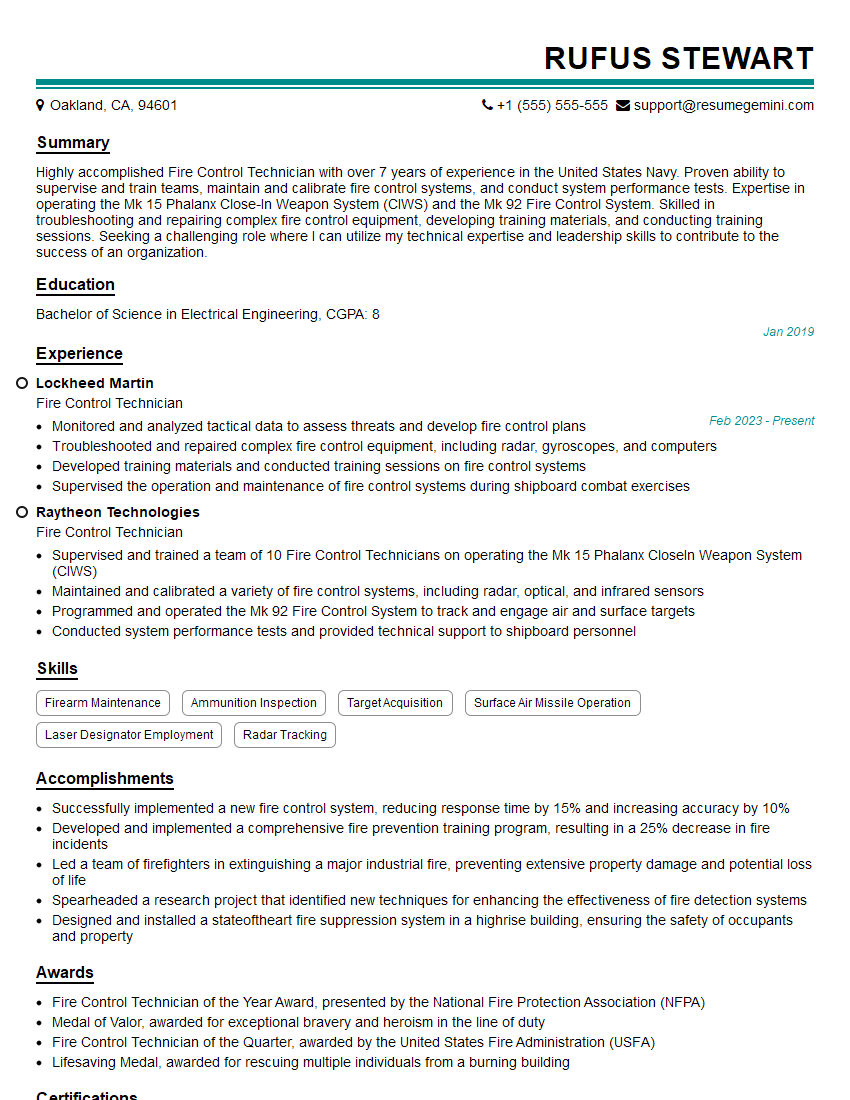
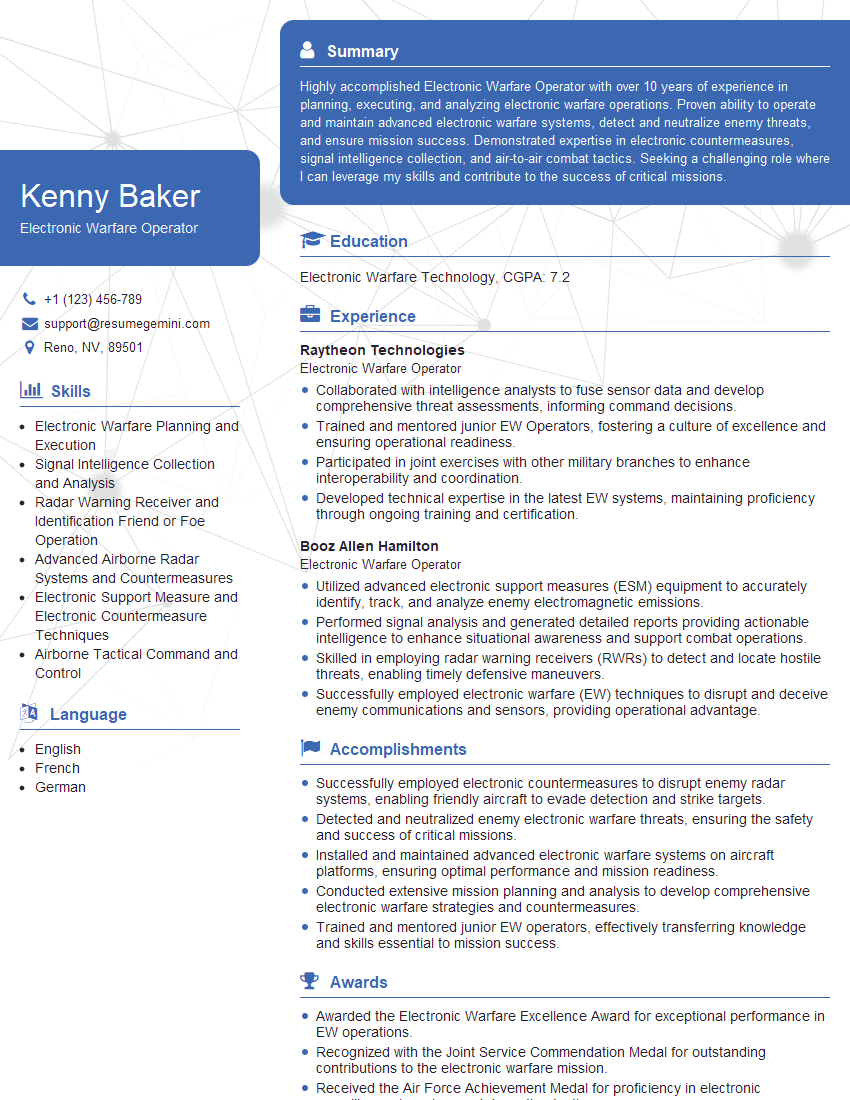
Mastering Weapons Systems Operation opens doors to exciting and impactful careers, offering opportunities for professional growth and significant contributions to national security. To maximize your job prospects, crafting an ATS-friendly resume is paramount. This ensures your qualifications are effectively communicated to hiring managers and Applicant Tracking Systems. We strongly recommend using ResumeGemini to build a professional and impactful resume. ResumeGemini offers a user-friendly platform and provides examples of resumes tailored to the Weapons Systems Operation field, helping you present your skills and experience in the best possible light. Take the next step towards your dream career – build your resume with ResumeGemini today.
Explore more articles
Users Rating of Our Blogs
Share Your Experience
We value your feedback! Please rate our content and share your thoughts (optional).
What Readers Say About Our Blog
Hello,
we currently offer a complimentary backlink and URL indexing test for search engine optimization professionals.
You can get complimentary indexing credits to test how link discovery works in practice.
No credit card is required and there is no recurring fee.
You can find details here:
https://wikipedia-backlinks.com/indexing/
Regards
NICE RESPONSE TO Q & A
hi
The aim of this message is regarding an unclaimed deposit of a deceased nationale that bears the same name as you. You are not relate to him as there are millions of people answering the names across around the world. But i will use my position to influence the release of the deposit to you for our mutual benefit.
Respond for full details and how to claim the deposit. This is 100% risk free. Send hello to my email id: [email protected]
Luka Chachibaialuka
Hey interviewgemini.com, just wanted to follow up on my last email.
We just launched Call the Monster, an parenting app that lets you summon friendly ‘monsters’ kids actually listen to.
We’re also running a giveaway for everyone who downloads the app. Since it’s brand new, there aren’t many users yet, which means you’ve got a much better chance of winning some great prizes.
You can check it out here: https://bit.ly/callamonsterapp
Or follow us on Instagram: https://www.instagram.com/callamonsterapp
Thanks,
Ryan
CEO – Call the Monster App
Hey interviewgemini.com, I saw your website and love your approach.
I just want this to look like spam email, but want to share something important to you. We just launched Call the Monster, a parenting app that lets you summon friendly ‘monsters’ kids actually listen to.
Parents are loving it for calming chaos before bedtime. Thought you might want to try it: https://bit.ly/callamonsterapp or just follow our fun monster lore on Instagram: https://www.instagram.com/callamonsterapp
Thanks,
Ryan
CEO – Call A Monster APP
To the interviewgemini.com Owner.
Dear interviewgemini.com Webmaster!
Hi interviewgemini.com Webmaster!
Dear interviewgemini.com Webmaster!
excellent
Hello,
We found issues with your domain’s email setup that may be sending your messages to spam or blocking them completely. InboxShield Mini shows you how to fix it in minutes — no tech skills required.
Scan your domain now for details: https://inboxshield-mini.com/
— Adam @ InboxShield Mini
Reply STOP to unsubscribe
Hi, are you owner of interviewgemini.com? What if I told you I could help you find extra time in your schedule, reconnect with leads you didn’t even realize you missed, and bring in more “I want to work with you” conversations, without increasing your ad spend or hiring a full-time employee?
All with a flexible, budget-friendly service that could easily pay for itself. Sounds good?
Would it be nice to jump on a quick 10-minute call so I can show you exactly how we make this work?
Best,
Hapei
Marketing Director
Hey, I know you’re the owner of interviewgemini.com. I’ll be quick.
Fundraising for your business is tough and time-consuming. We make it easier by guaranteeing two private investor meetings each month, for six months. No demos, no pitch events – just direct introductions to active investors matched to your startup.
If youR17;re raising, this could help you build real momentum. Want me to send more info?
Hi, I represent an SEO company that specialises in getting you AI citations and higher rankings on Google. I’d like to offer you a 100% free SEO audit for your website. Would you be interested?
Hi, I represent an SEO company that specialises in getting you AI citations and higher rankings on Google. I’d like to offer you a 100% free SEO audit for your website. Would you be interested?
good