Every successful interview starts with knowing what to expect. In this blog, we’ll take you through the top Weather Adaptability interview questions, breaking them down with expert tips to help you deliver impactful answers. Step into your next interview fully prepared and ready to succeed.
Questions Asked in Weather Adaptability Interview
Q 1. Explain the concept of weather adaptability in the context of infrastructure planning.
Weather adaptability in infrastructure planning refers to designing and building structures and systems that can withstand and function effectively despite various weather conditions, both typical and extreme. It’s about proactively minimizing the impact of weather-related events on infrastructure longevity, functionality, and safety. This involves considering factors like wind speeds, rainfall intensity, snow loads, temperature fluctuations, and the potential for flooding, heat waves, or wildfires.
For example, a bridge designed with weather adaptability in mind might incorporate stronger materials, aerodynamic designs to reduce wind resistance, and improved drainage systems to prevent water damage. Similarly, a power grid could be designed with redundant power lines and backup generators to ensure service continuity during storms.
Essentially, it’s a shift from reactive repair and replacement to proactive design that builds resilience from the outset. This approach saves money in the long run by preventing costly damage and service disruptions.
Q 2. Describe different methods for predicting extreme weather events.
Predicting extreme weather events relies on a combination of methods. Numerical weather prediction (NWP) models are crucial. These are complex computer programs that solve equations representing the atmosphere’s physics, using vast amounts of observational data (from satellites, weather stations, radar, etc.) as input. These models can forecast things like hurricanes, blizzards, and heat waves with increasing accuracy, although uncertainties remain, particularly with longer-range forecasts.
- Statistical methods: Analyze historical weather data to identify patterns and probabilities of extreme events. This helps to estimate the likelihood of certain events in specific locations.
- Ensemble forecasting: Runs multiple NWP models with slightly different initial conditions to provide a range of possible outcomes, giving a better understanding of the forecast uncertainty.
- Satellite imagery and remote sensing: Provides crucial data on cloud formation, precipitation, temperature, and wind speed, enhancing the accuracy of NWP models and providing near real-time information on developing weather systems.
Despite advancements, perfect prediction remains elusive. Forecasting extreme weather is a continuous challenge requiring ongoing improvement of models, data collection, and analysis techniques.
Q 3. How can climate models be used to inform adaptation strategies?
Climate models simulate the Earth’s climate system, providing long-term projections of temperature, precipitation, sea level rise, and other climate variables under different emissions scenarios. This information is invaluable for informing adaptation strategies. By projecting future climate conditions, we can anticipate the increased frequency and intensity of extreme weather events in specific regions.
For instance, a climate model might project a significant increase in the frequency of droughts in a particular agricultural region. This allows policymakers to develop adaptation strategies, such as promoting drought-resistant crops, improving water management techniques, or investing in drought-resistant infrastructure.
Climate models are not perfect, and there are uncertainties inherent in their predictions. However, they provide the best available information to guide long-term planning and investment decisions aimed at building climate resilience.
Q 4. What are the key vulnerabilities of your chosen industry to extreme weather?
Focusing on the transportation sector (my chosen industry), key vulnerabilities to extreme weather include:
- Disruptions to road, rail, and air travel: Heavy snow, flooding, high winds, and extreme temperatures can cause road closures, track damage, and flight cancellations, significantly impacting transportation networks and supply chains. For example, extreme cold can cause rails to contract and buckle.
- Damage to infrastructure: Bridges, roads, and airports can be severely damaged by extreme weather events, requiring expensive repairs and causing lengthy service disruptions. Hurricane winds, for example, can severely damage bridges.
- Increased accident risk: Hazardous weather conditions, such as icy roads or heavy fog, increase the risk of accidents, causing delays and potential loss of life.
- Impact on fuel supply: Extreme weather events can disrupt fuel production, transportation, and distribution, leading to shortages and price increases.
Understanding these vulnerabilities is crucial for developing effective adaptation strategies, such as building more resilient infrastructure, improving weather forecasting, and implementing emergency response plans.
Q 5. Discuss the role of early warning systems in mitigating weather-related risks.
Early warning systems (EWS) are critical for mitigating weather-related risks. These systems utilize advanced weather forecasting, monitoring, and communication technologies to provide timely alerts about impending extreme weather events. This allows individuals, communities, and businesses to take proactive measures to minimize the impact of these events.
For example, an EWS for a hurricane might issue warnings several days in advance, allowing people time to evacuate, secure their property, and prepare for the storm. Similarly, a flood warning system can alert communities to potential flooding, giving residents time to move valuables to higher ground and take other precautionary measures.
Effective EWS require robust infrastructure, accurate forecasting models, and reliable communication channels to reach vulnerable populations. The success of an EWS depends not only on the technological aspects but also on the capacity of communities to understand and respond to the warnings issued.
Q 6. How would you assess the resilience of a particular community to climate change?
Assessing community resilience to climate change involves a multi-faceted approach, considering various factors. A comprehensive assessment would include:
- Exposure: Identifying the community’s assets and populations at risk from climate change impacts (e.g., coastal erosion, flooding, heat waves).
- Sensitivity: Evaluating the community’s vulnerability to climate change impacts, considering factors such as socioeconomic status, age demographics, and health conditions.
- Adaptive capacity: Assessing the community’s ability to adapt to climate change, including its access to resources, institutional capacity, and social networks.
- Infrastructure: Evaluating the strength and adaptability of existing infrastructure to withstand extreme weather events.
- Emergency preparedness: Assessing the community’s readiness to respond to climate-related disasters, including emergency plans, communication systems, and community resilience initiatives.
This assessment can involve surveys, interviews, data analysis, and field observations. The results provide insights into the community’s strengths and weaknesses, guiding the development of targeted adaptation strategies.
Q 7. Explain the importance of integrating weather data into decision-making processes.
Integrating weather data into decision-making processes is paramount for effective risk management and resource allocation. Accurate and timely weather information empowers informed decisions across various sectors, from agriculture and transportation to energy and public health.
For instance, farmers can use weather forecasts to optimize irrigation schedules, reducing water waste and improving crop yields. Transportation authorities can use weather data to manage traffic flow, prevent accidents, and plan for potential delays. Energy companies can use weather data to manage energy grids, anticipating peaks in demand during heat waves or power outages during storms.
Incorporating weather data isn’t just about reacting to immediate events. Long-term climate projections provide crucial input for strategic planning, infrastructure development, and resource management, ensuring resilience in the face of future climate challenges. The integration of weather data enhances efficiency, reduces economic losses, and ultimately protects lives and livelihoods.
Q 8. Describe your experience in analyzing weather patterns and their impact on a specific sector.
Analyzing weather patterns and their impact requires a multi-faceted approach. My experience centers around assessing the effects of weather variability on agricultural yields, specifically in the context of wheat production in the Great Plains region of the United States. This involved correlating historical weather data (temperature, precipitation, solar radiation) with crop yield data obtained from the USDA. I utilized statistical modeling techniques, including regression analysis and time series analysis, to identify key weather variables significantly influencing wheat production. For instance, we found that early-season drought significantly reduced yields, while late-season heat waves impacted grain quality. This analysis provided crucial insights for farmers, enabling better planting decisions, irrigation management, and crop insurance strategies.
Further, I’ve developed predictive models using machine learning techniques to forecast potential yield losses based on predicted weather patterns. This allowed stakeholders to proactively implement mitigation strategies and plan for potential economic losses.
Q 9. How do you incorporate uncertainty into weather-related risk assessments?
Incorporating uncertainty into weather-related risk assessments is crucial because weather forecasting is inherently probabilistic, not deterministic. We employ several methods:
- Ensemble Forecasting: This involves running multiple weather models with slightly varying initial conditions to generate a range of possible outcomes. The spread of these predictions reflects the uncertainty.
- Probabilistic Forecasts: Instead of providing a single point prediction (e.g., temperature will be 25°C), we provide probabilities associated with different outcomes (e.g., 70% chance of temperature between 20-30°C).
- Sensitivity Analysis: This examines how the risk assessment changes when we vary the input parameters, such as the uncertainty in rainfall projections or wind speed estimates.
- Monte Carlo Simulation: This technique uses random sampling to generate a large number of possible scenarios, incorporating uncertainty in each parameter, providing a distribution of potential outcomes, rather than a single expected value.
For example, when assessing flood risk, instead of predicting a single flood level, we would generate a range of possible flood levels along with their associated probabilities, allowing stakeholders to plan for a range of potential scenarios, from minor flooding to major catastrophic events.
Q 10. What are some common adaptation strategies for mitigating drought conditions?
Mitigating drought conditions involves a combination of strategies aimed at reducing vulnerability and enhancing resilience. These strategies can be broadly classified into:
- Water Management Strategies: This includes implementing efficient irrigation techniques (drip irrigation, rainwater harvesting), improving water storage and distribution infrastructure, and promoting drought-resistant crops.
- Land Management Practices: This involves practices like crop rotation, no-till farming, cover cropping, and agroforestry, which improve soil moisture retention and reduce runoff.
- Financial Strategies: This includes developing drought insurance programs and establishing financial safety nets for farmers and communities affected by drought.
- Early Warning Systems: Implementing robust monitoring systems to detect drought conditions early allows for timely implementation of mitigation measures.
For example, in California, the implementation of advanced irrigation technologies, coupled with drought-resistant crops, significantly reduced water consumption in agriculture during recent periods of prolonged drought.
Q 11. How can technological advancements enhance weather adaptability?
Technological advancements are revolutionizing weather adaptability. Here are some key examples:
- Advanced Weather Forecasting Models: Higher-resolution models with improved physics and data assimilation techniques provide more accurate and detailed forecasts, enhancing the precision of adaptation strategies.
- Remote Sensing Technologies: Satellites and drones provide valuable data on soil moisture, vegetation health, and other key variables relevant to drought monitoring and impact assessment.
- Artificial Intelligence and Machine Learning: These technologies are used for pattern recognition, predictive modeling, and data analysis, improving forecasting accuracy and enabling the development of sophisticated early warning systems.
- Precision Agriculture Technologies: Sensors, GPS, and automated irrigation systems enable site-specific management of water and other resources, improving efficiency and reducing vulnerability to drought.
For example, the use of AI-powered weather forecasting models coupled with precision agriculture techniques has improved crop yields and reduced water consumption in many agricultural regions across the globe.
Q 12. Explain the difference between mitigation and adaptation in the context of climate change.
Mitigation and adaptation are two distinct but complementary approaches to addressing climate change. Mitigation focuses on reducing the sources of greenhouse gas emissions to limit the magnitude of future climate change. Adaptation, on the other hand, focuses on adjusting to the actual or expected effects of climate change.
Think of it like this: mitigation is like turning down the heat on the stove to prevent the water from boiling over, while adaptation is like getting a bigger pot to accommodate the already-boiling water. Both are necessary for effective climate change management.
Examples of mitigation include transitioning to renewable energy, improving energy efficiency, and adopting sustainable land-use practices. Examples of adaptation include building seawalls to protect against sea-level rise, developing drought-resistant crops, and improving water management strategies.
Q 13. What are some limitations of current weather forecasting technologies?
Despite significant advancements, current weather forecasting technologies still have limitations:
- Limited Predictability: The chaotic nature of the atmosphere limits the predictability of weather beyond a certain time horizon (typically 10-14 days). Uncertainty increases with longer lead times.
- Data Sparsity: In many regions, particularly over oceans and sparsely populated areas, there is a lack of adequate observational data to accurately initialize and validate weather models.
- Computational Limitations: Running high-resolution weather models requires significant computational resources, limiting the capacity for real-time forecasting and ensemble predictions.
- Model Bias and Uncertainties: Weather models are imperfect representations of reality and often exhibit biases and uncertainties that can affect forecast accuracy.
These limitations necessitate the use of probabilistic forecasts, ensemble techniques, and careful consideration of uncertainties when making decisions based on weather predictions.
Q 14. Describe a situation where you had to make a decision based on incomplete weather data.
During a severe thunderstorm event in a mountainous region, our radar data was disrupted due to geographic limitations and heavy precipitation, leading to incomplete data on the intensity and track of the storm. We had to make a crucial decision regarding whether to issue a flash flood warning for downstream communities.
In the absence of complete radar data, we relied on several alternative data sources including river stream gauges, reports from spotters in the field, and historical rainfall patterns for the region. We then employed a Bayesian approach to integrate these multiple data streams, updating our probability assessment of potential flooding with each new piece of information. This allowed us to issue a timely warning despite the incomplete radar data, enabling communities to prepare for potential flash flooding. Although there was still uncertainty, the integration of available data sources allowed for a relatively informed and timely decision.
Q 15. How do you stay updated on the latest advancements in weather science and technology?
Staying at the forefront of weather science and technology requires a multifaceted approach. I regularly consult peer-reviewed journals like the Bulletin of the American Meteorological Society and Weather and Forecasting for the latest research findings. I also actively participate in professional organizations such as the American Meteorological Society (AMS), attending conferences and workshops to network with leading experts and learn about cutting-edge technologies. Furthermore, I subscribe to reputable online resources and newsletters that provide updates on new models, data analysis techniques, and advancements in forecasting capabilities. This continuous learning process is crucial for maintaining my expertise in weather adaptability and ensuring I’m using the most accurate and up-to-date information in my work.
Specifically, I’m keenly interested in developments in high-resolution numerical weather prediction models, advancements in remote sensing technologies (like satellite imagery and radar), and the integration of big data analytics into weather forecasting. These advancements directly impact the accuracy and timeliness of forecasts, leading to better informed adaptation strategies.
Career Expert Tips:
- Ace those interviews! Prepare effectively by reviewing the Top 50 Most Common Interview Questions on ResumeGemini.
- Navigate your job search with confidence! Explore a wide range of Career Tips on ResumeGemini. Learn about common challenges and recommendations to overcome them.
- Craft the perfect resume! Master the Art of Resume Writing with ResumeGemini’s guide. Showcase your unique qualifications and achievements effectively.
- Don’t miss out on holiday savings! Build your dream resume with ResumeGemini’s ATS optimized templates.
Q 16. How would you communicate complex weather information to a non-technical audience?
Communicating complex weather information to a non-technical audience requires a clear and concise approach, avoiding jargon and technical terms whenever possible. I use analogies and relatable examples to explain concepts. For example, instead of saying ‘a trough of low pressure is approaching’, I might say ‘think of it like a dip in a river – the air will be flowing towards that dip, bringing changes in our weather’. I rely heavily on visuals, such as maps, charts, and infographics, to illustrate key points. I also tailor my language and level of detail to the specific audience, recognizing that a farmer’s needs will differ from those of a city planner.
Another effective strategy is to focus on the impacts of the weather rather than the technical details. For instance, instead of discussing specific atmospheric pressure readings, I’d concentrate on the expected effects – like heavy rainfall leading to potential flooding or high winds causing power outages. This helps the audience understand the relevance and potential consequences of the weather forecast, making it more meaningful and actionable.
Q 17. Describe a time you had to adapt a plan due to unexpected weather changes.
During a large-scale outdoor event I was planning, a sudden and unexpected severe thunderstorm warning was issued. Our initial plan included a series of outdoor activities, but with the approaching storm, we faced the risk of lightning strikes and high winds. Adapting required immediate action. First, we assessed the situation, checking weather radar and consulting with local meteorological services for updated forecasts. We then quickly shifted the event schedule indoors, relocating activities to covered areas and providing alternative entertainment options. We communicated the changes clearly and promptly to all participants using email, text messages, and social media updates. Though the change disrupted the planned sequence, prioritizing the safety of attendees proved essential. This experience reinforced the importance of having contingency plans and readily accessible, reliable real-time weather information for managing outdoor events.
Q 18. What are the key metrics used to assess the effectiveness of weather adaptation strategies?
Assessing the effectiveness of weather adaptation strategies relies on a range of key metrics, depending on the specific strategy and context. However, some common metrics include:
- Economic losses avoided: This measures the reduction in financial damage due to weather-related events. For example, comparing the economic losses from a flood before and after the implementation of a flood warning system.
- Lives saved or injuries prevented: This crucial metric focuses on the human cost, assessing the impact of adaptations on reducing fatalities or injuries related to extreme weather.
- Infrastructure resilience: Measuring the ability of infrastructure (roads, buildings, power grids) to withstand extreme weather events. This could involve assessing damage levels before and after improvements in infrastructure design or maintenance.
- Crop yields or livestock survival rates: In agriculture, adaptation measures aim to protect crops and livestock. Monitoring these metrics reveals the effectiveness of strategies such as drought-resistant crop varieties or improved irrigation systems.
- Community preparedness and response time: This metric assesses the effectiveness of community-based adaptation strategies by looking at the time it takes to implement response strategies and the community’s overall readiness.
Choosing the appropriate metrics necessitates understanding the goals and objectives of the specific adaptation strategy.
Q 19. How would you evaluate the cost-effectiveness of different adaptation options?
Evaluating the cost-effectiveness of different adaptation options requires a comprehensive cost-benefit analysis. This involves identifying all costs associated with implementing each option (including upfront investments, maintenance, and operational costs), and then comparing these costs against the benefits, which are often expressed in terms of avoided losses (economic, social, environmental). For example, building seawalls to protect coastal communities will have a high upfront cost, but the potential benefits of preventing extensive flood damage might outweigh the expenses in the long run.
A crucial aspect is using appropriate discounting techniques to account for the time value of money. Costs incurred today are more significant than costs incurred in the future, and this should be reflected in the analysis. Furthermore, it’s important to consider uncertainties. Climate projections, for instance, often include ranges of possible outcomes, making it necessary to conduct sensitivity analyses to assess how the cost-effectiveness varies under different scenarios.
Finally, non-economic factors should be considered. While cost-benefit analysis is quantitative, incorporating qualitative aspects such as social equity and environmental impacts is vital for a comprehensive evaluation.
Q 20. Explain the concept of climate risk management.
Climate risk management is a systematic process for identifying, assessing, and managing the risks posed by climate change. It involves understanding the potential impacts of climate change on various sectors (e.g., agriculture, infrastructure, health) and developing strategies to reduce vulnerability and enhance resilience. This is not just about reacting to immediate weather events, but proactively preparing for future climate change impacts.
The process typically involves these steps:
- Risk identification: Identifying potential climate-related hazards (e.g., floods, droughts, heat waves) and their potential impacts on specific locations and communities.
- Risk assessment: Evaluating the likelihood and potential severity of these impacts, taking into account factors such as vulnerability and exposure.
- Risk reduction and adaptation: Developing and implementing strategies to reduce the likelihood or severity of impacts. This might involve engineering solutions (e.g., building seawalls), policy changes (e.g., building codes), or behavioral changes (e.g., water conservation).
- Monitoring and evaluation: Tracking the effectiveness of implemented strategies and adapting them as needed based on new information and changing conditions.
Successful climate risk management requires a collaborative approach, involving governments, businesses, communities, and scientists working together.
Q 21. What are some ethical considerations related to weather forecasting and adaptation?
Ethical considerations in weather forecasting and adaptation are multifaceted. One key concern is ensuring equitable access to accurate and timely weather information. Vulnerable populations, particularly those in developing countries or marginalized communities, may lack access to the resources and technologies necessary to receive and utilize weather forecasts, leaving them disproportionately exposed to weather-related risks.
Another ethical issue involves the potential for miscommunication or misuse of weather information. For example, inaccurate forecasts or poorly communicated warnings can lead to inappropriate responses, potentially causing harm. Transparency and accuracy are crucial. The potential for bias in forecasting systems is also a growing concern. Historical data used to train these models might reflect existing social and economic inequalities, leading to forecasts that are less accurate for certain groups or areas. Ensuring fairness and equity in algorithmic design and application is therefore essential. Lastly, there is the increasing ethical debate around the use of weather modification technologies, such as cloud seeding, which raise questions about potential environmental impacts and equitable distribution of resources.
Q 22. Discuss the role of collaboration in addressing weather-related challenges.
Addressing weather-related challenges effectively requires a multidisciplinary approach, emphasizing collaboration. Think of it like a complex puzzle – no single piece can solve it alone. Successful weather adaptability involves bringing together meteorologists, climatologists, engineers, economists, policymakers, and community leaders.
Meteorologists provide crucial real-time weather data and forecasts.
Climatologists offer long-term climate projections, informing adaptation strategies.
Engineers design resilient infrastructure, such as flood defenses or drought-resistant crops.
Economists assess the economic impacts of weather events and develop mitigation strategies.
Policymakers create regulations and incentives to encourage adaptation.
Community leaders engage local populations, ensuring community-specific needs are addressed.
For example, developing a comprehensive flood management plan for a coastal city requires collaboration between engineers designing flood barriers, meteorologists predicting storm surges, policymakers enacting building codes, and community leaders educating residents on preparedness measures. This collaborative approach ensures a holistic solution that addresses various aspects of the problem.
Q 23. How do you incorporate climate projections into long-term planning?
Incorporating climate projections into long-term planning is crucial for proactive adaptation. We can’t just react to weather events; we need to anticipate them. This involves using climate models to project changes in temperature, precipitation, and extreme weather events over various time horizons (e.g., 20, 50, or 100 years).
The process usually involves these steps:
Identify key climate variables: Determine the relevant climate parameters that will impact the planning area (e.g., sea-level rise, increased frequency of heatwaves, changes in rainfall patterns).
Select appropriate climate scenarios: Utilize projections from reputable sources like the IPCC (Intergovernmental Panel on Climate Change) to choose scenarios representing different levels of greenhouse gas emissions.
Assess vulnerabilities: Identify critical infrastructure, populations, and ecosystems most vulnerable to these projected changes.
Develop adaptation strategies: Create specific measures to reduce risks and build resilience, such as investing in drought-resistant crops, relocating vulnerable populations, or strengthening coastal defenses.
Monitor and evaluate: Regularly track the effectiveness of implemented strategies and adjust plans as needed.
For instance, a city planning for water resources might use climate projections to predict future droughts and invest in water conservation technologies and diversified water sources to ensure long-term water security.
Q 24. Explain the concept of weather derivatives and their role in risk management.
Weather derivatives are financial instruments whose value is derived from meteorological variables like temperature, rainfall, or wind speed. Imagine them as insurance policies specifically tailored to weather-related risks.
They help manage risk by transferring the uncertainty of weather-related losses to the financial markets. For instance:
A farmer might buy a weather derivative linked to rainfall. If rainfall falls below a certain threshold, the derivative pays out, compensating for crop losses.
An energy company relying on hydropower might use a derivative based on streamflow. If the streamflow is lower than expected, reducing energy production, the derivative helps offset the financial impact.
These derivatives provide a quantifiable measure of risk and allow businesses to budget more accurately for potential weather-related losses. They shift the burden of risk from individual entities to a broader market, promoting financial stability and enhancing adaptability in the face of uncertain weather conditions.
Q 25. How can insurance mechanisms contribute to weather adaptability?
Insurance mechanisms are critical for weather adaptability because they provide financial protection against losses from weather-related events. They encourage proactive risk management by incentivizing preventative measures.
Here’s how they contribute:
Financial safety net: Insurance compensates for losses, enabling individuals and businesses to recover more quickly from weather-related disasters.
Incentivize risk reduction: Insurance companies often offer discounts for adopting risk-reduction measures, such as installing fire-resistant roofing or building to higher flood standards, thus promoting proactive adaptation.
Data collection and analysis: Insurance claims provide valuable data on the frequency and severity of weather events, informing risk assessment and adaptation strategies.
For example, crop insurance protects farmers from losses due to drought or floods, enabling them to continue farming even after experiencing a weather-related setback. Similarly, homeowner’s insurance with flood coverage helps families recover after a hurricane. These mechanisms support long-term resilience by minimizing financial disruptions caused by adverse weather.
Q 26. Describe your experience with GIS and its application in weather-related analysis.
Geographic Information Systems (GIS) are invaluable tools for analyzing weather-related data and visualizing spatial patterns. I’ve extensively used GIS in various projects to map rainfall patterns, analyze flood risks, and model the spread of wildfires.
Applications include:
Overlaying weather data with geographical features: I can combine rainfall data with elevation maps to identify areas prone to flooding or landslides.
Spatial analysis: GIS allows me to quantify the extent and impact of weather events, identifying vulnerable areas and populations.
Modeling: I can use GIS to model the spread of wildfires based on wind patterns, vegetation type, and topography, helping with predictive fire management.
Visualization: Creating maps and charts makes it easy to communicate complex weather data to stakeholders, facilitating informed decision-making.
For example, in a recent project assessing the vulnerability of coastal communities to sea-level rise, I used GIS to overlay projected sea-level rise scenarios with population density and infrastructure maps, identifying high-risk areas and informing relocation strategies.
Q 27. What are some emerging trends in weather adaptability?
Several emerging trends are shaping the field of weather adaptability:
Increased use of AI and Machine Learning: AI is improving weather forecasting accuracy and enabling more sophisticated risk assessment and prediction of extreme weather events.
Advancements in remote sensing technologies: High-resolution satellite imagery and drones provide more detailed and frequent data on weather patterns and their impacts on the environment.
Focus on nature-based solutions: Restoring wetlands, reforestation, and other ecological approaches are gaining traction as cost-effective and sustainable ways to enhance weather resilience.
Greater emphasis on community engagement: Successful adaptation requires the active participation of local communities, which is increasingly recognized and incorporated into planning processes.
Integration of climate change adaptation into broader development planning: Weather adaptability is no longer considered a separate issue but is becoming increasingly integrated into urban planning, infrastructure development, and economic strategies.
These trends highlight a shift towards proactive, data-driven, and community-centered approaches to weather adaptability, reflecting a growing understanding of the complex interplay between weather, climate, and human societies.
Key Topics to Learn for Weather Adaptability Interview
- Understanding Meteorological Data: Learn to interpret various weather data sources (e.g., satellite imagery, radar, surface observations) and apply this knowledge to real-world scenarios.
- Weather Forecasting and Prediction: Explore different forecasting methods and their limitations. Understand how to assess forecast accuracy and uncertainty.
- Climate Change Impacts: Analyze the effects of climate change on specific weather patterns and how these impacts influence various industries (e.g., agriculture, transportation).
- Risk Assessment and Mitigation: Develop strategies for assessing weather-related risks and implementing effective mitigation plans. This includes understanding probability and impact analysis.
- Technological Applications: Familiarize yourself with weather-related technologies and their applications, such as weather modeling software, remote sensing, and data analysis tools.
- Communication and Collaboration: Practice explaining complex weather information clearly and concisely to diverse audiences, emphasizing effective teamwork in weather-related projects.
- Problem-Solving in Dynamic Environments: Develop your ability to analyze weather-related challenges, propose solutions, and adapt to rapidly changing conditions.
- Case Studies and Practical Examples: Review real-world examples of how weather adaptability has been successfully implemented in different contexts. This will help you illustrate your understanding during the interview.
Next Steps
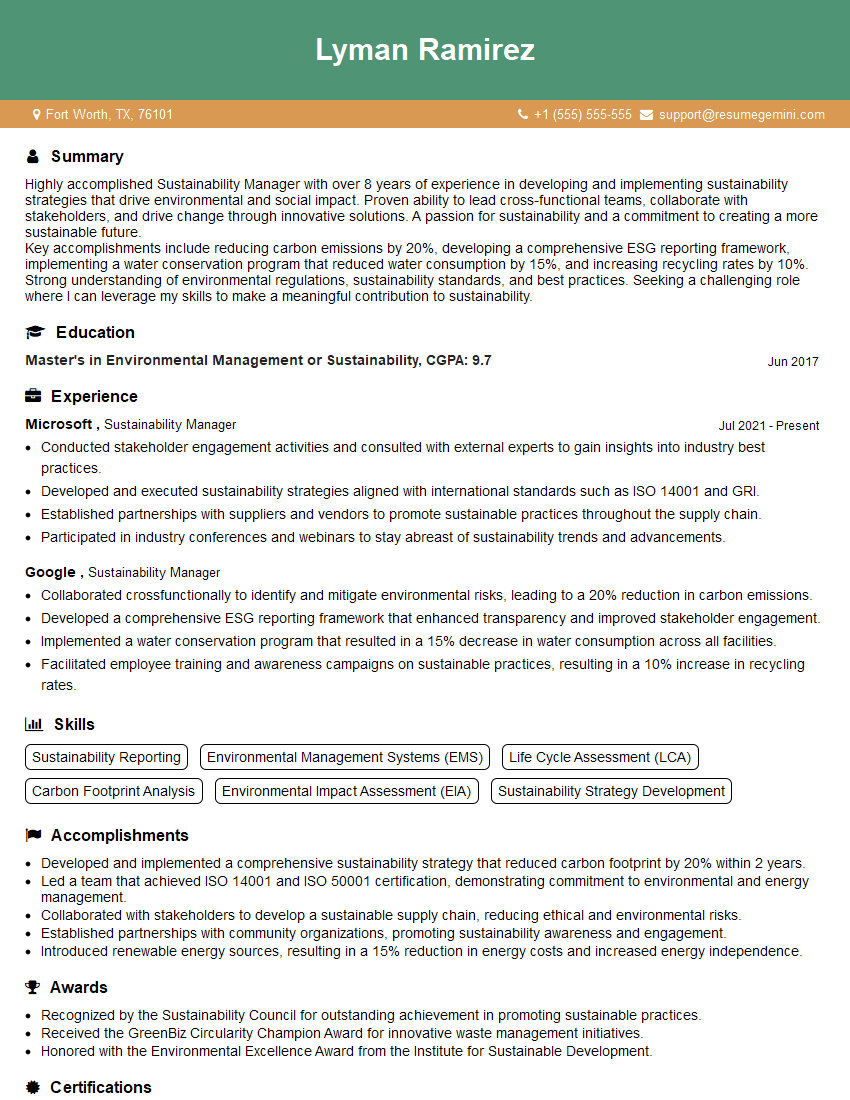
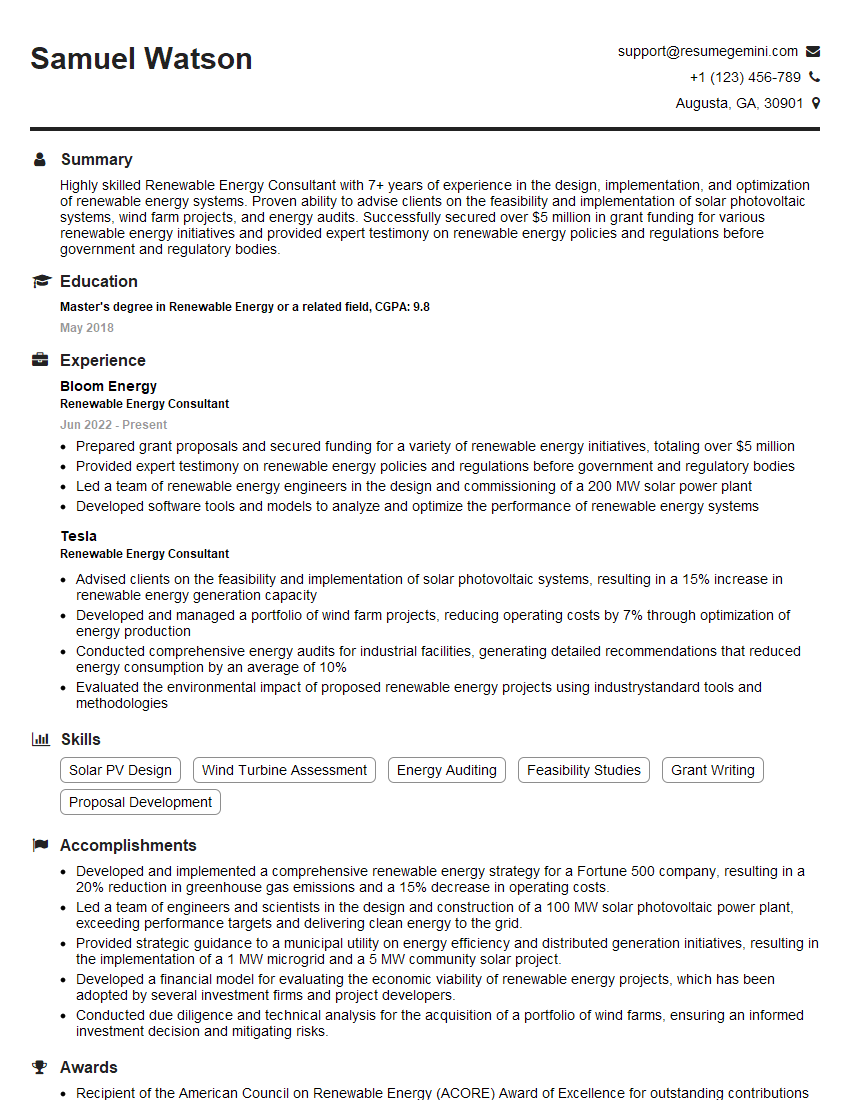
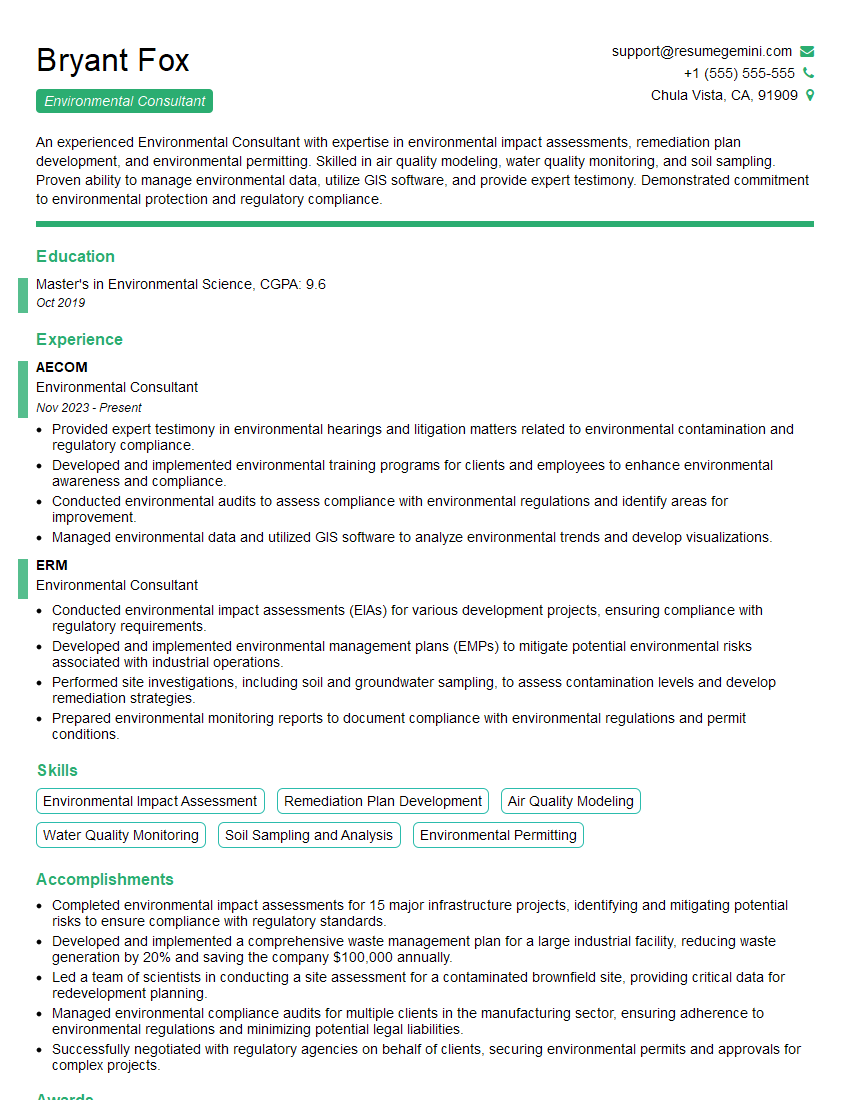
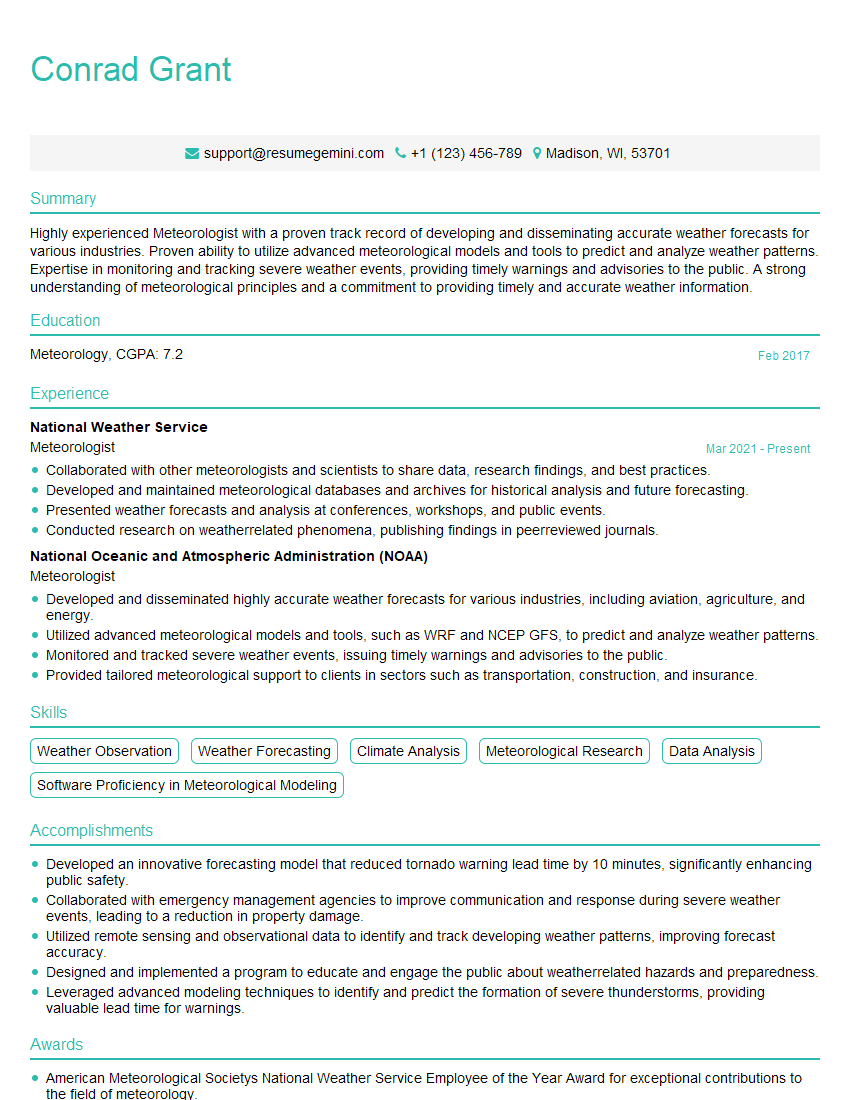
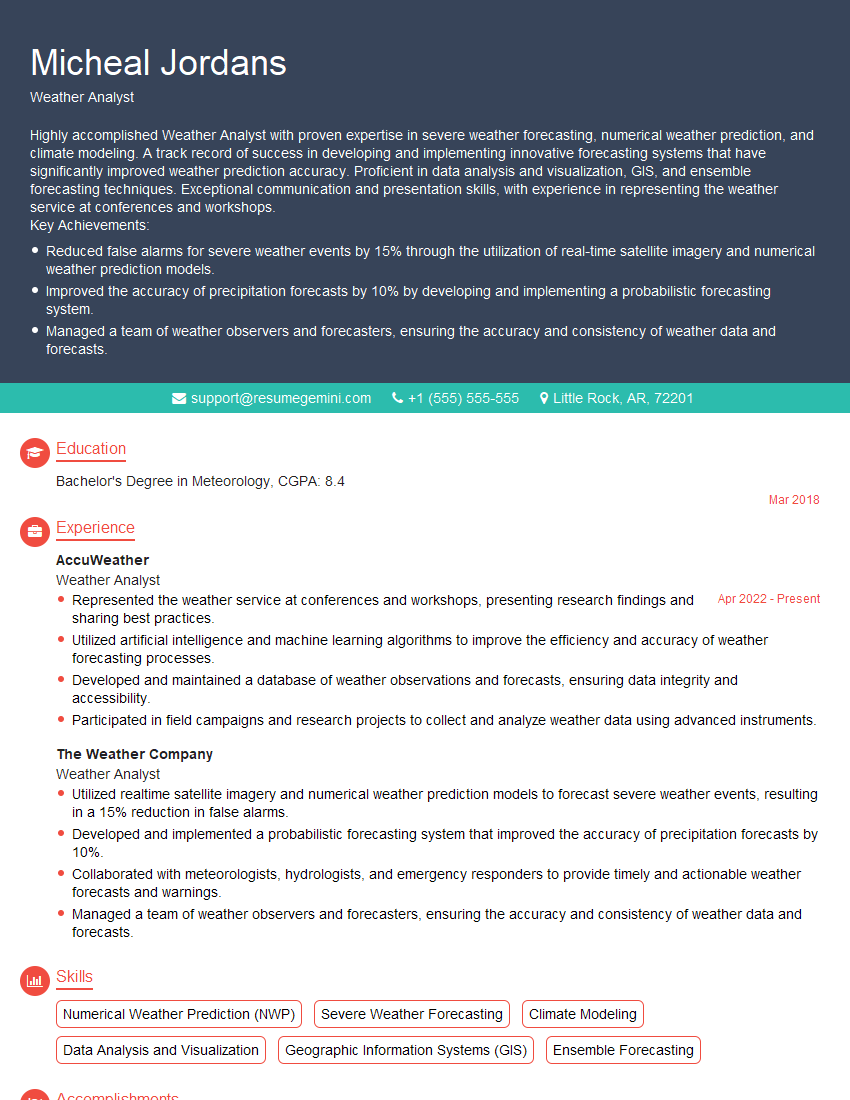
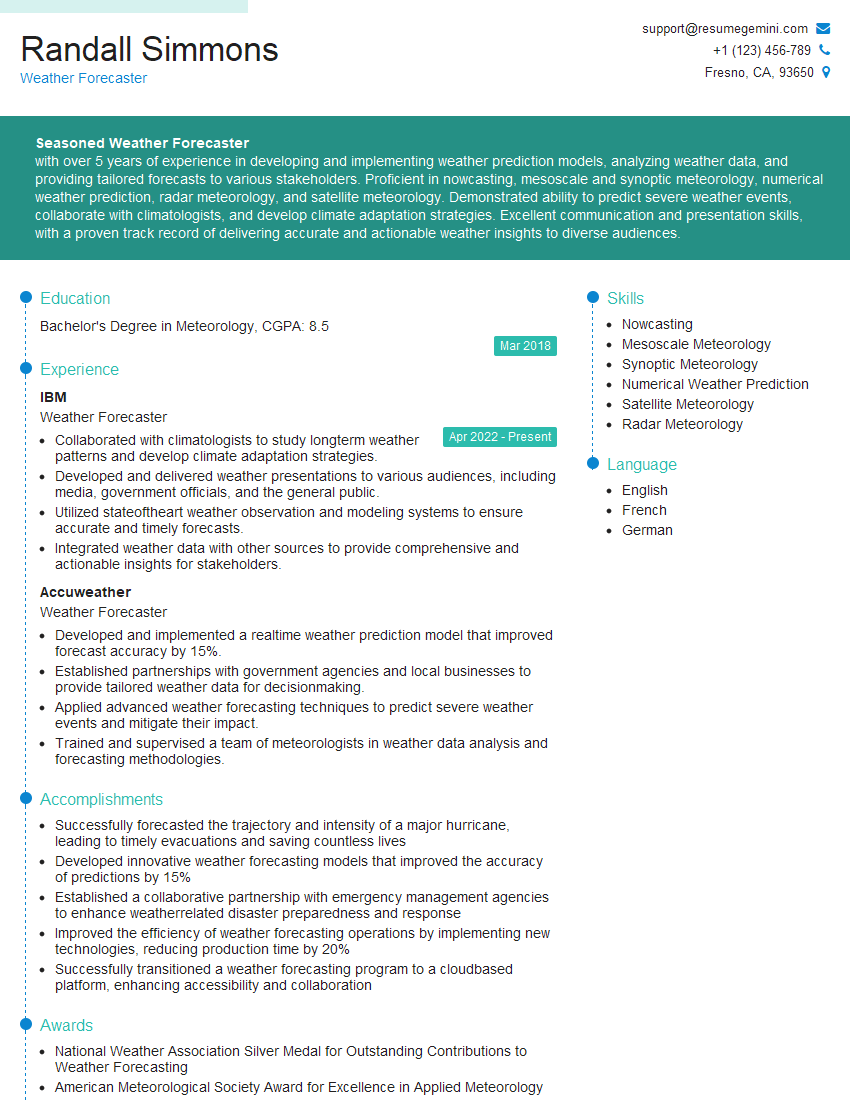
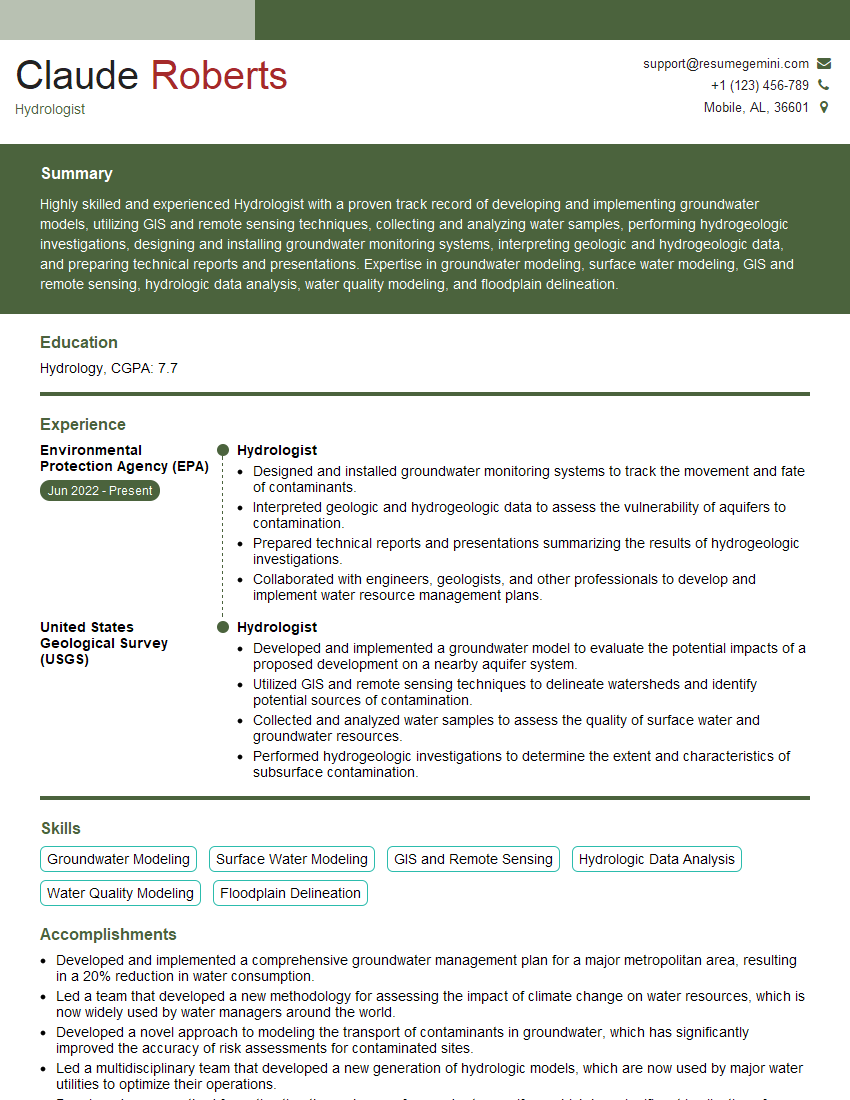
Mastering weather adaptability is crucial for career advancement in various fields, including meteorology, environmental science, and disaster management. A strong understanding of weather patterns, forecasting techniques, and risk assessment significantly enhances your problem-solving skills and decision-making abilities. To maximize your job prospects, create an ATS-friendly resume that highlights your relevant skills and experience. ResumeGemini is a trusted resource that can help you build a professional and impactful resume tailored to your specific career goals. Examples of resumes tailored to showcasing Weather Adaptability expertise are available through ResumeGemini.
Explore more articles
Users Rating of Our Blogs
Share Your Experience
We value your feedback! Please rate our content and share your thoughts (optional).
What Readers Say About Our Blog
Hello,
we currently offer a complimentary backlink and URL indexing test for search engine optimization professionals.
You can get complimentary indexing credits to test how link discovery works in practice.
No credit card is required and there is no recurring fee.
You can find details here:
https://wikipedia-backlinks.com/indexing/
Regards
NICE RESPONSE TO Q & A
hi
The aim of this message is regarding an unclaimed deposit of a deceased nationale that bears the same name as you. You are not relate to him as there are millions of people answering the names across around the world. But i will use my position to influence the release of the deposit to you for our mutual benefit.
Respond for full details and how to claim the deposit. This is 100% risk free. Send hello to my email id: [email protected]
Luka Chachibaialuka
Hey interviewgemini.com, just wanted to follow up on my last email.
We just launched Call the Monster, an parenting app that lets you summon friendly ‘monsters’ kids actually listen to.
We’re also running a giveaway for everyone who downloads the app. Since it’s brand new, there aren’t many users yet, which means you’ve got a much better chance of winning some great prizes.
You can check it out here: https://bit.ly/callamonsterapp
Or follow us on Instagram: https://www.instagram.com/callamonsterapp
Thanks,
Ryan
CEO – Call the Monster App
Hey interviewgemini.com, I saw your website and love your approach.
I just want this to look like spam email, but want to share something important to you. We just launched Call the Monster, a parenting app that lets you summon friendly ‘monsters’ kids actually listen to.
Parents are loving it for calming chaos before bedtime. Thought you might want to try it: https://bit.ly/callamonsterapp or just follow our fun monster lore on Instagram: https://www.instagram.com/callamonsterapp
Thanks,
Ryan
CEO – Call A Monster APP
To the interviewgemini.com Owner.
Dear interviewgemini.com Webmaster!
Hi interviewgemini.com Webmaster!
Dear interviewgemini.com Webmaster!
excellent
Hello,
We found issues with your domain’s email setup that may be sending your messages to spam or blocking them completely. InboxShield Mini shows you how to fix it in minutes — no tech skills required.
Scan your domain now for details: https://inboxshield-mini.com/
— Adam @ InboxShield Mini
Reply STOP to unsubscribe
Hi, are you owner of interviewgemini.com? What if I told you I could help you find extra time in your schedule, reconnect with leads you didn’t even realize you missed, and bring in more “I want to work with you” conversations, without increasing your ad spend or hiring a full-time employee?
All with a flexible, budget-friendly service that could easily pay for itself. Sounds good?
Would it be nice to jump on a quick 10-minute call so I can show you exactly how we make this work?
Best,
Hapei
Marketing Director
Hey, I know you’re the owner of interviewgemini.com. I’ll be quick.
Fundraising for your business is tough and time-consuming. We make it easier by guaranteeing two private investor meetings each month, for six months. No demos, no pitch events – just direct introductions to active investors matched to your startup.
If youR17;re raising, this could help you build real momentum. Want me to send more info?
Hi, I represent an SEO company that specialises in getting you AI citations and higher rankings on Google. I’d like to offer you a 100% free SEO audit for your website. Would you be interested?
Hi, I represent an SEO company that specialises in getting you AI citations and higher rankings on Google. I’d like to offer you a 100% free SEO audit for your website. Would you be interested?
good