Interviews are more than just a Q&A session—they’re a chance to prove your worth. This blog dives into essential Web Press Maintenance interview questions and expert tips to help you align your answers with what hiring managers are looking for. Start preparing to shine!
Questions Asked in Web Press Maintenance Interview
Q 1. Describe your experience troubleshooting web press malfunctions.
Troubleshooting web press malfunctions requires a systematic approach. I start by carefully observing the problem – is it a complete shutdown, reduced speed, poor print quality, or something else? This initial assessment guides my next steps. I then utilize my knowledge of the press’s various systems (ink, dampening, paper feed, registration, etc.) to isolate the potential source. For example, if I see inconsistent ink density, I might check the ink rollers, fountain solution levels, and the metering system. If the press is completely down, I’ll first check for obvious issues like power supply, emergency stops, or sensor failures. I rely heavily on diagnostic tools – both built-in press systems and external diagnostic equipment – to pinpoint the problem. I’ve worked on various brands of presses, so I’m familiar with their unique diagnostic features. Once I identify the problem, I’ll consult manuals, schematics, and my experience to determine the appropriate repair or adjustment. I also find it crucial to document every step of the troubleshooting process, including the initial problem, my observations, the steps I took, and the final solution. This documentation is vital for future reference and preventative maintenance.
For example, once I experienced a recurring paper jam in the folder section of a heatset press. By carefully observing the paper path and running diagnostic tests, I found that the folder rollers were slightly misaligned, causing the paper to buckle and jam. A simple adjustment resolved the issue completely.
Q 2. Explain the process of maintaining ink rollers and dampening systems.
Maintaining ink rollers and dampening systems is critical for consistent print quality. Ink rollers need regular cleaning to remove dried ink and debris. This involves using appropriate solvents and cleaning tools. I also check for roller wear and tear, replacing them when necessary. Proper roller durometer (hardness) is essential to maintain consistent ink transfer. The dampening system – responsible for delivering the correct amount of fountain solution (water-based solution that helps with ink-water balance) – requires regular monitoring of solution levels and pH balance. A balanced pH is crucial for efficient ink transfer and prevents issues like mottle (uneven ink distribution) or scumming (ink on non-image areas). I frequently check the dampening rollers for wear and ensure their proper function, including cleaning and adjusting the roller settings. Regular cleaning of the dampening system and filter replacements prevent buildup of bacteria and other contaminants that affect print quality. It’s almost like keeping a delicate ecosystem balanced; it’s not just about the right amount of water but the correct balance.
Q 3. What are the common causes of paper jams in a web press?
Paper jams in a web press can stem from various causes, often related to the paper itself or the press’s mechanics. Common causes include:
- Paper defects: Wrinkles, creases, or tears in the paper can easily cause jams. This highlights the importance of using high-quality paper.
- Improper paper handling: Incorrect paper feed settings, misaligned rollers, or insufficient tension can lead to jams. This underscores the importance of following proper setup procedures.
- Mechanical issues: Worn or damaged rollers, misaligned guides, or obstructions in the paper path can create jams. Regular preventative maintenance is key here.
- Static electricity: In dry environments, static electricity can cause paper sheets to stick together, leading to jams. Humidity control is crucial to prevent this.
- Incorrect paper type: Using the wrong paper weight or type can stress the press and cause jams. Always select the right paper for the press and job.
Troubleshooting involves systematically checking each of these areas. I start with the most likely causes – examining the paper path for obstructions and checking the paper’s quality. If the problem persists, I’ll move to more intricate diagnostics, possibly using the press’s own diagnostic system.
Q 4. How do you perform preventative maintenance on a web press?
Preventative maintenance on a web press is crucial to avoid costly downtime and ensure consistent print quality. My approach involves a structured schedule combining daily, weekly, monthly, and yearly checks. Daily maintenance includes cleaning rollers, checking ink and dampening systems, and inspecting the paper path for any debris. Weekly tasks involve more thorough cleaning, lubrication of moving parts, and checks for wear and tear. Monthly checks might include adjustments to registration and a more comprehensive examination of the entire paper path. Yearly maintenance is extensive and may include major component inspections, overhauls, and potential replacements. This often involves specialized tools and might require engaging external specialists for certain components. I keep meticulous records of all preventative maintenance activities, using digital logs to track the work performed, dates, and any noted issues. This data provides a valuable history of the press’s performance and helps to predict potential problems before they occur. Preventative maintenance is like regular car servicing; it helps avert major, expensive repairs down the line.
Q 5. Describe your experience with different types of web presses (e.g., heatset, coldset).
My experience encompasses both heatset and coldset web presses. Heatset presses use heat to dry the ink, resulting in a glossy finish and a wider range of ink choices. Coldset presses use a slower drying process, typically relying on absorption into the paper. These differ significantly in their operational requirements. Heatset presses require intricate temperature and drying controls, along with a thorough understanding of ink drying characteristics. I’ve worked extensively on high-speed heatset presses used for magazine and catalog printing, adept at managing their complex drying systems and high-speed paper handling. Coldset presses, often used for newspaper printing, demand expertise in dampening systems and ink-water balance to ensure sharp, crisp images. I understand the nuances of each technology, and I can readily adapt my maintenance and troubleshooting skills based on the specific press type.
Q 6. What are your skills in troubleshooting electrical issues in a web press?
Troubleshooting electrical issues requires a good understanding of electrical safety protocols and a systematic approach. I’m proficient in using multimeters, oscilloscopes, and other diagnostic tools to identify faulty components, such as motor controllers, sensors, circuit boards, and wiring harnesses. Before attempting any repairs, I always ensure the power is completely disconnected to prevent electrical shock. I understand the schematics of web presses and can trace electrical signals to find the root of the problem. I’ve successfully diagnosed and repaired issues like faulty motor starters, short circuits, and sensor malfunctions. My training emphasizes safety first; any electrical work is done according to strict safety protocols. I’ll often consult the press’s electrical schematics and manuals to ensure proper repair procedures.
Q 7. Explain the importance of proper registration in web printing.
Proper registration in web printing is paramount. Registration refers to the precise alignment of different colors or images printed on the same sheet of paper. Misregistration, where colors don’t perfectly align, results in blurred images and poor print quality – think of a slightly off-kilter color in a logo – it looks sloppy and unprofessional. Maintaining proper registration involves adjustments to various components within the press, such as the impression cylinders, rollers, and grippers. These adjustments often require precision and a keen eye for detail. I utilize various tools and techniques to achieve and maintain accurate registration, including adjustment screws, optical registration aids, and real-time monitoring of the printed output. Regular preventative maintenance, especially paying attention to the mechanisms that maintain the paper path, is crucial in minimizing registration issues. Just a small misalignment can ruin a large print run, resulting in wasted paper and potential delays.
Q 8. How do you identify and resolve problems with ink density and color consistency?
Maintaining consistent ink density and color is crucial for high-quality web press printing. Inconsistencies can stem from various sources, including worn ink rollers, incorrect ink viscosity, or issues with the inking system itself.
Identifying the problem often involves a systematic approach. I’d start by visually inspecting the printed sheets, looking for variations in color across the web. A densitometer provides precise measurements of ink density, allowing for objective comparisons across different sections of the print. If I notice inconsistencies, I’d then check the following:
- Ink rollers: Are they worn, damaged, or improperly installed? Worn rollers can cause uneven ink distribution.
- Ink viscosity: Is the ink too thick or too thin? Incorrect viscosity can lead to variations in density.
- Inking system: Are there any leaks, blockages, or malfunctions in the inking system? This could include problems with the ink pumps, ductor rollers, or fountain rollers.
- Plate condition: Are there any scratches or damage on the printing plates themselves? This can impact ink transfer.
Resolving the problem requires addressing the root cause. For example, worn rollers would need replacement. Viscosity issues can be corrected by adding or removing thinner or adjusting the fountain solution. A clogged inking system requires cleaning and possibly repair. Damaged plates would need to be replaced or reworked.
I’ve successfully resolved many ink density and color issues by following this process. For instance, one time we experienced inconsistent color in a large print run. Using the densitometer, we pinpointed the problem to a worn ink roller. Replacing it immediately restored color consistency and prevented significant waste.
Q 9. What are the safety procedures you follow when working on a web press?
Safety is paramount in web press operation. My procedures always begin with a thorough machine inspection before commencing any work. I always utilize lockout/tagout procedures to ensure power is isolated before any maintenance or repair. This involves physically locking out power sources and tagging them with clear warnings.
I adhere strictly to Personal Protective Equipment (PPE) protocols, which typically include safety glasses, hearing protection, gloves, and steel-toed shoes. I am also trained in handling potentially hazardous materials like inks and cleaning solvents, ensuring proper ventilation and disposal methods are followed.
Furthermore, I’m trained in safe lifting techniques and using appropriate tools. I avoid reaching into moving machinery and never disable safety guards. Before restarting the machine, I meticulously inspect the area to ensure all tools are removed and everything is properly secured. Regular safety training refreshes my knowledge and keeps me abreast of best practices. I proactively report any safety concerns or near-miss incidents to my supervisor.
Q 10. Describe your experience with maintaining and adjusting web press controls.
My experience with web press controls encompasses both the mechanical and electronic aspects. I’m proficient in adjusting registration controls to ensure precise alignment of colors and images across the web. I understand how to fine-tune tension controls to maintain consistent web flow, preventing breaks and ensuring proper print quality. I’m also adept at using the various control panels to monitor and adjust parameters such as ink density, drying temperature, and speed.
I’ve worked extensively with both older mechanical systems and newer computerized control panels. I’m comfortable reading and interpreting control panel displays, troubleshooting error messages, and making adjustments based on real-time feedback. My experience includes working with different types of web presses, allowing me to adapt to various control systems efficiently. For example, I once resolved a jam by adjusting the tension controls after carefully diagnosing the issue through the control panel’s diagnostic information.
Q 11. How familiar are you with different types of printing plates and their maintenance?
I’m familiar with various printing plates, including conventional metal plates, thermal plates, and computer-to-plate (CTP) plates. Each has its unique maintenance requirements.
Metal plates require careful handling to prevent scratches or damage. Cleaning and storage are crucial to maintain their condition and prolong their lifespan. Regular inspection for wear is essential.
Thermal plates are more sensitive to heat and pressure; incorrect processing can easily damage them. Their proper handling and storage are crucial to avoid distortion and maintain image quality.
CTP plates are often more durable but require careful processing and handling to avoid scratches. Regular cleaning is necessary to remove residues that may impact print quality.
My experience includes identifying and resolving issues related to plate mounting, ensuring proper registration, and detecting plate wear. I understand the impact of plate quality on print quality, and I’m skilled in troubleshooting issues arising from faulty plates.
Q 12. Explain your experience with maintaining and troubleshooting the web press’s drying system.
Maintaining and troubleshooting the drying system is crucial for preventing print smudging and ensuring the final product is dry and ready for further processing. The drying system usually utilizes infrared or hot air drying techniques.
My experience involves regularly inspecting and cleaning the drying system components, including the heaters, air blowers, and associated ductwork. I troubleshoot issues such as uneven drying, insufficient drying, or malfunctions in the heating elements. This might involve checking thermostat settings, cleaning air filters, or replacing faulty components. Understanding the different types of drying systems and their specific maintenance requirements is critical. For instance, troubleshooting a faulty infrared drying system would involve different procedures compared to fixing a hot air system.
I remember one instance where uneven drying led to smudging. By carefully checking the airflow distribution within the drying chamber and cleaning clogged air filters, we restored even drying across the web, resolving the problem.
Q 13. What is your experience with the different types of paper used in web printing?
My experience encompasses a wide range of papers used in web printing, including newsprint, coated paper, uncoated paper, and specialty papers. Each type of paper has its own properties and requires specific adjustments to the press settings.
Newsprint, for example, is absorbent and requires specific adjustments in ink-water balance to prevent feathering or show-through. Coated papers offer superior print quality but can be more sensitive to moisture and require precise tension control. Uncoated papers are more versatile but may require different ink densities to achieve the desired results.
Understanding the characteristics of different paper types is essential for optimizing print quality and avoiding issues like paper breaks, jamming, and uneven ink absorption. My experience allows me to adjust press settings, including moisture content, tension, and speed, based on the specific paper being used.
Q 14. How do you ensure the proper tension of the paper web?
Maintaining the proper tension of the paper web is vital for preventing breaks, ensuring consistent print quality, and avoiding jams. Too much tension can cause the paper to break, while too little tension can lead to slippage and misregistration.
The tension is controlled using various mechanisms, including dancer rollers, tension controls on the unwind and rewind stands, and the various rollers throughout the press. I monitor tension using sensors and visual cues. The process involves adjusting the settings on these mechanisms to maintain the optimal tension for the specific paper weight and press speed.
Correct tension is crucial; if it is too tight, the paper can stretch and tear, leading to production stops. If it is too loose, the paper can wrinkle or slip, creating misalignment. My experience involves working with different tension control systems and knowing how to identify and resolve tension-related problems. I know how to interpret the readings on tension gauges, and understand the cause-and-effect relationship between tension settings and printing quality.
Q 15. What is your experience with cleaning and maintaining the various components of the web press?
Cleaning and maintaining a web press is a multi-faceted process requiring meticulous attention to detail. It’s akin to servicing a complex machine with many interconnected parts. My experience encompasses cleaning and maintaining all major components, including the inking system, dampening system, impression cylinders, blankets, rollers, and the paper path.
Inking System: This involves regularly cleaning ink ducts, fountains, and rollers to prevent ink buildup and maintain consistent color density. I’m proficient in using appropriate cleaning solvents and techniques to avoid damaging delicate components. For example, I know the specific procedures for cleaning a specific type of Anilox roller to prevent scratching.
Dampening System: Maintaining the dampening system is crucial for preventing issues like mottle and set-off. This includes regular cleaning of the rollers, maintaining correct alcohol concentration, and checking for leaks. I can troubleshoot issues like inconsistent dampening based on my understanding of water and alcohol ratios and their effect on paper.
Blanket Cylinders and Blankets: Cleaning and changing blankets is a critical part of press maintenance. I am skilled in properly mounting and removing blankets, minimizing downtime and preventing damage to the printing cylinders. My experience includes cleaning blankets with specialized solutions to remove accumulated ink and debris.
Paper Path: Keeping the paper path clean and free of debris is vital for smooth paper feed and consistent printing. This includes cleaning the rollers, grippers, and other components that come into contact with the paper. I understand the effects of paper dust accumulation and how to prevent associated issues.
Regular cleaning not only extends the life of the components but also ensures high-quality print output. A neglected press leads to poor print quality, increased downtime, and higher running costs.
Career Expert Tips:
- Ace those interviews! Prepare effectively by reviewing the Top 50 Most Common Interview Questions on ResumeGemini.
- Navigate your job search with confidence! Explore a wide range of Career Tips on ResumeGemini. Learn about common challenges and recommendations to overcome them.
- Craft the perfect resume! Master the Art of Resume Writing with ResumeGemini’s guide. Showcase your unique qualifications and achievements effectively.
- Don’t miss out on holiday savings! Build your dream resume with ResumeGemini’s ATS optimized templates.
Q 16. Explain your understanding of the relationship between paper type and printing parameters.
The relationship between paper type and printing parameters is crucial for achieving optimal print quality. Different paper types have varying absorbency, surface smoothness, and thickness, all of which significantly impact how ink is transferred and dried.
Paper Absorbency: Highly absorbent papers require more ink and may necessitate adjustments to the dampening system to prevent excessive show-through. Conversely, less absorbent papers might require less ink and different dampening settings to avoid ink trapping.
Surface Smoothness: Smoother papers usually produce sharper images with better dot definition, while rougher papers can result in softer images with a more textured appearance. This necessitates adjustments in the printing pressure and ink viscosity.
Paper Thickness: Thicker papers often require higher printing pressure to achieve proper impression, while thinner papers necessitate less pressure to prevent damage. I always consult the paper manufacturer’s specifications for optimal printing parameters.
For instance, when printing on coated paper compared to uncoated newsprint, I adjust the ink viscosity to ensure proper transfer and the pressure settings to avoid damaging the delicate coated surface while ensuring good ink adhesion. Incorrect parameter settings can result in poor registration, smudging, set-off (ink transfer to the next sheet), or even paper jams.
Q 17. How do you identify and address issues related to blanket wear and tear?
Blanket wear and tear is a common issue in web press operations. Identifying and addressing this requires regular inspection and understanding of the causes.
Visual Inspection: Regular visual checks for signs of wear, such as scratches, abrasions, and thinning, are crucial. I look for uneven wear patterns, which can indicate misalignment or problems with the impression cylinder.
Measuring Blanket Thickness: Using a calibrated micrometer, I measure the blanket thickness at various points to identify areas of excessive wear. This helps determine when a blanket replacement is necessary. I always adhere to the manufacturer’s specifications for minimum thickness.
Analyzing Print Quality: Deteriorating blankets can cause problems like mottle (uneven ink distribution), poor dot gain (enlargement of dots), and fuzzy images. Identifying these problems on printed samples gives me clues about the condition of the blankets.
Addressing the Root Cause: Once wear is identified, I investigate the underlying cause. This could range from misalignment issues, excessive pressure, improper cleaning techniques, or paper defects. Tackling the root cause is crucial for preventing premature blanket wear.
For example, if I observe a particular area of the blanket showing excessive wear, I’ll check the impression cylinder for misalignment or damage. A simple adjustment could save a costly blanket replacement.
Q 18. How proficient are you with using various diagnostic tools for web presses?
I am proficient in using a wide range of diagnostic tools for web presses. My experience includes using various tools for both preventative maintenance and troubleshooting.
Spectrophotometers: These tools measure the color density and color accuracy of the printed output, aiding in adjusting ink settings and identifying ink-related issues.
Densitometers: Used to measure the density of individual ink dots, densitometers help in achieving consistent print quality and identifying problems with dot gain or dot loss.
Micrometers: These are essential for measuring blanket thickness, ensuring proper impression cylinder settings, and checking the gap between printing elements.
Pressure Gauges: Critical for monitoring the pressure applied during the printing process, these gauges aid in preventing blanket wear and maintaining consistent print quality.
Digital Monitoring Systems: Many modern presses have integrated digital monitoring systems providing real-time data on press parameters, allowing for proactive identification of potential problems.
I am also comfortable interpreting the data obtained from these tools to make informed decisions about maintenance and adjustments.
Q 19. Describe your experience with preventative maintenance schedules and their implementation.
Preventative maintenance is the cornerstone of efficient web press operation. I’m experienced in developing and implementing detailed preventative maintenance schedules tailored to specific press models and printing volumes.
Scheduled Maintenance Tasks: My schedules typically include daily, weekly, monthly, and annual maintenance tasks. Daily tasks might include cleaning rollers, checking ink levels, and inspecting the paper path. Weekly tasks may include more thorough cleaning and lubrication, while monthly tasks could include blanket inspection and adjustments. Annual tasks might involve major overhauls of specific components.
Documentation and Tracking: I maintain meticulous records of all maintenance activities, including dates, tasks performed, and any parts replaced. This ensures proper tracking of maintenance history and facilitates proactive decision-making about future maintenance.
Predictive Maintenance: I’m also proficient in incorporating predictive maintenance strategies using data from the press’s monitoring system to identify potential problems before they occur, thus avoiding unplanned downtime.
A well-structured preventative maintenance schedule not only increases the lifespan of the press but also minimizes unexpected breakdowns, significantly improving overall productivity and reducing operational costs.
Q 20. What is your approach to managing multiple maintenance tasks simultaneously?
Managing multiple maintenance tasks simultaneously requires effective prioritization and organizational skills. My approach involves using a combination of techniques:
Prioritization Matrix: I use a prioritization matrix to categorize tasks based on urgency and impact. Urgent and high-impact tasks are tackled first, while less urgent tasks can be scheduled accordingly.
Task Scheduling Software: Utilizing task management software allows me to schedule and track multiple tasks effectively, ensuring that deadlines are met and resources are allocated efficiently.
Teamwork and Coordination: When working with a team, effective communication and coordination are key. Clear roles, responsibilities, and timelines are crucial to avoid conflicts and ensure the smooth execution of multiple tasks.
Flexibility: Unexpected issues can arise. Therefore, maintaining flexibility in the schedule allows me to respond effectively to emergencies without compromising the overall maintenance plan.
For example, if a major problem occurs during a scheduled preventative maintenance session, I’ll prioritize addressing that issue while informing the relevant stakeholders of any potential delays in the original schedule. It’s all about balancing planned and unplanned activities efficiently.
Q 21. How do you prioritize maintenance tasks based on urgency and impact?
Prioritizing maintenance tasks involves carefully considering both urgency and impact. I use a combination of factors to determine the order of tasks:
Urgency: Tasks that could lead to immediate press downtime or safety hazards are given the highest priority. For example, a major ink pump failure needs immediate attention.
Impact: The potential impact of a task on print quality, production efficiency, or overall press lifespan also plays a crucial role in prioritization. For instance, addressing a misalignment issue that causes poor registration has a high impact.
Cost-Benefit Analysis: Some maintenance tasks might involve significant costs. A cost-benefit analysis is carried out to evaluate the cost of the maintenance task against the potential loss if the issue is not addressed.
Preventative vs. Corrective Maintenance: Preventative maintenance tasks are often prioritized over corrective tasks to prevent future problems.
A systematic approach to prioritization ensures that critical tasks are addressed promptly, reducing downtime and maintaining efficient press operation.
Q 22. Describe a time you had to troubleshoot a complex web press issue. What was your approach?
One challenging situation involved a sudden increase in print misregistration on a high-speed web press during a crucial newspaper run. My approach was systematic and prioritized minimizing downtime. First, I visually inspected the entire press, checking for obvious issues like loose rollers, damaged gears, or incorrectly adjusted grippers. Finding nothing immediately apparent, I moved to a more detailed analysis. I meticulously checked the register controls, paying close attention to the fine-tuning adjustments. I then systematically checked each printing unit, comparing its registration marks to the previous unit. This revealed a slight misalignment in the third printing unit’s impression cylinder.
After identifying the culprit, I carefully adjusted the impression cylinder using the micrometer adjustments, making tiny increments until the misregistration was eliminated. Once corrected, I ran a test print to verify the fix and then resumed full production. This methodical approach, combining visual inspection with a structured diagnostic process, is crucial in resolving complex web press issues quickly and efficiently. The key was to avoid jumping to conclusions and instead systematically rule out potential causes.
Q 23. How familiar are you with different types of printing inks and their properties?
I’m highly familiar with various printing inks, including their properties and applications in web press operations. My expertise spans across different ink types, such as:
- UV (Ultraviolet) Curing Inks: These inks dry instantly upon exposure to UV light, offering fast turnaround times and excellent print quality, but require specialized equipment. They are a great option for high-gloss applications.
- Water-Based Inks: Environmentally friendly and relatively low-odor, these inks are increasingly popular. They require specific paper choices and careful press adjustments to prevent issues such as dot gain or excessive feathering.
- Solvent-Based Inks: Known for their vibrant colors and high opacity, these inks have a stronger odor and require robust ventilation in the pressroom. They are often used in packaging printing.
Understanding each ink’s viscosity, drying properties, and chemical composition is critical for achieving optimal print quality and preventing press issues like clogging or drying in the wrong places. For instance, the viscosity of the ink will affect the density of the printed image and needs to be constantly monitored and adjusted for optimal results. Furthermore, understanding ink-substrate interactions is vital for avoiding problems like ink-mottle or picking.
Q 24. What are some common causes of print defects and how would you address them?
Print defects are common in web press operations, and troubleshooting them requires a systematic approach. Some frequent culprits include:
- Misregistration: Images or colors are not aligned correctly. This could stem from issues with the impression cylinders, grippers, or register controls. Addressing it involves meticulous adjustment of the press components.
- Hickeys: Small, unwanted spots on the printed sheet, typically caused by foreign objects in the ink or on the rollers. Regular cleaning and maintenance, coupled with thorough ink filtration, are essential for prevention.
- Mottle: Uneven ink distribution, creating a mottled appearance. This can arise from issues with ink viscosity, improper roller settings, or substrate problems. Adjusting ink viscosity and carefully examining the inking system are key steps in resolving this.
- Set-off: Wet ink transferring from one sheet to the next. This often necessitates adjusting the drying system or using a different type of ink.
My approach to tackling these defects focuses on careful observation, process elimination, and thorough documentation. I use a checklist to methodically examine all potential sources before making adjustments, always ensuring that the changes are recorded and tracked for future reference.
Q 25. Explain your knowledge of web press automation systems and their maintenance.
Modern web presses incorporate extensive automation systems for enhanced efficiency and precision. My experience encompasses several aspects of these systems, including:
- Automated Register Controls: These systems automatically adjust the position of the printing units to ensure accurate registration. Maintenance includes regular calibration checks and preventative servicing of the sensors and control mechanisms.
- Automated Ink Controls: These systems regulate ink flow and consistency, optimizing the printing process. Maintenance involves checking ink supply, cleaning and recalibrating the sensors, and ensuring the smooth functioning of the control valves.
- Automated Web Guiding Systems: These maintain the correct alignment of the paper web, preventing misalignment. Regular cleaning of sensors, checking for wear on the guide rollers, and lubrication are essential maintenance tasks.
Understanding the control systems, often involving PLC programming and networking protocols, is critical for efficient troubleshooting and maintenance. I am proficient in diagnosing malfunctions, implementing corrective actions, and utilizing predictive maintenance strategies to avoid unexpected downtime.
Q 26. How do you ensure the accuracy of print production based on customer specifications?
Ensuring print production accuracy based on customer specifications necessitates a multi-stage approach. It begins with a thorough review and interpretation of the client’s specifications, including color profiles (e.g., Pantone or CMYK), resolution requirements, and substrate type.
Before commencing production, we conduct rigorous pre-press checks, including color proofing and test prints to validate the accuracy of color reproduction and register. Throughout the production run, we continuously monitor the print quality using densitometers and other quality control tools to detect and correct any deviations from the specifications. Finally, a thorough post-production inspection is conducted to ensure that the final product adheres to the customer requirements. This rigorous system minimizes errors, preventing costly reprints and maintaining customer satisfaction.
Q 27. What is your experience with maintaining a clean and organized pressroom environment?
Maintaining a clean and organized pressroom is paramount for safety, efficiency, and consistent print quality. My experience includes implementing and enforcing 5S methodologies (Sort, Set in Order, Shine, Standardize, Sustain) to systematically organize the workspace, improving workflow and reducing the risk of accidents. This involves regular cleaning of all press components, proper storage of ink, chemicals, and other supplies, and ensuring that all walkways and emergency exits are clear. A tidy workspace not only enhances safety but also contributes to improved press uptime and reduced waste.
Q 28. Describe your experience with managing a team in a pressroom maintenance setting.
In pressroom maintenance, effective team management is crucial. My approach is based on clear communication, delegation of tasks, and fostering a collaborative environment. I emphasize the importance of safety and regularly conduct training sessions on proper procedures and equipment usage. I delegate responsibilities based on individual skills and experience, creating a culture of shared responsibility and accountability. Regular team meetings provide a platform for sharing information, resolving issues, and identifying areas for improvement. My leadership style focuses on providing support, mentoring team members, and recognizing their contributions, fostering a motivated and productive team.
Key Topics to Learn for Your Web Press Maintenance Interview
- Press Operation & Setup: Understanding the mechanics of web presses, including different types (e.g., offset, digital), their components, and the setup process for various print jobs. Practical application: Describe your experience with pre-press checks, plate mounting, and ink adjustments.
- Preventive Maintenance & Troubleshooting: Mastering routine maintenance procedures to prevent breakdowns and quickly diagnose and resolve common issues. Practical application: Explain your approach to identifying the root cause of a malfunction and implementing effective solutions. Include examples of preventive measures you’ve taken.
- Safety Procedures & Regulations: Demonstrating a thorough understanding of safety protocols, including lockout/tagout procedures and hazard identification. Practical application: Describe your experience with maintaining a safe working environment and adhering to industry safety standards.
- Quality Control & Ink Management: Understanding color management, ink density, and print quality control techniques. Practical application: Explain your experience with adjusting ink settings to achieve desired color accuracy and consistent print quality.
- Automation & Computer Systems: Familiarity with the computer systems and automation technologies used in modern web press operations. Practical application: Discuss your experience with operating and troubleshooting computer-controlled press components.
- Roll Handling & Paper Management: Understanding the proper techniques for handling paper rolls, managing paper supply, and addressing paper jams. Practical application: Describe your experience with efficient roll changes and troubleshooting paper feed issues.
Next Steps
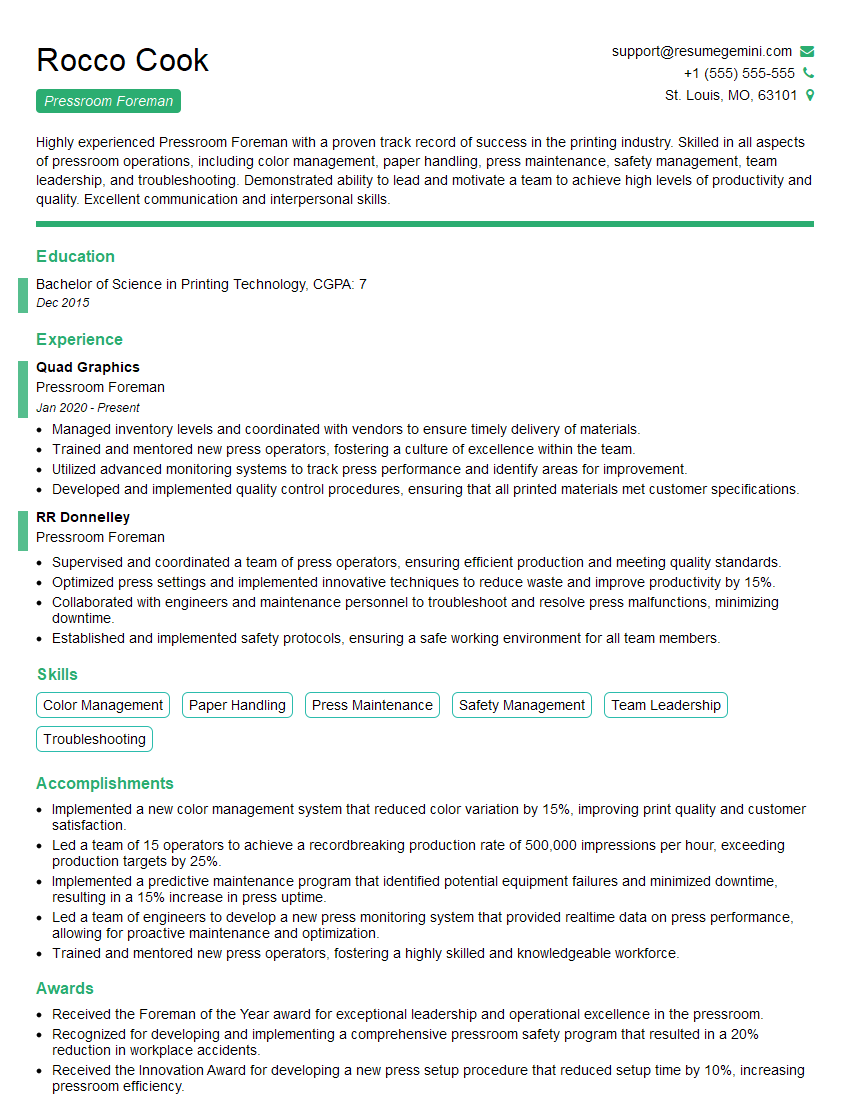
Mastering Web Press Maintenance opens doors to rewarding and challenging careers with excellent growth potential. To maximize your job prospects, creating a strong, ATS-friendly resume is crucial. ResumeGemini is a trusted resource to help you build a professional resume that highlights your skills and experience effectively. We provide examples of resumes tailored to Web Press Maintenance to guide you through the process. Invest time in crafting a compelling resume – it’s your first impression on potential employers.
Explore more articles
Users Rating of Our Blogs
Share Your Experience
We value your feedback! Please rate our content and share your thoughts (optional).
What Readers Say About Our Blog
Attention music lovers!
Wow, All the best Sax Summer music !!!
Spotify: https://open.spotify.com/artist/6ShcdIT7rPVVaFEpgZQbUk
Apple Music: https://music.apple.com/fr/artist/jimmy-sax-black/1530501936
YouTube: https://music.youtube.com/browse/VLOLAK5uy_noClmC7abM6YpZsnySxRqt3LoalPf88No
Other Platforms and Free Downloads : https://fanlink.tv/jimmysaxblack
on google : https://www.google.com/search?q=22+AND+22+AND+22
on ChatGPT : https://chat.openai.com?q=who20jlJimmy20Black20Sax20Producer
Get back into the groove with Jimmy sax Black
Best regards,
Jimmy sax Black
www.jimmysaxblack.com
Hi I am a troller at The aquatic interview center and I suddenly went so fast in Roblox and it was gone when I reset.
Hi,
Business owners spend hours every week worrying about their website—or avoiding it because it feels overwhelming.
We’d like to take that off your plate:
$69/month. Everything handled.
Our team will:
Design a custom website—or completely overhaul your current one
Take care of hosting as an option
Handle edits and improvements—up to 60 minutes of work included every month
No setup fees, no annual commitments. Just a site that makes a strong first impression.
Find out if it’s right for you:
https://websolutionsgenius.com/awardwinningwebsites
Hello,
we currently offer a complimentary backlink and URL indexing test for search engine optimization professionals.
You can get complimentary indexing credits to test how link discovery works in practice.
No credit card is required and there is no recurring fee.
You can find details here:
https://wikipedia-backlinks.com/indexing/
Regards
NICE RESPONSE TO Q & A
hi
The aim of this message is regarding an unclaimed deposit of a deceased nationale that bears the same name as you. You are not relate to him as there are millions of people answering the names across around the world. But i will use my position to influence the release of the deposit to you for our mutual benefit.
Respond for full details and how to claim the deposit. This is 100% risk free. Send hello to my email id: lukachachibaialuka@gmail.com
Luka Chachibaialuka
Hey interviewgemini.com, just wanted to follow up on my last email.
We just launched Call the Monster, an parenting app that lets you summon friendly ‘monsters’ kids actually listen to.
We’re also running a giveaway for everyone who downloads the app. Since it’s brand new, there aren’t many users yet, which means you’ve got a much better chance of winning some great prizes.
You can check it out here: https://bit.ly/callamonsterapp
Or follow us on Instagram: https://www.instagram.com/callamonsterapp
Thanks,
Ryan
CEO – Call the Monster App
Hey interviewgemini.com, I saw your website and love your approach.
I just want this to look like spam email, but want to share something important to you. We just launched Call the Monster, a parenting app that lets you summon friendly ‘monsters’ kids actually listen to.
Parents are loving it for calming chaos before bedtime. Thought you might want to try it: https://bit.ly/callamonsterapp or just follow our fun monster lore on Instagram: https://www.instagram.com/callamonsterapp
Thanks,
Ryan
CEO – Call A Monster APP
To the interviewgemini.com Owner.
Dear interviewgemini.com Webmaster!
Hi interviewgemini.com Webmaster!
Dear interviewgemini.com Webmaster!
excellent
Hello,
We found issues with your domain’s email setup that may be sending your messages to spam or blocking them completely. InboxShield Mini shows you how to fix it in minutes — no tech skills required.
Scan your domain now for details: https://inboxshield-mini.com/
— Adam @ InboxShield Mini
support@inboxshield-mini.com
Reply STOP to unsubscribe
Hi, are you owner of interviewgemini.com? What if I told you I could help you find extra time in your schedule, reconnect with leads you didn’t even realize you missed, and bring in more “I want to work with you” conversations, without increasing your ad spend or hiring a full-time employee?
All with a flexible, budget-friendly service that could easily pay for itself. Sounds good?
Would it be nice to jump on a quick 10-minute call so I can show you exactly how we make this work?
Best,
Hapei
Marketing Director
Hey, I know you’re the owner of interviewgemini.com. I’ll be quick.
Fundraising for your business is tough and time-consuming. We make it easier by guaranteeing two private investor meetings each month, for six months. No demos, no pitch events – just direct introductions to active investors matched to your startup.
If youR17;re raising, this could help you build real momentum. Want me to send more info?
Hi, I represent an SEO company that specialises in getting you AI citations and higher rankings on Google. I’d like to offer you a 100% free SEO audit for your website. Would you be interested?
Hi, I represent an SEO company that specialises in getting you AI citations and higher rankings on Google. I’d like to offer you a 100% free SEO audit for your website. Would you be interested?