Are you ready to stand out in your next interview? Understanding and preparing for Window Display Concept Development interview questions is a game-changer. In this blog, we’ve compiled key questions and expert advice to help you showcase your skills with confidence and precision. Let’s get started on your journey to acing the interview.
Questions Asked in Window Display Concept Development Interview
Q 1. Describe your process for developing a window display concept from initial brief to final execution.
My process for developing a window display concept is a meticulous blend of creativity and strategic planning. It begins with a thorough understanding of the client brief, which includes the brand’s identity, target audience, marketing objectives, and the overall theme or message to be conveyed. I then delve into market research, exploring current trends, competitor analyses, and the latest in visual merchandising techniques.
Next, I develop a mood board, gathering images, colors, textures, and materials that reflect the desired aesthetic. This visual representation helps solidify the initial concept and guides the subsequent design phases. From the mood board, I create detailed sketches and 3D renderings to visualize the display’s structure, layout, and product placement. This ensures that the final design is both aesthetically pleasing and practically feasible.
Once the design is approved, I move into the execution phase. This involves sourcing props, selecting mannequins (if applicable), arranging lighting, and overseeing the installation of the display. Throughout the process, I maintain constant communication with the client, ensuring alignment with their vision and addressing any concerns. Finally, I conduct a post-installation review to assess the effectiveness and identify potential areas for improvement.
- Initial Brief Analysis: Understanding brand, audience, and objectives.
- Market Research & Trend Analysis: Staying current with visual merchandising styles.
- Mood Board Development: A visual representation of the concept.
- Design & Rendering: Creating detailed visuals of the proposed display.
- Sourcing & Procurement: Acquiring necessary materials and props.
- Installation & Execution: Overseeing the setup of the display.
- Post-Installation Review: Evaluating effectiveness and identifying improvements.
Q 2. Explain your experience with different display techniques (e.g., mannequin styling, prop selection, lighting).
My experience encompasses a wide range of display techniques, all aimed at maximizing visual impact and brand storytelling. In mannequin styling, I prioritize posing that is both aesthetically pleasing and reflects the brand’s personality. For instance, for a high-fashion brand, I might employ dynamic, avant-garde poses; whereas, for a more casual brand, I would opt for relaxed, approachable poses. I carefully consider clothing placement and accessory selection to highlight key features and create a cohesive look.
Prop selection is crucial; it adds depth, context, and narrative to the display. I choose props based on their ability to enhance the story, reinforce the brand message, and create a visually compelling scene. This might involve using unconventional materials, repurposed items, or custom-made pieces depending on the specific project. For lighting, I leverage different techniques to accentuate product features, create mood, and draw the viewer’s attention. Strategic use of lighting—spotlights, backlighting, and ambient lighting—can dramatically alter the perception of the display.
For example, in a recent project for a jewelry brand, I used minimalistic, sleek mannequins, strategically placed spotlights to highlight the shimmer of the jewels, and minimalist props, like polished stones and mirrored surfaces, to create a luxurious and sophisticated atmosphere. The contrast between the simplicity of the setting and the brilliance of the jewelry made the pieces the undeniable focal point.
Q 3. How do you incorporate brand messaging and marketing campaigns into your window display designs?
Integrating brand messaging and marketing campaigns into window display designs is essential for driving sales and enhancing brand awareness. I achieve this by carefully aligning the design elements with the campaign’s overall theme, messaging, and color palette. This might involve incorporating key campaign visuals, slogans, or promotional offers directly into the display.
For example, if a brand is launching a new collection based on a specific theme (e.g., ‘tropical paradise’), the window display would reflect that theme through the use of colors (bright blues, greens, yellows), props (palm trees, beach balls, etc.), and even music played subtly in the vicinity. The visual messaging would be clear and concise, possibly incorporating a large, eye-catching banner or a digital screen showcasing the campaign video. This creates a holistic brand experience that extends from the marketing campaign to the physical storefront, ensuring consistent messaging and maximizing impact.
Q 4. How do you stay up-to-date with current trends in visual merchandising and window display?
Staying current with trends in visual merchandising and window display requires a proactive approach. I regularly attend industry events, conferences, and trade shows to network with peers and learn about the latest innovations and techniques. I also subscribe to industry publications, follow key influencers on social media platforms such as Instagram and Pinterest, and explore online resources dedicated to visual merchandising.
Moreover, I actively seek out inspiration from different sources, including art, fashion, design, and architecture. This cross-disciplinary approach helps me develop fresh perspectives and incorporate innovative ideas into my work. Keeping abreast of retail trends, technological advancements (such as interactive displays), and shifts in consumer behavior are paramount in ensuring the designs remain relevant and engaging.
Q 5. How would you handle a last-minute change in a window display brief?
Handling last-minute changes requires adaptability and efficient problem-solving. My first step would be to understand the nature and scope of the changes. I’d then assess the impact on the existing timeline and budget. Open communication with the client is crucial to ensuring everyone is on the same page and to prevent misunderstandings.
Depending on the nature of the change, I would prioritize the essential elements of the display and determine what can be adjusted or omitted to meet the new requirements. This may involve prioritizing certain aspects of the original concept while making compromises in less critical areas. My team and I would work collaboratively to ensure a smooth and timely execution, even with limited time. If necessary, we might adjust the installation schedule or bring in additional resources to meet the revised deadline without compromising the quality of the display.
Q 6. Describe a time you had to work under pressure to meet a deadline for a window display.
I once had to design and execute a window display for a major department store launch in just three days. The original design team had unexpectedly withdrawn, leaving us with a tight deadline and significant pressure. We immediately assembled a core team of experienced designers, prop makers, and installers.
We streamlined the design process, focusing on a simplified yet impactful concept that utilized readily available materials. We opted for a bold, minimalist approach to compensate for the lack of time for intricate details. We established a clear workflow, dividing tasks and responsibilities to maximize efficiency. Through intense teamwork and around-the-clock dedication, we managed to create and install the display before the launch. The result, while simpler than initially planned, was surprisingly effective, generating significant positive feedback and exceeding customer expectations.
Q 7. How do you measure the success of a window display?
Measuring the success of a window display goes beyond simple aesthetics; it’s about quantifiable results. Key metrics include:
- Foot Traffic Increase: Monitoring store traffic before, during, and after the display’s installation.
- Sales Conversion Rates: Tracking the percentage of shoppers who enter the store and make a purchase.
- Social Media Engagement: Monitoring likes, shares, and comments on photos of the window display (if shared online).
- Customer Feedback: Gathering both direct feedback and anecdotal evidence of customer reactions.
- Brand Recall and Awareness: Surveys or focus groups can assess how well the display conveyed the brand message.
By analyzing these metrics, I can determine the effectiveness of the display in driving traffic, influencing purchasing behavior, and strengthening brand recognition. This data informs future designs, allowing for continuous improvement and optimization.
Q 8. How familiar are you with different retail environments and their specific display requirements?
My experience spans a wide range of retail environments, from high-end boutiques to large department stores and pop-up shops. Understanding the nuances of each is crucial for effective window display design. For example, a high-end boutique demands elegance and exclusivity, often utilizing minimalist displays with high-quality materials. In contrast, a department store might require bolder, more eye-catching displays to compete for attention among numerous brands. Pop-up shops need highly impactful displays to draw customers in a limited timeframe. I tailor my approach to each setting, considering factors like the target audience, brand identity, product characteristics, and available space. I’ve successfully designed displays for various retail sectors, including fashion, cosmetics, electronics, and home goods, demonstrating my adaptability and understanding of diverse display requirements.
- High-end Boutiques: Emphasis on minimalism, luxury materials, and subtle lighting.
- Department Stores: Bold colors, dynamic layouts, and strong visual hierarchy to compete for attention.
- Pop-up Shops: High-impact designs, often incorporating interactive elements, to create a memorable experience.
Q 9. Describe your experience with different software used for visual merchandising and design.
I’m proficient in several software applications vital for visual merchandising and design. My core skills lie in Adobe Creative Suite (Photoshop, Illustrator, InDesign), which I use for creating initial concepts, mood boards, and final design renderings. I also utilize SketchUp for 3D modeling and visualization, allowing me to create realistic representations of window displays before implementation. This is especially useful for complex displays or when presenting proposals to clients. Furthermore, I’m familiar with various project management tools, such as Asana and Trello, to manage timelines and collaborate effectively with teams. For instance, I used SketchUp to create a 3D model of a proposed window display for a jewelry store, allowing the client to visualize the final product and make informed decisions before construction began. This reduced the risk of costly revisions and ensured the display met the client’s expectations perfectly.
Q 10. How do you manage your budget when creating window displays?
Budget management is critical in window display development. I begin by carefully analyzing the allocated budget, breaking it down into specific cost categories, such as materials, production, installation, and any potential permits. I prioritize cost-effective solutions without compromising design quality. For instance, I might opt for repurposing existing store fixtures instead of purchasing new ones, or source materials from local suppliers to reduce transportation costs. Throughout the design process, I maintain transparent communication with the client, providing regular updates on spending and making adjustments as needed. I believe in finding creative, budget-friendly solutions – a recent project involved utilizing recycled materials and upcycled elements to create a visually stunning and environmentally conscious display that was well within budget.
Q 11. Explain your understanding of visual hierarchy and its application in window displays.
Visual hierarchy is the arrangement of elements in a display to guide the viewer’s eye through the scene. In window displays, it directs attention to key products or messages. It’s like a visual roadmap, leading the customer on a journey through the story you’re telling. I achieve this by utilizing various techniques: size, color, placement, lighting, and contrast. For example, a large, brightly colored mannequin will immediately catch the eye, leading the viewer to related products displayed nearby. Similarly, strategic lighting can highlight key items, while less prominent elements are placed in supporting roles. Think of it as a pyramid: the most important elements sit at the top, with supporting elements creating a foundation. Mastering visual hierarchy ensures customers quickly grasp the main message of your display and are drawn to your products.
Q 12. How do you incorporate seasonal themes into your window displays?
Seasonal themes are incorporated to enhance the relevance and appeal of window displays. I start by researching upcoming holidays or seasonal trends. For example, during the holiday season, I might utilize warm colors, festive decorations, and relevant props to create a cheerful and inviting atmosphere. For spring, I might employ pastel shades and floral elements to evoke a sense of freshness and renewal. I carefully consider the brand’s identity while incorporating seasonal elements. A subtle approach might be more suitable for a luxury brand, while a playful and vibrant style could work well for a more casual brand. This ensures the seasonal theme is integrated seamlessly and complements the brand image effectively, while capturing the spirit of the season.
Q 13. Describe your experience working with diverse teams (e.g., marketing, store management).
Collaboration is key to successful window display design. I have extensive experience working with diverse teams, including marketing, store management, and visual merchandising teams. Effective communication is crucial; I use regular meetings, email updates, and project management software to keep everyone informed and aligned. For example, I collaborated with a marketing team to align the window display with an ongoing advertising campaign, ensuring a cohesive brand message. With store management, I discuss practical considerations such as display construction and maintenance. This collaborative approach ensures that the final window display not only looks great but also meets the practical needs of the store and aligns with the overarching marketing strategy.
Q 14. How do you handle constructive criticism of your window display designs?
Constructive criticism is invaluable for improvement. I view it as an opportunity to learn and refine my designs. I listen actively, ask clarifying questions, and seek to understand the feedback’s context. I analyze the critique objectively, separating personal opinions from valid design concerns. I then use this feedback to iterate on my designs, making adjustments where necessary. For instance, if feedback indicates that a display is too cluttered, I might simplify the layout. This iterative process ensures that the final window display is well-considered, effective, and meets the needs and expectations of all stakeholders. Embracing constructive criticism leads to superior results.
Q 15. How do you ensure your window displays are accessible to all customers?
Accessibility in window displays is crucial for inclusivity and reaching the widest possible audience. It’s about ensuring everyone, regardless of their abilities, can understand and appreciate the display. This involves considering several factors:
- Visual Accessibility: Using sufficient contrast between text and background, avoiding overly complex layouts, and incorporating large, clear fonts. For example, instead of tiny script detailing a sale, use bold, easily readable numbers and clear icons.
- Auditory Accessibility: While less common in purely visual displays, if incorporating audio elements, providing transcripts or captions is essential.
- Physical Accessibility: The display itself shouldn’t pose physical obstacles. For example, avoid placing elements that could be tripping hazards. Consider the proximity to entrances and pathways, especially for customers using wheelchairs or other mobility devices.
- Cognitive Accessibility: Keeping the messaging simple and straightforward, avoiding jargon or overly complex narratives. The key message should be immediately apparent.
For instance, I once designed a window display for a clothing store that featured tactile elements woven into the fabric samples, allowing visually impaired customers to experience the textures directly.
Career Expert Tips:
- Ace those interviews! Prepare effectively by reviewing the Top 50 Most Common Interview Questions on ResumeGemini.
- Navigate your job search with confidence! Explore a wide range of Career Tips on ResumeGemini. Learn about common challenges and recommendations to overcome them.
- Craft the perfect resume! Master the Art of Resume Writing with ResumeGemini’s guide. Showcase your unique qualifications and achievements effectively.
- Don’t miss out on holiday savings! Build your dream resume with ResumeGemini’s ATS optimized templates.
Q 16. Explain your understanding of color theory and its application to window display design.
Color theory is the foundation of effective visual communication, and in window display design, it’s essential for creating impact and conveying the brand’s message. Understanding the color wheel, color harmonies (complementary, analogous, triadic), and the psychological effects of colors are key.
- Color Wheel: Understanding the relationships between colors – primary, secondary, tertiary – allows for deliberate color combinations.
- Color Harmonies: Choosing colors that complement each other creates a visually pleasing and balanced effect. Complementary colors (opposite each other on the wheel) create high contrast; analogous colors (next to each other) create a harmonious, calmer feel.
- Psychological Effects: Warm colors (reds, oranges, yellows) evoke energy and excitement, while cool colors (blues, greens, purples) convey calmness and serenity. This understanding helps tailor the display’s mood to the brand and product.
For example, a luxury jewelry store might use a sophisticated color scheme based on analogous cool colors (blues and greens), emphasizing elegance and exclusivity, while a children’s toy store might opt for vibrant complementary colors (red and green) to create a fun and playful atmosphere.
Q 17. How do you create a cohesive and visually appealing display using limited space?
Creating a cohesive and visually appealing display in limited space requires strategic planning and a focus on minimalism. The key is to prioritize and curate elements carefully.
- Strategic Placement: Maximize vertical space using shelving and multi-level displays. Carefully consider the placement of focal points to draw the eye.
- Minimalist Approach: Avoid overcrowding; less is often more. Choose a limited color palette and focus on a few key products or messages.
- Visual Hierarchy: Guide the viewer’s eye through the display using size, color, and placement. The most important element should be the most prominent.
- Creative Use of Lighting: Strategic lighting can enhance the display’s impact, highlighting key features and creating depth.
For instance, I once designed a window display for a boutique featuring a single, striking garment artfully illuminated against a neutral backdrop. This minimalism, paired with strategic lighting, created a powerful and memorable visual statement in a very small space.
Q 18. Describe your experience with creating interactive or engaging window displays.
Interactive window displays offer an engaging experience that encourages foot traffic and brand interaction. They move beyond static displays to create a dynamic experience.
- Digital Screens: Incorporating high-resolution screens allows for dynamic content such as videos, animations, and interactive games that can capture attention and communicate messages effectively.
- Touchscreens: Interactive touchscreens enable customers to explore products, view details, and even make purchases directly from the window display.
- Augmented Reality (AR): Using AR overlays on smartphones or tablets can enhance the shopping experience by allowing customers to virtually try on products or see how items look in their homes.
- Kinetic Elements: Moving parts, such as rotating mannequins or subtle animations, can add dynamism and intrigue.
For example, I designed an AR experience for a cosmetics brand where passersby could scan a QR code and virtually try on different makeup looks. The interaction generated significant social media buzz and increased store traffic.
Q 19. How do you manage logistical challenges associated with installing and maintaining window displays?
Managing the logistical challenges of installing and maintaining window displays requires meticulous planning and execution.
- Detailed Planning: Creating a detailed installation plan that includes measurements, material specifications, and a timeline is crucial.
- Teamwork and Communication: Effective communication with the installation team, store management, and other relevant parties is essential.
- Material Sourcing and Procurement: Sourcing high-quality materials that are durable and appropriate for the display’s environment is key.
- Maintenance and Repair: Regular maintenance and prompt repair of any damage are important to keep the display looking its best.
- Storage and Inventory Management: Efficiently storing display materials and managing inventory is essential for quick and effective installation and replacement.
I once faced a challenge where a large, complex display needed to be installed overnight to minimize disruption to the store’s operations. Thorough pre-planning, a dedicated team, and excellent communication ensured a successful and timely installation.
Q 20. How familiar are you with relevant health and safety regulations concerning window displays?
Health and safety regulations regarding window displays vary depending on location, but some general principles apply.
- Structural Integrity: Ensuring that the display is structurally sound and won’t pose a risk of collapse or damage.
- Safe Materials: Using materials that are non-toxic and won’t pose a fire hazard.
- Electrical Safety: If using electrical elements, ensuring that wiring is properly insulated and meets safety standards.
- Accessibility Compliance: Adhering to accessibility standards to ensure the display doesn’t pose obstacles for people with disabilities.
- Risk Assessments: Conducting thorough risk assessments to identify potential hazards and implement appropriate safety measures.
I always prioritize safety by consulting relevant regulations, ensuring proper permits are obtained, and using certified installers. A thorough risk assessment is always the first step in any project.
Q 21. Describe your understanding of the relationship between window displays and overall store design.
Window displays are the storefront’s face and should be a cohesive extension of the overall store design. Consistency in branding, style, and messaging is key.
- Brand Consistency: The window display should reflect the brand’s identity, values, and target audience.
- Style Consistency: The design style of the window display should align with the interior store design, ensuring a seamless transition from the outside to the inside.
- Messaging Consistency: The messages and themes communicated in the window display should align with the marketing and overall retail strategy.
- Material Consistency: If possible, using materials similar to the store’s interior design elements can create a unified visual experience.
For example, if a store has a minimalist, modern interior design, the window display should reflect this style. Using the same color palette and materials in both areas creates a cohesive and sophisticated brand image.
Q 22. How do you adapt your design approach to cater to different target demographics?
Adapting window display design to different demographics requires a deep understanding of each target audience’s lifestyle, preferences, and values. It’s not just about age; it’s about psychographics – their attitudes, interests, and opinions. For example, a window display targeting young adults might feature bold colors, trendy products, and interactive elements, while a display for a more mature audience might prioritize elegance, classic designs, and a sense of sophistication.
- Visual Language: Younger audiences often respond well to vibrant colors, playful fonts, and dynamic imagery. Older demographics might appreciate a more refined palette, elegant typography, and a sense of calm.
- Product Placement: Consider how products are displayed. For younger audiences, showcasing multiple items and creating a sense of energy works well. For older audiences, a more curated, less cluttered display might be preferred.
- Messaging: The language and tone of any accompanying text should align with the target demographic. Informal and playful language works for younger audiences, while a more formal and informative approach suits older demographics.
- Technology Integration: Interactive displays, augmented reality (AR), and QR codes can be effective for attracting younger audiences. Older audiences might respond better to clear, concise messaging and traditional display techniques.
For instance, I once designed a window display for a clothing retailer targeting millennials. We used bright neon signs, incorporated social media elements into the display, and displayed products in a casual, layered manner. For the same retailer’s campaign targeting a more mature audience, we used softer lighting, muted colors, and a more refined arrangement, focusing on highlighting the quality of the fabrics and the classic cuts of the garments.
Q 23. How do you balance creativity with commercial objectives in window display design?
Balancing creativity and commercial objectives is crucial in window display design. The goal isn’t simply to create a beautiful display; it’s to create a beautiful display that drives sales. This requires a strategic approach that blends artistic vision with data-driven insights.
- Define Clear Objectives: Start with specific, measurable, achievable, relevant, and time-bound (SMART) goals. What do you want the window display to achieve? Increased foot traffic? Higher conversion rates? Brand awareness?
- Target Audience Research: Understanding the target audience’s preferences is paramount. What attracts them? What are their purchasing habits? This informs design choices.
- Storytelling: A compelling narrative that connects with the audience emotionally can significantly improve engagement. Think about the story you want to tell about the brand and the product.
- Call to Action: Always include a clear call to action. This could be a sale announcement, a promotional offer, or an invitation to enter the store.
- A/B Testing: Experiment with different design elements (e.g., color palettes, product placement) to see what resonates best with your target audience. Analyze sales data before and after implementing different designs.
For example, in a recent project for a jewelry store, we initially focused on a highly artistic, abstract display. While visually stunning, it didn’t translate into sales. After analyzing customer behavior, we redesigned the display with a more direct approach, showcasing specific jewelry pieces in a clear and appealing manner, leading to a significant increase in sales.
Q 24. How familiar are you with different display materials and their properties?
My familiarity with display materials is extensive. I understand the properties of various materials and how they can be used to create effective window displays. This includes their durability, cost-effectiveness, ease of use, and aesthetic qualities.
- Traditional Materials: Wood, acrylic, metal, and fabrics all offer distinct visual and practical benefits. Wood provides a natural, warm feel; acrylic is versatile and can be easily shaped; metal offers a modern, industrial look; and fabrics add texture and visual interest.
- Modern Materials: LED lighting, digital screens, and interactive technologies offer dynamic and engaging displays. These can enhance the visual impact and attract attention.
- Sustainable Materials: Increasingly, clients are prioritizing sustainability. I’m knowledgeable about eco-friendly options such as recycled materials, biodegradable plastics, and sustainably sourced wood.
- Material Properties: I understand the importance of considering factors like weight, light transmission, reflectivity, and resistance to damage when selecting materials. For instance, using a lightweight material like acrylic is important when constructing large, overhanging displays.
For a recent project, we needed a material that could withstand outdoor conditions for a long-term display. After evaluating various options, we opted for powder-coated aluminum for its durability and weather resistance. This allowed us to create a visually striking display that lasted the entire campaign season.
Q 25. Describe your experience with sourcing and managing props and materials for window displays.
Sourcing and managing props and materials is a crucial aspect of window display design. My process involves careful planning, efficient sourcing, and meticulous management to ensure timely execution and cost-effectiveness.
- Budgeting and Planning: I begin by establishing a detailed budget and sourcing timeline. This helps in identifying cost-effective options and managing resources efficiently.
- Vendor Relationships: I maintain strong relationships with a network of reliable vendors specializing in display materials, props, and fabrication services. This ensures access to a wide range of high-quality materials and competitive pricing.
- Prop Creation and Sourcing: I can either source existing props or commission custom-made items to meet specific design needs. This might involve collaborating with artisans, prop makers, or even 3D printing for unique elements.
- Inventory Management: Once materials and props arrive, I implement a robust inventory management system to track items, ensure proper storage, and minimize wastage.
- Recycling and Disposal: I prioritize sustainable practices, ensuring proper recycling and disposal of materials at the end of each campaign.
For instance, for a holiday display, I sourced vintage ornaments from antique shops to create a unique and nostalgic atmosphere. This not only added character to the display but also helped to reduce costs by avoiding the purchase of brand-new ornaments.
Q 26. How do you ensure your window displays reflect the brand’s personality and values?
Reflecting a brand’s personality and values is paramount in window display design. It’s about creating a visual representation of the brand’s identity and communicating its message effectively to consumers.
- Brand Guidelines: I begin by thoroughly reviewing the brand’s style guide, which outlines its logo, color palette, typography, and overall aesthetic. Adherence to these guidelines ensures consistency and brand recognition.
- Brand Story: I delve into the brand’s history, mission, and values to understand its core identity. This informs the overall narrative and visual approach of the window display.
- Target Audience Alignment: The brand’s target audience also plays a crucial role. The design should resonate with the audience while staying true to the brand’s identity.
- Visual Consistency: I ensure consistency across all aspects of the display, from the color scheme and typography to the product placement and overall composition. This reinforces brand recognition and creates a unified message.
For a luxury skincare brand, I designed a window display that emphasized elegance and sophistication through the use of minimalist aesthetics, high-quality materials, and subtle lighting. The display clearly communicated the brand’s commitment to premium quality and luxurious experience.
Q 27. How do you use lighting to enhance the visual impact of your window displays?
Lighting is a critical element in window display design, as it dramatically impacts the visual impact and mood. I use lighting strategically to highlight key features, create ambiance, and enhance the overall aesthetic.
- Highlighting Products: Spotlights and directional lighting are used to draw attention to specific products or features, emphasizing their texture, color, and details.
- Creating Ambiance: Ambient lighting sets the mood and atmosphere of the display. Soft, warm lighting can create a welcoming and inviting atmosphere, while cooler lighting can project a modern and sleek feel.
- Accent Lighting: Accent lighting can highlight textures, shadows, and specific areas within the display, adding depth and visual interest.
- Color Temperature: The color temperature of the lighting can greatly affect the perceived mood. Warmer tones (yellowish) feel inviting, while cooler tones (bluish) are more modern and sophisticated.
- Layered Lighting: Using different layers of lighting—ambient, accent, and task—creates a more dynamic and visually compelling display.
In a recent project for a clothing boutique, I used layered lighting to create a dramatic effect. Warm ambient lighting set the overall mood, while strategically placed spotlights highlighted key garments, drawing customers’ attention to specific items.
Q 28. Describe your experience with using data analytics to inform window display design decisions.
Data analytics plays an increasingly important role in informing window display design decisions. By tracking key metrics, we can gain valuable insights into customer behavior and optimize display effectiveness.
- Foot Traffic Analysis: Using sensors or cameras, we can track foot traffic patterns near the window display. This helps us understand peak times and optimize display placement for maximum visibility.
- Conversion Rate Tracking: By connecting sales data to specific displays, we can determine the effectiveness of different designs in driving in-store sales. This data informs future design choices.
- Social Media Engagement: Tracking social media mentions and hashtags related to the window display can provide insights into customer perceptions and responses.
- A/B Testing and Experimentation: Data analytics allows us to conduct A/B testing on different display elements (colors, props, messaging) to determine what resonates best with customers.
- Customer Feedback: Collecting customer feedback through surveys or focus groups provides valuable qualitative data to complement quantitative data from analytics.
For example, I worked with a retailer who tracked foot traffic and sales data related to different window displays. We found that displays featuring interactive elements and vibrant colors resulted in significantly higher foot traffic and sales conversions compared to more traditional displays.
Key Topics to Learn for Window Display Concept Development Interview
- Visual Merchandising Principles: Understanding the fundamentals of visual merchandising, including color theory, balance, and composition, and how they apply to window displays.
- Brand Storytelling through Displays: Developing compelling narratives that align with the brand’s identity and target audience through visual elements in the window display.
- Space Planning & Design: Efficiently utilizing space within the window to maximize impact and create a visually engaging experience. This includes understanding lighting, props, and mannequins.
- Trend Analysis & Forecasting: Staying up-to-date with current trends in fashion, design, and retail to inform display concepts and ensure relevance.
- Material Selection & Sourcing: Identifying and selecting appropriate materials and props that align with the brand’s aesthetic and the overall display concept.
- Budgeting & Resource Management: Developing cost-effective and efficient display solutions while staying within budget constraints.
- Technical Skills & Software: Familiarity with design software (e.g., Adobe Photoshop, Illustrator) and relevant technical skills for creating and implementing display concepts.
- Project Management & Collaboration: Managing projects effectively, collaborating with cross-functional teams (e.g., marketing, operations), and meeting deadlines.
- Problem-Solving & Adaptability: Identifying and resolving challenges that may arise during the design and implementation process, adapting to changing circumstances or unexpected issues.
- Measuring Success: Understanding key performance indicators (KPIs) related to window display effectiveness and using data to inform future designs.
Next Steps
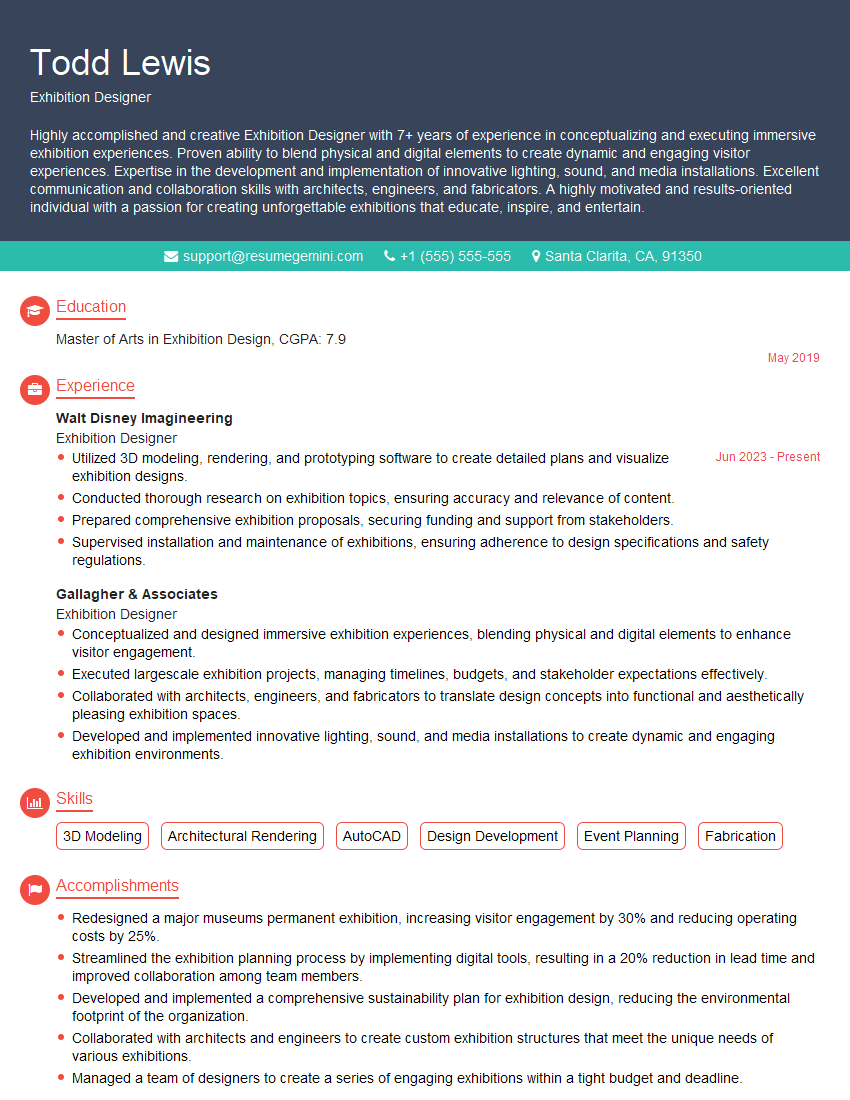
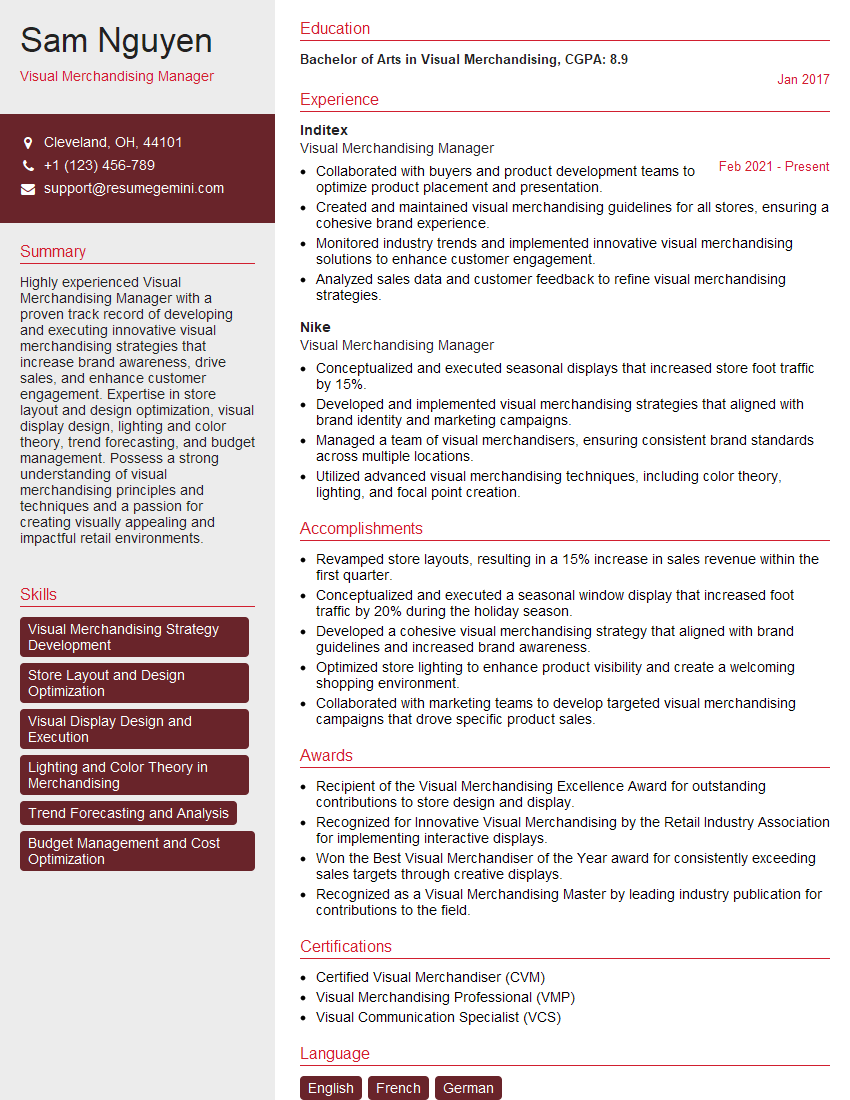
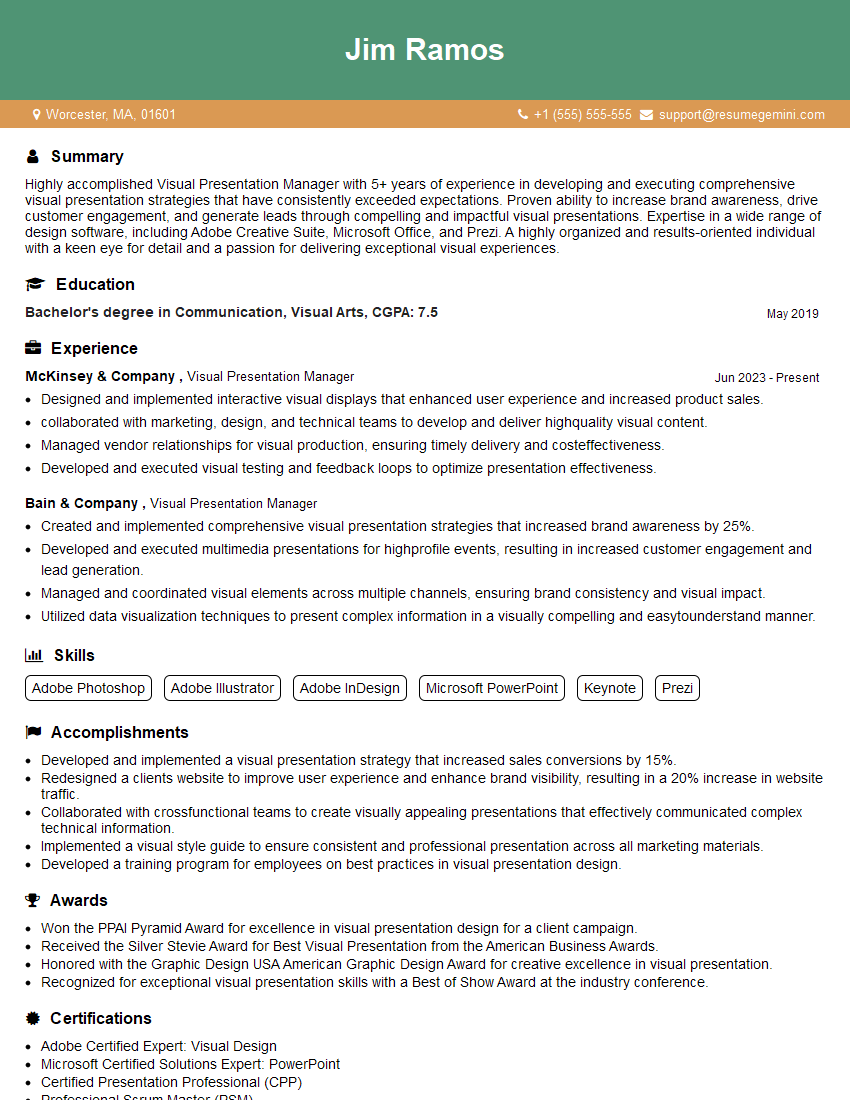
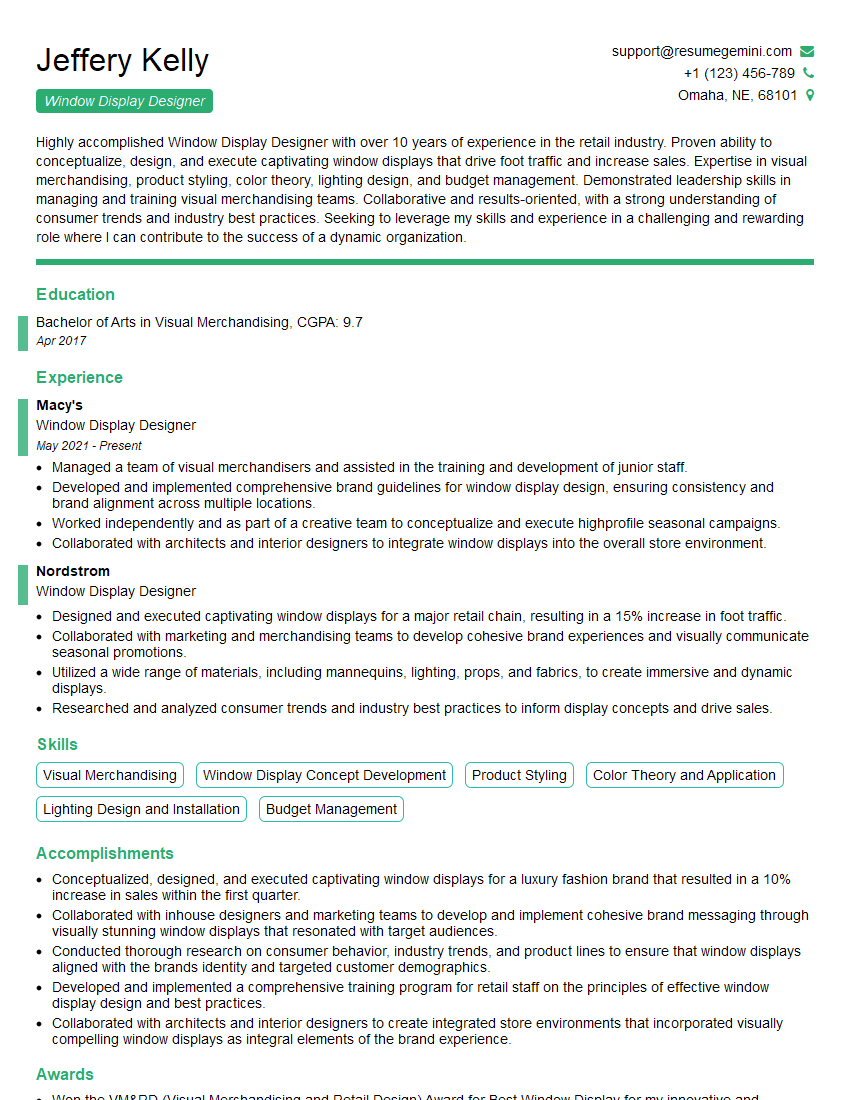
Mastering Window Display Concept Development is crucial for career advancement in the retail and visual merchandising industries. A strong understanding of these concepts opens doors to exciting opportunities and showcases your creative problem-solving abilities. To maximize your job prospects, creating an ATS-friendly resume is essential. ResumeGemini is a trusted resource that can help you build a professional and impactful resume, highlighting your skills and experience effectively. Examples of resumes tailored specifically to Window Display Concept Development are available to help you get started. Take the next step towards your dream career today!
Explore more articles
Users Rating of Our Blogs
Share Your Experience
We value your feedback! Please rate our content and share your thoughts (optional).
What Readers Say About Our Blog
Hello,
we currently offer a complimentary backlink and URL indexing test for search engine optimization professionals.
You can get complimentary indexing credits to test how link discovery works in practice.
No credit card is required and there is no recurring fee.
You can find details here:
https://wikipedia-backlinks.com/indexing/
Regards
NICE RESPONSE TO Q & A
hi
The aim of this message is regarding an unclaimed deposit of a deceased nationale that bears the same name as you. You are not relate to him as there are millions of people answering the names across around the world. But i will use my position to influence the release of the deposit to you for our mutual benefit.
Respond for full details and how to claim the deposit. This is 100% risk free. Send hello to my email id: [email protected]
Luka Chachibaialuka
Hey interviewgemini.com, just wanted to follow up on my last email.
We just launched Call the Monster, an parenting app that lets you summon friendly ‘monsters’ kids actually listen to.
We’re also running a giveaway for everyone who downloads the app. Since it’s brand new, there aren’t many users yet, which means you’ve got a much better chance of winning some great prizes.
You can check it out here: https://bit.ly/callamonsterapp
Or follow us on Instagram: https://www.instagram.com/callamonsterapp
Thanks,
Ryan
CEO – Call the Monster App
Hey interviewgemini.com, I saw your website and love your approach.
I just want this to look like spam email, but want to share something important to you. We just launched Call the Monster, a parenting app that lets you summon friendly ‘monsters’ kids actually listen to.
Parents are loving it for calming chaos before bedtime. Thought you might want to try it: https://bit.ly/callamonsterapp or just follow our fun monster lore on Instagram: https://www.instagram.com/callamonsterapp
Thanks,
Ryan
CEO – Call A Monster APP
To the interviewgemini.com Owner.
Dear interviewgemini.com Webmaster!
Hi interviewgemini.com Webmaster!
Dear interviewgemini.com Webmaster!
excellent
Hello,
We found issues with your domain’s email setup that may be sending your messages to spam or blocking them completely. InboxShield Mini shows you how to fix it in minutes — no tech skills required.
Scan your domain now for details: https://inboxshield-mini.com/
— Adam @ InboxShield Mini
Reply STOP to unsubscribe
Hi, are you owner of interviewgemini.com? What if I told you I could help you find extra time in your schedule, reconnect with leads you didn’t even realize you missed, and bring in more “I want to work with you” conversations, without increasing your ad spend or hiring a full-time employee?
All with a flexible, budget-friendly service that could easily pay for itself. Sounds good?
Would it be nice to jump on a quick 10-minute call so I can show you exactly how we make this work?
Best,
Hapei
Marketing Director
Hey, I know you’re the owner of interviewgemini.com. I’ll be quick.
Fundraising for your business is tough and time-consuming. We make it easier by guaranteeing two private investor meetings each month, for six months. No demos, no pitch events – just direct introductions to active investors matched to your startup.
If youR17;re raising, this could help you build real momentum. Want me to send more info?
Hi, I represent an SEO company that specialises in getting you AI citations and higher rankings on Google. I’d like to offer you a 100% free SEO audit for your website. Would you be interested?
Hi, I represent an SEO company that specialises in getting you AI citations and higher rankings on Google. I’d like to offer you a 100% free SEO audit for your website. Would you be interested?
good