Preparation is the key to success in any interview. In this post, we’ll explore crucial Yield Modeling and Analysis interview questions and equip you with strategies to craft impactful answers. Whether you’re a beginner or a pro, these tips will elevate your preparation.
Questions Asked in Yield Modeling and Analysis Interview
Q 1. Explain the concept of yield management and its core principles.
Yield management is the art and science of maximizing revenue from a fixed, perishable resource. Think of airline seats, hotel rooms, or even concert tickets – once the plane takes off, the room is booked, or the concert ends, that opportunity is gone. The core principles revolve around understanding demand, pricing strategically, and managing inventory effectively to optimize profitability. This involves forecasting future demand, segmenting customers based on their willingness to pay, and dynamically adjusting prices and availability to maximize revenue. It’s all about selling the right product to the right customer at the right price at the right time.
- Demand Forecasting: Accurately predicting future demand is crucial.
- Capacity Management: Managing the available resources effectively.
- Pricing Optimization: Setting prices that maximize revenue given demand and capacity.
- Customer Segmentation: Identifying and targeting different customer groups with varying price sensitivities.
Q 2. Describe different yield management models and their applications.
Several yield management models exist, each suited to different industries and circumstances. Here are a few:
- Linear Programming: A mathematical technique used to optimize pricing and inventory allocation by solving a system of linear equations representing constraints and objectives. This is particularly useful for scenarios with relatively stable demand patterns.
- Network Revenue Management: This model handles situations with multiple products (e.g., different fare classes on a flight) and complex itineraries. It considers the dependencies between products, like the fact that a lower-fare class may influence the demand for higher-fare classes.
- Simulation Models: These models use probabilistic techniques to simulate various scenarios and assess the impact of different yield management strategies. They are helpful in handling uncertainty and testing different what-if scenarios.
- Machine Learning Models: Advanced models leverage machine learning algorithms to learn from historical data and predict future demand with greater accuracy. They can adapt to changing market conditions more effectively.
For example, an airline might use network revenue management to allocate seats across various fare classes and routes, while a hotel might employ a simpler linear programming model to optimize pricing based on occupancy rates and seasonality.
Q 3. What are the key factors influencing yield management decisions?
Many factors influence yield management decisions, and understanding these interactions is key to success:
- Demand patterns: Seasonality, day-of-week effects, special events, and macroeconomic conditions significantly impact demand.
- Competitive landscape: Competitor pricing and capacity affect your own pricing strategies. Analyzing competitor actions is critical.
- Cost structure: Understanding your costs (e.g., fuel costs for airlines, staffing costs for hotels) is essential for setting profitable prices.
- Customer segmentation: Identifying customer segments with different price sensitivities helps tailor pricing and offers.
- Booking patterns: Analyzing historical booking data to understand customer behavior allows for more accurate demand forecasting.
- Cancellation and no-show rates: These must be factored into capacity planning to avoid overbooking.
- Lead time: The time between booking and consumption significantly impacts pricing strategies.
Q 4. How do you measure the effectiveness of a yield management strategy?
Measuring the effectiveness of a yield management strategy requires carefully tracking key metrics:
- Revenue per available seat/room (RevPAR): A common metric used in the hospitality industry to track revenue performance.
- Revenue per available passenger kilometer (RPK): Used in the airline industry to measure revenue efficiency.
- Occupancy rate: The percentage of capacity utilized. High occupancy doesn’t always mean high revenue.
- Average daily rate (ADR): The average price paid for each occupied room.
- Return on investment (ROI): Measuring the overall profitability of the strategy.
- Comparison with previous periods: Track performance improvements over time.
- A/B testing of different strategies: Experiment with different pricing and inventory strategies and compare results.
By comparing these metrics against targets and previous performance, we can evaluate the success of a yield management strategy and identify areas for improvement.
Q 5. Explain the difference between overbooking and underbooking, and how to optimize for both.
Overbooking is selling more units (seats, rooms, etc.) than are physically available, anticipating cancellations or no-shows. Underbooking is leaving capacity unused due to overly cautious demand forecasting. The goal is to find the optimal balance to maximize revenue while minimizing the risk of disruptions.
Optimizing for both involves sophisticated forecasting techniques and a deep understanding of cancellation patterns. For instance, airlines often use historical data to estimate no-show rates and build probabilistic models to determine the optimal overbooking level. This level needs to balance the potential revenue from overbooked units against the cost of compensating passengers if those units are overbooked.
Similarly, underbooking should be minimized through refined forecasting models and real-time monitoring of demand. If demand proves unexpectedly high, strategies should allow for dynamic price increases to capture the potential lost revenue.
Q 6. How do you handle uncertainty and forecasting errors in yield management?
Uncertainty and forecasting errors are inherent in yield management. To handle this, several strategies are crucial:
- Scenario Planning: Develop multiple forecasts, each reflecting different possible scenarios (optimistic, pessimistic, most likely). This helps prepare for a range of outcomes.
- Robust Optimization: Develop strategies that perform reasonably well even if the forecasts are not perfectly accurate.
- Adaptive Control: Continuously monitor actual demand and adjust pricing and inventory strategies in real-time as new information becomes available.
- Simulation: Use simulation models to test different strategies under various scenarios, including those with forecasting errors.
- Real-time data integration: Continuously incorporate real-time booking data and external factors into the models to improve forecasting accuracy.
For example, if a weather event is predicted, a hotel might use scenario planning to estimate its impact on occupancy and adjust its pricing accordingly. A robust optimization approach might ensure profitability even if the actual impact is different from the forecast.
Q 7. Describe your experience with different forecasting techniques (e.g., time series analysis, regression models).
My experience encompasses a range of forecasting techniques. I’ve extensively used time series analysis methods like ARIMA and exponential smoothing for forecasting demand based on historical patterns. These methods are particularly effective for capturing seasonal trends and cyclical variations.
I’ve also worked with regression models to incorporate external factors into demand forecasts, for instance, predicting hotel occupancy based on economic indicators, competitor activity, and local events. These models enable identifying the relationship between demand and multiple explanatory variables.
In recent projects, I’ve explored machine learning algorithms, such as neural networks and gradient boosting, which can automatically identify complex relationships in the data and often outperform traditional statistical models in terms of forecasting accuracy. These algorithms are very effective when we have large amounts of historical data.
The choice of forecasting technique depends heavily on the data available, the complexity of the demand patterns, and the specific requirements of the application. Often, a combination of approaches, such as using a time series model to capture seasonality and a regression model to incorporate external factors, proves most effective.
Q 8. What is the impact of seasonality and demand fluctuations on yield management?
Seasonality and demand fluctuations are major factors influencing yield management. Seasonality refers to predictable patterns of demand tied to specific times of the year (e.g., higher hotel bookings during summer vacation). Demand fluctuations, on the other hand, can be unpredictable, driven by events like sudden economic downturns or unexpected surges in tourism. These variations impact the pricing and availability strategies critical to yield management.
For example, an airline might anticipate higher demand during the holiday season. To optimize yield, they’ll increase prices on popular routes during peak season, while offering discounts or promotions during off-peak periods to fill empty seats. Effectively managing these fluctuations requires accurate forecasting, flexible pricing strategies, and close monitoring of market trends.
Consider a ski resort: Demand is dramatically higher during winter months. Their yield management strategy would focus on maximizing prices during peak season, utilizing dynamic pricing that adjusts based on real-time bookings, and potentially implementing early bird discounts to encourage advance bookings. During the summer, they might need to significantly reduce prices or offer different services to attract customers and maintain occupancy.
Q 9. How do you incorporate customer segmentation in yield management strategies?
Customer segmentation is crucial for effective yield management. It involves dividing your customer base into distinct groups based on shared characteristics like booking behavior, price sensitivity, and demographics. This allows for targeted pricing and product offerings, maximizing revenue across different segments.
For instance, a hotel might segment customers into business travelers, leisure travelers, and groups. Business travelers are often less price-sensitive and willing to pay a premium for convenient amenities, while leisure travelers might be more responsive to discounts and package deals. Group bookings often command special rates, reflecting higher volume and potential for negotiating power. By tailoring pricing and packages to each segment, the hotel can maximize occupancy and revenue across the board.
Data analytics plays a vital role in identifying these segments. Techniques like cluster analysis help group similar customers, enabling the creation of personalized offers and optimized pricing strategies for each group. This precision prevents underselling to high-value customers and maximizes revenue from price-sensitive segments.
Q 10. Explain your understanding of price elasticity of demand and its impact on pricing decisions.
Price elasticity of demand measures the responsiveness of demand to a change in price. If demand changes significantly with even a small price change, it’s considered elastic. If demand is relatively unresponsive to price changes, it’s inelastic. This understanding is foundational for yield management pricing decisions.
For example, if a product has elastic demand (like luxury goods), even a small price increase could significantly reduce sales. Conversely, products with inelastic demand (like gasoline or essential medicines) may see only a small decline in demand despite significant price hikes.
In yield management, understanding price elasticity allows us to strategically adjust prices. If demand is elastic, small price adjustments can make a big difference in revenue. However, if demand is inelastic, pricing decisions should focus on maximizing revenue by leveraging other factors such as availability and promotions.
Imagine an airline: Business travelers typically have inelastic demand – they need to travel, and price is often a secondary concern (within reason). Leisure travelers, on the other hand, often demonstrate elastic demand – they’re more sensitive to price fluctuations. Therefore, the airline might offer higher fares to business travelers while employing dynamic pricing strategies with discounts and promotions to attract leisure travelers.
Q 11. How do you use data analytics to improve yield management performance?
Data analytics is the backbone of modern yield management. It provides the insights needed to make informed decisions about pricing, inventory management, and customer segmentation.
We leverage techniques like:
- Predictive modeling: Forecasting future demand based on historical data and external factors (economic indicators, seasonality).
- Regression analysis: Identifying the relationships between price, demand, and other variables to optimize pricing strategies.
- Time series analysis: Analyzing historical data to identify trends and patterns in demand and pricing.
- Customer segmentation: Grouping customers based on their characteristics and behavior to tailor offers and pricing.
By analyzing this data, we can identify optimal pricing strategies, predict demand fluctuations, and adjust inventory levels accordingly. For example, by employing machine learning models, we can predict future demand for hotel rooms with greater accuracy, enabling dynamic pricing adjustments that maximize revenue and minimize empty rooms. This level of precision helps avoid both revenue loss and overpricing that might drive customers away.
Q 12. Describe your experience with different data visualization tools used for yield analysis.
Throughout my career, I’ve extensively used various data visualization tools for yield analysis. These tools help to translate complex data into actionable insights.
Some key tools include:
- Tableau: Excellent for creating interactive dashboards that allow for dynamic exploration of data, ideal for presenting yield management performance to stakeholders.
- Power BI: A robust platform for creating customized reports and visualizations, particularly useful for integrating data from various sources relevant to yield management.
- Python libraries (Matplotlib, Seaborn): Provide granular control over visualizations, allowing for the creation of highly customized plots and charts suitable for in-depth analysis. These are especially helpful for detailed examination of specific trends.
The choice of tool depends on the specific task. For presentations, Tableau or Power BI’s user-friendly interfaces are preferred. For deep dives into the data, the flexibility and control offered by Python libraries are essential.
Q 13. What are the ethical considerations in yield management?
Ethical considerations in yield management are crucial. The primary concern is the potential for price discrimination and unfair practices. Dynamic pricing, while efficient, can be perceived negatively if not implemented transparently.
It’s essential to ensure fairness and avoid exploiting vulnerable customer segments. For example, airlines should not systematically charge higher fares to customers who are less tech-savvy and rely on phone reservations. Transparency in pricing practices, clear communication of pricing policies, and ensuring equitable access to deals are key ethical considerations. Additionally, data privacy must be respected; customer data used for yield management should be handled responsibly and securely.
A robust ethical framework ensures customers feel they are being treated fairly. Maintaining trust is paramount, and any perceived exploitation can severely damage a company’s reputation.
Q 14. How do you handle situations where yield management strategies conflict with other business goals?
Conflicts between yield management strategies and other business goals are common. For example, maximizing revenue (a yield management goal) might clash with building brand loyalty (a broader marketing goal). Offering extremely low prices to fill capacity could damage the brand’s image of quality or prestige.
Addressing these conflicts requires a balanced approach. We need to:
- Prioritize goals: Determine the relative importance of different objectives. Sometimes, short-term revenue maximization must be weighed against long-term brand building.
- Develop integrated strategies: Integrate yield management strategies with broader business goals. This might involve segmenting customers to offer both high-value options for brand loyalty and low-cost options for filling capacity.
- Use scenario planning: Model different scenarios and analyze their impact on various business goals. This helps make informed decisions by quantifying the trade-offs.
For example, a luxury hotel might accept a slightly lower occupancy rate during off-peak seasons rather than significantly discounting room prices, thus preserving their brand image.
Q 15. Describe your experience with revenue management software and tools.
My experience with revenue management software and tools spans a wide range, from simple spreadsheets for smaller projects to sophisticated enterprise-level systems for large-scale operations. I’m proficient in using tools like IDeaS, Duetto, and RateGain, understanding their strengths and limitations for various business contexts. I’ve worked extensively with their forecasting engines, optimization algorithms, and reporting dashboards. For example, in a previous role, we used IDeaS to manage pricing for a large hotel chain, leveraging its sophisticated forecasting capabilities to predict demand and optimize pricing across different room types and segments. We also utilized its what-if analysis tools to explore various pricing strategies and their impact on revenue. Beyond these commercial platforms, I’m also experienced with building custom solutions using programming languages like Python, integrating with various data sources to create tailored revenue management systems.
Career Expert Tips:
- Ace those interviews! Prepare effectively by reviewing the Top 50 Most Common Interview Questions on ResumeGemini.
- Navigate your job search with confidence! Explore a wide range of Career Tips on ResumeGemini. Learn about common challenges and recommendations to overcome them.
- Craft the perfect resume! Master the Art of Resume Writing with ResumeGemini’s guide. Showcase your unique qualifications and achievements effectively.
- Don’t miss out on holiday savings! Build your dream resume with ResumeGemini’s ATS optimized templates.
Q 16. Explain your approach to developing and validating a yield management model.
Developing and validating a yield management model is an iterative process. It begins with a thorough understanding of the business context, including historical data analysis, market research, and competitor analysis. Next, I select appropriate statistical methods and forecasting techniques based on data characteristics and business objectives. This often involves time series analysis, regression modeling, or machine learning algorithms. Once the model is built, rigorous validation is crucial. This involves comparing model predictions against actual results, using metrics like Mean Absolute Error (MAE) and Root Mean Squared Error (RMSE) to assess accuracy. Furthermore, backtesting the model on historical data helps evaluate its performance under various market conditions. If the model fails to meet predetermined accuracy thresholds, I iterate on the model structure, parameters, or input data until satisfactory performance is achieved. A critical aspect is documenting the entire process, including data sources, model assumptions, and validation results, ensuring transparency and reproducibility.
Q 17. How do you communicate complex yield management concepts to non-technical audiences?
Communicating complex yield management concepts to non-technical audiences requires simplifying technical jargon and using clear, concise language. I often employ analogies and real-world examples to illustrate key principles. For instance, explaining dynamic pricing as similar to a street vendor adjusting prices based on demand helps non-technical stakeholders understand the core concept. Visual aids such as charts and graphs are invaluable for communicating complex data effectively. I also focus on conveying the practical implications of yield management decisions, highlighting their impact on revenue, profitability, and overall business performance. Ultimately, the goal is to make sure everyone understands the “why” behind the technical strategies and their contribution to the organization’s success.
Q 18. Describe a time you had to adapt a yield management strategy due to unexpected market changes.
During a project involving airline seat pricing, an unexpected fuel price surge drastically impacted our cost structure and, consequently, our profitability projections. Our initial yield management strategy, which focused on maximizing occupancy, became unsustainable. We quickly adapted by adjusting our pricing model, incorporating the increased fuel costs into our calculations and revising our forecasts. We communicated these changes transparently to our stakeholders, explaining the necessity for price adjustments to maintain profitability. To mitigate the risk of future unforeseen events, we implemented a more robust scenario planning process, incorporating various potential market disruptions (e.g., economic downturns, fuel price fluctuations) into our modeling, enabling proactive responses to future changes.
Q 19. What metrics do you track to evaluate the success of a yield management program?
Evaluating the success of a yield management program requires tracking a range of key performance indicators (KPIs). These include revenue per available seat (RevPAS) or revenue per available room (RevPAR) for hotels, occupancy rates, average daily rate (ADR), total revenue generated, and cost of goods sold. Beyond these traditional metrics, I also analyze the accuracy of our forecasting models, assessing the difference between predicted and actual demand. Furthermore, I track customer satisfaction metrics to understand if pricing decisions have negatively impacted customer perception. By regularly monitoring these KPIs, I can identify areas for improvement in the yield management strategy and fine-tune it over time. A comprehensive dashboard providing real-time insights into these metrics is crucial for effective program monitoring and decision-making.
Q 20. How do you identify and address potential biases in your yield management models?
Identifying and addressing biases in yield management models is crucial for ensuring fairness and accuracy. Common biases include historical data bias (if past data doesn’t accurately reflect future trends), seasonality bias, and even implicit biases embedded in the data itself. To address these, I employ several techniques: Firstly, I carefully scrutinize the data for anomalies and outliers, ensuring data quality. Secondly, I use robust statistical methods less susceptible to outliers. Thirdly, I conduct sensitivity analysis to understand how model outputs change with variations in input parameters, helping identify potential biases. Regular audits of the models and algorithms, combined with ongoing monitoring of model performance, are essential for early detection and correction of biases. Finally, explainable AI (XAI) techniques can be applied to complex machine learning models to understand their decision-making process and detect any potential unfairness.
Q 21. Explain the concept of dynamic pricing and its application in yield management.
Dynamic pricing is the practice of adjusting prices for a product or service in real-time based on various factors like demand, competition, and time. In yield management, dynamic pricing is a core strategy used to maximize revenue by offering different prices to different customer segments at different times. For example, an airline might offer lower fares for flights with lower demand and higher fares for flights closer to departure or during peak travel seasons. The application of dynamic pricing in yield management requires sophisticated forecasting models and algorithms that analyze real-time data and predict future demand to optimize pricing decisions. It’s crucial to consider factors like competitor pricing, customer segmentation, and pricing elasticity when implementing dynamic pricing strategies. The key is to balance revenue maximization with maintaining customer satisfaction and brand perception.
Q 22. How do you handle data outliers and missing data in your yield management analysis?
Handling outliers and missing data is crucial for accurate yield management. Outliers, those extreme data points, can significantly skew results, while missing data reduces the model’s reliability. My approach is multi-faceted:
Outlier Detection and Treatment: I employ various techniques like box plots, scatter plots, and Z-score analysis to identify outliers. Then, I don’t simply remove them. I investigate the cause. Is it a data entry error? A genuine anomaly? If it’s an error, I correct it. If it’s a genuine event (e.g., a massive unexpected surge in demand), I might use robust statistical methods that are less sensitive to outliers, like median instead of mean, or consider winsorizing or trimming the data.
Missing Data Imputation: Simple deletion isn’t ideal, as it can introduce bias. Instead, I use imputation techniques appropriate to the data. For example, I might use mean/median imputation for numerical data, or mode imputation for categorical data if the missing data is small and randomly distributed. For more complex scenarios, I’d consider more sophisticated methods like k-Nearest Neighbors (KNN) imputation or multiple imputation, which account for the uncertainty introduced by the missing values. This is particularly important for time-series data where trends matter significantly.
Data Exploration and Visualization: Before any analysis, I conduct thorough exploratory data analysis (EDA) to understand the data’s distribution, identify patterns and potential issues. This helps me make informed decisions about how to handle outliers and missing data. I always document my choices to ensure transparency and reproducibility.
Q 23. What is your experience with A/B testing in the context of pricing and yield optimization?
A/B testing is invaluable for yield optimization, allowing us to compare the performance of different pricing strategies or promotional campaigns in a controlled environment. I’ve extensively used A/B testing in dynamic pricing scenarios. For example, in a recent project for an airline, we tested two different pricing models—one based on a simple linear regression and another employing a more sophisticated machine learning algorithm. We split the customer base randomly into two groups. Group A received prices based on the linear model, while Group B received prices generated by the ML model. By meticulously tracking revenue, conversion rates, and other relevant metrics, we were able to determine which model generated a statistically significant improvement in revenue and make an informed decision about which model to deploy company-wide.
Key aspects of my approach include:
- Proper randomization to minimize bias.
- Sufficient sample size to ensure statistical power.
- Careful monitoring of metrics to avoid premature conclusions.
- Using statistical significance tests (e.g., t-tests, chi-squared tests) to assess the difference between the groups.
Q 24. Describe your understanding of different optimization algorithms used in yield management.
Numerous optimization algorithms are used in yield management, each with its strengths and weaknesses. Here are a few I’ve used:
Linear Programming (LP): A classic and widely used method, especially for simpler problems with linear relationships between variables. I’ve used LP to optimize seat allocation in airline booking systems, maximizing revenue given constraints like seat capacity and demand forecasts.
Dynamic Programming (DP): Excellent for problems with overlapping subproblems, making it suitable for scenarios with multiple booking classes or fare structures. I’ve applied DP to hotel yield management, optimizing room allocation over time to maximize overall revenue.
Integer Programming (IP): Used when decision variables must be integers (e.g., number of units to produce, number of rooms to allocate). This is particularly useful when dealing with indivisible units.
Machine Learning Algorithms: Techniques like gradient boosting, neural networks, and reinforcement learning are increasingly popular, especially for complex scenarios with non-linear relationships and large datasets. I’ve utilized these methods for price optimization, demand forecasting, and customer segmentation in various projects.
The choice of algorithm depends on the specific problem’s complexity, data characteristics, and computational resources available. For instance, simpler problems might benefit from LP, while more complex, data-rich scenarios would be better suited to machine learning.
Q 25. How do you balance short-term and long-term goals in your yield management strategies?
Balancing short-term and long-term goals is critical in yield management. A solely short-term focus might maximize immediate profits but damage long-term relationships with customers and brand reputation. Conversely, focusing exclusively on the long term could miss lucrative opportunities in the present.
My approach involves:
Developing a comprehensive strategy: This strategy explicitly defines both short-term and long-term objectives and how they interrelate. For example, a short-term goal could be to maximize revenue during peak season, while a long-term goal might be to build brand loyalty and increase customer lifetime value.
Using appropriate metrics: Metrics must reflect both short-term and long-term goals. Revenue is important short-term; customer retention and lifetime value are essential long-term indicators.
Dynamic adjustment: The strategy should not be static. I regularly monitor performance, adjusting the balance between short-term and long-term goals based on market conditions, customer behavior, and competitor actions. For example, during an economic downturn, the focus might shift more towards long-term customer retention strategies.
Scenario planning: Modeling different scenarios (e.g., high demand, low demand, economic recession) helps to prepare for various situations and adapt the strategy accordingly.
Q 26. Explain your experience with different programming languages and statistical software used in yield modeling.
My experience encompasses various programming languages and statistical software essential for yield modeling and analysis:
Python: A versatile language widely used in data science and machine learning. I frequently use libraries like Pandas for data manipulation, Scikit-learn for machine learning algorithms, and Statsmodels for statistical modeling.
R: Another powerful statistical computing language, particularly strong in statistical graphics and visualization. I utilize R for exploratory data analysis, building statistical models, and creating insightful visualizations.
SQL: Essential for efficient data retrieval and management from relational databases, which often store large amounts of yield management data.
SAS/SPSS: While less frequently used now, I have experience with these statistical software packages for more traditional statistical modeling and data analysis, and I still find them useful for specific tasks.
I’m proficient in using these tools to develop, test, and deploy yield management models, ensuring robust and reliable predictions.
Q 27. What is your understanding of the limitations of yield management models?
Yield management models, while powerful, have limitations:
Data Dependency: Model accuracy heavily relies on the quality and quantity of available data. Inaccurate or incomplete data leads to poor predictions. For example, if demand forecasting data is flawed, pricing decisions will also be flawed.
Model Assumptions: Models often make simplifying assumptions about customer behavior, demand patterns, and market dynamics, which may not always hold true in reality. For example, models often assume rational customer behavior, which may not be the case in certain market conditions.
External Factors: Unexpected events such as economic downturns, natural disasters, or geopolitical instability can significantly affect demand and render model predictions inaccurate.
Overfitting: Complex models can overfit to the training data, performing well on past data but poorly on new data. Careful model validation and selection are critical to mitigate this risk.
Computational Complexity: Optimizing complex yield management problems can be computationally intensive, requiring significant computing power and time.
Understanding these limitations is crucial for interpreting model outputs realistically and developing robust strategies that account for uncertainties.
Q 28. How do you stay updated on the latest advancements in yield management techniques?
Staying updated in yield management is vital due to its rapid evolution. My approach includes:
Reading academic journals and industry publications: I regularly follow journals like the Journal of Revenue and Pricing Management and industry publications like the Revenue Management Report to stay abreast of research and best practices.
Attending conferences and workshops: Participating in industry events provides opportunities to network with experts, learn about new techniques, and discuss challenges.
Online courses and webinars: Platforms like Coursera, edX, and various industry websites offer valuable training and updates on advanced techniques.
Networking with peers: Regular discussions with colleagues and professionals in the field help to share knowledge and insights.
Following key influencers on social media: Engaging with thought leaders on platforms like LinkedIn or Twitter provides a stream of relevant information and discussions.
This multi-pronged approach keeps me current on the latest innovations and best practices in yield management, ensuring I can leverage the most effective techniques for my clients and projects.
Key Topics to Learn for Yield Modeling and Analysis Interview
- Understanding Yield Curve Dynamics: Explore the shape, factors influencing the yield curve (e.g., inflation expectations, monetary policy), and its implications for investment strategies. Consider practical applications like forecasting interest rate movements.
- Fixed Income Securities Valuation: Master the valuation techniques for various fixed-income instruments (bonds, notes, etc.), including present value calculations, duration, and convexity. Understand how these concepts are applied in portfolio management and risk assessment.
- Interest Rate Risk Management: Learn different methods for hedging and managing interest rate risk, such as duration matching, immunization strategies, and the use of interest rate derivatives. Explore real-world case studies of successful risk mitigation.
- Credit Risk Modeling: Gain proficiency in assessing and modeling credit risk, including default probabilities, recovery rates, and credit spreads. Understand the role of credit rating agencies and the limitations of credit ratings.
- Quantitative Techniques: Develop a strong foundation in relevant quantitative methods, such as regression analysis, time series analysis, and statistical modeling. Be prepared to discuss how these techniques are applied to yield curve forecasting and risk assessment.
- Portfolio Construction and Optimization: Understand how yield modeling and analysis inform the construction of optimized fixed-income portfolios, considering factors such as risk tolerance, return objectives, and liquidity needs.
- Model Validation and Backtesting: Learn the importance of rigorous model validation and backtesting to ensure the accuracy and reliability of yield models. Understand different validation techniques and their limitations.
Next Steps
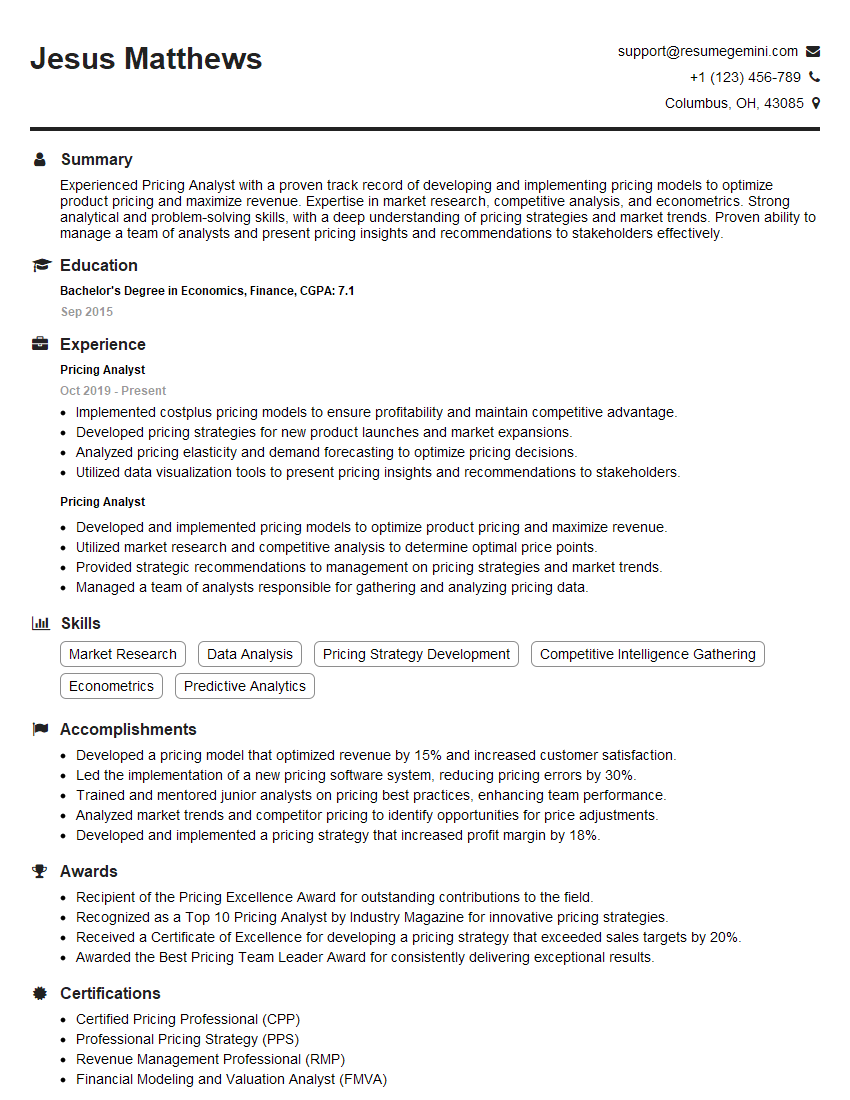
Mastering Yield Modeling and Analysis is crucial for career advancement in finance, opening doors to exciting opportunities in portfolio management, risk management, and quantitative analysis. To significantly increase your chances of landing your dream role, crafting a compelling and ATS-friendly resume is essential. ResumeGemini is a trusted resource to help you build a professional and effective resume that highlights your skills and experience. Examples of resumes tailored to Yield Modeling and Analysis are provided to help guide your resume creation process. Invest time in refining your resume – it’s your first impression with potential employers!
Explore more articles
Users Rating of Our Blogs
Share Your Experience
We value your feedback! Please rate our content and share your thoughts (optional).
What Readers Say About Our Blog
Hello,
we currently offer a complimentary backlink and URL indexing test for search engine optimization professionals.
You can get complimentary indexing credits to test how link discovery works in practice.
No credit card is required and there is no recurring fee.
You can find details here:
https://wikipedia-backlinks.com/indexing/
Regards
NICE RESPONSE TO Q & A
hi
The aim of this message is regarding an unclaimed deposit of a deceased nationale that bears the same name as you. You are not relate to him as there are millions of people answering the names across around the world. But i will use my position to influence the release of the deposit to you for our mutual benefit.
Respond for full details and how to claim the deposit. This is 100% risk free. Send hello to my email id: [email protected]
Luka Chachibaialuka
Hey interviewgemini.com, just wanted to follow up on my last email.
We just launched Call the Monster, an parenting app that lets you summon friendly ‘monsters’ kids actually listen to.
We’re also running a giveaway for everyone who downloads the app. Since it’s brand new, there aren’t many users yet, which means you’ve got a much better chance of winning some great prizes.
You can check it out here: https://bit.ly/callamonsterapp
Or follow us on Instagram: https://www.instagram.com/callamonsterapp
Thanks,
Ryan
CEO – Call the Monster App
Hey interviewgemini.com, I saw your website and love your approach.
I just want this to look like spam email, but want to share something important to you. We just launched Call the Monster, a parenting app that lets you summon friendly ‘monsters’ kids actually listen to.
Parents are loving it for calming chaos before bedtime. Thought you might want to try it: https://bit.ly/callamonsterapp or just follow our fun monster lore on Instagram: https://www.instagram.com/callamonsterapp
Thanks,
Ryan
CEO – Call A Monster APP
To the interviewgemini.com Owner.
Dear interviewgemini.com Webmaster!
Hi interviewgemini.com Webmaster!
Dear interviewgemini.com Webmaster!
excellent
Hello,
We found issues with your domain’s email setup that may be sending your messages to spam or blocking them completely. InboxShield Mini shows you how to fix it in minutes — no tech skills required.
Scan your domain now for details: https://inboxshield-mini.com/
— Adam @ InboxShield Mini
Reply STOP to unsubscribe
Hi, are you owner of interviewgemini.com? What if I told you I could help you find extra time in your schedule, reconnect with leads you didn’t even realize you missed, and bring in more “I want to work with you” conversations, without increasing your ad spend or hiring a full-time employee?
All with a flexible, budget-friendly service that could easily pay for itself. Sounds good?
Would it be nice to jump on a quick 10-minute call so I can show you exactly how we make this work?
Best,
Hapei
Marketing Director
Hey, I know you’re the owner of interviewgemini.com. I’ll be quick.
Fundraising for your business is tough and time-consuming. We make it easier by guaranteeing two private investor meetings each month, for six months. No demos, no pitch events – just direct introductions to active investors matched to your startup.
If youR17;re raising, this could help you build real momentum. Want me to send more info?
Hi, I represent an SEO company that specialises in getting you AI citations and higher rankings on Google. I’d like to offer you a 100% free SEO audit for your website. Would you be interested?
Hi, I represent an SEO company that specialises in getting you AI citations and higher rankings on Google. I’d like to offer you a 100% free SEO audit for your website. Would you be interested?
good