Cracking a skill-specific interview, like one for Hive Inspection, requires understanding the nuances of the role. In this blog, we present the questions you’re most likely to encounter, along with insights into how to answer them effectively. Let’s ensure you’re ready to make a strong impression.
Questions Asked in Hive Inspection Interview
Q 1. Describe the process of a thorough hive inspection.
A thorough hive inspection is crucial for maintaining healthy and productive bee colonies. It’s a systematic process, best done on a warm, sunny day when most bees are out foraging. I always start by visually assessing the exterior of the hive for any signs of damage, pests, or unusual activity. Then, I carefully open the hive, using a hive tool to gently pry apart the boxes. I inspect each frame individually, starting from the outside and working my way inwards. This minimizes disturbance to the colony.
- Assess the brood pattern: I look for a consistent, unbroken pattern of eggs, larvae, and pupae, indicating a healthy, laying queen. Irregular patterns suggest potential queen issues.
- Check for disease signs: I examine the brood for signs of diseases like American Foulbrood (AFB) or European Foulbrood (EFB), looking for unusual colors, sunken cappings, or ropy larvae.
- Evaluate food stores: I check the amount of honey and pollen stores, ensuring there’s enough food for the colony to survive. Insufficient stores may indicate a need for supplemental feeding.
- Inspect for pests and parasites: I carefully examine the bees and combs for varroa mites, small hive beetles, and other pests. I also look for signs of wax moth damage.
- Assess the queen: If possible, I locate and visually confirm the presence of a healthy queen. A strong queen will lay eggs consistently and have a well-defined brood pattern.
- Check for space: I assess whether the colony has enough space to grow. Overcrowding can lead to swarming, while insufficient space can hinder development.
Finally, I carefully close the hive, ensuring it’s secure and bees can easily re-enter. I record all observations in a hive inspection log to track the colony’s progress and identify any potential problems.
Q 2. What are the key signs of a healthy bee colony?
A healthy bee colony exhibits several key characteristics. Think of it like a well-oiled machine; each part functions efficiently for the greater good.
- Strong brood pattern: A consistent, unbroken pattern of eggs, larvae, and pupae in a large area indicates a healthy, actively laying queen.
- Abundant food stores: Sufficient honey and pollen reserves are vital for the colony’s survival, particularly during winter months. This is a clear indicator of strong foraging capabilities.
- Active bees: Bees should be busy and moving about their hive duties. A lethargic or inactive colony could indicate disease or other problems.
- Minimal disease signs: The absence of unusual coloration, sunken cappings, or ropy larvae suggests that the colony is free from common bee diseases.
- Absence of pests: A healthy colony effectively controls pests such as varroa mites and small hive beetles. The presence of these pests often signals weakening of the colony’s immune response.
- Calm temperament: While bees will always defend their hive, a healthy colony generally exhibits a relatively calm demeanor during inspection.
Remember, the absence of these factors doesn’t automatically mean a colony is unhealthy; it simply warrants closer investigation.
Q 3. How do you identify and address Varroa mites?
Varroa mites are a significant threat to honeybee health. Identification and treatment require a multi-pronged approach.
- Detection: I use several methods to detect varroa mites, including the sugar shake test (shaking bees with powdered sugar to dislodge mites), alcohol wash (immersing a sample of bees in alcohol to count mites), and visual inspection of brood for mites.
- Treatment: Treatment options vary, and the choice depends on several factors including the mite infestation level, the time of year, and the local regulations. Common treatments include formic acid, oxalic acid, thymol, and integrated pest management techniques focusing on mite-resistant bee breeds and hygienic behaviors of the colony. It’s crucial to follow treatment instructions carefully to minimize harm to the bees and ensure effectiveness.
For example, a high mite infestation may require a more aggressive treatment strategy, while a low infestation could be managed with a milder approach. Regular monitoring is key to prevent the infestation from reaching severe levels. It is also crucial to check the resistance level of your varroa treatment method. Regular monitoring and a record-keeping system are critical to understand the impact of any treatment approach.
Q 4. Explain your methods for detecting American Foulbrood disease.
American Foulbrood (AFB) is a highly contagious bacterial disease. Early detection is vital to prevent its spread.
- Visual inspection: I look for sunken, perforated, or discolored cappings on brood cells. The larvae inside may appear brown, melted, or gummy and have a characteristic “ropiness” when probed with a matchstick.
- The “ropey” test: This involves gently probing a suspected larva with a matchstick. A healthy larva is firm and does not stretch, whereas an AFB larva will exhibit a characteristic stringy consistency.
- Laboratory confirmation: While visual inspections can be highly suggestive, laboratory confirmation is recommended to definitively diagnose AFB. A sample of the affected brood can be sent to a diagnostic lab for testing.
If AFB is suspected, immediate action is necessary. Affected colonies often require destruction and burning to prevent the spread of the disease to neighboring hives. This is a heartbreaking but necessary step to protect the apiary from devastating consequences. I always work with my local beekeeping association or state apiary inspector to manage an AFB outbreak.
Q 5. How do you assess the quality of a queen bee?
Assessing queen quality is essential for maintaining a thriving colony. A strong queen is the cornerstone of a productive hive.
- Brood pattern: A large, consistent, and unbroken pattern of eggs, larvae, and pupae across multiple frames indicates a healthy, prolific queen.
- Egg-laying rate: A high egg-laying rate translates to rapid colony growth. A pattern showing gaps or inconsistencies points to possible issues.
- Queen’s physical appearance: A healthy queen is generally larger than worker bees, with a shiny, smooth abdomen. I look for any physical deformities or signs of injury. I use a queen excluder if necessary to aid in identifying her within the hive.
- Colony behavior: A strong queen’s colony usually exhibits calm behavior and high productivity. A weak or failing queen might lead to listlessness or even supersedure (replacement) attempts by the worker bees.
Sometimes, directly spotting the queen isn’t feasible. Focusing on the brood pattern and colony behavior often provides a good indication of queen quality. A good rule of thumb is that a strong colony will always show a robust brood pattern which often serves as a proxy for queen quality.
Q 6. What are the common signs of swarming behavior?
Swarming is a natural bee colony reproduction process, but it can lead to a loss of bees and honey production if not managed properly.
- Queen cells: The presence of queen cells (larger cells than worker cells, often on the bottom edges of frames) is a strong indicator that the colony is preparing to swarm. These cells are designed to raise new queens.
- Increased activity: Observe increased activity around the hive entrance, with more bees clustering on the exterior. This often happens leading up to the event.
- Reduced brood production: The colony might significantly reduce brood production in preparation for swarming, as the existing queen becomes lighter to ease flight.
- Clustering of bees: Bees might cluster on branches or other surfaces near the hive. This signifies that the swarm has left.
Recognizing these signs allows for timely intervention. Techniques such as swarm prevention (providing ample space, splitting the colony) and swarm catching (retrieving the swarm and relocating it to a new hive) are essential in managing swarming behavior.
Q 7. How do you manage a hive during winter months?
Winter hive management is crucial for colony survival. The goal is to ensure the bees have enough food and insulation to withstand cold temperatures.
- Food stores: Ensure the colony has sufficient honey stores (at least 50-70 lbs) for winter consumption. Supplemental feeding might be necessary if stores are insufficient.
- Insulation: Insulate the hive to prevent heat loss. This can involve wrapping the hive with insulation materials or using hive wraps. Reduce drafts as much as possible.
- Ventilation: Provide adequate ventilation to prevent moisture buildup inside the hive, which can lead to mold and disease. Small ventilation gaps can do wonders.
- Pest and disease control: Treat for varroa mites before winter to weaken their numbers and improve colony overwintering success. Reduce varroa mite populations to avoid additional stress on the hive.
- Hive protection: Protect the hive from strong winds, heavy snow, and other environmental hazards. A windbreak or a sheltered location is desirable.
Regular monitoring (though less frequent than in warmer months) is important to ensure the colony is healthy and has enough resources. Early intervention prevents problems from escalating and causing significant losses during the winter period. This may involve looking for excessive dead bees in front of the hive and assessing insulation.
Q 8. Describe your experience with different hive types (Langstroth, Top Bar, etc.).
My experience encompasses a wide range of hive types, primarily Langstroth and Top Bar hives. The Langstroth hive, with its movable frames, is the most common in my practice, offering excellent manageability for inspections, honey harvesting, and disease control. Its standardized design allows for easy interchangeability of components and readily available equipment. I find its modularity particularly beneficial for expanding colonies or managing different hive strengths.
Conversely, Top Bar hives offer a more natural, less intrusive approach to beekeeping. The bees build their combs naturally, which can be fascinating to observe. However, honey harvesting is more labor-intensive and requires specialized techniques. I’ve found Top Bar hives to be excellent for educational purposes and for smaller-scale, less intensive beekeeping operations where a gentler approach is desired. The choice between hive types depends heavily on the beekeeper’s goals, available resources, and personal preference.
I’ve also had some limited experience with Warre hives, known for their vertical comb structure mimicking a natural tree cavity. While these offer unique advantages, such as reduced swarming potential, they also present challenges in inspection and management.
Q 9. How do you handle aggressive bees during inspection?
Handling aggressive bees requires a calm, methodical approach and appropriate protective gear. This includes a full bee suit, gloves, and a smoker. The smoker helps to calm the bees by masking alarm pheromones. My strategy begins with a careful assessment of the hive’s mood. If the bees seem agitated, I’ll spend a few minutes carefully working the smoker, directing a gentle puff of smoke at the entrance before beginning the inspection.
During the inspection itself, I work slowly and deliberately, avoiding jerky movements that might startle the bees. I gently pry apart frames, inspecting them systematically. If the bees become overly aggressive despite these precautions, I might temporarily cease inspection and return later in the day or under cooler conditions when bees are less active. In extreme cases, a different approach with more protective gear, such as a ventilated bee suit and a bee veil integrated into the suit is used.
It’s crucial to remember that even seemingly docile colonies can become defensive under certain circumstances – weather changes, dwindling resources, or disturbance of the queen – making careful observation and patience crucial aspects of safe beekeeping practices.
Q 10. What are the common pests and diseases affecting honeybees?
Honeybees face numerous threats from pests and diseases. Some of the most common include:
- Varroa mites: These external parasites are a significant threat, weakening bees and transmitting viruses. Regular monitoring and treatment are crucial for controlling infestations. I often employ oxalic acid treatment or other approved methods based on the severity of the infestation.
- Tracheal mites: These internal parasites infest the bees’ respiratory systems. Symptoms include weakened bees and reduced colony vigor. Integrated pest management strategies are used including the use of menthol.
- American foulbrood (AFB) and European foulbrood (EFB): These bacterial diseases affect the brood (developing bees), causing significant colony losses. Early detection is critical, often requiring destruction of affected colonies in severe cases to prevent the spread.
- Chalkbrood: A fungal disease affecting the brood, typically appearing as mummified larvae. Improved hive ventilation and hygienic practices can help manage chalkbrood.
- Small hive beetles: These pests infest hives, consuming honey, pollen, and brood. Effective management strategies involve proper hive sanitation and use of beetle traps.
Regular hive inspections are essential for early detection of these pests and diseases. A proactive approach, including maintaining strong, healthy colonies, is the best defense.
Q 11. Explain your approach to hive record-keeping.
Maintaining accurate hive records is paramount for successful beekeeping. My system involves a detailed record for each hive, including its unique identification number, date of establishment (or acquisition), and the queen’s characteristics (e.g., marked or unmarked, lineage).
I regularly note inspection dates, the number of frames with brood, honey, pollen, and the overall health and vigor of the colony. Any treatments administered (e.g., varroa mite treatments, disease interventions) are meticulously documented along with their effectiveness. Additionally, I record honey harvests, noting the amount and quality of honey produced. I find that using a dedicated notebook or digital spreadsheet, with clear columns for each data point, is the most effective method. Detailed record-keeping allows me to track trends, assess colony performance over time, and make informed management decisions, particularly in identifying any early warning signs of issues that can save the hive.
Q 12. How do you assess honey production potential of a colony?
Assessing a colony’s honey production potential involves several factors. A strong, healthy colony with a large population of forager bees is a key indicator of high potential. The presence of abundant brood (developing bees) suggests a colony actively growing and expanding, capable of producing a significant surplus of honey. Ample pollen stores signal a healthy colony adequately provisioned for brood rearing, crucial for honey production.
The availability of nectar and pollen sources in the surrounding environment plays a major role. I usually consider the local flora, assessing the abundance and timing of flowering plants. The presence of adequate space within the hive, including empty frames for honey storage, is essential. A crowded hive will hinder honey production. By using the combination of these factors in my assessment I can make a sound estimation of a hive’s honey production.
Q 13. Describe your experience with queen rearing techniques.
Queen rearing is a specialized skill that I’ve developed over time. My primary experience lies in the Doolittle method, which involves grafting larvae into queen cups and allowing worker bees to raise them. This method offers a degree of control over queen genetics and is reliable for producing high-quality queens. I also have experience with the Miller method and the more natural approach of allowing the bees to raise their own queen through emergency queen cell production.
Successful queen rearing requires careful attention to detail, including maintaining optimal colony conditions, providing adequate resources (such as royal jelly), and protecting the developing queens from damage or competition. This also includes regular monitoring of the queens and utilizing various cell protectors to prevent other bees from destroying queen cells.
The process involves creating a queenless colony or a colony with a low number of worker bees to create the conditions for raising more queens. Through this process, a beekeeper can raise an ample supply of queens from a select parent colony for use in expanding the number of hives or replacing weaker queens with higher quality queens.
Q 14. How do you prevent robbing behavior between hives?
Robbing behavior, where bees from one hive steal honey from another, can significantly weaken or even destroy colonies. Prevention involves minimizing any attractants to robbing bees. This includes promptly repairing any gaps or cracks in the hive, minimizing spills of honey or syrup, and ensuring that feeders are closed tightly to prevent access by other bees.
I often reduce hive entrances during times of nectar scarcity or when I suspect robbing is occurring. A smaller entrance makes it harder for robber bees to gain access while still allowing the colony’s resident bees to defend effectively. In severe cases, I might temporarily relocate the affected hive to a less accessible location or utilize entrance reducers to minimise the potential for robbing. Proper hive management is key to preventing issues like robbing.
Q 15. How do you handle emergency situations during hive inspection?
Emergency situations during hive inspections are rare but can arise from unexpected aggressive bee behavior or equipment malfunctions. My primary approach is prevention – always wearing appropriate protective gear (suit, gloves, smoker), working calmly and methodically, and never inspecting hives alone.
However, if a situation escalates, my response is systematic:
- Assess the threat: Quickly determine the level of aggression and the potential danger. Is it a few stings or a full-blown attack?
- Take cover: If the bees become excessively aggressive, I immediately retreat to a safe distance, ideally behind a solid barrier.
- Remove the stimulus: If possible, identify and remove any factor triggering the aggression (e.g., loud noises, strong scents, overly jerky movements).
- Emergency protocol: I have a pre-planned escape route and designated emergency contacts nearby. If someone is stung multiple times or experiences an allergic reaction, I immediately call emergency services.
- Post-incident review: After the emergency, I analyze the situation to identify contributing factors and implement preventive measures for future inspections.
For example, I once encountered a particularly aggressive colony. By recognizing early signs (increased buzzing, defensive posturing), I gradually backed away, allowing the bees to calm. A post-inspection check revealed a queen issue, necessitating a timely re-queening to prevent further aggression.
Career Expert Tips:
- Ace those interviews! Prepare effectively by reviewing the Top 50 Most Common Interview Questions on ResumeGemini.
- Navigate your job search with confidence! Explore a wide range of Career Tips on ResumeGemini. Learn about common challenges and recommendations to overcome them.
- Craft the perfect resume! Master the Art of Resume Writing with ResumeGemini’s guide. Showcase your unique qualifications and achievements effectively.
- Don’t miss out on holiday savings! Build your dream resume with ResumeGemini’s ATS optimized templates.
Q 16. Explain your understanding of bee genetics and breeding.
Understanding bee genetics and breeding is crucial for maintaining healthy and productive hives. This involves selecting for desirable traits such as honey production, disease resistance, gentleness, and overwintering survival.
I utilize various breeding methods including:
- Instrumental Insemination (II): This precise technique allows controlled mating of queens with specific drones, ensuring desirable traits are passed on. It’s labor-intensive but offers maximum control.
- Selective Breeding: I carefully observe colonies throughout the year, noting their performance characteristics. The best performing colonies are selected for queen rearing, contributing to improved genetics over time.
- Queen introduction and grafting: I have experience grafting larvae into queen cups and introducing new queens into existing colonies to improve hive genetics or replace failing queens.
Understanding Mendelian genetics helps in predicting the outcome of breeding programs. For instance, knowing that varroa resistance is often a polygenic trait (controlled by multiple genes) means a multi-generational selection process is needed.
Q 17. What is your experience with different hive treatments and medications?
I have experience with a range of hive treatments and medications, always prioritizing integrated pest management (IPM) strategies – focusing on preventative measures and minimizing chemical interventions.
My experience includes:
- Organic acid treatments (formic acid, oxalic acid): Used to control varroa mites, these treatments are relatively low-impact on the bees and the environment. Oxalic acid is particularly effective in winter when brood is minimal.
- Synthetic miticides (amitraz, coumaphos): While effective against varroa mites, these are used sparingly due to potential for resistance development and residue concerns. I carefully follow label instructions and rotate treatments to mitigate resistance.
- Essential oils: Some essential oils show promise in controlling varroa mites and other pests, but their efficacy varies, and research is ongoing. I employ them only in conjunction with other control measures.
- Disease management: I’m experienced in recognizing and managing various bee diseases such as American foulbrood (AFB), European foulbrood (EFB), chalkbrood, and nosema. This involves prompt identification, targeted treatments, and, if necessary, the destruction of severely affected colonies to prevent spread.
Treatment decisions are made on a case-by-case basis, taking into account colony strength, environmental conditions, and the specific pest or disease.
Q 18. How do you ensure the safety of both yourself and the bees during inspection?
Ensuring the safety of both myself and the bees is paramount during every hive inspection. This involves a multi-faceted approach:
- Protective gear: I always wear a full bee suit, including a hooded jacket, gloves, and a veil. This is my first line of defense against stings.
- Calm demeanor: Gentle and deliberate movements help prevent agitation and minimize the risk of stings. Avoid sudden movements, loud noises, or strong smells that may upset the bees.
- Appropriate tools: Using the right tools, such as a hive tool and smoker, helps prevent accidental injury to both myself and the bees.
- Smoker use: A properly functioning smoker, used correctly, calms bees by mimicking a forest fire, causing them to gorge on honey, making them less aggressive and less likely to sting.
- Weather conditions: Inspections are preferably conducted on warm, sunny days when bees are most active, but also less likely to be defensive.
- Proper hive placement: Locating hives away from high-traffic areas and ensuring they have adequate space for flight minimizes the risk of stings to people.
For example, I always ensure my smoker is well-lit before starting an inspection, and I use gentle, controlled movements when manipulating frames. This helps maintain a calm environment and reduces the chance of upsetting the bees.
Q 19. Describe your understanding of bee foraging behavior.
Bee foraging behavior is a complex and fascinating aspect of their biology. It’s driven by the need to collect pollen and nectar to sustain the colony. The process involves several key elements:
- Scout bees: These bees explore the surrounding area, searching for food sources. They communicate their findings to the rest of the colony using the waggle dance, a complex form of communication indicating the direction and distance to the resource.
- Recruitment and communication: The waggle dance provides crucial information enabling other foragers to locate the resource efficiently. This dance-mediated communication allows the colony to effectively exploit available food sources.
- Foraging patterns: Foraging behavior changes based on several factors including the availability of nectar and pollen, weather conditions, and the colony’s needs. Bees may forage multiple locations, optimizing their efficiency.
- Resource availability: Bees exhibit preferences for certain types of flowers depending on their nutritional value and availability. They adjust their foraging behavior in response to resource scarcity or abundance.
- Navigation and memory: Bees have remarkable navigational abilities. They use landmarks, the sun’s position, and their internal compass to locate food sources and return to the hive.
Understanding foraging behavior is crucial for effective beekeeping. For instance, providing diverse flowering plants near the apiary ensures a steady supply of food throughout the foraging season, promoting colony health and honey production.
Q 20. How do you assess the overall health of a hive based on brood patterns?
Assessing hive health through brood patterns is a crucial skill for beekeepers. A healthy brood pattern is typically characterized by a tightly packed, uniform arrangement of brood cells containing eggs, larvae, and pupae, arranged in a near-perfect circle around the queen.
Deviations from this ideal pattern can indicate various problems:
- Spotted or patchy brood: This can be a sign of disease (e.g., foulbrood), pesticide exposure, or queen issues (poor laying, failing queen).
- Drone brood in worker cells: The presence of drone brood in worker cells suggests that the queen may be laying poorly or that there might be a problem with the workers’ ability to properly feed the brood.
- Brood that is not uniformly capped: Unevenly capped brood can suggest a problem with the queen’s laying pattern or inconsistent temperature regulation within the hive.
- Presence of sunken or perforated cappings: Sunken or perforated cappings often indicate foulbrood diseases, requiring immediate attention.
- Missing brood: A lack of brood could mean a queen failure or other serious issues such as starvation.
By carefully examining the brood pattern, I can identify potential problems early, allowing for timely interventions to prevent more serious consequences.
Q 21. How do you identify and manage various honey bee races/subspecies?
Identifying and managing various honey bee races and subspecies is critical for maintaining genetic diversity and adapting to local conditions. This involves understanding their unique characteristics, strengths, and weaknesses.
My experience includes working with:
- Italian bees (Apis mellifera ligustica): Known for their gentleness, prolific honey production, and resistance to some diseases. However, they can be prone to swarming.
- Carniolan bees (Apis mellifera carnica): Known for their gentleness, excellent overwintering capabilities, and efficient foraging.
- Russian bees (Apis mellifera carpatica and Apis mellifera scutellata):Show promise in varroa mite resistance but require careful management.
Identifying subspecies involves observing morphological traits (body size, color, hairiness), behavioral characteristics (gentleness, foraging behavior, swarming tendency), and using genetic analysis if needed. Managing different subspecies often involves adapting hive management techniques based on their specific needs, such as providing adequate ventilation for certain subspecies or employing different swarm prevention strategies.
For instance, when managing Carniolan bees, I might adjust my hive inspections to allow more room for brood expansion and pay close attention to their early spring brood build-up, since they tend to be very productive in the early season.
Q 22. Describe your experience with pollination services and management.
Pollination services are crucial for successful agriculture and ecosystem health. My experience encompasses assessing the pollination needs of various crops, selecting appropriate bee species and hive placement strategies, and monitoring bee activity to gauge pollination effectiveness. I’ve worked with both managed honeybee colonies and wild bee populations. For example, I’ve collaborated with almond growers to optimize hive placement to maximize pollination within their orchards. We utilized GPS mapping and precise hive positioning to ensure even distribution and efficient pollen transfer, resulting in a 15% increase in almond yield compared to the previous year’s less targeted approach. Management involves monitoring for diseases and parasites affecting pollinators (like Varroa mites), implementing integrated pest management strategies, and ensuring adequate forage resources are available for the bees throughout the pollination period. This could involve planting diverse flowering plants near the target crop or rotating crops to provide a continuous nectar and pollen source. Understanding the specific needs of each bee species and their interaction with the target crop is key to successful pollination management.
Q 23. How do you monitor and manage honey production yields?
Monitoring honey production starts with regular hive inspections to assess the amount of honey stored. I use a hive scale to accurately weigh the hive, tracking changes over time. This helps predict honey flow and allows for timely harvest. We also visually inspect the frames for honey ripeness – capped cells indicate mature honey ready for extraction. I manage honey production yields by optimizing hive health and strength. This involves proper feeding during periods of nectar dearth, ensuring sufficient space for brood rearing and honey storage, and controlling pests and diseases. Efficient honey extraction methods are equally important, minimizing honey loss during the process. For instance, I utilize a radial honey extractor, which is significantly more efficient than older methods like crushing and straining. Record-keeping is critical; I meticulously track honey yield per hive, correlating it with factors such as weather conditions, hive strength, and forage availability. This data helps in optimizing management practices for future years and enables informed decision-making, such as planning for additional hives or adjusting feeding schedules.
Q 24. What safety precautions do you utilize during hive inspection?
Safety during hive inspections is paramount. I always wear protective gear, including a bee suit with a veil, gloves, and sturdy boots. I use a smoker to calm the bees before opening the hive; the smoke disrupts their communication and makes them less likely to sting. Gentle and methodical hive manipulation is crucial. I avoid sudden movements or jarring the hive. I also inspect hives during cooler parts of the day, typically in the morning or late afternoon when bees are less active. A first-aid kit containing antihistamines and epinephrine (in case of allergic reactions) is always readily accessible. I also have a designated helper to assist during inspections for added safety.
Q 25. Explain your experience with various types of beekeeping equipment.
My experience encompasses a wide range of beekeeping equipment. I’m proficient with Langstroth hives (the most common type), as well as top-bar hives and Warre hives. I understand the advantages and disadvantages of each design and their suitability for different climates and beekeeping practices. I’m experienced with various hive tools, including hive tools for separating frames, uncapping knives for honey harvesting, and queen excluders to prevent the queen from laying eggs in the honey supers. I’m familiar with different types of extractors (radial and tangential) and have experience with honey bottling and labeling equipment. I’ve also used specialized equipment for disease diagnosis and mite control, such as alcohol washes for Varroa mite counts. Beyond the standard equipment, I’ve worked with pollen traps and queen rearing equipment. This diversity of experience ensures I can handle diverse situations and adapt to various beekeeping needs.
Q 26. How do you evaluate the nutritional needs of a bee colony?
Evaluating a bee colony’s nutritional needs is based on several factors. A visual inspection during hive checks assesses the amount of stored honey and pollen. Insufficient stores indicate a potential need for supplemental feeding. Pollen is crucial for brood development; limited pollen reserves might necessitate pollen supplements. I assess the colony’s brood pattern – patchy or insufficient brood suggests potential nutritional deficiencies. I also monitor the bees’ foraging activity; a lack of activity can indicate insufficient nearby forage. Soil testing around the apiary can identify deficiencies in essential minerals or trace elements that might impact bee health and nutrition. Laboratory analysis of pollen samples can assess the diversity and quality of pollen collected by the colony. Based on this comprehensive evaluation, I can determine the appropriate nutritional supplements (sugar syrup, pollen patties, etc.) and adjust the hive’s location or surrounding vegetation as needed.
Q 27. How do you address issues related to inadequate ventilation within a hive?
Inadequate ventilation in a hive can lead to overheating, condensation, and the buildup of harmful gases, negatively affecting bee health and honey quality. Addressing ventilation issues starts with inspecting the hive for potential blockages, such as excessive propolis or debris. Ensuring adequate spacing between frames allows for airflow. I often add additional ventilation such as using screened bottom boards that facilitate airflow from the bottom of the hive, or creating additional ventilation holes in the hive body (if appropriate for the hive type). In hot climates, providing shade to the hive can help reduce internal temperatures and enhance ventilation. I also consider the hive orientation – it’s best to have the entrance facing away from the prevailing wind and angled slightly downwards to prevent rain from entering the hive. Regularly inspecting and cleaning the hive entrance prevents blockages. In extreme cases, I might even add an upper entrance to enhance airflow. Effective ventilation is essential for maintaining a healthy and productive hive.
Q 28. Describe your experience with the use of beekeeping tools and equipment.
My experience with beekeeping tools and equipment is extensive and spans across various aspects of beekeeping management. I’m proficient in using hive tools to gently pry apart frames for inspection, avoiding damage to the comb or harming the bees. I’m skilled in using an uncapping knife to carefully remove the wax cappings from honeycombs before extraction. I’m also adept at operating both radial and tangential honey extractors, understanding the best techniques to maximize honey yield while preserving honey quality. I utilize a variety of protective gear (suits, veils, gloves) effectively and safely. I’m experienced with using queen excluders, which prevent the queen from entering honey supers and allow for honey harvesting without encountering the queen. I also use specialized equipment like a queen catcher for gentle queen handling during hive manipulations and Varroa mite testing equipment for accurate assessments of mite infestation levels. Proper use and maintenance of this equipment are vital for efficient and successful beekeeping operations.
Key Topics to Learn for Hive Inspection Interview
- Hive Health Assessment: Understanding key indicators of a healthy hive, including brood pattern, bee behavior, and overall colony strength. Practical application: Identifying signs of disease or infestation during inspection.
- Pest and Disease Recognition: Identifying common hive pests (e.g., Varroa mites, tracheal mites) and diseases (e.g., American foulbrood, European foulbrood). Practical application: Implementing appropriate treatment strategies based on accurate diagnosis.
- Honeycomb Examination: Evaluating the quality and quantity of honey, pollen, and brood within the honeycomb. Practical application: Determining the colony’s nutritional status and overall productivity.
- Queen Identification and Evaluation: Locating and assessing the queen’s health and laying pattern. Practical application: Determining the need for queen replacement or intervention.
- Record Keeping and Data Analysis: Maintaining detailed records of hive inspections and using this data to track colony performance and make informed management decisions. Practical application: Identifying trends in hive health and productivity over time.
- Safety Procedures and Best Practices: Understanding and adhering to safe hive inspection techniques to protect both the beekeeper and the bees. Practical application: Minimizing stress on the colony during inspection and preventing stings.
- Equipment and Tools: Familiarity with the various tools and equipment used in hive inspection (e.g., smoker, hive tool, protective gear). Practical application: Efficient and safe use of equipment during inspection.
Next Steps
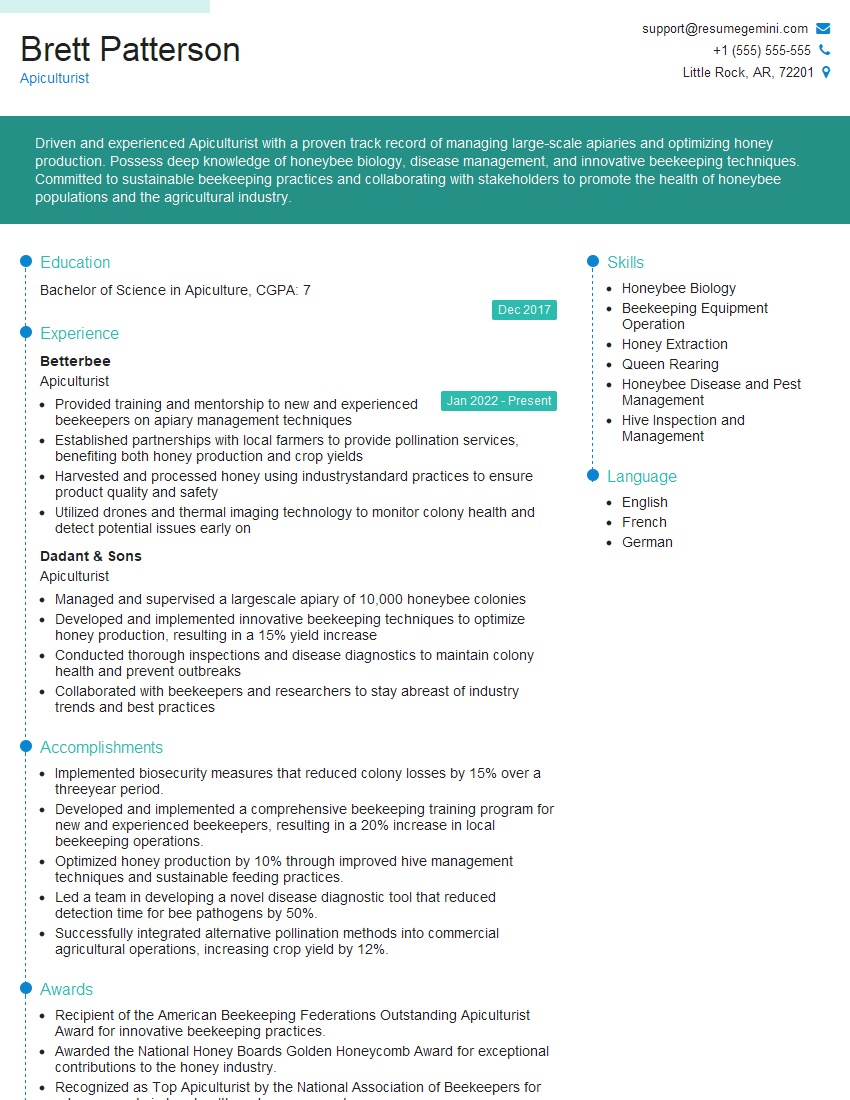
Mastering hive inspection is crucial for a successful and rewarding career in beekeeping. A strong understanding of hive health and management is highly sought after by employers. To significantly improve your job prospects, invest time in crafting an ATS-friendly resume that highlights your skills and experience. ResumeGemini is a trusted resource that can help you build a professional and effective resume. Examples of resumes tailored to the Hive Inspection field are available, providing you with templates and guidance to showcase your abilities effectively.
Explore more articles
Users Rating of Our Blogs
Share Your Experience
We value your feedback! Please rate our content and share your thoughts (optional).
What Readers Say About Our Blog
Very informative content, great job.
good