Every successful interview starts with knowing what to expect. In this blog, we’ll take you through the top Genomics and Marker-Assisted Selection interview questions, breaking them down with expert tips to help you deliver impactful answers. Step into your next interview fully prepared and ready to succeed.
Questions Asked in Genomics and Marker-Assisted Selection Interview
Q 1. Explain the principles of Marker-Assisted Selection (MAS).
Marker-Assisted Selection (MAS) is a plant breeding technique that uses DNA markers linked to genes controlling desirable traits to select superior genotypes. Instead of relying solely on phenotypic observation (what the plant looks like), MAS leverages the genetic information encoded in DNA markers. These markers act as signposts, indicating the presence or absence of a specific gene associated with a target trait, allowing breeders to make more accurate selections early in the breeding process, even before the trait is outwardly expressed.
Imagine searching for a specific book in a library. Traditional breeding is like looking through every single book, one by one, to find the one you need. MAS is like having a catalogue with the location of every book. You can go directly to the shelf where the book is located (the gene controlling the desired trait), making the process much faster and more efficient.
Q 2. What are the advantages and disadvantages of MAS compared to traditional breeding methods?
MAS offers several advantages over traditional breeding methods, primarily increased speed and accuracy. It allows for selection of superior genotypes even before the trait is expressed, reducing generation time and resources. It’s particularly useful for traits that are difficult or expensive to measure phenotypically, such as disease resistance or nutritional value. Furthermore, MAS can improve the selection accuracy, especially in quantitative traits controlled by multiple genes.
- Advantages: Increased selection efficiency, reduced generation time, selection of traits difficult to phenotype, improved accuracy, early selection, increased genetic gain.
- Disadvantages: Requires initial investment in marker development and genotyping, potential for false positives or negatives due to marker-trait associations breaking down over time, limitations posed by the number and nature of linked markers available, knowledge about the genetic architecture of the trait is required.
For example, MAS has significantly accelerated the development of disease-resistant rice varieties, reducing the time it takes to introduce such traits to farmers.
Q 3. Describe different types of molecular markers used in MAS.
Various molecular markers are employed in MAS, each with its strengths and weaknesses. Some common types include:
- Restriction Fragment Length Polymorphisms (RFLPs): These markers involve digesting DNA with restriction enzymes and analyzing the resulting fragments by size. While reliable, they are relatively time-consuming and less high-throughput.
- Simple Sequence Repeats (SSRs) or Microsatellites: These are short repetitive DNA sequences that exhibit high polymorphism. They offer good levels of polymorphism and are relatively easy to analyze using PCR-based techniques.
- Single Nucleotide Polymorphisms (SNPs): These are single-base-pair variations in DNA sequence. SNPs are abundant in the genome and are now the most widely used markers in MAS due to their high throughput and automation capabilities.
- Amplified Fragment Length Polymorphisms (AFLPs): AFLPs use PCR amplification of DNA fragments generated by selective restriction digestion. They are highly polymorphic but can be more complex to analyze compared to other marker systems.
The choice of marker depends on factors such as the availability of resources, the level of polymorphism required, and the complexity of the trait being studied.
Q 4. How do you choose appropriate markers for a specific trait?
Choosing appropriate markers for a specific trait requires a multi-step approach. First, a thorough understanding of the trait’s genetic architecture is necessary. This might involve prior research on QTL mapping or association studies. Ideally, markers should be:
- Closely linked to the target gene(s) to maximize selection accuracy.
- Highly polymorphic to distinguish between different genotypes.
- Cost-effective to genotype a large number of individuals.
- Easy to assay using available laboratory resources.
Candidate genes known to be involved in the trait can also be targeted for marker development. Linkage mapping data can help identify markers physically linked to genes of interest. Once potential markers are identified, their effectiveness needs to be validated in a diverse set of germplasm.
For instance, if we want to select for drought tolerance in maize, we would first search for previously identified QTLs associated with drought tolerance. We might then develop markers tightly linked to these QTLs using SNPs.
Q 5. Explain the concept of linkage disequilibrium and its importance in MAS.
Linkage disequilibrium (LD) refers to the non-random association of alleles at different loci. In simpler terms, it means that certain alleles at one locus tend to occur together with specific alleles at another locus more often than expected by chance. This is due to factors like physical proximity of genes on a chromosome (closely linked genes are less likely to be separated by recombination), population history, and selection.
LD is crucial in MAS because it allows us to use a marker that is linked to a target gene, even if the marker itself doesn’t directly cause the trait. If a marker shows strong LD with a gene controlling a desirable trait, the presence of that marker indicates a higher probability of also finding the desirable allele. However, strong LD can decay over time and across populations due to recombination. Thus, it is important to select markers with strong and stable LD with the target gene in the population being used for selection.
Q 6. What are Quantitative Trait Loci (QTLs) and how are they identified?
Quantitative Trait Loci (QTLs) are genomic regions associated with quantitative traits – traits that show continuous variation, like yield, height, or disease resistance. Unlike qualitative traits (e.g., flower color), quantitative traits are influenced by multiple genes and environmental factors. QTLs essentially pinpoint the chromosomal locations of genes that contribute to the variation of a quantitative trait.
QTLs are identified using QTL mapping techniques. This typically involves crossing two parental lines that differ significantly in the quantitative trait, genotyping the offspring (F2 or backcross populations), and analyzing the relationship between marker genotypes and trait phenotypes. Statistical methods are employed to determine which markers are significantly associated with the quantitative trait variation. This indicates the presence of QTLs in or near those marker loci.
Q 7. Describe the process of QTL mapping.
QTL mapping is a process that involves several steps:
- Parental selection: Choosing two parents that differ significantly in the trait of interest.
- Population development: Creating a mapping population, such as an F2 population (selfing the F1 generation) or a backcross population (crossing F1 individuals with one parent).
- Genotyping: Analyzing the DNA of the individuals in the mapping population using molecular markers to construct a genetic map.
- Phenotyping: Measuring the quantitative trait in each individual.
- Statistical analysis: Using software to perform QTL analysis, which typically involves regression or interval mapping to identify regions of the genome that are associated with the trait variation. This usually involves calculating LOD (logarithm of odds) scores to assess the significance of QTL detection.
- QTL characterization: Estimating the effects and positions of identified QTLs. The effect size indicates the contribution of each QTL to the overall phenotypic variation.
The outcome of QTL mapping is a list of QTLs with their approximate positions on the genetic map and estimated effects. This information can then be used in MAS to select individuals with favorable alleles at these QTLs. A visual representation of this might be a graph showing the location of the QTLs on chromosomes and their associated LOD scores.
Q 8. How do you validate the effectiveness of selected markers?
Validating marker effectiveness involves rigorously assessing whether a chosen marker is truly associated with the desirable trait. We can’t just assume a correlation; we need strong evidence. This validation process typically involves multiple steps.
Independent Validation Population: The most crucial step is testing the marker in a different population than the one used for initial marker association. This independence helps to avoid spurious correlations that might arise from population structure or other confounding factors. If the marker shows a consistent association with the trait in multiple, independent populations, our confidence in its effectiveness increases dramatically.
Replication Studies: Repeating the association study in multiple environments (e.g., different years, locations) is important. A marker might be effective under certain conditions but not others. Replication ensures robustness across diverse settings.
Statistical Significance: We use statistical tests (like chi-square or ANOVA) to assess the strength of the association between marker genotype and trait phenotype. A high level of statistical significance (e.g., a small p-value) strengthens the evidence of a real association.
Prediction Accuracy: Ultimately, the effectiveness of a marker is judged by its ability to predict the trait in new individuals. We can measure this using techniques like cross-validation or prediction accuracy in an independent test set. Higher prediction accuracy indicates a more useful marker.
For example, if we’re selecting for disease resistance in wheat, we might identify a marker initially associated with resistance. To validate it, we’d test this marker in a different set of wheat lines, grown in diverse locations and years. Only if the marker consistently predicts resistance across these tests do we consider it reliable for use in a breeding program.
Q 9. Explain the concept of genomic selection (GS) and its relationship to MAS.
Genomic Selection (GS) and Marker-Assisted Selection (MAS) are both breeding techniques that leverage genomic information to improve the efficiency of selecting superior individuals. However, they differ in their approach.
Marker-Assisted Selection (MAS) traditionally focuses on identifying individual genes (or markers closely linked to genes) that control specific traits. We select individuals carrying favorable alleles of those genes. Think of it as targeting specific, known locations on the genome.
Genomic Selection (GS), on the other hand, uses genome-wide markers across the entire genome to predict the breeding value of individuals. It doesn’t necessarily identify individual genes responsible for the trait; instead, it leverages the overall genomic information to predict the phenotype. It’s a more holistic approach, utilizing the combined effect of many genes and their interactions.
The relationship is that GS is a broader, more advanced approach than MAS. MAS can be considered a component of GS, as GS can incorporate information from known genes and QTLs identified through traditional MAS.
Q 10. What are the differences between MAS and GS?
The key differences between MAS and GS lie in their scope, the type of markers used, and the statistical methods employed:
Scale: MAS typically focuses on a few major genes or QTLs (Quantitative Trait Loci) associated with a trait. GS, however, uses a dense set of markers across the entire genome.
Marker Type: MAS often utilizes specific markers linked to known genes. GS utilizes genome-wide markers (SNPs, SSRs) to capture the overall genomic information.
Statistical Methods: MAS commonly employs simple statistical methods like ANOVA or regression. GS relies on more complex prediction models, such as ridge regression, Bayesian methods (e.g., BayesB, BayesC), and machine learning algorithms (e.g., Support Vector Machines).
Prediction: MAS directly selects based on marker presence/absence; GS predicts the breeding value based on overall genomic profile and thus helps select superior individuals even in the absence of major genes.
Imagine breeding for yield in maize. MAS might focus on a few known yield-related genes. GS, however, would consider thousands of markers across the genome to predict yield, potentially capturing the effects of numerous smaller genes and interactions that MAS might miss.
Q 11. Discuss the challenges associated with implementing MAS in breeding programs.
Implementing MAS in breeding programs presents several challenges:
Marker Development and Validation: Developing reliable markers requires substantial investment in genotyping and phenotyping, followed by rigorous validation across multiple populations and environments. This is time-consuming and expensive.
Cost of Genotyping: High-throughput genotyping can be expensive, especially for large breeding populations. The cost can limit the scale of implementation, particularly in resource-constrained settings.
Linkage Drag: Markers might be linked to undesirable genes, leading to selection of these genes along with desirable ones. This reduces the overall effectiveness of the selection.
Epigenetic Effects and Environmental Interactions: MAS might not fully account for epigenetic modifications and genotype-by-environment interactions, leading to inaccurate predictions.
Quantitative Traits: MAS is often less effective for complex quantitative traits controlled by many genes with small individual effects compared to qualitative traits. GS is preferred in such cases.
Population Structure: Population structure can confound marker-trait associations and lead to false positives, requiring careful statistical adjustments.
For example, in a rice breeding program, the cost of genotyping a large population using high-density markers could be prohibitive. Linkage drag might also be an issue if the desirable marker is linked to a gene that reduces grain quality.
Q 12. How do you handle missing data in MAS analysis?
Missing data is a common problem in MAS analysis, as genotyping or phenotyping might fail for some individuals. Several methods exist for handling missing data:
Deletion: The simplest approach is to remove individuals or markers with missing data. However, this can lead to a substantial loss of information, especially if the missing data is not completely random (Missing Not At Random, MNAR).
Imputation: This involves predicting the missing genotypes based on the observed genotypes of other individuals. Imputation methods use algorithms to infer the likely genotypes based on linkage disequilibrium (LD) patterns and population structure. Popular methods include k-nearest neighbors, expectation-maximization, and multiple imputation.
Multiple Imputation: This creates multiple plausible imputed datasets, runs the analysis on each dataset separately, and then combines the results. This accounts for the uncertainty associated with imputation.
The choice of method depends on the extent of missing data, its pattern, and the characteristics of the data. Imputation is generally preferred over deletion as it retains more information, however, imputation accuracy should be assessed.
Q 13. What statistical methods are used in MAS analysis?
A variety of statistical methods are used in MAS analysis, depending on the type of trait and marker data:
Analysis of Variance (ANOVA): Used to compare the means of the trait across different marker genotypes (e.g., comparing yield in individuals with different alleles of a marker).
Regression Analysis: Used to model the relationship between the trait and marker genotypes, potentially accounting for other factors.
Chi-square test: Used to assess the association between categorical traits (e.g., disease resistance/susceptibility) and marker genotypes.
Mixed Models: Account for genetic relationships among individuals to obtain more accurate estimates of marker effects, particularly in family-based studies.
Association Mapping: Used to identify markers associated with quantitative traits using linkage disequilibrium information.
Genomic Prediction models (used in GS): These include ridge regression, Bayesian methods (e.g., BayesB, BayesC), and machine learning algorithms. These methods use all markers across the genome to predict the breeding values of individuals.
The choice of method depends on the specific research question, data structure, and the nature of the trait under consideration.
Q 14. Explain the concept of heritability and its role in MAS.
Heritability (h²) is a crucial concept in MAS. It represents the proportion of the phenotypic variation in a trait that is due to genetic variation. In simpler terms, it indicates how much of the observable differences in a trait (like yield or disease resistance) among individuals is attributable to their genes, as opposed to environmental influences.
Role in MAS: Heritability is essential because it determines the effectiveness of selection. If a trait has low heritability (e.g., h²=0.2), much of the observed variation is due to environmental factors, meaning genetic selection will have limited impact. In contrast, a high heritability (e.g., h²=0.8) implies that genetic selection will be more effective. Markers linked to genes contributing to the trait will be more predictive, making MAS more powerful.
MAS relies on heritability because we use marker information to predict the genetic merit of individuals. If heritability is low, even perfectly accurate markers might not lead to significant improvement in the trait through selection, since the environmental component masks the genetic effect.
For example, if we are selecting for drought tolerance in a crop with a high heritability for this trait, MAS will be more effective. However, if drought tolerance has low heritability (highly affected by the environment that year), MAS would be much less effective.
Q 15. How do you assess the accuracy of MAS predictions?
Assessing the accuracy of Marker-Assisted Selection (MAS) predictions involves a multi-faceted approach. We primarily rely on evaluating the predictive ability of the markers using statistical measures. This includes calculating the accuracy of predictions, evaluating the correlation between predicted and observed phenotypes, and assessing the prediction’s precision and recall.
For example, we might use metrics like the coefficient of determination (R2) to quantify the proportion of phenotypic variation explained by the markers. A higher R2 indicates a better fit of the model and therefore, more accurate predictions. We also consider the root mean square error (RMSE), a measure of the average difference between predicted and observed values; a lower RMSE suggests higher accuracy. Furthermore, we perform cross-validation techniques, such as k-fold cross-validation, to assess the model’s generalizability to unseen data, ensuring its robustness and preventing overfitting.
Beyond these statistical measures, we carefully examine the biological plausibility of our predictions. Do the results make sense in the context of the known genetics and biology of the trait? We also consider factors like the sample size of the training population and the number of markers used. A larger, more diverse training set generally leads to more reliable predictions. Finally, we compare our MAS predictions to those obtained using other methods, if available, to gain a broader perspective on their accuracy.
Career Expert Tips:
- Ace those interviews! Prepare effectively by reviewing the Top 50 Most Common Interview Questions on ResumeGemini.
- Navigate your job search with confidence! Explore a wide range of Career Tips on ResumeGemini. Learn about common challenges and recommendations to overcome them.
- Craft the perfect resume! Master the Art of Resume Writing with ResumeGemini’s guide. Showcase your unique qualifications and achievements effectively.
- Don’t miss out on holiday savings! Build your dream resume with ResumeGemini’s ATS optimized templates.
Q 16. What software or tools are you familiar with for MAS analysis?
My experience encompasses a wide range of software and tools used in MAS analysis. For genome-wide association studies (GWAS), I frequently utilize packages like PLINK and GAPIT in R. These are powerful tools for conducting association mapping, identifying significant markers, and performing genomic prediction. For data visualization and manipulation, I’m proficient in R and its associated packages such as ggplot2 and dplyr. For more complex genomic analyses, I’ve used programs like TASSEL and GCTA.
In addition to these command-line tools, I have experience with user-friendly graphical interfaces such as those found in breeding software programs, which facilitate data management and analysis for those less familiar with coding. The specific tools I use often depend on the project’s size, the type of data, and the specific questions we’re addressing. For example, for very large datasets, specialized high-performance computing tools and parallel processing may be necessary.
Q 17. Describe your experience with genotyping technologies.
My experience with genotyping technologies spans several platforms, including SNP arrays and next-generation sequencing (NGS). I’ve worked extensively with Illumina’s Infinium and GoldenGate platforms for high-throughput SNP genotyping, analyzing data from hundreds to thousands of samples. These technologies provide high-quality data for large-scale genetic studies. More recently, I’ve incorporated NGS technologies such as whole-genome sequencing (WGS) and genotyping-by-sequencing (GBS) into my research. These techniques offer increased marker density and the potential to detect novel variations.
My experience encompasses not only the practical aspects of data generation but also the crucial steps involved in quality control, data cleaning, and error correction. I’m familiar with common issues like missing data and genotype errors, and I employ various techniques to address these to ensure the reliability of my analyses. Each platform has its strengths and weaknesses, and selecting the appropriate technology depends on the project’s scope, budget, and the level of detail required.
Q 18. Explain the concept of population structure and its impact on MAS.
Population structure refers to the presence of subgroups or clusters within a population that differ genetically. These subgroups can arise from factors like geographic isolation, migration patterns, or historical breeding practices. In MAS, population structure is a critical concern because it can lead to spurious associations between markers and traits. This occurs because individuals within the same subgroup tend to share similar genotypes and phenotypes, regardless of any true genetic linkage.
Imagine a scenario where a specific marker is more frequent in one subgroup than another, and this subgroup also happens to exhibit a higher average yield. A naive analysis might incorrectly conclude that the marker is associated with yield, when in reality, the association is due to the population structure itself. This leads to inflated false positives in GWAS and undermines the accuracy of MAS. Ignoring population structure can result in selecting markers that don’t have a true causal relationship with the trait, leading to ineffective breeding strategies.
Q 19. How do you account for population structure in your MAS analysis?
Accounting for population structure in MAS analysis is crucial for obtaining reliable results. The most common approach involves using statistical methods that control for the effects of population structure. One widely used technique is to incorporate a kinship matrix into the analysis. A kinship matrix quantifies the genetic relatedness between individuals in the population. This matrix accounts for the non-independence of observations caused by population structure and improves the accuracy of association testing.
Another approach is to use mixed linear models, which can explicitly model the effects of population structure as random effects. These models effectively partition the phenotypic variance into components attributable to population structure, genetic effects, and environmental factors. Software packages like GAPIT and ASReml provide functions for implementing these methods. Alternatively, we might use methods like principal component analysis (PCA) to identify and account for the major axes of genetic variation within the population. These principal components can then be included as covariates in the association analysis to adjust for population structure. The choice of method depends on factors like the complexity of the population structure and the computational resources available.
Q 20. Describe your experience with data management and analysis in genomics projects.
My experience in genomics data management and analysis is extensive. I’m comfortable working with large datasets involving millions of markers and hundreds or thousands of samples. I use various databases and data management systems for efficient storage and retrieval of genomic data. This includes relational databases like MySQL and NoSQL databases. I’m also adept at using cloud-based data storage and analysis platforms. My experience includes designing, implementing, and documenting data management workflows, ensuring data integrity and traceability throughout the project lifecycle.
My analysis experience extends to implementing advanced statistical techniques including machine learning methods for genomic prediction. This involves data preprocessing (cleaning, imputation, normalization), model building (linear mixed models, support vector machines, random forests), model evaluation (cross-validation, accuracy assessment), and result interpretation. I’m proficient in scripting languages like R and Python to automate repetitive tasks and to perform complex analyses efficiently. I also have expertise in using visualization tools to effectively communicate results and findings to stakeholders.
Q 21. What are the ethical considerations associated with MAS?
Ethical considerations in MAS are multifaceted and crucial for responsible application of this technology. One key concern is the potential for unintended consequences, such as the inadvertent selection of undesirable traits linked to the target trait. For example, if we select for increased yield, we might inadvertently select for disease susceptibility if those traits are genetically linked. Thorough genetic analysis and careful consideration of potential pleiotropic effects (where one gene affects multiple traits) are critical to mitigate these risks.
Another ethical consideration is equitable access to the technology. MAS can significantly enhance agricultural productivity, but its benefits might not be evenly distributed. We need to ensure that the technology is accessible to smallholder farmers and developing countries, not just large corporations. Finally, intellectual property rights and data ownership are important factors to consider. Clear guidelines and open communication are needed to manage these aspects fairly. Transparency in the development and deployment of MAS technologies is critical for promoting public trust and ensuring responsible innovation.
Q 22. How do you evaluate the economic feasibility of implementing MAS?
Evaluating the economic feasibility of implementing Marker-Assisted Selection (MAS) requires a careful cost-benefit analysis. We need to weigh the initial investment against the potential long-term gains.
- Costs: This includes the cost of genotyping (DNA sequencing and analysis), development and validation of markers, software and data management, training personnel, and potential loss of productivity if the implementation disrupts existing practices.
- Benefits: The benefits include increased selection accuracy, leading to faster genetic gain, reduced generation interval, improved product quality (e.g., yield, disease resistance), and decreased reliance on phenotypic selection which can be expensive and time-consuming. These benefits can translate to increased profits, reduced input costs (e.g., pesticides, fertilizers), and improved market competitiveness.
A practical framework involves:
- Estimating costs: Obtain quotes for genotyping, software, and personnel costs. Consider hidden costs like infrastructure upgrades and downtime.
- Projecting benefits: Use simulations or historical data to estimate increased yields, improved quality traits, and reduced input costs. Consider the potential market value of these improvements.
- Calculating Net Present Value (NPV): Discount future benefits to their present value to account for the time value of money. A positive NPV indicates economic viability.
- Sensitivity analysis: Assess the robustness of the NPV by varying key parameters (e.g., marker accuracy, yield increase) to identify critical factors impacting the project’s success.
For instance, in a dairy cattle breeding program, the cost of genotyping might be offset by the increased milk production and improved milk quality obtained through selecting animals with favorable markers for milk yield and somatic cell count.
Q 23. Describe a situation where MAS failed to deliver expected results. What went wrong?
MAS projects can fail to meet expectations for various reasons. One case I’m familiar with involved a breeding program aiming to increase drought tolerance in maize. A specific marker was strongly associated with tolerance in initial trials. However, when the selected lines were field-tested under drought conditions, the expected improvement in yield was not observed.
What went wrong?
- Marker-trait association breakdown: The initial association between the marker and drought tolerance was likely due to linkage disequilibrium (LD), where the marker is physically close to a gene actually influencing drought tolerance. The LD broke down in the later generations due to recombination, leading to the marker no longer being predictive of the trait.
- Environmental interaction: The marker’s effect on drought tolerance may have been strongly influenced by specific environmental conditions that weren’t fully represented in the initial trials. The field tests had different soil types, temperature, or rainfall patterns that masked or reversed the expected effect.
- Epigenetic factors: Epigenetic modifications, changes in gene expression without changes to the DNA sequence, can influence drought tolerance and might not be captured by the marker.
- Insufficient genetic diversity in the population used for marker development and validation: The marker might have been effective in a specific population but not others due to limited genetic variation in the original population.
This case highlights the need for rigorous validation of markers across different environments and genetic backgrounds, as well as a deep understanding of the genetic architecture of complex traits like drought tolerance.
Q 24. How would you explain complex genomic concepts to non-scientists?
Explaining complex genomic concepts to non-scientists requires clear, simple language and relatable analogies.
For instance, explaining the concept of a genome, I would compare it to a detailed instruction manual for building and operating a human being. This manual is written in the language of DNA, a code with four letters (A, T, C, G) that dictate the sequence of amino acids to build proteins, which are the workhorses of our cells. Genes are specific chapters in this manual providing instructions for building specific proteins that perform particular tasks in the body.
When talking about marker-assisted selection, I’d explain it as a shortcut method for plant or animal breeding. Instead of having to evaluate every individual plant or animal for the desirable traits (e.g., yield, disease resistance) which can be slow and expensive, we can use genetic markers, which are like flags in the genome indicating desirable features. These flags help us pick the best individuals more quickly and efficiently.
I always avoid jargon and use visuals or real-world examples. For instance, a map illustrating how genetic markers are associated with a particular trait can make it easier for a non-scientist to visualize the process. The goal is to create an intuitive understanding without sacrificing scientific accuracy.
Q 25. Discuss the future trends and advancements in MAS.
The future of MAS is incredibly exciting, driven by rapid advancements in genomics technologies and computational power.
- High-throughput genotyping: Next-generation sequencing (NGS) technologies are making whole-genome sequencing increasingly affordable and accessible, leading to a more complete understanding of the genome and more precise marker discovery.
- Genomic selection (GS): GS utilizes genome-wide markers to predict the breeding value of individuals, even for complex traits with many genes involved. This is proving to be more effective than traditional MAS in many cases.
- Machine learning and AI: Machine learning algorithms are being used to improve marker selection, predict complex traits, and optimize breeding strategies. This can lead to significant gains in selection efficiency.
- Integration of omics data: MAS is moving beyond just DNA sequence data. Integrating data from transcriptomics (gene expression), proteomics (protein analysis), and metabolomics (metabolite analysis) can provide a more comprehensive understanding of traits and improve prediction accuracy.
- Gene editing technologies: CRISPR-Cas9 and other gene editing technologies can be used to create more precise genetic modifications, offering new avenues for improving crops and livestock. The markers can help select individuals with desired edits.
These advancements are leading to more efficient and precise breeding strategies across agriculture, forestry, and animal breeding, accelerating genetic gain and facilitating the development of superior varieties and breeds better adapted to changing environmental conditions.
Q 26. How do you stay updated with the latest developments in genomics and MAS?
Staying updated in genomics and MAS requires a multifaceted approach.
- Scientific literature: I regularly read high-impact journals such as Nature Genetics, Genome Biology, Plant Cell, and Genetics. I also utilize databases like PubMed and Google Scholar to search for relevant publications.
- Conferences and workshops: Attending international and national conferences like those organized by the International Society for Molecular Plant Biology, Crop Science Society of America and similar organizations provides opportunities to network with leading researchers and learn about cutting-edge advancements.
- Online resources: I actively monitor websites of prominent research institutions, databases (e.g., NCBI, Ensembl), and professional organizations in the field. Preprint servers like bioRxiv and arXiv can offer early access to the latest research findings.
- Professional networks: I maintain a strong network of colleagues through professional societies and online platforms like LinkedIn. Engaging in discussions and collaborations keeps me abreast of current developments.
Continuous learning is crucial. I consistently participate in online courses and webinars to deepen my understanding of advanced methods and software used in the field.
Q 27. Describe your experience working collaboratively on genomics projects.
Collaboration is essential in genomics projects due to their complexity and interdisciplinary nature. My experience includes working in large teams involving biologists, statisticians, bioinformaticians, and breeders.
I have been involved in multiple projects where we effectively utilized different software tools and bioinformatics platforms. This involved coordinating data sharing, establishing standard operating procedures, implementing version control for code and data, and ensuring data quality and consistency across different stages of the project. Successful collaborations require excellent communication, defined roles and responsibilities, regular meetings and progress updates, and respect for each team member’s expertise.
In one specific example, I led the bioinformatics analysis in a project to identify QTLs (Quantitative Trait Loci) for disease resistance in wheat. I worked closely with field researchers to ensure the phenotypic data were accurately collected and processed. With statisticians, I determined appropriate statistical models and implemented quality control measures. The result was a successful identification of several QTLs, leading to the development of wheat varieties with enhanced disease resistance. Effective communication and clear goals are what made this collaborative project successful.
Q 28. Explain your understanding of different statistical models used in genomic selection.
Several statistical models are employed in genomic selection, each with its strengths and weaknesses.
- Linear Mixed Models (LMMs): These models are widely used because they can accommodate the complex relationships between genotypes and phenotypes, accounting for both the fixed effects (e.g., environmental factors) and random effects (e.g., genetic effects). The most common LMM used is the BayesA, BayesB, and BayesC models which use different priors (assumptions about the distribution of effects of markers). They handle polygenic traits well.
- Generalized Linear Models (GLMs): When the phenotype is not normally distributed (e.g., binary traits like disease resistance, count data), GLMs are employed. They model the relationship between the genotype and a transformed response variable which can follow a different distribution. For example, we use logistic regression for binary data and Poisson regression for count data.
- Support Vector Machines (SVMs): SVMs are non-parametric models used for their ability to handle non-linear relationships between markers and phenotypes. They are particularly useful when dealing with high-dimensional genomic data.
- Neural Networks: Deep learning methods, including neural networks, are increasingly used for genomic selection. They can capture complex, non-linear relationships but require large datasets and considerable computational resources.
The choice of model depends on several factors: the type of trait (continuous, binary, categorical), the size and structure of the dataset, the computational resources available, and the desired level of accuracy.
Example (simplified R code for a LMM using the lme4 package):
library(lme4)model <- lmer(Phenotype ~ Genotype + (1|Family), data = dataset)
This code illustrates a basic LMM where 'Phenotype' is the trait of interest, 'Genotype' is a marker, 'Family' is a random effect, and 'dataset' contains the data.
Key Topics to Learn for Genomics and Marker-Assisted Selection Interview
- Genomic Principles: Understanding DNA structure, gene function, inheritance patterns, and genomic variation (SNPs, InDels).
- Marker Development and Validation: Techniques for identifying and validating molecular markers (SSR, SNP, InDel), marker linkage maps, and QTL mapping.
- Marker-Assisted Selection (MAS) Strategies: Different MAS approaches (e.g., marker-assisted backcrossing, foreground and background selection), their advantages, limitations, and applications in different crops/species.
- Genotyping Technologies: Familiarity with various genotyping platforms (e.g., PCR-based methods, microarrays, Next-Generation Sequencing) and their applications in MAS.
- Bioinformatics and Data Analysis: Data management, statistical analysis of marker data, and interpretation of results for MAS. Experience with relevant software (e.g., R, Python) is a plus.
- Practical Applications of MAS: Understanding how MAS is used to improve crop yield, disease resistance, stress tolerance, and other desirable traits in agriculture and animal breeding.
- Case Studies and Problem Solving: Ability to analyze and interpret case studies related to the successful application (or challenges faced) in using MAS for trait improvement.
- Ethical Considerations of MAS: Understanding the potential ethical implications of using genomic information and MAS technologies.
Next Steps
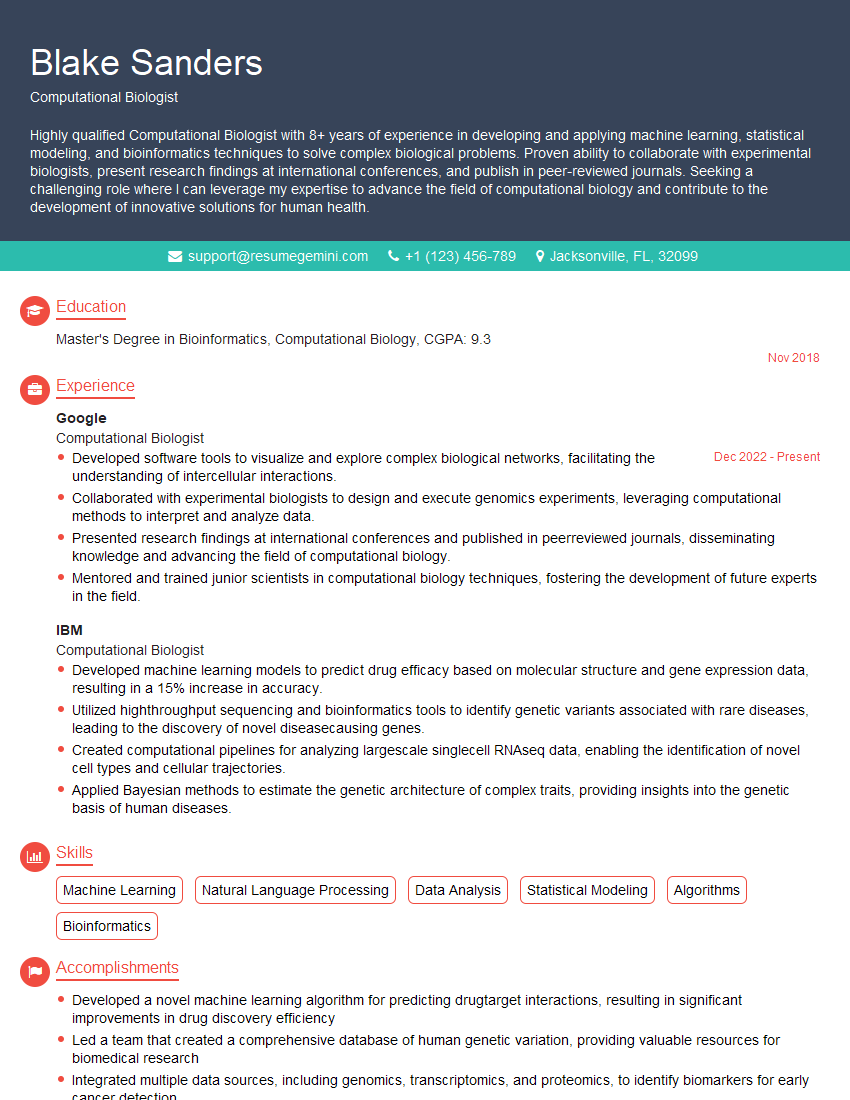
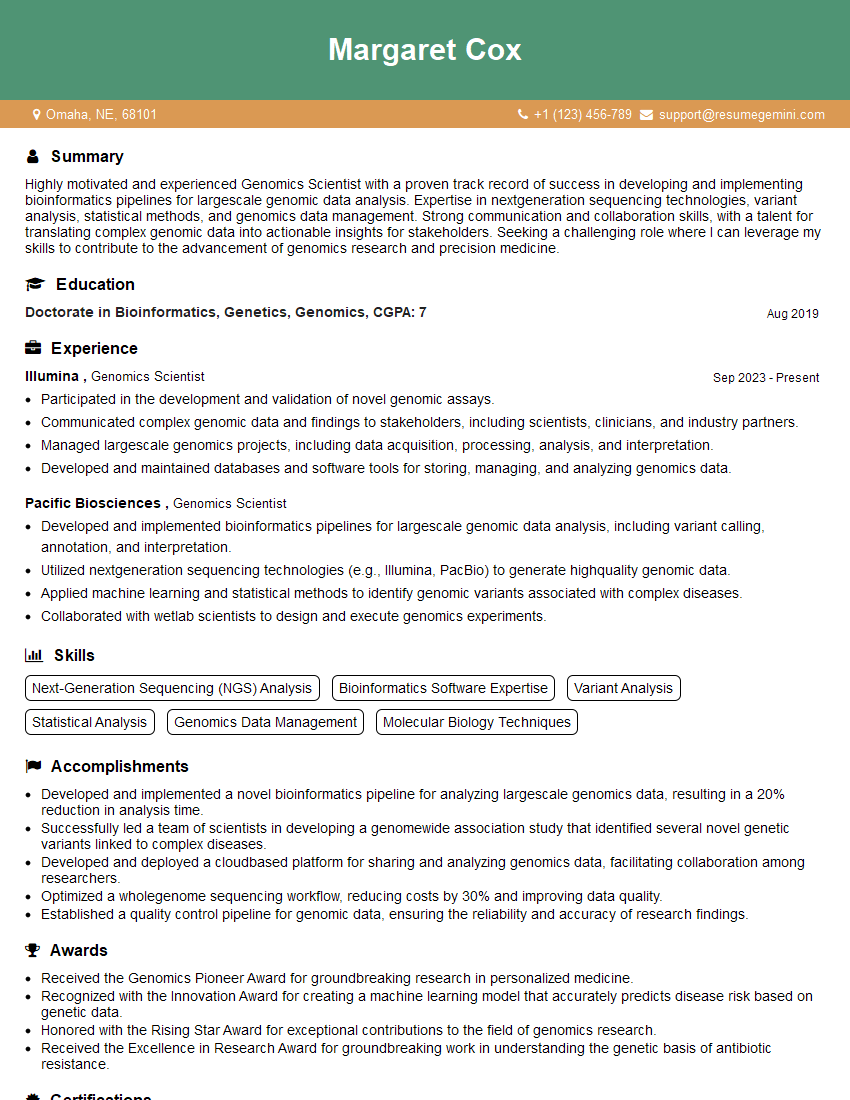
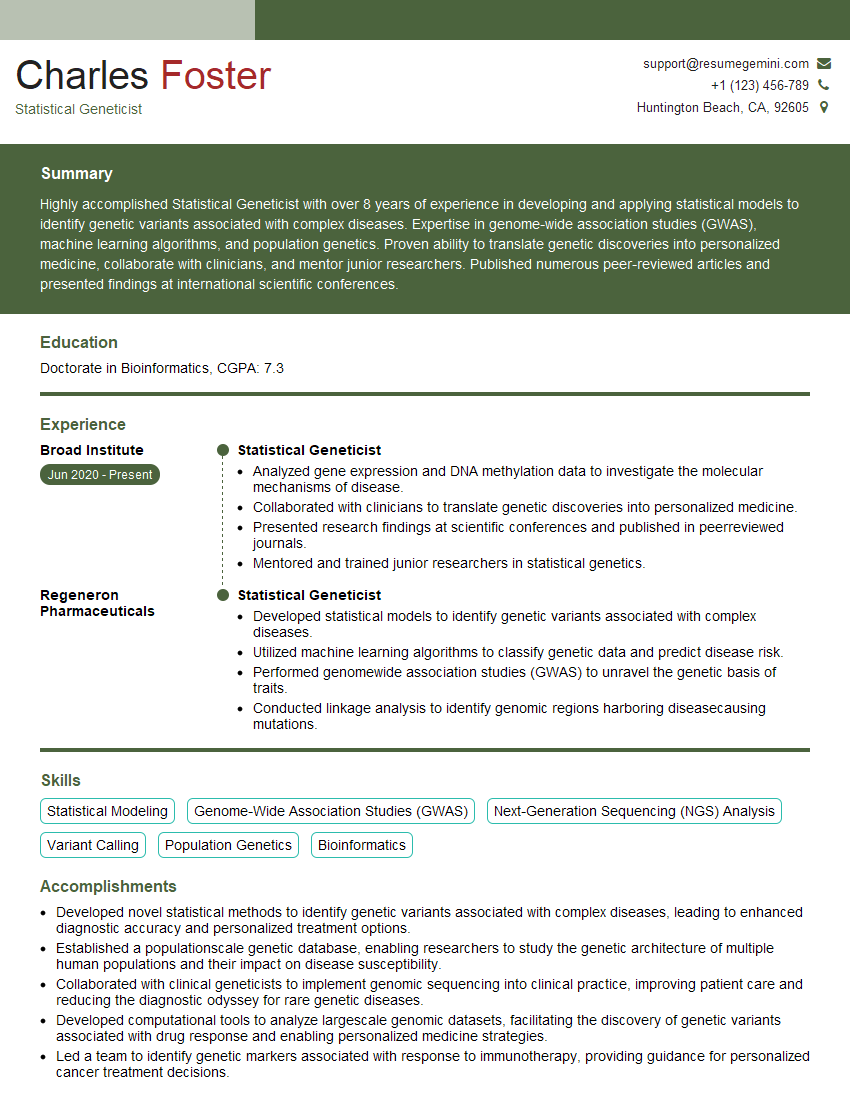
Mastering Genomics and Marker-Assisted Selection opens doors to exciting career opportunities in agricultural biotechnology, plant breeding, animal breeding, and related fields. To maximize your job prospects, invest time in crafting a compelling and ATS-friendly resume that highlights your skills and experience effectively. ResumeGemini is a trusted resource that can help you build a professional resume tailored to the specific requirements of the genomics and MAS sector. Examples of resumes tailored to Genomics and Marker-Assisted Selection are available to guide you. Take the next step towards your dream career today!




Explore more articles
Users Rating of Our Blogs
Share Your Experience
We value your feedback! Please rate our content and share your thoughts (optional).
What Readers Say About Our Blog
Very informative content, great job.
good