Every successful interview starts with knowing what to expect. In this blog, we’ll take you through the top Wave Soldering Machine Operation interview questions, breaking them down with expert tips to help you deliver impactful answers. Step into your next interview fully prepared and ready to succeed.
Questions Asked in Wave Soldering Machine Operation Interview
Q 1. Describe the different types of wave soldering machines.
Wave soldering machines are categorized primarily by the type of wave they generate. The most common types are:
- Dual-wave machines: These utilize two waves – a pre-wave and a main wave. The pre-wave helps to preheat the PCB and improve solder coverage on the component leads, while the main wave completes the soldering process. Think of it like a two-stage process for better control and results.
- Single-wave machines: Simpler and less expensive than dual-wave machines, these use a single wave to perform the entire soldering process. They are suitable for simpler assemblies and lower production volumes. This is like a single-step approach, ideal for smaller jobs.
- Selective wave soldering machines: These offer precise control over the soldering process, only soldering specific areas of the PCB. This is useful for selectively soldering components on complex boards, avoiding unnecessary soldering in other areas which might cause issues.
The choice of machine depends on factors like PCB complexity, production volume, and budget.
Q 2. Explain the process of wave soldering, step-by-step.
The wave soldering process can be broken down into these steps:
- PCB Loading: The printed circuit board (PCB) is carefully loaded onto the conveyor system, ensuring proper alignment and avoiding any obstructions.
- Preheating (if applicable): The PCB passes through a preheating zone (found in dual-wave and some selective systems), raising its temperature to a level that prevents thermal shock during immersion in the molten solder.
- Fluxing (if necessary): The PCB may be fluxed prior to soldering to enhance wetting and solderability.
- Wave Soldering: The PCB moves across the solder wave. The solder wave’s surface tension helps to draw the solder onto the component leads, creating a strong, reliable solder joint.
- Cooling: After the soldering process, the PCB passes through a cooling zone to solidify the solder joints and prevent deformation.
- Unloading: The soldered PCB is unloaded from the conveyor.
Each step is critical to ensuring high-quality solder joints. Proper machine setup and maintenance are paramount.
Q 3. What are the key parameters to control during wave soldering?
Precise control over several parameters is vital for successful wave soldering. Key parameters include:
- Solder Temperature: Maintaining the correct solder temperature (typically around 240-250°C for lead-free solder) is critical. Too low, and the solder won’t flow properly; too high, and it can damage components or create excessive solder bridging.
- Wave Height and Shape: The wave height and shape must be carefully adjusted to ensure proper coverage of component leads, without excessive solder splashing or insufficient wetting. This often needs tweaking based on PCB design
- Conveyor Speed: The speed at which the PCB moves through the machine influences the dwell time in the solder wave and needs to be optimized for adequate soldering, preventing defects like insufficient solder or cold solder joints
- Preheating Temperature (if applicable): Preheating temperature needs to be sufficient to prevent thermal shock on the components while not causing damage through overheating.
- Flux Type and Application: The type and amount of flux used significantly impact solderability. Too little flux can lead to poor wetting; too much can cause excessive residue or bridging.
Monitoring and adjusting these parameters based on the specific PCB design and component types is a crucial aspect of effective wave soldering.
Q 4. How do you ensure proper wetting and solder bridging avoidance?
Achieving proper wetting and avoiding solder bridging requires careful attention to several factors:
- Proper Fluxing: Using a suitable flux that’s correctly applied is fundamental. The flux cleans the surfaces of the leads and the PCB pads, promoting good solder flow. Inadequate fluxing is a major cause of poor wetting.
- Optimal Solder Temperature: The correct solder temperature ensures good fluidity, leading to proper wetting. Too low and you get cold joints, too high and it increases the chances of bridging.
- Wave Height and Conveyor Speed: A correctly configured wave height and conveyor speed ensure only the necessary solder contacts the component leads, minimizing the risk of bridging. This involves fine-tuning the balance between adequate coverage and minimal excess solder.
- PCB Design: Clever PCB layout, including adequate spacing between components and pads, helps avoid bridging. This is where working closely with design engineers is paramount.
- Component Selection: Certain component types may be more prone to bridging than others. Careful selection and consideration of component orientations are key.
It’s a holistic process, requiring careful attention to all these aspects for optimal results. For example, I once solved a persistent bridging issue by slightly adjusting the conveyor speed and re-evaluating the flux type for a specific, high-density PCB.
Q 5. What are the common defects encountered in wave soldering and their causes?
Common wave soldering defects and their causes:
- Insufficient Solder: Caused by insufficient flux, incorrect solder temperature, or improper wave height.
- Cold Solder Joints: Caused by low solder temperature, insufficient preheating, or too rapid cooling.
- Solder Bridging: Caused by excessive solder, poor component placement, incorrect wave height, or insufficient spacing between components.
- Tombstoning: Caused by uneven heating of component leads, leading to one lead soldering before the other.
- Icicles: Caused by excessive solder volume, improper wave configuration, or excessive solder temperature.
- Head-in-pillow: Caused by improper component orientation or wave action.
Identifying the root cause of each defect requires a systematic approach and often involves a combination of visual inspection and data analysis from the machine’s control system.
Q 6. How do you troubleshoot common wave soldering problems?
Troubleshooting wave soldering problems requires a methodical approach. Here’s a typical process:
- Identify the Defect: Carefully examine the defective PCBs to pinpoint the specific defect type(s).
- Analyze the Process Parameters: Check the machine’s control system to review all the soldering parameters – temperature, wave height, conveyor speed, preheat settings etc.
- Inspect the Solder Wave: Visually inspect the solder wave for anomalies in shape, height, or cleanliness. Are there any contaminants?
- Check Flux Application: Verify the flux type and its application method. Is there sufficient flux and is it being applied correctly?
- Examine Components: Check for damaged or improperly oriented components.
- Adjust Parameters: Based on the analysis, make adjustments to machine parameters and retry the process. Documenting each change and its effect is crucial.
- Clean the Machine: Regularly clean the machine to remove solder residues and other contaminants.
For example, if I encounter excessive bridging, I’d first check the wave height, then the conveyor speed, and finally, investigate the flux usage. This systematic approach allows for efficient fault resolution.
Q 7. Explain the importance of pre-heating in wave soldering.
Preheating in wave soldering is crucial for several reasons:
- Minimizes Thermal Shock: Abrupt temperature changes can cause damage to sensitive components. Preheating gradually raises the PCB’s temperature, minimizing the thermal shock when it enters the molten solder.
- Improves Solderability: Preheating helps to improve the flow of solder and the wetting of component leads, leading to stronger, more reliable solder joints. It also helps to prevent cold joints by bringing the components closer to the desired soldering temperature.
- Reduces Defects: By minimizing thermal stress, preheating contributes to the reduction of defects such as tombstoning and head-in-pillow, and also helps to ensure uniform solder coverage.
While not all wave soldering machines utilize preheating (single-wave machines often don’t), its inclusion in dual-wave and selective machines is a key factor in ensuring quality and reliability, especially with complex PCBs and sensitive components.
Q 8. What are the different types of solder used in wave soldering?
The choice of solder in wave soldering depends heavily on the application’s requirements. Generally, we use tin-lead (SnPb) and lead-free (SnAgCu) alloys. However, due to environmental regulations, lead-free solders are increasingly prevalent.
- Tin-lead (SnPb): Historically dominant, offering excellent wetting characteristics and a lower melting point, making it easier to work with. However, the lead content poses environmental and health concerns, severely limiting its use in many industries.
- Lead-free (SnAgCu): These alloys, typically containing tin (Sn), silver (Ag), and copper (Cu), are designed to replace tin-lead. They offer better strength and fatigue resistance, though often requiring higher soldering temperatures and potentially causing more challenges with wetting and void formation if not properly managed. Specific compositions like Sn96.5Ag3.0Cu0.5 are common.
- Other Alloys: Less common alloys may include those with bismuth or indium for specific application needs, like improved thermal conductivity or lower melting points.
Selecting the right solder hinges on factors such as the type of components, the board material, and the required mechanical strength and reliability. We always need to consult material datasheets and industry best practices.
Q 9. How do you maintain a wave soldering machine?
Maintaining a wave soldering machine is crucial for consistent high-quality soldering and minimizing defects. A robust maintenance program includes several key aspects:
- Regular Cleaning: This involves cleaning the solder pot, wave generator, and conveyor system. We frequently remove excess solder, flux residue, and oxides. Using appropriate cleaning agents and techniques is essential to prevent contamination.
- Solder Pot Monitoring: Regularly check the solder level and composition. Replenishing with fresh solder and adding alloying elements as needed maintains optimal solder properties. Regular fluxing is crucial to prevent oxidation.
- Wave Height and Shape Adjustment: The wave height and shape are adjusted regularly to optimize the soldering process. We carefully monitor and make adjustments to ensure uniform solder coverage across the PCB.
- Preheater Temperature Control: Ensuring consistent preheating temperatures is vital to minimize thermal shock and improve solder joint quality. Regular calibration and monitoring are paramount.
- Conveyor System Maintenance: This includes regular lubrication, alignment checks, and cleaning to ensure smooth and consistent PCB movement through the system. We want to prevent PCBs from jamming or being damaged during transit.
- Nitrogen Purging (Optional): For enhanced solder quality, some wave soldering machines use nitrogen purging to reduce oxidation. Regular monitoring of the nitrogen system is important.
- Preventative Maintenance Schedules: A planned preventative maintenance schedule, including detailed checklists, is crucial to prevent unexpected downtime and ensures consistent high-quality results.
Think of maintaining a wave soldering machine like maintaining a fine engine – regular, careful attention avoids costly breakdowns and ensures a smooth, effective process.
Q 10. Describe the safety precautions to take when operating a wave soldering machine.
Safety is paramount when operating a wave soldering machine. These machines involve high temperatures, molten solder, and moving parts, necessitating stringent safety protocols. Here’s a summary:
- Personal Protective Equipment (PPE): Always wear appropriate PPE, including heat-resistant gloves, safety glasses, and closed-toe shoes. A lab coat or other protective clothing can also be beneficial.
- Lockout/Tagout Procedures: Before any maintenance or cleaning, strictly follow lockout/tagout procedures to ensure the machine is completely powered down and safe to work on. This prevents accidental activation.
- Hot Surfaces: Be mindful of hot surfaces such as the solder pot and preheater. Avoid touching them directly, and use appropriate tools for handling hot components.
- Solder Splashes and Fumes: Use appropriate ventilation and shielding to minimize exposure to solder splashes and fumes. These can cause burns and respiratory irritation.
- Emergency Procedures: Understand the emergency procedures, including fire safety protocols and how to respond to injuries or equipment malfunctions. Have readily available fire extinguishers and first aid supplies.
- Training: All operators must receive thorough training on safe operating procedures and emergency response before operating the machine.
Following these safety precautions isn’t just about compliance; it’s about safeguarding your well-being and the well-being of others in the workplace.
Q 11. What is the role of flux in wave soldering?
Flux plays a vital role in wave soldering. It’s a chemical compound that removes oxides from the surfaces of the components and the PCB, allowing for proper wetting and solder adhesion. Without flux, the solder wouldn’t properly adhere, leading to weak or missing solder joints. Think of it as a cleaning agent and a wetting aid.
- Oxidation Removal: During manufacturing and handling, components and PCBs develop oxide layers that prevent the solder from flowing smoothly and making a good connection. Flux dissolves these oxides.
- Wetting Enhancement: Flux reduces the surface tension of the solder, improving its ability to wet the surfaces and create a strong connection. This leads to superior solder joint quality and reliability.
- Flux Types: There are various types of flux, each designed for specific applications. Some are rosin-based (less corrosive), while others are more aggressive, water-soluble fluxes.
Choosing the right flux is crucial for optimal results and minimizing any negative effects. The incorrect flux can lead to corrosion or residue buildup, affecting the reliability of the soldered connections.
Q 12. How do you determine the optimal solder wave height?
Determining the optimal solder wave height is crucial for achieving consistent and high-quality solder joints. Too low, and you risk insufficient solder coverage. Too high, and you may experience bridging or excess solder.
The optimal height is determined through a combination of experimentation and observation. Here are some key factors and steps:
- Component Height and Type: Taller components require a higher wave to ensure sufficient immersion, while smaller components may only need a minimal height to avoid bridging.
- PCB Design: The density of components and the placement of leads influence the required wave height. A densely populated board may require a lower wave to minimize bridging.
- Solder Material: Different solder alloys have different flow characteristics and may require adjustments to the wave height for optimal wetting.
- Trial and Error: Start with a low wave height and gradually increase it while observing the solder joints. Use a microscope or magnifying glass to inspect the joints carefully.
- Automated Systems: Modern wave soldering machines offer automated control and monitoring of the wave height. These systems can provide real-time feedback and make adjustments for optimal results.
Think of it like adjusting a water fountain – you want just the right height to perfectly cover what you need, avoiding spills and overflows.
Q 13. How do you inspect solder joints after wave soldering?
Inspecting solder joints after wave soldering is a critical quality control step, ensuring the reliability and longevity of the electronic assemblies. Inspection methods vary depending on the complexity and required level of detail.
- Visual Inspection: This is the initial step, typically done with a magnifying glass or a low-powered microscope to look for obvious defects like bridging, insufficient solder, or missing components.
- Automated Optical Inspection (AOI): AOI machines use cameras and sophisticated software to automatically inspect solder joints and identify defects with higher speed and accuracy than manual inspection. This is essential for high-volume production.
- X-ray Inspection: For complex assemblies, X-ray inspection can reveal internal defects like voids or cracks in the solder joints that are invisible during visual or AOI inspections.
- Electrical Testing: Testing the functionality of the soldered assemblies can indirectly help identify soldering defects by checking the performance and integrity of connections.
Remember, a thorough inspection is crucial to catch potential issues early on and avoid costly rework or product failures later. Regular audits and calibrations are necessary for inspection equipment.
Q 14. What are the different types of solder paste used in wave soldering?
While wave soldering primarily uses solder *wire*, the term ‘solder paste’ is commonly associated with reflow soldering, not wave soldering. However, there can be instances where a small amount of paste is used for specific components, especially for small surface mount components. The pastes used would be similar to those in reflow, with differences in their behavior at different temperatures to cater to the nature of the wave soldering process.
- Lead-Free Solder Pastes: These are the most common and are typically based on tin-silver-copper (SnAgCu) alloys. They are environmentally friendly and are increasingly the standard in electronics manufacturing.
- Lead-Containing Solder Pastes (Less Common): These contain lead, offering some advantages in terms of wetting and solderability, but their use is increasingly restricted due to environmental concerns.
- No-Clean Solder Pastes: These require less cleaning after the soldering process, reducing costs and production time. However, any residue must be compatible with the rest of the system.
- Water-Soluble Solder Pastes: These are cleaned with water, which is environmentally friendlier than traditional solvent-based cleaning. This is becoming more widely used.
The choice of solder paste, if used, depends largely on the specific components being soldered and the overall soldering process parameters.
Q 15. Explain the concept of solder bridging and its prevention.
Solder bridging occurs when excess solder forms an unintended connection between two or more adjacent solder pads on a printed circuit board (PCB) during the wave soldering process. Imagine it like unwanted bridges connecting islands on a map. This short circuit can cause malfunction or complete failure of the electronic device.
Preventing solder bridging requires a multi-pronged approach. Firstly, proper PCB design is crucial. This involves ensuring sufficient spacing between pads, using appropriate pad sizes and shapes, and avoiding densely packed components. Secondly, optimizing the wave soldering parameters is vital. This includes controlling the solder wave height, the conveyor speed, and the preheating temperature. A wave that’s too high can easily cause bridging, while a conveyor that’s too slow allows excess solder to accumulate. Finally, ensuring the PCB is properly fixtured and held securely during the process minimizes movement and prevents solder bridges from forming. Using solder paste stencils with optimized apertures to control the amount of solder applied also plays a key role. Regular cleaning and maintenance of the wave soldering machine are equally important to prevent solder splashes and maintain optimal solder flow.
Career Expert Tips:
- Ace those interviews! Prepare effectively by reviewing the Top 50 Most Common Interview Questions on ResumeGemini.
- Navigate your job search with confidence! Explore a wide range of Career Tips on ResumeGemini. Learn about common challenges and recommendations to overcome them.
- Craft the perfect resume! Master the Art of Resume Writing with ResumeGemini’s guide. Showcase your unique qualifications and achievements effectively.
- Don’t miss out on holiday savings! Build your dream resume with ResumeGemini’s ATS optimized templates.
Q 16. What are the environmental considerations regarding wave soldering?
Wave soldering presents several environmental concerns primarily related to the use of lead-containing solder and the generation of hazardous waste. Traditional wave soldering often uses lead-based solder alloys, which are known to be toxic and pose a risk to human health and the environment. Many manufacturers are shifting towards lead-free solder, which reduces the environmental impact, but it comes with challenges regarding solderability and requires adjustments to the soldering process parameters. The process also generates solder dross, a waste byproduct that contains lead and other metals, necessitating proper disposal according to local environmental regulations. Furthermore, the use of fluxes can produce fumes and particulate matter, requiring adequate ventilation to protect operators and the environment. Responsible wave soldering involves selecting eco-friendly materials, implementing effective waste management strategies, and complying with all relevant environmental regulations.
Q 17. How do you calibrate a wave soldering machine?
Calibrating a wave soldering machine ensures consistent and reliable soldering results. The calibration process typically involves several steps. First, you’ll verify the preheat temperature using a calibrated thermocouple at various points along the conveyor system. Next, you’ll adjust the solder wave height, often using a gauge or measurement tool, to ensure it’s optimal for the board thickness and component heights. The conveyor speed should then be calibrated to achieve the desired solder dwell time on the PCB. Finally, the fluxer and nitrogen flow rates, if used, must also be verified to optimal levels based on the solder paste and PCB design. Calibration often involves iterative adjustments and testing to achieve satisfactory solder joints with minimal defects like bridging, icicles, or insufficient solder coverage. Regular calibration, ideally following a set schedule, is crucial for maintaining the machine’s performance and producing high-quality solder joints.
Q 18. What is the significance of cleaning after wave soldering?
Cleaning after wave soldering is critical for removing flux residue from the PCBs. Flux is necessary for wetting and proper solder flow, but its residue can be corrosive and can cause long-term reliability issues, leading to premature failure. The presence of flux residue can also interfere with subsequent processes like conformal coating or testing. Thorough cleaning ensures the long-term reliability and performance of the electronics assembly.
Q 19. Describe different cleaning methods used after wave soldering.
Several cleaning methods exist for wave soldered boards. These include:
- Solvent Cleaning: This involves using a solvent to dissolve the flux residue. It’s effective for various flux types but requires proper handling of solvents due to their flammability and potential health hazards. The process often involves immersion or vapor degreasing.
- Water Washing: This uses water-soluble fluxes and deionized water to remove the residue. It’s an environmentally friendly option compared to solvent cleaning but less effective with some no-clean fluxes.
- In-line Cleaning: This incorporates the cleaning process directly into the wave soldering line, enhancing efficiency. It is more challenging to achieve complete cleaning however.
- No-Clean Fluxes: These fluxes leave behind minimal residue that doesn’t require cleaning in many cases. They are designed to be sufficiently non-corrosive to be left on the PCB, but the selection and parameters of the wave soldering process must be optimized to achieve this.
The choice of cleaning method depends on the type of flux used, the environmental considerations, and the required level of cleanliness.
Q 20. What are the quality control checks performed on wave soldered boards?
Quality control checks on wave-soldered boards are essential to ensure the reliability of the final product. These typically include:
- Visual Inspection: Checking for solder bridging, insufficient solder, tombstoning components (one end lifted off the board), or excessive solder splatter.
- Automated Optical Inspection (AOI): Using automated systems to quickly and efficiently inspect for defects, allowing for faster identification of issues across many boards.
- X-ray Inspection: Used to detect hidden defects like cold solder joints or voids within the solder joints.
- Electrical Testing: Verifying the functionality of the circuits and confirming connections are secure and free from shorts or opens.
The specific tests used will depend on the complexity of the PCB and the required reliability levels. A combination of visual and automated inspection methods is often the most effective approach.
Q 21. How do you manage solder dross in a wave soldering machine?
Solder dross is a byproduct of the wave soldering process, consisting of oxidized solder and flux residues. It’s important to manage dross effectively to maintain optimal soldering performance and prevent contamination. Regular removal of dross is crucial, typically using a dross skimmer or other specialized tools. The frequency of dross removal depends on the usage and the type of solder used. Leaving excessive dross in the solder pot can lead to poor solder quality, increased bridging, and potential damage to the solder pump. Implementing regular dross removal, as well as proper maintenance and cleaning procedures, contributes significantly to maintaining the reliability and longevity of the wave soldering process.
Q 22. What is the role of the conveyor system in wave soldering?
The conveyor system in a wave soldering machine is the backbone of the process. It’s a precisely controlled system that transports printed circuit boards (PCBs) through the soldering process at a consistent speed. Think of it as a carefully choreographed dance floor guiding each PCB through various stages. Its role is multifaceted:
- Consistent Movement: Ensures each board spends the correct amount of time in the preheat, fluxing, and wave soldering zones. This consistency is crucial for uniform solder joints.
- Precise Positioning: Maintains the correct orientation and spacing of the PCBs to prevent collisions and ensure optimal solder application.
- Controlled Speed: The speed is adjustable, allowing for fine-tuning based on board size, complexity, and solder material. Faster speeds might be used for simpler boards, while slower speeds are needed for intricate designs.
- Interfacing with other Systems: The conveyor smoothly interacts with other machine components, such as the preheaters, fluxers, and wave itself. It’s the link that unites all aspects of the process.
For example, a poorly maintained conveyor might lead to uneven soldering due to inconsistent speed or jerky movements. Regular lubrication and calibration are key to optimal performance.
Q 23. Explain the importance of proper board orientation in wave soldering.
Proper board orientation is absolutely critical in wave soldering. Incorrect orientation can lead to several issues, drastically affecting the quality and reliability of the final product. Imagine trying to pour water evenly onto a tilted plate – the results would be uneven, just like with improper PCB placement. Key aspects include:
- Component Side Down: The component side (where the components are soldered) must always face downwards towards the solder wave. This ensures proper wetting and solder flow onto the component leads.
- Level Alignment: The PCB should be perfectly level to prevent uneven solder distribution. A tilted board can result in insufficient solder on one side and excessive solder on the other.
- Consistent Spacing: The PCBs should be spaced appropriately to prevent them from touching during the process, which can cause bridging or short circuits.
If a board is improperly oriented, you might encounter issues like insufficient solder coverage, solder bridging (where solder connects adjacent leads unintentionally), or even damaged components due to uneven heating or stress.
Q 24. How do you handle different PCB sizes and shapes during wave soldering?
Handling diverse PCB sizes and shapes requires adaptability in the wave soldering process. The machine needs to be configured to accommodate the variations. This involves several steps:
- Adjustable Conveyor Settings: The conveyor’s speed and spacing need to be adjusted according to the board dimensions. Larger boards require slower speeds to ensure sufficient solder time.
- Customizable Fixturing: For irregularly shaped PCBs, custom fixturing might be necessary to hold the boards securely and in the correct orientation. Think of these as specialized cradles that adapt to various PCB designs.
- Wave Height Adjustment: The height of the solder wave should be optimized to suit the board thickness and component heights. Too high, and components might be damaged; too low, and insufficient solder might reach the connections.
- Preheating Profile Optimization: Different PCB sizes and materials may require different preheating profiles to ensure uniform temperature distribution across the board before wave soldering.
For example, a small, densely populated PCB might require a lower wave height and a shorter dwell time than a large, sparsely populated board. Careful adjustment is essential to prevent issues such as tombstoning (where one component lead is soldered and the other is not).
Q 25. What are the effects of improper pre-heating on the soldering process?
Preheating is a crucial step before wave soldering. It’s like preheating an oven before baking; it ensures that the PCB reaches a consistent temperature before entering the molten solder. Improper preheating can lead to several significant problems:
- Thermal Shock: A sudden temperature change when the PCB enters the solder wave can cause warping, cracking, or delamination of the PCB layers. This is similar to dropping a cold glass into boiling water.
- Uneven Solder Joints: If the board isn’t uniformly preheated, the solder will not melt and flow evenly. This leads to inconsistent solder joints, some strong and others weak.
- Component Damage: Certain components, especially temperature-sensitive ones, can be damaged by abrupt temperature changes or uneven heating.
- Solder Voids: Insufficient preheating can result in trapped air bubbles in the solder joints, leading to voids (empty spaces) that compromise the connection’s strength and reliability.
The ideal preheating profile is determined by several factors, including the board material, component types, and the solder used. Careful monitoring and adjustment of the preheaters are crucial to maintain the optimal temperature range.
Q 26. Describe the process of cleaning a wave soldering machine.
Cleaning a wave soldering machine is a crucial maintenance task that requires a systematic approach to ensure optimal performance and longevity. Neglecting this can lead to poor solder quality, defects, and costly downtime. The process involves several key steps:
- Turn Off and Disconnect Power: Safety first! Always ensure the machine is completely powered down and disconnected before commencing any cleaning procedures.
- Remove Excess Solder: Carefully remove any excess solder from the wave and associated areas using appropriate tools. Never touch the solder wave while it’s still hot.
- Clean the Wave Generator: Thoroughly clean the wave generator components to remove any residue or debris that might affect the solder wave quality. This typically involves using specialized cleaning agents.
- Clean the Preheaters: Clean the preheater elements to remove any flux residue or contaminants. Proper cleaning prevents uneven heating.
- Clean the Conveyor: Clean the conveyor belt and its rollers, paying close attention to any areas where solder residue might accumulate. This ensures smooth PCB transport.
- Clean the Flux System: Clean the fluxer system to avoid clogging and ensure that the right amount of flux is applied.
- Inspect and Replace Components: Replace any worn or damaged components, such as worn conveyor belts or damaged heating elements.
The frequency of cleaning depends on the usage rate and the type of materials being soldered. A regular cleaning schedule, along with meticulous adherence to safety procedures, is essential for maintaining a well-functioning wave soldering machine.
Q 27. What are some common causes of solder voids in wave soldering?
Solder voids, those pesky empty spaces within solder joints, are a common problem in wave soldering. They significantly reduce the joint’s strength and reliability. Several factors can contribute to their formation:
- Insufficient Preheating: As mentioned earlier, inadequate preheating traps air within the solder joint, preventing proper wetting and creating voids.
- Improper Fluxing: Insufficient or improper flux application can prevent proper wetting and lead to voids. The flux helps to remove oxides from the surfaces, promoting a good solder connection.
- Incorrect Wave Height: An improperly adjusted wave height can cause inadequate solder coverage, leaving voids in the joints.
- Component Design: Certain component designs, such as components with long leads or densely packed components, can trap air and increase the likelihood of voids.
- Solder Material and Temperature: The type of solder and its temperature also play a role. Using old or contaminated solder can increase the chance of voids.
Careful attention to these factors during the process can significantly reduce the incidence of solder voids. Regular inspection and quality control are crucial for early detection.
Q 28. How would you troubleshoot a problem with inconsistent solder joints?
Inconsistent solder joints are a clear indication of a problem within the wave soldering process. Troubleshooting requires a systematic approach to pinpoint the root cause. Here’s a step-by-step strategy:
- Visual Inspection: Start with a thorough visual inspection of the solder joints. Note the areas with inconsistent soldering. Look for patterns or trends.
- Check Solder Wave: Examine the solder wave itself. Is it the correct height? Is it consistent across its width? Are there any signs of contamination or uneven heating?
- Analyze Preheating: Verify that the preheating system is functioning correctly. Check temperature profiles, and look for any indication of uneven heating.
- Inspect Flux Application: Check the flux application system. Is the right amount of flux being applied? Is the flux fresh and active?
- Assess Conveyor Speed and Alignment: Ensure that the conveyor speed is appropriate for the PCBs being soldered, and that the PCBs are being transported correctly.
- Examine Component Placement and Design: Review the PCB design to determine if there are any component placement or design issues that might contribute to inconsistent solder joints.
- Test Solder Material: Check the solder to ensure that it is the correct type and is not contaminated.
By systematically investigating each of these aspects, you can typically identify the root cause and implement the necessary corrective actions. Remember to document your findings throughout the troubleshooting process for future reference and to help prevent similar issues.
Key Topics to Learn for Wave Soldering Machine Operation Interview
- Machine Setup and Calibration: Understanding the pre-soldering process, including flux selection, preheat temperature settings, and wave height adjustments. Practical application: Troubleshooting issues arising from incorrect calibration, leading to poor solder joints.
- Solder Wave Management: Knowledge of different wave types (e.g., laminar, turbulent) and their impact on soldering quality. Practical application: Selecting the appropriate wave type for various PCB designs and component types.
- PCB Handling and Feeding: Understanding proper PCB loading techniques to prevent damage and ensure consistent soldering. Practical application: Identifying and resolving issues caused by improper PCB alignment or feeding.
- Solder Material Properties: Knowledge of different solder alloys and their characteristics (melting point, flow rate, etc.). Practical application: Selecting the appropriate solder alloy for specific applications and troubleshooting solder defects.
- Troubleshooting and Maintenance: Ability to diagnose and resolve common wave soldering issues (e.g., bridging, tombstoning, insufficient solder). Practical application: Performing routine maintenance tasks and identifying potential problems before they escalate.
- Safety Procedures and Regulations: Understanding and adhering to all safety protocols associated with operating and maintaining wave soldering equipment. Practical application: Safe handling of chemicals and high temperatures.
- IPC Standards and Best Practices: Familiarity with industry standards and best practices for wave soldering. Practical application: Producing high-quality, reliable solder joints that meet industry standards.
Next Steps
Mastering wave soldering machine operation opens doors to exciting career opportunities in electronics manufacturing, offering growth potential and specialization in a highly sought-after skill. To maximize your job prospects, crafting an ATS-friendly resume is crucial. ResumeGemini is a trusted resource that can help you build a professional and impactful resume, highlighting your skills and experience effectively. Examples of resumes tailored to Wave Soldering Machine Operation are available to guide you. Invest time in creating a strong resume – it’s your first impression with potential employers.
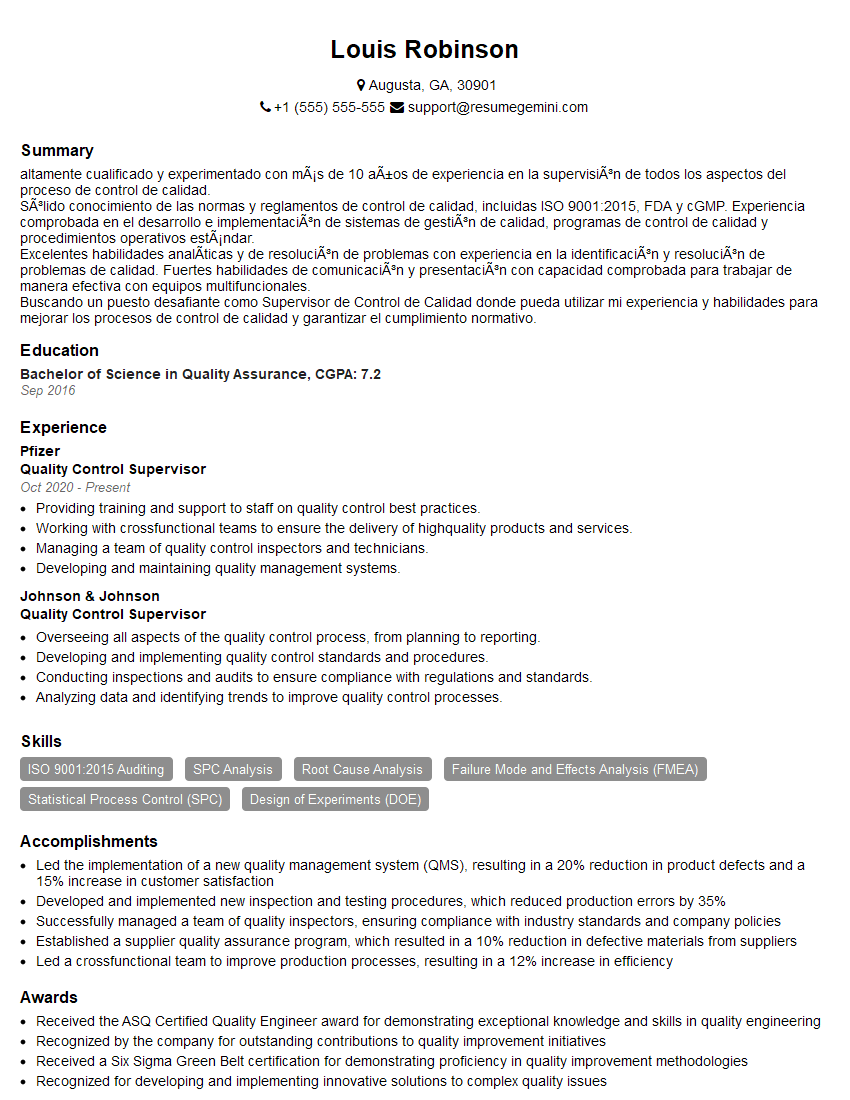
Quality Control Supervisor Resume Sample

Production Supervisor Resume Sample
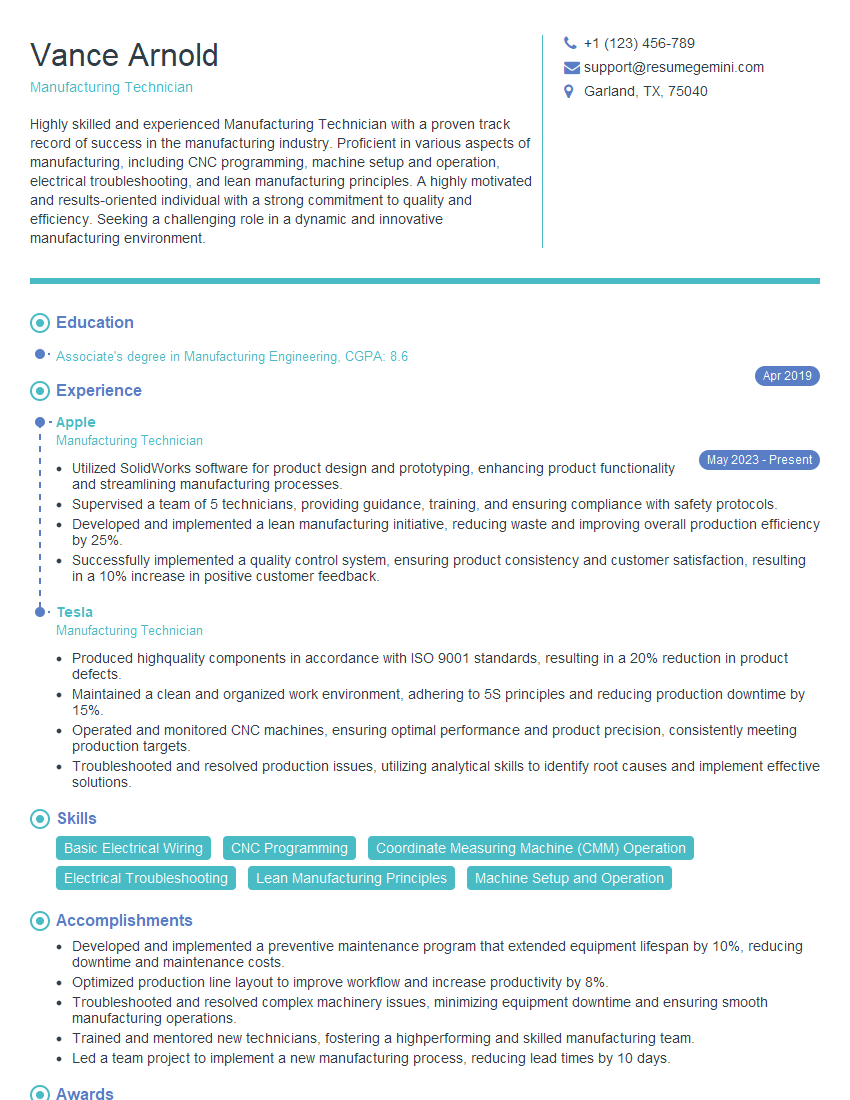
Manufacturing Technician Resume Sample
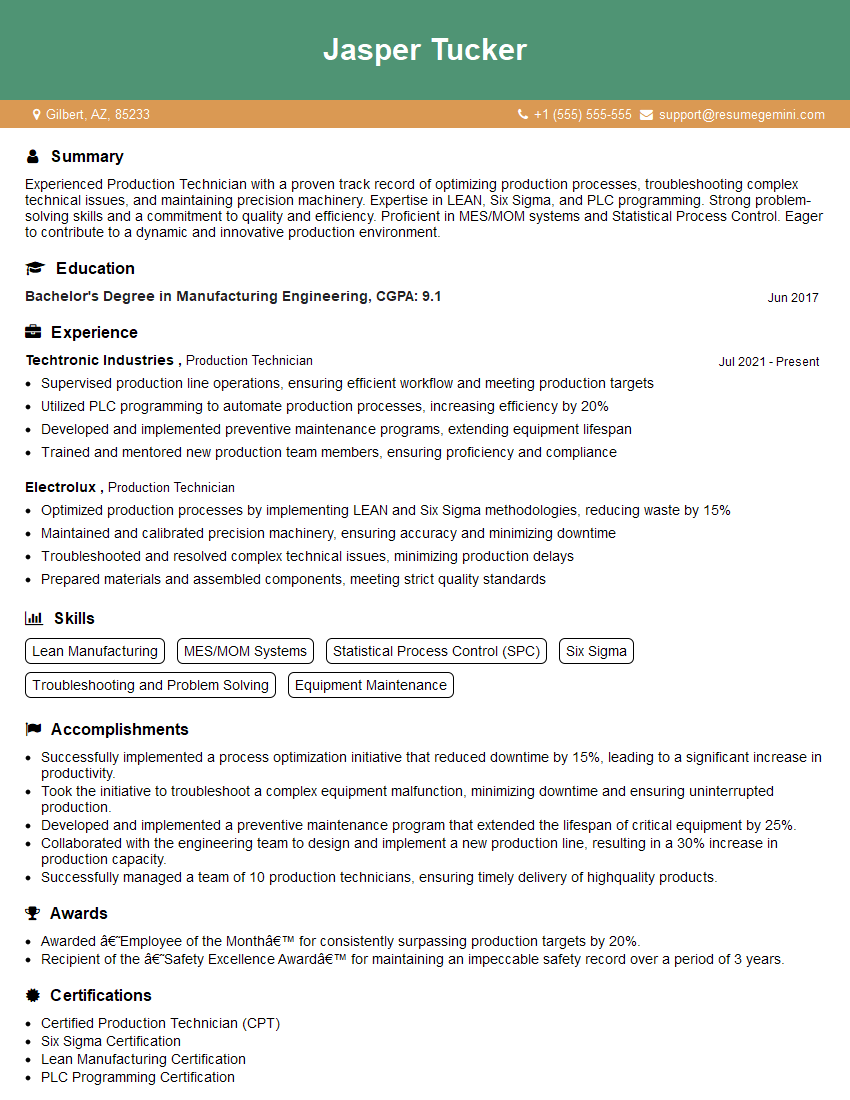
Production Technician Resume Sample
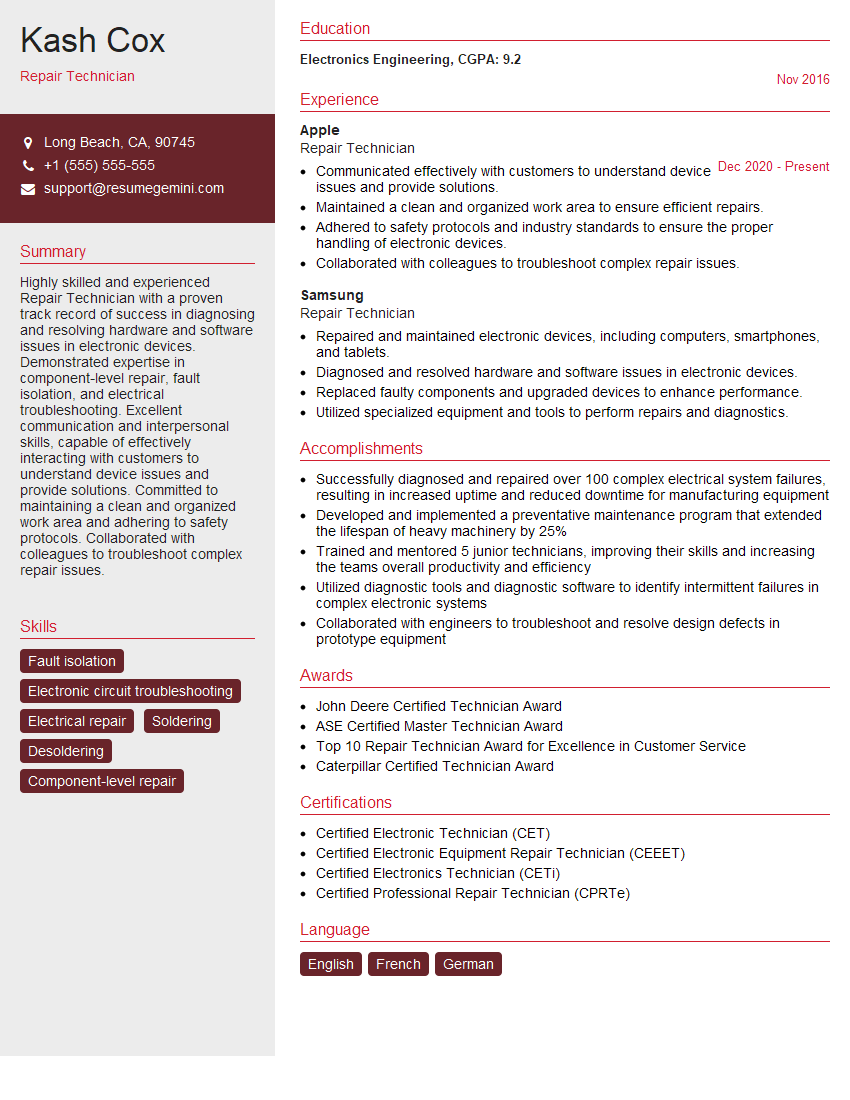
Repair Technician Resume Sample
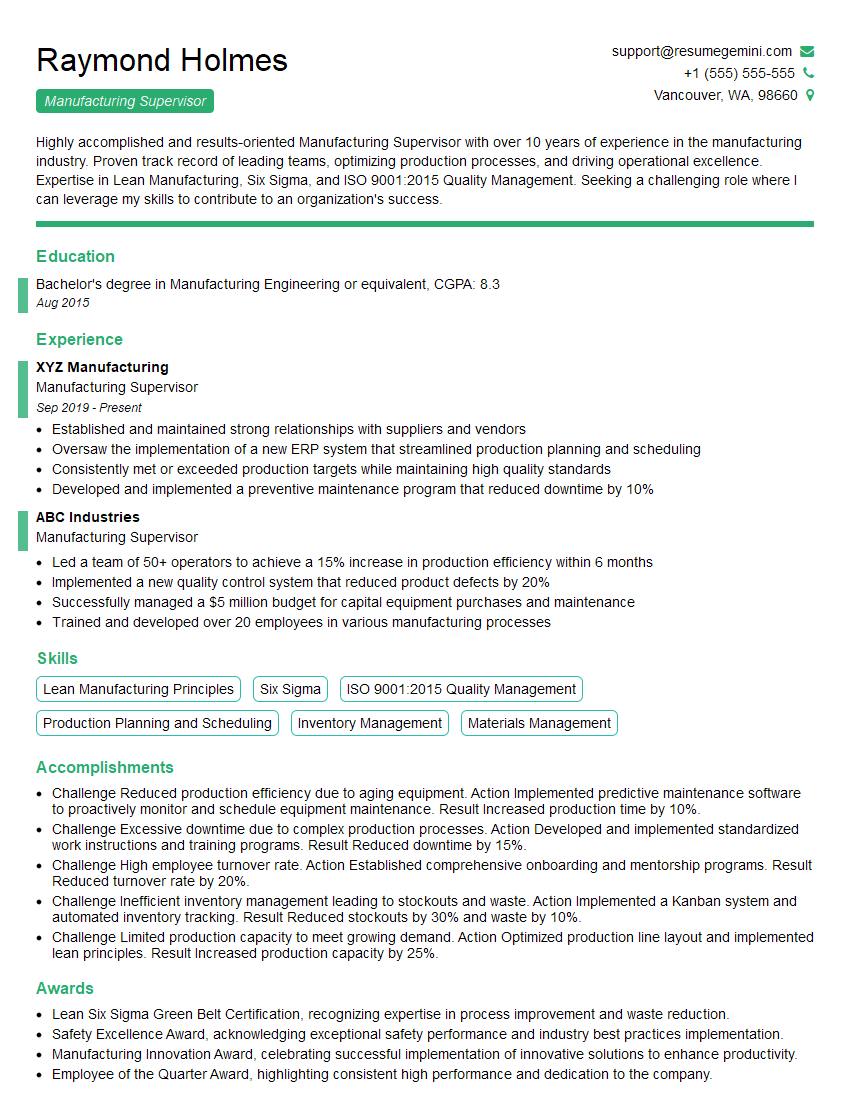
Manufacturing Supervisor Resume Sample
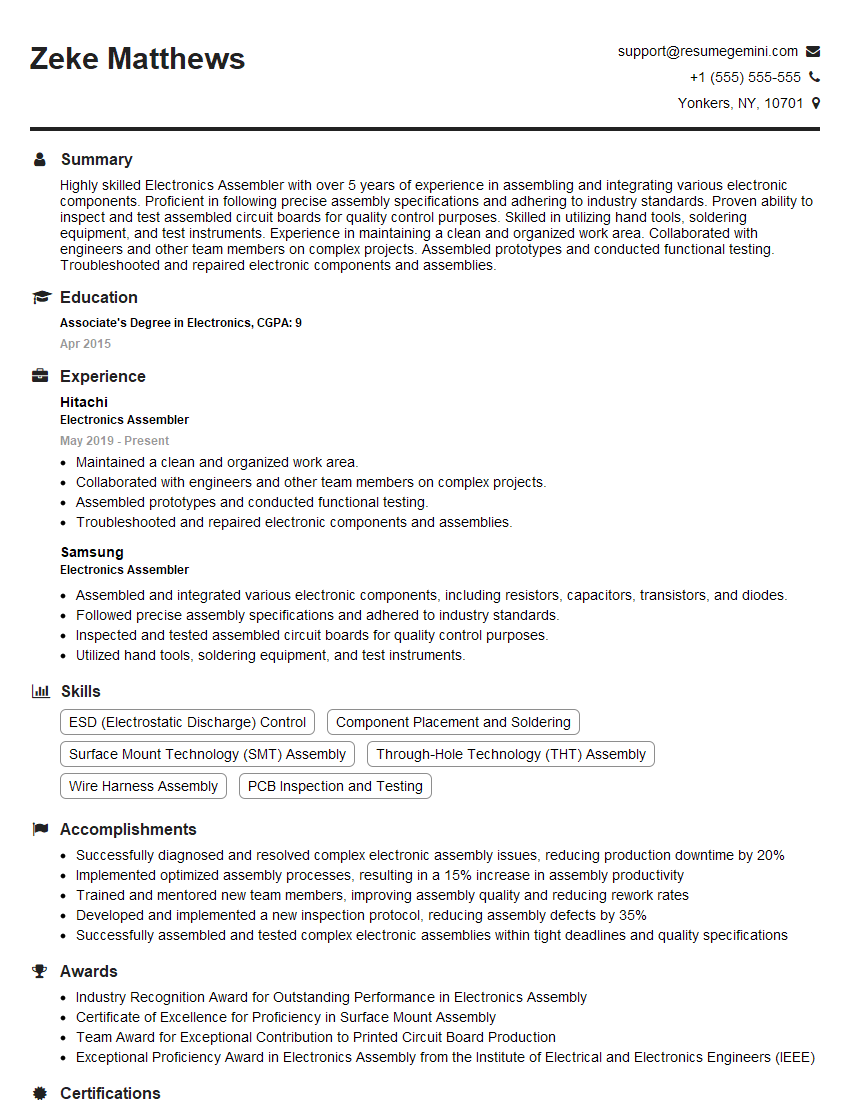
Electronics Assembler Resume Sample
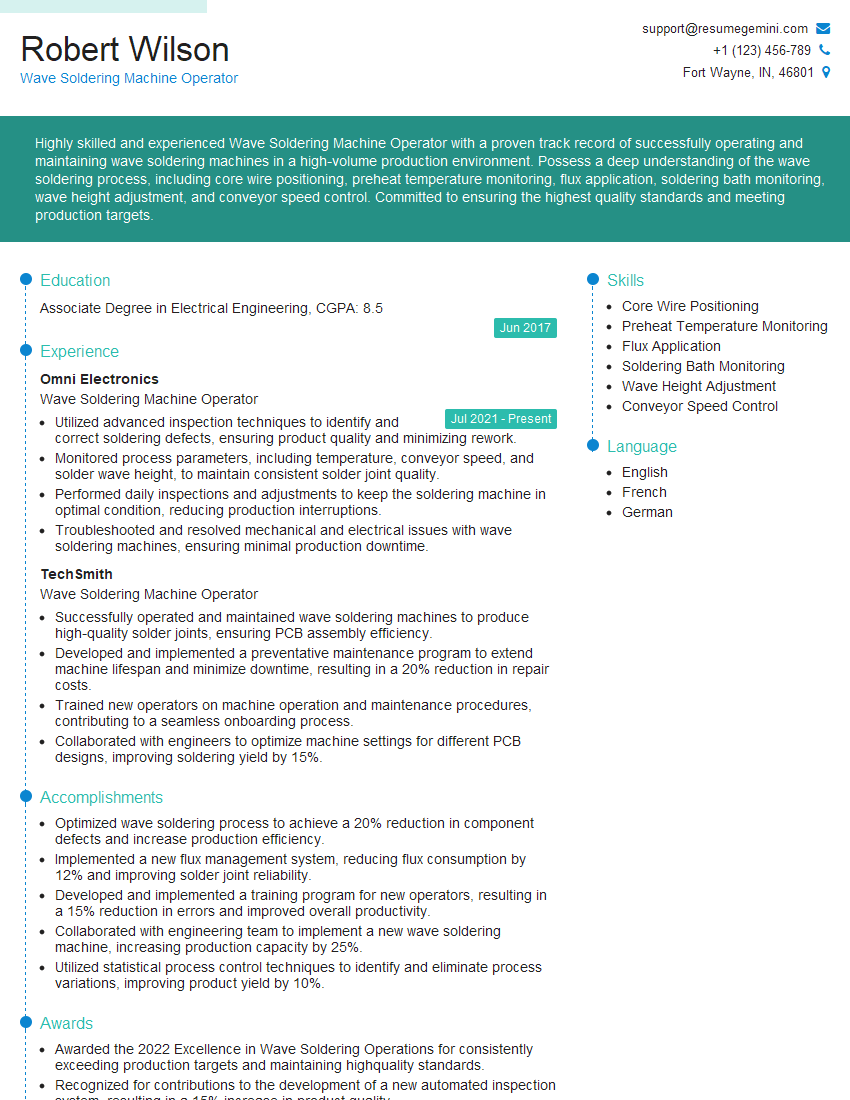
Wave Soldering Machine Operator Resume Sample
Explore more articles
Users Rating of Our Blogs
Share Your Experience
We value your feedback! Please rate our content and share your thoughts (optional).
What Readers Say About Our Blog
Very informative content, great job.
good