Interviews are opportunities to demonstrate your expertise, and this guide is here to help you shine. Explore the essential Torch Operation interview questions that employers frequently ask, paired with strategies for crafting responses that set you apart from the competition.
Questions Asked in Torch Operation Interview
Q 1. Explain the difference between oxy-fuel cutting and oxy-fuel welding.
Oxy-fuel cutting and oxy-fuel welding, while both using oxygen and fuel gases, serve entirely different purposes. Think of it like this: welding is like gluing two pieces of metal together, while cutting is like using a very hot, controlled knife to sever them.
Oxy-fuel welding uses a carefully controlled flame to melt the base metal and a filler rod simultaneously, fusing them together to create a strong joint. The heat from the flame melts both the base metal and the filler rod, allowing them to mix and solidify as one. This is ideal for joining similar metals.
Oxy-fuel cutting, on the other hand, leverages the exothermic reaction between oxygen and the heated metal to sever the material. The intense heat of the torch preheats the metal, and then a high-pressure stream of pure oxygen is introduced, causing rapid oxidation (rusting) and burning away the metal, creating a clean cut. This process works best on ferrous metals, like steel.
In essence, welding joins, while cutting separates. Both processes require precise control of the flame and gases but achieve dramatically different results.
Q 2. Describe the safety precautions required when operating a torch.
Safety is paramount when working with oxy-fuel equipment. Here are some crucial precautions:
- Proper ventilation: Always work in a well-ventilated area to prevent the buildup of potentially harmful gases.
- Eye and face protection: Wear safety glasses or a welding helmet with appropriate shade to protect against intense light and flying debris.
- Protective clothing: Wear flame-resistant clothing, including gloves, apron, and long sleeves, to protect against burns and sparks.
- Cylinder handling: Securely fasten gas cylinders upright and away from ignition sources. Never use oil or grease near cylinders as they can ignite.
- Leak detection: Regularly check for leaks using soapy water. Never use a flame to check for leaks.
- Fire extinguisher: Keep a suitable fire extinguisher nearby.
- Training and competence: Ensure you have received proper training and are comfortable with the equipment before operating it.
Ignoring these precautions can lead to serious injury or even fatalities.
Q 3. What are the different types of torch tips and their applications?
Torch tips are specifically designed for different applications and materials, based on the required flame size and heat output. The size and shape of the tip influence the flame’s characteristics.
- Welding tips: These tips produce a neutral or slightly carburizing flame for welding various metals. They are available in various sizes depending on the material thickness and welding requirements.
- Cutting tips: These tips have a small orifice for delivering a high-velocity oxygen jet to efficiently cut through metals. The size of the cutting tip is selected based on the thickness of the material being cut.
- Heating tips: These tips produce a softer, broader flame, ideal for preheating or bending metals.
Selecting the right tip is crucial for achieving optimal results and minimizing risk. Using the wrong tip size can lead to poor welds or inefficient cuts.
Q 4. How do you adjust the flame for different materials?
Flame adjustment depends on the material being welded or cut. The key is to achieve the correct flame type: neutral, carburizing, or oxidizing.
- Neutral Flame: This is the most commonly used flame for welding most metals. It has a distinct inner cone with a clearly defined outer feather. It offers a balance between oxidation and reduction, preventing excessive brittleness.
- Carburizing Flame: This flame has a long, soft inner cone and is used for welding materials that are prone to oxidation, such as high-carbon steel. The extra carbon in the flame helps prevent oxidation.
- Oxidizing Flame: This flame has a short, pointed inner cone and is generally avoided for welding unless specifically needed for some specialized applications. It promotes excessive oxidation, which can weaken the weld.
The adjustment is achieved by altering the ratio of oxygen to fuel gas. More oxygen creates an oxidizing flame; less oxygen results in a carburizing flame. Achieving a neutral flame requires a balanced mix, which varies slightly depending on the fuel gas used.
Q 5. What are the signs of a properly adjusted neutral flame?
A properly adjusted neutral flame is characterized by three distinct features:
- Inner cone: A sharply defined, bright blue inner cone. This cone is relatively short and stable.
- Outer feather: A pale blue, feathery outer flame surrounding the inner cone. The outer feather should be approximately one and a half to two times the length of the inner cone.
- Absence of visible soot: There should be no visible soot or smoke emanating from the flame. The combustion should be clean and complete.
If any of these characteristics are absent or altered, the flame needs adjustment to optimize the process and ensure efficient and effective welding.
Q 6. How do you identify different gases used in torch operations?
Gases used in oxy-fuel operations are typically identified by their color-coded cylinders and pressure regulators. Safety regulations mandate specific color-coding for easy identification.
- Acetylene (C2H2): Maroon cylinders. Acetylene is widely used due to its high heat output and versatility.
- Oxygen (O2): Green cylinders. Oxygen is essential for combustion in both welding and cutting.
- Propane (C3H8): Light gray or red cylinders. Propane is sometimes used as an alternative fuel gas in oxy-fuel applications.
- MAPP gas (methylacetylene-propadiene): Light blue cylinders (sometimes red). MAPP gas is known for a higher flame temperature than propane.
Always double-check the cylinder labels and markings before using any gas cylinder to ensure you are using the correct gas for the intended application. Never assume based on color alone; always verify.
Q 7. Explain the process of preheating for welding certain metals.
Preheating is crucial for welding certain metals, particularly thicker sections or those with high thermal conductivity. The goal is to reduce the thermal shock and minimize the risk of cracking or distortion during the welding process.
Preheating raises the base metal temperature to a uniform level, facilitating better penetration of the weld and reducing the cooling rate. This reduces residual stresses that could lead to cracking. The preheating temperature varies depending on the material, thickness, and the welding procedure being used. It’s typically done using a torch with a softer flame, ensuring even heat distribution across the weld zone. The exact temperature is usually specified in the welding procedure specifications (WPS).
For example, preheating is commonly used for welding high carbon steel, stainless steel, and other materials that are susceptible to cracking during rapid cooling. A preheat temperature of around 150-300°C is not uncommon.
After welding, slow cooling may also be required, often achieved using insulating blankets to control the cooling rate even further and thus minimize residual stresses.
Q 8. What are the common defects found in torch-welded joints and how to prevent them?
Common defects in torch-welded joints stem from improper technique, inadequate equipment, or unsuitable materials. These defects can significantly compromise the structural integrity of the weld. Let’s explore some of the most prevalent ones and how to avoid them:
- Porosity: Small holes or voids within the weld metal, caused by trapped gases. Prevention involves proper gas shielding, ensuring clean metal surfaces, and using the correct welding parameters (e.g., amperage, travel speed). Think of it like baking a cake – if you don’t properly remove air bubbles, you’ll end up with a flawed cake.
- Incomplete Fusion: The weld metal doesn’t properly fuse with the base metal, leading to a weak joint. This often happens due to insufficient heat input, improper joint design, or contamination. Imagine trying to glue two pieces of wood together without proper surface preparation – the bond will be weak.
- Undercutting: A groove melted into the base metal adjacent to the weld, weakening the joint and creating a stress concentration point. This is often caused by excessive heat input or incorrect torch angle. It’s like carving too deeply around the edges of a sculpture – you weaken the overall piece.
- Overlap: The weld metal extends beyond the edges of the joint, creating a weakened area and an uneven surface. This typically results from incorrect torch manipulation or excessive filler metal. Imagine painting outside the lines – it’s messy and not as strong.
- Cracking: Fractures in the weld metal, often caused by rapid cooling, residual stresses, or poor material selection. Prevention includes preheating the materials, using appropriate filler metals, and controlling the cooling rate.
Preventing these defects requires meticulous attention to detail, proper training, and consistent adherence to best practices. Regular inspection of welds during and after the process is crucial for early defect detection and corrective action.
Q 9. How do you handle different metal thicknesses during torch cutting?
Handling different metal thicknesses during torch cutting requires adjusting the cutting parameters to ensure a clean and efficient cut. Thicker metals require more power and a slower cutting speed to penetrate the material completely. Here’s a breakdown:
- Increased Gas Pressure: Higher gas pressure is needed to achieve proper cutting action through thicker materials. This ensures sufficient energy to melt and blow away the molten metal.
- Higher Current/Amperage: For oxy-fuel cutting, this translates to a higher oxygen flow rate. For plasma cutting, it means a higher amperage setting on the power supply.
- Slower Cutting Speed: To avoid cutting too fast and leaving an incomplete cut, reducing the cutting speed ensures complete penetration.
- Correct Tip Selection: Use a torch tip with the appropriate size and capacity for the metal thickness. A larger tip is needed for thicker materials.
- Preheating (for some materials): Some thicker metals may require preheating to reduce thermal shock and improve cut quality.
For instance, cutting a 1/4″ steel plate will necessitate a different setup than cutting a 1″ plate. Always consult the manufacturer’s guidelines for your specific equipment and materials to avoid damage and ensure optimal results.
Q 10. Describe the procedure for cleaning and maintaining a torch.
Proper cleaning and maintenance of a torch are essential for safety, efficiency, and longevity. A neglected torch is a hazard waiting to happen. Here’s a step-by-step procedure:
- Turn off and disconnect gas supply: Always ensure the gas supply is completely turned off and disconnected before commencing any maintenance.
- Allow to cool completely: The torch and its components must be completely cool to avoid burns.
- Inspect for damage: Check for any cracks, bends, or damage to the torch body, hoses, and tip.
- Clean the torch tip: Use a wire brush or cleaning tool specific to your torch tip type to remove any spatter or debris. A clogged tip can lead to inconsistent cutting performance.
- Clean the mixing chamber (if accessible): If your torch allows for access to the mixing chamber, carefully clean any buildup of debris using a suitable cleaning tool.
- Check for leaks: Use a leak detection solution to check for any gas leaks around the connections and seals.
- Lubricate moving parts (if necessary): Some torches may have moving parts that require periodic lubrication.
- Store properly: Store the torch in a clean, dry place, protected from damage.
Regular cleaning and inspection, even after short periods of use, prevents buildup and allows for early detection of potential problems. Think of it as regular car maintenance – the little things prevent big problems later on.
Q 11. What are the different types of cutting attachments used with a torch?
Various cutting attachments are available for torches, depending on the cutting process and material. The most common types include:
- Cutting Tips/Nozzles: These are crucial components that determine the size and quality of the cut. Different sizes are available for various metal thicknesses.
- Mixing Chambers: Used in oxy-fuel cutting, the mixing chamber precisely mixes the oxygen and fuel gases to create the cutting flame.
- Preheating Tips: Used with oxy-fuel cutting, these tips provide a preheating flame to assist with initiating and maintaining the cutting process.
- Plasma Cutting Electrodes and Nozzles: These are essential components in plasma cutting systems. The electrode generates the plasma arc, and the nozzle shapes and directs the arc for precision cutting.
- Shield Cups: These protect the plasma arc and help maintain its stability.
The choice of cutting attachment is critical to the success of the cutting operation. Selecting the correct tip and nozzle size, for example, is essential for efficient and clean cutting.
Q 12. Explain the importance of proper gas pressure regulation.
Proper gas pressure regulation is paramount for safety and performance in torch operations. Incorrect pressures can lead to several problems:
- Inefficient Cutting: Too low a pressure results in weak cuts, incomplete penetration, and excessive spatter. Too high a pressure can lead to excessive heat and distortion.
- Safety Hazards: Incorrect gas pressures increase the risk of flashbacks and blowbacks, which can be dangerous.
- Equipment Damage: Excessive pressure can damage the torch, hoses, and other components.
- Poor Weld Quality (for welding): Incorrect gas pressure during welding affects shielding gas coverage, leading to defects like porosity.
Maintaining the correct pressures requires using pressure gauges and regulators that are calibrated and correctly adjusted according to the manufacturer’s specifications for the specific gas and application. Think of it like cooking – the right amount of ingredients makes a delicious dish, but the wrong amount spoils it.
Q 13. How do you select the correct torch tip size for a specific application?
Selecting the correct torch tip size is crucial for optimal cutting performance. The tip size is directly related to the thickness of the metal being cut. Using the incorrect tip size results in inefficient cuts or even damage to the equipment.
Manufacturers provide charts or guidelines correlating tip sizes to metal thicknesses. These charts typically show the appropriate tip size for different materials and thicknesses. For example, a thicker metal requires a larger tip to deliver enough heat for complete penetration. A smaller tip on a thick metal will result in a weak, incomplete cut. Conversely, a larger tip on a thin metal can lead to excessive heat and burn-through.
Always consult the manufacturer’s specifications for your specific torch and gas type to ensure you are using the correct tip size. Improper tip selection can lead to poor cut quality, equipment damage, and safety risks.
Q 14. What are the hazards associated with flashback and how do you prevent it?
Flashback is a dangerous phenomenon that occurs when the flame propagates back into the torch or gas supply lines. It is caused by a sudden increase in pressure or a change in gas flow, which can result in a violent explosion or fire. The hazards include:
- Serious Burns and Injuries: Flashbacks can cause severe burns and other injuries to the operator and those nearby.
- Equipment Damage: The intense heat of the flashback can severely damage or destroy the torch and gas lines.
- Fires and Explosions: In severe cases, a flashback can ignite the surrounding area, leading to fires and potentially explosions.
Preventing flashbacks involves meticulous attention to safety and proper procedure:
- Regular Inspection and Maintenance: Regularly inspect the torch, hoses, and regulators for any signs of damage or leaks.
- Proper Gas Pressure Regulation: Maintain the correct gas pressure to avoid fluctuations that might trigger a flashback.
- Correct Tip Selection: Use the appropriate tip size for the application to prevent excessive pressure build-up.
- Flashback Arrestors: Install flashback arrestors in the gas lines to prevent the flame from propagating back into the supply.
- Appropriate Training: Operators must receive proper training in safe torch operation and flashback prevention.
Flashback is a serious hazard that requires diligent attention. By following safe procedures and preventative measures, the risk of flashback can be significantly minimized.
Q 15. How do you deal with a torch malfunction during operation?
Dealing with a torch malfunction during operation requires a systematic approach prioritizing safety. First and foremost, immediately disconnect the gas supply to prevent further incidents. This is the single most critical step. Next, assess the situation. Is there a gas leak (indicated by hissing or a strong smell)? Is there a sparking issue or overheating? Is the flame behaving erratically? Different issues require different responses.
For gas leaks, ensure good ventilation and immediately report the incident. Never attempt to repair a gas leak yourself. For electrical issues, ensure the torch is completely cool and disconnected before any inspection. Overheating often points to a clogged nozzle; carefully clean it using the appropriate tools, referring to the manufacturer’s instructions. If the problem persists after these steps, replace the faulty component and report the malfunction for proper maintenance and record-keeping.
Safety First: Remember, working with a torch involves high temperatures and potentially hazardous gases. Always wear appropriate personal protective equipment (PPE), including gloves, eye protection, and a flame-resistant apron.
Career Expert Tips:
- Ace those interviews! Prepare effectively by reviewing the Top 50 Most Common Interview Questions on ResumeGemini.
- Navigate your job search with confidence! Explore a wide range of Career Tips on ResumeGemini. Learn about common challenges and recommendations to overcome them.
- Craft the perfect resume! Master the Art of Resume Writing with ResumeGemini’s guide. Showcase your unique qualifications and achievements effectively.
- Don’t miss out on holiday savings! Build your dream resume with ResumeGemini’s ATS optimized templates.
Q 16. Describe the procedure for performing a weld test.
A weld test verifies the weld’s quality and strength. The specific procedure depends on the application and the type of weld. Common tests include visual inspection, destructive tests, and non-destructive tests. Visual inspection is the first step, checking for cracks, porosity, undercut, and excessive spatter. This is a quick, preliminary assessment.
Destructive tests involve breaking the weld to examine its internal structure and measure its strength. This can include tensile tests (measuring the force required to break the weld), bend tests (assessing ductility), or impact tests (measuring resistance to fracture under impact). These provide quantitative data but destroy the weld.
Non-destructive tests allow examination without damaging the weld. These include radiographic testing (X-rays to detect internal flaws), ultrasonic testing (sound waves to detect discontinuities), and magnetic particle inspection (detecting surface cracks in ferromagnetic materials). The choice of test depends on the requirements of the project and the potential consequences of weld failure.
Example: For a critical structural weld, you might perform a visual inspection, followed by a tensile test and radiographic testing to ensure complete quality control.
Q 17. What are the different types of weld joints?
Weld joints are classified based on the geometry of the joined parts. Common types include:
- Butt Joint: Two pieces are joined end-to-end, creating a continuous surface.
- Lap Joint: One piece overlaps the other.
- T-Joint: One piece is perpendicular to the other, forming a ‘T’ shape.
- Corner Joint: Two pieces are joined at a 90-degree angle.
- Edge Joint: Two edges are joined together.
The choice of joint depends on the design, accessibility, and required strength of the weld. Butt joints are strong but require precise alignment, while lap joints are easier to weld but may have lower strength.
Q 18. Explain the significance of pre- and post-weld cleaning.
Pre- and post-weld cleaning are crucial for ensuring a high-quality, strong weld. Pre-weld cleaning removes contaminants such as oil, grease, paint, rust, and mill scale from the base metal’s surface. These contaminants can interfere with the welding process, causing poor penetration, porosity, and weakening the weld. Cleaning methods can range from wire brushing and grinding to solvent cleaning. The specific method depends on the type of contaminant and base metal.
Post-weld cleaning removes spatter, slag, and other byproducts from the weld. These can cause corrosion, reduce fatigue strength, and impair the weld’s appearance. Cleaning involves techniques like wire brushing, grinding, chipping, and sometimes chemical cleaning. Proper cleaning is critical for inspection and ensures the weld’s long-term durability.
Example: Failing to properly clean a weld before welding might lead to porosity in the weld, making it brittle and prone to failure under stress. Failure to clean slag after welding can accelerate corrosion.
Q 19. How do you interpret welding symbols?
Welding symbols are a standardized way to convey information about a weld. They are often found on engineering drawings and provide details such as the type of weld, its size, location, and other specifications. The symbol typically includes a reference line, an arrow indicating the location of the weld, and a series of symbols and numbers representing specific weld parameters.
The symbol’s components include the basic weld symbol (which indicates the type of weld), the arrow side (which indicates the side of the joint where the weld is located), the other side (which specifies the weld on the opposite side, if any), the dimensions (which give the size of the weld), and other specifications (such as the welding process, surface finish requirements, or special processes).
Example: A symbol showing a ‘>’ symbol above the reference line would indicate a fillet weld, while a symbol below the line might indicate a groove weld. The size of the weld would be indicated by numbers next to the symbol.
Q 20. What are the different types of base metals commonly welded using a torch?
Many base metals are commonly welded using a torch. The most common include:
- Mild Steel: A versatile and widely used material for various applications.
- Stainless Steel: Offers high corrosion resistance.
- Aluminum: Lightweight and widely used in aerospace and automotive industries.
- Copper: Excellent conductor of electricity and heat.
- Cast Iron: Used in machinery and automotive components.
The choice of base metal depends heavily on the intended application and its required properties. Welding different metals requires careful consideration of factors like material compatibility and the selection of the appropriate filler material and welding process.
Q 21. Explain the concept of heat input in welding.
Heat input in welding refers to the amount of heat energy transferred to the base metal per unit length of weld. It’s a critical parameter affecting the weld’s properties. A higher heat input generally results in a wider, slower cooling weld with greater depth of penetration but potentially coarser grain structure and reduced tensile strength in some materials. Conversely, a lower heat input results in a narrower weld with faster cooling, finer grain structure, and potentially higher tensile strength but potentially less penetration.
Heat input is influenced by factors like the welding current, welding speed, and the type of welding process. Controlling heat input is crucial to achieve the desired weld characteristics and avoid defects such as cracking or porosity. The optimal heat input is often specified in welding procedures and needs to be carefully managed through adjusting welding parameters.
Example: Welding thin sheet metal requires a low heat input to prevent burn-through, while welding thick plates might require a higher heat input to achieve sufficient penetration.
Q 22. How do you control the penetration depth during cutting?
Controlling penetration depth during cutting is crucial for achieving the desired cut quality and avoiding damage to the workpiece. It’s primarily managed through adjusting the torch parameters: gas pressure, cutting speed, and preheat flame.
Gas Pressure: Higher oxygen pressure increases the cutting speed and penetration depth. Lower pressure results in shallower cuts. Think of it like a water jet – higher pressure means a more forceful, deeper cut.
Cutting Speed: Slower speeds allow for deeper penetration as the heat has more time to affect the material. Faster speeds produce shallower cuts. This is analogous to carving wood – a slower, deliberate cut goes deeper.
Preheat Flame: A properly adjusted preheat flame helps to preheat the material, improving cutting efficiency and penetration. Too much preheat can lead to excessive heat and potentially damage the surrounding material; too little might hinder the cutting process. This is like pre-heating an oven before baking – it ensures even and efficient cooking.
Experienced operators learn to fine-tune these parameters based on the material thickness and type. For example, thicker steel requires higher oxygen pressure and potentially slower cutting speeds compared to thinner sheet metal.
Q 23. Describe the effects of different torch angles on the weld quality.
The torch angle significantly impacts weld quality. An incorrect angle can lead to poor penetration, excessive spatter, and inconsistent weld bead geometry.
Proper Angle (Typically 15-30 degrees): This angle ensures proper fusion of the base material and the filler metal, resulting in a strong, sound weld. It promotes consistent heat distribution and prevents undercut or burn-through.
Too Steep Angle: A steeper angle can lead to shallow penetration and a weak weld. Imagine trying to cut a piece of cake with a knife held almost vertically – you wouldn’t get a clean, deep cut.
Too Shallow Angle: A shallower angle can cause excessive heat input into a smaller area, leading to burn-through or excessive spatter. This is like trying to weld with a torch angled too flat – the intense localized heat could melt the metal away.
The ideal angle varies depending on the welding process, material type, and thickness, and it is critical to follow manufacturer’s recommendations and best practices for different welding scenarios.
Q 24. What are the environmental considerations related to torch operations?
Environmental considerations during torch operations are paramount for both worker safety and environmental protection. Key concerns include:
Air Quality: Welding and cutting processes generate fumes and particulate matter that can be harmful if inhaled. Proper ventilation is crucial, often requiring extraction systems or working in well-ventilated areas.
Noise Pollution: The operation of some torch equipment can produce significant noise levels. Hearing protection is essential. Proper shielding can also minimize the spread of noise.
Waste Management: Cutting and welding often produce slag and other waste materials. Proper disposal methods are needed to prevent environmental contamination. This includes proper collection and disposal of hazardous materials.
Ozone Depletion: Some cutting processes release ozone-depleting substances. Using ozone-friendly gases and equipment is crucial to minimize impact.
Compliance with environmental regulations and the use of appropriate safety equipment are vital to mitigate these environmental impacts.
Q 25. What are the regulations and standards related to torch welding and cutting?
Regulations and standards governing torch welding and cutting vary by location but generally focus on safety and quality. Key standards include:
OSHA (Occupational Safety and Health Administration): In the US, OSHA sets standards for worker safety, including regulations related to respiratory protection, eye protection, and proper ventilation during welding and cutting operations.
ASME (American Society of Mechanical Engineers): ASME provides codes and standards for welding and brazing procedures, ensuring weld quality and structural integrity.
AWS (American Welding Society): The AWS develops standards and certifications for welding personnel and processes.
Local and National Regulations: Specific local and national regulations may further dictate safety protocols and environmental protection measures.
Staying updated on these regulations and standards is vital for ensuring legal compliance and maintaining a safe and productive work environment.
Q 26. How do you troubleshoot common problems during torch operation?
Troubleshooting torch operation problems often involves systematic checks to isolate the cause. Here’s a common approach:
Check Gas Supply: Ensure adequate gas supply to the torch. Check regulators and lines for leaks.
Inspect Torch Tip and Nozzle: A clogged or damaged tip can drastically affect the flame. Clean or replace as needed.
Verify Gas Pressure: Correct gas pressure is crucial. Consult the manufacturer’s specifications for the material being processed.
Assess Flame Adjustment: The flame should be properly adjusted to meet the needs of the task. An improper flame can lead to weak welds or poor cuts.
Inspect Workpiece: Ensure the workpiece is properly prepared and clean. Contamination can affect weld quality.
Check Electrode/Filler Material: Make sure you are using the correct electrode or filler material for the base metal.
If the problem persists after these checks, more in-depth diagnostics might be needed, potentially involving consulting a welding specialist or equipment manufacturer.
Q 27. How do you ensure the quality and safety of your welds?
Ensuring the quality and safety of welds requires a multifaceted approach:
Proper Training and Certification: Welder qualifications and adherence to established procedures are critical.
Pre-Weld Inspection: Inspecting the base material and ensuring it’s clean and free from defects is vital.
Use of Quality Materials: Employing quality filler materials and gases ensures strong and reliable welds.
Proper Welding Techniques: Adherence to proper welding techniques ensures consistent penetration and minimizes defects.
Post-Weld Inspection: Visual inspection, and where necessary, non-destructive testing (NDT) such as radiography or ultrasonic testing, can identify potential flaws.
Documentation: Maintaining thorough records of welding parameters and inspection results aids in traceability and quality control.
By implementing these measures, you minimize the risks of weld failure and ensure the structural integrity and safety of the fabricated components.
Q 28. Describe your experience with different types of torch equipment.
My experience encompasses a range of torch equipment, including:
Oxy-fuel torches: Proficient in using oxy-acetylene, oxy-propane, and other oxy-fuel setups for both welding and cutting various metals, including steel, aluminum, and copper. I am comfortable with different torch sizes and tip configurations to handle varying material thicknesses.
Plasma torches: Experienced in operating plasma cutting systems for precise cutting of various metals, particularly in applications requiring high cutting speed and clean edges. I understand the nuances of gas flow, amperage, and voltage adjustments for optimal performance.
MIG (Metal Inert Gas) and TIG (Tungsten Inert Gas) Welding Systems: While not strictly ‘torch’ based in the traditional sense, I also possess expertise with these arc welding systems. This breadth of experience is valuable for broader fabrication projects that may involve both torch cutting and arc welding components.
My hands-on experience with this range of equipment allows me to adapt to different projects and situations, optimizing the equipment selection based on the specific requirements of the task.
Key Topics to Learn for Torch Operation Interview
- Fundamentals of Torch Operation: Understanding the core principles and architecture of Torch, including its tensor operations and automatic differentiation capabilities.
- Building Neural Networks with Torch: Practical experience in designing, training, and evaluating various neural network architectures using Torch’s functionalities. This includes model selection, hyperparameter tuning, and understanding various optimization algorithms.
- Data Handling and Preprocessing in Torch: Mastering techniques for efficient data loading, cleaning, transformation, and augmentation to prepare data for model training. Understanding the importance of data normalization and standardization.
- Torch Ecosystem and Integrations: Familiarity with relevant Torch libraries and their integration with other tools and frameworks. This could encompass areas like visualization, deployment, and model monitoring.
- Debugging and Troubleshooting in Torch: Developing strategies for identifying and resolving common issues encountered during model development and training, including handling errors and optimizing code performance.
- Advanced Topics (depending on the role): Explore areas such as transfer learning, model compression, distributed training, or specific application domains relevant to the target role. Demonstrating advanced knowledge will set you apart.
Next Steps
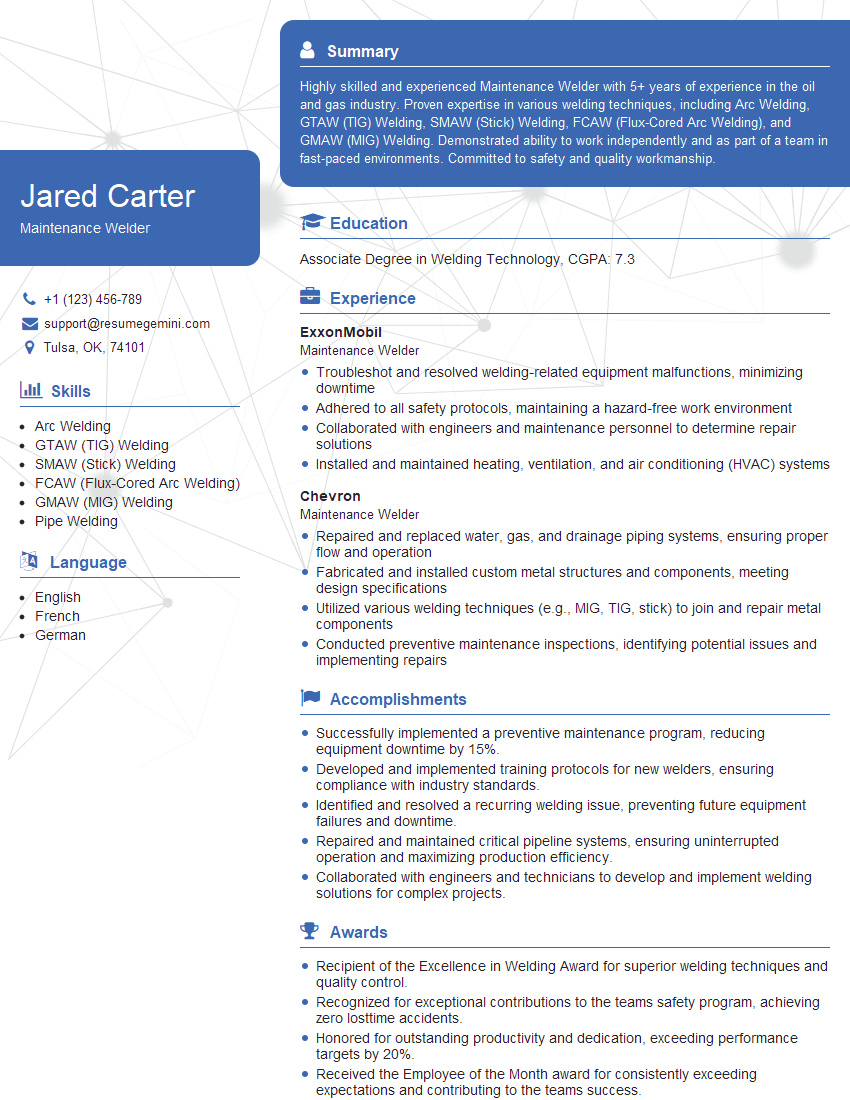
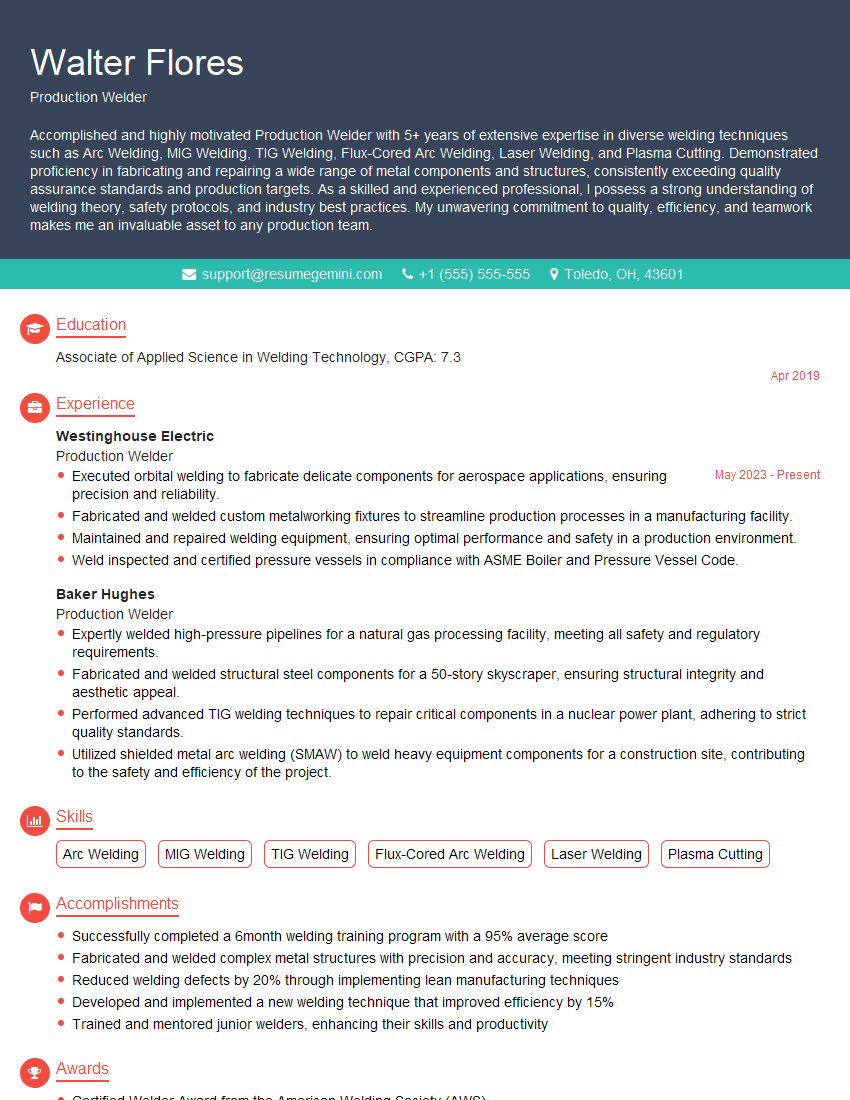
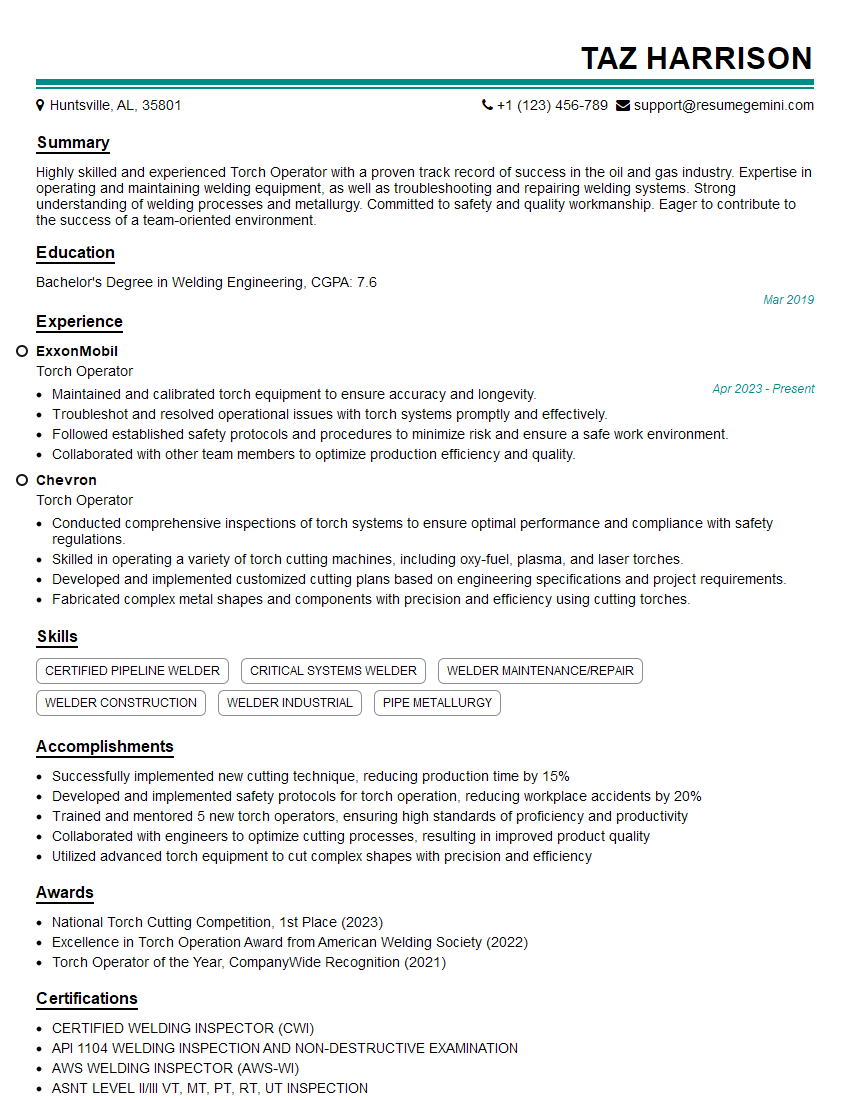
Mastering Torch Operation opens doors to exciting and high-demand roles in the rapidly growing field of artificial intelligence. Demonstrating proficiency in Torch is crucial for securing your ideal position. To significantly boost your job prospects, it’s vital to create a resume that’s both compelling and easily parsed by Applicant Tracking Systems (ATS). We strongly encourage you to leverage ResumeGemini, a trusted resource, to build a professional and ATS-friendly resume that effectively showcases your skills and experience. Examples of resumes tailored to Torch Operation roles are available below, providing valuable templates and inspiration for your own resume creation.



Explore more articles
Users Rating of Our Blogs
Share Your Experience
We value your feedback! Please rate our content and share your thoughts (optional).
What Readers Say About Our Blog
Very informative content, great job.
good