Feeling uncertain about what to expect in your upcoming interview? We’ve got you covered! This blog highlights the most important Visual Metaphor interview questions and provides actionable advice to help you stand out as the ideal candidate. Let’s pave the way for your success.
Questions Asked in Visual Metaphor Interview
Q 1. Explain the concept of visual metaphor and its importance in communication.
Visual metaphor, at its core, is a figure of speech where an image is used to represent a concept or idea that is not literally present. It’s about using the visual language of images to create meaning beyond the literal. Think of it like a visual riddle, where the solution is a deeper understanding. Its importance in communication is immense because it allows for complex ideas to be conveyed quickly, memorably, and emotionally. It bypasses the limitations of purely verbal communication, leveraging the power of visual processing in our brains. A well-crafted visual metaphor can resonate deeply with the audience, fostering immediate comprehension and lasting impact.
For instance, a picture of a rising sun can metaphorically represent new beginnings or hope. This is far more impactful than simply stating the concepts verbally; the image immediately evokes emotion and understanding.
Q 2. Describe three different types of visual metaphors and provide examples.
Visual metaphors can be categorized in various ways, but three common types are:
- Allegory: This involves a sustained metaphor where an entire image or narrative represents a separate, often abstract concept. Think of the film The Wizard of Oz, where the journey to Oz allegorically represents the protagonist’s personal growth.
- Symbolism: Here, a single object or image represents a larger idea or emotion. A dove, for instance, commonly symbolizes peace. The use of a specific color, like red for danger or passion, is also a form of symbolism.
- Metonymy: This uses an associated image to represent something else. A crown can be used as a metonym for royalty; a scale can represent justice. It relies on a close association, rather than a direct resemblance, to create meaning.
These types often overlap, and a single visual metaphor can incorporate elements from multiple categories. The effectiveness depends on the context and the audience’s understanding of the symbolic associations.
Q 3. How does cultural context influence the interpretation of a visual metaphor?
Cultural context profoundly impacts the interpretation of visual metaphors. What represents one thing in one culture might represent something entirely different, or even the opposite, in another. For example, the color white signifies purity and innocence in many Western cultures, but it represents mourning in some East Asian cultures. Similarly, certain symbols, gestures, or even animals carry vastly different connotations across cultures. A designer or communicator needs to be acutely aware of their target audience’s cultural background to avoid miscommunication or unintended offense. Careful research and sensitivity are crucial to ensuring a visual metaphor resonates positively and avoids cultural misinterpretations.
Q 4. What are the key elements to consider when creating an effective visual metaphor?
Creating an effective visual metaphor involves several key considerations:
- Clarity and Simplicity: The metaphor should be easily understood and avoid ambiguity. Overly complex imagery can confuse the audience.
- Relevance and Resonance: The chosen image must be relevant to the message and resonate emotionally with the target audience.
- Visual Impact: The image should be striking and memorable, capturing attention immediately.
- Context and Placement: The metaphor’s effectiveness depends on its surrounding context and how it’s integrated into the overall design or communication.
- Target Audience: Understanding the audience’s background, knowledge, and cultural context is paramount. The metaphor’s success hinges on their ability to interpret it correctly.
By carefully considering these elements, designers and communicators can craft visual metaphors that effectively transmit their intended message.
Q 5. Discuss the relationship between visual metaphor and storytelling.
Visual metaphors are intrinsically linked to storytelling. They serve as powerful tools within narratives to convey complex emotions, themes, and ideas in a concise and evocative manner. They can enrich the narrative’s emotional depth, making the story more memorable and engaging. Consider a film using a wilting flower to represent a dying relationship – this visual metaphor enhances the narrative’s emotional impact far beyond simply stating the relationship is failing.
Storytellers utilize visual metaphors to condense information, provide subtextual meaning, and enhance the audience’s emotional connection to the narrative. They can create powerful imagery that lingers long after the story has ended.
Q 6. How can visual metaphors be used to enhance brand identity?
Visual metaphors are invaluable assets in building strong brand identities. They can create a unique and memorable visual representation of a company’s values, mission, and personality. A well-chosen visual metaphor can immediately communicate the brand’s essence, making it more relatable and memorable to consumers. For example, a bird in flight might represent freedom and innovation for a technology company, while a sturdy oak tree could symbolize strength and stability for a financial institution.
Consistency in using the chosen metaphor across various platforms and marketing materials is crucial to reinforcing the brand’s message and creating a cohesive brand identity. This builds recognition and fosters a strong connection with the target audience.
Q 7. Explain how you would evaluate the effectiveness of a visual metaphor.
Evaluating the effectiveness of a visual metaphor involves a multi-faceted approach:
- Audience Reception: Gathering feedback from the target audience is crucial. Surveys, focus groups, or qualitative data analysis can reveal how effectively the metaphor was understood and how it resonated with the audience.
- Achieved Communication Goals: Determine whether the metaphor successfully conveyed the intended message and achieved the communication objectives. Did it increase brand awareness? Did it improve understanding of a complex concept?
- Memorability and Impact: Measure the lasting impact of the metaphor. Did it stick with the audience? Did it evoke the intended emotional response?
- Contextual Analysis: Examine the metaphor within its context. Does it work well with the surrounding elements? Is it consistent with the overall design or communication strategy?
By using a combination of quantitative and qualitative methods, a comprehensive evaluation of the visual metaphor’s effectiveness can be achieved. This feedback loop is vital for improving future visual communication strategies.
Q 8. How can visual metaphors be used to simplify complex ideas?
Visual metaphors simplify complex ideas by leveraging the power of familiar imagery to represent abstract concepts. Instead of relying solely on text or numbers, a visual metaphor uses a concrete image that shares underlying similarities with the abstract idea, making it instantly understandable and memorable. Think of it like this: Trying to explain quantum physics with only words is challenging, but showing a visual metaphor of interconnected waves might convey the concept of entangled particles far more effectively.
For example, a visual metaphor of a flowing river might represent the continuous process of a workflow. The curves and bends in the river visually represent the complexities and changes within the workflow, while the overall forward movement represents progress. Another example is using a tree’s branching structure to illustrate the hierarchical organization of a company.
Q 9. Describe a time you used a visual metaphor to solve a design problem.
During a project designing a data visualization dashboard for a financial institution, we faced a challenge in representing the complex relationships between different investment portfolios. Simply using charts and graphs wasn’t effectively communicating the interconnectedness and risk factors. I proposed using a visual metaphor of a network graph, where each node represented a portfolio and the thickness of the connecting lines represented the level of correlation. Thicker lines indicated higher correlation and therefore higher risk. This immediately made the relationships clear, allowing users to easily identify potential vulnerabilities.
This visual metaphor replaced a complex, dense table of correlations with an intuitive visual representation. The resulting dashboard was far more easily understood and used by the clients.
Q 10. What are the ethical considerations when using visual metaphors?
Ethical considerations in using visual metaphors are crucial. The primary concern is the potential for misrepresentation or the creation of unintended biases. A poorly chosen metaphor can perpetuate stereotypes, simplify complex issues in a reductive way, or mislead the audience.
- Stereotypes: Using imagery associated with negative stereotypes can be harmful and discriminatory.
- Oversimplification: A metaphor that oversimplifies a nuanced issue can lead to misunderstandings and inaccurate conclusions.
- Cultural Sensitivity: What is a positive and readily understood metaphor in one culture might be offensive or meaningless in another.
Therefore, careful consideration of the target audience and potential interpretations is paramount. Thorough testing and feedback are essential to identify and mitigate any ethical concerns.
Q 11. How do you ensure your visual metaphors are accessible to a diverse audience?
Ensuring accessibility of visual metaphors requires a multi-faceted approach. The key is to create metaphors that are universally understandable, regardless of cultural background, literacy level, or disability. This includes:
- Simplicity and Clarity: Use simple, easily recognizable imagery.
- Cultural Sensitivity: Avoid imagery that is culturally specific or might be misinterpreted.
- Alternative Text: Provide descriptive text for screen readers, enabling visually impaired users to understand the metaphor.
- Color Contrast: Ensure sufficient color contrast to make the metaphor visible to users with visual impairments.
- Multiple Representations: Consider using alternative representations in addition to the visual metaphor, like brief explanatory text.
Testing with diverse user groups is critical to identify any potential barriers to understanding.
Q 12. Compare and contrast visual metaphors with other communication techniques.
Visual metaphors, while powerful, are just one communication technique. They can be compared and contrasted with others like:
- Text: Text provides precise, detailed information, but lacks the immediate impact of visual metaphors. Text can often be too detailed to be quickly understood.
- Charts and Graphs: These are excellent for presenting numerical data but don’t inherently convey the same emotional resonance or conceptual depth as metaphors.
- Illustrations: Illustrations depict something literally, whereas visual metaphors convey an abstract idea through the likeness of something else.
- Analogies: Analogies use verbal comparisons to explain concepts, whereas visual metaphors use visual comparisons.
Visual metaphors are most effective when used in conjunction with other techniques to create a comprehensive and engaging communication strategy. They excel at providing a quick and memorable understanding of a complex idea, while other techniques can provide the necessary detail.
Q 13. How can visual metaphors be integrated into user interface design?
Visual metaphors are increasingly important in user interface (UI) design, enhancing usability and user experience. They can simplify complex interactions and make software more intuitive. For example:
- A recycle bin icon: This universally understood metaphor represents the action of deleting files.
- A shopping cart icon: Clearly indicates the addition of items to an online shopping cart.
- A slider control: Visually represents the adjustment of a setting through a sliding mechanism.
Effective UI design uses visual metaphors that are consistent, intuitive, and easily recognizable by the target audience. The goal is to minimize the need for explicit instructions, making the interface feel natural and easy to navigate.
Q 14. Explain the role of visual metaphor in advertising and marketing.
Visual metaphors are central to effective advertising and marketing. They help brands communicate their message quickly and memorably, creating an emotional connection with the audience. Consider these examples:
- A speeding car to represent a fast internet connection.
- A mountain climber reaching the peak to symbolize achieving success.
- A nurturing mother to represent a caring brand.
By choosing the right visual metaphor, advertisers can create powerful associations between their product or service and desirable qualities, influencing consumer perception and driving sales. The success of a visual metaphor in advertising depends on its ability to be both memorable and relevant to the target market.
Q 15. How do you ensure consistency in the application of visual metaphors across multiple platforms?
Consistency in visual metaphors across platforms is crucial for a seamless user experience. Think of it like a brand’s logo – you wouldn’t drastically change it across different media. To achieve this, we need a comprehensive style guide. This guide defines the core visual metaphor, outlining its elements (colors, shapes, animations) and specifying their usage across various platforms (web, mobile, desktop applications). For example, if the metaphor is ‘flowing water’ representing data transfer speed, the guide would dictate that the animation of water flowing should remain consistent in terms of speed and visual style, even if the resolution or aspect ratio varies across different screens. We use version control systems and collaborative design tools to ensure everyone adheres to the established guidelines. Regular audits and testing across platforms are essential to identify and rectify any inconsistencies.
Career Expert Tips:
- Ace those interviews! Prepare effectively by reviewing the Top 50 Most Common Interview Questions on ResumeGemini.
- Navigate your job search with confidence! Explore a wide range of Career Tips on ResumeGemini. Learn about common challenges and recommendations to overcome them.
- Craft the perfect resume! Master the Art of Resume Writing with ResumeGemini’s guide. Showcase your unique qualifications and achievements effectively.
- Don’t miss out on holiday savings! Build your dream resume with ResumeGemini’s ATS optimized templates.
Q 16. What are some common pitfalls to avoid when using visual metaphors?
Several pitfalls can undermine the effectiveness of visual metaphors. One common mistake is choosing metaphors that are too obscure or culturally specific. Imagine using a very niche regional symbol to represent a universal function – it would confuse most users. Another is creating metaphors that are too literal or overly complex. Overly literal metaphors lack creativity and fail to engage users, while complex ones are hard to understand. A third pitfall is inconsistency, as discussed earlier. Using slightly different variations of the metaphor across different parts of the interface can lead to user confusion. Finally, neglecting accessibility is a critical error. Visual metaphors should be understandable to users with various disabilities, such as color blindness or visual impairments. Using alt text and ensuring sufficient color contrast are essential aspects of accessibility.
Q 17. Discuss the impact of visual metaphors on user engagement.
Visual metaphors significantly impact user engagement by making interfaces more intuitive and enjoyable. They facilitate understanding and improve usability. A well-designed metaphor makes complex functionalities more easily grasped, reducing cognitive load and improving user satisfaction. For instance, using a trash can icon to represent deletion is intuitive and universally understood, enhancing engagement by minimizing confusion. Effective metaphors can lead to increased user retention and a positive brand perception. Conversely, poor or inconsistent metaphors can lead to frustration, decreased engagement, and ultimately, a negative user experience. They can confuse users, making them less likely to interact with the interface effectively. Therefore, careful selection and consistent application of visual metaphors are crucial to achieve high user engagement.
Q 18. How do you measure the success of a visual metaphor?
Measuring the success of a visual metaphor involves a multi-faceted approach. We rely on both quantitative and qualitative data. Quantitative data can include metrics like task completion rates, error rates, and time-on-task. If users complete tasks faster and with fewer errors when using a visual metaphor, it’s a good indication of its success. Qualitative data is equally important and can be gathered through user interviews, usability testing, and surveys. Observing how users interact with the interface and gathering feedback on their understanding of the metaphor is crucial. A/B testing with different versions of a metaphor can help determine which one is more effective. By analyzing both quantitative and qualitative data, we can gain a comprehensive understanding of the metaphor’s impact on user experience and engagement.
Q 19. What software or tools are you familiar with for creating visual metaphors?
I’m proficient in a range of software and tools for creating visual metaphors. For vector graphics and illustrations, I primarily use Adobe Illustrator and Sketch. For prototyping and interaction design, Figma and Adobe XD are invaluable. For motion graphics and animation, I utilize After Effects and Principle. Beyond these, I leverage prototyping tools like Axure RP for more complex interactions and user flows. The choice of tool depends on the specific project requirements; sometimes a combination of tools is necessary to achieve the desired outcome. For example, I might create the static elements in Illustrator and then animate them in After Effects.
Q 20. Explain your process for developing a visual metaphor from a concept.
Developing a visual metaphor starts with a deep understanding of the concept it needs to represent. I begin by brainstorming various potential metaphors, considering their relevance, memorability, and cultural appropriateness. Next, I sketch several iterations, experimenting with different visual styles and approaches. Once I’ve selected a promising direction, I refine the design digitally, paying close attention to detail, color palettes, and overall aesthetics. Iterative testing with users is crucial at this stage. This involves gathering feedback to ensure the metaphor is readily understood and resonates with the target audience. After incorporating feedback, the final version is polished and prepared for implementation, taking into account the technical requirements and considerations of the platform.
Q 21. How do you handle feedback on your visual metaphors?
Feedback is invaluable in the design process. I actively solicit and welcome feedback on my visual metaphors, both during the design process and after launch. I treat all feedback as opportunities for improvement and learning. I analyze feedback objectively, differentiating constructive criticism from personal preferences. Positive feedback reinforces my design choices, while negative feedback guides revisions and improvements. I might conduct user interviews to understand the reasons behind negative feedback and explore alternative solutions. Ultimately, user feedback is critical for creating visual metaphors that are both effective and user-friendly. This iterative process helps ensure the success and user acceptance of the final product.
Q 22. Describe a visual metaphor that you found particularly impactful, and why.
One particularly impactful visual metaphor I’ve encountered is the use of a single, cracked egg to represent the fragility of our planet’s ecosystems in a Greenpeace campaign. It’s impactful because it leverages simplicity and universality. Everyone understands eggs and their fragility. The cracked shell directly translates to the vulnerability of the Earth’s delicate balance, prompting immediate emotional connection and concern. The power lies in its concise, emotionally resonant communication without needing lengthy explanations. It’s a potent reminder of our responsibility towards environmental protection.
Q 23. How do you balance creativity with clarity when using visual metaphors?
Balancing creativity and clarity in visual metaphors is a delicate act, akin to balancing on a tightrope. Creativity provides the spark – the unexpected connection, the arresting image. Clarity ensures that the message is understood. The key lies in thoughtful iteration and testing. I often start with a brainstorming session exploring diverse creative possibilities, then rigorously assess each option for its clarity and potential for misinterpretation. User testing is invaluable here – observing how different audiences react to various visual metaphors helps refine the design and ensures the core message remains clear and unambiguous. This iterative process allows for both innovative thinking and ensuring easy comprehension.
Q 24. How do you adapt your visual metaphor approach based on the target audience?
Adapting my approach based on the target audience is crucial. Consider designing a visual metaphor for children versus financial professionals. For children, I might use bright colors, playful imagery, and simple, easily understood concepts. For financial professionals, I would lean toward a more sophisticated, minimalist approach, potentially using charts or data visualizations alongside the core metaphorical image. Understanding the audience’s cultural background, level of education, and familiarity with the subject matter helps tailor the metaphor to achieve maximum impact and comprehension. For instance, a metaphor relying on a specific cultural reference might resonate strongly with one audience but fall flat with another.
Q 25. Discuss the potential for visual metaphors to be misinterpreted.
The potential for misinterpretation is inherent in any form of communication, and visual metaphors are no exception. Cultural differences, pre-existing biases, and individual interpretations can all lead to misunderstandings. For example, a metaphor using a specific animal might carry positive connotations in one culture and negative ones in another. To mitigate this, I conduct thorough research on the target audience, test different options, and incorporate feedback to ensure the intended meaning is clear and consistent across diverse interpretations. Thorough user testing, particularly with representative samples from the intended audience, is a powerful tool for identifying and addressing potential misinterpretations before the metaphor is widely deployed.
Q 26. How do you address the potential for cultural bias in visual metaphors?
Addressing cultural bias is paramount. Visual metaphors should be inclusive and avoid perpetuating stereotypes. I meticulously research cultural nuances and consult with experts to ensure the chosen imagery is appropriate and respectful of all target audiences. A seemingly innocuous image might contain hidden biases or unintentional implications that could offend or alienate certain groups. A thorough review process, involving individuals from diverse backgrounds, helps identify and rectify any potential cultural insensitivity. It’s a collaborative process aimed at creating universally understood and appreciated visual communication.
Q 27. How would you use visual metaphors to convey a message of sustainability?
To convey a message of sustainability, I might use a visual metaphor depicting a tree with its roots firmly planted in the earth, branches reaching towards the sky, and leaves producing fresh, clean air. The tree represents the interconnectedness of nature and the importance of preserving its resources. Alternatively, I could use a circular image showcasing the lifecycle of a product, highlighting recycling and responsible resource management. The circularity visually represents the ongoing process of renewal and responsible consumption. These visuals aim to convey a message of growth, balance, and the long-term benefits of sustainable practices.
Q 28. How can visual metaphors be used to improve user experience in a specific app?
Consider a fitness app. Instead of simply displaying numerical data, we could use a visual metaphor like a plant growing taller and stronger as the user progresses toward their fitness goals. The plant visually represents the user’s increasing strength and vitality. The user’s daily activity could be represented by watering the plant. Successful workouts could be visualized as the plant blooming. This creates a more engaging and motivating experience than merely presenting numbers. The visual metaphor transforms the abstract concept of fitness progress into something tangible and emotionally rewarding, thereby enhancing user engagement and experience.
Key Topics to Learn for Visual Metaphor Interview
- Understanding Visual Metaphor: Define and differentiate various types of visual metaphors (e.g., symbolic, allegorical, iconic). Explore the theoretical frameworks underpinning their effectiveness.
- Analyzing Visual Metaphors: Practice decoding the meaning and intended impact of visual metaphors in different contexts (advertising, design, art). Consider the cultural and societal influences on interpretation.
- Creating Effective Visual Metaphors: Learn the principles of design and composition to craft compelling and impactful visual metaphors. Develop skills in selecting appropriate imagery and symbolism to communicate effectively.
- Applications of Visual Metaphor: Explore practical applications across various fields, such as marketing, communication design, and user experience (UX) design. Consider how visual metaphors enhance user engagement and understanding.
- Problem-Solving with Visual Metaphors: Analyze case studies where visual metaphors were successfully (or unsuccessfully) employed. Discuss the challenges and strategies involved in using visual metaphors to solve communication or design problems.
- Visual Metaphor and Cognitive Processes: Explore the cognitive psychology behind how audiences process and interpret visual metaphors. Understand the role of memory, perception, and emotion in shaping responses.
Next Steps
Mastering visual metaphor is crucial for success in today’s visually-driven world. A strong understanding of this concept opens doors to exciting opportunities across numerous creative and technical fields. To significantly boost your job prospects, invest time in crafting a professional, ATS-friendly resume that effectively showcases your skills and experience. ResumeGemini is a trusted resource that can help you build a compelling resume tailored to your specific career goals. We offer examples of resumes specifically designed for individuals seeking roles leveraging visual metaphor expertise. Take advantage of these tools and resources to present your best self to potential employers.
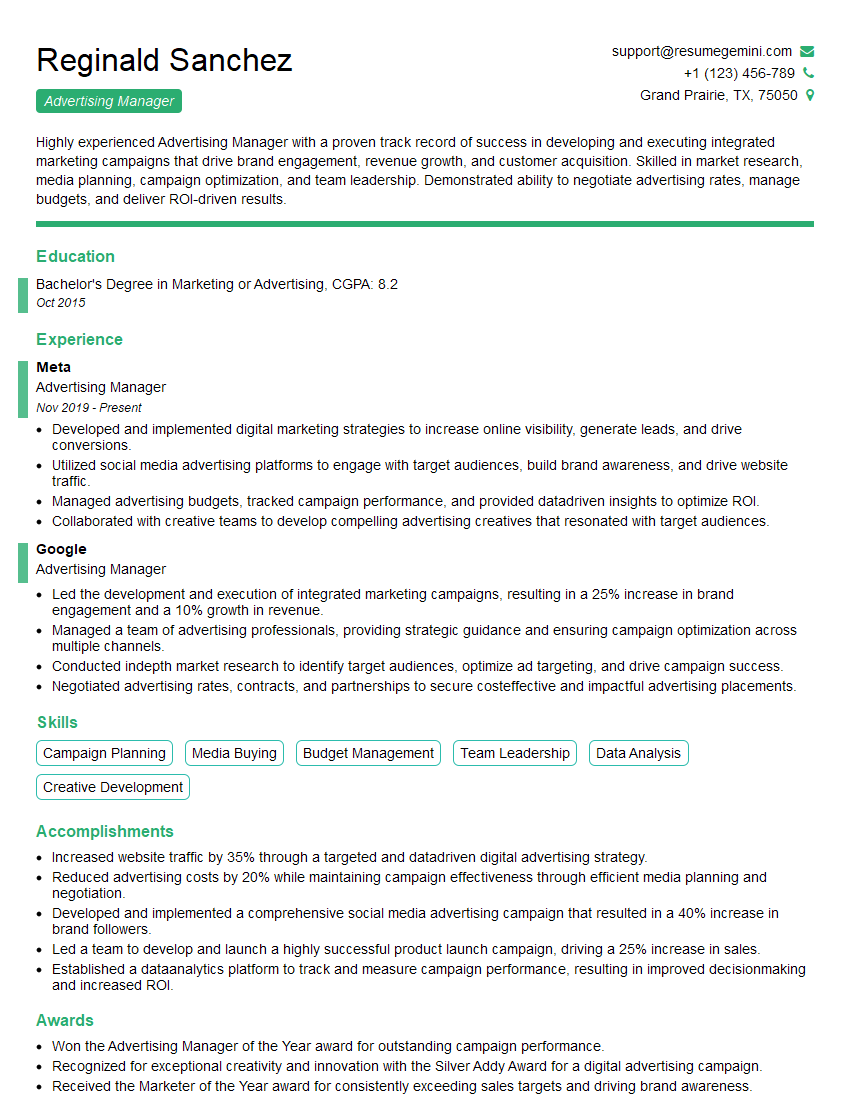
Advertising Manager Resume Sample
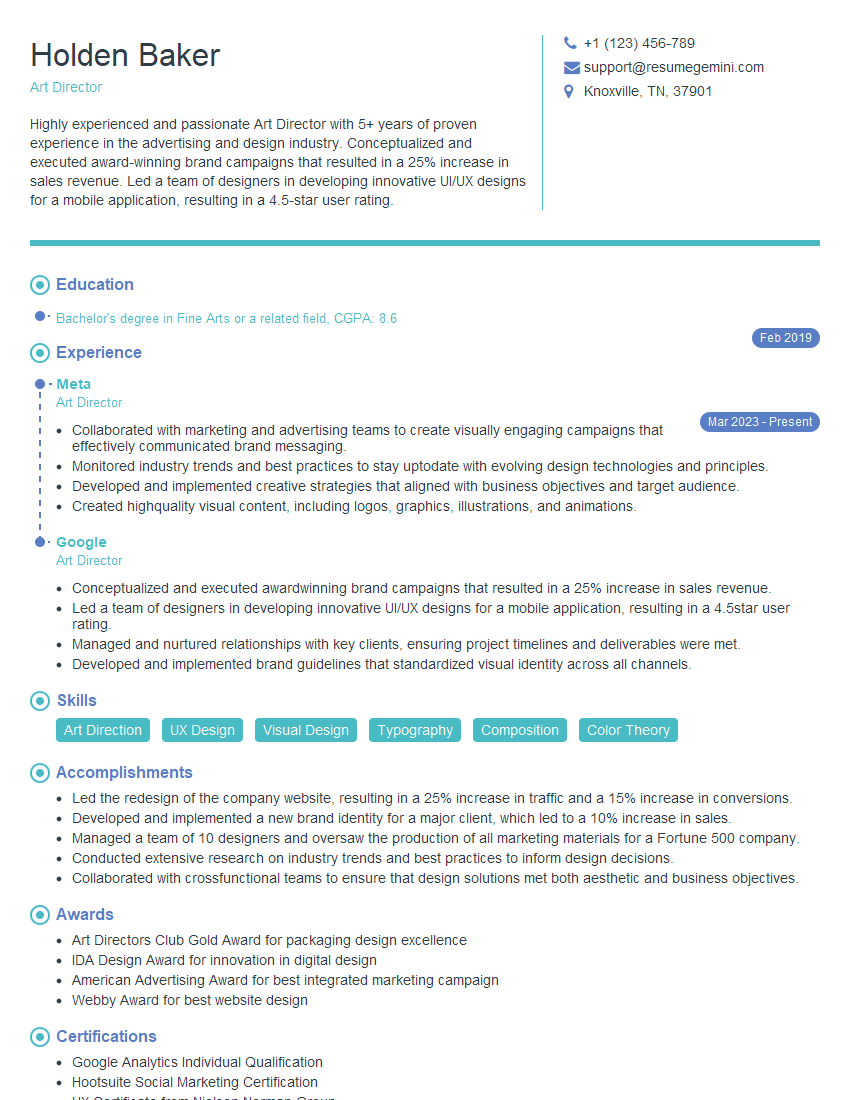
Art Director Resume Sample

Creative Director Resume Sample
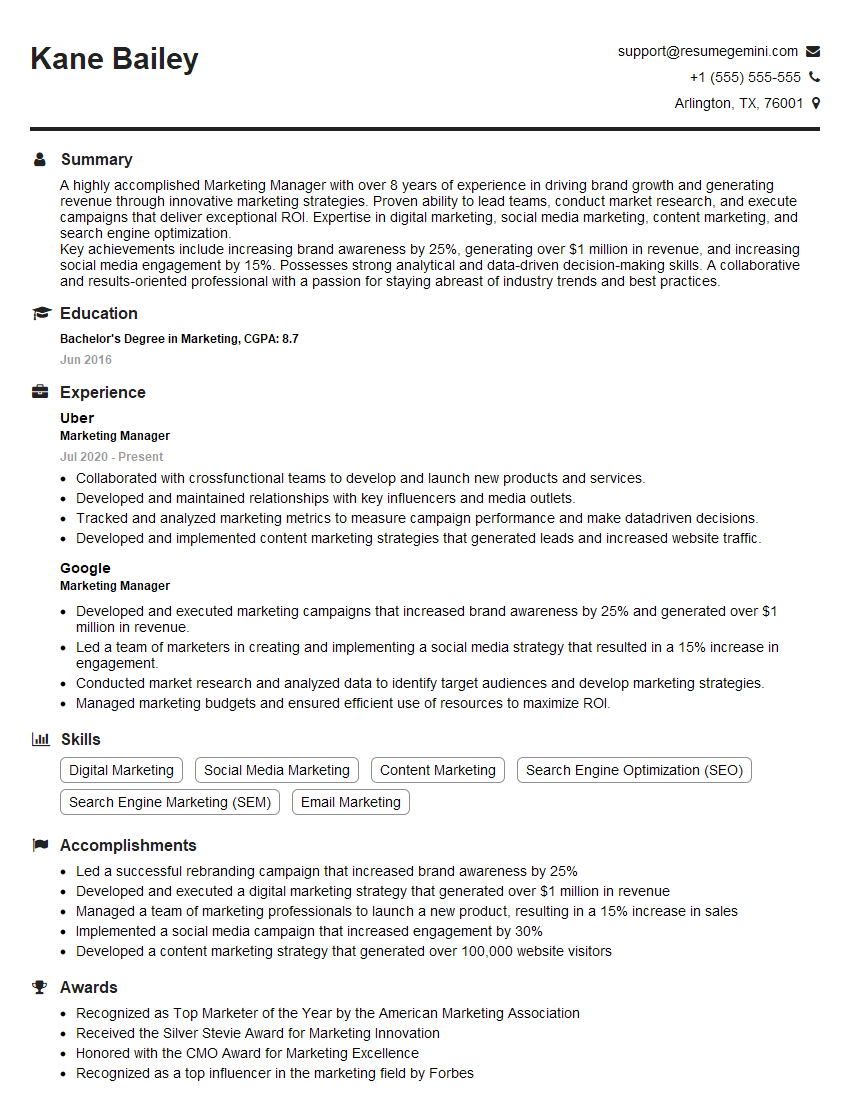
Marketing Manager Resume Sample

Communications Manager Resume Sample

Information Architect Resume Sample
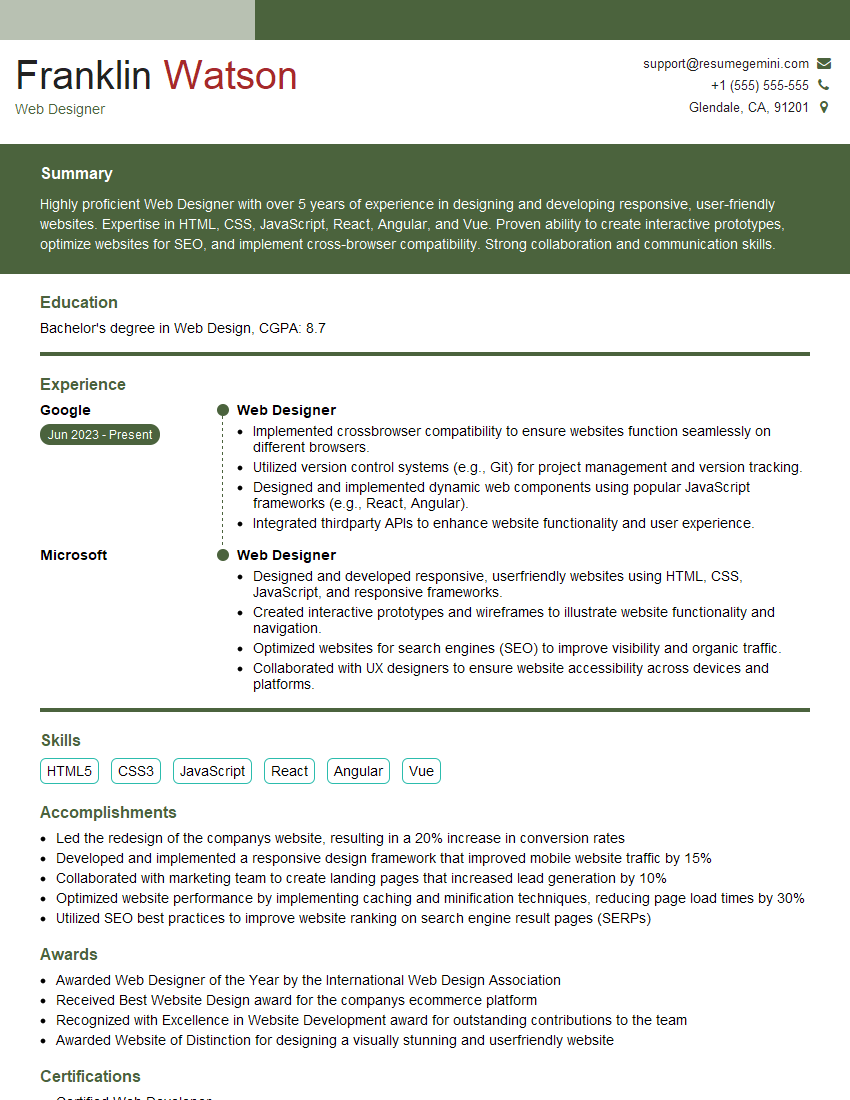
Web Designer Resume Sample
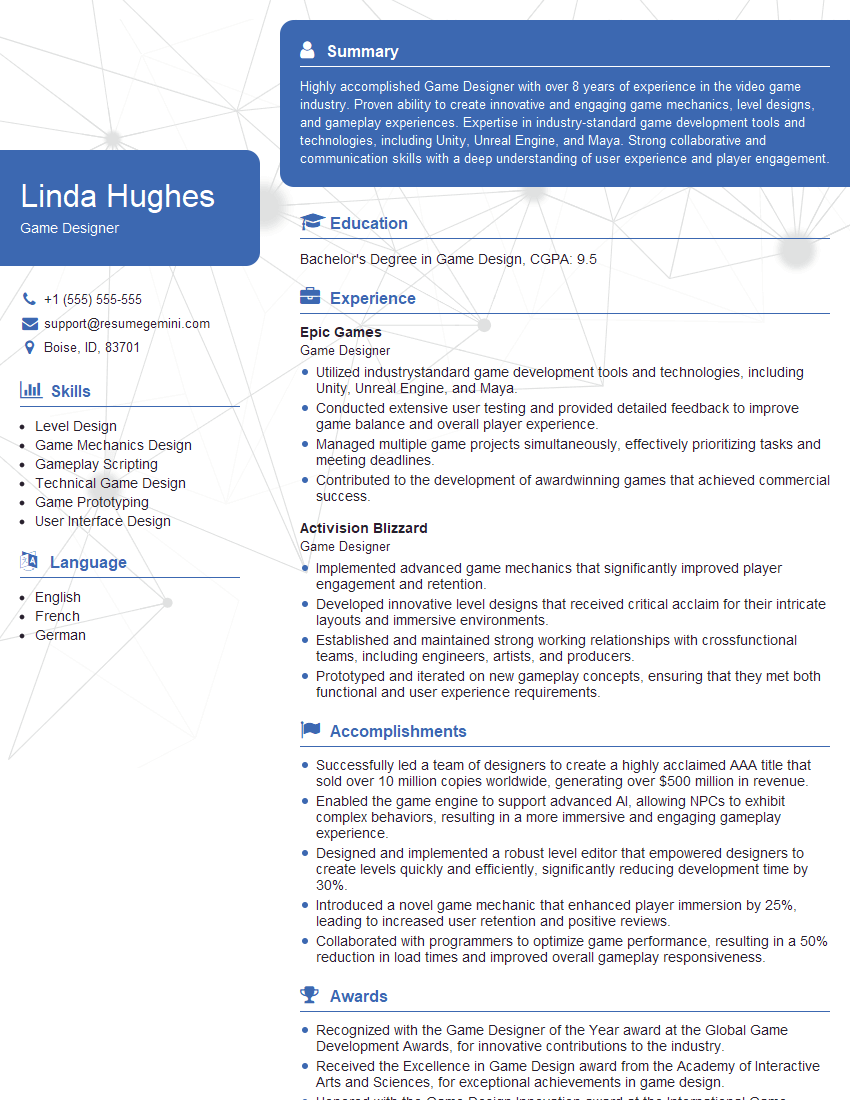
Game Designer Resume Sample
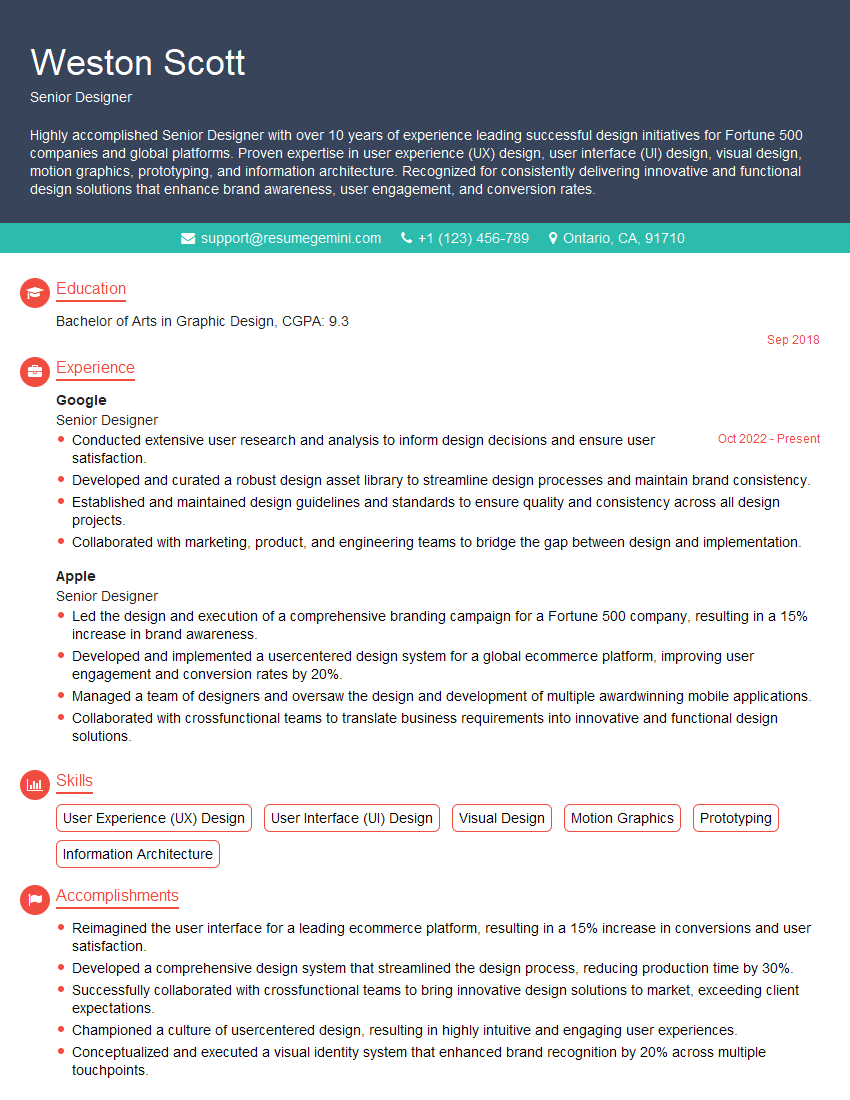
Senior Designer Resume Sample
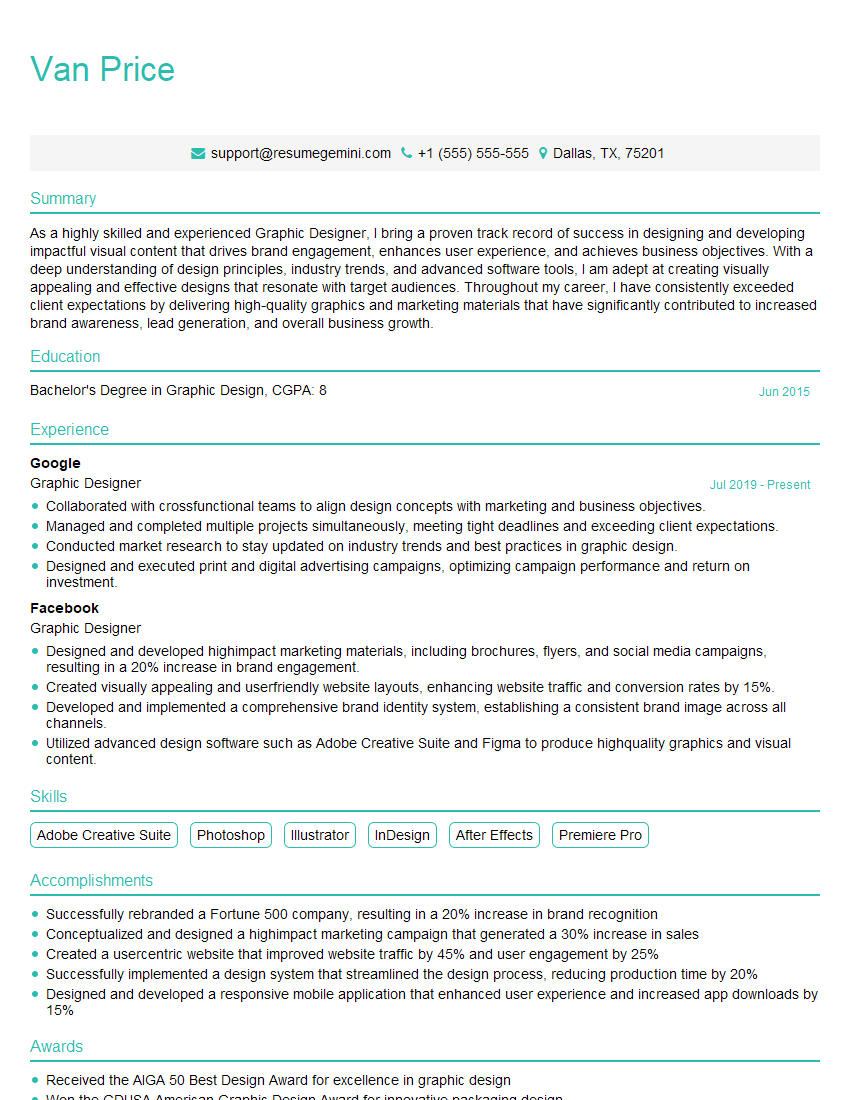
Graphic Designer Resume Sample
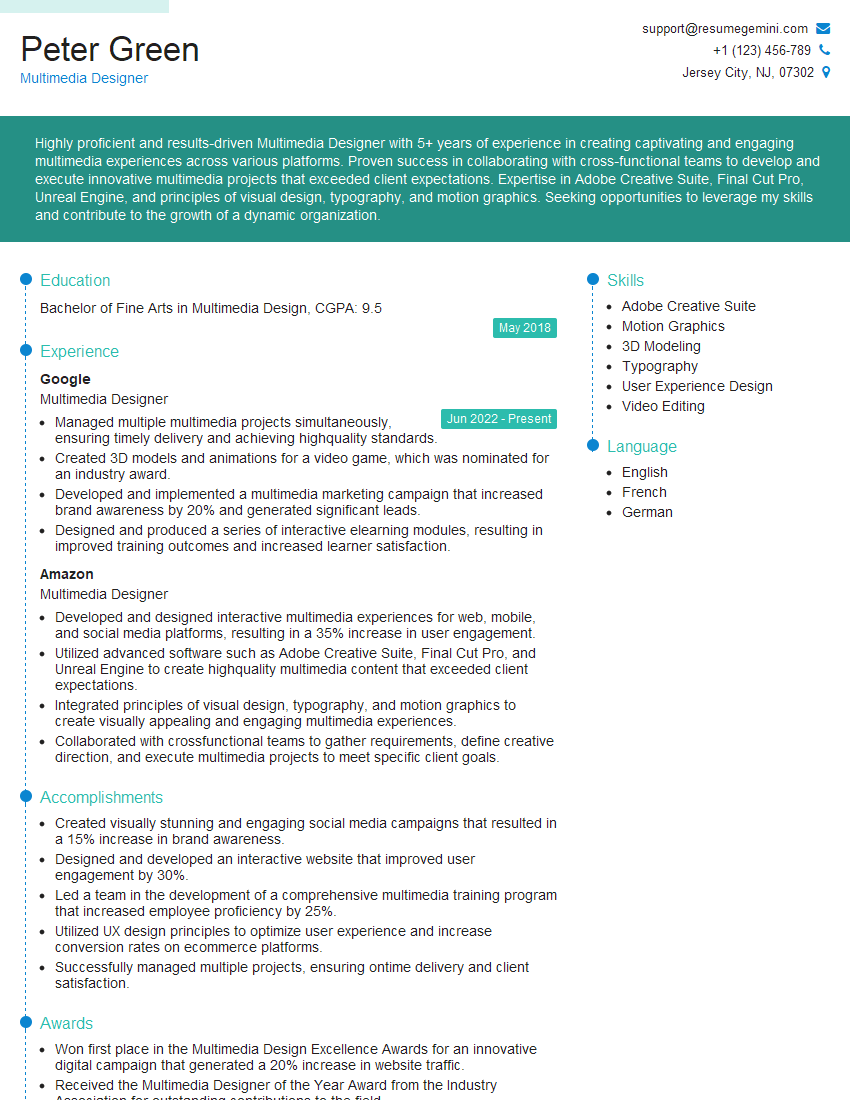
Multimedia Designer Resume Sample

Copywriter Resume Sample

Content Creator Resume Sample

UX Designer Resume Sample
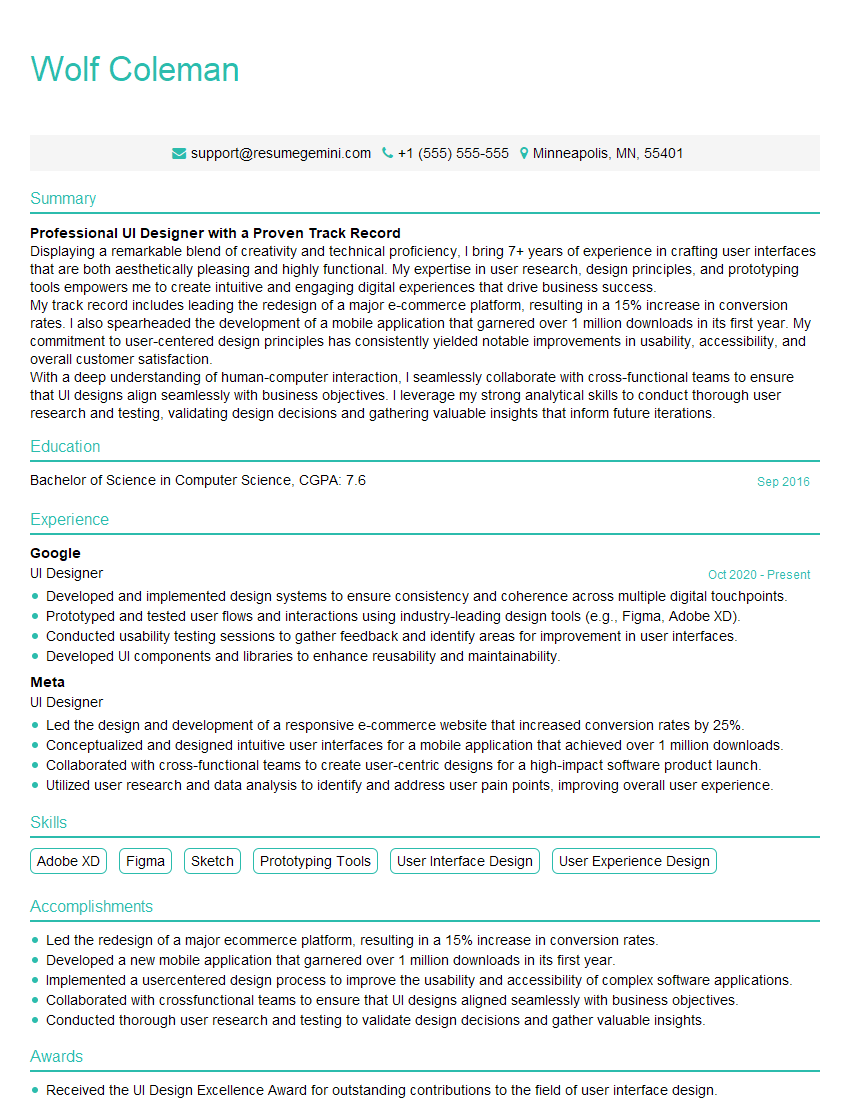
UI Designer Resume Sample
Explore more articles
Users Rating of Our Blogs
Share Your Experience
We value your feedback! Please rate our content and share your thoughts (optional).
What Readers Say About Our Blog
Very informative content, great job.
good