Are you ready to stand out in your next interview? Understanding and preparing for Power Plant Optimization interview questions is a game-changer. In this blog, we’ve compiled key questions and expert advice to help you showcase your skills with confidence and precision. Let’s get started on your journey to acing the interview.
Questions Asked in Power Plant Optimization Interview
Q 1. Explain the concept of heat rate in power plant optimization.
Heat rate is a crucial metric in power plant optimization, representing the thermal efficiency of the plant. It’s defined as the amount of heat input required to generate one unit of electricity, typically expressed in BTU/kWh or kJ/kWh. A lower heat rate indicates higher efficiency, meaning less fuel is needed to produce the same amount of power. Think of it like your car’s fuel economy – the lower the number (miles per gallon), the more efficient it is. In a power plant, minimizing the heat rate directly translates to lower operating costs and reduced environmental impact.
For example, a heat rate of 9000 BTU/kWh means that 9000 BTUs of heat energy were consumed to generate 1 kWh of electricity. A plant with a heat rate of 8000 BTU/kWh is 11.1% more efficient than the first plant.
Q 2. Describe different methods for improving boiler efficiency.
Improving boiler efficiency is paramount for optimizing power plant performance. Several methods contribute to this improvement:
- Air-Fuel Ratio Optimization: Precise control of the air-fuel mixture is crucial. Too much air leads to wasted energy heating excess gas, while insufficient air results in incomplete combustion and lower efficiency. Advanced control systems with oxygen sensors and automated adjustments are key here.
- Improved Combustion Techniques: Techniques like low NOx burners and staged combustion minimize the formation of nitrogen oxides, while simultaneously enhancing combustion efficiency. This is achieved by optimizing fuel and air mixing at different stages of the combustion process.
- Regular Cleaning and Maintenance: Fouling of boiler tubes with soot and ash reduces heat transfer efficiency. Regular cleaning, including soot blowing and chemical cleaning, is essential. Preventive maintenance schedules for all boiler components are crucial.
- Feedwater Preheating: Preheating the water fed to the boiler reduces the energy required to convert it to steam. This can be done using economizers and air preheaters, which recover heat from the flue gas.
- Insulation and Sealing: Minimizing heat loss from the boiler through insulation and sealing reduces the total heat input required. Regular inspections and repairs of insulation are essential.
For instance, a poorly maintained boiler might lose 5-10% of its efficiency due to fouling alone. Implementing a comprehensive maintenance program could directly translate into significant cost savings and improved environmental performance.
Q 3. How do you identify and address operational bottlenecks in a power plant?
Identifying operational bottlenecks in a power plant involves a systematic approach. It begins with data collection and analysis using plant monitoring systems, focusing on key parameters like power output, fuel consumption, steam temperature and pressure, and turbine efficiency. This data can reveal areas of underperformance. Then, I’d use techniques like:
- Statistical Process Control (SPC): To identify trends and deviations from optimal operating parameters.
- Data Mining and Machine Learning: To discover hidden patterns and relationships in the data that might indicate bottlenecks.
- Process Flow Diagrams and Simulation: To visualize the plant’s operation and identify potential constraints.
Addressing these bottlenecks might involve adjusting operating parameters, implementing new control strategies, upgrading equipment, or addressing maintenance needs. For example, a bottleneck could be a turbine operating below its optimal efficiency due to wear and tear. This can be resolved through maintenance, repair, or even replacement.
Q 4. What are the key performance indicators (KPIs) you would monitor for power plant optimization?
The key performance indicators (KPIs) I’d monitor for power plant optimization are:
- Heat Rate: As discussed earlier, it’s a direct measure of thermal efficiency.
- Plant Capacity Factor: The ratio of actual power generated to the maximum possible output over a given period. It reflects plant availability and operational efficiency.
- Specific Fuel Consumption (SFC): The amount of fuel consumed per unit of power generated. Lower SFC indicates better efficiency.
- Availability Factor: The percentage of time the plant is operational and producing power.
- Forced Outage Rate (FOR): The percentage of time the plant is down due to unplanned outages.
- Environmental KPIs: Emissions of NOx, SOx, particulate matter, and CO2, which are essential for environmental compliance and sustainability.
Regular tracking of these KPIs allows for early identification of problems and enables proactive measures to enhance plant performance. Comparing KPI trends against historical data and industry benchmarks provides a clear picture of the plant’s health and efficiency.
Q 5. Explain your experience with power plant modeling and simulation software.
I have extensive experience using various power plant modeling and simulation software packages, including Aspen Plus, MATLAB/Simulink, and Thermoflow. I’ve used these tools for various tasks:
- Steady-state and dynamic modeling: To simulate plant behavior under different operating conditions and predict the impact of changes in parameters.
- Optimization studies: To identify optimal operating points and strategies for maximizing efficiency and minimizing fuel consumption.
- Troubleshooting and diagnostics: To simulate equipment malfunctions and identify their root causes.
- Control system design and testing: To simulate and evaluate the performance of different control algorithms before implementing them in the actual plant.
For example, using Aspen Plus, I once modeled a combined cycle power plant to optimize its performance by adjusting the operating parameters of the gas turbine and steam turbine. The simulation helped us identify an optimal operating point that resulted in a 3% reduction in fuel consumption.
Q 6. How do you approach troubleshooting power plant equipment malfunctions affecting optimization?
Troubleshooting equipment malfunctions requires a systematic approach:
- Identify the symptom: Precisely define the malfunction. For example, a drop in power output or a rise in steam temperature.
- Gather data: Collect data from relevant sensors and instruments to understand the extent and nature of the problem. This might involve reviewing historical data, sensor readings, and alarm logs.
- Diagnose the cause: Use diagnostic tools, process knowledge, and simulation models to identify the root cause of the malfunction. This could involve analyzing sensor data, examining equipment schematics, and conducting tests.
- Implement a solution: Develop and implement a solution to address the root cause. This might involve repairing or replacing faulty components, adjusting operating parameters, or modifying control strategies.
- Verify the solution: After implementing the solution, verify that the malfunction has been resolved and the plant is operating optimally.
For instance, if a sudden drop in power output is observed, I would systematically check the fuel supply, steam pressure, turbine operation, and generator status. Through data analysis and potentially simulation, I would pinpoint the problem (e.g., a fuel supply issue or a turbine blade fault) and recommend the necessary corrective action.
Q 7. Describe your understanding of different types of power plant control systems.
Power plants utilize various control systems, each with its strengths and weaknesses:
- Distributed Control Systems (DCS): These are widely used in modern power plants, providing centralized control and monitoring of various plant parameters. They are highly reliable and offer advanced control algorithms, data logging, and operator interfaces.
- Supervisory Control and Data Acquisition (SCADA) Systems: These systems are used for high-level monitoring and control of larger power plant systems. They integrate data from various sources and provide a comprehensive overview of plant operations.
- Programmable Logic Controllers (PLCs): These are often used for simpler control tasks and local automation functions. They are reliable and cost-effective for specific control loops within the plant.
- Advanced Process Control (APC) Systems: These leverage advanced control algorithms, such as model predictive control (MPC), to optimize plant performance in real-time, considering multiple interacting variables and operational constraints.
The choice of control system depends on the complexity of the plant, the level of automation required, and budget constraints. A modern power plant typically uses a combination of DCS, SCADA, and PLCs to achieve optimal control and monitoring of all aspects of operation.
Q 8. Explain the role of data analytics in power plant optimization.
Data analytics plays a crucial role in power plant optimization by providing insights into plant performance, allowing for informed decision-making and targeted improvements. Think of it as a plant’s comprehensive health check, revealing hidden inefficiencies.
We leverage data from various sources – sensors monitoring temperature, pressure, flow rates, SCADA (Supervisory Control and Data Acquisition) systems, and even historical maintenance records. This data is then analyzed using statistical methods, machine learning, and data visualization techniques.
- Identifying Anomalies: Data analytics can quickly highlight deviations from optimal operating parameters, such as unusually high fuel consumption or decreased efficiency in a specific turbine.
- Predictive Modeling: We can build predictive models to forecast future performance, anticipate potential equipment failures, and optimize maintenance schedules.
- Performance Benchmarking: By comparing our plant’s performance against industry benchmarks or other plants in our fleet, we can identify areas for improvement.
For example, in one project, we used machine learning to identify a correlation between subtle variations in boiler feedwater temperature and overall plant efficiency. This led to a minor adjustment in the control system that resulted in a significant reduction in fuel consumption.
Q 9. How do you balance operational efficiency with environmental compliance in power plant optimization?
Balancing operational efficiency and environmental compliance is paramount in modern power plant optimization. It’s not a question of choosing one over the other; it’s about finding the sweet spot where both are maximized. Imagine it like a tightrope walk – maintaining balance is key.
We achieve this balance through a multi-pronged approach:
- Emissions Monitoring and Reduction: We use advanced sensors and analytics to monitor emissions (SOx, NOx, particulate matter, CO2). This data informs strategies for reducing emissions, like optimizing combustion processes or implementing flue-gas desulfurization technologies.
- Fuel Optimization: Switching to cleaner fuels or blending fuels can significantly reduce emissions. Data analytics helps determine the optimal fuel mix for both efficiency and environmental compliance.
- Advanced Control Systems: Sophisticated control systems enable real-time adjustments to operating parameters, ensuring optimal performance while staying within environmental limits. These systems automatically adapt to changes in load demand and environmental conditions.
- Regulatory Compliance: We stay abreast of all relevant environmental regulations and incorporate them into our optimization strategies. This involves careful planning, data logging, and reporting to meet all legal requirements.
For instance, we helped a plant reduce NOx emissions by 15% by optimizing their combustion controls and implementing selective catalytic reduction (SCR) technology, all while maintaining high operational efficiency.
Q 10. Describe your experience with implementing energy-saving technologies in a power plant.
I’ve been involved in several projects focused on implementing energy-saving technologies in power plants. The key is a holistic approach, combining technological upgrades with operational improvements.
- Heat Recovery Systems: We implemented a waste heat recovery system in a combined cycle plant, capturing heat from the exhaust gases of the gas turbine and using it to preheat the boiler feedwater. This significantly improved the overall plant efficiency.
- Advanced Control Valves: Replacing older, less efficient control valves with advanced, digitally controlled valves resulted in improved precision and reduced energy loss due to throttling.
- Boiler Optimization: Implementing combustion optimization techniques, including advanced burner designs and air-fuel ratio control, significantly reduced fuel consumption and emissions.
- Improved Turbine Blade Coatings: Applying advanced coatings to turbine blades reduced friction and improved their efficiency, leading to increased power output and reduced fuel consumption.
In one project, implementing a combination of these technologies resulted in a 7% reduction in overall plant fuel consumption, generating substantial cost savings and reducing the plant’s carbon footprint.
Q 11. How do you handle conflicting priorities in power plant optimization projects?
Conflicting priorities are common in power plant optimization projects. For example, improving efficiency might require an upfront capital investment that conflicts with budget constraints. We address this through a structured approach:
- Prioritization Matrix: We use a matrix to rank project elements based on their impact on key performance indicators (KPIs) and their associated costs and risks. This helps us focus on the projects with the highest potential return on investment.
- Phased Implementation: Instead of tackling everything at once, we break down large projects into smaller, manageable phases. This allows for incremental improvements while minimizing disruption and financial risk.
- Stakeholder Management: Open communication and collaboration with all stakeholders – engineers, operations personnel, management, and regulatory bodies – are crucial. This ensures everyone understands the priorities and trade-offs involved.
- Scenario Planning: We develop multiple scenarios, considering various constraints and priorities. This allows us to evaluate different options and choose the best course of action based on the current context.
For instance, in a recent project, we prioritized improving the plant’s reliability over immediate cost reductions, as downtime was significantly more expensive than the initial investment in upgraded components.
Q 12. Explain your experience with predictive maintenance and its impact on plant optimization.
Predictive maintenance is transformative for power plant optimization. It shifts the focus from reactive maintenance (fixing problems after they occur) to proactive maintenance (preventing problems before they happen). It’s like getting a regular health check-up to prevent serious illness.
We use data analytics and machine learning to predict potential equipment failures based on historical data, sensor readings, and operating parameters. This allows us to schedule maintenance activities proactively, minimizing downtime and maximizing plant availability.
- Condition Monitoring: We use sensors to continuously monitor the condition of critical equipment like turbines, generators, and pumps. Anomalies in vibration, temperature, or pressure can signal potential problems.
- Predictive Modeling: We develop predictive models to estimate the remaining useful life of equipment and forecast the likelihood of failures.
- Optimized Maintenance Schedules: Based on the predictions, we create optimized maintenance schedules that minimize downtime and resource consumption.
In one case, predictive maintenance alerted us to a potential bearing failure in a critical turbine several weeks before it would have occurred. This allowed us to schedule maintenance during a planned outage, avoiding costly unplanned downtime and potential damage.
Q 13. What is your experience with steam turbine performance optimization?
Steam turbine performance optimization is a critical aspect of power plant optimization, as steam turbines are typically the heart of the power generation process. Improving their efficiency directly impacts overall plant output and fuel consumption. It’s like fine-tuning a high-performance engine.
Our approach involves a combination of techniques:
- Aerodynamic Analysis: We use computational fluid dynamics (CFD) simulations to optimize the turbine blade design and improve the flow of steam through the turbine.
- Blade Condition Monitoring: We monitor the condition of the turbine blades using vibration analysis and other methods to detect erosion, corrosion, or other damage that might reduce efficiency.
- Control System Optimization: Fine-tuning the turbine control system to optimize steam admission and extraction improves efficiency and power output.
- Leak Detection and Repair: Identifying and repairing steam leaks in the turbine casing and piping is crucial for maintaining high efficiency.
A successful steam turbine optimization project can yield significant improvements in power output, reduced fuel consumption, and improved overall plant efficiency. In one project, we achieved a 3% increase in steam turbine efficiency through a combination of blade repairs and control system upgrades.
Q 14. How do you evaluate the return on investment (ROI) of optimization projects?
Evaluating the return on investment (ROI) of optimization projects is crucial to justify the expenditure and demonstrate the value of our work. It’s about showing that the improvements outweigh the costs.
We use a comprehensive approach that considers both tangible and intangible benefits:
- Cost Savings: We calculate the reduction in fuel consumption, maintenance costs, and emissions penalties resulting from the optimization project.
- Increased Power Output: We quantify the increase in power generation capacity and the resulting revenue increase.
- Reduced Downtime: We measure the reduction in unplanned downtime and the associated cost savings.
- Improved Reliability: We assess the improvement in plant reliability and its positive impact on operational stability.
- Environmental Benefits: We quantify the reduction in greenhouse gas emissions and other pollutants, considering potential carbon credit revenue or regulatory compliance cost avoidance.
We then use discounted cash flow analysis to determine the net present value (NPV) of the project, considering the time value of money. A positive NPV indicates a worthwhile investment. We also calculate the simple payback period – the time it takes for the project to pay for itself – to give a clear indication of the project’s financial viability.
Q 15. Describe your understanding of combustion optimization techniques.
Combustion optimization aims to maximize energy extraction from fuel while minimizing emissions and operational costs. It’s like fine-tuning a car engine – you want the best performance with the least fuel consumption and pollution. This involves several key techniques:
Air-Fuel Ratio Control: Precisely controlling the ratio of air to fuel is crucial. Too much air leads to incomplete combustion and wasted energy; too little causes inefficient burning and high emissions of pollutants like carbon monoxide (CO) and unburnt hydrocarbons (UHCs). Advanced sensors and control systems, often involving oxygen analyzers and sophisticated algorithms, are employed to maintain the optimal ratio.
Burner Management: Optimizing the placement and configuration of burners ensures uniform fuel distribution and complete combustion. This might involve adjusting the flame shape, fuel injection angles, and primary/secondary air flow to minimize dead zones within the combustion chamber where fuel isn’t fully burned.
Overfire Air Optimization: Introducing carefully controlled secondary air above the main flame improves combustion by oxidizing remaining combustibles, reducing CO and UHC emissions. This is often adjusted based on load and fuel characteristics.
Low NOx Combustion Techniques: Techniques like staged combustion (introducing fuel and air in multiple stages) and flue gas recirculation (recycling exhaust gases to lower combustion temperature) are used to significantly reduce the formation of nitrogen oxides (NOx), a major air pollutant.
For example, in a coal-fired power plant, we might use advanced control systems to adjust the pulverizer mill speed to control the fineness of coal particles, improving combustion efficiency and reducing unburnt carbon in fly ash.
Career Expert Tips:
- Ace those interviews! Prepare effectively by reviewing the Top 50 Most Common Interview Questions on ResumeGemini.
- Navigate your job search with confidence! Explore a wide range of Career Tips on ResumeGemini. Learn about common challenges and recommendations to overcome them.
- Craft the perfect resume! Master the Art of Resume Writing with ResumeGemini’s guide. Showcase your unique qualifications and achievements effectively.
- Don’t miss out on holiday savings! Build your dream resume with ResumeGemini’s ATS optimized templates.
Q 16. How do you ensure the safety and reliability of the power plant during optimization efforts?
Safety and reliability are paramount during optimization. We employ a layered approach that involves:
Thorough Risk Assessment: Before any changes, we conduct a detailed hazard and operability (HAZOP) study to identify potential risks and develop mitigation strategies. This is like meticulously checking a plane’s engine before takeoff – you leave no stone unturned.
Gradual Implementation: We don’t make sweeping changes at once. Optimizations are implemented incrementally, allowing time to monitor performance and make adjustments. We use a ‘test and learn’ methodology, constantly evaluating the effects on the plant.
Robust Monitoring and Control Systems: Advanced instrumentation and control systems continuously monitor critical parameters like temperature, pressure, and emissions. Alarm systems immediately alert operators to any deviations from safe operating limits. Redundancy in critical systems helps prevent failure.
Operator Training: Operators undergo thorough training on the new operating procedures and safety protocols associated with the optimized system. Regular drills and simulations prepare them to handle any unexpected events.
Detailed Documentation: Every change is meticulously documented, including the rationale, implementation steps, and results. This allows for easy troubleshooting and facilitates future improvements.
For instance, if we are optimizing a boiler’s combustion, we might start by making small adjustments to air-fuel ratio while closely monitoring temperature and pressure. If any anomalies are detected, we immediately revert the changes until the root cause is identified and addressed.
Q 17. What is your experience with the integration of renewable energy sources into existing power plants?
Integrating renewable energy sources into existing power plants requires careful planning and consideration of several factors. The approach depends heavily on the type of renewable source and the existing plant’s infrastructure.
Hybrid Systems: Combining existing thermal generation with solar photovoltaic (PV) or wind power is a common strategy. The renewable source acts as a supplementary energy source, reducing reliance on fossil fuels and lowering emissions. The power plant’s control system needs to be adapted to manage the intermittent nature of renewable energy sources. This might involve sophisticated forecasting algorithms and energy storage systems.
Cogeneration: Waste heat from the power plant can be utilized for heating or other industrial processes. This boosts overall efficiency by using energy that would otherwise be lost. Incorporating geothermal energy, which provides a consistent baseload, is another viable option depending on location.
Grid Integration: Careful integration with the power grid is essential to ensure stability and reliability. This may involve sophisticated grid management systems that account for variable energy output from renewable sources.
For example, I worked on a project integrating a large solar PV farm with a combined cycle gas turbine power plant. We had to upgrade the plant’s control system to manage the intermittent power output of the solar farm and prevent grid instability. This involved developing sophisticated algorithms for load forecasting and power dispatch.
Q 18. Describe your approach to managing change during power plant optimization projects.
Managing change during optimization projects requires a structured and communicative approach:
Stakeholder Engagement: Early and frequent communication with all stakeholders (operators, management, maintenance personnel) is critical. Open dialogue ensures everyone understands the goals, methodology, and potential impacts of the project.
Phased Rollout: A phased implementation reduces disruption and allows for effective feedback loops. We start with pilot projects, testing changes on a small scale before wider implementation. This minimizes the risk of widespread problems.
Training and Support: Comprehensive training for plant personnel is crucial. Operators need to understand the new control systems and procedures to effectively operate the plant safely and efficiently. Continuous support and mentorship during and after implementation are also critical.
Change Management Framework: We use a structured change management framework (like ADKAR – Awareness, Desire, Knowledge, Ability, Reinforcement) to guide the process. This ensures that change is not only implemented but also accepted and embraced by the team.
Performance Monitoring and Evaluation: After implementation, we rigorously monitor performance using key performance indicators (KPIs) to evaluate the effectiveness of the optimizations. Regular feedback is used to fine-tune the system and address any issues.
For instance, in one project, we used a phased approach to implement a new combustion optimization strategy. We started by testing the strategy on a single boiler unit, monitoring performance carefully, before rolling it out to other units. This allowed us to identify and address minor issues before widespread implementation.
Q 19. How familiar are you with different power plant control strategies (e.g., PID control, advanced control)?
I’m very familiar with various power plant control strategies. PID (Proportional-Integral-Derivative) control is a widely used, fundamental technique for regulating process variables. It’s simple to implement but can be less effective in handling complex, nonlinear systems.
Advanced control strategies offer more sophisticated approaches. These include:
Model Predictive Control (MPC): MPC uses a mathematical model of the power plant to predict future behavior and optimize control actions over a longer time horizon. This is very effective in handling constraints and optimizing multiple variables simultaneously.
Adaptive Control: Adaptive controllers adjust their parameters in real-time based on changes in the system’s dynamics. This is essential in dealing with variations in fuel quality, load demands, and ambient conditions.
Fuzzy Logic Control: Fuzzy logic control handles uncertainty and imprecise data better than traditional PID controllers. It’s well-suited for systems with complex, nonlinear behavior.
The choice of control strategy depends on the specific application and complexity of the power plant. While PID control is useful for simpler applications, more complex situations often demand advanced control algorithms like MPC or adaptive control to ensure optimal performance.
For example, MPC is frequently used to optimize the operation of large steam turbines and generators, taking into account multiple constraints such as pressure, temperature, and power output limits.
Q 20. Explain your understanding of the impact of fuel quality on power plant efficiency.
Fuel quality significantly impacts power plant efficiency and emissions. Lower-quality fuels can lead to several issues:
Reduced Combustion Efficiency: Impurities in the fuel, such as ash and sulfur, can hinder complete combustion. This reduces energy output and increases fuel consumption.
Increased Emissions: High sulfur content leads to higher SOx (sulfur oxides) emissions, contributing to acid rain and air pollution. High ash content can cause fouling and slagging in the boiler, reducing efficiency and requiring more frequent maintenance.
Equipment Fouling and Corrosion: Impurities in the fuel can cause fouling (buildup of deposits) on heat transfer surfaces and corrosion of equipment, shortening their lifespan and requiring more frequent cleaning or replacements. This leads to increased maintenance costs and potential downtime.
Increased Maintenance Costs: Dealing with the consequences of poor fuel quality – higher emissions, fouling, and corrosion – significantly increases maintenance costs. It’s like driving a car with dirty oil – it runs less efficiently and breaks down more often.
Therefore, carefully selecting and managing fuel quality is essential for optimizing power plant performance. This involves analyzing fuel characteristics, implementing proper fuel handling procedures, and using appropriate combustion control strategies to mitigate the negative impacts of impurities.
Q 21. How do you use data to identify areas for improvement in power plant operations?
Data plays a crucial role in identifying areas for improvement in power plant operations. We use a data-driven approach that involves:
Data Acquisition: Collecting data from various sources, including sensors, control systems, and operational logs, is the first step. This provides a comprehensive picture of the plant’s performance.
Data Cleaning and Preprocessing: Raw data often contains inconsistencies, noise, and missing values. We clean and preprocess the data to ensure its accuracy and reliability for analysis.
Statistical Analysis: We use statistical methods to analyze data trends, identify patterns, and detect anomalies that point towards operational inefficiencies or potential equipment failures. This might involve process capability analysis to gauge how consistently we operate within specifications.
Data Visualization: Visualizing data through dashboards and reports facilitates identifying areas for improvement. Seeing trends and patterns visually helps reveal insights that might not be apparent from raw data alone.
Predictive Modeling: Advanced analytical techniques such as machine learning are used to build predictive models that forecast future performance and identify potential problems before they occur. These can pinpoint areas where optimization will have the biggest impact.
Root Cause Analysis: When performance issues are identified, we conduct root cause analysis to find the underlying reasons for the problems. This involves techniques like the ‘5 Whys’ to systematically investigate the chain of events.
For example, by analyzing historical data on fuel consumption and energy output, we might identify a correlation between specific operating conditions and lower efficiency, leading us to adjust parameters for improved performance. We might also use predictive models to foresee potential equipment failures, allowing for proactive maintenance and avoiding costly downtime.
Q 22. Describe your experience with implementing and managing energy audits in power plants.
Energy audits in power plants are systematic evaluations to identify areas for energy efficiency improvements and cost reduction. My experience encompasses all phases, from initial planning and data collection to report generation and implementation recommendations. I’ve led audits in various plant types, including coal-fired, gas-fired, and combined cycle plants. This involved using sophisticated diagnostic tools to analyze energy consumption patterns, identifying equipment inefficiencies (e.g., boiler leaks, turbine blade erosion), and assessing the performance of various systems, including cooling towers, pumps, and heat exchangers.
For example, in a recent audit of a coal-fired plant, we discovered significant heat losses in the boiler feedwater system. By implementing insulation upgrades and optimizing the pump control system, we projected annual savings exceeding $500,000. The audit report detailed these findings, including before-and-after simulations using energy modeling software, and provided a prioritized list of cost-effective solutions for implementation.
Q 23. How do you collaborate with cross-functional teams to achieve optimization goals?
Collaboration is paramount in power plant optimization. I leverage my experience in facilitating effective communication and coordinating efforts across multiple disciplines. My approach involves establishing clear goals, defining roles and responsibilities, and creating a shared understanding of the project’s objectives among engineering, operations, maintenance, and management teams.
For instance, during a project aimed at improving the efficiency of a combined cycle plant, I organized regular cross-functional meetings to discuss progress, address challenges, and ensure alignment. This involved using collaborative platforms for data sharing and facilitating constructive discussions to resolve conflicts and address technical issues. Regular progress reports and transparent communication ensured everyone was informed and contributed effectively. Successful collaboration requires active listening, respect for diverse perspectives, and a commitment to finding mutually beneficial solutions.
Q 24. What is your approach to staying current with the latest advancements in power plant optimization technologies?
Staying abreast of advancements in power plant optimization technologies is critical. My strategy involves a multi-pronged approach. This includes actively participating in industry conferences and workshops, subscribing to relevant journals and online publications, and engaging in online learning platforms focused on energy efficiency and power generation technologies.
I also maintain a professional network with experts in the field, exchanging knowledge and insights. Furthermore, I actively research and evaluate new technologies and software solutions, always seeking opportunities to incorporate innovative approaches into my projects. For example, I recently completed a training program on the application of artificial intelligence (AI) and machine learning (ML) for predictive maintenance in power plants, broadening my skillset and enabling me to explore more sophisticated optimization strategies.
Q 25. Explain your experience with power plant emissions monitoring and control.
My experience encompasses all aspects of power plant emissions monitoring and control, from understanding regulatory requirements to implementing and optimizing emission reduction technologies. This includes proficiency in using Continuous Emission Monitoring Systems (CEMS) data analysis and interpretation.
I have extensive experience with implementing and managing various emission control technologies, including selective catalytic reduction (SCR) for NOx control, flue gas desulfurization (FGD) for SO2 removal, and particulate matter (PM) control systems. I understand the intricacies of emission trading schemes (like cap-and-trade) and their influence on optimization strategies. For example, I successfully led a project to optimize the SCR system in a coal-fired power plant, resulting in a significant reduction in NOx emissions while minimizing operational costs by adjusting catalyst injection rates and optimizing ammonia usage based on real-time CEMS data.
Q 26. How do you handle unexpected issues and setbacks during optimization projects?
Unexpected issues are inevitable in complex projects. My approach is to proactively anticipate potential problems and develop contingency plans. This involves thorough risk assessment during the project planning phase. When setbacks occur, I prioritize a systematic approach: first, identify the root cause of the problem through thorough investigation; then, assemble a team to brainstorm solutions, considering both short-term and long-term impacts; and finally, implement the chosen solution, carefully documenting the process for future reference and learning.
For instance, during a project to optimize the heat recovery steam generator (HRSG) in a combined cycle plant, we encountered unexpected equipment failure. We immediately initiated a detailed investigation, identified the faulty component, and expedited the procurement and installation of a replacement. This required coordinating with multiple vendors and adjusting project timelines while minimizing the overall impact on plant operations.
Q 27. What are your strengths and weaknesses related to power plant optimization?
My strengths lie in my analytical skills, problem-solving abilities, and my ability to lead and motivate cross-functional teams. I possess a strong understanding of thermodynamic principles, power plant operations, and emission control technologies. I am proficient in using various optimization software and data analysis tools.
One area for development is enhancing my familiarity with the latest advancements in AI/ML applications for power plant optimization, though my recent training has significantly improved this aspect. I’m also committed to continuously expanding my knowledge in this rapidly evolving field.
Q 28. Describe a challenging power plant optimization project you successfully completed.
One particularly challenging project involved optimizing the performance of an aging coal-fired power plant facing increasing regulatory pressure to reduce emissions. The plant had experienced declining efficiency over time due to aging equipment and operational inefficiencies.
The project involved a multifaceted approach encompassing thorough equipment assessments, operational data analysis, and the development of optimized control strategies. We implemented several key improvements, including upgrading the boiler combustion control system, optimizing the air-fuel ratio, and implementing advanced controls for the FGD system. We also worked closely with the plant’s operations team to implement improved maintenance practices. The project resulted in a significant reduction in emissions, increased plant efficiency, and substantial cost savings, exceeding initial projections and demonstrating the success of our collaborative approach and data-driven optimization strategies.
Key Topics to Learn for Power Plant Optimization Interview
- Thermodynamic Cycles: Understand the principles behind Rankine, Brayton, and combined cycles, including efficiency calculations and optimization strategies. Practical application: Analyze plant performance data to identify areas for improvement in cycle efficiency.
- Heat Transfer and Fluid Mechanics: Master the fundamentals of heat exchangers, pumps, and turbines. Practical application: Troubleshoot issues related to heat transfer inefficiencies or pressure drops within the plant.
- Control Systems and Instrumentation: Gain proficiency in understanding and optimizing plant control systems, including Boiler Control, Turbine Control, and Emission Control Systems. Practical application: Design and implement strategies to improve plant stability and responsiveness.
- Power Plant Modeling and Simulation: Develop skills in using software tools for plant modeling and simulation to predict performance and optimize operations. Practical application: Conduct “what-if” analyses to assess the impact of proposed modifications or operational changes.
- Data Analytics and Optimization Techniques: Learn to utilize data analysis techniques (statistical methods, machine learning) for identifying patterns and improving plant efficiency. Practical application: Develop predictive models for maintenance scheduling and performance forecasting.
- Environmental Regulations and Compliance: Understand relevant environmental regulations and their impact on plant operations and optimization strategies. Practical application: Develop strategies to minimize emissions and ensure compliance.
- Economic Dispatch and Unit Commitment: Understand the principles of economic dispatch and unit commitment for optimal power generation scheduling. Practical application: Develop strategies to minimize operating costs while meeting demand.
Next Steps
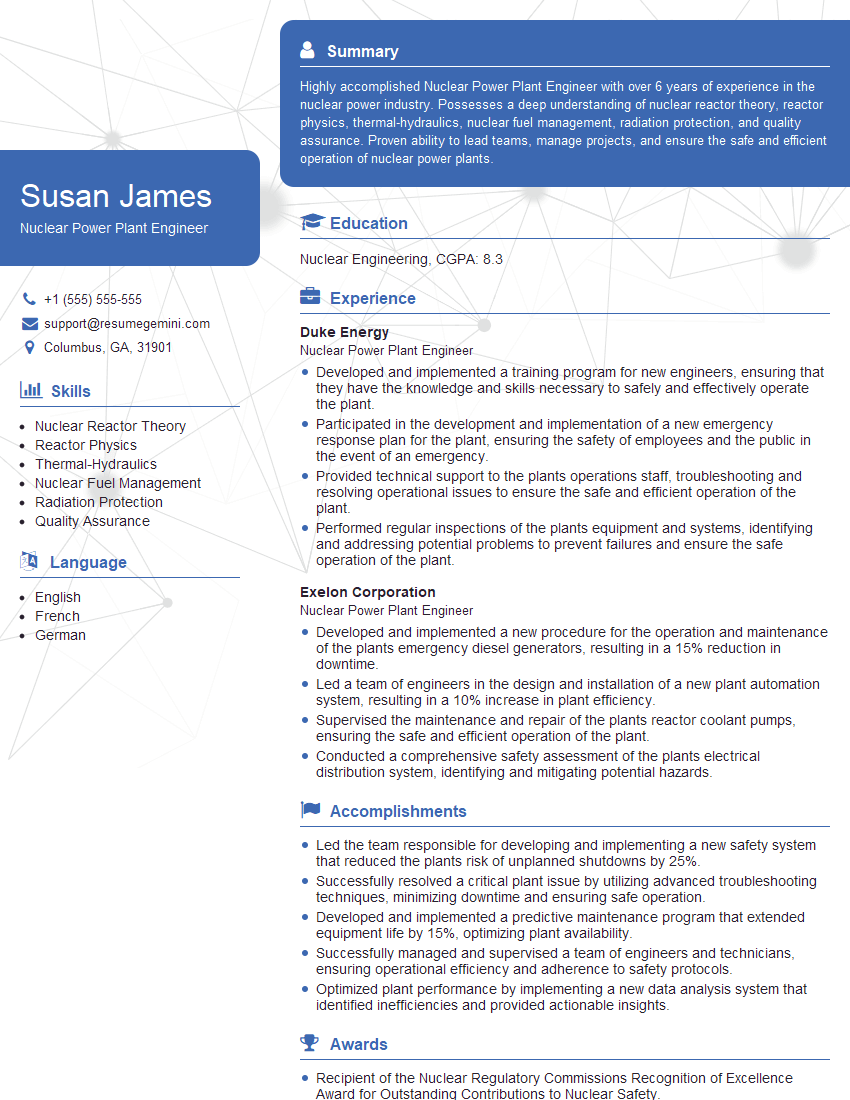
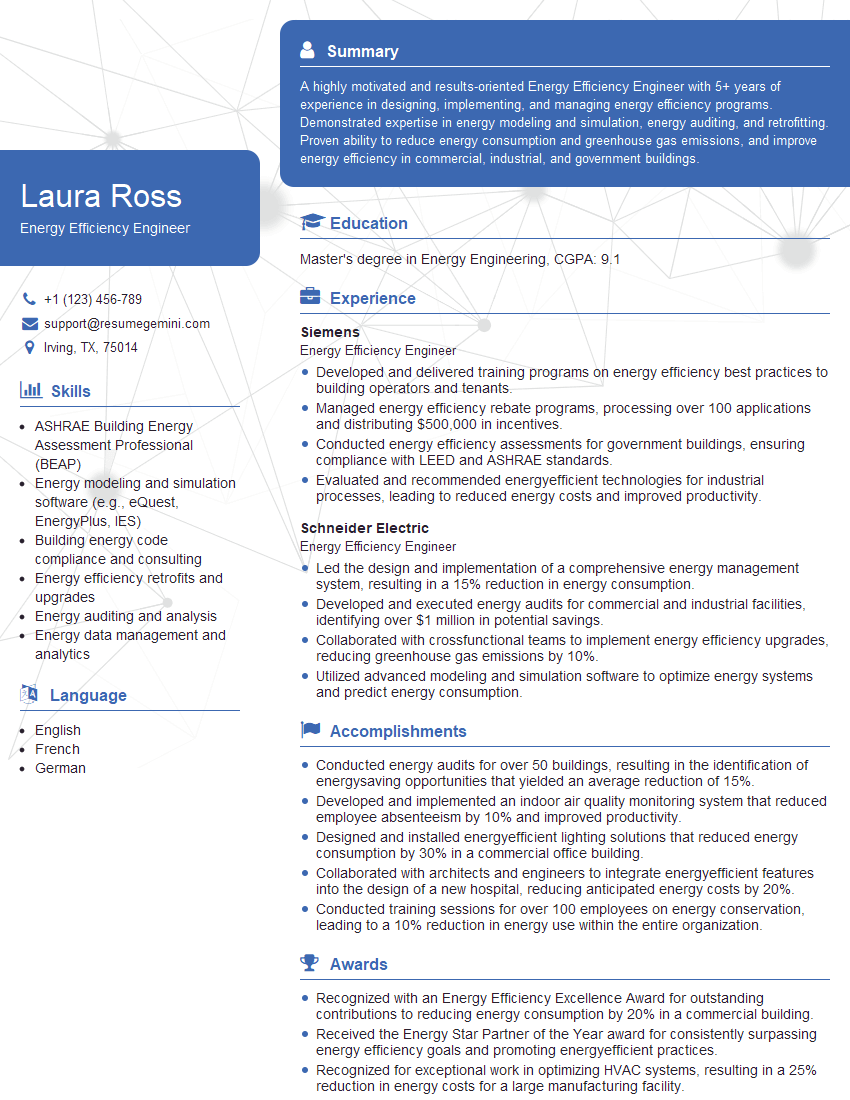
Mastering Power Plant Optimization opens doors to exciting career advancements, higher earning potential, and impactful contributions to a sustainable energy future. To maximize your job prospects, crafting an ATS-friendly resume is crucial. ResumeGemini offers a powerful tool to build a professional resume that highlights your skills and experience effectively. Take advantage of ResumeGemini’s features and explore the provided examples of resumes tailored to Power Plant Optimization to elevate your application materials and stand out from the competition. Invest in your future – build a winning resume today!
Explore more articles
Users Rating of Our Blogs
Share Your Experience
We value your feedback! Please rate our content and share your thoughts (optional).
What Readers Say About Our Blog
Very informative content, great job.
good