Are you ready to stand out in your next interview? Understanding and preparing for Experience with crossdocking and transloading interview questions is a game-changer. In this blog, we’ve compiled key questions and expert advice to help you showcase your skills with confidence and precision. Let’s get started on your journey to acing the interview.
Questions Asked in Experience with crossdocking and transloading Interview
Q 1. Explain the difference between crossdocking and transloading.
Crossdocking and transloading are both efficient warehouse operations that minimize storage time, but they differ significantly in their processes. Crossdocking involves the direct transfer of goods from incoming shipments to outgoing shipments, bypassing storage. Think of it like a highly organized relay race where goods are passed directly from one truck to another. Transloading, on the other hand, involves unloading goods from one transport unit and reloading them onto another, often with repackaging or consolidation. This is more like a pit stop in a race where the goods are unpacked, possibly reorganized, and then repacked for the next leg of the journey.
In essence, crossdocking focuses on speed and minimal handling, while transloading allows for greater flexibility in handling and reorganizing goods before onward shipment. Imagine a distribution center receiving multiple truckloads of individual items for a major retail chain. Crossdocking would directly sort and load those items onto delivery trucks based on store location. Transloading might involve consolidating smaller shipments into larger, more efficient pallets for transport to regional distribution centers.
Q 2. Describe your experience with various crossdocking methods (e.g., direct, indirect, buffer).
My experience encompasses all three major crossdocking methods: direct, indirect, and buffer. Direct crossdocking is the purest form, where goods are unloaded from incoming trucks and immediately loaded onto outgoing trucks based on pre-arranged schedules and manifests. This is ideal for high-volume, predictable flows like those seen with large grocery chains. I’ve managed several direct crossdocking projects optimizing the sequencing of trucks and the allocation of dock doors to minimize delays.
Indirect crossdocking involves a short-term holding area. Goods are temporarily stored, usually for a few hours, while awaiting the arrival of outgoing transportation. This is useful when dealing with less predictable arrival or departure times, allowing for some buffer and flexibility. In a previous role, I implemented an indirect system for a company facing inconsistent supplier deliveries, significantly improving on-time shipping performance.
Finally, buffer crossdocking utilizes a more substantial storage area, providing greater flexibility. This is useful when dealing with high variability in supply and demand or when consolidating smaller shipments into larger ones. I’ve overseen the design and implementation of buffer crossdocking systems that minimized storage costs while enhancing responsiveness to market fluctuations.
Q 3. How do you optimize the efficiency of a crossdocking operation?
Optimizing crossdocking efficiency revolves around several key strategies. First, accurate and timely information is crucial. Real-time tracking of inbound and outbound shipments, combined with a well-integrated Warehouse Management System (WMS), allows for dynamic scheduling and minimizes delays. Secondly, efficient layout and processes are essential. This includes strategically locating receiving and shipping docks, optimizing material handling equipment (e.g., conveyors, forklifts), and implementing clear, well-defined workflows for receiving, sorting, and loading.
Third, effective communication between all stakeholders – suppliers, carriers, and internal teams – is vital. Clear communication ensures everyone is informed of any potential issues or changes in the schedule, minimizing disruptions. Finally, continuous improvement is key. Regularly analyzing key performance indicators (KPIs) and adapting processes based on data-driven insights is essential to achieving ongoing efficiency gains. For example, in one project, we implemented a new sortation system that reduced labor costs by 15% and improved throughput by 10%.
Q 4. What are the key performance indicators (KPIs) you monitor in a crossdock environment?
In a crossdock environment, several KPIs are critical. Throughput (volume of goods processed per unit of time) measures the overall efficiency of the operation. Order accuracy ensures that the correct goods are shipped to the right destination. On-time shipping performance measures the percentage of shipments that leave on schedule. Dock-to-dock time tracks the time it takes for goods to move from receiving to shipping docks. Labor productivity measures the efficiency of the workforce, while inventory holding time (which should be minimal) is a crucial metric for pure crossdocking.
We also closely monitor damage rates, shortage rates, and customer satisfaction. By tracking these KPIs using dashboards and reporting systems, we can proactively identify areas for improvement and adjust processes accordingly. Analyzing this data, for instance, helped identify a bottleneck in our pallet-sorting system in one engagement, leading to a significant improvement in dock-to-dock times.
Q 5. How do you manage inventory in a fast-paced crossdocking environment?
Inventory management in a fast-paced crossdocking environment is drastically different from traditional warehousing. The core principle is minimizing inventory holding time. This means relying heavily on real-time information from suppliers and customers to coordinate shipments precisely. Instead of managing large inventories, the focus is on efficiently coordinating the flow of goods. We use advanced WMS systems with real-time visibility into inbound and outbound shipments to ensure goods don’t sit idle.
A key strategy involves precise forecasting of demand and supply to optimize scheduling. This allows for minimizing buffer stock while ensuring that enough goods are available to meet outgoing orders. Also, strong relationships with suppliers and carriers are crucial to ensure timely deliveries and minimize disruptions. Automated processes, like automated guided vehicles (AGVs) and conveyor systems, further accelerate the flow of goods. A lean approach to inventory, focusing on just-in-time delivery, is crucial to success.
Q 6. Explain your experience with warehouse management systems (WMS) in a crossdocking context.
My experience with Warehouse Management Systems (WMS) in crossdocking contexts is extensive. A robust WMS is absolutely crucial. It provides real-time visibility into the entire crossdocking process, enabling efficient scheduling, order tracking, and exception management. The WMS should integrate seamlessly with transportation management systems (TMS) to coordinate inbound and outbound logistics effectively.
I’ve worked with various WMS platforms including Manhattan Associates, Blue Yonder, and Oracle WMS, adapting them to specific crossdocking workflows. Key functionalities include receiving and putaway (though minimal in pure crossdocking), order fulfillment, shipping, and reporting. A well-configured WMS enables precise tracking of goods from arrival to departure, providing crucial data for KPI monitoring and continuous improvement. For example, using the WMS reporting features, we were able to pinpoint a slow-moving dock door in one instance, which subsequently led to process redesign and significantly improved efficiency.
Q 7. How do you handle unexpected delays or disruptions in the crossdocking process?
Unexpected delays or disruptions are inevitable in any logistics operation. My approach involves a multi-pronged strategy. First, a robust contingency plan is essential. This plan outlines procedures for dealing with common disruptions, such as carrier delays, supplier shortages, or equipment malfunctions. This plan details alternate routes, backup carriers, and procedures for prioritizing shipments. Secondly, open communication with all stakeholders is paramount. Immediately informing affected parties of delays allows for proactive adjustments and minimizes cascading impacts.
Thirdly, real-time monitoring and flexible scheduling are critical. The WMS should provide alerts of any deviations from the plan, allowing for quick responses. This often involves rescheduling shipments, rerouting goods, or utilizing available buffer space if necessary. Finally, after the disruption, a post-incident review identifies root causes and opportunities for improvement, enhancing resilience and reducing the likelihood of similar events in the future. In one situation, an unforeseen road closure forced us to reroute several shipments, but because of our communication procedures and readily available real-time data from the WMS, we minimized the impact on on-time delivery performance.
Q 8. Describe your experience with different types of equipment used in crossdocking and transloading.
My experience encompasses a wide range of equipment crucial for efficient crossdocking and transloading. This includes:
- Forklifts: From counterbalance to reach trucks and order pickers, the choice depends on the facility layout and type of goods. For example, reach trucks are ideal for high-bay storage while counterbalance are better suited for maneuvering in tighter spaces. I’ve extensively used various makes and models, ensuring optimal utilization based on weight capacity, lift height, and maneuverability needs.
- Conveyors: Roller conveyors, belt conveyors, and sortation systems are essential for moving goods quickly and efficiently between receiving, staging, and shipping docks. I’ve worked with systems utilizing barcode scanning and automated routing to optimize flow. For instance, in one project, we implemented a new sortation system that reduced transit time by 40%.
- Dock levelers: These ensure safe and efficient loading and unloading. I’ve overseen the maintenance and repair of these critical safety components and ensured proper training for operators. One time, we discovered a faulty dock leveler mechanism causing delays, which we quickly resolved after a detailed inspection.
- Pallet jacks: While seemingly simple, these are workhorses in crossdocking. I’ve been involved in selecting the right type of pallet jack—manual, electric, or powered—depending on the weight and volume of goods handled.
- Scanning equipment: Barcode scanners and RFID readers are essential for accurate tracking and inventory management. I’ve implemented systems that integrate these with our TMS (Transportation Management System) to provide real-time visibility into the flow of goods.
My experience extends beyond simply operating this equipment. I have expertise in maintenance scheduling, safety protocols, and optimizing equipment utilization to minimize downtime and maximize throughput.
Q 9. How do you ensure safety in a busy crossdock environment?
Safety is paramount in a fast-paced crossdock environment. My approach involves a multi-pronged strategy:
- Comprehensive Training: All personnel receive thorough training on safe operating procedures for all equipment, including forklift operation, safe lifting techniques, and emergency procedures. This includes regular refresher courses and practical assessments.
- Clear Signage and Markings: The facility is clearly marked with safety signage, pedestrian walkways, and designated zones for different activities. This visual clarity significantly reduces the risk of accidents.
- Regular Inspections: We conduct regular inspections of equipment and the facility to identify and rectify potential hazards before they lead to incidents. This includes pre-shift checks of forklifts and proactive maintenance of conveyors and other equipment.
- Personal Protective Equipment (PPE): Mandatory use of appropriate PPE, including safety vests, safety shoes, and gloves, is strictly enforced. We provide regular updates on PPE and ensure proper fit and functionality.
- Incident Reporting and Analysis: A robust incident reporting system allows us to track near misses and accidents, identify root causes, and implement corrective actions to prevent future occurrences. We use data analysis to pinpoint areas needing improvement.
- Traffic Management: Implementing clear traffic flow patterns and utilizing traffic management tools further reduces the risk of collisions between forklifts and pedestrians.
Think of it like an orchestra—every instrument needs to be in sync and playing their part perfectly for a harmonious performance. The same is true in a crossdock; every individual and piece of equipment must operate safely and efficiently to achieve smooth throughput.
Q 10. What are the common challenges faced in crossdocking and how do you overcome them?
Crossdocking presents unique challenges. Common ones include:
- Tight Scheduling: The entire operation hinges on precise timing. Delays in inbound or outbound shipments can disrupt the entire flow. We mitigate this through meticulous planning, real-time tracking, and efficient communication with carriers.
- Inventory Management: Accurate and real-time inventory tracking is crucial to prevent stockouts or overstocking. Implementing robust inventory management systems and utilizing barcode scanning are essential. We use RFID technology for enhanced tracking and visibility.
- Damage Prevention: Goods are frequently handled, increasing the risk of damage. Careful handling, proper packaging, and robust inspection procedures minimize damage. I’ve personally overseen the implementation of improved packaging methods to reduce breakage rates.
- Labor Management: Finding and retaining skilled labor can be challenging. We address this through competitive compensation, comprehensive training, and employee retention programs.
- Space Constraints: Crossdocks often operate in high-density environments. Efficient space planning, optimized equipment layout, and streamlined processes help to maximize efficiency in limited space.
Overcoming these challenges requires a proactive approach. I emphasize data-driven decision-making, continuous improvement initiatives, and a strong focus on teamwork and collaboration. My experience includes implementing lean methodologies to optimize workflows and improve efficiency across the entire process.
Q 11. Explain your understanding of transportation management systems (TMS) in crossdocking operations.
Transportation Management Systems (TMS) are indispensable for successful crossdocking operations. They provide the backbone for managing the entire process, from scheduling inbound and outbound shipments to tracking goods in real-time. My understanding extends to:
- Shipment Planning and Scheduling: A TMS allows for optimized scheduling of inbound and outbound trucks, minimizing wait times and maximizing dock utilization. This involves considering factors like truck capacity, delivery windows, and product routing.
- Real-Time Tracking and Visibility: The system offers real-time visibility into the location and status of shipments, allowing for proactive problem-solving and preventing delays.
- Inventory Management Integration: Integration with inventory management systems provides real-time inventory data, ensuring accurate tracking and preventing stockouts or overstocking.
- Carrier Management: A TMS facilitates efficient communication and collaboration with carriers, streamlining the shipment process and managing costs.
- Reporting and Analytics: The system provides valuable data for performance analysis, identifying areas for improvement and optimization.
In past roles, I’ve been instrumental in implementing and optimizing TMS solutions, leading to significant improvements in efficiency, cost reduction, and overall operational performance. For instance, we integrated a new TMS that reduced shipment delays by 15% and improved on-time delivery rates by 10%.
Q 12. How do you manage labor costs in a crossdocking operation?
Managing labor costs in a crossdock requires a strategic approach. My experience includes:
- Efficient Staffing: Accurate forecasting of labor needs based on shipment volumes and historical data is critical. This minimizes overstaffing while ensuring sufficient personnel are available during peak times.
- Cross-Training: Cross-training employees to perform multiple tasks increases flexibility and reduces reliance on specialized personnel, lowering labor costs.
- Technology Utilization: Automating tasks wherever possible, through the use of conveyors, automated sortation systems, and other technologies, reduces the need for manual labor.
- Performance-Based Incentives: Implementing performance-based incentives motivates employees to work efficiently and productively.
- Lean Principles: Applying lean methodologies to identify and eliminate waste in the labor process further reduces costs.
I’ve successfully implemented these strategies in previous roles, resulting in significant reductions in labor costs without compromising efficiency or safety. For example, by optimizing workflows and implementing a cross-training program, we reduced labor costs by 8% while maintaining productivity.
Q 13. What is your experience with different types of freight (LTL, FTL, etc.) in a crossdock?
My experience encompasses handling various freight types in a crossdock setting, including:
- Less-Than-Truckload (LTL): Efficiently consolidating LTL shipments from multiple sources to create full truckload (FTL) shipments for outbound transport requires careful planning and organization. I have utilized various techniques for optimizing LTL consolidation to reduce costs and transit times.
- Full Truckload (FTL): Managing FTL shipments involves ensuring timely arrival and departure of trucks, efficient loading and unloading processes, and coordination with carriers. I’ve implemented methods to minimize truck idle time and streamline the FTL handling process.
- Intermodal Freight: I’ve worked with freight transported by multiple modes (e.g., rail and truck), coordinating the transfer between modes seamlessly. This requires meticulous planning and coordination with various carriers.
- Specialized Freight: Handling specialized freight such as temperature-sensitive goods or oversized items requires specific handling procedures and equipment. I’ve worked with facilities designed to accommodate such goods, adhering strictly to safety and handling regulations.
Understanding the unique characteristics of each freight type is essential to ensuring efficient and safe handling within the crossdock environment. For example, special considerations are needed for fragile items to prevent damage. My experience equips me to adapt to the specific requirements of each type of freight.
Q 14. How do you ensure compliance with relevant regulations in crossdocking and transloading?
Compliance is paramount in crossdocking and transloading. My experience covers a wide range of regulations:
- Department of Transportation (DOT) Regulations: Strict adherence to DOT regulations for hazardous materials handling, driver hours of service, and vehicle maintenance is crucial. I’ve overseen the implementation of compliance programs, including driver training and record-keeping systems.
- Food and Drug Administration (FDA) Regulations: When handling food products, compliance with FDA regulations regarding food safety, sanitation, and temperature control is essential. I’ve worked in facilities that adhered to stringent FDA guidelines, maintaining thorough documentation and traceability.
- Environmental Regulations: Compliance with environmental regulations regarding waste disposal, emissions, and hazardous material handling is paramount. I’ve implemented and monitored environmental compliance programs.
- OSHA Regulations: Strict adherence to Occupational Safety and Health Administration (OSHA) regulations is crucial for maintaining a safe work environment. I’ve actively participated in safety audits and implemented corrective actions to address any safety violations.
- Local and State Regulations: Compliance with all local and state regulations is critical. My experience includes understanding and adhering to diverse regulatory landscapes.
Maintaining compliance is not merely about avoiding penalties; it’s about ensuring the safety of our workforce, protecting the environment, and maintaining the integrity of the goods we handle. It requires ongoing vigilance, proactive training, and robust documentation.
Q 15. Describe your experience with implementing new technologies or processes to improve crossdocking efficiency.
Improving crossdocking efficiency often hinges on leveraging technology. In my previous role, we implemented a Warehouse Management System (WMS) specifically designed for crossdocking. This WMS integrated with our transportation management system (TMS) to optimize inbound and outbound scheduling, minimizing dwell time. We also deployed automated guided vehicles (AGVs) to move pallets between receiving and shipping docks, significantly reducing manual labor and improving speed and accuracy. Before the implementation, we relied heavily on manual processes, leading to significant delays and errors. The new system decreased our processing time by 25% and reduced errors by 15%. This was achieved by providing real-time visibility into inventory, automating the assignment of inbound shipments to outbound orders, and optimizing loading sequences.
Another successful technology implementation involved RFID tagging. This allowed for real-time tracking of goods throughout the crossdock, improving inventory management and reducing the risk of misplacements. The transition involved a phased approach, starting with a pilot program to identify and address potential challenges before a full-scale deployment. The initial investment was substantial but the return on investment was significant through improved efficiency and reduced losses.
Career Expert Tips:
- Ace those interviews! Prepare effectively by reviewing the Top 50 Most Common Interview Questions on ResumeGemini.
- Navigate your job search with confidence! Explore a wide range of Career Tips on ResumeGemini. Learn about common challenges and recommendations to overcome them.
- Craft the perfect resume! Master the Art of Resume Writing with ResumeGemini’s guide. Showcase your unique qualifications and achievements effectively.
- Don’t miss out on holiday savings! Build your dream resume with ResumeGemini’s ATS optimized templates.
Q 16. How do you handle damaged goods during crossdocking?
Handling damaged goods during crossdocking requires a well-defined process to minimize disruption and loss. Upon identification of damaged goods, either during receiving or during the crossdocking process itself, a clear procedure is immediately followed. First, the damage is documented thoroughly, including photographs, descriptions, and the quantity affected. This documentation is crucial for insurance claims or discussions with suppliers. Next, the damaged goods are segregated from undamaged items to prevent further contamination or accidental shipment. Depending on the extent of the damage and the type of goods, different actions are taken. Minor damage may allow for repackaging and continued shipment. Significant damage might necessitate returning the goods to the supplier or initiating a claim. In cases where the damage occurred during transit, the responsible carrier will be involved. This entire process is guided by established standard operating procedures (SOPs) and regularly reviewed to ensure its effectiveness. We also use a dedicated damage reporting system that integrates with our WMS, providing real-time tracking of damaged goods and facilitating efficient resolution.
Q 17. How do you coordinate with different departments (e.g., receiving, shipping, transportation) in a crossdocking environment?
Coordination between receiving, shipping, and transportation departments is absolutely paramount in a crossdocking environment. Think of it like a well-oiled machine where each part needs to work seamlessly with the others. We utilize daily operational meetings involving representatives from each department to synchronize activities. This involves sharing information about inbound and outbound schedules, potential delays, and any issues requiring immediate attention. Real-time data visibility through our WMS is key, allowing each department to see the status of shipments and plan accordingly. For instance, the receiving team informs the shipping team about the arrival of shipments, ensuring the outbound orders are ready for immediate loading. Meanwhile, the transportation team coordinates with carriers to ensure timely pickups and deliveries. We also utilize a collaborative communication platform that enables instantaneous updates and allows us to address issues proactively. This proactive approach significantly reduces bottlenecks and ensures smooth operations.
Q 18. What is your experience with using RFID or other tracking technologies in crossdocking?
My experience with RFID technology in crossdocking has been overwhelmingly positive. Implementing RFID systems significantly enhanced our tracking capabilities. Instead of relying solely on barcodes, we could track pallets and individual items throughout the entire process in real time. This provides a comprehensive view of inventory movement, from arrival to departure. For example, we identified a recurring issue of misplaced pallets using RFID data analysis, leading to process improvements that eliminated the problem. RFID not only enhances accuracy and efficiency but also assists in identifying bottlenecks and areas for optimization. The benefits extend to improved security, reduced theft, and better inventory control, leading to significant cost savings and enhanced operational efficiency. While the initial investment in RFID infrastructure can be substantial, the long-term benefits far outweigh the costs. It’s crucial to have a robust system that integrates seamlessly with the existing WMS for optimal results.
Q 19. How do you prioritize shipments in a high-volume crossdocking operation?
Prioritizing shipments in a high-volume crossdocking operation requires a robust system that considers multiple factors. We employ a system that prioritizes shipments based on several criteria, including delivery deadlines, carrier schedules, product fragility, and customer order importance. The WMS incorporates these parameters into its routing and scheduling algorithms, dynamically adjusting priorities based on real-time conditions. High-priority shipments, such as those with imminent deadlines or perishable goods, are given preferential treatment. This system minimizes delays and ensures timely fulfillment of critical orders. The system utilizes a sophisticated scoring model that assigns weights to each factor, allowing for a more nuanced approach to prioritization. Regular monitoring of the system’s performance is essential, with adjustments made to the scoring model as needed to optimize efficiency and ensure the system remains effective under varying conditions.
Q 20. How do you manage communication between different stakeholders (e.g., suppliers, carriers, customers) in a crossdocking operation?
Effective communication with suppliers, carriers, and customers is vital for the success of any crossdocking operation. We leverage a combination of methods to ensure clear and timely communication. A dedicated customer portal provides real-time visibility of their shipments, including status updates and estimated delivery times. Direct communication channels are established with key suppliers to ensure smooth inbound logistics. Automated email and SMS notifications are used to alert stakeholders of important events, such as delays or changes in schedules. Regular meetings with key carriers are held to discuss operational efficiency and address any potential challenges. This multi-faceted approach fosters transparency and collaboration, enabling proactive problem-solving and preventing potential disruptions. The use of a centralized communication platform keeps all stakeholders informed and engaged, reducing misunderstandings and increasing overall efficiency.
Q 21. What are your strategies for minimizing waste and maximizing throughput in a crossdock?
Minimizing waste and maximizing throughput in a crossdock requires a multifaceted approach. We focus on optimizing space utilization, streamlining processes, and reducing dwell time. This begins with careful planning of the dock layout, ensuring efficient flow of goods. Lean principles are implemented to eliminate unnecessary movements and steps in the process. We employ techniques like cross-training employees to handle multiple tasks, increasing flexibility and efficiency. Regular analysis of key performance indicators (KPIs), such as throughput time and dwell time, helps identify areas for improvement. By continuously monitoring and optimizing our processes, we strive for continuous improvement. Investing in advanced technologies, such as automated systems and RFID tracking, further enhances efficiency and minimizes waste. Continuous training and upskilling of employees are key to optimizing processes and identifying areas for improvement. Our approach involves regular review and adjustments to procedures to maintain peak efficiency.
Q 22. Describe a time you had to solve a complex problem related to crossdocking or transloading.
One particularly challenging situation involved a major holiday rush where we experienced a significant surge in inbound shipments, exceeding our projected capacity by 40%. This put immense pressure on our crossdocking operation, threatening delivery deadlines for key retail partners. The problem was multifaceted: insufficient dock space, overloaded receiving teams, and a lack of real-time visibility into incoming and outgoing shipments. To solve this, I implemented a three-pronged approach. First, we leveraged our warehouse management system (WMS) to dynamically allocate dock space based on real-time shipment arrival data, prioritizing high-demand items. Second, I coordinated with our transportation partners to optimize inbound delivery schedules, staggering arrivals to prevent congestion. Finally, we implemented a temporary ‘hot-dock’ system, using overflow space for expedited processing of high-priority items. This combination of strategic dock management, improved communication, and quick adaptation of existing processes prevented major delays and ensured on-time delivery for our clients. The success of this approach was measured in on-time delivery rates, which remained above 98% despite the unprecedented volume.
Q 23. How do you ensure product integrity during crossdocking and transloading?
Maintaining product integrity during crossdocking and transloading is paramount. It’s a delicate balance of speed and care. Our strategies focus on several key areas. Firstly, we meticulously select appropriate handling equipment to minimize damage. This includes using specialized dollies and forklifts for fragile items and ensuring adequate protection like pallets and shrink-wrapping. Secondly, we implement strict training programs for our staff, emphasizing proper lifting techniques and careful handling procedures. Regular audits and performance evaluations reinforce these standards. Thirdly, we meticulously monitor environmental conditions, maintaining appropriate temperature and humidity levels within the crossdock to protect temperature-sensitive goods. Lastly, we utilize real-time tracking and inventory management systems to prevent mix-ups and cross-contamination. Think of it like a relay race – each handoff needs to be precise and protective to reach the finish line with the product in perfect condition. We regularly review our damage reports and adjust our procedures accordingly, continually refining our process to minimize risks.
Q 24. What are your strategies for preventing stockouts or overstocking in a crossdock?
Preventing stockouts and overstocking in a fast-paced crossdock requires precise forecasting and agile inventory management. We utilize sophisticated demand forecasting models, incorporating historical data, seasonal trends, and external factors like promotions and weather patterns. These models provide us with highly accurate predictions of inbound and outbound volumes. Additionally, we leverage real-time data from our WMS to monitor inventory levels continuously. This allows us to proactively adjust inbound shipments and outbound allocations, preventing both surpluses and shortages. A key component is our close collaboration with suppliers and customers. Regular communication ensures timely updates on production schedules and demand changes, enabling us to fine-tune our crossdock operations. We visualize this through Kanban boards and daily operational meetings, making adjustments as needed. Essentially, it’s about creating a dynamic system that anticipates and reacts to fluctuations in demand, keeping inventory levels optimized and meeting customer expectations.
Q 25. How familiar are you with different types of loading docks and their associated equipment?
My experience encompasses a wide range of loading dock types and associated equipment. I’m familiar with conventional docks, including levelers, seals, and dock shelters, crucial for maintaining a safe and efficient transfer environment. I’ve also worked extensively with specialized docks such as hydraulic docks, which accommodate varying truck heights and improve loading speed and safety. My experience includes the use of various material handling equipment like forklifts (both electric and LPG), pallet jacks, conveyor systems, and automated guided vehicles (AGVs). I understand the nuances of each equipment type and its application within specific contexts. For example, the choice between a conventional dock and a hydraulic dock would depend on factors like budget, frequency of use, truck variation, and the overall efficiency goals. My knowledge extends to dock scheduling optimization, ensuring efficient usage of available resources.
Q 26. Explain your experience with forecasting demand and capacity planning in a crossdocking context.
Forecasting demand and capacity planning in crossdocking is a crucial aspect of efficient operation. We use a combination of statistical forecasting models (like ARIMA or Exponential Smoothing) and qualitative methods (like sales input and market research). These methods allow us to anticipate fluctuations and seasonal trends. Regarding capacity planning, we consider factors such as available dock space, labor availability, equipment capacity, and throughput rates. Simulation tools and capacity analysis are employed to optimize resource allocation and identify potential bottlenecks. For example, during peak seasons, we might schedule additional shifts or rent temporary equipment to handle the increased volume. Regular performance reviews and adjustments to our forecasting models based on actual data are essential to ensure accuracy and responsiveness to changing market demands. Essentially, it’s a continuous cycle of prediction, planning, execution, and refinement.
Q 27. How do you ensure the accuracy of inventory counts in a high-velocity crossdock environment?
Maintaining accurate inventory counts in a high-velocity crossdock is challenging but essential. We rely heavily on our WMS, which integrates real-time data from various sources, including receiving scans, put-away confirmations, and shipping scans. Cycle counting is a critical component of our inventory control strategy. We utilize a systematic approach, selecting specific items or areas for counting on a rotating basis. This minimizes disruption while providing frequent updates on inventory accuracy. We use barcode scanners and RFID technology to improve the speed and accuracy of these counts. Additionally, we perform regular reconciliation checks between our physical inventory and the WMS data. Discrepancies are investigated and addressed promptly to maintain data integrity. Investing in high-quality scanning equipment and providing comprehensive training to our staff on inventory procedures is vital to minimize errors and ensure reliable inventory data in this dynamic environment. This constant vigilance ensures that our records accurately reflect the reality on the warehouse floor.
Key Topics to Learn for Crossdocking and Transloading Interviews
- Crossdocking Fundamentals: Understanding the core principles of crossdocking, including its purpose, benefits, and limitations. This includes different crossdocking models and their suitability for various supply chain scenarios.
- Transloading Processes: Detailing the various methods of transloading goods – from one transportation mode to another – and the equipment involved. Consider discussing the advantages and disadvantages of different transloading techniques.
- Inventory Management in Crossdocking: Explaining how effective inventory control and forecasting are crucial for successful crossdocking operations. This includes addressing issues like real-time tracking, order accuracy, and minimizing storage time.
- Warehouse Layout and Design for Crossdocking: Describing the optimal design and configuration of a warehouse to facilitate efficient crossdocking. This should encompass factors like dock door configuration, staging areas, and material handling equipment placement.
- Technology in Crossdocking and Transloading: Discussing the role of Warehouse Management Systems (WMS), Transportation Management Systems (TMS), and other technologies in optimizing crossdocking processes. Consider highlighting relevant software and their functionalities.
- Safety and Efficiency in Crossdocking Operations: Detailing the importance of safety protocols and best practices to prevent accidents and ensure smooth operations. Discuss metrics used to measure efficiency and potential improvements.
- Problem-Solving and Troubleshooting: Exploring common challenges faced in crossdocking and transloading operations, such as delays, inaccurate orders, and equipment malfunctions. Discuss your approach to problem-solving in such situations and how you’ve contributed to solutions.
Next Steps
Mastering crossdocking and transloading expertise significantly enhances your career prospects in logistics, supply chain management, and warehousing. These skills are highly sought after, leading to increased earning potential and exciting career advancement opportunities. To maximize your job search success, create an ATS-friendly resume that highlights your accomplishments and skills effectively. ResumeGemini is a trusted resource to help you build a compelling and professional resume that gets noticed. We provide examples of resumes tailored to crossdocking and transloading experience to guide you through the process. Take advantage of these resources to present yourself as the ideal candidate for your next role.

Operations Manager Resume Sample
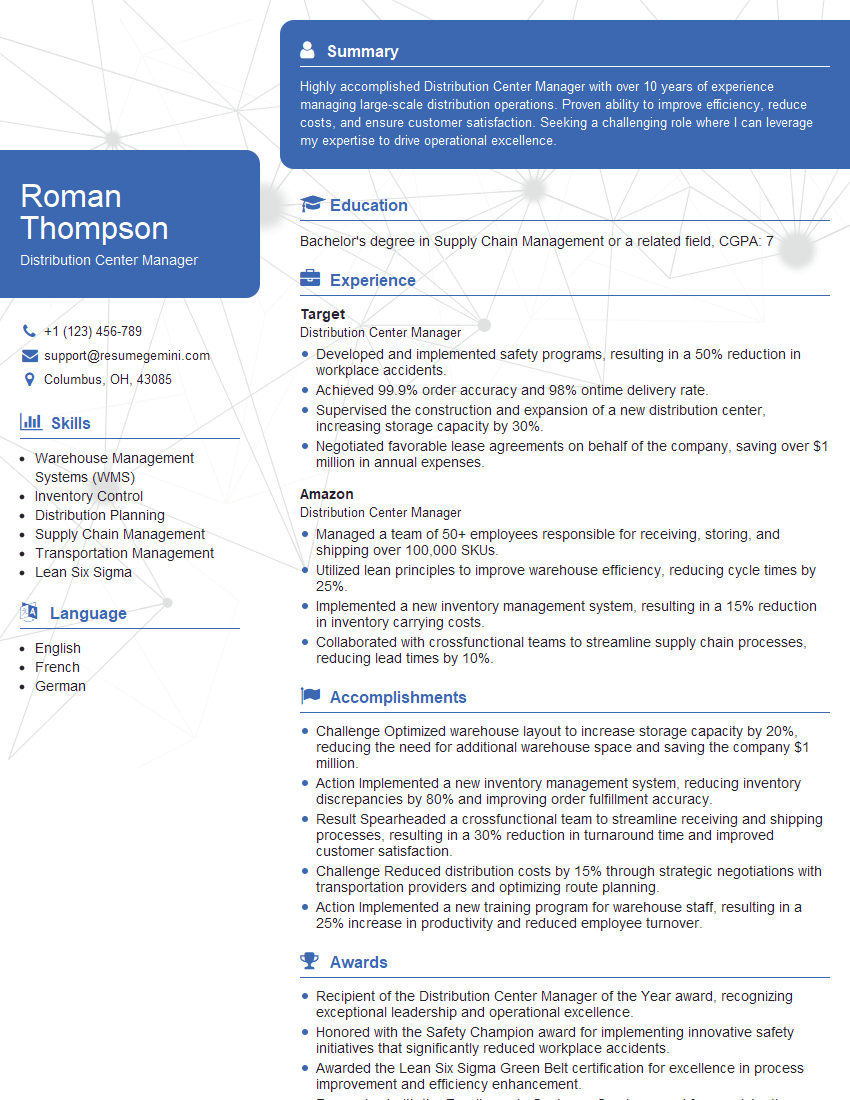
Distribution Center Manager Resume Sample
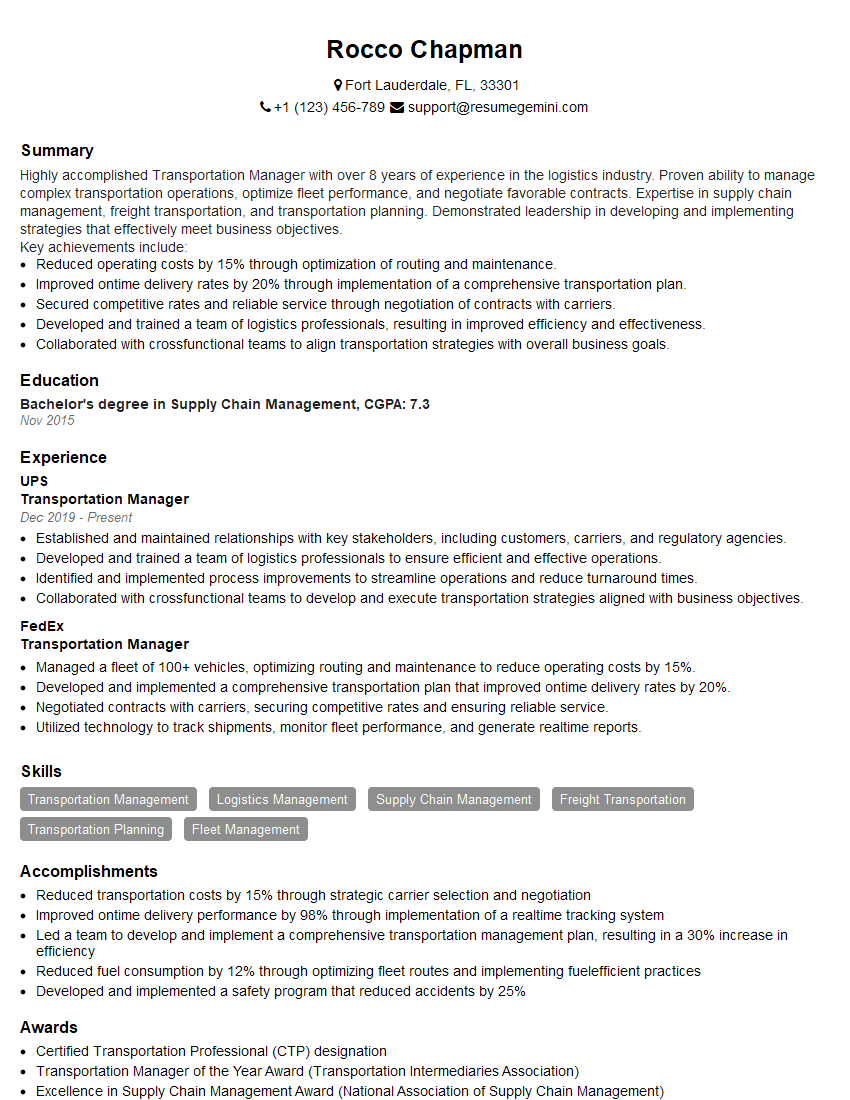
Transportation Manager Resume Sample

Warehouse Manager Resume Sample

Dispatch Manager Resume Sample
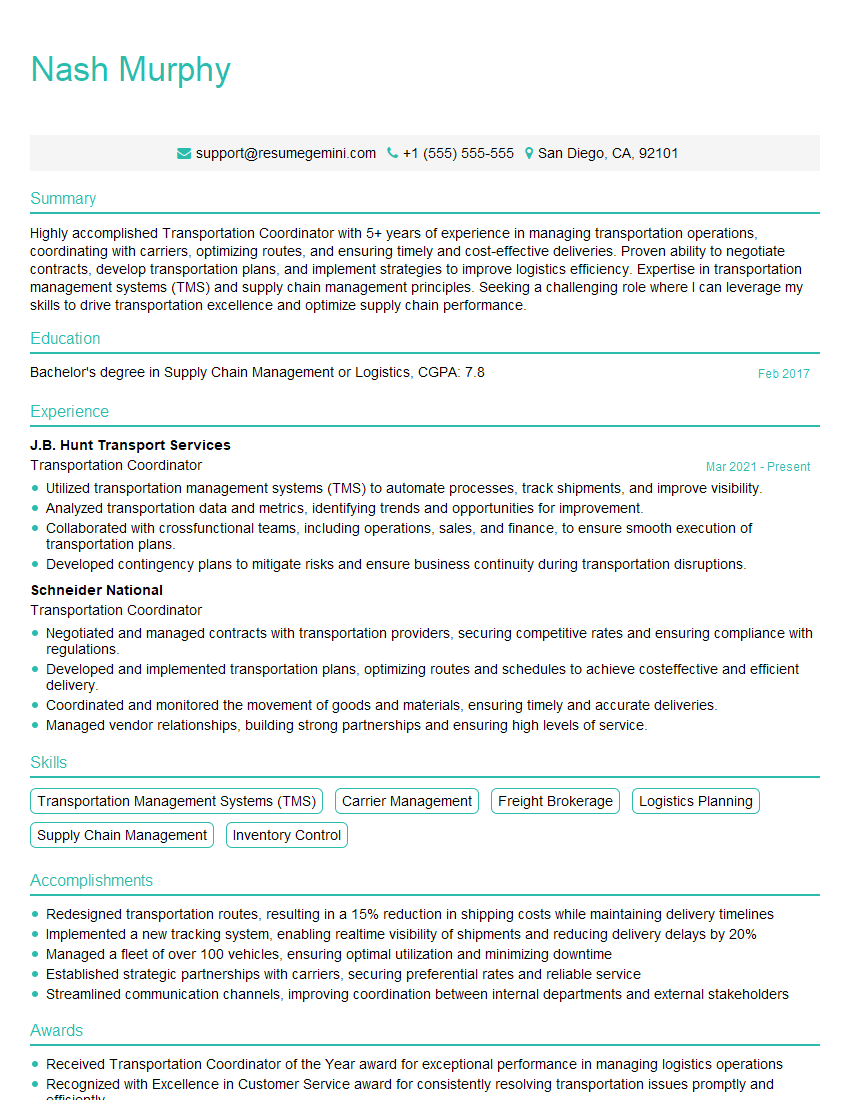
Transportation Coordinator Resume Sample

Distribution Center Supervisor Resume Sample
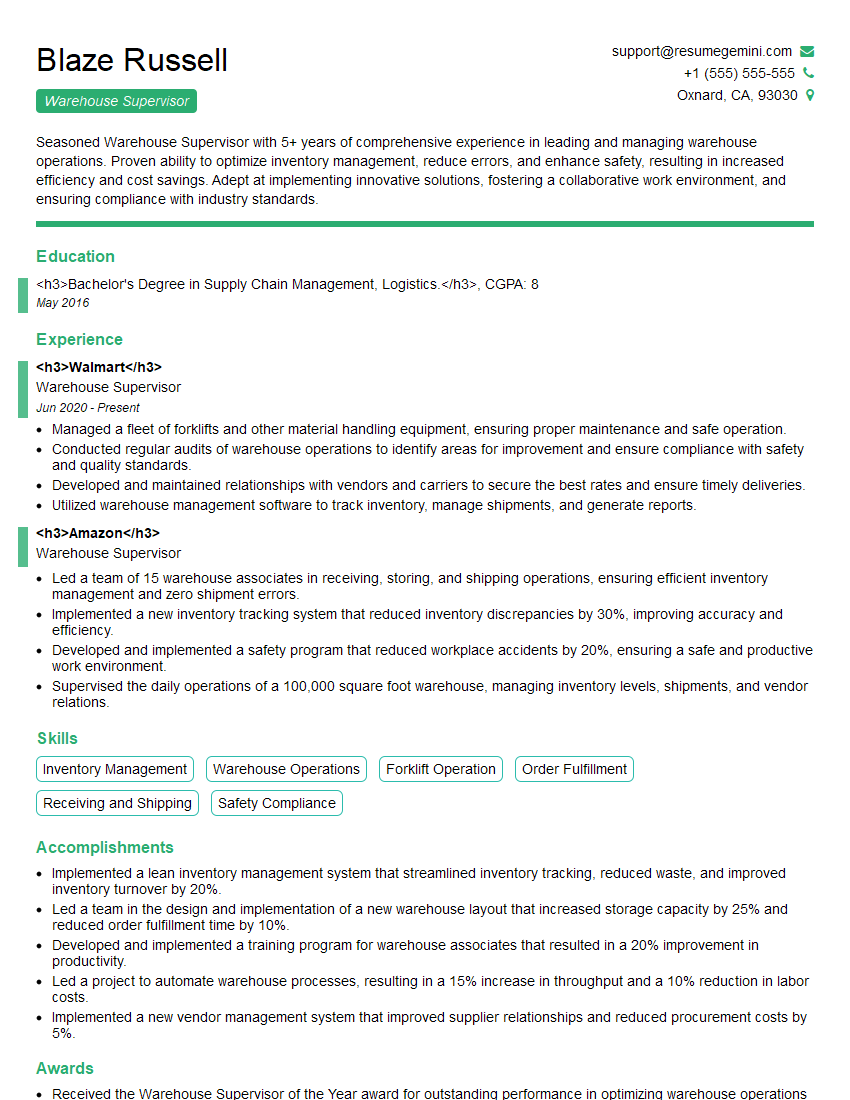
Warehouse Supervisor Resume Sample
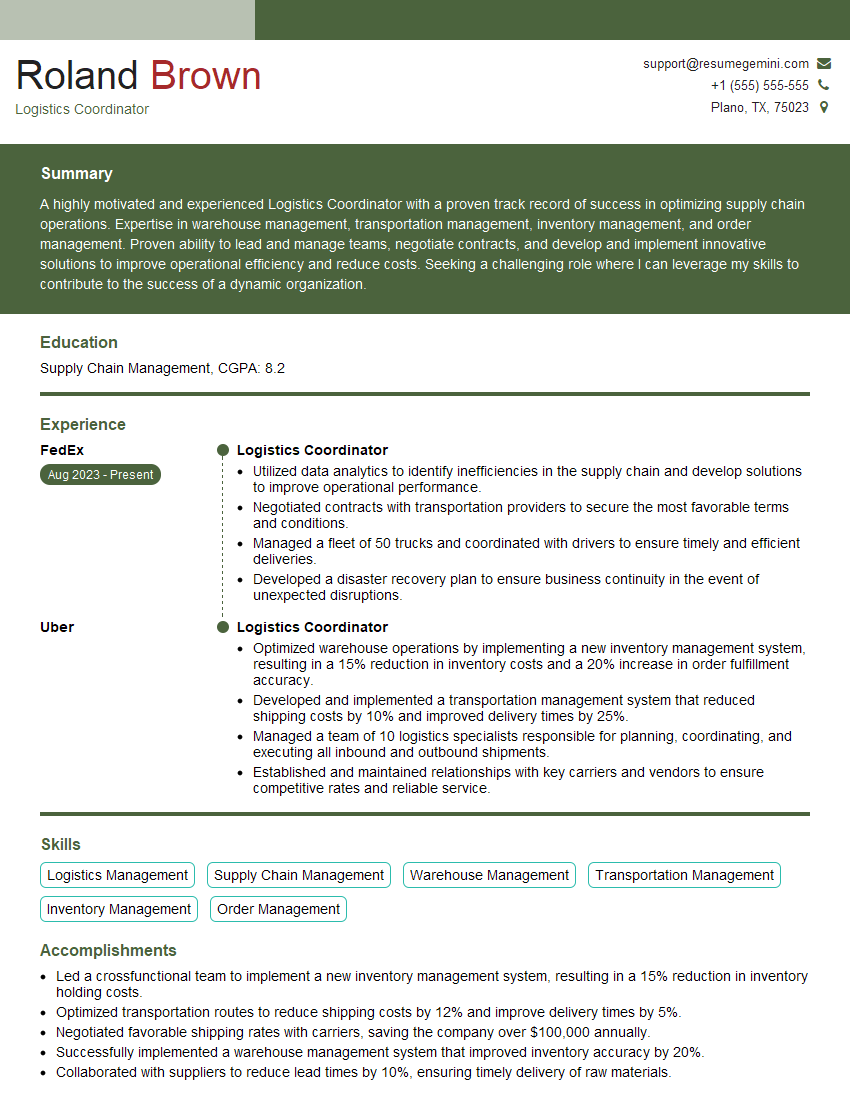
Logistics Coordinator Resume Sample
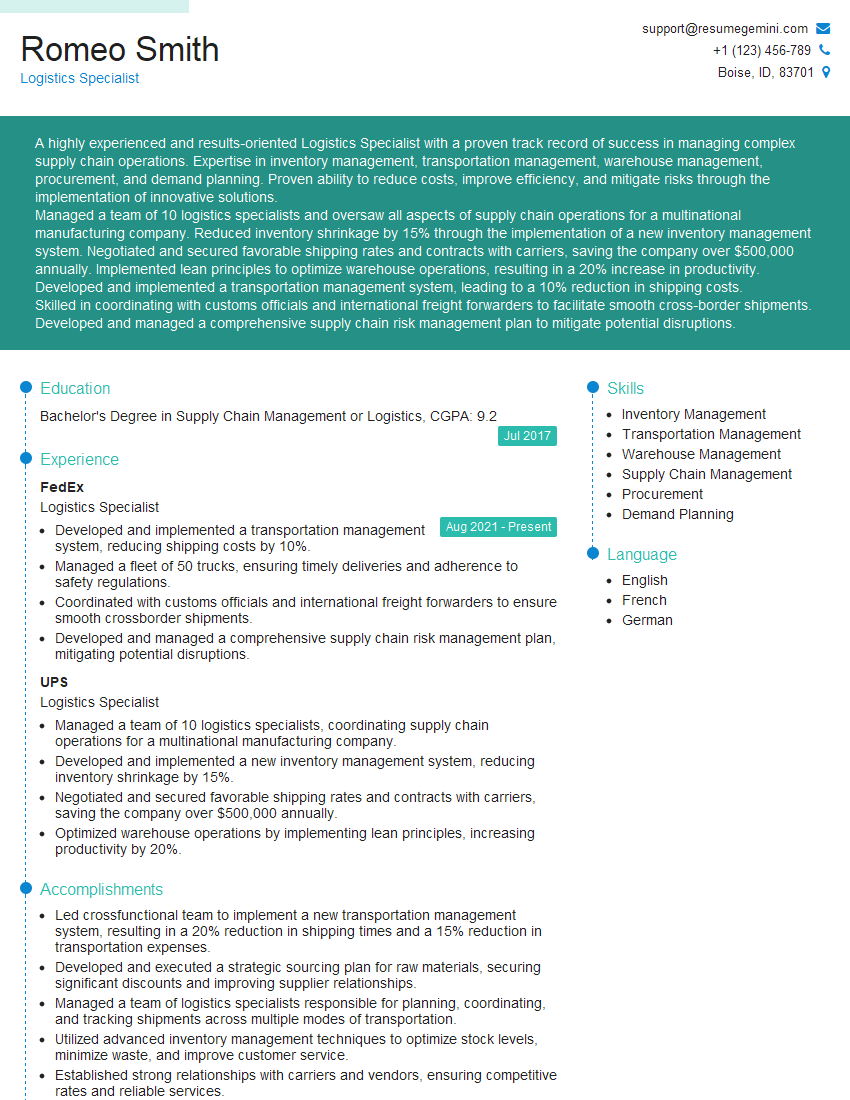
Logistics Specialist Resume Sample
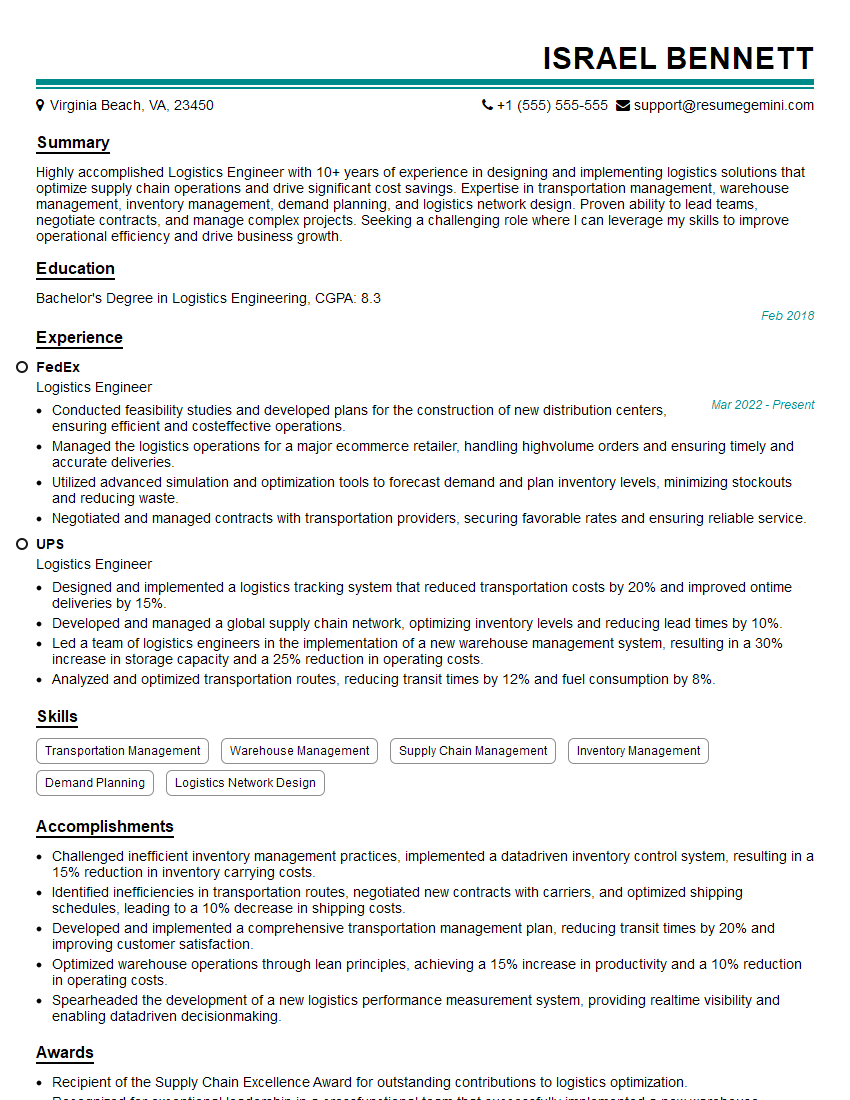
Logistics Engineer Resume Sample
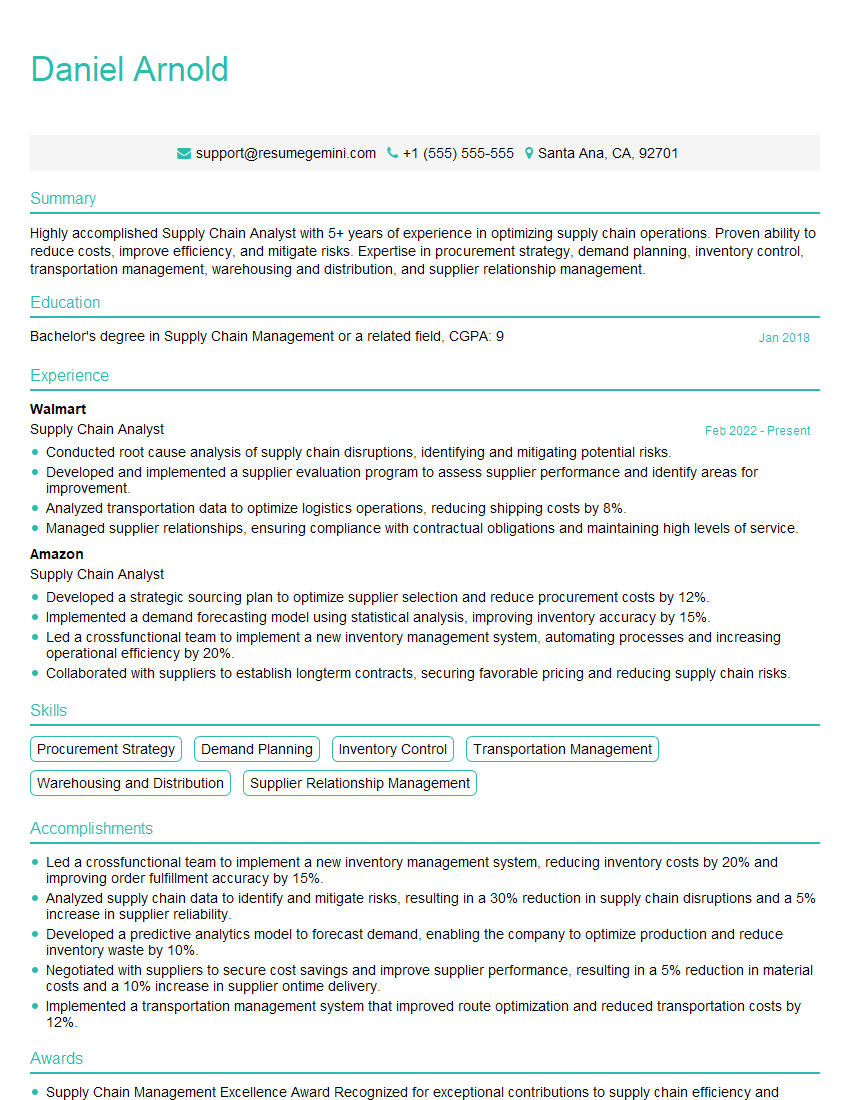
Supply Chain Analyst Resume Sample
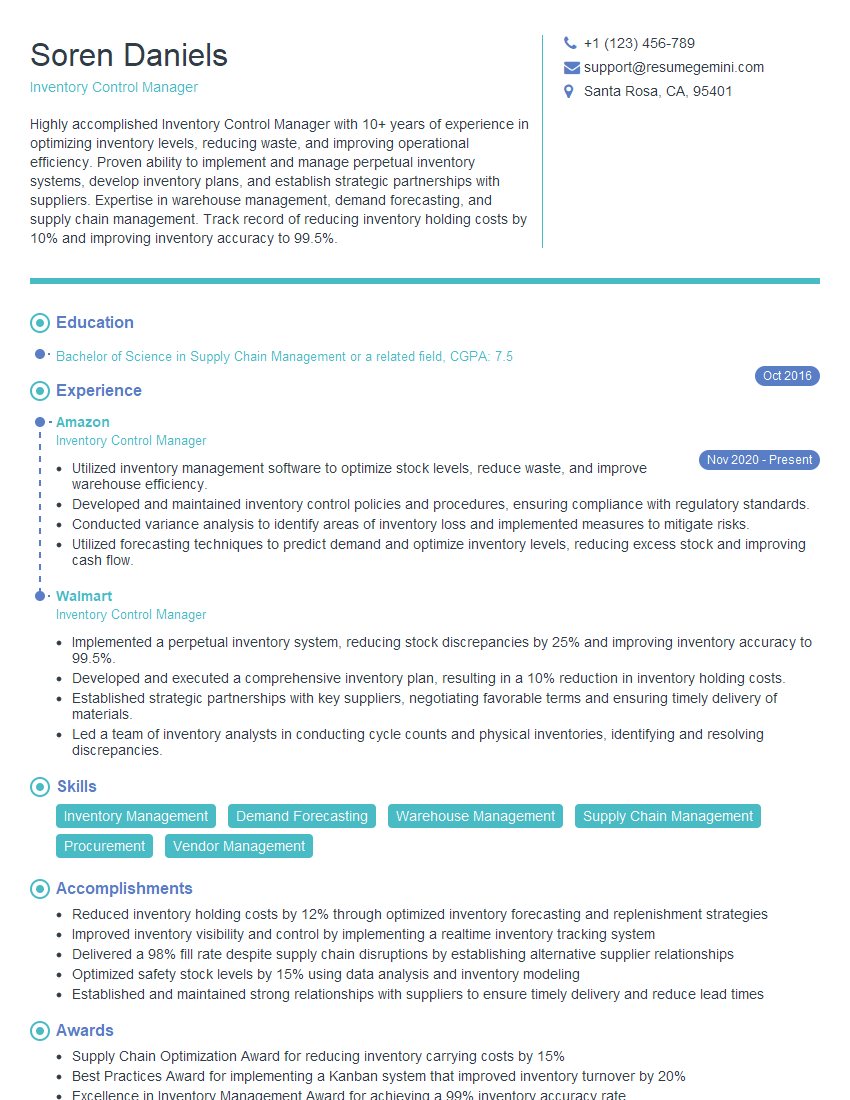
Inventory Control Manager Resume Sample
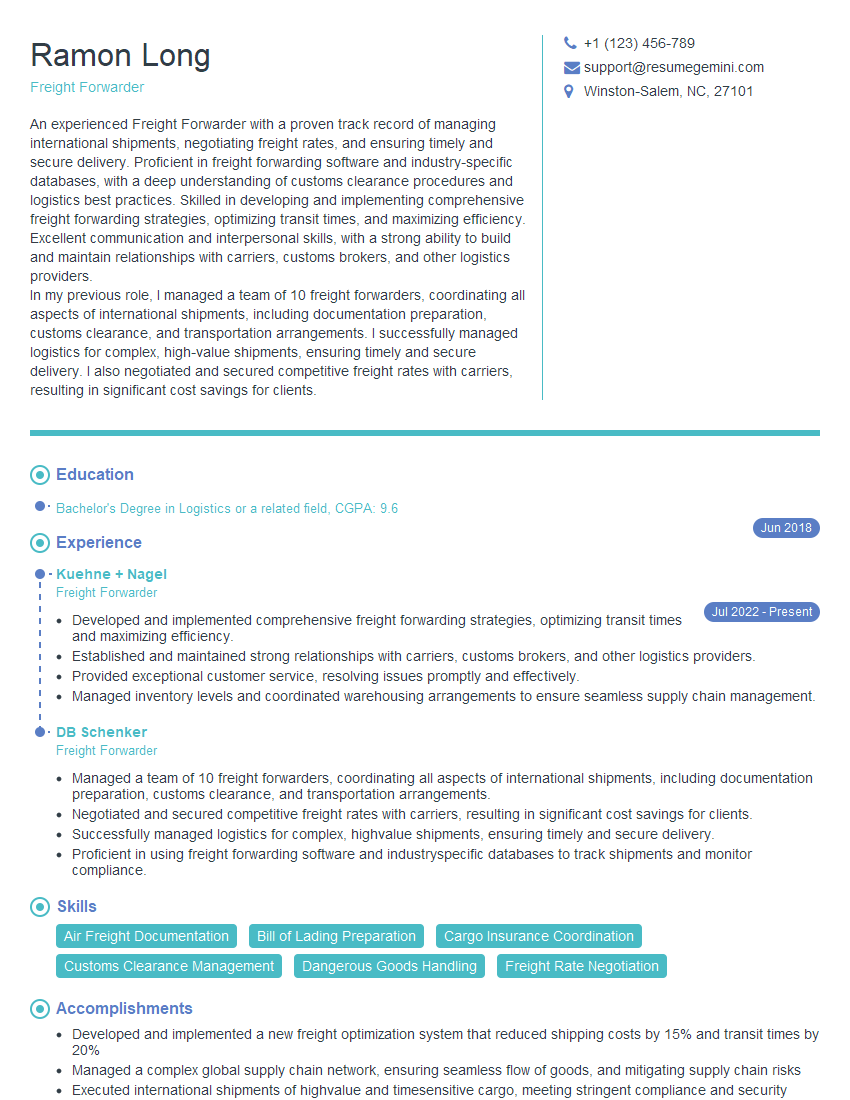
Freight Forwarder Resume Sample
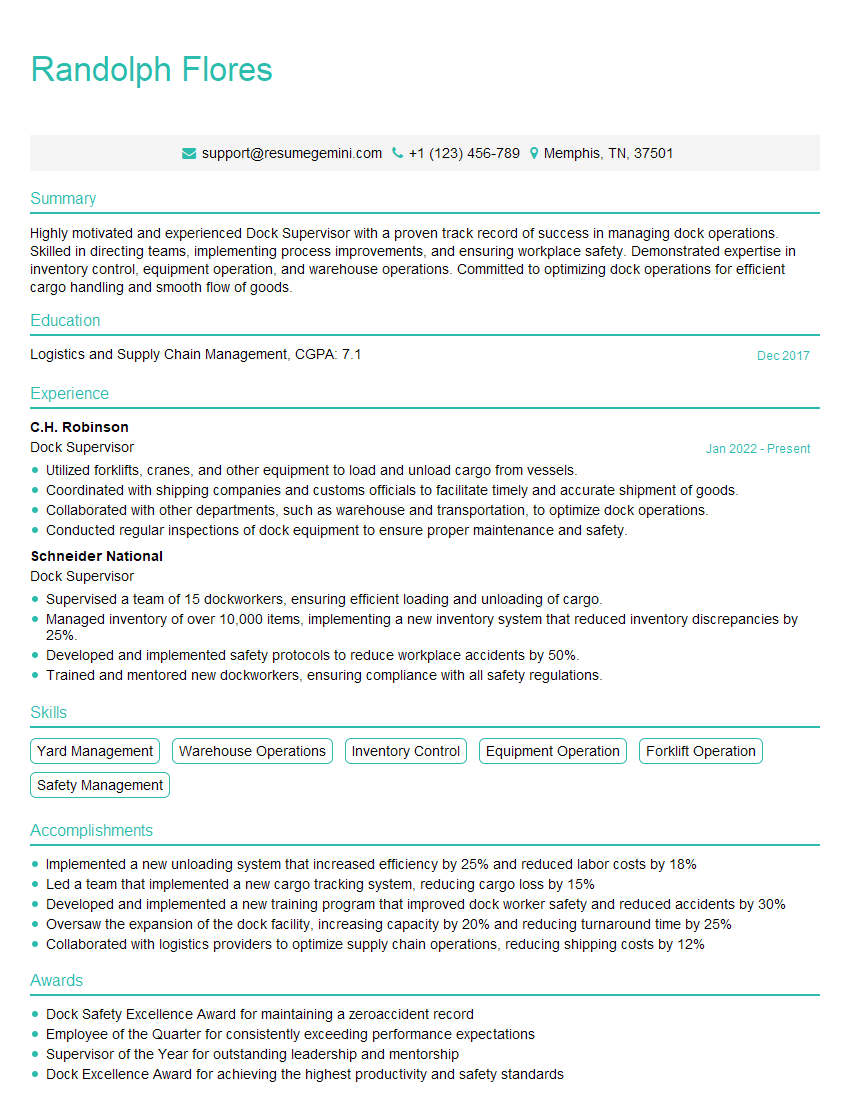
Dock Supervisor Resume Sample
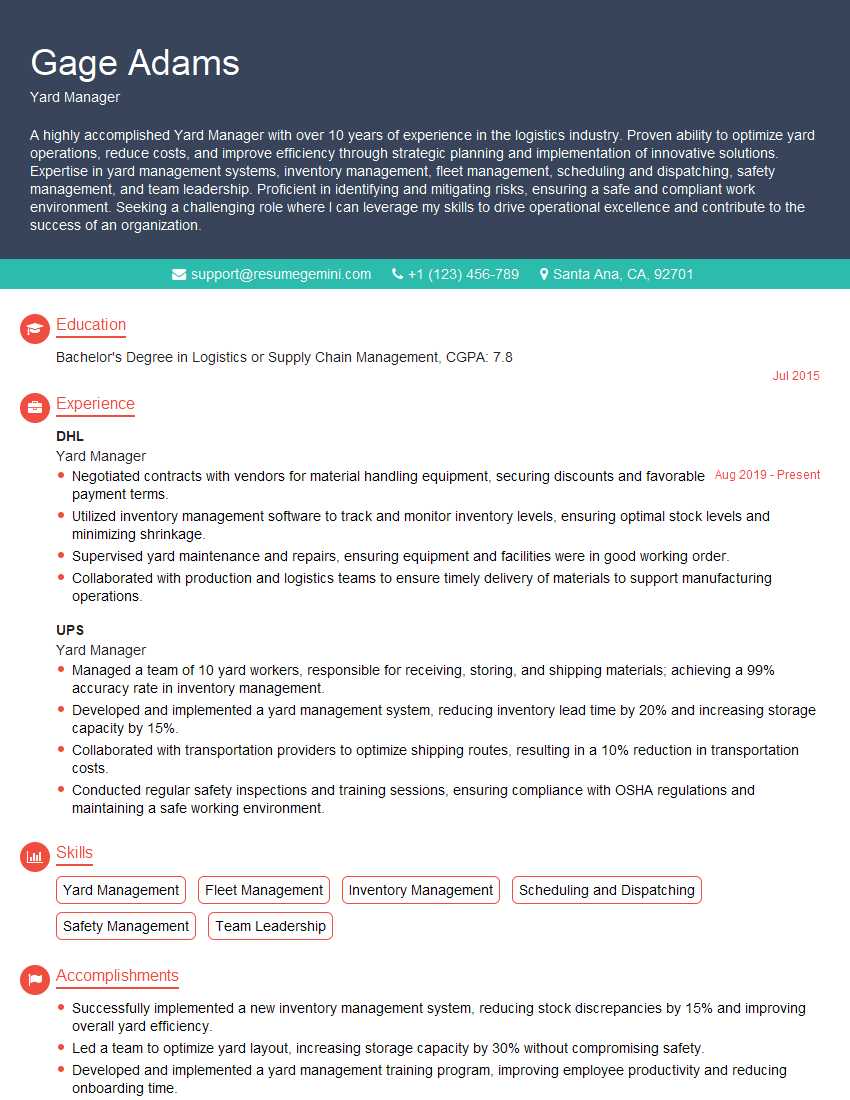
Yard Manager Resume Sample
- Operations Manager
- Distribution Center Manager
- Transportation Manager
- Warehouse Manager
- Dispatch Manager
- Transportation Coordinator
- Distribution Center Supervisor
- Warehouse Supervisor
- Logistics Coordinator
- Logistics Specialist
- Logistics Engineer
- Supply Chain Analyst
- Inventory Control Manager
- Freight Forwarder
- Dock Supervisor
- Yard Manager
Explore more articles
Users Rating of Our Blogs
Share Your Experience
We value your feedback! Please rate our content and share your thoughts (optional).
What Readers Say About Our Blog
Very informative content, great job.
good