Cracking a skill-specific interview, like one for Assisted Reproductive Technologies, requires understanding the nuances of the role. In this blog, we present the questions you’re most likely to encounter, along with insights into how to answer them effectively. Let’s ensure you’re ready to make a strong impression.
Questions Asked in Assisted Reproductive Technologies Interview
Q 1. Describe the process of in-vitro fertilization (IVF).
In-vitro fertilization (IVF) is a complex series of procedures used to help with fertility or prevent genetic problems and assist with the conception of a child. It involves retrieving eggs from the ovaries and fertilizing them with sperm in a laboratory. The fertilized egg (embryo) is then transferred to the uterus.
- Ovarian Stimulation: Medications are administered to stimulate the ovaries to produce multiple mature eggs. This is crucial for increasing the chances of successful fertilization.
- Egg Retrieval: A minor surgical procedure is performed to retrieve the mature eggs from the ovaries using a needle guided by ultrasound.
- Fertilization: The retrieved eggs are mixed with sperm in a laboratory dish, allowing fertilization to occur naturally.
- Embryo Culture: Fertilized eggs are cultured in a specialized incubator for several days, allowing them to develop into embryos.
- Embryo Transfer: One or more embryos are carefully transferred into the uterus using a thin catheter.
- Pregnancy Test: A pregnancy test is conducted approximately two weeks after the embryo transfer to determine if the procedure was successful.
Imagine it like this: instead of fertilization happening naturally inside the fallopian tubes, we meticulously recreate the process in a controlled environment, significantly improving the odds of a successful pregnancy for couples struggling with infertility.
Q 2. Explain the different types of assisted hatching techniques.
Assisted hatching techniques aim to help embryos implant into the uterine lining by weakening or creating an opening in the zona pellucida, the outer shell of the embryo. The goal is to facilitate hatching, the natural process where the embryo escapes the zona pellucida to implant. Different techniques exist:
- Mechanical Assisted Hatching: This involves using a laser or a specialized instrument to create a small opening in the zona pellucida. It’s like carefully creating a small door for the embryo to exit.
- Chemical Assisted Hatching: This method uses a solution (e.g., Tyrode’s solution) to weaken the zona pellucida, making hatching easier. This is more of a softening process, rather than creating a direct opening.
- Laser Assisted Hatching: This technique utilizes a laser to create a precise opening in the zona pellucida. It offers greater precision compared to mechanical methods.
The choice of technique depends on factors like the embryo’s quality and the patient’s history. It’s important to remember that assisted hatching is not universally recommended and its effectiveness remains a subject of ongoing research.
Q 3. What are the common causes of male infertility?
Male infertility, the inability to conceive a child, can stem from various factors, broadly categorized as:
- Pre-testicular causes: Problems with the hypothalamus or pituitary gland affecting hormone production (e.g., low testosterone).
- Testicular causes: Issues within the testicles themselves, impacting sperm production. This includes conditions like varicocele (enlarged veins in the scrotum), cryptorchidism (undescended testicles), infections, genetic disorders (e.g., Klinefelter syndrome), or exposure to toxins or radiation.
- Post-testicular causes: Problems with the transport of sperm from the testicles to the urethra (e.g., blockage of the vas deferens due to previous infection or injury).
- Idiopathic infertility: In some cases, the cause of male infertility remains unexplained despite thorough investigation.
Think of it like a complex assembly line: each stage, from hormone production to sperm delivery, needs to function correctly for successful reproduction. A problem at any point can disrupt the process.
Q 4. What are the different methods for sperm retrieval?
Sperm retrieval methods are crucial for couples facing male infertility where sperm is not readily available in semen. Several methods exist, each tailored to specific situations:
- Ejaculated semen analysis: This is the most common method, involving analyzing a semen sample to assess sperm count, motility, and morphology.
- Percutaneous Epididymal Sperm Aspiration (PESA): A needle is inserted into the epididymis (a coiled tube located on the back of the testicle) to extract sperm. It’s used when there’s a blockage in the vas deferens.
- Testicular Sperm Aspiration (TESA): A needle is used to directly extract sperm from the testicles. This is often used when sperm cannot be retrieved from the epididymis.
- Testicular Sperm Extraction (TESE): A small surgical incision is made in the testicle to obtain sperm tissue, often used when TESA is unsuccessful. This is a more invasive approach.
The choice of method depends on the underlying cause of infertility and the location of viable sperm within the reproductive tract.
Q 5. Describe the process of intracytoplasmic sperm injection (ICSI).
Intracytoplasmic sperm injection (ICSI) is a specialized IVF procedure where a single sperm is directly injected into a mature egg using a microscopic needle. This technique is particularly helpful when:
- The male partner has severe oligospermia (low sperm count) or other sperm abnormalities making natural fertilization unlikely.
- Previous IVF cycles have failed due to fertilization issues.
- Sperm retrieval techniques (like TESA or PESA) are used to obtain sperm.
Imagine it as a highly precise ‘microscopic surgery,’ bypassing the challenges of natural fertilization by directly delivering the sperm to the egg. ICSI significantly improves the chances of fertilization for couples dealing with severe male factor infertility.
Q 6. What are the indications for preimplantation genetic testing (PGT)?
Preimplantation genetic testing (PGT) involves analyzing the genetic makeup of embryos created through IVF before they are transferred to the uterus. This helps identify embryos with chromosomal abnormalities or specific genetic mutations that could cause diseases. Indications for PGT include:
- Advanced maternal age: The risk of chromosomal abnormalities in embryos increases with maternal age.
- Recurrent miscarriage: PGT can help identify embryos with chromosomal abnormalities that may be causing repeated pregnancy losses.
- Previous child with a chromosomal abnormality: PGT can help reduce the risk of having another child with the same condition.
- Carrier status for a genetic disorder: PGT can help screen for specific genetic diseases that both parents carry.
It’s a proactive approach to improve pregnancy success rates and reduce the risk of having a child with a genetic disorder. Think of it as a quality control check on the embryos before implantation.
Q 7. Explain the different types of PGT.
PGT is categorized into different types based on what’s being screened for:
- PGT-A (Aneuploidy): This tests for the correct number of chromosomes in the embryo. Chromosomal abnormalities (aneuploidy) are a leading cause of implantation failure and miscarriage.
- PGT-M (Monogenic): This tests for specific gene mutations associated with inherited diseases. This is used when parents are carriers of a known genetic disorder.
- PGT-SR (Structural Rearrangements): This tests for chromosomal structural abnormalities, such as translocations or inversions, which can increase the risk of having a child with a chromosomal imbalance.
The specific PGT technique used depends on the clinical indication and the family’s genetic history. It’s vital to have a comprehensive genetic counseling session to discuss the benefits and limitations of each approach.
Q 8. What are the ethical considerations surrounding ART?
Ethical considerations in Assisted Reproductive Technologies (ART) are multifaceted and constantly evolving. They revolve around several key areas:
- Embryo selection and disposal: Decisions about which embryos to implant and what to do with surplus embryos raise complex questions about the moral status of the embryo. Options include cryopreservation (freezing), donation for research, or discarding. These choices often involve balancing the couple’s desire for a child with concerns about the potential life of unused embryos.
- Multiple births: ART often leads to higher-order multiple pregnancies (twins, triplets, etc.), which pose significant risks to both the mother and the babies. Ethical dilemmas arise in balancing the desire for a successful pregnancy with the need to minimize risks associated with multiple gestations. Selective reduction (reducing the number of embryos) is a procedure with its own ethical implications.
- Genetic screening and selection: Preimplantation genetic testing (PGT) allows for the screening of embryos for genetic abnormalities before implantation. While this can prevent serious diseases, it raises ethical concerns about genetic selection and the potential for ‘designer babies’.
- Access and equity: The high cost of ART creates significant disparities in access, raising concerns about social justice and fairness. This affects individuals and couples who may not be able to afford these expensive procedures, hindering their reproductive rights.
- Third-party reproduction: The use of donor gametes (eggs or sperm) or gestational surrogacy involves multiple individuals and raises complex questions about parental rights, responsibilities, and genetic connections.
- Informed consent: Ensuring that patients fully understand the risks, benefits, and limitations of ART procedures is crucial for ethical practice. This requires clear and open communication between the healthcare team and the patients.
Addressing these ethical dilemmas requires ongoing dialogue among healthcare professionals, ethicists, policymakers, and patients to establish guidelines that balance reproductive rights with ethical considerations.
Q 9. How is embryo quality assessed?
Embryo quality assessment is crucial for successful IVF. It involves a combination of morphological (visual) evaluation and, increasingly, advanced techniques. Morphological assessment examines characteristics such as:
- Number of cells: A higher cell number generally (but not always) indicates better quality.
- Fragmentation: The presence of fragmented cells indicates cellular damage. Lower fragmentation is preferred.
- Symmetry: Uniformly sized blastomeres (cells) suggest better developmental potential.
- Appearance of cytoplasm: The cytoplasm should be clear and even, not granular or dark.
Beyond morphology, more advanced techniques are used to assess embryo quality:
- Time-lapse imaging: This captures images of embryos over time, providing detailed information about their developmental kinetics. This allows for a more comprehensive evaluation of developmental patterns and identification of embryos with potentially better developmental potential.
- Preimplantation genetic testing (PGT): PGT analyzes the genetic makeup of embryos, identifying chromosomal abnormalities or specific gene mutations. This helps select embryos free from known genetic disorders, improving the chance of a healthy pregnancy.
- Embryo metabolism analysis: Measuring the metabolic activity of embryos can provide insights into their health and viability.
The combination of these methods helps embryologists select the embryos with the highest likelihood of implantation and resulting in a healthy pregnancy. However, it’s important to remember that even the best assessment is not a guarantee of success.
Q 10. What are the risks and complications associated with IVF?
In-vitro fertilization (IVF) is a powerful tool, but carries several risks and potential complications:
- Ovarian Hyperstimulation Syndrome (OHSS): This is a potentially serious complication of ovarian stimulation, causing enlarged ovaries and fluid accumulation. Mild cases can be managed with rest and monitoring, while severe cases may require hospitalization.
- Multiple pregnancies: IVF frequently leads to multiple pregnancies, increasing risks to both mother and babies.
- Ectopic pregnancy: This occurs when the fertilized egg implants outside the uterus, usually in the fallopian tube. Ectopic pregnancies require immediate medical attention.
- Miscarriage: The risk of miscarriage is higher in IVF compared to natural conception.
- Infection: Infection can occur at the site of egg retrieval or embryo transfer.
- Birth defects: Although the rate is similar to natural conception, a slightly increased risk of birth defects is observed in some studies.
- Emotional stress: The IVF process is emotionally and physically demanding, which can lead to stress and anxiety for both partners.
- Side effects from medication: Hormonal medications used during ovarian stimulation can cause side effects such as bloating, mood swings, and headaches.
It is crucial for potential IVF candidates to discuss these risks with their physician and weigh the potential benefits against the risks before proceeding. Careful monitoring throughout the process helps minimize complications.
Q 11. Describe the role of a clinical embryologist in an IVF cycle.
The clinical embryologist plays a pivotal role in the success of an IVF cycle. Their expertise is essential in several key aspects:
- Oocyte retrieval and preparation: The embryologist receives the retrieved eggs and prepares them for fertilization.
- Sperm preparation: Sperm processing involves selecting motile sperm for fertilization, enhancing their capacity for fertilization.
- Fertilization: The embryologist performs the fertilization procedure, either through conventional insemination or intracytoplasmic sperm injection (ICSI).
- Embryo culture: The embryologist maintains optimal culture conditions in the laboratory to support embryo growth and development. This includes controlling temperature, media composition, and gas levels.
- Embryo assessment and selection: The embryologist evaluates the morphology of embryos and uses other techniques such as time-lapse imaging and PGT to identify embryos with the highest potential for implantation.
- Cryopreservation: Embryologists are responsible for the freezing and thawing of embryos for future use.
- Quality control: Maintaining the highest standards of laboratory techniques, protocols and equipment is crucial for optimal embryo development and pregnancy rates.
In essence, the embryologist acts as a vital link between the reproductive endocrinologist and a successful outcome, ensuring the highest possible chances of pregnancy.
Q 12. What are the different types of ovarian stimulation protocols?
Several ovarian stimulation protocols are used in IVF, each tailored to individual patient needs and characteristics. The choice depends on factors such as age, ovarian reserve, and previous IVF attempts. Here are some common types:
- Long protocol: This protocol uses a GnRH agonist (a medication that suppresses the natural production of hormones) for several weeks before starting FSH (follicle-stimulating hormone) injections to stimulate follicle growth. This protocol is often chosen for patients with a higher risk of premature ovulation.
- Short protocol: This uses a GnRH antagonist (another hormone regulator) to prevent premature ovulation while stimulating follicle growth with FSH. It’s shorter than the long protocol and suitable for younger patients with better ovarian reserve.
- Antral follicle count (AFC) based protocols: This approach adjusts the dosage of FSH based on the number of antral follicles (small fluid-filled follicles) in the ovaries at the start of stimulation. This is personalized to the woman’s individual ovarian reserve.
- Microdose flare protocol: This involves a low dose of GnRH agonist followed by FSH stimulation. It is particularly beneficial for poor responders and reduces the risk of OHSS.
- Mild stimulation protocols: These protocols use lower doses of FSH to minimize ovarian stimulation and the risk of OHSS. This might be helpful for patients with a poor response to high doses.
The optimal protocol for a given patient is determined through a careful evaluation of her individual characteristics and previous treatment history.
Q 13. How is ovulation triggered in an IVF cycle?
Ovulation triggering in an IVF cycle is crucial for ensuring that the eggs are mature and ready for retrieval. This is achieved using human chorionic gonadotropin (hCG), a hormone that mimics the natural luteinizing hormone (LH) surge which triggers ovulation.
The hCG injection is given when the follicles (fluid-filled sacs containing eggs) have reached the desired size and maturity. This usually occurs about 34-36 hours before egg retrieval. The hCG injection initiates the final maturation of the eggs, preparing them for retrieval. The timing is critical; an early or late administration can negatively impact egg quality and retrieval.
The precise timing of hCG administration is determined using ultrasound monitoring of follicle growth and measurements of estrogen levels in the blood. The physician carefully monitors follicle development to ensure optimal egg maturation before administering hCG. Successful triggering of ovulation ensures that eggs are retrieved at the optimal stage of maturity.
Q 14. Explain the process of egg retrieval.
Egg retrieval is a minor surgical procedure performed under ultrasound guidance or with sedation/anesthesia. It involves the aspiration of eggs from the ovaries using a needle guided by ultrasound. Here’s a step-by-step overview:
- Preparation: The patient undergoes monitoring before the procedure, including an ultrasound examination to identify the location and number of follicles.
- Sedation/Anesthesia: The procedure is usually performed under mild sedation or anesthesia to ensure patient comfort.
- Ultrasound Guidance: A transvaginal ultrasound probe guides the needle into the follicles.
- Aspiration: A thin needle is inserted through the vaginal wall into each follicle, and the follicular fluid containing the eggs is gently aspirated.
- Recovery: After the procedure, the patient typically rests for a short period before being discharged.
The retrieved fluid is then sent to the embryology laboratory, where the eggs are carefully identified and prepared for fertilization. The process is relatively quick and most women experience minimal discomfort. However, potential complications such as bleeding or infection can occur.
Q 15. How are embryos cultured in the laboratory?
Embryo culture in the laboratory mimics the natural environment of the fallopian tubes and uterus to support embryo development. It involves carefully controlling several key factors.
- Media: Embryos are cultured in specialized media, a nutrient-rich solution that provides essential vitamins, minerals, and growth factors. The composition of this media can vary based on the stage of development.
- Incubation: Incubators maintain a stable temperature (typically around 37°C), humidity, and atmosphere (typically 5-7% CO2) that are crucial for optimal growth. Time-lapse imaging systems are increasingly used to monitor embryo development without frequent handling.
- Timing: The timing of media changes is critical. Embryos are typically cultured until they reach the blastocyst stage (around day 5-6 post-fertilization), at which point they may be transferred or cryopreserved.
- Monitoring: Embryologists meticulously monitor the embryos’ development under a microscope, assessing factors such as cleavage rate, morphology (shape and structure), and the formation of the blastocyst. This helps identify the embryos with the highest potential for implantation.
Think of it like tending a delicate garden – you need the right soil (media), sunlight (incubation), and watering schedule (media changes) to nurture the seeds (embryos) to maturity.
Career Expert Tips:
- Ace those interviews! Prepare effectively by reviewing the Top 50 Most Common Interview Questions on ResumeGemini.
- Navigate your job search with confidence! Explore a wide range of Career Tips on ResumeGemini. Learn about common challenges and recommendations to overcome them.
- Craft the perfect resume! Master the Art of Resume Writing with ResumeGemini’s guide. Showcase your unique qualifications and achievements effectively.
- Don’t miss out on holiday savings! Build your dream resume with ResumeGemini’s ATS optimized templates.
Q 16. What are the criteria for embryo selection for transfer?
Embryo selection for transfer is a crucial step in IVF, aiming to maximize the chances of a successful pregnancy while minimizing the risk of multiple pregnancies. Several factors are considered:
- Morphology: This involves evaluating the embryo’s physical characteristics, such as the number of cells, symmetry, fragmentation (presence of cellular debris), and the presence of a blastocyst cavity (for blastocysts). High-quality embryos typically exhibit symmetrical cell division, minimal fragmentation, and a clearly defined inner cell mass and trophectoderm (the two key cell populations in a blastocyst).
- Developmental Kinetics: Time-lapse imaging provides detailed information about the embryo’s cleavage speed and timing, which are also predictive of implantation potential. Some embryos may exhibit irregular cleavage patterns, indicating potential developmental problems.
- Blastocyst Grading: For blastocysts, a comprehensive grading system evaluates both the inner cell mass (ICM) and the trophectoderm (TE), each graded on a scale. A high-quality blastocyst would have a high grade for both the ICM and TE.
- Genetic Testing (PGT): Preimplantation genetic testing can be used to screen embryos for chromosomal abnormalities or specific genetic conditions, further improving the chances of selecting a healthy embryo for transfer.
Selecting the ‘best’ embryo is a nuanced process requiring expertise and careful consideration of several parameters. It’s not about picking the biggest or the one with the most cells, but about identifying the embryo with the highest likelihood of successful implantation and healthy development.
Q 17. What are the different methods for cryopreservation of embryos and gametes?
Cryopreservation, or freezing, is a vital technique in ART, allowing for the storage of embryos and gametes (eggs and sperm) for later use. The two main methods are:
- Slow-freezing (conventional freezing): This method involves a gradual reduction in temperature, typically using controlled-rate freezers. The embryos or gametes are exposed to a cryoprotective agent (CPA) to prevent ice crystal formation, which could damage the cells. This method is more widely available but may have slightly lower success rates compared to vitrification.
- Vitrification (rapid freezing): Vitrification uses extremely rapid cooling rates to transform the cells into a glass-like state, essentially avoiding ice crystal formation altogether. This often leads to higher survival rates compared to slow-freezing. It requires specialized equipment and procedures.
Choosing the best method depends on several factors, including the type of cells being frozen (embryos, eggs, or sperm), the available equipment, and the experience of the laboratory personnel. Vitrification has become increasingly popular in recent years due to its higher success rates.
Q 18. Describe the process of embryo transfer.
Embryo transfer is a relatively simple, minimally invasive procedure performed under ultrasound guidance. It involves transferring embryos into the woman’s uterus, where they can implant and potentially lead to pregnancy. Here’s a step-by-step overview:
- Preparation: The patient undergoes a brief examination to confirm uterine position and size.
- Catheter Insertion: A thin, flexible catheter (a small tube) is carefully inserted through the cervix and into the uterine cavity.
- Embryo Transfer: The selected embryos are loaded into the catheter and gently deposited into the uterus. The exact location of placement within the uterine cavity might depend on the embryologist’s recommendation.
- Post-Transfer Care: The procedure is generally completed within minutes, after which the patient can usually rest for a short period before resuming normal activities. Bed rest is generally not required after embryo transfer.
The entire process is designed to be comfortable and as minimally invasive as possible. Success depends on several factors, including the quality of the embryos and the receptivity of the uterine lining.
Q 19. What are the common complications following embryo transfer?
While generally safe, embryo transfer can have some potential complications, though they are infrequent:
- Ovarian Hyperstimulation Syndrome (OHSS): This is a more serious complication that arises from ovarian stimulation during IVF. Symptoms can range from mild discomfort to severe abdominal pain and fluid accumulation.
- Infection: Although rare, there’s a small risk of infection at the site of catheter insertion.
- Multiple Gestation: Transferring multiple embryos increases the chance of multiple pregnancies (twins, triplets, etc.), which carry increased risks for both mother and babies.
- Ectopic Pregnancy: In rare cases, the embryo may implant outside the uterus (e.g., in the fallopian tube), resulting in an ectopic pregnancy, which requires immediate medical attention.
- Miscarriage: Even with a successful transfer, there’s a chance of miscarriage, unfortunately. Support for patients who experience miscarriage is crucial.
The risks associated with embryo transfer are managed through careful monitoring and patient selection. Open communication between the patient and the medical team is crucial to address any concerns or complications.
Q 20. How is pregnancy confirmed after an IVF cycle?
Pregnancy confirmation following an IVF cycle typically involves two steps:
- Serum Beta-hCG Test: About 10-14 days after embryo transfer, a blood test is performed to measure the level of beta-human chorionic gonadotropin (β-hCG) in the patient’s blood. β-hCG is a hormone produced by the developing placenta. Elevated levels indicate a likely pregnancy. Serial β-hCG testing may be performed to assess the pregnancy’s progression.
- Ultrasound Scan: Once a positive β-hCG test is obtained, an ultrasound scan is usually performed to confirm the presence of a gestational sac (the fluid-filled sac surrounding the embryo) within the uterus. This visually confirms the pregnancy and assesses the number of fetuses if multiple embryos were transferred.
A positive β-hCG test followed by a confirmation ultrasound provides the strongest evidence for a successful pregnancy after an IVF cycle.
Q 21. What are the legal and regulatory aspects of ART?
The legal and regulatory aspects of ART are complex and vary significantly between countries and even within regions of a single country. Key areas include:
- Access and Eligibility: Many countries have regulations regarding who can access ART, often considering factors such as age, marital status, and medical indications for infertility. Some have waiting periods or require counseling.
- Embryo Storage and Disposition: Regulations typically address the duration of embryo storage, the rights of the couple regarding embryo disposal, and the possibilities of embryo donation or research.
- Preimplantation Genetic Testing (PGT): There are often regulations governing the use of PGT, particularly with regard to the types of genetic conditions that can be tested for, and ethical considerations surrounding embryo selection.
- Surrogacy: Legal frameworks for surrogacy vary widely. Some countries have complete bans, while others have regulated commercial or altruistic surrogacy.
- Informed Consent: Patients must provide informed consent before undergoing any ART procedure, fully understanding the risks, benefits, and alternatives. This requires clear and comprehensive communication from healthcare providers.
It’s crucial for ART professionals to be aware of and compliant with all applicable regulations to ensure ethical and legal practice. The legal landscape is constantly evolving, so staying updated is essential.
Q 22. Describe your experience with managing a reproductive endocrinology lab.
My experience managing a reproductive endocrinology lab spans over ten years, encompassing all aspects from daily operations to strategic planning. I’ve overseen teams of embryologists, andrologists, and laboratory technicians, ensuring adherence to strict quality control protocols and regulatory guidelines. This includes managing inventory, budgeting, equipment maintenance, and staff training. For example, I successfully implemented a new laboratory information management system (LIMS) which streamlined workflow, reduced errors, and improved data analysis. Another significant achievement was leading the accreditation process for our lab, resulting in successful certification by a leading accreditation body, demonstrating our commitment to quality.
My leadership style emphasizes collaboration and continuous improvement. I foster a supportive and positive work environment where team members feel empowered to contribute their expertise and problem-solve collaboratively. We regularly conduct internal audits and performance reviews to identify areas for enhancement and implement corrective actions proactively.
Q 23. How do you ensure quality control in an ART laboratory?
Quality control in an ART laboratory is paramount, as it directly impacts patient outcomes. Our lab utilizes a multi-layered approach to ensure accuracy and reliability. This starts with rigorous staff training and competency assessments, validated by proficiency testing programs. We implement stringent quality control checks at each stage of the process, from semen analysis and oocyte retrieval to embryo culture and cryopreservation. This involves using calibrated equipment, employing validated procedures, and maintaining meticulous records.
For example, we conduct daily checks on incubators, microscopes, and other critical equipment to ensure optimal performance. We utilize positive and negative controls in all assays to monitor the validity of our tests. Our embryologists regularly participate in proficiency testing programs to validate their skills. Any deviations from established protocols or unexpected results trigger immediate investigations and corrective actions, which are thoroughly documented. Data is regularly analyzed to identify trends and improve our processes continuously. Think of it like building a house – each brick (test, procedure, equipment) needs to be meticulously checked to ensure the foundation (patient outcome) is strong and reliable.
Q 24. Describe your experience with troubleshooting technical issues in an ART laboratory.
Troubleshooting technical issues is an integral part of working in an ART lab. I have extensive experience in identifying and resolving a wide range of problems, from equipment malfunctions to unexpected results. My approach involves a systematic investigation, combining my technical knowledge with problem-solving skills. For example, I once encountered a significant drop in fertilization rates. Through meticulous analysis, we identified the issue as a malfunction in the incubator’s gas mixing system. The problem was swiftly addressed, restoring the incubator’s performance and improving fertilization rates back to the expected range.
Another instance involved an unexpected variation in the results of a specific assay. We systematically reviewed the reagents, procedures, and equipment, ultimately pinpointing a batch of contaminated reagents. We immediately replaced the affected batch, and our quality control measures caught the problem before it impacted patient care. In all cases, thorough documentation and root cause analysis are critical for preventing future occurrences and improving the reliability of our laboratory operations.
Q 25. How do you handle a patient’s emotional distress during an IVF cycle?
Handling patient emotional distress during an IVF cycle requires empathy, sensitivity, and strong communication skills. IVF is an emotionally charged experience, and patients often experience anxiety, hope, and fear. I approach each interaction with compassion, actively listening to their concerns and validating their feelings. I provide clear and honest information about the process and potential outcomes, managing expectations realistically. It’s about building trust and providing support throughout their journey.
We have a dedicated team of counselors who offer support and guidance to our patients, assisting them in managing their emotional well-being. We also encourage open communication with the medical team, answering questions openly and honestly. For instance, we might schedule extra appointments to discuss the patient’s emotional concerns or provide written materials to address their worries. A supportive and understanding environment is crucial for minimizing stress and fostering positive outcomes.
Q 26. Explain your understanding of the hormonal regulation of the reproductive system.
The hormonal regulation of the reproductive system is complex and involves a delicate interplay of hormones from the hypothalamus, pituitary gland, ovaries (in females), and testes (in males). The hypothalamus releases GnRH (gonadotropin-releasing hormone), stimulating the pituitary gland to release FSH (follicle-stimulating hormone) and LH (luteinizing hormone). In females, FSH stimulates follicle development in the ovaries, while LH triggers ovulation. Estrogen and progesterone, produced by the ovaries, regulate the menstrual cycle and prepare the uterus for pregnancy. In males, FSH stimulates sperm production (spermatogenesis) in the testes, while LH stimulates testosterone production.
Understanding this intricate hormonal cascade is crucial for diagnosing infertility and designing effective treatment strategies in ART. For example, in IVF, controlled ovarian stimulation involves carefully manipulating these hormones using medications like FSH and GnRH analogs to promote the development of multiple mature follicles. Monitoring hormone levels throughout the cycle is critical for optimizing the timing of egg retrieval and ensuring successful treatment.
Q 27. How do you interpret semen analysis results?
Interpreting semen analysis results involves evaluating various parameters, including sperm concentration, motility, morphology, and volume. These parameters provide insights into male fertility. A normal semen analysis typically shows a sperm concentration above 15 million/ml, motility greater than 40%, and normal morphology above 4%. Deviations from these norms can indicate potential fertility issues.
For example, low sperm concentration (oligospermia) or poor motility (asthenospermia) can significantly reduce the chances of natural conception. Abnormal morphology (teratospermia) can also impact fertility. Interpreting the results requires consideration of all parameters and clinical context, which might necessitate further investigations like a sperm DNA fragmentation test or genetic testing. The interpretation is crucial for guiding treatment decisions, whether it involves intrauterine insemination (IUI) or in-vitro fertilization (IVF).
Q 28. What are the current trends and advances in ART?
The field of ART is constantly evolving, with several exciting trends and advances shaping the future of fertility treatment. One significant area is the improvement of embryo selection techniques, with non-invasive methods like time-lapse imaging and genomic testing becoming increasingly sophisticated. These advancements allow for the selection of embryos with higher implantation potential, leading to improved pregnancy rates and reduced multiple gestations.
Another crucial area is the development of personalized ART approaches, tailoring treatment protocols to individual patient characteristics and genetic profiles. This includes the use of artificial intelligence (AI) and machine learning algorithms to optimize treatment strategies and predict outcomes. Finally, advancements in gamete cryopreservation techniques are making it possible to preserve fertility for longer periods, offering increased options for individuals who wish to delay parenthood or those undergoing cancer treatments. These developments are transforming ART, offering new hope and improved success rates for couples struggling with infertility.
Key Topics to Learn for Assisted Reproductive Technologies Interview
- Gamete Handling and Cryopreservation: Understanding techniques for sperm and oocyte retrieval, processing, cryopreservation, and thawing. Practical application includes assessing the quality of gametes and optimizing cryopreservation protocols for improved success rates.
- In Vitro Fertilization (IVF): Mastering the theoretical underpinnings of IVF, including oocyte retrieval, fertilization methods (conventional and ICSI), embryo culture, and embryo transfer. Practical application includes troubleshooting fertilization failures and optimizing embryo culture conditions.
- Preimplantation Genetic Testing (PGT): Comprehending the different types of PGT (PGT-A, PGT-M, PGT-SR) and their clinical applications. Practical application involves interpreting PGT results and advising patients on the implications.
- Assisted Hatching Techniques: Understanding the rationale and techniques behind assisted hatching and its role in improving implantation rates. Practical application involves selecting appropriate candidates and performing the procedure effectively.
- Embryo Culture Media and Techniques: Knowing the composition and function of different embryo culture media and the impact of culture conditions on embryo development. Practical application involves optimizing culture conditions for improved embryo quality.
- Ethical Considerations and Legal Aspects: Familiarizing yourself with the ethical dilemmas and legal frameworks surrounding ART, including informed consent and patient confidentiality. Practical application includes navigating complex ethical scenarios and ensuring compliance with regulations.
- Reproductive Endocrinology and Infertility: Understanding the physiological mechanisms of human reproduction and the various causes of infertility. Practical application involves identifying potential causes of infertility in patients and recommending appropriate treatments.
- Data Analysis and Interpretation: Ability to analyze data from various ART procedures, interpret results, and make informed decisions based on evidence. Practical application includes evaluating success rates and identifying areas for improvement in laboratory protocols.
Next Steps
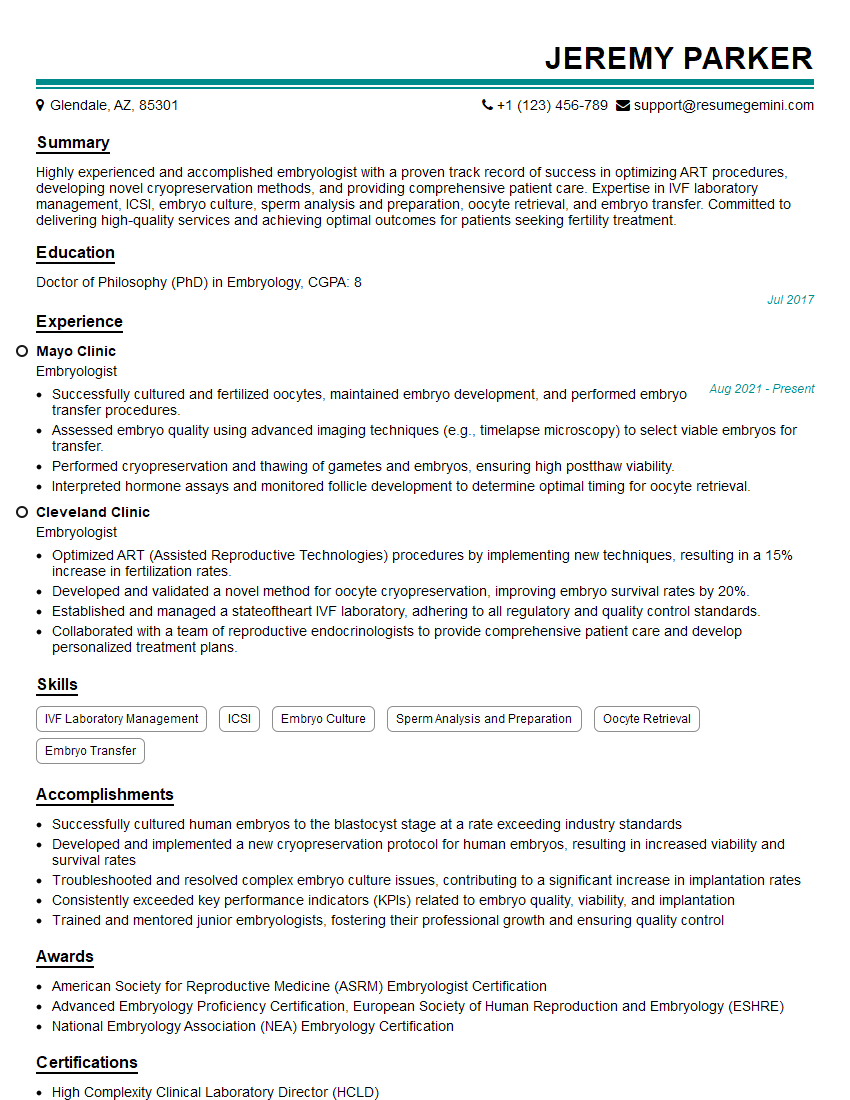
Mastering Assisted Reproductive Technologies opens doors to a rewarding career with significant impact on individuals and families. A strong foundation in these key areas is crucial for interview success and long-term career growth in this dynamic field. To maximize your job prospects, it’s vital to create an ATS-friendly resume that effectively showcases your skills and experience. We strongly encourage you to use ResumeGemini to build a professional and impactful resume. ResumeGemini offers a streamlined process and provides examples of resumes tailored to Assisted Reproductive Technologies, helping you present yourself in the best possible light to potential employers.
Explore more articles
Users Rating of Our Blogs
Share Your Experience
We value your feedback! Please rate our content and share your thoughts (optional).
What Readers Say About Our Blog
Very informative content, great job.
good