The right preparation can turn an interview into an opportunity to showcase your expertise. This guide to Buffeting interview questions is your ultimate resource, providing key insights and tips to help you ace your responses and stand out as a top candidate.
Questions Asked in Buffeting Interview
Q 1. Explain the phenomenon of buffeting.
Buffeting is an unsteady aerodynamic phenomenon characterized by the violent, irregular oscillations of a vehicle (like an aircraft or a high-speed train) caused by turbulent airflow around it. Imagine a leaf caught in a gusty wind; it doesn’t move smoothly but rather shakes and vibrates erratically. This erratic motion is analogous to buffeting, only on a much larger and potentially more damaging scale. It’s an aeroelastic instability that can result in significant structural fatigue and, in severe cases, catastrophic failure.
Q 2. Describe different types of buffeting (e.g., panel flutter, wake buffeting).
Buffeting can manifest in several ways:
- Wake Buffeting: This occurs when an aircraft flies through the turbulent wake of another aircraft or in the turbulent wake generated by its own components (like wings or tail). The fluctuating pressure in the wake excites the structure, causing vibrations. Imagine a smaller plane flying closely behind a larger one; it’s likely to experience buffeting from the larger plane’s wake.
- Panel Flutter: A more serious type of buffeting involving self-excited oscillations of a flexible panel or surface. The aerodynamic forces become coupled with the structural flexibility, creating a positive feedback loop that leads to increasing amplitude of oscillations. Think of a loose piece of sheet metal flapping violently in the wind—that’s a simplified representation of panel flutter.
- Stall Buffeting: This happens when a part of an aircraft’s wing or other lifting surface stalls, creating unsteady, turbulent flow, and causing buffeting in other parts of the aircraft. It’s often associated with high angles of attack.
- Vortex Shedding Buffeting: This arises from the periodic shedding of vortices (rotating air masses) from bluff bodies. These shed vortices create fluctuating pressure forces leading to buffeting. Think of the vibrations you might feel in a bridge when a strong wind blows across it—that’s a manifestation of vortex shedding.
Q 3. What are the primary causes of buffeting in aircraft/vehicles?
The primary causes of buffeting are related to the interaction between the vehicle’s aerodynamic surfaces and the surrounding airflow:
- Turbulent Flow: The most common cause is the encounter with turbulent airflows. This can be caused by atmospheric turbulence, the wake of preceding objects, or flow separation from the vehicle’s own surfaces.
- Flow Separation: When the airflow separates from the surface of the vehicle, it creates regions of unsteady, turbulent flow that can excite buffeting.
- Aerodynamic Interactions: Interactions between different parts of the vehicle (e.g., wing-body interference, tail-wing interference) can generate unsteady aerodynamic forces leading to buffeting.
- Geometric Design Flaws: Poorly designed aerodynamic shapes or insufficient structural stiffness can increase susceptibility to buffeting.
Q 4. How does wind tunnel testing help in understanding and mitigating buffeting?
Wind tunnel testing is crucial for understanding and mitigating buffeting. It allows engineers to:
- Visualize Flow Patterns: Using flow visualization techniques (smoke, tufts), engineers can identify regions of flow separation, turbulence, and vortex shedding, pinpointing potential buffeting sources.
- Measure Pressure Fluctuations: Pressure sensors measure the unsteady pressure forces acting on the vehicle’s surface, providing quantitative data on the severity and frequency of buffeting.
- Test Different Designs: By testing various designs (e.g., changing wing shapes, adding flow control devices), engineers can optimize the aerodynamic shape to minimize buffeting.
- Simulate Flight Conditions: Wind tunnels can simulate various flight conditions (different speeds, angles of attack) allowing engineers to assess the buffeting behaviour across the operational envelope of the aircraft.
The data obtained from wind tunnel tests informs design modifications to reduce buffeting, such as changes to the shape of aerodynamic surfaces, addition of vortex generators, or changes to the structural stiffness.
Q 5. Explain the role of Computational Fluid Dynamics (CFD) in buffeting analysis.
Computational Fluid Dynamics (CFD) provides a powerful computational tool for analyzing buffeting. It allows engineers to simulate airflow around complex geometries, providing detailed information about the flow field, pressure distribution, and forces acting on the vehicle. CFD complements wind tunnel testing by:
- Reducing reliance on costly physical testing: CFD simulations can be performed at a fraction of the cost and time compared to extensive wind tunnel testing.
- Providing detailed flow field information: CFD offers a much finer resolution of the flow field than is typically possible in wind tunnel testing. This detailed data helps in better understanding the mechanisms of buffeting.
- Facilitating parametric studies: CFD allows engineers to quickly and efficiently evaluate the impact of design changes on buffeting characteristics without the need to build and test physical models.
However, accurate CFD simulations require significant computational resources and expertise in setting up the simulations and interpreting the results.
Q 6. What are the key parameters used to characterize buffeting?
Several key parameters are used to characterize buffeting:
- Root Mean Square (RMS) acceleration or pressure: This measures the overall intensity of the buffeting. A higher RMS value indicates more severe buffeting.
- Frequency content: Analysis of the frequency spectrum of acceleration or pressure signals helps to identify the dominant frequencies of the buffeting, which can be correlated to specific structural modes or aerodynamic phenomena.
- Power Spectral Density (PSD): This shows the distribution of power across different frequencies, giving a comprehensive view of the buffeting’s frequency characteristics.
- Peak values: The maximum values of acceleration or pressure experienced during buffeting events provide information about the most extreme loads.
- Duration: The duration of buffeting events is important for understanding its impact on fatigue life.
Q 7. Describe different methods for measuring buffeting (e.g., accelerometers, strain gauges).
Various methods are used to measure buffeting:
- Accelerometers: These measure the acceleration of the structure at different locations, providing direct information about the buffeting’s intensity and frequency.
- Strain Gauges: These measure the strain (deformation) in the structure, allowing engineers to assess the structural response to buffeting loads.
- Pressure Transducers: These measure the fluctuating pressures on the vehicle’s surface, providing direct information on the aerodynamic forces causing the buffeting.
- Load Cells: These measure forces and moments acting on different components of the aircraft, providing a more global picture of buffeting effects.
The choice of measurement technique depends on the specific objectives of the experiment and the nature of the buffeting phenomenon being investigated. Often, a combination of techniques is used to obtain a complete understanding.
Q 8. How do you interpret buffeting data from wind tunnel tests or flight tests?
Interpreting buffeting data, whether from wind tunnel tests or flight tests, involves a systematic approach focusing on understanding the fluctuating aerodynamic loads and structural responses. We start by examining time-history data of relevant parameters like acceleration, pressure, and strain at various locations on the structure. This gives a preliminary picture of the buffeting’s severity and frequency content.
Next, we perform spectral analysis (using Fast Fourier Transforms or FFTs) to determine the power spectral density (PSD) functions. The PSD reveals the energy distribution of buffeting across different frequencies, highlighting the dominant frequencies which are crucial for structural design. We compare the measured data to predicted values from theoretical models or computational simulations to assess the accuracy of our predictions. We also investigate the coherence between different measurement points to understand the spatial correlation of the buffeting loads. For instance, high coherence between two sensors suggests a relatively uniform buffeting field while low coherence indicates localized effects. Finally, we analyze statistical measures like root mean square (RMS) values of loads and responses to quantify the overall buffeting severity.
Consider a wind tunnel test on a bridge deck. We would instrument the deck with accelerometers to measure its vibrations under various wind conditions. Analysis of the time-history data and subsequent PSDs would reveal resonant frequencies, allowing engineers to assess whether the bridge design adequately addresses potential buffeting issues.
Q 9. Explain the concept of frequency response functions (FRFs) in relation to buffeting.
Frequency Response Functions (FRFs) are essential in buffeting analysis because they describe the relationship between the input (aerodynamic excitation) and the output (structural response) at different frequencies. In essence, an FRF tells us how much a structure will vibrate at a given frequency in response to a unit force at that same frequency. It’s expressed as the ratio of the output’s Fourier transform to the input’s Fourier transform. This is particularly valuable because buffeting often excites various structural modes of vibration.
Imagine hitting a tuning fork. The tuning fork’s response (the sound it produces) at various frequencies represents its FRF. Similarly, an FRF for a bridge deck would show how its response at different wind frequencies relates to the wind pressure acting on the deck. We can obtain FRFs experimentally through modal testing or derive them computationally from a finite element model. The peaks in the FRF magnitudes indicate resonant frequencies—frequencies where the structure is most susceptible to large vibrations due to buffeting. Understanding these resonant frequencies is critical in designing effective buffeting mitigation strategies.
Q 10. Describe different methods for mitigating buffeting.
Mitigating buffeting involves a range of techniques aimed at reducing the aerodynamic loads or enhancing the structural stiffness and damping. Methods often involve a combination of approaches.
- Aerodynamic Modifications: These alter the shape of the structure to reduce the susceptibility to buffeting. Examples include adding fairings, winglets, or spoilers to modify the airflow around the structure and reduce unsteady pressures.
- Structural Damping: Increasing damping reduces the amplitude of vibrations at resonant frequencies. This can be achieved using tuned mass dampers (TMDs) or viscoelastic materials.
- Stiffness Enhancement: Increasing structural stiffness raises the natural frequencies of the structure, moving them away from the dominant buffeting frequencies. This requires careful structural design and analysis.
- Active Control Systems: These systems actively counteract buffeting loads using actuators and sensors. They measure the structure’s response and adjust accordingly, providing real-time control. This is often expensive but offers advanced control capabilities.
For example, skyscrapers often incorporate tuned mass dampers – large masses designed to oscillate out of phase with the building’s oscillations during buffeting, effectively reducing its overall movement.
Q 11. How do you model buffeting in a Finite Element Analysis (FEA) simulation?
Modeling buffeting in FEA involves simulating the structure’s response to unsteady aerodynamic forces. The process typically begins with a detailed finite element model of the structure, including material properties and boundary conditions. Then, we must apply fluctuating pressure loads derived from experimental data (wind tunnel or flight test measurements) or from Computational Fluid Dynamics (CFD) simulations. The pressure loads are usually represented as time-varying pressure fields applied to the structural model’s surface.
The FEA software then solves the equations of motion to determine the structure’s response to these fluctuating loads. This often involves modal superposition techniques or direct time integration. The analysis yields time histories of displacement, velocity, acceleration, and stress at various points within the structure. These results are then processed to obtain statistical quantities like PSDs and RMS values, allowing for comparison with experimental data and assessment of the design’s robustness. The accuracy of the FEA model is highly dependent on the quality of the input aerodynamic data (loads). Inaccurate aerodynamic loads can lead to inaccurate prediction of structural responses.
Q 12. What are the limitations of CFD and FEA in predicting buffeting?
Both CFD and FEA have limitations in accurately predicting buffeting. CFD struggles to accurately resolve the complex, unsteady flow features that characterize buffeting, especially at high Reynolds numbers. This is often due to limitations in mesh resolution and turbulence modeling. Furthermore, accurate prediction requires high fidelity simulations, which can be computationally expensive and time-consuming.
FEA limitations stem primarily from the accuracy of the input aerodynamic loads. If the aerodynamic loads aren’t accurately predicted by CFD or experimental data, the FEA model will provide inaccurate structural responses. Also, FEA models often simplify complex structural details, which can influence the accuracy of the results, particularly for flexible structures. Additionally, accurate modeling of damping mechanisms in FEA can be challenging.
Therefore, a combined approach, where experimental data informs and validates CFD and FEA simulations, is often necessary for reliable buffeting predictions.
Q 13. Explain the importance of considering unsteady aerodynamics in buffeting analysis.
Considering unsteady aerodynamics is paramount in buffeting analysis because buffeting is inherently an unsteady phenomenon. Steady-state aerodynamic models fail to capture the fluctuating pressures and forces that drive buffeting. Unsteady aerodynamics accounts for the time-varying nature of the airflow and the resulting fluctuating loads on the structure.
Imagine a flag fluttering in the wind. A steady-state analysis would simply calculate the average force on the flag, ignoring the rapid changes in force that cause it to flap. Unsteady analysis, however, considers these rapid changes, providing a much more realistic picture. Similarly, in a buffeting analysis, ignoring the unsteady nature of the airflow would lead to significant underestimation of structural responses and potential failure.
Techniques like unsteady Reynolds-averaged Navier-Stokes (URANS) simulations or Detached Eddy Simulation (DES) are employed in CFD to capture unsteady flow characteristics. This unsteady aerodynamic data then feeds into FEA for more accurate structural response predictions.
Q 14. How do you validate your buffeting analysis results?
Validating buffeting analysis results is crucial to ensure the accuracy and reliability of the predictions. We typically use a multi-pronged approach that combines different validation methods.
- Comparison with Experimental Data: The most robust validation method is comparing simulation results (from FEA and CFD) with data obtained from wind tunnel tests or flight tests. This involves comparing statistical quantities like PSDs and RMS values of loads and responses. Good agreement between simulation and experimental data indicates a well-validated model.
- Sensitivity Studies: Performing sensitivity studies helps evaluate the impact of uncertainties in model parameters (e.g., material properties, aerodynamic coefficients) on the simulation results. This gives insights into the model’s robustness and identifies critical parameters requiring more precise determination.
- Independent Verification: Having independent experts review the analysis methodology and results provides an extra layer of quality control, helping catch any errors or biases.
For instance, when validating a buffeting analysis of a tall building, we would compare the simulated response (e.g., acceleration at various floors) with measured responses from sensors installed in a similar real-world building during actual wind events. Discrepancies would require reviewing the model assumptions and refining the simulation until satisfactory agreement is achieved.
Q 15. Describe your experience with different buffeting analysis software (e.g., ANSYS, ABAQUS).
My experience with buffeting analysis software is extensive, encompassing both ANSYS and ABAQUS. I’ve used ANSYS Fluent extensively for Computational Fluid Dynamics (CFD) simulations to model the turbulent flow field around structures, capturing the unsteady aerodynamic forces responsible for buffeting. This involves meshing the geometry, setting up appropriate turbulence models (like k-ε or SST), and defining boundary conditions representing the freestream wind. Post-processing then focuses on extracting pressure fluctuations and forces on the structure. In ABAQUS, I leverage its Finite Element Analysis (FEA) capabilities to model the structural response to these fluctuating forces. This requires defining the material properties, creating a suitable finite element mesh, and applying the unsteady pressures obtained from ANSYS as loads. The combination of CFD and FEA in this way allows for a comprehensive buffeting analysis.
Beyond these two, I’ve also worked with specialized buffeting analysis tools incorporated within larger aeroelasticity software packages, allowing for coupled fluid-structure interaction simulations. This integrated approach offers increased efficiency and accuracy by eliminating the need for data transfer between separate software packages. For example, I’ve used such integrated tools to analyze buffeting in long-span bridges and tall buildings.
Career Expert Tips:
- Ace those interviews! Prepare effectively by reviewing the Top 50 Most Common Interview Questions on ResumeGemini.
- Navigate your job search with confidence! Explore a wide range of Career Tips on ResumeGemini. Learn about common challenges and recommendations to overcome them.
- Craft the perfect resume! Master the Art of Resume Writing with ResumeGemini’s guide. Showcase your unique qualifications and achievements effectively.
- Don’t miss out on holiday savings! Build your dream resume with ResumeGemini’s ATS optimized templates.
Q 16. How do you handle uncertainties and limitations in experimental data?
Handling uncertainties in experimental data is crucial in buffeting analysis. We employ several strategies. First, a thorough understanding of the experimental setup and potential error sources is paramount. This includes accounting for measurement uncertainties in wind speed, pressure sensors, and structural deflections. Statistical methods, such as uncertainty quantification techniques, are then used to propagate these uncertainties through the analysis. This involves determining confidence intervals for key parameters.
Second, data filtering techniques help to separate meaningful buffeting signals from noise. This might involve applying digital filters or using signal processing algorithms to remove high-frequency noise that isn’t relevant to the buffeting response. Third, robust statistical analysis techniques are applied to identify trends and patterns despite the noise. For instance, we might use techniques like spectral analysis to identify dominant frequencies and power spectral density to estimate the energy distribution of the buffeting loads. Lastly, advanced modeling techniques can help to compensate for limitations in the experimental data, often by integrating them into our computational models and using them to validate or refine those models.
Q 17. What are the key design considerations to minimize buffeting?
Minimizing buffeting requires a holistic design approach. Key considerations include:
- Aerodynamic Shape Optimization: Streamlining the structure to reduce the susceptibility to vortex shedding and unsteady flow separation is crucial. This involves careful design of leading edges, trailing edges, and overall geometry. For example, using fairings to smooth out sharp corners.
- Structural Damping: Incorporating materials or design features that increase structural damping helps to dissipate the energy from buffeting vibrations. This can involve using viscoelastic dampers or optimizing the material properties of the structure.
- Stiffness Optimization: Increasing the overall stiffness of the structure reduces its susceptibility to vibrations induced by buffeting. This might involve using stronger materials or altering the structural layout. However, increasing stiffness should be balanced against weight considerations.
- Flow Control Devices: Adding devices like spoilers or vortex generators can manipulate the airflow around the structure to reduce the magnitude of buffeting forces. This technique is often used on bridges and tall buildings.
- Passive Control: Tuned mass dampers can effectively mitigate buffeting. These are large masses that counteract the building’s motion, especially at the resonant frequencies.
The optimal design strategy depends heavily on the specific application and environmental conditions. For example, a tall building in a hurricane-prone region will need a different approach than a long-span bridge in a moderate wind region.
Q 18. Explain the role of gust loads in contributing to buffeting.
Gust loads are a major contributor to buffeting. Gusts are sudden changes in wind speed and direction. When a gust encounters a structure, it creates a rapid change in the aerodynamic forces acting on the structure. These sudden changes in forces excite the structure’s natural frequencies, leading to buffeting vibrations. The intensity and frequency content of the gust loads directly influence the severity of the buffeting response.
Imagine a gust as a powerful push against a building. A sudden, strong gust is more likely to cause significant vibrations compared to a gentle, gradual increase in wind speed. The characteristics of the gust (its duration, intensity, and spatial variation) along with the structure’s natural frequencies and damping ratios determine the amplitude and frequency of the resulting buffeting.
Q 19. How does Reynolds number affect buffeting?
The Reynolds number (Re) significantly impacts buffeting. Re is a dimensionless quantity that represents the ratio of inertial forces to viscous forces in a fluid. It’s defined as Re = ρVL/μ, where ρ is the fluid density, V is the flow velocity, L is a characteristic length, and μ is the dynamic viscosity. At low Reynolds numbers, viscous forces dominate, leading to laminar flow and relatively small buffeting effects. As Re increases, the flow transitions to turbulence, resulting in more significant fluctuations in aerodynamic forces and consequently, increased buffeting.
The transition from laminar to turbulent flow is often associated with a significant increase in buffeting intensity. For instance, a bluff body like a square cylinder will exhibit different buffeting characteristics at low Re (laminar vortex shedding) compared to high Re (turbulent vortex shedding). Therefore, accurate prediction of buffeting requires appropriate modeling of turbulence, particularly at higher Reynolds numbers.
Q 20. What is the difference between buffeting and flutter?
Buffeting and flutter are both aeroelastic phenomena involving interactions between aerodynamic forces and structural vibrations, but they are distinct. Buffeting is a forced vibration caused by turbulent flow or gusts acting on a structure. The structure responds to externally applied forces, with the frequency of the vibrations being primarily determined by the characteristics of the turbulent flow or gusts rather than by the structure’s dynamics.
Flutter, on the other hand, is a self-excited vibration. It occurs when the aerodynamic forces on a structure provide energy to the system, leading to unstable vibrations that can grow exponentially in amplitude until catastrophic failure. Flutter is typically associated with specific flow speeds and frequencies at which the aerodynamic forces and structural dynamics interact in a self-reinforcing way, and doesn’t necessarily require gust or turbulent flow to initiate.
A simple analogy: imagine pushing a swing (buffeting). The frequency of the swing depends on how you push it. Now imagine a swing that starts to swing faster and faster on its own due to the wind (flutter). That is an unstable self-excited oscillation.
Q 21. Describe your experience with modal analysis in the context of buffeting.
Modal analysis plays a critical role in understanding buffeting. It identifies the natural frequencies and mode shapes of the structure. These modes represent the ways the structure vibrates when excited. The natural frequencies are crucial because if the frequency of the buffeting forces (from gusts or turbulence) is close to a natural frequency, resonance occurs, leading to amplified vibrations and potentially dangerous levels of stress. The mode shapes help us understand the spatial distribution of the vibrations and identify areas of high stress.
In practice, we use modal analysis results to determine the potential for resonance. The results are often fed into buffeting analysis software. For example, when computing the buffeting response, we might use modal superposition. This approach efficiently represents the system’s response in terms of its modes, focusing on those modes that are most significantly excited by the buffeting forces. This significantly reduces the computational cost compared to directly solving the entire structural dynamics problem.
Q 22. How do you determine the critical flutter speed?
Determining the critical flutter speed involves understanding the interplay between aerodynamic forces and structural dynamics. Flutter is a self-excited aeroelastic instability where the structure’s oscillations are amplified by the airflow, leading to potentially catastrophic failure. We typically use computational methods, like aeroelastic analysis using software like MSC Nastran or similar tools. These methods solve the equations of motion for the structure coupled with aerodynamic forces (often using unsteady aerodynamic theories like Doublet Lattice Method or CFD). The analysis involves varying the airspeed to find the speed at which the system’s damping becomes negative, indicating the onset of flutter. This is often visualized through a V-g plot, showing the system’s damping ratio versus airspeed. The airspeed where the damping ratio crosses zero signifies the critical flutter speed. Experimental methods involving wind tunnel testing are also employed for validation and to account for factors that may be difficult to model computationally, such as nonlinearities in the structure or aerodynamics.
For instance, consider designing a helicopter rotor blade. Computational analysis would be used to predict the flutter speed, ensuring it remains significantly above the operational speed. Wind tunnel testing of a scaled model would then verify these predictions and allow for necessary adjustments to the blade’s design.
Q 23. Explain the concept of aeroelasticity and its relationship to buffeting.
Aeroelasticity is the study of the interaction between aerodynamic forces, inertial forces, and elastic forces in a structure, particularly in the context of airflow. It encompasses a range of phenomena, including flutter (as discussed earlier), divergence (where an aerodynamic force causes a static instability), and buffeting. Buffeting is a specific type of aeroelastic response that’s characterized by random, turbulent airflow exciting vibrations in the structure. Essentially, irregularities in the flow create unsteady aerodynamic loads that cause the structure to vibrate. The relationship is that buffeting is a manifestation of aeroelastic effects – the unsteady aerodynamic forces inherent in buffeting are inherently captured within the larger framework of aeroelasticity.
Think of a bridge in a turbulent wind. The fluctuating wind forces (aerodynamic) cause the bridge deck (elastic structure) to move (inertial). Understanding the interactions between these forces is crucial for proper bridge design.
Q 24. How do you account for nonlinearities in buffeting analysis?
Accounting for nonlinearities in buffeting analysis is crucial because real-world structures and aerodynamic forces rarely behave linearly. Linearity implies a proportional relationship between cause and effect; however, many structures exhibit nonlinearities in stiffness, damping, or both. Furthermore, the aerodynamic loads themselves can exhibit nonlinearities, particularly at high angles of attack. To account for this, we often use numerical methods like nonlinear finite element analysis (FEA) coupled with Computational Fluid Dynamics (CFD). These methods can capture the complex relationships between displacement and forces more accurately than linear approaches. Sometimes, simplified nonlinear models are used, which incorporate empirically determined nonlinear characteristics. This balance between accuracy and computational cost needs careful consideration.
For example, the nonlinear behavior of a flexible aircraft wing during buffeting might be modeled using FEA, where material properties and structural connections can be defined with nonlinear characteristics. The CFD simulation will provide a time-varying gust field that excites the wing’s nonlinear behavior. This allows for a more accurate prediction of the wing’s response compared to a linear analysis.
Q 25. Describe your experience with experimental modal analysis (EMA).
Experimental Modal Analysis (EMA) is a cornerstone of my approach to buffeting analysis. I’ve extensively used EMA to identify the vibration characteristics of various structures, from aircraft wings to tall buildings. EMA involves exciting a structure with controlled inputs (like an impact hammer or shaker) and measuring its response using accelerometers. This data is then processed using signal processing techniques to extract the structure’s natural frequencies, mode shapes, and damping ratios. These modal parameters are essential input for computational aeroelastic models used in buffeting analysis. EMA provides validation data for the Finite Element Model (FEM) and highlights any discrepancies between theoretical and actual behavior.
In one project involving a wind turbine, we used EMA to identify the natural frequencies and mode shapes of the tower. These results were then used to refine our FEM, leading to more accurate predictions of buffeting response. We found a significant discrepancy in the first bending mode, a critical aspect during buffeting, which was resolved via improved FEM parameterization.
Q 26. What are some common challenges encountered in buffeting analysis?
Buffeting analysis presents numerous challenges. One of the biggest is the accurate representation of turbulent inflow. Turbulent wind gusts are inherently stochastic and require sophisticated models to simulate accurately, whether through CFD or wind tunnel simulations. Another significant challenge is the accurate modeling of nonlinearities, as discussed previously. Properly accounting for all relevant nonlinear effects, often requires extensive experimental validation. Moreover, the computational cost of high-fidelity simulations can be substantial, especially for large-scale structures. Finally, obtaining accurate aerodynamic data for complex geometries can be challenging and resource-intensive.
For instance, accurately predicting the buffeting response of a long-span suspension bridge requires advanced turbulence models to capture the complex flow interactions with the bridge deck. Simplified turbulence models can lead to significant underestimation or overestimation of the resulting vibrations.
Q 27. How do you assess the fatigue life of a structure subjected to buffeting?
Assessing the fatigue life of a structure under buffeting involves determining the probability of failure due to cyclic stresses caused by the buffeting loads. This is typically done using a fatigue analysis approach. First, we obtain time histories of the stresses at critical locations from a buffeting analysis, either through computational or experimental methods. Then, we use a fatigue analysis method, often based on the Palmgren-Miner linear damage accumulation rule or more sophisticated methods that account for the variable nature of the stresses. This involves using a suitable S-N curve (stress amplitude vs. number of cycles to failure) for the material of the structure. By comparing the accumulated damage to the allowable damage limit, we can predict the fatigue life of the component and the overall structure.
For instance, in the design of offshore platforms, fatigue analysis is critical due to the significant buffeting from waves and winds. We would use simulations to determine stress time histories, and then employ a fatigue life analysis to ensure the structure will have a suitably long operational life, accounting for high stress conditions due to buffeting.
Q 28. Explain your approach to troubleshooting and resolving buffeting issues.
Troubleshooting and resolving buffeting issues is a systematic process. It starts with a thorough investigation of the problem, gathering all available data, including experimental measurements, computational simulations, and historical data. We would analyze the observed buffeting response characteristics – frequencies, amplitudes, and locations of maximum response. We then compare the measured response to predictions from computational models, identifying discrepancies and potential sources of error. This might involve refining computational models, improving turbulence modeling, accounting for nonlinearities, or even revisiting the experimental setup. Once the source of the problem is identified, possible mitigation strategies are developed, which could involve structural modifications, aerodynamic treatments, or active control systems. Finally, the effectiveness of the solutions is validated through additional testing or simulation.
In one case, a tall building experienced excessive buffeting at a particular frequency. Investigation revealed that the original design underestimated the aerodynamic response at that frequency. By implementing tuned mass dampers, a common mitigation technique, we managed to reduce the structural response and thus address the buffeting problem.
Key Topics to Learn for Buffeting Interview
Mastering these key areas will significantly boost your confidence and performance in your Buffeting interview. Remember, understanding the “why” behind the concepts is just as important as knowing the “how”.
- Fundamental Buffeting Principles: Grasp the core theoretical concepts underpinning buffeting phenomena. Explore the underlying physics and mathematical models.
- Structural Response to Buffeting: Understand how different structures react to buffeting forces. Consider various material properties and design considerations.
- Aerodynamic Buffeting: Deeply analyze the aerodynamic factors that contribute to buffeting. Explore wind tunnel testing and computational fluid dynamics (CFD) applications.
- Mitigation Strategies: Learn about various techniques used to reduce or eliminate buffeting effects. This includes passive and active control methods.
- Case Studies and Practical Applications: Review real-world examples of buffeting in different engineering contexts. Analyze successful mitigation strategies and their impact.
- Data Analysis and Interpretation: Develop your ability to interpret buffeting data from experiments and simulations. Understand statistical methods for analysis.
- Troubleshooting and Problem-Solving: Practice identifying the root causes of buffeting issues and developing effective solutions. Focus on analytical and critical thinking skills.
Next Steps
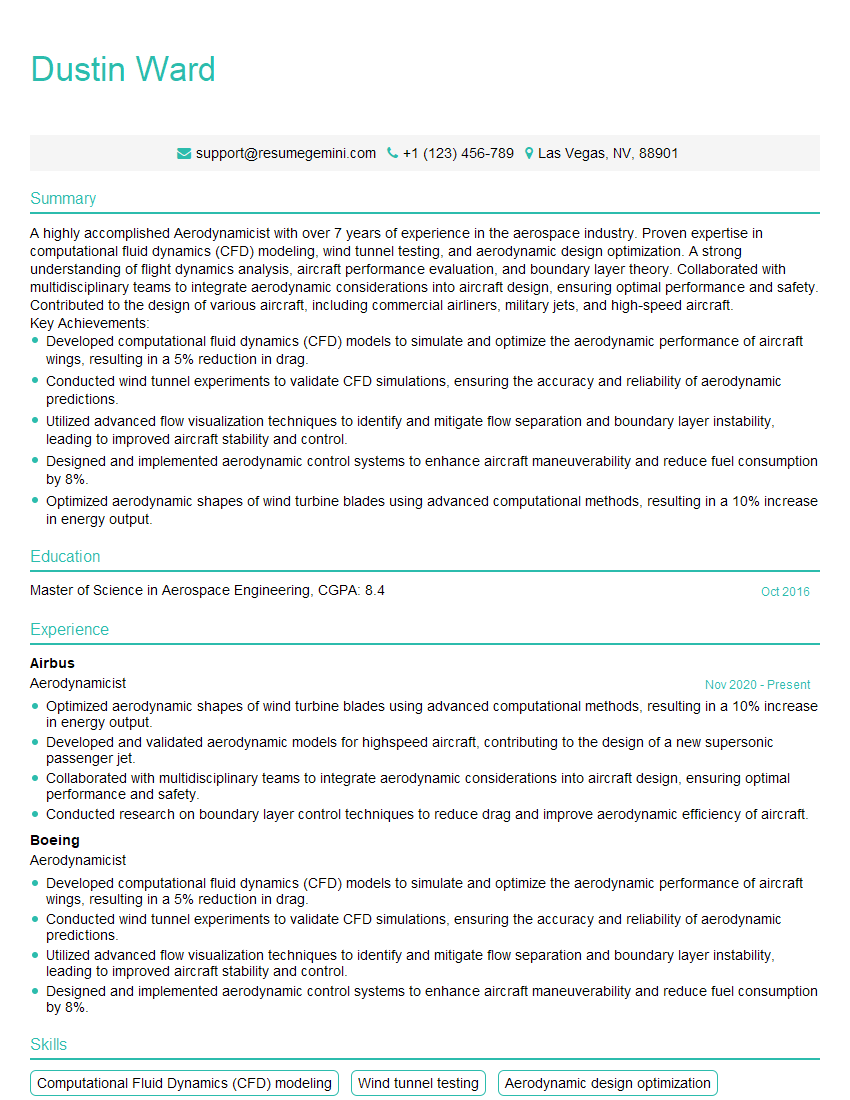
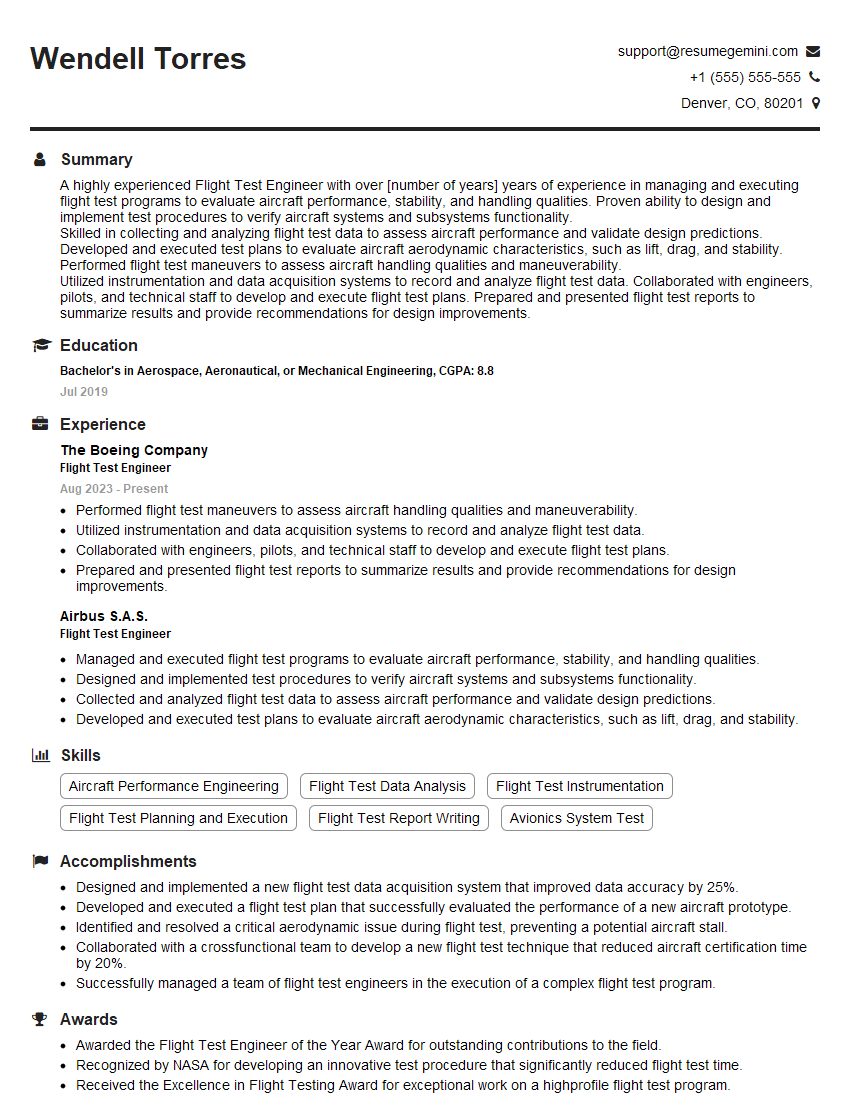
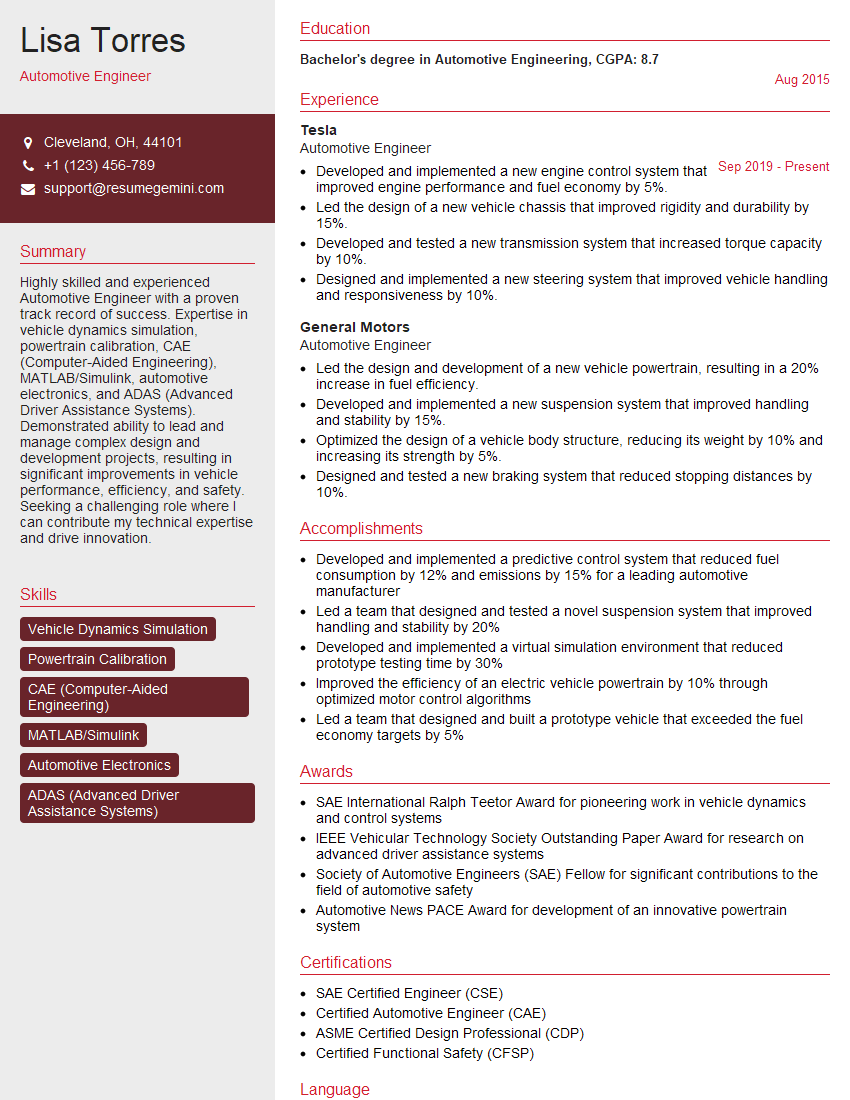
A strong understanding of Buffeting opens doors to exciting career opportunities in various engineering fields. To maximize your job prospects, creating a compelling and ATS-friendly resume is crucial. ResumeGemini is a trusted resource that can help you build a professional resume tailored to highlight your Buffeting expertise. We provide examples of resumes specifically designed for Buffeting roles to help you get started. Take the next step towards your dream job – invest time in crafting a standout resume that showcases your skills and experience effectively.


Explore more articles
Users Rating of Our Blogs
Share Your Experience
We value your feedback! Please rate our content and share your thoughts (optional).
What Readers Say About Our Blog
Very informative content, great job.
good