The thought of an interview can be nerve-wracking, but the right preparation can make all the difference. Explore this comprehensive guide to International Moving interview questions and gain the confidence you need to showcase your abilities and secure the role.
Questions Asked in International Moving Interview
Q 1. Explain the process of international household goods shipment.
International household goods shipment is a complex process involving meticulous planning and execution. It typically begins with a pre-move survey where a specialist assesses the volume of your belongings and identifies any special items requiring specific handling (like antiques or musical instruments). Next, we create a detailed inventory list, which is crucial for customs clearance. Then, we arrange packing, often using specialized materials to protect your possessions during transit. The goods are then transported, usually by sea freight (most cost-effective for large shipments) or air freight (faster but more expensive). Once the shipment reaches the destination country, customs clearance is handled, involving presenting the necessary documentation. Finally, the goods are delivered to your new home, and unpacking services are often available.
Think of it like orchestrating a complex symphony – every instrument (step in the process) needs to play its part perfectly for a harmonious outcome (successful delivery). We manage every note from the initial consultation to the final delivery, ensuring a smooth and stress-free move.
Q 2. Describe your experience with customs regulations and documentation.
My experience with customs regulations and documentation spans over a decade, working with diverse countries and their unique requirements. I’m proficient in preparing all necessary documentation, including commercial invoices, packing lists, certificates of origin, and any other specific forms required. For example, I recently assisted a client moving from the US to Brazil; I had to navigate complex import regulations, including obtaining a specific import license for certain antique furniture. Each country has its own set of rules; knowing these nuances is crucial to avoid delays and penalties. A single missing document can halt the entire process, so accuracy and thoroughness are paramount. I have a strong network of customs brokers globally to assist with any complicated situations.
Q 3. How do you handle complex international moving challenges?
Complex challenges are part and parcel of international moving. I approach these situations methodically using a structured problem-solving approach. First, we precisely identify the challenge. For instance, unexpected delays caused by port congestion or unforeseen customs issues. Secondly, we develop a tailored solution based on the specific issue, which may involve exploring alternative transportation routes, negotiating with customs officials, or even arranging temporary storage solutions. Third, we implement the solution promptly, constantly communicating transparently with our clients, keeping them informed and mitigating any anxiety. Finally, we document everything meticulously – this allows us to learn from past experiences and enhance our processes for future moves.
For example, we recently managed a move where a shipment was delayed due to a sudden political upheaval. We worked tirelessly to reroute the shipment, utilizing our network of international contacts to get the goods to their destination despite the unexpected circumstances. Open communication with the client was key to their understanding and trust throughout the process.
Q 4. What are the different modes of transportation used in international moving?
International moves utilize various modes of transport, each with its own advantages and disadvantages. The most common is sea freight, ideal for large shipments due to its cost-effectiveness. Air freight offers significantly faster delivery but is considerably more expensive. For smaller or time-sensitive shipments, air freight might be the preferred option. Land transport, using trucks or trains, is frequently used for shorter distances, often connecting ports to inland destinations. Sometimes a combination of transport modes is used – a shipment might travel by sea to a port and then be transported inland by truck.
The choice depends on several factors, such as the shipment’s size, value, and urgency. We carefully assess these elements to advise clients on the most efficient and cost-effective transportation method.
Q 5. How do you calculate the cost of an international move?
Calculating the cost of an international move is a multi-faceted process. It isn’t a simple formula; several factors significantly impact the final price. These include the volume of goods, the distance between origin and destination, the chosen mode of transport, insurance costs, customs duties and taxes, packing materials, and any specialized handling required. We begin with an in-home survey to accurately assess the volume. Then, we provide a detailed cost breakdown outlining each element contributing to the overall cost. Transparency is crucial; we strive to ensure clients fully understand all charges before proceeding.
It’s like building a house – every brick (cost factor) contributes to the final structure (total cost). We carefully consider every aspect to give clients an accurate and transparent estimate.
Q 6. What are the key differences between moving to and from different countries?
Significant differences exist between moving to and from various countries due to varying customs regulations, import/export duties, and local logistical challenges. For example, moving to the European Union typically involves more stringent customs regulations compared to moving to certain countries in South America. Likewise, certain countries have higher import duties on certain goods, making the overall cost significantly higher. Local infrastructure also plays a role; some countries have better road networks than others, affecting delivery times and costs. We meticulously research each country’s specific requirements to ensure a smooth transition for our clients.
Understanding these differences is critical. We tailor our approach based on the specific destination country’s regulations and logistical considerations.
Q 7. What are your strategies for mitigating risks in international relocation?
Mitigating risks in international relocation requires a proactive and multi-layered approach. First, we choose reliable and reputable transportation providers with a proven track record. Second, we utilize comprehensive insurance coverage, including transit and liability insurance, to safeguard against loss or damage. Third, we meticulously document every step of the process, providing clients with regular updates and clear communication. Fourth, we build strong relationships with customs brokers and local agents in the destination country to facilitate smooth customs clearance. Fifth, we advise on packing and handling procedures, emphasizing the use of appropriate materials to protect goods during transit. Finally, we maintain clear and open communication with the client, keeping them fully informed and involved throughout the relocation process.
Risk mitigation is our top priority. We employ a layered strategy to ensure a successful and stress-free international move.
Q 8. Explain your experience with different types of international shipping insurance.
International shipping insurance is crucial for protecting your belongings during an overseas move. There are several types, each offering different levels of coverage. The most common are:
- All-Risk Coverage: This is the most comprehensive option, covering virtually all risks except those specifically excluded in the policy (like war or nuclear events). It’s ideal for high-value or fragile items.
- Limited Coverage: This type covers only specific risks, such as fire, theft, or accidental damage. It’s generally less expensive than all-risk but provides less protection. You might find this suitable for shipments containing mostly durable goods.
- Released Value Coverage: This is the lowest level of coverage, often provided by carriers at a very low cost. The compensation in case of loss or damage is limited to a low predetermined value per item. It’s usually not recommended for valuable items.
My experience involves selecting the appropriate coverage based on the client’s inventory value, the fragility of the goods, and the chosen shipping method. For instance, a client shipping antique furniture would require all-risk coverage, while someone shipping mostly clothing might opt for limited coverage. I always meticulously review the policy details with the client, ensuring they fully understand the terms and conditions, including any exclusions.
Q 9. How do you manage client expectations during an international move?
Managing client expectations is paramount in international moving, as it’s a complex process with many moving parts. I achieve this through proactive communication and transparency. This starts from the initial consultation, where I clearly outline the entire process, timelines, potential challenges, and associated costs. I emphasize realistic expectations regarding transit times, potential customs delays, and the overall logistics involved. For example, I might explain that unforeseen customs inspections can add a few days to the delivery schedule, preventing disappointment later.
I regularly update clients via email and phone calls, providing tracking information and addressing any concerns promptly. I use project management software to keep track of all milestones and proactively communicate potential delays. For example, if a port strike is announced, I immediately notify my clients and explore alternative shipping routes.
By building trust and maintaining open communication, I successfully manage client expectations and ensure a smoother moving experience.
Q 10. Describe your experience with international packing and crating procedures.
Proper packing and crating is essential to prevent damage during transit. My experience includes overseeing the packing of various items, from fragile antiques to everyday household goods. We use high-quality packing materials, including custom-built wooden crates for valuable or oversized items. I’m familiar with various packing techniques, including using bubble wrap, foam padding, and specialized containers for electronics or liquids.
For example, when packing a grand piano, we use a specialized crate with internal bracing and suspension to prevent damage from vibrations and impacts. Each item is carefully wrapped and labeled for easy identification and inventory tracking. I adhere to international packing standards to ensure the safety of goods throughout the journey. We document the entire packing process with photographs to facilitate any potential insurance claims.
Q 11. How do you ensure compliance with international regulations and laws?
Compliance with international regulations is crucial for a successful move. I’m deeply familiar with customs regulations, import/export restrictions, and documentation requirements of various countries. My work involves preparing all necessary documentation, including commercial invoices, packing lists, certificates of origin, and any required permits or licenses. I stay updated on the latest changes in international regulations and ensure that all shipments adhere to the applicable laws and standards.
For example, certain countries have strict rules about importing wooden materials or specific types of food. I ensure that we correctly classify and declare all goods and provide the necessary documentation to customs authorities to avoid delays or penalties. I’m also well-versed in the regulations governing hazardous materials shipping and ensure these are handled appropriately and compliant with the International Maritime Dangerous Goods (IMDG) Code or other relevant air freight standards. Non-compliance can lead to significant delays and financial repercussions, which I meticulously avoid.
Q 12. How do you handle potential delays or unforeseen circumstances during a move?
Delays and unforeseen circumstances are inevitable in international moves. My approach involves proactive risk assessment and contingency planning. We carefully monitor shipments throughout their journey, using tracking systems to identify potential delays early. When faced with an unexpected problem, such as a port congestion or a natural disaster, my first step is to assess the impact on the shipment and communicate promptly with the client.
I then explore solutions, such as rerouting the shipment, utilizing alternative transportation methods, or working with the carriers to expedite the process. I keep the client informed throughout this process, providing regular updates and exploring all options to minimize disruption. For example, if a port strike causes a delay, I might arrange for expedited customs clearance or explore alternative modes of transport to minimize the time the goods are held up. Transparency and timely communication are vital during these challenging situations.
Q 13. What is your experience with various international moving companies and their services?
I have worked with numerous international moving companies across the globe, each with its own strengths and specializations. My experience allows me to select the most suitable company for each specific move based on factors like the destination country, shipment size, type of goods, and budget.
Some companies excel in handling specialized items like art or antiques, while others specialize in specific regions or modes of transport. I evaluate their reputation, track record, insurance coverage, and customer reviews before making a selection. I also consider their customs brokerage services and their overall communication capabilities. This careful selection process ensures that our clients receive the best possible service and that their goods are handled with care and professionalism.
Q 14. What are the best practices for inventory management in international moving?
Inventory management is critical for smooth international moves. I utilize a detailed and systematic approach, starting with a thorough inventory of the client’s belongings. This usually involves a comprehensive list with descriptions, quantities, and valuations of each item. We use both physical inventory checks and digital inventory systems for efficient tracking.
Barcodes or RFID tags can further enhance the tracking system. During packing, each item is marked with a corresponding inventory number. The inventory list is then used to track goods throughout the move, enabling precise verification at each stage—from pickup to delivery. This comprehensive inventory management prevents losses, facilitates accurate insurance claims if necessary, and provides a clear record for the client. Clear inventory procedures save time, prevent confusion, and contribute to an overall positive customer experience.
Q 15. How do you manage communication with clients across multiple time zones?
Managing communication across multiple time zones is crucial in international moving. My strategy centers around proactive communication planning and utilizing technology effectively. Before the move, I establish clear communication channels with clients, agreeing on preferred methods and times for contact, considering their time zone. This might involve setting up a shared online calendar for appointments, using project management software with time zone awareness or scheduling recurring check-in calls at mutually convenient times. During the move itself, I leverage email, instant messaging apps like WhatsApp, and even international phone calls to ensure prompt updates and address any concerns that may arise. For example, if a client is in Australia, I ensure all my communication schedules accommodate their working hours rather than mine.
I also provide regular updates, proactively addressing any potential delays or unforeseen circumstances. I believe transparency builds trust, and clients appreciate knowing where their shipment is in the process. This approach ensures seamless communication despite the geographical distance.
Career Expert Tips:
- Ace those interviews! Prepare effectively by reviewing the Top 50 Most Common Interview Questions on ResumeGemini.
- Navigate your job search with confidence! Explore a wide range of Career Tips on ResumeGemini. Learn about common challenges and recommendations to overcome them.
- Craft the perfect resume! Master the Art of Resume Writing with ResumeGemini’s guide. Showcase your unique qualifications and achievements effectively.
- Don’t miss out on holiday savings! Build your dream resume with ResumeGemini’s ATS optimized templates.
Q 16. How familiar are you with Incoterms rules?
I’m very familiar with Incoterms rules; they’re fundamental to international shipping. Incoterms (International Commercial Terms) are standardized trade terms published by the International Chamber of Commerce (ICC). They clearly define the responsibilities of buyers and sellers regarding the delivery of goods in international trade. Understanding Incoterms is vital for avoiding costly misunderstandings and disputes. For example, knowing the difference between EXW (Ex Works) and DDP (Delivered Duty Paid) significantly impacts who is responsible for customs clearance, insurance, and transportation costs.
I regularly utilize Incoterms when preparing contracts and managing logistics. I ensure the chosen Incoterms rule aligns perfectly with the client’s needs and budget, clearly outlining responsibilities in the contract. My expertise extends to advising clients on the most appropriate Incoterms based on their specific circumstances, ensuring a smooth and legally sound transaction.
Q 17. Describe your experience with pre-move surveys and consultations.
Pre-move surveys and consultations are the cornerstone of successful international moves. I conduct thorough on-site surveys of the client’s possessions, carefully noting the quantity, size, and condition of items. This process includes a detailed discussion about the client’s needs and expectations, ensuring a clear understanding of their timeline and budget. I’ll also assess the accessibility of the property for loading and unloading, identify any potential challenges, and discuss any specialized handling requirements for fragile or oversized items.
During the consultation, I explain the entire international moving process, highlighting potential challenges and addressing any questions or concerns the client may have. I provide a customized quote based on the survey findings, detailing all costs, including packing, transportation, customs clearance, and insurance. A recent move involved a client with a large collection of antique furniture. The pre-move survey allowed us to plan specialized crating and secure the appropriate insurance coverage, ensuring the safe arrival of these valuable items. This careful planning significantly reduced stress and potential problems.
Q 18. How do you deal with damaged or lost goods during international shipping?
Dealing with damaged or lost goods is unfortunately a possibility in international shipping. My approach focuses on prevention and efficient claims management. To minimize risk, I emphasize secure packing techniques, selecting reputable carriers with a strong track record, and ensuring adequate insurance coverage. Detailed documentation of the shipment’s condition before, during, and after transit is crucial.
If damage or loss occurs, I immediately initiate a claims process with the carrier, meticulously compiling all necessary documentation, including photos, packing lists, and shipping documents. I work closely with the client to assess the damage, and depending on the situation, I’ll either arrange for repairs, replacements, or pursue a claim for compensation. I always communicate transparently with the client throughout the entire claims process, providing regular updates and advocating for their best interests. For instance, in one case, a client’s artwork was damaged during transit. By meticulously documenting the damage and working directly with the carrier’s insurance, I successfully secured full compensation for the client.
Q 19. What is your process for resolving client complaints regarding international moves?
Resolving client complaints is a critical aspect of my role. My process emphasizes promptness, empathy, and a commitment to finding fair solutions. I begin by actively listening to the client’s concerns, acknowledging their frustration, and assuring them that their issue will be addressed. I then thoroughly investigate the complaint, gathering all relevant information from various sources. Depending on the nature of the complaint, this might involve reviewing shipment documentation, communicating with the carrier, or even reviewing internal processes.
Once I have a clear understanding of the situation, I propose a solution that is both fair to the client and aligned with company policy. This may involve offering compensation, arranging for repairs, or adjusting the service provided. Throughout the process, I keep the client informed of my progress, ensuring they feel heard and understood. My goal is not just to resolve the immediate problem but to restore client trust and maintain a positive relationship. Open communication and a proactive approach have been extremely effective in transforming initially negative experiences into positive outcomes.
Q 20. What software or technology do you use for managing international moving projects?
I utilize a variety of software and technology to manage international moving projects efficiently. This includes Customer Relationship Management (CRM) systems for tracking client interactions, project management software for coordinating tasks and deadlines, and specialized international moving software for managing shipments, generating documentation, and calculating costs. For example, I may use a CRM to track client communication, preferences, and the status of their move, while using project management software to coordinate the various stages of the move—from pre-move survey to final delivery.
In addition, I use cloud-based storage for secure document sharing and collaboration, and specialized software to manage customs declarations and other compliance-related aspects. The technology I use allows for real-time tracking of shipments and proactive identification of potential issues. This streamlined approach ensures transparency, accountability, and efficient management of the entire moving process.
Q 21. How do you track shipments throughout the entire international moving process?
Tracking shipments is paramount in international moving. My process integrates multiple tracking methods to provide continuous visibility. I begin by selecting carriers that offer robust online tracking systems. This allows me to monitor the shipment’s location and status in real-time throughout its journey. I also use the carrier’s tracking numbers to access detailed information, such as transit points and estimated delivery dates.
In addition to online tracking, I maintain regular communication with the carrier to ensure the smooth progression of the shipment and to proactively identify and address any potential delays or issues. I provide clients with regular updates, keeping them informed of the shipment’s location and progress. This combination of technology and personal interaction ensures clients are always informed and confident in their move. I consider this proactive tracking a critical component of successful international relocation management.
Q 22. Explain your understanding of liability and responsibility in international shipping.
Liability and responsibility in international shipping are complex and governed by international conventions like the Warsaw Convention and the Montreal Convention (for air freight), as well as the Hague-Visby Rules (for sea freight). Essentially, liability refers to the legal responsibility a party (shipper, carrier, agent) has for losses or damages to goods during transit. Responsibility, on the other hand, encompasses the obligation to perform certain tasks, such as proper packing, documentation, and timely delivery.
For example, a carrier’s liability is usually limited to a certain amount per kilogram unless proven negligence or willful misconduct is demonstrated. The shipper has a responsibility to properly pack and declare the contents of the shipment, ensuring it’s suitable for international transport. Insurance plays a critical role in mitigating risk by covering potential losses exceeding the carrier’s liability limit. Understanding these nuances is vital for negotiating contracts, managing expectations, and resolving disputes.
In practice, I carefully review all contracts, ensuring the client understands the limitations of liability and the importance of adequate insurance. I advise on proper packaging techniques to minimize damage risks, and I meticulously document the shipment’s condition before, during, and after transit to protect the client’s interests.
Q 23. Describe your experience with different types of visas and immigration processes.
My experience encompasses a broad range of visa types and immigration processes, crucial for facilitating smooth international moves. I’ve assisted clients with various visas, including work permits, student visas, family reunification visas, and retirement visas, navigating the complexities of different countries’ immigration regulations. I’m familiar with the requirements for each visa type, the application processes, and the potential challenges involved, such as background checks, medical examinations, and financial documentation.
For instance, I recently helped a family relocate from the US to Canada. This involved not only managing the logistics of their move but also guiding them through the Canadian immigration process, ensuring they met all requirements for their permanent residency application. This included assembling all necessary documents, confirming their eligibility, and providing support throughout the application process. I also work closely with immigration lawyers when needed to ensure a seamless transition for my clients.
Q 24. How do you manage cultural differences and language barriers when assisting clients?
Managing cultural differences and language barriers is paramount in international moving. I address these challenges through several strategies. First, I utilize translation services for crucial documentation and communication where necessary. Second, I build rapport by demonstrating cultural sensitivity – understanding customs, respecting traditions, and being mindful of nonverbal communication. Third, I employ clear, concise language, avoiding jargon and using visual aids when appropriate to bridge any communication gaps.
For example, when assisting a client from Japan, I made sure to understand the nuances of their culture regarding formality and respect, ensuring my communication was appropriately respectful and clear. I also took extra care to use simple and direct language, avoiding idioms or slang that might be confusing. Employing a translator for sensitive matters, like legal documents, was invaluable in ensuring a successful and stress-free relocation for the client.
Q 25. How do you handle the logistics of moving pets internationally?
Moving pets internationally is a specialized area requiring meticulous planning and adherence to strict regulations. Each country has specific import/export requirements, often including health certificates, vaccination records, microchipping, and quarantine periods. I work closely with veterinary professionals and specialized pet relocation companies to ensure compliance with all regulations.
The process typically involves securing necessary health documentation from a licensed veterinarian well in advance, booking pet-friendly transportation, and coordinating all required permits and paperwork. I provide clients with checklists and timelines to ensure everything is completed on time, mitigating potential delays or complications. For example, I recently facilitated the move of a client’s dog from the UK to Australia, which involved extensive paperwork, special crate requirements, and quarantine arrangements. Thorough pre-planning and seamless coordination with our pet transport partners were critical to ensuring the pet arrived safely and stress-free.
Q 26. What are your strategies for optimizing international moving costs for clients?
Optimizing international moving costs involves a multifaceted approach. Firstly, I work with clients to determine their moving needs, focusing on what items are essential for transport versus what can be sold, donated, or left behind. This often results in significant cost savings. Secondly, I leverage my knowledge of different shipping methods and carriers to secure competitive quotes and negotiate favorable rates. Smaller shipments might be more cost-effective via air freight, while larger shipments might benefit from sea freight. I also explore different storage options depending on the client’s situation and time constraints.
Furthermore, I actively seek out cost-saving opportunities without sacrificing quality. This could involve bundling services or negotiating discounts with trusted partners. Transparency is paramount; I provide clients with detailed cost breakdowns, explaining each expense to ensure they’re informed throughout the process. For example, by suggesting the removal of unnecessary items, I managed to reduce a client’s sea freight costs by nearly 30%, making the move significantly more affordable.
Q 27. How familiar are you with various international freight forwarding networks?
I’m familiar with a wide range of international freight forwarding networks, including both large multinational companies and smaller specialized firms. My knowledge encompasses their strengths, weaknesses, and areas of expertise, allowing me to select the most appropriate partner for each client’s specific needs. I consider factors like destination coverage, transit times, handling capabilities, insurance options, and overall reputation when choosing a freight forwarder.
For instance, I might recommend a specific forwarder specializing in fragile art transport for a client moving a valuable art collection, while for standard household goods, a different carrier with a broader reach and competitive pricing might be more suitable. I maintain strong relationships with several reputable freight forwarding networks to leverage their expertise and secure the best possible service for my clients.
Q 28. How would you handle a situation where a shipment is delayed due to unforeseen circumstances?
Handling shipment delays due to unforeseen circumstances requires a proactive and communicative approach. My first step involves identifying the cause of the delay (e.g., customs clearance issues, port congestion, inclement weather). Once identified, I immediately engage with the freight forwarder to understand the expected timeline for resolution. Open and transparent communication with the client is crucial; I provide regular updates, keeping them informed of the situation and any potential impact on their relocation plans.
Depending on the cause and severity of the delay, I might explore alternative solutions such as expedited shipping, if feasible and cost-effective. I also review insurance coverage to assess if compensation is applicable for any consequential losses. For instance, if a delay impacts a client’s ability to start a new job, I would work with the freight forwarder and relevant insurance providers to find a fair resolution, potentially negotiating compensation for additional accommodation costs.
Key Topics to Learn for Your International Moving Interview
- International Shipping Regulations & Documentation: Understanding Incoterms, customs procedures, and necessary documentation (e.g., commercial invoices, packing lists) is crucial. Practical application includes knowing how to identify and address potential compliance issues.
- Logistics & Supply Chain Management: Learn about global freight forwarding, route optimization, and risk management in international transportation. This includes understanding different modes of transport (sea, air, land) and their respective advantages and disadvantages. Problem-solving might involve finding alternative solutions for delayed shipments.
- Customs Brokerage & Clearance: Familiarize yourself with the customs clearance process, including tariff classification, duty calculations, and handling of potential customs delays. Practical application includes understanding the role of a customs broker and how to work effectively with them.
- International Insurance & Liability: Understand the types of insurance coverage needed for international shipments and the implications of liability in case of damage or loss. Problem-solving involves assessing risk and selecting appropriate insurance coverage.
- Packing & Handling Procedures: Learn about international packing standards, specialized packaging requirements for different goods (e.g., fragile items, hazardous materials), and safe handling practices to minimize damage during transit. This includes understanding the importance of proper labeling and documentation.
- Technology & Software in International Moving: Gain familiarity with common software and technologies used in the industry, such as shipment tracking systems, customs brokerage software, and transportation management systems (TMS).
Next Steps
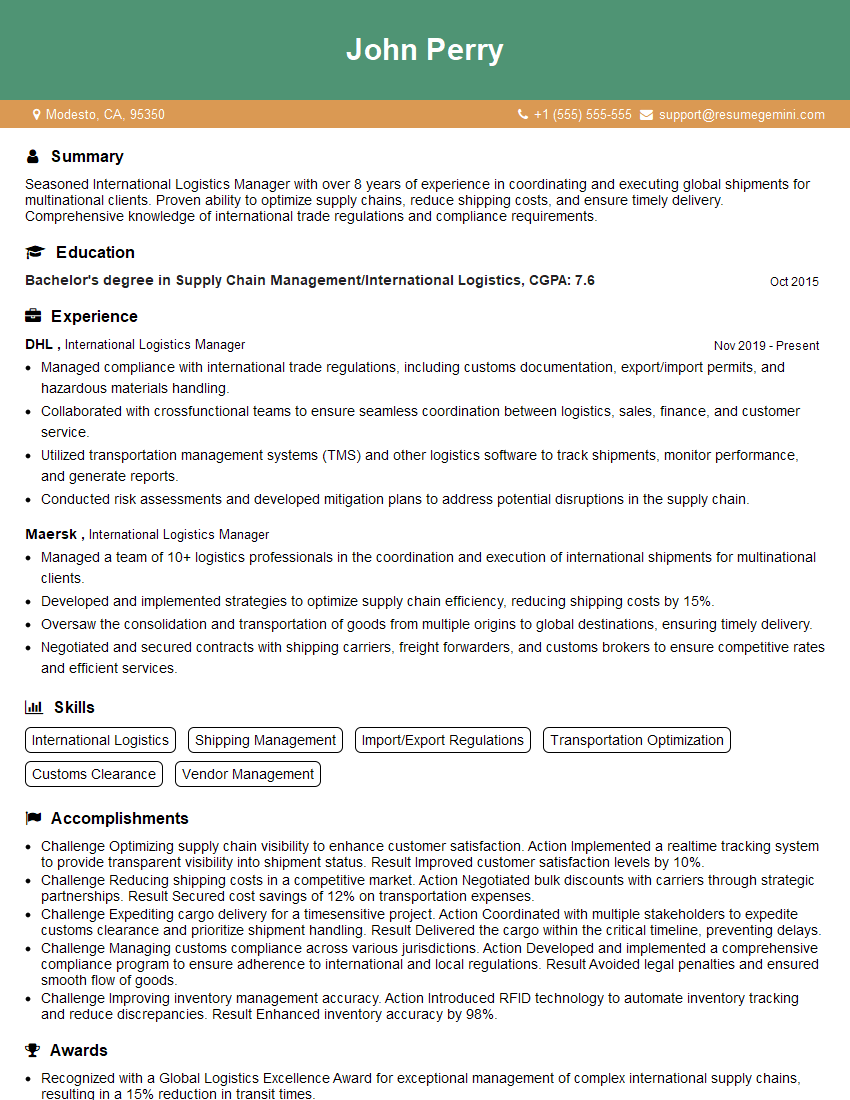
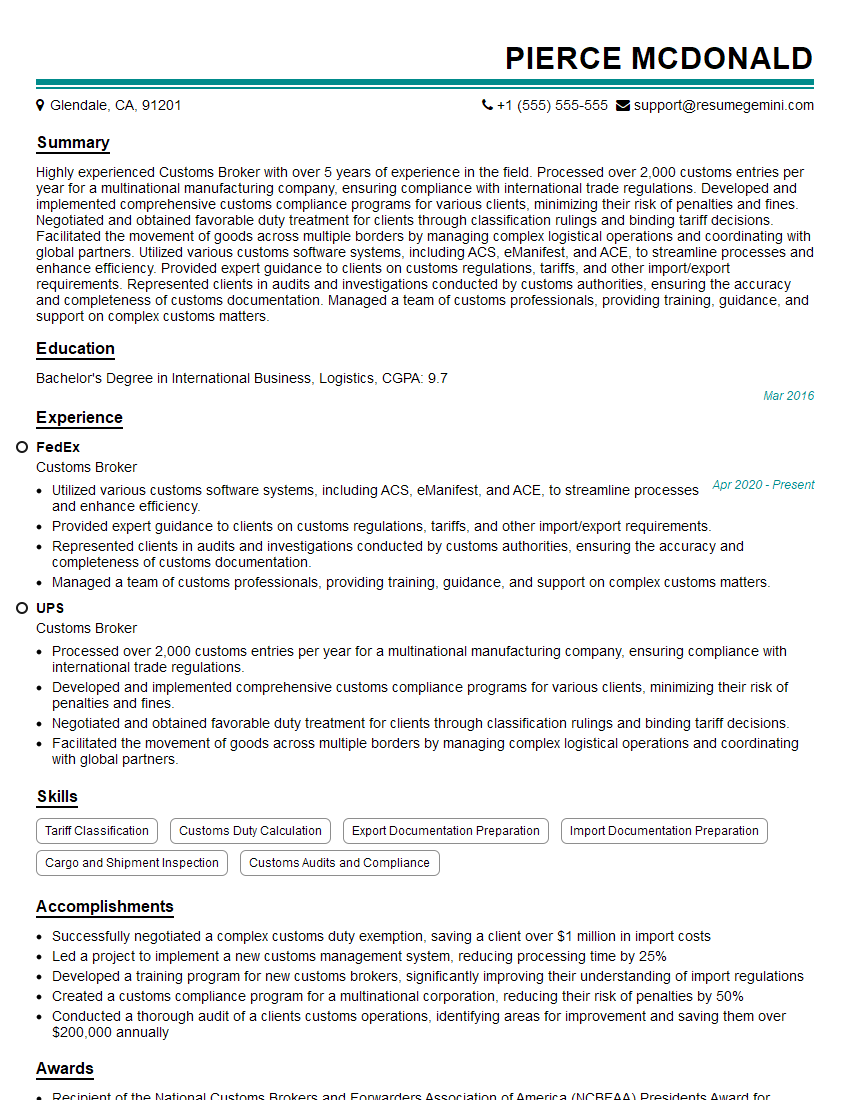
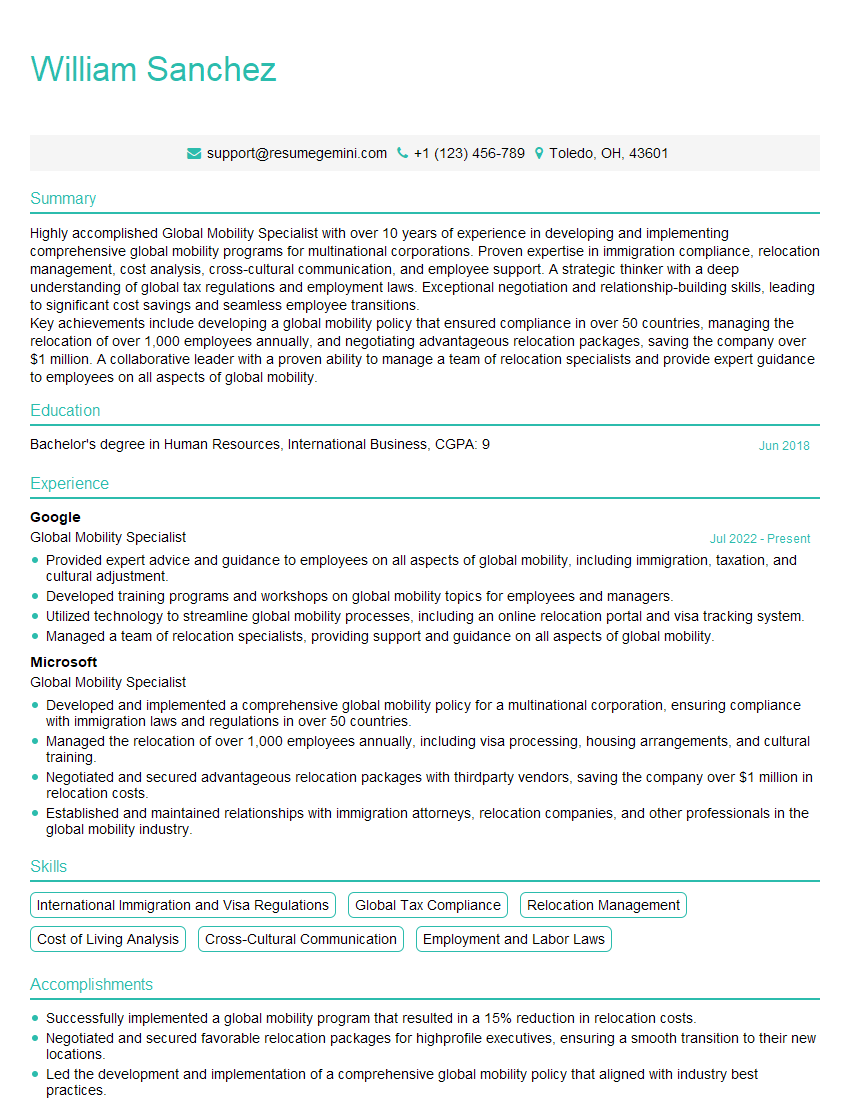
Mastering the intricacies of international moving opens doors to exciting career opportunities in a dynamic and globally connected industry. To significantly enhance your job prospects, creating a strong, ATS-friendly resume is paramount. ResumeGemini is a trusted resource that can help you build a professional and impactful resume, tailored to highlight your skills and experience in International Moving. Examples of resumes specifically designed for this field are available to guide you. Invest the time to craft a compelling resume – it’s your first impression on potential employers.
Explore more articles
Users Rating of Our Blogs
Share Your Experience
We value your feedback! Please rate our content and share your thoughts (optional).
What Readers Say About Our Blog
Very informative content, great job.
good