The thought of an interview can be nerve-wracking, but the right preparation can make all the difference. Explore this comprehensive guide to Value Engineering Job Plan (VEJP) interview questions and gain the confidence you need to showcase your abilities and secure the role.
Questions Asked in Value Engineering Job Plan (VEJP) Interview
Q 1. Explain the purpose and benefits of a Value Engineering Job Plan (VEJP).
A Value Engineering Job Plan (VEJP) is a structured process designed to systematically identify and implement cost-effective improvements in a project without sacrificing functionality or quality. Think of it as a roadmap for finding the best value for your money. Its purpose is to optimize project resources, leading to significant savings and enhanced efficiency. The benefits are multifaceted, including reduced costs, improved project schedules, increased profitability, enhanced performance, and minimized environmental impact.
For instance, imagine building a skyscraper. A VEJP could help identify less expensive materials that perform just as well, optimize the construction schedule to reduce labor costs, or find more efficient ways to use energy, all without compromising the building’s safety or functionality.
Q 2. Describe the key phases or stages involved in a typical VEJP process.
A typical VEJP follows several key phases:
- Information Gathering & Project Definition: This initial phase involves thorough understanding of the project’s scope, objectives, specifications, and constraints. All stakeholders must be involved to ensure a complete picture is formed.
- Functional Analysis: Here, the project is broken down into its fundamental functions, each carefully examined to determine its necessity and contributions to the overall objective.
- Value Improvement Idea Generation: Brainstorming sessions involving cross-functional teams are crucial. This phase focuses on identifying alternative solutions, materials, processes, or designs that achieve the same functionality at a lower cost.
- Evaluation of Improvement Ideas: Each idea is critically assessed considering factors like cost, time, risk, maintainability, and environmental impact. Cost-benefit analyses are commonly employed.
- Recommendation and Implementation: Once the most promising value improvement ideas are selected, they are documented, presented, and implemented.
- Post-Implementation Review: This final phase checks if the implemented changes delivered the expected value and lessons learned are recorded for future projects.
Q 3. How do you identify potential areas for value improvement within a project using VEJP?
Identifying potential areas for value improvement within a project using VEJP involves a systematic approach, combining technical expertise with creative thinking. Several methods are employed:
- Functional analysis: By scrutinizing each function, we can question its necessity, performance, and cost. Are there simpler or cheaper ways to achieve the same function?
- Value analysis: This approach focuses on the value proposition of each component. Does the cost justify the function and performance of this part?
- Benchmarking: Comparing the project against similar projects or industry best practices can highlight areas for improvement. What do others do differently and more efficiently?
- Design reviews: Experts review design documents to find potential redundancies, inefficiencies, or areas where better materials or processes could be implemented.
- Workshops and brainstorming: Collaboration with multidisciplinary teams is vital to generate innovative ideas, as diverse perspectives can uncover hidden opportunities for improvement.
For instance, in a highway construction project, analyzing the functional requirement for a particular type of pavement might reveal that a less expensive but equally durable material could be used, resulting in significant cost savings.
Q 4. What are some common value improvement techniques used in VEJP?
Numerous value improvement techniques are utilized in VEJP, and their application is dependent on the specific project:
- Substitution: Replacing expensive materials or components with less costly alternatives while maintaining functionality (e.g., using recycled materials).
- Simplification: Streamlining processes or designs to reduce complexity and associated costs (e.g., simplifying a building’s design).
- Standardization: Using standard components and processes instead of customized ones (e.g., using prefabricated components in construction).
- Elimination: Identifying and removing unnecessary features, steps, or components (e.g., removing unnecessary features from a software product).
- Modification: Adjusting the design or process to improve efficiency and reduce costs (e.g., optimizing a manufacturing process).
- Fast-tracking: Overlapping project phases to shorten the overall project timeline and reduce costs associated with delays.
Q 5. How do you quantify the potential cost savings or value improvements identified through VEJP?
Quantifying cost savings or value improvements requires careful data analysis and financial modeling. Several methods are used:
- Cost-Benefit Analysis (CBA): CBA compares the costs of implementing a change with the benefits (e.g., cost savings, improved performance). This is usually expressed as a Net Present Value (NPV) calculation.
- Life Cycle Costing (LCC): LCC considers all costs associated with a product or system throughout its entire life cycle, including initial investment, operation, maintenance, and disposal. This helps in making informed decisions about long-term value.
- Return on Investment (ROI): ROI measures the profitability of an investment by dividing the net profit by the cost of the investment. This provides a clear indication of the financial return of each value improvement opportunity.
For example, if a change results in a $100,000 reduction in material costs and a $20,000 increase in labor costs, the net cost savings would be $80,000. This figure, in conjunction with other financial metrics, aids in prioritizing value improvement options.
Q 6. Explain the role of functional analysis in VEJP.
Functional analysis is the cornerstone of VEJP. It’s a systematic process that decomposes a project into its fundamental functions, determining what each function does and its importance to the overall project goals. This step is critical as it helps ensure that value improvements are made without compromising the project’s core functionality.
The process often uses a ‘function tree’ or similar visual aid to map out the functions. This allows the team to question each element’s necessity and identify potential areas where functions can be improved or combined, ultimately leading to cost savings and enhanced efficiency. In essence, functional analysis ensures that ‘value’ is preserved while cost is optimized.
Q 7. How do you prioritize value improvement opportunities within a VEJP?
Prioritizing value improvement opportunities is crucial for maximizing the impact of the VEJP. A multi-criteria decision-making approach is frequently employed, considering factors like:
- Cost savings potential: The magnitude of cost reduction is a primary factor.
- Implementation feasibility: How easily can the change be implemented? Consider time, resources, and risk.
- Risk assessment: What are the potential risks associated with the change?
- Impact on schedule: Will the change delay the project?
- Strategic alignment: How well does the improvement align with the project’s broader objectives?
A simple matrix can be used, ranking each opportunity across these criteria. Those with the highest scores are prioritized for implementation. This approach ensures that efforts are focused on the value improvements that offer the greatest overall benefits.
Q 8. How do you manage stakeholder expectations and gain buy-in for value improvement initiatives?
Managing stakeholder expectations and securing buy-in for value improvement initiatives requires a proactive and collaborative approach. It’s not just about presenting the potential benefits; it’s about building trust and demonstrating the value proposition in a way that resonates with each stakeholder’s priorities.
- Early and Frequent Communication: I start by engaging stakeholders early in the VEJP process, explaining the goals, methodology, and expected outcomes. Regular updates, both formal and informal, ensure everyone remains informed and aligned.
- Transparency and Data-Driven Approach: I utilize data to support my proposals, showcasing potential cost savings, improved performance, or enhanced quality. This data-driven approach minimizes speculation and builds confidence.
- Addressing Concerns Proactively: Stakeholders may have concerns about risks or disruptions. I anticipate these concerns, address them directly, and develop mitigation strategies. For example, if a change impacts a specific team, I’ll work with them to identify and address potential workflow challenges.
- Collaboration and Shared Ownership: I foster a collaborative environment where stakeholders feel involved and heard. This shared ownership increases buy-in and reduces resistance to change. For instance, I might use brainstorming sessions to identify potential value improvements, empowering stakeholders to contribute directly.
- Demonstrating Successes: Sharing early successes and showcasing the positive impact of previous value engineering initiatives can build confidence and motivation for future endeavors. A ‘win’ early on significantly helps secure future support.
Q 9. Describe your experience with different VEJP methodologies.
My experience encompasses a range of VEJP methodologies, including the traditional functional analysis, value analysis, and more modern approaches like lean thinking and design thinking.
- Functional Analysis: I’ve extensively used functional analysis to systematically identify and analyze the functions of a product or system, focusing on how each function contributes to overall value. This methodology helps identify areas for improvement by questioning the necessity and cost-effectiveness of each function.
- Value Analysis: In various projects, I’ve employed value analysis to systematically evaluate the cost and performance of different design options. This involves comparing alternative solutions to determine the most cost-effective approach while meeting functional requirements. I often utilize value analysis workshops to facilitate collaborative decision-making.
- Lean Thinking: I’ve incorporated lean principles into VEJP, focusing on eliminating waste and streamlining processes. This includes identifying and removing non-value-added activities throughout the product lifecycle.
- Design Thinking: Employing design thinking, I’ve emphasized user needs and creating innovative solutions that deliver better value. This involves iterative prototyping and user feedback to ensure the solutions are both effective and valuable to the end-user.
The choice of methodology depends on the project’s complexity, the nature of the product or system, and stakeholder preferences. Often, a hybrid approach, combining aspects of different methodologies, yields the best results.
Q 10. How do you handle conflicts or disagreements among stakeholders during the VEJP process?
Conflict resolution is crucial for successful VEJP implementation. I approach disagreements with a focus on collaboration and finding mutually acceptable solutions.
- Active Listening and Understanding: I begin by actively listening to each stakeholder’s perspective, seeking to understand their concerns and underlying needs. This ensures everyone feels heard and respected.
- Facilitation and Mediation: I facilitate constructive discussions, guiding stakeholders towards a common understanding. This may involve mediation techniques to help resolve conflicting interests.
- Data-Driven Decision Making: Whenever possible, I base decisions on data and objective analysis. This removes emotion from the discussion and helps focus on the facts.
- Compromise and Negotiation: I guide stakeholders towards finding compromise solutions that accommodate different priorities. Negotiation skills are vital in navigating competing interests and reaching a mutually acceptable outcome.
- Documentation and Agreement: Once a resolution is reached, I document the agreement, ensuring everyone is clear on the decisions made and their implications. This minimizes future misunderstandings.
In cases where conflicts remain unresolved, I might escalate the issue to higher management, providing a clear and concise summary of the situation and proposed solutions.
Q 11. What are some common challenges encountered during VEJP implementation and how do you overcome them?
Common challenges in VEJP implementation include resistance to change, insufficient data, unclear objectives, and lack of stakeholder engagement.
- Resistance to Change: This is often addressed through transparent communication, showcasing the benefits of proposed changes, and involving stakeholders in the decision-making process.
- Insufficient Data: I proactively gather and analyze relevant data, using various data collection methods, and sometimes conduct further research to fill any data gaps.
- Unclear Objectives: Clearly defined project goals, success metrics, and scope are established at the beginning of the VEJP process, ensuring everyone understands the objectives.
- Lack of Stakeholder Engagement: Proactive stakeholder engagement is critical throughout the VEJP process, involving regular communication, feedback sessions, and collaborative decision-making.
By proactively addressing these challenges and adapting my approach to specific project circumstances, I ensure efficient and effective VEJP implementation.
Q 12. How do you document and track progress throughout the VEJP process?
Comprehensive documentation and progress tracking are vital for successful VEJP execution. I typically use a combination of tools and techniques.
- Project Management Software: Tools like MS Project or Jira are used for task management, scheduling, and resource allocation. This provides a centralized repository for project information.
- Spreadsheets: Spreadsheets are valuable for tracking cost estimates, value improvements, and progress against milestones. These spreadsheets can visually represent the financial impact of each value engineering initiative.
- Meeting Minutes and Decision Logs: Detailed meeting minutes document discussions, decisions made, and action items. A decision log tracks all major decisions made, the rationale, and stakeholders involved.
- Regular Reporting: I provide regular progress reports to stakeholders, including key performance indicators (KPIs) and any potential risks or issues. These reports maintain transparency and facilitate proactive problem-solving.
- Version Control for Design Documents: Changes to designs and specifications are carefully tracked and documented, providing an audit trail of changes made throughout the VEJP process. This is particularly important for complex projects.
Q 13. How do you measure the success of a VEJP initiative?
Measuring the success of a VEJP initiative involves evaluating its impact on key performance indicators (KPIs) and comparing actual outcomes against initial targets.
- Cost Savings: This is often the primary measure of success, quantifying the reduction in project costs achieved through value engineering efforts.
- Improved Performance: Enhancements in efficiency, quality, reliability, or other performance metrics are vital indicators of success. These can be measured quantitatively through data analysis or qualitatively through user feedback.
- Reduced Risks: Identifying and mitigating potential risks also represents a significant success factor. This could involve minimizing environmental impact or reducing health and safety concerns.
- Stakeholder Satisfaction: Assessing stakeholder satisfaction helps gauge the overall effectiveness and acceptance of the value engineering initiatives.
- Return on Investment (ROI): Calculating the ROI provides a holistic view of the financial benefits and effectiveness of the VEJP initiative.
A combination of quantitative and qualitative metrics offers a comprehensive assessment of the initiative’s overall success.
Q 14. Describe your experience with cost estimation and budgeting within a VEJP context.
Accurate cost estimation and budgeting are essential components of VEJP. My approach involves a combination of bottom-up and top-down estimation techniques, complemented by risk assessment.
- Bottom-up Estimating: This involves detailed cost breakdowns of individual components or tasks, providing a granular view of the project’s cost structure.
- Top-down Estimating: This technique uses historical data and industry benchmarks to provide a higher-level cost estimate. It’s particularly useful in the early stages of a project.
- Contingency Planning: I always include contingency buffers in the budget to account for unforeseen circumstances or potential cost overruns. The size of the buffer depends on the project’s complexity and risk profile.
- Risk Assessment: A thorough risk assessment helps identify potential cost drivers and allows for proactive mitigation strategies. This involves identifying potential risks, assessing their likelihood and impact, and developing mitigation plans.
- Regular Monitoring and Control: Throughout the VEJP process, I monitor actual costs against the budget, making adjustments as needed. This ensures the project remains within budget and helps identify any potential cost overruns early on.
Using a combination of these approaches ensures a realistic and robust budget that supports effective VEJP implementation.
Q 15. How do you integrate VEJP principles into project planning and execution?
Integrating Value Engineering Job Plan (VEJP) principles into project planning and execution requires a proactive approach starting from the initial stages. It’s not a standalone activity but a continuous process interwoven throughout the project lifecycle.
Early Integration: VEJP should be incorporated during the project definition phase. This involves forming a VE team, identifying key project objectives and functions, and defining the scope for value engineering activities.
Function Analysis: We systematically analyze the project’s functions to determine their relative importance and cost. This helps prioritize areas where value improvement efforts can yield the most significant impact. For instance, in a building project, we might analyze the function of ‘providing shade’ and explore cost-effective solutions like strategically placed trees versus expensive awnings.
Idea Generation & Evaluation: Brainstorming sessions and creative problem-solving techniques are used to generate alternative solutions for each function. These alternatives are then rigorously evaluated using criteria such as cost, performance, quality, and sustainability. We use tools like Pugh Matrix or Decision Matrix for this evaluation.
Implementation & Monitoring: Once value improvement opportunities are identified and approved, they are integrated into the project plans. Regular monitoring and tracking mechanisms are implemented to ensure that the implemented solutions deliver the expected value and don’t introduce unforeseen issues.
For example, in a recent highway project, early integration of VEJP allowed us to substitute expensive specialized concrete with a more cost-effective, yet equally durable, alternative, resulting in significant cost savings without compromising safety or quality.
Career Expert Tips:
- Ace those interviews! Prepare effectively by reviewing the Top 50 Most Common Interview Questions on ResumeGemini.
- Navigate your job search with confidence! Explore a wide range of Career Tips on ResumeGemini. Learn about common challenges and recommendations to overcome them.
- Craft the perfect resume! Master the Art of Resume Writing with ResumeGemini’s guide. Showcase your unique qualifications and achievements effectively.
- Don’t miss out on holiday savings! Build your dream resume with ResumeGemini’s ATS optimized templates.
Q 16. How do you ensure that value improvements are sustainable and don’t compromise quality or safety?
Sustainability and avoidance of compromising quality or safety are paramount in VEJP. We achieve this through a rigorous and multi-faceted approach:
Robust Evaluation Criteria: Our evaluation process includes explicit criteria addressing quality, safety, and long-term sustainability. We don’t solely focus on cost reduction; we prioritize solutions that offer the best overall value proposition.
Risk Assessment: Every proposed value improvement undergoes thorough risk assessment to identify and mitigate potential negative impacts on quality, safety, or environmental factors. We use tools like Failure Mode and Effects Analysis (FMEA) to systematically identify and address potential risks.
Testing and Prototyping: Where appropriate, we conduct testing and prototyping to validate the performance and safety of proposed solutions before full-scale implementation. This allows us to identify and correct potential flaws early on.
Life Cycle Cost Analysis (LCCA): LCCA is essential for ensuring sustainability. We evaluate the total cost of ownership, considering factors like maintenance, operation, and disposal, to make informed decisions about long-term value.
Compliance and Standards: All implemented solutions must strictly adhere to relevant building codes, industry standards, and regulatory requirements.
For example, in a recent building project, we explored using recycled materials, but only after a thorough evaluation ensured that they met all safety and performance standards, proving their long-term viability and environmental benefits.
Q 17. What software or tools are you familiar with using in VEJP?
I am proficient in several software and tools used in VEJP, including:
Spreadsheets (Excel, Google Sheets): For data analysis, cost modeling, and tracking value improvements.
Project Management Software (MS Project, Primavera P6): For integrating VEJP findings into project schedules and budgets.
Specialized VE Software (Value Management Software): These often provide tools for function analysis, brainstorming, and decision-making.
In addition, I’m comfortable using collaborative platforms like Microsoft Teams and Slack for efficient communication and information sharing within the VE team and across stakeholders.
Q 18. Describe your experience with different types of value improvement projects.
My experience encompasses diverse value improvement projects, including:
Construction Projects: Optimizing building designs, material selection, and construction methods to reduce costs and improve efficiency. For example, I helped a client redesign a building’s HVAC system, resulting in significant energy savings and reduced operating costs.
Manufacturing Processes: Improving manufacturing processes to enhance productivity, reduce waste, and lower production costs. I assisted a factory in streamlining their assembly line, reducing cycle time and improving product quality.
Engineering Systems: Improving the design and performance of engineering systems, such as water treatment plants or power generation facilities, to enhance efficiency and reliability. I helped a municipality optimize their water distribution system, reducing water loss and saving significant costs.
These projects have provided me with a wide range of experience in applying VEJP methodologies across various industries and contexts.
Q 19. How do you communicate value improvement opportunities to non-technical stakeholders?
Communicating value improvement opportunities to non-technical stakeholders requires clear, concise, and visually appealing presentations. I use the following strategies:
Visual Aids: Charts, graphs, and infographics are essential to present data effectively. Avoid technical jargon and use simple language.
Storytelling: Frame the value improvements as compelling stories that highlight benefits and quantify the impact. This makes the information more relatable and memorable.
Focus on Business Value: Emphasize the financial benefits, such as cost savings, increased revenue, or improved return on investment (ROI). This resonates strongly with stakeholders who focus on business outcomes.
Interactive Sessions: Engage stakeholders in discussions to address their questions and concerns and ensure that they understand the value proposition.
Summary Documents: Provide concise executive summaries highlighting key findings and recommendations.
For instance, when presenting to a board of directors, I’d focus on the bottom-line impact of the value improvements, using charts to illustrate the cost savings and ROI, rather than delving into intricate technical details.
Q 20. How do you incorporate risk management into VEJP?
Risk management is an integral part of VEJP. We address potential risks proactively throughout the process:
Risk Identification: We identify potential risks associated with each proposed value improvement, considering factors such as technical feasibility, cost overruns, schedule delays, and safety implications.
Risk Assessment: We evaluate the likelihood and impact of each identified risk. This helps prioritize risk mitigation efforts.
Risk Mitigation Strategies: We develop strategies to mitigate identified risks. This could involve contingency planning, additional testing, or adopting alternative solutions.
Risk Monitoring: We monitor the implementation of mitigation strategies and track the effectiveness of these efforts throughout the project.
For example, if a proposed value improvement involves a new technology, we’d conduct thorough testing to mitigate the risk of technical failures. We also might include buffer time in the project schedule to account for potential delays.
Q 21. What is your experience with presenting VEJP findings to senior management?
Presenting VEJP findings to senior management requires a strategic approach that emphasizes clarity, impact, and credibility.
Executive Summary: Begin with a concise executive summary highlighting key findings, recommendations, and the expected benefits.
Visualizations: Use clear and concise visuals, such as charts and graphs, to illustrate key data points and emphasize the value proposition.
Quantifiable Results: Focus on quantifiable results, such as cost savings, improved efficiency, or reduced risk. Support your claims with data and evidence.
Risk Mitigation: Address potential risks and explain how they have been mitigated.
Q&A Session: Allocate sufficient time for a Q&A session to address senior management’s questions and concerns.
In a recent presentation, I used a compelling narrative to demonstrate how our VE recommendations resulted in significant cost savings and improved project delivery timelines, directly translating to a higher ROI for the company, which resonated effectively with senior management.
Q 22. How do you ensure that VEJP is integrated throughout the project lifecycle?
Integrating a Value Engineering Job Plan (VEJP) throughout the project lifecycle is crucial for maximizing its effectiveness. It shouldn’t be a one-off exercise but a continuous process embedded within each project phase. I achieve this through several key strategies:
- Early Involvement: VE activities start during the initial planning and conceptual design stages. This allows for the identification of value improvement opportunities early on, when changes are less costly and disruptive.
- Phased Approach: I break down the VE process into phases aligned with the project lifecycle (initiation, planning, execution, monitoring, and closure). This ensures that value engineering considerations are addressed at each critical juncture.
- Regular Reviews: Throughout the project, I conduct regular reviews of the VEJP, tracking progress, assessing the effectiveness of implemented changes, and adapting the plan as needed. This might involve incorporating feedback from stakeholders or responding to unforeseen circumstances.
- Documentation and Communication: Maintaining meticulous documentation, including meeting minutes, cost-benefit analyses, and design alternatives, is essential. Clear and consistent communication with the project team and stakeholders keeps everyone informed and aligned.
- Integration with other processes: I ensure that the VEJP is integrated with other project management tools and processes, such as risk management and change control. This prevents conflicts and enhances overall project efficiency.
For example, in a recent construction project, we identified several value-enhancing opportunities during the design phase, leading to a 15% reduction in material costs without compromising quality. This early intervention saved significant time and resources further down the line.
Q 23. Explain your approach to facilitating value engineering workshops.
My approach to facilitating value engineering workshops is highly interactive and collaborative. I aim to create a safe and inclusive environment where everyone feels comfortable contributing ideas. My approach involves:
- Clear Objectives: Defining clear workshop objectives and expectations upfront, focusing on specific areas needing value enhancement.
- Structured Agenda: Following a structured agenda with allocated time for brainstorming, analysis, and decision-making. This ensures that we cover all key aspects efficiently.
- Diverse Team Composition: Bringing together a multidisciplinary team with a variety of perspectives – engineers, architects, cost estimators, clients – to leverage diverse expertise.
- Facilitating Techniques: Utilizing various brainstorming and problem-solving techniques, such as nominal group technique, brainwriting, or multi-voting, to generate creative solutions.
- Data-Driven Decision Making: Encouraging data-driven discussions supported by cost-benefit analyses and life-cycle cost calculations. This provides a rational basis for making informed decisions.
- Documenting Outcomes: Thoroughly documenting all ideas, decisions, and actions taken during the workshop, including assigned responsibilities and deadlines.
For instance, in a past workshop for a software development project, using brainwriting generated innovative solutions leading to a 20% reduction in development time without sacrificing functionality. The collaborative environment fostered trust and open communication, leading to greater buy-in from the team.
Q 24. How familiar are you with different value assessment techniques?
I am highly familiar with a range of value assessment techniques. My experience includes using both qualitative and quantitative methods to evaluate the value of different design options. These techniques include:
- Cost-Benefit Analysis (CBA): A fundamental technique for comparing the costs and benefits of different alternatives. I’m proficient in calculating Net Present Value (NPV), Internal Rate of Return (IRR), and Payback Period.
- Life-Cycle Costing (LCC): This considers all costs associated with a design option throughout its entire lifespan, including initial investment, operation, maintenance, and disposal costs.
- Value Engineering Scorecards: A structured approach using weighted criteria to evaluate different design options based on factors such as cost, functionality, and maintainability.
- Decision Trees: Used to model decisions with uncertain outcomes and visualize potential consequences of different choices.
- Qualitative Assessments: Including techniques like brainstorming and SWOT analysis to identify value-enhancing opportunities beyond quantifiable factors.
My ability to adapt the most appropriate technique to the specific project context allows for accurate and reliable assessments.
Q 25. How do you balance cost savings with project scope and schedule requirements?
Balancing cost savings with project scope and schedule requirements is a critical aspect of effective value engineering. This requires a strategic approach involving:
- Prioritization: Identifying and prioritizing cost-saving opportunities based on their potential impact on overall project value, considering scope and schedule implications.
- Trade-off Analysis: Analyzing potential trade-offs between cost, scope, and schedule. This might involve accepting minor scope reductions or schedule extensions to achieve significant cost savings.
- Risk Assessment: Assessing the risks associated with different cost-saving measures and developing mitigation strategies.
- Sensitivity Analysis: Exploring the sensitivity of project outcomes to changes in cost, scope, and schedule to understand potential impacts of proposed changes.
- Negotiation and Collaboration: Working closely with stakeholders to negotiate acceptable compromises and achieve consensus on prioritized value-enhancing changes.
For example, in one project, we identified an opportunity to reduce material costs by using an alternative material. To ensure the schedule was unaffected, we coordinated closely with the supplier to expedite the procurement process, leading to successful cost savings without impacting the project timeline.
Q 26. Describe your experience with developing VEJP documentation.
My experience in developing VEJP documentation is extensive. I ensure that the documentation is comprehensive, well-organized, and easy to understand. The documentation typically includes:
- Project Overview: A summary of the project goals, objectives, and constraints.
- Value Engineering Objectives: Clearly defined targets for cost reduction, schedule improvement, or enhanced functionality.
- Methodology: A detailed description of the methodology used for value engineering, including the techniques and tools employed.
- Value Assessment Criteria: Clearly defined criteria for evaluating the value of different design options.
- Workshop Plans: Detailed plans for value engineering workshops, including agendas, participant lists, and logistical arrangements.
- Minutes and Decisions: Thorough records of all workshop discussions, decisions, and action items.
- Cost-Benefit Analyses: Detailed cost-benefit analyses of all proposed changes, including supporting calculations.
- Implementation Plan: A detailed plan outlining the implementation of agreed-upon changes.
- Monitoring and Evaluation: A plan for monitoring the implementation of changes and evaluating their effectiveness.
I utilize project management software and templates to create consistent and standardized documentation, making it easier to track progress and manage the VE process effectively.
Q 27. How do you ensure that VEJP aligns with overall project goals and objectives?
Aligning the VEJP with overall project goals and objectives is paramount. I achieve this by:
- Identifying Key Project Goals: Clearly defining the project’s primary goals, such as cost, schedule, quality, and functionality.
- Linking VE Objectives: Directly linking the VEJP objectives to the overarching project goals. This ensures that the VE activities contribute directly to the successful achievement of the project’s overall aims.
- Stakeholder Alignment: Ensuring that the VEJP is aligned with the expectations and priorities of all key stakeholders, including clients, designers, contractors, and end-users.
- Regular Communication: Maintaining open and regular communication with stakeholders to keep them informed of progress and address any concerns or issues that may arise.
- Adaptability: Adapting the VEJP as needed to reflect changes in project priorities or unforeseen circumstances.
For instance, in a recent project focused on reducing energy consumption, the VEJP prioritized energy-efficient design solutions, resulting in significant long-term cost savings, directly impacting the client’s sustainability goals. This integrated approach demonstrated the VE process’s value beyond pure cost reduction.
Q 28. What are your strengths and weaknesses concerning VEJP?
Strengths: My strengths in VEJP lie in my ability to strategically integrate value engineering throughout the project lifecycle, my proficiency in various value assessment techniques, and my strong communication and facilitation skills. I’m adept at leading collaborative workshops and navigating complex stakeholder discussions to achieve consensus. My experience with diverse project types allows me to adapt my approach effectively to different contexts.
Weaknesses: While experienced, I am always seeking to expand my knowledge in emerging technologies and techniques applicable to value engineering. Furthermore, effectively managing unforeseen challenges and changes in project requirements can sometimes be demanding. To mitigate this, I continuously refine my risk management and adaptability strategies.
Key Topics to Learn for Value Engineering Job Plan (VEJP) Interview
- Value Engineering Principles: Understand the core philosophies behind VEJP, including function analysis, cost reduction strategies, and life-cycle costing.
- VEJP Methodology: Become familiar with the common stages and processes involved in a typical VEJP implementation, from problem definition to solution implementation and evaluation.
- Creative Problem Solving Techniques: Practice brainstorming, lateral thinking, and other innovative approaches to identify cost-effective solutions while maintaining or enhancing functionality.
- Functional Analysis and Value Assessment: Master the ability to break down complex systems into their fundamental functions and assess the relative value of each function to the overall project.
- Cost Estimation and Analysis: Develop strong skills in accurately estimating costs and analyzing the cost-effectiveness of different design options.
- Risk Management in VEJP: Understand how to identify and mitigate potential risks associated with value engineering initiatives.
- Communication and Collaboration: Practice effective communication techniques for presenting VEJP proposals and collaborating with cross-functional teams.
- Case Studies and Practical Applications: Review real-world examples of successful VEJP implementations to understand how these principles are applied in different contexts.
- Software and Tools: Familiarize yourself with any software or tools commonly used in VEJP processes, depending on the specific job description.
Next Steps
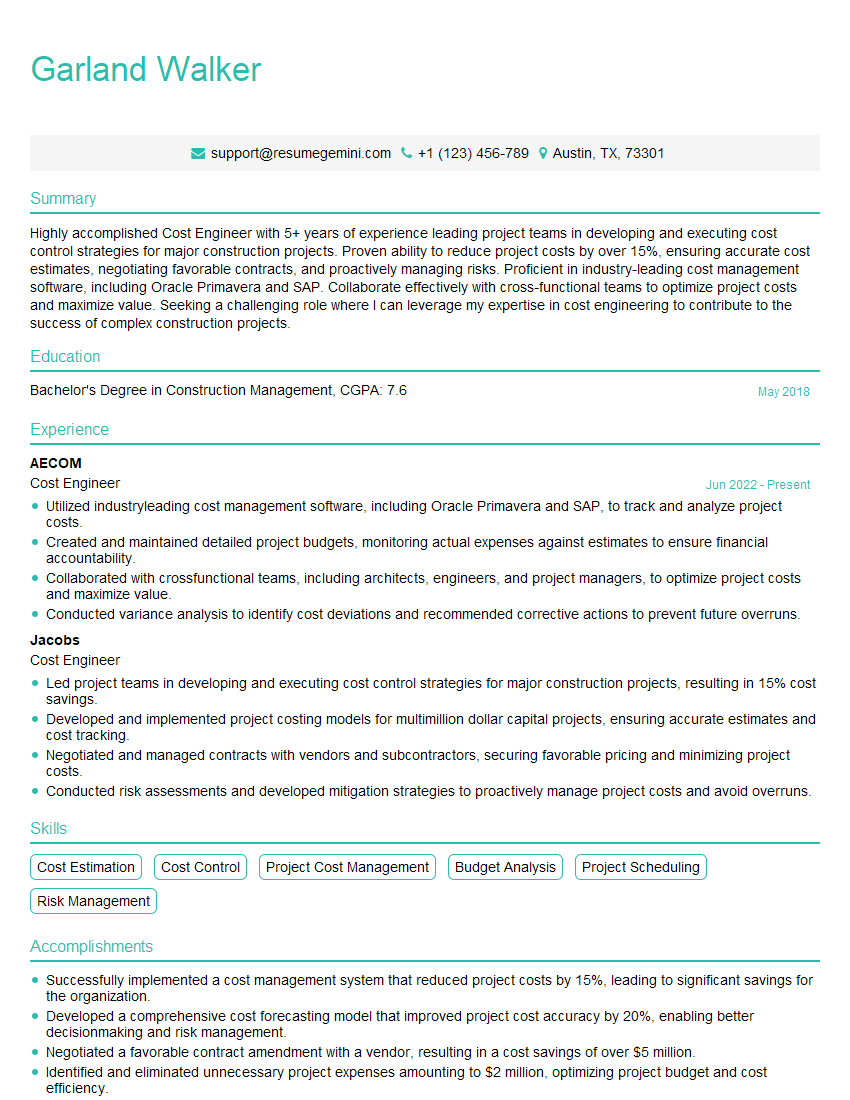
Mastering the Value Engineering Job Plan (VEJP) is crucial for advancing your career in engineering and project management. A strong understanding of VEJP principles demonstrates your ability to optimize projects, reduce costs, and enhance overall value. This skill is highly sought after by employers. To increase your chances of landing your dream role, creating an ATS-friendly resume is paramount. ResumeGemini is a trusted resource that can help you build a professional and impactful resume tailored to highlight your VEJP expertise. Examples of resumes specifically tailored for Value Engineering Job Plan (VEJP) roles are available to help you get started.
Explore more articles
Users Rating of Our Blogs
Share Your Experience
We value your feedback! Please rate our content and share your thoughts (optional).
What Readers Say About Our Blog
Very informative content, great job.
good