The thought of an interview can be nerve-wracking, but the right preparation can make all the difference. Explore this comprehensive guide to Experience with Glass Handling Tools and Equipment interview questions and gain the confidence you need to showcase your abilities and secure the role.
Questions Asked in Experience with Glass Handling Tools and Equipment Interview
Q 1. Describe your experience with different types of glass cutting tools.
My experience encompasses a wide range of glass cutting tools, from basic hand tools to more sophisticated automated systems. Hand tools like glass cutters, with their various wheel types (e.g., oil-fed, carbide tipped), are crucial for precise cuts on smaller pieces. I’m proficient in using these, understanding the importance of proper scoring pressure and the subsequent snapping techniques for clean breaks. For larger or more complex cuts, I’ve extensively used automated glass cutting tables. These machines utilize computer-aided design (CAD) files to precisely score and cut large sheets, minimizing waste and maximizing accuracy. I’m also familiar with water jet cutting, a more advanced method ideal for intricate shapes and specialized glasses that are less susceptible to cracking with traditional methods. My experience includes troubleshooting malfunctions on these machines and maintaining optimal cutting parameters for different glass types.
For example, when working with tempered glass, I would always prioritize a water jet cutter to avoid the risk of shattering the glass during the cutting process. Conversely, a simple hand-held cutter is perfectly adequate for smaller, less demanding projects, such as creating custom mirror pieces.
Q 2. What safety precautions do you take when handling glass?
Safety is paramount when handling glass. My safety protocol always begins with the appropriate Personal Protective Equipment (PPE): safety glasses are a must, even for seemingly simple tasks. Gloves are crucial to protect against cuts and abrasions, and I’d always choose cut-resistant gloves when handling sharp edges or broken glass. Furthermore, I’m trained in the proper techniques for lifting and moving glass sheets to prevent strain injuries and accidental drops. When working with large sheets, vacuum lifters and appropriate handling equipment are always employed. The workspace must be meticulously clean and free of debris to avoid slipping or accidental damage to the glass. I’m also meticulous about cleaning up any shards or fragments immediately after cutting or handling, to prevent injuries. Finally, I’m trained on emergency procedures for handling glass-related injuries.
Q 3. Explain the process of glass tempering.
Glass tempering is a heat treatment process that significantly increases a glass’s strength and durability. It involves heating the glass to a high temperature (around 650°C), followed by rapid cooling (quenching) with air jets. This rapid temperature change creates compressive stresses on the surface of the glass and tensile stresses in the core. When external force is applied, the compressive stresses must be overcome before the glass begins to fracture, resulting in substantially increased strength compared to annealed (standard) glass. The process results in glass that is roughly four to five times stronger and more resistant to impact and thermal shock. However, tempered glass shatters into small, relatively harmless pieces when broken, making it safer than annealed glass in many applications.
I’ve worked with various tempering ovens and have experience monitoring the temperature and cooling cycles to ensure consistent and high-quality results. Any deviation from the set parameters can result in defects, so precise control is critical.
Q 4. What are the different types of glass available and their applications?
Many types of glass exist, each with specific properties and applications. Annealed glass is the most common, used for windows and everyday applications. Tempered glass, as discussed earlier, finds use in automotive windows, shower doors, and other safety-critical situations. Laminated glass, composed of two or more sheets bonded with an interlayer (typically PVB), provides enhanced safety and security, commonly used in windshields and architectural applications. Other types include: insulated glass units (IGUs), which are double or triple-pane units with gas-filled spaces for better insulation; low-E glass, with coatings designed to reduce energy transfer; and specialty glasses like patterned, etched, or colored glass, used for decorative purposes.
Choosing the right type of glass is crucial; for instance, a storefront might use laminated glass for security, while a residential window might suffice with annealed or insulated glass. I am familiar with the properties of each and can advise on the best choice for any given project.
Q 5. How do you identify damaged or defective glass?
Identifying damaged or defective glass requires a keen eye and understanding of glass properties. Visual inspection is the first step, looking for scratches, chips, cracks, bubbles, or other surface imperfections. For larger sheets, examining them under polarized light can reveal internal stresses or flaws not visible to the naked eye. I also use tools like a straight edge to check for flatness and warping. For tempered glass, I am trained to look for tell-tale signs of stress fracture, where the glass is already under extreme stress and will shatter at the slightest impact. Furthermore, I’m familiar with industry standards and quality control procedures to ensure the glass meets the required specifications for its intended application. Rejection of substandard glass is critical in order to prevent costly failure in the field.
Q 6. Describe your experience with glass handling equipment such as vacuum lifters.
My experience with glass handling equipment includes extensive use of vacuum lifters. These are invaluable tools for safely handling large and heavy glass sheets. I’m proficient in operating various types of vacuum lifters, understanding the importance of proper pad placement to ensure even suction and prevent breakage. I’m well-versed in safety checks before each lift, including checking vacuum pressure and ensuring the integrity of the suction cups. I have also worked with other equipment like glass carriers, forklifts equipped with glass handling attachments, and specialized cranes for particularly large or awkwardly shaped glass pieces. The safe and efficient handling of glass is paramount to preventing accidents and damage, and the right equipment is crucial to that process. Proper training and competency are critical in their operation.
Q 7. How do you ensure the safe transportation and storage of glass?
Safe transportation and storage of glass involves several key steps. Sheets must be properly padded and protected during transport, using materials like cardboard spacers, protective film, and sturdy crates. Strapping is critical to secure the glass and prevent shifting during transit. For larger sheets, specialized transportation vehicles and securement methods are employed. In storage, glass should be kept in a climate-controlled environment to prevent thermal shock. Vertical storage is preferred, but if horizontal storage is necessary, proper support is vital to avoid sagging or breakage. Sheets should be stored away from potential hazards and appropriately labeled. Implementing a first-in, first-out (FIFO) system for inventory also aids in minimizing the risk of damage to older stock. This entire process prioritizes preventing breakage and maintaining the quality of the material.
Q 8. What are the common causes of glass breakage during handling?
Glass breakage during handling is a common problem stemming from several factors. Think of it like handling a delicate cake – a single wrong move can ruin everything. The most common causes include:
- Impact and Pressure: Dropping, bumping, or applying excessive pressure to the glass, especially at its edges, is a primary cause. Imagine the stress on the glass if you were to slam it down on a hard surface.
- Improper Lifting Techniques: Lifting glass sheets without adequate support or using incorrect postures can lead to cracking or shattering. Think of trying to carry a large mirror without any assistance; the weight can easily cause breakage.
- Temperature Fluctuations: Rapid temperature changes can cause thermal stress, leading to cracking. Just like a glass of ice water on a hot day can crack due to sudden heating and expansion, rapid temperature changes on glass sheets can have similar effects.
- Pre-existing Flaws: Microscopic flaws within the glass itself can act as stress points, making the glass more vulnerable to breakage. These flaws might not be visible but can weaken the overall structure.
- Improper Storage and Handling: Leaving glass sheets improperly stacked, exposed to the elements, or using abrasive materials can cause scratches and weaken the glass. Storing heavy sheets improperly can cause the weight to shift and cause breakage.
Q 9. What is your experience with automated glass handling systems?
My experience with automated glass handling systems is extensive. I’ve worked with various systems, from simple robotic arms for loading and unloading to fully integrated systems managing the entire production line. I’m proficient in programming and operating these systems, including those using vacuum lifters, robotic grippers, and conveyor belts. For example, I was involved in the implementation of a new automated system in a glass processing plant that reduced breakage by 40% and increased productivity by 30%. This involved careful selection of appropriate grippers to avoid scratching the glass, optimising the movement path of the robotic arms to minimise jarring, and implementing robust safety features.
Q 10. Describe your troubleshooting skills related to glass handling equipment malfunctions.
Troubleshooting glass handling equipment malfunctions requires a systematic approach. I use a methodical process of observation, testing, and elimination. First, I carefully observe the malfunction, noting any unusual sounds, vibrations, or behaviors. Then, I systematically check the various components – for example, vacuum pumps, sensors, motors, and control systems. If a vacuum lifter isn’t working correctly, I might check for leaks, ensure the power supply is correct, inspect vacuum cups for wear and tear and replace them if necessary. I use diagnostic tools and manuals to pinpoint the root cause of the problem. If a control system error occurs, I use a combination of error codes and system logs to identify and correct the fault. For example, recently, when an automated cutting machine malfunctioned, I discovered a loose wire connection leading to inaccurate cutting operations. Replacing the wiring restored the machine to full functionality.
Q 11. How do you measure and cut glass accurately?
Accurate measurement and cutting of glass is critical. I use a combination of tools and techniques, depending on the glass type and desired cut. For straight cuts, I typically use a precision glass cutter and a straight edge. For curved cuts, a specialized glass cutting tool with a swivel head might be employed. The key is consistent pressure and a sharp cutting wheel. After cutting, snapping the glass along the score line requires a smooth, controlled action, often using specialized tools such as a snapping pliers or a mechanical glass breaker. Ensuring accurate measurements with a ruler or a digital caliper prior to cutting prevents waste and rework. I also consider the properties of the specific glass, such as its thickness and hardness, when selecting the right tools and techniques to avoid chipping or fracturing during cutting.
Q 12. Explain the process of glass edging and bevelling.
Glass edging and bevelling are finishing processes that enhance the aesthetic appeal and functionality of glass. Edging involves grinding and polishing the edges of the glass to create a smooth, rounded, or chamfered profile. Bevelling is a specific type of edging that creates a sloped or angled edge, often used for decorative purposes. These processes are typically done on specialised glass edging machines. The machines use abrasive wheels to precisely grind the glass to the required edge profile. During this process, the machine needs to be calibrated correctly to ensure the appropriate angle and smoothness, with various settings adjusted to match different glass types and thickness. After grinding, polishing wheels are used to obtain the desired surface finish. The choice of edging or bevelling depends on the application and desired look – a rounded edge might be preferable for safety, whereas a bevelled edge enhances visual appeal.
Q 13. How do you maintain and clean glass handling tools?
Maintaining and cleaning glass handling tools is crucial for preventing damage to the glass and ensuring the tools’ longevity. This involves regular cleaning to remove any glass fragments, dust, or debris. For tools like glass cutters, keeping the cutting wheel clean and sharp is crucial for preventing damage. I use appropriate cleaning solutions and soft cloths or brushes to prevent scratching. Vacuum lifters need regular maintenance to ensure proper functionality. Vacuum cups need regular inspection for wear and tear and replacement if necessary. Lubrication of moving parts is important for smooth operation. Proper storage in a clean, dry place is vital to prevent corrosion and damage. For example, regularly cleaning the vacuum gripper using compressed air to remove dust from the rubber sealing surface ensures a good seal and prevents accidental slippage.
Q 14. What is your experience with glass laminating?
My experience with glass laminating includes working with various types of laminates and equipment. Glass laminating involves bonding two or more sheets of glass together with an interlayer, typically polyvinyl butyral (PVB). This creates a stronger, safer, and more versatile glass product, often used in automotive windshields or security applications. The process typically involves cleaning the glass sheets, applying the interlayer, and then bonding the sheets under controlled pressure and temperature in an autoclave. I’m experienced with troubleshooting issues like air bubbles or delamination in the laminated glass, and I know how to adjust process parameters to achieve optimal results. In one project I managed to improve the efficiency of the laminating process by optimizing the application technique of the PVB interlayer, leading to less air trapping and a smoother, stronger final product. The process requires careful control of temperature, pressure, and time to ensure the interlayer cures properly and forms a strong bond.
Q 15. Describe your knowledge of different glass sealant types and applications.
Glass sealants are crucial for ensuring the longevity and structural integrity of glass installations. My experience encompasses a wide range of sealants, each with its own strengths and weaknesses depending on the application.
- Silicone Sealants: These are incredibly versatile, offering excellent adhesion to various substrates, including glass, metal, and wood. They’re flexible and can withstand temperature fluctuations, making them ideal for exterior applications and areas prone to movement. However, they can be messy to apply and require careful curing time.
- Polyurethane Sealants: Known for their high strength and durability, polyurethane sealants are excellent for structural glazing and applications requiring superior water resistance. They offer excellent UV resistance, crucial for exterior use. However, they are less flexible than silicones and can crack under excessive movement.
- Butyl Sealants: Offering exceptional adhesion and excellent resistance to weathering, butyl sealants are often used in high-performance glazing systems. They provide a durable, airtight seal but are more challenging to work with and require specialized tools for application.
- Epoxies: These two-part sealants provide an extremely strong bond and exceptional durability. They’re ideal for applications requiring high structural integrity, but they’re rigid and can crack if subjected to significant movement. Preparation is critical for successful application.
Choosing the right sealant is paramount. For example, in a high-rise building’s curtain wall, I would opt for a high-performance polyurethane or butyl sealant for its weather resistance and structural strength. For a simple shower enclosure, a silicone sealant would suffice due to its ease of use and flexibility.
Career Expert Tips:
- Ace those interviews! Prepare effectively by reviewing the Top 50 Most Common Interview Questions on ResumeGemini.
- Navigate your job search with confidence! Explore a wide range of Career Tips on ResumeGemini. Learn about common challenges and recommendations to overcome them.
- Craft the perfect resume! Master the Art of Resume Writing with ResumeGemini’s guide. Showcase your unique qualifications and achievements effectively.
- Don’t miss out on holiday savings! Build your dream resume with ResumeGemini’s ATS optimized templates.
Q 16. How do you ensure the quality of finished glass products?
Quality control in glass finishing is a multifaceted process that begins long before the final product is complete. It involves rigorous checks at every stage of production.
- Incoming Inspection: Ensuring the raw glass meets specifications in terms of thickness, clarity, and surface quality is the first step. This involves visual inspection and sometimes sophisticated measurement tools.
- Processing Control: During cutting, grinding, polishing, or other processes, regular checks ensure consistent quality and prevent defects. This often includes automated quality control systems.
- Final Inspection: Before packaging, a thorough visual inspection is conducted to check for scratches, chips, cracks, or other imperfections. Precise measurements verify dimensional accuracy.
- Testing: Depending on the application, strength testing (e.g., impact resistance) or other relevant quality tests might be performed to ensure the product meets safety and performance standards.
For instance, in a recent project involving large-format architectural glass, we implemented a multi-stage quality control process, including automated defect detection and rigorous testing to ensure structural integrity and meet the high standards demanded by the client. A detailed record of every step is kept for traceability and accountability.
Q 17. What are the different types of safety glasses and when to use them?
Safety eyewear is paramount in glass handling. The type of eyewear needed depends entirely on the specific task and potential hazards.
- Standard Safety Glasses: These offer basic protection against flying debris and impacts of low energy. They are suitable for tasks such as general cleaning or minor adjustments.
- Impact-Resistant Safety Glasses: Providing superior protection against high-velocity impacts, these are essential for activities involving glass cutting, grinding, or breaking. They often exceed ANSI Z87.1 standards.
- Side Shield Safety Glasses: These glasses provide extended protection from sideways impacts. This is crucial in situations where there’s a risk of particles or shards deflecting.
- Goggles: Goggles offer the most comprehensive eye protection, fully enclosing the eyes and preventing dust, chemicals, and debris from entering. They are necessary when working with glass dust or using certain chemicals.
Imagine working with a glass cutter – impact-resistant safety glasses are mandatory. If you’re handling glass near a grinder, safety goggles are recommended to prevent airborne dust from entering your eyes. It’s vital to choose appropriate safety glasses based on the specific hazards associated with the task.
Q 18. Describe your experience with working at heights while handling glass.
Working at heights while handling glass requires meticulous planning and adherence to strict safety protocols. My experience includes working on high-rise buildings and other projects involving elevated glass installation.
Safety harnesses, fall arrest systems, and proper scaffolding are essential. Before commencing work, a comprehensive risk assessment is crucial to identify all potential hazards, including the risk of falling glass. We always use a secure work platform and double-check all equipment before beginning any task. Communication with ground crew is key to ensure a smooth and safe operation. We also frequently conduct toolbox talks to emphasize safety procedures.
One memorable project involved installing a glass atrium on the 20th floor of a skyscraper. The meticulous planning and use of appropriate fall protection measures ensured that the installation was completed safely and without incident. Every member of the team was properly trained and equipped with all the necessary safety gear. The emphasis on safe working practices is unwavering.
Q 19. What is your understanding of OSHA regulations related to glass handling?
OSHA regulations concerning glass handling are designed to protect workers from the inherent hazards associated with this material. I have a thorough understanding of these regulations, including those related to fall protection, personal protective equipment (PPE), and safe handling procedures.
- Fall Protection: OSHA mandates fall protection at heights above six feet. This often involves safety harnesses, guardrails, or other fall arrest systems.
- Personal Protective Equipment (PPE): Appropriate PPE, including safety glasses, gloves, and cut-resistant clothing, is essential to protect workers from cuts, abrasions, and impacts.
- Safe Handling Procedures: OSHA guidelines emphasize safe handling techniques, including proper lifting methods, the use of suction cups or other lifting devices for large pieces, and the careful handling of broken glass.
- Training and Communication: OSHA mandates appropriate training for employees in safe glass handling techniques. Clear communication among workers is critical to prevent accidents.
Non-compliance can lead to serious consequences, including fines and legal action. My experience ensures I’m fully aware of these regulations and integrate them into every project. Regular safety training and toolbox talks with the team reinforce adherence to these important guidelines.
Q 20. How would you handle a situation where glass breaks during installation?
Glass breakage during installation is a possibility that necessitates a calm, organized response. My approach involves a series of steps to ensure safety and minimize disruption.
- Immediate Safety Measures: Clear the immediate area to prevent further injury. Ensure everyone is safe and away from the broken glass.
- Assess the Damage: Determine the extent of the damage and identify any potential safety hazards (e.g., sharp edges, structural compromise).
- Clean Up: Carefully clean up the broken glass using appropriate tools such as a dustpan and brush, and dispose of it properly in puncture-resistant containers.
- Determine the Cause: Investigate the cause of the breakage to prevent similar incidents in the future. This might involve analyzing the glass itself, the installation technique, or external factors.
- Repair or Replacement: If the damage is minor, repair may be possible. If not, a replacement is necessary, using the correct procedures and materials to ensure a secure and safe installation.
During a recent installation, a pane broke due to an unexpected impact. We immediately followed our established protocols: secured the area, carefully cleaned up the broken glass, investigated the cause (a dropped tool), and replaced the pane with a new one, ensuring that all safety regulations were adhered to.
Q 21. Explain your experience with different types of glass installation techniques.
My experience includes various glass installation techniques, each suitable for different applications and glass types.
- Dry Glazing: This technique utilizes compression fittings and gaskets to hold the glass in place. It’s often used for smaller projects and applications where easy disassembly might be required.
- Wet Glazing: Involves the use of a sealant to secure the glass. It provides a better watertight seal than dry glazing and is commonly used in exterior applications, particularly in curtain walls and shower enclosures.
- Structural Glazing: This advanced technique uses strong structural silicone or other high-performance sealants to support the glass as a load-bearing element. It’s employed in challenging situations such as large-scale facades and skylights.
- Point-Fixed Glazing: This method uses small, concealed fixings to hold the glass in place, providing a sleek, minimalist aesthetic. It’s typically used in high-end architectural projects.
The choice of technique depends heavily on factors such as glass size, weight, the environmental conditions, and aesthetic requirements. For example, in a commercial building requiring maximum weatherproofing, we utilized wet glazing with high-performance sealants. For a modern residential project emphasizing sleek lines, point-fixed glazing was the perfect solution.
Q 22. How do you calculate the amount of glass needed for a project?
Calculating the amount of glass needed for a project involves careful measurement and consideration of waste. It’s not just about the final dimensions; you need to account for cuts, potential breakage, and design elements.
Step-by-step process:
- Detailed Drawings: Obtain precise architectural or design drawings indicating the glass dimensions for each component (windows, doors, shelves, etc.).
- Material Specifications: Determine the type of glass (e.g., annealed, tempered, laminated) and its thickness. This impacts both the calculations and handling procedures.
- Waste Factor: Include a waste factor to account for cutting and potential breakage. This percentage varies depending on the complexity of the project and the skill of the glazier, typically ranging from 5% to 15% or even higher for intricate designs.
- Calculations: Calculate the total area of glass needed for each component. For example, a rectangular window is simply length x width. More complex shapes might require breaking them down into simpler geometric forms.
- Total Quantity: Sum the area of all components. Add the calculated waste factor to this total. Always round up to ensure sufficient material.
- Ordering: Consider ordering glass in standard sheet sizes for efficiency and cost-effectiveness, even if it means some additional cutting and waste.
Example: Let’s say we need glass for five 2ft x 3ft rectangular windows. The total area is 5 * (2ft * 3ft) = 30 sq ft. With a 10% waste factor, we add 3 sq ft (30 sq ft * 0.10 = 3 sq ft), resulting in a total order of 33 sq ft.
Q 23. What software or tools are you familiar with for glass design or estimation?
I’m proficient in several software and tools for glass design and estimation. My experience includes AutoDesk AutoCAD for precise drafting and dimensioning, allowing for accurate glass calculations. I also utilize specialized glass design software like Glass Shop and similar programs which often include built-in estimation tools and material calculations. These programs allow for creating detailed drawings, simulating the final product and accounting for various factors like beveling, drilling, and other special requirements.
Beyond software, I’m adept at using laser measurement tools for precise on-site measurements, ensuring accurate material estimations and reducing potential errors. I also rely on spreadsheets for organizing data, managing material lists, and tracking project costs.
Q 24. Describe your experience with handling large or heavy glass sheets.
Handling large and heavy glass sheets requires specialized techniques and equipment to prevent damage and injury. I have extensive experience using suction cups, vacuum lifters, and specialized glass handling trolleys to safely move these sheets. These tools significantly reduce the risk of breakage and strain injuries.
In a recent project involving 10ft x 5ft tempered glass panels for a large storefront window, we used a crane equipped with specialized glass handling attachments for the initial placement. Smaller panels were moved with vacuum lifters and wheeled trolleys. Safety harnesses and spotters were crucial throughout the process. Proper communication and teamwork is paramount to avoid accidents.
Q 25. What are the challenges of handling different types of glass (e.g., tempered, laminated)?
Different types of glass present unique challenges. Tempered glass, while strong, is extremely susceptible to breakage if scratched or impacted on its edges. Care must be taken to avoid chipping during handling and installation. Specialized protective coverings are often used during transport and handling.
Laminated glass, though more resistant to breakage, is heavier than annealed glass and requires careful handling due to its layered structure. Sharp objects can easily puncture the interlayer, compromising its strength and safety. We always use padded straps and soft surfaces during transport to avoid damage.
Annealed glass is generally easier to handle, but still requires caution to prevent breakage and scratches. Using appropriate gloves and employing proper lifting techniques reduces risk. Each type necessitates specific handling procedures. It’s vital to fully understand the properties of each before commencing any work.
Q 26. How do you identify and address potential hazards related to glass handling?
Identifying and addressing potential hazards in glass handling is paramount. My approach involves a multi-faceted strategy focused on:
- Risk Assessment: Before each project, I conduct a thorough risk assessment to identify potential hazards, including sharp edges, heavy loads, slippery surfaces, and potential falling objects.
- PPE: I always ensure that myself and my team use appropriate personal protective equipment (PPE), including safety glasses, gloves, and steel-toed boots.
- Safe Handling Techniques: We meticulously follow established safe handling procedures, utilizing proper lifting techniques, equipment like suction cups and vacuum lifters, and secure transportation methods.
- Proper Storage: Glass sheets are stored upright, and padded to prevent damage and breakage. The storage area should be clean and free of obstructions.
- Emergency Preparedness: We are trained to handle glass breakage incidents safely, including proper cleanup procedures to prevent injuries from sharp fragments.
- Regular Inspections: Equipment is regularly inspected and maintained to ensure it is in safe working order. This extends to the quality inspection of the glass itself before installation.
Q 27. Describe your experience with working in a team environment on glass handling projects.
Teamwork is essential in glass handling. Effective communication and collaboration are crucial, particularly when dealing with large or complex projects. I actively participate in pre-project planning meetings to review the scope of work, potential hazards, and safety protocols. During execution, I rely heavily on clear communication with my team members to coordinate lifting, transport, and installation. Everyone is well-trained to understand their role and responsibilities. Our team utilizes a standardized communication system, with clear hand signals and verbal instructions to ensure smooth and safe operations.
One example was a recent museum installation where we worked as a coordinated team. Each member had a specific task—some operated the vacuum lifter, others guided the glass panels, and still others ensured the safety of the surrounding area. Through well-defined roles, excellent communication, and consistent attention to safety, we completed the project flawlessly and safely.
Q 28. What are your career goals related to glass handling and fabrication?
My career goals center around continued growth and expertise in glass handling and fabrication. I aim to enhance my knowledge of advanced glass technologies and handling techniques, including specialized glass types and automated handling systems. I aspire to take on increasingly challenging projects that showcase my skills and leadership abilities. I am particularly interested in exploring opportunities in architectural glass projects and high-end residential installations. Long-term, I aim to be a leading expert in safe and efficient glass handling practices, potentially mentoring and training future professionals in this field.
Key Topics to Learn for Experience with Glass Handling Tools and Equipment Interview
- Safety Procedures and Regulations: Understanding and adhering to all relevant safety protocols for handling glass, including personal protective equipment (PPE) requirements and emergency procedures.
- Types of Glass and their Properties: Familiarity with different types of glass (e.g., tempered, laminated, borosilicate) and their respective strengths, weaknesses, and handling considerations.
- Tool Selection and Operation: Knowing which tools are appropriate for various glass handling tasks (e.g., suction cups, tweezers, specialized cutters) and how to operate them safely and efficiently.
- Glass Cutting and Shaping Techniques: Understanding the principles of glass cutting, scoring, and shaping, including the use of specialized tools and techniques to achieve precise cuts and avoid breakage.
- Glass Cleaning and Maintenance: Proper methods for cleaning and maintaining glass surfaces to prevent damage and ensure optimal performance, including appropriate cleaning agents and techniques.
- Troubleshooting and Problem-Solving: Ability to identify and resolve common issues encountered during glass handling, such as cracks, chips, or scratches, and implement preventative measures.
- Quality Control and Inspection: Understanding quality control procedures for inspecting glass for defects and ensuring adherence to industry standards.
- Automation and Robotic Systems (if applicable): Familiarity with automated glass handling systems and robotic equipment, including programming and maintenance.
Next Steps
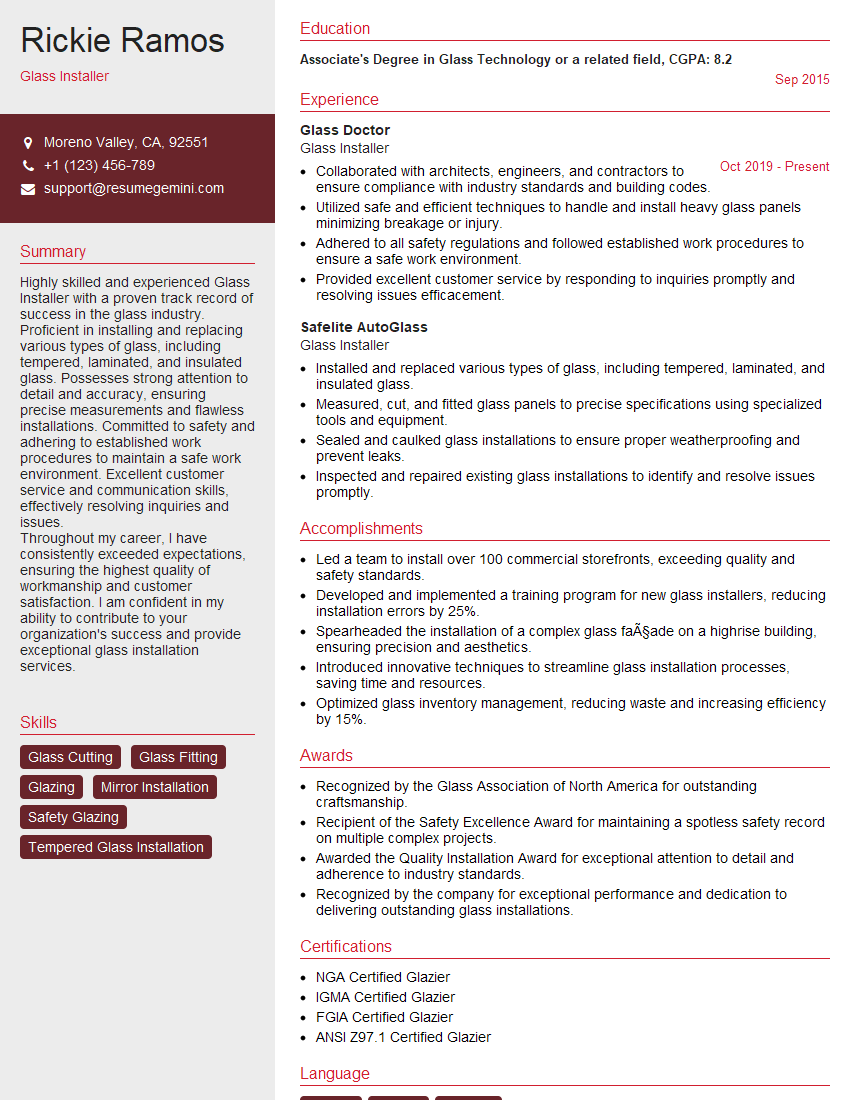
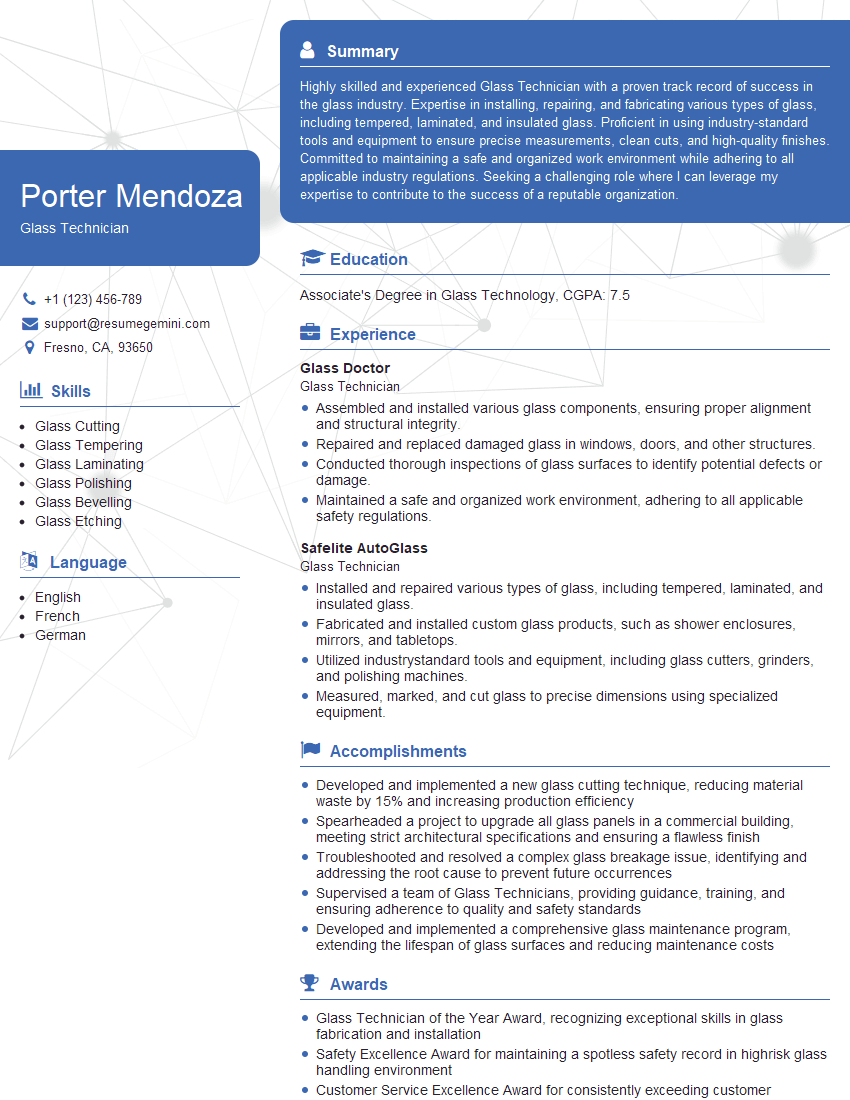
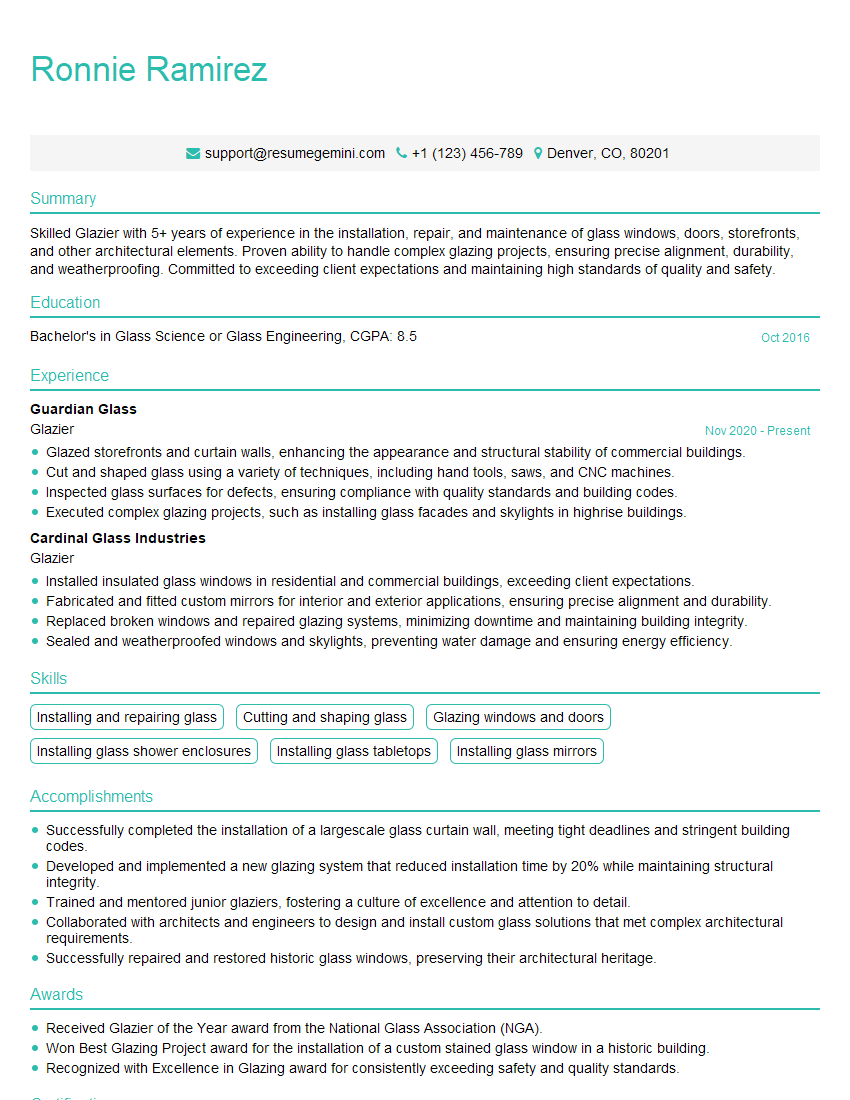
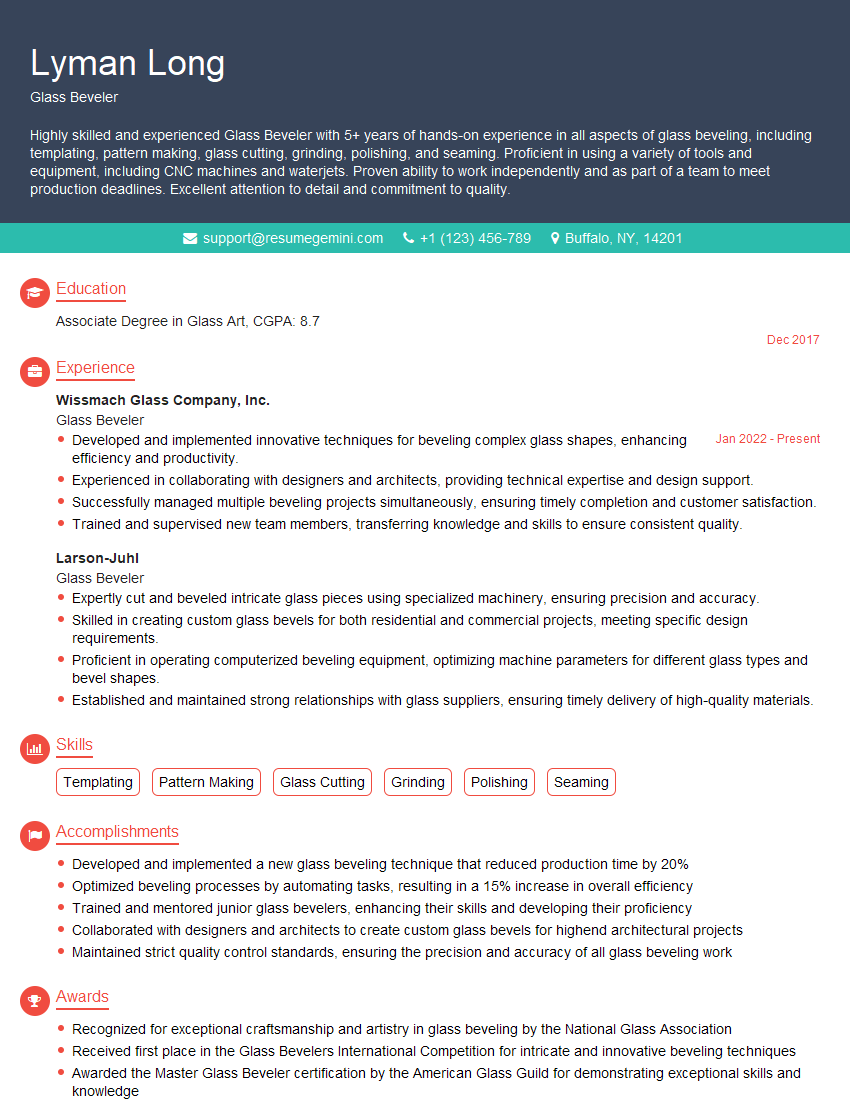
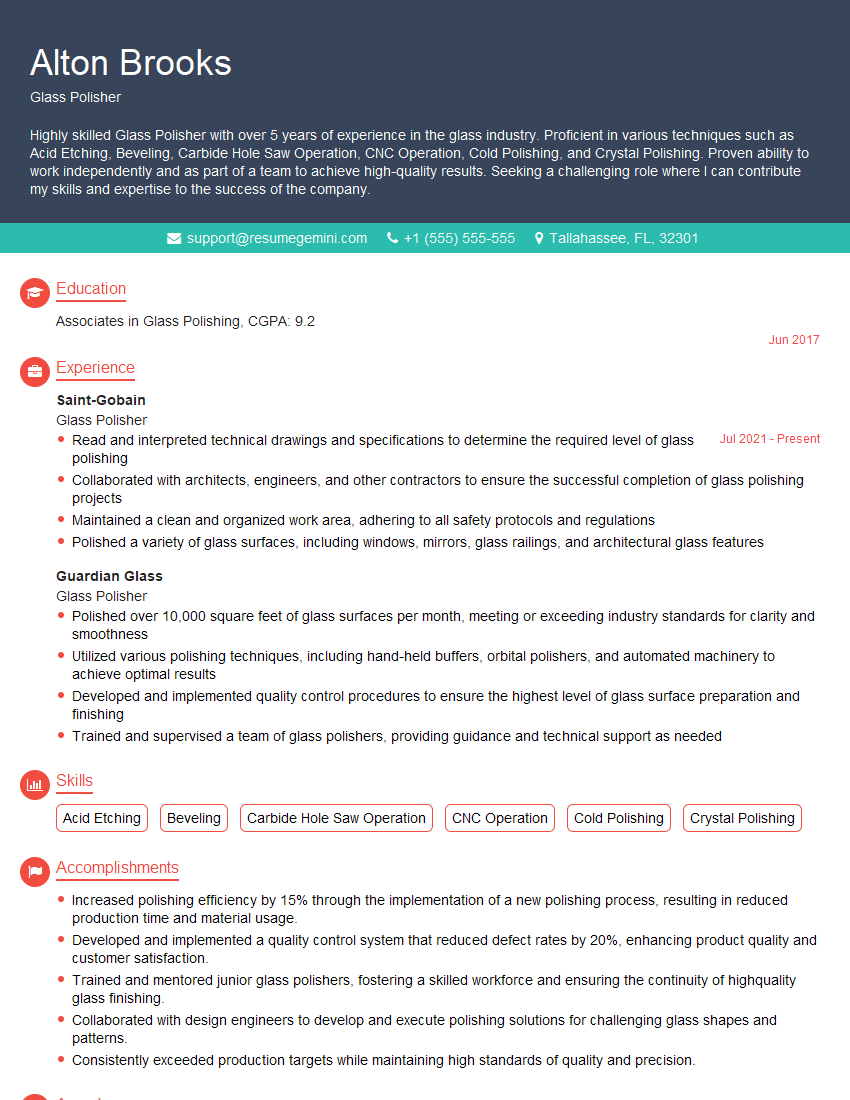
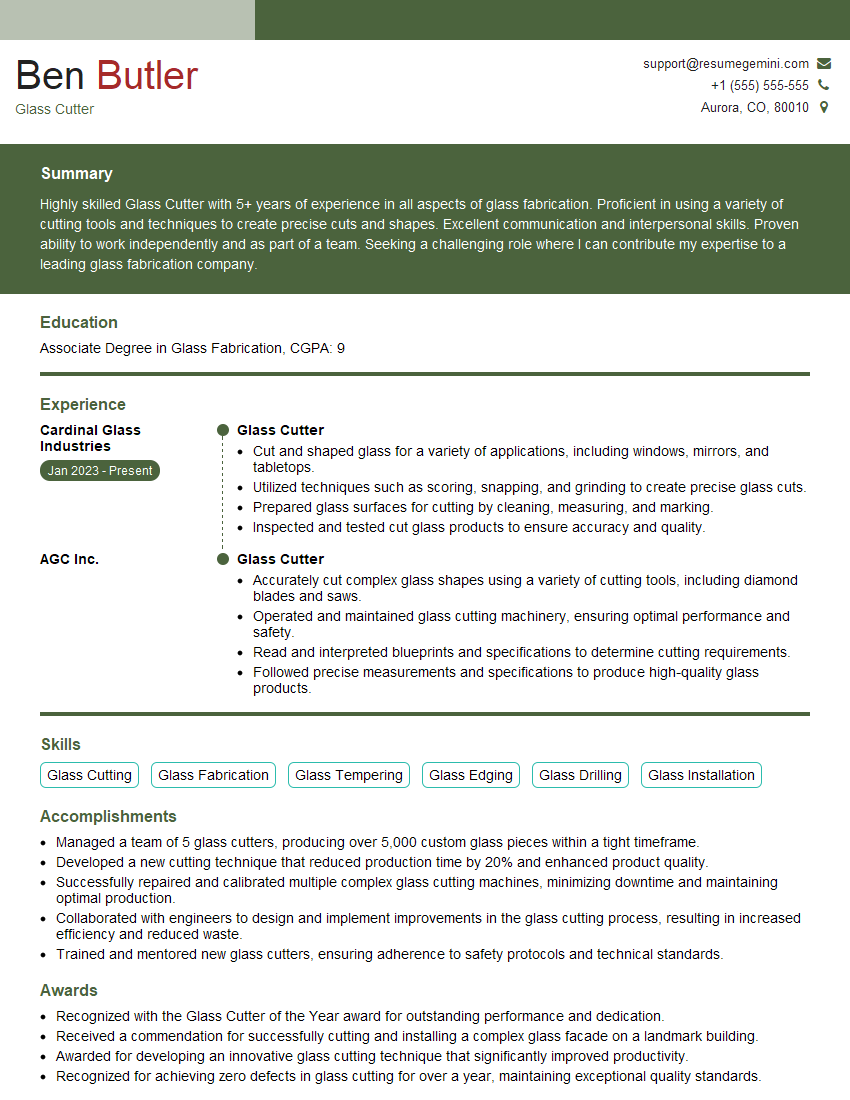
Mastering experience with glass handling tools and equipment is crucial for career advancement in various industries, opening doors to specialized roles and higher earning potential. A well-crafted resume is key to showcasing your skills and experience to potential employers. Creating an ATS-friendly resume is essential to ensure your application gets noticed. ResumeGemini can help you build a professional and impactful resume that highlights your expertise in glass handling. Examples of resumes tailored to this specific experience are available to help you get started. Invest the time to create a strong resume – it’s your first impression!

Explore more articles
Users Rating of Our Blogs
Share Your Experience
We value your feedback! Please rate our content and share your thoughts (optional).
What Readers Say About Our Blog
Very informative content, great job.
good