Every successful interview starts with knowing what to expect. In this blog, we’ll take you through the top Vibration Shaker Operation interview questions, breaking them down with expert tips to help you deliver impactful answers. Step into your next interview fully prepared and ready to succeed.
Questions Asked in Vibration Shaker Operation Interview
Q 1. Explain the principle of operation of an electrodynamic vibration shaker.
Electrodynamic shakers operate on the principle of Lorentz force. A powerful electromagnet generates a magnetic field. When an alternating current (AC) flows through a coil attached to the shaker’s armature (the moving part), the interaction between the current and the magnetic field produces a force that pushes and pulls the armature, creating the vibration. Think of it like a speaker, but instead of producing sound waves, it produces mechanical vibrations. The armature is connected to the test article via a fixture, transmitting the vibrations.
In simpler terms, imagine a magnet and a wire with electricity flowing through it. If you move the wire near the magnet, it experiences a force; conversely, if you pass an alternating current through a wire positioned within a magnetic field, the wire will move back and forth, generating vibrations. This back-and-forth motion is precisely what an electrodynamic shaker utilizes to simulate various vibration environments.
Q 2. Describe different types of vibration shakers and their applications.
Vibration shakers come in various types, each suited for different applications:
- Electrodynamic Shakers: The most common type, as described above. They are used for a wide range of applications, from component testing to simulating environmental vibrations in aerospace and automotive industries.
- Hydraulic Shakers: These use hydraulic fluid to generate high force at low frequencies, ideal for testing large structures or simulating seismic events. They’re often used in aerospace, civil engineering, and defense.
- Piezoelectric Shakers: These use piezoelectric crystals that expand and contract when subjected to an electric field. They are well-suited for high-frequency applications and precise control but generally offer lower force capabilities. Applications include micro-device testing and precision machining.
- Servo-Hydraulic Shakers: These combine the high force of hydraulic systems with precise control offered through servo-feedback mechanisms. This allows for very accurate and complex waveform generation, commonly used for complex vibration profile simulations in various industries.
The choice depends on the frequency range, force requirements, and the size and weight of the test article. For instance, a small electronic component might be tested on a piezoelectric shaker, while a large automotive engine block would require a hydraulic or a large electrodynamic shaker.
Q 3. What are the safety precautions when operating a vibration shaker?
Safety is paramount when operating vibration shakers. Key precautions include:
- Proper Training: Only trained and authorized personnel should operate the shaker.
- Secure Setup: The test article must be securely fastened to the shaker armature to prevent it from flying off during operation.
- Emergency Stops: Operators must be familiar with the location and function of emergency stop buttons and switches.
- Hearing Protection: Shakers can be very loud; hearing protection is essential.
- Safety Barriers/Enclosures: These should be used to protect personnel from potential hazards during operation.
- Vibration Isolation: The shaker should be properly isolated to prevent unwanted vibrations from transferring to the surrounding environment.
- Regular Maintenance: Preventative maintenance ensures safe and reliable shaker operation.
Ignoring these precautions can lead to serious injury or damage to equipment. Always consult the shaker’s operating manual for specific safety procedures.
Q 4. How do you select the appropriate shaker for a specific test?
Selecting the appropriate shaker involves considering several factors:
- Frequency Range: The shaker’s frequency range must encompass the frequencies of interest in the test.
- Force Requirements: The shaker must be capable of generating sufficient force to effectively test the article. This is often specified in terms of force (Newtons or pounds) or acceleration (g’s).
- Payload Capacity: The weight of the test article and its fixture must be within the shaker’s payload capacity.
- Test Environment: Considerations such as temperature, humidity, and available space are crucial. For instance, an environmental chamber may be needed for certain tests.
- Waveform Requirements: The shaker must support the necessary waveform types for the test (sine, random, shock, etc.).
For example, testing a small circuit board might require a smaller shaker with a high frequency range, whereas testing a large engine component would necessitate a more powerful shaker with a lower frequency range.
Q 5. Explain the concept of resonance and its significance in vibration testing.
Resonance occurs when the frequency of the excitation force applied by the shaker matches the natural frequency of the test article. At resonance, the amplitude of vibration dramatically increases, potentially leading to damage or failure of the test article. Think of it like pushing a child on a swing. If you push at the natural frequency of the swing, its amplitude grows significantly.
In vibration testing, understanding resonance is crucial. Identifying and avoiding resonance during testing is critical to prevent damage to the test item. This is often achieved through various analysis methods prior to the actual testing. Understanding resonance frequencies also helps in determining a suitable test frequency range that avoids dangerous excitation close to resonance.
Q 6. How do you measure and analyze vibration data?
Vibration data is typically measured using accelerometers, which measure acceleration, and then converted to velocity or displacement. Data acquisition systems (DAQ) are used to capture the signals from the accelerometers and transfer this data to a computer. Specialized software is used for analysis. This might include:
- Fast Fourier Transforms (FFTs): To determine the frequency content of the vibration signal. This allows us to find the peak frequencies and assess harmonic components.
- Power Spectral Density (PSD): To visualize the distribution of power across different frequencies.
- Time-domain analysis: To look at the raw vibration signal over time and assess transient events. This is helpful for shock analysis.
- Order Analysis: Especially useful in rotating machinery, to analyze vibration related to the rotational speed.
Sophisticated analysis software allows engineers to identify potential problems, like excessive vibration at specific frequencies or unexpected resonances.
Q 7. What are the common types of vibration waveforms used in testing?
Several common vibration waveforms are used in testing:
- Sine Waves: A pure tone at a single frequency, useful for determining the resonant frequencies of a structure.
- Random Vibration: A signal with energy distributed across a range of frequencies, simulating real-world conditions like road noise for automotive components. The statistical nature of random vibration is key in characterizing responses in a stochastic sense.
- Shock Pulses: Short bursts of high-amplitude vibration, simulating impacts or drops. This can include classical pulses like half-sine or sawtooth pulses.
- Chirp Signals: Signals that sweep across a frequency range, useful for quickly identifying resonant frequencies or assessing system frequency response across a wide range.
The choice of waveform depends on the specific test objectives and the nature of the expected real-world vibrational environment the test article will face.
Q 8. Describe the process of calibrating a vibration shaker.
Calibrating a vibration shaker ensures accurate and reliable test results. It involves comparing the shaker’s actual performance to a known standard. This typically uses a laser vibrometer or accelerometer, which measures the shaker’s displacement, velocity, or acceleration at various frequencies and amplitudes. The process involves several steps:
- Setup: Attach a calibrated accelerometer to the shaker’s armature (the moving part). Ensure proper mounting to minimize any artifacts.
- Excitation: Sweep the shaker through a predefined frequency range, usually from a low frequency to a high frequency, applying a controlled signal.
- Measurement: The accelerometer measures the actual vibration response of the shaker armature. This data is compared to the intended control signal.
- Comparison and Adjustment: Any discrepancies between the measured and the desired response are analyzed. The shaker’s control system might need adjustments to its gain, phase, or other parameters to compensate for deviations. This is often done through specialized calibration software.
- Documentation: The entire calibration process is meticulously documented, including the date, equipment used, test parameters, and any deviations found and corrected.
Think of it like calibrating a kitchen scale – you use a known weight (standard) to check if the scale’s reading is accurate. If it’s off, you adjust it for future measurements. Inaccurate shaker calibration can lead to incorrect conclusions about the product’s ability to withstand vibration, potentially resulting in product failure in the field.
Q 9. How do you troubleshoot common problems encountered during shaker operation?
Troubleshooting vibration shaker problems involves systematic investigation. The approach depends heavily on the observed symptom. Here are some common problems and their solutions:
- Shaker not moving: Check power supply, control system connections, and the shaker armature for any obstructions or mechanical issues. Examine fuses and circuit breakers.
- Unusual noises: Investigate loose parts, bearings, or potential mechanical rubbing. Excessive noise can often indicate impending failure.
- Inaccurate vibration levels: Calibrate the shaker (as described in the previous answer). Check for proper accelerometer attachment and signal conditioning.
- High-frequency resonances: Resonances can cause excessive vibration at certain frequencies. These may need to be dampened using additional vibration isolation techniques or by modifying the shaker’s setup.
- Control system errors: Check for software errors, communication problems, or malfunctions within the control system hardware. Refer to the system’s documentation for error codes and troubleshooting steps.
A methodical approach, using a checklist or flowchart, is vital. Start with the simplest checks, working your way through to more complex troubleshooting steps to avoid unnecessary downtime.
Q 10. What is the role of the control system in a vibration test?
The control system is the brain of a vibration test. It dictates the shaker’s performance, accurately delivering the desired vibration profile (sine, random, or shock) to the test specimen. It comprises several key components:
- Signal Generator: Creates the desired vibration waveform. This could be a simple sine wave, a complex random signal mimicking real-world conditions, or a specific shock pulse.
- Amplifier: Increases the power of the signal from the generator to drive the shaker’s electrodynamic coil.
- Feedback System: Uses a sensor (typically an accelerometer) to measure the actual vibration applied to the test article. This feedback is compared to the desired signal. The system adjusts accordingly to maintain precise control.
- Software Interface: Allows the operator to define test parameters (frequency, amplitude, duration, etc.), monitor the test in real-time, and store results.
Without a precise control system, the test wouldn’t accurately replicate the intended vibration environment, potentially leading to flawed and unreliable test results.
Q 11. Explain the importance of using proper fixturing in vibration testing.
Proper fixturing is crucial for accurate and repeatable vibration testing. The fixture securely holds the test specimen, ensuring that the intended vibration is applied consistently and that the test article’s response is accurately measured. Poor fixturing can lead to:
- Incorrect vibration transmission: The fixture might absorb or distort the vibration, preventing accurate stimulation of the specimen.
- Unwanted resonances: The fixture itself might resonate at certain frequencies, altering the test results.
- Test article damage: Improper clamping can cause damage to the specimen during testing.
The ideal fixture is rigid, yet designed to minimize its own resonant frequencies. The design also depends on the shape and characteristics of the test article. For instance, a small electronic component requires a very different fixture compared to a large automotive part.
Q 12. How do you ensure the safety of test specimens during vibration testing?
Ensuring specimen safety during vibration testing involves several measures:
- Secure Fixturing: A well-designed fixture is the primary safety feature. It must securely hold the specimen without inducing stress concentrations or points of failure.
- Visual Inspection: Thoroughly inspect the test article before testing for any pre-existing defects or weaknesses.
- Progressive Testing: Start with lower vibration levels and gradually increase the intensity, allowing for observation and adjustments.
- Safety Enclosures: Use safety enclosures to prevent the test article from becoming a projectile if it fails. This is especially important for high-amplitude tests.
- Emergency Stop: Ensure easily accessible emergency stop mechanisms are in place to halt the test instantly in case of unforeseen events.
- Personal Protective Equipment (PPE): Appropriate PPE such as safety glasses and hearing protection should always be used.
Prioritizing safety prevents accidents, protects equipment, and guarantees the integrity of the test results.
Q 13. What are the different types of vibration control systems?
Vibration control systems fall into several categories:
- Open-Loop Systems: These systems don’t use feedback to monitor the actual vibration. They simply apply a predetermined signal to the shaker. They are simpler but less accurate.
- Closed-Loop Systems: These systems use feedback from an accelerometer or other sensor to compare the actual vibration to the desired vibration. They then adjust the signal to maintain the desired profile, providing much better accuracy and control. This is the most common type in modern vibration testing.
- Hydraulic Systems: These use hydraulic actuators to generate the vibration force. They are capable of very high force levels but can be less precise than electrodynamic systems.
- Electrodynamic Systems: The most common type, using an electromagnet to generate the force. These are precise, versatile, and cover a wide frequency range.
The choice of control system depends on the specific testing requirements, the frequency range, the force levels required, and the desired level of accuracy.
Q 14. How do you interpret vibration data to identify potential failures?
Interpreting vibration data to identify potential failures requires analyzing the frequency content, amplitude, and overall shape of the vibration response. Several techniques are used:
- Frequency Response Analysis: Identify resonant frequencies where the structure exhibits high vibration amplitude. These resonances often indicate weak points or design flaws.
- Power Spectral Density (PSD): Examines the distribution of energy across various frequencies. High energy at specific frequencies can point to problematic areas.
- Modal Analysis: Identifies the natural frequencies and mode shapes of the structure. These help in understanding how the structure vibrates in different modes.
- Time-Domain Analysis: This is useful for observing the overall response characteristics, such as changes in vibration levels over time. Sudden increases or unusual patterns may indicate a potential failure.
Interpreting vibration data often requires engineering judgment and experience. Comparing the measured response to design specifications or established standards is crucial. Specialized software packages assist in this analysis, providing tools for visualization, data manipulation, and interpretation.
For instance, if a structure consistently shows high amplitude at a particular resonant frequency that is not accounted for in the design, that could point to a design weakness or manufacturing defect needing investigation.
Q 15. Describe the process of setting up a vibration test using a shaker.
Setting up a vibration test involves a meticulous process, ensuring accurate and reliable results. It begins with defining the test objectives – what are we trying to achieve? Are we assessing the durability of a component, evaluating its resonant frequencies, or verifying its performance under specific vibration profiles?
Next, we select the appropriate shaker system based on the test requirements, considering the required force, frequency range, and payload capacity. The fixture, the device used to securely mount the Unit Under Test (UUT) to the shaker, is crucial; a poorly designed fixture can introduce unwanted resonances and inaccuracies. The fixture should be designed to minimize its own resonances and transfer the vibration effectively to the UUT.
Once the UUT is securely mounted, we calibrate the shaker and instrumentation. This ensures accurate measurements and reliable data. Calibration involves using a reference accelerometer to verify the shaker’s displacement, velocity, and acceleration outputs across the relevant frequency range. We also ensure our measurement equipment (accelerometers, signal conditioners, and data acquisition systems) are properly calibrated.
After calibration, we input the specified vibration profile into the shaker control system. This could be a sine wave, random vibration, or a shock pulse, depending on the test requirements. During the test, the data is continuously monitored, providing real-time insights into the UUT’s response. Post-test analysis involves reviewing the collected data, identifying any critical points, and generating a comprehensive report.
For example, testing a new smartphone design might involve a random vibration test simulating the stresses of daily use, while a hard drive would undergo a shock test to simulate drops or impacts. Each requires careful consideration of the test parameters to accurately replicate real-world conditions.
Career Expert Tips:
- Ace those interviews! Prepare effectively by reviewing the Top 50 Most Common Interview Questions on ResumeGemini.
- Navigate your job search with confidence! Explore a wide range of Career Tips on ResumeGemini. Learn about common challenges and recommendations to overcome them.
- Craft the perfect resume! Master the Art of Resume Writing with ResumeGemini’s guide. Showcase your unique qualifications and achievements effectively.
- Don’t miss out on holiday savings! Build your dream resume with ResumeGemini’s ATS optimized templates.
Q 16. What are the limitations of electrodynamic shakers?
Electrodynamic shakers, while versatile and widely used, have limitations. One key limitation is their frequency range; they typically struggle to produce accurate low-frequency vibrations. This is because achieving significant displacement at low frequencies requires a large armature, increasing the shaker’s size and cost. The problem is exacerbated by the inverse square relationship between acceleration and frequency at constant displacement.
Another limitation involves their power consumption, particularly at high frequencies or force levels. Generating high acceleration requires significant power, which can lead to increased operating costs and potentially overheating. Electrodynamic shakers also have a limited stroke length, which restricts the maximum displacement achievable. This can restrict the types of tests that can be conducted. Finally, they can exhibit non-linear behavior at high force levels, affecting the accuracy of the test results.
For instance, testing large structures or components requiring low-frequency, high-displacement excitation often necessitates alternative shaker technologies, like hydraulic shakers, which better handle these conditions. Careful consideration of these limitations is critical when designing and executing a vibration test using an electrodynamic shaker.
Q 17. Explain the difference between sine, random, and shock vibration testing.
Sine, random, and shock vibration tests represent different approaches to simulating real-world vibration environments. Each targets specific aspects of a product’s performance and durability.
Sine Vibration Testing: This involves exposing the UUT to a single, constant frequency. It’s useful for identifying resonant frequencies and determining the response of the UUT at specific frequencies. Think of it like pushing a child on a swing at their natural frequency; a small force yields a large swing. This helps us pinpoint weak points where resonance could cause damage.
Random Vibration Testing: This simulates more complex, realistic vibration environments. The UUT is exposed to a broad range of frequencies simultaneously, each with a specific amplitude defined by a power spectral density (PSD) function. This is like shaking a product vigorously, simulating many different frequencies like those encountered during transportation or operation.
Shock Vibration Testing: This focuses on the effects of sudden, transient impacts. The UUT is subjected to short-duration, high-amplitude pulses. This mirrors real-world scenarios like drops, bumps, or explosions, and tests the product’s ability to withstand these sudden forces.
The choice depends entirely on the application. A simple component might only require sine sweep testing, while a complex system may require random vibration profiles reflecting its intended operating environment. In some cases, a combined approach incorporating all three types of testing might be necessary to fully assess the robustness of the UUT.
Q 18. How do you determine the appropriate acceleration, velocity, and displacement levels for a test?
Determining appropriate acceleration, velocity, and displacement levels requires careful consideration of several factors, including the intended application, industry standards, and the characteristics of the UUT. These three parameters are interconnected; changing one affects the others.
Often, the required acceleration level is specified based on military standards (MIL-STD-810), industry-specific standards, or a combination of experience and testing data from similar products. The frequency range determines the other parameters. At low frequencies, displacement dominates, while at higher frequencies, acceleration is the primary concern. Velocity is the intermediary between the two. The displacement limits are largely dictated by the physical space and stroke limitations of the shaker and fixture.
For example, testing an automotive component might involve referring to standards like ISO 16750-3, which specifies vibration profiles for road transportation. Similarly, aerospace components are often tested according to industry-specific or military standards defining acceleration levels. Through analysis and careful calculations involving the frequency spectrum, appropriate values for each parameter are selected to achieve a realistic representation of the expected vibration environment.
Software tools can greatly aid in this process, allowing simulation of the expected test responses before conducting the actual test, preventing potential damage to the UUT and improving the efficiency of the vibration testing process.
Q 19. What are the common standards and specifications relevant to vibration testing?
Several standards and specifications govern vibration testing, ensuring consistency and comparability across different testing labs. Key standards include:
MIL-STD-810: A comprehensive suite of military standards covering environmental testing, including vibration. It provides detailed guidelines for various types of vibration tests.
ISO 16750-3: Defines vibration testing procedures for automotive components during transportation.
IEC 60068-2-6: Covers vibration testing for electronic components and equipment.
RTCA/DO-160: Specifies environmental test conditions for airborne equipment.
These standards specify the required test levels, durations, and procedures, ensuring that tests are performed consistently and that results are comparable across different laboratories. Adherence to these standards is crucial for ensuring the reliability and safety of products across various industries.
Beyond these general standards, industry-specific standards and company-specific requirements might also apply. Therefore, understanding the relevant standards for a given application is essential before commencing vibration testing.
Q 20. Describe different types of transducers used in vibration measurement.
Various transducers are employed to measure vibration, each with its strengths and weaknesses. The choice depends on the specific application and the frequency range of interest.
Accelerometers: These are the most commonly used transducers for vibration measurement, measuring acceleration directly. They come in various types, including piezoelectric, capacitive, and MEMS accelerometers, each offering different sensitivity, frequency ranges, and cost levels. Piezoelectric accelerometers are popular for their high sensitivity and wide frequency range.
Velocity Transducers: These measure velocity directly, often using electromagnetic principles. They are useful for specific applications, particularly at low frequencies where accelerometer output might be relatively low.
Displacement Transducers: These measure the displacement of a vibrating surface, useful at low frequencies. Various technologies are used, including capacitive, inductive, and optical sensors.
The choice of transducer involves considering factors like sensitivity, frequency range, temperature limitations, size and weight, and cost. For instance, high-frequency vibration tests might call for a piezoelectric accelerometer with a high resonance frequency, while low-frequency tests might benefit from a displacement transducer.
Q 21. How do you select and use signal conditioning equipment?
Signal conditioning equipment plays a vital role in preparing signals from transducers for data acquisition and analysis. It amplifies weak signals, filters unwanted noise, and converts the signals into a suitable format for the data acquisition system. Selection depends on the type of transducer and the requirements of the data acquisition system. Incorrect signal conditioning can lead to significant errors in the measured data.
Key components include:
Amplifiers: To boost weak signals from the transducer to a level suitable for the data acquisition system. The amplifier’s gain and frequency response must be matched to the transducer and the signal characteristics.
Filters: To remove unwanted noise and interference from the signal. Different types of filters, such as high-pass, low-pass, and band-pass filters, can be used to isolate the signal of interest.
Charge Amplifiers: Specific to piezoelectric transducers, these convert the charge output of the sensor into a voltage signal, eliminating the need for high impedance cables that can be very susceptible to electrical interference.
Proper use involves calibrating the signal conditioning equipment, properly connecting the transducer and data acquisition system, and selecting appropriate settings for the amplifier and filters. Careless signal conditioning can lead to significant errors in vibration measurement, affecting data interpretation and potentially leading to faulty conclusions about the integrity of the UUT. For example, a poorly configured amplifier could attenuate the signal, leading to underestimation of the vibration levels. Proper calibration and impedance matching are vital for accurate measurements.
Q 22. How do you handle data acquisition and analysis software?
Data acquisition and analysis in vibration shaker testing relies on specialized software that captures, processes, and interprets the vast amounts of data generated during a test. I’m proficient in several industry-standard packages, such as LMS Test.Lab, dSpace ControlDesk, and National Instruments LabVIEW. These platforms typically allow for real-time monitoring of the test parameters (frequency, acceleration, displacement, etc.), as well as post-processing capabilities for detailed analysis.
My workflow usually involves setting up the software to synchronize with the shaker control system, defining the test parameters (e.g., frequency sweep range, acceleration levels), and selecting appropriate data channels for acquisition. Post-test analysis involves tasks such as applying Fast Fourier Transforms (FFTs) to identify resonant frequencies, calculating power spectral densities (PSDs) to visualize the vibration energy distribution, and comparing results against pre-defined acceptance criteria. For instance, I once used LMS Test.Lab to identify a previously unknown resonance mode in a satellite component during a random vibration test, which ultimately prevented a potential failure in orbit.
Beyond standard analysis, I’m adept at using advanced features such as order tracking (useful for rotating machinery testing) and operational deflection shapes (ODS) analysis to visualize the mode shapes during vibration.
Q 23. Describe your experience with different shaker control systems.
I’ve worked with a variety of shaker control systems, from simple analog controllers to sophisticated digital systems capable of complex test profiles. My experience includes using systems from manufacturers like Brüel & Kjær, Vibration Research, and LDS. Analog systems offer straightforward control, ideal for basic sine sweeps, but their flexibility is limited. Digital systems, on the other hand, offer unparalleled control and allow for the creation of highly complex test profiles – for example, random vibration tests with specific power spectral density (PSD) targets, shock pulses defined by shock response spectrum (SRS) specifications, or even custom waveforms tailored to specific application needs.
A key difference lies in the precision and repeatability afforded by digital systems. For instance, I once used a Brüel & Kjær digital system to precisely replicate a real-world vibration environment experienced by a vehicle during off-road driving, ensuring accurate and repeatable test conditions.
My experience also extends to the software interfaces that control these systems, allowing me to program different test profiles and monitor crucial parameters in real-time. I’m comfortable troubleshooting issues that might arise within these systems, from minor software glitches to more complex hardware malfunctions.
Q 24. How do you maintain and perform preventative maintenance on a vibration shaker?
Preventative maintenance is crucial for the longevity and reliable performance of a vibration shaker. My approach follows a structured plan, focusing on regular inspections, lubrication, and component checks. This includes:
- Visual inspection: Regularly checking for signs of wear and tear on components such as the armature, bearings, and suspension system.
- Lubrication: Applying appropriate lubricants to bearings and other moving parts, following manufacturer guidelines to prevent premature wear and reduce friction. Over-lubrication can be as detrimental as under-lubrication.
- Electrical checks: Inspecting wiring, connectors, and power supplies for any signs of damage or deterioration. This minimizes the risk of electrical faults during operation.
- Calibration: Regular calibration of the shaker’s accelerometer and associated sensors is crucial to ensure accurate test results. The frequency response of the shaker needs to be verified regularly.
- Cleaning: Keeping the shaker clean and free from debris to prevent damage to moving parts and maintain optimal performance.
Following a strict maintenance schedule minimizes downtime and prevents catastrophic failures. One instance I recall involved identifying a slight imbalance in the armature through regular inspection, preventing a potential catastrophic bearing failure during a high-amplitude test.
Q 25. Explain the concept of modal analysis and its relevance to shaker testing.
Modal analysis is a crucial technique for understanding how a structure vibrates at different frequencies. It identifies the natural frequencies (resonant frequencies) and mode shapes of a structure. In shaker testing, modal analysis helps to determine the dynamic characteristics of a component or system under test. This information is crucial for designing robust and reliable products that can withstand real-world vibration environments.
During modal testing, the structure is excited using a shaker that generates a controlled vibration input. The response of the structure is measured using multiple accelerometers strategically placed on the surface. The data is then processed using specialized software to extract the modal parameters—natural frequencies, damping ratios, and mode shapes.
For example, imagine testing the structural integrity of an aircraft wing. Modal analysis helps identify the resonant frequencies of the wing. This knowledge helps engineers design the wing to avoid these frequencies during flight, thus minimizing the risk of resonance-induced failures. Similarly, modal testing is employed extensively in automotive, aerospace, and civil engineering applications to ensure structural integrity and safety.
Q 26. How do you ensure the accuracy and reliability of test results?
Ensuring the accuracy and reliability of test results is paramount. This involves a multi-faceted approach, starting from careful planning and execution of the test itself.
- Calibration: Accurate calibration of all measurement equipment (accelerometers, force transducers, etc.) is fundamental. Calibration should be traceable to national or international standards.
- Environmental control: Maintaining a stable and controlled test environment, minimizing extraneous noise and vibrations, helps prevent errors in measurements.
- Data validation: Applying appropriate signal processing techniques to clean the acquired data, removing noise and artifacts, is critical for reliable analysis.
- Repeatability: Conducting multiple tests under identical conditions and verifying the consistency of the results demonstrates the repeatability and reliability of the test setup and procedure.
- Documentation: Meticulous documentation of all aspects of the test, including the test setup, parameters, procedure, and results, is essential for traceability and future reference.
For example, in a recent project involving the qualification testing of a spacecraft component, we meticulously calibrated our sensors, controlled the environmental conditions within a climate-controlled chamber, and implemented rigorous data validation procedures to obtain highly reliable and accurate test results, ensuring the successful launch of the spacecraft.
Q 27. Describe your experience working with various types of test fixtures.
I’ve extensive experience working with various types of test fixtures, designed to hold the Unit Under Test (UUT) securely and accurately during shaker testing. The choice of fixture depends heavily on the UUT’s geometry, size, and mounting requirements.
I’ve worked with simple fixtures like rigid mounts for relatively small, simple components and more complex fixtures incorporating soft mounts or isolation systems for sensitive electronics. I’ve also designed and implemented custom fixtures for unique UUTs, ensuring that the fixture itself doesn’t introduce unwanted resonances or affect the test results.
For example, I once designed a custom fixture for a large, irregularly shaped satellite component, which included multiple attachment points and a damping system to minimize fixture-induced resonances and accurately simulate the real-world mounting environment. Careful consideration of fixture design is paramount to ensure that the vibration response measured accurately represents that of the UUT and not the fixture.
Q 28. What are the environmental considerations when operating a vibration shaker?
Environmental considerations are crucial when operating a vibration shaker. These considerations go beyond simply maintaining a stable temperature in the test environment.
- Temperature and humidity: Extreme temperatures or high humidity can affect the performance of the shaker, the UUT, and the measurement equipment. Temperature control might be crucial for maintaining the integrity of certain materials and equipment.
- Acoustic noise: High-amplitude vibration tests can generate significant acoustic noise. Appropriate noise mitigation strategies, such as soundproofing the test area, are often necessary to protect personnel and equipment.
- Electromagnetic interference (EMI): Shaker operation can generate EMI, which can interfere with sensitive electronic equipment. Shielding and grounding techniques may be required to minimize this interference.
- Safety: Ensuring the safety of personnel during shaker operation is paramount. Safeguarding the test area, implementing appropriate safety procedures and Personal Protective Equipment (PPE), and adhering to strict safety guidelines is a primary consideration.
For example, during a high-amplitude test on a sensitive optical instrument, we had to employ sound dampening, EMI shielding, and meticulous environmental control within a climate-controlled chamber to prevent damaging the equipment and ensuring the safety of the personnel involved.
Key Topics to Learn for Vibration Shaker Operation Interview
- Shaker System Components & Functionality: Understanding the interplay between the shaker table, power amplifier, control system, and instrumentation is crucial. Explore the different types of shakers and their applications.
- Vibration Measurement & Analysis: Mastering techniques for measuring acceleration, velocity, and displacement is essential. Learn about different types of sensors (accelerometers, etc.) and data acquisition systems. Practice interpreting frequency response curves and identifying resonance.
- Test Fixture Design & Setup: Understand the principles of designing and setting up test fixtures to effectively transmit vibration to the test article. Consider factors like resonance frequencies and fixture stiffness.
- Safety Procedures & Regulations: Demonstrate a strong understanding of safety protocols related to high-power vibration equipment. Familiarize yourself with relevant industry standards and best practices.
- Troubleshooting & Maintenance: Be prepared to discuss common problems encountered during shaker operation and their solutions. Knowledge of preventative maintenance procedures will be highly valued.
- Data Acquisition and Analysis Software: Familiarity with software used for controlling the shaker and analyzing vibration data is critical. Practice interpreting results and identifying anomalies.
- Environmental Considerations: Understand how environmental factors (temperature, humidity) can affect shaker operation and test results.
Next Steps
Mastering Vibration Shaker Operation opens doors to exciting career opportunities in various industries, offering excellent growth potential and competitive salaries. To maximize your job prospects, creating a strong, ATS-friendly resume is critical. ResumeGemini can help you build a professional resume that showcases your skills and experience effectively. We offer examples of resumes tailored specifically to Vibration Shaker Operation to help you create a compelling application.
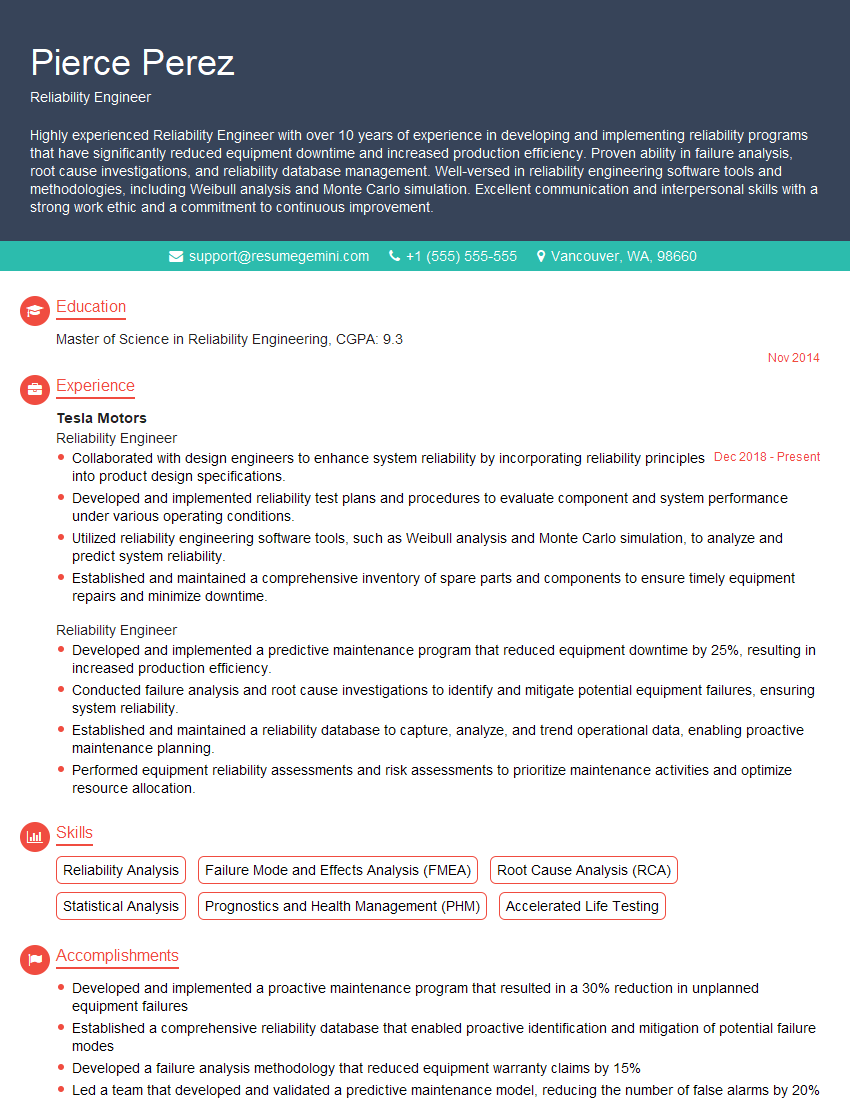
Reliability Engineer Resume Sample

Applications Engineer Resume Sample
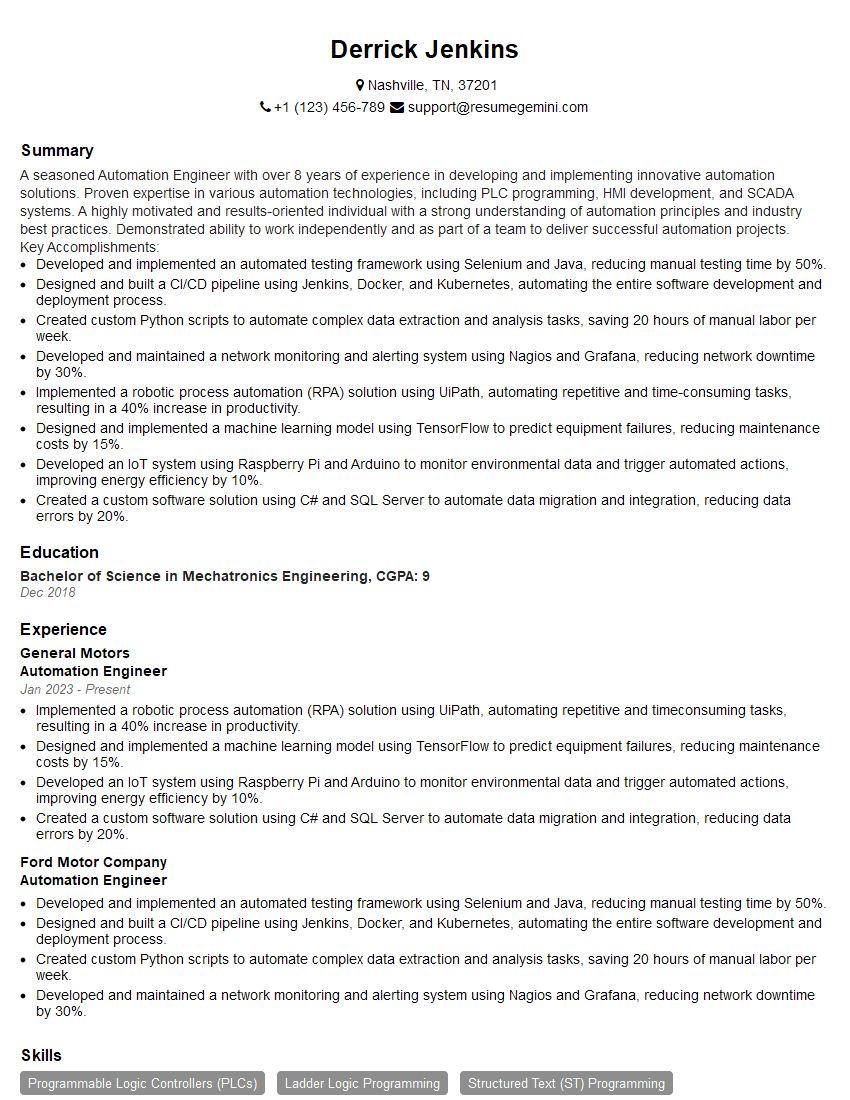
Automation Engineer Resume Sample
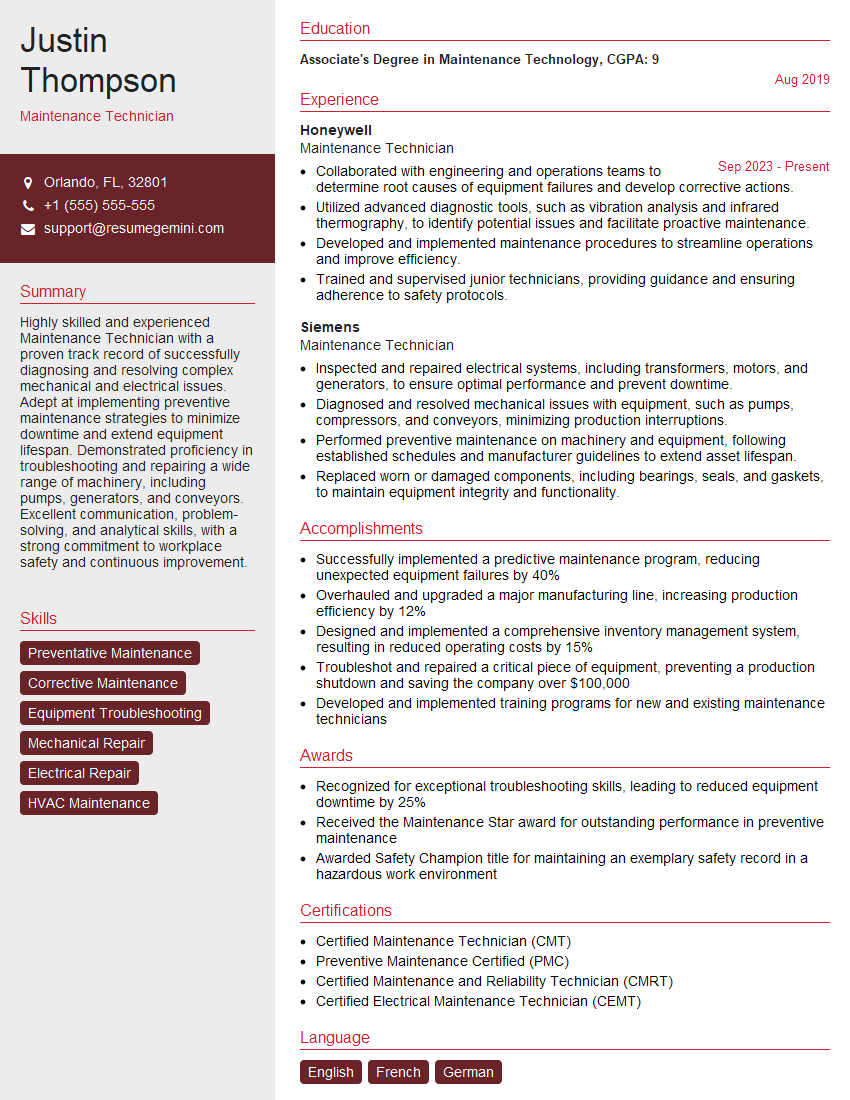
Maintenance Technician Resume Sample

Field Service Engineer Resume Sample
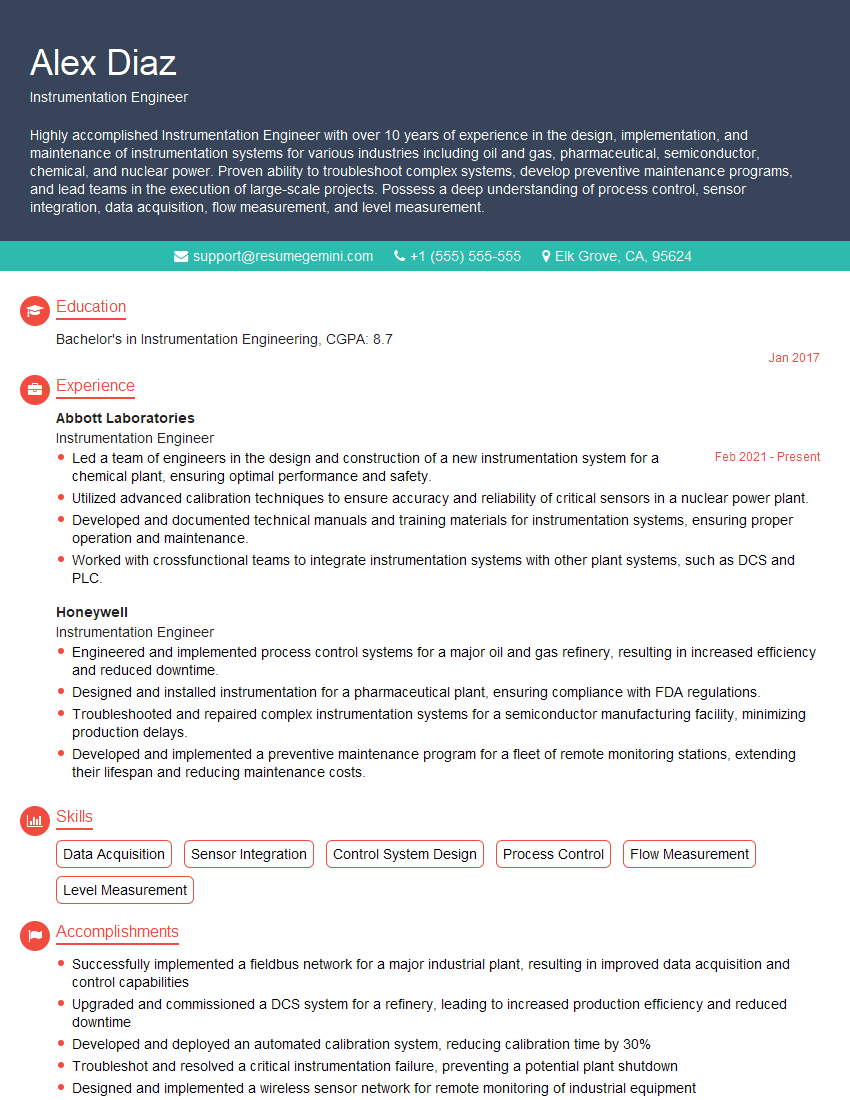
Instrumentation Engineer Resume Sample

Quality Control Engineer Resume Sample
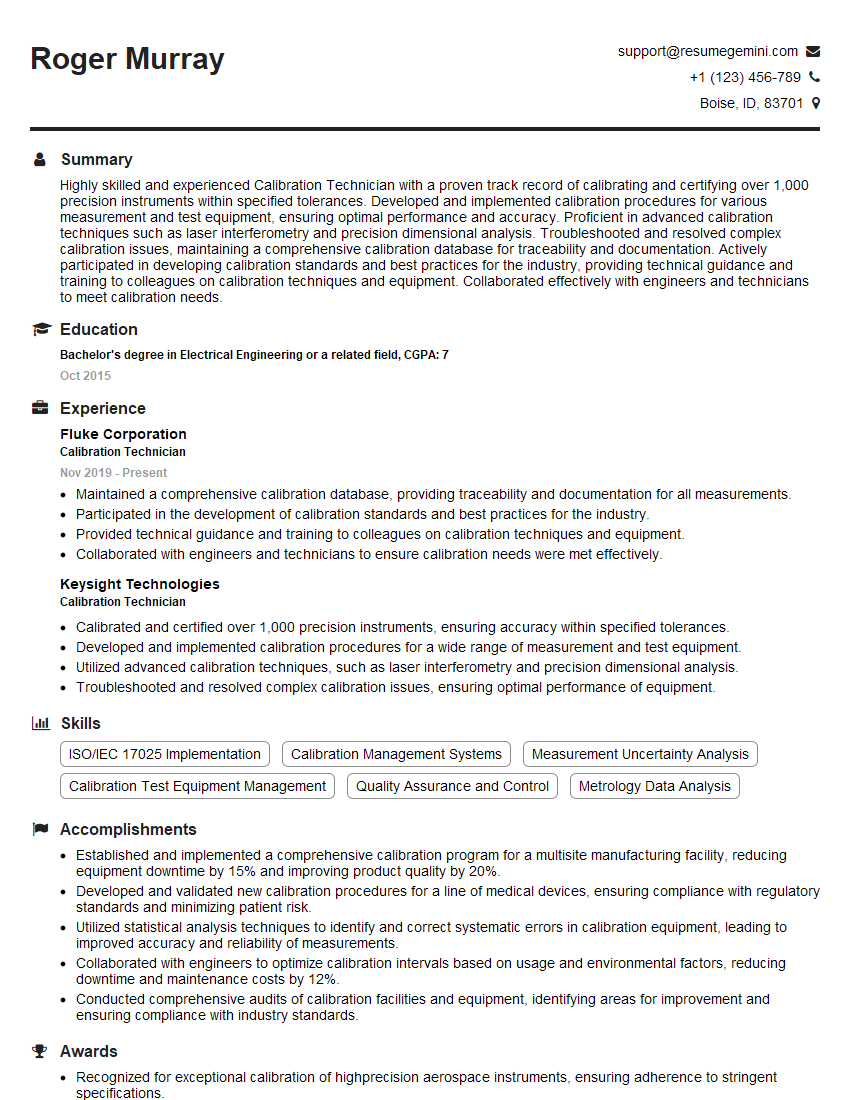
Calibration Technician Resume Sample

Test Technician Resume Sample
Explore more articles
Users Rating of Our Blogs
Share Your Experience
We value your feedback! Please rate our content and share your thoughts (optional).
What Readers Say About Our Blog
Very informative content, great job.
good