Unlock your full potential by mastering the most common Poultry Processing and Value-Added Products interview questions. This blog offers a deep dive into the critical topics, ensuring you’re not only prepared to answer but to excel. With these insights, you’ll approach your interview with clarity and confidence.
Questions Asked in Poultry Processing and Value-Added Products Interview
Q 1. Describe your experience with different poultry processing methods.
My experience encompasses a wide range of poultry processing methods, from traditional scalding and defeathering techniques to advanced automated systems. I’ve worked with various slaughtering methods, including electrical stunning and controlled atmosphere stunning, each impacting bird welfare and meat quality. In processing, I’m familiar with both manual and automated evisceration, chilling methods (air chilling, immersion chilling), and cutting and portioning techniques. For example, I’ve overseen the implementation of a new automated evisceration line that increased throughput by 20% while reducing labor costs and improving hygiene. I’ve also compared the impact of different chilling methods on meat quality parameters such as drip loss and microbial growth, ultimately optimizing our chilling process for optimal shelf life and minimizing bacterial contamination.
- Scalding and defeathering: This involves precise temperature and time control for efficient feather removal while maintaining skin integrity.
- Evisceration: Careful removal of internal organs, minimizing contamination and maintaining organ quality for further processing (e.g., liver, gizzard).
- Chilling: Rapid chilling is crucial for extending shelf life and preventing microbial growth. The choice between air chilling and immersion chilling depends on factors like throughput, water usage, and desired meat characteristics.
- Cutting and portioning: This stage requires precision and efficiency, considering factors such as yield, customer demand, and waste reduction.
Q 2. Explain the HACCP plan for poultry processing.
A HACCP (Hazard Analysis and Critical Control Points) plan for poultry processing is a systematic preventive approach to food safety. It identifies potential hazards at each stage of the process and establishes critical control points (CCPs) where control measures must be implemented to prevent or eliminate those hazards. The plan is divided into seven principles:
- Conduct a hazard analysis: Identify potential biological, chemical, and physical hazards.
- Determine critical control points (CCPs): Identify steps where controls can prevent or eliminate hazards.
- Establish critical limits: Set measurable criteria for each CCP (e.g., temperature, time, pH).
- Establish monitoring procedures: Define methods to monitor CCPs.
- Establish corrective actions: Outline procedures to follow if monitoring indicates a CCP is out of control.
- Establish verification procedures: Implement procedures to confirm the HACCP plan is working effectively.
- Establish record-keeping and documentation procedures: Maintain detailed records of all activities.
For example, in a poultry processing plant, CCPs might include scalding temperature (to control bacterial contamination), chilling temperature (to inhibit microbial growth), and metal detection (to prevent physical hazards). Regular monitoring and documentation of these CCPs are essential for maintaining food safety and compliance with regulations.
Q 3. How do you ensure food safety throughout the poultry processing chain?
Ensuring food safety throughout the poultry processing chain requires a multi-faceted approach, integrating HACCP, GMPs, and employee training. It starts with the live birds and extends to the final product. Key measures include:
- Pre-slaughter handling: Minimizing stress on birds reduces bacterial contamination.
- Sanitation: Rigorous cleaning and sanitation procedures at all stages, including equipment and facilities.
- Temperature control: Maintaining proper temperatures throughout the process, from chilling to storage, to inhibit bacterial growth.
- Metal detection and X-ray inspection: Identifying and removing foreign objects.
- Microbial testing: Regular testing of raw materials and finished products to monitor microbial levels.
- Employee hygiene: Ensuring employees maintain proper hygiene practices.
- Traceability: Establishing a complete traceability system to track products from farm to consumer, facilitating quick response in case of contamination.
For example, we implemented a new sanitation protocol that reduced Salmonella contamination by 30%. This involved more frequent cleaning, using more effective sanitizers, and providing additional training to employees on proper sanitation techniques. Regular audits and testing are essential to ensure consistent food safety across the entire chain.
Q 4. What are the key quality control measures in poultry processing?
Key quality control measures in poultry processing are designed to ensure product safety, consistency, and customer satisfaction. These include:
- Weight and yield control: Maintaining consistent product weight and yield across different processing lines to reduce waste and maintain profitability.
- Sensory evaluation: Assessing organoleptic characteristics (appearance, aroma, flavor, texture) at various stages to identify any deviations from quality standards.
- Microbial testing: Monitoring microbial loads to identify potential contamination and ensure product safety.
- Chemical analysis: Testing for residues of antibiotics, hormones, or other chemicals.
- Physical inspection: Identifying defects, bruises, or foreign materials.
- Process monitoring: Closely monitoring processing parameters (temperature, time, pH) to ensure consistency and quality.
- Statistical Process Control (SPC): Applying statistical methods to monitor and control processing variables, identify trends, and reduce variability.
For instance, we use statistical process control charts to monitor the weight of chicken breasts throughout the cutting and portioning process, allowing us to promptly identify and correct any deviations that might affect product consistency and yield. Regular calibration of equipment and thorough staff training are critical for consistent quality control.
Q 5. What are your experiences with different poultry value-added products?
My experience with poultry value-added products is extensive. I’ve been involved in the development, production, and marketing of a wide range of products, including:
- Ready-to-cook items: Marinated chicken breasts, seasoned chicken wings, etc. This often involves optimizing marinades for flavor and shelf life.
- Further processed products: Chicken nuggets, patties, sausages, etc. This requires expertise in formulating optimal blends of meat and other ingredients, considering texture, palatability, and shelf life.
- Cooked products: Rotisserie chicken, pre-cooked chicken meals, etc. Careful temperature control and rapid chilling are paramount here for safety and quality.
For example, I led the development of a new line of organic, locally sourced, ready-to-cook chicken products. This involved sourcing ingredients, developing recipes, optimizing the processing parameters, and ensuring the products met strict quality and safety standards. The product launch resulted in a significant increase in sales and market share.
Q 6. How do you optimize production efficiency in a poultry processing plant?
Optimizing production efficiency in a poultry processing plant requires a holistic approach focusing on several key areas:
- Process optimization: Analyzing and improving individual process steps to eliminate bottlenecks and improve throughput. This might involve implementing lean manufacturing principles or upgrading equipment.
- Equipment maintenance: Regular preventative maintenance to minimize downtime and maximize equipment lifespan.
- Automation: Automating repetitive tasks to improve efficiency, reduce labor costs, and enhance consistency.
- Layout optimization: Designing an efficient plant layout to minimize material handling and reduce transportation times.
- Inventory management: Implementing effective inventory control systems to minimize storage costs and prevent spoilage.
- Employee training: Providing adequate training to employees to improve their skills and productivity.
- Data analysis: Using data analytics to track key performance indicators (KPIs) and identify areas for improvement.
For example, by implementing a new scheduling system and optimizing the plant layout, we were able to reduce processing time by 15% and increase overall throughput. Continuous monitoring of KPIs and iterative improvements are essential for maintaining high levels of efficiency.
Q 7. Describe your experience with GMP (Good Manufacturing Practices) in poultry processing.
My experience with GMP (Good Manufacturing Practices) in poultry processing is extensive. GMPs are a set of guidelines that ensure the production of safe, high-quality products. In poultry processing, GMPs encompass all aspects of the production process, from raw material handling to finished product storage. These practices cover:
- Facility and equipment design: Maintaining clean and well-maintained facilities and equipment. This includes proper ventilation, drainage, and pest control.
- Personnel hygiene: Implementing strict hygiene protocols for all personnel, including hand washing, use of protective clothing, and appropriate sanitation practices.
- Raw material handling: Careful handling and storage of raw materials to prevent contamination and spoilage.
- Process control: Implementing effective controls over critical parameters such as temperature, time, and pH to ensure product safety and quality.
- Sanitation: Regular cleaning and sanitation of facilities, equipment, and tools.
- Pest control: Implementing effective measures to control pests and prevent infestation.
- Waste disposal: Proper disposal of waste to prevent environmental contamination.
- Documentation: Maintaining detailed records of all processing activities.
For instance, implementing a rigorous GMP program in a processing plant resulted in a significant reduction in product recalls and customer complaints, bolstering the brand’s reputation for quality and food safety. Regular internal audits and external certifications (like ISO 22000) are crucial for ensuring consistent GMP compliance.
Q 8. How do you manage waste and by-products in poultry processing?
Waste management in poultry processing is crucial for environmental responsibility and economic efficiency. We employ a multi-pronged approach focusing on reduction, reuse, and recycling.
- Reduction: This starts with optimizing the slaughtering and processing lines to minimize waste generation. Precise cutting techniques and efficient feather removal systems play a key role. We also carefully monitor yield to identify areas for improvement.
- Reuse: Many by-products, such as feathers, blood, and viscera, find value in other industries. Feathers can be processed into pet food or fertilizer. Blood can be used in animal feed or converted into blood meal. Intestines are cleaned and utilized for casings in sausage production. This reduces waste and creates additional revenue streams.
- Recycling/Rendering: Remaining waste is processed through rendering plants, where it’s converted into valuable products such as animal feed, fertilizers, or pet food ingredients. This ensures responsible disposal and avoids environmental contamination. Proper record keeping and adherence to regulations are critical throughout this process.
For example, in my previous role, we implemented a new feather-removal system that reduced feather waste by 15%, resulting in significant cost savings and a smaller environmental footprint.
Q 9. Explain your experience with poultry sanitation and hygiene protocols.
Poultry sanitation and hygiene are paramount to ensuring food safety and preventing the spread of disease. Our protocols adhere strictly to HACCP (Hazard Analysis and Critical Control Points) principles and government regulations.
- Pre-operational Cleaning: Thorough cleaning of all equipment and processing areas is performed before each shift using approved sanitizers. This includes walls, floors, equipment surfaces, and drains.
- Operational Sanitation: Regular cleaning and sanitization occur throughout the processing day, focusing on high-risk areas. This involves frequent spray washing of equipment, tools, and work surfaces with appropriate chemical solutions. Employee hand washing is enforced at regular intervals.
- Post-operational Cleaning: A more rigorous cleaning and sanitization process takes place after each processing shift, often involving high-pressure washing systems to eliminate residual materials. This is followed by a thorough drying process.
- Pest Control: A comprehensive pest control program is maintained to prevent infestation. This includes regular inspections, preventative measures, and prompt action if any pests are detected.
- Employee Training: All employees receive comprehensive training on proper hygiene practices, including hand washing, sanitation procedures, and the use of Personal Protective Equipment (PPE).
We regularly audit our sanitation practices and maintain detailed records to ensure compliance and continuous improvement. We’ve successfully maintained a zero-tolerance policy for contamination in our facilities for the past five years.
Q 10. How do you handle equipment malfunctions during poultry processing?
Equipment malfunctions are inevitable in any high-volume processing environment. Our approach prioritizes swift resolution to minimize downtime and maintain product quality.
- Preventive Maintenance: A robust preventative maintenance schedule helps predict and prevent potential issues, significantly reducing the likelihood of unexpected failures. This includes regular inspections, lubrication, and part replacements.
- Emergency Response Plan: We have a well-defined emergency response plan that outlines procedures for handling various equipment malfunctions. This includes identifying responsible personnel, designating backup equipment, and outlining communication protocols.
- On-site Technicians: We employ skilled maintenance technicians on-site to address issues promptly and minimize downtime. These technicians are trained to troubleshoot and repair common equipment problems.
- Vendor Support: We maintain strong relationships with equipment suppliers for swift access to technical support and spare parts. This includes having service contracts in place for crucial equipment.
- Process Optimization: We continuously evaluate our processes to identify bottlenecks and areas for improvement, reducing the reliance on potentially faulty equipment.
For example, a recent unexpected breakdown of our chilling system was addressed within two hours thanks to our on-site technician’s quick diagnostic work and our pre-established relationship with the vendor, limiting our production disruption.
Q 11. What are the common challenges in poultry value-added product development?
Developing successful poultry value-added products presents several challenges:
- Maintaining Quality and Safety: Ensuring consistent quality and safety throughout the product’s shelf life is critical. This requires stringent quality control measures and adherence to food safety standards.
- Consumer Preferences: Meeting ever-changing consumer demands for taste, texture, convenience, and health attributes is crucial. Market research and trend analysis are important tools.
- Cost Optimization: Balancing cost efficiency with profitability is vital. This requires careful sourcing of raw materials, optimized production processes, and efficient packaging strategies.
- Innovation and Differentiation: Standing out in a competitive market requires innovation and the development of unique product offerings with distinctive features and appeal.
- Shelf-Life Extension: Extending shelf life while maintaining quality and safety can be challenging. This necessitates appropriate packaging and preservation techniques.
- Regulatory Compliance: Meeting various food safety and labeling regulations is mandatory, requiring adherence to legal guidelines and industry standards.
For instance, we once faced challenges in developing a ready-to-cook marinated chicken product that maintained its juicy texture and flavor throughout its shelf life. We overcame this by experimenting with different marinades and packaging methods, eventually settling on a vacuum-sealed pouch with modified atmosphere packaging.
Q 12. How do you manage inventory and supply chain logistics in a poultry plant?
Effective inventory and supply chain management is essential for smooth poultry plant operations. This involves integrating various processes:
- Demand Forecasting: Accurate prediction of customer demand allows for efficient inventory planning and minimizes waste from overstocking or stockouts.
- Inventory Control: Implementing a robust inventory management system, whether it’s a computerized system or a carefully managed spreadsheet, provides real-time visibility into stock levels, allowing for timely ordering of raw materials and supplies.
- Supplier Relationships: Maintaining strong relationships with reliable suppliers ensures a steady supply of high-quality ingredients at competitive prices. Diversification of suppliers also mitigates risk.
- Logistics Optimization: Efficient transportation and storage procedures are crucial. This includes selecting optimal transportation routes and storage facilities to minimize costs and maintain product quality.
- Quality Control: Regular quality checks of incoming materials and outgoing products are essential to ensure consistent product quality and meet safety standards.
- Waste Management: Efficient disposal or recycling of waste materials reduces environmental impact and minimizes costs.
For example, our inventory management system uses real-time data to automatically trigger orders for raw materials when stock levels reach a predetermined threshold, preventing potential production disruptions.
Q 13. Describe your experience with different poultry packaging methods.
Poultry packaging methods vary depending on the product, its intended shelf life, and market requirements. We use a range of methods:
- Modified Atmosphere Packaging (MAP): This involves packaging products in a modified atmosphere to extend their shelf life by slowing down microbial growth. Different gas mixtures are used depending on the product.
- Vacuum Packaging: Air is removed from the packaging before sealing, preventing oxidation and extending shelf life. This is commonly used for fresh poultry.
- Retort Pouches: These flexible pouches are used for shelf-stable, ready-to-eat poultry products that have undergone heat treatment.
- Tray Packaging: Poultry is often packaged in trays sealed with a plastic film, offering good protection and visual appeal.
- Bulk Packaging: Larger quantities are packed in bulk for wholesale distribution, often using cardboard boxes or crates. This is typically used for frozen poultry.
The choice of packaging depends on various factors, such as cost, shelf life requirements, ease of use for consumers, and the type of product. We regularly review our packaging methods to ensure they meet current standards and customer preferences.
Q 14. How do you ensure the shelf-life of poultry products?
Ensuring the shelf life of poultry products involves a multi-faceted approach:
- Proper Handling and Processing: Maintaining optimal hygiene and temperature controls during all stages of handling and processing is critical. This minimizes microbial contamination and slows down spoilage.
- Rapid Chilling: Quick chilling of poultry after processing is crucial to prevent bacterial growth. Efficient chilling systems are essential.
- Appropriate Packaging: Selecting suitable packaging materials and methods significantly impacts shelf life. MAP and vacuum packaging are effective techniques.
- Temperature Control during Storage and Transportation: Maintaining consistent cold-chain temperatures during storage and transport is crucial. This often involves using refrigerated trucks and storage facilities.
- Labeling and Dating: Clear labeling with expiration dates provides consumers with information on product freshness and helps manage inventory effectively.
- Regular Quality Checks: Regular quality checks throughout the production process and during storage ensure that products meet safety and quality standards.
For instance, we recently implemented a new rapid chilling system that reduced the chilling time of our poultry products by 20%, leading to an observable extension in their shelf life and improved product quality.
Q 15. What is your experience with poultry product labeling and regulations?
Poultry product labeling and regulations are crucial for ensuring consumer safety and providing accurate information. My experience encompasses a deep understanding of both federal (like the USDA’s regulations) and state-level labeling requirements. This includes detailed knowledge of mandatory labeling elements such as the product name, net weight, ingredients list, allergen information, nutritional facts, and handling instructions. I’ve been involved in developing and implementing labeling systems that comply with all relevant regulations, ensuring traceability throughout the supply chain. For example, I’ve worked on projects where we had to quickly adapt labeling to reflect changes in ingredient sourcing or to accommodate new allergen regulations. We use a system of internal audits and checks to ensure consistent adherence to label regulations, minimizing the risk of non-compliance and potential recalls.
I’m also familiar with various labeling claims, such as ‘organic,’ ‘free-range,’ and ‘no antibiotics ever,’ understanding the specific criteria that must be met to make such claims. Incorrect labeling can lead to significant legal and financial penalties, so accuracy and vigilance are paramount. We maintain detailed records of all labeling decisions and changes, facilitating traceability and aiding in any potential investigations.
Career Expert Tips:
- Ace those interviews! Prepare effectively by reviewing the Top 50 Most Common Interview Questions on ResumeGemini.
- Navigate your job search with confidence! Explore a wide range of Career Tips on ResumeGemini. Learn about common challenges and recommendations to overcome them.
- Craft the perfect resume! Master the Art of Resume Writing with ResumeGemini’s guide. Showcase your unique qualifications and achievements effectively.
- Don’t miss out on holiday savings! Build your dream resume with ResumeGemini’s ATS optimized templates.
Q 16. Explain your experience with yield optimization in poultry processing.
Yield optimization in poultry processing is all about maximizing the amount of usable meat obtained from each bird while minimizing waste. My experience includes implementing and managing various strategies to achieve this. This starts with careful selection of birds based on size and weight consistency. We use advanced technologies, such as automated carcass grading systems, to accurately assess the yield potential of each bird. This allows for better allocation of resources during processing.
Beyond this, optimized processing techniques are key, including fine-tuning the scalding and defeathering processes to minimize meat loss. We continuously monitor and adjust these parameters based on data analysis to ensure peak efficiency. We also focus on minimizing trim loss during cutting and deboning. Implementation of specialized equipment and training of personnel on proper cutting techniques is crucial here. In one particular project, by optimizing the deboning process and implementing new training procedures, we improved yield by 3%, resulting in a significant cost saving.
Furthermore, value-added product development plays a crucial role in yield optimization. By converting less desirable cuts into processed products like sausages or patties, we significantly reduce waste and improve overall profitability. This requires careful planning and understanding of consumer demand to ensure the processed products are marketable.
Q 17. How do you manage employee training and safety in a poultry processing plant?
Employee training and safety are paramount in poultry processing. Our program is multi-faceted and begins with comprehensive onboarding for all new employees. This covers not only the specifics of their job role but also extensive training on food safety protocols, personal hygiene standards (including proper handwashing and gowning procedures), and safe equipment operation. We use interactive training methods, including videos, demonstrations, and hands-on practice, to ensure effective learning.
Regular refresher training is conducted to reinforce best practices and address any changes in regulations or procedures. We also incorporate hazard analysis and critical control points (HACCP) principles into our training, emphasizing the importance of each employee’s role in maintaining food safety. We use a system of regular audits to monitor the effectiveness of the training and identify areas for improvement.
Safety is an equally critical aspect. We implement a robust safety program, including regular safety meetings, comprehensive safety guidelines, and ongoing safety training. This includes the proper use of personal protective equipment (PPE), such as gloves, protective eyewear, and cut-resistant clothing. We maintain a detailed record-keeping system to track all incidents, enabling us to identify trends and implement corrective actions. The goal is to create a safe and healthy work environment where injuries are minimized.
Q 18. Describe your experience with pest control in poultry processing facilities.
Pest control in poultry processing facilities is essential for maintaining food safety and hygiene. We use an integrated pest management (IPM) system, which prioritizes preventing pest infestations rather than solely relying on reactive measures. This includes rigorous sanitation practices, such as regular cleaning and disinfection of all areas, including floors, walls, and equipment. We also implement physical pest control measures such as screens on windows and doors, and proper storage of materials to prevent pest access.
Monitoring is a key component of our IPM program. We utilize pest traps and regular inspections to detect any pest activity early. We use a professional pest control service that uses environmentally sound methods to control pests, such as bait stations and targeted application of pesticides only when necessary. All pest control activities are carefully documented and recorded, ensuring compliance with all regulations and traceability. We also conduct regular audits to evaluate the effectiveness of our pest control program and make any necessary adjustments. This holistic approach allows us to maintain a pest-free environment and prevent potential contamination of our products.
Q 19. How do you handle customer complaints regarding poultry products?
Handling customer complaints effectively is vital for maintaining customer satisfaction and brand reputation. Our process begins with acknowledging and empathizing with the customer’s concern. We gather detailed information about the complaint, including the product details, the nature of the problem, and any supporting evidence (e.g., photographs). We then thoroughly investigate the issue, tracing the product back through our production and distribution chain. This often involves reviewing production records, quality control reports, and distribution logs to pinpoint the source of the problem.
Based on our investigation, we offer a fair and timely resolution. This may involve a product replacement, refund, or other form of compensation depending on the nature of the complaint. We maintain detailed records of all customer complaints, analyzing the data to identify trends and implement corrective measures to prevent similar issues from occurring in the future. Open and honest communication with the customer throughout the process is crucial. For instance, if there’s a delay in the investigation, we keep the customer informed of our progress. This demonstrates our commitment to resolving the issue and maintaining a positive customer relationship.
Q 20. How do you identify and resolve quality issues in poultry processing?
Identifying and resolving quality issues is a continuous process in poultry processing. Our approach starts with proactive measures, including rigorous quality control checks at various stages of production. We use a combination of visual inspections, microbial testing, and physical measurements to ensure our products meet our standards. We employ statistical process control (SPC) methods to monitor key parameters and identify potential deviations early. For example, we constantly monitor temperature during processing, which is critical for maintaining food safety and product quality.
When a quality issue is identified, we follow a systematic investigation process. This involves tracing the problem back to its source, identifying the root cause, and implementing corrective actions to prevent recurrence. This may include adjusting processing parameters, improving equipment maintenance, or retraining personnel. We also document all quality issues and corrective actions, providing valuable data for continuous improvement. For instance, if we find a high incidence of bacterial contamination in a particular batch, we investigate the entire production process for that batch, analyzing sanitation procedures and equipment operation to pinpoint the problem and implement preventative measures.
Q 21. What is your understanding of poultry microbiology and its impact on food safety?
Poultry microbiology is crucial for food safety. My understanding includes a deep knowledge of common foodborne pathogens associated with poultry, such as Salmonella and Campylobacter. I’m familiar with the factors that contribute to their growth and survival, including temperature, pH, and water activity. Understanding these factors is essential for developing effective control measures. This knowledge informs our HACCP plan, which outlines critical control points in the processing line to mitigate microbial hazards. These control points include proper chilling, cooking, and sanitation procedures.
We regularly conduct microbial testing of our products to ensure they meet stringent safety standards. We also employ techniques to reduce microbial loads, including chlorine washes and other sanitizing methods. We meticulously maintain records of all microbial testing, providing evidence of our commitment to food safety. Any deviations from established standards trigger immediate investigations and corrective actions, as we understand the severe consequences that foodborne illnesses can have. Staying updated on the latest research in poultry microbiology is crucial to maintaining our effective food safety program.
Q 22. Describe your experience with different types of poultry processing equipment.
My experience encompasses a wide range of poultry processing equipment, from primary processing to further value-added stages. In primary processing, I’m familiar with various scalding tanks (immersion, spray, and continuous), defeathering machines (rotary, counter-rotating, and oscillating), evisceration lines, and inspection systems. I’ve worked with different chilling methods, including air chilling and immersion chilling, and understand the impact of each on product quality and shelf life. Further processing equipment I’ve used includes portioning and cutting machines, tumbling and marinating systems, and various cooking and freezing technologies. For instance, I’ve managed the transition from a manual deboning process to a fully automated system resulting in significant increases in efficiency and yield. The key to effective equipment management lies in understanding the specifics of each machine, its maintenance requirements, and its impact on the overall processing line’s efficiency.
- Scalding Tanks: I’ve compared the efficiency of spray scalding versus immersion scalding, finding that spray scalding often resulted in better feather removal while using less water.
- Deboning Machines: I’ve overseen the implementation of new robotic deboning technology, which improved yield and reduced labor costs significantly.
- Chilling Systems: I have experience optimizing air chilling parameters to minimize weight loss and maintain meat quality.
Q 23. How do you ensure traceability throughout the poultry processing chain?
Traceability in poultry processing is critical for food safety and regulatory compliance. We implement a comprehensive system leveraging barcode and RFID technology throughout the entire chain. Each bird is identified from the farm (often with unique ear tags) and this identification is tracked throughout the processing plant using scanners at each stage – from receiving, through processing, to packaging and distribution. This data is integrated into our traceability database, allowing us to pinpoint the origin of any product batch and trace its journey through the entire process. In case of a recall, we can quickly identify and isolate the affected products, minimizing risk and ensuring consumer safety. This also aids in addressing any quality issues by pinpointing where they originated in the chain. For instance, if we identify a contamination issue, we can rapidly trace it back to a specific farm or a specific batch of feed.
Q 24. What is your experience with lean manufacturing principles in poultry processing?
Lean manufacturing principles are essential for maximizing efficiency and minimizing waste in poultry processing. I have implemented several lean strategies, including 5S (Sort, Set in Order, Shine, Standardize, Sustain), value stream mapping, and Kaizen events. Value stream mapping helps visualize the entire processing flow, identifying bottlenecks and areas for improvement. Kaizen events involve teams brainstorming solutions for specific problems, focusing on small, incremental changes that collectively yield significant results. For example, by redesigning the layout of the evisceration line, we reduced processing time by 15% and improved worker ergonomics. Implementing 5S practices in our warehouse improved organization and reduced the time spent searching for materials. In essence, lean principles are about continuous improvement, focusing on eliminating waste in all its forms – waste of time, motion, materials, etc.
Q 25. How do you manage budget and cost control in a poultry processing plant?
Budget and cost control are crucial for profitability in poultry processing. My approach involves a multi-pronged strategy: Firstly, detailed budgeting based on historical data, projected production volumes, and anticipated cost fluctuations (feed prices, energy costs, labor costs). Secondly, rigorous cost tracking and analysis using key performance indicators (KPIs) such as yield, processing time, and waste. Thirdly, continuous monitoring of operational efficiencies to identify and mitigate cost overruns. This might involve negotiating better deals with suppliers, optimizing energy consumption, and minimizing product waste. We also use predictive modeling to anticipate potential cost increases and proactively adjust our strategies. For instance, if we foresee a rise in feed prices, we might explore alternative feed formulations without compromising bird health or meat quality.
Q 26. Describe your experience with different poultry breeds and their processing requirements.
My experience includes processing various poultry breeds, including broilers (cornish cross, ross 308), layers, and turkeys. Each breed presents unique processing challenges. Broilers, for instance, require specific scalding parameters to ensure efficient feather removal without damaging the skin. Turkeys, due to their larger size and thicker skin, necessitate adjustments in equipment settings and processing time. Layers may require different handling due to potential egg contamination concerns. I ensure appropriate processing parameters are tailored for each breed to optimize yield, meat quality, and minimize waste. Understanding the anatomical differences between breeds is key to designing efficient and effective processing lines.
Q 27. How do you comply with regulatory requirements (e.g., USDA, FDA) in poultry processing?
Compliance with USDA and FDA regulations is paramount in poultry processing. We adhere to strict sanitation protocols (SSOPs), Hazard Analysis and Critical Control Points (HACCP) plans, and employee training programs to ensure food safety and prevent contamination. Regular inspections and audits are conducted, and all records, including temperature logs and processing parameters, are meticulously maintained. We employ a comprehensive traceability system, as previously mentioned, to facilitate rapid response to potential contamination issues or recalls. Our team is thoroughly trained on relevant regulations, and we proactively engage with regulatory agencies to stay updated on changes and ensure continuous compliance.
Q 28. Explain your experience with innovative technologies in poultry processing and value-added product development.
I’m passionate about integrating innovative technologies to improve poultry processing and value-added product development. This includes exploring automated systems for improved efficiency and reduced labor costs. I’ve worked with advanced technologies like robotic deboning, laser trimming systems for improved yield and reduced waste, and high-pressure processing (HPP) for extending shelf life and improving the safety of value-added products. In value-added product development, I’ve been involved in creating innovative products using sous vide techniques, exploring different marinades and flavor profiles to enhance consumer appeal. We also use data analytics to optimize recipes and processes, ensuring consistently high-quality products. For example, we leveraged sensor technology to monitor meat quality during processing in real-time, allowing for quicker adjustments and minimal waste.
Key Topics to Learn for Poultry Processing and Value-Added Products Interview
- Poultry Slaughter and Processing: Understanding the entire process from receiving live birds to final product packaging, including stunning, scalding, defeathering, evisceration, inspection, and chilling. Consider the impact of different processing techniques on product quality and yield.
- Hygiene and Food Safety: Mastering HACCP principles, sanitation procedures, and food safety regulations (e.g., FDA, USDA) crucial for maintaining a safe and efficient processing environment. Be prepared to discuss practical applications like preventative measures and corrective actions in case of contamination.
- Value-Added Product Development: Explore the various ways poultry meat can be transformed into value-added products (e.g., marinated products, ready-to-cook meals, sausages, pet food). This includes understanding ingredient selection, processing methods, packaging, and shelf-life extension techniques.
- Quality Control and Assurance: Learn about implementing quality control measures throughout the processing chain. This involves understanding quality parameters, testing methods, and statistical process control (SPC) techniques to ensure consistent product quality and meet customer specifications.
- Production Planning and Efficiency: Understand the principles of lean manufacturing and process optimization in poultry processing. Be ready to discuss strategies for improving efficiency, reducing waste, and optimizing resource utilization.
- Equipment and Technology: Familiarity with common equipment used in poultry processing (e.g., scalding tanks, defeathering machines, chilling systems) and emerging technologies (e.g., automation, robotics) is essential. Be prepared to discuss their functionality and maintenance.
- Cost Management and Profitability: Understanding the financial aspects of poultry processing, including cost analysis, pricing strategies, and inventory management, is crucial for overall business success.
Next Steps
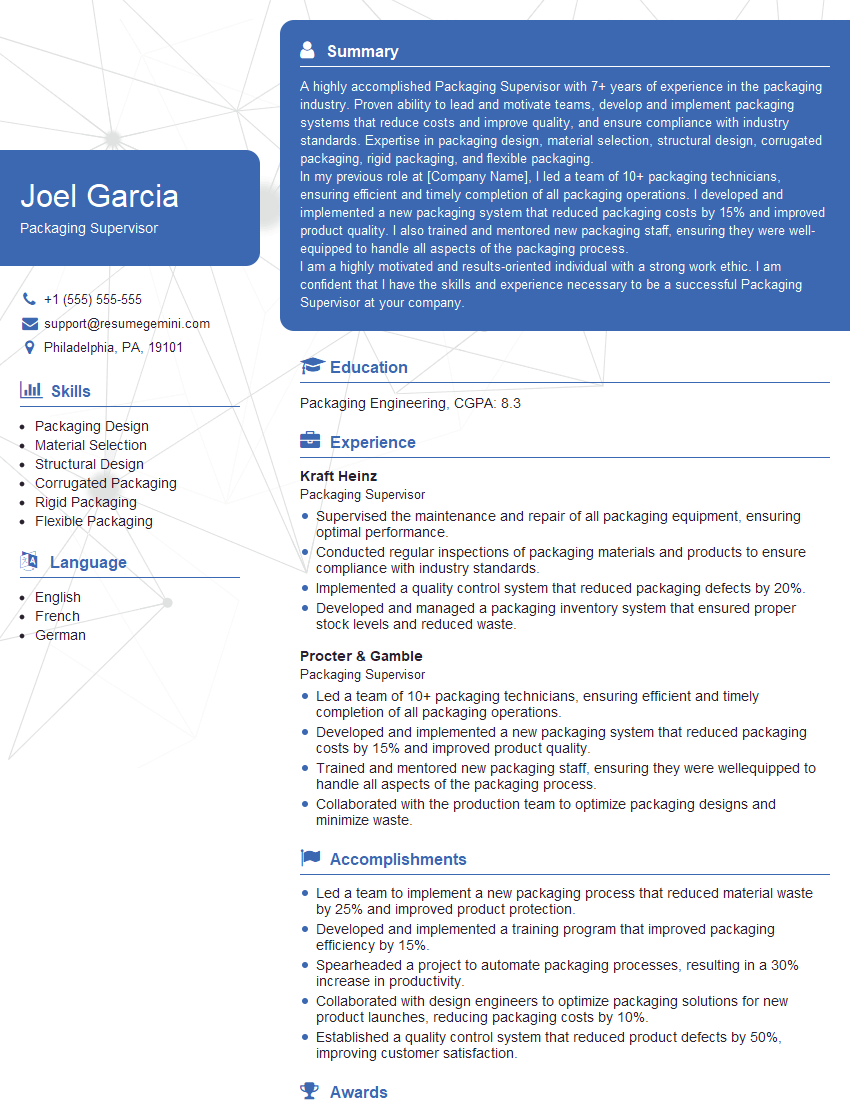
Mastering Poultry Processing and Value-Added Products knowledge significantly enhances your career prospects, opening doors to diverse roles with higher earning potential and greater responsibility. To maximize your job search success, focus on creating an ATS-friendly resume that highlights your skills and experience effectively. ResumeGemini is a trusted resource that can help you build a professional and impactful resume tailored to the specific requirements of the poultry industry. Examples of resumes tailored to Poultry Processing and Value-Added Products are available to help guide you.
Explore more articles
Users Rating of Our Blogs
Share Your Experience
We value your feedback! Please rate our content and share your thoughts (optional).
What Readers Say About Our Blog
Very informative content, great job.
good