Interviews are opportunities to demonstrate your expertise, and this guide is here to help you shine. Explore the essential Grain HACCP interview questions that employers frequently ask, paired with strategies for crafting responses that set you apart from the competition.
Questions Asked in Grain HACCP Interview
Q 1. Define HACCP and its seven principles in the context of grain handling.
HACCP, or Hazard Analysis and Critical Control Points, is a preventative system for food safety. In grain handling, it ensures the safety and quality of grain from the field to the consumer by identifying and controlling potential hazards. The seven principles are:
- Conduct a Hazard Analysis: Identify potential biological, chemical, and physical hazards that can compromise the safety of grain.
- Determine Critical Control Points (CCPs): Identify steps in the grain handling process where control is essential to prevent or eliminate identified hazards.
- Establish Critical Limits: Set measurable parameters for each CCP to ensure safety. For example, temperature limits to prevent insect infestation or moisture content to prevent spoilage.
- Establish Monitoring Procedures: Define how and how often CCPs will be monitored to ensure critical limits are met.
- Establish Corrective Actions: Outline steps to take when monitoring indicates a CCP is not under control.
- Establish Verification Procedures: Implement methods to confirm the HACCP plan is working effectively. This could involve regular audits and record reviews.
- Establish Record-Keeping and Documentation Procedures: Maintain detailed records of all HACCP activities.
Think of it like building a house: each principle is a crucial step to ensure a safe and sturdy structure. Skipping even one can lead to problems down the line.
Q 2. Describe the critical control points (CCPs) commonly identified in a grain HACCP plan.
CCPs in grain handling vary depending on the specific operations, but common examples include:
- Temperature control during storage: Preventing insect infestation and mold growth.
- Moisture control during drying and storage: Maintaining optimal moisture levels to avoid spoilage and mycotoxin production.
- Cleaning and sanitation of equipment: Removing contaminants and preventing cross-contamination.
- Pest control: Preventing infestation by insects and rodents.
- Receiving and inspection of incoming grain: Identifying and rejecting contaminated grain.
- Transportation and handling practices: Preventing damage and contamination during transport.
- Proper stacking and storage practices: Maintaining airflow and preventing compaction and heating.
Each CCP needs to be carefully assessed for its potential to cause harm if not properly managed.
Q 3. Explain the process of conducting a hazard analysis for grain storage and transportation.
A hazard analysis for grain storage and transportation involves systematically identifying potential hazards at each step. This is often done using a HACCP team, bringing together expertise from different areas like operations, quality control, and food safety. The process typically includes:
- Flow Diagram: Create a detailed flow diagram of the entire process, from receiving grain to its final destination.
- Hazard Identification: Identify potential hazards at each step in the process. Consider biological (bacteria, molds, mycotoxins), chemical (pesticides, mycotoxins), and physical (foreign objects, broken grains) hazards.
- Hazard Evaluation: Assess the likelihood and severity of each hazard occurring. Consider factors like the type of grain, storage conditions, and transportation methods.
- Risk Assessment: Prioritize hazards based on their likelihood and severity. Focus on the most significant risks.
For example, improper ventilation during storage can increase the risk of mold growth and mycotoxin production (a chemical hazard), while inadequate cleaning can lead to physical contamination with foreign objects.
Q 4. How do you determine the critical limits for CCPs in grain processing?
Critical limits are the maximum or minimum values for a CCP that must be met to prevent or eliminate a hazard. These limits are science-based and are determined through a combination of:
- Scientific literature and research: Consult published data on safe temperature and moisture levels for specific grains.
- Industry best practices: Refer to guidelines and standards from relevant organizations.
- Testing and validation: Conduct experiments or trials to determine the most effective critical limits for your specific operation.
For example, a critical limit for temperature might be 15°C to prevent insect infestation in stored wheat. This limit is determined by research showing insect activity is significantly reduced below this temperature.
Q 5. What monitoring procedures are essential for maintaining CCP control in grain handling?
Monitoring procedures must be reliable and frequent enough to ensure CCPs remain under control. This involves:
- Regular monitoring: Establish a schedule for monitoring each CCP, considering factors like the type of grain, storage conditions, and the potential for hazards.
- Use of appropriate equipment: Use calibrated thermometers, moisture meters, and other tools to accurately measure CCP parameters.
- Trained personnel: Ensure staff members responsible for monitoring are adequately trained and understand the importance of accurate measurements and recording.
- Record keeping: Maintain detailed records of all monitoring activities, including date, time, location, and measured values.
Imagine monitoring grain temperature like checking your car’s engine temperature – regular checks ensure everything runs smoothly.
Q 6. Outline the corrective actions to be taken if a CCP deviates from its critical limits.
Corrective actions must be defined beforehand to address CCP deviations. These actions should be specific, practical, and documented. They might include:
- Immediate corrective actions: Address the immediate problem, such as adjusting temperature or removing contaminated grain.
- Root cause analysis: Investigate why the deviation occurred to prevent future instances. This might involve reviewing equipment, procedures, or staff training.
- Documentation: Record all corrective actions taken, along with the results of these actions.
- Disposition of affected grain: Determine the appropriate course of action for grain that does not meet critical limits (e.g., reprocessing, segregation, or disposal).
A clear plan for corrective actions is essential to prevent contaminated grain from entering the food chain.
Q 7. What documentation is required to demonstrate HACCP compliance in grain operations?
Documentation is crucial for demonstrating HACCP compliance. Records should include:
- HACCP plan: A comprehensive document outlining the entire HACCP system.
- Hazard analysis: Details of all identified hazards and risk assessments.
- CCP records: Detailed records of monitoring activities, including date, time, location, and measured values.
- Corrective action records: Documentation of any deviations from critical limits and the actions taken to address them.
- Verification records: Evidence of regular verification activities, such as audits and reviews.
- Staff training records: Proof that personnel involved in grain handling have received the necessary HACCP training.
These records provide evidence that the HACCP system is functioning as intended, protecting the safety and quality of the grain.
Q 8. Explain the role of verification activities in ensuring the effectiveness of a grain HACCP plan.
Verification activities in a grain HACCP plan are crucial for confirming that the plan is working as intended and that food safety is being maintained. It’s like a regular check-up for your food safety system. Instead of just hoping everything is okay, you actively look for evidence that your controls are preventing hazards.
These activities go beyond simply following the plan; they involve objective evidence that confirms the effectiveness of preventative measures at each Critical Control Point (CCP). This could involve things like:
- Regular monitoring of CCPs: Checking temperatures, moisture levels, pest activity, etc., according to the established monitoring schedule.
- Review of records: Scrutinizing documentation related to cleaning and sanitation procedures, pest control treatments, and grain testing results to make sure they are properly completed and demonstrate efficacy.
- Internal audits: Conducting regular audits to assess the overall effectiveness of the HACCP plan, identifying areas for improvement and ensuring everyone understands and follows the procedures.
- Product testing: Analyzing samples of grain for mycotoxins, pesticide residues, or other contaminants to verify the effectiveness of control measures.
For example, if a CCP is controlling insect infestation by maintaining a specific temperature, verification would involve regularly checking and recording the temperature to ensure it remains within the safe limits. Deviations must be investigated and corrective actions taken.
Q 9. How are records maintained and reviewed for a grain HACCP system?
Record-keeping is the backbone of a successful grain HACCP system. Imagine it as a detailed diary of your grain’s journey, from harvest to the consumer. Comprehensive and accurate records provide evidence that the HACCP plan is being followed and offer traceability in case of any issues.
Records should be:
- Detailed and accurate: Include dates, times, specific measurements (temperatures, moisture content, etc.), and the names of personnel involved.
- Organized and easily accessible: Use a clear and consistent system for storing and retrieving records. This could involve a digital database or a well-organized physical filing system.
- Reviewed regularly: Records should be reviewed regularly to identify trends, potential problems, and opportunities for improvement. This review process should be documented.
Examples of records include: incoming grain inspections, cleaning and sanitation logs, pest control records, temperature logs, grain testing results, and training records for employees. Regular reviews can identify trends, like recurring high temperatures in a specific storage bin, prompting investigation and preventive measures.
Q 10. Describe the importance of traceability in a grain HACCP system.
Traceability in a grain HACCP system is the ability to track a batch of grain throughout its entire journey—from the field to the final product. Think of it like a detailed family tree for your grain. This is essential for rapid response in case of a food safety problem or product recall.
Effective traceability allows you to quickly identify the source of contaminated grain and isolate the affected batches, preventing wider contamination and minimizing the impact of a recall. This includes tracing back to the field where the grain was grown, the transportation methods used, and the storage facilities involved. Forward traceability, tracking the grain’s movement to the next stage in the supply chain, is equally important.
To achieve effective traceability, you’ll need a robust system of identification and record-keeping. This might involve lot numbers, barcodes, or other unique identifiers assigned to each batch of grain at each stage of its journey.
Q 11. What are the common hazards associated with grain storage, including pests and mycotoxins?
Grain storage presents several significant hazards, primarily related to pests and mycotoxin contamination. These can lead to spoilage, reduced quality, and serious health risks.
- Pests: Insects (weevils, moths, beetles) and rodents can infest stored grain, consuming the grain, contaminating it with feces and other waste products, and accelerating spoilage. This can lead to significant economic losses and food safety concerns.
- Mycotoxins: These are toxic secondary metabolites produced by certain fungi (molds) that grow on grain. Aflatoxins, ochratoxins, and fumonisins are particularly dangerous, potentially causing liver damage, kidney problems, and other health issues. Mycotoxin contamination can occur in the field, during harvesting, or during storage, particularly in conditions of high humidity and temperature.
- Other hazards: Other hazards include physical contamination (e.g., stones, metal fragments), chemical contamination (e.g., pesticides), and microbial contamination (e.g., bacteria and yeast) that can lead to spoilage or the production of toxins.
Controlling these hazards requires a multi-pronged approach encompassing proper storage conditions (low moisture, temperature control, aeration), effective pest control strategies (monitoring, sanitation, fumigation), and regular grain testing to detect mycotoxin contamination.
Q 12. How do you prevent cross-contamination in grain handling facilities?
Cross-contamination in grain handling facilities occurs when different batches of grain (or other materials) come into contact, potentially transferring hazards from one to another. Imagine accidentally mixing clean grain with contaminated grain—the entire batch is now at risk.
Preventing cross-contamination is crucial. Here are some key strategies:
- Dedicated equipment: Using separate equipment (conveyors, bins, trucks) for different types of grain or for handling grain before and after processing.
- Thorough cleaning and sanitation: Implementing a rigorous cleaning and sanitation program between batches, removing all traces of previous grain to prevent residual contamination.
- Effective segregation: Maintaining physical separation of different batches of grain to prevent accidental mixing. This may involve using physical barriers, color-coding systems, or other identification methods.
- Pest control: Preventing pests from moving between storage areas or contaminating grain.
- Proper handling procedures: Training employees on proper handling procedures to minimize the risk of cross-contamination.
For example, a facility might have dedicated unloading areas and conveyors for different grain types, with thorough cleaning between uses. They might also have separate storage bins for different grades or types of grain, maintaining a clear separation to minimize the risk of contamination.
Q 13. Explain the principles of Good Manufacturing Practices (GMP) and their relationship to HACCP.
Good Manufacturing Practices (GMPs) are a set of general principles for producing safe and high-quality food. They act as a foundation for the more specific and targeted HACCP system. Think of GMPs as the overall hygiene and operational standards, while HACCP focuses on identifying and controlling specific hazards.
GMPs cover aspects like:
- Facility design and maintenance: Maintaining a clean and well-maintained facility with appropriate infrastructure to prevent contamination.
- Equipment maintenance: Regularly inspecting and maintaining equipment to prevent breakdowns and ensure they are properly cleaned and sanitized.
- Personnel hygiene: Requiring employees to maintain good hygiene practices, including handwashing, wearing clean clothing, and avoiding contamination of food.
- Pest control: Implementing measures to prevent and control pests in the facility.
- Material handling: Following procedures to prevent cross-contamination during handling and storage.
HACCP relies heavily on GMPs. A well-implemented GMP system ensures a foundation of cleanliness and operational control that facilitates effective HACCP implementation. Without proper GMPs, even the most carefully designed HACCP plan will struggle to succeed.
Q 14. What is the role of sanitation in a grain HACCP plan?
Sanitation is a critical component of a grain HACCP plan. It’s about keeping your facility and equipment clean to prevent contamination. It’s not just about tidiness; it’s about actively eliminating hazards.
An effective sanitation program includes:
- Regular cleaning: Frequent cleaning of all surfaces, equipment, and storage areas to remove visible debris and residues.
- Sanitizing: Using sanitizing agents to kill or reduce the number of microorganisms on surfaces.
- Pest control: Integrating pest control measures into the sanitation program to prevent insects and rodents from contaminating grain.
- Proper procedures: Establishing written procedures for cleaning and sanitizing, including specific cleaning agents, contact times, and verification methods.
- Training: Training employees on proper sanitation procedures to ensure consistent implementation.
For example, after unloading a batch of grain, a facility would thoroughly clean the receiving area, conveyors, and any equipment that came into contact with the grain. This would involve washing with detergent, rinsing thoroughly, and then applying a sanitizer to eliminate any remaining microorganisms and prevent cross-contamination with the next batch.
Q 15. How do you manage allergen control in grain handling and processing?
Allergen control in grain handling and processing is paramount to prevent cross-contamination and ensure food safety. It requires a multi-faceted approach starting with segregation and extending through to cleaning and traceability.
- Segregation: Different grains and ingredients must be stored, transported, and processed separately. Dedicated equipment and facilities for allergen-free products are crucial. Imagine having a separate silo for wheat dedicated only to products labeled as ‘wheat-free’, this would be a clear violation of allergen control.
- Cleaning and Sanitation: Rigorous cleaning procedures between different grains or batches are essential. This includes visual inspections, thorough cleaning with appropriate detergents and sanitizers, and verification of cleaning effectiveness through residue testing. For example, if we process oats and then wheat, the entire line needs to be meticulously cleaned to ensure no oat protein remains, preventing cross-contamination.
- Traceability: A robust traceability system allows you to quickly identify the source of any contamination. This includes detailed records of grain origins, handling procedures, and processing steps. If an allergen is detected in the final product, you need to be able to trace it back to its origin.
- Allergen Labeling: Accurate and clear allergen labeling on all final products is mandatory. This ensures consumers with allergies can make informed choices. Any product that has even trace amounts of allergens must be clearly labeled.
By implementing these practices, companies can minimize the risk of allergen cross-contamination and protect consumers.
Career Expert Tips:
- Ace those interviews! Prepare effectively by reviewing the Top 50 Most Common Interview Questions on ResumeGemini.
- Navigate your job search with confidence! Explore a wide range of Career Tips on ResumeGemini. Learn about common challenges and recommendations to overcome them.
- Craft the perfect resume! Master the Art of Resume Writing with ResumeGemini’s guide. Showcase your unique qualifications and achievements effectively.
- Don’t miss out on holiday savings! Build your dream resume with ResumeGemini’s ATS optimized templates.
Q 16. Describe the process of validating a cleaning and sanitation program for grain equipment.
Validating a cleaning and sanitation program involves demonstrating that the procedures effectively remove residues and microorganisms from grain equipment. It’s not just about following a checklist; it’s about proving it works.
- Establish Procedures: First, develop detailed Standard Operating Procedures (SOPs) for cleaning and sanitation, specifying cleaning agents, contact times, and rinsing procedures.
- Monitoring: Implement a monitoring program to track cleaning effectiveness. This might involve visual inspections, ATP bioluminescence testing (measuring microbial contamination), or swab testing for allergen residues. Consistent testing provides evidence that the cleaning procedures are effective.
- Validation: Conduct validation studies to prove the effectiveness of the SOPs. This often involves a series of cleaning cycles followed by testing. For example, you might clean a piece of equipment multiple times following the SOP, then test for residue. If residue is found, the SOP needs to be revised.
- Documentation: Meticulous record-keeping is essential. All cleaning logs, testing results, and validation reports must be documented and readily available for audit purposes. Think of this as your evidence that your cleaning program consistently delivers safe equipment.
A validated cleaning program ensures food safety and provides a strong defense against potential contamination.
Q 17. What is a prerequisite program, and how does it support a grain HACCP plan?
A prerequisite program (PRP) comprises the fundamental operational and environmental controls necessary to support a HACCP plan. It’s the foundation upon which your HACCP system is built. Think of it as the groundwork for a house – you can’t build a house without a strong foundation.
- Good Agricultural Practices (GAP): These cover practices on the farm to ensure safe grain production.
- Good Manufacturing Practices (GMP): This includes aspects like facility maintenance, personnel hygiene, pest control, and waste management. Imagine having a clean facility to minimize chances of contamination.
- Supplier Control: This involves verifying the safety and quality of incoming materials, ensuring your suppliers also uphold food safety standards.
- Calibration and Maintenance: Properly maintained equipment is crucial. This includes regular calibration of measuring instruments and equipment maintenance.
PRPs, by addressing potential hazards before they reach the HACCP plan, significantly reduce the risk of contamination and improve the overall food safety culture.
Q 18. How do you identify and address potential food safety risks during grain receiving?
Grain receiving is a critical control point for food safety. Potential risks include contamination from pests, mycotoxins, and foreign materials.
- Visual Inspection: Visually inspect incoming grain for signs of damage, pest infestation, or foreign materials. Any abnormalities should trigger a more thorough investigation. Think of it like a quick quality check before unloading the truck.
- Sampling and Testing: Take representative samples for testing. This might include mycotoxin analysis (testing for harmful molds) and testing for aflatoxins or other harmful substances.
- Temperature Monitoring: Monitor the temperature of the grain. High temperatures can indicate spoilage or insect infestation. Temperature monitoring is a key indicator of product safety and quality.
- Supplier Verification: Verify the safety and quality of grain shipments from your suppliers. Request documentation showing that the grain was handled safely and meets your quality standards.
- Segregation: If any problems are detected, segregate the affected grain to prevent cross-contamination. Keep potentially contaminated grain separate from good grain, like keeping a sick person isolated.
Addressing these risks during grain receiving prevents problems from escalating further down the processing chain.
Q 19. Explain the importance of employee training in maintaining a successful grain HACCP system.
Employee training is the backbone of a successful grain HACCP system. It ensures everyone understands their role in maintaining food safety.
- HACCP Principles: Employees must understand the principles of HACCP and how they apply to their daily tasks.
- Specific Procedures: Training should cover specific procedures related to their jobs, such as cleaning and sanitation, allergen control, and pest control. For example, a sanitation worker needs to know how to properly clean equipment without leaving behind any residue.
- Hazard Recognition: Employees need to be able to identify potential food safety hazards and report them promptly. They should know how to visually inspect the grain for any abnormalities.
- Record Keeping: Training should cover proper record-keeping procedures, ensuring accurate and complete documentation of all activities.
- Continuous Improvement: Regular refresher training keeps employees updated on best practices and new developments in food safety. A grain facility could conduct a monthly training session on different food safety aspects.
Well-trained employees are more likely to follow procedures correctly, identify hazards, and take corrective action when necessary, ultimately leading to a safer food supply.
Q 20. How do you handle deviations and non-conformances in a grain HACCP plan?
Deviations and non-conformances are inevitable in any process. The key is to have a system in place to address them effectively.
- Immediate Action: When a deviation or non-conformance occurs, take immediate corrective action to prevent further problems. This might involve stopping production, cleaning equipment, or discarding contaminated material.
- Root Cause Analysis: Conduct a thorough root cause analysis to determine why the deviation occurred. This helps prevent similar incidents in the future. Think of it like diagnosing the cause of a problem before fixing it.
- Corrective Actions: Develop and implement corrective actions to address the root cause and prevent recurrence. These actions should be documented and reviewed.
- Verification: Verify the effectiveness of the corrective actions. This is crucial to ensure the problem is fully resolved.
- Documentation: All deviations, non-conformances, corrective actions, and verification activities must be meticulously documented. This will help in future investigations.
A well-defined system for handling deviations and non-conformances helps ensure food safety and continuous improvement.
Q 21. What are the legal requirements related to HACCP compliance for grain operations?
Legal requirements related to HACCP compliance for grain operations vary depending on the country and region but generally involve adherence to food safety regulations and standards.
- National Food Safety Regulations: These regulations will outline the specific requirements for implementing and maintaining a HACCP system. It will dictate what records need to be kept and how often audits need to be conducted.
- Audits and Inspections: Expect regular audits and inspections by regulatory bodies to verify HACCP compliance. These may involve inspections of the facility, documentation review, and product testing.
- Record Keeping: Detailed and accurate record-keeping is mandatory. This includes HACCP plans, prerequisite programs, monitoring records, deviations and corrective actions, training records, and more. Your records are crucial in proving that your operation conforms to the legal regulations.
- Traceability: Many regulations emphasize the importance of traceability, allowing you to track grain from origin to final product. If there’s a problem, you need to be able to trace it back to its source.
- Penalties for Non-Compliance: Failure to comply with HACCP regulations can lead to fines, product recalls, business closures, and reputational damage. This highlights the importance of prioritizing HACCP compliance.
Understanding and complying with these legal requirements is crucial to avoid legal and business repercussions and ensure the safety of the food supply.
Q 22. How do you conduct a HACCP plan review and update?
A HACCP plan review and update is a crucial process to ensure its continued effectiveness in preventing food safety hazards. It’s not a one-time event but an ongoing cycle of assessment, verification, and improvement.
My approach involves a multi-step process:
- Documentation Review: I meticulously examine all existing HACCP documentation, including hazard analysis, CCP identification, CCP monitoring plans, corrective actions, and verification records. This ensures accuracy, completeness, and compliance with current regulations. For instance, I’d check if monitoring records for temperature consistently document readings within the safe range and are properly signed and dated.
- On-Site Observation: I conduct thorough on-site observations of the grain handling process, from receiving to storage and shipping. This allows me to visually verify the implementation of the HACCP plan and identify any discrepancies between the plan and actual practices. This might involve observing cleaning procedures for grain bins or checking the efficacy of metal detectors.
- Data Analysis: I analyze data collected from CCP monitoring, including temperature logs, moisture content readings, pest control records, and cleaning logs. Identifying trends, patterns, or outliers in these data points helps pinpoint areas needing improvement. For example, a consistently high temperature in a specific storage bin might indicate a malfunctioning cooling system.
- Gap Analysis: Based on the documentation review, site observations, and data analysis, I perform a gap analysis, comparing the current HACCP plan with best practices, regulatory requirements, and the facility’s specific operations. I document any deficiencies found.
- Plan Update: I then develop a comprehensive plan to address identified deficiencies and update the HACCP plan accordingly. This often includes proposing corrective actions, improvements to CCP monitoring, or even modifying critical control points.
- Validation and Verification: Once the updates are implemented, I work with the facility to validate the effectiveness of these changes. Regular verification activities ensure consistent compliance with the updated plan over time.
For example, in one facility, our review identified a gap in the monitoring of insect infestation. We implemented additional visual inspections and the use of pheromone traps, leading to early detection and effective mitigation of infestations.
Q 23. Describe the process of implementing a new HACCP plan in a grain facility.
Implementing a new HACCP plan in a grain facility requires a systematic and collaborative approach. It begins with a thorough understanding of the facility’s operations, from grain reception to processing, storage, and shipping.
- Pre-Implementation Phase: This involves assembling a HACCP team with representation from various departments (operations, quality control, sanitation). We then conduct a thorough hazard analysis, identifying potential biological, chemical, and physical hazards at each stage of the grain handling process. Common hazards in grain facilities include mycotoxins, insect infestation, and metal contamination.
- CCP Identification and Critical Limits: We identify critical control points (CCPs)—steps in the process where control can prevent, eliminate, or reduce hazards to an acceptable level. For example, temperature control during storage would be a CCP to prevent mycotoxin growth. We establish critical limits—the maximum or minimum values for CCP parameters that must be met to prevent or eliminate a hazard. For temperature, it might be maintaining temperatures below a certain level to inhibit mold growth.
- Monitoring Procedures: We develop clear and concise monitoring procedures to routinely check if CCPs are under control. This usually involves establishing a regular monitoring schedule, training staff, and documenting all monitoring activities. This includes using calibrated thermometers, moisture meters, and other relevant equipment.
- Corrective Actions: We establish corrective actions to be taken if a CCP deviates from its critical limits. These might include adjusting temperature settings, removing contaminated grain, or implementing enhanced cleaning procedures.
- Record Keeping: A robust record-keeping system is implemented to document all HACCP-related activities. Records must be maintained and readily available for audit purposes.
- Verification and Validation: The HACCP plan must be validated to ensure that it’s effectively controlling identified hazards. This often involves conducting trials and testing to determine the efficacy of control measures. Regular verification activities ensure consistent compliance with the plan.
- Training and Communication: Thorough training for all staff is crucial for ensuring the successful implementation and maintenance of the HACCP plan. Everyone must understand their roles and responsibilities in the food safety system.
For instance, in one project, the implementation of a new temperature monitoring system coupled with automated alerts allowed for immediate corrective actions when temperatures exceeded critical limits, leading to a significant reduction in mycotoxin contamination incidents.
Q 24. Explain your experience with different types of grain handling equipment and their associated food safety considerations.
My experience encompasses various grain handling equipment, and I understand their associated food safety implications. This experience includes working with:
- Conveyors: These are crucial for grain transport. Food safety considerations include ensuring proper cleaning and sanitation to prevent cross-contamination. Regular inspections for debris buildup are essential.
- Elevators: Elevators lift grain to different levels. Maintaining their structural integrity is vital to prevent grain spillage and potential contamination. Cleaning and regular inspections are essential.
- Storage Bins: Proper design, construction, and maintenance of storage bins are critical. Regular cleaning and pest control are necessary to prevent mold growth and insect infestations. Proper ventilation also plays a vital role in controlling moisture and temperature.
- Cleaners: These machines remove impurities from the grain. Their effective functioning is crucial for minimizing contamination. Regular maintenance and sanitation are paramount.
- Dryers: These machines remove excess moisture from grain. Maintaining proper temperature and airflow prevents microbial growth. Monitoring temperature and moisture content is crucial. Any malfunction can lead to product spoilage.
- Loaders/Unloaders: These machines efficiently move grain in and out of storage and transport. Design features minimizing spillage and cross-contamination are crucial.
For example, I’ve worked with facilities where inadequate cleaning of conveyors led to cross-contamination between different grain types. Implementing a more robust cleaning schedule, coupled with staff training on proper cleaning procedures, significantly reduced this risk.
Q 25. How do you ensure the effectiveness of your pest control program in preventing grain contamination?
Ensuring the effectiveness of a pest control program in preventing grain contamination requires a multi-pronged approach that combines preventative measures, monitoring, and control actions.
- Preventative Measures: This includes maintaining a clean facility, eliminating harborage areas, sealing cracks and gaps to prevent pest entry, using appropriate building materials, and proper storage practices such as first-in, first-out (FIFO).
- Monitoring: Regular monitoring involves visual inspections, trap placement (both sticky traps and pheromone traps), and the use of other detection methods. Regular monitoring ensures early detection of any infestation, allowing for prompt corrective actions.
- Integrated Pest Management (IPM): This involves using a combination of methods to control pests, prioritizing preventative measures and using pesticides only when necessary and as a last resort. It minimizes the use of pesticides while maximizing efficacy. This might involve a rotation of pesticides to avoid resistance.
- Pest Control Professionals: Regular inspections and treatment by qualified pest control professionals are often needed to effectively monitor and control pest populations. They can provide expert advice and treatment strategies tailored to the specific facility.
- Documentation: Maintaining detailed records of pest control activities is crucial. This includes records of inspections, treatment applications, and pest sightings.
For instance, in one facility, implementing an IPM program with a focus on proactive sanitation measures and the strategic placement of monitoring traps helped detect a rodent infestation in its early stages, preventing extensive damage and potential grain contamination.
Q 26. Describe your experience with implementing and maintaining a food safety management system (FSMS).
Implementing and maintaining a Food Safety Management System (FSMS) in a grain facility is crucial for ensuring consistent food safety practices. My experience in this area revolves around implementing and managing systems like HACCP, and incorporating elements of other standards, like ISO 22000.
My approach involves:
- Gap Analysis: Conducting a thorough gap analysis to assess the facility’s current practices against the requirements of a chosen FSMS standard (e.g., HACCP, ISO 22000).
- Developing the FSMS: Creating a documented FSMS that includes all necessary procedures, policies, and records. This requires close collaboration with all stakeholders and thorough training for all staff involved.
- Implementation: Implementing the FSMS, starting with training and clear communication to the entire team. Ongoing monitoring and evaluation of the effectiveness of the program are key.
- Internal Audits: Conducting regular internal audits to verify compliance with the established FSMS. This helps to identify areas for improvement and ensure continuous effectiveness.
- Corrective Actions: Implementing corrective actions to address any deficiencies identified during internal audits. These actions should be documented and verified.
- Management Review: Conducting regular management reviews to assess the overall performance of the FSMS and to identify opportunities for continuous improvement.
- Documentation and Record Keeping: Maintaining accurate and up-to-date documentation of all FSMS-related activities. This is essential for traceability and demonstrating compliance.
In a previous role, I helped a grain facility implement a HACCP-based FSMS. This involved training staff on proper sanitation procedures, temperature monitoring, and pest control. Through regular internal audits and corrective actions, the facility achieved a significant reduction in food safety incidents.
Q 27. How do you communicate food safety information to all stakeholders in a grain facility?
Effective communication of food safety information to all stakeholders in a grain facility is paramount. My strategies for achieving this include:
- Training Programs: Implementing comprehensive training programs that cover all aspects of food safety, including HACCP principles, sanitation procedures, pest control, and personal hygiene. Training should be tailored to different roles and responsibilities.
- Regular Meetings: Holding regular meetings with staff at all levels to discuss food safety issues, updates to the HACCP plan, and any incidents or near misses. Open communication fosters a culture of food safety.
- Visual Aids: Using visual aids such as posters, infographics, and checklists to convey key food safety messages in a clear and concise manner.
- Written Procedures: Developing clear, concise, and easy-to-understand written procedures for all food safety-related tasks. These should be readily accessible to all staff.
- Feedback Mechanisms: Establishing mechanisms for staff to provide feedback and report any food safety concerns without fear of retribution. This ensures proactive identification and resolution of potential issues.
- Communication with Suppliers: Maintaining open communication with suppliers to ensure that they are adhering to food safety standards and to address any concerns regarding the safety of incoming materials.
- Communication with Customers: Communicating clearly and effectively with customers regarding the facility’s food safety program and providing assurance of the safety and quality of their products.
For example, in one project, the introduction of regular toolbox talks and easy-to-understand visual aids significantly increased employee awareness and engagement with food safety procedures, resulting in a notable reduction in food safety incidents.
Q 28. What are your strategies for continuous improvement of a grain HACCP plan?
Continuous improvement of a grain HACCP plan is an ongoing process requiring a proactive and data-driven approach. My strategies include:
- Regular Internal Audits: Regular internal audits are fundamental for identifying areas requiring improvement. These audits should be thorough and objective.
- Data Analysis: Analyzing data from CCP monitoring, pest control, sanitation records, and other relevant sources to identify trends, patterns, and potential weaknesses in the system. Identifying outliers and investigating their root causes is crucial.
- Benchmarking: Benchmarking the facility’s performance against industry best practices and other leading facilities to identify opportunities for improvement. Participation in industry groups and conferences can facilitate benchmarking efforts.
- Technology Integration: Exploring and implementing new technologies to enhance food safety practices. Examples include automated monitoring systems, advanced detection equipment, and improved data management systems.
- Employee Engagement: Encouraging employees to actively participate in continuous improvement efforts by providing feedback, suggesting new ideas, and participating in improvement projects. This fosters a culture of continuous improvement.
- Training and Development: Providing regular training and professional development opportunities for employees involved in food safety to enhance their knowledge and skills. Staying abreast of industry best practices and regulatory updates is important.
- Management Review: Holding regular management reviews to review the performance of the HACCP plan and to identify opportunities for improvement. These reviews should be conducted using a systematic and objective process.
For instance, after reviewing data on cleaning procedures, we identified inefficiencies in the sanitation process. By implementing a new cleaning protocol and providing additional training, we reduced cleaning time and improved sanitation effectiveness, minimizing the risk of contamination. This example highlights the importance of continuous monitoring and proactive adaptation to best practices.
Key Topics to Learn for Grain HACCP Interview
- Hazard Analysis: Understanding the potential biological, chemical, and physical hazards in grain production, storage, and transportation. This includes identifying critical control points (CCPs).
- Critical Control Points (CCPs): Identifying and implementing controls at each CCP to prevent or eliminate hazards. Practical application includes understanding monitoring procedures and corrective actions for deviations.
- Good Agricultural Practices (GAPs) and Good Manufacturing Practices (GMPs): Knowing the role of GAPs and GMPs in preventing contamination and ensuring the safety of grain throughout the supply chain. Examples include sanitation protocols and pest control strategies.
- Record Keeping and Documentation: Understanding the importance of meticulous record-keeping to demonstrate compliance with HACCP principles. This includes traceability systems and documentation of monitoring, verification, and corrective actions.
- Preventive Controls for Human Food: Familiarity with the implementation of preventive controls to address potential food safety hazards, including allergen control and preventing cross-contamination.
- Validation and Verification: Understanding the process of validating the effectiveness of HACCP plan and regularly verifying its implementation through internal audits and monitoring.
- Regulatory Compliance: Understanding relevant food safety regulations and standards related to grain handling and processing. This includes awareness of potential changes or updates in regulations.
- Problem-Solving and Decision-Making: Demonstrating the ability to analyze and solve food safety issues proactively, utilizing HACCP principles and critical thinking.
Next Steps
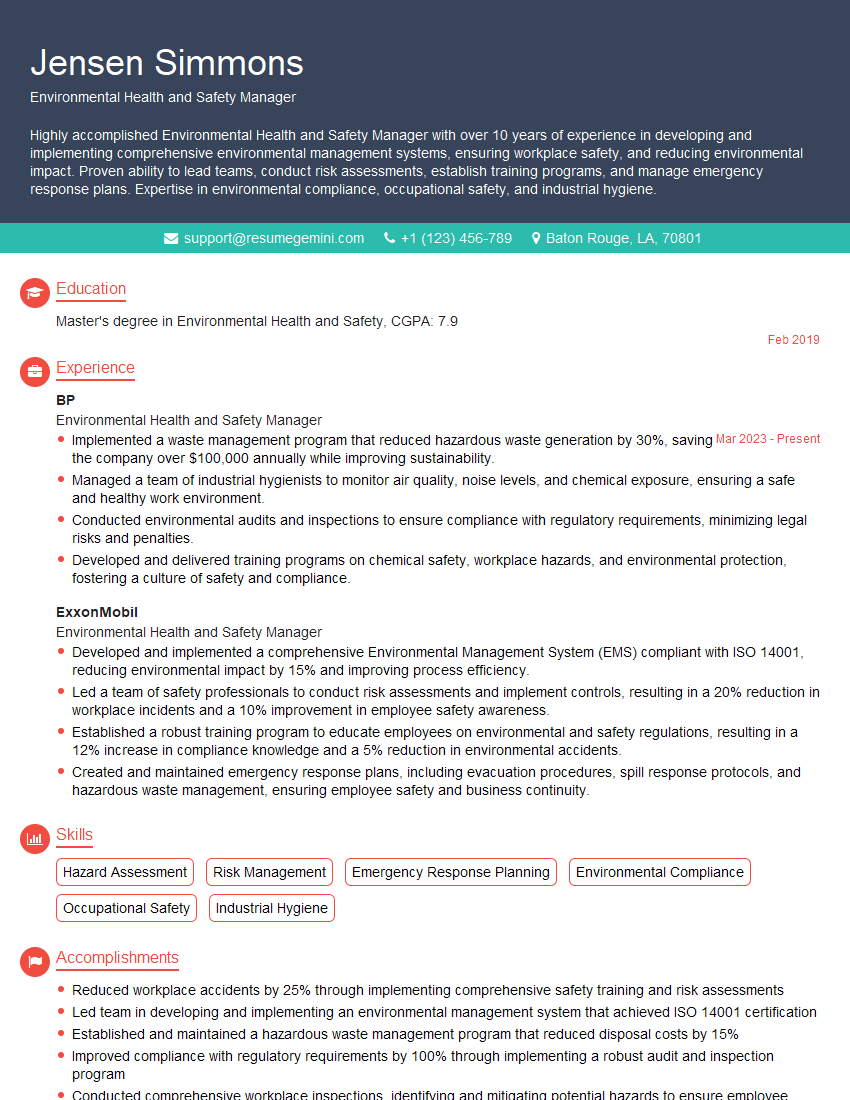
Mastering Grain HACCP principles is crucial for career advancement in the food industry, opening doors to more senior roles and higher earning potential. A strong understanding of HACCP demonstrates your commitment to food safety and quality, highly valued by employers. To maximize your job prospects, create an ATS-friendly resume that highlights your relevant skills and experience. ResumeGemini is a trusted resource to help you build a professional and impactful resume. They provide examples of resumes tailored to Grain HACCP roles to help guide you. Invest time in crafting a compelling resume; it’s your first impression to potential employers.
Explore more articles
Users Rating of Our Blogs
Share Your Experience
We value your feedback! Please rate our content and share your thoughts (optional).
What Readers Say About Our Blog
Very informative content, great job.
good