Cracking a skill-specific interview, like one for Entrepreneurship in Poultry Farming, requires understanding the nuances of the role. In this blog, we present the questions you’re most likely to encounter, along with insights into how to answer them effectively. Let’s ensure you’re ready to make a strong impression.
Questions Asked in Entrepreneurship in Poultry Farming Interview
Q 1. Describe your experience in developing a poultry farm business plan.
Developing a robust poultry farm business plan is crucial for success. It’s not just a document; it’s a roadmap guiding your entire operation. I begin by conducting thorough market research to understand demand for poultry products in my target area, analyzing competitor strategies, and identifying potential niche markets. This informs my production choices – will I focus on eggs, meat birds (broilers), or both? The plan then details the farm’s infrastructure needs, including housing, equipment (incubators, feeders, waterers), and land requirements. A comprehensive financial projection is essential, outlining startup costs, operating expenses (feed, labor, utilities), and projected revenue streams. This section includes detailed cash flow projections, profit and loss statements, and balance sheets, often utilizing financial modeling software for accurate forecasting. Crucially, the plan also outlines risk management strategies, covering potential disease outbreaks, fluctuating feed prices, and market volatility. For example, my plan always includes contingency funds for unexpected events and explores different marketing channels to reduce reliance on a single buyer. Finally, I include a clear exit strategy, outlining how the business will be managed or sold in the future. A well-structured business plan secures funding from lenders or investors and serves as a guiding document for operational decision-making.
Q 2. What are the key financial metrics you monitor in poultry farming?
Monitoring key financial metrics is vital for profitability and efficient management. I track several key indicators: Feed Conversion Ratio (FCR) – this measures the amount of feed required to produce one kilogram of meat or a dozen eggs. A lower FCR indicates efficiency. Mortality Rate – tracking bird deaths helps identify potential problems with health, management, or environment. Production Costs per Unit – this calculates the cost of producing one kilogram of meat or a dozen eggs, accounting for feed, labor, utilities, and other expenses. Gross Margin – the difference between revenue and direct costs reveals the profitability of each unit produced. Return on Investment (ROI) – this measures the profitability of the entire operation over time. Regular monitoring of these metrics using spreadsheets or dedicated farm management software allows for timely identification of areas needing improvement. For instance, a sudden spike in mortality might necessitate an immediate veterinary consultation, while a rising FCR might indicate a need for feed formulation adjustments or improved management practices.
Q 3. Explain your approach to managing poultry feed costs.
Managing poultry feed costs is critical because it’s often the largest expense. My approach is multifaceted. First, I negotiate directly with feed suppliers to secure competitive pricing and bulk discounts. Second, I focus on optimizing feed formulation. I work with nutritionists to create balanced rations that meet the birds’ nutritional needs without unnecessary additives. This involves analyzing the nutritional content of various feed ingredients and tailoring the mix to the birds’ age and production stage. Third, I diligently monitor feed wastage. This involves using appropriate feeders that minimize spillage and regularly checking for feed spoilage. Implementing strict inventory management practices, including first-in, first-out (FIFO) systems, reduces the risk of feed deterioration. Finally, exploring alternative feed sources, like locally sourced grains, can reduce reliance on expensive commercial feeds. For example, I’ve successfully incorporated locally grown corn and soybeans into my feed formulations, reducing overall costs by 15%. Constant analysis and adjustment are key to minimizing this significant expense.
Q 4. How do you ensure biosecurity on your poultry farm?
Biosecurity is paramount for preventing disease outbreaks. My farm implements strict protocols, starting with perimeter control: a fence, footbaths with disinfectant, and a designated vehicle entry point. All personnel entering the farm must change into clean clothing and footwear provided on-site. Visitors are kept to a minimum, and their entry is strictly controlled. Rodent and pest control are also crucial; regular inspections and appropriate measures are employed. Good hygiene is maintained throughout the farm: cleaning and disinfection routines are strictly followed, equipment is regularly sanitized, and waste is removed promptly. Strict quarantine procedures are followed for any new birds brought into the farm, keeping them isolated for a period before integrating them with the flock. Furthermore, detailed record-keeping tracks bird health and movements, allowing for quick identification and isolation of potential disease carriers. Regular veterinary checkups and vaccinations also form an integral part of our biosecurity strategy. These measures are essential to safeguard the flock from devastating diseases and ensure the economic viability of the farm. A biosecurity breach can lead to severe financial losses, therefore, strict adherence to our protocols is non-negotiable.
Q 5. What strategies do you employ for disease prevention and control?
Disease prevention and control are based on a proactive and multi-pronged approach. Vaccination programs, tailored to the specific diseases prevalent in the area, are implemented according to veterinary recommendations. Maintaining optimal environmental conditions within the poultry house, including appropriate temperature, ventilation, and humidity, helps strengthen bird immunity. Regular monitoring of bird health through observation and mortality tracking allows for prompt identification of potential disease outbreaks. If a disease outbreak occurs, rapid veterinary intervention is crucial. This includes testing for specific pathogens, implementing appropriate treatment protocols, and implementing strict isolation measures to prevent the disease from spreading further. In addition, strict biosecurity measures help prevent the introduction of diseases into the farm in the first place. Post-outbreak, thorough disinfection and cleaning of the affected area are essential to eliminate any remaining pathogens. Detailed record keeping is critical to track disease outbreaks, treatments administered, and their effectiveness, informing future prevention strategies.
Q 6. Describe your experience with poultry breeding and genetics.
Poultry breeding and genetics play a vital role in improving productivity and profitability. My approach involves selecting breeding stock based on performance traits – egg production, egg weight, meat yield, growth rate, feed conversion efficiency, and disease resistance. I work with reputable breeders and hatcheries to source high-quality chicks with superior genetic lines. Regular genetic selection and improvement programs help to enhance these desirable traits over generations. This includes using performance data collected on my farm to inform future breeding decisions, focusing on traits that translate to higher economic returns. For instance, choosing birds with a low FCR translates directly to lower feed costs. Record keeping and data analysis are critical, allowing for the identification of superior performing birds and their subsequent selection for breeding. Furthermore, regular monitoring of progeny performance helps to assess the effectiveness of our breeding strategies and adapt them as necessary. Investing in improved genetics is a long-term strategy that consistently pays dividends in terms of increased productivity and reduced costs.
Q 7. How do you manage poultry waste and environmental impact?
Managing poultry waste and minimizing environmental impact is crucial for sustainable poultry farming. My approach combines several methods. Firstly, I utilize composting techniques to process poultry manure. This converts the waste into valuable organic fertilizer, reducing the need for chemical fertilizers and minimizing disposal costs. Secondly, I explore anaerobic digestion – a process that breaks down organic matter in the absence of oxygen to produce biogas, a renewable energy source. This biogas can be used to generate electricity or heat for the farm, reducing reliance on fossil fuels. Thirdly, I ensure proper wastewater management through the use of settling tanks and treatment systems to minimize pollution of nearby water bodies. Proper storage and handling of manure help prevent runoff and leaching into the soil and groundwater. I also actively explore opportunities for partnerships to utilize the manure as a valuable resource, such as selling composted manure to farmers or gardeners. Continuous monitoring of environmental parameters, like water quality and soil nutrient levels, allows for adjustments to waste management practices to minimize negative environmental impact and comply with regulations. Sustainability is not just an environmental responsibility but also a smart business strategy, creating opportunities for waste utilization and reduced operational costs.
Q 8. Explain your understanding of poultry nutrition and its impact on production.
Poultry nutrition is the cornerstone of successful poultry farming. It’s about providing birds with the right balance of nutrients – proteins, carbohydrates, fats, vitamins, and minerals – at each stage of their life cycle to optimize growth, egg production, and overall health. A well-designed feed program significantly impacts production efficiency. For example, a deficiency in calcium can lead to weak eggshells, resulting in significant economic losses. Conversely, a balanced diet leads to faster growth, higher egg production rates, and improved bird health, minimizing mortality and veterinary costs.
We use a phased feeding approach, tailoring the nutrient composition of the feed to the bird’s age and production stage. Broiler chickens, raised for meat, require a high-protein diet for rapid muscle growth, while laying hens need a diet rich in calcium and phosphorus for strong eggshells and consistent egg production. We regularly analyze feed samples to ensure nutrient levels are consistent and meet the specific needs of our birds. We also consult with animal nutritionists to optimize our feeding program and monitor the birds’ response through regular weight checks and health assessments.
Q 9. What are your strategies for marketing and selling poultry products?
Our marketing strategy focuses on building strong relationships with both wholesale and retail buyers. We emphasize the quality and freshness of our poultry products, highlighting our commitment to ethical and sustainable farming practices. This resonates particularly well with consumers increasingly concerned about where their food comes from. We utilize a multi-channel approach:
- Direct Sales: We sell directly to restaurants and hotels in the local area, establishing strong, personal connections and ensuring consistent supply.
- Wholesale Partnerships: We work with established distributors to reach a wider market, leveraging their existing networks.
- Farmers’ Markets: We participate in local farmers’ markets, allowing us to directly interact with customers, build brand loyalty, and sell our products at premium prices.
- Online Marketing: We have a website and social media presence to highlight our brand story, farm practices, and product availability. We engage with customers online, respond to inquiries, and build a community.
We also offer various product packages, such as whole birds, individual cuts, and value packs, to cater to different customer needs and budgets. Pricing strategies are based on market analysis and cost of production, ensuring competitiveness while maintaining profitability.
Q 10. How do you manage inventory and supply chain logistics in poultry farming?
Inventory and supply chain management are crucial for efficient poultry farming. We employ a robust system to track bird populations, feed stocks, and product output. This involves using software to monitor bird growth rates, feed consumption, and mortality. We carefully forecast demand to ensure we have adequate birds ready for processing at the right time, preventing overstocking or shortages.
Our supply chain encompasses feed procurement, chick sourcing, veterinary services, and transportation. We establish reliable relationships with suppliers to ensure consistent feed quality and timely delivery. We utilize refrigerated transport to maintain product freshness during delivery to prevent spoilage. Regular stocktaking helps us identify areas for improvement and optimize our inventory levels. We track costs associated with each stage of the supply chain to identify inefficiencies and implement cost-saving measures.
For example, we use a first-in, first-out (FIFO) system for feed storage to ensure that older feed is used first, minimizing spoilage. We also have backup plans in place for unexpected disruptions, such as alternative transportation options or emergency feed sources.
Q 11. Describe your experience with poultry processing and handling.
Poultry processing and handling require adherence to strict hygiene and safety standards. Our processing facility is designed to meet these standards, ensuring food safety and product quality. The process typically involves stunning, bleeding, scalding, defeathering, evisceration, chilling, and packaging. We use automated equipment where possible to improve efficiency and reduce labor costs while maintaining high standards of hygiene.
Hygiene is paramount throughout the entire process. Our staff undergoes rigorous training in food safety procedures, including proper sanitation techniques and the use of personal protective equipment (PPE). We implement strict quality control checks at various stages of processing to identify and remove any substandard products. We comply with all relevant food safety regulations and undergo regular audits to ensure continued compliance. Byproducts such as feathers and offal are carefully handled and disposed of responsibly, minimizing environmental impact.
Q 12. What is your approach to staff training and management in a poultry farm?
Investing in staff training and management is essential for a successful poultry farm. We provide comprehensive training programs covering all aspects of poultry farming, from animal husbandry and feed management to processing and hygiene procedures. We use a combination of on-the-job training, workshops, and online resources to ensure our staff are well-equipped to handle their responsibilities.
We foster a culture of continuous learning and improvement, encouraging staff to participate in professional development opportunities. We also implement regular performance evaluations to provide feedback and identify areas for improvement. Effective communication is crucial; we hold regular team meetings to discuss challenges, share best practices, and foster a collaborative work environment. Fair wages and benefits packages are vital for employee retention and motivation. We promote a safe and healthy work environment, adhering to all relevant labor laws and regulations.
Q 13. How do you handle unexpected challenges such as disease outbreaks or equipment failures?
Unexpected challenges are inevitable in poultry farming. We have contingency plans in place to mitigate the impact of disease outbreaks or equipment failures. For disease outbreaks, we have a biosecurity protocol that includes strict hygiene measures, quarantine procedures, and prompt veterinary intervention. We maintain a strong relationship with our veterinarian to ensure rapid response and effective treatment. We also have detailed records of our flock’s health history, which helps us identify potential problems early on.
In case of equipment failure, we have backup equipment and maintenance contracts in place to minimize downtime. We also have a comprehensive maintenance schedule to prevent equipment malfunctions and extend their lifespan. Our team is trained to perform basic repairs and troubleshoot common problems. We also have established relationships with reliable equipment suppliers to ensure prompt repairs or replacements when necessary. Regular risk assessments and business continuity planning help us identify potential vulnerabilities and develop effective mitigation strategies.
Q 14. What are your strategies for ensuring the sustainability of your poultry farm?
Sustainability is central to our poultry farming operation. We integrate environmental, social, and economic considerations into our practices. Environmentally, we minimize our environmental footprint through responsible waste management, efficient water usage, and renewable energy sources. We explore ways to reduce our reliance on antibiotics and promote natural pest control. We monitor our energy consumption and implement energy-efficient technologies.
Socially, we prioritize fair labor practices, safe working conditions, and community engagement. We support local initiatives and strive to create a positive impact on the community. Economically, we focus on operational efficiency, cost control, and responsible pricing to ensure the long-term viability of our farm. We reinvest profits back into the business to improve infrastructure, technology, and employee training. We also actively explore opportunities to add value to our products, such as processing and packaging, to enhance profitability and resilience.
Q 15. What technology or innovations are you familiar with in poultry farming?
Poultry farming is rapidly embracing technological advancements to improve efficiency, productivity, and animal welfare. I’m familiar with a range of innovations, including:
- Automated feeding systems: These systems precisely control feed delivery, minimizing waste and ensuring optimal bird nutrition. For example, I’ve used systems that adjust feed based on bird weight and age, leading to better growth rates and reduced feed costs.
- Environmental control systems: Precisely controlling temperature, humidity, and ventilation within poultry houses is crucial for bird health and productivity. I’ve worked with systems that use sensors and automated controls to maintain ideal conditions, minimizing stress on the birds and reducing disease risks.
- Precision poultry farming technologies: These technologies utilize sensors, data analytics, and AI to monitor various aspects of bird health and performance, providing real-time insights for improved management decisions. This allows for early detection of disease outbreaks or other problems, preventing larger issues.
- Egg grading and sorting machines: These machines automate the process of grading eggs by size, weight, and quality, improving efficiency and ensuring consistent product quality. They reduce manual labor and improve accuracy.
- Disease monitoring and diagnostic tools: Rapid diagnostic tests and advanced surveillance systems help in early detection and prevention of diseases, reducing economic losses and improving biosecurity.
Furthermore, I’m also aware of emerging technologies like blockchain for traceability and IoT for enhanced data collection and analysis, which promise further advancements in the industry.
Career Expert Tips:
- Ace those interviews! Prepare effectively by reviewing the Top 50 Most Common Interview Questions on ResumeGemini.
- Navigate your job search with confidence! Explore a wide range of Career Tips on ResumeGemini. Learn about common challenges and recommendations to overcome them.
- Craft the perfect resume! Master the Art of Resume Writing with ResumeGemini’s guide. Showcase your unique qualifications and achievements effectively.
- Don’t miss out on holiday savings! Build your dream resume with ResumeGemini’s ATS optimized templates.
Q 16. How do you comply with regulations and industry standards in poultry farming?
Compliance with regulations and industry standards is paramount in poultry farming. It’s not just about avoiding penalties; it’s about ensuring animal welfare, food safety, and maintaining public trust. My compliance strategy involves several key steps:
- Thorough understanding of local, regional, and national regulations: This includes familiarizing myself with rules concerning animal welfare, biosecurity, environmental protection, and food safety (e.g., HACCP).
- Implementing robust biosecurity protocols: This involves strict procedures for sanitation, pest control, and disease prevention to protect my flock and prevent the spread of diseases to other farms. For example, I maintain strict hygiene protocols, controlling access to the farm and implementing rigorous disinfection procedures.
- Maintaining accurate records: Detailed records of bird health, feed consumption, medication usage, and production are essential for traceability and regulatory audits. I utilize both manual and digital record-keeping systems to ensure compliance.
- Regular veterinary check-ups and disease monitoring: This helps detect and address health issues early, minimizing the impact on bird health and production and ensuring compliance with disease reporting regulations.
- Employee training: My staff receives comprehensive training on biosecurity, food safety, and animal welfare procedures. They are essential to maintaining standards.
Finally, I actively participate in industry associations and keep myself updated on changes in regulations to ensure continuous compliance.
Q 17. Describe your experience with obtaining financing for a poultry farming venture.
Securing financing for a poultry farming venture requires a well-structured business plan and a thorough understanding of available funding options. My experience includes:
- Developing a comprehensive business plan: This detailed document outlines the business model, market analysis, financial projections, and management team, which is crucial for convincing lenders or investors.
- Exploring various funding avenues: These include bank loans (requiring collateral), government grants (often with specific requirements), crowdfunding, and attracting private investors (venture capital or angel investors).
- Building a strong credit history: A good credit score significantly improves the chances of securing bank loans at favorable terms.
- Demonstrating financial viability: Detailed financial projections, including revenue forecasts, cost estimations, and profit margins, help build investor confidence.
- Securing collateral: For bank loans, having assets that can be used as collateral strengthens the application.
In my experience, a strong business plan and a clear demonstration of financial viability are key to securing funding for poultry farming ventures.
Q 18. What are the key factors to consider when selecting poultry breeds?
Choosing the right poultry breed is a crucial decision impacting profitability, productivity, and overall farm success. Key factors to consider include:
- Climate suitability: Selecting breeds adapted to the local climate ensures optimal health and performance. For example, breeds that thrive in hot, humid climates would not perform well in colder areas.
- Growth rate and feed conversion ratio: Fast-growing breeds with high feed conversion ratios (amount of feed needed to produce a unit of weight gain) lead to greater economic efficiency.
- Egg production (for layers): Egg-laying breeds are selected based on factors such as egg size, egg quality, and laying frequency.
- Meat yield (for broilers): Broiler breeds are chosen for their high growth rates and optimal meat quality.
- Disease resistance: Breeds with inherent disease resistance reduce health issues and veterinary costs.
- Market demand: Understanding the local market demand for specific types of poultry meat or eggs helps ensure profitability.
I usually consult with poultry specialists and conduct thorough market research to identify breeds best suited for my specific needs and market conditions.
Q 19. How do you manage the risks associated with fluctuating market prices?
Fluctuating market prices are a significant risk in poultry farming. Effective risk management strategies include:
- Forward contracting: Agreements with buyers to sell poultry products at a predetermined price for a future date helps mitigate price volatility.
- Diversification: Producing different types of poultry (broilers, layers, turkeys) or offering value-added products reduces dependence on a single market segment.
- Hedging: Utilizing financial instruments, like futures contracts, can help offset potential losses due to price fluctuations.
- Efficient cost management: Optimizing feed costs, labor costs, and energy consumption improves profitability even during price downturns.
- Market analysis and forecasting: Regular monitoring of market trends and price predictions allows for proactive adjustments in production strategies.
For example, during periods of low market prices, I might focus on reducing production costs or explore alternative sales channels to minimize losses.
Q 20. What is your experience with different poultry farming systems (e.g., free-range, cage-free)?
I have experience with various poultry farming systems, each with its own advantages and disadvantages:
- Free-range systems: Birds have access to outdoor areas, which improves their welfare and can result in better meat and egg quality. However, free-range systems often require larger land areas and can be more susceptible to predator attacks and disease outbreaks. Biosecurity measures are critical in these systems.
- Cage-free systems: Birds are kept in barns without individual cages but have more space to move around than birds in conventional cages. This generally improves bird welfare compared to traditional cage systems. However, this still requires appropriate stocking densities to prevent over-crowding and potential bird stress.
- Conventional cage systems: Birds are housed in individual cages, allowing for better control of feed consumption and waste management. This system has high productivity but can lead to welfare concerns if not managed carefully. Strict regulations and standards related to cage size and bird density must be followed.
The choice of system depends on various factors, including market demand, economic considerations, and ethical concerns. I always prioritize responsible farming practices regardless of the chosen system.
Q 21. Explain your understanding of poultry welfare and ethical considerations.
Poultry welfare and ethical considerations are fundamental aspects of my farming practices. My commitment to ethical poultry farming encompasses several key principles:
- Minimizing stress: I ensure that birds have access to adequate space, proper ventilation, and appropriate environmental conditions to reduce stress and promote good health. This includes minimizing noise and providing ample opportunities for natural behaviors.
- Providing access to food and water: Constant access to fresh food and clean water is crucial for the health and well-being of the birds.
- Implementing humane handling practices: Birds should be handled gently and without causing injury or distress during routine procedures such as vaccination or moving birds.
- Preventing and controlling diseases: Regular veterinary checks and implementation of biosecurity protocols are crucial to prevent diseases and reduce suffering among the birds.
- Ensuring humane slaughter: If I am involved in the slaughter process, I ensure that it is carried out quickly and painlessly, complying with all relevant regulations and guidelines.
- Transparency and traceability: Consumers are increasingly concerned about the origins and treatment of their food. Maintaining transparent and traceable practices helps build consumer confidence and reinforces ethical practices.
Ethical poultry farming is not just a matter of compliance; it’s a commitment to the well-being of the birds and a cornerstone of building a sustainable and responsible business.
Q 22. How do you measure the efficiency and profitability of your poultry farm?
Measuring the efficiency and profitability of a poultry farm involves a multifaceted approach, focusing on key performance indicators (KPIs). We don’t just look at profit; we analyze the entire production cycle to identify areas for improvement.
- Feed Conversion Ratio (FCR): This measures the efficiency of feed utilization. A lower FCR (e.g., 1.8:1) indicates better efficiency as it means less feed is needed to produce a kilogram of meat. We constantly monitor FCR and adjust feed formulations or management practices to optimize it.
- Mortality Rate: A high mortality rate directly impacts profitability. We track this closely, investigating causes (disease outbreaks, environmental factors) and implementing preventive measures. A low mortality rate, typically below 5%, is a key target.
- Production Cost per Bird/Kg: This involves calculating all costs – feed, labor, utilities, medication, etc. – divided by the number of birds or kilograms of meat produced. Analyzing this allows us to identify cost-saving opportunities.
- Return on Investment (ROI): Ultimately, ROI determines the overall profitability. We project ROI based on production costs, market prices, and sales volume. A healthy ROI is crucial for sustainability.
- Egg Production Rate (for layer farms): This KPI measures the number of eggs laid per hen per year. Factors like breed, nutrition, and housing greatly influence this rate. A high egg production rate is vital for profitability in layer farms.
By tracking these KPIs regularly and analyzing trends, we can identify bottlenecks and optimize our farm’s performance. For instance, a sudden spike in mortality might indicate a disease outbreak requiring immediate veterinary intervention.
Q 23. Describe your experience with using data analytics in poultry farming.
Data analytics is transforming poultry farming. We use various technologies to collect and analyze data for informed decision-making. We’ve implemented sensor-based monitoring systems in our barns to track temperature, humidity, and ammonia levels, which are critical for bird health and productivity. This data feeds into our management software, generating real-time alerts and trend analysis.
For example, we use predictive analytics to forecast feed demand based on historical data and growth projections, ensuring we have the right amount of feed on hand and avoiding shortages. We also leverage data on bird weights and growth rates to optimize feeding schedules and ensure birds reach market weight efficiently. Furthermore, we analyze sales data to understand market trends and adjust production accordingly, ensuring our output aligns with consumer demand.
This data-driven approach enables us to make proactive decisions, rather than reactive ones, improving efficiency and minimizing losses. For instance, if we detect a trend of increased mortality in a specific barn, we can investigate the cause promptly and implement corrective measures before it significantly impacts our production.
Q 24. What are your strategies for attracting and retaining skilled labor in the poultry industry?
Attracting and retaining skilled labor is a significant challenge in the poultry industry. We address this through a multi-pronged strategy focusing on compensation, training, and career development.
- Competitive Wages and Benefits: We offer competitive salaries and benefits packages, including health insurance, paid time off, and retirement plans, making us a desirable employer.
- On-the-Job Training and Skill Development: We invest heavily in training programs, providing opportunities for employees to enhance their skills and advance their careers within our organization. This includes both technical skills in poultry management and soft skills like teamwork and communication.
- Creating a Positive Work Environment: We foster a supportive and respectful work environment where employees feel valued and appreciated. This includes open communication channels, regular feedback, and opportunities for input and collaboration.
- Incentive Programs and Recognition: We reward employees for their hard work and achievements through performance-based incentives, bonuses, and recognition programs. This fosters a sense of ownership and pride in their work.
Investing in our employees isn’t just a cost; it’s an investment in our farm’s future. A motivated and skilled workforce translates directly to improved productivity and reduced operational costs.
Q 25. How do you manage relationships with suppliers, distributors, and customers?
Maintaining strong relationships with suppliers, distributors, and customers is essential for success in the poultry industry. We prioritize open communication, mutual respect, and long-term partnerships.
- Suppliers: We build strong relationships with our feed suppliers, ensuring consistent quality and timely delivery. We establish clear communication channels, negotiating fair prices and payment terms. We also regularly audit our suppliers to ensure they meet our standards for quality and animal welfare.
- Distributors: We work closely with our distributors to ensure efficient and reliable delivery of our products to market. We collaborate on marketing and promotion strategies to enhance brand visibility and increase sales. Regular performance reviews ensure mutual accountability and efficient logistics.
- Customers: We prioritize customer satisfaction through quality products and excellent service. We engage in direct communication to understand their needs and expectations. Feedback mechanisms help us improve our operations and meet customer demands. Building trust and long-term relationships with our customers is critical for sustainable growth.
By fostering strong relationships across our supply chain, we ensure a reliable flow of resources, efficient distribution, and ultimately, satisfied customers. This collaborative approach promotes mutual growth and resilience within the entire network.
Q 26. What are your long-term goals and vision for your poultry farming business?
Our long-term vision is to become a leading provider of high-quality, sustainably produced poultry products. This involves several key goals:
- Expansion of Production Capacity: We plan to expand our farm’s production capacity to meet growing market demand while maintaining our commitment to high standards of animal welfare and environmental sustainability.
- Diversification of Products: We are exploring opportunities to diversify our product offerings, potentially expanding into value-added products or different poultry breeds to cater to various consumer preferences.
- Technological Advancement: We will continue investing in advanced technologies such as precision farming and automation to enhance efficiency, optimize resource utilization, and improve the overall quality of our products.
- Strengthening Brand Reputation: We aim to build a strong brand reputation associated with quality, ethical practices, and sustainability, enhancing our market position and consumer loyalty.
- Community Engagement: We are committed to contributing positively to our local community through job creation and support for local initiatives.
Our vision is driven by a commitment to excellence, innovation, and responsible farming practices, ensuring both business success and positive social impact.
Q 27. Describe your experience with expanding or scaling a poultry farming operation.
Expanding a poultry farming operation requires careful planning and execution. Our experience involved a phased approach, minimizing risks and ensuring smooth transition.
- Market Research and Analysis: Before expanding, we conducted thorough market research to assess demand, competition, and potential market opportunities. This helped determine the optimal scale and scope of expansion.
- Financial Planning and Investment: We developed a comprehensive financial plan, securing necessary funding through a combination of internal resources and external financing. This involved detailed cost projections, ROI analysis, and risk assessment.
- Infrastructure Development: Expansion included constructing additional barns, upgrading existing facilities, and acquiring necessary equipment. This involved careful planning, adherence to regulations, and ensuring infrastructure could support the increased production capacity.
- Personnel Management: We recruited and trained additional staff, ensuring we had the skilled workforce needed to manage the expanded operation. This included clear job descriptions, thorough training programs, and ongoing support for employees.
- Supply Chain Management: We adjusted our supply chain to meet the increased demand for feed, medication, and other inputs. This involved negotiating contracts with suppliers, streamlining logistics, and ensuring efficient inventory management.
Successful expansion requires meticulous planning, phased implementation, and constant monitoring to adapt to unforeseen challenges. A well-structured approach minimizes risks and maximizes the chances of a successful outcome.
Q 28. How do you adapt to changes in the poultry market and industry trends?
Adapting to changes in the poultry market and industry trends is crucial for long-term success. We employ several strategies to stay ahead of the curve:
- Market Monitoring and Trend Analysis: We continuously monitor market prices, consumer preferences, and emerging trends, analyzing data from various sources to identify potential opportunities and challenges. This involves staying updated on industry publications, attending conferences, and conducting regular market research.
- Technological Innovation: We adopt new technologies to improve efficiency, reduce costs, and enhance product quality. This includes precision farming tools, automated systems, and data analytics platforms.
- Continuous Improvement Practices: We implement continuous improvement programs, regularly reviewing our processes and identifying areas for optimization. This involves benchmarking against industry best practices and implementing improvements to enhance productivity and sustainability.
- Strategic Partnerships: We build strategic partnerships with other businesses and organizations to share knowledge, resources, and expand our market reach. This collaborative approach helps us stay informed about industry trends and access new opportunities.
- Compliance and Regulation: We maintain strict adherence to all relevant regulations and industry standards related to animal welfare, food safety, and environmental protection. This ensures our operation remains compliant and mitigates potential legal and reputational risks.
By being proactive, adaptable, and embracing innovation, we ensure our farm remains competitive and resilient in the ever-changing poultry industry landscape.
Key Topics to Learn for Entrepreneurship in Poultry Farming Interview
- Business Planning & Market Analysis: Developing a comprehensive business plan, including market research, target audience identification, and competitive analysis within the poultry farming industry. Practical application: Analyzing local poultry consumption patterns to determine optimal bird breeds and production scale.
- Poultry Production & Management: Understanding different poultry farming systems (intensive, extensive, free-range), breed selection, feeding strategies, disease prevention and biosecurity protocols. Practical application: Describing your approach to minimizing mortality rates and maximizing flock health.
- Financial Management & Budgeting: Developing realistic budgets, managing cash flow, understanding profitability metrics (e.g., feed conversion ratio, return on investment), and securing funding (loans, grants). Practical application: Calculating the break-even point for your poultry farm operation.
- Sales & Marketing Strategies: Identifying and reaching your target market (e.g., wholesalers, retailers, direct consumers), developing a pricing strategy, and building brand awareness. Practical application: Designing a marketing plan to effectively sell your poultry products.
- Legal & Regulatory Compliance: Understanding relevant regulations (e.g., animal welfare, food safety, environmental), obtaining necessary permits and licenses. Practical application: Explaining your approach to ensuring compliance with all relevant poultry farming regulations.
- Risk Management & Contingency Planning: Identifying potential risks (e.g., disease outbreaks, market fluctuations, weather events) and developing mitigation strategies. Practical application: Describing a plan to manage a potential avian influenza outbreak.
- Sustainability & Ethical Considerations: Implementing sustainable farming practices (e.g., reducing environmental impact, improving animal welfare), and promoting ethical business operations. Practical application: Explaining your commitment to responsible poultry farming.
Next Steps
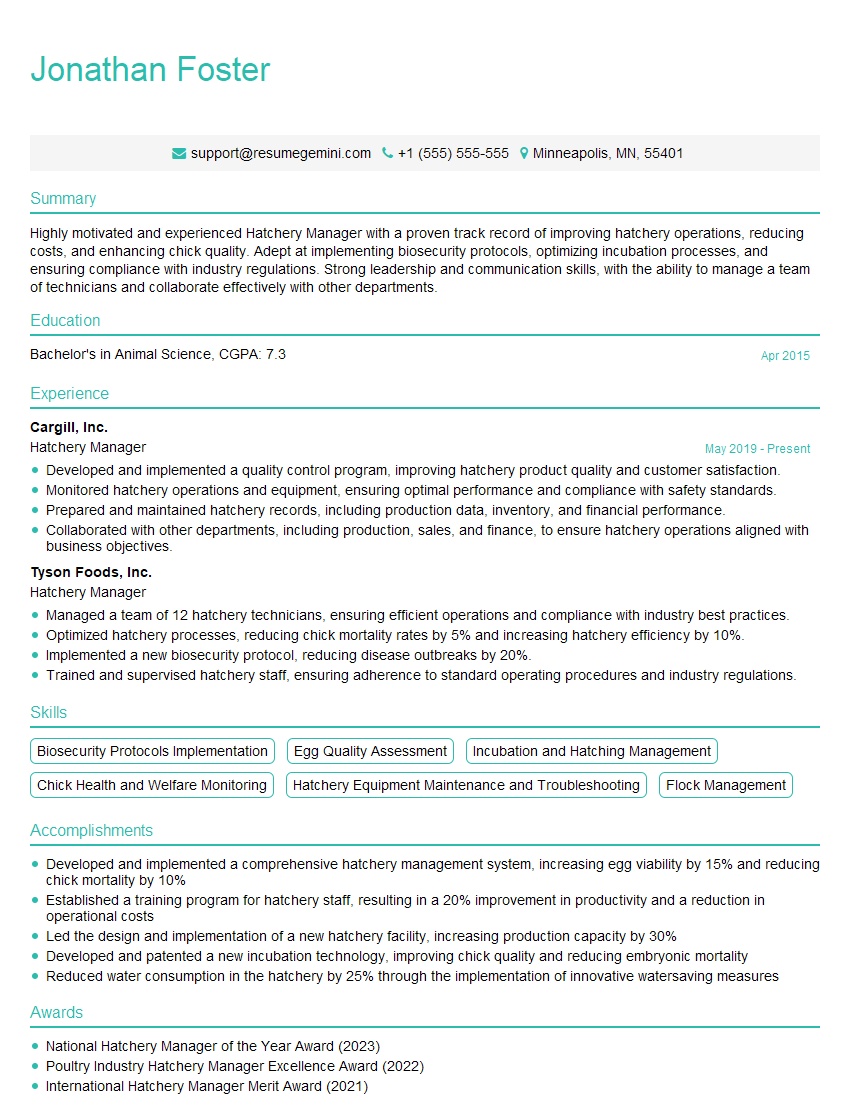
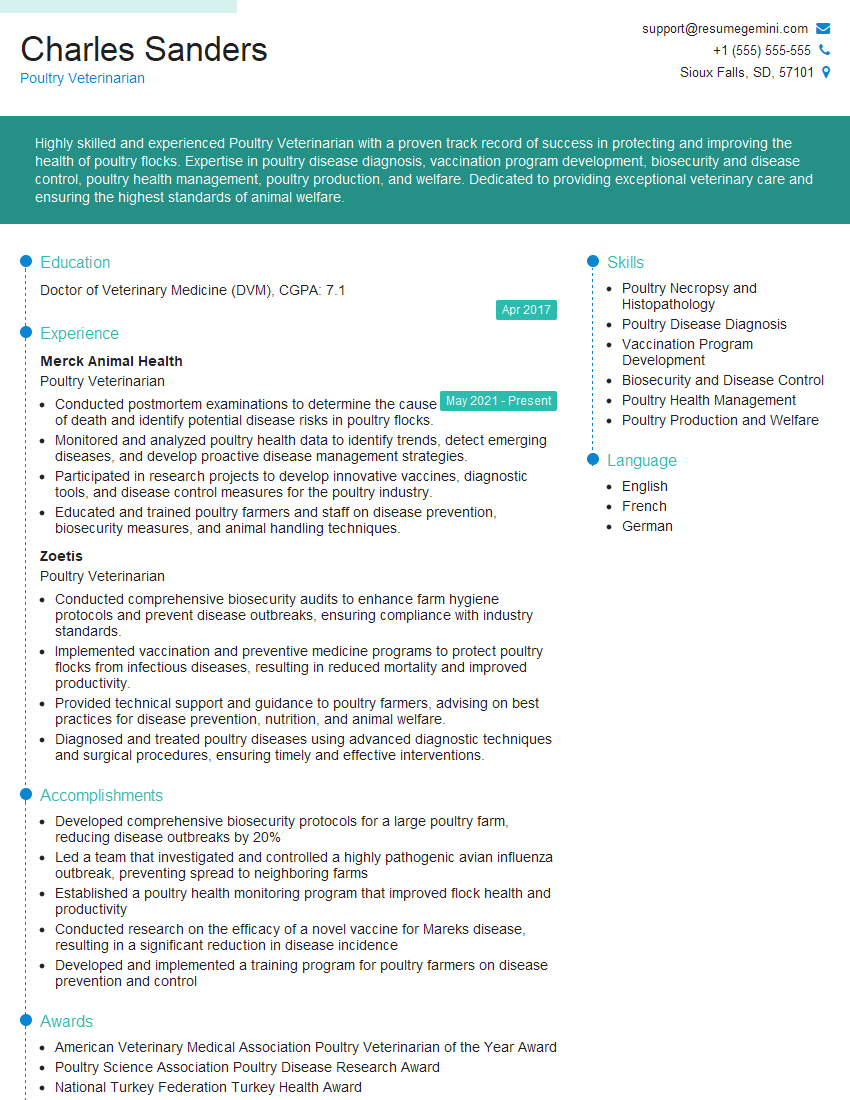
Mastering Entrepreneurship in Poultry Farming opens doors to a rewarding and impactful career. A strong understanding of these key areas will significantly enhance your interview performance and increase your chances of securing your dream role. To further boost your job prospects, focus on crafting an ATS-friendly resume that highlights your relevant skills and experience. ResumeGemini is a trusted resource to help you build a professional and impactful resume. They provide examples of resumes tailored to Entrepreneurship in Poultry Farming to guide you through the process. Invest the time in creating a compelling resume – it’s your first impression and a crucial step in your career journey.
Explore more articles
Users Rating of Our Blogs
Share Your Experience
We value your feedback! Please rate our content and share your thoughts (optional).
What Readers Say About Our Blog
Very informative content, great job.
good