Interviews are opportunities to demonstrate your expertise, and this guide is here to help you shine. Explore the essential Stress and fatigue analysis interview questions that employers frequently ask, paired with strategies for crafting responses that set you apart from the competition.
Questions Asked in Stress and fatigue analysis Interview
Q 1. Explain the difference between static and fatigue loading.
The key difference between static and fatigue loading lies in how the load is applied over time. Static loading involves a constant load applied to a component, resulting in a constant stress. Think of a bridge supporting a consistently heavy load. The stress remains relatively unchanged until the load is removed or increased significantly. In contrast, fatigue loading involves cyclic or fluctuating stresses that change over time. This means the component experiences repeated loading and unloading cycles. A classic example is an airplane wing flexing during flight – it experiences hundreds of thousands of cycles of stress during its lifespan.
Imagine holding a weight – that’s static loading. Now imagine repeatedly lifting and lowering the weight – that’s fatigue loading. The cumulative effect of these cycles can lead to failure, even if the maximum stress in each cycle is well below the material’s ultimate tensile strength.
Q 2. Describe different fatigue failure mechanisms.
Fatigue failure mechanisms are complex and often involve multiple factors. However, some common mechanisms include:
- Crack initiation: This is the first stage, where microscopic flaws or stress concentrations within the material act as nucleation sites for cracks to begin. These flaws can be manufacturing imperfections, inclusions, or surface scratches.
- Crack propagation: Once a crack initiates, it grows under cyclic loading. The crack grows incrementally with each cycle, slowly weakening the component.
- Final fracture: As the crack propagates, it reduces the effective cross-sectional area of the component. Eventually, the remaining area is unable to withstand the applied load, leading to sudden and catastrophic fracture.
These mechanisms are often influenced by the material properties, the type of loading, and the presence of corrosive environments. For example, corrosion fatigue occurs when a corrosive environment accelerates crack propagation, leading to earlier failure.
Q 3. What are S-N curves and how are they used?
S-N curves, also known as Wöhler curves, graphically represent the relationship between the applied stress amplitude (S) and the number of cycles to failure (N) for a material under fatigue loading. They’re essential for predicting the fatigue life of components.
The curve is typically plotted on a log-log scale. High stress amplitudes lead to fewer cycles to failure (low N), while low stress amplitudes result in a much higher number of cycles to failure (high N). Some materials show an endurance limit, a stress level below which failure will not occur even after an extremely large number of cycles.
How they’re used: Given a particular stress amplitude experienced by a component, an S-N curve allows engineers to estimate the number of cycles the component can withstand before failure. This is crucial for designing components that can withstand the expected number of loading cycles during their operational lifetime.
Q 4. Explain the concept of stress concentration factors.
Stress concentration factors (Kt) account for the increase in stress at geometric discontinuities such as holes, notches, fillets, or changes in cross-section. These features act as stress raisers, leading to significantly higher local stresses than the nominal stress calculated based on the applied load and the component’s overall geometry.
The stress concentration factor is a dimensionless quantity that quantifies this increase in stress. For example, a Kt of 2 indicates that the local stress at a discontinuity is twice the nominal stress. Understanding stress concentration factors is vital because fatigue cracks often initiate at these high-stress regions.
Engineers use analytical methods, finite element analysis (FEA), or experimental techniques to determine the stress concentration factor for a given geometry. Design improvements, such as using larger fillet radii or avoiding sharp corners, can help to reduce stress concentration and improve fatigue life.
Q 5. How do you determine the fatigue life of a component?
Determining the fatigue life of a component involves several steps:
- Identify loading conditions: Determine the type, magnitude, and frequency of the cyclic loads the component will experience during its service life. This often involves experimental measurements, simulations, or historical data.
- Material properties: Obtain the S-N curve for the material of the component. This may be found in material data handbooks or determined experimentally.
- Stress analysis: Calculate the stress amplitude at the critical location(s) on the component, considering stress concentration factors and other relevant factors.
- Fatigue life prediction: Use the stress amplitude and the S-N curve to estimate the number of cycles to failure. This can be done graphically by finding the intersection of the stress amplitude and the S-N curve.
- Safety factor: Apply a suitable safety factor to account for uncertainties in loading conditions, material properties, and manufacturing variations. This ensures a margin of safety.
Software tools like FEA packages play a crucial role in modern fatigue life prediction. These tools allow for complex geometry and loading conditions to be simulated, providing a much more accurate prediction than manual calculations.
Q 6. What are the limitations of the S-N curve approach?
While S-N curves are widely used, they have limitations:
- Material variability: Materials exhibit inherent variability, and the S-N curve represents average behavior. Individual components may deviate from this average.
- Environmental effects: S-N curves are typically generated under controlled laboratory conditions. Environmental factors like corrosion, temperature, or humidity can significantly affect fatigue life and are not always readily incorporated.
- Mean stress effects: The basic S-N curve approach often assumes a zero mean stress, neglecting the impact of a non-zero mean stress. This is significant because a non-zero mean stress often accelerates fatigue failure.
- Limited applicability to complex loading: While techniques exist to adapt S-N curves for complex loading scenarios, these methods can be complex and involve significant uncertainties.
More advanced techniques, such as fracture mechanics and probabilistic approaches, can address some of these limitations, but S-N curves remain a fundamental tool in fatigue analysis.
Q 7. Explain the concept of Miner’s rule.
Miner’s rule, also known as the linear damage accumulation rule, is a method used to estimate the fatigue life of a component subjected to variable amplitude loading. It assumes that fatigue damage accumulates linearly with each cycle of loading, regardless of the stress amplitude.
The rule states that the accumulated damage fraction (D) is the sum of the ratios of the number of cycles at a given stress amplitude (ni) to the number of cycles to failure at that stress amplitude (Ni) from the S-N curve:
D = Σ (ni / Ni)If the accumulated damage fraction (D) reaches or exceeds 1, the component is predicted to fail. Miner’s rule is simple to apply but has limitations, primarily its assumption of linear damage accumulation. In reality, damage accumulation is more complex and may be nonlinear, especially at high stress levels.
Despite its limitations, Miner’s rule is a useful tool, particularly for initial assessments or for applications where precise fatigue life prediction is not crucial. More refined methods consider nonlinear damage accumulation and account for other factors influencing fatigue behavior.
Q 8. Describe different fatigue testing methods.
Fatigue testing methods aim to determine a material’s resistance to failure under cyclic loading. Several methods exist, each with its strengths and weaknesses:
- Constant Amplitude (CA) Testing: This is the most fundamental method. A specimen is subjected to a constant stress or strain amplitude until failure. The number of cycles to failure (Nf) is recorded and plotted on an S-N (Stress-Number of cycles) curve. This curve is crucial for predicting fatigue life.
- Variable Amplitude (VA) Testing: Real-world loading is rarely constant. VA tests simulate more realistic scenarios using various stress or strain amplitudes and sequences. Techniques like rainflow counting are employed to analyze the complex loading history and extract equivalent constant amplitude cycles.
- Strain-Controlled Testing: This focuses on controlling the strain amplitude rather than the stress amplitude. It’s particularly useful for ductile materials and high-cycle fatigue regimes, where plastic deformation significantly influences fatigue life.
- Stress-Controlled Testing: This method controls the stress amplitude. It’s suitable for brittle materials and lower-cycle fatigue where elastic deformation predominates.
- Fatigue Crack Growth Testing: This involves pre-cracking a specimen and then subjecting it to cyclic loading while monitoring crack growth rate (da/dN). This data helps predict the remaining life of a component with an existing crack. Techniques like compact tension (CT) and single edge notched bend (SENB) specimens are commonly used.
Choosing the appropriate method depends on factors such as the material, the loading conditions, and the desired information.
Q 9. What is the role of material properties in fatigue analysis?
Material properties play a pivotal role in fatigue analysis. The fatigue behavior of a material is not simply a reflection of its static strength (yield and ultimate tensile strength). Key properties include:
- Yield Strength (σy): Indicates the material’s resistance to plastic deformation. Lower yield strength usually translates to lower fatigue strength.
- Ultimate Tensile Strength (σu): Represents the maximum stress a material can withstand before fracture under static loading. While related to fatigue, it’s not a direct predictor of fatigue life.
- Fatigue Strength Coefficient (σf‘): This empirical parameter represents the fatigue strength at a specific number of cycles (e.g., 106 cycles). It’s determined from S-N curves.
- Fatigue Strength Exponent (b): This exponent in the Basquin’s law (σ = σf‘Nb) describes the slope of the S-N curve in the log-log plot and reflects the material’s sensitivity to stress levels.
- Fracture Toughness (KIC): This is crucial for analyzing crack propagation and remaining life in components containing flaws.
- Cyclic Strain Hardening/Softening: How the material’s strength changes under cyclic loading, influencing fatigue behavior significantly.
Understanding these properties allows engineers to select appropriate materials for applications with cyclic loading and predict fatigue life accurately.
Q 10. How do you account for residual stresses in fatigue analysis?
Residual stresses, stresses present in a component even without external loading, significantly impact fatigue life. These stresses can be either compressive or tensile. Compressive residual stresses are beneficial, delaying fatigue crack initiation, while tensile residual stresses are detrimental and accelerate crack growth.
Accounting for residual stresses in fatigue analysis involves:
- Measurement: Employing techniques like X-ray diffraction or hole-drilling to quantify the magnitude and distribution of residual stresses.
- Modeling: Incorporating residual stresses into FEA models. This often requires sophisticated techniques to accurately represent the complex stress states.
- Superposition: Adding the residual stresses to the stresses induced by external loading to obtain the total stress state used in fatigue life predictions. For example, the stress range (Δσ) in an S-N curve calculation would include the effects of the residual stress.
- Modifying Design: Processes like shot peening can be used to induce beneficial compressive residual stresses in the surface of a component, increasing its fatigue resistance.
Ignoring residual stresses can lead to inaccurate fatigue life predictions and potentially catastrophic failures.
Q 11. Explain the concept of fracture mechanics.
Fracture mechanics provides a framework for understanding and predicting the behavior of cracks in materials under stress. Unlike traditional approaches that focus on the overall strength of a component, fracture mechanics considers the critical role of pre-existing flaws or cracks. It’s especially important in situations where stress concentrations are very high.
The core concept is that a crack propagates when the stress intensity at its tip exceeds a critical value (KIC), leading to unstable crack growth and catastrophic fracture. This critical stress intensity factor represents the material’s resistance to crack propagation. The approach shifts focus from the applied stress to the stress concentration at the crack tip, making it very useful in evaluating the integrity of parts containing defects.
It’s used extensively in assessing the safety and reliability of structures containing cracks, including aircraft, bridges, pressure vessels, and pipelines.
Q 12. What is the stress intensity factor and how is it used?
The stress intensity factor (K) quantifies the stress field at the tip of a crack. It’s a critical parameter in fracture mechanics and is used to predict crack propagation.
K is dependent on several factors:
- Crack Geometry: The size, shape, and orientation of the crack significantly affect K.
- Applied Stress: The magnitude and type of the external load influencing the crack.
- Material Properties: The material’s elastic modulus and Poisson’s ratio.
K is calculated using various equations and handbooks depending on the specific crack geometry and loading conditions. For example, for a Mode I (opening mode) crack in an infinite plate, the stress intensity factor is given by:
KI = σ√(πa)where σ is the applied stress and a is the crack half-length.
When K reaches the material’s fracture toughness (KIC), unstable crack growth occurs leading to fracture. K is employed to determine whether a crack will propagate, predict crack growth rates, and assess the remaining life of a component with a known crack.
Q 13. Explain different crack growth models.
Several crack growth models describe the relationship between the crack growth rate (da/dN) and the stress intensity factor range (ΔK) during fatigue loading. These models are crucial for predicting component life under cyclic loading in the presence of cracks:
- Paris Law: This empirical power-law relationship is the most widely used model:
da/dN = C(ΔK)m, where C and m are material constants determined experimentally. It accurately predicts crack growth in a specific range of ΔK values. - Elber’s Law: This accounts for the closure effect, where cracks do not fully open during the unloading phase of a cycle. This closure reduces the effective stress intensity range, impacting crack growth rate.
- Forman’s Equation: This model incorporates factors such as the maximum stress intensity factor (Kmax) and fracture toughness (KIC) making it better suited for high ΔK situations where Paris’ law may not be accurate.
- Threshold ΔK (ΔKth): Below a certain threshold stress intensity factor range, crack growth is negligible or stops. This is an important consideration in fatigue life predictions.
The choice of crack growth model depends on the specific material, loading conditions, and available data. Often, a combination of models may be used to provide a more comprehensive representation of crack growth behavior.
Q 14. How do you perform a finite element analysis (FEA) for stress and fatigue?
Finite Element Analysis (FEA) is a powerful tool for stress and fatigue analysis. It allows for the simulation of complex geometries and loading conditions, providing detailed stress and strain distributions.
Performing FEA for stress and fatigue involves:
- Geometry Modeling: Creating a 3D model of the component using CAD software.
- Meshing: Dividing the model into smaller elements for numerical solution. The mesh density is crucial; finer meshes are needed for areas with high stress gradients.
- Material Properties: Assigning appropriate material properties, including those relevant for fatigue analysis (e.g., yield strength, fatigue strength coefficient, fatigue strength exponent).
- Boundary Conditions: Defining the constraints (fixed supports, etc.) and loads (forces, pressures) acting on the component.
- Solving: Running the FEA software to solve for the stress and strain distributions.
- Post-Processing: Analyzing the results to identify critical areas and predict fatigue life. This may include stress concentration factor calculations and the use of fatigue life prediction methods based on stress ranges or strain ranges.
- Fatigue Life Prediction: Using the calculated stress or strain cycles, applying appropriate fatigue models (e.g., S-N curves, strain-life curves, crack growth models) to estimate the fatigue life.
Software like ANSYS, Abaqus, and Nastran are commonly used for FEA in stress and fatigue analysis. The accuracy of the FEA results depends heavily on the quality of the model and the selection of appropriate material properties and fatigue models. Proper validation and verification of the FEA results using experimental data are essential.
Q 15. What are the advantages and disadvantages of different FEA elements?
Finite Element Analysis (FEA) employs various element types, each with strengths and weaknesses. The choice depends heavily on the geometry, material properties, and the nature of the stress state.
- Linear elements (e.g., 2D triangles, 3D tetrahedra): Simple, computationally inexpensive, suitable for preliminary analysis or large models. However, they can be less accurate for complex stress gradients. Imagine trying to represent a curved surface with straight lines – the approximation is only as good as the mesh density.
- Quadrilateral and hexahedral elements: More accurate than linear elements, especially for stress concentration areas. They better represent geometry and provide smoother stress distributions. Think of it like using a curved line to represent a curve; it’s much more accurate.
- Higher-order elements: Offer greater accuracy than linear elements with fewer elements, reducing computational cost while improving accuracy. They use polynomial functions to better approximate the stress field. This is like using a high-resolution image versus a low-resolution one – much finer detail.
Disadvantages generally relate to computational cost (higher-order elements are more computationally intensive) and the potential for numerical issues like locking or hourglassing (a phenomenon where elements deform unnaturally due to the element formulation).
Example: For a simple beam analysis, linear elements might suffice. But for a complex component like a turbine blade with stress concentrations near the root, higher-order elements or mesh refinement around the root would be essential for accurate results.
Career Expert Tips:
- Ace those interviews! Prepare effectively by reviewing the Top 50 Most Common Interview Questions on ResumeGemini.
- Navigate your job search with confidence! Explore a wide range of Career Tips on ResumeGemini. Learn about common challenges and recommendations to overcome them.
- Craft the perfect resume! Master the Art of Resume Writing with ResumeGemini’s guide. Showcase your unique qualifications and achievements effectively.
- Don’t miss out on holiday savings! Build your dream resume with ResumeGemini’s ATS optimized templates.
Q 16. How do you validate your FEA results?
Validating FEA results is crucial. It involves comparing simulation predictions with experimental data or analytical solutions. This process builds confidence in the accuracy of the model.
- Experimental validation: This could involve strain gauge measurements on a physical prototype, comparing displacements from a laser scanner, or even destructive testing to check failure predictions.
- Analytical validation: If a simplified analytical solution exists (e.g., for a simple beam), we can compare the FEA results to this solution. This helps assess the accuracy of the model setup and mesh.
- Benchmarking: Comparing your results against those obtained by other analysts or through well-established benchmark cases helps validate your analysis procedure and software setup.
Discrepancies between FEA predictions and validation data require investigation. Possible causes include: modelling errors (incorrect boundary conditions, material properties, or geometry), mesh issues (poor quality mesh, insufficient refinement), or numerical issues within the solver.
Example: When analyzing a pressure vessel, we might compare the FEA-predicted stresses with strain gauge measurements taken during a pressure test. Close agreement would validate the model, while significant differences necessitate reviewing the model and experimental setup for any discrepancies.
Q 17. What software packages are you familiar with for stress and fatigue analysis?
I’m proficient in several industry-standard software packages for stress and fatigue analysis, including:
- ANSYS: A comprehensive suite with capabilities for static, dynamic, and fatigue analysis. I have extensive experience using ANSYS Workbench, Mechanical APDL, and its fatigue tools.
- Abaqus: Known for its advanced capabilities in nonlinear materials and complex contact problems. I’ve used Abaqus extensively for simulations involving large deformations and material nonlinearity.
- Nastran: A powerful solver frequently used in aerospace and automotive industries. My experience with Nastran includes modal analysis, frequency response analysis, and fatigue analysis.
- HyperWorks: A comprehensive suite including HyperMesh (pre-processing), OptiStruct (optimization), and HyperView (post-processing). I’ve used it particularly for its powerful meshing capabilities and optimization features.
My experience encompasses both linear and non-linear analyses, enabling me to tackle a wide range of engineering challenges.
Q 18. Explain the concept of fatigue crack initiation and propagation.
Fatigue failure is a progressive, localized structural damage that occurs when a material is subjected to cyclic loading. It involves two key stages:
- Crack Initiation: This is the stage where microscopic cracks form at stress concentration points (e.g., holes, notches, surface defects). The initiation life is significantly influenced by the material properties, surface finish, and the magnitude of the cyclic stresses. Imagine a small scratch on a metal surface gradually growing under repeated loading.
- Crack Propagation: Once a crack initiates, it propagates under further cyclic loading. The rate of propagation depends on factors like stress intensity at the crack tip, material properties, and environment. The crack grows steadily until it reaches a critical size, leading to catastrophic failure. It’s like that scratch getting bigger and bigger with each load cycle until the material breaks.
Various models, such as the S-N curve approach (stress amplitude versus number of cycles to failure) and fracture mechanics approaches (Paris law), are used to predict fatigue crack initiation and propagation.
Q 19. How do you account for environmental effects in fatigue analysis?
Environmental factors significantly influence fatigue life. Corrosion, temperature, and humidity can accelerate crack initiation and propagation.
- Corrosion Fatigue: Corrosion reduces the material’s fatigue strength, causing cracks to initiate and propagate more rapidly. This is a significant concern in marine or chemical process environments.
- Thermal Fatigue: Repeated temperature fluctuations induce thermal stresses, which can cause fatigue failure, especially in components subjected to rapid heating and cooling cycles.
- Environmental Factors: Humidity can accelerate corrosion processes, while certain chemicals can cause stress corrosion cracking.
To account for environmental effects, we incorporate environmental factors into the fatigue analysis. This can involve using modified S-N curves, adjusting material properties based on environmental conditions, or using more sophisticated fatigue models that consider environmental interactions. For example, a reduction factor applied to the fatigue strength might reflect the corrosive environment.
Q 20. What are some common failure modes in fatigue?
Several common failure modes are associated with fatigue:
- Crack Propagation: Cracks initiate at stress concentrations and propagate until final fracture. This is often the most critical failure mode.
- Fatigue Fracture: Characterized by a rough, fibrous fracture surface, often with a beach mark pattern indicating periods of crack growth.
- Fatigue Striations: Microscopic markings on the fracture surface that reflect the incremental crack growth during each load cycle.
- Stress Corrosion Cracking (SCC): A combined effect of stress and corrosive environment, leading to crack initiation and propagation.
- Corrosion Fatigue: Synergistic effect of corrosion and cyclic loading, leading to accelerated fatigue failure.
Identifying the failure mode is vital for effective fatigue analysis and design. Understanding the mode reveals the most influential parameters affecting component life and informs mitigation strategies.
Q 21. How do you design for fatigue life?
Designing for fatigue life involves considering many factors to ensure that a component can withstand expected cyclic loading throughout its service life. Key aspects include:
- Material Selection: Choosing materials with high fatigue strength and good fracture toughness is crucial. This might involve using high-strength alloys or advanced composites.
- Geometry Optimization: Minimizing stress concentrations through design modifications (e.g., using fillets, avoiding sharp corners) is essential to delay crack initiation.
- Surface Treatment: Surface treatments like shot peening or polishing can improve fatigue life by inducing compressive residual stresses at the surface, thereby delaying crack initiation.
- Fatigue Analysis: Performing thorough fatigue analyses using FEA is necessary to predict fatigue life under expected load conditions. This may include various fatigue models (S-N curves, strain-life methods, fracture mechanics).
- Safety Factors: Applying appropriate safety factors to account for uncertainties in material properties, load predictions, and environmental effects ensures sufficient design robustness.
- Fatigue Testing: Experimental fatigue testing on prototypes can verify the predicted fatigue life and validate the design.
Designing for fatigue life is an iterative process involving analysis, testing, and design refinement to ensure that the final design meets the required fatigue performance specifications.
Q 22. Describe your experience with fatigue testing and data analysis.
My experience with fatigue testing and data analysis spans over ten years, encompassing diverse projects in aerospace, automotive, and biomedical engineering. I’m proficient in designing and executing fatigue tests, ranging from simple constant amplitude tests to complex spectrum loading simulations. This involves selecting appropriate testing methods (e.g., strain-controlled, load-controlled), specimen preparation, data acquisition, and signal processing. Data analysis is a crucial part of my process. I use advanced statistical techniques to analyze the acquired data, including S-N curve fitting (using methods like least squares regression), determining fatigue life, and identifying potential failure modes. I’m also experienced with using software packages like MATLAB, ABAQUS, and nCode to analyze fatigue data and create detailed reports.
For instance, in a recent project involving the fatigue analysis of a turbine blade, we used a spectrum loading profile based on flight data to simulate realistic operational conditions. The analysis involved processing hundreds of gigabytes of data to identify the critical stress cycles and predict the blade’s fatigue life, leading to optimized design improvements.
Q 23. Explain your understanding of different fatigue design codes and standards.
My understanding of fatigue design codes and standards is comprehensive, encompassing international and industry-specific guidelines. I regularly utilize standards such as ASME Boiler and Pressure Vessel Code Section VIII, Division 2, ISO 12110 for cranes and lifting appliances, and SAE JA1001 for fatigue analysis in the aerospace industry. I’m familiar with the differences in approaches between these standards, including variations in stress concentration factors, fatigue limit determination, and allowable stress limits. Understanding these nuances is crucial for ensuring compliance and safe design.
For example, when working with a client on a wind turbine design, it was important to adhere to the IEC 61400 series standards, which are highly specific to the wind energy sector. These standards cover fatigue loading conditions specific to wind turbine blades and towers, and require a careful consideration of factors like wind speed variability, extreme loading, and environmental corrosion.
Q 24. How do you handle uncertainties in fatigue analysis?
Uncertainties are inherent in fatigue analysis. To handle them effectively, I use a combination of approaches. First, I meticulously identify all sources of uncertainty, such as material properties (variation in yield strength and ultimate tensile strength), manufacturing tolerances, and loading conditions. I then quantify these uncertainties using probabilistic methods, often employing Monte Carlo simulations. This involves running multiple simulations with varying input parameters drawn from their probability distributions. The output provides a range of potential fatigue lives, allowing for a more realistic assessment of the design’s reliability.
For example, in the analysis of a bridge structure, we used probabilistic methods to account for uncertainties in the material properties of the steel used, the magnitude of the live load (traffic), and environmental factors like corrosion. This allowed us to calculate a probability of failure, rather than just a single predicted fatigue life, providing a more comprehensive risk assessment.
Q 25. Describe a challenging stress and fatigue analysis project you have worked on.
One of the most challenging projects I worked on involved the fatigue analysis of a complex aerospace component, a titanium alloy connecting bracket subjected to high-frequency vibrational loads. The challenge lay in accurately modeling the complex geometry and boundary conditions, alongside dealing with the inherent scatter in the titanium alloy’s fatigue properties. We addressed these challenges by using high-fidelity finite element analysis (FEA) coupled with experimental validation. The FEA model incorporated detailed geometry, material nonlinearities, and contact interactions. To validate the FEA model, we conducted a series of fatigue tests on actual specimens, closely matching the boundary conditions and loading used in the numerical model. This iterative process allowed for fine-tuning the model and improving prediction accuracy. This careful approach ultimately resulted in a robust design recommendation that significantly exceeded the required fatigue life.
Q 26. How would you approach a fatigue problem with limited data?
Fatigue problems with limited data require a more cautious approach. Instead of relying solely on extensive testing, I’d employ a combination of techniques. Firstly, I would use available data to develop a conservative S-N curve. This might involve using industry standards or previously tested similar materials with similar processing methods to estimate the fatigue behavior of the component. Secondly, I would consider using fracture mechanics principles, especially if there are concerns about crack initiation and propagation. This involves estimating the stress intensity factors and using crack growth curves to predict the fatigue life. Finally, I’d suggest conducting a smaller, well-defined test program focused on the most critical loading scenarios and material parameters to improve the available data while minimizing cost and time.
Q 27. How do you communicate your findings from a fatigue analysis to non-technical audiences?
Communicating complex fatigue analysis findings to non-technical audiences requires a clear and concise approach, avoiding jargon. I use analogies and visual aids to explain the concepts. Instead of speaking about ‘stress cycles’ and ‘S-N curves,’ I’d explain fatigue life as the number of times a component can withstand a specific load before it breaks, akin to repeatedly bending a paper clip until it breaks. I use charts and graphs to display fatigue life predictions, highlighting the design’s safety margin. I also focus on the implications of my findings, like identifying potential risks and suggesting cost-effective solutions to improve durability. Essentially, I tailor my communication to the audience’s level of understanding, ensuring they comprehend the key takeaways without being overwhelmed with technical details.
Q 28. Describe your experience with different fatigue analysis techniques, such as Goodman, Gerber, Soderberg, etc.
I’m experienced with various fatigue analysis techniques, including Goodman, Gerber, Soderberg, and modified Goodman methods. These methods are used to estimate the fatigue strength under combined mean and alternating stresses. Each method offers a different level of conservatism and accuracy depending on the material behavior and loading conditions. The Goodman method is the most conservative, providing a lower bound on fatigue strength, while the Gerber method is more accurate for ductile materials. Soderberg provides a conservative estimate suitable for brittle materials. The modified Goodman accounts for the effects of mean stress on the fatigue strength. The choice of method depends on factors like material properties, load type (bending, torsion, axial), and the desired level of conservatism in design. I choose the appropriate method based on the project requirements, considering material properties, loading conditions, and the desired safety factors.
Key Topics to Learn for Stress and Fatigue Analysis Interview
- Fundamentals of Stress and Strain: Understanding stress-strain relationships, different types of stresses (tensile, compressive, shear), and strain gauges.
- Material Properties: Knowledge of material behavior under stress, including elastic modulus, yield strength, ultimate tensile strength, fatigue limit, and ductility. Practical application: Selecting appropriate materials for specific applications based on their fatigue characteristics.
- Fatigue Failure Theories: S-N curves, Goodman and Gerber equations, and understanding the different fatigue failure mechanisms (e.g., crack initiation and propagation).
- Fatigue Life Prediction: Applying various methods to predict fatigue life under different loading conditions, including Miner’s rule and strain-life approaches. Practical application: Designing components to withstand expected fatigue loads over a specified lifespan.
- Finite Element Analysis (FEA) in Fatigue: Understanding the application of FEA to model stress and fatigue behavior in complex geometries. Practical application: Analyzing stress concentrations and predicting fatigue life using simulation software.
- Experimental Techniques: Familiarity with experimental methods used for fatigue testing, such as fatigue testing machines and strain measurement techniques.
- Fracture Mechanics: Understanding concepts of crack growth, stress intensity factors, and fracture toughness. Practical application: Assessing the risk of fracture in components with pre-existing cracks.
- Fatigue Design and Analysis Codes and Standards: Knowledge of relevant industry standards and codes of practice for fatigue design.
- Case Studies and Problem Solving: Analyzing real-world case studies to understand how stress and fatigue analysis is applied to solve engineering problems. Focus on developing your problem-solving approach in this area.
Next Steps
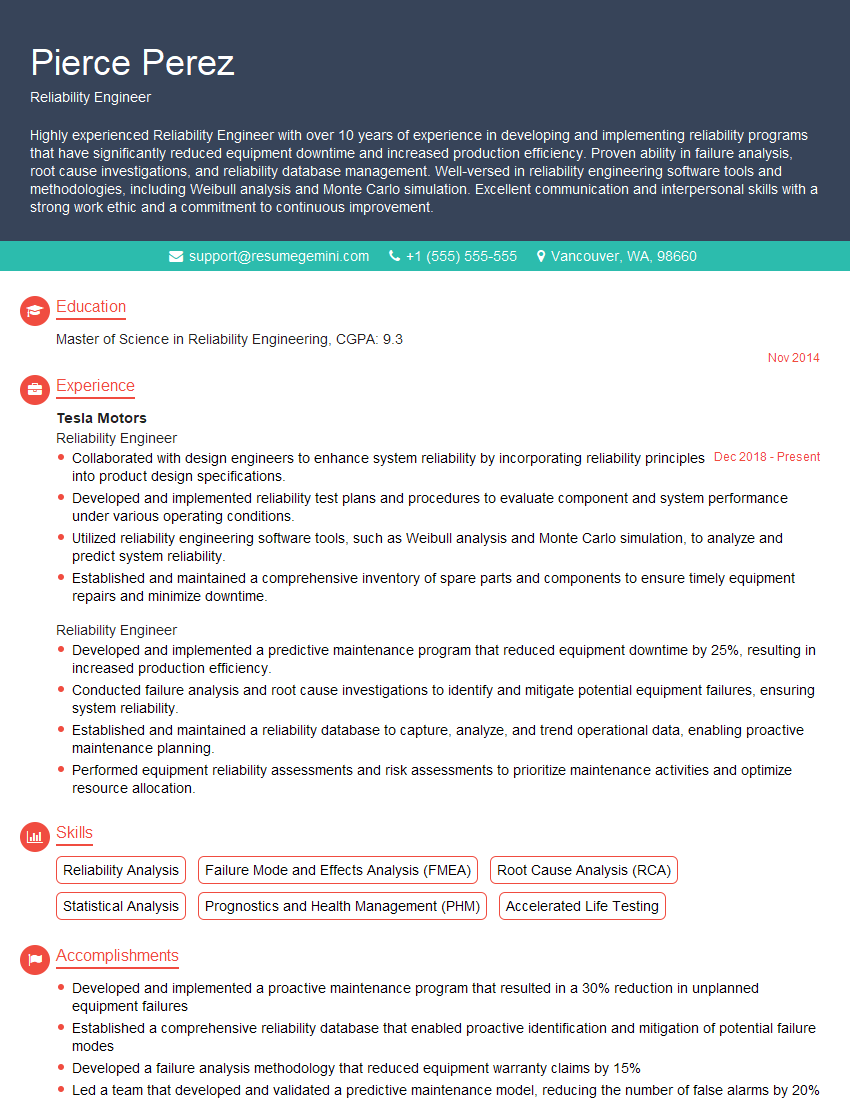
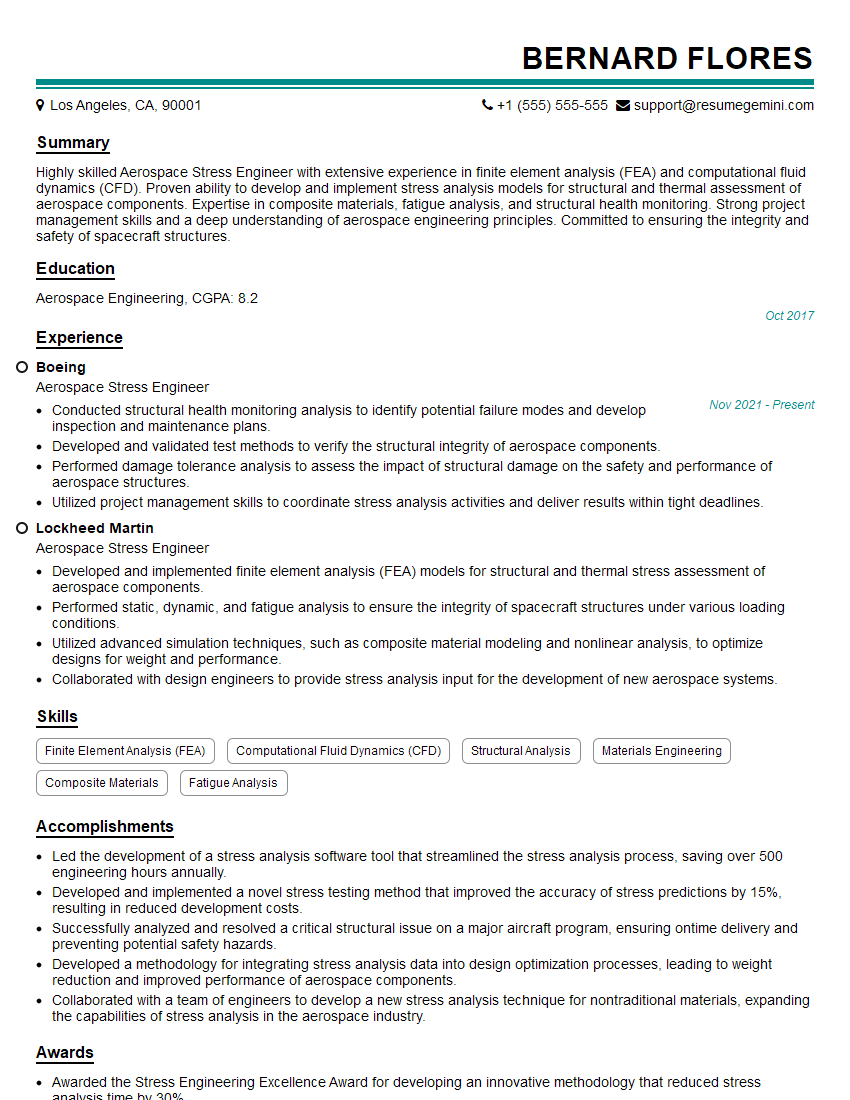
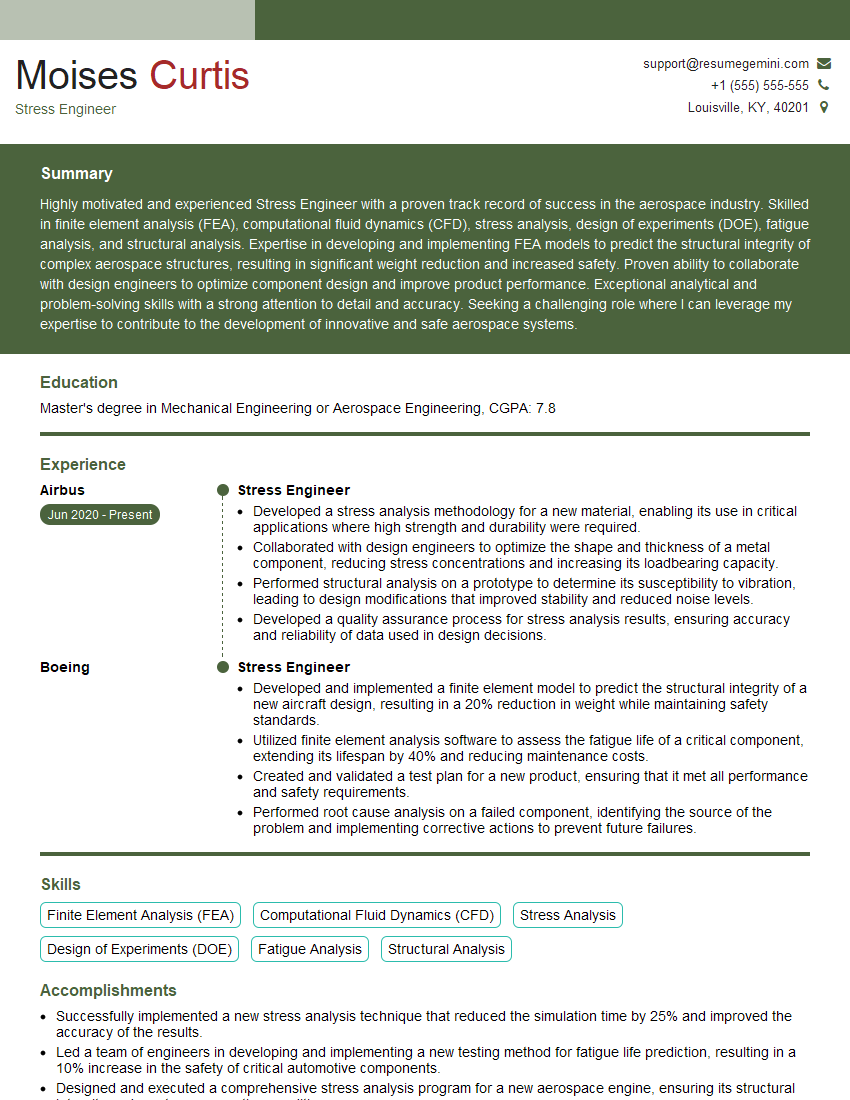
Mastering stress and fatigue analysis is crucial for career advancement in numerous engineering fields, opening doors to challenging and rewarding roles. A strong understanding of these concepts will significantly enhance your problem-solving capabilities and technical expertise. To maximize your job prospects, create an ATS-friendly resume that effectively showcases your skills and experience. We highly recommend using ResumeGemini to build a professional and impactful resume. ResumeGemini provides a streamlined process and offers examples of resumes tailored to stress and fatigue analysis to help guide you. This will help you present your qualifications effectively to potential employers.
Explore more articles
Users Rating of Our Blogs
Share Your Experience
We value your feedback! Please rate our content and share your thoughts (optional).
What Readers Say About Our Blog
Very informative content, great job.
good