Every successful interview starts with knowing what to expect. In this blog, we’ll take you through the top AISI Standards interview questions, breaking them down with expert tips to help you deliver impactful answers. Step into your next interview fully prepared and ready to succeed.
Questions Asked in AISI Standards Interview
Q 1. What are the key differences between AISI 304 and AISI 316 stainless steels?
AISI 304 and 316 stainless steels are both austenitic stainless steels, known for their corrosion resistance, but differ significantly in their composition and resulting properties. The key difference lies in the addition of molybdenum (Mo) to AISI 316.
- AISI 304 (18/8): Contains approximately 18% chromium (Cr) and 8% nickel (Ni). This combination provides excellent corrosion resistance in many environments. Think of it as the workhorse, widely used in kitchen appliances and architectural applications.
- AISI 316 (18/10/2): Adds approximately 2% molybdenum to the 304 composition. This molybdenum significantly enhances resistance to pitting and crevice corrosion, especially in chloride-containing environments like seawater. Imagine this as the marine-grade version, ideal for offshore structures or chemical processing equipment where corrosion is a major concern.
In short: Choose 304 for general corrosion resistance and cost-effectiveness. Opt for 316 when superior resistance to chloride-induced corrosion is critical.
Q 2. Explain the significance of the AISI designation system for steel grades.
The AISI (American Iron and Steel Institute) designation system is a crucial standardized method for identifying different steel grades. It provides a concise way to understand the steel’s chemical composition and, consequently, its properties. The system uses a numerical code; for example, 1018 or 4140. Each digit holds meaning.
- First digit: Indicates the main alloying element.
1signifies carbon steel (no significant alloying elements besides carbon).3indicates nickel-chromium austenitic stainless steel.4indicates molybdenum alloy steels. - Second digit: For carbon steels, it often denotes the carbon content (e.g.,
1018indicates a carbon steel with approximately 0.18% carbon). For alloy steels, it’s less straightforward and reflects different alloying elements. - Following digits: Provide further information about the specific composition and characteristics of the steel.
This system allows engineers to easily specify materials in design drawings and ensures consistency in material selection across different manufacturers. Think of it like a universal language for steel, facilitating communication and minimizing errors.
Q 3. Describe the mechanical properties of AISI 1018 steel.
AISI 1018 is a low-carbon steel known for its good machinability, weldability, and moderate strength. Here’s a summary of its mechanical properties:
- Tensile Strength: Typically ranges from 480 to 620 MPa (69,600 to 90,000 psi).
- Yield Strength: Usually around 370 to 480 MPa (54,000 to 70,000 psi).
- Elongation: Exhibits good ductility with elongation values usually above 20%.
- Hardness: Relatively soft, generally around 120 Brinell.
These properties make it suitable for applications like fasteners, machine parts, and low-stress structural components. Its ease of machining makes it economical to produce complex shapes.
Q 4. How do AISI standards impact material selection in engineering projects?
AISI standards play a vital role in material selection within engineering projects by providing a reliable and consistent framework for material identification and property prediction.
- Standardization: Using AISI designations ensures that all stakeholders understand exactly which steel grade is being used, preventing misunderstandings and potential material compatibility issues.
- Property Prediction: The AISI system enables engineers to predict the mechanical properties, weldability, and other characteristics of a steel based on its designation, helping in the design phase.
- Cost Optimization: AISI standards facilitate the selection of the most cost-effective steel grade that meets the design requirements, balancing performance and budget.
- Quality Assurance: AISI standards are associated with quality assurance procedures and testing protocols, leading to higher reliability in the manufactured product.
Failing to correctly select a material based on AISI standards can lead to project delays, cost overruns, and even catastrophic failures.
Q 5. What are the common applications of AISI 4140 steel?
AISI 4140 is a medium-carbon alloy steel prized for its high strength, toughness, and hardenability. This combination makes it suitable for various high-stress applications.
- Automotive Components: Commonly used in crankshafts, gears, axles, and other high-strength components that require both strength and fatigue resistance.
- Aerospace Industry: Employed in landing gear, structural components, and other parts demanding robust performance under demanding conditions.
- Machinery and Equipment: Suitable for high-strength fasteners, shafts, and other machine parts requiring resistance to wear and tear.
- Oil and Gas Industry: Used in components for drilling equipment and other applications where high strength and toughness are critical.
The choice of 4140 often comes down to its excellent balance of strength, toughness, and hardenability, making it a versatile material for many demanding applications.
Q 6. Explain the importance of heat treatment in relation to AISI standards.
Heat treatment significantly influences the mechanical properties of steel grades defined by AISI standards. It involves controlled heating and cooling cycles that alter the microstructure of the steel, leading to changes in hardness, strength, and ductility.
- Annealing: Reduces hardness and improves ductility, often used to soften steel for machining.
- Normalizing: Improves uniformity of microstructure and mechanical properties.
- Hardening: Increases hardness and strength, often followed by tempering to control brittleness.
- Tempering: Reduces the brittleness of hardened steel while maintaining strength.
The choice of heat treatment depends on the desired properties and the application. For example, a component requiring high wear resistance might undergo hardening and tempering, while a component requiring ease of machining might undergo annealing.
Q 7. How does the chemical composition of steel affect its properties according to AISI standards?
The chemical composition of steel, as specified by AISI standards, fundamentally determines its properties. Different elements contribute different effects:
- Carbon (C): The primary strengthening element. Increasing carbon content increases hardness and strength but reduces ductility.
- Manganese (Mn): Improves hardenability and strength, also aids in deoxidation during steelmaking.
- Silicon (Si): Improves strength and hardenability, also helps in deoxidation.
- Chromium (Cr): Provides corrosion resistance in stainless steels, also enhances hardness and strength.
- Nickel (Ni): Improves corrosion resistance and toughness in stainless steels, enhances strength and ductility in some alloy steels.
- Molybdenum (Mo): Enhances corrosion resistance, particularly in chloride environments, increases hardenability and strength.
The precise balance of these elements, as defined by the AISI designation, enables precise control over the final properties of the steel, making it suitable for specific applications.
Q 8. What are the typical tensile strength and yield strength values for AISI 1045 steel?
AISI 1045 is a medium-carbon steel known for its good balance of strength and toughness. While precise values can vary slightly depending on the manufacturer and heat treatment, typical tensile strength ranges from 860 to 1035 MPa (125,000 to 150,000 psi), and yield strength typically falls between 620 and 760 MPa (90,000 to 110,000 psi). Think of it like this: tensile strength represents the maximum stress the steel can withstand before breaking, while yield strength is the point at which it begins to deform permanently. These properties make AISI 1045 suitable for applications requiring moderate strength and durability, such as gears, shafts, and machine components.
Q 9. Describe the difference between hot-rolled and cold-rolled steel as defined by AISI standards.
The difference between hot-rolled and cold-rolled steel lies primarily in their manufacturing processes and resulting properties. Hot-rolled steel is formed at high temperatures, above the steel’s recrystallization temperature. This makes it possible to roll the steel to the desired shape with less force, resulting in a slightly lower yield strength and higher ductility (ability to deform before breaking). It also has a rougher surface finish. Cold-rolled steel, conversely, is rolled at room temperature, resulting in a smoother, more precise surface finish and higher yield strength but slightly lower ductility. Imagine shaping hot clay versus shaping hard wax – the hot clay requires less effort to mold but is less precise in shape. Hot-rolled steel is often chosen for its cost-effectiveness, while cold-rolled steel is preferred when surface finish and dimensional accuracy are critical.
Q 10. How do AISI standards address corrosion resistance in different steel grades?
AISI standards don’t directly assign corrosion resistance values in the same way they do for mechanical properties. Instead, they categorize steels into different grades based on their chemical composition. The presence of chromium is the key factor in corrosion resistance. For example, AISI 304 stainless steel, with its approximately 18% chromium content, displays good resistance to atmospheric corrosion and many chemicals. However, the level of corrosion resistance depends on factors like the environment (presence of chlorides, for instance, significantly impacts stainless steel’s corrosion resistance) and the specific steel’s manufacturing and surface finishing processes. AISI standards provide the chemical composition and therefore a basis to understand the potential for corrosion resistance, but detailed corrosion analysis might require additional testing specific to the intended application.
Q 11. What are the welding considerations for AISI 304 stainless steel?
Welding AISI 304 stainless steel requires careful consideration to avoid potential issues such as weld decay, sensitization (formation of chromium carbides at the grain boundaries reducing corrosion resistance), and hot cracking. Preheating may be necessary for thicker sections to prevent cracking. The selection of the appropriate filler metal (a welding rod or wire) is critical; it should have a similar chemical composition to AISI 304 to maintain the corrosion resistance of the weld. Post-weld heat treatment might be required depending on the application and thickness to mitigate sensitization. Always refer to the AWS (American Welding Society) standards and manufacturer’s recommendations for specific procedures. In essence, successfully welding AISI 304 requires a balance of selecting the correct welding method, filler material, and implementing appropriate pre and post-weld treatments to ensure both the strength and corrosion resistance of the final weld.
Q 12. Explain how AISI standards relate to safety regulations and compliance.
AISI standards contribute significantly to safety regulations and compliance by providing a baseline for the properties of steel grades. Knowing the tensile strength, yield strength, and other mechanical characteristics allows engineers and designers to ensure structural integrity and safety in various applications. Safety regulations often reference AISI standards or equivalent standards from other organizations (like ASTM) when specifying material requirements for construction, manufacturing, and other industries. For instance, building codes might mandate the use of specific steel grades with defined minimum tensile strength for structural members. Using AISI-specified materials allows manufacturers to demonstrate compliance with safety standards. Non-compliance can lead to legal repercussions and safety hazards.
Q 13. What is the significance of the ‘H’ designation in some AISI steel grades?
The ‘H’ designation in AISI steel grades usually signifies a heat-treated condition. This implies that the steel has undergone specific thermal treatments to enhance its mechanical properties. For example, AISI 1045H would indicate that the 1045 steel has been heat treated (likely hardened and tempered) to achieve specific values of tensile strength and hardness compared to its annealed (non-heat-treated) counterpart. The ‘H’ doesn’t provide precise information about the exact heat treatment process, but it signals to those familiar with the codes that the steel is in a hardened state and consequently will exhibit different mechanical properties. Understanding this designation is crucial when selecting materials, as the hardened state impacts machinability, weldability, and overall suitability for different applications.
Q 14. Compare the machinability of AISI 1018 and AISI 4140 steel.
AISI 1018 is a low-carbon steel known for its good machinability, meaning it is relatively easy to cut, shape, and machine. Its low carbon content results in softer material making it more readily machinable. AISI 4140, on the other hand, is a medium-alloy steel that’s much stronger and tougher than 1018, but its higher strength and hardness translates to significantly lower machinability. It requires more specialized tooling and machining parameters to work with effectively. Machining time, tool wear, and overall cost will be considerably higher for AISI 4140. In short, selecting the right steel requires weighing the balance between the desired strength and machinability needs of a project. If high strength is a primary concern and high machinability is secondary, AISI 4140 is chosen despite the increased machining costs, while for parts where ease of machining is paramount, AISI 1018 is preferred.
Q 15. How does AISI 1045 steel compare to AISI 1020 in terms of strength and ductility?
AISI 1045 and AISI 1020 are both low-carbon steels, but their properties differ significantly due to their carbon content. AISI 1045, with a higher carbon content (around 0.45%), is significantly stronger and harder than AISI 1020 (around 0.20% carbon). This increased strength comes at the cost of ductility; AISI 1020 is more ductile and readily formable. Imagine trying to bend a coat hanger (more ductile) versus a hardened steel nail (stronger, less ductile). The nail will break before it bends significantly, while the coat hanger will deform easily.
In summary:
- AISI 1045: Higher strength, higher hardness, lower ductility. Suitable for applications requiring high strength, such as gears, shafts, and machine components.
- AISI 1020: Lower strength, lower hardness, higher ductility. Suitable for applications requiring good formability, such as sheet metal parts and low-stress components.
Career Expert Tips:
- Ace those interviews! Prepare effectively by reviewing the Top 50 Most Common Interview Questions on ResumeGemini.
- Navigate your job search with confidence! Explore a wide range of Career Tips on ResumeGemini. Learn about common challenges and recommendations to overcome them.
- Craft the perfect resume! Master the Art of Resume Writing with ResumeGemini’s guide. Showcase your unique qualifications and achievements effectively.
- Don’t miss out on holiday savings! Build your dream resume with ResumeGemini’s ATS optimized templates.
Q 16. What are the key considerations for selecting steel grades based on AISI standards for a specific application?
Selecting the appropriate steel grade based on AISI standards requires careful consideration of several factors:
- Required Mechanical Properties: Tensile strength, yield strength, hardness, ductility, and impact resistance are crucial. The application dictates the necessary strength and toughness.
- Formability: If the part requires bending, drawing, or other forming processes, ductility is a key consideration. Low-carbon steels are generally more formable.
- Weldability: For welded components, the steel’s weldability must be evaluated. High-carbon steels can be more challenging to weld.
- Machinability: The ease of machining (drilling, milling, turning) is important for manufacturing efficiency. Some steels machine more easily than others.
- Corrosion Resistance: The application’s environment dictates the need for corrosion resistance. While most AISI steels aren’t inherently highly corrosion-resistant, they can be treated for better performance.
- Cost: Steel grade selection involves a cost-benefit analysis. Higher alloy steels usually offer superior properties but come at a higher cost.
For example, a high-strength application like a crankshaft would require a steel like AISI 4140, while a simpler part like a sheet metal panel might use AISI 1018.
Q 17. Explain the impact of carbon content on the properties of steel according to AISI standards.
Carbon content is the most significant factor influencing the properties of steel. As carbon content increases, the steel’s strength, hardness, and wear resistance increase, but its ductility and weldability decrease. This is because carbon atoms act as interstitial atoms within the iron lattice, hindering dislocation movement which increases strength.
Think of it like this: imagine a crowd (iron atoms) trying to move through a space. A few obstacles (low carbon) allow for relatively easy movement. Many obstacles (high carbon) make it much more difficult to move, resulting in greater resistance (higher strength).
- Low Carbon Steels (0.05-0.30% C): Ductile, formable, easily welded.
- Medium Carbon Steels (0.30-0.60% C): Good balance of strength, hardness, and ductility.
- High Carbon Steels (0.60-2.00% C): Very strong and hard, but brittle and difficult to weld.
Q 18. How do AISI standards address the issue of weldability in various steel grades?
AISI standards don’t directly specify weldability as a single numerical value, but they implicitly address it through the classification of steel grades. Low-carbon steels are generally more weldable due to their lower carbon content. Higher carbon content increases the risk of cracking during welding due to the formation of hard, brittle phases in the heat-affected zone. AISI standards provide information on chemical composition which allows engineers to predict weldability using established welding procedures and pre-heating techniques.
For instance, preheating the steel before welding can mitigate cracking issues in higher-carbon steels. The selection of the appropriate welding process (e.g., GMAW, SMAW) is also crucial for weldability.
Q 19. What is the role of alloying elements in modifying the properties of steel as defined in AISI standards?
Alloying elements are added to steel to modify its properties. AISI standards define the permissible ranges for these elements in different steel grades. These elements can enhance strength, hardenability, corrosion resistance, or other specific properties.
- Manganese (Mn): Improves strength and hardenability.
- Nickel (Ni): Enhances strength, toughness, and corrosion resistance.
- Chromium (Cr): Increases hardenability, corrosion resistance (particularly in stainless steels).
- Molybdenum (Mo): Improves hardenability and high-temperature strength.
- Silicon (Si): Improves strength and hardenability.
For example, AISI 4140 steel contains chromium and molybdenum, resulting in superior strength and toughness compared to AISI 1045, which is primarily carbon steel.
Q 20. How does the grain size affect the mechanical properties of steel as per AISI standards?
Grain size significantly affects the mechanical properties of steel. Finer grain sizes (smaller grains) generally result in higher strength, hardness, and improved toughness. Larger grains lead to lower strength and reduced ductility. This is because grain boundaries impede the movement of dislocations, similar to obstacles in the crowd analogy mentioned previously. Finer grains provide more obstacles to hinder this movement and thus lead to greater strength.
AISI standards don’t directly specify grain size as a primary defining characteristic, but they indirectly influence it through the chemical composition and heat treatments applied during manufacturing. For example, controlling the cooling rate during heat treatment can significantly affect the final grain size.
Q 21. Describe the differences between different steel grades specified in AISI standards for various applications?
AISI standards categorize steels into various grades based on chemical composition, intended properties, and application. The differences between grades are primarily in their carbon content and alloying elements. This results in varying degrees of strength, ductility, weldability, machinability, and cost.
For instance:
- AISI 10XX (Carbon Steels): Low-alloy steels with varying carbon content, suitable for general-purpose applications.
- AISI 4XXX (Molybdenum Steels): Contain molybdenum for improved strength and toughness, commonly used in high-strength applications.
- AISI 3XXX (Stainless Steels): Contain chromium for enhanced corrosion resistance.
- AISI 5XXX (Chromium Steels): Contain chromium for improved hardenability and wear resistance.
Each grade has a specific chemical composition and a range of mechanical properties that make it suitable for specific applications. Choosing the correct grade involves careful consideration of these properties to meet the design and manufacturing requirements.
Q 22. How are AISI standards used in quality control processes?
AISI (American Iron and Steel Institute) standards are crucial for quality control in the steel industry. They provide detailed specifications for chemical composition, mechanical properties, and manufacturing processes for various steel grades. In quality control, these standards act as a benchmark against which the properties of a produced steel batch are compared.
- Chemical Composition Analysis: Spectrographic or chemical analysis verifies that the actual chemical composition of the steel aligns with the specified ranges in the AISI standard. For example, an AISI 1018 steel must fall within defined limits for carbon, manganese, silicon, and other elements.
- Mechanical Testing: Tensile testing, impact testing, and hardness testing are conducted to ensure the produced steel meets the minimum requirements for strength, ductility, toughness, and hardness specified in the AISI standard. A failure to meet these minimums could lead to rejection of the entire batch.
- Traceability and Documentation: AISI standards demand rigorous documentation throughout the manufacturing process. This ensures that each step, from raw material sourcing to final product, is traceable and verifiable, contributing to complete transparency and accountability.
For instance, imagine a construction project using AISI 4140 steel for high-strength components. Regular testing and adherence to AISI 4140 specifications are critical to ensuring structural integrity and preventing catastrophic failures.
Q 23. What are the limitations of using solely AISI standards for material selection?
While AISI standards are invaluable, relying solely on them for material selection has limitations. AISI standards primarily focus on the chemical composition and mechanical properties of steel. Other crucial factors are often overlooked.
- Weldability: AISI standards might not always explicitly address the weldability of a steel grade, which is vital in many applications. Some grades might be difficult to weld without preheating or special techniques.
- Formability and Machinability: The ease of forming or machining a particular steel grade isn’t always comprehensively detailed in AISI standards. These aspects are crucial for manufacturing processes and cost considerations.
- Corrosion Resistance: AISI standards generally don’t cover the corrosion resistance of steel, a critical factor in many environments (e.g., marine or chemical plants). Additional standards or coatings might be required.
- Specific Application Requirements: AISI standards alone might not be sufficient for applications with unique demands like high-temperature resistance, cryogenic properties, or specific surface finishes.
Therefore, a comprehensive material selection process should involve consulting other relevant standards (like ASTM), considering environmental factors, and evaluating the complete manufacturing process.
Q 24. Explain the relationship between AISI standards and other relevant materials standards such as ASTM.
AISI and ASTM (American Society for Testing and Materials) standards are closely related but serve slightly different purposes. While both deal with the properties of steel, they differ in their scope and approach.
- AISI: Primarily focuses on defining and specifying steel grades based on chemical composition. They act as a classification system and provide a basic set of properties for each grade.
- ASTM: Offers a broader range of standards, including those that define testing methods, performance requirements, and specifications for many materials beyond steel. They provide detailed guidelines for testing and verifying the properties of materials.
Often, an AISI designation might reference an ASTM standard for specific testing procedures. For example, an AISI 1020 steel would be tested using ASTM methods (such as ASTM A370 for tensile properties) to verify its compliance with the AISI specification. They work synergistically; AISI provides the grade classification, and ASTM provides the testing methodologies to ensure quality.
Q 25. How would you verify the compliance of a steel product to its AISI specification?
Verifying the compliance of a steel product to its AISI specification involves a multi-step process that includes:
- Visual Inspection: Checking for any obvious defects like cracks, inclusions, or surface imperfections.
- Chemical Analysis: Using techniques like optical emission spectroscopy (OES) or other methods to determine the actual chemical composition and comparing it to the permitted ranges given in the specific AISI standard.
- Mechanical Testing: Conducting tensile tests, hardness tests, and impact tests (depending on the AISI grade and application) to verify that the mechanical properties (yield strength, tensile strength, elongation, etc.) meet the minimum requirements of the specification.
- Certification and Traceability: Reviewing mill certificates or test reports that document the results of chemical and mechanical testing and provide traceability to the manufacturing process.
- Third-Party Verification (Optional): In high-stakes applications, a third-party testing laboratory might be involved to independently verify compliance.
Failing to pass any of these steps might indicate non-compliance and warrant further investigation or rejection of the material.
Q 26. Discuss the potential consequences of using a non-compliant steel grade in a project.
Using a non-compliant steel grade in a project can lead to severe consequences, ranging from minor inconveniences to catastrophic failures. The severity depends on the application and the degree of non-compliance.
- Reduced Strength and Durability: Using a lower-strength steel than specified might result in structural weaknesses, leading to premature failure or reduced lifespan of the component or structure.
- Increased Risk of Fracture: If the steel’s toughness or ductility is lower than required, it might be more susceptible to brittle fracture under stress or impact, possibly causing accidents or damage.
- Corrosion Issues: Using a steel grade less resistant to corrosion could lead to premature degradation, requiring costly repairs or replacements.
- Manufacturing Problems: A non-compliant grade might be difficult to weld, machine, or form, resulting in manufacturing delays, increased costs, and potentially faulty products.
- Legal and Safety Concerns: In critical applications, using non-compliant steel could violate safety regulations and expose the project owner to legal liability, especially if it leads to accidents or injuries.
For example, using a lower-grade steel in a bridge construction might compromise its structural integrity, potentially causing a collapse with devastating consequences.
Q 27. How are AISI standards updated and revised?
AISI standards are continuously reviewed and updated to reflect advancements in steelmaking technology, new research findings, and evolving industry needs. The process typically involves:
- Identifying the Need for Revision: This is driven by technological advancements, feedback from users, or changes in regulatory requirements.
- Formation of Committees: Experts from steel manufacturers, users, and academia participate in committees to review existing standards and propose revisions.
- Testing and Validation: Proposed changes undergo rigorous testing and validation to confirm their practical feasibility and impact.
- Public Comment Period: Drafts of proposed revisions are often released for public comment, providing an opportunity for feedback from the broader industry.
- Approval and Publication: After considering feedback and further revisions, the updated standards are officially approved and published by AISI.
These updates ensure that AISI standards remain relevant, accurate, and reflect best practices in the steel industry. The frequency of updates varies depending on the specific standard and the rate of technological progress in that area.
Key Topics to Learn for AISI Standards Interview
- AISI Steel Grades and Designations: Understanding the nomenclature system, chemical compositions, and mechanical properties of various AISI steel grades is fundamental. Be prepared to discuss the differences and applications of common grades.
- Mechanical Properties and Testing: Familiarize yourself with tensile strength, yield strength, hardness, ductility, and impact resistance. Understand how these properties are determined through standard testing methods and their implications for design and selection.
- Heat Treatment Processes: Grasp the principles and effects of annealing, normalizing, quenching, and tempering on the microstructure and properties of steel. Be ready to discuss the selection of appropriate heat treatments for specific applications.
- Fabrication and Welding: Understand the challenges and best practices for forming, machining, and welding different AISI steel grades. Knowledge of weldability and potential issues is crucial.
- Corrosion Resistance and Surface Treatments: Explore the corrosion behavior of various steel grades and the role of surface treatments like galvanizing, painting, and other protective coatings in enhancing durability.
- Applications of AISI Steels: Be prepared to discuss the suitability of different AISI steel grades for various applications across different industries (automotive, construction, manufacturing, etc.). Understanding real-world examples strengthens your understanding.
- Standards Compliance and Safety Regulations: Demonstrate awareness of the importance of adhering to AISI standards and relevant safety regulations in design, manufacturing, and application.
Next Steps
Mastering AISI Standards significantly enhances your marketability and opens doors to exciting career opportunities in engineering, manufacturing, and related fields. A strong understanding of these standards demonstrates technical competence and attention to detail, qualities highly valued by employers. To maximize your job prospects, it’s vital to create an ATS-friendly resume that effectively showcases your skills and experience. ResumeGemini is a trusted resource for building professional, impactful resumes. Using ResumeGemini, you can craft a resume that highlights your AISI Standards knowledge and gets noticed by recruiters. Examples of resumes tailored to AISI Standards expertise are available to help guide you.

Quality Assurance Manager Resume Sample

Supply Chain Manager Resume Sample

Construction Manager Resume Sample

Compliance Officer Resume Sample

Procurement Specialist Resume Sample

Regulatory Affairs Specialist Resume Sample
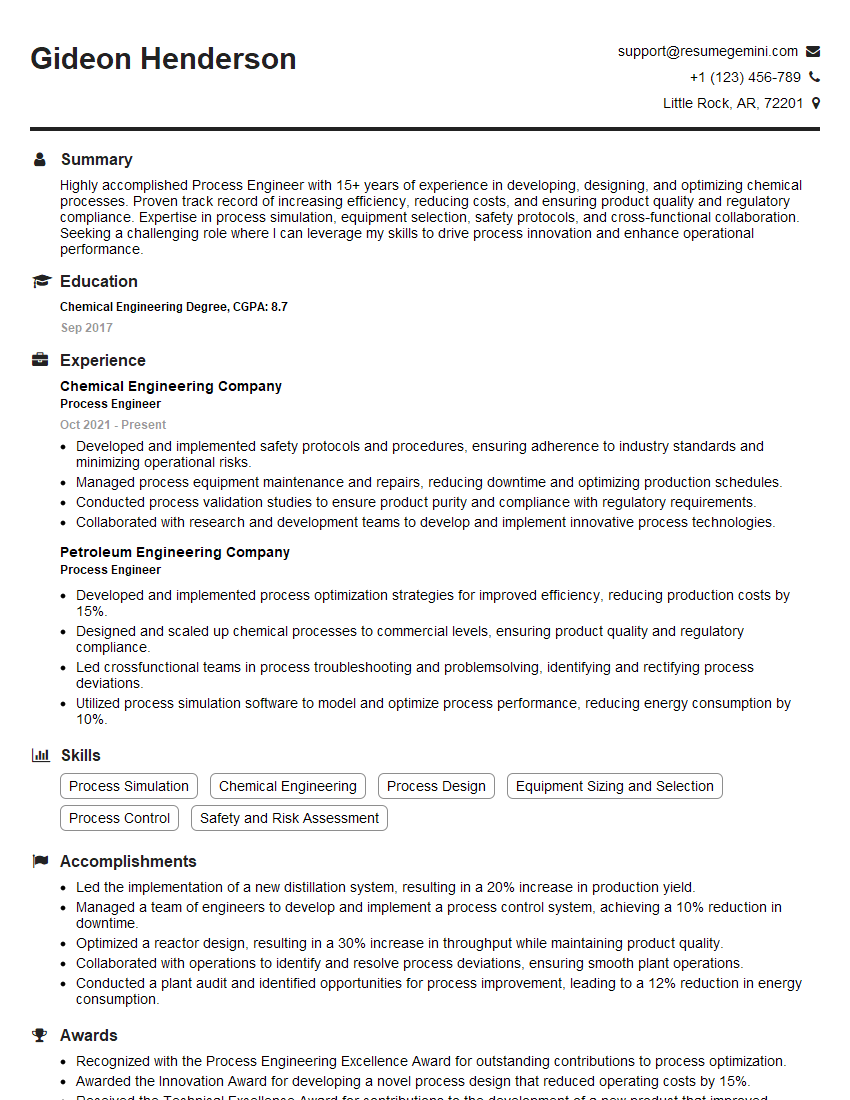
Process Engineer Resume Sample

Product Development Engineer Resume Sample
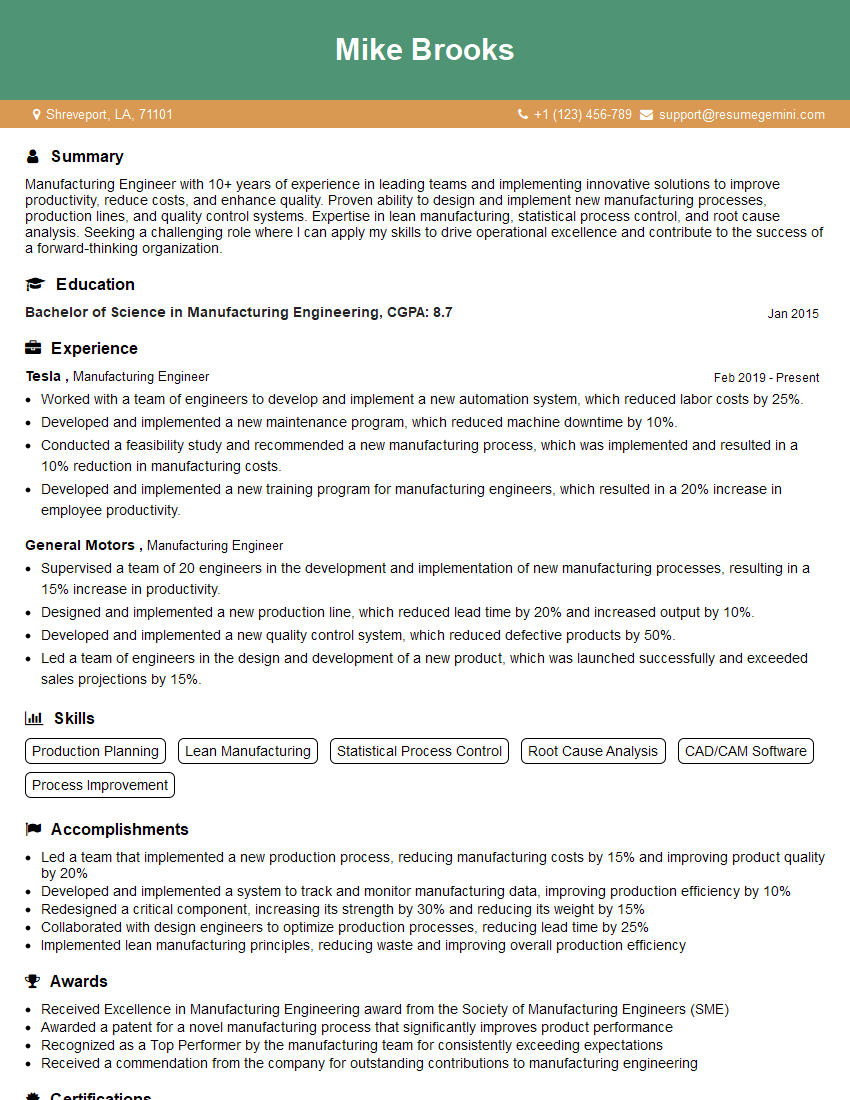
Manufacturing Engineer Resume Sample
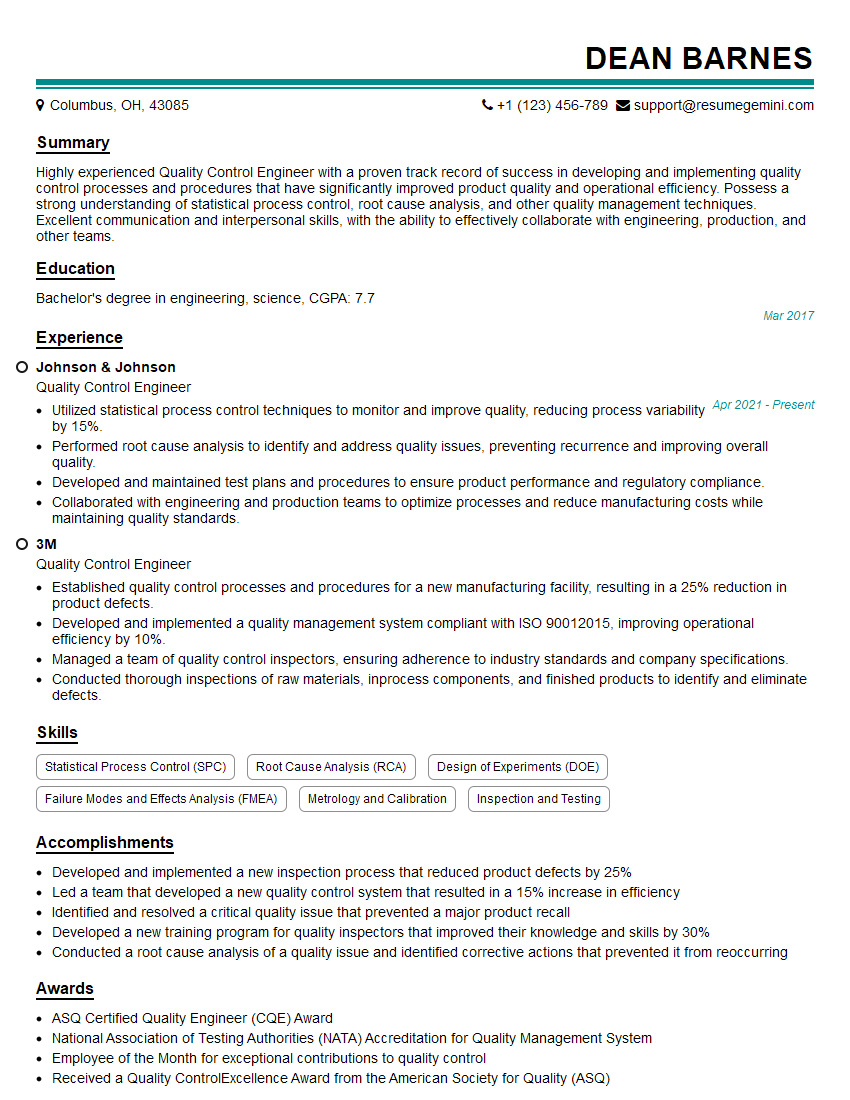
Quality Control Engineer Resume Sample
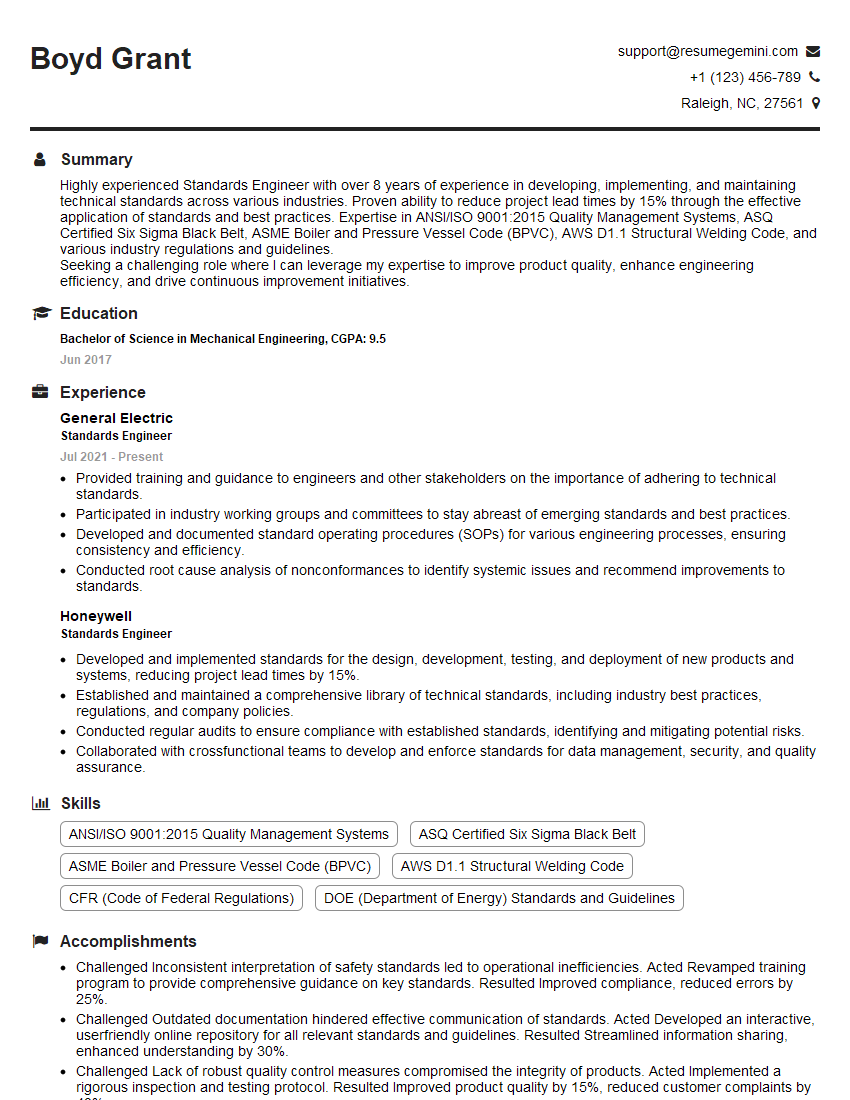
Standards Engineer Resume Sample

Corrosion Engineer Resume Sample

Materials Engineer Resume Sample

Metallurgist Resume Sample

Welding Engineer Resume Sample

Metallurgical Technician Resume Sample

Materials Scientist Resume Sample
- Quality Assurance Manager
- Supply Chain Manager
- Construction Manager
- Compliance Officer
- Procurement Specialist
- Regulatory Affairs Specialist
- Process Engineer
- Product Development Engineer
- Manufacturing Engineer
- Quality Control Engineer
- Standards Engineer
- Corrosion Engineer
- Materials Engineer
- Metallurgist
- Welding Engineer
- Metallurgical Technician
- Materials Scientist
Explore more articles
Users Rating of Our Blogs
Share Your Experience
We value your feedback! Please rate our content and share your thoughts (optional).
What Readers Say About Our Blog
Very informative content, great job.
good