Interviews are opportunities to demonstrate your expertise, and this guide is here to help you shine. Explore the essential ASNT Certified Inspector interview questions that employers frequently ask, paired with strategies for crafting responses that set you apart from the competition.
Questions Asked in ASNT Certified Inspector Interview
Q 1. Explain the difference between Level II and Level III ASNT certifications.
The ASNT Level II and Level III certifications represent different levels of responsibility and expertise in nondestructive testing (NDT). Think of it like a ladder; Level II is a rung further up than Level I, and Level III is at the very top.
Level II inspectors are trained to perform specific NDT methods according to written procedures. They interpret results based on established acceptance criteria and report their findings. They are not authorized to develop procedures or interpret codes and standards. Imagine a skilled technician meticulously following a recipe – they execute the process expertly but don’t write the recipe itself.
Level III inspectors, on the other hand, are the experts. They are responsible for establishing and approving inspection procedures, interpreting codes and standards, and training and certifying lower-level personnel. They are also often involved in resolving complex technical issues. They are the chefs who develop and refine the recipes, train the technicians, and troubleshoot any cooking problems. They possess a deep understanding of the underlying principles of NDT and are able to apply that knowledge to a wide range of applications.
In short, Level II focuses on practical application within established guidelines, while Level III involves oversight, procedure development, and advanced problem-solving.
Q 2. Describe the various NDT methods (e.g., UT, RT, PT, MT, VT).
Nondestructive testing (NDT) encompasses several methods used to evaluate materials, components, or assemblies for flaws without causing damage. Here are some common methods:
- Ultrasonic Testing (UT): Uses high-frequency sound waves to detect internal flaws. Think of it like sonar, but for materials. The sound waves reflect off discontinuities, revealing their size and location.
- Radiographic Testing (RT): Employs penetrating radiation (X-rays or gamma rays) to create images of internal structures and flaws. It’s like taking an X-ray of a part to see internal defects.
- Liquid Penetrant Testing (PT): A surface inspection method that uses a dye to highlight surface-breaking flaws. Think of it as a highly sensitive way of spotting cracks; the dye seeps into the crack and is then revealed by a developer.
- Magnetic Particle Testing (MT): Uses magnetic fields to detect surface and near-surface flaws in ferromagnetic materials. Think of iron filings aligning themselves around a crack in a magnetized object, making the flaw visible.
- Visual Testing (VT): The simplest method, involving visual inspection of a part’s surface for obvious defects. It’s like a thorough visual inspection, often the first step in any NDT process.
Each method has its own strengths and weaknesses, and the choice of method depends on the type of material, the type of flaw being sought, and other factors.
Q 3. What are the limitations of Ultrasonic Testing (UT)?
While UT is a powerful NDT method, it does have limitations. These include:
- Material limitations: UT is less effective on materials with coarse grain structures or those that strongly attenuate ultrasonic waves (e.g., some plastics). The sound waves might scatter or get absorbed before they can reach and reflect from a flaw.
- Shape and accessibility: Complex shapes and inaccessible areas can make UT challenging or impossible. It’s difficult to get good ultrasonic signals from parts with intricate geometries.
- Surface finish: Rough surfaces can scatter the ultrasonic waves, affecting the quality of the inspection.
- Operator skill and interpretation: Proper technique and interpretation are crucial for accurate results. A skilled operator is essential for reliable detection and assessment.
- Difficulties with small flaws: Very small flaws may not produce a detectable reflection. The size of the flaw needs to be big enough to significantly reflect the sound waves.
For example, using UT on a highly porous casting may yield inaccurate results due to sound wave scattering. It may struggle to detect small cracks in a heavily textured surface because of the interference from surface irregularities.
Q 4. How do you interpret radiographic film (RT)?
Interpreting radiographic film requires careful observation and understanding of the image characteristics. The film shows areas of varying darkness corresponding to the different densities of material penetrated by the radiation. Darker areas represent less dense areas (flaws, voids) while lighter areas represent denser parts of the component.
Here’s a step-by-step process:
- Identify the component: Ensure you have the correct radiograph for the component under inspection.
- Examine the image for density variations: Look for irregularities in the density of the film, such as dark areas (indications) that could represent flaws.
- Compare to reference images and standards: Use acceptance criteria and reference radiographs to determine if the indications are acceptable or rejectable.
- Note the location, shape, and size of indications: Document the precise location, shape, and size of any detected indications.
- Assess the severity of indications: Determine the severity of detected indications based on size, shape, location, and acceptance criteria.
Experienced RT technicians use techniques like image enhancement and careful calibration to improve image interpretation accuracy. Consider it like being a medical radiologist: years of training and experience are needed to accurately interpret images and their implications.
Q 5. Explain the principles of Magnetic Particle Testing (MT).
Magnetic Particle Testing (MT) relies on the principle of magnetism to detect surface and near-surface flaws in ferromagnetic materials (iron, steel, nickel, cobalt, etc.). When a ferromagnetic material is magnetized, magnetic flux lines flow through it. If a flaw is present, the lines will be disrupted, and some flux will leak out at the surface. This leakage field can be detected by applying ferromagnetic particles (powder or suspension) to the surface. The particles will accumulate along the flaw, making it visible.
The process involves:
- Magnetization: The part is magnetized using either a direct current (DC) or alternating current (AC) method.
- Particle application: Ferromagnetic particles (either dry or wet) are applied to the surface of the magnetized part.
- Inspection: The inspector observes the pattern of particles to identify indications of flaws.
- Demagnetization: After inspection, the part is usually demagnetized to prevent interference with other processes or equipment.
Imagine it like sprinkling iron filings on a magnet—the filings cluster at the poles where the magnetic field is strongest. Similarly, MT uses the leakage field from a crack to accumulate particles and reveal the flaw.
Q 6. Describe the process of Liquid Penetrant Testing (PT).
Liquid Penetrant Testing (PT) is a surface inspection method used to detect surface-breaking flaws in a variety of materials. It works by applying a liquid penetrant (dye) to the surface of the part. The penetrant seeps into any surface-breaking discontinuities. Excess penetrant is then removed, and a developer is applied to draw the penetrant out of the flaws, making them visible.
The process typically involves these steps:
- Pre-cleaning: The surface of the part is thoroughly cleaned to remove any dirt, oil, or other contaminants that could block the penetrant.
- Penetrant application: The penetrant is applied to the surface and allowed to dwell for a specific time to allow it to penetrate into any cracks.
- Excess penetrant removal: Excess penetrant is removed from the surface, typically using a solvent or emulsifier.
- Developer application: A developer (usually a white powder or liquid) is applied to draw the penetrant out of the flaws, making them easily visible.
- Inspection: The part is inspected for indications of flaws.
Think of it as a very sensitive way to find hairline cracks in a surface: The dye acts like a highlighter, marking these minute imperfections.
Q 7. What are the safety precautions for each NDT method?
Safety precautions vary depending on the NDT method but generally include:
- RT: Radiation safety is paramount. Personnel must wear appropriate radiation protection, such as lead aprons and dosimeters. Areas must be properly shielded, and access must be controlled.
- UT: Ultrasonic testing is generally safe, but care should be taken to avoid injury from the equipment. Proper handling of the equipment and use of appropriate safety glasses are essential.
- PT: Proper ventilation is important when using solvents. Skin contact with the penetrant should be avoided, and appropriate personal protective equipment (PPE) should be worn.
- MT: Avoid prolonged exposure to magnetic fields, especially for individuals with pacemakers or other sensitive medical devices. Appropriate PPE should be worn to prevent injury during the magnetization process.
- VT: General safety precautions such as proper lighting, safe working platforms and fall protection should be followed.
Always consult the specific safety data sheets (SDS) for the materials used and the equipment involved in each NDT method. Safety training and adherence to safety procedures are essential for all NDT personnel.
Q 8. How do you identify and document discontinuities?
Identifying and documenting discontinuities involves a systematic approach combining visual inspection, NDT techniques, and meticulous record-keeping. First, I visually examine the component, noting any surface imperfections. Then, depending on the material, component geometry, and suspected discontinuity type, I’d select appropriate NDT methods like ultrasonic testing (UT), radiographic testing (RT), magnetic particle testing (MT), or liquid penetrant testing (PT). Each method provides unique information about the discontinuity’s location, size, orientation, and type.
For example, using UT, I might identify a subsurface crack. I’d document its location using coordinates relative to a datum, its approximate size (length, depth, and orientation), and the echo amplitude indicating the severity. For RT, I’d note the location on the radiograph, describe the discontinuity’s appearance (e.g., sharp, diffuse), and measure its size using appropriate techniques. All findings are meticulously recorded on inspection reports, often using standardized forms, including detailed sketches and photographs, with clear identification of the component and inspection date.
My documentation ensures traceability and allows others to understand the findings. Consider this – imagine a pipeline inspection where we find a small crack. Accurate documentation is crucial for deciding whether to repair or replace the section, thus preventing potential catastrophic failure. A poorly documented finding could lead to costly mistakes or safety risks.
Q 9. Explain the concept of Acceptance Criteria.
Acceptance criteria define the limits within which a component or structure is considered acceptable for its intended service. These criteria are based on various factors, including applicable codes and standards (like ASME Section V or API 570), the component’s intended use, safety considerations, and allowable defect sizes. They specify the maximum permissible sizes, types, and locations of discontinuities.
For example, a weld inspection might stipulate that no cracks longer than 2mm are allowed in a critical area, while less critical areas may tolerate larger flaws. These limits are often presented in tables or charts within the relevant code or a project specification. They provide a clear benchmark for the inspector to determine whether a finding is acceptable or requires repair or rejection.
Imagine a situation where a flaw exceeds the acceptance criteria. Proper documentation of this finding, alongside the relevant acceptance criteria and supporting evidence, is crucial in initiating the necessary corrective actions, such as repair, replacement or re-evaluation of the design. Misinterpreting or neglecting acceptance criteria could compromise the safety and reliability of the component or structure.
Q 10. How do you calibrate and maintain NDT equipment?
Calibrating and maintaining NDT equipment is paramount to ensuring accurate and reliable inspection results. This involves following established procedures and using traceable standards. For instance, ultrasonic testing equipment requires calibration using standard blocks with known characteristics – these blocks contain artificial reflectors mimicking real discontinuities. The equipment’s performance is verified by comparing its readings to the known characteristics of the standard blocks. Calibration often involves adjusting instrument settings to ensure accuracy.
Regular maintenance involves checking for proper functioning of all components, such as transducers, probes, and cables, cleaning the equipment, and ensuring that its battery or power supply functions correctly. Records of calibration and maintenance are carefully maintained, including dates, results, and any corrective actions taken. This is crucial for demonstrating equipment compliance and traceability, as required by many codes and standards. Neglecting maintenance could lead to inaccurate readings, potentially resulting in accepting faulty parts or rejecting acceptable ones – both with significant consequences.
Think about a scenario where a flawed calibration results in an undetected crack. The consequences could range from minor repairs to catastrophic failure with potentially severe safety and financial implications. Maintaining accurate and reliable equipment is vital to my role as an ASNT Certified Inspector.
Q 11. Describe your experience with data acquisition and reporting in NDT.
Data acquisition and reporting in NDT are critical for ensuring the integrity and traceability of the inspection process. I’m proficient in utilizing various data acquisition systems, including those integrated with ultrasonic flaw detectors, radiographic imaging systems, and other NDT equipment. These systems allow for automated data collection, minimizing human error and enhancing efficiency. This data typically includes readings, images, and location information.
After data collection, I generate comprehensive inspection reports that include all relevant information: component identification, inspection method, date, technician details, results (including numerical data and images), and conclusions, along with any recommendations. Reports are often prepared using specialized software that helps create standardized and organized documentation. This includes specific details about each discontinuity found, relating its size and location to the acceptance criteria. I also employ electronic data management systems to store and retrieve inspection data, ensuring data integrity and traceability. Proper use of the systems assures clarity for regulatory bodies, clients, and future reference.
A real-world example is a large-scale bridge inspection where hundreds of measurements are made. Efficient data acquisition and clear reporting are vital for timely completion and decision-making related to safety and maintenance, ensuring everything is documented accurately and efficiently.
Q 12. How do you handle discrepancies between inspection results and engineering drawings?
Discrepancies between inspection results and engineering drawings require careful investigation and resolution. First, I’d verify the accuracy of the inspection data by repeating the relevant tests or examining additional areas as needed. I’d then compare the inspection findings with the latest, approved version of the drawings, ensuring we’re both working with the correct documentation. Next, I’d assess whether the discrepancy is due to a manufacturing defect, an error in the drawings, or limitations of the inspection method.
If the discrepancy is due to a manufacturing defect, I’d document the findings and recommend corrective actions, such as repair or rejection. If the error is in the drawings, I’d initiate a formal process to revise the documentation, ensuring that everyone involved is aware of the change. If the discrepancy is due to limitations of the inspection method, I may need to utilize alternative techniques to obtain more information or consult with senior inspectors or engineers.
Consider a scenario where an inspection reveals a weld misalignment not shown on the drawings. I’d document this fully, and notify the appropriate parties to determine whether this is acceptable, and if not, the actions to rectify the situation. Open communication and careful documentation are key to ensuring any issues are addressed effectively and prevent project delays and safety concerns.
Q 13. What are your experience with different types of codes and standards (e.g., ASME, API)?
My experience encompasses a wide range of codes and standards, including ASME Section V (nondestructive examination), API 510 (pressure vessel inspection code), API 653 (tank inspection, repair, alteration, and reconstruction), and AWS D1.1 (structural welding code). I am familiar with the specific requirements of each code, including acceptance criteria, examination methods, and documentation procedures. Understanding these codes is crucial because they set the standards for acceptable quality, ensuring safety and reliability in various industries.
Each code has its own nuances regarding the acceptable level of flaws and the methods used to detect them. For example, ASME Section V provides detailed requirements for different NDT techniques, while API codes often focus on the inspection of pressure vessels and storage tanks. My expertise allows me to adapt my inspection techniques and reporting formats according to the relevant code and specific project requirements, making my assessment both thorough and appropriate to the intended use.
The knowledge of various codes also helps in evaluating the risks associated with different types of flaws. For example, a small crack in a high-pressure vessel is far more significant than a similar crack in a low-pressure system, reflecting the different requirements of relevant codes.
Q 14. Explain the importance of proper documentation and record-keeping in NDT.
Proper documentation and record-keeping in NDT are absolutely critical for several reasons: it ensures traceability and accountability, aids in problem-solving, facilitates regulatory compliance, and contributes to overall quality management. All aspects of the inspection process, from equipment calibration to the interpretation of test results, must be accurately documented.
Detailed records of equipment calibration, inspections performed, findings, and acceptance criteria applied are necessary for demonstrating compliance with relevant codes and standards. This documentation is also essential in case of disputes or legal issues. Maintaining comprehensive records helps in tracking trends, identifying potential problems, and evaluating the effectiveness of inspection programs. In addition, well-organized records support continuous improvement efforts, enabling better decision-making related to quality control and maintenance.
Imagine a situation where a critical component fails. Thorough documentation will allow for a detailed investigation, aiding in understanding the cause of failure and preventing similar incidents in the future. Without proper documentation, identifying the root cause of a failure could be practically impossible. This directly highlights the importance of accurate and comprehensive documentation in maintaining integrity and safety.
Q 15. How do you manage multiple inspections simultaneously?
Managing multiple inspections simultaneously requires meticulous planning and organization. Think of it like conducting an orchestra – each instrument (inspection) needs its own score (inspection plan), and the conductor (me) needs to ensure harmonious execution.
- Prioritization: I assess the urgency and criticality of each inspection, focusing on time-sensitive projects first. This often involves understanding the potential consequences of delays for each task.
- Resource Allocation: Efficiently allocating resources – including personnel, equipment, and time – is crucial. This might involve delegating tasks to qualified assistants while maintaining oversight and ensuring quality control.
- Detailed Scheduling: I utilize scheduling tools to create a realistic timeline for each inspection, factoring in travel time, inspection duration, and potential unforeseen delays. This ensures I don’t overcommit myself and allows for flexibility.
- Regular Check-ins: Consistent progress checks, both self-imposed and with relevant stakeholders, keep me aware of any potential roadblocks and allow for timely adjustments to the schedule. This might involve daily progress reports or more frequent communication with clients for high-priority projects.
For instance, I once managed three concurrent inspections – a pressure vessel inspection, a pipeline inspection, and a weld inspection – all with tight deadlines. By prioritizing tasks based on criticality, allocating personnel effectively, and closely monitoring progress, I successfully completed all three within the stipulated timeframes, ensuring client satisfaction and project success.
Career Expert Tips:
- Ace those interviews! Prepare effectively by reviewing the Top 50 Most Common Interview Questions on ResumeGemini.
- Navigate your job search with confidence! Explore a wide range of Career Tips on ResumeGemini. Learn about common challenges and recommendations to overcome them.
- Craft the perfect resume! Master the Art of Resume Writing with ResumeGemini’s guide. Showcase your unique qualifications and achievements effectively.
- Don’t miss out on holiday savings! Build your dream resume with ResumeGemini’s ATS optimized templates.
Q 16. Describe a time you had to troubleshoot a problem during an inspection.
During a recent ultrasonic testing (UT) inspection of a large pressure vessel, I encountered unexpected indications that initially appeared to be significant flaws. This required careful troubleshooting. My approach was systematic:
- Verification: I first re-examined the indications using different UT techniques and probe configurations to confirm the initial findings and gather more data. This ensured the accuracy of my initial assessment.
- Data Analysis: I analyzed the signal characteristics – amplitude, shape, and location – to determine the nature of the indications. I consulted relevant standards (like ASME Section V) and code requirements to better understand what was acceptable.
- Further Investigation: Given the uncertainty, I decided to employ a different NDT method – radiographic testing (RT) – for verification. RT provided a different perspective and helped rule out false indications caused by geometric features.
- Reporting: I meticulously documented all findings, including initial observations, troubleshooting steps, and the final conclusion in my inspection report. The report clearly explained the methods used, the reasons for the investigation, and my justifications for the final classification of the indications.
In the end, it turned out that the indications were caused by weld geometry and not significant flaws. This highlights the importance of a methodical approach to troubleshooting and the value of cross-referencing findings from different NDT techniques to avoid misinterpretations and ensure accurate assessment.
Q 17. How do you stay current with advancements in NDT techniques and technology?
Staying current in the rapidly evolving field of NDT is paramount. My approach is multi-faceted:
- Professional Organizations: Active membership in ASNT (American Society for Nondestructive Testing) and participation in their conferences and webinars provide access to the latest advancements and research.
- Industry Publications: I regularly read journals like ‘Materials Evaluation’ and other reputable publications to stay informed about new techniques, technologies, and best practices.
- Training and Certifications: I actively pursue additional certifications and training courses to broaden my skillset and deepen my knowledge in specific NDT methods. This could involve specialized training on advanced UT techniques or phased array technology.
- Online Resources: I leverage online learning platforms and professional networks to access tutorials, webinars, and discussions on emerging trends in NDT.
- Networking: Attending industry events and networking with other professionals allows me to exchange knowledge, learn from others’ experiences, and stay abreast of current challenges and solutions.
This continuous learning keeps me at the forefront of the field, enabling me to provide the most accurate, efficient, and reliable inspection services.
Q 18. How do you communicate technical information effectively to non-technical personnel?
Communicating complex technical information to non-technical audiences requires clear, concise language and effective visualization. It’s about bridging the gap between technical expertise and lay understanding.
- Simple Language: I avoid jargon and technical terms whenever possible, opting instead for plain language that everyone can understand. For instance, instead of saying ‘ultrasonic attenuation,’ I might say ‘the sound waves lose strength as they pass through the material’.
- Visual Aids: I use diagrams, charts, and images to illustrate key concepts and findings. A picture is often worth a thousand words, especially when explaining complex technical data.
- Analogies and Metaphors: Relatable analogies and metaphors can make abstract concepts more easily grasped. For example, I might compare the detection of flaws in a material to finding cracks in a wall.
- Active Listening and Feedback: I actively listen to the audience to assess their understanding and adapt my communication style accordingly. Asking questions and seeking feedback helps ensure that the message is clear and effective.
For instance, when explaining the results of a pipeline inspection to a client without an NDT background, I used a simplified diagram to illustrate the locations of any detected flaws and explained their potential implications in plain terms. This ensured they understood the findings and their significance.
Q 19. Describe your experience working under pressure and meeting tight deadlines.
Working under pressure and meeting tight deadlines is a common aspect of my role. It requires effective time management, prioritization, and a proactive approach.
- Effective Planning: Thorough planning is my first line of defense. I meticulously estimate the time required for each task, build in buffer time for unforeseen issues, and create a realistic schedule.
- Prioritization: I prioritize tasks based on their urgency and impact, focusing on critical components first. This ensures that essential aspects are addressed even if deadlines are tight.
- Resource Management: Efficiently managing resources, including personnel and equipment, is crucial for staying on schedule. This might involve delegating tasks or seeking assistance when necessary.
- Proactive Problem Solving: I anticipate potential challenges and proactively develop contingency plans. This reduces the impact of unforeseen delays and ensures project completion on time.
- Flexibility and Adaptability: The ability to adjust to changing circumstances and unexpected challenges is crucial. This might involve re-prioritizing tasks, seeking alternative solutions, or working extended hours if necessary.
I recall a situation where an unexpected equipment malfunction threatened to delay a critical inspection with a very tight deadline. By quickly troubleshooting the issue, finding a temporary solution, and working extra hours, I managed to complete the inspection within the deadline without compromising quality or safety.
Q 20. What are the ethical considerations in NDT inspection?
Ethical considerations are fundamental to NDT inspection. Maintaining integrity and objectivity is crucial for ensuring the safety and reliability of structures and components.
- Objectivity and Impartiality: Inspectors must remain objective and unbiased in their assessments, reporting findings accurately regardless of external pressures or potential conflicts of interest. This involves disclosing any potential biases that could influence judgment.
- Competence and Qualification: Inspectors should only perform inspections for which they are adequately trained and certified. Undertaking work outside one’s area of expertise is unethical and potentially unsafe.
- Accurate Reporting: Inspection reports must be accurate, complete, and unambiguous. Omitting crucial information or manipulating findings to meet desired outcomes is a serious breach of ethics.
- Confidentiality: Inspectors must maintain the confidentiality of client information and inspection data. This includes protecting proprietary information and adhering to data privacy regulations.
- Professional Development: A commitment to continuous professional development ensures inspectors remain up-to-date on best practices, standards, and ethical guidelines.
The consequences of unethical behavior in NDT inspection can be severe, ranging from reputational damage to significant safety risks and legal repercussions. Maintaining the highest ethical standards is non-negotiable.
Q 21. Explain the concept of false calls in NDT and how to minimize them.
False calls in NDT refer to indications identified during inspection that are misinterpreted as flaws but are actually harmless artifacts or geometric features. Minimizing false calls is crucial for avoiding unnecessary repairs and cost overruns.
- Proper Technique: Using the correct NDT technique for the specific application and adhering to established procedures minimizes errors caused by improper technique. This includes careful calibration and verification of equipment.
- Calibration and Verification: Regular calibration and verification of NDT equipment are vital for ensuring accuracy and reliability. This helps eliminate false calls caused by faulty equipment.
- Careful Interpretation: Careful interpretation of inspection data requires experience and a thorough understanding of relevant standards and codes. Training and experience are key factors in reducing misinterpretations.
- Cross-referencing Techniques: Employing multiple NDT techniques, if feasible, allows for cross-verification of findings, reducing the likelihood of misinterpretations and false calls.
- Documentation and Reporting: Thorough documentation of inspection procedures, findings, and interpretations helps track potential sources of error and improve future inspections. Clear and complete reporting also facilitates effective communication and collaboration.
For example, a seemingly significant flaw detected during UT might actually be a reflection from a surface irregularity. By using RT to verify the indication, a false call can be identified and avoided, preventing unnecessary repair work.
Q 22. What are the different types of ultrasonic transducers and their applications?
Ultrasonic transducers are the heart of ultrasonic testing (UT), converting electrical energy into high-frequency sound waves and vice-versa. Different types exist, each suited to specific applications based on their frequency, beam angle, and element configuration.
- Normal Beam Transducers: These emit sound waves perpendicular to the surface. They’re ideal for detecting flaws parallel to the surface, like laminations or inclusions in relatively flat parts. Think of them as shining a flashlight straight ahead—you see what’s directly in front of you.
- Angle Beam Transducers: These transmit sound waves at an angle, allowing inspection of welds, pipes, and other components where access is limited. The angle is critical; a 45-degree transducer, for example, is frequently used to detect flaws at angles of 45 degrees to the surface. Imagine shining a flashlight at an angle to see around a corner.
- Dual Element Transducers: These contain separate transmitting and receiving elements, improving signal-to-noise ratio and making them suitable for a range of applications, particularly in highly attenuating materials.
- Surface Wave Transducers: These generate Rayleigh waves that travel along the surface of the material, making them very sensitive to surface cracks and defects. They’re often used for inspecting surface treatments and finding shallow subsurface flaws. Imagine a ripple in a pond—the wave only travels across the surface.
- Contact Transducers: Require direct contact with the test piece, usually using a couplant like oil or gel to ensure efficient sound transmission.
- Immersion Transducers: Used in water baths; the part is submerged, providing excellent coupling and consistent results. They are particularly useful for inspecting complex shapes or intricate components.
The choice of transducer depends entirely on the application. For instance, inspecting a thin sheet for surface cracks would call for a surface wave transducer, while evaluating a weld would necessitate an angle beam transducer. Selecting the correct transducer is fundamental to obtaining reliable results.
Q 23. How do you select the appropriate NDT method for a specific application?
Selecting the right NDT method is crucial for accurate and efficient inspection. It’s a process that requires careful consideration of several factors:
- Material Properties: The material’s composition, thickness, and geometry heavily influence the choice. Ultrasonics excels in metals, but radiography is often preferred for composites.
- Defect Type: Are you looking for surface cracks, subsurface flaws, or volumetric defects? Different techniques have different sensitivities to different flaw types.
- Accessibility: Can you access all surfaces of the component? Some methods, like magnetic particle inspection, require direct access, while others like radiography are less restrictive.
- Inspection Standards: Relevant codes and standards (like ASME Section V or API standards) often dictate the acceptable NDT methods.
- Cost and Time Constraints: Some methods are faster and cheaper than others.
- Safety Considerations: Some methods involve hazardous materials, requiring special safety precautions.
For example, if we’re inspecting a large pressure vessel weld, ultrasonic testing would be a common choice due to its ability to detect internal flaws. However, if we needed to inspect a small electronic component for surface cracks, liquid penetrant testing might be more suitable. The decision process should involve a thorough risk assessment to choose the optimal technique for the application.
Q 24. Explain the importance of proper surface preparation in NDT.
Proper surface preparation is paramount in NDT because it directly impacts the reliability of the inspection results. Imperfect preparation can mask defects or create false indications, leading to inaccurate conclusions and potentially hazardous situations.
- Ultrasonic Testing: Surface roughness can scatter ultrasonic waves, hindering proper signal transmission. A smooth surface is needed for optimal coupling and accurate readings. This involves grinding, polishing, or cleaning the surface depending on the material and the level of accuracy needed.
- Liquid Penetrant Testing: A clean, dry surface is critical for the penetrant to properly flow into any cracks or discontinuities. Cleaning may involve solvent degreasing, followed by thorough drying.
- Magnetic Particle Testing: Surface cleanliness is also crucial to avoid false indications from residual contaminants. It often requires removing scale, rust, or paint.
- Radiographic Testing: While less sensitive to surface imperfections compared to other methods, surface cleanliness still plays a role in image interpretation. Contaminants might obscure the view of underlying flaws.
Consider a scenario where inadequate cleaning for liquid penetrant inspection leads to the penetrant being trapped in surface irregularities, masking a critical crack. This could result in a failed component going into service, with potentially catastrophic consequences. Proper preparation, therefore, is not just a best practice—it’s a safety requirement.
Q 25. Describe your experience with different types of materials (metals, composites, etc.)
My experience encompasses a broad range of materials, including various ferrous and non-ferrous metals (steel, aluminum, titanium), composites (fiberglass-reinforced polymers, carbon fiber composites), and some ceramics. Each material presents unique challenges in NDT.
- Metals: I’ve worked extensively with different grades of steel, both in fabricated components and castings. The grain structure, alloying elements, and heat treatments can all influence the ultrasonic wave propagation, requiring adjustments to the inspection technique.
- Composites: Inspecting composites requires a different approach compared to metals. Their layered structure and the presence of fibers and matrices necessitate a more careful consideration of the ultrasonic beam path and flaw detection strategies. Radiography is often more useful in these applications.
- Ceramics: These are often brittle materials, requiring sensitive techniques to avoid damage during inspection. Ultrasonics can be challenging due to high attenuation, often necessitating specialized transducers and procedures. Visual inspection and sometimes acoustic emission testing (AET) become valuable.
My experience includes inspecting pipelines (steel), aircraft components (aluminum, titanium), and pressure vessels (steel), showcasing my adaptability to different material types and inspection scenarios. Understanding the unique characteristics of each material is key to selecting the appropriate NDT technique and interpreting the results accurately.
Q 26. How do you ensure the accuracy and reliability of your inspection results?
Ensuring accuracy and reliability is fundamental to NDT. My approach involves a multi-faceted strategy:
- Calibration and Verification: All equipment is regularly calibrated and verified against traceable standards, adhering to relevant codes and industry best practices. This includes using calibration blocks for ultrasonic testing and image quality indicators (IQIs) for radiography.
- Procedure adherence: All inspections are conducted strictly in accordance with written procedures. These procedures detail the necessary steps, equipment settings, and acceptance criteria. Deviation from the procedures is carefully documented and justified.
- Data integrity: All data is meticulously documented, including inspection parameters, results, and any observations. Digital data acquisition systems are utilized whenever possible to ensure accurate record-keeping and traceability.
- Quality Control (QC) and Quality Assurance (QA): Regular internal audits and reviews are performed to maintain consistency and accuracy. Independent verification of results is crucial, particularly for critical inspections.
- Personnel Qualification: Having a team of highly trained and certified NDT personnel is fundamental. Regular training and continuing education ensure competence and adherence to updated techniques and standards.
For instance, in ultrasonic testing, using proper calibration blocks ensures the accuracy of the instrument’s readings and the consistency of the measurement throughout the inspection. This vigilance prevents errors and ensures the reliability of my conclusions.
Q 27. How do you interpret and apply codes and standards relevant to your area of expertise?
Codes and standards like ASME Section V, API standards, and ASTM standards are crucial for consistent and acceptable NDT practices. My interpretation and application involve:
- Understanding Requirements: I thoroughly review the relevant codes and standards for each project to understand the specific requirements, acceptance criteria, and procedures.
- Procedure Development: Procedures are developed or modified based on the specific requirements of the codes and standards and the characteristics of the material and component under inspection.
- Inspection Execution: I ensure that the inspection is carried out meticulously, adhering to the specified procedures and requirements detailed in the relevant codes and standards.
- Result Reporting: Inspection reports are prepared in accordance with the reporting requirements of the applicable codes and standards. This ensures clarity, consistency, and compliance.
- Staying Updated: I keep abreast of revisions and updates to codes and standards to maintain compliance and use the latest best practices.
For example, if an inspection is governed by ASME Section V, Article 1, I must adhere to the specific procedures and acceptance criteria outlined in that section, ensuring that my report complies with the requirements for reporting and documentation.
Q 28. Describe a situation where you had to make a critical decision during an inspection.
During an inspection of a critical weld on a pressure vessel, I detected an indication that was initially interpreted as a potential crack. The indication was at the limit of the acceptance criteria, leading to a crucial decision.
Instead of immediately rejecting the component, I systematically reviewed all data, including the location, size, and orientation of the indication. I carefully examined the surrounding area, considering factors like the weld quality, the material properties, and the operating conditions of the pressure vessel. I also consulted with senior colleagues and utilized additional NDT methods, such as radiography to confirm initial findings.
After a thorough evaluation, we concluded that the indication was not a critical crack, but a minor porosity cluster that fell just within the acceptance limits. This decision was supported by our thorough analysis and the additional testing. This situation highlighted the importance of careful analysis, collaboration, and not making premature conclusions based on limited data. It demonstrated the need for critical thinking and a thorough understanding of the process parameters, material science, and relevant standards.
Key Topics to Learn for ASNT Certified Inspector Interview
- Non-Destructive Testing (NDT) Methods: Understand the principles and applications of various NDT methods like Ultrasonic Testing (UT), Radiographic Testing (RT), Magnetic Particle Testing (MT), Liquid Penetrant Testing (PT), and Eddy Current Testing (ET). Be prepared to discuss their advantages, limitations, and appropriate applications.
- ASNT Standards and Codes: Familiarize yourself with relevant ASNT standards (e.g., SNT-TC-1A) and codes of practice. Understand the requirements for personnel certification and the importance of adhering to safety regulations.
- Calibration and Equipment Operation: Demonstrate a thorough understanding of the calibration procedures and operational aspects of NDT equipment. Be ready to explain how to ensure accurate and reliable test results.
- Interpreting Test Results: Practice interpreting various NDT test results. Be prepared to explain how to identify flaws, assess their severity, and document your findings accurately and concisely.
- Report Writing and Documentation: Understand the importance of accurate and complete documentation. Practice writing clear and concise reports that effectively communicate your findings to stakeholders.
- Safety Procedures and Regulations: Demonstrate a strong understanding of safety protocols and regulations related to NDT procedures. Highlight your commitment to maintaining a safe working environment.
- Problem-solving and Critical Thinking: Be prepared to discuss how you approach problem-solving in NDT inspection scenarios. Demonstrate your ability to analyze data, identify potential issues, and propose effective solutions.
- Specific Industry Applications: Research common applications of ASNT Certified Inspector roles within your target industries (e.g., aerospace, oil & gas, manufacturing). This will help you tailor your responses to specific job requirements.
Next Steps
Becoming an ASNT Certified Inspector significantly enhances your career prospects, opening doors to specialized roles and higher earning potential within various industries. To maximize your chances of landing your dream job, it’s crucial to present yourself effectively. Creating an ATS-friendly resume is key to getting noticed by recruiters. ResumeGemini is a trusted resource for building professional, impactful resumes that stand out. They provide examples of resumes tailored specifically for ASNT Certified Inspectors to help you create a winning application.

Quality Assurance Manager Resume Sample

Quality Control Manager Resume Sample
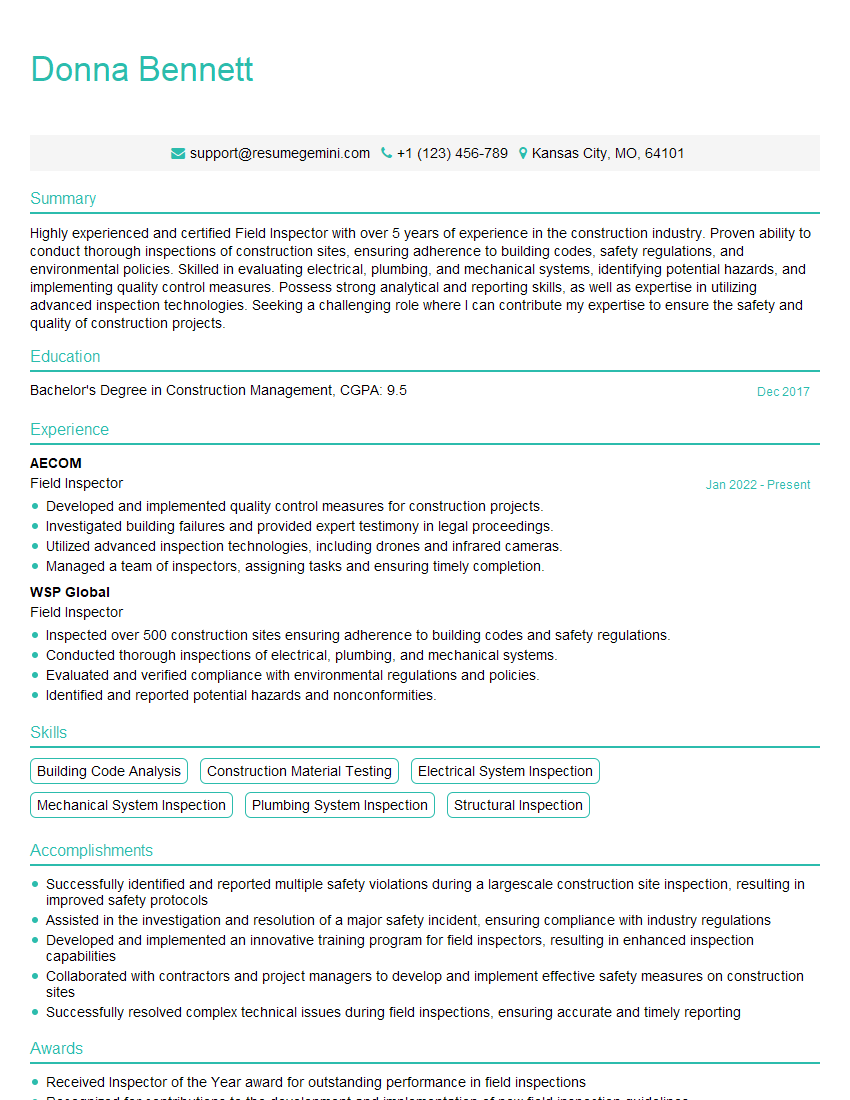
Field Inspector Resume Sample
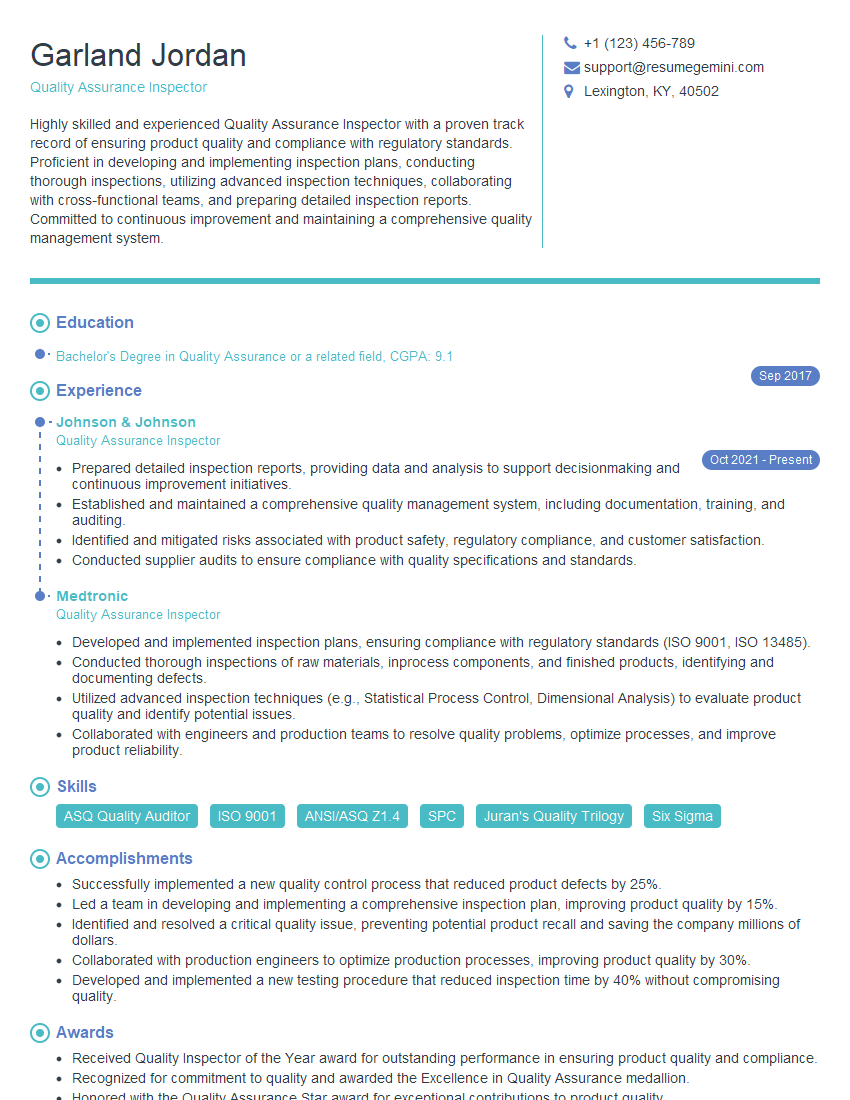
Quality Assurance Inspector Resume Sample
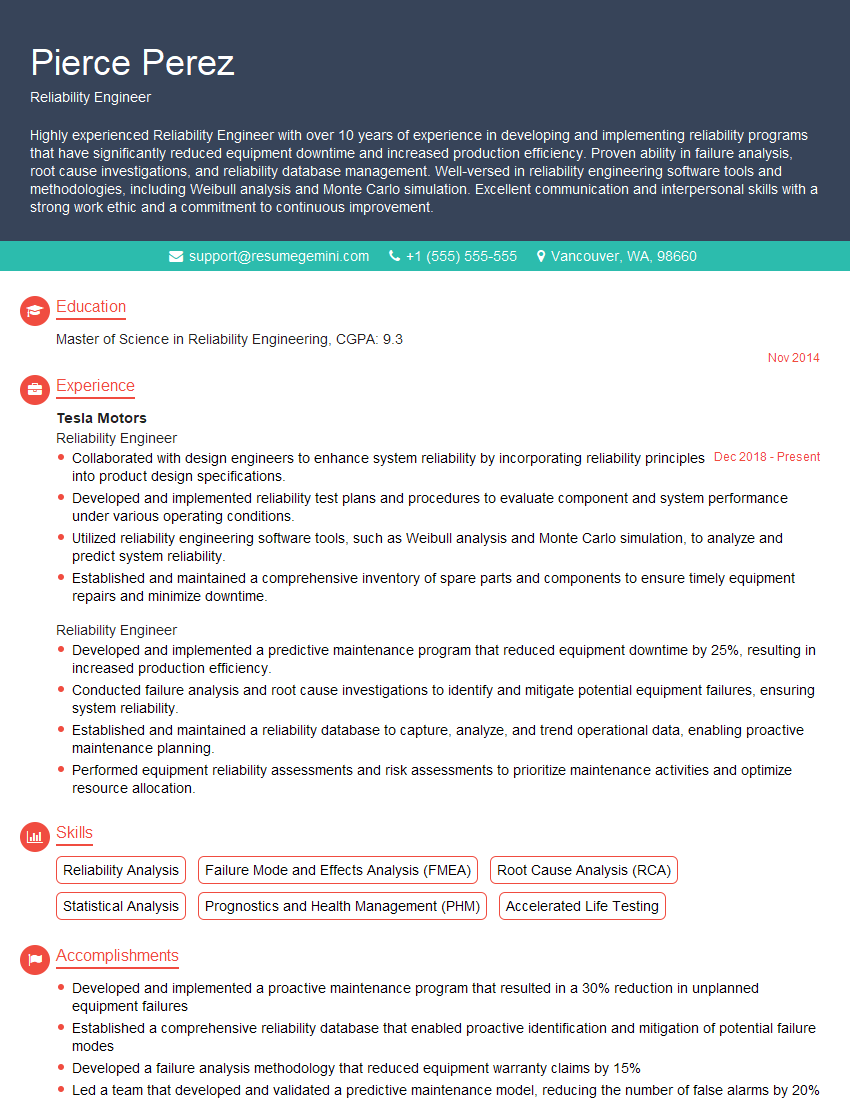
Reliability Engineer Resume Sample

Construction Inspector Resume Sample
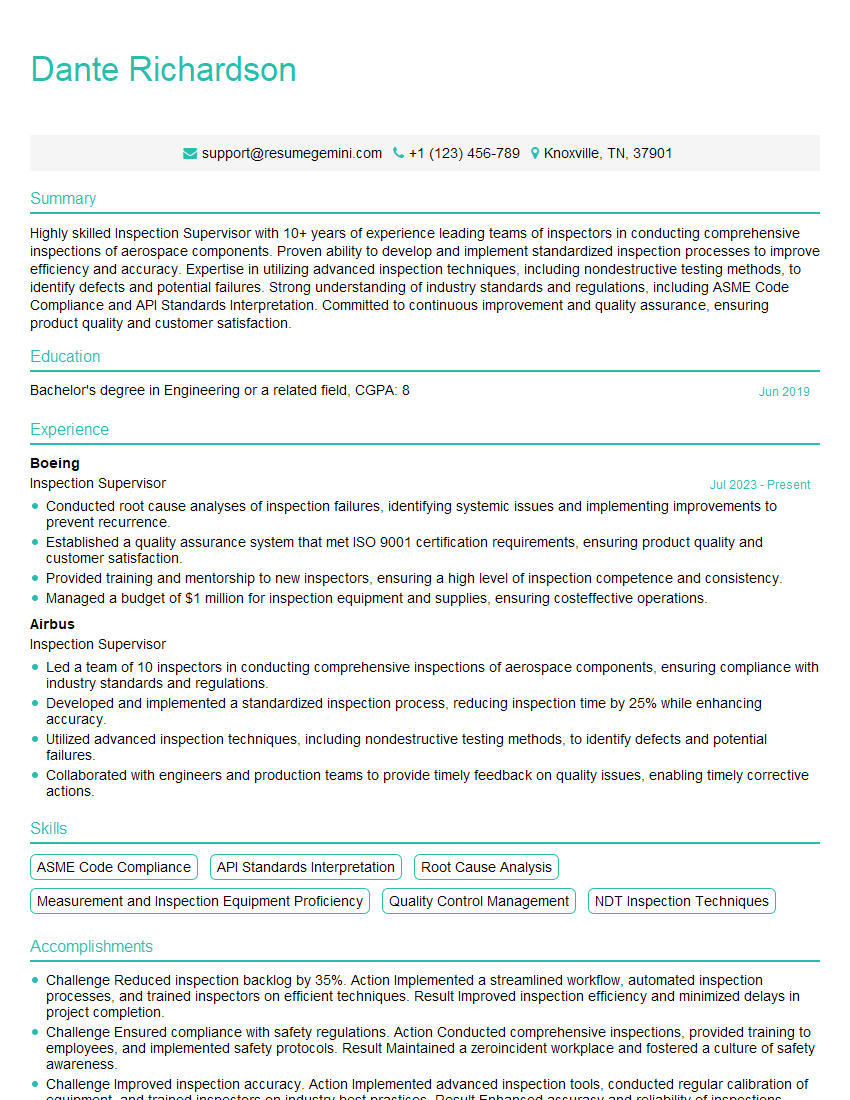
Inspection Supervisor Resume Sample
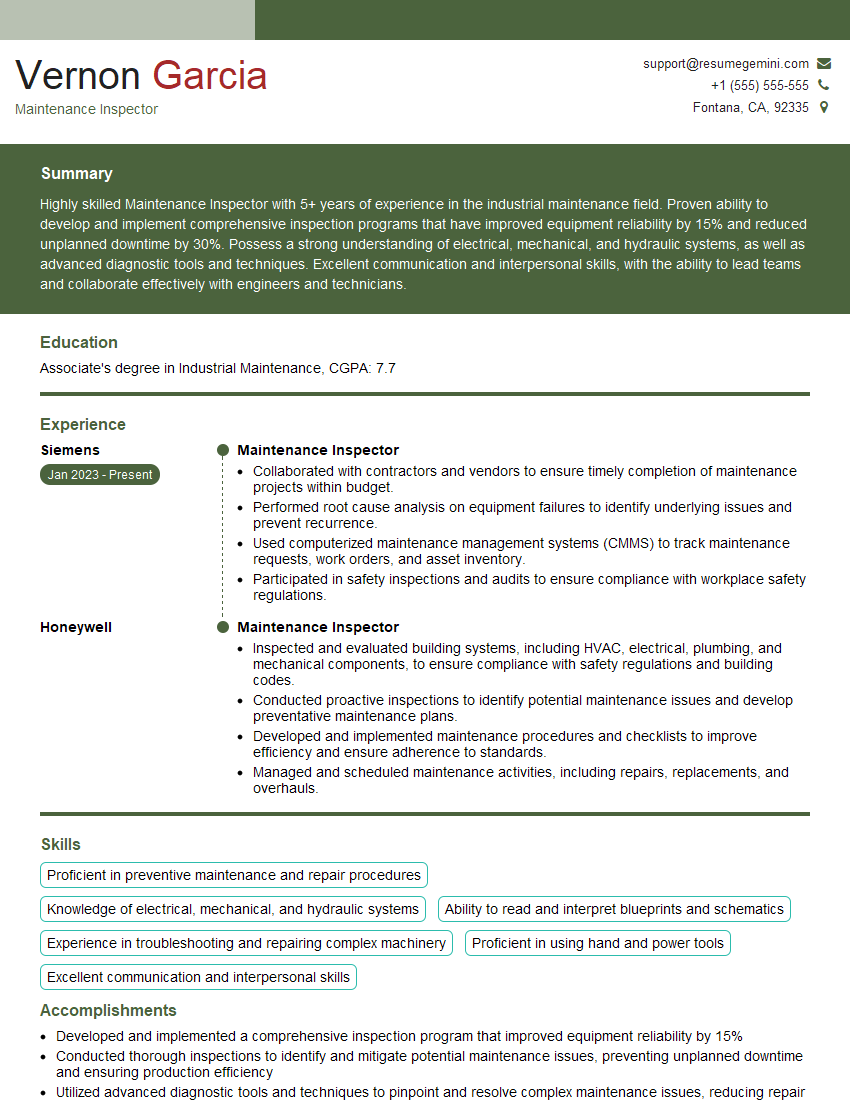
Maintenance Inspector Resume Sample
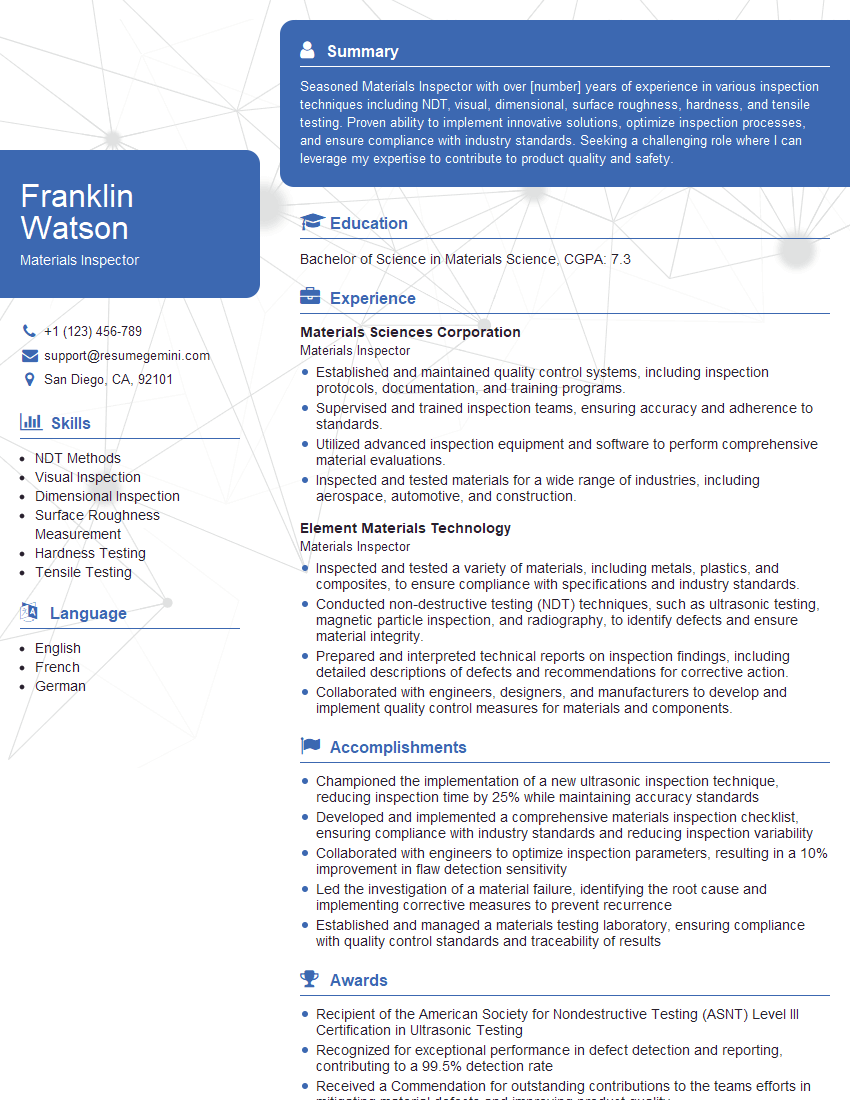
Materials Inspector Resume Sample

Quality Control Inspector Resume Sample
Explore more articles
Users Rating of Our Blogs
Share Your Experience
We value your feedback! Please rate our content and share your thoughts (optional).
What Readers Say About Our Blog
Very informative content, great job.
good