Preparation is the key to success in any interview. In this post, we’ll explore crucial Equine Breeding interview questions and equip you with strategies to craft impactful answers. Whether you’re a beginner or a pro, these tips will elevate your preparation.
Questions Asked in Equine Breeding Interview
Q 1. Describe the estrous cycle in mares.
The mare’s estrous cycle, also known as her heat cycle, is a complex process that dictates her reproductive capabilities. It’s seasonally polyestrous, meaning she cycles repeatedly during specific times of the year, typically from spring to fall. The cycle itself averages 21 days, though this can vary.
The cycle can be divided into several phases:
- Follicular Phase: This is the period of follicle growth in the ovaries. Follicle-stimulating hormone (FSH) stimulates follicle development, leading to the production of estrogen. As estrogen levels rise, the mare exhibits signs of estrus (heat).
- Estrus (Heat): This is the period of sexual receptivity, typically lasting 4-7 days. The mare will exhibit behaviours like squatting, urinating frequently, and allowing the stallion to mount her. Ovulation typically occurs towards the end of estrus.
- Ovulation: This is the release of the mature egg (ovum) from the follicle. It’s a crucial event for successful fertilization.
- Luteal Phase: After ovulation, the ruptured follicle transforms into the corpus luteum (CL), which produces progesterone. Progesterone prepares the uterus for pregnancy and inhibits further follicular development. If pregnancy doesn’t occur, the CL regresses, and the cycle begins anew.
Understanding the mare’s estrous cycle is crucial for successful breeding management, as timing artificial insemination or natural mating correctly during estrus maximizes the chance of pregnancy.
Q 2. Explain the process of artificial insemination in horses.
Artificial insemination (AI) in horses involves depositing semen directly into the uterus, bypassing natural mating. This technique offers numerous advantages, including the ability to use semen from stallions geographically distant or deceased, improved genetic selection, and reduced risk of injury to both stallion and mare.
The process typically involves these steps:
- Collection of semen: Semen is collected from the stallion using an artificial vagina (AV).
- Evaluation of semen: The collected semen is immediately evaluated for volume, concentration, motility, and morphology of the sperm cells.
- Processing (if needed): Depending on the quality and the AI method, semen might be extended (diluted) with a special extender solution to increase the volume and improve preservation.
- Insemination: Using a sterile insemination pipette, the semen is carefully deposited into the uterus of the mare. This is done either transcervically (through the cervix) or through a surgical approach, depending on the mare’s conformation and the practitioner’s preference. Timing is crucial; insemination should ideally occur close to ovulation.
- Post-insemination monitoring: Following AI, the mare’s pregnancy is monitored using ultrasound to confirm successful implantation and fetal development.
AI has revolutionized equine breeding, making it more efficient and accessible to a wider range of breeders.
Q 3. What are the common methods of embryo transfer in equine breeding?
Embryo transfer (ET) is a valuable assisted reproductive technology (ART) in equine breeding, allowing for the transfer of embryos from a donor mare to a recipient mare. This enables breeders to obtain multiple offspring from high-value mares or improve the reproductive efficiency of less fertile mares.
The two main methods are:
- Non-surgical embryo transfer: This method is commonly used and less invasive. The embryo is flushed out of the donor mare’s uterus using a catheter passed through the cervix. It’s a relatively straightforward procedure requiring skillful manipulation of the catheter to access and flush the uterine horns successfully. The collected embryos are then carefully evaluated under a microscope before being transferred to the recipient mare.
- Surgical embryo transfer: In this approach, a surgical incision is made into the abdomen to directly access the uterine horns and retrieve the embryos. It’s usually done under general anesthesia for the donor mare and requires experienced surgical personnel. This method allows for more precise embryo collection, but it’s more invasive and carries greater risks compared to non-surgical ET.
In both cases, the recipient mare must be carefully synchronized with the donor mare’s cycle to ensure successful implantation and pregnancy.
Q 4. Discuss the importance of semen evaluation before artificial insemination.
Semen evaluation is paramount before AI to ensure optimal fertility and prevent the transmission of sexually transmitted diseases. A thorough evaluation encompasses several parameters:
- Volume: The amount of semen collected provides an indication of stallion fertility.
- Concentration: This refers to the number of sperm cells per milliliter of semen, vital for successful fertilization.
- Motility: The percentage of sperm cells that are actively moving is a crucial indicator of semen quality. Poor motility reduces the chance of successful fertilization.
- Morphology: This assesses the shape and structure of the sperm cells. Abnormalities in morphology can indicate poor sperm quality and reduced fertility.
- Sperm viability: This determines the proportion of live sperm cells capable of fertilizing an egg. This evaluation often includes assessing the presence of acrosomal defects.
- Bacterial culture: This tests the semen sample for the presence of harmful bacteria that might reduce fertilization success or cause infection.
A comprehensive semen evaluation provides a clear picture of the stallion’s fertility potential, helping breeders make informed decisions about which stallion to use and the timing of insemination. A poor evaluation might indicate a need for further investigation or alternative breeding strategies.
Q 5. How do you manage a stallion’s breeding soundness exam?
Managing a stallion’s breeding soundness exam (BSE) requires a systematic approach involving several steps:
- History taking: Gathering the stallion’s breeding history, any previous reproductive issues, and overall health status.
- Physical examination: A thorough assessment of the stallion’s general health, conformation, and reproductive organs.
- Semen collection and evaluation: Multiple semen collections over several days are performed to assess the stallion’s reproductive consistency.
- External genitalia examination: This includes checking for abnormalities like penile deviations or lesions that could interfere with breeding.
- Internal genitalia examination (optional): This might involve rectal palpation to evaluate internal organs such as the accessory glands.
- Hormone testing (if necessary): Blood tests are done to evaluate hormone levels if abnormalities are suspected.
The BSE report provides a comprehensive assessment of the stallion’s ability to naturally or artificially breed, influencing decisions about its suitability for breeding and guiding further management strategies. The findings will assess suitability for natural service, hand-mating, or artificial insemination.
Q 6. What are the signs of a mare in heat?
Identifying a mare in heat (estrus) requires careful observation of several behavioral and physical signs:
- Winking:** The vulva will appear swollen and the mare will repeatedly lift and lower her tail while showing her vulva. This is a highly reliable indicator of heat.
- Frequent urination:** Mares in heat urinate more frequently, sometimes lifting her tail in a characteristic manner.
- Squatting:** They frequently squat with their hind legs spread, inviting the stallion to mate.
- Tail flagging:** This is a subtle but important sign. Mares will frequently move their tail to the side, exposing their vulva.
- Increased social interaction:** A mare in heat may show increased interest in other horses, including stallions.
- Mucus discharge:** A clear, viscous mucus discharge from the vulva is typical during estrus.
While some mares exhibit clear signs, others are less obvious. Regular observation and palpation of the ovaries using rectal examination are important for accurate determination.
Q 7. Explain the different types of equine breeding techniques.
Equine breeding encompasses several techniques, each offering specific advantages:
- Natural mating (Hand Mating): This is the traditional method where the stallion and mare breed naturally under controlled conditions. It’s less expensive than AI but has inherent risks of injury.
- Pasture breeding:** This method involves allowing the stallion and mare to breed freely within a designated pasture. This method is generally less precise in terms of timing ovulation.
- Artificial Insemination (AI): This technique involves the artificial deposition of semen into the mare’s uterus (as discussed earlier). It’s highly versatile and efficient.
- Embryo Transfer (ET): As discussed, this is a valuable ART that allows the transfer of embryos between mares, maximizing reproduction from high-value mares and increasing fertility rates in less-fertile mares.
- In vitro fertilization (IVF): A more advanced ART where fertilization happens in a laboratory setting. While promising, it’s currently less widely used in equine breeding than AI or ET.
The choice of breeding technique depends on various factors, including the breed, the genetic merit of the stallion and mare, the breeder’s resources, and the desired outcome.
Q 8. How do you manage dystocia in mares?
Dystocia, or difficult birth, in mares is a serious veterinary emergency requiring immediate intervention. Management hinges on prompt assessment and appropriate action. The first step is to carefully assess the mare’s condition and the progress of labor. This includes evaluating the mare’s vital signs (heart rate, respiratory rate, temperature), assessing the stage of labor (pre-parturition, active labor, etc.), and examining the cervix and fetus to determine the cause of the dystocia.
Causes can range from fetal malposition (e.g., breech presentation, transverse presentation) to uterine inertia (failure of the uterus to contract effectively) or fetopelvic disproportion (the foal is too large for the mare’s pelvis). Treatment strategies vary depending on the cause and severity. In some cases, manual manipulation of the fetus may be possible to correct malpresentation. If the foal is too large, or the mare is unable to push effectively, a Cesarean section may be necessary.
Continuous monitoring of the mare’s vital signs during and after intervention is critical. Post-dystocia care includes monitoring for signs of infection, uterine atony (lack of uterine tone), and ensuring adequate pain management. Prognosis depends on the cause and severity of the dystocia, as well as the promptness and effectiveness of intervention. For example, a mare with a simple malpresentation corrected early might have a good prognosis. A case of fetopelvic disproportion that leads to fetal distress and prolonged dystocia, however, carries significantly higher risks for both mare and foal.
Q 9. Describe the process of foal heat detection and management.
Foal heat, the mare’s first estrus (heat cycle) after foaling, typically occurs 5-12 days postpartum. Detecting it is crucial for timely breeding and maximizing the chance of a successful pregnancy in the following breeding season. Management involves diligent observation for behavioral and physical signs.
Behavioral signs include restlessness, frequent urination, tail swishing, winking (contraction and relaxation of the vulva), and increased receptiveness to stallion’s advances. Physical signs include vulvar swelling and a clear, slightly viscous vaginal discharge. Regularly observing the mare, ideally twice daily, for these indicators is essential. We can use a teasing stallion, a stallion that is not intended for breeding but used for testing receptivity of mares, to gauge the mare’s receptiveness. If she exhibits a clear acceptance and willingness to stand for him, she is likely in heat.
Management of foal heat includes careful consideration of the mare’s recovery from foaling. She needs to be physically and hormonally ready to breed. If the mare is not fully recovered and shows signs of stress, postponing breeding is essential to avoid complications. Once she’s in foal heat, timing insemination (either naturally or via artificial insemination) to coincide with ovulation is key. This often involves monitoring hormonal changes (e.g., follicle stimulating hormone, luteinizing hormone) to pinpoint ovulation.
Q 10. What are some common genetic disorders in horses, and how can breeding practices mitigate their occurrence?
Several genetic disorders can affect horses, many inherited in recessive or dominant patterns. Examples include Hyperkalemic Periodic Paralysis (HYPP), a muscle disorder in Quarter Horses; Hereditary Equine Regional Dermal Asthenia (HERDA), causing skin fragility in Quarter Horses; and Lethal White Syndrome (LWS), a fatal disorder in certain American Paint Horses.
Breeding practices can significantly mitigate the occurrence of these disorders. Genetic testing is crucial. Breeders can test stallions and mares for known genetic markers related to these conditions. Breeding strategies include avoiding mating pairs known to carry recessive alleles for these disorders. If a stallion or mare is a carrier (heterozygous), selecting a mate that is free of the allele (homozygous normal) minimizes the risk of affected offspring. In some cases, rigorous screening and careful selection can help to remove the allele from a population over time.
Additionally, maintaining thorough and accurate pedigree records is critical. Studying family history helps identify potential carriers and predict the likelihood of affected foals. This allows informed breeding decisions and prevents potentially affected foals from being produced. For example, breeders can create mating plans that avoid pairings known to produce high chances of affected foals.
Q 11. Discuss the role of genetics in equine breeding programs.
Genetics plays a pivotal role in equine breeding programs. It dictates the inheritance of desirable and undesirable traits, influencing a horse’s conformation, athletic ability, temperament, and susceptibility to certain diseases. Understanding the genetic basis of these traits allows breeders to make informed decisions about mating pairs to improve the overall quality of their breeding program.
Modern molecular genetic techniques, such as DNA testing, allow breeders to identify genetic markers associated with specific traits and diseases. This information enables more precise selection of breeding stock, increasing the likelihood of producing offspring with desirable characteristics and minimizing the risk of inherited disorders. Breeders can use tools like genomic selection to predict the genetic merit of a horse based on its DNA profile, going beyond traditional pedigree analysis to improve the accuracy of selection. For example, a breeder might use genetic testing to identify a stallion with superior genes for speed, ensuring their foals have improved performance in racing.
Careful selection based on genetics contributes significantly to the development and maintenance of specific breeds, shaping their physical and behavioral characteristics, and minimizing the spread of genetic diseases in the breed. The integration of genetics with other selection criteria like performance and conformation allows for a more holistic approach in developing and maintaining robust equine breeding programs.
Q 12. Explain the importance of record-keeping in equine breeding.
Record-keeping is fundamental in equine breeding. It provides a comprehensive history of each horse, including pedigree, performance data, health records, and breeding history. This information is invaluable for making informed breeding decisions, tracking genetic lines, and managing potential health risks.
Detailed records allow breeders to analyze the effectiveness of their breeding strategies, identify trends in offspring characteristics, and monitor the prevalence of genetic disorders within their breeding program. They also play a vital role in establishing accurate pedigrees, crucial for verifying lineage and preventing fraudulent practices. Such data might also be essential in negotiating the sale or transfer of horses, providing documentation of the horse’s background and value.
A robust record-keeping system includes detailed information on each horse’s lineage (parents, grandparents, etc.), birthdate, physical characteristics (e.g., height, weight, conformation), reproductive history (e.g., breeding dates, pregnancy status, foaling dates), health records (e.g., vaccinations, disease history), and performance data (e.g., competition results). Utilizing a digital database or software enhances the efficiency of data management and facilitates analysis. For example, a breeder might use a database to track the incidence of a particular disease in a line of horses, allowing them to make more informed choices when planning mating pairs.
Q 13. How do you select suitable breeding stallions based on pedigree and performance?
Selecting suitable breeding stallions involves a thorough evaluation of their pedigree and performance records. The pedigree reveals the horse’s ancestry, highlighting traits and potential genetic risks. A stallion’s pedigree is carefully analyzed for the presence of desirable characteristics such as athleticism, soundness, and temperament, as well as for potential genetic disorders. It is equally vital to analyze for soundness and longevity as those are important to pass on to offspring.
Performance records, including competition results, racing times, or work history, offer insights into the stallion’s capabilities and athletic potential. For example, a stallion with proven success in racing is likely to sire offspring with superior racing ability. The performance of his progeny (offspring) also provides valuable information. A stallion who consistently sires successful offspring demonstrates superior genetic merit.
Beyond pedigree and performance, other factors like temperament, conformation, and health are also vital considerations. A calm and well-behaved stallion is preferable to ensure safe handling and reduce the risk of injuries during breeding. A stallion’s soundness and absence of genetic disorders are paramount to avoid passing on undesirable traits to future generations. A holistic approach, integrating all this data, allows for a more informed and effective stallion selection process, to ultimately improve the quality and health of future generations.
Q 14. What are the key factors to consider when selecting mares for breeding?
Selecting mares for breeding requires careful evaluation of several key factors. Firstly, the mare’s conformation plays a significant role. A well-balanced conformation indicates soundness and the ability to carry and deliver a foal without difficulty. This includes considerations of bone structure, leg conformation, and overall balance.
Reproductive history is another crucial factor. The mare’s past breeding records – such as pregnancy success rates, foaling ease, and milk production – are indicative of her fertility and suitability for breeding. A mare with a history of dystocia or reproductive problems might be less desirable. Similarly, a mare with a consistent history of producing healthy foals is a better choice.
Health is paramount. A thorough veterinary examination assesses the mare’s overall health status, identifying any underlying health issues that could affect her fertility or ability to carry a pregnancy to term. This includes checking for any potential genetic diseases that could be passed on to the offspring. Finally, temperament and handling characteristics are significant factors. A calm and manageable mare is essential for ease of handling during breeding and foaling. Combining these aspects enables a robust and informed selection process that optimizes the chances of producing healthy, well-conformed, and successful offspring.
Q 15. Explain the principles of linebreeding and outcrossing in horses.
Linebreeding and outcrossing are two fundamental breeding strategies in equine breeding, aiming to either concentrate or diversify desirable traits within a bloodline. Linebreeding involves mating horses that are related, sharing a common ancestor, to maintain desirable characteristics found in that ancestor. This increases homozygosity—the likelihood of offspring inheriting two identical copies of a gene. Outcrossing, conversely, involves mating horses that are unrelated to increase heterozygosity—diversity in the gene pool. This often introduces new traits, potentially enhancing vigor and reducing the risk of inheriting recessive genetic disorders that might be prevalent in closely related lineages.
Linebreeding: Think of it like focusing on a specific recipe; you’re emphasizing traits you know are consistently good in a family of horses. A carefully planned linebreeding program can help to solidify desirable characteristics like speed, conformation, or temperament, but it also carries a risk of amplifying undesirable recessive genes. For example, consistently linebreeding for a specific type of conformation might unintentionally increase the frequency of a genetic predisposition to a certain lameness.
Outcrossing: This is like adding new ingredients to your recipe. It introduces genetic variation, potentially enhancing the overall ‘health’ of the bloodline. A well-chosen outcross can improve fertility, increase disease resistance, and sometimes introduce desirable traits from another bloodline, enhancing athletic potential or improving temperament. However, it can also disrupt a desirable balance already established in a closely bred line. The goal is to find the right balance between preserving desirable traits and increasing vigor through genetic diversity.
Career Expert Tips:
- Ace those interviews! Prepare effectively by reviewing the Top 50 Most Common Interview Questions on ResumeGemini.
- Navigate your job search with confidence! Explore a wide range of Career Tips on ResumeGemini. Learn about common challenges and recommendations to overcome them.
- Craft the perfect resume! Master the Art of Resume Writing with ResumeGemini’s guide. Showcase your unique qualifications and achievements effectively.
- Don’t miss out on holiday savings! Build your dream resume with ResumeGemini’s ATS optimized templates.
Q 16. Discuss the impact of nutrition on equine reproductive performance.
Nutrition plays a pivotal role in equine reproductive performance, impacting both mares and stallions. A mare’s nutritional status directly influences her ability to conceive, carry a pregnancy to term, and produce a healthy foal. Similarly, a stallion’s nutritional health affects sperm production, quality, and libido. A deficient diet can lead to reduced fertility, increased risk of pregnancy complications, and impaired foal development.
For Mares: Adequate energy intake (from high-quality forages and appropriate concentrates) is crucial during all stages of reproduction. Essential minerals like calcium and phosphorus are vital for bone development in the foal and the mare’s skeletal health. Trace minerals such as selenium, copper, and zinc are also important antioxidants and components of numerous enzymes. Vitamin E is a potent antioxidant that supports reproduction and immune function. Protein intake is important for tissue growth and repair. During late pregnancy and lactation, nutrient requirements are significantly increased.
For Stallions: High-quality protein is essential for sperm production and health. Antioxidant vitamins like Vitamin E and selenium protect sperm cells from oxidative damage, improving their motility and viability. Deficiencies can result in poor sperm quality, leading to low fertility. Proper hydration and avoidance of excessive heat stress are also vital for optimal sperm production.
Practical Application: A balanced diet tailored to the reproductive stage is paramount. For example, a mare about to foal will require significantly higher levels of energy and calcium. Blood tests and regular veterinary check-ups help to monitor nutritional status and make necessary adjustments to the diet, preventing nutritional deficiencies that can impact reproduction.
Q 17. What are some common reproductive health issues in mares and stallions, and how can they be prevented?
Several reproductive health issues can affect both mares and stallions, significantly impacting their breeding potential. Early detection and preventative measures are crucial to mitigate problems and ensure successful breeding programs.
- Mares:
- Endometritis (uterine infection): Can be prevented through proper hygiene practices during breeding and diligent post-breeding uterine flushing. Regular uterine cultures can help to diagnose and treat early infections.
- Ovulatory disorders: These can be addressed through hormonal therapies and careful monitoring of the estrous cycle via ultrasound. Regular veterinary exams help detect irregularities early on.
- Cysts and tumors: Regular veterinary examination and ultrasound scans help in early detection. Treatment depends on the specific type and severity.
- Stallions:
- Low sperm count or motility: Improved nutrition, reducing stress, and managing heat stress can positively impact sperm quality. Semen evaluation helps in identifying issues.
- Infections of the reproductive tract: Proper hygiene and management practices help to prevent infections. Early diagnosis and treatment are essential to avoid infertility.
- Sexual dysfunction: This can be due to physical or psychological factors. A thorough veterinary examination and assessment are necessary to determine the cause and possible treatment options.
Prevention is key: Regular veterinary examinations, proper sanitation, vaccination programs, and a well-balanced diet are essential in preventing most reproductive health issues.
Q 18. How do you manage the health and well-being of pregnant mares?
Managing the health and well-being of pregnant mares requires careful attention to nutrition, parasite control, and overall health. Regular veterinary check-ups are critical throughout the pregnancy.
- Nutrition: The pregnant mare’s nutritional needs change significantly throughout pregnancy, particularly during the last trimester. Adequate energy, protein, calcium, and phosphorus are crucial for foetal development. A balanced diet, supplemented as needed, is essential.
- Parasite Control: Regular deworming is critical to minimize the risk of parasite infestations, which can negatively impact the mare and the developing foal. A veterinary parasite control program, tailored to the mare and her environment, is necessary.
- Vaccinations: Staying up-to-date with vaccinations against common equine diseases is essential to protect the mare’s immune system and the developing foal.
- Exercise: Moderate exercise is beneficial for maintaining the mare’s fitness and ensuring proper muscle tone throughout pregnancy, but strenuous activity should be avoided, especially near the due date.
- Monitoring: Regular veterinary check-ups, including ultrasound examinations, help monitor the mare’s health and the progress of the pregnancy, ensuring early detection and treatment of any problems.
- Hygiene: Maintaining a clean and dry environment reduces the risk of infection and promotes the health of the mare.
A calm and stress-free environment is also important for a successful pregnancy. Any signs of illness or discomfort should be addressed promptly by a veterinarian.
Q 19. Describe the process of foal care in the first few weeks of life.
Foal care in the first few weeks of life is critical for the foal’s survival and long-term health. Careful observation and prompt attention to any issues are essential.
- Immediate Post-Partum: Ensure the foal stands and nurses within the first hour. Observe for signs of weakness, difficulty nursing, or respiratory distress. Assist if necessary.
- Nursing and Nutrition: Monitor the foal’s suckling behavior and milk intake. Colostrum intake is critical within the first few hours of life, providing essential antibodies. If the foal is not nursing successfully or the mare isn’t producing sufficient colostrum, veterinary intervention is necessary.
- Hygiene: Keep the foal clean and dry. Monitor the navel for signs of infection. Proper hygiene helps to reduce the risk of infection.
- Thermoregulation: Foals can be susceptible to hypothermia or hyperthermia. Provide shelter from harsh weather conditions and monitor the foal’s body temperature.
- Monitoring Vital Signs: Regularly monitor the foal’s heart rate, respiratory rate, and body temperature. Any deviations from normal ranges should be addressed promptly by a veterinarian.
- Veterinary Check-ups: Schedule a veterinary examination within the first few days of life to ensure the foal is healthy and to address any issues that may arise.
The first few weeks are crucial for establishing a healthy start in life for the foal. Prompt veterinary attention to any abnormality can be the difference between a thriving foal and a serious health complication.
Q 20. What are the common causes of infertility in horses?
Infertility in horses can stem from various causes affecting both mares and stallions. Identifying the underlying cause is key to successful treatment.
- Mares:
- Ovulatory dysfunction: Irregular or absent ovulation can be caused by hormonal imbalances, uterine infections, or other underlying health conditions.
- Endometritis (uterine infection): Infection of the uterus hinders successful implantation of the embryo.
- Structural abnormalities of the reproductive tract: Congenital or acquired defects can interfere with breeding.
- Age: Older mares often experience reduced fertility.
- Stallions:
- Low sperm count or motility: Poor nutrition, stress, heat stress, or infection can negatively impact sperm quality.
- Reproductive tract infections: Can impair sperm production or cause blockages.
- Genetic factors: Certain genetic conditions can lead to infertility.
- Age: Older stallions may experience decreased fertility.
A thorough veterinary examination, including reproductive tract ultrasound and semen analysis (for stallions), is essential for diagnosing infertility and determining the underlying cause.
Q 21. How do you troubleshoot reproductive problems in breeding horses?
Troubleshooting reproductive problems in breeding horses requires a systematic approach, combining veterinary expertise with careful management and record-keeping.
- Detailed History: A complete history of the mare or stallion, including past reproductive performance, medical history, and current management practices, is crucial.
- Physical Examination: A thorough veterinary examination of both the mare and stallion, focusing on the reproductive tract, is essential.
- Diagnostic Tests: Depending on the suspected problem, various diagnostic tests may be required. These can include ultrasound examinations of the reproductive tract, blood tests, semen analysis (for stallions), and cultures for infections.
- Treatment: Treatment will vary depending on the underlying cause. This might involve hormonal therapies, medication for infections, surgical intervention, or changes in management practices.
- Monitoring and Follow-up: Close monitoring of the mare or stallion following treatment is crucial to assess the effectiveness of the intervention and make any necessary adjustments.
- Record Keeping: Meticulous record-keeping of breeding attempts, diagnostic test results, and treatment responses is crucial for tracking progress and making informed decisions.
A collaborative approach between the horse owner, veterinarian, and other specialists, such as a reproductive physiologist, is often necessary for complex cases. It’s important to remember that fertility problems can be complex, and patience and persistence are frequently required.
Q 22. Explain the importance of biosecurity in equine breeding operations.
Biosecurity in equine breeding is paramount to preventing the spread of infectious diseases that can decimate a breeding operation. Think of it like a fortress protecting your valuable assets – your horses. A strong biosecurity program minimizes the risk of introducing pathogens onto your premises.
- Quarantine: Newly arrived horses are isolated for a period (typically 30 days) to monitor for any signs of illness before integrating them with the existing herd. This is crucial to prevent the introduction of contagious diseases like equine influenza or strangles.
- Hygiene: Strict hygiene protocols are essential. This includes regular cleaning and disinfection of stalls, equipment, and vehicles. Handwashing and using appropriate protective clothing are non-negotiable.
- Traffic Control: Limiting access to the breeding facility to authorized personnel only minimizes the risk of introducing pathogens through human contact. Visitors should be asked to change into clean clothing and shoes provided on site.
- Vector Control: Controlling insects and rodents can significantly reduce the risk of disease transmission. Regular pest control measures are vital.
- Waste Management: Proper disposal of manure and other waste materials prevents the build-up of pathogens and attracts pests.
Ignoring biosecurity can result in significant economic losses through vet bills, lost breeding potential, and even the death of animals. A proactive approach is far cheaper and less stressful than dealing with an outbreak.
Q 23. What are the ethical considerations in equine breeding?
Ethical considerations in equine breeding are crucial. They center around animal welfare, responsible breeding practices, and the long-term well-being of the horses involved. We must always prioritize the horse’s health and happiness over profit.
- Careful Selection of Breeding Stock: Selecting breeding animals based on their health, temperament, and conformation is paramount. Breeding horses with known genetic defects is unethical and irresponsible.
- Minimizing Inbreeding: Inbreeding can increase the risk of genetic disorders. Careful pedigree analysis is essential to avoid excessive inbreeding and maintain genetic diversity.
- Providing Proper Care: Mares and foals require excellent care, nutrition, and veterinary attention throughout pregnancy, foaling, and the subsequent growth phase. Neglecting their needs is unethical.
- Responsible Disposition of Unsuitable Animals: Sometimes, horses are born with conditions that make them unsuitable for breeding or riding. Ethically, such animals should receive humane care and rehoming, or humane euthanasia if necessary, rather than neglect or abandonment.
- Transparency and Honesty: Being transparent with buyers about the health and genetic history of breeding animals is crucial. Misrepresenting a horse’s condition is unethical and potentially illegal.
Ethical breeding practices are not only morally right but also enhance the reputation and longevity of a breeding operation.
Q 24. Discuss the economic aspects of equine breeding.
The economic aspects of equine breeding are complex and can range from very profitable to quite precarious. Success depends on various factors, including the quality of the breeding stock, market demand, breeding strategy, and management skills.
- Initial Investment: Significant upfront costs are involved in purchasing breeding stock, developing facilities, and acquiring equipment. This can include land purchase, stable construction, fencing, and specialized veterinary equipment.
- Ongoing Costs: Recurring expenses include feed, veterinary care, farrier services, labor costs, and insurance.
- Revenue Streams: Income is generated through the sale of breeding stock, foals, and potentially stallion services. Income can also come from boarding and training of other horses.
- Market Fluctuations: The equine market is subject to fluctuations. Breed popularity and economic conditions can significantly impact foal prices.
- Breeding Success Rates: Not all breeding attempts are successful. Factors such as fertility issues, pregnancy complications, or difficult foaling can significantly reduce profitability.
Effective financial management is essential to ensure the long-term sustainability of a breeding operation.
Q 25. How do you assess the profitability of a breeding operation?
Assessing the profitability of a breeding operation involves a detailed financial analysis. It’s not just about revenue; it’s about managing costs effectively and understanding your return on investment (ROI).
- Detailed Cost Accounting: Track all expenses meticulously, from feed and bedding to veterinary care and labor. Categorize expenses to identify areas where savings may be possible.
- Revenue Tracking: Maintain accurate records of all income generated from foal sales, stallion services, and other sources.
- Calculating ROI: Compare the total revenue generated over a specific period (e.g., a year) with the total expenses incurred during the same period. This will reveal the overall profitability.
- Breeding Success Rate Analysis: Assess the percentage of successful pregnancies and foaling rates to understand the efficiency of the breeding program. A low success rate directly impacts profitability.
- Market Analysis: Stay updated on current market prices for foals and breeding stock to ensure that pricing strategies are competitive and profitable.
Regular financial reviews and adjustments to breeding strategies are crucial for maximizing profitability.
Q 26. Describe different breeding strategies (e.g., pasture breeding, hand breeding).
Various breeding strategies cater to different needs, resources, and horse temperaments.
- Pasture Breeding: This involves allowing the stallion and mare to mate naturally in a designated pasture. It’s less labor-intensive and generally less expensive but carries a higher risk of injury to the animals and less control over the timing of mating. It’s best suited for hardy breeds and experienced breeders.
- Hand Breeding: This involves artificially guiding the stallion to mount the mare under controlled conditions. It provides more control over the timing and frequency of mating, and the safety of both the mare and stallion is better assured. However, it requires more skill and labor.
- Artificial Insemination (AI): This involves collecting semen from the stallion and artificially inseminating the mare. AI allows for the use of stallions located far away and can improve breeding success rates in some situations. It requires specialized equipment and expertise.
- Embryo Transfer (ET): This advanced technique involves collecting embryos from a mare and transferring them to a recipient mare. ET can increase the number of foals produced from a valuable mare.
The choice of breeding strategy depends on several factors, including the breeder’s experience, resources, and the specific goals for the breeding program. Many breeders employ a combination of these techniques.
Q 27. What are the regulations and legal aspects related to equine breeding in your region?
Regulations and legal aspects related to equine breeding vary significantly depending on the region. However, there are common themes. It’s crucial to understand and comply with the laws in your specific location.
- Animal Welfare Laws: Most jurisdictions have laws designed to protect animal welfare, including equine breeding operations. These typically stipulate standards of care, including housing, feeding, and veterinary attention.
- Breeding Licenses or Permits: In some regions, licenses or permits may be required to operate a breeding facility. These requirements might be tied to specific numbers of breeding animals or specific breeding practices.
- Disease Control Regulations: Regulations exist to prevent the spread of equine infectious diseases. These might include mandatory vaccinations, quarantine procedures, and reporting requirements.
- Registration and Identification: Most regions have established registration procedures for horses and their parentage. This ensures proper lineage tracking and identification.
- Transportation Regulations: Regulations cover the transportation of horses and require appropriate trailers and handling methods.
Consulting with legal counsel and local regulatory bodies is crucial to ensure compliance with all relevant laws and avoid potential penalties.
Q 28. How do you deal with unexpected complications during the breeding process?
Unexpected complications during the breeding process are unfortunately common. A well-prepared breeder has contingency plans in place.
- Veterinary Expertise: Having a trusted veterinarian on call is critical. Early intervention is crucial in handling complications such as retained placenta, metritis, or dystocia (difficult foaling).
- Emergency Facilities: Access to emergency veterinary facilities, including those with surgery capabilities, is crucial. Knowing the location of 24/7 veterinary care is essential.
- Monitoring and Observation: Closely monitoring mares during pregnancy and foaling is key to identifying potential problems early.
- Reproductive Technology: Techniques like AI and ET can be used to overcome some fertility challenges, but these also carry potential complications and require specialized knowledge.
- Documentation: Thorough record-keeping, including details about breeding management, observations, and veterinary interventions, can help in understanding the cause of complications and refining future breeding strategies.
Experience and proactive planning are vital for dealing with complications effectively. Always prioritize the well-being of the animals involved.
Key Topics to Learn for Your Equine Breeding Interview
- Equine Reproductive Physiology: Understanding the estrous cycle, ovulation, and factors influencing fertility. Practical application: Diagnosing breeding problems and implementing solutions.
- Breeding Management Techniques: Natural cover, artificial insemination (AI), embryo transfer, and other assisted reproductive technologies (ART). Practical application: Selecting appropriate breeding methods based on mare and stallion characteristics and farm resources.
- Equine Genetics and Breeding Programs: Understanding inheritance patterns, pedigree analysis, and selecting breeding stock to improve specific traits. Practical application: Developing a breeding program to enhance performance or conformation in a specific breed.
- Reproductive Health and Disease Management: Recognizing and addressing common reproductive issues in mares and stallions, including infections and infertility. Practical application: Implementing preventative measures and developing treatment plans.
- Pregnancy Diagnosis and Monitoring: Utilizing various techniques to confirm pregnancy, monitor fetal development, and manage pregnancy complications. Practical application: Ensuring a healthy pregnancy and preparing for foaling.
- Foaling Management and Neonatal Care: Understanding the foaling process, assisting with foaling if necessary, and providing proper care for the newborn foal. Practical application: Minimizing risks and maximizing foal survival rates.
- Data Management and Record Keeping: Maintaining accurate and organized breeding records, including pedigree information, breeding dates, pregnancy outcomes, and foal information. Practical application: Tracking breeding success and identifying areas for improvement.
- Biosecurity and Herd Health: Implementing protocols to prevent and control the spread of infectious diseases within a breeding operation. Practical application: Maintaining a healthy breeding herd and minimizing economic losses.
- Ethical Considerations in Equine Breeding: Understanding and adhering to ethical practices related to animal welfare, responsible breeding, and genetic diversity. Practical application: Making informed decisions that prioritize the well-being of the animals.
Next Steps
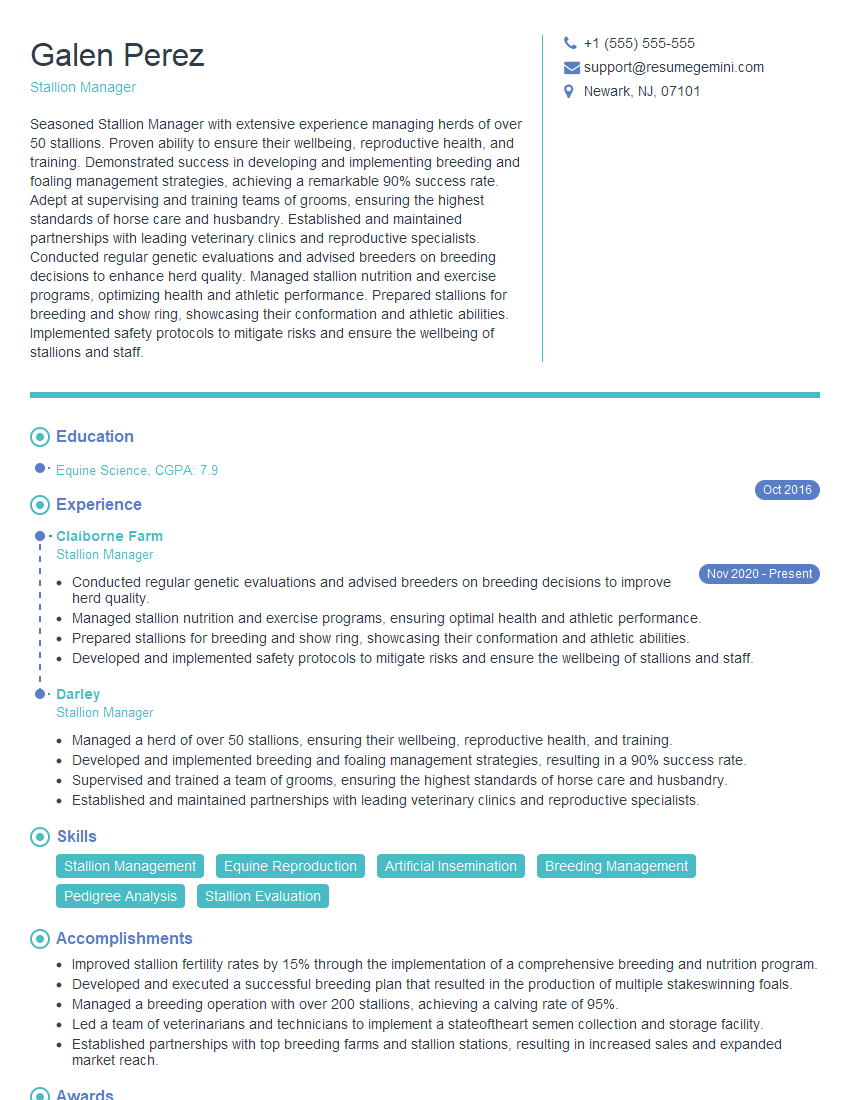
Mastering Equine Breeding opens doors to exciting career opportunities in a dynamic and rewarding field. To maximize your job prospects, focus on crafting an ATS-friendly resume that showcases your skills and experience effectively. ResumeGemini is a trusted resource to help you build a professional and impactful resume. We provide examples of resumes tailored to the Equine Breeding industry to help you get started. Invest the time to create a strong resume – it’s your first impression on potential employers.
Explore more articles
Users Rating of Our Blogs
Share Your Experience
We value your feedback! Please rate our content and share your thoughts (optional).
What Readers Say About Our Blog
Very informative content, great job.
good