Preparation is the key to success in any interview. In this post, we’ll explore crucial Decarburization interview questions and equip you with strategies to craft impactful answers. Whether you’re a beginner or a pro, these tips will elevate your preparation.
Questions Asked in Decarburization Interview
Q 1. Explain the mechanism of decarburization.
Decarburization is the reduction of carbon content at the surface of steel during heat treatment or other high-temperature processes. It occurs because carbon in steel diffuses out to the surrounding atmosphere, leaving behind a lower-carbon, and thus softer, surface layer. Think of it like a sponge losing water – the carbon, initially evenly distributed, gradually migrates outwards.
The mechanism involves the following steps:
- Carbon Diffusion: At elevated temperatures, carbon atoms in the steel lattice gain enough energy to overcome the activation energy for diffusion and migrate towards the surface.
- Surface Reaction: Once at the surface, the carbon atoms react with components of the surrounding atmosphere (like oxygen or water vapor), forming gaseous products such as carbon monoxide (CO) or carbon dioxide (CO2).
- Gaseous Product Removal: These gaseous products are then removed from the surface, creating a concentration gradient that drives further diffusion of carbon from the interior of the steel.
The rate of this process depends on the temperature, the atmosphere, and the steel’s composition.
Q 2. Describe the factors affecting the rate of decarburization.
Several factors influence the decarburization rate. Imagine trying to bake a cake: some ovens bake faster than others, and similarly, different conditions accelerate or decelerate decarburization.
- Temperature: Higher temperatures drastically increase the rate of carbon diffusion. The higher the temperature, the faster the carbon atoms move.
- Atmosphere: An oxidizing atmosphere (rich in oxygen) greatly accelerates decarburization, as oxygen readily reacts with carbon. A reducing atmosphere (low in oxygen) significantly slows it down, or even reverses the process through carburization. The partial pressure of reactive gases also plays a significant role.
- Carbon Content: Steels with higher initial carbon content will show a greater decrease in surface carbon, but the rate may be less affected than with other factors. A lower carbon steel might experience a proportionally smaller reduction in surface carbon content.
- Time: The longer the steel is exposed to high temperatures, the more significant the decarburization will be. This is analogous to leaving a cake in the oven longer – it cooks more fully.
- Steel Composition: Alloying elements such as manganese, silicon, and chromium can affect the rate of decarburization. For example, chromium forms a protective oxide layer that inhibits carbon diffusion.
- Surface Condition: The surface area exposed to the atmosphere significantly impacts the decarburization rate. A larger surface area provides more contact points for the reaction.
Q 3. How does decarburization impact the mechanical properties of steel?
Decarburization negatively affects the mechanical properties of steel, particularly its surface hardness and strength. Imagine a sword – a weak surface is a catastrophic failure.
The reduced carbon content at the surface leads to:
- Reduced Hardness: Lower carbon content results in lower surface hardness, making the steel more susceptible to wear and abrasion.
- Reduced Tensile Strength: The surface strength is reduced, leading to decreased overall structural integrity.
- Reduced Fatigue Resistance: The weakened surface layer can initiate crack propagation under cyclic loading, impairing fatigue life.
- Increased Ductility: While the core retains the desired mechanical properties, the surface might experience increased ductility (malleability), which might be undesirable in specific applications.
This is why controlling decarburization is crucial in many industrial applications.
Q 4. What are the different methods used to control decarburization?
Controlling decarburization involves minimizing its occurrence or mitigating its effects. This is like carefully managing the baking process to get the desired outcome.
- Atmosphere Control: Using controlled atmospheres with low oxygen and water vapor content is the most effective method. This includes using protective gas mixtures like nitrogen, argon, or endothermic gas.
- Low-Carbon Steels: Selecting low-carbon steel grades, though it might impact other properties, can reduce the depth of decarburization, as there is less carbon available to be removed.
- Short Heat Treatment Cycles: Minimizing the time spent at high temperatures reduces the opportunity for decarburization. This minimizes the time the carbon atoms have to migrate to the surface.
- Protective Coatings: Applying coatings to the surface of the steel can act as a barrier, preventing contact with the surrounding atmosphere and significantly reducing decarburization.
- Carburizing Treatments (Post-Treatment): For applications requiring a high surface carbon content, after the heat treatment that might have caused decarburization, a carburizing treatment can restore the surface carbon concentration.
Q 5. Explain the role of atmosphere control in preventing decarburization.
Atmosphere control is paramount in preventing decarburization. The composition of the atmosphere surrounding the steel during heat treatment directly affects the rate of carbon diffusion and the surface reactions.
By controlling the partial pressures of oxygen, water vapor, and carbon monoxide, we can create an atmosphere that minimizes or eliminates decarburization. For example, using a neutral or reducing atmosphere significantly slows down the reaction with carbon.
Specifically, using a controlled atmosphere furnace, where the atmosphere is actively controlled by introducing specific gases, ensures a low partial pressure of oxidizing components, thus slowing decarburization. Endothermic gases, for instance, provide a controlled environment of CO, H2, and N2 for optimal protection.
Q 6. Describe the effects of decarburization on surface hardness and microstructure.
Decarburization dramatically alters the surface hardness and microstructure of steel. The surface hardness decreases due to the lower carbon concentration, creating a softer surface.
Microscopically, the decarburized layer exhibits a different microstructure than the core material. The microstructure changes from martensite (high carbon) to ferrite (low carbon), which has a lower hardness. The grain size might also differ, and there could be a distinct boundary between the decarburized layer and the core. This difference is usually observable under a microscope. A significant decarburization layer can also show an altered etching behavior. The depth of decarburization directly corresponds to the reduction in surface hardness. For example, a 0.5 mm decarburization layer might lead to a significant reduction in surface hardness from 60 HRC (Rockwell Hardness Scale C) to 40 HRC, impacting the component’s wear resistance.
Q 7. How do you measure the depth of decarburization?
Measuring the depth of decarburization is crucial for quality control. Several methods are used, each with its own advantages and limitations. It’s like measuring the depth of a scratch on a piece of furniture; the right tool determines the accuracy.
- Metallography: This involves preparing a cross-section of the sample, polishing it to a mirror finish, etching it to reveal the microstructure, and measuring the depth of the decarburized layer under a metallurgical microscope. It’s highly accurate, providing visual confirmation.
- Hardness Testing: Measuring the surface hardness using techniques like Rockwell or Vickers hardness testing can indirectly estimate the depth of decarburization. A gradual decrease in hardness from the surface inwards indicates decarburization, but it’s less precise in determining the exact depth.
- Chemical Analysis: Chemical analysis, such as chemical etching and analysis of surface samples can be used to measure the carbon content at different depths, providing detailed information about the carbon profile in the steel. This is precise, but more complex and expensive than the other methods.
The choice of method depends on the required accuracy, available resources, and the complexity of the task. A combination of methods is often used to confirm the results.
Q 8. What are the common techniques used to detect decarburization?
Decarburization detection relies on a combination of techniques, each offering unique insights into the depth and extent of carbon loss at the surface of a steel component. The most common methods include:
Visual Inspection: While not quantitative, a skilled metallurgist can often identify decarburization by observing a discoloration or a change in surface finish. A decarburized layer may appear slightly brighter or etched differently compared to the unaffected core material. This is a quick but less precise method.
Hardness Testing: Decarburization reduces the carbon content, leading to a significant decrease in surface hardness. Microhardness testing can pinpoint the depth of the affected zone by measuring the hardness across a cross-section. The hardness drop-off clearly indicates the decarburized layer.
Chemical Analysis: This involves taking samples from different depths of the component and analyzing the carbon content using techniques like combustion analysis. This provides a precise quantitative measure of the carbon profile and the extent of decarburization.
Metallographic Examination: A cross-section of the component is prepared, polished, and etched. Microscopic examination reveals the microstructure. A decarburized layer shows a distinctly different microstructure compared to the carburized core (e.g., ferrite instead of pearlite). The depth of this zone can be directly measured under the microscope.
Often, a combination of these methods is employed to get a comprehensive understanding of the decarburization.
Q 9. Explain the difference between carburization and decarburization.
Carburization and decarburization are essentially opposite processes concerning the carbon content of steel at its surface.
Carburization is the process of increasing the carbon content of the surface layer of a steel component by exposing it to a carbon-rich environment at an elevated temperature. This increases the hardness and wear resistance of the surface. Imagine it like soaking a sponge in ink – the ink (carbon) penetrates and changes the sponge’s (steel) properties.
Decarburization, conversely, is the process of decreasing the carbon content of the surface layer. This occurs when steel is heated in an environment with a low carbon potential, such as an oxidizing atmosphere. It weakens the surface, making it more susceptible to wear and corrosion. Think of it as the opposite of the ink-sponge analogy – we’re leaching the ink (carbon) out of the sponge (steel).
Both processes significantly influence the mechanical properties of steel components and require careful control during manufacturing and heat treatment.
Q 10. How does temperature influence the decarburization process?
Temperature plays a crucial role in decarburization. Higher temperatures accelerate the diffusion of carbon atoms, making the process significantly faster. This is because the increased thermal energy provides the carbon atoms with enough kinetic energy to overcome the activation energy barrier for diffusion.
Below a critical temperature, decarburization is minimal or negligible because the carbon atoms’ mobility is very low. Above this temperature, the rate of decarburization increases exponentially with temperature, following an Arrhenius-type relationship. The specific critical temperature varies depending on the steel grade, but it is generally well above room temperature.
For example, a steel component subjected to high-temperature heat treatment (like normalizing or annealing) in a non-controlled atmosphere is at much greater risk of significant decarburization compared to the same component treated at a lower temperature. A poorly controlled furnace atmosphere can easily cause severe decarburization even at relatively moderate temperatures.
Q 11. What is the impact of holding time on decarburization?
Holding time, or the duration the steel is exposed to a decarburizing environment at a given temperature, directly affects the depth of decarburization. The longer the holding time, the deeper the decarburized layer becomes. This is because the diffusion of carbon atoms from the steel surface into the surrounding atmosphere is a time-dependent process.
Imagine diffusion as a gradual spreading of particles; the longer you wait, the further they spread. Similarly, extended exposure allows carbon to diffuse farther from the surface, resulting in a more pronounced decarburized layer. The relationship between holding time and decarburization depth is typically described by Fick’s laws of diffusion, which provide a mathematical framework for predicting the carbon profile as a function of time and temperature.
In practice, precise control of both temperature and holding time is essential in minimizing decarburization during heat treatments.
Q 12. Discuss the role of carbon potential in decarburization control.
Carbon potential refers to the partial pressure of carbon monoxide (CO) in the atmosphere surrounding the steel. This is a crucial parameter in controlling decarburization. A high carbon potential means that the atmosphere is rich in carbon, which helps prevent decarburization. Conversely, a low carbon potential promotes decarburization as it drives the diffusion of carbon atoms out of the steel.
To control decarburization, the carbon potential of the furnace atmosphere must be carefully managed. This is often done by using controlled atmospheres containing specific gases, like CO, CO2, and CH4, which maintain a desired balance between carbon addition and removal. The appropriate carbon potential depends on the steel grade and the required surface carbon content.
For instance, a controlled-atmosphere furnace using a mixture of these gases is used to maintain a high carbon potential during carburization and a slightly lower but still controlled potential during heat treatments to prevent significant decarburization. The choice of gas mixtures depends on the steel type and the required results. Improper control could lead to either severe decarburization or incomplete carburization.
Q 13. How can decarburization be minimized during heat treatment?
Minimizing decarburization during heat treatment involves several strategies focusing on controlling the environment and the process parameters:
Use of Controlled Atmospheres: Employing furnaces with controlled atmospheres is the most effective method. These atmospheres are engineered to maintain a high enough carbon potential to prevent significant carbon loss from the steel’s surface.
Vacuum Heat Treatment: Performing heat treatments under vacuum minimizes exposure to oxidizing atmospheres, significantly reducing the risk of decarburization. This is because there is virtually no oxygen present to react with carbon.
Pack Carburizing (for Surface Hardening): If surface hardening is required, pack carburizing is a method involving embedding the component in a carbon-rich material to enrich the surface carbon content during heating, therefore preventing decarburization.
Careful Temperature and Time Control: Maintaining the lowest possible temperature that achieves the desired results while simultaneously reducing the holding time minimizes decarburization. This requires careful process optimization based on the specific steel and heat treatment.
Protective Coatings: Applying a protective coating to the steel’s surface can act as a diffusion barrier, hindering carbon loss. However, selecting an appropriate coating compatible with the heat treatment conditions is important.
The choice of method often depends on the size and complexity of the component, the type of steel, and the desired level of surface quality and hardness.
Q 14. Explain the relationship between decarburization and oxidation.
Decarburization and oxidation are closely related phenomena occurring at the surface of steel during high-temperature exposure to an atmosphere containing oxygen. While distinct, they often occur simultaneously.
Oxidation is the reaction of steel with oxygen, forming iron oxides (rust). This is a surface phenomenon that creates a scale on the steel component. Decarburization, as we know, involves the loss of carbon from the steel surface. It’s a diffusion-controlled process driven by the chemical potential difference between the steel and the surrounding atmosphere.
The link is that the oxidation process consumes carbon, accelerating decarburization. Oxygen reacting with the surface of the steel can indirectly facilitate the removal of carbon. A thick oxide scale can hinder further oxidation but may not necessarily prevent carbon loss entirely. Therefore, controlling the oxidizing potential of the atmosphere is crucial in minimizing both oxidation and decarburization during heat treatment.
Imagine a bonfire: oxidation is the burning of wood (steel), while decarburization is the loss of charcoal (carbon) from the burning wood. The fire itself (the oxidizing environment) directly relates to both processes.
Q 15. Describe the effect of decarburization on the fatigue strength of steel.
Decarburization, the loss of carbon from the surface of steel, significantly reduces its fatigue strength. Think of it like this: carbon atoms in steel act like reinforcing bars in concrete. Removing them weakens the steel’s ability to withstand repeated stress cycles. The surface layer, depleted of carbon, becomes softer and less resistant to crack initiation and propagation. This leads to a reduced fatigue life, meaning the steel will fail under cyclic loading at a lower number of cycles than a non-decarburized counterpart. The depth of decarburization directly correlates with the severity of the fatigue strength reduction; deeper decarburization equates to more significant strength loss.
For instance, consider a critical component in an aircraft engine subjected to thousands of cycles during each flight. Decarburization could dramatically decrease its lifespan, leading to potential catastrophic failure. Similarly, a car axle undergoing repeated stress from driving could experience premature fatigue failure due to surface decarburization.
Career Expert Tips:
- Ace those interviews! Prepare effectively by reviewing the Top 50 Most Common Interview Questions on ResumeGemini.
- Navigate your job search with confidence! Explore a wide range of Career Tips on ResumeGemini. Learn about common challenges and recommendations to overcome them.
- Craft the perfect resume! Master the Art of Resume Writing with ResumeGemini’s guide. Showcase your unique qualifications and achievements effectively.
- Don’t miss out on holiday savings! Build your dream resume with ResumeGemini’s ATS optimized templates.
Q 16. What are the economic consequences of excessive decarburization?
Excessive decarburization carries substantial economic consequences. Firstly, it leads to a reduction in the yield strength and ductility of the steel, potentially causing parts to fail prematurely. This results in increased maintenance costs, downtime in production processes, and potential warranty claims. Secondly, defective parts need to be scrapped or reworked, leading to direct material waste and increased production costs. Thirdly, the reputation of the manufacturer can be negatively impacted if the substandard quality of the steel components results in safety issues or performance failures. The cost of replacing a defective component, particularly in critical applications like aerospace or automotive industries, can be vastly more expensive than the cost of preventing decarburization in the first place.
Imagine a large-scale manufacturing operation that produces thousands of parts daily. Even a small percentage of parts rejected due to decarburization translates into significant financial losses. This includes the cost of raw materials, labor, energy, and the lost revenue from unshipped goods.
Q 17. How can you prevent decarburization during steel production?
Preventing decarburization during steel production requires careful control of the heating and cooling processes, as well as the surrounding atmosphere. Key strategies include:
- Minimizing exposure to oxidizing atmospheres: High-temperature oxidation reactions can lead to decarburization. Controlling the oxygen content of the furnace atmosphere is crucial. This often involves using controlled atmospheres (discussed in the next question).
- Careful control of heating and cooling rates: Rapid heating or cooling can create steep temperature gradients within the steel, leading to carbon diffusion and loss. A slower, more controlled heating and cooling process minimizes this effect.
- Use of protective coatings: Applying protective coatings to the steel surface acts as a barrier against oxidation and carbon loss.
- Proper alloying: Adding certain alloying elements to the steel can improve its resistance to decarburization.
- Vacuum processing: Vacuum melting and heat treatments minimize the presence of oxidizing agents, significantly reducing decarburization.
Each of these methods aims to control the chemical reactions at the steel surface that contribute to carbon loss.
Q 18. Explain the use of protective atmospheres in preventing decarburization.
Protective atmospheres play a crucial role in preventing decarburization during steel processing. These atmospheres are carefully controlled gas mixtures designed to minimize the activity of oxygen and other reactive elements at the steel surface. Common protective atmospheres include nitrogen, argon, and mixtures of these gases with small amounts of hydrogen or carbon monoxide.
Nitrogen and argon are inert gases that act as a physical barrier, preventing oxygen from reaching the steel surface. Hydrogen can act as a reducing agent, preventing the formation of carbon oxides. Carbon monoxide can help maintain a controlled carbon partial pressure, preventing carbon loss from the steel surface. The choice of the protective atmosphere depends on the specific steel grade, processing temperature, and desired properties.
For example, in heat treating furnaces, a precisely controlled atmosphere consisting of nitrogen and hydrogen is used to prevent both oxidation and decarburization, ensuring the integrity and desired properties of the treated components. This precise control is vital to maintain the metallurgical integrity of the steel.
Q 19. Describe the application of decarburization in specific steel grades.
The application of decarburization is less about intentional decarburization and more about its avoidance. However, there are some niche applications where a controlled level of surface decarburization might be beneficial:
- High-carbon steels intended for carburizing: A slight decarburization of the surface before carburization can help to improve the uniformity of the carburized layer.
- Certain stainless steels: In some stainless steel grades, a very thin layer of decarburization can improve the corrosion resistance of the surface.
It’s crucial to understand that these are exceptional cases, and in the vast majority of applications, decarburization is detrimental and needs to be meticulously avoided. Controlled decarburization, even in these cases, requires very careful management and monitoring.
Q 20. How does decarburization affect the weldability of steel?
Decarburization significantly affects the weldability of steel. The reduced carbon content at the surface leads to the formation of a weakened heat-affected zone (HAZ) during welding. This HAZ is more susceptible to cracking, particularly hot cracking, during the solidification of the weld. The low-carbon decarburized layer is less ductile and less able to withstand the stresses generated during welding. The resulting welds are weaker and more brittle, compromising the structural integrity of the welded component. A deeper decarburized layer exacerbates this problem, leading to more significant weld defects.
For example, in structural steel welding, decarburization can result in brittle welds prone to failure under load. Careful pre-weld surface preparation and the use of appropriate welding parameters are essential to mitigate the negative effects of decarburization on weldability.
Q 21. What are the potential failure modes associated with decarburization?
The potential failure modes associated with decarburization are primarily linked to a reduction in mechanical properties, leading to premature component failure. These include:
- Fatigue failure: As discussed earlier, the reduced fatigue strength increases the risk of failure under cyclic loading.
- Brittle fracture: The loss of ductility makes the steel more susceptible to brittle fracture, particularly under impact loading.
- Stress corrosion cracking: The weakened surface layer can be more prone to stress corrosion cracking, especially in corrosive environments.
- Reduced wear resistance: The softer, decarburized surface layer exhibits reduced wear resistance compared to the original steel.
- Weld cracking: During welding, the decarburized layer can lead to the formation of cracks within the weld and heat-affected zone.
Understanding these potential failure modes is critical for effective quality control and prevention of decarburization.
Q 22. Describe the different types of decarburization defects.
Decarburization defects arise from the loss of carbon from the surface of steel during heating processes. The severity and type of defect depend on factors like temperature, time, and atmosphere. These defects significantly reduce the mechanical properties of the steel, particularly its strength and hardness near the surface.
- Surface Decarburization: This is the most common type, characterized by a shallow layer with reduced carbon content. It often appears as a lighter colored layer compared to the core.
- Deep Decarburization: This involves a significant loss of carbon, penetrating deeper into the steel. This results in a much more pronounced weakening of the material.
- Patchy Decarburization: Uneven carbon loss across the surface. This is often difficult to detect and can lead to localized failure.
- Selective Decarburization: In complex parts, only certain areas might be affected due to differing exposure to the decarburizing environment. For example, sharp corners might decarburize more quickly than flatter surfaces.
Imagine baking a cake; if the outside burns (oxidizes) while the inside remains moist (carbon rich), that’s analogous to decarburization. The burnt outside is weakened and less desirable.
Q 23. Explain how you would troubleshoot a decarburization problem.
Troubleshooting decarburization involves a systematic approach combining visual inspection, metallurgical analysis, and process review.
- Visual Inspection: Examine the affected parts for discoloration, surface roughness, or scaling. A lighter colored surface often indicates decarburization.
- Metallurgical Analysis: This is crucial for quantifying the depth and extent of carbon loss. Techniques like optical microscopy, hardness testing, and chemical analysis are used to determine the carbon content across different depths of the material. Micrographs clearly show the reduced carbon concentration in the decarburized zone.
- Process Review: Analyze the heating process parameters, including temperature, time, atmosphere composition (e.g., presence of oxidizing gases like CO2 or H2O), and furnace design. High temperatures, long exposure times, and an oxidizing atmosphere are major contributors to decarburization.
- Corrective Actions: Based on the analysis, adjustments can be made to the heating process. This might involve lowering the temperature, reducing the exposure time, modifying the furnace atmosphere by using protective gas (e.g., nitrogen), or improving the control of the heating atmosphere. In some instances, changing the steel grade to one less prone to decarburization may be considered.
For example, if analysis shows deep decarburization and a high concentration of CO2 in the furnace atmosphere, the solution might involve switching to a more inert atmosphere or reducing the heating time.
Q 24. How do you interpret decarburization data from metallurgical analysis?
Metallurgical analysis provides quantitative data on the extent and depth of decarburization. Interpreting this data requires understanding the techniques used and the relevant standards.
- Hardness Testing: Lower hardness values in the surface layers compared to the core indicate decarburization. The hardness profile can be plotted to visualize the depth of the affected zone.
- Chemical Analysis: Techniques like combustion analysis determine the carbon content at various depths, providing a precise measurement of carbon loss. This data can be used to create a carbon profile, showcasing the depth of decarburization.
- Optical Microscopy: Micrographs reveal the microstructure of the steel and show the decarburized zone as a lighter colored region with different grain structures. This allows visual confirmation of the decarburization and its extent.
For example, a carbon profile showing a sharp drop in carbon concentration near the surface, followed by a gradual return to the core carbon content, indicates surface decarburization. The depth of the decarburized layer can be determined directly from this profile.
Q 25. What are the best practices for preventing decarburization during forging?
Preventing decarburization during forging requires careful control over the heating process and the use of protective measures.
- Controlled Atmosphere Furnaces: Using furnaces with controlled atmospheres, such as those with inert gases like argon or nitrogen, prevents oxidation and decarburization.
- Low-Carbon Steels: Employing low-carbon steels can mitigate decarburization susceptibility, although the trade-off is reduced strength.
- Protective Coatings: Applying protective coatings, such as metal or ceramic coatings, to the steel before heating acts as a barrier against oxidation and carbon loss.
- Optimized Heating Cycles: Careful control of heating temperature and time minimizes the exposure of the steel to decarburizing conditions.
- Proper Furnace Maintenance: Regularly maintaining and cleaning the furnace prevents the buildup of oxidizing substances.
Imagine wrapping your cake in aluminum foil – that’s similar to how protective coatings protect the steel from the surrounding atmosphere during heating.
Q 26. How can you improve the efficiency of decarburization control methods?
Improving the efficiency of decarburization control involves a multi-pronged strategy focusing on process optimization, material selection, and technological advancements.
- Process Optimization: Using advanced process control systems to precisely monitor and regulate furnace temperature and atmosphere composition enables greater control and reduces the risk of decarburization.
- Material Selection: Choosing steels with inherent resistance to decarburization reduces the need for extensive preventative measures. This minimizes processing time and costs.
- Improved Protective Coatings: Developing and using more effective protective coatings with improved barrier properties reduces the need for extremely controlled atmospheres.
- Advanced Atmosphere Control: Implementing advanced systems for generating and monitoring protective atmospheres in furnaces can lead to more effective carbon retention.
Think of it like streamlining a production line. Each improvement, whether it’s a better coating or a more advanced furnace control system, contributes to overall efficiency and reduced losses from decarburization.
Q 27. Discuss the advancements in decarburization technology.
Advancements in decarburization technology aim at better controlling the heating environment and improving the inherent resistance of steels to decarburization.
- Advanced Furnace Technology: More sophisticated furnaces with precise temperature and atmosphere control minimize the risk of decarburization.
- Vacuum Furnaces: Vacuum furnaces drastically reduce the possibility of decarburization by removing oxidizing gases from the heating environment.
- New Protective Coatings: Research focuses on developing innovative and durable protective coatings that provide superior barrier protection against oxidation and carbon loss.
- Advanced Steel Alloys: New alloying elements and microstructural designs are being explored to enhance the resistance of steels to decarburization.
For example, the development of vacuum furnaces has revolutionized the heat treatment of high-value components, greatly reducing the incidence of decarburization.
Q 28. What are the future challenges in managing decarburization?
Future challenges in managing decarburization include the increasing demand for higher-performance steels and the need for more sustainable practices.
- Higher-Performance Steels: The increasing demand for steels with superior properties pushes the boundaries of heat treatment, making it more challenging to avoid decarburization during processing.
- Sustainability: Reducing the energy consumption and environmental impact of heat treatment processes, while still effectively preventing decarburization, is a key challenge.
- Cost-Effectiveness: Finding cost-effective solutions for preventing decarburization in large-scale production is crucial for maintaining competitiveness.
- Complex Geometries: Decarburization control in components with complex shapes remains difficult due to uneven heating and variations in atmosphere exposure.
Meeting the demands of modern manufacturing while minimizing environmental impact and costs requires continuous innovation and collaboration in this field.
Key Topics to Learn for Decarburization Interview
- Fundamentals of Decarburization: Understanding the process, its chemical reactions, and the driving forces behind carbon removal.
- Decarburization Methods: Explore various techniques like controlled atmosphere annealing, vacuum decarburization, and their respective advantages and limitations. Consider factors like temperature, time, and gas composition.
- Material Selection and Properties: Analyze how different materials respond to decarburization processes and the impact on mechanical properties like hardness, strength, and ductility.
- Process Control and Monitoring: Discuss techniques for effectively monitoring and controlling the decarburization process to achieve desired results and maintain quality.
- Quality Assurance and Testing: Understand the various methods employed to assess the effectiveness of decarburization, such as chemical analysis and microstructural examination.
- Industrial Applications: Examine real-world applications of decarburization across different industries, focusing on case studies and problem-solving scenarios.
- Troubleshooting and Optimization: Familiarize yourself with common challenges encountered during decarburization and strategies for optimizing the process for efficiency and cost-effectiveness.
- Safety and Environmental Considerations: Discuss the safety protocols and environmental impacts associated with decarburization processes and best practices for minimizing risks.
Next Steps
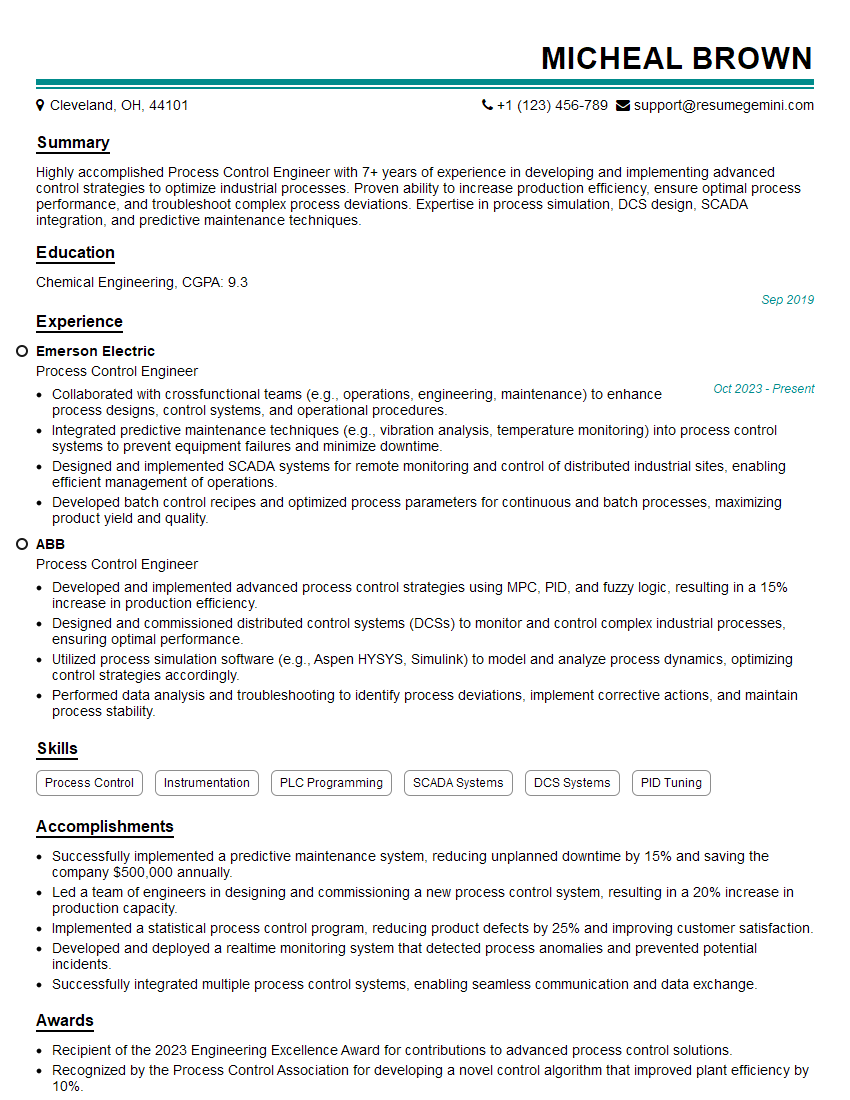
Mastering decarburization opens doors to exciting opportunities in materials science, manufacturing, and engineering. A strong understanding of this critical process significantly enhances your career prospects. To stand out, create an ATS-friendly resume that highlights your skills and experience effectively. We recommend using ResumeGemini, a trusted resource for building professional resumes. ResumeGemini provides examples of resumes tailored to Decarburization to help you craft a compelling application that showcases your expertise.

Explore more articles
Users Rating of Our Blogs
Share Your Experience
We value your feedback! Please rate our content and share your thoughts (optional).
What Readers Say About Our Blog
Very informative content, great job.
good