Are you ready to stand out in your next interview? Understanding and preparing for Bridge and Aerospace Aerodynamics interview questions is a game-changer. In this blog, we’ve compiled key questions and expert advice to help you showcase your skills with confidence and precision. Let’s get started on your journey to acing the interview.
Questions Asked in Bridge and Aerospace Aerodynamics Interview
Q 1. Explain the concept of boundary layer separation and its impact on bridge and aircraft design.
Boundary layer separation occurs when the flow in the boundary layer (the thin layer of fluid near a surface) detaches from the surface. Imagine a ball rolling down a hill – initially it sticks to the surface. But if the hill gets too steep (adverse pressure gradient), the ball loses contact. Similarly, in fluid flow, an adverse pressure gradient can cause the fluid to separate from the surface. This separation creates a wake region of recirculating flow behind the object, significantly altering the pressure distribution and resulting in increased drag and lift loss.
Impact on Bridge Design: In bridges, separation can lead to significant buffeting (oscillatory motion), potentially causing structural fatigue and failure. The design of bridge decks needs to carefully manage boundary layer separation to minimize these effects. This is often achieved through aerodynamic shaping, such as streamlining the deck or adding aerodynamic appendages to control the flow. For instance, the Tacoma Narrows Bridge collapse is partly attributed to vortex shedding and boundary layer separation.
Impact on Aircraft Design: In aircraft, boundary layer separation dramatically affects lift generation and increases drag. Stalls, a critical flight condition, are directly caused by boundary layer separation on the wing’s upper surface. Aircraft wings are designed with airfoils carefully shaped to delay or prevent separation, maintaining lift even at high angles of attack. High-lift devices, such as slats and flaps, alter the airfoil shape to control boundary layer separation and improve low-speed performance.
Q 2. Describe different turbulence models used in CFD simulations for bridge and aerospace applications.
Computational Fluid Dynamics (CFD) uses turbulence models to simulate the chaotic nature of turbulent flows, since directly resolving all scales of turbulence is computationally impractical. Several turbulence models are employed, categorized broadly into Reynolds-Averaged Navier-Stokes (RANS) and Large Eddy Simulation (LES) approaches.
- RANS models: These models solve for time-averaged flow quantities. Popular RANS models include the k-ε model (relatively simple, computationally efficient but less accurate), the k-ω SST model (a more sophisticated model that performs well in near-wall regions), and Reynolds Stress Models (RSMs, more complex but potentially more accurate for complex flows).
- LES models: LES models directly resolve the larger, energy-containing scales of turbulence while modeling the smaller scales. They provide more accuracy than RANS models, particularly for unsteady flows, but are computationally more expensive. Detached Eddy Simulation (DES) is a hybrid approach combining RANS and LES, offering a compromise between accuracy and computational cost.
Bridge applications often utilize RANS models due to their computational efficiency for large structures. Aerospace applications may utilize LES or DES for detailed simulations of high-Reynolds-number flows around complex geometries like aircraft wings, although RANS is still widely used for preliminary design stages.
Q 3. How do you account for wind gust effects in bridge aerodynamic analysis?
Wind gust effects are incorporated into bridge aerodynamic analysis through several approaches:
- Gust spectrum method: This statistical method uses a power spectral density function to represent the fluctuating nature of wind gusts. The function describes the distribution of gust energy across different frequencies. CFD simulations can then be conducted using wind inputs based on this spectrum.
- Time-history simulation: Here, a time series of wind speeds representing gusts is generated, often from measured wind data or simulations of atmospheric turbulence. The CFD simulation is then performed using this time-varying wind input, capturing the transient response of the bridge structure.
- Discrete gust method: A simplified approach where the effect of a sudden, sharp gust is analyzed. This method is often used for preliminary assessments.
The choice of method depends on the required accuracy and computational resources. Time-history simulations provide the most detailed representation of gust effects but require significantly more computational time. The gust spectrum method offers a good balance between accuracy and computational efficiency.
Q 4. Explain the concept of vortex shedding and its significance in bridge design.
Vortex shedding is the periodic detachment of vortices from a bluff body (a body with a blunt trailing edge) exposed to a flow. Imagine dropping a cylinder into a river – you’ll observe alternating vortices forming and detaching from the sides of the cylinder. This creates an oscillating force on the body, known as vortex-induced vibration.
Significance in bridge design: Vortex shedding can induce significant vibrations in bridge decks, especially slender structures like long-span suspension bridges. These vibrations can lead to fatigue and even catastrophic failure if not properly addressed. The frequency of vortex shedding is dependent on the flow velocity and the size of the structure (Strouhal number). If the shedding frequency coincides with a natural frequency of the bridge, resonance can occur, amplifying the vibrations. Therefore, bridge decks are designed to mitigate vortex shedding through various techniques, including aerodynamic shaping, installing wind fairings, and incorporating dampers to dissipate the vibrational energy.
The Tacoma Narrows Bridge collapse, while complex, highlighted the critical role of vortex shedding and aeroelastic phenomena in bridge design.
Q 5. What are the key differences between subsonic and supersonic aerodynamics?
Subsonic and supersonic aerodynamics differ fundamentally due to the effect of compressibility:
- Subsonic aerodynamics (Mach number < 0.8): In subsonic flow, the speed of the air is significantly less than the speed of sound. Compressibility effects are relatively small and can often be neglected in preliminary design. Incompressible flow assumptions (density remains constant) are often used to simplify the calculations.
- Supersonic aerodynamics (Mach number > 1): In supersonic flow, the speed of the air exceeds the speed of sound. Compressibility effects are dominant, leading to the formation of shock waves. Shock waves cause abrupt changes in pressure, temperature, and density, significantly impacting drag and lift. The design of supersonic vehicles requires careful consideration of shock wave formation and interaction to minimize drag and manage heating.
The design methodologies, governing equations, and experimental techniques differ significantly between subsonic and supersonic regimes. For example, the use of area rules is crucial in supersonic design to minimize wave drag, while it’s less critical in subsonic design.
Q 6. Describe the methods used to measure wind pressure on bridge structures.
Several methods are employed to measure wind pressure on bridge structures:
- Wind tunnel testing: Scale models of the bridge are tested in a wind tunnel to measure wind pressures at various locations. Pressure taps or pressure-sensitive paint are used to record the pressure distribution. This method is cost-effective for preliminary assessments and design optimization.
- Full-scale measurements: Pressure sensors are installed on the actual bridge structure during construction or operation to measure wind pressures under real-world conditions. This provides valuable data for validating numerical simulations and understanding the actual response of the bridge.
- Instrumentation using accelerometers and strain gauges: These sensors directly measure the bridge’s response (acceleration and strain) to wind loads, which can be used to infer the pressure distribution through appropriate modeling.
The choice of method often depends on the stage of the project, budget constraints, and the level of detail required. Wind tunnel tests are commonly used during the design phase, while full-scale measurements provide valuable operational data.
Q 7. How do you validate CFD simulation results for bridge and aerospace applications?
Validating CFD simulation results is crucial to ensure their reliability and accuracy. This involves comparing the simulation results with experimental data and applying rigorous quality control measures.
- Comparison with wind tunnel data: CFD results are compared with wind tunnel test data for the same geometry and flow conditions. This comparison focuses on key aerodynamic parameters, such as lift, drag, and pressure distribution. Discrepancies need to be investigated to understand their source, possibly related to turbulence modeling, mesh resolution, or boundary conditions.
- Comparison with full-scale measurements: If available, full-scale data from instrumented bridges are used for validation. This allows assessing the accuracy of the CFD simulations under real-world conditions.
- Mesh refinement studies: The CFD simulation is performed with different mesh resolutions to assess the impact of mesh size on the results. Convergence studies are performed to ensure the solution is independent of mesh resolution.
- Code verification: The CFD code’s accuracy and robustness are verified using established benchmarks and test cases. This ensures the code itself is functioning correctly.
A quantitative comparison using statistical measures (e.g., root-mean-square error) helps assess the level of agreement between CFD simulations and experimental data. Systematic validation builds confidence in the predictive capability of the CFD simulations for design and analysis purposes.
Q 8. Explain the concept of flutter and its prevention in bridge and aircraft design.
Flutter is a self-excited aeroelastic instability where aerodynamic forces interact with the structure’s inherent flexibility to cause oscillations that grow in amplitude, potentially leading to catastrophic failure. Imagine a leaf fluttering in the wind – that’s a simplified analogy. In bridges, it can involve the deck vibrating violently, and in aircraft, it can manifest as wing or tailplane oscillations.
Prevention in both bridge and aircraft design relies on understanding and mitigating the interaction between aerodynamic forces and structural dynamics. This involves:
- Aerodynamic Design: Shaping the structure (e.g., bridge deck, aircraft wing) to minimize aerodynamic forces that excite oscillations. This might include using fairings, streamlined shapes, or strategically placed dampers.
- Structural Design: Increasing the structural stiffness and damping to resist the excitation. Stiffer structures are less prone to flutter. Adding dampers (physical devices that absorb energy) can also be very effective.
- Active Control Systems: Implementing systems that actively sense and counteract flutter vibrations. This usually involves sensors, actuators, and a control algorithm. These systems are more common in aircraft.
- Computational Fluid Dynamics (CFD): Simulating the airflow around the structure to predict and analyze potential flutter scenarios. This allows for design optimization before physical testing.
- Wind Tunnel Testing: Conducting experiments in wind tunnels to validate computational models and verify the design’s resistance to flutter. This involves carefully controlled experiments to induce vibrations and measure the response.
For example, the Tacoma Narrows Bridge collapse was famously attributed to aeroelastic flutter. Modern bridge design incorporates extensive wind tunnel testing and sophisticated computational modeling to prevent such catastrophes. Similarly, aircraft wings undergo rigorous flutter analysis throughout their design and certification process.
Q 9. What are the common aerodynamic challenges faced in designing long-span bridges?
Designing long-span bridges presents unique aerodynamic challenges due to the increased interaction between the wind and the large exposed surfaces. Key challenges include:
- Vortex Shedding: The alternating vortex shedding from the bridge deck can induce significant vibrations, especially at certain wind speeds. This is particularly problematic for slender structures.
- Buffeting: Turbulent winds, often amplified by the terrain surrounding the bridge, can exert unpredictable forces on the structure, leading to fatigue and potential instability.
- Galloping: A self-excited oscillation where aerodynamic forces increase with the displacement of the structure, leading to ever-increasing vibrations.
- Rain-Wind Induced Vibrations: A phenomenon where the presence of rain significantly modifies the aerodynamic forces on the deck, increasing the likelihood of oscillations.
- Aeroelastic Instability: This includes flutter, as previously discussed, which can occur in long-span bridges due to the interplay of aerodynamic forces, structural flexibility, and wind characteristics.
Addressing these challenges requires sophisticated aerodynamic design, incorporating features such as streamlined deck shapes, wind barriers, and tuned mass dampers to control vibrations and ensure structural integrity. The use of computational fluid dynamics (CFD) and wind tunnel testing is critical for validating the design and mitigating these risks.
Q 10. Describe different types of wind tunnels and their applications in aerodynamics research.
Wind tunnels are essential tools for aerodynamic research, offering controlled environments to study the interaction of air and solid objects. Different types are used depending on the specific research needs:
- Low-Speed Wind Tunnels: These are used to study flows at relatively low speeds (typically up to 100 mph), useful for testing car aerodynamics, small aircraft, and some bridge designs. They often employ open-return or closed-return circuits.
- High-Speed Wind Tunnels: Designed for testing at high speeds (supersonic and hypersonic flows), these are vital for aircraft and aerospace research, particularly for designs operating at high altitudes or speeds.
- Boundary Layer Wind Tunnels: These are specifically designed to simulate atmospheric boundary layers, providing accurate representation of wind conditions close to the ground, crucial for understanding wind effects on buildings and bridges.
- Atmospheric Boundary Layer Wind Tunnels: These tunnels recreate the complex characteristics of atmospheric boundary layers, including variations in wind speed and turbulence, giving a more realistic simulation of real-world conditions.
- Water Tunnels: Water tunnels are analogous to wind tunnels, but utilize water as the working fluid. This offers advantages for studying cavitation (bubble formation in fluid) and is used for marine applications and to study some aspects of low-speed fluid dynamics.
The choice of wind tunnel depends on the application. For example, testing a large-scale bridge model might necessitate a boundary layer wind tunnel to accurately capture the effects of real-world wind profiles. Similarly, testing a supersonic aircraft would require a high-speed wind tunnel capable of simulating high-Mach flows.
Q 11. How do you model complex geometries in CFD simulations?
Modeling complex geometries in CFD simulations requires using tools that can accurately represent the intricate shapes of bridges and aircraft. This usually involves:
- CAD Models: Starting with detailed computer-aided design (CAD) models of the structure. This provides the initial geometric definition.
- Mesh Generation: The CAD model is then converted into a mesh – a collection of interconnected elements (e.g., tetrahedra, hexahedra) that approximates the geometry. This is a critical step because the accuracy of the simulation is highly dependent on the mesh quality.
- Mesh Refinement: Concentrating mesh elements in regions of high flow gradients (e.g., leading and trailing edges of an airfoil) to improve accuracy. This often involves using adaptive mesh refinement techniques that automatically adjust the mesh during the simulation.
- Structured vs. Unstructured Meshes: Choosing between structured (highly ordered, easier to generate but less flexible for complex geometries) and unstructured (more versatile, but can be more challenging to generate) meshing techniques depending on the complexity of the geometry and required accuracy.
- Mesh Smoothing: Improving the mesh quality by smoothing out jagged edges and reducing skewness of elements. This step can significantly impact the stability and accuracy of the simulation.
Specialized mesh generation software is crucial for this process. The generated mesh is then imported into the CFD solver for the simulation.
Q 12. What are the advantages and disadvantages of different meshing techniques in CFD?
Meshing techniques are crucial in CFD, and different approaches offer various trade-offs:
- Structured Meshes: Organized in a regular pattern (like a grid), they are computationally efficient but can be difficult to create for complex geometries. They tend to lead to more accurate results in regions where they are properly aligned with the flow.
- Unstructured Meshes: More flexible and adaptable to complex shapes, offering greater freedom in mesh refinement. However, they can be more computationally expensive and require more advanced algorithms to solve the equations.
- Hybrid Meshes: Combining structured and unstructured meshes to leverage the advantages of both. This is often used for complex geometries with both smooth and intricate regions.
- Adaptive Mesh Refinement (AMR): Automatically refining the mesh in areas with significant flow variations, enhancing accuracy without increasing the overall computational cost. This approach improves resolution where most needed.
Advantages of Structured Meshes: Computational efficiency, easier to generate for simple shapes. Disadvantages: Limited flexibility for complex geometries, difficulties in resolving fine features.
Advantages of Unstructured Meshes: Flexibility for complex shapes, easy mesh refinement in critical regions. Disadvantages: Higher computational cost, more complex mesh generation process.
The choice of meshing technique involves balancing accuracy, computational cost, and geometric complexity. The best approach is often determined by the specific simulation requirements and available computational resources.
Q 13. Explain the concept of Reynolds number and its significance in aerodynamics.
The Reynolds number (Re) is a dimensionless quantity that represents the ratio of inertial forces to viscous forces within a fluid. It is defined as:
Re = (ρVL)/μ
where:
ρis the fluid densityVis the flow velocityLis a characteristic length scale (e.g., the chord length of an airfoil, the diameter of a pipe)μis the dynamic viscosity of the fluid
The Reynolds number is crucial in aerodynamics because it dictates the flow regime:
- Low Re (laminar flow): Viscous forces dominate, leading to smooth, layered flow. This is typically seen at low velocities or with high viscosity fluids.
- High Re (turbulent flow): Inertial forces dominate, resulting in chaotic, irregular flow with significant mixing. This is common at high velocities or with low viscosity fluids.
The transition from laminar to turbulent flow significantly affects aerodynamic forces and drag. Understanding the Reynolds number is essential for predicting the flow behavior around an object and designing for optimal performance. For instance, designing an aircraft wing at a high Reynolds number requires considering turbulence effects on drag and lift. In contrast, designing a micro-air-vehicle (MAV) at a low Reynolds number requires understanding how laminar flow will affect its aerodynamics.
Q 14. How do you analyze the aerodynamic stability of a bridge deck section?
Analyzing the aerodynamic stability of a bridge deck section involves a combination of experimental and computational methods:
- Wind Tunnel Testing: Using scaled models of the bridge deck section in a wind tunnel to measure aerodynamic forces and moments at various angles of attack and wind speeds. This provides crucial data to assess static and dynamic stability.
- Computational Fluid Dynamics (CFD): Simulating the airflow around the deck section to obtain detailed information on pressure distribution, shear stresses, and forces. CFD can complement wind tunnel tests by providing insights into the flow field and helping understand the mechanisms of instability.
- Flutter Analysis: Analyzing the aeroelastic behavior of the deck section to determine its susceptibility to flutter. This typically involves solving coupled structural and aerodynamic equations to find the natural frequencies and damping ratios of the system.
- Static Aerodynamic Stability: Assessing the static stability by examining the moment coefficients (pitching moment) as a function of the angle of attack. A stable section will exhibit a restoring moment that tends to return the section to its equilibrium position.
- Dynamic Aerodynamic Stability: Evaluating dynamic stability by analyzing the response of the section to gusts and other disturbances. This often involves examining damping ratios and assessing the decay of oscillations.
The results of these analyses are then used to assess the aerodynamic stability of the deck section and inform design modifications to improve its performance and ensure safety. For example, a design that exhibits insufficient damping or a tendency towards flutter would likely require modifications to the deck geometry or the addition of aerodynamic control devices.
Q 15. Describe the role of computational fluid dynamics (CFD) in modern bridge design.
Computational Fluid Dynamics (CFD) is a powerful tool revolutionizing modern bridge design. It allows engineers to simulate the complex airflow around a bridge structure, predicting wind loads and aerodynamic performance with far greater accuracy than traditional methods. Instead of relying solely on simplified wind tunnel tests or empirical formulas, CFD uses numerical methods to solve the Navier-Stokes equations, which govern fluid motion. This provides a detailed, three-dimensional representation of the airflow, revealing pressure distributions, shear stresses, and other crucial parameters.
For example, CFD can help optimize the shape of a bridge deck to minimize vortex shedding – a phenomenon that can induce significant vibrations and even structural failure. By simulating various designs and analyzing the resulting flow patterns, engineers can select the most aerodynamically efficient option, ensuring bridge stability and longevity. It’s also invaluable in assessing the impact of wind on pedestrian walkways and other bridge components.
In essence, CFD shifts bridge design from a largely empirical process to a more precise, data-driven approach, leading to safer, more efficient, and cost-effective structures.
Career Expert Tips:
- Ace those interviews! Prepare effectively by reviewing the Top 50 Most Common Interview Questions on ResumeGemini.
- Navigate your job search with confidence! Explore a wide range of Career Tips on ResumeGemini. Learn about common challenges and recommendations to overcome them.
- Craft the perfect resume! Master the Art of Resume Writing with ResumeGemini’s guide. Showcase your unique qualifications and achievements effectively.
- Don’t miss out on holiday savings! Build your dream resume with ResumeGemini’s ATS optimized templates.
Q 16. What are the key considerations for aerodynamic design of aircraft wings?
Aerodynamic design of aircraft wings is a multifaceted challenge focused on maximizing lift and minimizing drag. Key considerations include:
- Airfoil Shape: The cross-sectional shape of the wing is crucial. A well-designed airfoil generates sufficient lift at low speeds while minimizing drag. Camber (curvature) and thickness distribution are critical parameters.
- Aspect Ratio: The ratio of the wingspan to the mean chord (average width) affects lift and drag. High aspect ratio wings (long and slender) generally have lower induced drag but can be structurally less efficient.
- Sweep Angle: The angle at which the wing trailing edge is swept back influences high-speed performance. Sweep reduces the effective airspeed at the wing’s leading edge, delaying the onset of compressibility effects at supersonic speeds.
- High-Lift Devices: Flaps and slats are deployed during takeoff and landing to increase lift at lower speeds. These devices alter the airfoil shape to maximize lift generation.
- Wingtip Design: Wingtips are designed to minimize wingtip vortices, which are swirling air masses at the wingtips that create induced drag. Winglets, for example, are small vertical extensions at the wingtips that reduce this drag.
- Reynolds Number: This dimensionless number represents the ratio of inertial forces to viscous forces and is crucial in determining the flow regime (laminar or turbulent) over the wing, impacting drag.
The interplay of these factors determines the overall aerodynamic efficiency of the wing and its performance across various flight conditions.
Q 17. Explain the concept of lift and drag in relation to both bridge and aerospace applications.
Lift and drag are fundamental aerodynamic forces acting on both bridges and aircraft. Lift is the force acting perpendicular to the direction of airflow, while drag opposes the direction of airflow.
In Aerospace: Lift enables aircraft to fly by generating a force that counteracts gravity. Drag reduces aircraft speed and efficiency. Airfoils are designed to maximize lift and minimize drag. Consider a plane taking off; the wings generate significant lift due to the shape and angle of attack, allowing the plane to overcome gravity. The engine must overcome drag to maintain speed.
In Bridge Engineering: Wind generates both lift and drag forces on a bridge. Lift can cause uplift, potentially destabilizing the structure, while drag imposes stresses on the bridge deck and supporting piers. For example, a tall, slender bridge might experience significant lift in high winds, requiring robust design to withstand such forces. The drag force determines the overall wind load on the bridge.
Understanding these forces is critical in both fields for ensuring structural stability and efficient performance.
Q 18. Describe different methods for reducing drag on aircraft and bridges.
Reducing drag is a major goal in both aerospace and bridge engineering. Several methods are employed:
- Streamlining: Shaping the body to minimize flow separation and turbulence. This is fundamental in aircraft design (e.g., fuselage shape) and is increasingly considered in bridge design (e.g., streamlined bridge decks).
- Surface Roughness Control: Minimizing surface roughness reduces skin friction drag. Aircraft often use smooth surfaces and specialized coatings, while bridges may benefit from careful selection of surface materials.
- Winglets (Aircraft): As mentioned earlier, winglets reduce induced drag by minimizing wingtip vortices.
- Aerodynamic Fairings (Bridges and Aircraft): These smooth coverings over joints and appendages reduce turbulence and drag.
- Active Flow Control (Advanced): Techniques like boundary layer suction or blowing can control airflow to reduce drag, though more commonly used in specialized aerospace applications.
- Shape Optimization (CFD): Computational fluid dynamics enables the optimization of shapes to minimize drag, guiding the design of both aircraft and bridge components.
The specific methods used depend on the application, constraints, and desired performance levels.
Q 19. How do you account for the effect of temperature on aerodynamic performance?
Temperature significantly impacts aerodynamic performance. As temperature increases, air density decreases. This reduction in density directly affects both lift and drag:
- Lift Reduction: Lower air density means less air to interact with the wing or bridge deck, reducing the generated lift. Aircraft require longer runways in hot conditions because of this effect.
- Drag Reduction: While lift decreases, drag also tends to decrease at higher temperatures due to the lower density. However, this effect is typically less pronounced than the lift reduction.
- Material Properties: Temperature also affects the material properties of the structure itself. High temperatures can weaken materials, reducing their ability to withstand aerodynamic loads. This is a crucial consideration in both aerospace and bridge design.
Aerodynamic models must account for temperature variations through the use of appropriate equations of state for air and by incorporating thermal effects on material properties. Engineers typically utilize atmospheric models and temperature profiles specific to the location and operating conditions.
Q 20. What are the different types of wind loads considered in bridge design?
Bridge design accounts for various types of wind loads, categorized by their characteristics and effects:
- Mean Wind Load: The average wind force acting on the bridge over a longer period. This is determined based on long-term wind speed data for the specific location.
- Gust Wind Load: Short-duration increases in wind speed, often associated with turbulent flow. These gusts can be far more significant than the mean wind, causing dynamic responses and vibrations.
- Vortex Shedding: The periodic shedding of vortices (swirling air masses) from bluff bodies like bridge decks. This can induce significant oscillations and resonance, potentially leading to structural fatigue.
- Buffeting: Turbulence in the wind flow causing irregular fluctuations in wind pressure. Buffeting is particularly important for slender structures and can lead to unpredictable vibrations.
- Turbulence: Random variations in wind speed and direction. The intensity of turbulence is influenced by terrain and atmospheric conditions.
Design codes and standards provide guidance on determining these wind loads, often using statistical methods and wind tunnel testing to estimate their magnitudes and frequency. The combination of these loads must be considered to ensure bridge stability.
Q 21. Explain the concept of aeroelasticity and its impact on bridge design.
Aeroelasticity is the study of the interaction between aerodynamic forces and structural deformations. In bridge design, it’s critical because wind can cause a bridge to deform, altering its aerodynamic characteristics, which in turn modifies the wind loads on the structure. This interaction can lead to complex phenomena such as:
- Flutter: A self-excited oscillation where aerodynamic forces couple with structural flexibility to cause unstable vibrations. Flutter can lead to catastrophic structural failure if not properly addressed.
- Galloping: A type of aeroelastic instability where a bridge deck oscillates in a direction perpendicular to the wind. This is often associated with non-symmetrical bridge deck shapes.
- Vortex-Induced Vibrations: Vibrations induced by periodic vortex shedding from bridge components. The frequency of vortex shedding can coincide with the natural frequency of the bridge, leading to resonance.
Bridge designers use aeroelastic analysis techniques, including wind tunnel testing and computational methods, to predict the aeroelastic behavior and ensure the bridge is stable under various wind conditions. Design modifications, such as aerodynamic appendages or tuned mass dampers, can be incorporated to mitigate aeroelastic effects and enhance structural stability.
Q 22. How do you use experimental data to validate theoretical aerodynamic models?
Validating theoretical aerodynamic models with experimental data is crucial for ensuring their accuracy and reliability. This process involves comparing the predictions of the model with measurements obtained from wind tunnel tests or flight tests. We typically use a structured approach:
- Define Key Metrics: First, we identify the key aerodynamic parameters we want to validate (e.g., lift coefficient, drag coefficient, pitching moment coefficient).
- Conduct Experiments: Next, we conduct experiments under controlled conditions, meticulously documenting all relevant parameters. For instance, in a wind tunnel test, we’ll carefully control the airflow velocity, angle of attack, and model Reynolds number.
- Model Prediction: We then use our theoretical model (e.g., computational fluid dynamics (CFD) simulation) to predict these same aerodynamic parameters under identical conditions to the experiment.
- Comparison and Analysis: Finally, we compare the experimental data with the model’s predictions. We use statistical methods (e.g., regression analysis) to quantify the agreement or disagreement. Discrepancies may indicate areas where the model needs refinement or calibration. For example, we might need to adjust turbulence modelling parameters in a CFD simulation if the predicted drag is significantly higher than the experimental measurements.
- Iterative Refinement: The comparison phase often leads to an iterative process of model refinement. Based on the discrepancies identified, we adjust the model parameters, potentially refine the mesh in CFD, or incorporate more sophisticated physics (e.g., considering flow separation effects) before repeating the comparison process. This iterative approach allows for continuous improvement and validation of the aerodynamic model.
For instance, in the design of an aircraft wing, we might compare the predicted lift and drag coefficients from a computational model with wind tunnel measurements. Any significant discrepancies would indicate potential problems with the wing design or inaccuracies in the computational model.
Q 23. Describe the process of designing a wind tunnel test for a bridge model.
Designing a wind tunnel test for a bridge model requires careful consideration of various factors to ensure the accuracy and relevance of the results. The process generally involves these steps:
- Scale Selection: First, we determine the appropriate scale of the bridge model. This balance between detail and test feasibility depends on the wind tunnel’s size and capabilities.
- Model Fabrication: We then build a highly accurate scaled model of the bridge, usually using materials that mimic the aerodynamic properties of the actual bridge materials. For example, a smooth surface is important for minimizing unintended effects.
- Instrumentation: This is a critical step. We carefully position instrumentation to measure the forces and moments acting on the model. This typically involves load cells and pressure taps to capture the aerodynamic loads across the structure. Data acquisition systems are used to record this data.
- Wind Tunnel Selection: The appropriate wind tunnel needs to be chosen based on the Reynolds number and the turbulence intensity required to simulate the actual atmospheric conditions the bridge will experience. Boundary layer wind tunnels are often preferred for bridge testing.
- Test Matrix Definition: We define a test matrix specifying the range of wind speeds, angles of attack (representing different wind directions), and turbulence intensities. This enables us to capture the bridge’s response under various conditions.
- Data Acquisition and Processing: During testing, we meticulously record all relevant data, including wind speed, forces, moments, and pressures. This data is then processed and analyzed to extract meaningful information about the bridge’s aerodynamic performance.
- Uncertainty Analysis: We conduct an uncertainty analysis to estimate the accuracy of the experimental results, considering factors like model inaccuracies, instrumentation errors, and wind tunnel limitations.
For example, when testing a suspension bridge model, we might focus on measuring the aerodynamic forces on the deck and cables at various wind speeds and angles, to assess the bridge’s stability and susceptibility to wind-induced vibrations.
Q 24. What software packages are you familiar with for performing aerodynamic simulations?
I’m proficient in several software packages for aerodynamic simulations. My experience includes:
- ANSYS Fluent: A widely used Computational Fluid Dynamics (CFD) software package known for its robustness and capabilities in simulating complex flow phenomena, including turbulence modeling and heat transfer. I use it extensively for both steady-state and transient simulations of aircraft and bridge structures.
- OpenFOAM: An open-source CFD toolbox offering great flexibility and customization. Its ability to handle complex geometries and meshing techniques is particularly useful for simulating challenging aerodynamic problems in both aerospace and bridge engineering.
- Star-CCM+: Another powerful commercial CFD software, known for its advanced meshing capabilities and user-friendly interface. It’s particularly well-suited for simulating multiphase flows and large-scale simulations.
- MATLAB/Simulink: I use MATLAB and Simulink extensively for post-processing data, developing custom analysis tools, and building control systems related to aerodynamic phenomena. For example, I use it for signal processing, frequency analysis of wind tunnel data, and development of control algorithms for wind-induced vibrations in bridges.
My expertise extends to pre-processing tools like ICEM CFD for mesh generation and post-processing packages like Tecplot for visualization and data analysis.
Q 25. Explain the concept of dynamic similarity and its application in wind tunnel testing.
Dynamic similarity is a fundamental concept in wind tunnel testing. It ensures that the flow around the model in the wind tunnel accurately represents the flow around the full-scale structure in the real world. It’s achieved by matching dimensionless parameters that govern the flow behavior. The most important parameter is the Reynolds number (Re):
Re = (ρVL)/μ
Where:
- ρ is the fluid density
- V is the flow velocity
- L is a characteristic length (e.g., bridge deck width)
- μ is the dynamic viscosity
Matching the Reynolds number between the model and prototype is crucial because it ensures that the viscous effects, which play a significant role in determining drag and lift, are similar. Other important parameters include the Mach number (for compressible flows) and the Strouhal number (for unsteady flows). If these dimensionless parameters match between the model and the prototype, then we can extrapolate the results from the wind tunnel to the full-scale structure with confidence. However, perfect similarity is often difficult to achieve, so we prioritize matching the most relevant dimensionless numbers for the specific problem.
For example, in bridge aerodynamics, achieving full dynamic similarity might not be feasible due to scale effects. Therefore, we might focus on matching the Reynolds number within a reasonable range, accepting minor differences in other parameters. Careful consideration of the limitations imposed by incomplete dynamic similarity is critical when interpreting the test results.
Q 26. How do you interpret the results from a wind tunnel test?
Interpreting wind tunnel test results involves a systematic approach that combines engineering judgment with data analysis:
- Data Validation: First, we rigorously check the data for any anomalies or errors. This includes reviewing the raw data, identifying outliers, and evaluating the quality of the measurements.
- Force and Moment Coefficients: We typically calculate the aerodynamic coefficients (lift, drag, moment coefficients) from the measured forces and moments. These coefficients are non-dimensional quantities that are independent of scale and allow for comparisons across different models and wind speeds.
- Pressure Distribution: We analyze the pressure distribution over the model surface to identify regions of high and low pressure. These pressure variations provide insights into flow separation, vortex formation, and other flow phenomena. This information can help understand where the peak loads occur.
- Frequency Analysis: For unsteady flows, we perform frequency analysis of the measured data to identify the dominant frequencies of oscillation. This helps understand potential resonance or flutter phenomena, which are crucial for bridge stability.
- Visualization: Visualization tools, such as streamline plots and contour plots, are often used to illustrate the flow field and understand the complex aerodynamic behavior. These tools help identify areas of flow separation, vortex shedding, or other significant flow features.
- Correlation with Theoretical Models: Finally, we compare the experimental data with predictions from theoretical models (e.g., CFD simulations) to validate the models and identify areas for improvement.
The interpretation is not simply about numbers; it involves understanding the physical mechanisms behind the observed aerodynamic behavior. For example, a high drag coefficient might indicate the need for aerodynamic modifications to the bridge design, potentially through the addition of fairings or other aerodynamic control elements.
Q 27. Explain the importance of wind load analysis in ensuring structural integrity of bridges.
Wind load analysis is crucial for ensuring the structural integrity of bridges because bridges are inherently exposed to significant wind forces, particularly tall and slender structures. These forces can induce significant stresses, vibrations, and even catastrophic failures if not adequately considered in the design process. Wind load analysis involves several steps:
- Wind Climate Data: Gathering historical wind data specific to the bridge’s location is the first step, including wind speeds, directions, and turbulence characteristics. This data usually comes from meteorological sources.
- Aerodynamic Analysis: This uses wind tunnel testing or CFD simulations to determine the aerodynamic forces and moments acting on the bridge structure under different wind conditions. This determines how the wind will interact with the bridge’s shape.
- Structural Analysis: Once the aerodynamic forces are determined, structural analysis techniques are used to calculate the stresses and deflections within the bridge under these loads. This ensures the bridge can withstand the loads.
- Fatigue Analysis: Bridges are subjected to repeated wind loads over their lifespan. Fatigue analysis helps assess if the repetitive stresses will cause material failure over time. This is particularly important for areas where wind-induced vibrations occur.
- Design Refinement: If the analysis reveals that the design is insufficient, modifications are made to either the aerodynamic design (e.g., adding aerodynamic appendages to reduce wind forces) or the structural design (e.g., increasing the strength of critical members) to meet the required safety standards.
Ignoring wind load analysis can lead to catastrophic bridge failures, such as the Tacoma Narrows Bridge collapse. Proper analysis is therefore paramount to the safety and longevity of bridge structures.
Q 28. Describe the challenges of simulating unsteady aerodynamic phenomena using CFD.
Simulating unsteady aerodynamic phenomena using CFD presents several challenges:
- Computational Cost: Resolving unsteady flows, especially those with complex vortex shedding or flow separation, requires extremely fine meshes and small time steps, significantly increasing computational costs and potentially exceeding the capabilities of available computational resources.
- Turbulence Modeling: Accurately capturing turbulence effects in unsteady simulations is essential but challenging. The choice of turbulence model significantly affects the results, and there’s often a trade-off between accuracy and computational cost. Large Eddy Simulation (LES) is often preferred for accuracy but is computationally very demanding.
- Mesh Quality: The mesh quality is critical for accurate unsteady simulations. Poor mesh quality can lead to numerical instabilities and inaccurate results. Dynamic meshing techniques may be required to handle large deformations or moving parts.
- Boundary Conditions: Defining appropriate inflow and outflow boundary conditions for unsteady simulations can be complex. Inaccurate boundary conditions can significantly influence the results. Careful consideration of the inflow turbulence characteristics is needed.
- Validation: Validating unsteady CFD simulations is challenging because obtaining reliable experimental data for comparison can be difficult and expensive. Advanced techniques like Particle Image Velocimetry (PIV) and laser Doppler anemometry are needed for accurate experimental data.
For example, simulating the vortex shedding behind a bridge pier in a turbulent flow requires advanced turbulence modeling and fine mesh resolution to capture the unsteady fluctuations accurately. The computational time required can be considerable, and careful interpretation of results is needed to identify and quantify the impact of these unsteady phenomena on the bridge’s structural integrity.
Key Topics to Learn for Bridge and Aerospace Aerodynamics Interview
- Fundamental Aerodynamic Principles: Understanding lift, drag, pressure distribution, and their application in both bridge and aerospace contexts. Consider the differences in Reynolds number and flow regimes between the two.
- Computational Fluid Dynamics (CFD): Familiarize yourself with CFD techniques and their application in analyzing airflow around bridge structures and aircraft. Be prepared to discuss meshing strategies, solver choices, and validation techniques.
- Wind Engineering for Bridges: Explore the impact of wind loads on bridge design, including vortex shedding, buffeting, and galloping. Understand relevant codes and standards for bridge aerodynamics.
- Aerodynamic Design of Aircraft: Study the principles of airfoil design, wing design, and high-lift devices. Understand the concepts of drag reduction and efficient lift generation.
- Aeroelasticity: Grasp the interaction between aerodynamic forces and structural flexibility in both bridges and aircraft. Understand flutter analysis and its importance in design.
- Experimental Techniques: Be familiar with wind tunnel testing methodologies, data acquisition, and analysis for both bridge and aircraft applications. This includes understanding the limitations and advantages of different testing techniques.
- Turbulence Modeling: Understand different turbulence models and their applicability in simulating complex flows relevant to bridge and aerospace aerodynamics.
- Problem-solving and Analytical Skills: Practice solving aerodynamic problems using analytical methods and demonstrate your ability to apply theoretical knowledge to real-world scenarios.
Next Steps
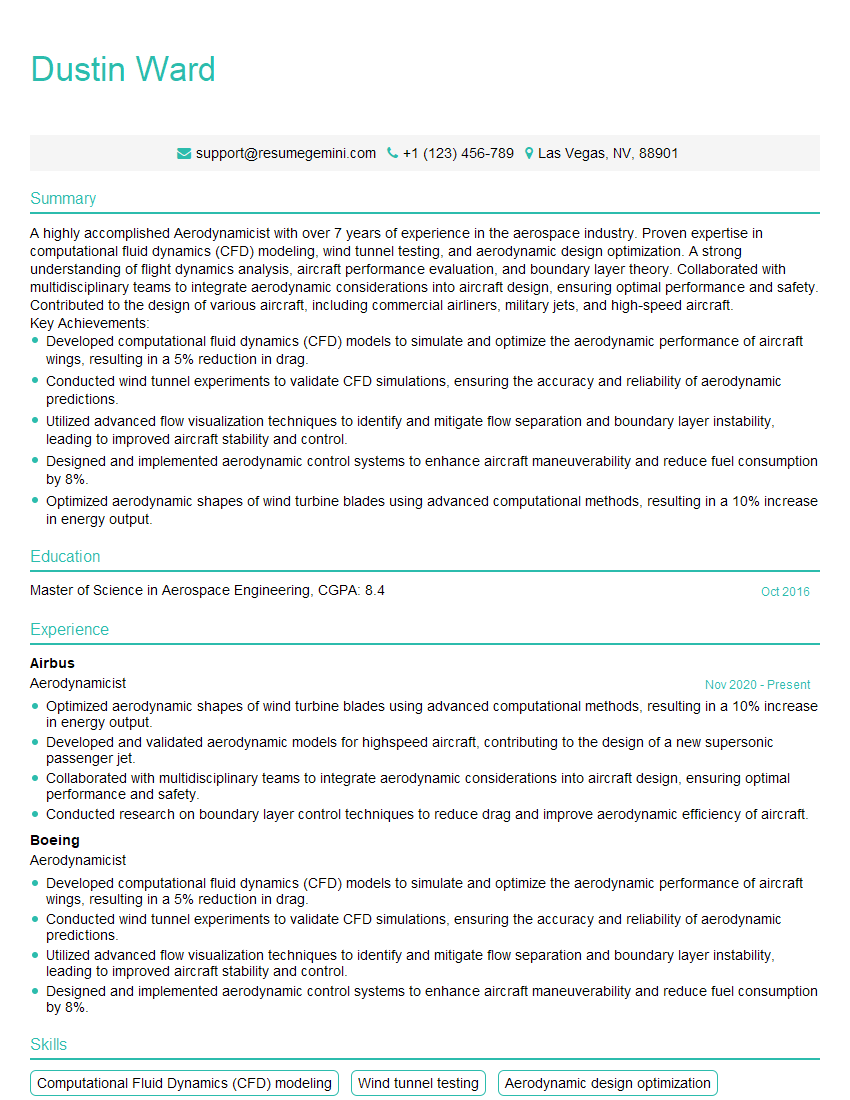
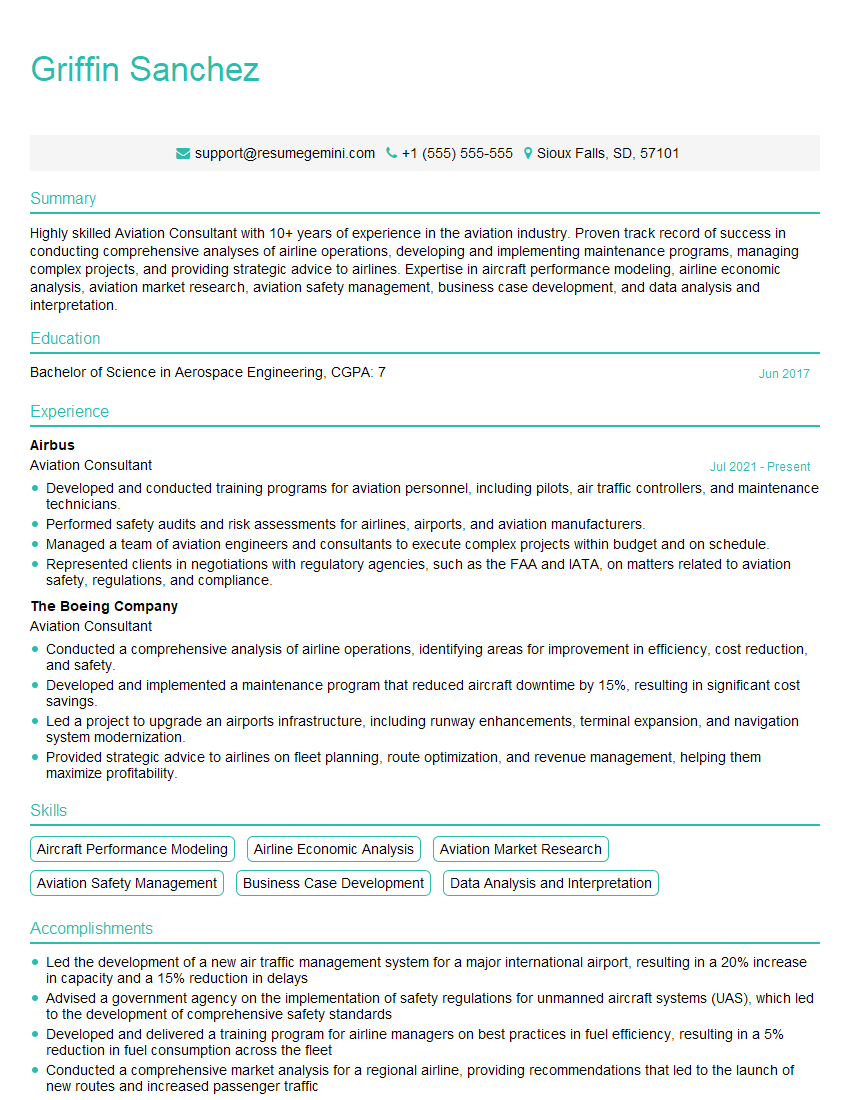
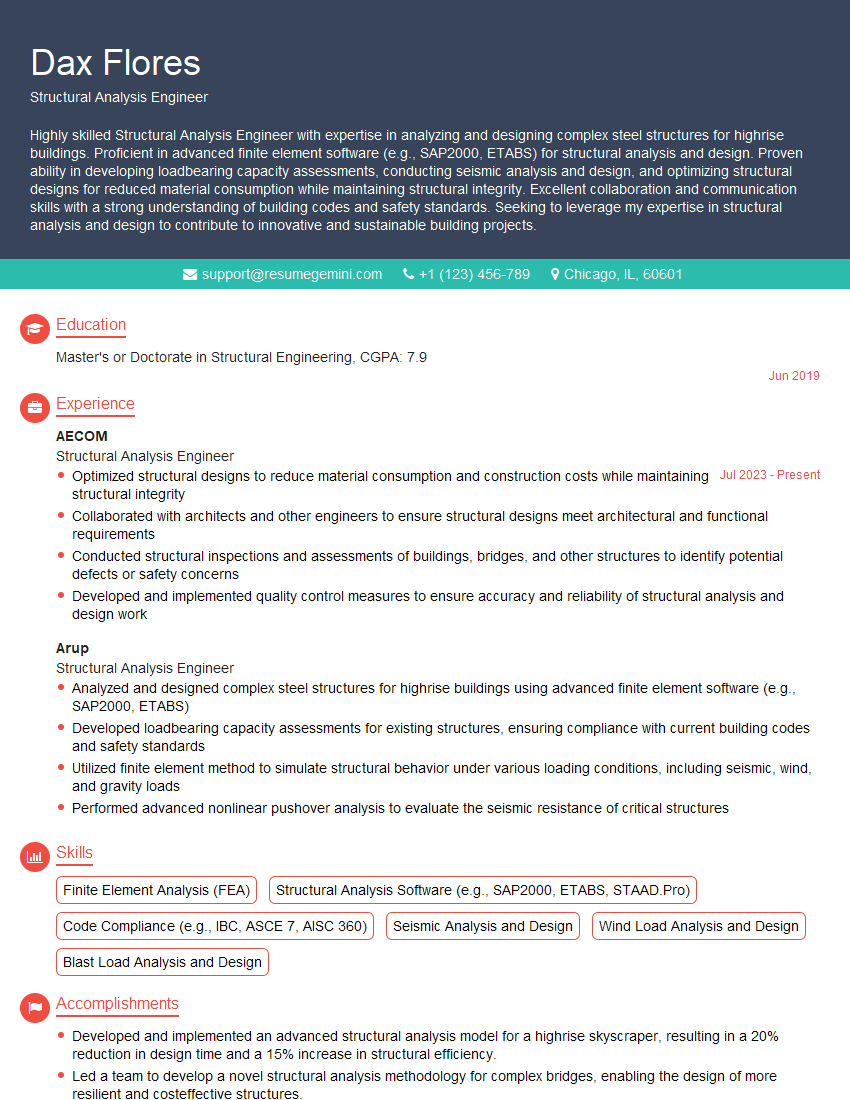
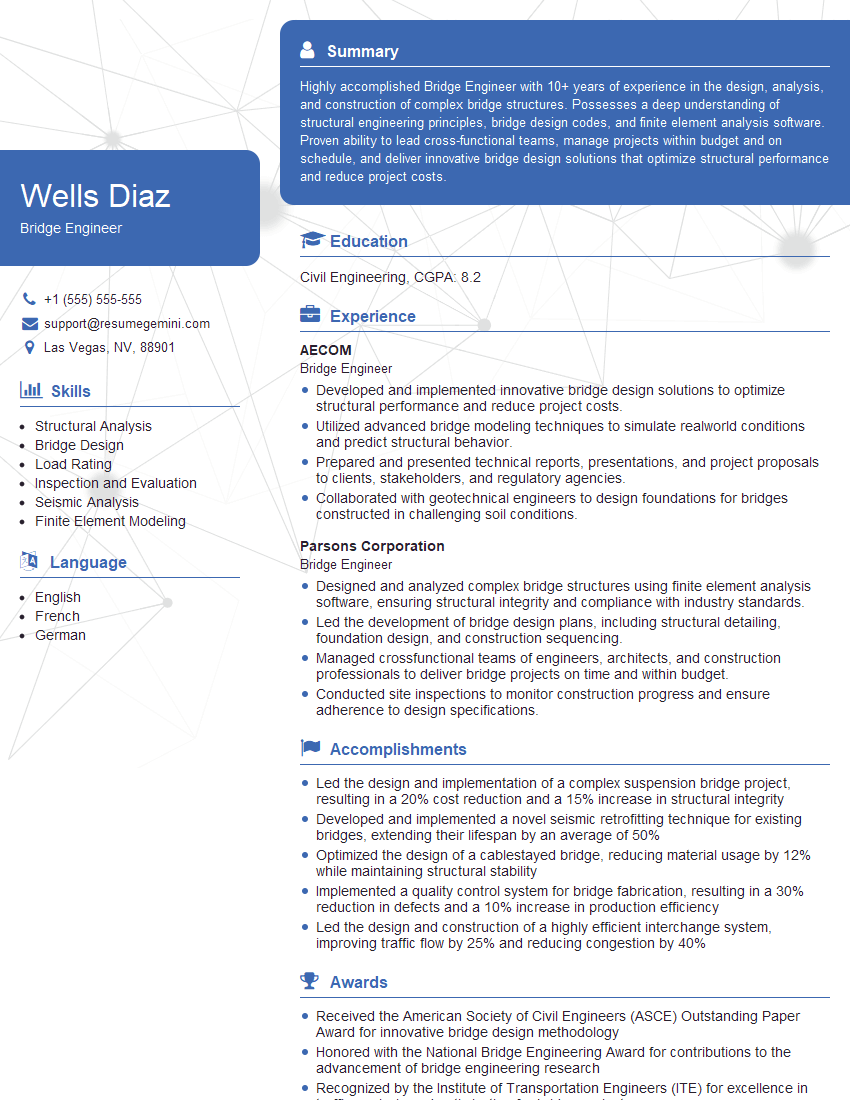
Mastering Bridge and Aerospace Aerodynamics is crucial for career advancement in these high-demand fields. A strong understanding of these principles will significantly enhance your problem-solving abilities and open doors to exciting opportunities. To maximize your job prospects, crafting an ATS-friendly resume is essential. ResumeGemini is a trusted resource that can help you build a professional and impactful resume tailored to your skills and experience. We offer examples of resumes specifically tailored to Bridge and Aerospace Aerodynamics to guide you through the process. Invest time in building a compelling resume—it’s your first impression on potential employers.


Explore more articles
Users Rating of Our Blogs
Share Your Experience
We value your feedback! Please rate our content and share your thoughts (optional).
What Readers Say About Our Blog
Very informative content, great job.
good