Unlock your full potential by mastering the most common Crating and Packaging interview questions. This blog offers a deep dive into the critical topics, ensuring you’re not only prepared to answer but to excel. With these insights, you’ll approach your interview with clarity and confidence.
Questions Asked in Crating and Packaging Interview
Q 1. Explain the difference between cushioning and bracing in packaging.
Cushioning and bracing are both crucial aspects of protective packaging, but they serve different purposes. Think of it like this: cushioning protects the product from shock and vibration, while bracing keeps the product from shifting and impacting other parts of the package during transit.
Cushioning materials, such as foam, bubble wrap, or air pillows, absorb impact energy, reducing the force transferred to the product. They’re like shock absorbers for your goods. For example, a delicate glass vase would need generous cushioning to prevent breakage during shipping.
Bracing, on the other hand, uses materials like corrugated cardboard, wood, or specialized dunnage to immobilize the product within the packaging. It prevents movement, which is key for preventing damage from impacts or jostling. A large appliance might need bracing to ensure it doesn’t shift and collide with the crate walls during transportation.
In many cases, both cushioning and bracing are necessary for optimal protection. The exact combination and amount will depend on factors like the product’s fragility, shipping distance, and handling conditions.
Q 2. What are the common types of packaging materials and their applications?
The packaging industry offers a wide array of materials, each suited for specific applications. Selection depends on factors like product fragility, environmental considerations, and cost.
- Corrugated Cardboard: The workhorse of packaging, offering good protection against minor impacts and being readily recyclable. It’s used for boxes of various sizes and shapes for countless products.
- Wood: Excellent for heavy items and provides significant protection. Crates made from wood are ideal for industrial goods or large, heavy equipment that needs robust protection.
- Expanded Polystyrene (EPS) Foam: Lightweight and offers good cushioning. Often used for electronics and fragile items because of its impact-absorbing qualities. However, its environmental impact is a growing concern.
- Ethylene-vinyl acetate (EVA) Foam: A more resilient and versatile foam than EPS, often used in custom-fit inserts for delicate items. It’s also a good option for temperature-sensitive products.
- Bubble Wrap: A popular cushioning material for lighter items. Its air pockets absorb shocks and are easy to use, although it’s less environmentally friendly compared to some alternatives.
- Air Pillows: Inflatable cushions that conform to the product’s shape, providing excellent cushioning and minimizing wasted space. They are often used in void fill applications.
- Stretch Film/Shrink Wrap: Used to bundle products together or secure them to pallets. It’s effective for protecting against dust and moisture, providing a neat and secure package.
The choice of material depends entirely on the product being packaged and the specific demands of the transport process.
Q 3. How do you determine the appropriate size and type of crate for a given product?
Determining the right crate size and type involves a careful assessment of several factors:
- Product Dimensions and Weight: The crate must be large enough to accommodate the product comfortably with adequate space for cushioning and bracing. The material strength must be sufficient to bear the weight.
- Fragility of the Product: Fragile items require more robust crates and more extensive cushioning and bracing. More protection implies a stronger, potentially larger crate.
- Shipping Conditions: The mode of transport (sea, air, truck) affects the crate’s design. Air transport might necessitate lighter crates, whereas sea freight needs weather-resistance.
- Handling Conditions: The number of times the package will be handled and the potential for rough handling will influence the necessary sturdiness of the crate. More handling typically means a more robust design.
- Environmental Factors: Exposure to moisture or extreme temperatures will require using materials and crate designs that offer better protection against these elements.
Often, a combination of factors dictate the final crate size. A step-by-step approach, starting with measuring the product and considering all the above factors, is crucial. Software tools and industry standards can assist in calculations and design selection.
Q 4. Describe your experience with different types of packaging closures (e.g., straps, tape, shrink wrap).
My experience encompasses a wide range of packaging closures, each with its own strengths and weaknesses. I’ve used:
- Straps (Plastic or Metal): These provide excellent tensile strength for securing large or heavy items to pallets. Metal straps offer superior strength but can be more challenging to apply and remove. Plastic straps are easier to handle but offer less strength. I’ve seen their effectiveness in securing heavy machinery on pallets.
- Adhesive Tape (Paper, Filament, etc.): Versatile and widely used for sealing boxes and cartons. The choice depends on the weight, content, and required strength of the seal. Heavy-duty filament tape is crucial for heavier packages, offering greater tensile strength than paper tape.
- Shrink Wrap: Ideal for bundling multiple items together or for providing a moisture barrier. It’s especially effective when combined with other closures for enhanced security and protection. I’ve used it extensively for protecting bundles of smaller items or creating palletized shipments.
Selection depends on factors like the product’s weight, fragility, and the need for tamper-evidence. The proper application is key to ensuring the effectiveness of the chosen closure.
Q 5. What are the considerations for packaging fragile items?
Packaging fragile items requires meticulous attention to detail and the use of appropriate materials and techniques. Key considerations include:
- Maximum Protection: Using abundant cushioning material (e.g., foam, bubble wrap, air pillows) is crucial. The cushioning should surround the item completely, absorbing shocks and vibrations.
- Immobilization: Bracing materials should keep the item from moving within the package. Custom-fit inserts are invaluable in preventing shifting.
- Void Fill: Filling any empty space within the packaging with void fill material prevents shifting and reduces the chance of damage from impacts. Loose fill materials such as peanuts or crumpled paper are often used, but many more sustainable alternatives now exist.
- Outer Packaging: The outer packaging (e.g., box, crate) should be strong enough to withstand the rigors of shipping. It should also have clear and prominent “fragile” handling instructions.
- Specialized Packaging: For extremely fragile items, specialized packaging such as custom-molded foam or vacuum-sealed packaging might be necessary.
A layered approach – multiple layers of cushioning and protection – often provides the best results for particularly sensitive items.
Q 6. How do you ensure compliance with industry regulations (e.g., IATA, DOT) for hazardous materials?
Packaging hazardous materials requires strict adherence to regulations set by organizations like the International Air Transport Association (IATA) and the Department of Transportation (DOT). Compliance is paramount to ensure safety and prevent accidents.
This involves:
- Proper Classification: Accurately classifying the hazardous material according to its properties (e.g., flammability, toxicity) is the first crucial step. Misclassification can lead to serious consequences.
- Appropriate Packaging: Using UN-certified packaging specifically designed for the hazard class of the material is mandatory. These packages have undergone rigorous testing to ensure they meet safety standards.
- Labeling and Marking: Clear and accurate labeling is essential, including hazard symbols, UN numbers, and other required information. The labels should be durable and clearly visible.
- Shipping Documents: Accurate and complete shipping papers (e.g., shipping manifests, declarations) must accompany the shipment. This documentation provides essential information to handlers throughout the transport process.
- Training: Personnel involved in handling hazardous materials must be adequately trained on proper packaging, labeling, and handling procedures.
Non-compliance can result in hefty fines, legal repercussions, and potentially serious safety incidents. Thorough understanding and adherence to regulations are essential.
Q 7. What are the key factors to consider when designing cost-effective packaging?
Designing cost-effective packaging requires a balanced approach that prioritizes protection without unnecessary expense. Key considerations include:
- Material Selection: Choosing cost-effective materials without compromising protection is crucial. Recycled materials can often be a cost-effective and environmentally responsible option.
- Design Optimization: Minimizing material usage through efficient design reduces costs. Custom-fit inserts can improve protection while using less overall material than generic padding.
- Standardization: Using standardized packaging sizes simplifies production and inventory management, reducing costs. This also often allows for bulk purchasing discounts on materials.
- Automation: Automating packaging processes, where possible, increases efficiency and reduces labor costs. This can involve machinery for applying tape, filling boxes, or palletizing finished packages.
- Supplier Relationships: Building strong relationships with reliable suppliers can lead to better pricing and access to innovative, cost-effective materials.
The ideal balance requires careful analysis. While using cheaper materials might seem attractive initially, it could lead to higher costs due to increased damage or claims.
Q 8. Explain your experience with different palletizing techniques.
Palletizing is the process of arranging products on a pallet for efficient storage, handling, and transportation. My experience encompasses various techniques, optimized for different product types and shipping needs.
- Standard Palletizing: This involves stacking products in a straightforward manner, often using layers of corrugated cardboard for stability. This is suitable for relatively robust products. For example, I’ve successfully implemented this for palletizing boxes of canned goods, ensuring consistent weight distribution across the pallet.
- Interlocking Palletizing: Here, products are arranged to interlock with each other, providing added structural integrity and minimizing movement during transit. Think of bricklaying—each layer supports the next. I used this method for fragile ceramics, dramatically reducing breakage during shipping.
- Random Palletizing: This automated method uses robotic systems or sophisticated software to optimize pallet space, handling products of varying shapes and sizes efficiently. I’ve worked with WMS systems that employed this technique for e-commerce fulfillment, maximizing storage efficiency and order picking speeds.
- Block Palletizing: Products are tightly packed in uniform blocks or layers, often wrapped with stretch film for added stability. This is ideal for products with high weight and density, such as building materials. For example, I managed a project involving palletizing bags of cement, using this method to ensure the pallets were structurally sound and safe for forklift operation.
Choosing the right palletizing technique involves careful consideration of factors like product fragility, weight, dimensions, and transportation mode. My expertise allows me to select the most cost-effective and damage-minimizing method.
Q 9. How do you handle packaging returns and damaged goods?
Handling packaging returns and damaged goods requires a systematic approach to minimize losses and ensure compliance.
- Inspection and Categorization: Returned or damaged goods undergo thorough inspection to assess the extent of damage. They’re categorized (e.g., repairable, recyclable, disposable). I’ve used a standardized form for this, tracking causes of damage for process improvement.
- Reverse Logistics: A well-defined reverse logistics process is crucial. This involves coordinating the return of goods from customers, organizing transportation, and managing warehousing of returned items. I implemented an efficient system using barcodes and RFID for tracking returns in real time.
- Disposal and Recycling: We prioritize environmentally responsible disposal. This includes recycling cardboard, plastic, and other materials whenever possible. We also have a contract with a recycling partner that handles hazardous materials. I’ve personally tracked and reported our recycling rates, exceeding the company’s sustainability targets.
- Credit and Replacement: For damaged goods covered by warranty, we process credits or replacements efficiently. Clear communication with customers is paramount. I’ve developed a simple, easy-to-understand return process, minimizing customer frustration.
My experience in this area is marked by my focus on efficient processing and data-driven decision making to reduce future returns and improve overall supply chain efficiency.
Q 10. Describe your experience with warehouse management systems (WMS) related to packaging.
Warehouse Management Systems (WMS) play a pivotal role in efficient packaging and order fulfillment. My experience includes using WMS to manage inventory, track packaging materials, and optimize storage space.
- Inventory Management: WMS provides real-time visibility into packaging material levels, triggering automated reordering when stock falls below predefined thresholds. This prevents stockouts and delays.
- Packaging Material Tracking: WMS allows us to accurately track the use of different packaging materials, helping us analyze costs, identify waste, and optimize purchasing strategies. We can monitor consumption per order, allowing for better forecasting.
- Order Fulfillment Optimization: WMS integrates with order management systems to optimize picking, packing, and shipping. This streamlines the process, reducing errors and improving speed. For example, I’ve seen WMS systems direct pickers to the most efficient route within the warehouse, saving time and labor costs.
- Reporting and Analytics: WMS provides data-driven insights into packaging processes, enabling continuous improvement. I’ve used these reports to identify bottlenecks and inefficiencies, leading to improvements in productivity and reduction in packaging waste.
My expertise extends to the implementation and configuration of WMS software, ensuring seamless integration with other enterprise systems.
Q 11. What are the different types of packaging tests you are familiar with?
Various packaging tests ensure product protection and regulatory compliance. My experience covers a wide range:
- Compression Testing: Measures the resistance of packaging to compressive forces, simulating stacking and transportation stresses. This helps determine the maximum stacking height for safe transportation.
- Vibration Testing: Simulates the vibrations encountered during transit, identifying potential weaknesses in the packaging design. This is crucial for protecting fragile goods.
- Drop Testing: Evaluates the packaging’s ability to protect contents during accidental drops. This is critical for products sensitive to impact.
- Climate Testing: Assesses packaging performance under various temperature and humidity conditions. This helps ensure the product’s stability and shelf life under different storage and transport environments.
- Edge Crush Test (ECT): Measures the strength of corrugated board, determining its ability to withstand compression forces. This is often used to assess the adequacy of corrugated boxes.
- Burst Test: Measures the ability of a box to resist bursting when internal pressure increases. This test is especially important for packaging that may be subjected to pressure changes during transit (like liquids).
Understanding these tests and interpreting results allows for informed design choices, leading to robust and reliable packaging that safeguards the product throughout its journey.
Q 12. Explain your experience with using packaging software or design tools.
Proficiency in packaging software and design tools is crucial for optimizing packaging design and reducing costs. My experience includes using both 2D and 3D design software.
- 2D Design Software (e.g., Adobe Illustrator, CorelDRAW): Used for creating packaging artwork, labels, and other graphical elements. I’m proficient in creating print-ready files that meet industry standards.
- 3D Design Software (e.g., SolidWorks, AutoCAD): Employed for creating 3D models of packaging, enabling virtual prototyping and optimization of design for strength, cost, and sustainability. This reduces physical prototyping and accelerates design iteration. For example, I used 3D modeling to optimize a box design, reducing material usage by 15% while maintaining structural integrity.
- Packaging Design Software (e.g., PackEdge, ArtiosCAD): Specialized software used for creating and analyzing packaging designs, considering factors like material usage, structural integrity, and manufacturing constraints. These tools are invaluable for efficient design processes and minimizing waste.
My skills in these tools allow me to create innovative, efficient, and cost-effective packaging solutions that meet specific product requirements.
Q 13. How do you ensure the environmental sustainability of your packaging choices?
Environmental sustainability is a paramount concern in modern packaging. My approach focuses on minimizing environmental impact through several strategies:
- Sustainable Material Selection: Prioritizing recyclable, biodegradable, or compostable materials like recycled cardboard, paper, and plant-based plastics. I actively research and implement new, eco-friendly packaging alternatives.
- Reduced Material Usage: Optimizing packaging design to minimize material usage without compromising product protection. This includes using right-sizing techniques and reducing void fill.
- Improved Recycling Rates: Designing packaging that is easily recyclable and clearly labeled with recycling instructions. We work closely with recycling facilities to ensure compatibility with their processes.
- Lifecycle Assessment: Conducting lifecycle assessments (LCAs) to evaluate the environmental impact of packaging across its entire lifecycle, from material extraction to disposal. This allows us to make data-driven decisions about material selection and process optimization.
- Collaboration with Suppliers: Working with suppliers who share our commitment to sustainability and utilize responsible sourcing practices.
By integrating sustainability considerations into every stage of the packaging process, we aim to reduce our carbon footprint and promote a circular economy.
Q 14. What is your experience with lean manufacturing principles in packaging?
Lean manufacturing principles, focusing on eliminating waste and maximizing efficiency, are highly applicable to packaging. My experience demonstrates their practical implementation:
- Value Stream Mapping: Identifying and eliminating waste in the packaging process through value stream mapping. This helps visualize the entire packaging flow, from material arrival to finished product dispatch, highlighting bottlenecks and areas for improvement. I used this to identify and eliminate unnecessary steps in our packaging process, resulting in a 10% reduction in processing time.
- 5S Methodology: Implementing 5S (Sort, Set in Order, Shine, Standardize, Sustain) to organize the packaging area, improve workflow, and reduce waste. This ensures a clean, efficient, and safe work environment.
- Kaizen Events: Participating in Kaizen events (continuous improvement workshops) to identify and implement small, incremental improvements in packaging processes. This collaborative approach helps uncover opportunities to increase efficiency and reduce costs.
- Just-in-Time (JIT) Inventory: Optimizing inventory levels of packaging materials to reduce storage space and minimize waste. This involves close collaboration with suppliers to ensure timely delivery of materials.
By consistently applying lean principles, we’ve improved efficiency, reduced costs, and enhanced the overall quality of our packaging operations.
Q 15. Describe your process for identifying and resolving packaging-related quality issues.
Identifying and resolving packaging quality issues is a systematic process that begins with proactive monitoring and extends to thorough root cause analysis and corrective actions. I employ a multi-stage approach:
- Preventive Measures: Regular audits of packaging materials, machinery, and processes are crucial. This includes checking for material degradation, machine calibration, and adherence to established procedures. For example, I’d inspect corrugated boxes for crush resistance and print quality, and regularly check the settings on our taping machine to ensure consistent seal strength.
- Defect Detection: Implementing robust quality control checks at various stages of the packaging process is vital. This might involve visual inspection, dimensional checks, and strength testing. We use statistical process control (SPC) charts to monitor key parameters and identify trends that could signal problems before they escalate.
- Root Cause Analysis: When a defect occurs, a thorough investigation is launched. We use techniques like the 5 Whys to pinpoint the root cause. For example, if boxes are arriving damaged, we might ask: Why are the boxes damaged? (Poor handling) Why was the handling poor? (Insufficient protection) Why was there insufficient protection? (Incorrect padding) Why was the padding incorrect? (Lack of training). This process helps prevent recurrence.
- Corrective Action: Once the root cause is identified, corrective actions are implemented and documented. This could involve anything from retraining staff to adjusting machine settings, replacing faulty materials, or redesigning the packaging.
- Continuous Improvement: Finally, continuous improvement measures are implemented to prevent future issues. This includes regularly reviewing quality metrics, implementing new technologies, and adapting best practices from the industry.
Career Expert Tips:
- Ace those interviews! Prepare effectively by reviewing the Top 50 Most Common Interview Questions on ResumeGemini.
- Navigate your job search with confidence! Explore a wide range of Career Tips on ResumeGemini. Learn about common challenges and recommendations to overcome them.
- Craft the perfect resume! Master the Art of Resume Writing with ResumeGemini’s guide. Showcase your unique qualifications and achievements effectively.
- Don’t miss out on holiday savings! Build your dream resume with ResumeGemini’s ATS optimized templates.
Q 16. How do you prioritize tasks and manage your time effectively in a fast-paced packaging environment?
Managing time effectively in a fast-paced environment requires a combination of planning, prioritization, and efficient execution. I utilize several strategies:
- Prioritization Matrix: I use an Eisenhower Matrix (Urgent/Important) to prioritize tasks. This helps me focus on high-impact, urgent tasks while also scheduling time for important but less urgent activities like process improvement projects.
- Task Breakdown: I break down large tasks into smaller, manageable components. This allows for easier tracking of progress and prevents feeling overwhelmed.
- Time Blocking: Allocating specific time slots for particular tasks improves focus and reduces distractions. For example, I might schedule two hours for addressing urgent customer requests and one hour for reviewing quality control data.
- Delegation: When appropriate, I delegate tasks to team members to optimize workflow and leverage individual strengths. For instance, I might assign a junior member to conduct routine material inspections.
- Technology: Project management software and communication tools play a vital role. Using tools like Asana or Trello allows for efficient task assignment, progress tracking, and communication.
Q 17. How do you communicate effectively with colleagues, suppliers, and clients regarding packaging needs?
Effective communication is paramount in a collaborative environment. I focus on clarity, active listening, and empathy:
- Clear and Concise Communication: I ensure that all communications, whether written or verbal, are clear, concise, and easy to understand. This includes using precise language and avoiding jargon when communicating with clients who may not be packaging experts.
- Active Listening: I actively listen to understand the needs and concerns of colleagues, suppliers, and clients. Asking clarifying questions ensures that I fully grasp their perspectives.
- Collaboration Tools: I leverage collaborative tools like email, instant messaging, video conferencing, and project management software to facilitate efficient communication and information sharing.
- Regular Meetings: Regular meetings with stakeholders help to maintain open lines of communication and ensure everyone is aligned on goals and progress.
- Documentation: I maintain meticulous documentation of all communication and agreements to avoid misunderstandings and ensure accountability.
For example, when communicating with a supplier about a potential material shortage, I’d clearly state the quantity needed, the required delivery date, and the consequences of non-compliance. With clients, I’d focus on explaining the functionality and benefits of the packaging solutions proposed, ensuring their needs are met.
Q 18. What is your experience with different types of shipping containers?
My experience encompasses a wide range of shipping containers, from the most basic to specialized options. This includes:
- Corrugated Boxes: These are the workhorses of the industry, offering a balance of cost-effectiveness and protection. I have experience selecting appropriate board grades (e.g., single-wall, double-wall, triple-wall) based on product fragility and shipping conditions.
- Wooden Crates: Used for heavy or oversized items, wooden crates provide excellent protection against impact and moisture. I’m familiar with different types of wood, construction techniques, and heat treatments required for international shipping.
- Plastic Containers: Reusable plastic containers are ideal for specific applications, offering durability and reusability, reducing environmental impact. I’ve worked with different types of plastics, considering factors like temperature resistance and chemical compatibility.
- Specialized Containers: I have experience with containers designed for specific needs, such as insulated containers for temperature-sensitive goods or custom-designed containers to accommodate uniquely shaped products.
- Pallet Selection: Correct pallet type selection is crucial for efficient stacking, handling, and transportation. I’m familiar with various pallet types such as wood, plastic, and paper pallets, choosing the best option based on product weight, shipment distance and environmental impact.
Q 19. How do you calculate the optimal packaging dimensions for efficient shipping?
Calculating optimal packaging dimensions involves balancing product protection, shipping costs, and cubic utilization. It’s a multifaceted optimization problem. I use a combination of methods:
- Product Dimensions: Begin by accurately measuring the product’s length, width, and height.
- Packaging Material: Account for the added dimensions of the chosen packaging materials (e.g., box, padding). This will increase the overall size.
- Cubic Optimization: The goal is to minimize wasted space within the shipping container. For example, if shipping many smaller items, efficient nesting and grouping can minimize void space. Software tools can aid in this visualization and optimization.
- Shipping Carrier Regulations: Check the size and weight restrictions imposed by the chosen shipping carrier. Exceeding these limits could lead to additional surcharges.
- Material Cost Analysis: Choosing cost-effective packaging materials is crucial. A slightly larger box made of less expensive material may be more cost-effective than a smaller box made of expensive, heavy-duty material.
- Testing and Iteration: Once dimensions are calculated, real-world testing is essential. This involves packing the product and then testing the packaging’s ability to withstand simulated shipping conditions (drops, vibrations). Adjustments might be needed based on the test results.
In practice, I often use specialized software that takes product dimensions and carrier regulations as input to suggest optimal packaging sizes.
Q 20. What are the key safety precautions you take when working with packaging equipment?
Safety is paramount when operating packaging equipment. I adhere to a strict set of safety precautions:
- Lockout/Tagout Procedures: Before performing maintenance or repairs, I always follow proper lockout/tagout procedures to prevent accidental starts.
- Personal Protective Equipment (PPE): I consistently wear appropriate PPE such as safety glasses, gloves, and hearing protection, depending on the machinery and task.
- Machine Guards: I ensure that all machine guards are in place and functioning correctly before operating the equipment. I report any damaged guards immediately.
- Training and Certification: I am fully trained and certified to operate all packaging equipment I use, understanding emergency stop procedures and safety protocols.
- Regular Inspections: I conduct regular inspections of packaging equipment to identify and address potential hazards.
- Housekeeping: Maintaining a clean and organized workspace is crucial for preventing accidents. I ensure that work areas are free from clutter and tripping hazards.
For example, before working on a taping machine, I ensure it’s completely powered off and locked out. Only after verifying this will I begin the maintenance work. Regular lubrication and adjustments prevent malfunctions that might create hazards.
Q 21. Describe your experience with inventory management related to packaging materials.
Effective inventory management of packaging materials is crucial for maintaining a smooth packaging operation. My experience includes:
- Demand Forecasting: Accurate forecasting of packaging material needs based on production schedules and sales projections is essential. I utilize historical data, sales trends, and seasonal patterns to predict future demand.
- Inventory Tracking: I use inventory management systems (both manual and software-based) to track the quantity of each packaging material in stock, monitor stock levels, and generate reports.
- Just-in-Time (JIT) Inventory: Where feasible, I employ JIT principles to minimize storage costs and reduce the risk of obsolescence. This requires close coordination with suppliers.
- Stock Rotation (FIFO): I follow First-In, First-Out (FIFO) inventory management to minimize the risk of material degradation and ensure that older materials are used before newer ones.
- Waste Reduction: I actively seek ways to minimize packaging material waste through process optimization, efficient material handling, and careful storage practices.
- Supplier Relationship Management: Building strong relationships with suppliers is vital for ensuring reliable material supply and negotiating favorable pricing and delivery terms.
For instance, if we notice a consistent increase in demand for a certain type of box, I’d adjust the reorder point and lead time with the supplier to prevent stockouts. Regular inventory reviews and data analysis allow for continuous improvement of inventory management practices.
Q 22. What are the common challenges in crating and packaging, and how do you overcome them?
Common challenges in crating and packaging often revolve around balancing protection, cost, and efficiency. For instance, ensuring fragile items arrive undamaged can require robust materials, increasing expenses. Similarly, optimizing package size to minimize shipping costs might compromise product protection if not carefully planned. Overcoming these challenges requires a multifaceted approach.
- Material Selection: Carefully choosing materials based on product fragility, environmental conditions during transit, and cost-effectiveness. For example, using custom-fit foam inserts for fragile electronics instead of generic fillers improves protection and minimizes wasted space.
- Design Optimization: Designing packages to maximize space utilization and minimize material waste. This often involves using computer-aided design (CAD) software to create efficient packaging configurations.
- Process Improvement: Streamlining packaging processes to reduce labor costs and improve efficiency. This can involve implementing automated packaging systems or optimizing workflows.
- Testing and Validation: Rigorous testing of packaging designs under simulated transport conditions to ensure product integrity. This often involves drop tests, vibration tests, and climate chamber testing.
- Supplier Collaboration: Developing strong relationships with suppliers to ensure timely delivery of quality materials at competitive prices.
For example, I once worked on a project where we needed to package delicate glassware for international shipping. By employing custom-fit foam inserts and reinforced cardboard boxes, and testing various configurations, we achieved a 99.9% damage-free delivery rate, exceeding client expectations while remaining within budget.
Q 23. Describe your experience with different packaging automation technologies.
My experience encompasses various packaging automation technologies, ranging from simple automated taping machines to sophisticated robotic systems. I’ve worked extensively with:
- Automated Case Erectors and Sealers: These machines automatically form and seal cardboard boxes, significantly increasing efficiency and reducing labor costs. I have experience with both horizontal and vertical models, selecting the appropriate type based on production volume and box size.
- Automatic Fillers and Weighers: Used for accurately dispensing and weighing products into containers, ensuring consistent fill levels and minimizing product waste. I’ve worked with pneumatic and volumetric fillers for various products, from powders to liquids.
- Robotic Palletizers and Depalletizers: These systems automate the stacking and unstacking of palletized goods, dramatically increasing throughput and reducing the risk of workplace injuries. My expertise includes integrating these systems with warehouse management systems (WMS) for optimal workflow.
- Conveyor Systems: Efficiently move packages through the packaging line, integrating seamlessly with other automated equipment. I have experience designing and implementing conveyor systems tailored to specific production layouts.
For instance, I implemented a robotic palletizing system for a large food distributor, resulting in a 30% increase in throughput and a significant reduction in labor costs. The system also improved worker safety by eliminating manual pallet stacking.
Q 24. How do you ensure the integrity and security of the packaged goods during transportation?
Maintaining the integrity and security of packaged goods during transportation is paramount. Several strategies are employed to ensure safe delivery.
- Proper Packaging Design: Using appropriate cushioning materials (e.g., bubble wrap, foam, air pillows) and sturdy containers to protect against shocks and vibrations. The design should also account for stacking strength and environmental conditions.
- Protective Packaging Materials: Selecting materials that are resistant to moisture, temperature fluctuations, and impacts. This often involves using waterproof coatings, desiccant packs, and specialized packaging films.
- Secure Closures and Seals: Utilizing tamper-evident seals and strong closures to prevent unauthorized access. This could involve using security tape, shrink wrap, or specialized closures.
- Labeling and Marking: Clear and accurate labeling is crucial. This includes proper handling instructions, fragile indicators, and correct shipping addresses. Barcode and RFID tagging can improve traceability and inventory management.
- Transportation Monitoring: Utilizing GPS tracking and temperature sensors to monitor the location and environmental conditions during transit, ensuring the goods are handled appropriately and stored within the required parameters.
For example, for sensitive pharmaceutical products, we use insulated containers with temperature monitoring devices and tamper-evident seals, guaranteeing the product’s integrity throughout its journey.
Q 25. What are your preferred methods for documenting packaging procedures and specifications?
Accurate documentation is essential for maintaining consistent quality and traceability. My preferred methods include:
- Detailed Packaging Specifications: Creating comprehensive documents that outline material requirements, dimensions, assembly instructions, and testing procedures. These are often accompanied by CAD drawings and images.
- Standard Operating Procedures (SOPs): Developing clear and concise SOPs for all packaging processes, including material handling, assembly, and quality control checks. These ensure consistency across different operators and shifts.
- Bill of Materials (BOM): Maintaining accurate BOMs to track all components used in packaging, facilitating inventory management and cost control. We use digital BOMs to allow for easy updates and revision control.
- Packaging Design Control Documents: Maintaining detailed records of packaging design revisions, testing results, and approval signatures. This ensures traceability and accountability.
- Digital Documentation: Utilizing digital platforms and databases to store and manage packaging documentation, facilitating easy access and collaboration. Version control systems are critical for managing revisions.
We typically use a combination of digital and physical documents, ensuring that all critical information is readily available and easily accessible to relevant personnel.
Q 26. How do you stay updated on the latest industry trends and best practices in crating and packaging?
Staying updated on industry trends and best practices is critical in this dynamic field. My strategies include:
- Industry Publications and Journals: Regularly reading trade magazines, journals, and online publications focusing on packaging and logistics. This keeps me abreast of new materials, technologies, and regulations.
- Industry Conferences and Trade Shows: Attending industry events to network with peers, learn about new innovations, and participate in workshops. This provides valuable insights and opportunities for collaboration.
- Professional Organizations: Active membership in relevant professional organizations (e.g., Institute of Packaging Professionals) provides access to resources, training, and networking opportunities.
- Online Courses and Webinars: Participating in online courses and webinars offered by reputable institutions and industry experts to enhance my knowledge and skills.
- Supplier Relationships: Maintaining close relationships with key suppliers, as they often provide early access to new technologies and materials.
I also actively follow industry thought leaders on social media and participate in online forums to engage in discussions and stay abreast of the latest developments.
Q 27. Describe a time you had to adapt your packaging approach due to unforeseen circumstances.
During a project involving the shipment of temperature-sensitive pharmaceuticals, we experienced a significant delay in the delivery of our designated insulated packaging. We had to quickly adapt our approach to meet the impending shipping deadline.
Problem: Delayed delivery of specialized insulated packaging.
Solution:
- Rapid Assessment: We immediately evaluated available alternatives, focusing on materials that provided similar insulation properties while meeting regulatory requirements.
- Supplier Collaboration: We contacted multiple alternative suppliers to source readily available materials.
- Design Modification: We slightly modified the packaging design to accommodate the available alternatives, ensuring sufficient thermal protection and structural integrity. This involved adding extra layers of insulation and reinforcing the outer packaging.
- Rigorous Testing: We conducted accelerated temperature testing to verify the efficacy of the revised packaging design.
- Communication: We kept the client informed about the situation and the implemented solutions, ensuring transparency and maintaining trust.
Despite the unforeseen circumstances, we successfully shipped the pharmaceuticals without compromising their integrity. This situation highlighted the importance of flexibility, adaptability, and effective communication in handling unforeseen challenges.
Q 28. How do you handle customer complaints related to packaging issues?
Handling customer complaints related to packaging issues requires a systematic and professional approach. My process involves:
- Gather Information: Collect detailed information about the complaint, including images, documentation, and the nature of the damage or issue. This helps to understand the root cause.
- Investigate the Issue: Thoroughly investigate the reported issue, examining packaging materials, procedures, and handling practices to identify the potential cause. This might involve reviewing shipping records and consulting with relevant stakeholders.
- Root Cause Analysis: Conduct a root cause analysis to determine the underlying factors that contributed to the problem. This helps prevent similar issues in the future.
- Develop a Solution: Based on the root cause analysis, develop a solution that addresses the customer’s concerns and prevents recurrence. This might involve replacing damaged goods, revising packaging designs, or adjusting handling procedures.
- Communicate with the Customer: Communicate with the customer promptly and professionally, keeping them informed throughout the process. Offer a sincere apology and clearly explain the steps taken to resolve the issue.
- Preventative Actions: Implement preventative actions to avoid similar issues in the future. This might involve modifying packaging specifications, improving handling procedures, or training personnel.
For example, I once received a complaint about crushed cookies. After investigation, we found that the packaging wasn’t sufficiently strong to withstand rough handling. We redesigned the packaging to include reinforced corners and more cushioning, effectively resolving the issue and preventing future complaints.
Key Topics to Learn for Crating and Packaging Interview
- Material Selection: Understanding different packaging materials (cardboard, wood, plastic, etc.), their properties (strength, durability, cost-effectiveness), and suitability for various products and shipping conditions. Consider factors like environmental impact and regulations.
- Packaging Design Principles: Learn about designing efficient and protective packaging. This includes understanding concepts like cushioning, bracing, stacking, and load distribution to prevent damage during transit. Practical application includes analyzing product fragility and choosing appropriate packaging solutions.
- Crating Techniques: Master different crating methods for various product sizes and weights. This includes selecting appropriate lumber, building strong and stable crates, and securing the product within the crate to prevent shifting or damage. Consider different fastening techniques and their applications.
- Packaging Machinery & Equipment: Familiarity with common packaging equipment (e.g., taping machines, strapping tools, pallet wrappers) and their operation is crucial. Understanding safety procedures and preventative maintenance is essential.
- Inventory Management & Warehouse Operations: Discuss the role of efficient packaging in streamlining warehouse operations. This includes understanding inventory control, stock rotation, and the importance of accurate labeling and documentation.
- Regulations & Compliance: Learn about relevant industry regulations and safety standards related to packaging and shipping, including hazardous materials handling and transportation regulations. Knowing how to interpret and comply with these regulations is vital.
- Cost Optimization & Efficiency: Explore strategies for minimizing packaging costs without compromising product protection. This includes optimizing material usage, improving packaging design efficiency, and negotiating favorable supplier contracts.
Next Steps
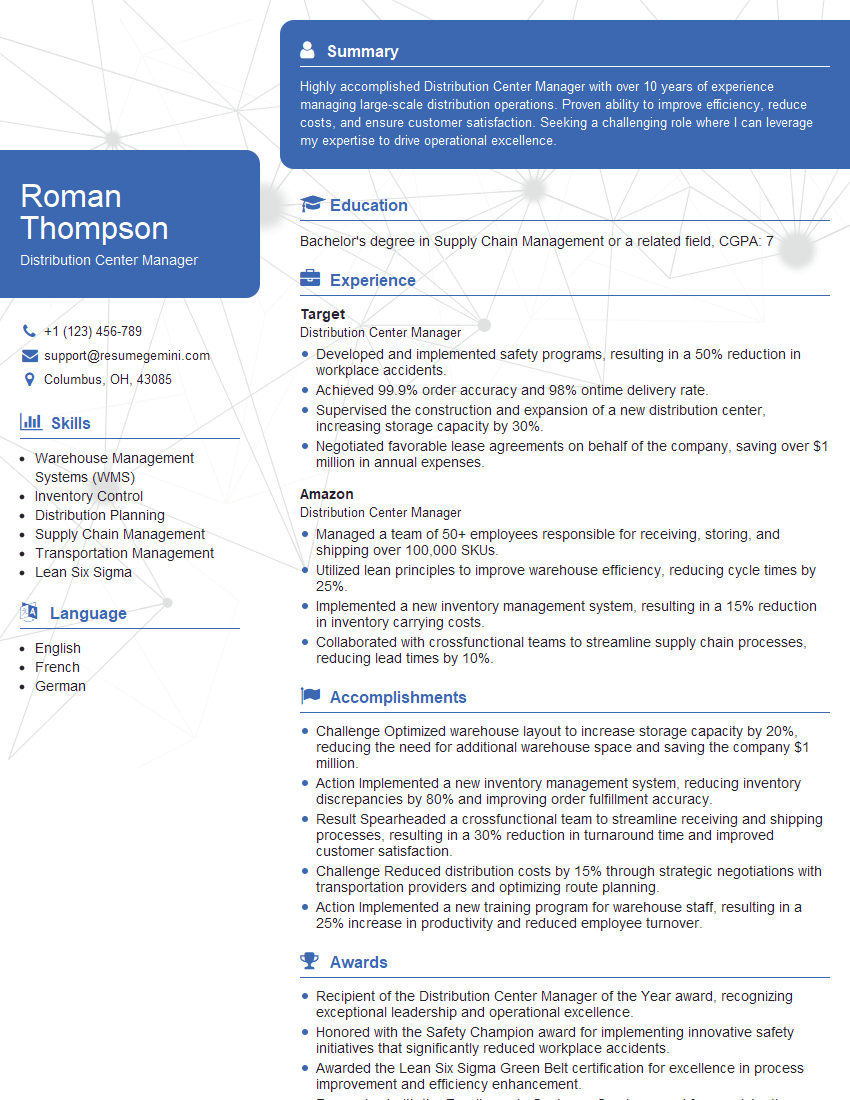
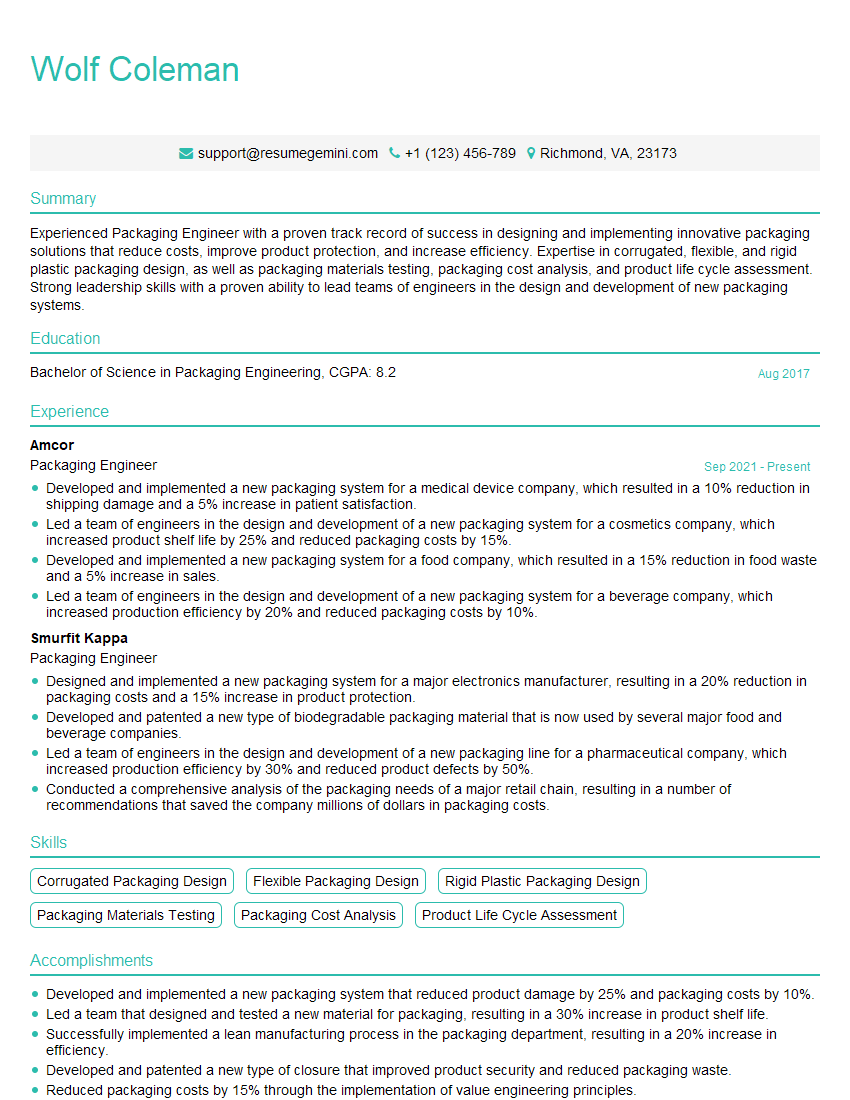
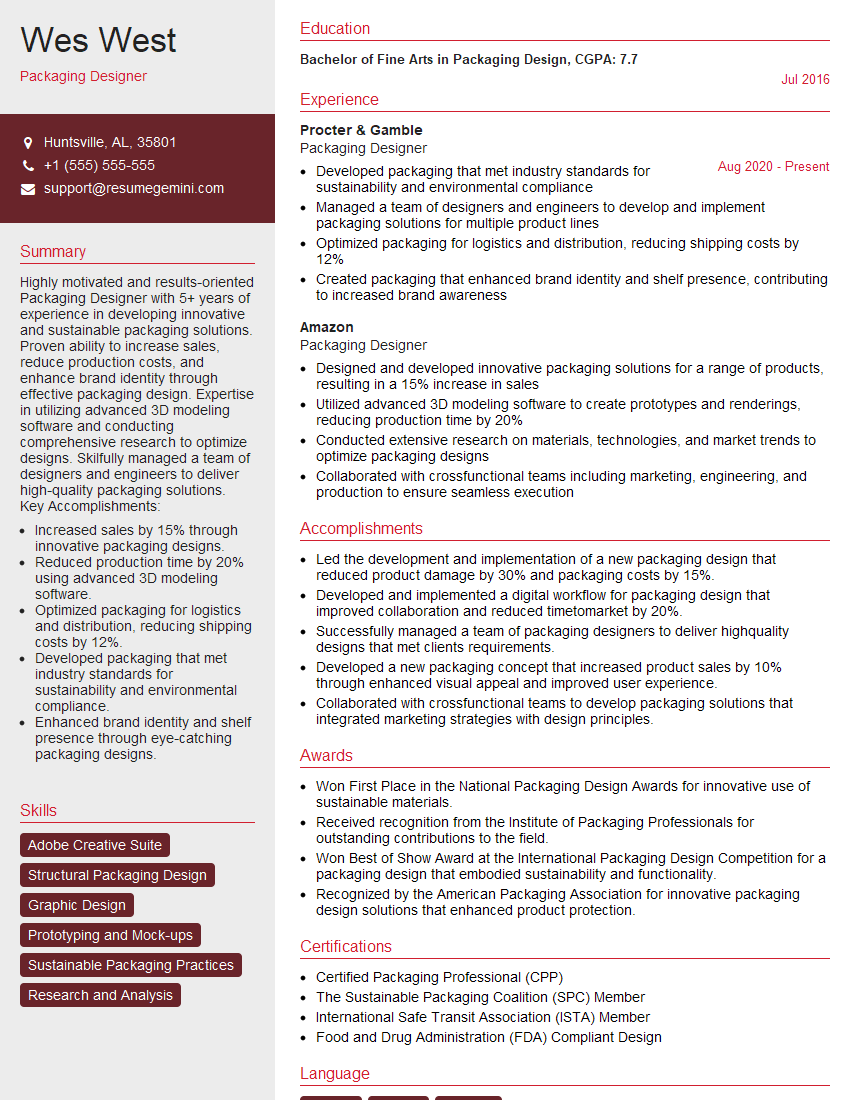
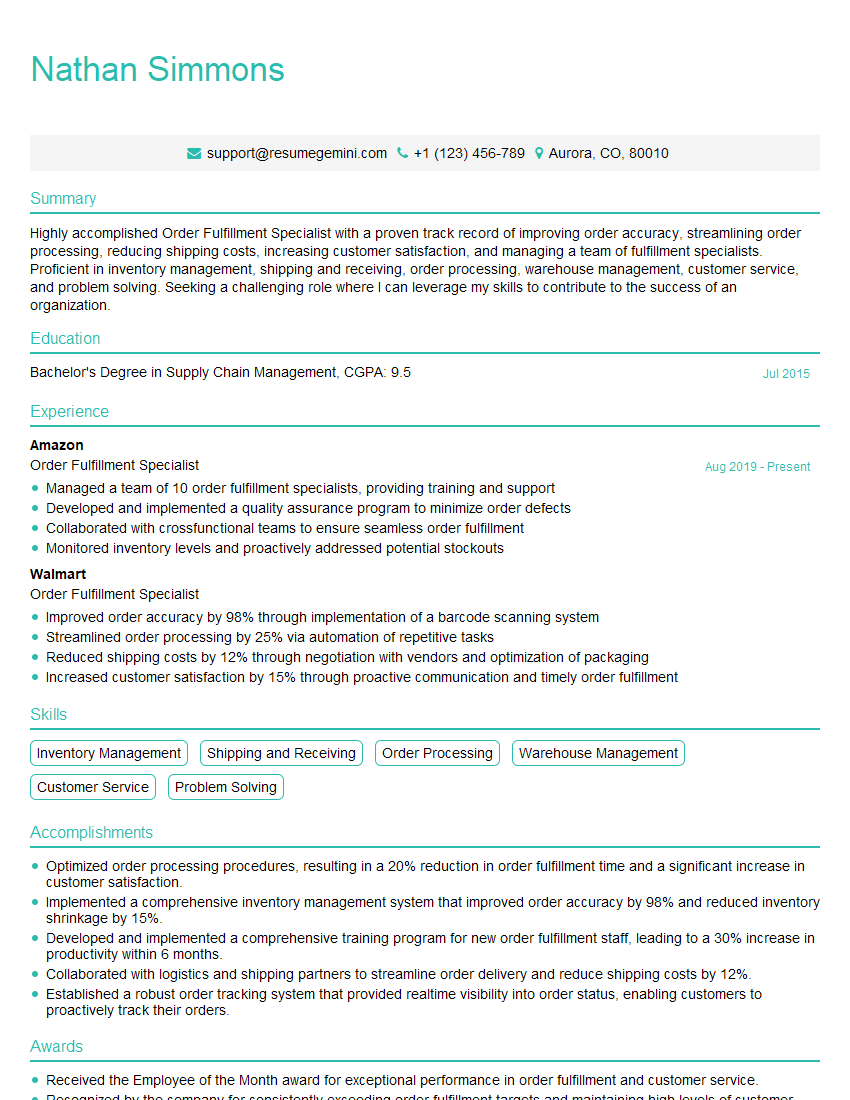
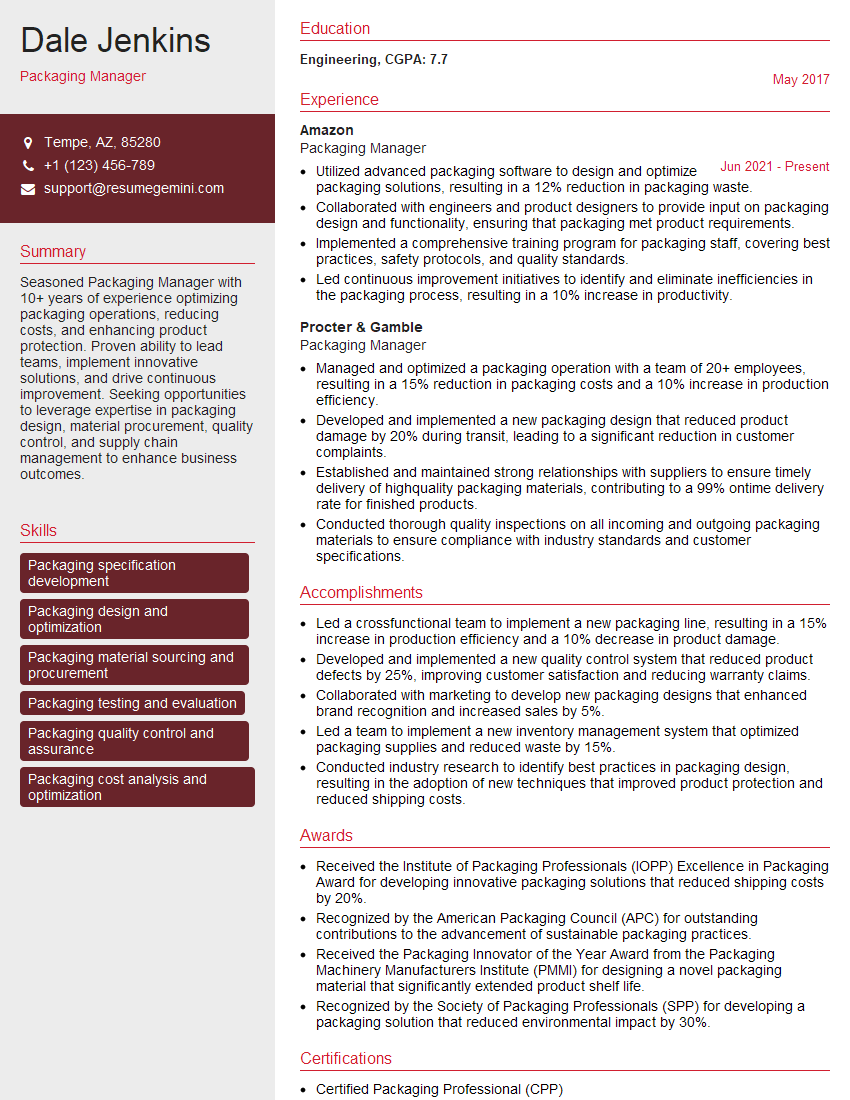
Mastering Crating and Packaging opens doors to a rewarding career with excellent growth potential in logistics, manufacturing, and supply chain management. A strong resume is your key to unlocking these opportunities. Creating an ATS-friendly resume is crucial for getting noticed by recruiters. To help you build a compelling and effective resume, we recommend using ResumeGemini. ResumeGemini provides tools and resources to craft a professional resume that highlights your skills and experience effectively. Examples of resumes tailored to Crating and Packaging are available to guide you.

Explore more articles
Users Rating of Our Blogs
Share Your Experience
We value your feedback! Please rate our content and share your thoughts (optional).
What Readers Say About Our Blog
Very informative content, great job.
good