Every successful interview starts with knowing what to expect. In this blog, we’ll take you through the top Stormwater Drainage Design interview questions, breaking them down with expert tips to help you deliver impactful answers. Step into your next interview fully prepared and ready to succeed.
Questions Asked in Stormwater Drainage Design Interview
Q 1. Explain the difference between a detention basin and a retention basin.
The key difference between detention and retention basins lies in how long they hold stormwater. A detention basin temporarily stores runoff, gradually releasing it at a controlled rate. Think of it like a reservoir that fills up during a storm and then slowly empties. The goal is to reduce the peak flow rate downstream, mitigating flooding. A retention basin, on the other hand, permanently retains a portion of the stormwater. It’s designed to store water indefinitely, often providing ecological benefits like water quality improvement or habitat creation. Imagine a pond that always has some water in it, even after a storm. The water is typically released slowly through filtration or evaporation.
In short: Detention basins control the *rate* of outflow, while retention basins control the *volume* of water retained.
Q 2. Describe the process of designing a stormwater management system for a typical suburban development.
Designing a stormwater management system for a suburban development is a multi-step process involving hydrological analysis, hydraulic design, and environmental considerations. It starts with defining the project area’s boundaries and collecting data on land use, soil types, and rainfall patterns. We use this data to estimate runoff using models like the Rational Method or the SCS Curve Number method (which I’ll discuss later). Next, we determine the required storage volume for detention or retention basins based on the desired peak flow reduction. This often involves computer modeling using software such as HEC-HMS or SWMM to simulate the system’s performance under various storm events.
The design then focuses on the conveyance system: sizing pipes, culverts, and channels to handle the anticipated flow. We need to consider slopes, pipe materials, and infiltration potential. Finally, we incorporate best management practices (BMPs) such as bioswales, rain gardens, or permeable pavements to further manage runoff and improve water quality. Throughout the process, we comply with local regulations and permitting requirements.
For example, a large development might necessitate a network of interconnected pipes feeding into a central detention basin, with smaller BMPs dispersed throughout the site to manage localized runoff. A smaller development might only require a series of rain gardens and permeable pavements combined with a small detention basin.
Q 3. What are the key design considerations for stormwater conveyance systems?
Key design considerations for stormwater conveyance systems include:
- Capacity: The system must handle the design storm event without overflowing or causing backups. This is determined using hydraulic modeling and considers factors such as peak flow, rainfall intensity, and drainage area.
- Velocity: Pipe velocity needs to be sufficient to prevent sediment deposition but not so high as to cause erosion. Velocity calculations are crucial to ensure proper system function.
- Slope: The pipe’s slope influences velocity and capacity. Steeper slopes generally mean higher velocities and increased capacity but may also lead to erosion problems. A balance must be struck.
- Materials: Pipe materials like concrete, PVC, or corrugated metal are chosen based on factors such as cost, strength, durability, and resistance to corrosion.
- Inlets: Properly spaced and designed inlets are essential to collect runoff effectively. The type and spacing of inlets depend on the flow characteristics and site conditions.
- Maintenance access: Regular maintenance is critical for long-term system performance. Access points for cleaning and inspection should be incorporated into the design.
Ignoring these factors can lead to system failure, flooding, or environmental damage.
Q 4. How do you determine the appropriate pipe size for a stormwater drainage system?
Determining the appropriate pipe size involves hydraulic calculations using Manning’s equation or similar methods. This equation relates pipe diameter, slope, roughness, and flow rate. We use the design flow rate (obtained from hydrological analysis) as input, along with the chosen pipe material’s roughness coefficient. The equation then solves for the required diameter to ensure adequate capacity and acceptable flow velocity.
For example: Q = (1.49/n) * A * R^(2/3) * S^(1/2) where:
Qis the flow ratenis the Manning’s roughness coefficientAis the cross-sectional area of the pipeRis the hydraulic radiusSis the pipe slope
Software programs automate this calculation, considering various scenarios and constraints. However, understanding the underlying principles is essential for proper design and interpretation of results. Safety factors are often included to account for uncertainties and future development.
Q 5. What are the different types of stormwater inlets and their applications?
Several types of stormwater inlets are used, each with specific applications:
- Grate inlets: These have openings covered by a grate, allowing water to enter while preventing debris from clogging the pipe. They’re suitable for areas with significant debris.
- Slotted inlets: These have long, narrow openings, effective at handling sheet flow from paved surfaces. They are less prone to clogging than grate inlets.
- Curb inlets: These are located at the curb and gutter, commonly used in urban areas. They effectively intercept flow from roadways.
- Combination inlets: These combine grate and curb inlets, offering a versatile solution for various flow conditions.
The choice of inlet type depends on factors such as flow rate, debris characteristics, and the location of the inlet. Proper inlet spacing is critical to ensure effective drainage across the entire catchment area.
Q 6. Explain the concept of the hydrologic cycle and its relevance to stormwater management.
The hydrologic cycle is the continuous movement of water on, above, and below the surface of the Earth. It involves processes like precipitation (rain, snow), evaporation, transpiration (water released by plants), infiltration (water seeping into the ground), and runoff (water flowing over the land surface). Stormwater management is fundamentally about managing the runoff component of this cycle. Understanding the cycle helps us predict how much water will flow into a drainage system and design accordingly.
For instance, increased impervious surfaces in urban areas reduce infiltration, leading to higher runoff volumes and increased flood risk. Stormwater management systems are designed to mimic or improve aspects of the natural hydrologic cycle to mitigate these impacts. Techniques like bioswales and rain gardens help increase infiltration, reducing runoff and mimicking natural drainage pathways.
Q 7. What are the common methods used for estimating runoff from a catchment area?
Several methods are used to estimate runoff from a catchment area. The choice depends on the available data and the level of accuracy required:
- Rational Method: This simple method uses rainfall intensity, drainage area, and a runoff coefficient (reflecting the surface’s permeability) to estimate peak flow. It’s suitable for small areas with relatively uniform characteristics but is limited for complex catchments.
- SCS Curve Number Method: The Soil Conservation Service (SCS) Curve Number method uses a curve number to represent the hydrologic soil group and land use, estimating runoff based on rainfall depth. It’s widely used and provides more accurate results than the Rational Method, especially for larger catchments.
- Hydrologic Modeling Software: Programs like HEC-HMS or SWMM simulate the hydrologic processes in greater detail, considering various factors such as rainfall patterns, soil characteristics, and evapotranspiration. They offer the most accurate estimations but require more data and expertise.
Choosing the appropriate method is crucial. For preliminary assessments, the Rational Method might suffice. For more detailed designs, the SCS Curve Number method or hydrologic modeling software is typically necessary.
Q 8. Describe the process of hydraulic modeling for stormwater systems.
Hydraulic modeling for stormwater systems is the process of using computer software to simulate the flow of water through a drainage network. This allows engineers to predict how the system will perform under various rainfall scenarios, ensuring it can handle expected volumes and prevent flooding. The process typically involves these steps:
- Data Collection: Gathering information about the drainage area, including topography, land use, soil types, and existing infrastructure. This often involves surveying, GIS analysis, and reviewing existing plans.
- Model Development: Building a digital representation of the drainage system using specialized software. This involves defining the network’s geometry (pipes, channels, inlets), setting hydraulic properties (roughness coefficients, pipe diameters), and inputting rainfall data.
- Calibration and Validation: Comparing the model’s predictions to observed data from existing systems (if available) to refine parameters and ensure accuracy. This might involve adjusting roughness coefficients or other factors to match real-world flow measurements.
- Scenario Analysis: Running simulations under various rainfall events, including design storms of different frequencies and intensities. This helps determine the system’s capacity and identify potential bottlenecks or areas of concern.
- Reporting and Interpretation: Analyzing the model results to identify areas needing improvements, such as pipe sizing, inlet placement, or the need for additional storage capacity. The results are then documented in a comprehensive report.
For example, we might use a model to simulate a 100-year storm event to determine if a proposed drainage system can handle the resulting peak flows without causing flooding in a specific neighborhood. This allows us to make informed design decisions and ensure public safety.
Q 9. What software packages are you familiar with for stormwater modeling and design?
I’m proficient in several stormwater modeling and design software packages, including:
- Hydrologic Engineering Center’s Hydrologic Modeling System (HEC-HMS): Excellent for rainfall-runoff modeling and watershed analysis. I’ve used it extensively for determining peak flows and hydrographs.
- HEC-RAS (Hydrologic Engineering Center’s River Analysis System): This is my go-to for one-dimensional and two-dimensional hydraulic modeling of channels, rivers, and stormwater conveyance systems. It allows for detailed analysis of water surface elevations and velocities.
- SWMM (Storm Water Management Model): A comprehensive model for simulating the entire urban drainage system, including rainfall, runoff, infiltration, and pollutant transport. I use it for detailed design and analysis of complex systems.
- InfoWorks ICM: A powerful integrated catchment management model capable of handling both hydraulic and water quality modeling. Its user-friendly interface makes it a valuable tool for collaborative projects.
My experience spans using these tools for various projects, from small-scale residential developments to large-scale municipal drainage improvements. I’m comfortable with both model building and interpretation, ensuring the results accurately reflect the system’s behavior and inform design decisions.
Q 10. Explain your experience with stormwater regulations and permitting.
Navigating stormwater regulations and permitting is a critical aspect of my work. My experience includes working with:
- Municipal Ordinances: I’m familiar with local regulations concerning stormwater management, including requirements for water quality control, detention basins, and infiltration practices. I ensure that all designs comply with these local rules.
- State and Federal Regulations: I have a strong understanding of state and federal regulations, such as the Clean Water Act and associated permits (NPDES), which are essential for managing stormwater discharges. I’m experienced in preparing permit applications and responding to regulatory agency comments.
- Environmental Impact Assessments: I’ve participated in numerous environmental impact assessments, evaluating the potential impacts of stormwater management systems on water quality and ecological resources. This often involves detailed modeling and analysis to demonstrate compliance with environmental standards.
For instance, on a recent project, I successfully navigated the complex permitting process for a large commercial development, ensuring compliance with all applicable regulations and obtaining the necessary permits within the project timeline. This involved close coordination with regulatory agencies and addressing their concerns proactively.
Q 11. How do you incorporate green infrastructure into stormwater management designs?
Incorporating green infrastructure (GI) is a key strategy in modern stormwater management. GI techniques mimic natural hydrological processes to manage stormwater runoff more sustainably. I integrate GI into designs by:
- Identifying suitable locations: I assess site conditions to determine the feasibility and effectiveness of different GI solutions, considering factors like soil type, topography, and available space.
- Selecting appropriate techniques: This might include rain gardens, bioswales, permeable pavements, green roofs, and infiltration basins. The choice depends on the project’s goals and site constraints.
- Integrating GI into the overall design: I carefully integrate GI elements into the overall stormwater management plan, ensuring they are properly sized and connected to the existing drainage network. This often involves coordinating with landscape architects and other design professionals.
- Modeling and analysis: I use hydraulic modeling to evaluate the effectiveness of GI measures in reducing runoff volume and improving water quality. This ensures that the selected techniques meet the project’s performance goals.
For example, in a recent residential development, we incorporated a network of rain gardens and bioswales to manage runoff from rooftops and paved surfaces. This not only reduced the volume of stormwater entering the municipal drainage system but also enhanced the aesthetics of the development and provided habitat for local wildlife.
Q 12. Describe your experience with Low Impact Development (LID) techniques.
Low Impact Development (LID) techniques are essential for minimizing the impact of development on stormwater runoff. My experience with LID encompasses a wide range of techniques, including:
- Permeable pavements: I’ve designed and implemented permeable pavement systems in various projects, using different materials like porous concrete and gravel. I carefully consider the long-term maintenance requirements to ensure the pavement’s continued effectiveness.
- Rain gardens: I’ve designed numerous rain gardens to capture and treat stormwater runoff. This includes selecting appropriate plant species, designing the soil profile for optimal infiltration, and ensuring proper drainage.
- Bioswales: I’ve incorporated bioswales into various projects to manage runoff from roads and parking areas. This involves designing the geometry and vegetation to effectively filter pollutants and reduce runoff volume.
- Green roofs: I’ve worked on projects integrating green roofs to reduce runoff and improve building energy efficiency. This requires understanding the structural requirements and selecting appropriate plant materials that can tolerate the rooftop environment.
In one project, we used a combination of LID techniques, including permeable pavements and rain gardens, to reduce runoff from a large shopping center. This significantly reduced the load on the municipal drainage system and improved water quality in the receiving stream.
Q 13. What are the common causes of stormwater system failures?
Stormwater system failures can have several causes, often stemming from a combination of factors:
- Inadequate design capacity: Systems designed for smaller rainfall events may fail during larger storms, leading to flooding and overflowing pipes. This is often due to inaccurate estimations of future development or climate change impacts.
- Blockages and debris accumulation: Leaves, sediment, and other debris can clog pipes, inlets, and channels, reducing flow capacity and increasing the risk of flooding. Regular maintenance is crucial to prevent these blockages.
- Poor maintenance: Neglecting regular inspection and cleaning of the stormwater system can lead to accumulation of debris and deterioration of infrastructure, compromising its functionality.
- Aging infrastructure: Older pipes and structures can deteriorate over time due to corrosion, root intrusion, or ground settlement, reducing their capacity and increasing the risk of failure.
- Improper construction: Incorrect installation of pipes, inlets, and other components can lead to system inefficiencies or failure. Careful construction practices and quality control are essential.
- Climate change impacts: Increased intensity and frequency of rainfall events due to climate change can overwhelm even well-designed systems, emphasizing the need for robust and resilient infrastructure.
Identifying these failure modes requires a comprehensive assessment of the system’s condition, including visual inspections, flow measurements, and hydraulic modeling. Proactive maintenance and upgrades can prevent many failures.
Q 14. How do you manage stormwater during construction activities?
Managing stormwater during construction is critical to prevent erosion, sedimentation, and pollution of nearby water bodies. My approach typically involves:
- Erosion and sediment control plan (ESCP): Developing a comprehensive ESCP that outlines measures to prevent erosion and control sediment during various construction phases. This typically includes silt fences, sediment basins, and temporary stabilization measures.
- Stormwater Pollution Prevention Plan (SWPPP): Creating a SWPPP to minimize pollution from construction activities. This involves implementing measures like proper storage and disposal of hazardous materials, preventing spills, and using appropriate cleaning methods.
- Construction site drainage: Designing temporary drainage systems to effectively manage runoff from the construction site, preventing erosion and channeling water away from sensitive areas.
- Regular inspections and maintenance: Monitoring the effectiveness of erosion and sediment control measures and making necessary adjustments to maintain their functionality. Regular cleaning of sediment basins and other control measures is crucial.
- Post-construction stabilization: Implementing final landscaping and stabilization measures after construction is completed to ensure long-term erosion and sediment control.
For example, on a recent road construction project, we implemented a detailed SWPPP that included sediment basins, silt fences, and regular inspections to prevent sediment from entering a nearby stream. This ensured compliance with environmental regulations and protected water quality.
Q 15. Explain your understanding of water quality control in stormwater management.
Water quality control in stormwater management is crucial for protecting our rivers, lakes, and oceans. It aims to minimize pollutants from entering our waterways through stormwater runoff. This is achieved through a multi-faceted approach involving various Best Management Practices (BMPs).
These BMPs can be broadly categorized into:
- Source Control: This focuses on preventing pollutants from entering the stormwater system in the first place. Examples include using permeable pavements to reduce runoff volume and employing vegetated roofs to filter pollutants before they reach the ground.
- Treatment Practices: These methods treat stormwater runoff to remove pollutants before it is discharged. Examples include bioretention cells (rain gardens) which utilize plants and soil to filter pollutants, and constructed wetlands, which mimic natural wetlands to treat water.
- Detention and Retention: These techniques temporarily store stormwater, allowing pollutants to settle out or be absorbed by the soil. Detention basins temporarily hold runoff, while retention basins permanently store a portion of the runoff.
A successful water quality control strategy often involves a combination of these BMPs, tailored to the specific site conditions and pollutant concerns. For instance, a highly urbanized area might require a combination of source control measures like street sweeping and treatment practices like filtration systems, whereas a suburban development might benefit from a greater emphasis on bioretention areas.
Career Expert Tips:
- Ace those interviews! Prepare effectively by reviewing the Top 50 Most Common Interview Questions on ResumeGemini.
- Navigate your job search with confidence! Explore a wide range of Career Tips on ResumeGemini. Learn about common challenges and recommendations to overcome them.
- Craft the perfect resume! Master the Art of Resume Writing with ResumeGemini’s guide. Showcase your unique qualifications and achievements effectively.
- Don’t miss out on holiday savings! Build your dream resume with ResumeGemini’s ATS optimized templates.
Q 16. What are the key considerations for designing stormwater systems in different soil types?
Soil type significantly impacts stormwater system design. The key considerations revolve around infiltration capacity, runoff potential, and structural stability.
- High Infiltration Soils (e.g., sandy soils): These soils allow for significant water infiltration, reducing runoff volume. Design strategies might prioritize infiltration-based BMPs like permeable pavements, rain gardens, and infiltration basins. However, we must assess the depth to groundwater to avoid contamination.
- Low Infiltration Soils (e.g., clay soils): These soils have limited infiltration capacity, resulting in higher runoff volumes. Designs should focus on conveyance systems like pipes and channels to efficiently manage the increased runoff, and we may need larger detention or retention basins.
- Expansive Soils (e.g., clays): These soils are susceptible to volume changes with moisture content, potentially damaging underground structures. Careful consideration of foundation design, pipe materials, and protection measures is essential. For example, using flexible pipes and adequate bedding materials is crucial.
Soil investigations, including infiltration tests and geotechnical analysis, are paramount in determining the appropriate design approach for each specific soil type. Ignoring soil properties can lead to system failure and environmental damage.
Q 17. How do you address the impact of climate change on stormwater design?
Climate change necessitates a paradigm shift in stormwater design. We are seeing more frequent and intense rainfall events, leading to increased flooding risks. We must account for this heightened variability.
My approach incorporates these key strategies:
- Increased Design Storm Frequency and Intensity: Utilizing climate change projections to increase the design storm frequency and intensity beyond traditional standards. This ensures the system can handle future extreme weather events.
- Larger Capacity Infrastructure: Designing larger conveyance systems (pipes, channels) and storage facilities (detention and retention basins) to accommodate increased runoff volumes.
- Sustainable Design Practices: Implementing green infrastructure solutions like bioswales and permeable pavements to reduce runoff volume and improve water quality, mimicking nature’s ability to handle water.
- Real-Time Monitoring and Control: Incorporating smart sensors and control systems to monitor real-time conditions and optimize system performance. For instance, using sensors to detect rising water levels and trigger automated responses to divert water flow.
Adapting to climate change requires a proactive, iterative approach. Regularly reviewing and updating designs based on new climate projections and observed weather patterns is essential for long-term resilience.
Q 18. Describe your experience with stormwater system inspections and maintenance.
My experience with stormwater system inspections and maintenance includes both routine and post-storm assessments. Regular inspections help identify potential problems early on, preventing more costly repairs later.
Routine inspections involve:
- Visual inspections: Checking for blockages in pipes, inlets, and outlets; assessing the condition of channels and basins; and verifying vegetation is maintained properly.
- Hydraulic assessment: Evaluating flow capacity and identifying areas of ponding or erosion.
- Structural assessment: Checking for damage to structures like pipes, walls, and channels. This often requires some specialized testing of the materials.
Post-storm inspections focus on assessing damage caused by heavy rainfall, including erosion, debris accumulation, and structural failures. Comprehensive documentation, including photographic evidence, is crucial for both routine and post-storm assessments. The findings guide maintenance activities such as cleaning, repairing, or replacing damaged components. A well-maintained system minimizes operational issues and safeguards public safety.
Q 19. How do you handle conflicts between different stakeholders in stormwater projects?
Stakeholder conflicts in stormwater projects are common, often stemming from differing priorities and perceptions. My approach prioritizes open communication and collaboration.
I employ several strategies:
- Early and Frequent Communication: Engaging all stakeholders early in the project lifecycle through public meetings, workshops, and surveys to ensure their concerns are understood and addressed.
- Transparency and Data Sharing: Providing clear, concise, and easily understood information to stakeholders regarding project goals, design options, and potential impacts. This often involves presenting data in visually accessible formats.
- Mediation and Negotiation: Facilitating discussions to identify common ground and address conflicting interests. This may involve compromise and exploring alternative solutions to satisfy all parties.
- Documentation: Maintaining meticulous records of all communications, decisions, and agreements to ensure accountability and prevent misunderstandings.
Successfully navigating stakeholder conflicts requires patience, empathy, and a willingness to find mutually acceptable solutions. The ultimate goal is to develop a project that addresses environmental concerns and community needs.
Q 20. What are your experiences with designing stormwater systems in environmentally sensitive areas?
Designing stormwater systems in environmentally sensitive areas requires a delicate balance between managing stormwater and preserving ecological integrity. Minimizing the footprint of the system and utilizing nature-based solutions are paramount.
My experience includes:
- Minimizing Impervious Surfaces: Prioritizing permeable pavements, green roofs, and other low-impact development techniques to reduce runoff and minimize habitat disruption.
- Protecting Wetlands and Watercourses: Implementing BMPs that avoid disturbing sensitive ecosystems. This could involve relocating infrastructure or employing specialized construction techniques.
- Erosion and Sediment Control: Implementing stringent erosion and sediment control measures during construction to prevent pollution of water bodies. This often includes using silt fences, sediment basins, and other appropriate controls.
- Species Protection: Incorporating features to protect sensitive plant and animal species, potentially involving relocation or habitat creation programs.
These projects require extensive collaboration with environmental agencies and specialists to ensure the design meets both engineering and ecological requirements. Thorough environmental assessments are essential to inform the design process and identify potential mitigation measures.
Q 21. Explain your understanding of the principles of hydraulics and hydrology.
Hydraulics and hydrology are fundamental to stormwater drainage design. Hydrology deals with the water cycle and the movement of water over and through the land surface, while hydraulics deals with the flow of water in engineered systems.
My understanding encompasses:
- Hydrologic Analysis: Using rainfall data and watershed characteristics to estimate runoff volume and peak flow rates. Techniques include the Rational Method, SCS Curve Number method, and more sophisticated hydrological models.
- Hydraulic Modeling: Employing computer software (e.g., HEC-RAS, SWMM) to simulate water flow in pipes, channels, and other conveyance systems, determining water depths, velocities, and energy gradients.
- Open Channel Flow: Understanding the principles of open channel flow, including Manning’s equation, to design channels and other conveyance systems with appropriate capacity and stability.
- Pipe Flow: Applying principles of pipe flow, including Darcy-Weisbach equation and Hazen-Williams equation, to size and design pipes for efficient and safe conveyance of stormwater.
A strong grasp of these principles is crucial for developing safe, efficient, and cost-effective stormwater drainage systems. Ignoring these fundamental aspects can lead to design failures, flooding, and environmental damage.
Q 22. How do you integrate stormwater management with other infrastructure systems?
Integrating stormwater management with other infrastructure systems is crucial for efficient and sustainable urban development. It’s not about treating stormwater in isolation, but rather as an integral part of the larger infrastructure puzzle. This involves considering its impact on and interplay with elements like:
- Road Design: Stormwater infrastructure like swales, catch basins, and pipes must be seamlessly incorporated into road designs, ensuring proper drainage and preventing flooding. For example, the road’s cross-slope needs to direct water flow efficiently towards drainage systems.
- Sanitary Sewer Systems: Careful planning prevents stormwater from overwhelming the sanitary sewer system, causing overflows and pollution. This often involves implementing separate systems or utilizing strategies like green infrastructure to reduce the volume entering the sewer.
- Water Supply Systems: By managing stormwater, we can reduce the burden on water treatment plants. Rainwater harvesting and infiltration techniques can replenish groundwater supplies, reducing the need for treated water.
- Open Space and Parks: Integrating green infrastructure such as bioswales and rain gardens into parks and open spaces not only manages stormwater but enhances aesthetics and provides ecological benefits.
- Erosion and Sediment Control: Stormwater management is vital for controlling erosion and minimizing sediment runoff, protecting waterways and downstream environments. This often involves implementing erosion control measures during construction and land development.
Effective integration requires interdisciplinary collaboration amongst engineers, planners, and landscape architects from the initial planning stages. This ensures a holistic approach that optimizes both infrastructure efficiency and environmental sustainability. For instance, a combined approach might involve using permeable pavements in parking lots to infiltrate stormwater, reducing runoff and alleviating strain on the main drainage system.
Q 23. Describe your experience with cost estimation and budgeting for stormwater projects.
Cost estimation and budgeting are critical for the success of any stormwater project. My experience encompasses the entire process, from initial feasibility studies to final project closeout. I utilize a variety of methods, including:
- Quantity Take-offs: Accurately measuring the quantities of materials (pipes, concrete, landscaping materials, etc.) needed based on the design plans.
- Unit Cost Estimation: Assigning costs to each unit of work or material based on market prices, historical data, and contractor bids.
- Contingency Planning: Incorporating a buffer to account for unforeseen expenses and potential cost overruns (typically 10-20% depending on project complexity and risk).
- Software Tools: Employing specialized software like Cost Estimating Software, which allows for detailed cost analysis and scenario planning.
- Risk Assessment: Identifying potential cost drivers and implementing mitigation strategies.
For example, on a recent project involving the construction of a large detention pond, I used a combination of quantity take-offs and unit cost estimates, factoring in site-specific conditions like excavation difficulty and potential environmental mitigation needs. The resulting budget included a comprehensive contingency plan to address potential delays or material price fluctuations. Regular budget tracking and reporting throughout the project ensures transparency and facilitates informed decision-making.
Q 24. How do you manage risks and uncertainties in stormwater design?
Managing risks and uncertainties in stormwater design is paramount, as many factors are beyond our complete control. My approach involves a multi-faceted strategy:
- Hydrologic and Hydraulic Modeling: Using sophisticated software like HEC-RAS or SWMM to simulate various rainfall scenarios and assess the performance of the drainage system under different conditions. This helps quantify the potential impact of uncertainties in rainfall intensity and frequency.
- Sensitivity Analysis: Evaluating the impact of changes in key input parameters (e.g., rainfall intensity, soil infiltration rates) on the model output. This helps to identify the most critical uncertainties and focus mitigation efforts.
- Climate Change Considerations: Incorporating projections of future rainfall patterns and intensity into the design to ensure the system’s long-term resilience.
- Geotechnical Investigations: Conducting thorough site investigations to understand soil properties and potential groundwater impacts, minimizing design uncertainties related to soil conditions.
- Risk Management Plan: Developing a formal risk management plan that identifies, analyzes, and mitigates potential risks throughout the project lifecycle.
For instance, in a project involving a coastal area susceptible to sea-level rise, we incorporated climate change projections into the hydrologic model, resulting in a more resilient design that accounts for future increased flood risks. This proactive approach is essential for creating sustainable and effective stormwater management systems.
Q 25. What are your strengths and weaknesses as a Stormwater Drainage Engineer?
My strengths as a Stormwater Drainage Engineer include a strong foundation in hydrology and hydraulics, coupled with extensive experience in design and project management. I excel at problem-solving, utilizing both analytical and creative thinking to find optimal solutions. I’m a proficient user of various modeling software and possess excellent communication skills, enabling effective collaboration with clients and other stakeholders. I am also adept at staying current with the latest technologies and best practices in the field.
One area for development is expanding my experience with green infrastructure design and implementation. While I have a theoretical understanding, hands-on experience in this rapidly growing field would greatly enhance my capabilities and allow me to offer a wider range of sustainable solutions to clients.
Q 26. Describe your experience working on a challenging stormwater project and how you overcame the challenges.
One challenging project involved designing a stormwater management system for a rapidly developing area with limited space and existing infrastructure constraints. The site was prone to flooding, and the existing drainage system was inadequate. The challenge was to design a system that could handle increased runoff while minimizing environmental impact and respecting existing infrastructure.
To overcome these challenges, we employed a multi-pronged approach:
- Innovative Design Solutions: We explored and implemented a combination of traditional and green infrastructure solutions, including underground detention systems and bioretention cells, to maximize water infiltration and reduce runoff volume. This optimized land use.
- Detailed Hydrological Modeling: We used advanced hydrological modeling to simulate various rainfall scenarios and ensure the system’s capacity to handle extreme events. The model incorporated existing conditions and future development projections.
- Stakeholder Collaboration: We engaged extensively with local authorities, residents, and other stakeholders to ensure the design addressed their concerns and integrated seamlessly with the community.
- Adaptive Management: We built into the design a framework for adaptive management to allow for modifications based on the system’s performance after construction. This allowed for learning and continuous improvement.
The successful completion of this project demonstrates my ability to handle complex design problems using innovative solutions, collaboration, and adaptive management strategies.
Q 27. What are your career goals related to stormwater drainage design?
My career goals involve progressing into a leadership role within stormwater management, where I can mentor and guide younger engineers while contributing to innovative solutions for sustainable urban drainage. I aim to specialize in integrated water management, combining my expertise in stormwater with other aspects of water resource management to create holistic, resilient systems. I’m particularly interested in incorporating climate resilience into stormwater design, ensuring our infrastructure can withstand the impacts of a changing climate. Ultimately, I aspire to contribute to building more sustainable and livable communities through effective stormwater management.
Key Topics to Learn for Stormwater Drainage Design Interview
- Hydrology and Hydraulics: Understanding rainfall intensity, runoff estimation (rational method, SCS curve number), and applying Manning’s equation for flow calculations in pipes and open channels.
- Drainage System Design: Practical application includes designing storm sewer systems, including pipe sizing, grading, and manhole placement, considering various design criteria and constraints (e.g., capacity, velocity, and erosion).
- Water Quality Management: Exploring best management practices (BMPs) for stormwater treatment, such as bioretention cells, infiltration basins, and constructed wetlands; understanding their design principles and effectiveness.
- Computational Tools and Software: Familiarity with software packages like HEC-HMS, SWMM, or similar hydrologic and hydraulic modeling tools; demonstrating proficiency in utilizing these tools for analysis and design.
- Regulatory Compliance: Understanding relevant environmental regulations and permits related to stormwater management; applying these regulations in design and construction phases.
- Sustainable Drainage Systems (SuDS): Designing and implementing sustainable drainage solutions that mimic natural hydrological processes; analyzing their effectiveness in managing stormwater runoff and improving water quality.
- Cost Estimation and Project Management: Understanding the cost implications of different design options; demonstrating project management skills through effective planning and execution.
Next Steps
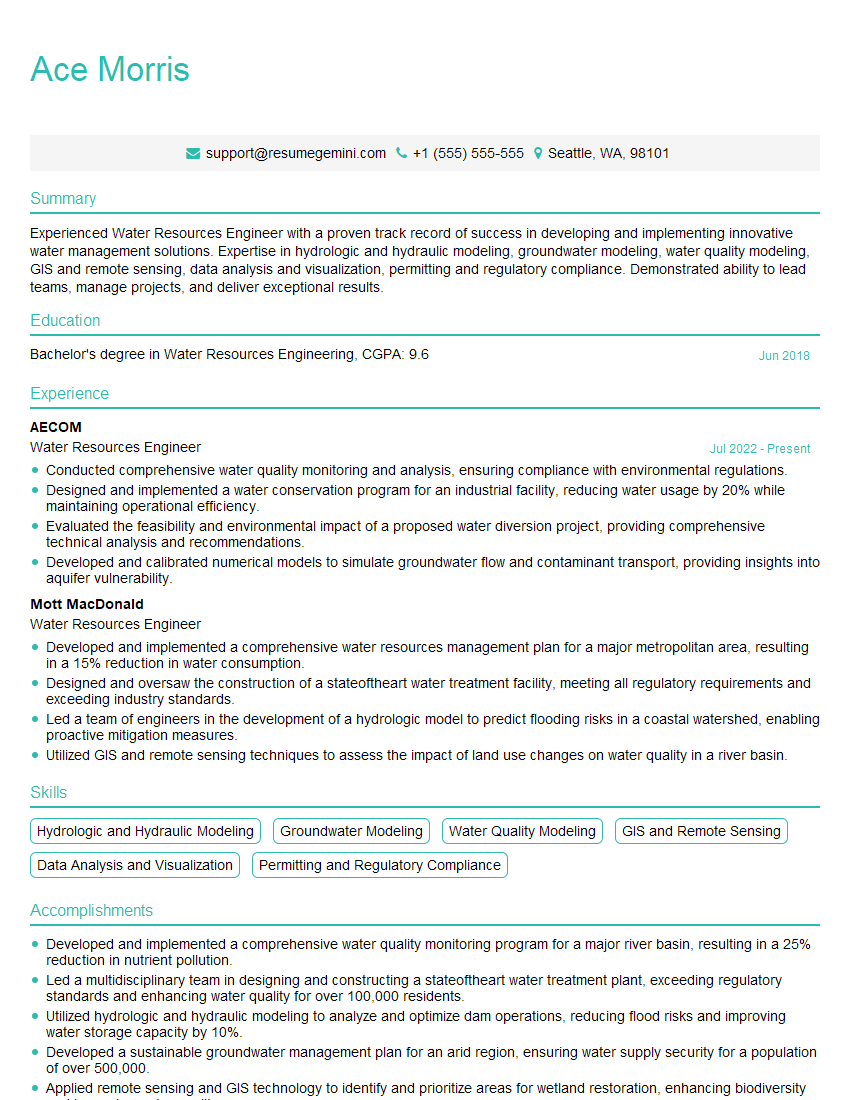
Mastering Stormwater Drainage Design opens doors to exciting career opportunities in environmental engineering and infrastructure development. A strong understanding of these principles is highly sought after by employers, leading to increased job prospects and higher earning potential. To significantly boost your chances, create an ATS-friendly resume that highlights your skills and experience effectively. ResumeGemini is a trusted resource that can help you build a professional and impactful resume tailored to the specific requirements of Stormwater Drainage Design roles. Examples of resumes tailored to this field are available to help guide your resume creation.

Explore more articles
Users Rating of Our Blogs
Share Your Experience
We value your feedback! Please rate our content and share your thoughts (optional).
What Readers Say About Our Blog
Very informative content, great job.
good