The right preparation can turn an interview into an opportunity to showcase your expertise. This guide to Glass Insulating interview questions is your ultimate resource, providing key insights and tips to help you ace your responses and stand out as a top candidate.
Questions Asked in Glass Insulating Interview
Q 1. Explain the process of manufacturing an Insulating Glass Unit (IGU).
Manufacturing an Insulating Glass Unit (IGU), also known as a double- or triple-glazed window, is a precise process requiring cleanroom conditions to prevent contamination. It starts with selecting the glass panes – typically annealed, low-E, or tempered glass, depending on the desired performance characteristics. These panes are precisely cut to size, often using automated cutting equipment for accuracy and efficiency. Next, meticulously cleaned glass is placed into a spacer bar assembly. This assembly holds the glass panes a specific distance apart, creating the air or gas-filled cavity that provides the insulation. A sealant, typically a polysulfide or butyl sealant, is applied around the spacer bar to create an airtight and watertight seal. Finally, the entire unit is sealed in a secondary sealant, usually a structural silicone, ensuring long-term durability. The assembled IGU is then cured to allow the sealants to fully set and form a strong bond. Think of it like building a miniature, highly efficient greenhouse, sealed to perfection.
Q 2. Describe different types of sealants used in IGU fabrication and their properties.
Several types of sealants play crucial roles in IGU fabrication, each with its own properties. Butyl sealants are primary sealants, forming the initial airtight seal around the spacer bar. They are known for their excellent adhesion and flexibility, accommodating thermal expansion and contraction. Polysulfide sealants offer superior adhesion and weather resistance but can be more challenging to work with due to their longer cure time. Silicone sealants, often used as secondary sealants, provide additional structural integrity and weather protection. The choice of sealant often depends on the specific application and desired longevity. For example, in harsh coastal environments, a highly weather-resistant polysulfide or a specialized silicone might be preferred to ensure prolonged IGU performance. The quality of the sealants directly impacts the IGU’s lifespan and its ability to maintain its insulating properties.
Q 3. What are the common causes of IGU failure?
IGU failure is often attributed to sealant failure, resulting in moisture ingress. This can stem from poor sealant quality, improper application, or environmental factors like extreme temperature fluctuations. Spacer bar degradation, particularly in older units with metallic spacers, can also contribute to failure. Additionally, impacts or external damage can compromise the integrity of the glass panes or the sealant, leading to leaks. Other causes can include manufacturing defects, incorrect installation, or the use of inferior materials. Regular inspection and proactive maintenance are essential to identify potential issues early and prevent premature failure. Imagine a tiny leak in a well-sealed container – over time, even a minuscule opening can cause significant problems.
Q 4. How do you measure and cut glass for an IGU?
Measuring and cutting glass for an IGU demands precision. Precise measurements are taken based on the window opening dimensions, allowing for necessary tolerances. Automated glass cutting machines, utilizing computer-aided design (CAD) software, ensure accuracy and speed, minimizing waste. This automated process significantly enhances precision compared to manual methods. The cutting process involves using specialized diamond-tipped wheels or laser cutters to create clean, precise cuts, and subsequent steps typically involve grinding and polishing the edges for a smooth finish. Think of a tailor crafting a bespoke suit – every measurement and cut must be precise to achieve the perfect fit.
Q 5. Explain the importance of spacer bars in IGU construction.
Spacer bars are critical components in IGU construction, maintaining the precise distance between the glass panes and providing structural support. The space they create allows for the formation of an air or gas-filled cavity, which significantly enhances the IGU’s thermal and acoustic insulation properties. They also act as a channel for the sealant, creating a secure and airtight bond between the glass panes. The spacer bar’s material and design contribute to the overall performance and longevity of the IGU. Without them, the glass panes would be directly in contact, significantly reducing the insulating effect and potentially causing condensation.
Q 6. Describe different types of spacer bars and their applications.
Several types of spacer bars cater to different needs and applications. Aluminum spacers are common but can contribute to thermal bridging (heat transfer). Warm-edge spacers, such as those made from stainless steel or composite materials with low thermal conductivity, reduce this bridging, improving energy efficiency. Super spacers, incorporating desiccant, absorb moisture, preventing condensation and extending the life of the unit. The choice of spacer bar significantly affects the IGU’s energy performance and overall lifespan, impacting its cost-effectiveness in the long run. Consider them the ‘skeleton’ of the IGU, providing both structural integrity and influencing its insulating capabilities.
Q 7. How do you handle damaged or defective glass during installation?
Handling damaged or defective glass during installation requires careful attention to safety. Damaged glass should be handled with extreme caution, using appropriate personal protective equipment (PPE), including gloves and safety glasses. The damaged unit must be carefully removed, and the area thoroughly cleaned before installing a replacement. It is vital to inspect the replacement glass for defects before installation, and ensure that the new unit is properly sealed to maintain the IGU’s integrity. If significant damage has affected the window frame, this may also need repair or replacement to ensure a safe and efficient installation. Proper handling and installation prevent further damage and guarantee the longevity of the new IGU.
Q 8. What safety precautions do you take when working with glass?
Safety is paramount when working with glass, especially insulating glass units (IGUs). We always begin by wearing appropriate personal protective equipment (PPE), including safety glasses, gloves, and cut-resistant clothing. Sharp edges and potential breakage are ever-present risks. For larger projects or those involving significant glass handling, we utilize suction cups and specialized lifting equipment to prevent drops and injuries. When cutting glass, we ensure the workspace is clear and we employ safety shields to contain any potential shards. We also prioritize a clean and organized work area to prevent trips and falls. Finally, proper training on handling and transporting glass is mandatory for all our team members. For instance, I once prevented a serious accident by spotting a loose tile on the floor before a colleague carrying a large IGU could walk over it.
Q 9. Explain the different types of glass used in IGUs (e.g., annealed, tempered, laminated).
Several types of glass are used in IGUs, each with specific properties impacting performance and cost. Annealed glass is the most common and basic type; it’s relatively inexpensive but shatters into sharp fragments upon impact. Tempered glass, also known as safety glass, is much stronger than annealed glass. It undergoes a heat-treating process that makes it four to five times stronger and, when it breaks, shatters into small, relatively harmless pieces. This is crucial for applications requiring safety, like windows in vehicles or buildings with high pedestrian traffic. Laminated glass consists of two or more layers of glass bonded together with an interlayer, typically polyvinyl butyral (PVB). This interlayer holds the glass fragments together even after shattering, greatly improving its safety characteristics and providing resistance to sound and UV penetration. In a recent project, we opted for laminated glass in a high-school library to enhance sound insulation and provide protection against potential damage.
Q 10. How do you ensure proper gas fill in an IGU?
Proper gas fill is crucial for optimal IGU performance. Argon is the most frequently used gas, as it has lower thermal conductivity than air, improving insulation and energy efficiency. We use specialized equipment called gas-filling machines to ensure an accurate and consistent gas fill. The process involves evacuating the air from the cavity between the glass panes, creating a vacuum, before precisely injecting the chosen gas. We regularly check the gas fill levels using a gas leak detector to guarantee no leaks are present throughout the IGU lifespan. A faulty gas fill would lead to a less energy-efficient window, directly impacting the customer’s energy bills and potentially leading to warranty claims.
Q 11. What are the different methods for installing IGUs?
IGUs are installed using a variety of methods, each determined by the window frame and building design. For new construction, IGUs are typically installed using glazing beads and sealant to secure them into the frame, creating a weathertight seal. For replacement windows, the method might involve removing old glass panes and frames before carefully installing the IGU into the existing frame. Some situations require specialized techniques such as wet glazing or silicone sealant application for more advanced sealing. In one instance, we successfully installed IGUs in a historic building using a traditional glazing method that required specialized tools and meticulous attention to detail, preserving the building’s aesthetic integrity.
Q 12. Describe your experience with different types of window frames.
My experience encompasses various window frame materials, including wood, vinyl, aluminum, and fiberglass. Each material presents unique challenges and advantages for IGU installation. Wood frames, for example, require careful handling to avoid damaging the surface, while vinyl frames necessitate appropriate sealant choices to ensure a weatherproof seal. Aluminum frames offer strength but can be prone to thermal bridging, which can reduce the IGU’s energy efficiency, a challenge we’ve solved by using thermal breaks within the frame. Fiberglass frames offer good durability and are often easier to work with in new construction. Understanding these material-specific considerations helps optimize IGU performance and longevity.
Q 13. How do you troubleshoot common IGU installation problems?
Troubleshooting IGU installation problems involves systematic investigation. Common issues include air leaks, condensation, and fogging within the IGU. Air leaks are often identified using a pressure test or visual inspection. Condensation indicates a seal failure or insufficient gas fill. Fogging, a less common problem, is often caused by contamination during manufacturing. Our approach involves carefully examining the installation, checking for gaps or sealant failures, and testing the gas fill to pinpoint the root cause. For instance, when we encountered condensation in a recent project, we found a small crack in the sealant, which we rectified with careful sealant replacement, resolving the issue immediately. Documenting these issues systematically is crucial for maintaining consistent quality.
Q 14. What tools and equipment are essential for IGU installation?
Essential tools and equipment for IGU installation include a variety of specialized instruments. This includes suction cups and handling equipment for safe glass transportation, utility knives and specialized glass cutters for precise cutting, sealant applicators, glazing beads, and spacers for accurate unit installation. Additionally, we rely heavily on specialized tools for gas filling and vacuum creation. Accurate measurements are critical, so we always employ laser measuring tools to ensure precise fitting. Finally, safety equipment, such as safety glasses, gloves and protective clothing are always mandatory. Regular maintenance and calibration of our equipment ensure accurate and safe work, leading to consistent high-quality results.
Q 15. Explain your understanding of energy efficiency standards related to IGUs.
Energy efficiency standards for Insulating Glass Units (IGUs) are crucial for reducing energy consumption in buildings. These standards typically focus on the U-factor (heat transfer coefficient) and the Solar Heat Gain Coefficient (SHGC). A lower U-factor indicates better insulation, meaning less heat is transferred through the glass, while a lower SHGC means less solar heat is admitted into the building. Many regions have building codes that specify minimum performance requirements for IGUs based on climate zone and building type. For example, a building in a cold climate might require IGUs with a U-factor of 0.25 or lower, while a building in a hot climate might prioritize a low SHGC to minimize solar heat gain. These standards are constantly evolving as technology improves, pushing for even better energy performance in glazing systems.
Compliance with these standards is essential for reducing energy bills, lowering carbon footprints, and promoting sustainable building practices. We often use software tools that calculate the U-factor and SHGC based on the chosen glass type, spacer material, and gas fill to ensure the IGU meets the relevant standards for the project.
Career Expert Tips:
- Ace those interviews! Prepare effectively by reviewing the Top 50 Most Common Interview Questions on ResumeGemini.
- Navigate your job search with confidence! Explore a wide range of Career Tips on ResumeGemini. Learn about common challenges and recommendations to overcome them.
- Craft the perfect resume! Master the Art of Resume Writing with ResumeGemini’s guide. Showcase your unique qualifications and achievements effectively.
- Don’t miss out on holiday savings! Build your dream resume with ResumeGemini’s ATS optimized templates.
Q 16. How do you maintain quality control during the IGU installation process?
Maintaining quality control during IGU installation is paramount. It begins with careful pre-installation planning, including precise measurements and ordering the correct number and type of IGUs. On-site, we utilize rigorous quality checks at every stage. This involves verifying the IGU’s integrity before installation, ensuring proper sealant application, and carefully setting the unit within the frame to avoid damage or gaps. We use specialized tools for accurate measurements and installation to ensure a perfect fit. Regular training for our installers is crucial to maintain consistent quality. We also implement a system of checklists and inspections to document every stage of the process. This allows us to track progress, identify potential issues promptly, and ultimately guarantee the IGU functions as intended, providing superior insulation and performance for years to come. A final inspection, following installation, verifies everything meets the plan, and identifies potential weather leaks. Photographs are taken at all steps to document the process.
Q 17. Describe your experience with different types of glass coatings.
My experience encompasses a wide range of glass coatings, each designed to enhance specific properties. Low-E coatings, for instance, are incredibly common. They reflect infrared radiation, minimizing heat transfer and reducing energy consumption. Different types of Low-E coatings offer varying levels of reflectivity, allowing customization based on the climate and building requirements. I’ve also worked extensively with solar control coatings that reduce solar heat gain, keeping interiors cooler in hot climates without sacrificing daylight transmission. Additionally, I’m familiar with self-cleaning coatings, which use titanium dioxide to catalyze a photocatalytic reaction that breaks down dirt and grime, reducing the need for frequent cleaning. Finally, anti-reflective coatings minimize glare and reflections for improved visual comfort and energy efficiency. The choice of coating is always determined by careful consideration of the specific needs of the building and its environment.
Q 18. How do you handle customer complaints or issues related to IGU installation?
Handling customer complaints is crucial for maintaining a positive reputation. Our process begins with active listening to understand the customer’s concerns. We then thoroughly investigate the issue, examining the installation, the IGU itself, and the surrounding conditions. We use a systematic approach, checking for possible causes like improper installation, manufacturing defects, or external factors. Depending on the issue, solutions range from simple adjustments and repairs to full replacement of the IGU. Open communication is vital throughout the process, keeping the customer informed about the progress of the investigation and any proposed solutions. We aim to resolve issues quickly and efficiently, prioritizing customer satisfaction and demonstrating a commitment to quality work. In the event that a manufacturing defect is identified, we coordinate with the supplier for replacement or repair under warranty.
Q 19. What are the environmental considerations related to glass waste?
Environmental considerations related to glass waste are significant. Glass is a recyclable material, and responsible disposal is crucial for minimizing environmental impact. We prioritize recycling programs for glass waste generated during demolition or installation. This reduces the need for new glass production, conserving energy and resources. Furthermore, improper disposal of glass can lead to soil and water contamination. Our commitment to environmental sustainability involves working with certified recycling facilities to ensure proper handling and processing of glass waste. We also promote the use of recycled glass content in new IGUs, contributing to a circular economy and reducing the environmental footprint of our projects.
Q 20. Explain your understanding of building codes and regulations related to glass installation.
Building codes and regulations related to glass installation are essential for ensuring safety and performance. These codes specify requirements for impact resistance, thermal performance, and safety glazing. We diligently follow all relevant local, regional, and national building codes. For instance, codes might dictate the type of glass required for specific applications, such as tempered glass for exterior doors or laminated glass for areas where safety is paramount. Staying updated on the latest building code revisions is crucial for our work. We maintain a comprehensive library of codes and regularly consult with building inspectors to ensure compliance throughout the project lifecycle. Failure to comply with these regulations can result in project delays, costly revisions, and potential safety hazards.
Q 21. Describe your experience with large-scale glass installation projects.
I have extensive experience with large-scale glass installation projects, including high-rise buildings, commercial complexes, and large-scale industrial facilities. These projects require meticulous planning, coordination, and a high degree of logistical expertise. We utilize advanced project management tools to track progress, manage resources, and ensure timely completion. Effective communication with all stakeholders, including architects, engineers, contractors, and building owners, is paramount. Our team employs specialized equipment and techniques for handling large glass panels safely and efficiently. For example, we have used cranes and suction cups to safely transport and install large glass panels. Rigorous quality control measures are crucial throughout the process, guaranteeing the integrity and performance of the entire glass system. Successful completion of these projects underscores our ability to handle complex logistical challenges and deliver high-quality results within strict timelines.
Q 22. How do you ensure the proper sealing and air tightness of an IGU?
Ensuring proper sealing and airtightness in an Insulating Glass Unit (IGU) is paramount to its performance. It’s achieved through a meticulous process involving several key steps. First, the glass panes are precisely spaced using spacers, typically made of warm-edge technology materials like stainless steel or polymer for improved energy efficiency. These spacers contain desiccant, a drying agent that absorbs any remaining moisture within the unit. Next, the sealed unit is filled with a chosen gas, like argon or krypton, further enhancing insulation. The entire assembly is then hermetically sealed using a butyl sealant, creating an airtight bond between the glass and spacer. A second sealant, typically polysulfide or polyurethane, provides an additional layer of protection against moisture ingress and structural integrity. The quality of the sealants and the precise application of these steps are crucial. We regularly inspect the completed IGUs for any imperfections or leaks using specialized equipment which can detect the smallest of air penetrations. Think of it like sealing a window – several layers of seals are necessary to ensure no air is able to get through.
For example, I once encountered a batch of IGUs with slightly compromised butyl seals. Through diligent quality control, we identified this issue early, preventing hundreds of units from being installed. Replacing the faulty sealants is far easier and less expensive than repairing failing IGUs post-installation.
Q 23. How do you determine the appropriate type of IGU for a specific application?
Selecting the appropriate IGU depends heavily on the specific application and its requirements. Factors considered include climate, building orientation, energy efficiency targets, and aesthetic preferences. For instance, a building in a cold climate might benefit from a low-E coated IGU filled with krypton for maximum thermal insulation, while a sunny location could prioritize solar control with a special coating that reflects solar heat. In high-traffic commercial settings, I might recommend a thicker, more impact-resistant glass to withstand potential damage. A residential application in a quiet neighborhood will put more emphasis on noise reduction and thermal performance. Different glass types such as laminated glass, tempered glass, or even patterned glass can be combined in an IGU to provide enhanced functionality.
I always consult the relevant building codes and energy efficiency standards when specifying an IGU. I also work closely with architects and building engineers to ensure the chosen unit perfectly aligns with the project’s specifications and objectives. A well-chosen IGU can greatly impact the building’s long-term energy performance and lifespan.
Q 24. What are the advantages and disadvantages of different gas fills in IGUs?
Different gas fills in IGUs offer varying levels of thermal insulation and performance characteristics. Argon is the most commonly used gas due to its cost-effectiveness and good insulating properties. Argon’s thermal conductivity is significantly lower than air, resulting in reduced heat transfer through the glass unit. Krypton, while more expensive, provides even better insulation compared to argon, making it ideal for climates with extreme temperatures or where superior energy efficiency is crucial. Xenon is an option as well, offering the best insulation properties, but its high cost usually outweighs the benefits in most projects. The choice of gas fill depends heavily on the project’s needs and budget.
- Advantages of Argon: Cost-effective, good insulating properties, widely available.
- Disadvantages of Argon: Not as effective as krypton or xenon.
- Advantages of Krypton: Superior insulating properties to argon, ideal for extreme climates.
- Disadvantages of Krypton: More expensive than argon.
For example, a project prioritizing energy efficiency might justify the higher cost of krypton to meet aggressive carbon-reduction targets. Conversely, a project on a tighter budget would likely opt for the excellent cost-performance of Argon.
Q 25. Describe your experience with working at heights.
I have extensive experience working at heights, having been involved in numerous projects that required IGU installation on high-rise buildings and large-scale structures. I am certified in fall protection and am proficient in using various safety equipment, such as harnesses, lifelines, and safety nets. I always prioritize safety and adhere strictly to all safety regulations and procedures. Before starting any work at height, we meticulously plan the work area, including the appropriate equipment and setup. I have a thorough understanding of the risks involved and am adept at recognizing and mitigating potential hazards. I’m also trained in emergency procedures, including rescue techniques. I’ve also completed several training courses in safe work practices, ensuring my expertise and confidence in working at heights remains consistently up-to-date.
I recall a particular project where we had to install IGUs on a skyscraper with challenging weather conditions. We successfully completed the project on time and without any incidents by employing stringent safety protocols. Through effective communication, thorough training, and rigorous adherence to safety guidelines, my team can work safely and efficiently in any challenging environment.
Q 26. What are the common challenges faced during IGU installation and how do you overcome them?
IGU installation can present several challenges. One common issue is ensuring precise alignment and proper sealing to prevent air leakage. Another is dealing with varied window frame types and sizes, as precise measurements are crucial for a perfect fit. Weather conditions, such as extreme temperatures or high winds, can also hamper the installation process. Improper handling can easily damage the IGUs which can cause significant delays. Finally, working at heights presents its own unique challenges, requiring specialized equipment and careful planning.
To overcome these challenges, we employ several strategies. We use high-precision measuring tools and meticulously plan the installation process to minimize risks. Our team is well-trained in handling IGUs with care, and we use specialized lifting equipment to safely transport and install the units. We have various backup plans in case of weather-related issues. Prior communication with the client is crucial to ensure all the necessary preparations are made. Regular on-site safety inspections are conducted and I consistently review our methods to proactively avoid common installation errors.
Q 27. Explain your understanding of different glass thicknesses and their applications.
Different glass thicknesses offer varied levels of strength, thermal performance, and sound insulation. Common thicknesses range from 3mm to 12mm or even more. Thinner glasses (e.g., 3mm or 4mm) are generally used for interior applications or where weight is a critical factor. Thicker glasses (e.g., 6mm, 8mm, or 10mm) are more suitable for exterior applications, offering better strength and resistance to impact. The choice of glass thickness often depends on the specific application’s requirements, considering factors such as wind load, security concerns, and energy efficiency targets.
- 3mm-4mm: Interior partitions, picture frames, some residential applications.
- 6mm-8mm: Exterior windows in residential or light commercial applications.
- 10mm-12mm or more: Exterior windows and doors in high-wind areas, security glazing, hurricane-resistant applications.
For example, in high-rise buildings, thicker glasses are crucial for withstanding wind loads and providing greater security. In noise-sensitive environments, laminated glass of appropriate thickness can be used to enhance sound insulation.
Q 28. How do you ensure the structural integrity of the glass installation?
Ensuring the structural integrity of a glass installation involves several key aspects. First, proper framing is essential. The window frames must be robust enough to support the weight of the IGUs and withstand external forces like wind loads. The use of appropriate fixings and anchoring systems is crucial, using high-quality materials and techniques to guarantee a secure and stable connection. Accurate measurements and precise installation are crucial to prevent stress concentrations or points of weakness. Finally, regular inspections and maintenance of the frames and IGUs helps to identify potential issues early on. We always consider the building codes and standards to ascertain the correct installation procedures, ensuring the structural safety and longevity of the glass installation. Regular inspection of the installation and the building itself is crucial to ensure the continued integrity of the project.
For example, in coastal areas, we always consider the impact of salt spray and humidity on the frame materials and ensure the appropriate materials and sealants are used to prevent corrosion and deterioration. We also meticulously plan around any potential seismic activity in those regions, ensuring the installation meets the relevant seismic codes for the region.
Key Topics to Learn for Glass Insulating Interview
- Insulating Glass Unit (IGU) Construction: Understand the components of an IGU (glass panes, spacer, sealant), their functions, and common manufacturing methods.
- Spacer Types and Properties: Learn about different spacer materials (metal, warm-edge), their impact on energy efficiency, and the advantages and disadvantages of each.
- Sealant Technology and Failure Modes: Explore various sealant types and their properties, and understand common causes of IGU failure (e.g., sealant degradation, gas leakage).
- Gas Fill Selection and Performance: Understand the role of gas fills (argon, krypton, xenon) in improving insulation performance and their impact on U-values.
- Energy Efficiency Calculations and Standards: Familiarize yourself with methods for calculating U-values and other energy performance metrics, and relevant industry standards and codes.
- Quality Control and Testing Procedures: Understand common quality control methods used in IGU manufacturing and testing procedures for ensuring performance and durability.
- Troubleshooting and Problem Solving: Develop your ability to diagnose and troubleshoot common IGU problems, considering factors such as condensation, air leaks, and performance issues.
- Safety Regulations and Practices: Become familiar with relevant safety regulations and best practices related to the handling and installation of IGUs.
- Applications and Case Studies: Explore the various applications of insulating glass in different building types and understand successful case studies demonstrating its benefits.
Next Steps
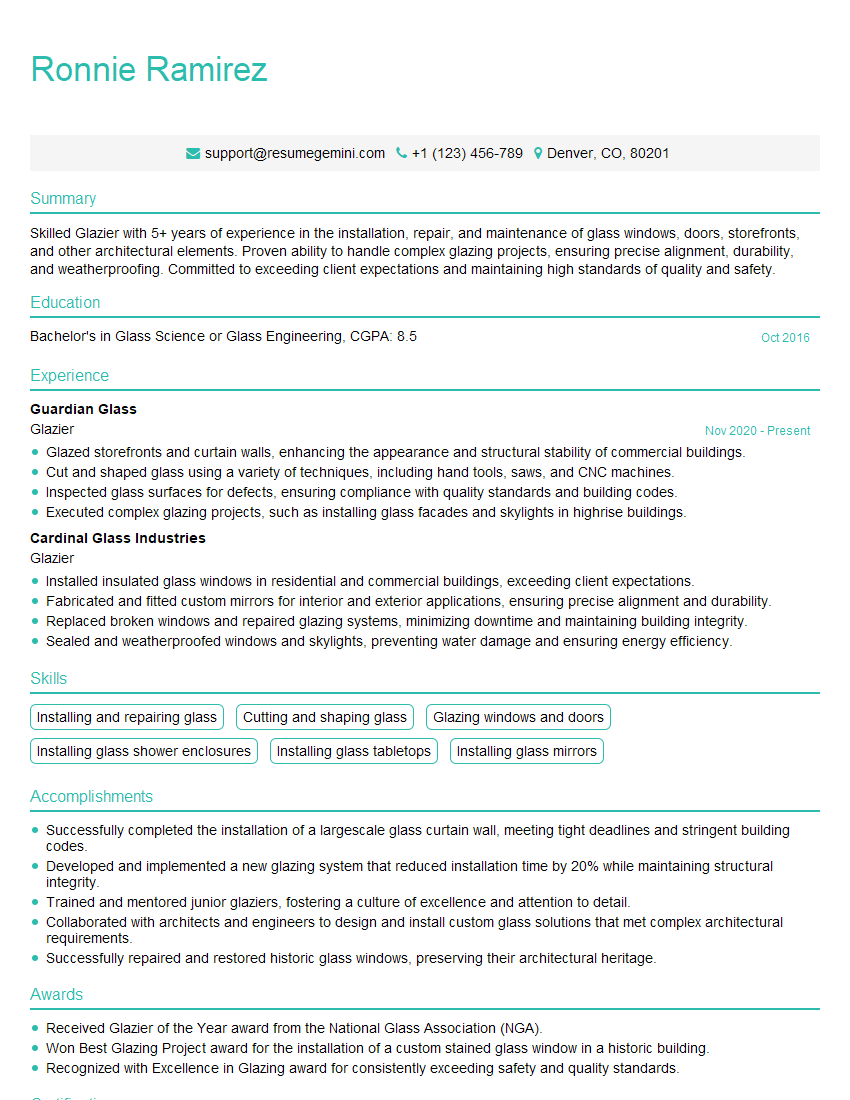
Mastering the intricacies of glass insulating is crucial for a successful and rewarding career in the construction and building industry. A strong understanding of these principles will set you apart from other candidates and position you for advancement. To significantly enhance your job prospects, it’s vital to create an ATS-friendly resume that highlights your skills and experience effectively. We recommend using ResumeGemini, a trusted resource for building professional resumes, to create a document that showcases your abilities in the best possible light. Examples of resumes tailored to the Glass Insulating industry are available to help guide you.



Explore more articles
Users Rating of Our Blogs
Share Your Experience
We value your feedback! Please rate our content and share your thoughts (optional).
What Readers Say About Our Blog
Very informative content, great job.
good