Interviews are more than just a Q&A session—they’re a chance to prove your worth. This blog dives into essential Coffee Brewing interview questions and expert tips to help you align your answers with what hiring managers are looking for. Start preparing to shine!
Questions Asked in Coffee Brewing Interview
Q 1. Explain the difference between Arabica and Robusta coffee beans.
Arabica and Robusta are the two most prominent coffee species, differing significantly in flavor profile, caffeine content, and growing conditions. Arabica, known for its complex, nuanced flavors – often described as fruity, floral, or sweet – is more delicate and requires specific climate conditions to thrive. It commands a higher price due to its superior taste and lower yield. Robusta, on the other hand, is more bitter and has a higher caffeine content, making it a popular choice for espresso blends where its robust flavor and crema can add body. It’s easier to grow and more resistant to pests and diseases, leading to a lower cost.
Think of it like wine: Arabica is like a fine Pinot Noir – delicate, nuanced, and expensive. Robusta is more like a hearty Cabernet Sauvignon – robust, bold, and affordable. The choice between them often depends on the desired flavor profile and budget.
Q 2. Describe the ideal water temperature for brewing coffee.
The ideal water temperature for brewing coffee generally falls within the range of 195-205°F (90-96°C). This temperature range allows for optimal extraction of the coffee’s desirable compounds, resulting in a balanced cup with both body and sweetness. Water that’s too hot can lead to bitterness and burnt flavors, while water that’s too cool may result in a sour or under-extracted brew. Using a thermometer is essential for achieving consistent results.
I often explain it like this: imagine you’re brewing tea. You wouldn’t use boiling water for all teas, right? Similarly, different coffee brewing methods might slightly adjust this range, but staying within that 195-205°F window is a good rule of thumb for most methods.
Q 3. What are the different methods of coffee brewing?
There’s a wide array of coffee brewing methods, each offering a unique experience. Some popular methods include:
- Pour Over (e.g., Hario V60, Chemex): This method involves slowly pouring hot water over coffee grounds in a filter, allowing for precise control over the brewing process and resulting in a clean, nuanced cup.
- Drip Coffee Maker (Automatic): A convenient and efficient method for brewing larger batches, although less control over variables like water temperature and bloom time is possible.
- French Press: Steeping coffee grounds in hot water, resulting in a full-bodied brew with more sediment.
- Aeropress: A versatile and portable method that produces a smooth, concentrated brew.
- Espresso Machine: Using high pressure to force hot water through finely-ground coffee, resulting in a concentrated shot that forms the base of many espresso drinks.
- Cold Brew: Steeping coffee grounds in cold water for an extended period, resulting in a less acidic, smoother brew.
The best method depends on individual preferences, time constraints, and desired flavor profile. Experimenting with different methods is part of the fun of coffee!
Q 4. How do you ensure consistent coffee extraction?
Consistent coffee extraction is crucial for producing a high-quality cup every time. This involves controlling several key variables:
- Water Temperature: Maintaining a consistent temperature, as discussed earlier.
- Grind Size: Using a consistent grind size ensures even extraction across all grounds.
- Coffee-to-Water Ratio: Using a precise ratio ensures proper saturation and extraction.
- Brew Time: Maintaining a consistent brew time ensures the coffee grounds are in contact with the water for the optimal duration.
- Water Quality: Using filtered water free from chlorine and other impurities.
By carefully controlling these parameters, you can achieve repeatable results and avoid over-extraction (leading to bitterness) or under-extraction (leading to sourness).
Q 5. Explain the importance of coffee bean grinding.
Coffee bean grinding is paramount because it directly impacts the surface area of the coffee grounds exposed to water during brewing. Proper grinding ensures even extraction and optimal flavor development. Using grounds that are too coarse will result in under-extraction (weak, sour coffee), while using grounds that are too fine will lead to over-extraction (bitter, harsh coffee).
Imagine trying to cook rice grains – you wouldn’t just throw them in whole, right? You’d break them down to appropriate sizes for proper cooking. The same principle applies to coffee. The grind size needs to match the brewing method to ensure even water contact with all particles.
Q 6. What is the optimal grind size for espresso?
The optimal grind size for espresso is incredibly fine, often described as having a consistency similar to fine table salt. This fine grind is necessary because espresso relies on high pressure to force water through the coffee grounds, requiring a large surface area for optimal extraction within the short timeframe of an espresso shot. If the grind is too coarse, the water will flow through too quickly, resulting in a weak shot. If the grind is too fine, it will pack too tightly, restricting water flow and leading to channeling (uneven extraction) and a bitter, unpleasant taste.
A good espresso grind is about achieving balance. The goal is to get even extraction across all the coffee grounds with just the right amount of resistance to water flow.
Q 7. Describe the process of milk steaming for latte art.
Milk steaming is crucial for creating the velvety texture and microfoam essential for latte art. The process involves drawing milk into a steaming wand, creating a vortex that incorporates air into the milk while heating it to around 140-160°F (60-71°C). The key is to create microfoam—small, uniform bubbles that create a smooth, creamy texture—rather than large bubbles (macrofoam), which will result in a grainy and less appealing drink. The milk should be textured to the point where it has a glossy, shiny appearance.
The process involves several stages: 1) Aeration (incorporating air), 2) Texturing (creating microfoam), and 3) Stretching (increasing volume and achieving desired texture). Practice and observation are crucial for mastering this skill, as the subtle nuances of milk steaming contribute greatly to the overall quality of the latte and the success of any latte art attempted.
Q 8. How do you troubleshoot common espresso machine problems?
Troubleshooting espresso machine problems requires a systematic approach. First, identify the symptom – is the espresso weak, too bitter, not extracting, or is the machine not powering on? Let’s break down common issues:
- No Power: Check the power cord, outlet, and circuit breaker. A simple issue often overlooked!
- Weak Espresso: This could be due to several factors: insufficiently ground coffee (too coarse), insufficient pressure from the pump (requiring pump maintenance or descaling), or old/stale coffee beans. Adjust grind size finer, check pump pressure, and use fresh beans.
- Bitter Espresso: Over-extraction is the culprit. This means the water was in contact with the grounds for too long. Try coarser grind size, shorter extraction time, or a lower water temperature. The coffee beans themselves could also be contributing to bitterness.
- No Espresso Extraction: This points to issues with the grind (too fine, causing channeling), the portafilter (improper tamping or a clogged basket), or the group head (requiring cleaning). Check for blockages, ensure proper tamping technique, and clean the group head and portafilter thoroughly.
- Inconsistent Espresso: This often suggests inconsistent tamping or uneven coffee distribution in the portafilter. Practice your tamping technique and ensure an even distribution of grounds.
- Machine Leaks: Look for leaks around the group head, pump, or water reservoir. Tighten connections or contact a technician for repairs.
Remember, keeping a logbook of your espresso machine’s performance, including any maintenance performed, can greatly aid in troubleshooting future issues. Regular cleaning and descaling are also crucial for preventative maintenance.
Q 9. What are the signs of stale coffee beans?
Stale coffee beans lose their aromatic compounds and desirable flavor notes over time. Think of it like a wilted flower – it loses its vibrancy. Here are some telltale signs:
- Dull Aroma: Freshly roasted beans have a vibrant, complex aroma. Stale beans will smell muted, flat, or even slightly musty.
- Loss of Flavor Intensity: The taste will be significantly less intense and nuanced, lacking the bright acidity and rich body of fresh coffee.
- Changes in Texture: Stale beans might feel brittle and easily crumble, lacking the firm texture of fresh beans.
- Oiliness: While some oil is normal, excessive oiliness can indicate the beans have gone past their prime.
To avoid stale beans, buy smaller quantities more frequently, store them in an airtight container in a cool, dark, and dry place, and use them within a couple of weeks of roasting (ideally within a week for the best flavor). Your nose is your best tool – if it doesn’t smell amazing, it probably isn’t!
Q 10. How do you maintain the cleanliness and hygiene of coffee equipment?
Maintaining the cleanliness and hygiene of coffee equipment is crucial for both quality and safety. Neglect can lead to off-flavors, bacterial growth, and even machine damage. Here’s a breakdown:
- Daily Cleaning: After each use, wipe down all surfaces with a damp cloth. Clean the portafilter and group head thoroughly. Rinse the drip tray and discard used grounds. For espresso machines, backflushing (using a backflush cleaning tablet) is essential.
- Weekly Cleaning: More thorough cleaning is needed here. Disassemble and thoroughly clean the group head, portafilter, and all removable parts. Descale the machine if necessary, following manufacturer instructions. This process removes mineral buildup which can affect taste and machine performance.
- Monthly Cleaning: Pay closer attention to often overlooked areas, such as the grinder burrs. Clean the grinder according to the manufacturer’s instructions to remove coffee residue, which can impact the grind consistency. Cleaning the coffee bean hopper regularly prevents the accumulation of old grounds and oils.
- Specific Equipment Considerations: Different equipment has specific cleaning needs. Grinders require specialized cleaning, often involving the removal of burrs for thorough cleaning. Automated machines might have specific settings for cleaning cycles.
Using the correct cleaning products and following manufacturer’s instructions is key. Consider using food-safe cleaning agents. Regular maintenance ensures consistent high-quality coffee and extends the lifespan of your equipment.
Q 11. Explain the concept of coffee cupping.
Coffee cupping is a professional sensory evaluation method used to assess the quality and characteristics of different coffee samples. It’s like a wine tasting for coffee! Here’s the process:
- Sample Preparation: Freshly roasted coffee is ground and brewed in a specific manner to ensure consistency. Water temperature and brewing time are carefully controlled.
- Sensory Evaluation: The brewed coffee is poured into cups, and participants slurp the coffee to aerate it and coat their palates. They then evaluate the aroma, acidity, body, sweetness, and aftertaste, identifying specific flavor notes and overall balance.
- Scoring and Discussion: Each participant scores the coffee based on pre-determined criteria, and a discussion follows where the sensory perceptions are shared and analyzed. The goal is to reach a consensus on the coffee’s quality and characteristics.
Cupping helps roasters assess the quality of green beans, assess the impact of roasting variables, and create consistent high-quality coffee blends. It’s a critical step in developing profiles and understanding the nuanced aspects of flavor profiles.
Q 12. What are the key characteristics of a well-balanced cup of coffee?
A well-balanced cup of coffee possesses a harmonious interplay of several key characteristics:
- Acidity: Provides brightness and liveliness, typically described as citrusy, fruity, or winey. Not to be confused with sourness!
- Body: Refers to the mouthfeel – is it light, medium, or full-bodied? Think of the texture and weight of the coffee in your mouth.
- Sweetness: This isn’t necessarily added sugar, but inherent sweetness from the coffee beans, which can be enhanced by proper roasting and brewing.
- Flavor Notes: These are the specific aromatic and taste characteristics, such as chocolate, caramel, floral, or nutty, derived from the origin, processing, and roasting of the coffee.
- Aftertaste: The lingering impression of the coffee after swallowing, ideally pleasant and not bitter or astringent.
- Aroma: The smell of the brewed coffee, often hinting at the flavor profile.
The balance between these characteristics is subjective, but a well-balanced cup avoids being overwhelmingly acidic, bitter, or lacking in complexity. It’s a harmonious blend of elements.
Q 13. How do you identify different flavor profiles in coffee?
Identifying different flavor profiles in coffee requires a trained palate, but here’s a helpful approach:
- Aroma Analysis: Smell the dry and wet grounds, noting any prominent aromas – chocolate, fruit, nuts, spices, etc.
- Taste Analysis: Slurp the coffee to aerate it and distribute it across your palate. Pay attention to the acidity, sweetness, bitterness, and any specific flavor notes. Consider the intensity of each element.
- Body Assessment: Note the mouthfeel – is it thin, medium, or thick? Does it feel silky, syrupy, or watery?
- Aftertaste Evaluation: The lingering impression is crucial. Is it clean and pleasant, or bitter and lingering?
- Comparison and Context: Compare the coffee to others you’ve tasted. Knowing the coffee’s origin, processing method, and roast level provides valuable context.
With practice and experience, you’ll develop the ability to recognize subtle nuances and describe them accurately, using a common vocabulary of descriptors such as floral, fruity, nutty, chocolatey, spicy, etc.
Q 14. Describe your experience with different coffee roasting levels.
My experience with different coffee roasting levels spans a wide range, from light to dark roasts. Each level significantly impacts the final cup:
- Light Roast: Displays the bean’s origin characteristics most prominently. It retains much of the bean’s natural acidity and often showcases bright, fruity, and floral notes. The body is typically lighter, and the caffeine content is higher.
- Medium Roast: A balanced roast profile, bringing out both the origin characteristics and the roast itself. It tends to be more balanced between acidity and body, with more balanced flavors that may include nutty or chocolatey notes.
- Dark Roast: Developed flavors dominate, often featuring notes of chocolate, caramel, or even smoky undertones. The acidity is reduced, and the body is often fuller, bolder, and more intense. Caffeine is often slightly reduced in darker roasts due to the longer roasting process.
I’ve worked extensively with various origins and found that certain beans respond exceptionally well to specific roast levels. For example, a light roast might highlight the delicate fruity notes in an Ethiopian Yirgacheffe, whereas a dark roast might enhance the chocolatey notes in a Sumatran Mandheling. Understanding these nuances is critical for crafting a desired flavor profile.
Q 15. Explain the importance of proper coffee storage.
Proper coffee storage is crucial for maintaining the freshness and quality of your beans. Think of coffee beans like a delicate sponge; they readily absorb moisture, odors, and oxygen from the environment, all of which negatively affect their flavor profile.
- Airtight Containers: Store your beans in airtight containers, ideally opaque ones to block out light. This prevents oxidation, a chemical process that causes coffee to lose its vibrant aromas and flavors over time. Imagine leaving a cut apple out in the air; it browns quickly due to oxidation – the same principle applies to coffee beans.
- Cool, Dark, and Dry Place: Avoid storing coffee near sources of heat (like ovens or radiators) or strong-smelling substances (like onions or spices). Fluctuations in temperature and humidity also impact the bean’s quality. A cool, dark, and dry pantry or cupboard is ideal.
- Grind Only What You Need: Whole beans retain their freshness longer than ground coffee. Grind your beans right before brewing to maximize their flavor potential. Pre-ground coffee rapidly loses its volatile aromatic compounds, resulting in a stale and less flavorful cup.
By following these simple storage practices, you can significantly extend the shelf life of your coffee beans and enjoy a consistently superior brew.
Career Expert Tips:
- Ace those interviews! Prepare effectively by reviewing the Top 50 Most Common Interview Questions on ResumeGemini.
- Navigate your job search with confidence! Explore a wide range of Career Tips on ResumeGemini. Learn about common challenges and recommendations to overcome them.
- Craft the perfect resume! Master the Art of Resume Writing with ResumeGemini’s guide. Showcase your unique qualifications and achievements effectively.
- Don’t miss out on holiday savings! Build your dream resume with ResumeGemini’s ATS optimized templates.
Q 16. How do you handle customer complaints regarding coffee quality?
Handling customer complaints about coffee quality is about more than just resolving the immediate issue; it’s about preserving customer loyalty and improving your service. My approach is threefold:
- Listen Empathetically: First, I listen attentively to the customer’s complaint, letting them fully explain their experience without interruption. I acknowledge their feelings and show genuine empathy. This builds trust and shows them you value their feedback.
- Investigate Thoroughly: I then investigate the complaint. Did the beans come from a specific batch? Was there a problem with the grinding, brewing method, or water quality? I may ask for details about their brewing process to pinpoint the potential issue.
- Offer a Solution: Based on the investigation, I offer a solution. This might involve a replacement cup, a refund, a complimentary pastry, or even a detailed explanation of how to improve their brewing technique. My goal is to ensure they leave feeling satisfied and valued. If the problem stems from a genuine issue with our coffee, I’d use this feedback to adjust our processes or supplier choices.
For example, if a customer complains about bitterness, I might explore whether they used the correct coffee-to-water ratio or if the beans were over-extracted. Providing practical advice, coupled with a sincere apology, fosters a positive resolution and strengthens the customer relationship.
Q 17. What is your experience with different types of coffee grinders?
My experience encompasses a range of coffee grinders, from simple blade grinders to high-end burr grinders. Each type offers distinct advantages and disadvantages.
- Blade Grinders: These are inexpensive and easy to use but produce inconsistent particle sizes, leading to uneven extraction and potentially bitter or sour coffee. They’re suitable for occasional use and less demanding brewing methods.
- Burr Grinders: These are superior in producing consistent particle size, resulting in more balanced and flavorful brews. They come in various price ranges and styles, from hand-crank grinders for precision to electric models for convenience. Conical burr grinders produce slightly coarser grinds, whereas flat burr grinders are often favored for finer grinds and espresso.
In a professional setting, a burr grinder is a necessity for ensuring consistent quality. The investment in a quality burr grinder pays off in the form of improved coffee quality and customer satisfaction. My preference leans towards high-end flat burr grinders for their superior grind consistency and durability, although the best choice depends on the specific needs and budget of the operation.
Q 18. What are some common brewing ratios for different coffee methods?
Brewing ratios are crucial for achieving the desired taste. The most common ratio is a 1:15 coffee-to-water ratio (1 gram of coffee to 15 grams of water), but this can vary depending on the brewing method and desired strength.
- Pour Over (e.g., Hario V60): A ratio of 1:15 to 1:17 is generally recommended, with a slightly coarser grind. Experimentation is key here, as grind size significantly influences extraction.
- Drip Coffee Maker: Similar to pour over, a 1:15 to 1:17 ratio works well, but a slightly finer grind might be needed depending on the machine’s design.
- French Press: A slightly coarser grind is necessary, and a ratio of 1:12 to 1:15 is generally used, resulting in a fuller-bodied brew. This method allows more coffee solids into the final brew, making a stronger cup.
- Aeropress: This versatile brewer allows for flexibility, with ratios ranging from 1:15 to 1:20, depending on grind size and desired strength.
- Espresso: This requires a much finer grind and a much higher ratio of around 1:2, as the extraction takes place under high pressure.
These ratios are guidelines; individual preferences and coffee bean characteristics can influence the ideal ratio. Remember to adjust based on your own taste and the specific beans you use.
Q 19. How do you manage inventory and ordering of coffee supplies?
Effective inventory management is vital for any coffee shop. I utilize a combination of techniques to ensure we never run out of essential supplies while minimizing waste.
- Point-of-Sale (POS) System Integration: Our POS system tracks sales data, providing real-time insights into consumption rates. This allows us to accurately forecast demand and optimize ordering.
- Par Stock Levels: We maintain established par stock levels for each item, representing the ideal quantity to have on hand. This acts as a buffer against unexpected surges in demand.
- Regular Inventory Checks: We conduct regular physical inventory checks to verify stock levels against the POS data and identify any discrepancies. This minimizes losses due to spoilage or theft.
- Supplier Relationships: Maintaining strong relationships with our suppliers allows us to leverage advantageous pricing and ensure timely delivery.
- First-In, First-Out (FIFO) System: We utilize a FIFO system to manage perishable goods like coffee beans and milk, ensuring that older items are used before newer ones to prevent spoilage.
By combining technology with established inventory management practices, we streamline the ordering process, minimize waste, and ensure we always have the supplies necessary to provide a high-quality customer experience. Using software that allows for detailed tracking of our inventory helps us to avoid costly mistakes.
Q 20. Describe your experience with coffee shop operations.
My experience in coffee shop operations spans several years, encompassing all aspects from daily operations to staff management and menu development.
- Barista Training and Supervision: I’ve trained and supervised teams of baristas, ensuring consistent quality and efficiency in coffee preparation.
- Inventory Management: As mentioned previously, implementing and maintaining effective inventory control systems is a key part of my role.
- Customer Service: I’ve consistently prioritized exceptional customer service, fostering a welcoming and positive atmosphere.
- Menu Development: I’ve been involved in creating and refining menus, incorporating seasonal offerings and catering to customer preferences.
- Operational Efficiency: I have a strong focus on streamlining operational processes to maximize efficiency and minimize waste.
In my previous role, I played a significant part in increasing customer satisfaction ratings by 15% through improvements in barista training and customer service protocols. My experience equips me to manage and optimize all aspects of coffee shop operations.
Q 21. How do you train new baristas on coffee brewing techniques?
Training new baristas requires a structured approach that combines theoretical knowledge with hands-on practice. My training program incorporates:
- Coffee Fundamentals: I begin with the basics, explaining the different types of coffee beans, their origins, and how roasting affects flavor profiles. We discuss the importance of proper grinding and brewing ratios for different methods.
- Brewing Techniques: Hands-on training is crucial here. I demonstrate various brewing techniques (pour over, French press, espresso) and guide the baristas in practicing each method until they achieve consistency. We focus on mastering the nuances of each technique, such as water temperature and pour speed.
- Milk Steaming and Latte Art: If applicable, I teach them proper milk steaming techniques and introduce them to basic latte art. This enhances their skills and adds visual appeal to their creations.
- Hygiene and Safety: Maintaining high hygiene standards is critical. The training program emphasizes proper cleaning procedures, food safety regulations, and safe handling of equipment.
- Customer Service: I emphasize the importance of friendly and efficient customer service, including taking orders accurately, handling payments, and resolving customer concerns.
Regular feedback and ongoing mentorship are vital aspects of the process. I provide constructive criticism and support, enabling the baristas to develop their skills and confidence over time. The goal is to create well-rounded baristas who are capable of delivering a consistently high-quality coffee experience.
Q 22. Explain your knowledge of different types of espresso machines.
Espresso machines are the heart of any coffee shop, and understanding their nuances is crucial for delivering a quality product. They broadly fall into two categories: lever-operated and pump-driven. Lever machines, often considered more traditional, rely on the barista’s skill and manual pressure to extract the espresso. They offer a great deal of control but require significant training and experience for consistent results. Think of it like a finely tuned musical instrument; the barista is the conductor, guiding the process to achieve perfection.
Pump-driven machines, conversely, use a pump to deliver consistent pressure, making them more user-friendly and often preferred in high-volume settings. Within this category, we have various types, including:
- Vibratory Pumps: These are the most common and generally more affordable, offering a consistent pressure but potentially lacking the nuanced control of a lever machine.
- Rotary Pumps: Known for their quieter operation and ability to provide more consistent pressure over time, these are favored in professional environments that demand consistent results across many shots.
- E61 Group Head Machines: This is a specific type of pump-driven machine characterized by its thermosyphon system, which uses heat to circulate water, resulting in stable brewing temperatures.
The choice of machine often depends on factors like budget, volume of espresso required, and the barista’s skill level. In my experience, a well-maintained rotary pump machine offers the best balance of consistency, reliability, and user-friendliness for a busy café environment.
Q 23. What are the benefits of using filtered water for brewing coffee?
Using filtered water is paramount for optimal coffee brewing and is not merely a matter of taste preference; it’s essential for both the quality of the coffee and the longevity of your equipment. Tap water contains various minerals and impurities – chloramine, chlorine, limescale, etc. – which can significantly impact the flavor of your brew.
Chlorine and chloramine, for example, can leave a bitter and unpleasant taste in your coffee, masking the subtle nuances of the beans. Limescale buildup not only affects the taste but also clogs pipes and damages the internal components of your espresso machine, leading to costly repairs or replacements. Furthermore, different mineral contents in water affect extraction, leading to inconsistent results.
Filtered water, ideally using a carbon filter, removes these impurities, allowing the coffee’s true flavor profile to shine through. It also protects your equipment, extending its lifespan and reducing maintenance costs. Think of it like this: the coffee beans are the star of the show. Filtered water is the perfect supporting cast, ensuring nothing overshadows the main act.
Q 24. How do you handle peak hours and high customer volume?
Handling peak hours requires a well-coordinated team and efficient workflows. My approach relies on a combination of strategic planning and effective communication. Before the rush, we ensure all equipment is functioning optimally, supplies are stocked, and workstations are organized for maximum efficiency.
During peak hours, clear communication is key. We utilize a system where each team member has clearly defined roles and responsibilities. One barista might focus solely on espresso preparation, while another manages other drinks and customer interaction. Order taking and preparation are streamlined to minimize wait times. We use a ticketing system or a clear order queue to ensure that orders are fulfilled in the sequence they were received, minimizing confusion.
If the volume becomes truly overwhelming, I’m not afraid to politely inform customers of potential wait times. Transparency and managing expectations go a long way in maintaining a positive customer experience even under pressure. In my previous role, we implemented a pre-ordering system during peak hours, allowing customers to place their orders online and pick them up at a designated time, which significantly improved efficiency and reduced wait times.
Q 25. How do you maintain a positive and productive work environment?
Maintaining a positive and productive work environment is crucial for both employee morale and business success. My approach focuses on fostering open communication, mutual respect, and a collaborative atmosphere. I believe in leading by example, displaying a positive attitude and a willingness to assist colleagues. Regular team meetings are held to address any concerns, share ideas, and recognize achievements.
Providing adequate training and opportunities for skill development is also paramount. Empowered employees are more engaged and motivated. We create an environment where everyone feels comfortable offering suggestions and feedback. We celebrate successes, both big and small, and actively address issues to prevent them from escalating. Finally, I make a point to get to know my team members personally, to build rapport and trust – a strong team is built on personal connections and mutual respect. It’s about fostering a ‘family’ atmosphere where everyone feels valued and supported.
Q 26. Explain your experience with point-of-sale (POS) systems in a coffee shop.
My experience with POS systems in a coffee shop setting spans several years and various systems. I’m proficient in using POS systems to process transactions, manage inventory, track sales data, and generate reports. I’ve worked with both cloud-based and standalone systems, understanding the advantages and disadvantages of each. Cloud-based systems offer greater flexibility and accessibility, but rely on stable internet connectivity. Standalone systems are independent of internet connections but may lack the advanced reporting capabilities of their cloud-based counterparts.
In my previous role, we used a system that integrated with our inventory management software, allowing for real-time tracking of stock levels. This integration proved invaluable in managing costs and preventing stockouts. I understand the importance of accurate data entry to generate meaningful sales reports, which are crucial for informed business decisions. Moreover, I’m familiar with using the POS system for creating employee schedules and tracking labor costs. I’m adept at troubleshooting minor technical issues and know when to call for professional support for more complex problems.
Q 27. How do you ensure consistent coffee quality across different brewing methods?
Consistency in coffee quality across different brewing methods hinges on meticulous attention to detail at every stage – from bean sourcing to brewing parameters. The key is to establish standardized procedures and diligently follow them. For example, we use calibrated scales to measure coffee grounds precisely, regardless of whether we’re brewing espresso, pour-over, or French press coffee. Water temperature is another critical factor; we use thermometers to ensure accuracy. Brew time is also precisely controlled.
Each brewing method has specific parameters that need to be optimized for the best results. For espresso, we focus on grind size, extraction time, and pressure; for pour-over, water temperature and bloom time are critical; and for French press, the grind size and steeping time are key. We establish and document these parameters for each method, ensuring that every barista understands and follows the established procedures. Regular quality checks and taste tests are conducted to ensure consistency. This approach allows us to deliver a consistent and high-quality cup of coffee regardless of the brewing method chosen.
Q 28. Describe your experience with coffee bean sourcing and selection.
Coffee bean sourcing and selection are crucial for achieving superior coffee quality. My experience involves working directly with coffee importers and roasters to select beans based on factors such as origin, variety, processing method, and flavor profile. I understand the impact of terroir (the environment where the coffee is grown) on the final cup.
I prioritize ethical sourcing, ensuring that the farmers receive fair prices for their beans. I collaborate with roasters to develop custom blends that meet our specific needs and target customer preferences. We frequently conduct cuppings (coffee tastings) to evaluate different beans and assess their quality before making a purchase. We also consider sustainability, seeking out beans that are grown using environmentally friendly practices. Detailed records are kept for every bean batch, including origin, processing method, roast date, and tasting notes, allowing us to track the performance of specific beans and make informed decisions for future orders. Ultimately, sourcing high-quality, ethically sourced coffee beans is the foundation upon which we build our coffee shop’s reputation for excellence.
Key Topics to Learn for Your Coffee Brewing Interview
- Coffee Bean Varieties & Origins: Understanding the characteristics of different beans (Arabica, Robusta, etc.) and their impact on flavor profiles. Practical application: Describing how bean origin influences brewing method selection.
- Grinding & Particle Size: The crucial role of grind size in extraction and its effect on the final cup. Practical application: Troubleshooting issues related to over-extraction or under-extraction based on grind size adjustments.
- Brewing Methods: Mastering various techniques like pour over, French press, espresso, Aeropress, etc. Practical application: Explaining the nuances of each method and their suitability for different coffee types and desired flavor profiles.
- Water Chemistry & Temperature: The impact of water quality (hardness, mineral content) and temperature on extraction. Practical application: Discussing how to adjust brewing parameters based on water characteristics.
- Extraction & Brewing Ratios: Understanding the relationship between coffee grounds, water, and brew time to achieve optimal extraction. Practical application: Calculating brew ratios and adjusting them to achieve desired strength and flavor.
- Sensory Evaluation & Cupping: Developing skills in tasting and evaluating coffee using cupping protocols. Practical application: Describing aroma, acidity, body, and aftertaste profiles of different coffees.
- Equipment Maintenance & Cleaning: Proper cleaning and maintenance procedures for various brewing equipment. Practical application: Troubleshooting equipment malfunctions and performing preventative maintenance.
- Troubleshooting & Problem Solving: Identifying and resolving common brewing issues (e.g., sour, bitter, muddy coffee). Practical application: Diagnosing and fixing problems through systematic analysis and adjustments to the brewing process.
- Coffee Shop Operations (if applicable): Understanding workflow, customer service, inventory management, and hygiene standards in a coffee shop environment. Practical application: Describing efficient service strategies and maintaining a clean and organized workspace.
Next Steps
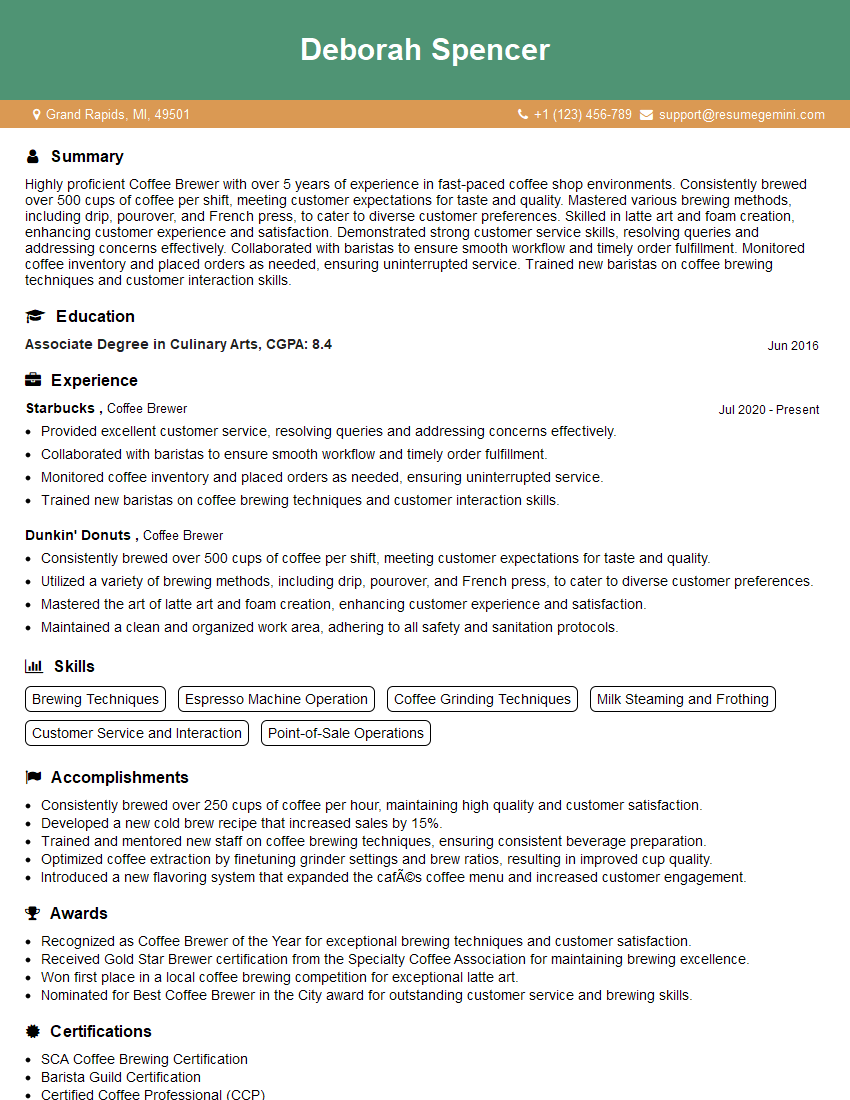
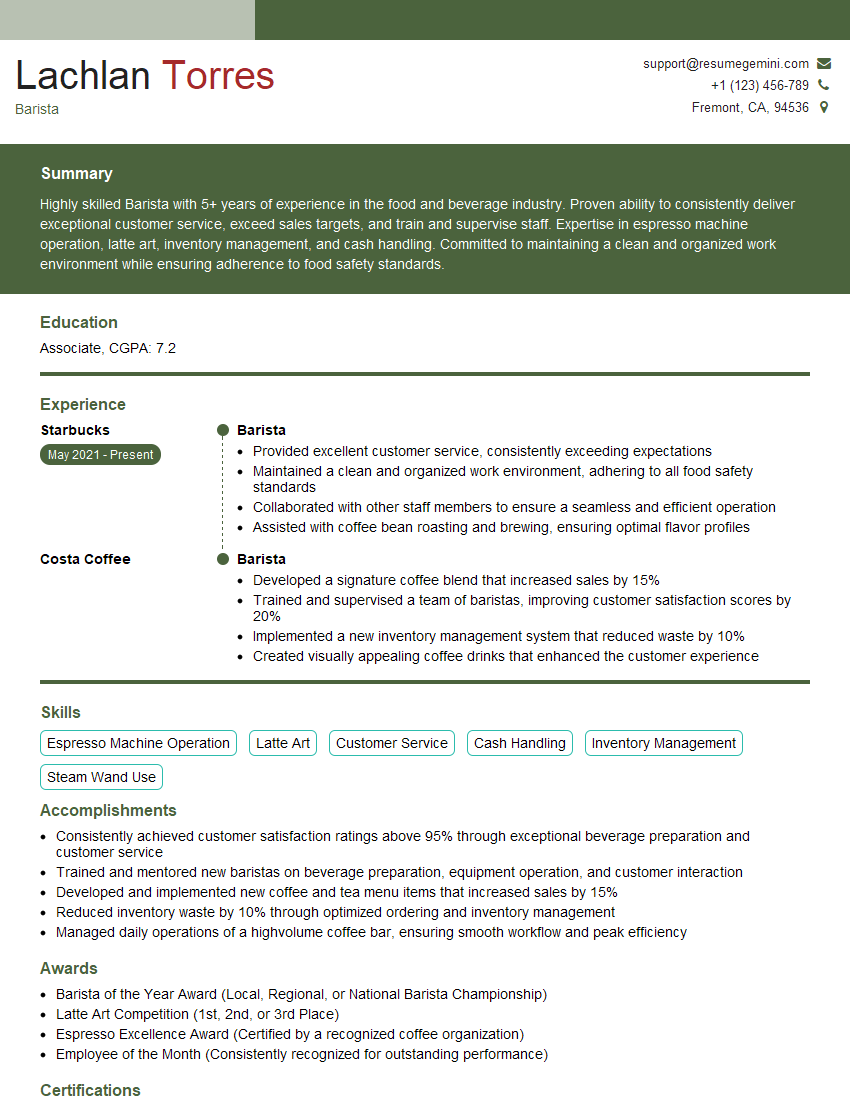
Mastering coffee brewing opens doors to exciting careers in a rapidly growing industry. From barista roles to specialty coffee shops and even coffee roasting, the possibilities are vast. To stand out, create an ATS-friendly resume that highlights your skills and experience. ResumeGemini is a trusted resource to help you build a professional and impactful resume. They even provide examples of resumes tailored to the coffee brewing industry – check them out to gain a competitive edge!
Explore more articles
Users Rating of Our Blogs
Share Your Experience
We value your feedback! Please rate our content and share your thoughts (optional).
What Readers Say About Our Blog
Very informative content, great job.
good