Interviews are more than just a Q&A session—they’re a chance to prove your worth. This blog dives into essential Flower Handling Techniques interview questions and expert tips to help you align your answers with what hiring managers are looking for. Start preparing to shine!
Questions Asked in Flower Handling Techniques Interview
Q 1. Describe the proper techniques for hydrating cut flowers.
Proper hydration is crucial for extending the vase life of cut flowers. Think of it like giving them a much-needed drink after a long journey! The process involves rehydrating the stems and providing them with essential nutrients. This is achieved through several steps:
- Recutting Stems: Always recut the stems at a 45-degree angle under running water. This removes air bubbles that can block water uptake. Imagine a straw with a kink – the water can’t flow properly. A sharp knife or shears are best; dull tools crush the stem, further hindering hydration.
- Removing Lower Foliage: Remove any leaves below the waterline. Submerged leaves decay quickly, leading to bacterial growth which clogs the stems and shortens vase life. Think of it like cleaning out a clogged drain.
- Using Flower Food: Flower food contains sugars, acids, and biocides. The sugars provide energy, the acids help maintain the correct pH, and the biocides inhibit bacterial growth. It’s like a multivitamin for your flowers!
- Choosing the Right Vase: Select a vase that is appropriately sized for the flowers and allows for enough water to cover a significant portion of the stems.
- Water Changes: Change the water every 1-2 days, and always recut the stems before refilling. This keeps the water clean and prevents bacterial contamination.
For example, I once had a client whose roses were wilting prematurely. After carefully recutting the stems, removing lower leaves, and using fresh flower food, the roses regained their vibrancy and lasted for almost a week longer.
Q 2. Explain the different methods for storing cut flowers to maintain freshness.
Storing cut flowers correctly is essential for preserving their freshness. Different methods suit various situations and flower types. Here are some common approaches:
- Refrigeration: This is a great method for short-term storage. Wrap the flowers loosely in a damp paper towel and place them in a plastic bag. Avoid airtight containers to prevent rot. Think of it as a cool, dark resting place.
- Cool, Dark Location: If refrigeration isn’t available, a cool, dark location (like a cellar or basement) can help maintain freshness. Avoid direct sunlight and drafts.
- Deep Water Storage: Some flowers benefit from storing their stems completely submerged in water for short periods. This keeps the stems hydrated and prevents dehydration.
- Proper Spacing: Ensure there’s sufficient space between flowers to prevent bruising and damage.
For instance, I often store delicate orchids in a plastic bag in the refrigerator prior to a wedding to ensure they arrive at the venue in peak condition.
Q 3. What are the common signs of wilting in cut flowers, and how do you address them?
Wilting is a common sign of dehydration and stress in cut flowers. The tell-tale signs include drooping petals, limp stems, and a loss of turgor (firmness). Addressing wilting involves rapid action to rehydrate and revive the flowers.
- Immediate Hydration: Immediately place the flowers in cool water, ideally with flower food.
- Recutting Stems: Recutting the stems under water is crucial to remove any blockage and facilitate water uptake.
- Removing Wilted Parts: Remove any severely wilted petals or leaves.
- Hydrating Treatment: A deep water bath might help revive very wilted flowers; submerge the entire stems in water for several hours.
- Reassessment: Check the flowers regularly and change water/re-cut stems as needed. Some flowers may not recover completely.
For example, a bunch of lilies I once received arrived slightly wilted. By promptly recutting the stems, changing the water, and adding flower food, they fully recovered within a few hours and lasted for many days.
Q 4. How do you identify and handle different flower types with varying care requirements?
Different flower types have unique care requirements. Understanding these variations is essential for proper handling. Here’s a simplified approach:
- Research: Before handling unfamiliar flowers, research their specific needs. Many resources provide detailed information on individual flower care.
- Observation: Pay attention to the flowers’ condition upon arrival. Note any signs of stress or damage.
- Stem Type: Woody stems (e.g., roses) often need a different handling approach than soft stems (e.g., lilies). Woody stems may need to be crushed slightly to help water uptake.
- Water Requirements: Some flowers prefer high water levels, while others prefer less.
- Sensitivity to Temperature: Some flowers are sensitive to heat or cold and may require specific storage conditions.
For example, I would handle delicate orchids with extreme care, avoiding any rough handling, using specific orchid food, and ensuring a cool and humid environment compared to more resilient sunflowers, which can tolerate a wider range of conditions.
Q 5. Explain the process of preparing flowers for an arrangement, including cleaning and trimming.
Preparing flowers for arrangement involves several crucial steps that impact the final look and longevity of the arrangement.
- Cleaning: Remove any dirt, debris, or damaged petals from the flowers. A soft brush can be helpful for delicate blooms.
- Trimming: Recut the stems at a 45-degree angle underwater. Remove lower foliage that would be submerged in the vase.
- Conditioning: Allow flowers to rehydrate and absorb water for at least an hour before arranging.
- Stripping Leaves: Remove leaves from any portion of the stem that will be submerged in water to prevent bacterial growth.
- Removing Thorns: Carefully remove thorns from roses and other thorny flowers to prevent injuries during arrangement.
Imagine preparing for a painting; you’d clean your palette and prepare your brushes – the same careful process applies to flowers before arranging.
Q 6. Describe your experience with various floral preservation methods.
My experience encompasses various floral preservation methods. I am adept at:
- Drying: Air drying, silica gel drying, and pressing – each produces different results suitable for various applications.
- Freezing: Freezing flowers maintains their color and shape to a greater extent than drying, but requires specific techniques to prevent damage.
- Preservation Solutions: I have experience using glycerin and other solutions to preserve the flexibility and moisture content of flowers.
- Epoxy Resin Encapsulation: This method is very effective for long-term preservation, especially for smaller flowers or individual blossoms.
I once used silica gel to preserve a rare orchid bloom for a client, creating a beautiful lasting memento from a short-lived but stunning flower.
Q 7. What are the best practices for arranging flowers to maximize their visual appeal and longevity?
Arranging flowers for maximum visual appeal and longevity requires careful planning and execution.
- Focal Point: Start with a focal point—the most prominent flower or group of flowers. This acts as the anchor for the arrangement.
- Balance: Distribute flowers evenly throughout the arrangement to achieve balance and visual harmony. Think of it like creating a visual equilibrium.
- Height and Texture: Vary the heights and textures of the flowers to create visual interest and depth. Don’t just use all similar heights and textures.
- Color Harmony: Consider color combinations; contrasting colors can be striking, while similar colors offer a softer feel.
- Flower Placement: Use varying angles and orientations to add dynamism. Don’t just position all flowers upright.
- Support Mechanics: Use floral foam or other supporting structures to ensure stems stay securely in place.
For instance, I once arranged a wedding bouquet using different heights and textures to create a cascading effect that beautifully complemented the bride’s dress. And the flowers lasted beautifully throughout the entire reception!
Q 8. How do you handle damaged or diseased flowers during the arrangement process?
Handling damaged or diseased flowers requires a meticulous approach to prevent contamination and maintain the overall quality of the arrangement. First, I carefully inspect each flower upon arrival, discarding any exhibiting significant damage like severe bruising, wilting beyond recovery, or visible signs of disease such as mold or bacterial rot. For minor blemishes, I might carefully trim the affected areas with a sharp knife, ensuring a clean cut to prevent further spread. This process is crucial because diseased flowers can quickly contaminate healthy ones, shortening their lifespan and ruining the entire arrangement.
For instance, if a rose has a few damaged petals, I’d remove only those affected, leaving the healthy bloom intact. If a significant portion is damaged, I’d sadly have to discard it. It’s a balancing act between preserving as much as possible and preventing wider problems. The use of clean tools and disinfecting work surfaces after handling damaged flowers is also paramount in preventing cross-contamination.
Q 9. Describe your experience working with different floral foam types.
My experience spans various floral foam types, each suited for different needs. I’ve extensively worked with traditional green floral foam, which is versatile and widely available, ideal for most arrangements. However, it’s crucial to remember that it’s not biodegradable, necessitating responsible disposal. I’ve also used Oasis® brand foam, known for its durability and ability to hold water effectively, leading to extended flower longevity, especially for large, complex designs.
Furthermore, I have experience with various foam densities, understanding that denser foams are better suited for heavier blooms or those with thick stems, providing better support. Lighter foams are preferred for delicate flowers where minimal pressure is essential. I’ve also experimented with biodegradable foam alternatives which are becoming increasingly important due to environmental concerns. Choosing the right foam greatly impacts the arrangement’s structural integrity and the flowers’ hydration.
Q 10. How do you maintain the freshness of flowers during transportation or delivery?
Maintaining flower freshness during transport is critical. My approach involves a multi-step process. First, flowers are correctly hydrated before packaging. This often involves a re-cut of stems under water and a hydration solution. Next, I use appropriate packaging, such as breathable sleeves or boxes to prevent crushing. Additionally, I use special water tubes and vials to ensure consistent water supply for longer journeys, especially for delicate flowers.
For example, during hot weather, I might include ice packs (carefully placed to avoid direct contact with flowers) in the packaging to maintain a cool temperature. For longer deliveries, I use specialized floral shipping boxes designed to maintain temperature and humidity, and I often schedule deliveries for early mornings to minimize exposure to extreme heat. Consistent monitoring of weather conditions is crucial to make informed choices about packaging and delivery timing.
Q 11. Explain your understanding of floral design principles, including color theory and balance.
Floral design principles are foundational to my work. Color theory plays a vital role; understanding the color wheel helps create harmonious or contrasting arrangements. For example, using analogous colors (colors next to each other on the wheel) creates a calming effect, while complementary colors (opposite each other) provide a vibrant contrast. I always consider the client’s preferences and the occasion when selecting a color palette.
Balance is equally important. I achieve balance through visual weight distribution— using larger, bolder flowers as focal points and complementing them with smaller flowers or greenery. I employ symmetrical balance (mirrored arrangement) or asymmetrical balance (unequal distribution but visually balanced) depending on the desired effect. Scale and proportion are also key; creating visual harmony through the size and placement of different elements within the arrangement.
Q 12. How do you handle customer orders and special requests concerning flower arrangements?
Handling customer orders involves active listening and detailed note-taking. I begin by understanding the client’s vision, considering the occasion, their budget, and color preferences. I then translate their ideas into a tangible design, providing suggestions based on my expertise and ensuring the arrangement aligns with their expectations and the availability of flowers.
Special requests are always welcomed, and I approach them with creativity and problem-solving skills. For example, if a client requests a specific flower that’s out of season, I might suggest a similar alternative while maintaining the overall aesthetic. Clear and consistent communication is vital throughout the process, keeping the client updated on any potential issues or changes.
Q 13. Describe your experience with using various floral tools and equipment.
My experience encompasses a wide range of floral tools and equipment. I’m proficient with floral shears, knives, and wire cutters for precise cutting and shaping of stems and wires. I regularly use floral tape, wire, and various adhesives to secure stems and create structural support within arrangements. I also utilize different containers, from traditional vases to more modern vessels, selecting the right ones for both the flowers and the overall design.
Furthermore, I’m familiar with specialized equipment such as floral foam cutters, which aid in creating intricate foam shapes for different arrangement types. I’m skilled in using water picks and flower food to ensure optimal flower hydration and longevity. My tool selection is always tailored to the specific needs of each arrangement and my comfort in using each tool increases my efficiency.
Q 14. What are the common pests and diseases that affect cut flowers, and how do you prevent them?
Common pests and diseases affecting cut flowers include aphids, thrips, and botrytis (gray mold). Aphids and thrips are small insects that suck sap from the flowers, causing discoloration and wilting. Botrytis is a fungus that causes gray mold, leading to decay. Prevention involves several strategies, starting with maintaining a clean workspace and regularly cleaning tools.
Proper handling and storage are crucial. This includes ensuring flowers are not overcrowded in buckets, providing adequate ventilation, and avoiding stagnant water. Regular inspection of flowers for signs of pests or diseases is also essential; prompt action, such as discarding infected flowers, is necessary to prevent widespread contamination. The use of appropriate pesticides (only when necessary and following all safety guidelines) can also help control pest infestations.
Q 15. How do you manage inventory and ensure the availability of fresh flowers?
Managing flower inventory requires a precise and proactive approach. It’s like running a well-oiled machine where every part plays a crucial role. I utilize a combination of methods to ensure freshness and availability. Firstly, I maintain a detailed inventory tracking system, often using software, that records the quantity, type, and arrival date of each flower. This allows me to forecast demand accurately and order accordingly. Secondly, I build strong relationships with reliable suppliers, ensuring a consistent flow of high-quality flowers. I also meticulously monitor the condition of each stem, removing wilted or damaged ones promptly. Regular stock rotation is crucial; FIFO (First-In, First-Out) is my guiding principle. Finally, proper storage, maintaining the correct temperature and humidity, is paramount in extending the lifespan of the flowers.
For example, if I notice a surge in demand for red roses around Valentine’s Day, I’ll adjust my orders weeks in advance, potentially even securing pre-orders with suppliers to guarantee availability. Similarly, I might experiment with different storage techniques, such as using flower food and appropriate hydration methods, to prolong the lifespan of particularly delicate blooms, minimizing waste.
Career Expert Tips:
- Ace those interviews! Prepare effectively by reviewing the Top 50 Most Common Interview Questions on ResumeGemini.
- Navigate your job search with confidence! Explore a wide range of Career Tips on ResumeGemini. Learn about common challenges and recommendations to overcome them.
- Craft the perfect resume! Master the Art of Resume Writing with ResumeGemini’s guide. Showcase your unique qualifications and achievements effectively.
- Don’t miss out on holiday savings! Build your dream resume with ResumeGemini’s ATS optimized templates.
Q 16. Describe your experience with wholesale flower markets and suppliers.
My experience with wholesale flower markets and suppliers spans over [Number] years. I’ve established long-term relationships with several reputable suppliers, both locally and internationally. I regularly visit the local flower market to hand-select the freshest blooms, assessing their quality, hydration, and overall condition. Building rapport with suppliers is key; it allows me to negotiate better prices, prioritize special requests, and receive advance notice of new varieties or seasonal offerings. I’ve also worked with international suppliers to source unique and exotic flowers, managing import procedures and ensuring adherence to all regulations.
For instance, I once secured a special arrangement with a Dutch supplier for a rare variety of tulips needed for a high-profile wedding. This required coordinating shipping, customs clearance, and precise delivery timing to guarantee the flowers arrived in perfect condition. Through careful planning and communication, the event was a resounding success.
Q 17. How do you maintain hygiene and sanitation standards while handling flowers?
Maintaining hygiene and sanitation is non-negotiable. It’s about protecting both the flowers and the people handling them. My process involves several key steps. Firstly, I always practice good personal hygiene, washing my hands frequently and wearing clean aprons. Work surfaces are disinfected before and after use, and all tools are thoroughly cleaned and sanitized. Any damaged or diseased flowers are immediately removed and disposed of properly. I use clean buckets and vases, changing the water regularly and adding flower food to maintain freshness and prevent bacterial growth. The storage area is kept cool, dry, and free from pests.
Think of it like preparing a meal in a restaurant kitchen—strict cleanliness protocols are crucial to prevent contamination. The same holds true in flower handling; contamination can quickly spread, affecting the longevity and beauty of the floral arrangements.
Q 18. Explain your process for creating different styles of flower arrangements (e.g., bouquets, centerpieces).
Creating different styles of flower arrangements is a creative process that involves understanding the principles of design, such as color theory, balance, and form. For bouquets, I often start with a focal flower, building layers of supporting blooms and greenery to create texture and depth. Centerpieces are designed with the table setting in mind, considering the size, shape, and overall aesthetic. I always adapt my techniques to suit the occasion and the client’s preferences.
For instance, a romantic wedding bouquet might incorporate cascading roses and lilies, while a modern centerpiece might feature geometric arrangements of succulents and orchids. I carefully consider the color palette, ensuring it complements the event’s theme. Each arrangement tells a story, and my goal is to translate the client’s vision into a beautiful and meaningful expression.
Q 19. How do you calculate the cost of materials and labor for a floral arrangement?
Calculating the cost of a floral arrangement requires a methodical approach. First, I determine the cost of all materials, including flowers, foliage, containers, and ribbons. This often involves consulting price lists from suppliers and factoring in any discounts or bulk purchasing benefits. Next, I calculate the labor cost, based on the time spent on design, arrangement, and delivery. My hourly rate reflects my experience and the complexity of the arrangement. Finally, I add a markup to cover overhead expenses, such as rent, utilities, and marketing. The final price reflects the cost of materials, labor, overhead, and desired profit margin.
For example, for a complex wedding bouquet requiring rare blooms and intricate design, the labor cost will be significantly higher than a simple hand-tied bouquet. I use spreadsheets or dedicated floral design software to track these costs, ensuring transparency and accurate pricing.
Q 20. Describe your experience with different floral design software or tools.
I’m proficient in several floral design software programs, including [List software names, e.g., Floral Design Pro, etc.]. These programs allow me to create digital mock-ups of arrangements, experiment with different color palettes and designs, and generate detailed cost estimates. They are invaluable tools for client presentations, ensuring everyone is on the same page before starting the creation process. They also help with inventory management, allowing for efficient ordering and reducing waste.
For example, using design software, I can easily showcase different options for a wedding centerpiece to a client, allowing them to visualize the final product and make informed decisions.
Q 21. What are your strategies for managing time effectively during peak seasons or events?
Peak seasons and events require meticulous planning and efficient time management. My strategy relies on several key elements. First, I create detailed schedules, prioritizing tasks based on deadlines and urgency. This often involves breaking down large projects into smaller, manageable steps. I also delegate tasks whenever possible, relying on a skilled team to share the workload. Effective communication with clients and suppliers is critical, keeping everyone informed and minimizing delays. Finally, I utilize technology, such as scheduling apps and project management software, to streamline operations and improve overall efficiency.
For example, during the holiday season, I create a detailed production schedule weeks in advance, assigning specific tasks to team members based on their strengths and experience. This approach ensures we meet all deadlines without compromising quality.
Q 22. How do you handle customer complaints or dissatisfaction with floral arrangements?
Handling customer complaints about floral arrangements requires empathy, professionalism, and a solution-oriented approach. I always begin by actively listening to the customer’s concerns, validating their feelings, and avoiding interrupting. I then carefully assess the issue – was there a problem with the arrangement’s design, the freshness of the flowers, or the delivery?
For instance, if the complaint is about wilting flowers delivered a day early, I would apologize sincerely, explain the potential causes (e.g., improper handling during transit or insufficient hydration prior to delivery), and offer immediate solutions like a replacement arrangement or a full refund. Documentation of the complaint and resolution is crucial.
If the complaint is about the design not meeting expectations, I’d ask for specific details about what didn’t meet expectations, showing the customer that their feedback is valued. A photograph might be helpful here. I’d offer options – redesigning a similar arrangement to better suit their vision, offering a partial refund, or potentially offering a discount on a future order to foster goodwill.
Ultimately, my goal is to turn a negative experience into a positive one, strengthening the customer relationship and improving our services based on their feedback.
Q 23. How do you ensure the quality and longevity of flowers throughout the entire process, from receiving to display?
Maintaining the quality and longevity of flowers is paramount. It starts from the moment we receive our inventory. We inspect each stem for freshness, removing any damaged or wilting blooms. The flowers are then immediately placed in a cool, clean environment – our specialized coolers maintain ideal temperature and humidity levels. Hydration is crucial; we use appropriate flower food solutions tailored to each variety to prolong their vase life.
During the design process, proper handling techniques are vital. We avoid crushing stems or bending blooms excessively. Hydration is continuously monitored, and we regularly trim stems at an angle to maximize water uptake. We also use various preservation techniques, such as flower food, stem seals, and floral foam, depending on the flower type and arrangement needs.
For display, strategic placement is key. Arrangements are shielded from direct sunlight, heat sources, and drafts. We rotate displays regularly, bringing those closer to the end of their lifespan to the front for quicker sale and ensuring freshness is maintained on the most visible displays.
Q 24. Describe your knowledge of different flower varieties and their unique handling requirements.
My knowledge of flower varieties and their handling requirements is extensive. For example, roses require precise hydration; using the correct flower food and trimming stems at a 45-degree angle is crucial. Their thorns need careful handling to avoid injury, and they should be kept away from ethylene-producing fruits that cause premature wilting. Lilies, on the other hand, are susceptible to pollen staining, so careful placement and possibly removal of the anthers are recommended. Tulips are known for their tendency to droop or bend, so we use techniques like cold storage and straightening before arranging.
More delicate flowers like orchids require gentle handling to prevent damage to their petals. Certain varieties require specific humidity and temperature conditions; special attention is given to these delicate blossoms. Understanding these nuanced requirements allows me to ensure each flower thrives throughout the entire process, from receiving to arrangement.
- Roses: Proper hydration, thorn removal, ethylene avoidance.
- Lilies: Pollen removal to prevent staining.
- Tulips: Cold storage, careful straightening.
- Orchids: Gentle handling, specific humidity and temperature control.
Q 25. Explain your experience with designing floral arrangements for various events (e.g., weddings, funerals).
I have extensive experience designing floral arrangements for various events. For weddings, I focus on creating cohesive designs that complement the overall theme and setting. This includes considering the bride’s vision, color palette, and floral preferences. I’ve worked on everything from classic cascading bouquets to modern minimalist arrangements, always striving to create a personalized and memorable experience.
Funeral arrangements often call for a different approach. These designs reflect the solemnity of the occasion, often featuring muted tones and meaningful symbolic flowers. I collaborate closely with the family to create arrangements that honor the deceased’s life and preferences. The arrangement style might vary depending on the religious traditions and the personal wishes of the bereaved.
In both cases, meticulous planning, attention to detail, and effective communication are paramount to ensure the arrangements perfectly reflect the event’s unique atmosphere and emotional significance.
Q 26. How do you maintain a clean and organized workspace?
Maintaining a clean and organized workspace is crucial for both efficiency and hygiene. We follow a strict cleaning schedule, disinfecting surfaces and tools regularly. All floral waste is disposed of properly and promptly. Our storage systems are designed for optimal organization – flowers are sorted by type and freshness, and supplies are easily accessible.
We implement a color-coded system for tools and equipment; this ensures easy identification and prevents cross-contamination. Work areas are kept clutter-free, with dedicated spaces for design, storage, and processing. Regular inventory checks ensure that we always have the necessary supplies on hand and that older stock is used first to minimize waste. This systematic approach ensures a safe, efficient, and aesthetically pleasing work environment.
Q 27. What are some innovative techniques you’ve used to improve flower handling efficiency?
To improve flower handling efficiency, I’ve implemented several innovative techniques. We utilize a flower-hydration system that incorporates a controlled-environment chamber to maintain optimal humidity and temperature, significantly extending the lifespan of flowers before arrangement. We’ve also invested in specialized tools, like a stem-cutting machine, which provides consistently precise cuts for efficient water absorption. In addition, I’ve developed a digital inventory management system that optimizes stock control, reducing waste and improving order fulfillment.
We’ve also implemented a workflow optimization strategy based on lean principles, minimizing unnecessary movements and optimizing task sequencing. This has resulted in a significant improvement in turnaround time without compromising the quality of our work. Moreover, training programs focusing on best practices for flower handling and arrangement have improved staff proficiency and minimized flower damage.
Q 28. How do you stay updated on the latest trends and techniques in the floral industry?
Staying updated on industry trends is crucial in this dynamic field. I regularly attend floral design workshops and conferences, both nationally and internationally. This provides exposure to innovative techniques and new flower varieties. I subscribe to trade publications and online journals, keeping abreast of the latest research and developments in floral preservation and design. Networking with fellow florists and industry professionals is invaluable; I actively participate in industry events and online communities to share best practices and learn from others’ experiences.
I also follow prominent floral designers on social media platforms and attend online webinars. This multifaceted approach ensures that I remain at the forefront of the industry, adopting the best techniques and technologies to enhance the quality of my work.
Key Topics to Learn for Flower Handling Techniques Interview
- Flower Selection and Quality Assessment: Understanding bloom stage, stem strength, hydration levels, and identifying potential defects. Practical application: Efficiently selecting flowers for various arrangements based on their condition and longevity.
- Proper Cutting and Conditioning Techniques: Learning the optimal cutting angles, using appropriate tools, and employing hydration solutions to maximize vase life. Practical application: Minimizing wilting and extending the display lifespan of flowers.
- Arranging and Design Principles: Mastering fundamental design elements like line, form, color, and texture to create visually appealing arrangements. Practical application: Creating balanced and aesthetically pleasing floral displays for different occasions and styles.
- Handling Different Flower Types: Understanding the unique handling requirements of various flower species (e.g., roses, lilies, orchids) considering their sensitivities and fragility. Practical application: Adapting techniques to preserve the beauty and integrity of diverse floral materials.
- Storage and Preservation Methods: Implementing proper storage techniques to maintain flower freshness and prevent spoilage. Practical application: Maintaining a consistently high quality of inventory in a retail or event setting.
- Troubleshooting Common Issues: Identifying and resolving problems such as wilting, drooping, and pest infestations. Practical application: Proactively addressing challenges to ensure the longevity and visual appeal of floral arrangements.
- Hygiene and Safety Protocols: Adhering to sanitation procedures and using protective equipment to maintain a clean and safe work environment. Practical application: Preventing contamination and ensuring worker safety.
Next Steps
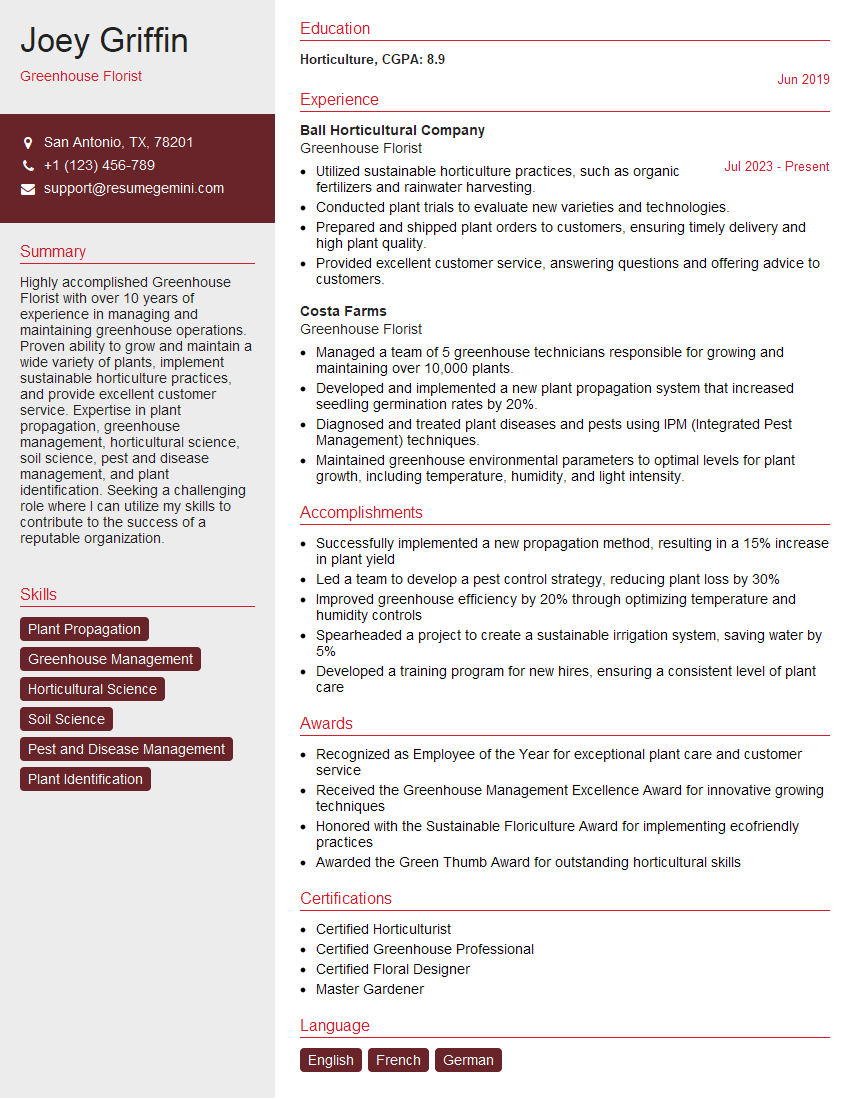
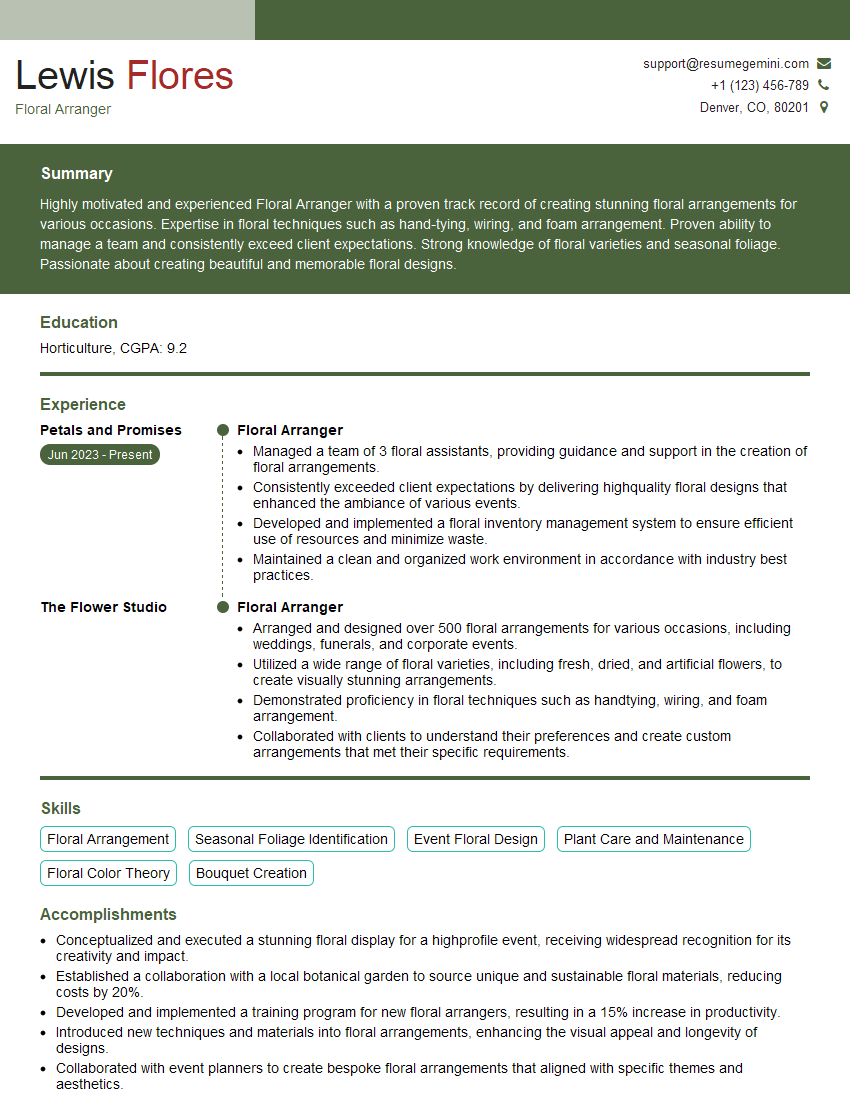
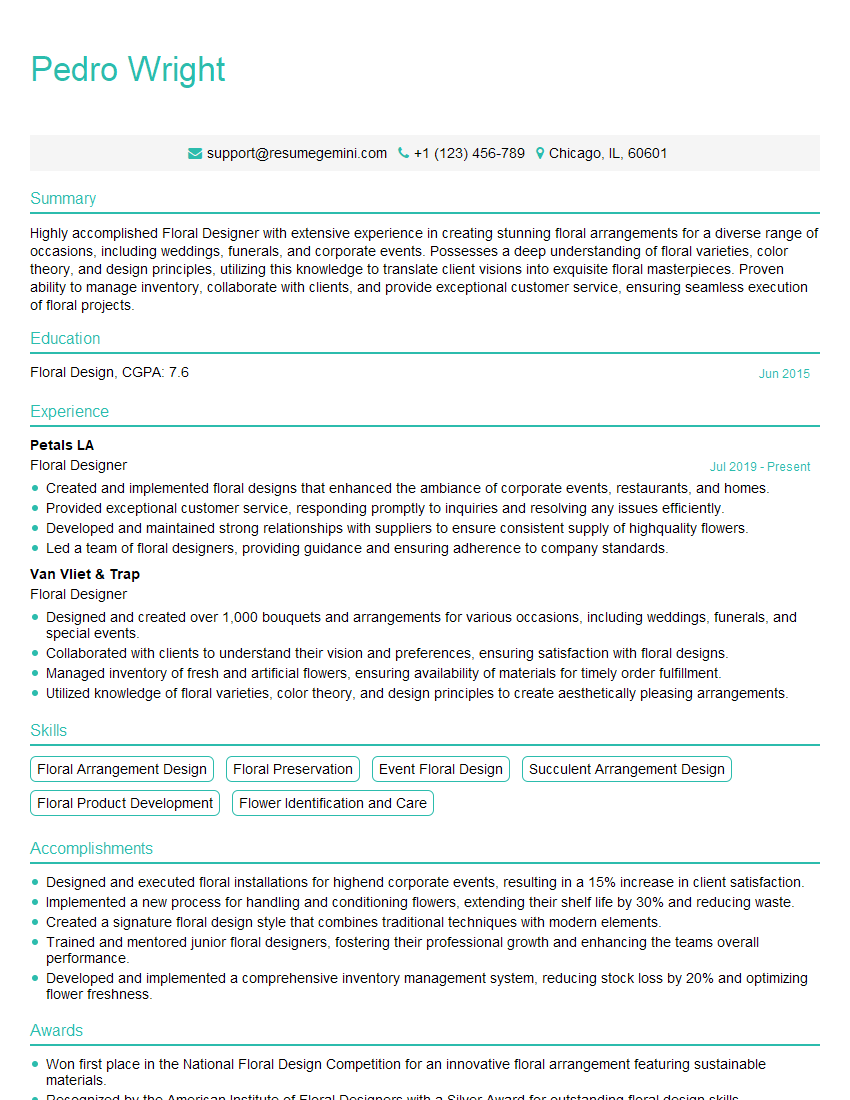
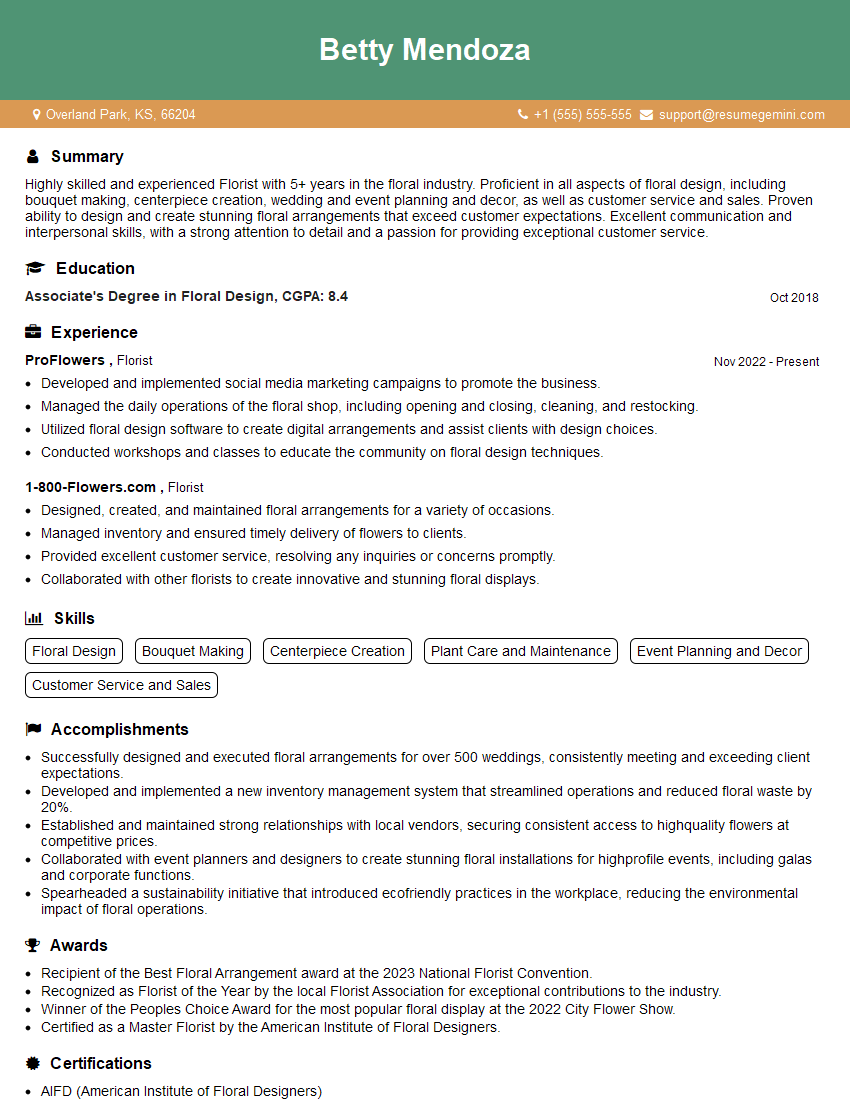
Mastering flower handling techniques is crucial for career advancement in the floral industry, opening doors to specialized roles and higher earning potential. To enhance your job prospects, creating a strong, ATS-friendly resume is essential. ResumeGemini is a trusted resource to help you build a professional and impactful resume that highlights your skills and experience. Examples of resumes tailored to Flower Handling Techniques are available to guide you. Invest time in crafting a compelling resume—it’s your first impression on potential employers.
Explore more articles
Users Rating of Our Blogs
Share Your Experience
We value your feedback! Please rate our content and share your thoughts (optional).
What Readers Say About Our Blog
Very informative content, great job.
good