Feeling uncertain about what to expect in your upcoming interview? We’ve got you covered! This blog highlights the most important Fuel Cell Production interview questions and provides actionable advice to help you stand out as the ideal candidate. Let’s pave the way for your success.
Questions Asked in Fuel Cell Production Interview
Q 1. Explain the difference between PEMFC, SOFC, and DMFC fuel cells.
The main differences between PEMFCs, SOFCs, and DMFCs lie in their operating temperatures and electrolytes. Think of it like choosing the right cooking pot – each is suited for a different recipe and heat source.
- PEMFCs (Proton Exchange Membrane Fuel Cells): Operate at relatively low temperatures (around 80°C), using a polymer electrolyte membrane to conduct protons. They’re like a quick-cooking stovetop – efficient for smaller-scale applications like portable power devices and electric vehicles, offering fast startup times.
- SOFCs (Solid Oxide Fuel Cells): These are high-temperature workhorses (600-1000°C), employing a solid ceramic electrolyte. This high temperature allows for greater efficiency but requires longer startup times. Imagine a powerful industrial oven; ideal for stationary power generation and high-efficiency applications.
- DMFCs (Direct Methanol Fuel Cells): These operate at intermediate temperatures (60-120°C) and utilize methanol directly as fuel, eliminating the need for a reformer. Think of a slow cooker – they offer convenient power but might have lower power density compared to PEMFCs.
In essence, the choice depends on the application’s power requirements, efficiency needs, operating environment, and cost considerations.
Q 2. Describe the electrochemical reactions occurring at the anode and cathode of a PEM fuel cell.
In a PEM fuel cell, the electrochemical reactions are beautifully simple yet incredibly powerful. They involve the oxidation of hydrogen at the anode and the reduction of oxygen at the cathode, ultimately generating electricity and water.
- Anode (Oxidation):
2H₂ → 4H⁺ + 4e⁻Hydrogen molecules are split into protons (H⁺) and electrons (e⁻). The protons pass through the electrolyte membrane, while the electrons travel through an external circuit, creating the electrical current. - Cathode (Reduction):
O₂ + 4H⁺ + 4e⁻ → 2H₂OOxygen molecules, protons from the anode, and electrons from the external circuit combine to form water. This reaction completes the circuit and generates heat.
The overall reaction is simply 2H₂ + O₂ → 2H₂O, producing clean energy with water as the only byproduct. It’s nature’s perfect battery!
Q 3. What are the key performance indicators (KPIs) for a fuel cell?
Key Performance Indicators (KPIs) for a fuel cell are crucial for assessing its performance and efficiency. They’re like a fuel cell’s report card.
- Power Density (W/cm²): Measures the power output per unit area. Higher is better, indicating a more compact and powerful cell.
- Voltage (V): The electrical potential difference between the anode and cathode. A higher voltage means more potential electrical work.
- Current Density (A/cm²): The amount of current produced per unit area, related to the rate of electrochemical reactions.
- Efficiency (%): The ratio of electrical energy output to the chemical energy input. Higher efficiency indicates less energy waste.
- Durability (hours): The operational lifespan of the fuel cell before significant performance degradation. This is a critical factor for commercial viability.
These KPIs are intertwined; for example, high power density usually correlates with high current density, but may sometimes compromise durability. Optimizing these factors requires careful design and material selection.
Q 4. How does temperature affect fuel cell performance?
Temperature significantly impacts fuel cell performance, much like the temperature of the engine in a car affects its performance.
- PEMFCs: Operate optimally at moderate temperatures (60-80°C). Higher temperatures can lead to membrane degradation, while lower temperatures slow down the reaction kinetics, reducing power output.
- SOFCs: Thrive at high temperatures (600-1000°C). The high temperature enhances ionic conductivity and reaction rates, leading to high efficiency. However, maintaining this temperature requires significant energy input.
- DMFCs: Work efficiently at intermediate temperatures (60-120°C), balancing the benefits of high reaction rates with the reduced costs associated with low-temperature operation.
Therefore, the ideal operating temperature is highly dependent on the specific type of fuel cell and its application. Temperature control is crucial for maximizing efficiency and lifespan.
Q 5. Explain the concept of fuel cell polarization and its components.
Fuel cell polarization represents the voltage loss during operation. It’s like a leak in your plumbing system, reducing the overall efficiency. Understanding its components is key to optimization.
- Activation Polarization: Voltage loss due to the sluggish kinetics of the electrochemical reactions at the electrode surfaces. It’s like friction in a machine, slowing things down.
- Ohmic Polarization: Voltage loss due to the resistance of the electrolyte and other cell components to the flow of ions and electrons. It’s like a narrow pipe in a water system, resisting flow.
- Concentration Polarization: Voltage loss due to the depletion of reactants (fuel and oxidant) at the electrode surfaces. It’s like a clogged filter preventing proper function.
Minimizing these losses is crucial for improving fuel cell performance. Strategies include using efficient catalysts, optimizing cell design, and employing proper reactant management.
Q 6. What are the different types of fuel cell catalysts and their advantages/disadvantages?
Fuel cell catalysts are essential for accelerating the sluggish electrochemical reactions, enabling efficient operation. Different types offer unique advantages and disadvantages.
- Platinum (Pt): The most commonly used catalyst, particularly in PEMFCs, due to its excellent electrocatalytic activity for both hydrogen oxidation and oxygen reduction. However, platinum is expensive and its scarcity limits widespread adoption. Its high cost is a major hurdle.
- Platinum Alloys (Pt-based): Alloys with other metals (e.g., Pt-Ru, Pt-Co) can improve catalyst durability and reduce platinum loading, but their performance might vary. This is a path toward cost reduction.
- Non-Platinum Group Metals (NPGMs): Research focuses on developing cost-effective alternatives such as oxides and carbides of transition metals (e.g., Fe, Co, Ni). While promising, their performance often lags behind platinum, especially in oxygen reduction.
The ideal catalyst would be highly active, durable, inexpensive, and abundant. Extensive research continues to pursue this holy grail.
Q 7. Describe the manufacturing process for a PEM fuel cell membrane electrode assembly (MEA).
Manufacturing a PEM fuel cell Membrane Electrode Assembly (MEA) is a delicate process requiring precision and control. It’s like assembling a complex piece of micro-machinery.
- Catalyst Ink Preparation: Platinum nanoparticles are dispersed in a solvent with carbon black support material to create catalyst ink. This ensures even distribution.
- Electrode Coating: The catalyst ink is coated onto the gas diffusion layers (GDLs) using techniques such as screen printing or spraying. Uniform thickness is critical.
- Membrane Preparation: The proton exchange membrane (PEM) is carefully inspected for any defects and cleaned to ensure optimum performance.
- MEA Assembly: The catalyst-coated GDLs (anode and cathode) are hot-pressed together with the PEM under controlled pressure and temperature to create a strong, yet thin, MEA. Precise alignment and pressure control are essential.
- Quality Control: The MEA is rigorously tested for performance and defects before further integration into the fuel cell stack.
The success of the manufacturing process hinges on maintaining high standards of cleanliness, precise control over parameters, and rigorous quality testing at each step.
Q 8. What are common fuel cell failure mechanisms?
Fuel cell failure is a complex issue stemming from various sources, often intertwined. Think of it like a car engine; many components need to work flawlessly for optimal performance. Common failure mechanisms can be broadly categorized into:
- Electrode Degradation: This is a major culprit. Over time, the catalyst layer (typically platinum) can lose its activity due to particle sintering (growing larger, reducing surface area), poisoning from impurities (like carbon monoxide), or corrosion. Imagine a rusty knife – it won’t cut as well.
- Membrane Degradation: The proton exchange membrane (PEM) is vital for transporting protons. It can suffer from chemical degradation, mechanical stress (due to repeated expansion and contraction), and water management issues (drying or flooding). A leaky hose in your garden will impede water flow similarly.
- Bipolar Plate Corrosion: These plates conduct electrons and distribute reactants. Corrosion, especially in aggressive environments, can lead to increased resistance and leakage. Think of a rusty pipe reducing water flow.
- Gas Diffusion Layer (GDL) issues: These layers facilitate gas transport. Problems include flooding (water buildup), compression (reducing gas permeability), and contamination. Imagine a clogged air filter in your car.
- Water Management: Excess water can flood the cell, blocking gas transport and hindering performance. Insufficient water can dry out the membrane, leading to cracks and increased resistance. Think of a plant – too much or too little water hinders its growth.
Understanding the root cause is crucial for effective mitigation strategies. Detailed diagnostic testing is often necessary to pinpoint the exact failure mechanism.
Q 9. How do you diagnose a fuel cell performance issue?
Diagnosing a fuel cell performance issue requires a systematic approach, akin to troubleshooting a complex electronic device. The process typically involves:
- Performance Monitoring: Continuously monitor voltage, current, and power output. A drop in these values often indicates a problem.
- Gas Analysis: Analyze the composition of the fuel and oxidant gases entering and exiting the cell. Deviations from the expected values can reveal issues like leakage or incomplete reactions.
- Electrochemical Impedance Spectroscopy (EIS): This technique provides insights into the internal resistance of the cell and helps identify the location of performance bottlenecks. Think of it as a detailed electrical checkup.
- Visual Inspection: Check for physical signs of degradation, like corrosion on bipolar plates or discoloration of the membrane.
- Post-mortem Analysis: For severely degraded cells, techniques like scanning electron microscopy (SEM) and energy-dispersive X-ray spectroscopy (EDS) can be used to examine the microstructure and elemental composition of the cell components. This detailed analysis provides the detective work to understand root cause.
The specific diagnostic tools and techniques used will depend on the type of fuel cell and the suspected cause of the problem. Combining several methods often provides the most accurate diagnosis.
Q 10. Explain the role of a humidifier in a fuel cell system.
A humidifier in a fuel cell system plays a critical role in maintaining optimal hydration of the proton exchange membrane (PEM). The PEM needs to be sufficiently hydrated to conduct protons effectively. Think of it as the lubricant in an engine.
Without adequate hydration, the membrane can dry out, leading to increased resistance, reduced ionic conductivity, and ultimately, cell failure. A humidifier ensures the membrane stays properly hydrated by introducing water vapor into the fuel cell gases. The humidity level is usually carefully controlled to prevent flooding (too much water) which can also block gas flow. Therefore, a humidifier is a key component for long-term fuel cell operation and performance.
The type of humidifier used depends on the fuel cell application and scale. Common types include membrane humidifiers and ultrasonic humidifiers. Careful control of the humidity is paramount for ensuring optimal performance and durability of the fuel cell system.
Q 11. What are the different types of fuel cell bipolar plates and their materials?
Bipolar plates are essential components of fuel cells, serving as current collectors and reactant distributors. They are crucial for stacking multiple cells to form a fuel cell stack. Several types of bipolar plates exist, differing in material and manufacturing methods:
- Graphite: A traditional choice, offering good conductivity and chemical resistance. However, graphite can be brittle and expensive to machine.
- Metal (e.g., Stainless Steel, Titanium): Metals offer high conductivity and are easier to manufacture in large quantities. However, corrosion resistance is a critical concern, and they may require coatings.
- Metal-based Composites: Combining metals with carbon or polymers can improve properties like corrosion resistance and mechanical strength, while maintaining good conductivity. Think of it like reinforced concrete.
- Polymer Composites: These materials offer lighter weight and design flexibility but may have lower conductivity and require careful selection to ensure adequate chemical resistance.
The choice of material depends on factors such as cost, performance requirements, and operating conditions. For instance, stainless steel might be suitable for low-temperature applications, whereas titanium might be preferred for high-temperature or corrosive environments.
Q 12. Discuss the importance of gas diffusion layers (GDLs) in fuel cells.
Gas Diffusion Layers (GDLs) are porous components sandwiched between the catalyst layer and the bipolar plate. They’re crucial for efficient fuel cell operation, acting as a bridge between the macro- and micro-scale environments. Think of them as efficient highways for gas transport.
Their key functions include:
- Gas Distribution: GDLs distribute reactant gases (fuel and oxidant) evenly across the catalyst layer, maximizing the reaction area.
- Water Removal: They help remove water produced during the reaction, preventing flooding.
- Electron Conduction: GDLs conduct electrons from the catalyst layer to the bipolar plate.
- Mechanical Support: They provide mechanical support for the catalyst layer and the membrane electrode assembly (MEA).
GDLs are typically made from carbon fibers, often treated with hydrophobic agents (to repel water) and conductive additives. Their properties, such as porosity, thickness, and hydrophobicity, significantly affect fuel cell performance. Careful selection and optimization of GDLs are crucial for achieving high power density and durability.
Q 13. Describe different methods for fuel cell testing and characterization.
Testing and characterizing fuel cells are vital for evaluating performance, identifying weaknesses, and optimizing design. Various methods are employed:
- Polarization Curves: Measuring the cell voltage as a function of current density provides insights into the cell’s performance at different operating points.
- Electrochemical Impedance Spectroscopy (EIS): This powerful technique helps identify the sources of resistance within the cell, allowing for pinpoint diagnosis of issues.
- Durability Testing: Simulating real-world operating conditions to evaluate the long-term performance and stability of the fuel cell is crucial.
- Single Cell Testing: Evaluating individual cells before integration into a stack helps identify faulty components and optimize cell design.
- Stack Testing: Testing a complete stack under various conditions to evaluate the overall system performance and identify potential issues related to integration.
- Gas Chromatography: This technique is used to measure the concentration of gases in the inlet and outlet streams, allowing for detection of leakage and incomplete reactions.
The specific testing methods used will depend on the fuel cell type, application, and the specific information being sought. A combination of these methods often yields a comprehensive understanding of the fuel cell’s performance and reliability.
Q 14. What are the challenges associated with scaling up fuel cell production?
Scaling up fuel cell production from the laboratory to industrial levels presents numerous challenges, akin to scaling up a small bakery to a large-scale production factory. Key challenges include:
- Cost Reduction: Materials costs, particularly for platinum-group metals (PGMs), are a major hurdle. Research into alternative catalysts and more efficient manufacturing processes is vital.
- Manufacturing Processes: Scaling up requires the development of efficient and reproducible manufacturing processes that can produce high-quality fuel cells at a large scale. Automated processes are crucial for consistency and cost-effectiveness.
- Quality Control: Maintaining consistent quality across a large number of cells is vital for reliability. Robust quality control measures are needed throughout the production process.
- Material Availability: Ensuring the availability of high-quality materials at the scale required for mass production is essential. Supply chain management becomes a significant factor.
- Infrastructure: Establishing the necessary infrastructure for large-scale manufacturing, including facilities, equipment, and skilled labor, is a significant investment.
- Standardization: Lack of industry standards can hinder mass production and integration into various applications. Development of common standards is beneficial.
Addressing these challenges requires a multidisciplinary approach, integrating materials science, engineering, manufacturing, and economics expertise. Overcoming these obstacles is crucial for the widespread adoption of fuel cell technology.
Q 15. How does water management impact fuel cell performance?
Water management is absolutely crucial for fuel cell performance. Think of it like this: a fuel cell needs a precise amount of water, much like a plant needs the right amount of water to thrive. Too little water, and the membrane dries out, leading to increased resistance and a significant drop in power output. This is because the membrane’s ability to conduct protons, essential for the electrochemical reaction, relies on proper hydration. Too much water, and it floods the cell, blocking pathways for reactant gases (hydrogen and oxygen) to reach the catalyst, again reducing efficiency and potentially leading to cell damage.
Different fuel cell types have varying water management needs. Proton exchange membrane fuel cells (PEMFCs), for instance, are particularly sensitive to water content. Effective water management strategies include employing appropriate humidification techniques for the reactant gases, careful control of cell temperature, and optimized gas flow patterns within the cell stack. In practice, this might involve using specialized humidifiers, employing microfluidic channels for precise water distribution, or incorporating water removal systems to prevent flooding.
Career Expert Tips:
- Ace those interviews! Prepare effectively by reviewing the Top 50 Most Common Interview Questions on ResumeGemini.
- Navigate your job search with confidence! Explore a wide range of Career Tips on ResumeGemini. Learn about common challenges and recommendations to overcome them.
- Craft the perfect resume! Master the Art of Resume Writing with ResumeGemini’s guide. Showcase your unique qualifications and achievements effectively.
- Don’t miss out on holiday savings! Build your dream resume with ResumeGemini’s ATS optimized templates.
Q 16. Explain the concept of fuel cell stack design and optimization.
Fuel cell stack design and optimization is all about maximizing power output, efficiency, and durability while minimizing cost and size. Imagine building a high-rise; you need a solid foundation, strong support structures, and efficient systems for energy and waste management. Similarly, a fuel cell stack involves careful consideration of several factors.
- Cell configuration: This dictates how individual cells are connected in series to achieve the desired voltage. There’s a trade-off here between voltage (more cells in series) and current density (larger cell area).
- Bipolar plates: These act as the electrical conduits, distributing reactants and collecting the products. Their design significantly influences flow distribution, pressure drop, and manufacturing cost. Optimization involves balancing the need for high electrical conductivity and good flow characteristics with material cost and corrosion resistance.
- Gaskets and seals: These prevent gas leakage and maintain proper compartmentalization within the stack. Choosing the right material and ensuring reliable sealing is vital for long-term performance.
- Cooling systems: Fuel cells generate heat during operation. Effective cooling prevents overheating, which could damage the components and reduce efficiency. This may involve using liquid or air cooling systems tailored to the stack size and power output.
Optimization involves using computational fluid dynamics (CFD) modeling and experimental testing to refine designs. This helps engineers find the optimal balance between performance, cost, and durability. For instance, simulating different bipolar plate designs in CFD can identify those with minimal pressure drop and uniform gas distribution.
Q 17. Discuss the different types of fuel cell balance of plant (BOP) components.
The Balance of Plant (BOP) components are like the supporting cast in a fuel cell system. While the fuel cell stack generates electricity, the BOP ensures the system operates safely and efficiently. Key BOP components include:
- Fuel processing system: This prepares the fuel (e.g., hydrogen) to the required purity and pressure. This might include filters, compressors, and reformers for processing fuels such as natural gas.
- Air supply system: This supplies clean, filtered air to the cathode side of the fuel cell. This often involves air compressors, filters, and humidifiers.
- Thermal management system: As mentioned earlier, fuel cells generate heat. The thermal management system (TMS) regulates the temperature, often using liquid cooling loops and heat exchangers.
- Power conditioning system: This converts the DC electricity generated by the fuel cell into AC power suitable for the grid or specific applications. This may involve inverters, DC-DC converters, and other power electronics.
- Control system: This monitors and controls various parameters such as temperature, pressure, voltage, and gas flows to optimize performance and ensure safe operation. This is increasingly sophisticated, often involving embedded systems and software controls.
The specific components and their design will vary significantly depending on the fuel cell application and scale. For example, a small portable fuel cell might have a very simple BOP, while a large stationary fuel cell system for power generation will have a much more complex and robust BOP.
Q 18. How do you ensure quality control in fuel cell production?
Quality control in fuel cell production is paramount, as defects can significantly affect performance, durability, and even safety. A multi-layered approach is essential, starting from the selection of raw materials.
- Material characterization: Rigorous testing of raw materials ensures that they meet the required specifications regarding purity, conductivity, and other relevant properties. This might involve techniques like X-ray diffraction, electron microscopy, and electrochemical impedance spectroscopy.
- Process monitoring: Throughout the manufacturing process, parameters like temperature, pressure, and gas composition are precisely controlled and monitored to maintain consistency and prevent defects. Statistical process control (SPC) methods are often employed.
- Component testing: Individual components like bipolar plates, gaskets, and membranes are tested for defects, leaks, and performance characteristics. This might involve visual inspections, pressure tests, and electrochemical testing.
- Stack testing: Assembled fuel cell stacks undergo rigorous performance testing under various conditions, measuring voltage, current, power output, and durability. This helps to identify issues with individual cells, as well as the overall stack performance.
- Non-destructive testing: Techniques like ultrasound and infrared imaging are used to detect internal flaws and defects without damaging the components.
Documentation and traceability are crucial to ensure that any issues can be quickly identified and corrected. Robust quality control processes lead to higher reliability, longer lifetimes, and better overall performance of the fuel cells.
Q 19. What are the safety considerations for working with fuel cells?
Working with fuel cells involves several safety considerations due to the presence of flammable hydrogen and potentially corrosive chemicals. Safety protocols must be rigorously followed.
- Hydrogen handling: Hydrogen is highly flammable and requires specialized storage, handling, and leak detection systems. Proper ventilation is crucial to prevent the accumulation of hydrogen in enclosed spaces.
- High-voltage systems: Fuel cells operate at relatively high voltages, posing a risk of electric shock. Safety measures must be taken to prevent accidental contact with high-voltage components. Insulated tools, protective clothing, and lockout/tagout procedures are essential.
- Chemical hazards: Certain fuel cell components and reactants can be corrosive or toxic, requiring appropriate personal protective equipment (PPE), handling procedures, and waste disposal methods.
- Fire prevention: Fire suppression systems are often necessary to mitigate the risk of hydrogen fires or explosions. Regular inspections and maintenance of these systems are essential.
- Emergency procedures: Clear emergency response plans and procedures must be in place to address potential accidents or leaks. Personnel should be trained on appropriate response protocols.
Thorough risk assessments, regular safety training, and adherence to established safety procedures are vital to minimize risks and ensure a safe working environment.
Q 20. What are the environmental benefits of fuel cell technology?
Fuel cell technology offers significant environmental benefits compared to traditional fossil fuel-based power generation. They’re essentially clean energy converters.
- Reduced greenhouse gas emissions: Fuel cells produce electricity with minimal greenhouse gas emissions, especially when using hydrogen produced from renewable sources. This significantly reduces the carbon footprint compared to burning fossil fuels.
- Reduced air pollution: Unlike combustion engines, fuel cells produce virtually no harmful air pollutants, such as particulate matter, sulfur oxides, and nitrogen oxides, leading to cleaner air quality.
- High efficiency: Fuel cells have higher energy conversion efficiencies compared to traditional combustion engines, meaning less energy is wasted as heat. This improves overall energy use efficiency.
- Versatile fuel options: While hydrogen is the most common fuel, fuel cells can potentially utilize various other fuels, including biofuels and reformed natural gas, creating opportunities for decarbonizing existing energy infrastructure.
The environmental impact varies depending on the fuel source used. Using hydrogen produced from renewable sources like solar or wind power delivers the most significant environmental advantages. However, even with non-renewable fuels, the reduced emissions and improved efficiency offer notable environmental benefits compared to conventional technologies.
Q 21. What are the current limitations and future research directions in fuel cell technology?
Despite their potential, fuel cell technology still faces several limitations, driving ongoing research and development.
- High cost: The manufacturing costs of fuel cells, particularly the platinum-based catalysts, remain relatively high, limiting widespread adoption.
- Durability and lifetime: Improving the long-term durability and lifetime of fuel cells is a critical challenge. Issues such as catalyst degradation and membrane degradation need to be addressed.
- Hydrogen storage and distribution: The infrastructure for safely and efficiently storing and distributing hydrogen is still under development. This is a major hurdle to widespread adoption of hydrogen fuel cell vehicles.
- Performance at low temperatures: Some fuel cell types perform less efficiently at lower temperatures, limiting their applications in certain environments.
Future research focuses on addressing these challenges through several approaches:
- Developing less expensive catalysts: Research is ongoing to replace or reduce the amount of platinum in fuel cell catalysts.
- Improving membrane durability: Developing more robust and durable membranes is critical for extending the lifetime of fuel cells.
- Expanding hydrogen infrastructure: Investments in hydrogen production, storage, and distribution infrastructure are necessary to support the widespread adoption of fuel cell technologies.
- Exploring alternative fuels: Research into fuel cells that can utilize alternative fuels, such as ammonia or methanol, is being pursued.
Addressing these limitations is essential for the continued development and widespread deployment of fuel cell technology as a clean and efficient energy source.
Q 22. Describe different fuel cell applications (e.g., automotive, stationary power).
Fuel cells are versatile power generators finding applications across various sectors. Let’s explore some key areas:
- Automotive: Fuel cell electric vehicles (FCEVs) offer a compelling alternative to gasoline-powered cars. They use hydrogen as fuel, producing electricity to power the motor, with only water vapor as a byproduct. This makes them significantly cleaner than combustion engines. Examples include prototypes and limited production models from several major automakers.
- Stationary Power: Fuel cells are ideal for providing reliable, clean power in stationary applications. Think backup power for data centers, hospitals, or remote locations. Their quiet operation and low emissions make them attractive choices for sensitive environments. They are also increasingly used in residential settings for combined heat and power (CHP) systems, generating both electricity and heat efficiently.
- Portable Power: Smaller fuel cells power devices like laptops, mobile phones, and even military equipment. Their high energy density and long operational times make them beneficial in situations where batteries are inadequate.
- Material Handling Equipment: Forklifts and other warehouse equipment are increasingly adopting fuel cells for their clean operation and long run times, reducing the need for frequent battery changes.
The choice of application significantly impacts the fuel cell’s design and requirements. For instance, automotive fuel cells prioritize compactness and quick start-up, while stationary power applications focus on longevity and high efficiency.
Q 23. How does the choice of fuel affect fuel cell performance?
The fuel choice dramatically affects fuel cell performance. Several factors are at play:
- Energy Density: Hydrogen has the highest energy density by weight, leading to smaller and lighter fuel cell systems. However, its storage and transportation pose challenges. Other fuels like methanol or natural gas offer higher volumetric energy density, simplifying storage but potentially impacting efficiency and emissions.
- Reactivity: The fuel’s reactivity with the electrode catalyst influences the reaction rate and overall power output. Some fuels require more complex catalysts and higher operating temperatures.
- Purity: Impurities in the fuel can poison the catalyst, reducing performance and lifespan. Careful fuel purification is crucial, especially for sensitive fuel cell types.
- Toxicity: The fuel’s toxicity and potential environmental impact are significant concerns. Hydrogen is inherently clean, while some hydrocarbon fuels produce greenhouse gases.
For example, a proton exchange membrane (PEM) fuel cell works best with pure hydrogen due to its sensitivity to impurities. Conversely, direct methanol fuel cells (DMFCs) can tolerate some impurities in methanol, making them potentially more practical for certain applications, although at a lower efficiency.
Q 24. Explain the concept of fuel cell efficiency.
Fuel cell efficiency refers to the ratio of electrical energy produced to the chemical energy available in the fuel. It’s a crucial metric reflecting the system’s overall performance. Several factors affect efficiency:
- Cell Voltage: The voltage produced by a single fuel cell is rarely the theoretical maximum due to internal resistances and activation losses.
- Temperature: Operating temperature influences reaction kinetics and energy losses. Optimizing temperature is crucial for maximum efficiency.
- Pressure: Higher pressures can enhance reactant delivery and improve performance, but this increases system complexity.
- Fuel Utilization: The percentage of fuel consumed in the electrochemical process determines how much of its energy is converted into electricity.
Imagine a car engine; its efficiency represents the amount of usable power generated from the gasoline burnt. Similarly, fuel cell efficiency reflects the conversion of chemical energy to electricity. High-efficiency fuel cells minimize energy waste as heat, maximizing the usable electricity.
Q 25. Discuss the economic aspects of fuel cell technology.
The economics of fuel cell technology involve a complex interplay of factors:
- Manufacturing Costs: The cost of materials, particularly platinum group metals (PGMs) used as catalysts, significantly impacts the price of fuel cells. Research into cheaper and more durable catalysts is vital for wider adoption.
- Fuel Costs: The cost of hydrogen or other fuels varies depending on production methods and infrastructure availability. Hydrogen production from renewable sources is crucial for cost-effectiveness and environmental sustainability.
- System Life and Maintenance: Long operational lifespan and low maintenance requirements are crucial for reducing the overall cost of ownership. Durable components and robust designs are essential.
- Government Incentives and Subsidies: Government support through tax credits, grants, and other incentives can help lower the initial investment costs and stimulate market growth.
- Economies of Scale: Mass production can bring down manufacturing costs, making fuel cells more competitive with other power generation technologies.
Currently, fuel cells are more expensive than traditional power generation methods. However, as technology advances and production scales up, their cost is expected to decrease significantly, making them a more financially viable option.
Q 26. What are the different types of fuel cell membranes?
The membrane is the heart of a fuel cell, separating the fuel and oxidant while allowing the passage of ions. Different types exist, each with unique properties:
- Proton Exchange Membranes (PEMs): These are the most common type, usually made of perfluorinated sulfonic acid polymers like Nafion. They conduct protons effectively but can be sensitive to dehydration at high temperatures.
- Alkaline Membranes (AEMs): AEMs use hydroxide ions as the charge carriers. They offer higher theoretical efficiency and are less sensitive to CO poisoning than PEMs. However, they are more susceptible to CO2 contamination.
- Solid Oxide Fuel Cells (SOFC) Membranes: These use ceramic materials, typically yttria-stabilized zirconia (YSZ), to conduct oxygen ions at high temperatures (typically 800°C). They can tolerate fuel impurities but require high operating temperatures.
The choice of membrane depends on the type of fuel cell, operating temperature, and fuel composition. For example, PEMs are ideal for low-temperature fuel cells, while SOFC membranes are suitable for high-temperature applications.
Q 27. How do you troubleshoot a fuel cell system malfunction?
Troubleshooting a fuel cell malfunction requires a systematic approach:
- Identify the Problem: Observe the symptoms. Is the power output low? Are there unusual noises or smells? Is there a noticeable temperature change?
- Check Input Conditions: Verify the fuel supply, oxidant flow rate, and purity. Ensure proper pressure and temperature levels.
- Inspect the Fuel Cell Stack: Visually inspect the stack for any damage, leaks, or signs of corrosion. Check for proper sealing and connections.
- Analyze Gas Composition: Analyze the composition of fuel and oxidant streams to identify any impurities or unusual components.
- Monitor Cell Voltage and Current: Measure the voltage and current of individual cells to locate faulty cells within the stack. Consistent voltage drops indicate potential problems.
- Consult Diagnostics: Modern fuel cell systems have diagnostic tools to provide detailed information on performance parameters. Use these tools to pinpoint the problem.
For example, a sudden drop in voltage could indicate a fuel leak or a blockage in the gas flow path. A gradual voltage decrease might suggest catalyst degradation or membrane deterioration. A systematic approach and careful diagnostics are crucial for efficient troubleshooting.
Q 28. Describe your experience with fuel cell modeling and simulation software.
I have extensive experience using various fuel cell modeling and simulation software packages. My expertise includes:
- COMSOL Multiphysics: I have leveraged COMSOL’s multiphysics capabilities to simulate coupled electrochemical, thermal, and fluid dynamics processes within fuel cell systems. This allows for detailed analysis of temperature gradients, flow fields, and reactant distributions, aiding in design optimization and performance prediction.
- ANSYS Fluent: I’ve utilized ANSYS Fluent for Computational Fluid Dynamics (CFD) simulations, specifically modeling the flow of fuel and oxidant within the fuel cell channels. This helps identify and address flow maldistribution and pressure drop issues.
- OpenFOAM: My experience includes using OpenFOAM, an open-source CFD toolbox, for detailed simulations of fuel cell performance. This provides flexibility in customizing simulations to address specific research questions.
I have used these tools to predict fuel cell performance under various operating conditions, optimize cell designs, and investigate the effects of different materials and operating parameters. For example, I have used simulation to optimize the flow field design in a PEM fuel cell, leading to a 15% improvement in power density in a recent project. These simulations are invaluable for guiding experimental work and accelerating the development of advanced fuel cell technologies.
Key Topics to Learn for Your Fuel Cell Production Interview
- Fuel Cell Fundamentals: Understand the different types of fuel cells (PEMFC, SOFC, etc.), their electrochemical principles, and their operating mechanisms. Be prepared to discuss the advantages and disadvantages of each type.
- Materials Science in Fuel Cell Production: Familiarize yourself with the key materials used in fuel cell construction, including catalysts, membranes, and bipolar plates. Understand the properties that make these materials suitable and the challenges in their manufacturing and durability.
- Manufacturing Processes: Gain a solid understanding of the various manufacturing techniques employed in fuel cell production, such as membrane electrode assembly (MEA) fabrication, stack assembly, and quality control procedures. Be ready to discuss the trade-offs between different methods.
- Performance and Testing: Know how to characterize and evaluate fuel cell performance. Familiarize yourself with common performance metrics (power density, efficiency, durability) and the testing methodologies used to assess them. Be prepared to discuss troubleshooting techniques for common performance issues.
- System Integration and Applications: Understand how fuel cells are integrated into larger systems (e.g., transportation, stationary power generation) and their practical applications in different sectors. Be ready to discuss the challenges and opportunities related to system integration.
- Cost and Scalability: Discuss the economic aspects of fuel cell production, including cost analysis, manufacturing scalability, and the factors affecting the overall cost of fuel cell systems. Be prepared to discuss strategies for cost reduction and improvement of scalability.
- Sustainability and Environmental Impact: Understand the environmental benefits of fuel cell technology compared to conventional energy sources, as well as the lifecycle environmental impact of fuel cell production and disposal.
Next Steps
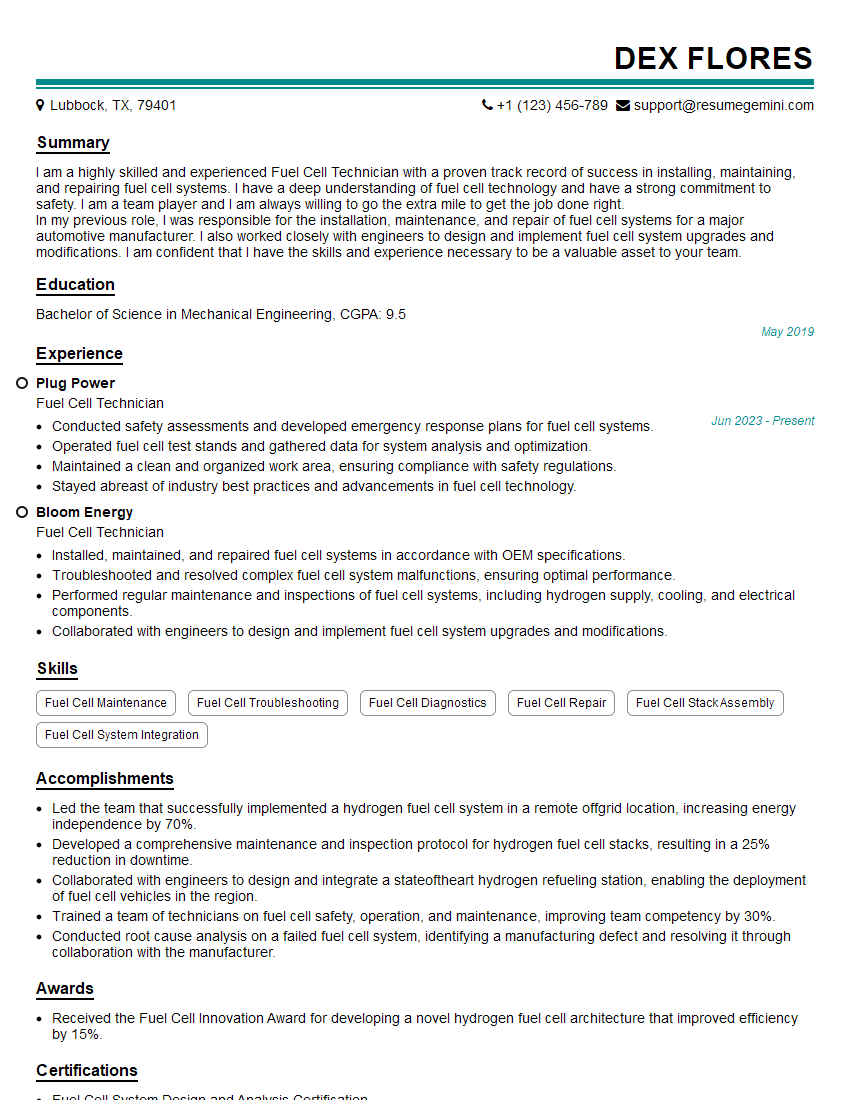
Mastering fuel cell production principles and applications opens doors to exciting career opportunities in a rapidly growing sector. To significantly boost your job prospects, creating a strong, ATS-friendly resume is crucial. ResumeGemini is a trusted resource that can help you build a professional and impactful resume, highlighting your skills and experience effectively. Examples of resumes tailored to the Fuel Cell Production field are available to guide you. Invest time in crafting a resume that showcases your expertise; it’s your first impression on potential employers.

Explore more articles
Users Rating of Our Blogs
Share Your Experience
We value your feedback! Please rate our content and share your thoughts (optional).
What Readers Say About Our Blog
Very informative content, great job.
good