Feeling uncertain about what to expect in your upcoming interview? We’ve got you covered! This blog highlights the most important Tattoo Portraits interview questions and provides actionable advice to help you stand out as the ideal candidate. Let’s pave the way for your success.
Questions Asked in Tattoo Portraits Interview
Q 1. Describe your experience with different portrait tattooing styles (e.g., realism, traditional, watercolor).
My experience spans a wide range of portrait tattooing styles, each demanding a unique approach. Realism, for example, requires meticulous detail and shading to create a photorealistic effect. This involves a high level of precision with needle depth and ink layering to build up subtle gradations of light and shadow. I’ve worked extensively on realistic portraits of loved ones, pets, and even historical figures. Traditional portraiture, on the other hand, utilizes bold outlines, solid colors, and limited shading, resulting in a classic, timeless aesthetic. Think classic Americana or bold Japanese-inspired styles. These designs often benefit from a slightly heavier hand and bolder color choices. Finally, watercolor portrait tattoos are all about capturing the fluidity and vibrancy of the medium. This necessitates a lighter touch and a focus on blending techniques to create soft, diffused edges and a sense of movement.
- Realism: Think hyperrealistic portraits, mimicking photography.
- Traditional: Bold lines, solid colors, classic Americana style.
- Watercolor: Soft blends, diffused edges, vibrant color washes.
Q 2. Explain your process for creating a custom portrait tattoo design from a client’s reference image.
My process for creating custom portrait tattoo designs begins with a thorough consultation with the client. We discuss their vision, the desired style, placement, and size. Then, I receive a high-resolution reference image, which I meticulously analyze for key features, lighting, and composition. I use digital art software to refine the image, adjusting aspects like contrast, color saturation, and potentially adding or removing elements based on the client’s feedback and my artistic judgment. This often involves careful consideration of how the portrait will translate onto the skin, taking into account skin tone, texture, and the body’s natural curves. I then create a detailed stencil, ensuring all the intricate details from the refined image are clearly visible for accurate transfer to the skin. Throughout this process, constant communication with the client is crucial for ensuring their complete satisfaction.
Q 3. How do you ensure accurate color matching and skin tone representation in your portrait tattoos?
Accurate color matching and skin tone representation are paramount in portrait tattoos. I achieve this through a combination of techniques. Firstly, I utilize high-quality tattoo inks from reputable brands, which offer a wide range of colors and consistent pigmentation. I carefully study the reference image to identify the precise shades required and meticulously mix inks to achieve the most accurate match possible. This often involves using multiple layers and gradual shading to build depth and nuance. I also pay close attention to the client’s skin tone and undertones, as this affects how the ink will appear once healed. Understanding color theory, particularly complementary and analogous color schemes, helps me in making informed decisions about color selection and avoiding unwanted color shifts during the healing process. Furthermore, I always show the client the mixed inks on a skin-tone palette before starting the tattoo, ensuring they are happy with the results.
Q 4. What techniques do you use to achieve realistic shading and depth in portrait tattoos?
Realistic shading and depth are achieved through a combination of techniques, primarily focused on layering and blending. I use a variety of needles and techniques to create a spectrum of shading values, from subtle transitions to bold contrasts. For example, smaller needles create finer lines and detail, while larger needles are used for broader areas of shading. Techniques such as stippling (using dots to create shading) and shading with varying needle depths allow for a dynamic range of tones. Understanding light sources and how they affect the form is crucial; I analyze the reference image to determine the direction and intensity of light to accurately depict shadows and highlights. This, combined with careful placement of light and dark areas, creates the illusion of depth and volume.
Q 5. How do you handle client requests that are beyond your skill level?
Honesty and transparency are key when dealing with requests beyond my skill level. I would never attempt a design I am not confident in completing to a high standard. Instead, I would politely explain to the client why I’m not the right artist for the project, perhaps pointing out specific elements of their request that are outside my current expertise. I’d then recommend colleagues or other artists whose skills align better with their vision. Offering alternative solutions, such as simplifying the design or focusing on particular elements, might also be an option depending on the circumstances. Maintaining a positive and helpful attitude even when declining a project is crucial for building trust and credibility.
Q 6. Describe your approach to managing client expectations regarding healing and aftercare.
Managing client expectations regarding healing and aftercare is vital. Before the tattoo begins, I provide detailed instructions on proper aftercare, including washing techniques, ointment application, and sun protection. I emphasize the importance of following these instructions to minimize scarring and ensure proper healing. Realistic expectations about healing time are set – this varies depending on the size and complexity of the tattoo and the individual’s healing process. I show clients examples of healed tattoos to illustrate what they can expect, emphasizing that the initial vibrancy of the colors will slightly fade during healing. Open communication and readily answering any questions or concerns they have throughout the healing process ensures they feel supported and well-informed.
Q 7. What are your preferred tattooing machines and needles for portrait work, and why?
My preferred machines for portrait work are rotary machines, specifically those with a smooth, consistent operation and minimal vibration. Rotary machines allow for greater control and precision, essential for the fine detail work required in portraits. I prefer machines with adjustable speeds and needle depths, giving me flexibility to adapt to different areas of the skin and shading techniques. Regarding needles, I primarily use various configurations of round liners and shaders, depending on the specific task. Round liners create precise lines, crucial for detailing, while shader needles, ranging in size, are used for shading and blending. The specific needle configuration depends on the style and complexity of the portrait – finer needles for delicate details, and larger ones for solid areas of color. Regular maintenance and sterilization of both machines and needles is, of course, of utmost importance.
Q 8. How do you maintain hygiene and sterilization standards in your tattoo practice?
Maintaining a sterile environment is paramount in tattooing. It’s not just about following regulations; it’s about protecting my clients’ health and my own. My hygiene and sterilization protocol is rigorous and multi-layered.
- Pre-procedure setup: I start by thoroughly disinfecting all surfaces – my station, equipment, and even the surrounding area – using a hospital-grade disinfectant. This includes wiping down the tattoo machine, power supply, and all other tools.
- Single-use items: Needles, grips, ink caps, and other disposable items are used only once per client and immediately disposed of in a designated sharps container.
- Sterilization of reusable equipment: Items like the tattoo machine parts (excluding the disposable grips and needles) are meticulously cleaned and then autoclaved to ensure complete sterilization. This high-heat process kills all bacteria, viruses, and spores.
- Barrier techniques: Gloves are changed between clients and throughout the tattooing process if needed. Barrier film is used to cover any surfaces that might be touched during the procedure.
- Hygiene throughout the process: Handwashing is frequent, before and after any contact with the client or equipment. I also ensure that all surfaces remain clean and disinfected throughout the procedure.
This strict adherence to hygiene and sterilization protocols is not just about complying with rules; it’s about ensuring the safety and well-being of my clients. A single lapse in hygiene can have severe consequences, so vigilance is crucial.
Q 9. Explain your process for transferring a design onto the client’s skin.
Transferring the design accurately is crucial for a successful portrait tattoo. I typically use a stencil method, and I offer a few options to my clients depending on their preferences and the design’s complexity:
- Thermal stencil paper: This is a popular method, using a thermal printer to create a stencil from the client-approved digital design. It is quick, easy, and highly accurate.
- Hand-drawn stencils: For more intricate designs or those requiring specific adjustments, I sometimes use hand-drawn stencils. This requires more skill and precision but offers unparalleled control over fine details.
Regardless of the stencil method, the process is similar:
- Preparing the skin: The area to be tattooed is thoroughly cleaned and shaved (if necessary).
- Applying the stencil: The stencil is carefully positioned onto the client’s skin and secured using stencil transfer paper or a transfer solution.
- Removing the backing paper: Once set, the backing paper is peeled away, leaving a precise outline of the design on the skin.
- Checking placement: I always double-check the placement with the client before beginning to tattoo to ensure they are satisfied with the position, size, and orientation of the design.
Accurate stencil application ensures the tattoo is placed exactly as intended, resulting in a high-quality, professional result. This meticulous approach guarantees client satisfaction and minimizes potential errors.
Q 10. How do you adapt your tattooing technique for different skin types and locations?
Skin type and location significantly impact the tattooing process. Different skin types have varying thicknesses, elasticity, and healing characteristics. Similarly, certain body areas are more sensitive or challenging to tattoo than others.
- Skin types: Thicker skin (like on the back) requires more passes with the machine, while thinner skin (like on the inner wrist) may need a lighter touch to prevent blowout (ink spreading under the skin). I also adjust the needle depth accordingly. For sensitive skin, I work more slowly and may use smaller needles.
- Body locations: Bony areas (ribs, ankles) require extra care to avoid causing discomfort or damaging the skin. Areas with lots of movement (knees, elbows) need to be tattooed with precise and strategic techniques to ensure even ink distribution and healing.
- Stretch marks and scars: Existing skin imperfections require careful consideration. I might modify my technique to work around them or incorporate them subtly into the design.
Adaptability is key to achieving consistently high-quality results. Experience allows me to recognize the nuances of different skin types and body locations, and make the necessary adjustments to my technique accordingly. A tailored approach is crucial for a comfortable experience and successful outcome.
Q 11. What is your experience with difficult or challenging portrait tattoo projects?
Portrait tattoos present unique challenges. Capturing the likeness of a person requires extreme precision and attention to detail. I’ve faced several challenging projects:
- Highly detailed portraits: Some portraits feature extremely fine details, such as individual strands of hair or intricate facial features. These necessitate using smaller needles and multiple passes, requiring patience and steady hands.
- Difficult skin tones: Achieving accurate skin tones, especially in diverse complexions, can be tricky. This requires a deep understanding of color theory and skilled blending techniques.
- Large-scale portraits: Large portraits require careful planning and execution. Maintaining consistency in shading and detail throughout the entire piece can be a significant challenge.
- Photorealistic portraits: A client once asked for a hyper-realistic portrait of their pet which had a lot of fur and light reflecting in its eyes. This presented a significant challenge in terms of accurately capturing the details, texture, and shading.
In each challenging project, the key has been meticulous planning, thorough consultations with the client, and employing appropriate techniques. This includes using high-quality inks, precise needlework, and utilizing various shading techniques to achieve depth and realism.
Q 12. Describe your approach to pricing your portrait tattoos.
Pricing portrait tattoos is complex. It’s not just about the size; it’s about the level of detail, the skill required, and the time investment.
My pricing structure involves a detailed consultation where I assess the following:
- Design complexity: Highly detailed portraits with intricate shading and fine lines naturally take longer and require more skill, therefore costing more.
- Size: Larger portraits necessitate more time and more ink, which is reflected in the price.
- Color vs. Black and Grey: Color tattoos often require more time and skill due to the mixing and blending involved.
- Client input: The level of client input and revisions required can also influence the overall cost.
I offer a personalized quote based on these factors. I always provide a clear and detailed breakdown of the costs involved so the client has complete transparency and understanding. My aim is to be fair and transparent in my pricing while ensuring my time and expertise are appropriately compensated.
Q 13. How do you handle client consultations and design revisions?
Client consultations are a fundamental part of my process. They are not just about taking a deposit; they are about establishing a collaborative relationship.
The consultation involves:
- Discussing the design: We delve into the client’s vision, preferences, and any reference materials they may have (photos, sketches). I explain my style and offer suggestions based on the client’s preferences and the feasibility of their vision.
- Creating a design: Based on the discussion, I create a custom design, incorporating client feedback throughout the process.
- Review and Revisions: I give the client a chance to review the design, making necessary adjustments until both parties are completely satisfied. Multiple revisions are welcome to ensure the final design is perfect.
Open communication is vital throughout the entire process. I encourage clients to ask questions and express their concerns; this ensures that we both are on the same page and happy with the outcome. A strong client relationship minimizes misunderstandings and ensures a positive experience for everyone.
Q 14. Explain your experience with various types of stenciling methods.
I have experience with several stenciling methods, each with its pros and cons.
- Thermal stencils: This is my preferred method for its precision and ease of use. The printer creates crisp, sharp lines, minimizing potential blurring.
- Hand-drawn stencils: I use this for complex designs where more control is necessary, or for designs that need fine-tuning based on the client’s body shape and curve. This is a more time-consuming method, but it offers greater flexibility.
- Freehand stenciling: This method requires extensive experience and is usually not recommended for portrait tattoos due to its potential for inaccuracy. It’s primarily used for simpler, less detailed tattoos.
My choice of stenciling method always depends on the specific requirements of the tattoo project. I prioritize a method that ensures accurate transfer of the design to the client’s skin, resulting in a clean and precise tattoo.
Q 15. What is your approach to creating unique and personalized portrait tattoos?
Creating unique and personalized portrait tattoos begins long before the needle touches skin. It’s a collaborative process that hinges on truly understanding the client and their vision. I start with an in-depth consultation, delving into their desired style, the subject of the portrait, and their personal connection to it. This might involve discussing photos, memories associated with the subject, and even their preferred color palettes. We explore various artistic styles – realism, neo-traditional, watercolor, etc. – to find the best match for the client’s taste and the subject’s personality. For example, a vibrant, playful portrait might suit a beloved pet, while a more somber, detailed style might be appropriate for a memorial piece. Then, I develop a custom sketch that incorporates these elements, always keeping the lines of communication open for revisions and feedback throughout the process. The goal is to craft a piece that’s not just a representation of someone, but a unique visual narrative reflecting the client’s personal story.
Career Expert Tips:
- Ace those interviews! Prepare effectively by reviewing the Top 50 Most Common Interview Questions on ResumeGemini.
- Navigate your job search with confidence! Explore a wide range of Career Tips on ResumeGemini. Learn about common challenges and recommendations to overcome them.
- Craft the perfect resume! Master the Art of Resume Writing with ResumeGemini’s guide. Showcase your unique qualifications and achievements effectively.
- Don’t miss out on holiday savings! Build your dream resume with ResumeGemini’s ATS optimized templates.
Q 16. How do you manage your time and workload effectively?
Effective time management is crucial in this field. I use a project management system that allows me to schedule consultations, design time, tattoo appointments, and aftercare follow-ups. Each project has a dedicated timeframe, factoring in potential complications or revisions. I also prioritize client communication, ensuring timely responses to inquiries and updates on project progress. This includes setting realistic expectations about turnaround times and managing client expectations regarding appointments. Furthermore, I prioritize my own well-being to avoid burnout, ensuring sufficient breaks and time for self-care outside of work. Overbooking can significantly impact the quality of my work and the client experience. Therefore, a carefully planned schedule and a realistic workload are paramount.
Q 17. How do you maintain a strong professional reputation?
Maintaining a strong professional reputation requires a multifaceted approach. Firstly, the quality of my work speaks for itself. I meticulously focus on detail, hygiene, and client safety. I ensure my studio maintains the highest standards of cleanliness and uses only top-quality, sterile equipment. Secondly, excellent communication is key; I provide clear, honest, and timely updates to clients throughout the entire process. Thirdly, I actively solicit and actively respond to client feedback, addressing any concerns promptly and professionally. Finally, building a strong online presence through a professional website and social media showcasing my portfolio and client testimonials also helps in building trust and credibility. Word-of-mouth referrals are a testament to a positive reputation, and nurturing those relationships is essential.
Q 18. How do you handle client feedback and complaints?
Handling client feedback and complaints requires empathy and professionalism. I actively encourage clients to voice their opinions, whether positive or negative, at any stage of the process. If a complaint arises, I listen attentively, acknowledging their concerns without becoming defensive. I aim to understand the root cause of their dissatisfaction and work towards a mutually acceptable resolution. This might involve making adjustments to the tattoo, offering a partial refund, or simply offering a sincere apology. Transparency and open communication are vital during these instances. Documenting all communication and resolutions helps avoid future misunderstandings and maintains a record of how issues were handled.
Q 19. What are some common challenges you face in portrait tattooing, and how do you overcome them?
One of the biggest challenges in portrait tattooing is accurately capturing the likeness of the subject. Skin tone variations, lighting, and the inherent limitations of translating a two-dimensional image onto a three-dimensional surface can be tricky. To overcome this, I employ techniques like using various shading and color blending methods to create depth and realism. I also carefully consider the placement on the body and how the natural curvature of the skin will affect the final appearance. Another challenge is managing client expectations. Some clients may have unrealistic ideas about what can be achieved in a tattoo. Open and honest communication from the outset helps set clear expectations and avoid disappointment. Finally, dealing with difficult skin types or healing complications necessitates extra care and attention to aftercare instructions to ensure proper healing and minimize scarring.
Q 20. What are your preferred methods for sketching and designing portrait tattoos?
My preferred sketching and designing methods combine traditional and digital approaches. I typically begin with a pencil sketch, working from high-quality reference photos. This allows me to capture the essential features and likeness of the subject. I then scan the sketch and refine it using digital software like Photoshop, where I can adjust details, experiment with color palettes, and add stylistic elements. This digital stage allows for easy revisions and client feedback. Once the design is finalized, I print a high-resolution stencil for transferring the design to the client’s skin. The combination of traditional and digital methods provides a versatile workflow, allowing for both precise detail and creative flexibility.
Q 21. How familiar are you with the latest advancements in tattoo equipment and techniques?
I stay updated on the latest advancements in tattoo equipment and techniques through continuous professional development. This includes attending industry conferences, workshops, and online courses. I’m familiar with the latest rotary tattoo machines, their benefits in terms of precision and control, and the evolving techniques in color application and shading. I also stay abreast of advancements in sterilization procedures and hygiene protocols, ensuring my studio maintains the highest safety standards. New pigment formulations and their properties are another area of continuous learning, enabling me to achieve better color saturation and longevity. Embracing these advancements ensures I can provide the best possible service to my clients and maintain a high level of artistry.
Q 22. Explain your process for selecting appropriate inks for a given project.
Selecting the right inks is paramount for achieving the desired realism and longevity in a portrait tattoo. My process begins with a thorough consultation with the client, discussing their vision and the reference image. This helps me determine the skin tone, the color palette needed, and the overall style. I then carefully select inks based on several factors:
- Skin Tone: Lighter skin tones generally require less intense colors to avoid blow-out (where ink spreads beyond the intended lines), whereas darker skin tones often need more saturated pigments to show well.
- Color Palette: The reference image guides my color choices. I might use a mixture of primary and secondary colors to achieve nuanced tones and avoid muddy or flat results. For example, creating realistic skin tones often involves mixing various shades of yellows, reds, and browns.
- Ink Brand and Quality: I primarily use high-quality, reputable brands known for their vibrant colors and their ability to hold their saturation over time. Different brands offer varying consistencies and pigment densities, which I consider based on the specific needs of the project. For finer details, I might use a thinner, more easily manipulated ink.
- Color Depth and Saturation: To achieve photorealism, I may employ layering techniques, gradually building up color depth and saturation. This requires carefully selecting inks with different levels of opacity to achieve the desired effect.
For instance, a client wanting a portrait with subtle highlights and shadows would require a range of inks – from light, nearly translucent shades to deeply saturated colors to accurately represent those tonal differences.
Q 23. Describe your understanding of color theory as it relates to tattoo portraiture.
Color theory is the foundation of successful tattoo portraiture. Understanding color relationships – primary, secondary, and tertiary colors – is crucial for achieving realistic skin tones, accurate shadowing, and vibrant highlights. I consider the following aspects:
- Color Harmony: I use color schemes like analogous (colors next to each other on the color wheel), complementary (colors opposite each other), or triadic (three colors evenly spaced) to create visually appealing and balanced portraits. For a warmer portrait, I might use analogous colors in the orange-red range. For a cooler effect, blues and greens might be preferred.
- Value and Saturation: Managing value (lightness or darkness) and saturation (intensity of color) is key to creating depth and dimension. I carefully adjust the value and saturation of each color to build up the portrait’s highlights, mid-tones, and shadows, mimicking how light reflects off a three-dimensional surface.
- Color Mixing: A deep understanding of color mixing is essential. I often blend various colors on the skin to achieve specific nuances and subtle gradations that cannot be achieved with a single pigment. Accurate skin tone creation, for instance, might require blending multiple yellows, reds, and browns to match the client’s unique complexion.
- Color Temperature: Paying attention to color temperature (warm or cool) is crucial for realism. Warm colors are generally reddish-yellow hues, while cool colors lean towards blue-green. Balancing these temperatures in a portrait is crucial for establishing a realistic mood and avoiding clashing colors.
For example, to create a realistic eye, I would carefully manipulate the value and saturation of colors to achieve accurate reflections and depth in the iris and pupils, while maintaining color harmony between the eye color and the surrounding skin.
Q 24. How do you ensure the longevity and vibrancy of your portrait tattoos?
Ensuring the longevity and vibrancy of a portrait tattoo involves a multifaceted approach:
- High-Quality Inks: As mentioned earlier, I use only premium inks from reputable brands known for their stability and resistance to fading. These inks are specifically formulated to minimize UV degradation, which is a major cause of color loss.
- Proper Aftercare Instructions: I provide detailed and personalized aftercare instructions to each client, emphasizing the importance of keeping the tattoo clean and moisturized during the healing process. This ensures the skin heals properly, minimizing scarring and maximizing color retention.
- Sterile Technique: Maintaining a strictly sterile environment during the tattooing process minimizes the risk of infection, which can significantly impact the tattoo’s long-term appearance and healing.
- Professional Application: Correct needle depth and technique are crucial to prevent ink blow-out. Deeply placed ink tends to fade faster and appear blurry over time. The use of appropriate needles and proper stretching of the skin ensures optimal pigment placement.
- Client Lifestyle Advice: I advise clients to protect their tattoos from excessive sun exposure using sunscreen, as prolonged UV radiation is a major contributor to fading. I also encourage them to maintain a healthy lifestyle, as factors like poor diet and smoking can affect skin health and potentially influence the tattoo’s vibrancy over time.
For example, I explain the importance of using unscented lotions during the healing process and avoiding harsh soaps or chemicals that could irritate the skin and compromise the tattoo.
Q 25. What is your experience with working with different skin tones and features?
My experience encompasses working with a diverse range of skin tones and features. Understanding the nuances of different skin types is crucial for achieving realistic results. I consider the following:
- Skin Undertones: Skin undertones (cool, warm, or neutral) significantly impact how colors appear on the skin. For instance, a cool undertone might require slightly different color mixing compared to a warm undertone to achieve the same desired color.
- Skin Density: Skin density affects how much ink is needed to achieve adequate saturation and depth. Thicker skin might require more ink than thinner skin to achieve the same vibrancy.
- Skin Elasticity: Skin elasticity varies with age and individual characteristics. This impacts how easily the skin stretches during tattooing and how well it holds the ink. With older skin, a lighter touch might be necessary to avoid damage.
- Feature Variations: I pay close attention to unique facial features such as wrinkles, moles, and scars. Incorporating these details into the portrait adds realism and authenticity.
For example, I might adjust my ink choices and layering techniques to adapt to the unique characteristics of each client’s skin, ensuring that the portrait complements and enhances the client’s natural features. I’ve worked on a wide variety of projects, from portraits on individuals with very fair skin to those with deeply pigmented complexions.
Q 26. How do you incorporate client input while maintaining your artistic vision?
Balancing client input with my artistic vision is a crucial part of my process. I approach it as a collaborative effort rather than a dictatorial one. My approach includes:
- Thorough Consultation: A detailed initial consultation is key to understanding the client’s preferences, expectations, and the reference image. I discuss their vision and my artistic interpretation, addressing any potential discrepancies.
- Reference Image Analysis: We analyze the reference image together, discussing color palette, lighting, and composition. I explain how my artistic choices will be influenced by the image and my professional knowledge of tattooing.
- Design Proposals: Based on the consultation, I offer design proposals, incorporating the client’s ideas while providing my professional advice on what might work best aesthetically and technically for a lasting tattoo.
- Open Communication: Maintaining open communication throughout the design process is essential. I encourage feedback and answer questions honestly, explaining any limitations or potential challenges related to the design.
- Compromise and Adaptation: I am willing to compromise on certain aspects, while remaining firm on others to ensure the tattoo’s artistic integrity and long-term quality. This allows me to incorporate the client’s input while preserving my artistic vision.
For instance, a client might have a reference image with unrealistic lighting, and I’ll explain how adjusting the lighting in the tattoo will result in a better, more realistic final product.
Q 27. How do you manage potential allergic reactions or complications during a tattoo session?
Managing potential allergic reactions or complications is a critical aspect of responsible tattooing. My approach involves:
- Patch Test: Before beginning the tattoo, I conduct a patch test using a small amount of the inks to be used. This allows me to identify any potential allergic reactions before proceeding with the full tattoo.
- Client Health History: I gather a detailed client health history, including allergies, medications, and any pre-existing skin conditions. This helps me assess potential risks and choose appropriate inks and procedures.
- Sterile Environment and Equipment: Maintaining a completely sterile environment is crucial to minimize the risk of infection. All equipment is sterilized before and after each session.
- Proper Technique: Utilizing correct tattooing techniques, including proper needle depth and hygiene, minimizes the risk of complications.
- Aftercare Instructions and Follow-up: I provide comprehensive aftercare instructions and a follow-up plan to address any issues that might arise during the healing process. I advise the client on how to identify signs of infection or allergic reactions and instruct them to contact me or a doctor immediately if any complications occur.
For instance, a client with known allergies to certain dyes will have their tattoo performed with meticulously selected, alternative inks, only after a successful patch test.
Q 28. Describe your approach to maintaining a healthy work-life balance.
Maintaining a healthy work-life balance is essential to avoid burnout and ensure the long-term sustainability of my career. My strategies include:
- Time Management: I utilize effective time management techniques to schedule appointments efficiently and allocate sufficient time for each tattoo session, avoiding rushing.
- Setting Boundaries: I establish clear boundaries between work and personal time. This includes setting specific working hours and adhering to them, limiting work-related communication outside of those hours.
- Regular Breaks: I take regular breaks during long sessions to avoid physical strain and mental fatigue. This can include short stretches or simply stepping away from the workstation to relax.
- Self-Care: Prioritizing my physical and mental well-being is critical. This includes regular exercise, healthy eating habits, and sufficient sleep.
- Hobbies and Social Life: I actively pursue hobbies and maintain a strong social life outside of work to provide a healthy counterbalance to my professional life.
For example, I schedule a day off each week to completely disconnect from work and recharge. This helps me return to work feeling refreshed and invigorated.
Key Topics to Learn for Tattoo Portraits Interview
- Understanding Styles and Aesthetics: Develop a strong understanding of various tattoo portrait styles (e.g., realism, neo-traditional, watercolor), their characteristics, and how to identify them in artwork.
- Composition and Design Principles: Learn to analyze the composition of successful tattoo portraits, including elements like balance, focal point, and negative space. Practice applying these principles in your own sketches and designs.
- Anatomy and Proportions: Mastering human anatomy is crucial for realistic portraiture. Practice drawing from life and references to improve your understanding of muscle structure, bone structure, and accurate proportions.
- Color Theory and Palette Selection: Explore the nuances of color theory and how it applies to tattooing. Practice creating cohesive and visually appealing color palettes that complement skin tones and the overall artistic vision.
- Skin Tone and Texture: Learn to effectively render different skin tones and textures in your designs. Understand how lighting and shadow affect the appearance of skin.
- Client Consultation and Design Process: Practice effective communication with clients to understand their vision and translate their ideas into a suitable tattoo design. Develop a strong process for collaboration and refinement.
- Technical Aspects of Tattooing (for advanced roles): If applying for a role requiring practical tattooing experience, research and understand the machines, needles, inks, and safety procedures involved.
- Portfolio Building and Presentation: Curate a strong portfolio showcasing your best tattoo portrait work. Be prepared to discuss your design process and artistic choices.
Next Steps
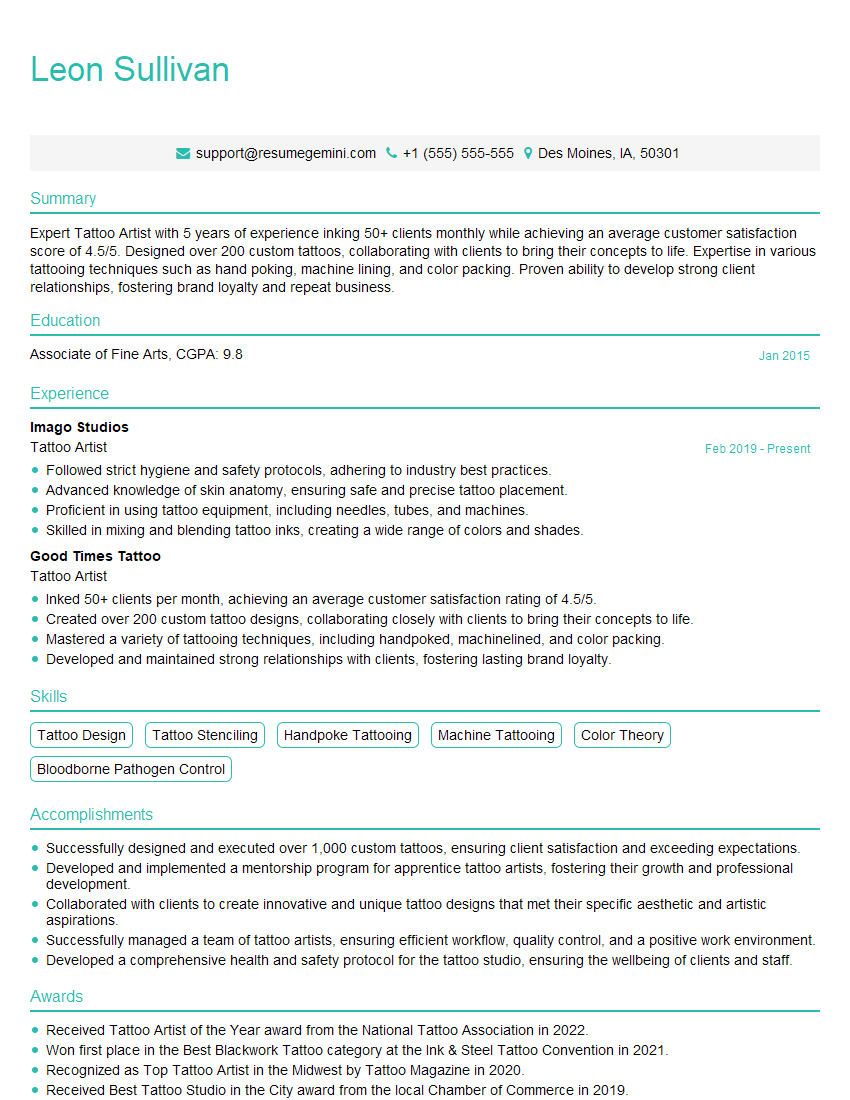
Mastering the art of tattoo portraits can significantly advance your career, opening doors to exciting opportunities in a growing industry. Creating an ATS-friendly resume is crucial for getting your application noticed. To enhance your resume and maximize your job prospects, we strongly recommend using ResumeGemini. ResumeGemini provides a user-friendly platform to build a professional resume, and we offer examples of resumes tailored specifically to Tattoo Portraits to guide you.
Explore more articles
Users Rating of Our Blogs
Share Your Experience
We value your feedback! Please rate our content and share your thoughts (optional).
What Readers Say About Our Blog
Very informative content, great job.
good