Cracking a skill-specific interview, like one for Leather Industry, requires understanding the nuances of the role. In this blog, we present the questions you’re most likely to encounter, along with insights into how to answer them effectively. Let’s ensure you’re ready to make a strong impression.
Questions Asked in Leather Industry Interview
Q 1. Explain the different types of leather tanning processes.
Leather tanning is a crucial process that transforms raw animal hides into durable, stable leather. Several methods exist, each impacting the final product’s characteristics. The most common are:
- Chrome Tanning: This is the most widely used method due to its speed, efficiency, and relatively low cost. Chromium salts are used to cross-link collagen fibers in the hide, resulting in soft, pliable leather. It’s often chosen for shoe leather and upholstery.
- Vegetable Tanning: This traditional method uses natural tannins extracted from plant materials like tree bark, leaves, and fruits. It’s a slower process, resulting in a firmer, more durable leather that ages beautifully. Vegetable-tanned leather is often used for high-quality belts, bags, and furniture.
- Alum Tanning: This method employs aluminum salts to tan the leather. It produces a soft, white leather, often used for gloves and clothing. It’s less durable than chrome or vegetable-tanned leather.
- Formaldehyde Tanning: Though less common due to environmental concerns, formaldehyde tanning offers quick results and a durable finish. However, its potential toxicity limits its use.
- Combination Tanning: This involves a combination of tanning agents, such as chrome and vegetable tannins, to achieve specific characteristics like improved strength and flexibility.
The choice of tanning method depends on factors like the desired leather properties, cost considerations, and environmental impact.
Q 2. Describe the stages involved in leather manufacturing.
Leather manufacturing is a multi-stage process, starting with raw hides and culminating in a finished product. The key stages include:
- Hides Receiving and Inspection: Careful assessment of the raw hides for quality, defects, and suitability for specific leather types.
- Pre-Treatment: This involves soaking, cleaning, and fleshing the hides to remove unwanted tissue and prepare them for tanning.
- Tanning: The hides are treated with tanning agents to transform them into leather, as explained in the previous answer.
- Bating: Enzymes are used to further soften and clean the leather, removing residual proteins.
- Deliming: Neutralization of the hides after lime treatment in the pre-treatment stage.
- Dyeing and Coloring: Adding color to the leather using various dyeing methods. This can dramatically alter the leather’s appearance.
- Fatliquoring: Applying oils and fats to improve the leather’s flexibility, softness, and water resistance.
- Finishing: This final stage encompasses a range of processes to achieve the desired texture, appearance, and feel, like embossing, glazing, or polishing.
- Inspection and Quality Control: Rigorous checks are performed throughout the process to ensure consistent quality.
Each stage is crucial for the final quality and characteristics of the leather.
Q 3. What are the key quality control checks in leather production?
Quality control in leather production is vital. Checks are performed at various stages, including:
- Raw Material Inspection: Assessing hide quality for defects, thickness, and overall condition.
- In-Process Checks: Monitoring tanning, dyeing, and finishing processes to ensure consistency and adherence to specifications. This may involve measuring thickness, checking for uniformity of color, and testing for strength.
- Visual Inspection: Careful examination for defects such as scratches, wrinkles, holes, and discoloration.
- Physical Testing: Measuring properties like tensile strength, elongation, and tear resistance to ensure the leather meets the required standards.
- Chemical Testing: Analyzing the leather’s chemical composition to determine the presence of harmful substances and the effectiveness of the tanning process.
- Sampling and Statistical Analysis: Random sampling and statistical analysis are employed to ensure the consistency and reliability of the entire batch.
Continuous monitoring and regular adjustments are needed to maintain high quality.
Q 4. How do you identify different types of leather (e.g., full-grain, top-grain)?
Identifying different types of leather requires careful examination. Key distinctions lie in the processing and the amount of the hide’s original grain layer retained:
- Full-Grain Leather: This is the highest quality leather. The top layer of the hide (grain) remains completely intact, showcasing its natural texture and markings. It’s strong, durable, and develops a beautiful patina over time.
- Top-Grain Leather: The topmost portion of the grain layer is sanded or buffed to remove imperfections. It is then often coated with a finish to create a uniform appearance. More affordable than full-grain, it’s still relatively durable but lacks the natural character.
- Genuine Leather: This term often refers to leather made from the lower layers of the hide, after the top grain has been removed. It’s less durable than top-grain or full-grain.
- Bonded Leather: Made from leather scraps and fibers bonded together with adhesives. It is the least expensive and least durable type.
Feel, appearance, and any visible sanding marks will help differentiate them. Full-grain leather will have a more natural, uneven texture, while top-grain leather tends to be smoother.
Q 5. What are the common defects found in leather and their causes?
Leather defects can stem from various sources, impacting its quality and value. Common defects include:
- Scars and Brand Marks: These originate from injuries to the animal during its lifetime.
- Insect Bites and Damage: Holes or damage caused by insects.
- Wrinkles and Creases: Uneven textures caused by animal movement or improper handling.
- Stretch Marks: Areas of thinned or weakened leather.
- Grain Cracks: Breaks or imperfections in the grain layer.
- Discoloration: Uneven or undesirable coloring resulting from improper dyeing or chemical treatment.
- Stiffness or Hardness: Lack of suppleness due to inadequate fatliquoring or other processing issues.
Causes often involve animal husbandry practices, processing errors, or inadequate quality control.
Q 6. Explain the importance of pre-treatment in leather processing.
Pre-treatment is a critical initial stage in leather processing. It prepares the hides for tanning, improving the quality and consistency of the finished leather. The process aims to:
- Remove Impurities: Cleaning the hides to eliminate dirt, blood, and other organic matter that would interfere with tanning.
- Soften the Hides: Soaking and liming break down the connective tissue, softening the hides and allowing for more uniform penetration of tanning agents.
- Adjust pH: Controlling the pH level is essential for the effectiveness of subsequent processes like bating and tanning.
- Prepare for Tanning: Pre-treatment ensures that the hides are receptive to the tanning agents, ensuring even penetration and a consistent final product.
Effective pre-treatment is fundamental for achieving high-quality leather with desired properties.
Q 7. Describe your experience with leather finishing techniques.
My experience encompasses a wide range of leather finishing techniques. I’ve worked extensively with:
- Top Coating: Applying protective and aesthetic topcoats to enhance the leather’s durability, color, and appearance.
- Embossing: Creating patterns or textures on the leather’s surface to achieve a specific aesthetic effect.
- Glazing: Using resins and polishing techniques to create a smooth, glossy finish.
- Spray Finishing: Applying a thin and even layer of color and finish using spray equipment. This is ideal for achieving consistent colors and textures.
- Pigment Finishing: A technique employing pigment-based coatings to produce a variety of colors and finishes. Suitable for high-volume, cost-effective production.
- Aniline Finishing: Minimal finishing allowing the natural grain and color variations to show through for a natural look. This tends to be less durable.
I’m proficient in selecting the most appropriate finishing technique based on the desired aesthetic, leather type, and performance requirements. For instance, a full-grain leather might utilize aniline finishing to showcase its natural beauty, while top-grain leather might receive a pigment finish for durability and uniformity.
Q 8. How do you ensure the sustainability and ethical sourcing of leather?
Ensuring sustainable and ethical leather sourcing is paramount. It’s not just a trend; it’s a necessity for the future of the industry. We achieve this through a multi-pronged approach focusing on traceability, responsible farming practices, and environmental consciousness.
- Traceability: We work directly with tanneries and farms, implementing robust tracking systems to monitor the entire supply chain from animal origin to finished product. This allows us to verify the humane treatment of animals and ensure adherence to environmental regulations.
- Responsible Farming: We actively support and collaborate with farms committed to sustainable grazing practices, promoting biodiversity, and minimizing the environmental impact of livestock rearing. This includes advocating for responsible land management and water usage.
- Environmental Standards: We prioritize tanneries that utilize environmentally friendly tanning methods, minimizing water and energy consumption and reducing waste. We actively seek certifications like Leather Working Group (LWG) to guarantee adherence to stringent environmental standards.
- Social Responsibility: We ensure fair wages and safe working conditions for all individuals involved in the supply chain. Regular audits and transparent communication with our suppliers are crucial aspects of our ethical sourcing strategy.
For example, we recently partnered with a farm in Brazil that employs regenerative grazing techniques, improving soil health and reducing carbon emissions. This partnership not only ensures high-quality leather but also contributes to a more sustainable future.
Q 9. What are the different types of leather finishes and their applications?
Leather finishes are crucial for enhancing the aesthetic appeal, durability, and performance characteristics of leather. Different finishes cater to various applications, impacting the final look and feel of the product.
- Full-grain leather: Retains the natural grain layer, offering durability and a unique, textured appearance. It’s ideal for high-end products like jackets, bags, and furniture.
- Top-grain leather: The top layer of the hide is sanded to remove imperfections, creating a smoother surface. It’s more affordable than full-grain but less durable. Commonly used in apparel and accessories.
- Corrected-grain leather: The top layer is sanded extensively, and an artificial grain is embossed onto the surface. This results in a uniform appearance and is used in more budget-friendly products.
- Nubuck leather: The top grain is sanded to create a velvety surface. It’s soft and luxurious but requires careful maintenance. Often used in shoes and gloves.
- Suede leather: The underside of the hide is used, creating a soft, napped finish. It’s very delicate and needs special care. Used in upholstery, shoes, and apparel.
The choice of finish significantly impacts the end-product. For instance, a full-grain leather jacket will be more resistant to scratches and wear than a corrected-grain jacket, reflecting in its price and longevity.
Q 10. Explain the role of chemicals in leather tanning.
Chemicals play a vital role in leather tanning, a crucial process that transforms raw hides into durable, usable leather. It involves a complex series of chemical treatments that prevent decay and enhance the leather’s properties.
- Preservation and Stabilization: Chemicals like sodium chloride (salt) are used to preserve the hides, preventing bacterial decomposition before tanning.
- Tanning Agents: The core of the process involves using tanning agents to stabilize the collagen fibers in the hide, making the leather durable and resistant to decay. Common tanning agents include chromium salts (chrome tanning), vegetable tannins (vegetable tanning), and aldehydes (aldehyde tanning).
- Retanning and Finishing: Retanning agents, such as synthetic tannins or vegetable tannins, are used to modify the leather’s properties, adjusting its softness, fullness, and color. Various finishing agents are then applied to impart specific characteristics like water resistance, softness, or shine.
The specific chemicals used and their concentrations have a significant impact on both the quality and environmental impact of the leather. Sustainable tanning practices aim to minimize the use of harmful chemicals and maximize efficiency, reducing water and energy consumption.
Q 11. How do you manage leather inventory effectively?
Effective leather inventory management is critical for maintaining optimal stock levels, minimizing waste, and ensuring timely production. We employ a combination of strategies to achieve this:
- Demand Forecasting: Accurate forecasting, considering seasonal trends and market demand, allows us to anticipate future needs and avoid overstocking or shortages.
- Inventory Tracking System: A robust inventory management system tracks leather types, quantities, quality, and location, providing real-time visibility into stock levels.
- FIFO (First-In, First-Out): We employ a FIFO system to ensure that the oldest leather is used first, minimizing the risk of spoilage or obsolescence.
- Quality Control: Regular inspections identify any defects early, preventing the use of substandard leather in production.
- Storage Optimization: Proper storage conditions, including temperature and humidity control, preserve leather quality and extend its lifespan.
For example, we use a specialized software that integrates with our production planning system, automatically generating purchase orders based on projected demand and available stock. This automated system helps us optimize inventory levels and streamline the procurement process.
Q 12. Describe your experience with different leather machinery.
My experience encompasses a wide range of leather machinery, from traditional tools to sophisticated automated systems. This includes:
- Splitting Machines: Used to split hides into different layers, allowing for the creation of various leather types.
- Shaving Machines: Used to achieve uniform thickness across the leather.
- Drum Dyers: Used to dye leather evenly and efficiently.
- Finishing Machines: Used to apply various finishes to enhance the leather’s appearance and properties. This includes embossing, glazing, and spraying machines.
- Sewing Machines: Specialized machines for sewing leather, requiring sturdy needles and strong thread.
- CNC Cutting Machines: Modern automated cutting systems provide precision and speed in cutting leather pieces.
I’m proficient in operating, maintaining, and troubleshooting these machines, ensuring optimal performance and minimizing downtime. For example, I successfully implemented a new CNC cutting machine, significantly improving our cutting accuracy and productivity.
Q 13. What are the common challenges faced in leather production?
The leather industry faces numerous challenges, including:
- Fluctuating Raw Material Prices: Hide prices are subject to market volatility, impacting production costs.
- Environmental Concerns: The tanning process can have significant environmental impact if not managed sustainably. Reducing water and chemical usage is a constant challenge.
- Labor Shortages: Skilled labor is increasingly scarce in some regions.
- Competition: Intense competition from synthetic leather alternatives necessitates continuous innovation and quality improvement.
- Regulatory Compliance: Adherence to evolving environmental and ethical regulations requires constant adaptation.
Addressing these challenges requires a holistic approach, involving sustainable practices, technological advancements, and strategic partnerships. For example, we are actively investing in research and development to explore more sustainable tanning methods and reduce our environmental footprint.
Q 14. How do you handle customer complaints related to leather quality?
Handling customer complaints regarding leather quality is crucial for maintaining customer satisfaction and brand reputation. Our approach involves a systematic process:
- Thorough Investigation: We thoroughly investigate each complaint, gathering information on the product, the defect, and the circumstances of the issue. This may include examining the product itself, reviewing production records, and speaking with the customer.
- Root Cause Analysis: We identify the root cause of the defect, whether it’s a flaw in the raw material, a problem in the manufacturing process, or a misuse of the product.
- Resolution and Communication: Depending on the root cause, we offer solutions such as replacement, repair, or refund. Clear and prompt communication with the customer is paramount, keeping them informed throughout the process.
- Preventative Measures: Once the root cause is identified, we implement corrective actions to prevent similar issues from occurring in the future. This might involve process improvements, stricter quality control measures, or improved training for staff.
For example, we recently addressed a complaint regarding color inconsistencies in a batch of leather bags. Our investigation revealed a problem with the dyeing process, which we corrected, and we offered replacement bags to affected customers. We also implemented stricter quality checks to prevent future occurrences.
Q 15. Explain your understanding of leather grading systems.
Leather grading systems are crucial for determining the quality and value of leather hides. These systems assess various factors to categorize hides into different grades, impacting their final use and price. Grading isn’t standardized globally, but common criteria include:
- Thickness: Measured in millimeters or ounces, thicker hides are generally stronger and more suitable for certain products.
- Grain Appearance: This refers to the surface texture of the hide. A fine, consistent grain is highly valued, while imperfections like scars or wrinkles lower the grade.
- Markings: Natural markings like brands, insect bites, or scratches affect the grade. The number, size, and location of these markings are considered.
- Area: Larger hides command higher prices, all else being equal, as they allow for larger pieces of finished leather and reduce waste.
- Strength and Stretch: Tensile strength and elasticity are vital for determining suitability for different applications. Stronger leather is needed for items like luggage and shoes.
For example, a hide with a fine grain, minimal markings, even thickness, and large area would be graded higher than a hide with significant scars, inconsistent thickness, and a coarse grain. The grading system used varies depending on the tannery and the intended market; some use numerical grades (1, 2, 3…), others use descriptive terms (Top Grain, Full Grain, Corrected Grain).
Career Expert Tips:
- Ace those interviews! Prepare effectively by reviewing the Top 50 Most Common Interview Questions on ResumeGemini.
- Navigate your job search with confidence! Explore a wide range of Career Tips on ResumeGemini. Learn about common challenges and recommendations to overcome them.
- Craft the perfect resume! Master the Art of Resume Writing with ResumeGemini’s guide. Showcase your unique qualifications and achievements effectively.
- Don’t miss out on holiday savings! Build your dream resume with ResumeGemini’s ATS optimized templates.
Q 16. How do you ensure the consistent quality of leather throughout the production process?
Ensuring consistent leather quality requires meticulous control throughout the entire production process, from raw material selection to the finished product. This involves:
- Rigorous Raw Material Inspection: Careful selection of hides based on consistent size, thickness, and minimal imperfections. This starts with a visual assessment, supplemented by automated scanning in advanced facilities.
- Standardized Tanning Process: Precise control of chemical concentrations, temperatures, and processing times ensures uniform tanning across all hides. Detailed process documentation and regular quality checks are paramount.
- Consistent Finishing Techniques: The finishing process, which involves dyeing, coating, and embossing, must be strictly controlled. This includes using calibrated machinery and experienced personnel to ensure uniform color, finish, and texture.
- Statistical Process Control (SPC): Employing SPC methods involves regular sampling and testing of the leather at each stage to identify and correct variations before they become major issues. This allows for proactive adjustments to the process.
- Quality Control (QC) Checks: Thorough visual inspection and testing (e.g., for tensile strength and tear resistance) of finished leather are essential to ensure the final product meets quality standards before shipment.
Imagine baking a cake: consistency requires precise ingredient measurements, consistent baking temperature, and careful monitoring throughout. Leather production is similar, requiring continuous monitoring and adjustments to ensure uniformity.
Q 17. What are your strategies for reducing waste in leather production?
Waste reduction is crucial for environmental sustainability and economic efficiency in leather production. Strategies include:
- Improved Hide Trimming Techniques: Utilizing advanced cutting technologies (e.g., laser cutting) minimizes waste during the initial hide preparation. Optimized cutting patterns also help maximize material utilization.
- Efficient Water and Chemical Management: Implementing closed-loop water recycling systems and minimizing chemical usage through optimized tanning processes reduce environmental impact and save costs.
- Utilizing Leather Scraps: Leather scraps can be repurposed into other products, such as leather dust for composite materials, or ground into leather powders for use in other industries.
- By-product Utilization: Exploring uses for byproducts like collagen from hide processing can add value and reduce waste. Collagen finds applications in various fields like pharmaceuticals and cosmetics.
- Investing in Innovative Technologies: Advanced technology like 3D scanning and computer-aided design can help optimize cutting patterns, reduce waste, and increase overall efficiency.
Thinking of a tailor making a suit, they minimize fabric waste by creating precise cutting patterns. Similarly, the leather industry aims for efficient processes, minimizing scrap and maximizing the usable portions of hides.
Q 18. How do you stay updated on the latest trends and technologies in the leather industry?
Staying abreast of industry trends and technologies is crucial for competitiveness. My strategies include:
- Industry Publications and Journals: Regularly reading industry-specific magazines, journals, and online publications keeps me informed about innovations in tanning, finishing, and design.
- Trade Shows and Conferences: Attending international trade shows and conferences provides firsthand exposure to new technologies, machinery, and market trends. It’s a great opportunity for networking with industry professionals.
- Online Resources and Professional Networks: Active participation in online forums, industry websites, and professional networks allows me to connect with experts and access the latest information and research findings.
- Collaborations and Knowledge Sharing: Collaborating with research institutions and other industry leaders facilitates the exchange of knowledge and accelerates the adoption of new technologies.
- Continuing Education: Participating in workshops, seminars, and online courses ensures my knowledge and skills remain up-to-date with the latest advances in leather science and technology.
It’s like following the latest releases in the software industry; constant learning and adaptation are key for staying competitive and providing innovative solutions.
Q 19. Describe your experience with different leather dyeing techniques.
My experience encompasses a range of leather dyeing techniques, each with its advantages and disadvantages. These include:
- Vegetable Tanning Dyeing: This traditional method uses natural dyes extracted from plants, resulting in subtle, earthy tones. The color tends to be less vibrant but offers a unique, environmentally friendly approach.
- Chrome Tanning Dyeing: This more common method uses chromium salts, allowing for a wider range of colors and better color fastness. However, environmental concerns related to chromium disposal exist.
- Aniline Dyeing: This technique results in a soft, supple leather with a natural, slightly translucent appearance. It’s suitable for high-end products but offers less protection against scratches and stains.
- Semi-Aniline Dyeing: A compromise between aniline and topcoat dyeing, offering better protection while retaining a natural look. It’s a popular choice for many leather goods.
- Topcoat Dyeing: This involves applying a protective topcoat over a base dye, producing a uniform, highly resistant finish, often seen in furniture leathers. The natural grain is often less visible.
Choosing the right dyeing method depends on the desired aesthetic, the product’s intended use, and environmental considerations. For instance, a luxury handbag might use aniline dyeing for its soft, natural feel, whereas a rugged leather jacket might benefit from topcoat dyeing for its durability.
Q 20. What is your experience with leather testing methods?
My experience with leather testing methods covers a wide range of physical and chemical tests aimed at evaluating various leather properties. These include:
- Tensile Strength and Elongation: These tests determine the leather’s ability to withstand pulling forces, crucial for evaluating its durability.
- Tear Strength: This measures the resistance to tearing, vital for assessing the leather’s robustness, especially for high-stress applications.
- Bursting Strength: This assesses the leather’s resistance to pressure applied internally, often used for evaluating the suitability for inflatable products.
- Abrasion Resistance: This measures the leather’s ability to withstand friction, a key factor in determining its wear resistance.
- Light Fastness: This determines the leather’s resistance to fading when exposed to light, crucial for products that will be exposed to sunlight.
- Water Resistance: This test assesses the leather’s resistance to water absorption and penetration, important for different leather products.
- Chemical Resistance: Tests evaluate the leather’s reaction to various chemicals, critical for determining its suitability for specialized applications.
These tests, conducted using standardized procedures, help ensure the leather meets the required specifications for the intended application and guarantees consistent quality.
Q 21. Explain your understanding of leather material selection for different products.
Selecting the right leather for a specific product requires a careful consideration of several factors:
- Product Application: The intended use of the leather dictates its necessary properties. For example, footwear requires strong, durable leather, while a luxury handbag might prioritize softness and grain appearance.
- Leather Type: Full-grain, top-grain, and corrected-grain leathers each have distinct characteristics and suitability for different products. Full-grain is typically the highest quality, while corrected-grain offers more uniformity and cost-effectiveness.
- Thickness: Thickness impacts the leather’s strength, durability, and drape. Thicker leather is suitable for robust products, while thinner leather is preferred for flexible items.
- Finish: Different finishes, such as matte, glossy, or embossed, create various visual effects and levels of protection. The choice depends on the desired aesthetic and the product’s functionality.
- Cost: Leather price varies greatly depending on the type, grade, and processing. Budget considerations often influence the material selection.
For instance, a high-end leather jacket would likely require full-grain leather for its durability and luxurious feel, while a more budget-friendly jacket might utilize top-grain leather. The selection process is essentially a balance between functionality, aesthetics, and cost.
Q 22. How do you calculate the cost of leather production?
Calculating the cost of leather production is a multifaceted process involving several key factors. It’s not a simple calculation, but rather a summation of various direct and indirect costs. Think of it like baking a cake; you need to account for each ingredient and the oven time.
- Raw materials: This is the most significant cost, encompassing the price of hides (varying by animal type, quality, and market fluctuations). Consider factors like hide size and defects affecting usable area. For example, a hide with significant scarring will yield less usable leather.
- Processing costs: This includes expenses related to tanning (vegetable, chrome, etc.), curing, dyeing, finishing, and any specialized treatments (e.g., embossing, waxing). Each stage involves chemicals, labor, and equipment usage, all of which factor into the overall cost.
- Labor costs: Skilled labor is crucial throughout the process, from hide preparation to final finishing. Wages, benefits, and training costs for skilled workers like tanners and cutters are essential considerations.
- Overhead costs: These encompass rent, utilities, machinery maintenance, and administrative expenses. A larger factory will have proportionally higher overhead costs.
- Waste disposal: Leather production generates waste, and the cost of environmentally sound disposal of byproducts needs to be included. This is increasingly important due to environmental regulations.
- Transportation: Costs related to transporting raw materials and finished products add to the overall expense.
The total cost is then typically calculated per square foot or per unit of finished leather, allowing for accurate pricing and profitability analysis. A detailed cost breakdown sheet, updated regularly to reflect market changes, is essential for efficient management.
Q 23. Describe your experience with leather supply chain management.
My experience in leather supply chain management spans over 15 years, encompassing all stages from raw material sourcing to finished product delivery. I’ve worked with both large multinational corporations and smaller artisan workshops, providing me with a broad perspective.
My responsibilities included:
- Sourcing: Establishing and maintaining relationships with reliable hide suppliers, ensuring consistent quality and fair pricing. I have experience negotiating contracts and managing inventory to minimize waste and optimize costs. For example, I once successfully negotiated a long-term contract with a Brazilian supplier providing premium calfskin, securing a stable supply and better pricing due to volume.
- Production planning: Forecasting demand and managing production schedules to meet market needs efficiently. This involved close collaboration with production teams and sales departments to ensure timely delivery without compromising quality.
- Quality control: Implementing rigorous quality control measures at each stage of production, from hide inspection to final product examination. This includes implementing statistical process control and defect tracking systems to identify and rectify any quality issues promptly.
- Logistics: Overseeing the transportation and warehousing of materials and finished products, ensuring efficient delivery to clients worldwide. I’ve managed international shipments, using different modes of transportation like air and sea freight to meet specific delivery requirements.
- Inventory management: Implementing efficient inventory management systems to track raw materials, work-in-progress, and finished goods, minimizing storage costs and reducing waste.
Through this experience, I’ve developed a deep understanding of the complexities of the leather supply chain and honed my skills in negotiation, problem-solving, and team management.
Q 24. What is your approach to problem-solving in leather manufacturing?
My approach to problem-solving in leather manufacturing is systematic and data-driven. I follow a structured process to diagnose, analyze, and resolve issues effectively.
- Identify the problem: Clearly define the problem, gathering data from various sources like production reports, quality control inspections, and worker feedback. For example, if production is slow, I wouldn’t simply assume it’s a labor issue; I would investigate potential issues with machinery, materials, or processes.
- Analyze the root cause: Conduct a thorough analysis to determine the underlying causes. This may involve using tools like the ‘5 Whys’ to drill down to the root of the problem. Perhaps slow production is due to a faulty machine, which requires repairs, and those repairs are delayed due to a parts shortage.
- Develop solutions: Brainstorm potential solutions, weighing their feasibility, cost, and impact. For instance, if the problem involves a machine, we could repair it, replace it, or modify the production process to bypass it in the short term. I’d need to consider the cost and lead time for each option.
- Implement and monitor: Implement the chosen solution and monitor its effectiveness, collecting data to assess its impact. If the solution isn’t effective, I iterate and explore other options. Constant monitoring ensures improvements are sustainable.
- Document findings: Document the problem, analysis, solution, and results for future reference and to aid in preventing similar problems in the future. Creating a knowledge base improves efficiency for future issues.
This approach ensures a structured, efficient, and data-driven solution to any challenges faced in the leather manufacturing process.
Q 25. How do you ensure the safety and health of workers in a leather factory?
Ensuring worker safety and health is paramount in a leather factory. It’s not just an ethical imperative, but a legal and economic necessity. A safe workplace leads to increased productivity and reduced costs associated with accidents and illnesses.
My approach involves a multi-pronged strategy:
- Compliance with regulations: Strict adherence to all relevant occupational safety and health regulations, both local and international. This includes regular inspections and audits to maintain compliance.
- Personal Protective Equipment (PPE): Providing and enforcing the use of appropriate PPE, including gloves, masks, eye protection, and protective clothing, to minimize exposure to hazardous materials and machinery.
- Engineering controls: Implementing engineering controls to minimize hazards at their source. Examples include properly guarded machinery, effective ventilation systems to reduce dust and chemical fumes, and the use of automated equipment where possible.
- Training and education: Providing comprehensive training to all workers on safe work practices, emergency procedures, and the proper use of PPE. Regular refresher training is crucial to maintain awareness.
- Health monitoring: Implementing a program for regular health monitoring of workers, particularly those exposed to hazardous materials, to detect any potential health problems early on.
- Emergency response plan: Developing and regularly testing a comprehensive emergency response plan to deal effectively with any accidents or emergencies. This includes clearly defined procedures and emergency contact information.
- Open communication: Fostering a culture of open communication where workers feel comfortable reporting hazards or concerns without fear of reprisal.
A strong safety culture, where safety is viewed as a shared responsibility, is essential for a truly safe and healthy work environment. Investing in safety is investing in the long-term success of the business.
Q 26. Explain your experience with different types of leather stitching techniques.
My experience with leather stitching techniques is extensive, encompassing both traditional hand-stitching methods and modern machine stitching techniques. The choice of technique depends on factors such as the type of leather, the intended use of the product, and the desired aesthetic.
- Hand-stitching: I’m proficient in various hand-stitching techniques, including saddle stitching (durable and aesthetically pleasing), blind stitching (creates an almost invisible seam), and decorative stitching (used for embellishment). Hand-stitching offers unparalleled control and precision, essential for high-quality, bespoke items.
- Machine stitching: I’m skilled in operating various industrial sewing machines, including single-needle, double-needle, and specialized machines for specific leather types. Machine stitching is faster and more efficient for mass production. My experience includes selecting the appropriate needles, thread types, and stitch patterns for different leathers and applications.
- Stitch types: I understand the characteristics of various stitch types, including their strength, durability, and aesthetic appeal. For example, backstitching provides extra strength at the start and end of seams, crucial for high-stress areas.
I can adapt my approach to different stitching techniques based on the specific requirements of the project, combining hand and machine stitching for optimal results. For example, I might use hand-stitching for delicate areas and machine stitching for larger panels, achieving both quality and efficiency.
Q 27. What are your skills in leather pattern making and cutting?
My skills in leather pattern making and cutting are highly developed, honed through years of experience. This involves transforming design concepts into workable patterns and then accurately cutting the leather to create the components for finished products. It’s a blend of artistic vision and technical precision.
- Pattern design and drafting: I’m proficient in designing and drafting patterns using both traditional methods (paper patterns) and Computer-Aided Design (CAD) software. I can create patterns for various leather goods, from simple wallets to complex bags and jackets.
- Pattern grading: I’m able to grade patterns to create different sizes, ensuring consistent proportions and fit across the size range. This involves mathematically scaling the pattern while maintaining the design integrity.
- Leather cutting: I’m skilled in using various cutting tools, including hand-cutting knives, rotary cutters, and computer-controlled cutting machines. This includes selecting the appropriate cutting methods for different leather types and thicknesses, minimizing waste and maximizing material utilization.
- Marker making: I’m able to efficiently create markers (layout diagrams) that optimize the placement of patterns on leather hides to minimize material waste. This involves considering the grain direction, hide defects, and the size and shape of the patterns.
My experience combines both traditional craftsmanship with modern technology, allowing me to efficiently create accurate and aesthetically pleasing patterns and cut leather with precision. I strive for minimal material waste, a key factor in sustainable leather production.
Q 28. Describe your understanding of the environmental impact of leather production and potential solutions.
The environmental impact of leather production is a significant concern. Traditional tanning processes, in particular, have historically relied on chemicals with a substantial environmental footprint. However, the industry is actively working on solutions to mitigate these impacts.
Environmental impacts:
- Water pollution: Tanning processes can release significant amounts of pollutants into water bodies, harming aquatic life and ecosystems. Chrome tanning, while efficient, poses a risk if not properly managed.
- Greenhouse gas emissions: Raising livestock for hides contributes to greenhouse gas emissions, and energy consumption in the tanning process also adds to the carbon footprint.
- Waste generation: Leather production generates significant waste, including solid waste (trimmings, shavings) and wastewater containing harmful chemicals.
Potential solutions:
- Sustainable tanning methods: Transitioning to more sustainable tanning methods, such as vegetable tanning, which uses natural tannins derived from plants, minimizing the use of harmful chemicals.
- Wastewater treatment: Implementing advanced wastewater treatment technologies to remove pollutants before releasing water back into the environment.
- Closed-loop systems: Designing closed-loop systems to recycle and reuse water and other materials within the production process, minimizing waste and reducing environmental impact.
- Improved resource efficiency: Optimizing processes to reduce water and energy consumption throughout the production chain. Techniques such as improved marker making reduce leather waste.
- Traceability and transparency: Implementing traceability systems to track the origin of hides and the entire production process, ensuring responsible sourcing and sustainable practices.
- Sustainable livestock farming: Promoting sustainable livestock farming practices that reduce the environmental impact of raising animals for hides.
By adopting these solutions, the leather industry can significantly reduce its environmental impact and produce leather in a more responsible and sustainable manner.
Key Topics to Learn for Leather Industry Interview
- Leather Types and Properties: Understand the characteristics of different leather types (e.g., full-grain, top-grain, corrected grain) and their suitability for various applications. Consider the impact of tanning methods on leather quality and durability.
- Leather Manufacturing Processes: Familiarize yourself with the stages of leather production, from hide preparation and tanning to finishing and dyeing. Be prepared to discuss the role of different machinery and technologies involved.
- Leather Chemistry and Finishing: Gain a basic understanding of the chemical processes involved in tanning and finishing. This includes knowledge of dyes, pigments, and finishing agents, and their effect on the final product’s appearance and performance.
- Leather Product Design and Development: Explore the design considerations specific to leather goods, including pattern making, cutting, stitching, and construction techniques. Understand the importance of ergonomics and durability in product design.
- Quality Control and Testing: Learn about the various methods used to assess leather quality, including physical testing (e.g., tensile strength, tear strength) and visual inspection. Understand the importance of adhering to industry standards and regulations.
- Sustainability and Environmental Impact: Be prepared to discuss the environmental considerations related to leather production, including water usage, waste management, and the use of sustainable tanning methods. Knowledge of relevant certifications (e.g., Leather Working Group) is beneficial.
- Supply Chain Management: Understand the complexities of the leather supply chain, from raw material sourcing to finished product distribution. This includes knowledge of global sourcing, logistics, and inventory management.
- Market Trends and Innovation: Stay updated on current trends in the leather industry, including new technologies, materials, and design aesthetics. Demonstrate your awareness of the challenges and opportunities facing the industry.
Next Steps
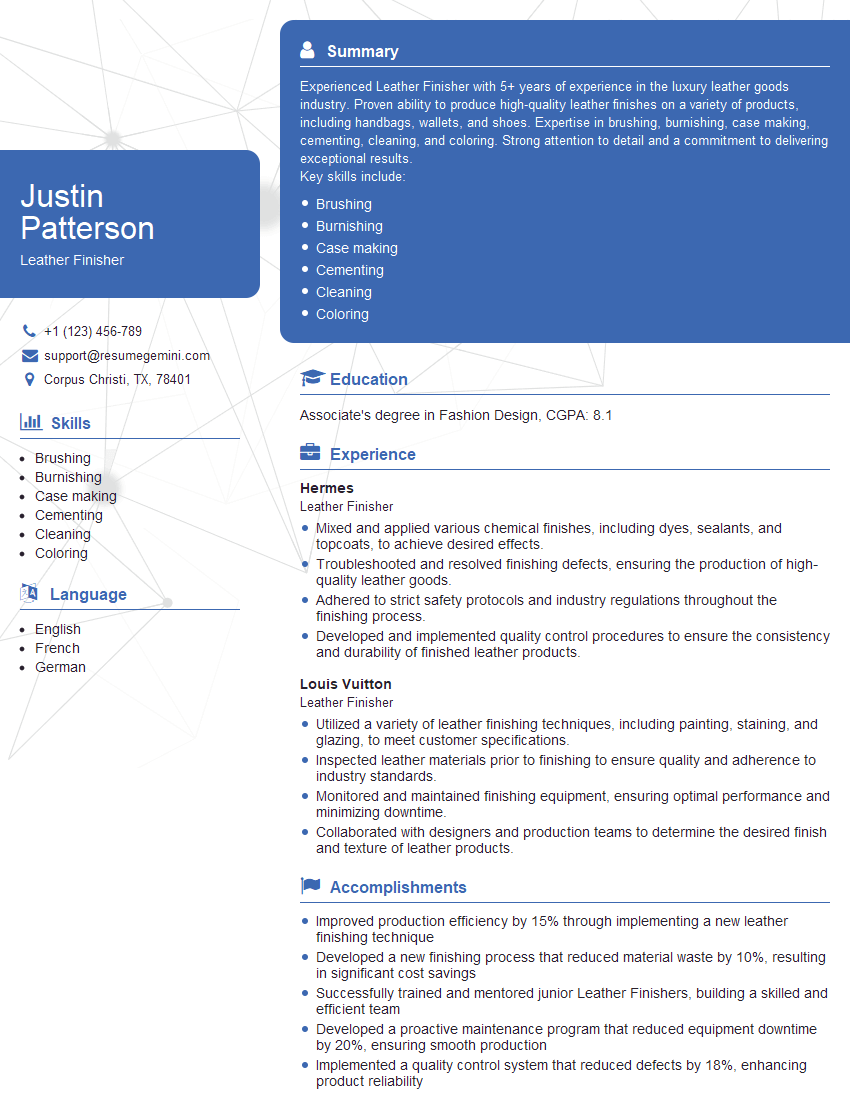
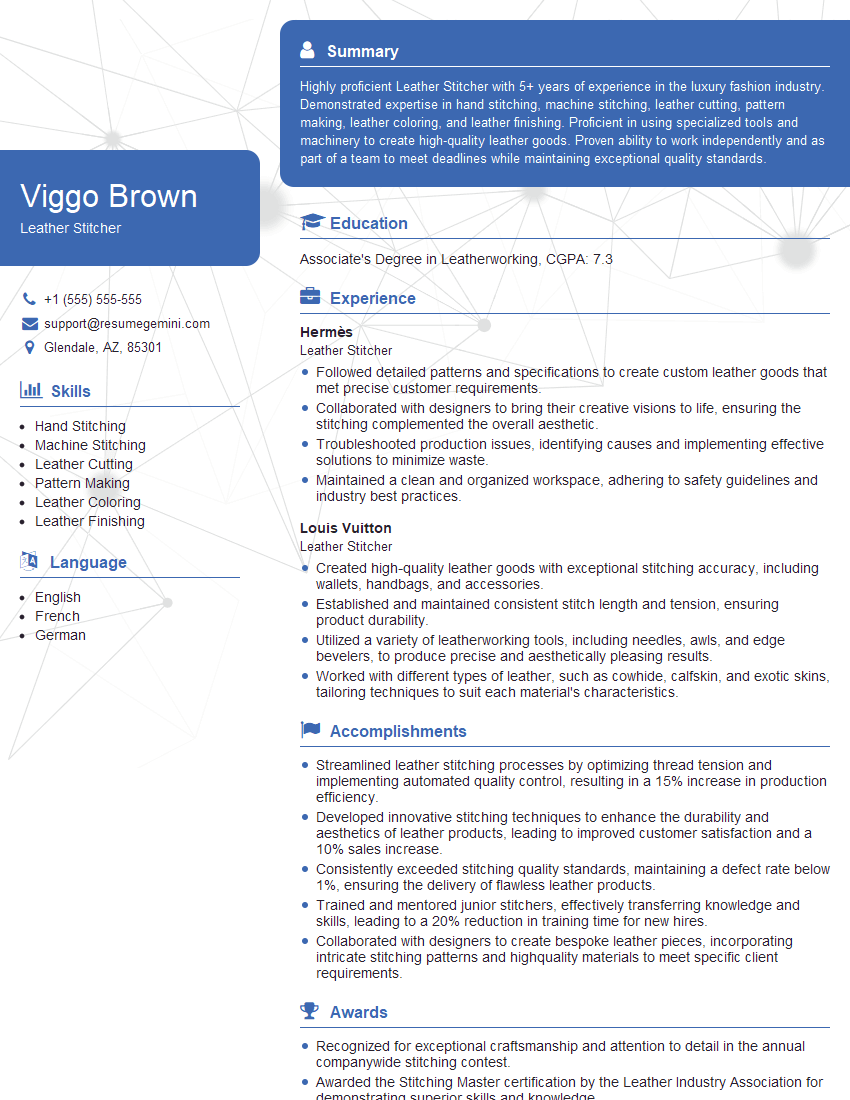
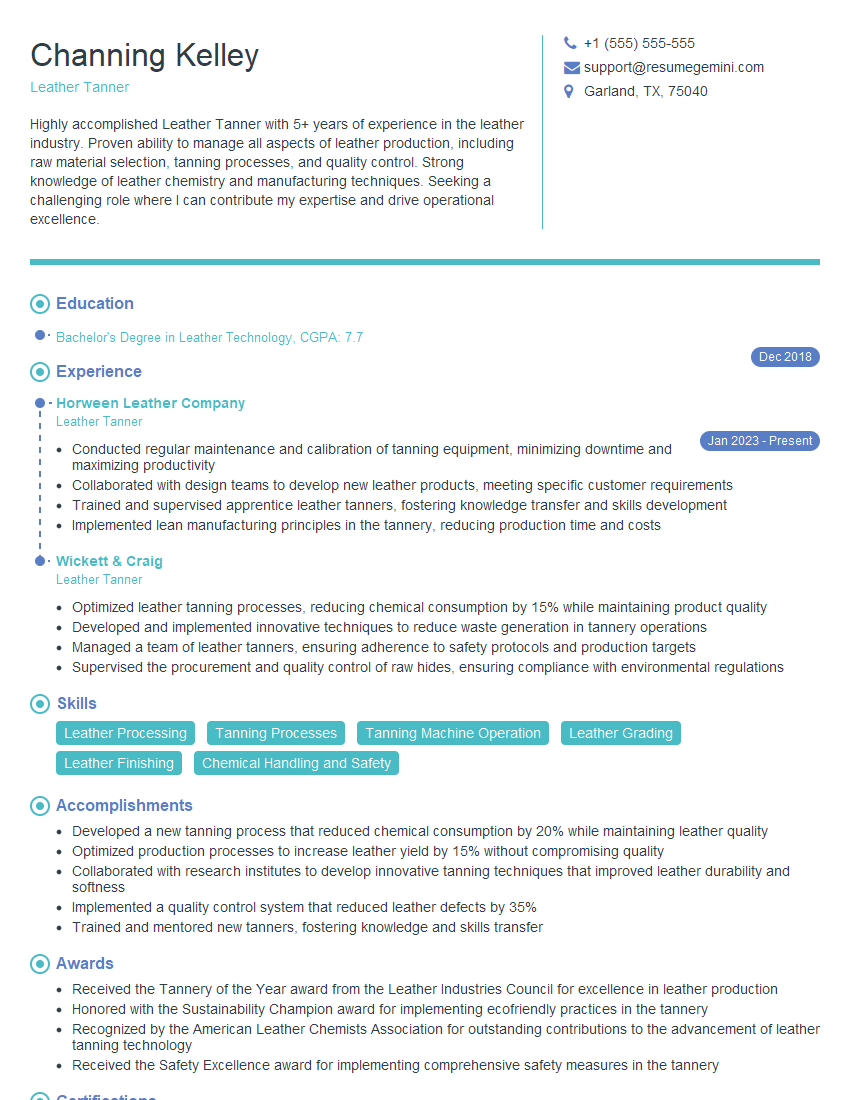
Mastering the fundamentals of the leather industry is crucial for career advancement, opening doors to exciting opportunities in design, manufacturing, quality control, and management. A strong resume is your key to unlocking these opportunities. Creating an ATS-friendly resume is essential for getting your application noticed by recruiters. ResumeGemini is a trusted resource that can help you build a professional and effective resume, ensuring your skills and experience shine. Examples of resumes tailored specifically for the Leather Industry are available to guide you. Invest time in crafting a compelling resume – it’s your first impression!

Explore more articles
Users Rating of Our Blogs
Share Your Experience
We value your feedback! Please rate our content and share your thoughts (optional).
What Readers Say About Our Blog
Very informative content, great job.
good