Preparation is the key to success in any interview. In this post, we’ll explore crucial Power Systems Design interview questions and equip you with strategies to craft impactful answers. Whether you’re a beginner or a pro, these tips will elevate your preparation.
Questions Asked in Power Systems Design Interview
Q 1. Explain the difference between symmetrical and unsymmetrical faults in power systems.
Faults in power systems are classified as symmetrical or unsymmetrical based on the nature of the fault’s impact on the system’s three phases. A symmetrical fault is one where all three phases are equally affected. The most common example is a three-phase short circuit, where all three phases are directly shorted to ground or to each other. This simplifies analysis because the system’s inherent symmetry can be exploited.
In contrast, an unsymmetrical fault affects only one or two phases. Examples include a single-line-to-ground fault (one phase shorted to ground), a line-to-line fault (two phases shorted together), and a double line-to-ground fault (two phases shorted to ground). These faults are more complex to analyze because the system’s symmetry is broken, requiring more sophisticated techniques like symmetrical component analysis to determine fault currents.
Think of it like this: a symmetrical fault is like breaking all three legs of a stool simultaneously – it’s a clean, albeit catastrophic, failure. An unsymmetrical fault is like breaking one or two legs – the system might still stand precariously, but it’s unstable and likely to collapse.
Q 2. Describe the per-unit system and its application in power system analysis.
The per-unit system is a normalization technique used in power system analysis to simplify calculations and improve readability. Instead of using the actual values of voltage, current, impedance, and power, we express them as percentages (or fractions) of a chosen base value. This base value is chosen strategically, often based on the system’s rated voltage or power.
For example, if we choose a base voltage of 100 kV and a transformer has a voltage rating of 50 kV, its voltage in per-unit would be 0.5 pu (50 kV / 100 kV). Similarly, if the base power is 100 MVA and a generator has a rating of 50 MVA, its power rating in per-unit would be 0.5 pu. The key advantage is that per-unit values, regardless of the actual magnitudes, remain consistent across different voltage levels within the system, making calculations easier and clearer.
The per-unit system simplifies calculations, allows for easier comparison of different components with varying base values, reduces the number of digits needed in calculations, and makes it more convenient to use standardized tables and charts.
Q 3. What are the different types of protective relays used in power systems?
Protective relays are the ‘nervous system’ of a power system, constantly monitoring various parameters to detect and isolate faults. Different types of relays are designed to respond to specific fault conditions. Here are some key types:
- Overcurrent Relays: These are the most common and respond to excessive current flow, indicating a short circuit or overload.
- Differential Relays: These compare the current entering and leaving a protected zone (like a transformer or a generator). Any significant difference indicates an internal fault.
- Distance Relays: These measure the impedance to the fault and trip the circuit breaker if the impedance falls within a predefined range, indicating a fault within the protected zone.
- Ground Fault Relays: These detect ground faults, which are often dangerous due to the potential for equipment damage and electric shock.
- Overvoltage and Undervoltage Relays: These protect equipment from damage caused by excessive or insufficient voltage.
- Power Swing Relays: These are crucial for stability monitoring and prevent unnecessary tripping during power swings that can occur after large disturbances.
The selection of relays depends on the specific application and the type of protection required. A well-designed protection scheme uses a combination of these relays to ensure comprehensive fault detection and isolation.
Q 4. Explain the concept of power system stability and its importance.
Power system stability refers to the ability of a power system to remain in a state of equilibrium after being subjected to a disturbance. This equilibrium involves maintaining voltage and frequency within acceptable limits. Loss of stability can lead to cascading outages, widespread blackouts, and significant economic losses.
There are various aspects of stability, including:
- Angle Stability (Rotor Angle Stability): This refers to the ability of synchronous generators to remain synchronized after a disturbance. Loss of synchronism can lead to generator trips and cascading outages.
- Frequency Stability: This relates to the system’s ability to maintain frequency following a disturbance. Large frequency deviations can damage equipment and disrupt service.
- Voltage Stability: This concerns the system’s ability to maintain acceptable voltage levels after a disturbance. Voltage collapse can result in widespread equipment failure.
Maintaining power system stability is paramount to reliable operation. Extensive analysis, robust control systems, and effective protective measures are crucial for ensuring the system’s resilience against disturbances.
Q 5. How do you perform a short-circuit analysis of a power system?
Short-circuit analysis is crucial for determining the magnitude and direction of fault currents during a short circuit. This information is essential for designing protective equipment and ensuring system safety.
The process typically involves these steps:
- System Modeling: Represent the power system as a network of impedances, including generators, transformers, transmission lines, and loads.
- Fault Location Identification: Determine the location and type of fault (e.g., three-phase, single-line-to-ground).
- Fault Calculation: Use analytical methods (e.g., symmetrical component analysis for unsymmetrical faults) or software tools (e.g., ETAP, PSCAD) to calculate the fault currents at various points in the system.
- Protective Device Coordination: Ensure that protective devices (circuit breakers, fuses, relays) operate correctly to isolate the faulted section and prevent damage to equipment.
Software tools significantly simplify this process. They allow for detailed modeling of complex systems, accurate fault calculations, and the easy visualization of fault current flows. However, understanding the underlying principles is crucial for interpreting results and ensuring accurate system design.
Q 6. What are the different methods for fault location in power systems?
Locating faults in power systems is critical for rapid restoration of service. Several methods are used:
- Distance Relay Measurements: Distance relays measure the impedance to the fault, allowing for approximate location estimation.
- Traveling Wave Techniques: These methods analyze the propagation of traveling waves along transmission lines to pinpoint the fault location.
- Impedance Measurement Techniques: These techniques use impedance measurements at various points in the system to triangulate the fault location.
- Line Impedance Measurement Methods: Measuring the impedance of individual lines to identify the faulty segment. This often involves specialized equipment that injects test signals onto the line and measures their reflection at the fault point.
- Current Transformer (CT) Ratio and Phase Difference Methods: These methods use current measurements from CTs at different locations to identify the fault section.
The choice of method depends on factors such as the type of system, the availability of measuring equipment, and the desired accuracy.
Q 7. Explain the principle of operation of a transformer.
A transformer operates on the principle of electromagnetic induction. It uses two or more coils of wire wound around a common ferromagnetic core. When an alternating current (AC) flows through the primary coil, it creates a fluctuating magnetic field in the core. This fluctuating magnetic field induces a voltage in the secondary coil, according to Faraday’s law of induction. The ratio of the number of turns in the primary and secondary coils determines the transformation ratio – the ratio of the output voltage to the input voltage.
Imagine it as a lever: the primary coil acts as the effort, the magnetic field in the core as the fulcrum, and the secondary coil as the load. By changing the number of turns in the coils, we can change the voltage (and consequently, the current) in the secondary coil, allowing for efficient power transmission and voltage regulation in power systems. Transformers are essential for stepping up voltage for efficient long-distance transmission and stepping it down to safer levels for distribution and utilization.
Q 8. What are the different types of transmission lines and their characteristics?
Transmission lines are the arteries of the power system, carrying electricity over long distances from generating stations to substations and load centers. They are categorized primarily by their voltage level and construction.
- Overhead Lines: These are the most common type, consisting of conductors suspended from towers or poles. They are further classified by their voltage level (e.g., 115 kV, 230 kV, 500 kV, 765 kV) and the number of circuits (single or double). Higher voltage lines generally use larger conductors to reduce losses. The characteristics include high power transfer capability, but they are susceptible to weather conditions (lightning, wind, ice).
- Underground Cables: These are used in densely populated areas or where overhead lines are impractical (e.g., underwater crossings). They offer better aesthetics and protection from weather, but they have lower power transfer capacity, higher installation costs, and increased risk of faults. They are typically rated at lower voltages than overhead lines.
- High-Voltage Direct Current (HVDC) Lines: These lines transmit power using direct current, as opposed to alternating current (AC). They are increasingly used for long-distance transmission and asynchronous interconnections between different AC systems. Advantages include reduced transmission losses and improved stability compared to AC lines.
Choosing the right type of transmission line involves careful consideration of factors such as cost, power transfer capacity, environmental impact, and reliability requirements. For instance, a long-distance, high-power transmission project might favor an HVDC line, while a densely populated urban area may necessitate underground cables.
Q 9. Describe the different types of grounding systems used in power systems.
Grounding systems are critical for safety and efficient power system operation. They provide a low-resistance path for fault currents to flow to the earth, protecting equipment and personnel. Different grounding systems are employed depending on the voltage level and the specific requirements of the system.
- Solid Grounding: This system provides a direct connection between the neutral point of the transformer and the earth. It offers excellent fault protection, as large fault currents rapidly flow to the ground. However, it can lead to higher transient overvoltages. This is commonly used in lower voltage distribution systems.
- Resistance Grounding: This system inserts a resistor between the neutral point and the ground, limiting the fault current to a safe level. It reduces transient overvoltages but may compromise fault detection sensitivity. A common application is in high voltage systems to limit fault current magnitudes.
- Reactance Grounding: Similar to resistance grounding, but a reactor is used instead of a resistor. It provides a compromise between the solid grounding and resistance grounding systems with respect to both fault current and overvoltage levels.
- Petersen Coil Grounding (Resonant Grounding): This method uses a special coil to neutralize the capacitive current during a ground fault, minimizing the fault current. It is particularly effective for single-phase ground faults on high-voltage transmission lines but needs precise tuning.
The choice of grounding system involves a trade-off between safety, fault protection, and cost. For example, in high-voltage transmission systems, the choice often falls between resistance or reactance grounding to balance the need for fault protection and limiting transient overvoltages.
Q 10. What are the advantages and disadvantages of using FACTS devices?
Flexible AC Transmission Systems (FACTS) devices are power electronic-based devices used to enhance the controllability and stability of AC transmission systems. They offer several advantages but also come with some drawbacks.
- Advantages:
- Improved Power Transfer Capability: FACTS devices can increase the power transfer capacity of existing transmission lines without major infrastructure upgrades.
- Enhanced Voltage Stability: They help to maintain voltage levels within acceptable limits, particularly during periods of high load or disturbances.
- Improved Transient Stability: FACTS devices can damp out oscillations in the system, making it more resilient to disturbances.
- Increased Controllability: They enable better control of power flow and voltage profiles within the system.
- Disadvantages:
- High Cost: FACTS devices are relatively expensive to purchase and install.
- Complexity: Their control systems are complex and require specialized expertise to operate and maintain.
- Reliability Concerns: The reliability of power electronic devices can be a concern, and potential failures can impact system stability.
- Harmonics Generation: Some FACTS devices can generate harmonics, which can affect the quality of the power supply.
The decision to deploy FACTS devices involves a cost-benefit analysis, carefully weighing the improvements in system performance against the investment and operational complexities. For example, a congested transmission corridor might benefit from a FACTS device like a Static Synchronous Compensator (STATCOM) to improve voltage stability and power transfer capacity.
Q 11. Explain the concept of power flow studies and their applications.
Power flow studies are essential analyses that determine the steady-state operating conditions of a power system. They simulate the flow of real and reactive power throughout the network under a given load condition. This information is vital for planning, operation, and control of the power system.
- Applications:
- Planning and Expansion: Power flow studies are used to assess the adequacy of the existing transmission system and plan for future expansions. They help determine the optimal location and size of new generation and transmission facilities.
- System Operation: They aid in real-time operation by providing information about voltage levels, power flows, and system loading. This helps operators to manage the system effectively and avoid overloading.
- Fault Analysis: Power flow studies provide the base case for fault analysis, determining the system’s response to different fault conditions.
- Economic Dispatch: They are used to optimize the generation dispatch, minimizing the cost of power generation while satisfying load demand and operational constraints.
Imagine a city’s water distribution network; power flow studies are like calculating the water flow in each pipe under different consumption levels, helping ensure that everyone gets enough water (power) without causing any pipes (transmission lines) to burst (overload). Software tools like PSS/E or PowerWorld Simulator are widely used for performing power flow studies.
Q 12. How do you model generators and loads in power system analysis?
Accurate modeling of generators and loads is crucial for reliable power system analysis. The complexity of the model depends on the specific application and desired accuracy.
- Generators:
- Classical Model: A simplified model that represents the generator as a constant voltage behind a transient reactance. Suitable for initial stability studies.
- Detailed Model: Includes more components like voltage regulators, governors, and excitation systems. Necessary for more accurate dynamic simulations.
- Loads:
- Constant Power Load: A simple model representing the load as constant power consumption, regardless of voltage variations. Useful for preliminary analysis.
- Constant Impedance Load: Models the load as a constant impedance, where the power consumption varies with voltage squared. More realistic than constant power load.
- Constant Current Load: Represents the load as constant current, where power consumption varies linearly with voltage. Often used for induction motors.
- ZIP Load: A combination of constant impedance, constant current, and constant power models, offering the most realistic representation of loads.
The choice of model depends on the analysis objective. For instance, a quick stability assessment might use a classical generator model and constant power loads, while a detailed dynamic simulation would require more complex models incorporating voltage regulators and ZIP loads.
Q 13. What are the different types of power system stabilizers (PSS)?
Power System Stabilizers (PSS) are control systems that enhance the stability of synchronous generators by damping low-frequency oscillations. Several types exist, each with its design characteristics:
- Lead-Lag PSS: This is a simple and widely used PSS design, utilizing lead-lag compensators to provide damping in a specific frequency range. It’s cost-effective but may not be optimal for complex system dynamics.
- Washout PSS: This type includes a washout filter to remove low-frequency components, improving the PSS response to high-frequency oscillations.
- Power System Stabilizer with Adaptive Gain: These are more sophisticated PSS designs, incorporating adaptive gain scheduling to optimize performance under varying operating conditions. They can adapt to changing system dynamics by automatically adjusting control parameters.
- Multi-Mode PSS: These PSS designs incorporate multiple control loops to address different modes of oscillations simultaneously. This is essential for large interconnected power systems with complex dynamics.
The selection of an appropriate PSS depends on factors such as system characteristics, desired damping performance, and cost constraints. A large, interconnected power system may require a multi-mode PSS with adaptive gain, while a smaller system might suffice with a simpler lead-lag PSS. Effective PSS design requires detailed system modeling and analysis.
Q 14. Explain the concept of load flow and its significance in power system operation.
Load flow analysis, also known as power flow study, is the backbone of power system operation. It’s a crucial iterative numerical method to determine the steady-state voltage and power flow at each bus in a power system network under normal operating conditions.
Significance:
- Optimal System Operation: Load flow analysis ensures the system operates efficiently and economically. It helps determine the optimal generation schedule to meet demand while minimizing losses and operating costs.
- Planning and Expansion: It’s critical in power system planning by evaluating the adequacy of the existing network and identifying potential bottlenecks. It guides decisions on new generation or transmission lines needed.
- Voltage Profile Management: Load flow provides information about voltage levels at different buses, aiding in controlling voltage profiles within acceptable limits. This prevents equipment damage and ensures reliable service.
- Contingency Analysis: By modifying load flow inputs, one can simulate various contingencies (e.g., line outages, generator trips), assessing the system’s robustness and identifying vulnerable points.
Think of a city’s traffic flow – load flow analysis is similar to determining the traffic flow on each road. It helps city planners understand traffic congestion points, optimize traffic light timings, and manage traffic effectively. Similarly, understanding load flow ensures efficient and reliable power delivery.
Q 15. Describe the role of SCADA systems in power system monitoring and control.
SCADA, or Supervisory Control and Data Acquisition, systems are the nervous system of modern power grids. They act as the central brain, constantly monitoring and controlling various aspects of the power system in real-time. Imagine a vast network of sensors scattered across substations, power plants, and transmission lines. These sensors collect data – voltage levels, current flows, transformer temperatures, and more. SCADA systems gather this data, process it, and present it to operators in a user-friendly interface, usually via a graphical display showing the entire power system. This allows operators to see the real-time health of the grid at a glance.
Beyond monitoring, SCADA enables remote control. Operators can adjust voltage levels, switch power lines on or off, and dispatch generation resources to meet demand, all from a central control room. For example, if a line fault occurs, the SCADA system can automatically isolate the faulty section, preventing a wider outage, while simultaneously rerouting power through alternative paths. This automated response is crucial for maintaining grid stability and reliability. The sophisticated algorithms within a SCADA system allow for predictive analysis, enabling proactive maintenance and preventing potential problems before they escalate.
Career Expert Tips:
- Ace those interviews! Prepare effectively by reviewing the Top 50 Most Common Interview Questions on ResumeGemini.
- Navigate your job search with confidence! Explore a wide range of Career Tips on ResumeGemini. Learn about common challenges and recommendations to overcome them.
- Craft the perfect resume! Master the Art of Resume Writing with ResumeGemini’s guide. Showcase your unique qualifications and achievements effectively.
- Don’t miss out on holiday savings! Build your dream resume with ResumeGemini’s ATS optimized templates.
Q 16. What are the different types of power system protection schemes?
Power system protection schemes are designed to safeguard equipment and personnel from the damaging effects of faults and abnormal operating conditions. Think of them as the immune system of the power grid. These schemes employ various types of relays, which are essentially smart switches that detect faults and initiate corrective actions.
- Overcurrent Protection: This is the most common type, detecting excessive current flow indicative of a short circuit or overload. Different types of overcurrent relays exist, such as instantaneous, time-delayed, and directional relays, each suited for different applications.
- Differential Protection: This scheme compares the current entering and leaving a protected zone (e.g., a transformer). Any significant difference indicates an internal fault, triggering the protective action. This is highly sensitive and very fast.
- Distance Protection: This measures the impedance to a fault along a transmission line. By calculating the distance to the fault, the system can isolate the faulty section quickly and accurately.
- Busbar Protection: This protects the main busbars within a substation, which are critical components. It often uses differential protection to detect internal faults.
- Generator Protection: This is specialized protection for generators, guarding against overspeed, overvoltage, loss of excitation, and other generator-specific faults.
These protection schemes work in concert, providing multiple layers of redundancy. A fault can trigger several protection schemes simultaneously, ensuring a rapid and effective response.
Q 17. Explain the importance of power system planning and its key considerations.
Power system planning is the long-term strategic process of ensuring that the electricity grid meets the future needs of society. It’s about anticipating demand growth, integrating new technologies, and upgrading infrastructure to ensure reliable, affordable, and sustainable electricity supply. Imagine building a highway system – you wouldn’t just build roads haphazardly; you’d plan routes, intersections, and capacity based on projected traffic.
Key considerations include:
- Load Forecasting: Accurately predicting future electricity demand based on population growth, economic development, and technological advancements.
- Generation Planning: Determining the optimal mix of generation resources (e.g., coal, gas, nuclear, renewables) to meet demand while considering factors like cost, environmental impact, and reliability.
- Transmission and Distribution Planning: Planning the network infrastructure (transmission lines, substations, distribution feeders) required to deliver electricity efficiently and reliably to consumers. This includes ensuring sufficient capacity to handle peak demand and withstand fault conditions.
- Reliability Assessment: Analyzing the reliability of the system under various scenarios, such as equipment failures or extreme weather events, to determine the optimal level of redundancy and robustness.
- Environmental Impact Assessment: Considering the environmental impact of new power plants and transmission lines, including greenhouse gas emissions, land use, and biodiversity.
Effective power system planning is crucial for ensuring grid security, meeting the growing energy demands of a modern society, and mitigating the risks associated with climate change.
Q 18. Discuss the impact of renewable energy sources on power system operation.
The integration of renewable energy sources (RES), such as solar and wind power, is dramatically reshaping power system operation. Their intermittent and variable nature presents both challenges and opportunities. These sources, unlike traditional thermal power plants, don’t consistently produce power at a predictable rate. Sunlight and wind are not always available, leading to fluctuations in power output. This variability introduces uncertainty into the system, requiring more sophisticated forecasting and control techniques.
However, RES bring significant benefits: reduced greenhouse gas emissions, improved energy security through diversification, and decentralized generation that can bring electricity closer to consumers. To manage their integration effectively, grid operators utilize advanced forecasting tools to predict RES output, enabling better scheduling of conventional generation resources. Real-time monitoring and control systems are vital for balancing supply and demand, ensuring grid stability in the face of fluctuating RES output. Smart grids play a crucial role, leveraging advanced communication and control technologies to facilitate better integration and efficient management of these variable resources.
Q 19. What are the challenges associated with integrating renewable energy into the grid?
Integrating renewable energy into the grid presents several challenges:
- Intermittency and Variability: The unpredictable nature of solar and wind power requires sophisticated forecasting and control strategies to maintain grid stability. This necessitates investment in advanced grid infrastructure and technologies.
- Grid Infrastructure Limitations: Existing transmission and distribution networks may not be adequately equipped to handle the influx of power from distributed renewable energy sources. Upgrades and expansions are often necessary.
- Voltage and Frequency Control: Maintaining stable voltage and frequency is crucial. The intermittent nature of RES can cause fluctuations, requiring advanced control systems and energy storage solutions to compensate.
- Power Quality Issues: Some RES, particularly those using inverters, can introduce harmonics and other power quality issues into the grid. This requires careful design and filtering to mitigate these effects.
- Transmission and Distribution Capacity: Existing transmission and distribution lines may lack the capacity to transmit large amounts of renewable energy efficiently to load centers. This often requires constructing new transmission lines, which can be expensive and face environmental hurdles.
Addressing these challenges requires a multi-faceted approach involving technological advancements, policy support, and careful grid planning.
Q 20. Describe the concept of voltage stability and its significance.
Voltage stability refers to the ability of a power system to maintain acceptable voltage levels at all buses under both normal and stressed operating conditions. Think of it as the blood pressure of the grid. If the voltage drops too low or rises too high, it can lead to equipment damage, service interruptions, and even cascading outages. Maintaining voltage stability is crucial for reliable and efficient power system operation.
Significance: Voltage instability can manifest gradually or suddenly. A slow voltage collapse can be challenging to detect and might lead to a widespread blackout. Maintaining voltage within acceptable limits is essential for the proper operation of all equipment connected to the grid. Motors, transformers, and other devices are designed to operate within specific voltage ranges; exceeding these limits can damage equipment or cause malfunction.
Q 21. Explain the different methods for voltage control in power systems.
Several methods exist for controlling voltage in power systems, each with its own strengths and limitations:
- Transformer Tap-Changing: Transformers have tap changers that allow adjustment of the turns ratio, effectively changing the voltage. This is a relatively slow process but highly effective for long-term voltage regulation.
- Reactive Power Compensation: Reactive power is essential for maintaining voltage levels. Devices like shunt capacitors and reactors (inductors) can be switched in or out of service to adjust the reactive power flow and consequently the voltage. This is a fast and efficient method for dynamic voltage control.
- Static Synchronous Compensators (STATCOMs): These advanced power electronic devices can rapidly inject or absorb reactive power to maintain voltage stability. STATCOMs offer very fast response times and high precision, making them ideal for dynamic voltage support.
- Voltage Regulators: These devices are often located on distribution feeders and automatically adjust voltage levels to maintain a constant voltage at the customer’s end.
- Load Shedding: In extreme cases, during emergencies, load shedding (intentionally disconnecting some loads) can be used as a last resort to prevent a complete system collapse. This is only used when all other voltage control measures have failed.
The choice of voltage control method depends on factors like the location, scale, and speed of response required.
Q 22. How do you perform a transient stability analysis of a power system?
Transient stability analysis assesses a power system’s ability to maintain synchronism after a major disturbance, such as a fault or loss of generation. It focuses on the first few seconds following the event, a crucial period where system dynamics can lead to cascading failures. The analysis involves simulating the system’s response using differential equations that model the generators’ swing equations and the network’s electrical behavior. This typically involves a time-domain simulation.
The process generally follows these steps:
- System Modeling: Represent the power system using a suitable model, including generators (with their detailed dynamic models like the subtransient, transient and synchronous reactances), transmission lines, transformers, and loads. The level of detail depends on the analysis’s scope and the required accuracy.
- Fault Application: Simulate the disturbance, such as a three-phase fault at a specific location and duration. The software will typically allow you to specify the fault’s type, location, and clearing time.
- Simulation: The software numerically solves the differential equations to determine the system’s response. This involves calculating the rotor angles and speeds of generators over time.
- Stability Assessment: Analyze the simulation results. Key indicators include the generators’ rotor angles – if they remain within acceptable limits (typically less than 90 degrees relative to each other), the system is considered stable. Loss of synchronism, indicated by unbounded rotor angle deviations, implies instability.
- Contingency Analysis: Extend the analysis to assess the system’s stability under various fault scenarios and contingencies. This is crucial for identifying system vulnerabilities and planning mitigation strategies.
For example, in a large interconnected power system, a transient stability study might reveal that the loss of a major transmission line could lead to instability in a specific region, highlighting the need for improved system protection or reinforcement.
Q 23. What are the different types of power system disturbances?
Power system disturbances can be broadly classified into several types:
- Faults: These are unplanned events that disrupt the normal flow of current, such as short circuits (ground faults, line-to-line faults, three-phase faults), and open conductors. They are often the most severe disturbances.
- Loss of Generation: The sudden outage of a generator, often due to equipment failure or unexpected load shedding, can severely impact the system’s frequency and voltage.
- Loss of Load: A sudden decrease in demand, perhaps due to a large industrial plant tripping off-line or a widespread outage, can cause overvoltage and instability issues.
- Switching Operations: The switching of transmission lines or other components can create transient disturbances, particularly if not properly coordinated.
- Lightning Strikes: Lightning strikes can cause surges and insulation failures, potentially leading to faults and outages.
- Islanding: A portion of the power system becoming isolated from the main grid due to multiple faults or protective relay operation. This can lead to frequency and voltage instability in the isolated area.
The severity of these disturbances depends on their magnitude, duration, and location within the power system. A small disturbance in a relatively isolated part of the system might be easily handled by the system’s inherent inertia, whereas a large disturbance in a critical area could lead to widespread blackouts.
Q 24. Explain the concept of harmonic distortion in power systems.
Harmonic distortion refers to the presence of non-sinusoidal waveforms in a power system. An ideal power system would have a pure sinusoidal waveform at the fundamental frequency (typically 50Hz or 60Hz). However, nonlinear loads, such as rectifiers, variable speed drives, and computers, draw current that is not sinusoidal. This non-sinusoidal current contains harmonic components – multiples of the fundamental frequency (e.g., 3rd, 5th, 7th harmonics).
These harmonics can cause several problems:
- Overheating of equipment: Harmonic currents generate additional heat in transformers, cables, and other equipment, reducing their lifespan and potentially leading to failure.
- Malfunctioning of protective relays: Harmonics can interfere with the operation of protective devices, causing incorrect tripping or delayed response.
- Voltage distortion: Harmonic currents flowing through the system’s impedance create voltage distortion, affecting the operation of sensitive equipment.
- Increased losses: Harmonics increase the resistive losses in power system components.
Imagine a water pipe with pure, clean water flowing smoothly (sinusoidal waveform). Now imagine someone injecting dirty water with various impurities (harmonic components) into the pipe. This dirty water causes problems: clogs, corrosion, and reduces the overall flow efficiency.
Q 25. How do you mitigate harmonic distortion in power systems?
Mitigating harmonic distortion requires a multi-pronged approach:
- Passive Filters: These are tuned circuits designed to absorb specific harmonic frequencies. They are cost-effective for mitigating dominant harmonics but can be bulky and require careful tuning.
- Active Filters: These use power electronic devices to inject compensating currents that cancel out harmonic currents. They are more flexible than passive filters and can handle a wider range of harmonic frequencies, but they are more expensive.
- Harmonic Impedance Reduction: Techniques such as increasing the short-circuit capacity of the power system and using distributed generation can lower harmonic impedance, thus reducing the impact of harmonic currents.
- Load Management: Implementing strategies to control the operation of nonlinear loads, such as using harmonic-mitigating rectifiers or distributing loads evenly, can effectively reduce overall harmonic levels.
- Proper Grounding: Adequate grounding is critical to prevent the spread of harmonic currents and to ensure proper functioning of protective equipment.
For example, a large industrial plant with many variable speed drives might use a combination of active and passive filters to control harmonic distortion. Choosing the right mitigation strategy depends on factors such as the level of harmonic distortion, the cost of mitigation, and the specific requirements of the power system.
Q 26. Describe your experience with power system simulation software (e.g., ETAP, PSS/E).
I have extensive experience with several power system simulation software packages, including ETAP and PSS/E. In my previous role, I used ETAP extensively for short-circuit analysis, protection coordination studies, and harmonic analysis. I’ve successfully modeled complex industrial power systems, including various generation sources, loads, and protection schemes. I leveraged ETAP’s intuitive interface and robust analysis capabilities to optimize protection settings, ensuring the reliable operation of the system under various fault conditions. This included verifying the correct operation of relays and circuit breakers under different fault types and locations. I also utilized ETAP’s harmonic analysis tools to assess and mitigate harmonic distortion caused by nonlinear loads, ensuring that equipment is operating within its rated limits.
My experience with PSS/E has primarily focused on transient and dynamic stability studies. I’ve used PSS/E to model large-scale power systems, conducting extensive time-domain simulations to assess the system’s response to various disturbances. I have used this software to evaluate the stability of power systems under fault conditions, loss of generation, and other critical events, enabling the identification of potential vulnerabilities and the development of strategies to enhance system stability and reliability. This included using advanced generator models to accurately reflect dynamic behavior.
Q 27. What are the key considerations for designing a substation?
Designing a substation involves careful consideration of numerous factors to ensure safety, reliability, and efficiency. Key considerations include:
- Voltage Level: The substation’s voltage level (e.g., 115kV, 230kV) dictates the design of transformers, switchgear, and other equipment.
- Capacity: The substation’s capacity must meet the current and future demand of the connected load. This involves careful load forecasting and planning for future growth.
- Layout and Protection: A well-planned substation layout minimizes the risk of cascading failures and ensures efficient operation. Protective relays and circuit breakers must be carefully coordinated to isolate faults quickly and prevent widespread outages.
- Equipment Selection: Selecting appropriate equipment, such as transformers, circuit breakers, and protective relays, is critical for ensuring safety, reliability, and efficiency. This requires considering factors such as voltage rating, current capacity, and environmental conditions.
- Land Acquisition and Environmental Impact: Securing suitable land and minimizing the environmental impact are essential considerations. This involves adhering to regulations and obtaining necessary permits.
- Safety and Maintenance: Safety standards must be rigorously followed throughout the design and construction process. Accessibility for maintenance and repair must also be considered.
- Standards and Codes: Adherence to relevant industry standards and codes (e.g., IEEE, IEC) is crucial for safety and regulatory compliance.
For instance, designing a substation for a large renewable energy project requires special considerations for integrating intermittent sources like solar and wind power. This necessitates advanced control systems and grid integration techniques.
Q 28. Explain the importance of power quality in power systems.
Power quality refers to the consistency and stability of the electrical supply. Maintaining good power quality is critical for the reliable operation of equipment and the overall efficiency of the power system. Poor power quality can lead to various problems:
- Equipment Malfunction: Voltage sags, surges, and harmonics can damage sensitive electronic equipment or cause malfunctions.
- Reduced Equipment Lifespan: Repeated exposure to poor power quality can reduce the lifespan of equipment, leading to increased maintenance costs and premature failures.
- Production Losses: Power quality disturbances can disrupt operations in industries, resulting in lost production and revenue.
- Data Loss: Power quality issues can lead to data loss in computer systems and other data-sensitive equipment.
Imagine a perfectly functioning water fountain with a consistent flow of water (good power quality). Now imagine the water flow fluctuating wildly (poor power quality). The fountain wouldn’t work properly, some delicate flowers around it would wither, and the overall system would lose its aesthetic appeal. Maintaining power quality prevents these issues, ensuring that sensitive equipment functions properly and maintains its optimal performance. This involves monitoring various power quality parameters, like voltage sags and swells, harmonic distortion and implementing mitigation strategies to minimize disturbances.
Key Topics to Learn for Power Systems Design Interview
- Power System Analysis: Understanding steady-state and transient stability, load flow studies, fault analysis, and power system protection.
- Practical Application: Analyzing power system stability during fault conditions and proposing solutions to enhance grid resilience. This includes experience with simulation software like PSS/E or PowerWorld Simulator.
- Power System Protection & Control: Deep dive into relaying principles, protective devices, and SCADA systems. Understanding different protection schemes and their applications.
- Practical Application: Designing and implementing protection schemes for substations and transmission lines, ensuring system reliability and safety. Experience with protective relay testing is a plus.
- Renewable Energy Integration: Understanding the challenges and solutions related to integrating renewable energy sources (solar, wind) into existing power systems. This includes studying grid stability issues and mitigation strategies.
- Practical Application: Designing power systems that effectively incorporate renewable energy resources while maintaining grid stability and reliability. Knowledge of power electronic converters is beneficial.
- Power System Planning and Operation: Understanding power system expansion planning, economic dispatch, and optimal power flow. Experience with energy management systems is a valuable asset.
- Practical Application: Developing strategies for optimizing power system operation, minimizing costs, and ensuring reliable power delivery. Familiarization with market operations and regulations is advantageous.
- Power Quality: Analyzing and mitigating power quality issues such as harmonics, voltage sags, and transients. This includes understanding the impact of these issues on sensitive equipment.
- Practical Application: Designing and implementing power quality mitigation techniques to protect sensitive loads and improve the overall power system performance. Knowledge of power quality monitoring and analysis tools is helpful.
Next Steps
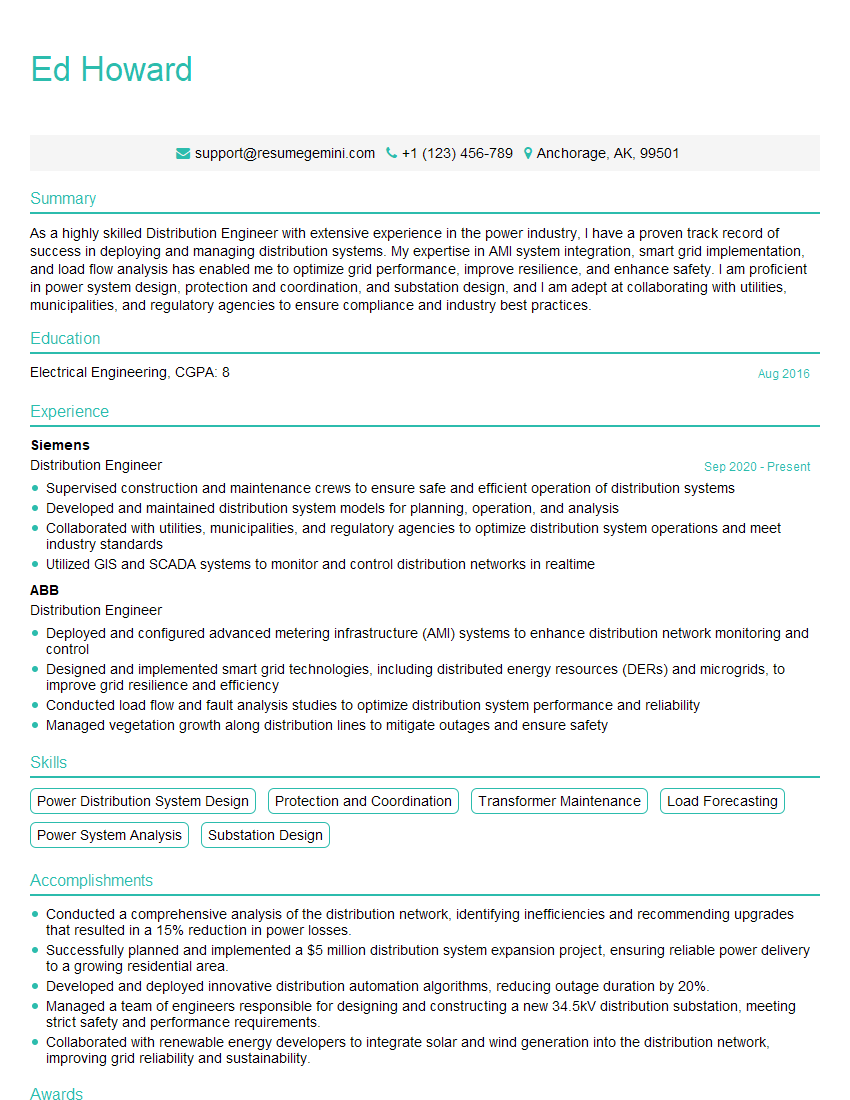
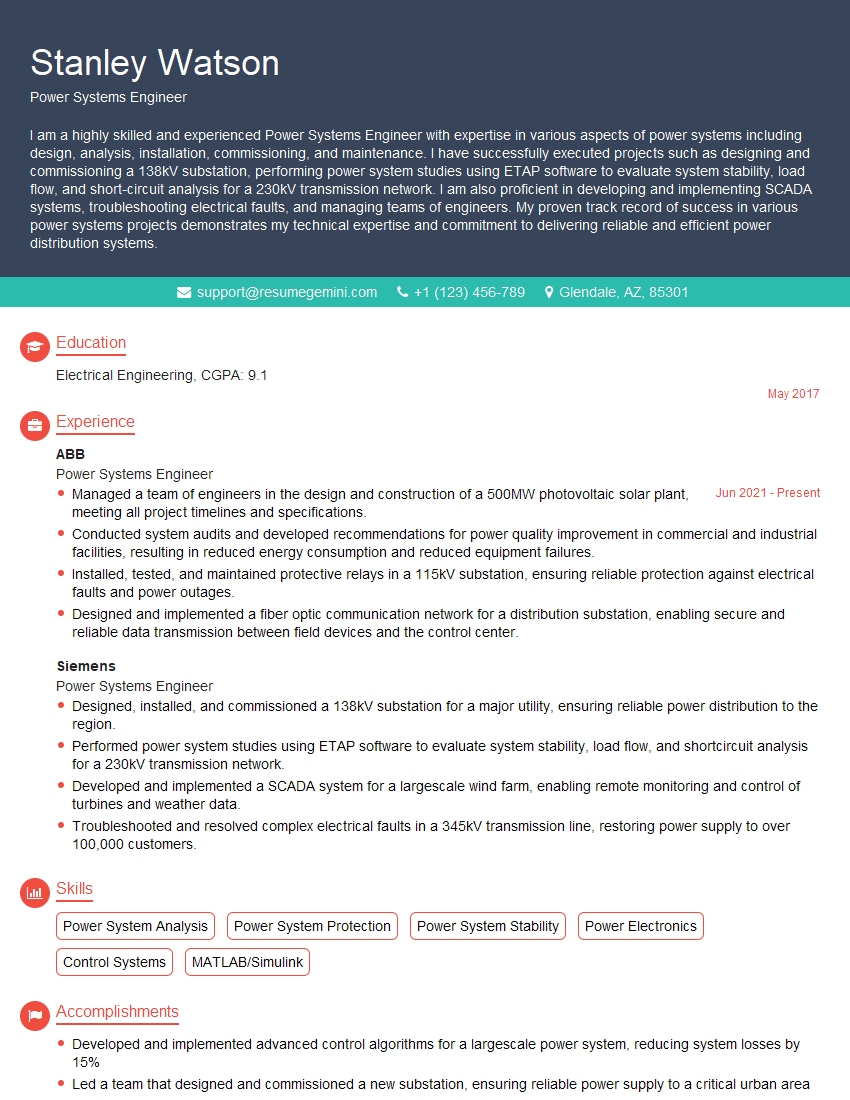
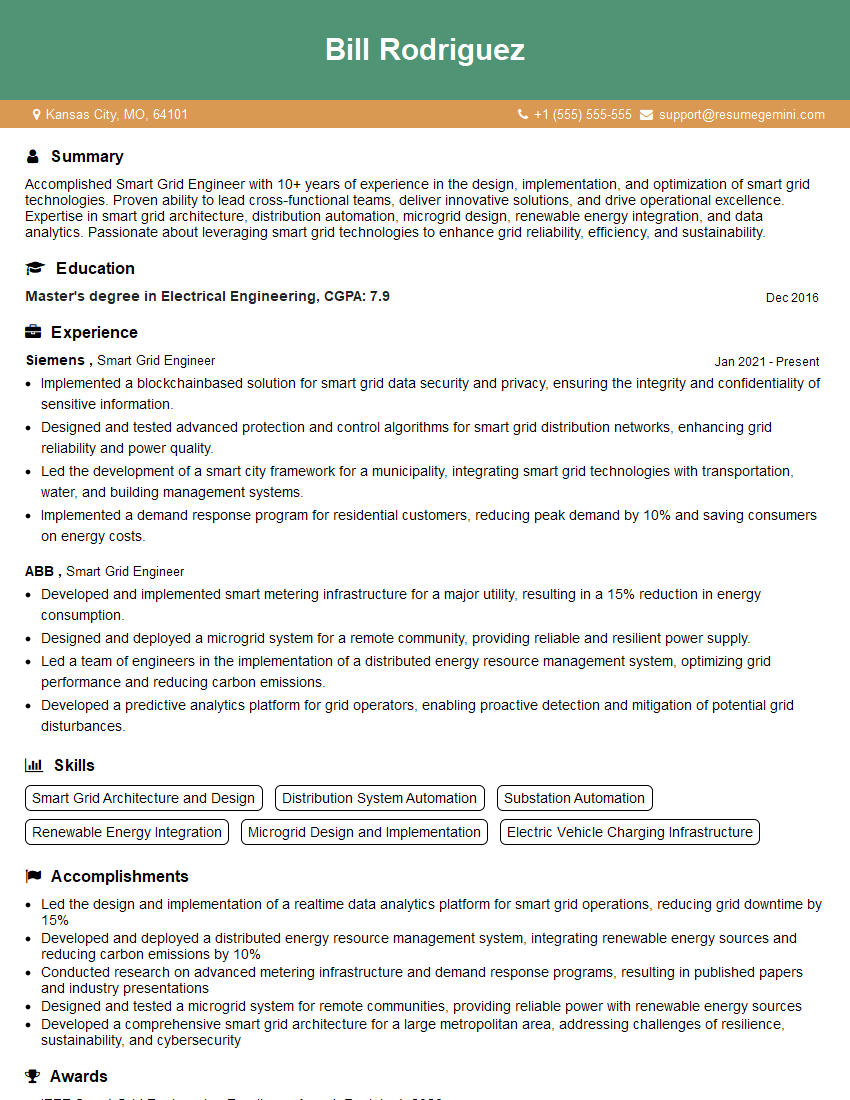
Mastering Power Systems Design is crucial for a successful and rewarding career in the energy sector, opening doors to exciting opportunities and impactful contributions. To maximize your job prospects, it’s vital to present your skills and experience effectively through a well-crafted, ATS-friendly resume. ResumeGemini is a trusted resource that can help you build a professional and compelling resume tailored to the demands of the Power Systems Design industry. Examples of resumes tailored to Power Systems Design are available to guide you. Invest time in crafting a strong resume; it’s your first impression on potential employers.
Explore more articles
Users Rating of Our Blogs
Share Your Experience
We value your feedback! Please rate our content and share your thoughts (optional).
What Readers Say About Our Blog
Very informative content, great job.
good