The thought of an interview can be nerve-wracking, but the right preparation can make all the difference. Explore this comprehensive guide to Tissue testing interview questions and gain the confidence you need to showcase your abilities and secure the role.
Questions Asked in Tissue testing Interview
Q 1. Describe the process of tissue fixation.
Tissue fixation is the crucial first step in histopathology, aiming to preserve tissue structure and prevent degradation. It involves immersing the tissue sample in a fixative solution, typically formaldehyde, which chemically cross-links proteins, halting enzymatic activity and microbial growth. This process effectively ‘freezes’ the tissue in time, maintaining its morphology for subsequent analysis. The choice of fixative and fixation time depend on the type of tissue and the intended downstream applications. For instance, formalin, a common fixative, is excellent for preserving overall morphology, while other fixatives like Bouin’s solution might be preferred for specific staining techniques. Inadequate fixation leads to artifacts like tissue shrinkage, distortion, and antigen loss, severely compromising diagnostic accuracy.
The process typically involves several steps: careful tissue handling to minimize damage, prompt immersion in fixative (ideally with a ratio of 10:1 fixative to tissue volume), and appropriate fixation time, which can range from a few hours to several days depending on the tissue thickness and fixative. Following fixation, the tissue is washed to remove excess fixative before further processing.
Q 2. Explain the importance of proper tissue embedding techniques.
Proper tissue embedding is paramount for creating high-quality tissue sections suitable for microscopic examination. It involves infiltrating the fixed tissue with a supporting medium, typically paraffin wax, which provides structural support and allows for thin sectioning with a microtome. Without proper embedding, the tissue may crumble or tear during sectioning, leading to incomplete or distorted sections. Think of it like building a house – the foundation (embedding) needs to be strong and stable to support the structure (tissue) above.
The process usually involves several steps: tissue processing (dehydration and clearing), infiltration with molten paraffin wax under vacuum (to remove air bubbles and ensure complete wax penetration), and casting the infiltrated tissue into a mold with additional wax. The embedded block is then cooled, hardened, and ready for sectioning. Proper embedding ensures uniform infiltration and minimizes artifacts like tissue shrinkage, air bubbles, and folds, thus improving the quality and interpretability of the resulting tissue sections.
Q 3. What are the different types of tissue stains and their applications?
Tissue staining is essential for visualizing cellular structures and components under a microscope. Different stains target specific cellular components, revealing details that are otherwise invisible. Hematoxylin and eosin (H&E) staining is the most common, staining nuclei blue/purple (hematoxylin) and cytoplasm pink/red (eosin). It provides excellent overall tissue morphology assessment.
- Hematoxylin and Eosin (H&E): A routine stain used for general tissue morphology assessment.
- Periodic Acid-Schiff (PAS): Detects carbohydrates and glycoproteins, highlighting structures like basement membranes and fungal elements.
- Masson’s Trichrome: Differentiates collagen from other tissue components, used in fibrosis assessment.
- Immunohistochemistry (IHC): Uses antibodies to detect specific proteins within tissues, providing detailed information about cellular processes and disease states (discussed further below).
- Special stains: Numerous special stains exist for specific applications such as silver stains for neurological tissues or oil red O for lipids.
The choice of stain depends heavily on the diagnostic question. For example, in diagnosing liver disease, special stains for iron or copper might be used, while in cancer diagnosis, IHC might be employed to identify specific tumor markers.
Q 4. How do you ensure the quality control of tissue samples?
Quality control in tissue sample processing is crucial for accurate diagnosis and research. It involves multiple checks throughout the entire workflow. We implement a rigorous quality control program using various methods to ensure reliable results. This includes:
- Proper fixation and processing protocols: Adherence to established protocols, regular maintenance of equipment (e.g., tissue processors, microtomes), and use of standardized reagents are paramount.
- Regular checks on reagent quality: We regularly check the concentration and quality of fixatives, stains, and embedding media.
- Microscopic evaluation: Experienced histotechnologists review every tissue section for quality – checking for artifacts, proper staining, and completeness.
- Internal and External Audits: Regular internal audits assess our processes and identify areas for improvement. External audits ensure compliance with quality standards.
- Tracking and documentation: We maintain detailed records of all steps involved in tissue processing, including the patient’s identity, tissue type, processing date, and any deviations from standard operating procedures.
These measures ensure the reliability and reproducibility of results, ultimately improving the accuracy of diagnoses and the quality of research findings.
Q 5. Describe your experience with immunohistochemistry (IHC).
I have extensive experience with immunohistochemistry (IHC), a technique that uses labeled antibodies to detect specific proteins within tissue sections. Essentially, it’s like using a molecular ‘fishing net’ to catch specific proteins of interest. It is invaluable in cancer diagnostics, helping differentiate tumor types, assess the aggressiveness of cancers and monitor response to treatment. My experience encompasses all aspects of IHC, from antigen retrieval techniques to antibody optimization and troubleshooting.
For example, in breast cancer, IHC for estrogen receptor (ER), progesterone receptor (PR), and human epidermal growth factor receptor 2 (HER2) is routinely performed to guide treatment decisions. My work has involved optimizing IHC protocols for various markers, developing and implementing quality control measures, and interpreting results to aid in clinical decision-making. I’ve also used IHC in research settings to investigate the expression of specific proteins in various disease models.
Q 6. Explain the principles of in situ hybridization (ISH).
In situ hybridization (ISH) is a molecular technique used to detect specific nucleic acid sequences (DNA or RNA) within tissue sections. Imagine it as a ‘molecular probe’ that targets and binds to a specific gene or RNA molecule, revealing its location and abundance within the tissue. This allows us to visualize gene expression patterns, identify infectious agents, or detect genetic abnormalities directly within the tissue context.
The principle relies on the use of labeled probes—short DNA or RNA sequences that are complementary to the target nucleic acid sequence. These probes are designed to bind to the target via hybridization, and the label (often fluorescent or enzymatic) allows for visualization of the target nucleic acid. Different types of ISH exist, such as fluorescence in situ hybridization (FISH) that uses fluorescently labeled probes.
ISH is a powerful tool in various applications, including cancer diagnostics (detecting gene amplifications or translocations), infectious disease diagnosis (detecting viral or bacterial nucleic acids), and research studies investigating gene expression patterns.
Q 7. What are the common artifacts encountered in tissue processing, and how are they avoided?
Several artifacts can occur during tissue processing, compromising the quality of the resulting sections. These artifacts can be introduced at any stage, from fixation to sectioning. Some common artifacts include:
- Tissue shrinkage: Caused by improper fixation or processing, leading to distortion of tissue architecture.
- Air bubbles: Introduced during embedding or sectioning, appearing as clear spaces in the tissue.
- Folding or tearing: Can occur during sectioning, leading to discontinuities in the tissue.
- Precipitates: Crystals or other insoluble materials that can form during processing.
- Stain artifacts: Uneven or inadequate staining resulting from poor reagent quality or incorrect staining protocols.
Avoiding these artifacts involves meticulous attention to detail throughout the entire process. This includes using appropriate fixatives and processing techniques, carefully controlling embedding parameters, and employing good sectioning practices. Regular quality control checks, microscopic evaluation, and adherence to standard operating procedures are essential to minimizing artifacts and ensuring high-quality results.
Q 8. How do you troubleshoot problems encountered during tissue sectioning?
Troubleshooting tissue sectioning problems requires a systematic approach. It often starts with identifying the source of the issue: is it the tissue itself, the equipment, or the technique?
- Chattering: This rhythmic vibration during sectioning results in thick and thin areas. It’s often caused by a dull blade, improper embedding, or a too-high feed rate. The solution is to replace the blade, check the embedding quality (e.g., ensuring proper infiltration of paraffin), and adjust the microtome settings for a slower, smoother cut.
- Compression: Sections are compressed and distorted. This is commonly caused by a blunt blade or excessive pressure on the tissue block. A sharper blade and reducing the pressure are usually sufficient to resolve this. Ensuring the tissue is properly supported during sectioning can also help.
- Folding/Tears: Sections fold or tear during sectioning, often due to dry tissue blocks, too-thick sections, or improper handling. Using a water bath to collect sections, using a sharper blade, and cutting thinner sections generally solves this. Proper hydration of the tissue block before sectioning is also crucial.
- Uneven Sections: Irregular thickness throughout the section might indicate a problem with the microtome’s alignment or the block face itself. Check for proper alignment, and ensure the block is properly trimmed and oriented before sectioning.
In summary, careful observation, systematic elimination of possibilities, and a good understanding of the microtome and its settings are vital in resolving these issues. Keeping a detailed log of the settings used for each sample is also helpful in identifying and avoiding recurring problems.
Q 9. Describe your experience with different types of microscopes used in tissue testing.
My experience encompasses a variety of microscopes, each with unique applications in tissue testing.
- Brightfield Microscopes: These are the workhorses of histology labs. I routinely use them for basic morphological analysis of stained tissue sections, identifying cellular structures, and assessing tissue architecture. I’m proficient in adjusting illumination, magnification, and contrast to optimize visualization. For example, I’ve used them extensively to examine hematoxylin and eosin (H&E) stained sections to identify inflammatory cells or tumor cells.
- Fluorescence Microscopes: These allow visualization of fluorescently labeled structures within tissues. I’ve used this extensively in immunofluorescence studies, where specific proteins are labeled with fluorescent antibodies. For instance, I’ve localized specific biomarkers of cancer progression using this technique.
- Confocal Microscopes: I’ve used confocal microscopy for high-resolution imaging of three-dimensional tissue structures. It’s especially valuable when precise localization of molecules within complex tissues is necessary. I applied this technique when researching the distribution of proteins within tumor microenvironment.
- Electron Microscopes (Transmission and Scanning): My experience also extends to electron microscopy, providing ultrastructural details of tissues down to the nanometer scale. I have used Transmission Electron Microscopy (TEM) to study the fine structure of cellular organelles and Scanning Electron Microscopy (SEM) to examine the surface morphology of tissues.
Understanding the strengths and limitations of each microscope type is crucial for obtaining optimal results and selecting the appropriate instrument for specific research questions. Proper maintenance and calibration are essential for reliable data acquisition.
Q 10. Explain the importance of proper labeling and storage of tissue samples.
Proper labeling and storage of tissue samples are critical for maintaining sample integrity and preventing errors. Mislabeled or improperly stored samples can lead to inaccurate results, wasted resources, and even compromised patient care.
Each sample must be meticulously labeled with unique identifiers such as patient name (or code), date of collection, tissue type, and any relevant clinical information. This information should be recorded both on the physical sample container and in a laboratory information management system (LIMS). This is essential for maintaining an accurate audit trail.
Storage conditions are just as important. Tissues are typically stored in formalin (a fixative) for long-term preservation. However, the specific requirements might vary depending on the type of tissue and the intended analyses. Optimal storage temperature is usually 4°C, but some samples might require freezing at -80°C for specific applications (e.g., RNA/DNA analysis). Proper handling and storage prevent degradation and ensure the quality of the tissue for future analysis.
For example, in a recent study involving a cohort of patients with a rare disease, rigorous labeling and storage procedures were paramount to prevent mixing up samples, ensuring the reliability and validity of the research findings.
Q 11. How do you interpret histological findings?
Interpreting histological findings involves a systematic approach, integrating microscopic observations with clinical information. It is not merely about identifying cells and tissues but understanding their arrangement and relationships to each other and to the patient’s clinical history.
The process generally begins with assessing the overall tissue architecture – is the tissue normal or abnormal? Next, I focus on identifying specific cell types, their morphology (size, shape, staining characteristics), and their arrangement. Any abnormalities, such as inflammation, necrosis (cell death), or neoplasia (tumor formation), are carefully documented and characterized. These observations are correlated with the patient’s medical history, including symptoms, clinical diagnoses, and other laboratory results.
For instance, identifying atypical cells with high nuclear-to-cytoplasmic ratios and prominent nucleoli within an epithelial tissue sample, along with knowing the patient has a history of lung cancer, may lead to the diagnosis of a metastatic tumor.
Using appropriate staining techniques (e.g., immunohistochemistry, special stains) to highlight specific cellular components adds significant detail to the interpretation. The final interpretation, which is documented in a detailed report, involves a holistic evaluation of all gathered information, incorporating both microscopic observation and clinical information.
Q 12. What are the safety precautions you take when handling hazardous materials in tissue testing?
Safety is paramount when handling hazardous materials in tissue testing. Our lab follows strict protocols to minimize risks to personnel and the environment.
- Formalin Handling: Formalin, a common tissue fixative, is a known carcinogen. All handling must occur under a fume hood to prevent inhalation. Appropriate personal protective equipment (PPE), including gloves, lab coats, and eye protection, is mandatory. Spills are addressed immediately using appropriate neutralizing agents and following established protocols.
- Xylene Handling: Xylene, a solvent used in tissue processing, is also hazardous. Handling follows similar protocols to formalin, with emphasis on ventilation and PPE. Disposal of used xylene follows strict guidelines.
- Sharps Disposal: Microscope slides, blades, and needles are considered sharps and pose a risk of injury. These are disposed of in puncture-resistant containers to prevent accidental needle sticks.
- Chemical Waste Disposal: All chemical wastes are handled according to local regulations and classified as hazardous waste. Waste is segregated, appropriately labeled, and disposed of through licensed waste disposal companies.
- Biosafety: Depending on the nature of the tissues being processed (e.g., infectious agents), appropriate biosafety measures, such as working in biosafety cabinets, are implemented. Proper training is provided to all personnel on safe handling practices.
Regular safety training and adherence to strict protocols are essential to maintain a safe working environment and comply with regulatory requirements.
Q 13. Describe your experience with quality assurance and quality control procedures in a tissue testing lab.
Quality assurance (QA) and quality control (QC) are integral parts of our tissue testing lab’s operations, ensuring the reliability and validity of our results.
QC focuses on the analytical process itself, involving regular checks on equipment calibration (e.g., microtomes, microscopes), reagent quality, and staining procedures. We use control slides with known characteristics to assess the consistency and accuracy of staining techniques. For example, we routinely use positive and negative control tissues during immunohistochemistry staining to ensure the specificity and sensitivity of the antibodies. We also maintain detailed records of these QC checks.
QA takes a broader view, encompassing all aspects of the testing process from sample collection and processing to reporting. This includes reviewing the entire workflow, from sample accessioning to result reporting. We also participate in proficiency testing programs to assess our lab’s performance against external standards. Regular audits are conducted to review lab practices and ensure compliance with regulatory standards and guidelines.
We regularly calibrate our equipment, maintain detailed logs of maintenance, and participate in external quality assurance programs to maintain high standards and ensure the reliability of our results, contributing to confident clinical decision-making.
Q 14. How do you handle discrepancies or errors in tissue testing results?
Discrepancies or errors in tissue testing results are addressed immediately and systematically. The first step is to identify the source of the error.
- Sample Identification Errors: These are investigated by reviewing the labeling and tracking information. If a mislabeling is confirmed, the error is flagged, and the results are corrected.
- Technical Errors: Problems with equipment, reagents, or staining techniques are investigated. The QC data are reviewed to identify potential issues, and the equipment or procedures are reviewed and corrected. For example, a problem with the immunohistochemistry stain might be indicated by consistently low staining intensity. In such cases, reagent quality, staining protocols, and equipment function are examined.
- Interpretive Errors: This is addressed through consultation with senior pathologists. Additional stains or studies might be performed to resolve ambiguity. In cases of significant discrepancy, a second review by another pathologist can be performed to confirm the diagnosis.
A detailed report of the discrepancy, the investigation, and the corrective actions is documented. This helps in identifying systemic issues, preventing recurrence, and improving the overall quality of the laboratory’s performance. Patient care and safety are always paramount, therefore, any potential error with clinical implications is immediately brought to the attention of the treating physician.
Q 15. Explain your understanding of different tissue types and their histological characteristics.
Understanding tissue types and their histological characteristics is fundamental to accurate tissue testing. Histology is the study of the microscopic anatomy of tissues. Different tissues have unique structural features, cellular compositions, and arrangements, which are revealed through histological techniques.
- Epithelial Tissue: Covers body surfaces, lines cavities and forms glands. Histologically, it’s characterized by closely packed cells with minimal extracellular matrix. Examples include stratified squamous epithelium (skin) showing layers of flattened cells and simple columnar epithelium (lining of the gut) displaying tall, columnar cells.
- Connective Tissue: Supports and connects other tissues. Characterized by abundant extracellular matrix (e.g., collagen, elastin) and diverse cell types. Examples include dense regular connective tissue (tendons) with parallel collagen fibers and loose connective tissue (adipose) with widely scattered cells.
- Muscle Tissue: Enables movement. Skeletal muscle shows striations (alternating light and dark bands) due to the arrangement of actin and myosin filaments. Smooth muscle lacks striations, and cardiac muscle has branched cells with intercalated discs.
- Nervous Tissue: Transmits electrical signals. Characterized by neurons (nerve cells) with dendrites and axons and glial cells (supporting cells). Histologically, neurons are identifiable by their large cell bodies and processes.
These characteristics, visible under a microscope after proper processing and staining, allow pathologists to identify specific tissues, diagnose diseases, and assess tissue health.
Career Expert Tips:
- Ace those interviews! Prepare effectively by reviewing the Top 50 Most Common Interview Questions on ResumeGemini.
- Navigate your job search with confidence! Explore a wide range of Career Tips on ResumeGemini. Learn about common challenges and recommendations to overcome them.
- Craft the perfect resume! Master the Art of Resume Writing with ResumeGemini’s guide. Showcase your unique qualifications and achievements effectively.
- Don’t miss out on holiday savings! Build your dream resume with ResumeGemini’s ATS optimized templates.
Q 16. What is your experience with automated tissue processing equipment?
I have extensive experience with automated tissue processing equipment, including tissue processors, embedding stations, and microtomes. My experience spans various brands and models, enabling me to troubleshoot and optimize workflows for efficient and high-quality tissue preparation.
For example, I’ve worked extensively with Leica tissue processors, mastering their programming for optimal tissue fixation, dehydration, clearing, and paraffin infiltration. I am proficient in troubleshooting issues such as vacuum leaks or temperature fluctuations, ensuring consistent and reliable results. I also possess expertise in optimizing embedding parameters on automated embedding stations to achieve optimal tissue orientation and block quality. This minimizes the risk of tissue damage during sectioning, which is critical for accurate diagnosis.
My familiarity with microtomes extends to both rotary and cryostat microtomes. I’m adept at producing high-quality sections of varying thicknesses consistently, optimizing cutting parameters based on tissue type and intended application (e.g., thicker sections for special stains, thinner sections for immunohistochemistry). This experience allows me to optimize the entire tissue processing workflow, maximizing efficiency and reducing turnaround time without compromising quality.
Q 17. Describe your experience with digital pathology and image analysis.
My experience with digital pathology and image analysis is significant. I’m proficient in using digital scanning systems to create whole-slide images (WSIs) from tissue sections. I’m familiar with various image analysis software packages such as Aperio ImageScope, HALO, and QuPath, employing these tools for quantitative analysis, morphometric measurements, and biomarker assessment.
For instance, I’ve used image analysis to quantify tumor cell density in breast cancer specimens, providing valuable data for prognosis and treatment planning. In another project, I utilized image analysis software to assess the expression levels of specific proteins in tissue sections using immunohistochemistry, contributing to a better understanding of disease mechanisms. I’m also comfortable with the workflow involved in storing, managing, and sharing WSIs within a digital pathology system, ensuring data integrity and security.
My skills also extend to the integration of digital pathology data with other clinical information, helping in developing more comprehensive and informative reports. I understand the importance of quality control in digital pathology and the need for proper image calibration and standardization to ensure accurate and reproducible results.
Q 18. Explain the difference between H&E staining and special stains.
Hematoxylin and eosin (H&E) staining is a routine staining method used in histology to visualize general tissue morphology. Hematoxylin stains nuclei blue/purple, while eosin stains the cytoplasm and extracellular matrix pink/red. This provides a basic overview of tissue architecture and cellular organization.
Special stains, on the other hand, are used to highlight specific tissue components or structures that may not be readily apparent with H&E staining. Examples include:
- Periodic acid-Schiff (PAS): stains carbohydrates (glycogen, mucus)
- Masson’s trichrome: stains collagen fibers
- Silver stain: stains nerve fibers and microorganisms
- Immunohistochemistry (IHC): uses antibodies to detect specific proteins
The choice between H&E staining and special stains depends on the diagnostic question. H&E provides a general overview; special stains offer more specific information about certain cellular components or processes. For example, if a pathologist suspects a fungal infection, they might order a Gomori methenamine silver stain to visualize fungal hyphae, which would not be clearly visible on H&E alone.
Q 19. How do you maintain a clean and organized work environment in a tissue testing laboratory?
Maintaining a clean and organized laboratory environment is paramount in tissue testing to ensure the integrity of samples, prevent contamination, and uphold safety standards. We adhere to strict protocols to achieve this.
Our procedures include:
- Regular cleaning and disinfection: All work surfaces, equipment, and instruments are cleaned and disinfected daily, using appropriate disinfectants based on the type of contamination risk.
- Proper waste disposal: All biological waste, including tissue samples and chemical reagents, is handled and disposed of according to strict safety regulations and guidelines.
- Organized storage: Reagents, supplies, and samples are stored in a structured and labeled manner, ensuring easy retrieval and preventing cross-contamination. This includes utilizing proper temperature-controlled storage for sensitive materials.
- Regular equipment maintenance: Equipment such as microtomes and tissue processors is routinely inspected and maintained to ensure optimal performance and prevent malfunction, which can lead to sample degradation.
- Designated areas for different processes: Separate workspaces are assigned for tissue processing, embedding, sectioning, and staining to minimize cross-contamination risks.
These strategies, along with regular safety training and adherence to good laboratory practices (GLPs), contribute to a safe, organized, and efficient workspace.
Q 20. What are the ethical considerations in handling human tissue samples?
Ethical considerations in handling human tissue samples are of utmost importance. We strictly adhere to all relevant regulations and guidelines regarding patient privacy, informed consent, and data security.
Key ethical considerations include:
- Informed Consent: Patients must provide explicit consent for the use of their tissue samples for research or diagnostic purposes. This includes clear explanation of the purpose of the testing and potential risks involved.
- Patient Confidentiality: All patient information must be treated with strict confidentiality and protected under HIPAA and other relevant privacy regulations. Sample identification is handled in a manner that prevents unauthorized access to patient data.
- Data Security: Digital data related to tissue samples must be protected from unauthorized access, modification, or disclosure. This includes employing secure data storage, access control, and encryption techniques.
- Ethical Disposal: After testing, samples must be disposed of appropriately, in compliance with all regulations. This usually involves incineration or other approved methods to prevent contamination or misuse.
- Responsible use of data: Data obtained from tissue samples must be used only for the intended purpose, as stated in the informed consent document. Use beyond the scope of consent requires further ethical review.
Compliance with these ethical principles is not only a matter of professional responsibility but is crucial for maintaining public trust in medical research and diagnostics.
Q 21. Describe your experience with documenting and reporting tissue testing results.
Accurate and comprehensive documentation and reporting of tissue testing results are essential for proper patient care and research integrity. My experience encompasses detailed record-keeping, report generation, and result interpretation.
My approach includes:
- Detailed laboratory notebooks: All procedures, observations, and any deviations from standard protocols are meticulously recorded in detailed laboratory notebooks. This allows for complete traceability of each sample and ensures the reproducibility of results.
- Digital pathology reporting systems: I’m proficient in using digital pathology systems to generate reports that include macroscopic and microscopic findings, detailed annotations on WSIs, and diagnostic interpretations. The reports include standardized terminology, making them easily understandable and interpretable by clinicians.
- Quality control measures: Quality control measures are integrated at every step, from sample handling to report generation. This ensures the reliability and accuracy of the results.
- Clear and concise report writing: Reports are written in a clear and concise manner, using precise terminology and avoiding ambiguity. They highlight key findings and their clinical significance, avoiding unnecessary jargon.
- Collaboration and communication: I actively participate in discussions with pathologists and clinicians to clarify any ambiguities and ensure proper interpretation and application of the results.
My goal is to produce high-quality, reliable reports that contribute directly to patient care and research advancements.
Q 22. How do you stay current with the latest advancements in tissue testing techniques?
Staying current in the rapidly evolving field of tissue testing requires a multifaceted approach. I actively participate in professional organizations like the American Society for Histocompatibility and Immunogenetics (ASHI) and the College of American Pathologists (CAP), attending conferences and webinars to learn about the latest techniques and research findings. This allows me to network with leading experts and gain insights into emerging technologies. Furthermore, I regularly read peer-reviewed journals such as the Journal of Histochemistry & Cytochemistry and Modern Pathology, focusing on articles related to new methodologies, advancements in instrumentation, and improvements in data analysis. Finally, I actively seek out online resources, such as reputable manufacturer websites and online databases of scientific literature, to stay updated on new reagents and equipment. This continuous learning ensures I am always at the forefront of the field.
Q 23. Explain your understanding of the regulatory requirements for tissue testing laboratories.
Regulatory compliance is paramount in tissue testing laboratories. My understanding encompasses adherence to guidelines set by organizations like the Clinical Laboratory Improvement Amendments (CLIA), the CAP, and relevant state regulations. These regulations dictate quality control procedures, proficiency testing requirements, personnel qualifications, and record-keeping practices. For example, CLIA mandates specific quality control measures for each assay, requiring regular calibration and maintenance of instruments and validation of new methodologies. CAP accreditation requires adherence to a comprehensive set of standards covering all aspects of laboratory operations, including pre-analytical, analytical, and post-analytical phases. Understanding and implementing these regulations is crucial for ensuring the accuracy, reliability, and integrity of test results, which is essential for patient care and research applications. Non-compliance can lead to severe consequences, including sanctions, suspension of licenses, and even legal ramifications.
Q 24. Describe your experience with troubleshooting equipment malfunctions.
Troubleshooting equipment malfunctions is a regular part of my work. My approach is systematic and follows a structured process. First, I thoroughly document the issue, including the specific error message, time of occurrence, and any unusual observations. Then, I consult the equipment’s troubleshooting guide and manufacturer’s instructions. If the issue isn’t immediately resolved, I systematically check connections, power supply, reagents, and sample integrity. I might involve a biomedical engineer if necessary. For example, once I encountered a recurring issue with a flow cytometer where the laser alignment was consistently off. By systematically checking the laser alignment parameters and consulting the manufacturer’s service manual, I identified a loose screw within the laser assembly. After tightening the screw, the instrument functioned correctly. This experience highlighted the importance of methodical troubleshooting and detailed documentation.
Q 25. How do you manage your time effectively when working on multiple tissue samples?
Efficient time management is vital when processing multiple tissue samples. I use a combination of techniques, including prioritizing samples based on urgency and testing requirements. For example, samples requiring rapid turnaround for surgical decisions will always take precedence. I utilize a laboratory information system (LIS) to track sample progress, ensuring no sample is overlooked. Batch processing, where feasible, streamlines the workflow. Additionally, I employ standard operating procedures (SOPs) for each testing method to ensure consistent and efficient processing. I also avoid multitasking that can lead to errors. Instead, I focus completely on one task at a time, minimizing errors and improving efficiency. Effective time management translates into timely results, efficient resource utilization, and minimizing turnaround time for critical cases.
Q 26. What is your approach to problem-solving in a tissue testing laboratory?
My problem-solving approach in a tissue testing laboratory is based on a combination of scientific method and collaborative teamwork. When encountering a problem, I start by clearly defining the problem and identifying all related factors. This often involves reviewing the samples’ history, testing methodologies used, and any associated variables. Then, I formulate hypotheses and test them using appropriate techniques. If the initial attempts fail, I consult with colleagues, including pathologists, technicians, and other specialists, to gain different perspectives and leverage their expertise. I document each step of the problem-solving process, including the results of each test, and share the final solution with the team to prevent similar problems in the future. This collaborative and systematic approach ensures efficient and accurate solutions to challenges encountered in the lab.
Q 27. Describe a time you had to deal with a challenging tissue sample. How did you overcome it?
I once received a highly degraded tissue sample that was crucial for a patient’s diagnosis. The sample was fragmented and showed significant autolysis, making standard processing techniques challenging. Initially, I tried standard methods, but the quality of the results was insufficient. To overcome this, I consulted the literature and found that optimizing the fixation and embedding process using specific reagents and techniques could potentially improve the tissue preservation. We employed a modified fixation protocol and used specialized embedding techniques to preserve the sample’s integrity better. This approach yielded improved tissue morphology, allowing us to obtain a reliable diagnosis that was crucial for the patient’s treatment plan. This experience reinforced the importance of adaptability and resourcefulness when handling challenging samples.
Q 28. What are your salary expectations?
My salary expectations are in line with the market rate for a domain expert with my level of experience and qualifications in tissue testing in this region. I am open to discussing a specific range based on the details of the compensation package, including benefits and opportunities for professional development.
Key Topics to Learn for Tissue Testing Interview
- Specimen Handling and Processing: Understanding proper techniques for receiving, storing, and preparing tissue samples for various testing methods. This includes considerations for maintaining sample integrity and avoiding contamination.
- Immunohistochemistry (IHC): Mastering the principles and practical applications of IHC, including antibody selection, antigen retrieval methods, and interpretation of staining results. Consider troubleshooting common IHC issues.
- In Situ Hybridization (ISH): Familiarize yourself with the theory and practice of ISH techniques, including probe design, hybridization protocols, and signal detection. Understand the applications of ISH in diagnosing various diseases.
- Microscopy and Image Analysis: Develop proficiency in using various microscopes (light, fluorescence, confocal) and image analysis software for quantitative and qualitative assessment of tissue samples. Practice interpreting microscopic images and identifying key features.
- Quality Control and Assurance: Understand the importance of quality control measures in tissue testing, including proper documentation, calibration of equipment, and adherence to regulatory guidelines (e.g., CLIA, CAP).
- Molecular Diagnostics Techniques: Gain a working knowledge of molecular techniques used in tissue testing, such as PCR, sequencing, and microarray analysis. Understand the applications and limitations of these methods.
- Data Analysis and Interpretation: Develop skills in analyzing and interpreting data generated from tissue testing. This includes understanding statistical concepts and their application to experimental results.
- Troubleshooting and Problem-Solving: Be prepared to discuss common challenges encountered in tissue testing and your approach to troubleshooting and problem-solving. This includes recognizing artifacts and sources of error.
Next Steps
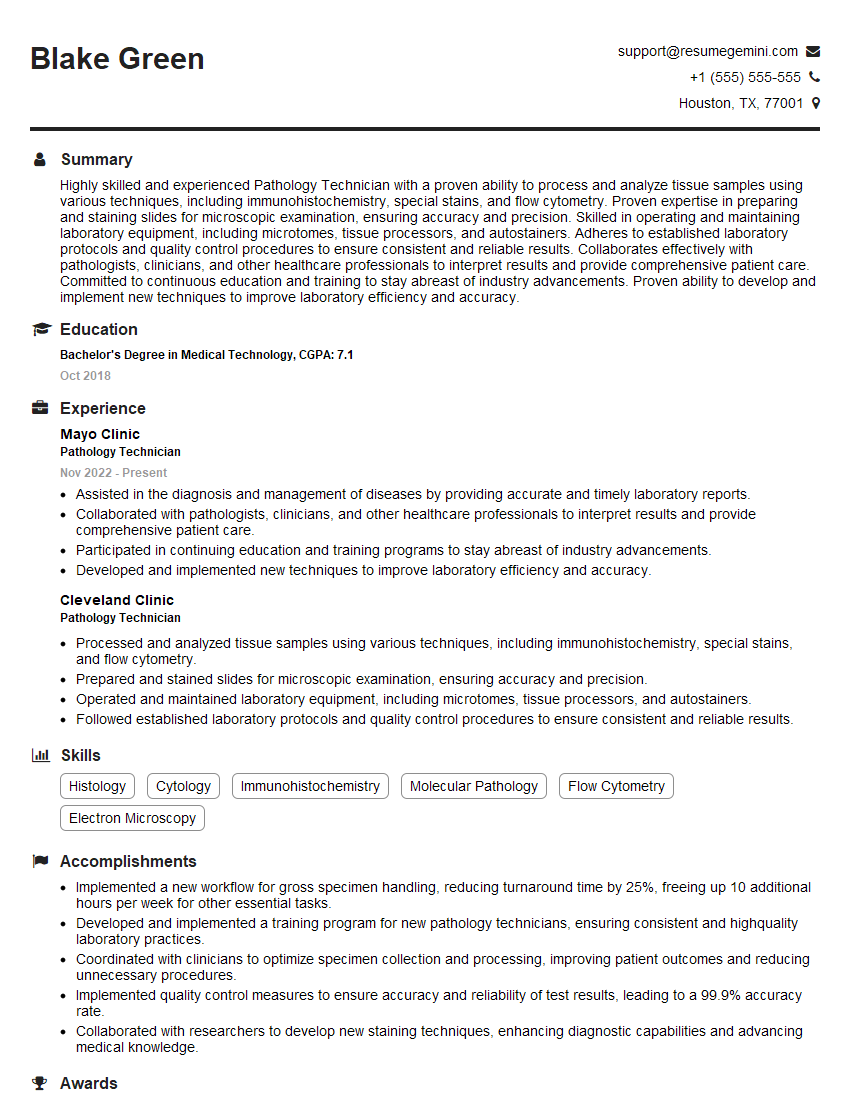
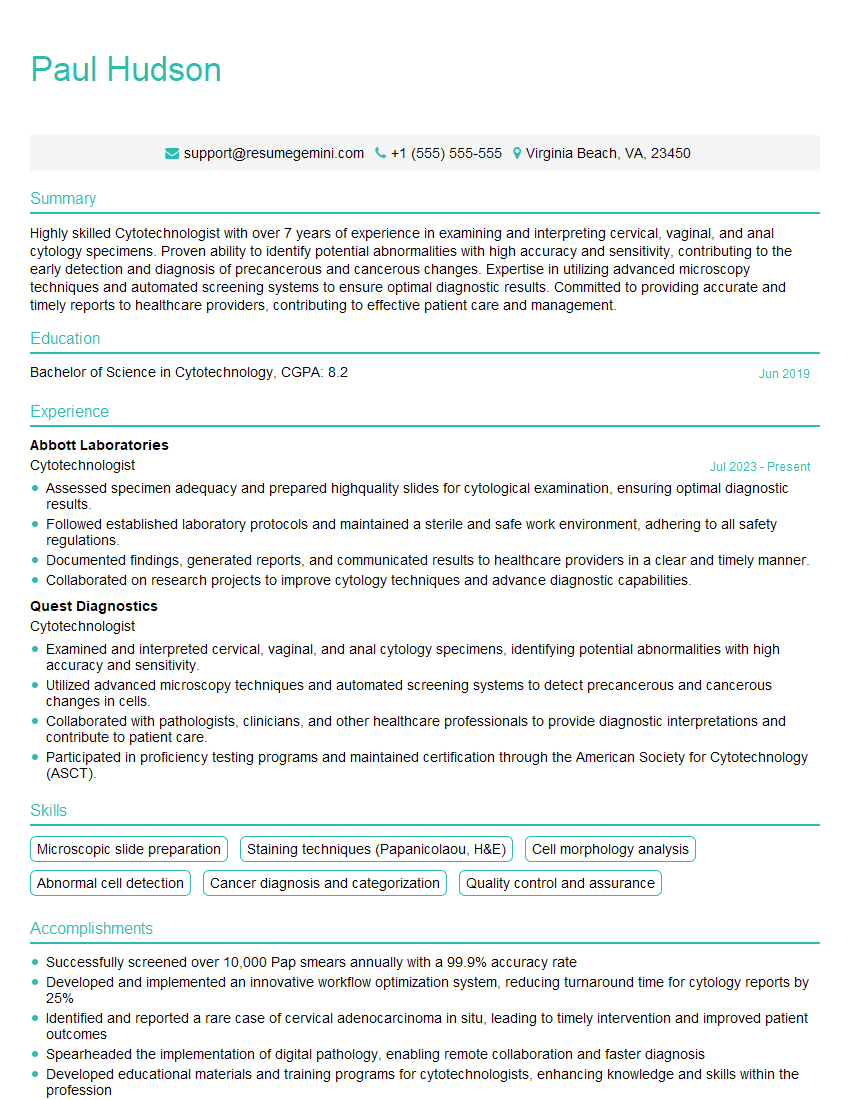
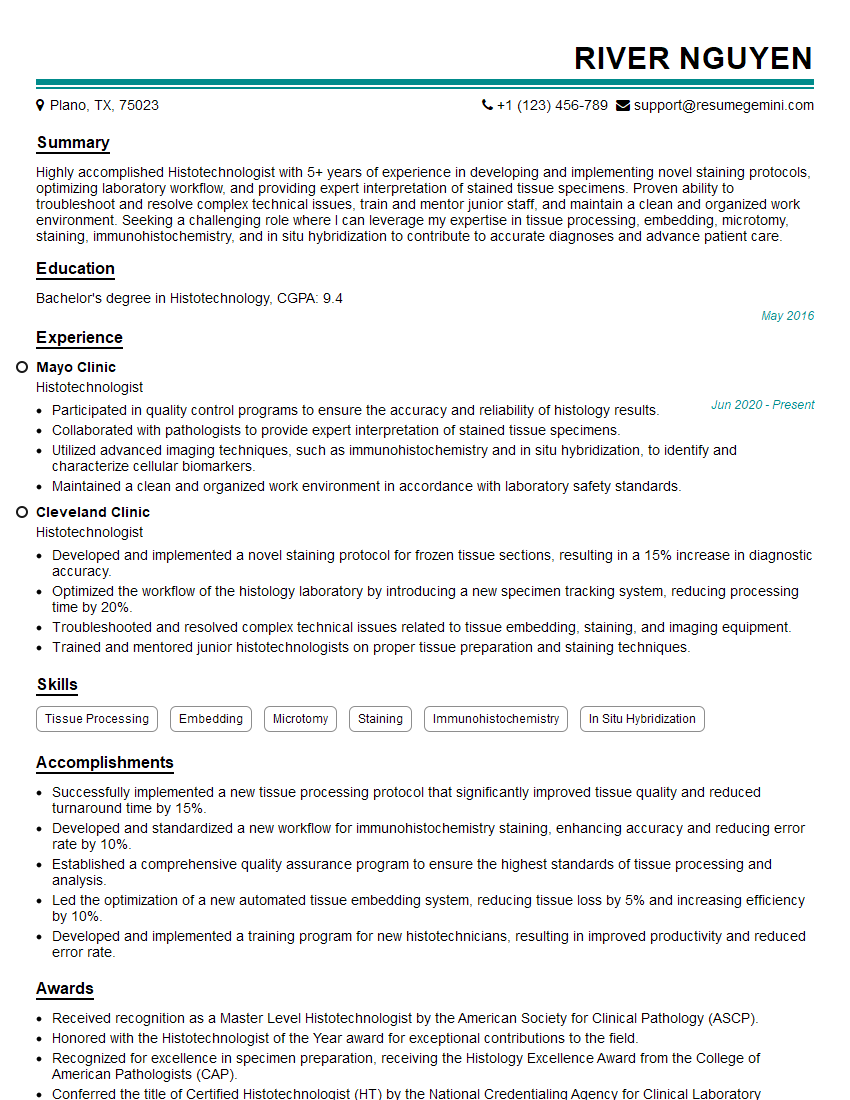
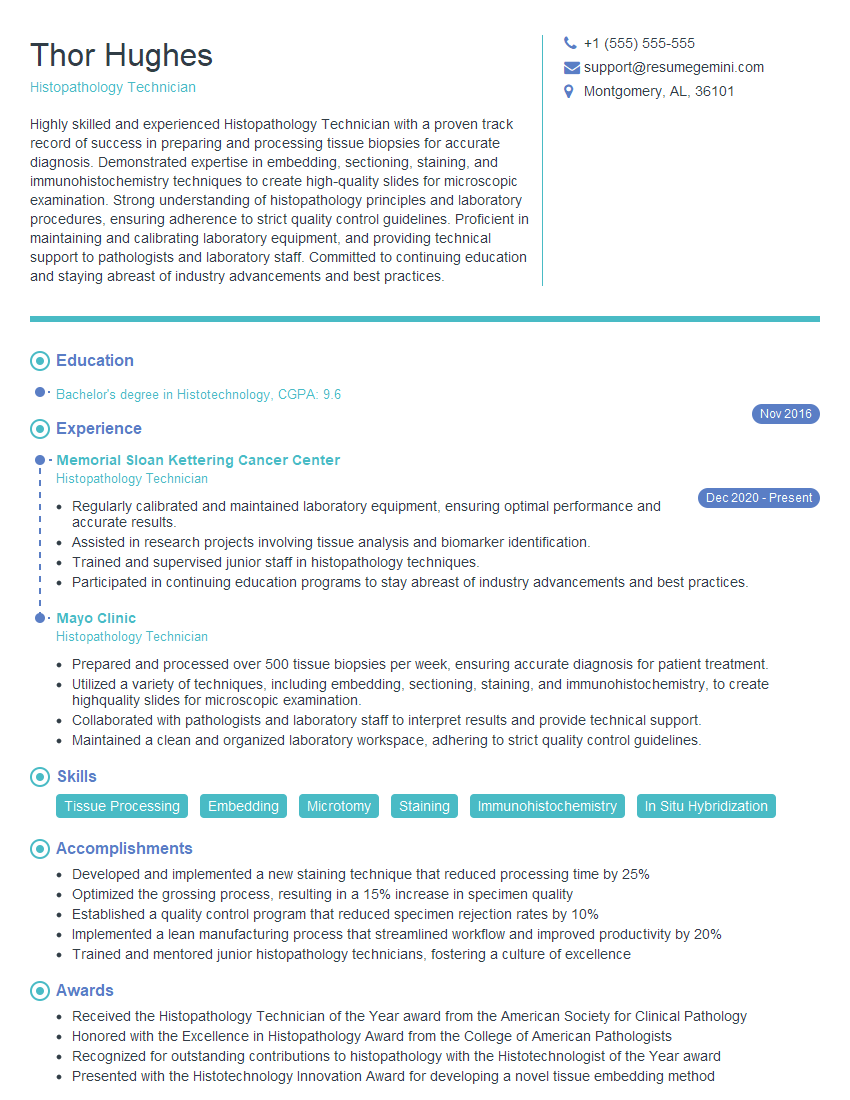
Mastering tissue testing techniques opens doors to exciting career advancements in pathology, research, and diagnostics. A strong foundation in these crucial areas significantly enhances your marketability and positions you for success in a competitive field. To further strengthen your job prospects, creating a well-crafted, ATS-friendly resume is paramount. ResumeGemini is a trusted resource that can help you build a professional resume tailored to highlight your skills and experience in tissue testing. Examples of resumes specifically designed for tissue testing professionals are available to help you get started.
Explore more articles
Users Rating of Our Blogs
Share Your Experience
We value your feedback! Please rate our content and share your thoughts (optional).
What Readers Say About Our Blog
Very informative content, great job.
good