Are you ready to stand out in your next interview? Understanding and preparing for Tissue preparation interview questions is a game-changer. In this blog, we’ve compiled key questions and expert advice to help you showcase your skills with confidence and precision. Let’s get started on your journey to acing the interview.
Questions Asked in Tissue preparation Interview
Q 1. Explain the process of tissue fixation and its importance.
Tissue fixation is the crucial first step in tissue preparation, aiming to preserve the tissue’s structure and composition as close as possible to its living state. It essentially stops cellular autolysis (self-digestion) and prevents putrefaction by inactivating enzymes and cross-linking proteins. Imagine it like taking a snapshot of a dynamic scene – fixation freezes the moment in time for later examination.
Its importance cannot be overstated. Without proper fixation, the tissue will undergo degradation, rendering it unsuitable for accurate microscopic analysis or other downstream applications like immunohistochemistry or in situ hybridization. The quality of your results hinges directly on the quality of your fixation.
Q 2. Describe different tissue fixation methods and their applications.
Several fixation methods exist, each with its advantages and disadvantages. The choice depends on the tissue type, the intended downstream application, and the specific preservation needs.
- Formaldehyde (Formalin): The most common fixative, it’s a readily available, relatively inexpensive, and effective cross-linking agent. It’s suitable for a wide range of tissues and applications but can cause artifacts like tissue hardening and pigment formation if improperly used. For example, in immunohistochemistry, the concentration and duration of formaldehyde fixation must be optimized to balance antigen preservation and tissue morphology.
- Glutaraldehyde: A stronger fixative than formaldehyde, it provides superior ultrastructural preservation, making it ideal for electron microscopy. However, it penetrates tissue more slowly and may mask some antigens. It’s commonly used in research settings requiring detailed cellular architecture studies.
- Alcohol-based fixatives (e.g., ethanol, methanol): These denature proteins and are excellent for cytological preparations (e.g., Pap smears) and preserving nucleic acids. They are often used in conjunction with other fixatives, for example, Carnoy’s fixative (alcohol, chloroform, acetic acid) is widely used for preserving chromosomes and other cellular components.
- Bouin’s solution: A mixture of picric acid, formaldehyde, and acetic acid, it provides excellent nuclear and cytoplasmic detail. It’s often preferred for preserving the morphology of delicate tissues.
Q 3. What are the optimal fixation times for different tissue types?
Optimal fixation times vary greatly depending on the tissue type, size, and the fixative used. There’s no one-size-fits-all answer. Larger tissue samples require longer fixation times to ensure complete penetration of the fixative.
- Small biopsies (e.g., skin biopsies): May only require 4-6 hours in formalin.
- Larger organs (e.g., liver, kidney): May require 12-24 hours or even longer in formalin.
- Bone: Often requires decalcification before fixation, and the fixation process itself can take days or even weeks.
Over-fixation can lead to tissue hardening and shrinkage, while under-fixation leads to poor preservation and autolysis.
Experienced technicians use their knowledge of tissue types and fixatives to determine appropriate fixation durations, often relying on their experience and established protocols.
Q 4. What are the potential problems associated with inadequate fixation?
Inadequate fixation has significant consequences. Poorly fixed tissues will exhibit various artifacts that compromise the quality of diagnostic and research analyses.
- Autolysis and Putrefaction: Enzymatic digestion of cellular components leads to loss of structural integrity and cellular detail.
- Poor morphology: Loss of cellular shape, tissue architecture distortion, and the presence of gaps and voids in the tissue.
- Antigen masking: Reduced ability to detect target molecules in immunohistochemistry or other techniques.
- False-positive or false-negative results: leading to inaccurate diagnoses and research conclusions.
In a clinical setting, inadequate fixation could lead to a misdiagnosis, while in research, it could invalidate experimental findings. Therefore, meticulous attention to fixation is paramount.
Q 5. Explain the process of tissue processing, including dehydration and clearing.
Tissue processing follows fixation and prepares the tissue for embedding and sectioning. This involves a series of steps that gradually remove water from the tissue and replace it with a supporting medium, facilitating the creation of thin sections for microscopic examination.
Dehydration: This involves a graded series of ethanol solutions (e.g., 70%, 80%, 95%, 100%) to gradually remove water from the tissue. Imagine this like slowly draining a sponge; rapid removal could cause tissue shrinkage and damage.
Clearing: After dehydration, the ethanol is replaced with a clearing agent, usually xylene or a xylene substitute. The clearing agent is miscible with both ethanol and the embedding medium (e.g., paraffin). This step makes the tissue transparent, indicating successful dehydration.
The entire process is carefully controlled to ensure the tissue maintains its structural integrity, minimizing distortion and artifacts.
Q 6. What are the different types of embedding media and when would you use each?
Several embedding media are used, each with unique properties suitable for specific applications:
- Paraffin wax: The most commonly used embedding medium for routine histology. It’s relatively inexpensive, easy to use, and allows for the creation of thin sections. It’s ideal for light microscopy and a range of staining techniques. However, paraffin wax is not suitable for electron microscopy.
- Resins (e.g., epoxy, acrylic): These are used for electron microscopy because of their ability to preserve ultrastructural detail. They offer greater hardness and allow thinner sections than paraffin, crucial for electron beam penetration.
- Agar: A hydrophilic embedding medium used for certain techniques, such as frozen sectioning where rapid processing is needed. It doesn’t require dehydration or clearing steps.
The selection depends on the nature of the tissue and the type of microscopy planned. For example, delicate tissues requiring preservation of fine details would benefit from resin embedding for electron microscopy, while routine histological examination typically utilizes paraffin.
Q 7. Describe the process of microtomy and sectioning techniques.
Microtomy is the process of cutting thin sections of embedded tissue using a microtome, a specialized instrument with a very sharp blade. The thickness of the section is carefully controlled and depends on the application. For light microscopy, sections typically range from 3-7 µm thick.
Several sectioning techniques are employed:
- Rotary microtome: The most common type, it uses a rotating wheel to advance the tissue block and cut sections.
- Cryostat microtome: Used for frozen sections, allowing for rapid processing and immediate analysis. This is essential for rapid diagnostics, such as intraoperative consultations during surgery.
- Vibratome: Produces thick sections of unfixed tissue using a vibrating blade. Useful for immunohistochemistry and other techniques requiring larger tissue samples.
The skill of the microscopist is crucial in obtaining high-quality sections. Proper orientation of the tissue block, blade angle, and section thickness are essential for successful microtomy, preventing artifacts like compression, chatter, or tearing.
Q 8. What are the common problems encountered during microtomy and how are they resolved?
Microtomy, the process of sectioning tissue into thin slices for microscopic examination, is prone to several challenges. Common problems include chatter (vibrations causing a wavy cut), compression (tissue deformation), tearing (tissue fracturing), and uneven sectioning (variations in thickness).
Troubleshooting these issues requires a systematic approach:
- Chatter: This is often caused by a dull blade, excessive force, or improper blade angle. The solution involves replacing the blade, reducing the feed rate, checking the microtome for proper alignment, and ensuring the paraffin block is firmly mounted and appropriately oriented.
- Compression: This arises from excessive pressure during sectioning. Reducing the pressure on the knife, using a sharper blade, and employing a softer cutting stroke can alleviate this. Sometimes, adjusting the clearance angle can also help.
- Tearing: This usually happens with brittle or poorly processed tissue. Careful trimming of the block before sectioning, using a higher knife angle, and ensuring proper hydration during processing are crucial to minimize tearing. A warmer water bath for the sections can also help prevent cracks.
- Uneven sectioning: This can stem from a variety of factors, including an uneven block face, a poorly aligned microtome, or insufficient embedding. Careful block trimming, microtome maintenance, and quality embedding practices are vital to producing consistent section thickness.
For example, I once encountered persistent chatter despite replacing the blade. After carefully examining the microtome, I discovered a loose component causing vibrations. Tightening this component immediately resolved the issue, demonstrating the importance of thorough equipment maintenance.
Q 9. Explain the different types of stains used in histology and their applications.
Histology utilizes a range of stains to visualize different tissue components. These stains can be broadly categorized into:
- Hematoxylin and Eosin (H&E): This is the most common stain, with hematoxylin staining nuclei blue and eosin staining cytoplasm and extracellular matrix pink. It provides excellent overall tissue morphology and is widely used for routine diagnostic purposes.
- Periodic acid-Schiff (PAS): PAS stains carbohydrates and glycoproteins magenta. It’s particularly useful for identifying glycogen, mucus, and fungal elements.
- Trichrome stains (e.g., Masson’s trichrome): These stains differentiate collagen fibers (various shades of green or blue), muscle (red), and nuclei (black). They are crucial for assessing fibrosis and tissue architecture.
- Special stains: This category includes numerous stains targeting specific components, such as silver stains for highlighting nerve fibers (black) or Gram stains for differentiating bacteria (purple or pink). The choice of stain depends on the specific question being addressed.
For instance, in a suspected case of Crohn’s disease, I would employ PAS staining to detect the presence of increased goblet cells and mucus, indicative of inflammation in the intestinal lining. Alternatively, if assessing a liver biopsy for cirrhosis, Masson’s trichrome stain would be invaluable to quantify collagen deposition.
Q 10. Describe the process of immunohistochemistry and its applications.
Immunohistochemistry (IHC) is a powerful technique that uses antibodies to detect specific proteins within tissue sections. The process involves:
- Tissue preparation: Sections are prepared as in routine histology (embedding, sectioning, deparaffinization, rehydration).
- Antigen retrieval: This step exposes hidden epitopes (antibody binding sites) by using heat or enzymes.
- Incubation with primary antibody: The tissue is incubated with a specific antibody that binds to the target protein.
- Incubation with secondary antibody: A secondary antibody, labeled with an enzyme (e.g., horseradish peroxidase) or a fluorophore, binds to the primary antibody.
- Chromogen development or fluorescence detection: The enzyme converts a colorless substrate into a colored precipitate, or fluorescence is detected directly. This allows visualization of the target protein.
IHC has numerous applications, including:
- Cancer diagnosis: Detecting specific tumor markers (e.g., HER2 in breast cancer).
- Infectious disease diagnosis: Identifying pathogens within tissues.
- Neurological disorders: Detecting proteins associated with neurodegenerative diseases.
- Autoimmune diseases: Identifying autoantibodies.
For example, in a suspected case of Alzheimer’s disease, IHC can be used to detect amyloid plaques and neurofibrillary tangles, contributing to a more definitive diagnosis.
Q 11. What quality control measures do you employ during tissue preparation?
Quality control in tissue preparation is paramount to ensure accurate and reliable results. My approach involves multiple checks at each stage:
- Fixation: Regular monitoring of fixative concentration and adequacy of tissue penetration, ensuring appropriate tissue-to-fixative ratio.
- Processing: Careful monitoring of processing schedules and reagent levels, as well as regular maintenance of the tissue processor.
- Embedding: Quality assessment of paraffin block orientation and ensuring proper infiltration of paraffin wax.
- Sectioning: Evaluation of section thickness consistency and the absence of artifacts during microtomy.
- Staining: Regular checks on staining reagents and staining controls to maintain consistent results.
- Microscopy: Regular checks of the microscope and imaging system for optimal resolution and image quality.
We maintain detailed records and utilize positive and negative controls at each step to verify the integrity of our procedures. For example, we use a positive control slide for each stain to confirm that the staining process is working correctly.
Q 12. How do you handle and troubleshoot artifacts in tissue sections?
Artifacts in tissue sections, such as folds, tears, shrinkage, or staining irregularities, can compromise diagnostic accuracy. Handling these requires careful observation and understanding of their origin:
- Folds: Careful handling of sections during mounting can reduce folds. Sometimes they are unavoidable and can necessitate re-sectioning.
- Tears: These indicate problems during processing or sectioning; adjusting microtome settings, using a sharper blade, or improving tissue handling can help prevent tears.
- Shrinkage: This can be minimized by optimizing fixation and processing protocols. It’s sometimes an unavoidable aspect of tissue processing.
- Staining irregularities: These can result from inadequate staining, uneven reagent application, or problems with the staining reagents. Troubleshooting involves careful examination of the staining procedures and reagents.
In cases of significant artifacts, repeated sectioning or alternative tissue processing techniques may be necessary. Documentation of these issues is important for accurate interpretation of results. For example, if I observe significant tissue shrinkage, I would investigate the processing protocol for potential improvements such as adjusting the dehydration times or using a different embedding medium.
Q 13. Describe your experience with different types of microtomes.
I have extensive experience with various types of microtomes, including rotary, sliding, cryostat, and vibratome microtomes. Each has specific advantages and applications:
- Rotary microtomes: These are the workhorses of histology labs, excellent for routine paraffin-embedded tissue sectioning. I’m proficient in their use for precise sectioning across a wide range of thicknesses.
- Sliding microtomes: These are suitable for large or delicate specimens and are ideal for sectioning whole organs or very large tissue blocks.
- Cryostats: Essential for rapid frozen sectioning, useful for intraoperative consultations and immunofluorescence studies. I have experience optimizing freezing parameters and sectioning techniques for different tissue types.
- Vibratomes: These are used for sectioning unfixed or fixed tissue without embedding in paraffin, useful for techniques such as immunocytochemistry and electrophysiology studies.
My experience allows me to select the appropriate microtome based on the specific needs of the study and the characteristics of the tissue. For example, when rapid diagnosis was needed during surgery, using a cryostat was crucial to provide timely results to the surgeon.
Q 14. How do you ensure the safety and proper handling of hazardous materials in the lab?
Safety is paramount in the histology lab, especially when handling hazardous materials such as formalin, xylene, and various stains. My safety protocols include:
- Proper Personal Protective Equipment (PPE): Consistent use of lab coats, gloves, eye protection, and respirators where appropriate.
- Chemical Safety: Strict adherence to safety data sheets (SDS) for all chemicals, including proper storage, handling, and disposal procedures.
- Waste Management: Segregating and disposing of waste according to local regulations. Formalin, for example, requires special disposal methods due to its toxicity.
- Sharps Disposal: Proper disposal of blades and other sharp instruments to prevent accidents and injuries.
- Emergency Procedures: Familiarity with emergency eyewash stations, safety showers, and spill kits, as well as emergency contact information.
- Training and Education: Ensuring all lab personnel receive regular safety training and are updated on relevant safety protocols and regulations.
For example, we maintain detailed records of chemical inventory and waste disposal, including proper labeling and tracking, to ensure compliance and prevent potential hazards. Regular safety training and drills reinforce safety awareness among all lab personnel.
Q 15. What is your experience with cryostat sectioning?
Cryostat sectioning is a crucial technique in histology where frozen tissue samples are sectioned using a cryostat, a specialized microtome housed within a refrigerated chamber. This method is particularly important for preserving the integrity of sensitive molecules like lipids and enzymes, which can be damaged by the heat and solvents used in paraffin embedding. My experience spans over seven years, encompassing both routine sectioning for immunohistochemistry (IHC) and special stains, and more complex applications such as fluorescence microscopy and laser capture microdissection (LCM).
I’m proficient in optimizing section thickness (typically 4-10 µm) depending on the application and tissue type. For instance, thinner sections are often preferred for IHC to maximize antibody penetration and reduce background staining. I routinely troubleshoot issues such as chatter (vibrations causing irregular sections) by adjusting the cryostat settings, optimizing freezing protocols, and ensuring the blade is sharp and properly aligned. I also have experience handling challenging tissues such as fatty or very fragile specimens, requiring adjustments to freezing medium and sectioning parameters.
For example, during a recent study on lipid metabolism, we needed to preserve the delicate lipid structures within liver tissue. By carefully optimizing the cryoprotectant solution and adjusting the cryostat temperature, we were able to obtain high-quality sections for lipid staining and subsequent analysis.
Career Expert Tips:
- Ace those interviews! Prepare effectively by reviewing the Top 50 Most Common Interview Questions on ResumeGemini.
- Navigate your job search with confidence! Explore a wide range of Career Tips on ResumeGemini. Learn about common challenges and recommendations to overcome them.
- Craft the perfect resume! Master the Art of Resume Writing with ResumeGemini’s guide. Showcase your unique qualifications and achievements effectively.
- Don’t miss out on holiday savings! Build your dream resume with ResumeGemini’s ATS optimized templates.
Q 16. Explain the importance of proper labeling and tracking of specimens.
Proper labeling and tracking of specimens is paramount to maintain data integrity, prevent errors, and ensure compliance with regulatory requirements. Think of it like a detective’s case file – meticulous record-keeping is essential for a successful investigation. In histology, inaccurate tracking can lead to misdiagnosis, incorrect research results, or even legal issues.
My approach involves a multi-step system. Each specimen receives a unique identifier (often a barcode) at the time of reception. This identifier is meticulously recorded in a laboratory information management system (LIMS) database, along with details such as patient demographics (where applicable, anonymized according to ethical guidelines), tissue type, date and time of collection, and processing steps. All containers – cassettes, slides, and blocks – are labeled using permanent, waterproof markers. Chain-of-custody procedures are rigorously followed, documenting each step in the process and the personnel involved. This ensures accurate tracking and traceability throughout the entire workflow.
We utilize barcoded labels and automated systems wherever possible to minimize human error. Regular audits are conducted to ensure compliance with our internal quality control (QC) procedures. This robust system not only prevents errors but also facilitates efficient retrieval of specimens and associated data for later review or further analysis.
Q 17. Describe your experience with different types of embedding molds.
My experience encompasses various embedding molds, each tailored to specific applications and tissue types. The choice of mold depends on factors such as the size and shape of the tissue, the type of embedding medium (paraffin, resin), and the intended downstream applications.
- Standard Disposable Plastic Molds: These are commonly used for routine paraffin embedding due to their ease of use, cost-effectiveness, and disposability. They come in various sizes and shapes.
- Metal Molds: Metal molds, particularly those made of stainless steel, are more durable and reusable. They are ideal for larger specimens or when more precise alignment of the tissue within the block is required.
- Peel-Away Molds: These molds are coated with a removable plastic film, allowing for easy removal of the tissue block without damaging its surface. They are particularly useful for delicate specimens or when precise orientation is crucial.
- Tissue-Tek® Base Molds: These are specialized molds used in conjunction with a base that allows for consistent embedding and orientation, especially beneficial for larger tissue samples and improved sectioning quality.
For example, when dealing with large, irregularly shaped surgical specimens, I utilize metal molds to ensure the optimal embedding orientation to achieve consistent sectioning. With smaller biopsy specimens, disposable plastic molds are sufficient. The selection of the appropriate mold ensures efficient processing and optimal section quality for downstream analysis.
Q 18. How do you maintain the cleanliness and organization of your work area?
Maintaining a clean and organized workspace is critical in histology, not only for efficiency and safety but also to prevent cross-contamination and ensure accurate results. Think of it as a surgeon’s operating room – sterility and order are paramount.
My approach involves a multi-pronged strategy. Before commencing any task, I thoroughly disinfect the work surface with appropriate disinfectants (e.g., 10% bleach solution). I organize my materials – tools, reagents, and specimens – in a logical and easily accessible manner. Used equipment and materials are immediately cleaned and disposed of properly according to safety guidelines. We routinely maintain a dedicated cleaning schedule that includes thorough cleaning and disinfection of the cryostat, microtomes, and other equipment. Regular inventory management ensures adequate supplies are available and that expired reagents are promptly removed. Furthermore, we conduct regular equipment maintenance and calibration according to manufacturer recommendations.
Our laboratory also strictly adheres to a color-coded system for waste disposal (biohazard, sharps, etc.) to prevent accidental exposure and promote safety. This rigorous cleaning and organization protocol is instrumental in preventing contamination and maintaining a safe and productive work environment.
Q 19. What are the regulatory requirements and safety protocols you follow?
Adherence to regulatory requirements and safety protocols is non-negotiable in a histology laboratory. This involves strict compliance with local, national, and international standards to ensure both the safety of personnel and the integrity of the results. We comply with OSHA (Occupational Safety and Health Administration) guidelines, relevant CLIA (Clinical Laboratory Improvement Amendments) regulations, and any other applicable institutional safety guidelines.
Our safety protocols include the use of personal protective equipment (PPE) such as gloves, lab coats, eye protection, and face masks when handling hazardous materials. We meticulously follow safety guidelines for handling and disposing of biohazardous waste, formalin, and other chemicals. Regular safety training is mandatory for all personnel to cover topics such as chemical safety, handling of sharps, fire safety, and emergency procedures. We have detailed Standard Operating Procedures (SOPs) for each aspect of tissue processing, which are reviewed and updated regularly. All equipment undergoes regular preventative maintenance and calibration to ensure accurate operation and safety. Our laboratory maintains detailed records to demonstrate compliance with regulatory guidelines, which are subject to regular internal and external audits.
For instance, we have a detailed SOP for formalin fixation which details safety measures and disposal protocols in compliance with OSHA and EPA regulations, including the use of fume hoods and proper labeling of containers.
Q 20. Explain your experience with digital pathology and image analysis.
Digital pathology and image analysis have revolutionized the field of histology. My experience with these technologies encompasses the acquisition, management, and analysis of digital histopathology images. I’m proficient in using whole slide imaging (WSI) scanners to convert glass slides into high-resolution digital images, which then can be viewed and analyzed using specialized software.
I’m familiar with various image analysis software packages and techniques, including quantitative analysis of stained tissues, cell counting, and morphometric measurements. For example, I utilize image analysis to quantify the expression of specific proteins in IHC studies, assessing the percentage of positive cells or the intensity of staining. This allows for more objective and reproducible data analysis compared to traditional manual methods. I also have experience with image annotation and database management for large-scale image analysis projects. The ability to share and collaborate on digital images remotely greatly facilitates collaborative research and improves diagnostic accuracy.
Recently, I helped a research team analyze a large cohort of breast cancer tissue samples using WSI and image analysis to identify new biomarkers associated with treatment response. The use of digital pathology increased efficiency and enabled advanced statistical analysis that would have been difficult to achieve using traditional methods.
Q 21. How do you troubleshoot problems related to tissue processing equipment?
Troubleshooting problems with tissue processing equipment requires a systematic approach, combining technical expertise with problem-solving skills. It’s like being a mechanic for delicate machinery – understanding the cause is crucial for an effective repair.
My troubleshooting strategy typically involves the following steps:
- Identify the Problem: Precisely define the nature of the malfunction. Is it a mechanical issue, a software glitch, or a problem with reagents or supplies?
- Check the Obvious: Start with simple checks – power supply, reagent levels, clogged lines, etc.
- Consult Manuals & Documentation: Refer to the manufacturer’s manuals and troubleshooting guides for the specific equipment.
- Systematic Elimination: Isolate the problem by systematically testing different components or parameters. For example, if a tissue processor isn’t heating correctly, check the heating element, temperature sensors, and circuit breakers.
- Seek External Help: If necessary, consult with equipment manufacturers or service engineers for more complex issues.
- Preventative Maintenance: Regular cleaning, calibration, and maintenance of equipment help prevent future issues.
For instance, when a cryostat malfunctioned, resulting in inconsistent sectioning, I systematically checked the blade, anti-roll plate, and temperature control systems. After determining the faulty temperature sensor, I contacted the service engineers for replacement and repair. This systematic approach ensures the timely resolution of issues, minimizing downtime and maintaining the smooth operation of the laboratory.
Q 22. Describe your experience with paraffin embedding and sectioning.
Paraffin embedding and sectioning are fundamental steps in histological tissue processing. The process begins with tissue fixation, dehydration, and clearing, preparing the tissue for infiltration with paraffin wax. This wax provides structural support, allowing for thin, uniform sections to be cut on a microtome. My experience encompasses the entire process, from ensuring proper tissue orientation during embedding (crucial for avoiding artifacts and ensuring proper diagnostic analysis) to optimizing microtome settings for different tissue types and achieving consistently high-quality sections. For example, I’ve had to troubleshoot issues with ribboning, which is the continuous production of sections, by adjusting the knife angle, paraffin consistency, and even the temperature of the microtome. Proper sectioning is critical to accurate diagnosis; a poorly sectioned sample can lead to misinterpretation.
I’ve worked extensively with various paraffin embedding mediums, optimizing the process to suit different tissue types. For example, harder tissues like bone may require modifications in processing time and temperature to ensure proper infiltration and prevent cracking during sectioning. I am proficient in troubleshooting common issues like tissue shrinkage, folding, and compression, applying corrective measures to maintain section quality.
Q 23. What is your understanding of the different types of tissue processing protocols?
Tissue processing protocols vary depending on the type of tissue and the intended application. However, they generally involve several key steps: fixation, dehydration, clearing, and infiltration with embedding medium (usually paraffin wax). Fixation preserves the tissue’s structure and prevents degradation. Common fixatives include formalin, but choices depend on the specific diagnostic needs. Dehydration removes water from the tissue, preparing it for the hydrophobic embedding medium. This usually involves a graded alcohol series. Clearing agents, like xylene, replace the alcohol, making the tissue translucent and ready for paraffin wax infiltration. This infiltration ensures the tissue is fully embedded and supported for sectioning.
Beyond the standard paraffin method, I have experience with other protocols such as frozen sectioning, used for rapid diagnosis during surgery; resin embedding, suitable for electron microscopy requiring extremely thin sections; and specialized protocols for immunohistochemistry where optimal antigen preservation is critical. Each protocol requires meticulous attention to detail, with variations in time, temperature, and reagents to achieve optimal results for the specific diagnostic test.
Q 24. Describe your experience with special stains and their use in diagnosis.
Special stains are crucial in highlighting specific tissue components, aiding in accurate diagnosis. My experience includes performing a wide array of special stains, such as Hematoxylin and Eosin (H&E), the gold standard for general histological examination; Periodic Acid-Schiff (PAS) for detecting carbohydrates and glycogen; Trichrome stains for connective tissue; and immunohistochemical stains that utilize antibodies to identify specific proteins within the tissue. Each stain provides unique information.
For instance, a PAS stain can help diagnose fungal infections, while immunohistochemistry is essential for identifying cancer markers. I understand the importance of quality control in special staining, from reagent preparation and handling to proper incubation times and controls to ensure accurate and reliable results. I have also worked with less common stains used in specific diagnostic cases, learning to optimize protocols and troubleshooting issues based on the required results.
Q 25. How do you ensure the quality and consistency of your work?
Maintaining quality and consistency is paramount in histopathology. My approach incorporates several strategies. First, meticulous attention to detail at each step of the process, from sample accessioning to final slide mounting, is crucial. I use standardized operating procedures (SOPs), ensuring reproducibility and minimizing variability. Regular quality control checks, including running positive and negative controls with each batch of special stains, ensure accuracy and identify potential issues early. Maintenance and calibration of equipment, particularly the microtome and automated tissue processor, are also vital for consistent results.
Furthermore, meticulous record-keeping—documenting all steps and any deviations from the standard protocol—allows for traceability and helps identify potential sources of error. Continuous professional development keeps me updated on best practices and new techniques to ensure I’m delivering the highest quality of work. For example, I regularly participate in continuing education courses on new staining techniques and troubleshooting problematic cases.
Q 26. Explain your experience with automated tissue processors.
I have extensive experience operating and maintaining automated tissue processors. These machines streamline the tissue processing workflow, enhancing efficiency and consistency. My experience encompasses programming these processors for various protocols, troubleshooting malfunctions, and performing preventative maintenance to ensure optimal performance. I understand the importance of proper reagent handling and disposal, following safety protocols meticulously. For example, I have successfully resolved issues caused by reagent depletion, pump failure, and software glitches, minimizing downtime and maintaining the high throughput required in a busy laboratory setting.
Furthermore, I can optimize processing parameters based on tissue type and volume to ensure optimal tissue preservation and minimize processing time without sacrificing quality. I am comfortable working with various brands and models of automated tissue processors, quickly adapting to new technologies and integrating them into established workflows.
Q 27. How do you handle unusual or unexpected situations in the lab?
Unexpected situations are a part of laboratory work. My approach involves a structured problem-solving process. First, I thoroughly assess the situation, identifying the problem and its potential impact on the workflow and results. Then, I consult relevant resources, including SOPs, technical manuals, and colleagues with expertise in specific areas. If the issue is equipment-related, I attempt troubleshooting based on my understanding of the equipment and its maintenance. This might involve checking connections, replacing reagents, or consulting with a biomedical engineer.
For example, I once encountered unexpected tissue degradation during processing. Through systematic troubleshooting, reviewing the fixation process and examining the reagents, I identified a problem with the formalin concentration and successfully implemented corrective actions. If I’m unable to resolve the issue independently, I escalate it to my supervisor, documenting the problem and attempted solutions for further investigation. Maintaining clear communication with colleagues and supervisors is critical in ensuring efficient resolution of unexpected problems, preventing delays and ensuring the accuracy of our results.
Q 28. Describe your proficiency in using histological equipment.
My proficiency with histological equipment is comprehensive. This includes microtomes (both rotary and cryostats), embedding centers, tissue processors, staining machines, and various types of microscopes. I can operate and maintain these instruments according to manufacturer’s guidelines, perform preventative maintenance, and troubleshoot minor malfunctions. My skills extend to optimizing instrument settings for different applications, such as adjusting microtome settings for various tissue types or optimizing staining protocols for specific techniques.
Moreover, I’m comfortable with using image analysis software to quantify histological features, contributing to more objective and quantitative diagnostic interpretations. I understand the importance of adhering to safety protocols during equipment operation and maintenance, regularly participating in safety training programs to ensure both my safety and the safety of my colleagues. I am always looking to learn and adapt to newer technologies and equipment to maintain my skills and enhance lab efficiency.
Key Topics to Learn for Tissue Preparation Interview
- Specimen Acquisition and Handling: Understanding optimal methods for tissue retrieval, minimizing artifacts, and maintaining tissue integrity from the moment of collection.
- Fixation Techniques: Mastering various fixation methods (formaldehyde, glutaraldehyde, etc.), their mechanisms of action, and selecting the appropriate technique based on the intended downstream application (e.g., histology, immunohistochemistry, electron microscopy).
- Processing and Embedding: Comprehending the steps involved in tissue processing (dehydration, clearing, infiltration), embedding techniques (paraffin, resin), and the impact of processing parameters on tissue morphology and antigenicity.
- Sectioning and Staining: Familiarity with microtome operation, sectioning techniques (rotary, cryostat), and various staining methods (hematoxylin and eosin, special stains) and their applications in diagnosing different pathologies.
- Quality Control and Troubleshooting: Developing problem-solving skills to identify and address common issues encountered during tissue preparation, such as tissue shrinkage, artifacts, and inadequate staining.
- Microscopy and Image Analysis: Understanding basic principles of light microscopy, recognizing common histological features, and interpreting stained tissue sections. Experience with image analysis software is a plus.
- Safety and Compliance: Knowledge of relevant safety protocols and regulatory guidelines for handling hazardous chemicals and biological materials in a tissue preparation laboratory.
- Advanced Techniques: Exposure to advanced techniques like immunohistochemistry, in situ hybridization, and electron microscopy will showcase your expertise and adaptability.
Next Steps
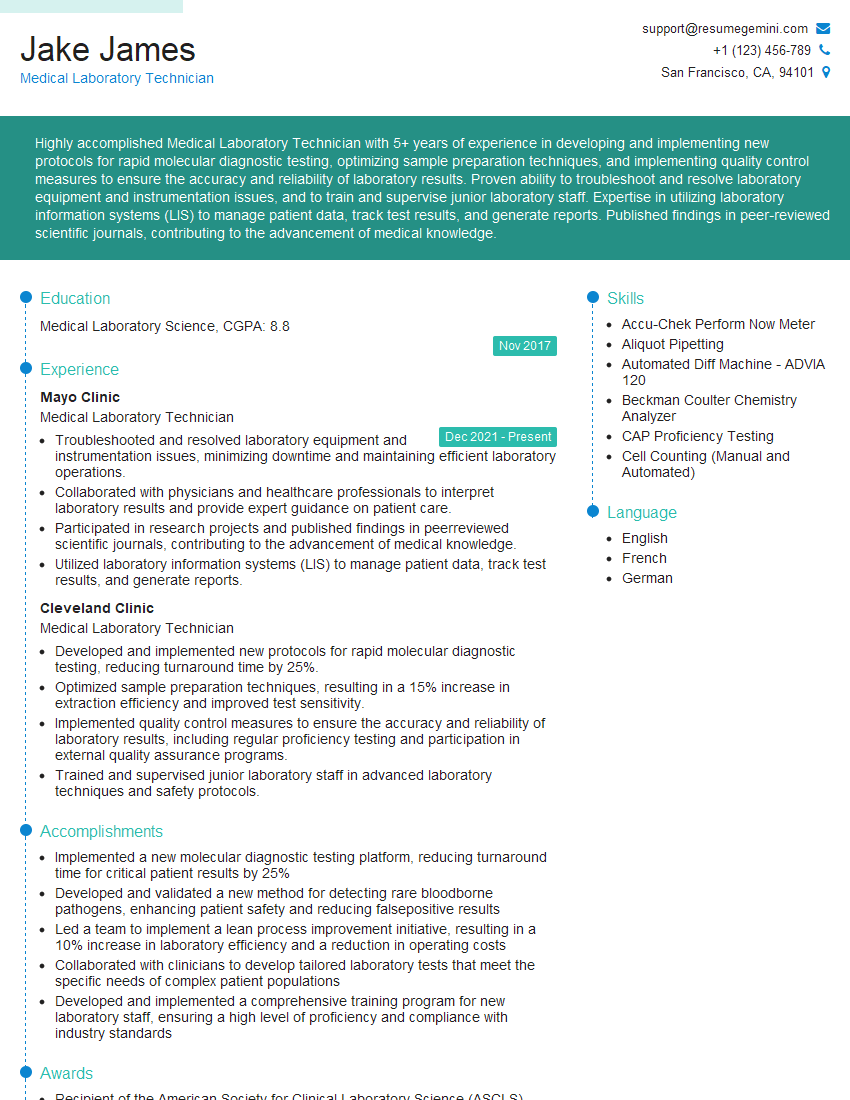
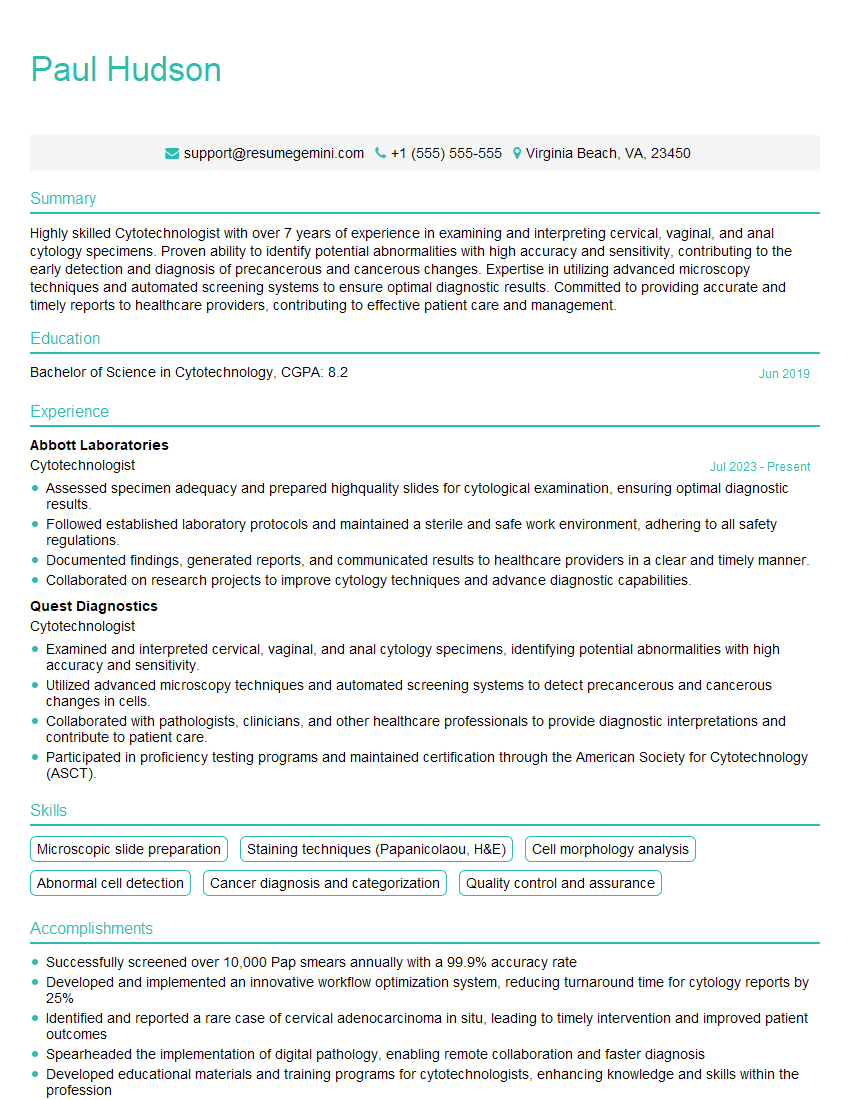
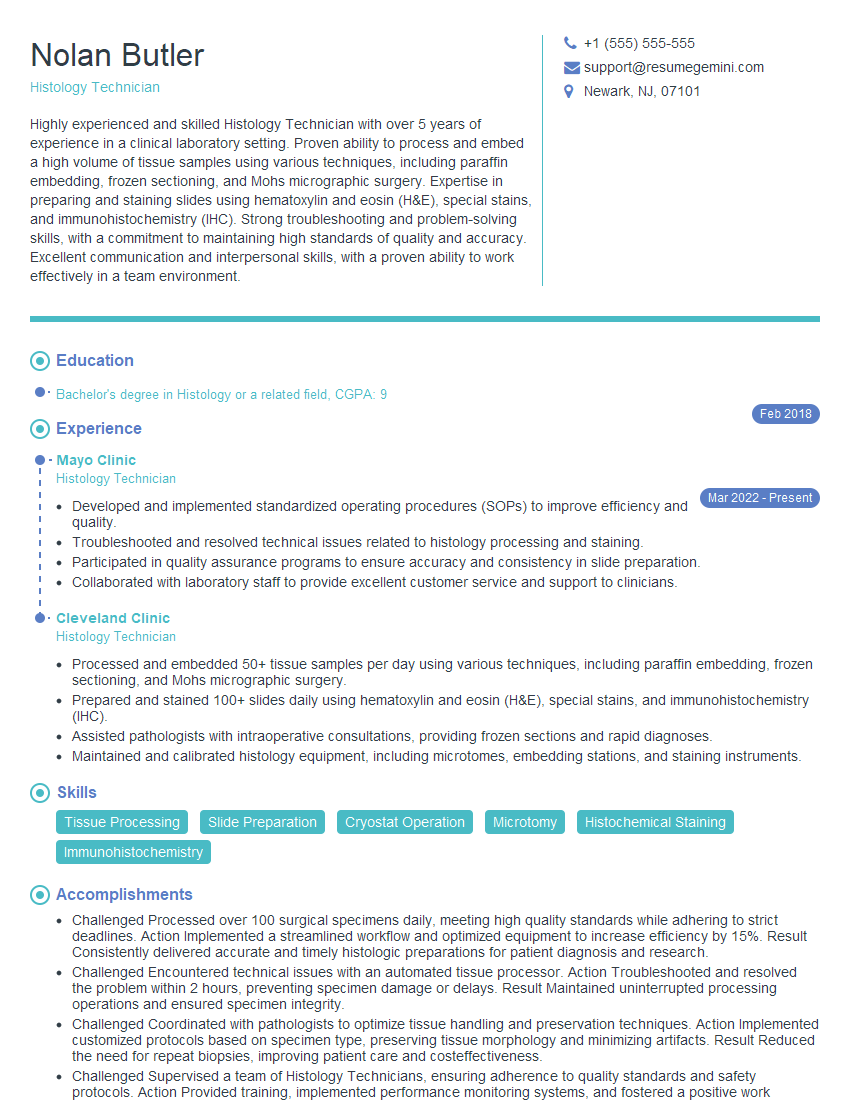
Mastering tissue preparation techniques is crucial for advancing your career in histology, pathology, research, or related fields. A strong understanding of these principles demonstrates your commitment to accuracy, precision, and attention to detail – highly valued qualities in any scientific setting. To maximize your job prospects, it’s vital to create a resume that effectively communicates your skills and experience to Applicant Tracking Systems (ATS). We highly recommend using ResumeGemini to build a professional, ATS-friendly resume that highlights your expertise in tissue preparation. ResumeGemini provides examples of resumes tailored to this specific field, ensuring your application stands out from the competition.


Explore more articles
Users Rating of Our Blogs
Share Your Experience
We value your feedback! Please rate our content and share your thoughts (optional).
What Readers Say About Our Blog
Very informative content, great job.
good