Preparation is the key to success in any interview. In this post, we’ll explore crucial Knowledge of Wood Species interview questions and equip you with strategies to craft impactful answers. Whether you’re a beginner or a pro, these tips will elevate your preparation.
Questions Asked in Knowledge of Wood Species Interview
Q 1. What are the key differences between hardwood and softwood?
The distinction between hardwood and softwood isn’t about the wood’s actual hardness, but rather its botanical classification. Hardwoods come from deciduous trees (those that lose their leaves annually), while softwoods come from coniferous trees (cone-bearing, evergreen trees). This botanical difference translates into some general, but not always consistent, differences in properties. Hardwoods tend to be denser, stronger, and more durable than softwoods, and often have more intricate grain patterns. However, some softwoods, like yew, are harder than some hardwoods, like balsa. It’s crucial to remember that these are generalizations, and individual species can vary significantly.
Q 2. Name five common hardwood species and describe their properties.
Here are five common hardwood species and their properties:
- Oak: Known for its strength, durability, and beautiful grain patterns. Highly resistant to rot and decay, making it ideal for flooring, furniture, and cabinetry. There are many oak species, with differences in grain and color.
- Maple: A hard, strong wood with a fine, even texture. Popular for flooring, furniture, and musical instruments due to its density and resonance. Different maple species, like hard maple and soft maple, have distinct properties.
- Cherry: A beautiful reddish-brown wood that darkens with age. It’s prized for its rich color, fine texture, and workability, making it a favorite for fine furniture and cabinetry.
- Walnut: A luxurious dark-colored wood with striking grain patterns. It’s strong, durable, and highly valued for high-end furniture, gunstocks, and veneers.
- Mahogany: A reddish-brown wood known for its beauty, durability, and rich color. Historically used for fine furniture, boats, and musical instruments. There are various types of mahogany, with variations in properties.
Q 3. Name five common softwood species and describe their properties.
Here are five common softwood species and their properties:
- Pine: A relatively soft and lightweight wood, readily available and inexpensive. Comes in various species with differences in color and density, commonly used for construction, framing, and less demanding applications.
- Fir: A strong and relatively straight-grained wood often used for structural purposes like framing and plywood. Different fir species exist, influencing strength and appearance.
- Spruce: A lightweight and resonant wood often used for musical instruments (like guitars and violins), construction, and pulp for paper. Known for its straight grain and even texture.
- Cedar: Known for its aromatic fragrance and resistance to decay, often used for outdoor applications like siding, fencing, and chests. Different cedar species offer varied levels of resistance and fragrance.
- Redwood: A durable and rot-resistant wood prized for its natural beauty and longevity, often used for outdoor structures, siding, and decking. Naturally resistant to insects and decay.
Q 4. Explain the Janka hardness scale and its significance.
The Janka hardness scale measures the resistance of a wood species to denting and wear. It’s determined by the force required to embed a steel ball halfway into a wood sample. The higher the Janka hardness number, the harder and more resistant the wood is to damage. This scale is crucial for selecting the appropriate wood species for specific applications. For example, a wood with a high Janka hardness rating, like oak, is suitable for high-traffic flooring, while a softer wood, like pine, might be better for less demanding applications like shelving.
Q 5. Describe the process of lumber grading.
Lumber grading is a standardized process used to assess the quality of lumber based on various factors like appearance, strength, and structural soundness. Grading standards vary depending on the species and intended use. Inspectors evaluate the wood for defects like knots, checks, splits, and decay. Higher grades indicate fewer defects and superior quality, making them more suitable for demanding applications. Lower grades are often suitable for less visible or less structurally critical applications. This ensures the appropriate use and pricing of lumber.
Q 6. What are common wood defects and how do they impact wood quality?
Common wood defects can significantly impact wood quality and its suitability for different applications. These defects include:
- Knots: Branches embedded in the wood, reducing strength and affecting appearance.
- Checks: Radial cracks that run along the grain, weakening the wood.
- Splits: Longitudinal cracks that extend along the grain, further reducing strength.
- Decay: Rot caused by fungi or bacteria, significantly compromising strength and durability.
- Warping: Uneven drying leading to twisting, bowing, or cupping.
The severity and location of these defects determine the wood’s grade and suitability for specific applications. Severe defects can render the wood unusable for structural purposes or demanding applications.
Q 7. Explain the difference between plain-sawn, quarter-sawn, and rift-sawn lumber.
These terms describe different sawing methods that significantly impact the appearance and properties of lumber:
- Plain-sawn (flat-sawn): The simplest method, cutting parallel to the growth rings. Produces boards with a prominent cathedral grain pattern. More economical but can be prone to warping and cupping.
- Quarter-sawn: The log is cut into quarters before sawing, resulting in boards with a more vertical grain pattern. Less prone to warping and provides greater dimensional stability, resulting in a more refined appearance.
- Rift-sawn: A more precise method where the saw cuts nearly perpendicular to the growth rings. This yields boards with an almost vertical grain pattern and exceptional stability, though it’s the least economical method.
The choice of sawing method depends on the application’s requirements. Quarter-sawn and rift-sawn lumber are preferred for applications where dimensional stability and refined appearance are critical, such as high-end furniture and flooring. Plain-sawn lumber is more suitable for applications where appearance is less crucial.
Q 8. How does the moisture content of wood affect its properties?
Moisture content is crucial in wood; it significantly impacts almost every property. Think of it like this: wood is a sponge. High moisture content makes the wood weaker, more prone to shrinking and swelling, and susceptible to fungal attack. As it dries, it shrinks, potentially causing warping or cracking. Conversely, wood that’s too dry becomes brittle and more prone to cracking.
Specifically, high moisture content reduces strength and stiffness. Imagine trying to build a chair with wet wood – it would be flimsy and unstable. As the wood dries, it gains strength. It also increases its dimensional stability; less shrinkage and swelling means better longevity for your furniture or construction project. The ideal moisture content for most applications is around 6-8%, depending on the climate and the wood species.
For example, a piece of lumber with 20% moisture content will shrink considerably as it dries to 8%, potentially causing problems in a finished product. This is why proper drying and acclimation are crucial steps in woodworking.
Q 9. What are the common methods of wood preservation?
Wood preservation aims to extend the lifespan of wood by protecting it from decay, insects, and other damaging agents. Several common methods exist:
- Pressure Treatment: This involves forcing preservative chemicals deep into the wood under high pressure. It’s extremely effective against rot and insects, commonly used for outdoor applications like decking and fence posts. Think of it like soaking a sponge with a protective solution.
- Surface Treatment: This applies preservatives to the wood’s surface, providing a shallower level of protection. This might include paints, stains, and wood preservatives that contain fungicides and insecticides. It’s less effective for long-term protection against deep rot but is good for aesthetics and basic protection.
- Thermal Modification: This heat-treats the wood to alter its cellular structure, increasing its dimensional stability and resistance to decay. It’s environmentally friendly as it doesn’t involve chemicals.
- Oil Treatments: Natural oils like linseed oil penetrate the wood, providing some water resistance and enhancing its appearance. While effective for aesthetics and minor protection, it’s not a strong defense against decay organisms.
The best method depends on the intended use and the type of wood. For example, pressure-treated lumber is essential for outdoor structures in contact with the ground, while surface treatments are suitable for indoor furniture.
Q 10. Describe different types of wood finishes and their applications.
Wood finishes protect and enhance the wood’s beauty. They range from simple to complex applications:
- Paints: Offer complete color change and excellent protection from moisture and UV damage. They hide the wood grain.
- Stains: Penetrate the wood, enhancing its natural color and grain pattern without hiding it completely. They offer less protection than paint.
- Varnishes: Clear coatings that protect the wood from moisture and scratches while preserving its natural appearance. They can offer a glossy, semi-gloss, or matte finish.
- Lacquers: Fast-drying, durable finishes offering good protection and a range of sheen levels. They are often used for furniture.
- Shellac: A natural resin-based finish known for its warm tone and ease of application. It’s more delicate than other finishes.
- Oil finishes: Penetrate the wood, enhancing its appearance and providing some protection against moisture and minor scratches. They offer a natural look and feel.
The choice of finish depends on the application and desired aesthetic. For example, paint is ideal for exterior doors, while varnish is suitable for fine furniture, and oil finishes are good for butcher blocks.
Q 11. What are the sustainability concerns related to wood harvesting?
Sustainable wood harvesting is a critical concern. Unsustainable practices lead to deforestation, habitat loss, and soil erosion. Key sustainability issues include:
- Deforestation: Over-harvesting leads to the loss of forests, impacting biodiversity and carbon sequestration.
- Illegal Logging: Illegally harvested wood undermines efforts to manage forests sustainably and often involves harmful practices.
- Habitat Loss: Forest destruction leads to the loss of habitats for countless plant and animal species.
- Climate Change: Deforestation contributes to climate change by releasing carbon dioxide into the atmosphere.
- Soil Erosion: Removing trees exposes the soil, making it vulnerable to erosion, reducing its fertility.
Addressing these concerns involves responsible forest management, certification schemes (like FSC), supporting sustainable forestry practices, and choosing wood from responsibly managed sources.
Q 12. How do you identify different wood species based on their grain patterns?
Identifying wood species by grain patterns requires experience and a keen eye. Grain refers to the arrangement of wood fibers. Here’s a general approach:
- Straight Grain: Fibers run parallel to the wood’s length, creating a uniform appearance. Many pines exhibit straight grain.
- Interlocked Grain: Fibers are inclined at an angle to each other, creating a wavy or zigzag pattern. This is common in some oaks.
- Curly Grain: Fibers are highly contorted, creating a swirling effect. This is valued for its decorative appearance.
- Bird’s-Eye Grain: Small knots create a distinctive pattern resembling bird’s eyes. Maple often exhibits this.
- Figured Grain: Broad term encompassing various patterns such as burl (knotty growths), fiddleback (wavy patterns), and tiger stripe (striped patterns).
It’s crucial to consider other factors like color, texture, and smell to accurately identify a wood species. A magnifying glass can help examine the details of the grain pattern. Experienced woodworkers often develop a ‘wood sense’ through years of handling various species.
Q 13. Explain the process of kiln-drying lumber.
Kiln drying is a controlled process of removing moisture from lumber to reduce shrinkage, warping, and increase its dimensional stability. The process involves placing lumber in a sealed chamber where temperature and humidity are precisely controlled.
Here’s a step-by-step overview:
- Loading: Lumber is carefully stacked in the kiln to allow for proper air circulation.
- Initial Conditioning: A gradual drying phase to prevent cracking or checking. Humidity is often high initially.
- Drying: Temperature and humidity are carefully controlled to gradually remove moisture from the wood. The precise schedule depends on wood species and thickness.
- Final Conditioning: The wood is brought to a desired moisture content and allowed to equilibrate.
- Unloading: The dried lumber is carefully removed from the kiln.
The kiln drying process ensures that the lumber is dried evenly, preventing the stresses that cause warping and checking. Different kiln schedules are used for different species, thicknesses and intended uses to optimize the drying process and minimize defects.
Q 14. What are the advantages and disadvantages of using different wood species for furniture making?
The choice of wood species for furniture greatly impacts its properties, aesthetics, and cost. Here’s a comparison:
| Wood Species | Advantages | Disadvantages |
|---|---|---|
| Oak | Durable, strong, beautiful grain, easily worked | Can be expensive, susceptible to checking |
| Maple | Hard, strong, smooth, accepts stain well | Can be expensive, can be brittle |
| Pine | Affordable, easily worked, readily available | Soft, less durable than hardwoods, prone to dents |
| Cherry | Beautiful reddish-brown color, works well | Relatively soft, pricey |
| Walnut | Rich dark color, strong, beautiful grain | Expensive, difficult to work with sometimes |
For example, oak is excellent for sturdy tables due to its strength, while pine is better suited for less-stressed parts like shelving. Walnut is ideal for high-end furniture but its cost must be factored in. The final choice depends on the project’s requirements, budget, and aesthetic preferences.
Q 15. How do you determine the appropriate wood species for a specific project?
Choosing the right wood species for a project is crucial for both aesthetics and functionality. It involves considering several factors. First, identify the project’s purpose: is it a structural element requiring high strength (like a beam) or a decorative piece (like a tabletop)? The intended use dictates the necessary properties of the wood.
Next, consider the wood’s properties. Hardwoods like oak and maple are known for their strength, durability, and attractive grain patterns, making them ideal for furniture and flooring. Softwoods like pine and fir are generally less expensive and easier to work with, often chosen for framing and construction projects. Specific properties to consider include:
- Strength and Hardness: Janka hardness scale is a useful tool to compare species. Harder woods resist dents better.
- Durability: Resistance to rot, decay, and insect infestation. Cedar and redwood are naturally resistant to decay.
- Workability: How easily the wood can be cut, shaped, and finished. Softwoods are usually easier to work with than hardwoods.
- Appearance: Grain pattern, color, and texture are critical for aesthetic appeal.
- Budget: Exotic woods like mahogany or cherry are more expensive than common species.
For instance, building a deck might call for pressure-treated pine for its resistance to rot, while crafting a fine dining table might necessitate the beauty and durability of walnut or cherry.
Career Expert Tips:
- Ace those interviews! Prepare effectively by reviewing the Top 50 Most Common Interview Questions on ResumeGemini.
- Navigate your job search with confidence! Explore a wide range of Career Tips on ResumeGemini. Learn about common challenges and recommendations to overcome them.
- Craft the perfect resume! Master the Art of Resume Writing with ResumeGemini’s guide. Showcase your unique qualifications and achievements effectively.
- Don’t miss out on holiday savings! Build your dream resume with ResumeGemini’s ATS optimized templates.
Q 16. Describe the process of selecting lumber for a construction project.
Selecting lumber for a construction project is a multi-step process ensuring the wood meets project requirements and quality standards. It begins with a detailed review of the plans specifying the wood type, dimensions, and grade.
Next, inspect the lumber visually for defects. Common issues to look for include knots (branches embedded in the wood), cracks, warping, and discoloration. Grade stamps often indicate the quality and intended use. For instance, a higher grade like ‘Select Structural’ indicates fewer defects and suitability for load-bearing applications.
The actual selection may happen at a lumber yard or supplier. I usually work closely with my suppliers to ensure consistency and quality. It’s important to check the wood’s moisture content using a moisture meter, especially in critical applications, to avoid problems like shrinkage or expansion later. Proper lumber handling techniques are crucial: store it correctly to prevent warping and splitting.
Finally, before use, any necessary cutting, planing, or other preparation needs to be done ensuring the lumber dimensions precisely meet the project requirements.
Q 17. What are the common tools and techniques used in woodworking?
Woodworking involves a range of tools and techniques. Hand tools, such as chisels, hand saws, planes, and mallets, provide precise control, ideal for fine detail work and intricate joinery. Power tools, including table saws, miter saws, routers, and planers, significantly increase efficiency, especially in larger projects.
Common techniques include:
- Measuring and Marking: Accurate measurements are critical for precise cuts.
- Cutting: Using saws to create different cuts – rip cuts (along the grain) and cross cuts (across the grain).
- Planing and Shaping: Using planes and chisels to smooth and shape wood.
- Joinery: Creating strong and aesthetically pleasing connections between pieces of wood (e.g., mortise and tenon, dovetail, dado).
- Finishing: Applying sanding, staining, and sealing techniques to protect and enhance the wood’s appearance.
The choice of tools and techniques depends on the project’s scale and the desired level of detail. A small project might only require hand tools, while building a house would leverage power tools for efficiency. Experience and practice are essential to master these techniques effectively.
Q 18. How do you calculate the board feet of lumber?
Board feet is a measurement of lumber volume. One board foot is equal to a piece of lumber 12 inches long, 12 inches wide, and 1 inch thick. The formula for calculating board feet is:
Board Feet = (Thickness in inches) x (Width in inches) x (Length in feet) / 12
Example: A board 2 inches thick, 6 inches wide, and 8 feet long:
Board Feet = (2) x (6) x (8) / 12 = 8 board feet
It’s crucial to remember that the width and thickness measurements are in inches, and the length measurement is in feet. This calculation is essential for accurate material costing and ordering in construction and woodworking projects. Always account for waste when ordering to ensure you have sufficient material.
Q 19. What safety precautions are important when working with wood?
Safety is paramount in woodworking. Always wear appropriate personal protective equipment (PPE), including safety glasses or a face shield, hearing protection (especially when using power tools), and a dust mask to avoid inhaling wood dust. Appropriate clothing, such as long sleeves and pants, should also be worn to protect skin from cuts and splinters.
Follow these key precautions:
- Secure your workpieces: Use clamps and vises to hold materials securely and prevent kickbacks.
- Use sharp tools: Dull tools require more force, increasing the risk of accidents.
- Maintain tools properly: Regularly inspect and maintain your tools to ensure they are in safe working condition.
- Keep your workspace organized: Clutter can cause tripping hazards and obstruct your work.
- Be aware of surroundings: Avoid distractions and ensure your workspace is well-lit.
- Understand tool operation: Never operate a tool until you are thoroughly familiar with its function and safety precautions.
Remember, a safe woodworking practice is a productive one.
Q 20. Explain the concept of wood shrinkage and expansion.
Wood shrinkage and expansion are caused by changes in the wood’s moisture content. Wood is hygroscopic, meaning it absorbs and releases moisture from the surrounding environment. As wood dries, it shrinks, primarily in the tangential direction (across the growth rings). As it absorbs moisture, it expands. This dimensional change can cause significant problems if not carefully managed, particularly during construction or furniture making.
Several factors affect the amount of shrinkage and expansion, including wood species (some species shrink more than others), initial moisture content, and environmental conditions (temperature and humidity). Shrinkage is usually greater across the grain than along the grain. This is why it’s important to acclimate lumber to the environment it will be used in before construction to minimize problems down the line.
Understanding this behavior is vital to avoid warping, cracking, and other issues. Proper wood drying and the use of appropriate joinery techniques help mitigate the effects of shrinkage and expansion.
Q 21. What are the different types of wood adhesives?
Various wood adhesives are available, each with its strengths and weaknesses. The choice depends on the project’s demands and the types of wood being joined.
- Polyurethane adhesives: Excellent for exterior projects, highly water-resistant, and strong.
- Epoxy adhesives: Known for their high strength and versatility; suitable for gap-filling and various materials.
- Polyvinyl acetate (PVA) adhesives (wood glue): Commonly used in woodworking for interior applications, providing strong bonds and easy cleanup, though less water-resistant than polyurethane or epoxy.
- Yellow carpenter’s glue: A type of PVA glue known for its simplicity and widespread use in woodworking
- Resorcinol adhesives: Water-resistant and known for its strength, frequently employed in exterior applications that need durability.
Before choosing, I always carefully assess the project requirements. For instance, I would never use standard PVA glue for an outdoor structure, opting for polyurethane or resorcinol instead.
Q 22. How do you identify and address common woodworking problems?
Identifying and addressing woodworking problems requires a keen eye for detail and a systematic approach. Common issues range from wood movement due to changes in humidity to improper joinery resulting in instability. My process begins with careful observation: I inspect the finished product or the workpiece for cracks, warping, splitting, glue failures, or inconsistencies in the surface finish.
Warping/Cupping: Often caused by uneven moisture content. Addressing this involves using a moisture meter to check the wood’s moisture level and, if necessary, acclimating the wood to the surrounding environment or employing techniques like planing to correct the warp.
Glue Failures: Poor surface preparation or incorrect glue application are the main culprits. Solutions involve ensuring clean, dry surfaces before applying glue, using the correct type of glue for the project and applying even pressure during the curing process.
Splits/Cracks: These can stem from stress in the wood or improper drying. Preventing them includes selecting appropriately seasoned lumber and using techniques like end grain sealing to reduce moisture loss.
Inconsistent Finish: This might arise from uneven sanding or applying too much finish at once. The solution is careful sanding with progressively finer grits and applying thin coats of finish allowing adequate drying time between coats.
Each problem requires a specific solution, often involving a combination of techniques. For example, addressing a cracked piece of cherry wood might involve clamping it to stabilize the crack, then filling it with wood filler and refinishing the area.
Q 23. What are the environmental impacts of using different wood species?
The environmental impact of using different wood species varies considerably. Sustainable forestry practices are paramount to minimizing negative effects. Rapidly growing softwoods like pine regenerate quickly and are considered relatively environmentally friendly when harvested responsibly. However, even with sustainable practices, harvesting any tree involves carbon release and habitat disruption.
Hardwoods: Slow-growing hardwoods like mahogany and teak often have a higher carbon footprint due to their slower regeneration rates. Their extraction can lead to significant deforestation if not managed properly. Furthermore, many valuable hardwoods are sourced from tropical rainforests, raising concerns about biodiversity loss.
Softwoods: Softwoods generally have a lower environmental impact than hardwoods, particularly if harvested from sustainably managed forests. The key is responsible forest management, including replanting trees and protecting biodiversity.
Reclaimed Wood: Utilizing reclaimed wood offers a significant environmental advantage. It avoids deforestation and reduces landfill waste. However, the sourcing and cleaning of reclaimed wood can pose challenges.
Therefore, considering a wood’s origin, growth rate, and harvesting methods is crucial for making environmentally conscious choices. Certifications like the Forest Stewardship Council (FSC) label help consumers identify sustainably harvested wood.
Q 24. How can you minimize waste when working with wood?
Minimizing wood waste is essential for both environmental and economic reasons. Careful planning and efficient techniques are vital.
Precise Measurement and Cutting: Accurate measurements and careful cutting reduce scrap. Using jigs and templates ensures repeatable cuts, minimizing errors. Employing a digital measuring tool can greatly improve the accuracy of measurements.
Optimized Wood Layout: Efficiently laying out cuts on a board to maximize usable material is crucial. Software programs can assist in this process, particularly for complex projects.
Creative Scrap Utilization: Smaller pieces of wood can be repurposed for smaller projects, such as small boxes, tool handles, or decorative elements.
Dust Collection: Proper dust collection systems prevent wood dust from becoming waste, improving air quality and allowing for the recovery of usable wood particles.
Recycling and Composting: Wood scraps unsuitable for reuse can be composted to enrich soil.
A well-organized workspace also helps minimize waste by making tools and materials readily accessible. For instance, a dedicated scrap bin for smaller pieces encourages their reuse.
Q 25. Describe different wood joining techniques.
Wood joining techniques are the foundation of strong and durable woodworking projects. They range from simple methods suitable for beginners to complex techniques for advanced projects.
Butt Joints: The simplest join, where two ends are butted together. Strengthened with glue and screws or dowels.
Miter Joints: Angled cuts that meet to form a corner. Often used in picture frames and boxes. Requires precise cuts and strong glue.
Dovetail Joints: Interlocking fingers cut into the ends of two pieces, creating a very strong joint. A classic and visually appealing technique.
Mortise and Tenon Joints: A tenon (protruding pin) fits into a mortise (a hole). A versatile and robust join found in furniture making.
Biscuit Joints: Uses thin, oval-shaped biscuits of compressed wood inserted into slots to align boards. Suitable for flat panel assemblies.
Pocket Hole Joints: Uses angled holes drilled into the edge of one board, allowing screws to be countersunk. Convenient for quick and strong joinery.
The choice of joint depends on the project’s requirements for strength, aesthetics, and the woodworker’s skill level. For example, a simple butt joint might suffice for a shelf, while a dovetail joint is preferable for a drawer that will undergo repeated use.
Q 26. What are the characteristics of sustainably harvested wood?
Sustainably harvested wood comes from forests managed responsibly to ensure long-term health and productivity. Key characteristics include:
Replanting: Trees are harvested selectively, and replanting programs ensure a continuous supply of timber without depleting forest resources.
Biodiversity Conservation: Sustainable forestry practices aim to protect and enhance the biodiversity of the forest ecosystem, ensuring the survival of various plant and animal species.
Reduced Environmental Impact: Minimizing the use of harmful chemicals and machinery reduces the environmental footprint of harvesting and transportation.
Certification: Many organizations, such as the Forest Stewardship Council (FSC), certify wood from sustainably managed forests. Look for these certifications to ensure the wood’s origin is verified.
Traceability: Knowing the origin of the wood, from forest to mill, adds transparency and accountability to the supply chain.
Ultimately, sustainably harvested wood represents a commitment to responsible forest management, safeguarding both the environment and future timber supplies. Choosing certified wood supports these efforts and makes a tangible difference.
Q 27. Discuss the importance of proper wood storage.
Proper wood storage is crucial to prevent degradation and maintain the quality of the wood. Inappropriate storage can lead to warping, cracking, insect infestation, and fungal growth.
Controlled Environment: Wood should be stored in a dry, well-ventilated area with stable temperature and humidity. Fluctuations in temperature and humidity are the primary causes of wood movement.
Protection from the Elements: Wood should be protected from direct sunlight, rain, and snow. Storing it under a cover or inside a shed is recommended.
Proper Stacking: Wood should be stacked off the ground to allow for air circulation. Use spacers between boards and layers to ensure even airflow and prevent warping.
Pest Control: Protecting wood from insects and fungi is critical. Regular inspection and treatment with appropriate pesticides or fungicides may be necessary.
Acclimation: Before use, allow wood to acclimate to the environment where it will be used to minimize movement after the project is complete.
For example, storing lumber in a damp basement can lead to fungal growth and warping. In contrast, storing it in a well-ventilated shed or garage will protect it and extend its lifespan. The time invested in proper storage is essential for the success of any woodworking project.
Q 28. Explain the difference between heartwood and sapwood.
Heartwood and sapwood are two distinct regions within a tree trunk, differing in their properties and appearance.
Heartwood: The central, darker portion of the tree trunk. It’s composed of dead cells that have been filled with resins and other compounds, making it denser, more durable, and often more resistant to decay and insects. Heartwood generally has a richer color than sapwood.
Sapwood: The lighter-colored outer layer surrounding the heartwood. It’s composed of living cells that transport water and nutrients throughout the tree. Sapwood is generally less durable and more susceptible to decay and insect infestation compared to heartwood. It’s often softer and lighter in color.
For instance, in oak, the heartwood is a rich brown, while the sapwood is a pale yellowish-white. The contrast is striking and frequently exploited in woodworking for aesthetic appeal. The choice between heartwood and sapwood depends on the project’s requirements: heartwood is generally preferred for projects needing durability, while sapwood may be appropriate for less demanding applications.
Key Topics to Learn for Knowledge of Wood Species Interview
- Wood Anatomy and Structure: Understanding the cellular structure of different wood species, including grain patterns, growth rings, and pore distribution. This knowledge is crucial for predicting wood behavior during processing and use.
- Wood Properties: Mastering the key properties of various wood species such as strength, density, hardness, durability, workability, and grain characteristics. Practical application involves selecting the right wood for specific projects based on these properties.
- Wood Identification: Developing skills in identifying common and less-common wood species through visual inspection, macroscopic features, and potentially microscopic analysis. This is essential for quality control and material sourcing.
- Wood Defects and Their Impact: Learning to recognize common wood defects (knots, cracks, shakes, etc.) and understanding their impact on the strength, stability, and aesthetic appeal of the wood. Problem-solving involves assessing the suitability of wood with defects for particular applications.
- Wood Treatment and Preservation: Familiarizing yourself with various wood treatment methods to enhance durability and resistance to decay, insects, and fire. This includes understanding the compatibility of different treatments with various wood species.
- Sustainable Wood Sourcing and Forestry Practices: Understanding the importance of sustainable forestry and responsible wood sourcing. This demonstrates environmental awareness and responsible business practices.
- Wood Finishing Techniques: Knowledge of different finishing techniques and their suitability for various wood species. This understanding is critical for achieving the desired aesthetic and protective qualities.
Next Steps
A strong understanding of wood species is invaluable for career advancement in fields like woodworking, furniture making, construction, forestry, and related industries. It demonstrates a deep understanding of materials and their applications, setting you apart from other candidates. To increase your chances of landing your dream job, create an ATS-friendly resume that highlights your expertise. ResumeGemini is a trusted resource that can help you build a professional resume that showcases your skills effectively. Examples of resumes tailored to Knowledge of Wood Species are available to guide your preparation. Take the next step in your career journey – build a compelling resume with ResumeGemini today!
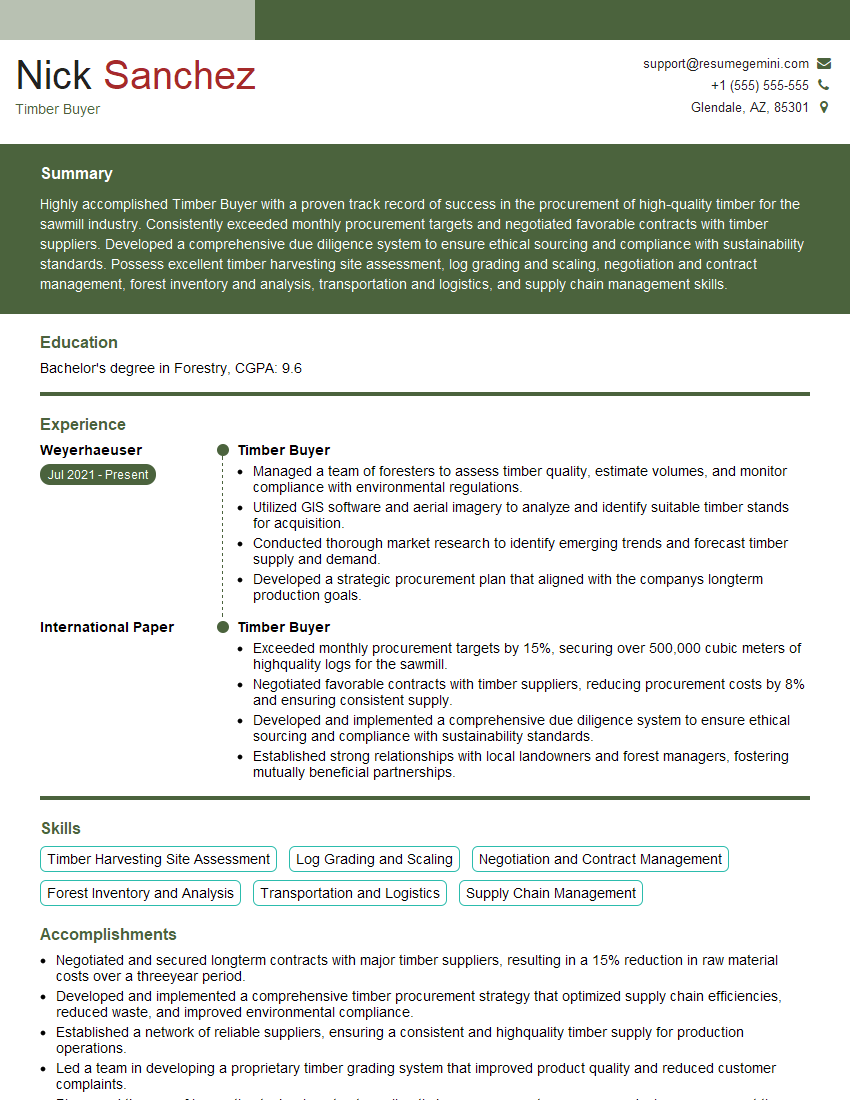
Timber Buyer Resume Sample

Landscape Architect Resume Sample

Arborist Resume Sample

Forester Resume Sample

Urban Forester Resume Sample

Wood Technologist Resume Sample

Furniture Maker Resume Sample

Cabinetmaker Resume Sample

Carpenter Resume Sample

Wood Finisher Resume Sample

Wood Turner Resume Sample
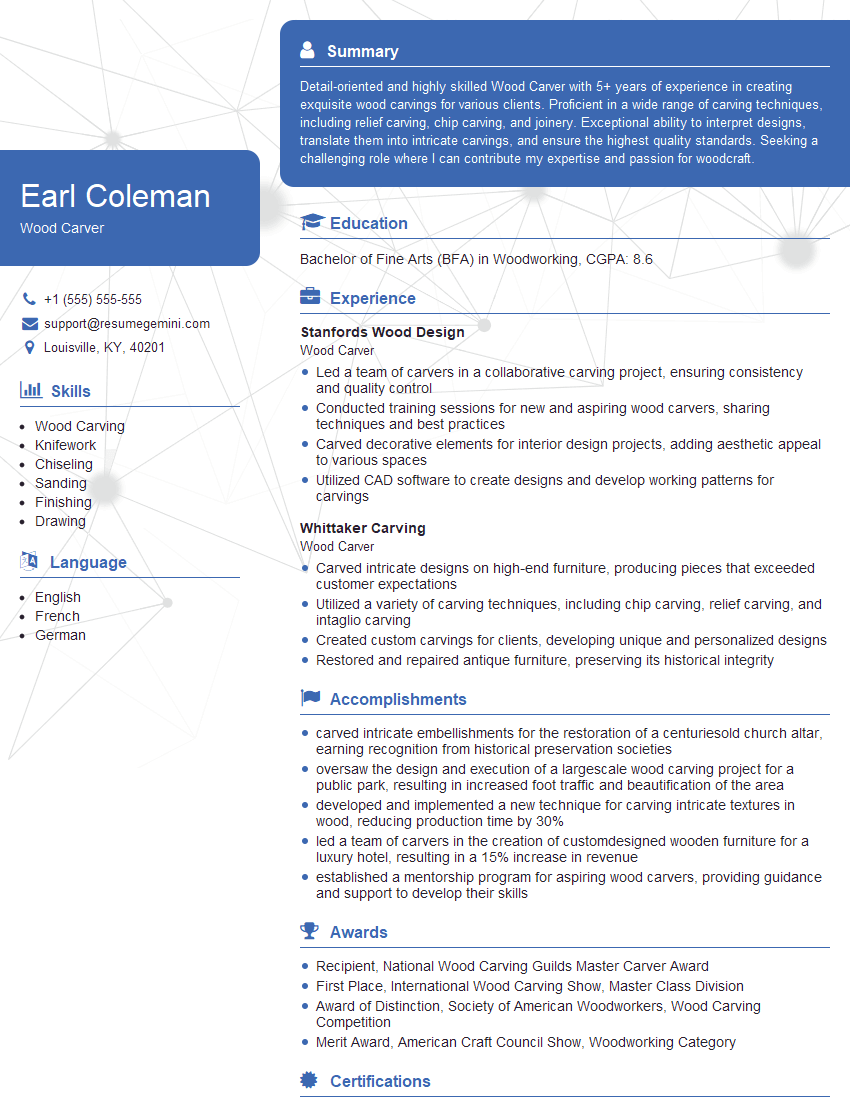
Wood Carver Resume Sample
Explore more articles
Users Rating of Our Blogs
Share Your Experience
We value your feedback! Please rate our content and share your thoughts (optional).
What Readers Say About Our Blog
Very informative content, great job.
good