Interviews are more than just a Q&A session—they’re a chance to prove your worth. This blog dives into essential Tissue analysis interview questions and expert tips to help you align your answers with what hiring managers are looking for. Start preparing to shine!
Questions Asked in Tissue analysis Interview
Q 1. Describe the process of tissue fixation and its importance.
Tissue fixation is the crucial first step in histological processing. It’s essentially preserving tissue structure and preventing degradation. Think of it like taking a snapshot of a moment in time – we want to capture the tissue’s exact state as it was when removed. This is achieved by using fixatives, chemicals that cross-link proteins and prevent enzymatic degradation, halting autolysis (self-digestion) and putrefaction. Common fixatives include formalin (formaldehyde), glutaraldehyde, and alcohol. The choice of fixative depends on the type of tissue and the intended analysis. For example, formalin is widely used for its good preservation of overall morphology, while glutaraldehyde offers better preservation of ultrastructure for electron microscopy. The process usually involves immersing the tissue in the fixative solution for a specific duration, which can range from hours to days, depending on the size and type of the specimen and the specific fixative used. Inadequate fixation can lead to artifacts—structural changes that are not representative of the living tissue—making accurate diagnosis and interpretation unreliable.
Importance: Fixation prevents tissue autolysis and putrefaction, preserving cellular morphology and antigenicity (essential for immunohistochemical staining). It ensures the accuracy and reliability of downstream histological procedures, ultimately leading to accurate diagnosis and research findings.
Q 2. Explain the different types of tissue processing techniques.
Tissue processing involves preparing the fixed tissue for sectioning (slicing into thin sections) and microscopic examination. Several techniques are employed, and the precise steps often depend on the type of tissue and the intended application. Here are the most common:
- Dehydration: Removing water from the tissue using graded series of alcohols (e.g., 70%, 95%, 100%). Water is replaced with a dehydrating agent that is miscible with the embedding medium. This step is crucial because the embedding media are usually hydrophobic.
- Clearing: Replacing the alcohol with a solvent that is miscible with both alcohol and the embedding medium. Common clearing agents include xylene and other aromatic hydrocarbons. The term ‘clearing’ refers to the translucent appearance the tissue takes on at this stage.
- Infiltration: Embedding the tissue in a support medium. This step involves embedding the tissue in molten paraffin wax (most common) or other resins. The wax penetrates the tissue, replacing the clearing agent, providing structural support during sectioning.
- Embedding: Orientating the tissue within a mold containing molten paraffin or resin, which then solidifies, creating a tissue block ready for sectioning.
Variations on these techniques exist, particularly with specialized applications, for example, using different embedding media suited to various techniques such as electron microscopy or cryostat sectioning for frozen sections which bypasses dehydration and clearing.
Q 3. What are the common embedding media used in histology?
Several embedding media are used, each with its own advantages and disadvantages. The most common is paraffin wax, chosen for its ease of use, cost-effectiveness, and suitability for routine histological procedures. However, paraffin wax can cause tissue shrinkage and distortion, particularly in delicate tissues. Alternatives include:
- Resins: These are used for electron microscopy or when higher resolution is needed. Epoxy resins, for instance, provide excellent ultrastructural preservation.
- Agar: A polysaccharide-based embedding medium, often used for freezing sections when rapid processing is necessary.
- Gelatin: A protein-based embedding medium. Useful for sensitive tissues and immunohistochemistry.
The choice of embedding medium depends on the desired resolution, the type of tissue, and the staining or imaging technique to be used.
Q 4. How do you ensure the quality control of tissue sections?
Quality control in tissue sectioning is paramount. It ensures the reliability of diagnostic or research findings. Steps include:
- Adequate Fixation: Proper fixation, as discussed earlier, prevents artifacts and ensures accurate representation of tissue structure.
- Proper Processing: Careful monitoring of processing times and reagents avoids tissue damage or incomplete processing.
- Sectioning Technique: Using sharp microtome blades and appropriate cutting settings minimizes damage and ensures uniform section thickness.
- Visual Inspection: Microscopic examination of sections before staining allows identification of potential problems such as folding, tearing, or incomplete infiltration.
- Staining Controls: Positive and negative controls are used during staining to validate the results and to confirm that the staining procedure is working correctly.
- Documentation: Meticulous record keeping of all processing steps and observations is crucial for traceability and for identification of any potential sources of error.
Implementing a robust quality control system will reduce errors and ensure consistent, reliable results.
Q 5. Describe the different types of histological stains and their applications.
Histological stains are dyes that bind to specific cellular components, allowing visualization of different structures under the microscope. They are crucial for identifying different types of tissues and cells, and for diagnosing various diseases.
- Hematoxylin and Eosin (H&E): This is the most common stain, where hematoxylin stains nuclei blue/purple, and eosin stains cytoplasm pink/red. It provides a general overview of tissue morphology.
- Periodic Acid-Schiff (PAS): This stain highlights polysaccharides and glycogen, useful for identifying fungal infections or glycogen storage diseases.
- Trichrome stains (e.g., Masson’s trichrome): These differentiate collagen (blue/green), muscle (red), and nuclei (black), crucial for assessing fibrosis or muscle damage.
- Special stains: Many other specialized stains exist, targeting specific cellular components like lipids (Oil Red O), elastic fibers (Weigert’s resorcin-fuchsin), or microorganisms (e.g., Gram stain for bacteria).
The choice of stain depends on the type of tissue and the specific information being sought.
Q 6. Explain the principles of immunohistochemistry (IHC).
Immunohistochemistry (IHC) is a powerful technique that uses antibodies to detect specific proteins within tissue sections. It’s based on the principle of antigen-antibody binding. An antigen is a molecule (usually a protein) that elicits an immune response. An antibody is a protein produced by the immune system that specifically binds to an antigen. In IHC, a labeled antibody is used to detect the presence and location of a target protein (antigen) within a tissue sample. The label may be an enzyme (e.g., horseradish peroxidase) which catalyzes a color change, or a fluorescent molecule which emits light when exposed to UV light. This allows for the visualization of the target protein at a cellular level, providing invaluable information about cellular function and disease processes.
For example, IHC is widely used in cancer diagnosis to identify tumor markers, which can help determine cancer type, grade, and prognosis. It’s also used in neuroscience to identify specific neuronal populations or in infectious disease diagnosis to identify pathogens.
Q 7. What are the different types of IHC techniques?
Several IHC techniques exist, differing primarily in the method of antibody labeling and detection:
- Direct IHC: A directly labeled primary antibody binds to the target antigen. This method is simpler but can be less sensitive.
- Indirect IHC: An unlabeled primary antibody binds to the target antigen, followed by a labeled secondary antibody that binds to the primary antibody. This method is more sensitive due to signal amplification.
- Enzymatic IHC: Uses enzyme-labeled antibodies (e.g., horseradish peroxidase or alkaline phosphatase). The enzyme catalyzes a colorimetric reaction, producing a visible precipitate at the site of the antigen.
- Fluorescent IHC: Uses fluorescently labeled antibodies (e.g., fluorescein isothiocyanate or rhodamine). The fluorescent signal is visualized using fluorescence microscopy.
The choice of technique depends on factors such as sensitivity requirements, availability of reagents, and the type of microscopy available.
Q 8. How do you troubleshoot common problems encountered during IHC staining?
Troubleshooting Immunohistochemistry (IHC) staining problems requires a systematic approach, focusing on each step of the process. Common issues include weak or absent staining, background staining, or inconsistent staining between slides.
Weak/Absent Staining: This could stem from issues with antigen retrieval (improper buffer, time, or temperature), insufficient antibody concentration, antibody degradation, or problems with the detection system (e.g., secondary antibody, substrate). Troubleshooting involves checking each reagent’s integrity, optimizing antigen retrieval conditions, and increasing antibody concentration if appropriate. A positive control slide is crucial here to ensure the reagents are functioning correctly.
Background Staining: High background indicates non-specific binding of antibodies. This can arise from issues with blocking steps (insufficient blocking time or inadequate blocking reagent), high antibody concentrations, or improper washing steps. Solutions include optimizing blocking conditions, diluting the primary antibody, and ensuring thorough washes between steps.
Inconsistent Staining: Variations in staining intensity across a slide suggest problems with even reagent distribution, inconsistencies in the incubation times, or uneven drying of the slides. Addressing this involves careful attention to reagent application techniques, proper incubation conditions (temperature, humidity, and time), and maintaining slide quality.
For instance, if you suspect an issue with your antigen retrieval, you might systematically test different buffers (citrate, EDTA) at various temperatures and times to find the optimal condition for your specific antibody and tissue type. Always keep meticulous records of your experimental parameters to allow for efficient troubleshooting.
Q 9. Explain the importance of proper tissue handling and storage.
Proper tissue handling and storage are paramount to maintaining tissue integrity and achieving reliable results in subsequent analyses. Degradation of tissue components, including proteins and nucleic acids, can significantly affect staining results and data interpretation.
Immediate Fixation: Rapid fixation, typically using formalin, is crucial to prevent autolysis (self-digestion) and tissue degradation. The choice of fixative and fixation time depends on the target tissue and downstream analysis.
Proper Storage: After fixation, tissues should be stored at appropriate temperatures, typically 4°C for short-term storage and -80°C for long-term storage. Cryopreservation is another method used for preserving tissues at ultra-low temperatures, preventing ice crystal formation.
Avoid Repeated Freeze-Thaws: Repeated freeze-thaw cycles damage tissue structure, leading to significant artifact formation. Proper labeling and inventory management are essential to avoid unnecessary cycles.
Paraffin Embedding: For long-term storage and histological processing, tissues are often embedded in paraffin wax. This process helps maintain tissue morphology and protects it from degradation.
For example, imagine a research study looking at protein expression in tumor tissues. If the tissues aren’t properly fixed and stored, the protein might degrade, leading to inaccurate or misleading results about the protein’s expression in the tumor. This could significantly impact the validity of any conclusions drawn from the study.
Q 10. Describe the different types of microscopes used in tissue analysis.
Various microscopes are employed in tissue analysis, each offering unique capabilities:
Brightfield Microscopy: This is the most common type, using transmitted light to visualize stained tissue sections. It’s excellent for routine histological examination and IHC analysis.
Fluorescence Microscopy: This technique uses fluorescent dyes or antibodies to visualize specific structures or molecules within the tissue. It’s invaluable for immunofluorescence staining (IF) and studies involving specific protein localization.
Confocal Microscopy: A type of fluorescence microscopy that utilizes lasers to scan a tissue section, creating high-resolution optical sections and 3D images. This is crucial for detailed imaging of complex tissues and cellular structures.
Electron Microscopy (Transmission and Scanning): These offer much higher resolution than light microscopy, visualizing ultrastructural details such as cell organelles, cellular membranes, and extracellular matrix components. Transmission EM provides thin-section images, while scanning EM provides 3D surface images.
Multiphoton Microscopy: A type of advanced microscopy that uses longer wavelengths to image deeper into thick tissues, reducing photodamage.
The choice of microscope depends on the research question and the desired level of detail. For a basic assessment of tissue architecture, brightfield microscopy is sufficient. However, for investigating specific molecular interactions at a subcellular level, confocal or electron microscopy is necessary.
Q 11. How do you interpret histological findings?
Interpreting histological findings requires a systematic approach, combining knowledge of normal tissue architecture with understanding of pathological changes. It involves observing:
Cellular Morphology: Examining cell shape, size, and arrangement. Changes in these features can indicate malignancy, inflammation, or other pathological processes.
Tissue Architecture: Analyzing the organization and arrangement of tissues. Disruption of normal tissue architecture is a hallmark of many diseases.
Staining Patterns: Interpreting the staining intensity and distribution of specific cellular components or molecules. This is crucial in IHC and special stains, where specific patterns can help diagnose various diseases.
Presence of Inflammatory Cells: Identifying the type and number of inflammatory cells. This provides information on the type and stage of inflammation.
For instance, observing increased cellularity, nuclear pleomorphism (variation in size and shape of nuclei), and loss of normal tissue architecture in a breast biopsy might suggest malignancy. The presence of specific biomarkers identified through IHC can further confirm the diagnosis. Correlation with clinical data is also vital for accurate interpretation. It’s not just about what you see under the microscope; it’s about understanding the clinical context to provide a meaningful diagnosis or research finding.
Q 12. What are the limitations of tissue analysis techniques?
Tissue analysis techniques have limitations that need careful consideration:
Sampling Bias: Tissue biopsies only represent a small fraction of the entire organ or tissue. The location and size of the biopsy can influence the results, potentially leading to inaccurate conclusions.
Artifacts: Processing and staining procedures can introduce artifacts that mimic pathological changes, leading to misinterpretations. Careful attention to technique and quality control is necessary to minimize artifacts.
Subjectivity: Histological interpretation can be subjective, particularly when dealing with subtle changes or ambiguous findings. Multiple expert reviewers and standardized criteria can mitigate this issue.
Limited Sensitivity/Specificity: Some stains or techniques may not be sensitive or specific enough to detect subtle changes or differentiate between closely related entities. A panel of techniques or markers might be required for definitive diagnosis.
Technical Limitations: Microscopic resolution limits, reagent quality, and the inherent variability of biological systems can all affect the accuracy and reproducibility of results.
For example, a small needle biopsy might miss a cancerous region in a large tumor, leading to an incorrect diagnosis. Also, formalin fixation can induce artifacts that may be misinterpreted as pathological changes, highlighting the importance of proper tissue handling and processing.
Q 13. Explain the concept of tissue microarrays (TMAs).
Tissue microarrays (TMAs) are a miniaturized technique that allows for high-throughput analysis of numerous tissue samples on a single slide. Imagine a small slide containing hundreds or even thousands of tissue cores, each representing a different donor or sample.
The process involves extracting small cylindrical tissue cores (typically 0.6-1.5 mm in diameter) from donor tissue blocks using a specialized arraying instrument. These cores are then precisely arranged in a recipient paraffin block, creating a miniature representation of many different tissues on a single slide. This allows for efficient and cost-effective analysis of large numbers of samples, particularly useful for biomarker discovery, validation, and comparative studies across multiple tissue types or disease states.
TMAs are particularly beneficial in cancer research, where it’s often necessary to compare protein expression across many samples to identify potential biomarkers for diagnosis, prognosis, or therapy. They allow researchers to examine a large number of samples simultaneously, significantly increasing the efficiency and reliability of the study.
Q 14. Describe the process of digital pathology.
Digital pathology involves the creation, viewing, management, and analysis of digital images of glass slides, eliminating the need for physical slides in many applications. This involves scanning microscopic glass slides using high-resolution scanners to generate digital whole-slide images (WSIs). These WSIs are then viewed, analyzed, and stored on computer systems.
The process includes image acquisition via a whole slide scanner, which captures extremely high-resolution images of the entire slide. These digital images are then stored and accessed via a digital pathology system, offering multiple advantages. Pathologists can view and analyze slides remotely using specialized software, facilitating consultations and second opinions. The images can be analyzed using computational tools for image analysis and quantitative measurements, allowing for more objective and efficient analysis compared to traditional methods.
Digital pathology offers improvements in efficiency, collaboration, and analysis capabilities. For instance, it is particularly useful in large-scale research projects involving many samples, and in telepathology, allowing experts to review slides remotely. The potential for image analysis and quantitative data extraction is revolutionary for both diagnostic and research purposes.
Q 15. What are the advantages and disadvantages of digital pathology?
Digital pathology, the use of digital images instead of glass slides for microscopic analysis, offers several advantages and disadvantages.
- Advantages: Increased accessibility (remote viewing, telepathology), improved storage and retrieval (no physical slide storage issues), easier image manipulation and analysis (zoom, annotations, measurements), potential for automated image analysis (e.g., AI-assisted diagnostics), and better collaboration (sharing images across institutions).
- Disadvantages: High initial investment costs (scanners, software, IT infrastructure), potential for image distortion or artifacts during scanning, reliance on technology and potential for system failures, and the need for robust data security and management systems to protect sensitive patient data. Furthermore, the current workflow is not fully standardized across institutions, leading to challenges in interoperability and data exchange. For example, a poorly calibrated scanner can lead to inaccurate color representation of tissue features affecting diagnostic accuracy.
In summary, digital pathology presents substantial benefits but requires careful consideration of the technical, financial, and logistical implications.
Career Expert Tips:
- Ace those interviews! Prepare effectively by reviewing the Top 50 Most Common Interview Questions on ResumeGemini.
- Navigate your job search with confidence! Explore a wide range of Career Tips on ResumeGemini. Learn about common challenges and recommendations to overcome them.
- Craft the perfect resume! Master the Art of Resume Writing with ResumeGemini’s guide. Showcase your unique qualifications and achievements effectively.
- Don’t miss out on holiday savings! Build your dream resume with ResumeGemini’s ATS optimized templates.
Q 16. How do you ensure the safety and compliance in a histology laboratory?
Safety and compliance in a histology lab are paramount and are maintained through adherence to strict protocols and regulations. This includes, but is not limited to:
- Biosafety: Following strict protocols for handling potentially infectious materials, using appropriate personal protective equipment (PPE) such as gloves, lab coats, and eye protection, and implementing proper waste disposal procedures for biohazardous materials, with appropriate training for all staff.
- Chemical Safety: Proper handling, storage, and disposal of hazardous chemicals used in tissue processing, such as formalin and xylene. This necessitates having well-ventilated spaces, Material Safety Data Sheets readily available for all chemicals, and documented spill response plans.
- Equipment Safety: Regular maintenance and safety checks on equipment like microtomes, embedding stations, and staining machines. These may include electrical safety checks, ensuring proper grounding, and periodic calibration to maintain accuracy and precision.
- Quality Control: Employing rigorous quality control measures at every stage of the workflow, from tissue fixation and processing to staining and interpretation, to ensure the reliability of results and compliance with regulatory standards such as CAP and CLIA. This can include using positive and negative controls in staining and periodic proficiency testing.
- Record Keeping: Maintaining accurate and detailed records of all procedures, reagents used, and results obtained. This crucial aspect ensures traceability and facilitates audits, aiding in both compliance and troubleshooting.
Regular audits, both internal and external, are crucial for continuous improvement and adherence to established best practices and regulatory standards.
Q 17. What are the ethical considerations in handling human tissue samples?
Ethical considerations in handling human tissue samples are paramount and revolve around patient privacy, informed consent, and responsible research practices.
- Informed Consent: Patients must provide explicit informed consent for tissue collection and use. This involves clearly explaining the purpose of tissue collection, how it will be used (research, diagnosis), and the potential risks and benefits involved. Consent forms must be readily accessible and easily understood.
- Privacy and Confidentiality: Strict measures must be in place to protect patient identity and privacy. This includes anonymizing samples wherever possible, using unique identifiers instead of names, and securely storing patient information in accordance with HIPAA or equivalent regulations.
- Data Security: Data related to tissue samples (e.g., clinical information, diagnostic results) must be protected from unauthorized access and breaches using robust security measures. This includes physical security of storage areas and access control for electronic databases.
- Responsible Research: Any research involving human tissue samples must be conducted ethically and with approval from relevant Institutional Review Boards (IRBs). This entails minimizing risks to participants and maximizing potential benefits, with transparent reporting of results.
Failure to adhere to these ethical guidelines can have serious consequences, including legal repercussions and loss of public trust.
Q 18. Describe your experience with different types of tissue samples (e.g., biopsies, surgical specimens).
My experience encompasses a wide range of tissue samples, including biopsies (needle core biopsies, incisional biopsies, excisional biopsies) and surgical specimens (resections, lumpectomies).
Biopsies are typically smaller samples, requiring careful handling to avoid damage. The processing techniques vary based on the tissue type and the clinical question. For instance, a frozen section biopsy necessitates rapid processing for immediate intraoperative diagnosis, while a paraffin-embedded biopsy requires a longer, more elaborate processing protocol for routine histological assessment. I have extensive experience in optimizing processing for different biopsy types ensuring optimal tissue preservation for downstream analyses such as immunohistochemistry.
Surgical specimens are often larger and more complex. Careful orientation and sectioning are critical to capture relevant anatomical features and avoid missing crucial diagnostic information. I have handled various surgical specimens including those from breast, colon, lung, and other organs. Experience in handling and processing larger specimens is crucial to ensure sufficient tissue for the diagnostic and research purposes.
This broad experience has provided me with a deep understanding of the specific challenges and techniques associated with each tissue type, ensuring optimal quality and accuracy in downstream analysis.
Q 19. How do you maintain accurate records and documentation in a histology laboratory?
Maintaining accurate records and documentation in a histology laboratory is crucial for quality assurance, traceability, and legal compliance. We utilize a Laboratory Information System (LIS) to track samples throughout the entire workflow.
- Accessioning: Each tissue sample receives a unique accession number upon arrival, linked to patient demographics and relevant clinical information.
- Processing Steps: Detailed records are maintained for each step of tissue processing, including fixation time, embedding details, and sectioning parameters. This minimizes discrepancies and allows troubleshooting if issues arise.
- Staining Protocols: The specific staining protocols used for each sample, including the reagents and concentrations, are meticulously documented.
- Quality Control: Documentation includes data on quality control measures employed, such as positive and negative controls for stains, and results from routine equipment maintenance and calibration.
- Reporting: Histopathology reports are generated and stored electronically, ensuring accurate and detailed descriptions of the tissue findings.
Our system allows for easy retrieval of information, making it invaluable for audit trails, research purposes, and ensuring accurate diagnosis.
Q 20. Explain your experience with quality assurance and quality control procedures.
Quality assurance (QA) and quality control (QC) are integral to maintaining the high standards of accuracy and reliability in our histology laboratory.
- QC: We perform regular QC checks on all equipment (microtomes, embedding stations, stainers), reagents, and staining processes. This includes daily checks of stain quality, periodic calibration of equipment, and the use of positive and negative controls for each staining batch. For example, we use control slides with known positive and negative results in immunohistochemistry to validate staining efficiency and specificity.
- QA: Our QA program encompasses broader aspects, including regular internal audits, proficiency testing participation, and adherence to regulatory standards such as CAP and CLIA. Regular staff training sessions, both theoretical and practical, ensure everyone remains proficient and maintains up-to-date knowledge.
- Continuous Improvement: We employ statistical process control charts to monitor key quality parameters, enabling timely identification and resolution of any trends or deviations from established standards. This systematic approach helps continuously improve our processes and maintain high quality in our work.
This robust QA/QC program ensures our results are reliable, accurate and comply with international standards.
Q 21. Describe your experience with troubleshooting equipment malfunctions.
Troubleshooting equipment malfunctions requires a systematic approach combining technical expertise and problem-solving skills.
My approach typically involves the following steps:
- Identify the Problem: Precisely define the nature of the malfunction. Is it a complete failure, an intermittent error, or a decline in performance? What error codes, if any, are generated?
- Review Logs and Documentation: Check maintenance logs, user manuals, and previous troubleshooting records for similar issues. This may point to a recurring problem or provide solutions from previous experiences.
- Basic Troubleshooting: Perform basic checks such as power supply, connections, and reagent levels. A simple issue like a loose cable or empty reagent reservoir can often resolve the problem.
- Systematic Investigation: If the problem persists, move on to a more detailed investigation. This might involve checking individual components, testing sensors, or running diagnostic programs, guided by the user manual and/or vendor support documentation.
- Escalation: If the problem cannot be resolved internally, escalate it to the equipment vendor or a qualified service engineer. Detailed documentation of the issue and troubleshooting steps is essential to facilitate efficient repair.
- Preventive Maintenance: Following a resolution, preventive maintenance tasks and updates are executed to mitigate the possibility of future occurrences of similar malfunctions.
My experience with diverse equipment malfunctions has fostered a comprehensive understanding of the systems, enabling quick and effective troubleshooting in most cases, minimizing downtime and maintaining the smooth workflow of the laboratory.
Q 22. How do you work effectively as part of a team in a fast-paced laboratory environment?
In a fast-paced lab, effective teamwork is paramount. I thrive in collaborative environments by prioritizing clear communication, active listening, and efficient task delegation. For instance, in my previous role, we faced a backlog of samples during a particularly busy period. Instead of working in silos, we implemented a daily team huddle to assess priorities, assign tasks based on individual expertise (e.g., one colleague specializing in immunohistochemistry, another in microscopy), and track progress using a shared online spreadsheet. This streamlined workflow significantly reduced processing time and improved overall team morale.
I also believe in mutual support. If a colleague is struggling with a particular technique or facing equipment malfunction, I proactively offer assistance and share my knowledge. This fosters a supportive environment and prevents bottlenecks. Furthermore, I am adept at adapting to changing priorities and readily assist with tasks outside my immediate responsibilities when needed to ensure timely project completion.
Q 23. Explain your problem-solving skills in a histology laboratory setting.
Problem-solving in histology requires a systematic approach. My strategy typically involves a structured process: Firstly, I carefully define the problem. For example, if slides are consistently showing poor staining, I wouldn’t immediately assume reagent failure. Instead, I’d analyze various potential causes systematically: Are the tissue sections adequately thick? Are the reagents fresh and stored correctly? Is the incubation time appropriate? Is the equipment calibrated correctly?
Secondly, I gather data to support hypotheses. This could involve checking reagent logs, reviewing staining protocols, examining control slides, and even reviewing previous successful batches to identify any deviations. Thirdly, I develop and test potential solutions. For the poor staining example, I might try adjusting incubation times, replacing reagents, or checking the equipment’s temperature. I meticulously document all steps taken and observations made to ensure reproducibility and traceability.
Finally, I evaluate the results and refine my approach if necessary. This iterative process ensures that I not only resolve immediate issues but also prevent their recurrence. For example, if inconsistent sectioning was the problem, this might prompt a review of microtome maintenance procedures.
Q 24. Describe your experience with data analysis and interpretation.
My experience with data analysis and interpretation in histology centers around quantitative image analysis and statistical analysis of experimental results. I am proficient in using image analysis software such as ImageJ to quantify features like cell count, area, and intensity of staining. For example, I’ve used ImageJ to analyze the expression of a specific protein in tumor samples, comparing treatment and control groups. This involved standardizing image acquisition, establishing appropriate thresholds for identifying positive staining, and performing statistical tests to determine the significance of observed differences.
I also have experience with statistical software like R and GraphPad Prism for analyzing and visualizing the data. This includes performing t-tests, ANOVA, and correlation analyses to draw meaningful conclusions. My data analysis workflow always involves rigorous quality control, including ensuring proper data normalization and accounting for potential sources of error. The ultimate aim is to present data clearly and concisely, supporting conclusions with statistically sound evidence.
Q 25. How do you stay current with advances in histology and tissue analysis techniques?
Staying current in the dynamic field of histology requires continuous learning. I actively participate in professional development activities such as attending workshops, conferences (e.g., the United States and Canadian Academy of Pathology meetings), and webinars. These events expose me to the latest research findings and technological advances in tissue processing, staining techniques, and imaging technologies. I also regularly review peer-reviewed journals such as the Journal of Histochemistry & Cytochemistry and the Journal of Pathology.
Moreover, I actively participate in online communities and forums focused on histology and microscopy. This provides opportunities for collaboration and knowledge exchange with other professionals. Finally, I incorporate new techniques and technologies into my work whenever feasible, ensuring I stay at the forefront of the field.
Q 26. What are your career goals in the field of tissue analysis?
My career goals revolve around contributing significantly to advancements in tissue analysis. I aim to specialize in advanced imaging techniques, specifically in multiphoton microscopy and its applications in cancer research. I am fascinated by the potential of these methods to provide highly detailed, three-dimensional information about tissue structure and function. My long-term aspiration involves leading a research team focused on developing and implementing innovative techniques to improve the accuracy and efficiency of disease diagnosis and treatment planning.
Q 27. Describe a challenging situation you faced in your previous role and how you overcame it.
In a previous role, we experienced a significant equipment malfunction with our automated tissue processor. This resulted in a substantial backlog of samples and jeopardized several critical experiments. My initial response was to systematically troubleshoot the problem, following the manufacturer’s guidelines and consulting with the technical support team. However, despite our efforts, the repair took longer than anticipated.
To mitigate the impact of the delay, I collaborated with my colleagues to prioritize the most urgent samples and explore alternative processing methods. We manually processed some samples, sacrificing efficiency for timeliness, and communicated transparently with our collaborators about the situation, adjusting project timelines accordingly. This experience taught me the importance of proactive risk management, contingency planning, and the value of effective communication during unexpected setbacks.
Q 28. Describe your experience with different types of staining protocols
I possess extensive experience with a wide range of staining protocols, both routine and specialized. My expertise includes Hematoxylin and Eosin (H&E) staining, which is fundamental for general tissue morphology assessment. I’m also proficient in various immunohistochemical (IHC) staining methods, utilizing different antigen retrieval techniques and detection systems (e.g., DAB, AEC, fluorescent). I have experience with special stains such as Periodic Acid-Schiff (PAS) for carbohydrates, Masson’s Trichrome for connective tissue, and silver stains for neurofibrils.
Furthermore, I’m familiar with in situ hybridization (ISH) techniques for detecting specific nucleic acid sequences, and have worked with fluorescent immunohistochemistry (IF) for multiplexed staining. My experience encompasses both manual and automated staining methods, allowing me to adapt to varying laboratory settings and research needs. I always follow strict quality control measures throughout the staining process, ensuring reproducibility and reliability of results.
Key Topics to Learn for Tissue Analysis Interview
- Microscopy Techniques: Understanding various microscopy methods (e.g., brightfield, fluorescence, confocal) and their applications in tissue analysis, including image acquisition and processing.
- Histological Staining and Immunohistochemistry: Mastering the principles and practical applications of different staining techniques for visualizing specific cellular components and structures within tissues. This includes understanding antibody-antigen interactions and troubleshooting common issues.
- Tissue Preparation and Processing: Familiarize yourself with the complete workflow, from tissue fixation and embedding to sectioning and mounting. Understanding the impact of each step on the final analysis is crucial.
- Quantitative Image Analysis: Learn techniques for extracting quantitative data from microscopy images, including morphometry, cell counting, and intensity measurements. Understanding the software and algorithms used is beneficial.
- Data Interpretation and Reporting: Practice interpreting complex histological data and presenting your findings clearly and concisely in both written and visual formats. This includes understanding statistical analysis relevant to tissue analysis.
- Specific Tissue Types and Pathology: Develop a strong understanding of the histological characteristics of different tissues (e.g., epithelial, connective, muscle, nervous) and common pathological changes observed in those tissues. This demonstrates a broad understanding.
- Troubleshooting and Problem-Solving: Be prepared to discuss common challenges encountered during tissue analysis, such as artifacts, staining inconsistencies, and data interpretation ambiguities, and how you would approach solving them.
Next Steps
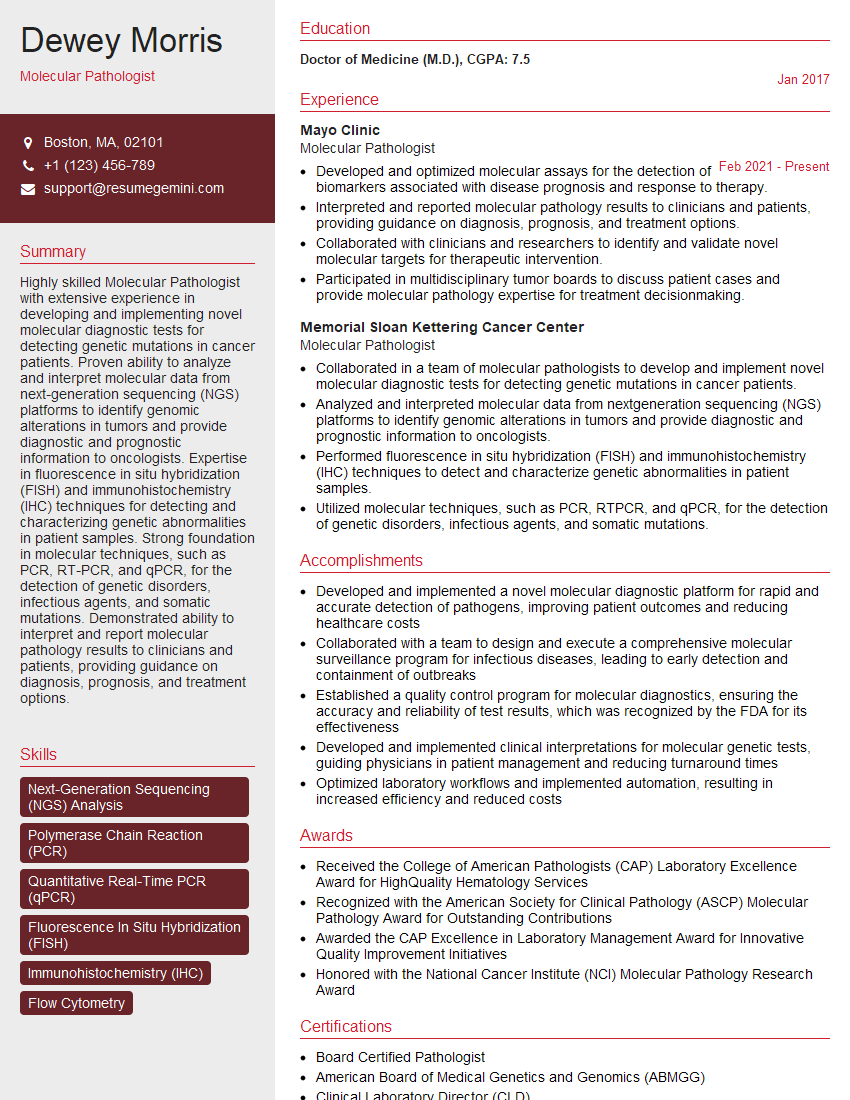
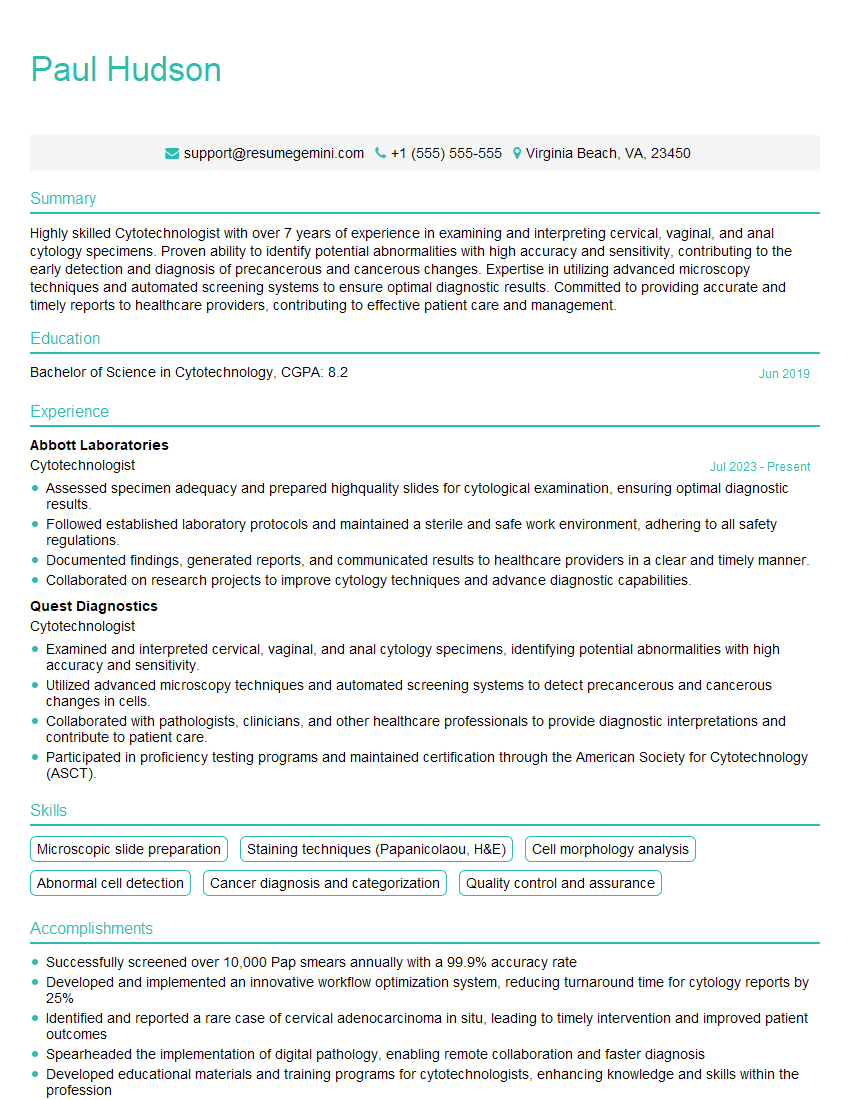
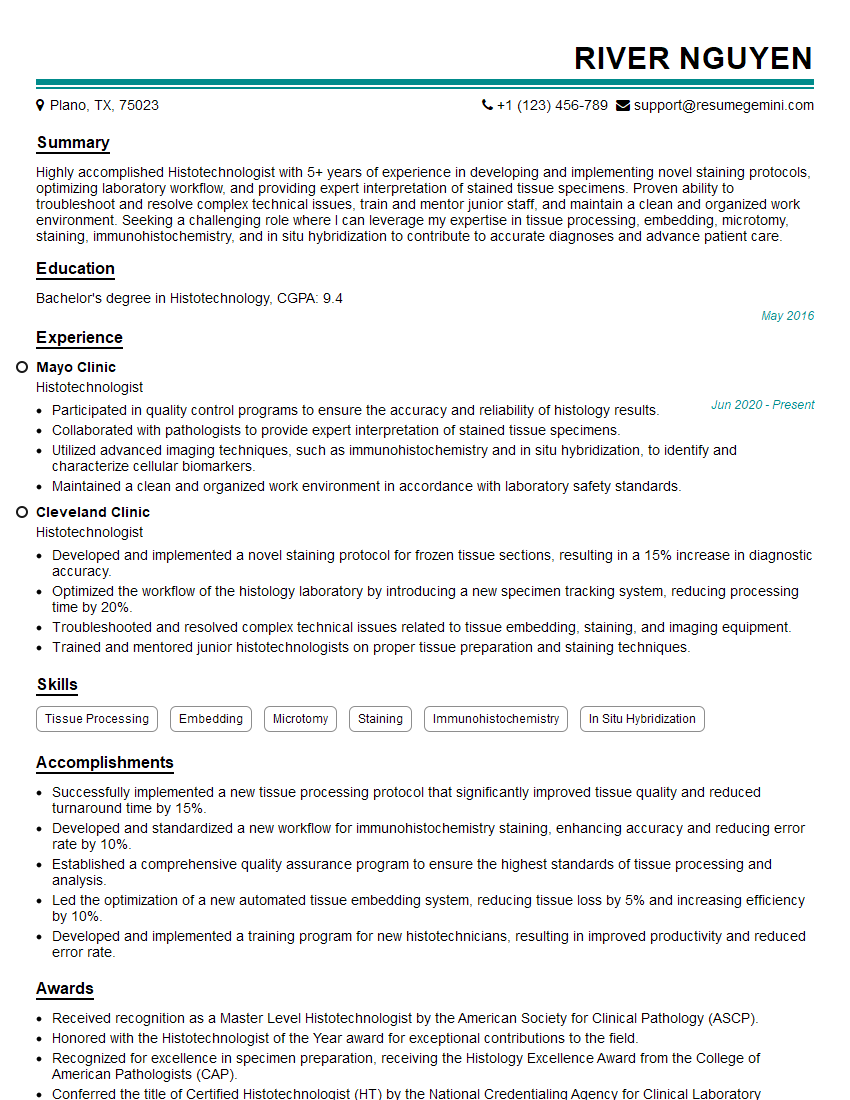
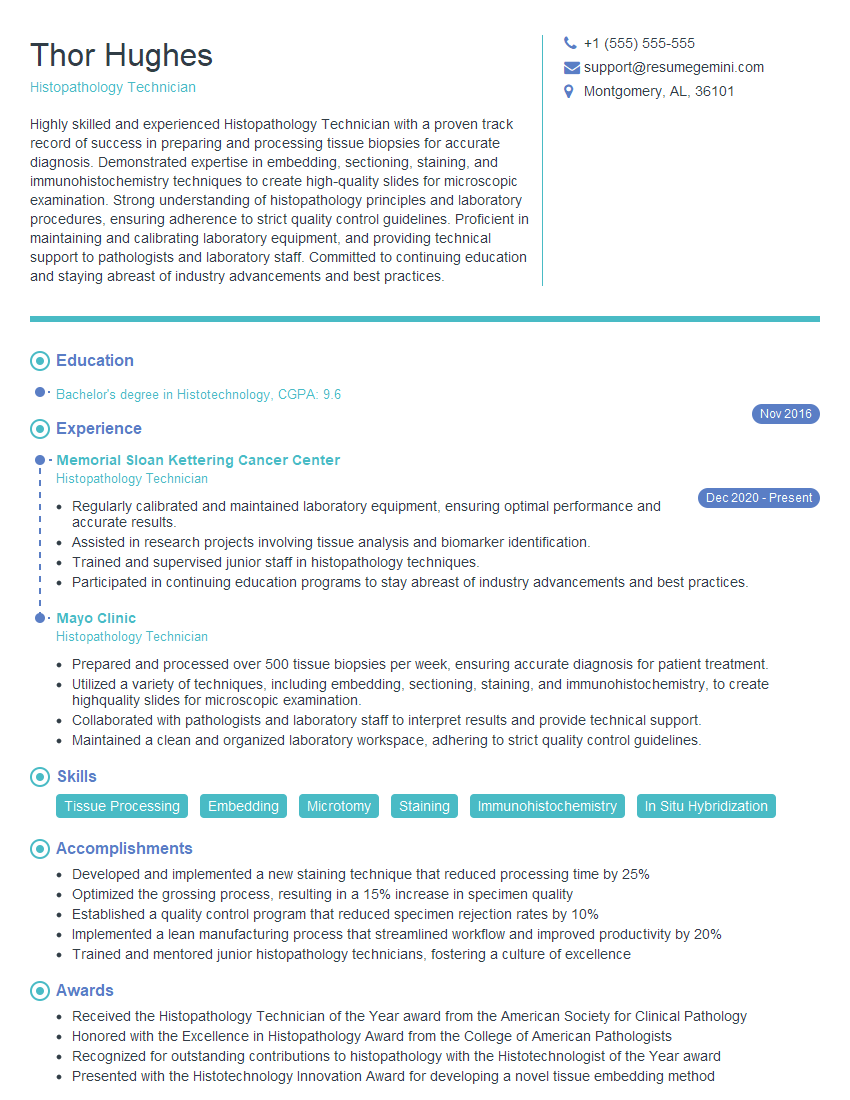
Mastering tissue analysis opens doors to exciting career opportunities in research, diagnostics, and pharmaceutical development. To maximize your job prospects, a strong and ATS-friendly resume is essential. ResumeGemini is a trusted resource to help you build a professional resume that highlights your skills and experience effectively. We provide examples of resumes tailored to tissue analysis to guide you in crafting a compelling application. Invest the time to create a resume that truly showcases your expertise and helps you land your dream job.
Explore more articles
Users Rating of Our Blogs
Share Your Experience
We value your feedback! Please rate our content and share your thoughts (optional).
What Readers Say About Our Blog
Very informative content, great job.
good