Every successful interview starts with knowing what to expect. In this blog, we’ll take you through the top Site Inspection and Commissioning interview questions, breaking them down with expert tips to help you deliver impactful answers. Step into your next interview fully prepared and ready to succeed.
Questions Asked in Site Inspection and Commissioning Interview
Q 1. Explain the process of pre-commissioning.
Pre-commissioning is the process of verifying that all the individual components of a building system are installed and function correctly before they are integrated into the overall system. Think of it as a series of individual health checks before the system’s ‘big race’. It’s crucial because it helps identify and rectify issues early, preventing costly rework and delays later in the commissioning process.
- Component Testing: This involves testing each component—pumps, valves, sensors, etc.—individually to ensure they meet the manufacturer’s specifications. For instance, we might check a pump’s pressure and flow rate against its data sheet.
- Equipment Inspection: This phase focuses on verifying the correct installation of the equipment, checking for any damage during transport or storage, and ensuring that all necessary connections are made properly. This might include visually inspecting ductwork for leaks or verifying the proper grounding of electrical equipment.
- Documentation Review: This involves meticulously reviewing the manufacturer’s instructions, specifications, and as-built drawings to confirm that the installation conforms to the design intent. A discrepancy between the design and the installed system would be identified here.
- System Walkthroughs: This involves a physical walk-through of the system, identifying any potential conflicts or issues before full integration. This could reveal a clash between pipework and structural elements, for example.
By addressing problems during pre-commissioning, you avoid cascading issues during the later stages, saving both time and money. A simple example is finding a faulty sensor during pre-commissioning; correcting this then is far less disruptive than discovering it during the system’s functional testing.
Q 2. Describe your experience with commissioning HVAC systems.
I have extensive experience commissioning HVAC systems across a variety of building types, from large commercial complexes to smaller residential buildings. My work includes all phases of commissioning, from planning and pre-commissioning to functional performance testing and final documentation.
For example, on a recent project for a new hospital wing, I oversaw the commissioning of a complex VAV (Variable Air Volume) system. This involved verifying the proper operation of each VAV box, confirming that the air flow rates met design specifications, and testing the building automation system’s control over the system. We used calibrated flow hoods and pressure gauges to accurately measure the air flow and pressure in various locations. We also rigorously checked the system’s response to various load conditions, including extreme weather.
Another notable experience involved troubleshooting a problematic chiller plant in an office building. Through meticulous testing and analysis, we identified a faulty pressure sensor causing erratic operation. Replacing this sensor resulted in significant energy savings and improved building comfort.
Q 3. What are the key documents used during commissioning?
Several key documents are essential throughout the commissioning process. These documents ensure transparency, accountability, and a complete record of the project’s progress and final status.
- Commissioning Plan: A detailed roadmap outlining the entire commissioning process, including the scope of work, schedule, and responsibilities.
- Design Documents: These include the project’s architectural, mechanical, electrical, and plumbing (MEP) drawings, specifications, and calculations. They provide the baseline against which the installed system is compared.
- Equipment Manuals: Manufacturer’s instructions and data sheets for all the equipment, providing performance specifications and operational guidance.
- Test Procedures: Documents outlining the specific tests to be performed on each system component and the acceptance criteria.
- Commissioning Reports: These documents record the results of all testing and inspections, including any identified deficiencies and corrective actions. They also serve as a final record of the project’s completion.
- As-Built Drawings: Updated drawings reflecting the actual installation of the systems, including any deviations from the original design.
Utilizing these documents helps ensure a smooth and efficient process, minimizing errors and misunderstandings among the various stakeholders involved in the project. Efficient document management significantly reduces issues during commissioning.
Q 4. How do you handle discrepancies found during site inspections?
Discrepancies found during site inspections are addressed systematically. The process begins with a clear documentation of the discrepancy, including photographs, measurements, and a description of the issue. Then:
- Identification and Verification: The discrepancy is verified by multiple parties to ensure it’s a genuine issue and not a misinterpretation of the plans.
- Root Cause Analysis: Determine the root cause of the discrepancy. Was it an error in the design, fabrication, or installation?
- Resolution Strategy: Develop a plan to resolve the discrepancy. This may involve minor adjustments, re-work, or even design changes. It’s crucial to involve all relevant parties (designers, contractors, owners) in this discussion.
- Corrective Action: Implement the agreed-upon solution and verify that it resolves the original issue.
- Documentation: Thoroughly document all aspects of the discrepancy, its resolution, and verification of the corrected work. This is crucial for tracking progress and avoiding future issues.
For example, if a ductwork size is found to be smaller than specified, we would document the discrepancy with photographs and measurements. We would then determine if the smaller size compromises the system’s performance. The solution might involve adding additional ductwork, revising the system’s design, or accepting the discrepancy with an appropriate performance justification. All this needs to be documented to ensure transparency and traceability.
Q 5. What is a commissioning plan and why is it important?
A commissioning plan is a comprehensive document that outlines the entire commissioning process. It acts as a blueprint for success, ensuring a coordinated and efficient approach. It’s essential because it provides a clear framework for all involved parties, preventing confusion and delays. A well-structured commissioning plan greatly reduces the likelihood of problems and ensures the project delivers on its performance goals.
- Scope Definition: Clearly defines the systems and equipment included in the commissioning process.
- Schedule: Sets out a timeline for each stage of commissioning, ensuring that tasks are completed on time.
- Responsibilities: Outlines the roles and responsibilities of each team member or company involved.
- Testing and Inspection Procedures: Specifies the tests and inspections that will be performed on each system.
- Reporting Requirements: Describes how progress will be tracked and reported to the project stakeholders.
- Budget: Allocates resources for the commissioning process.
Without a commissioning plan, the process becomes disorganized and prone to delays. Imagine building a house without blueprints: chaos ensues. Similarly, a well-defined commissioning plan guides the project to a successful, functional building system.
Q 6. Describe your experience with functional performance testing.
Functional performance testing is the critical phase where we verify that the entire building system performs as intended, meeting the design criteria and owner’s operational needs. This involves testing the integrated systems under various operating conditions to validate their capabilities and efficiency.
My experience includes testing diverse systems like HVAC, plumbing, electrical, and fire protection. For instance, in a recent project involving a large data center, we performed extensive functional performance testing on the HVAC system, ensuring proper cooling and humidity control for the servers. This involved load testing the chillers and cooling towers under various scenarios, verifying the temperature and humidity levels across different zones of the data center, and measuring power consumption to verify efficiency.
In another project, functional testing of the fire alarm system involved simulating fire conditions in different areas of the building and verifying that the system correctly triggered alarms and notifications according to code requirements. We also tested the sprinkler system’s pressure and flow rate to confirm its capability to suppress a fire.
Functional performance testing is not a one-size-fits-all approach. The specific tests vary depending on the type and complexity of the building and its systems. However, the overarching goal remains consistent: to verify that the entire building system performs according to design specifications and meets the operational needs of the owner.
Q 7. How do you ensure compliance with building codes and regulations during commissioning?
Ensuring compliance with building codes and regulations is paramount during commissioning. This involves a multi-pronged approach that incorporates several key strategies throughout the process.
- Code Review: Thoroughly reviewing all relevant building codes and regulations early in the project, ensuring the design complies before construction begins.
- Document Review: Verifying that all design documents and specifications adhere to the relevant codes and standards.
- Inspection and Testing: Performing inspections and functional performance tests to verify that the installed systems meet the code requirements. This frequently involves utilizing calibrated instruments to measure system performance against code-specified parameters.
- Third-Party Inspections: Engaging third-party inspectors to conduct independent reviews and tests to ensure unbiased verification of code compliance.
- Documentation: Meticulously documenting all inspections, tests, and compliance verifications. This creates an auditable trail to demonstrate adherence to regulations.
- Corrective Actions: Implementing corrective actions for any non-compliant items identified during the inspections and tests.
Failure to comply with building codes can lead to significant legal and financial repercussions, including project delays, fines, and even legal action. A rigorous approach to code compliance is not just a matter of best practice; it’s a legal necessity.
Q 8. Explain your experience with generating commissioning reports.
Generating commissioning reports is a crucial part of my role, ensuring a clear and concise record of the entire commissioning process. These reports document the system’s performance, identify any deficiencies, and ultimately confirm that the system meets the project requirements. My approach involves a structured format, typically including an executive summary, a detailed description of the commissioning process, test results with supporting documentation (photos, videos, data sheets), a list of outstanding issues (with assigned responsibilities and deadlines), and finally, a comprehensive conclusion outlining the system’s readiness for operation. For instance, in a recent HVAC commissioning project, the final report included detailed performance data from the testing of each air handling unit, demonstrating that the system met the design specifications for airflow, temperature, and humidity. Each discrepancy found was clearly outlined, along with the corrective actions taken and verification tests conducted.
Beyond the technical aspects, I ensure the reports are user-friendly and easily accessible to stakeholders with varying levels of technical expertise. This involves using clear language, employing visuals like charts and graphs to illustrate key findings, and summarizing critical observations to facilitate decision-making. For complex projects, I utilize a modular reporting approach, creating separate reports for different system components to enhance clarity and focus.
Q 9. What are some common challenges encountered during commissioning?
Commissioning projects often face several challenges. One common issue is schedule constraints; unexpected delays from contractors or material delivery can significantly impact the commissioning timeline. Another major hurdle is incomplete documentation; insufficient or inaccurate design documents can hinder the testing and verification process, leading to rework and potential cost overruns. Coordination challenges between different contractors working on various systems simultaneously require careful planning and effective communication to avoid conflicts and ensure efficient progress. Additionally, access limitations to certain equipment or areas of the building can impede testing and impede timely completion.
Furthermore, technical challenges can arise, especially when dealing with cutting-edge or complex systems. Troubleshooting unfamiliar technologies requires extensive technical expertise and often necessitates collaboration with specialized vendors. Lastly, budget constraints can sometimes force compromises in the scope of the commissioning, compromising the thoroughness and quality of the final product. Managing these challenges requires proactive planning, meticulous communication, and a flexible approach to problem-solving.
Q 10. How do you prioritize tasks during a busy commissioning project?
Prioritizing tasks during a busy commissioning project requires a structured approach. My strategy involves using a combination of techniques. First, I employ a critical path method (CPM) to identify the most critical tasks that directly influence the project timeline. These tasks are prioritized and closely monitored to prevent delays. This helps avoid bottlenecks and ensures the project stays on track. Secondly, I use a risk-based approach to prioritize tasks that pose the highest risk to project success. This may involve focusing on critical safety systems or those with a high potential for significant cost impact if problems are discovered late in the process.
Finally, I use a system-based approach; prioritizing tasks related to critical systems that are essential for the overall operation of the building. For example, in a hospital project, I would prioritize commissioning life safety systems (fire alarm, emergency power) before focusing on less critical systems like lighting controls. Regular progress meetings with the project team and stakeholders are also essential to adapt the priority list as new information emerges or challenges arise. Flexibility and open communication are key to successful task prioritization in a dynamic project environment.
Q 11. Describe your experience with the commissioning process of electrical systems.
My experience with electrical system commissioning encompasses a wide range of activities, from initial system reviews to final acceptance testing. This includes verifying the correct installation of equipment, checking for proper grounding and bonding, and testing protective devices like circuit breakers and ground fault circuit interrupters (GFCIs). I use specialized test equipment such as multimeters, meggers, and loop testers to assess the integrity of the electrical system. For instance, I’ve conducted extensive testing on power distribution systems, ensuring proper voltage levels, current carrying capacities, and the correct operation of switchgear and transformers. I also review all electrical drawings and specifications before starting testing to identify areas where additional inspection is required. Furthermore, my experience extends to the commissioning of specialized electrical systems such as fire alarm systems, security systems, and building automation systems, ensuring their seamless integration and proper functionality within the overall building management system.
A recent project involved commissioning a large data center’s uninterruptible power supply (UPS) system. This required rigorous testing of the UPS’s ability to provide backup power during a simulated power outage, validating its capacity to maintain critical loads and ensure uninterrupted operation. Detailed documentation of all tests, including timestamped readings and observations, was essential in providing a comprehensive report to the client.
Q 12. What are your strategies for managing conflicts with contractors during commissioning?
Managing conflicts with contractors during commissioning requires a collaborative and diplomatic approach. My strategy involves proactive communication and clearly defined roles and responsibilities outlined in the commissioning plan. Early identification of potential conflicts through regular meetings and open dialogue is crucial. When conflicts arise, I strive to create a neutral platform for discussion and encourage a collaborative problem-solving approach. This involves clearly stating the issues, listening to all perspectives, and then working towards a mutually acceptable solution. When necessary, I leverage my understanding of industry standards and best practices to support my position. If mediation fails, escalating the issue to the project manager or owner is necessary to ensure a timely resolution. However, I always prioritize maintaining professional relationships with contractors, understanding that future projects often rely on positive working partnerships.
For instance, I once encountered a conflict between the electrical and HVAC contractors regarding the installation of a critical piece of equipment. Through open communication, we identified a misunderstanding in the design documents, leading to a revised plan that satisfied both parties and avoided costly delays.
Q 13. Explain your experience with the different types of commissioning methodologies (e.g., phased commissioning).
I have extensive experience with various commissioning methodologies, including phased commissioning, which is a highly effective approach for large or complex projects. Phased commissioning allows for the commissioning of systems in stages, allowing for early problem detection and correction, thereby minimizing costly rework. This method breaks down a large project into manageable phases, allowing for focused testing and verification of individual systems or groups of systems. For example, one phase might focus on the HVAC system, another on the electrical system, and yet another on the fire protection system. This allows for better resource allocation and minimizes disruption to other ongoing construction activities.
Other methodologies include functional commissioning (focused on the functional performance of systems), integrated commissioning (emphasizing collaboration amongst stakeholders to optimize building performance), and owner’s commissioning (involving the owner’s representative in all aspects of the commissioning process). My experience encompasses selecting the most appropriate methodology based on project specifics, always focusing on the project’s unique needs and constraints. I ensure that the chosen methodology is well-documented, understood, and consistently followed by all team members to maintain quality and efficiency.
Q 14. How do you handle change orders during the commissioning phase?
Handling change orders during the commissioning phase requires a methodical approach to ensure the integrity of the project. Upon receiving a change order, I first assess its impact on the commissioning scope, timeline, and budget. This includes evaluating any necessary revisions to the commissioning plan, additional testing requirements, and potential delays. I then work closely with the project manager and the relevant contractors to determine the necessary adjustments. All changes are meticulously documented, including the rationale, the revised procedures, and the impact on cost and schedule. Clear communication with stakeholders is critical to ensure everyone understands the implications of the changes. For example, if a change order introduces a new piece of equipment, I would need to develop and implement a new testing procedure, revise the schedule to accommodate this extra work, and update the budget to reflect any additional cost incurred.
It is crucial to ensure that all change orders are formally approved before any work commences. This ensures proper authorization and prevents disputes later. Thorough documentation of all changes and their impact is vital, creating a clear audit trail of the commissioning process, especially in case of future disputes or liability issues.
Q 15. What software or tools are you proficient in using for commissioning?
My proficiency in commissioning software spans several key applications. I’m highly skilled in using Commissioning Information Management Systems (CIMS) like EQMS and eQUEST, which are crucial for managing documentation, tracking progress, and generating reports. These platforms allow for efficient data collection, analysis, and sharing among the project team. Beyond CIMS, I’m proficient with various data acquisition tools, including Building Automation System (BAS) software such as Trend, Niagara, and Johnson Controls Metasys for real-time monitoring and diagnostics of building systems. My experience also includes using specialized software for specific equipment testing, such as software provided by manufacturers for VFDs, chillers, and HVAC equipment, allowing me to deeply analyze system performance.
Furthermore, I’m adept at using spreadsheet software like Microsoft Excel for data analysis, creating test procedures, and generating reports. Finally, I effectively utilize project management tools like Microsoft Project or Asana to maintain project schedules and manage tasks efficiently.
Career Expert Tips:
- Ace those interviews! Prepare effectively by reviewing the Top 50 Most Common Interview Questions on ResumeGemini.
- Navigate your job search with confidence! Explore a wide range of Career Tips on ResumeGemini. Learn about common challenges and recommendations to overcome them.
- Craft the perfect resume! Master the Art of Resume Writing with ResumeGemini’s guide. Showcase your unique qualifications and achievements effectively.
- Don’t miss out on holiday savings! Build your dream resume with ResumeGemini’s ATS optimized templates.
Q 16. Describe your experience with close-out documentation.
Close-out documentation is paramount for ensuring a smooth handover and successful project completion. My experience encompasses creating comprehensive documentation packages that include all necessary information for the building owner and operator. This includes, but isn’t limited to, as-built drawings reflecting any changes made during construction, operation and maintenance manuals, equipment data sheets, test reports (including results and certifications), and commissioning reports summarizing the entire process, findings, and recommendations. I meticulously ensure that all documentation is accurate, complete, organized, and easily accessible, often using a digital document management system to facilitate efficient retrieval and long-term archiving.
For example, on a recent hospital project, I developed a close-out document system using a shared cloud-based platform, allowing the owner, operations team, and maintenance staff to access critical information instantaneously. This improved communication and reduced the onboarding time significantly.
Q 17. Explain your understanding of LEED requirements related to commissioning.
LEED (Leadership in Energy and Environmental Design) requirements heavily emphasize commissioning as a crucial pathway to achieving energy efficiency and sustainable building practices. My understanding of these requirements centers around the fact that LEED points are often awarded for implementing various levels of commissioning, including fundamental commissioning (Cx), enhanced commissioning (Cx), and commissioning authority (CxA) involvement. For instance, LEED credits often require documenting a Cx process that includes pre-design meetings, system design review, construction observation, functional performance testing, and post-occupancy commissioning (POC).
Specific LEED requirements vary depending on the version and project type but generally involve demonstrating compliance through detailed documentation, such as test results, commissioning reports, and operator training records. My experience includes working on several LEED-certified projects where understanding and successfully navigating these requirements were critical to achieving project certification.
Q 18. How do you verify that all systems are operating correctly after commissioning?
Verification of correct system operation post-commissioning is a multi-faceted process. It involves a combination of functional performance testing, system diagnostics using the BAS, and visual inspections. Functional performance testing verifies that each system meets the design specifications and operates within established parameters. This involves re-testing critical systems after construction completion, to ensure that they perform as intended and all deficiencies addressed during the construction phase are resolved.
Using the BAS, we continuously monitor system performance, identifying any anomalies or deviations from expected operational ranges. Visual inspections ensure that all equipment is correctly installed, properly labeled, and free from damage. Finally, thorough documentation of all tests, observations, and findings are vital for creating a comprehensive report for the building owner.
Q 19. What is your experience with commissioning complex building systems?
I have extensive experience commissioning complex building systems, including high-rise buildings, hospitals, and data centers, each presenting unique challenges. In these projects, effective commissioning requires a structured approach and a detailed understanding of the intricate interdependencies between various systems. For example, in a high-rise building, coordinating the commissioning of HVAC systems, fire protection systems, elevator systems, and power systems requires meticulous planning and scheduling to avoid conflicts and delays.
My approach involves breaking down the complex system into smaller, manageable subsystems, assigning responsibilities to specialized teams, and establishing clear communication protocols. My experience in managing these complex projects ensures that all systems are properly tested and integrated to function optimally. For instance, working on a large hospital project I implemented a phased commissioning approach, prioritizing critical systems like the operating room HVAC to ensure immediate operational readiness.
Q 20. How do you ensure that all required testing is completed during commissioning?
Ensuring completion of all required testing relies on meticulous planning and execution. This starts with developing a comprehensive commissioning plan that identifies all systems and equipment requiring testing, defines the specific test procedures, and assigns responsibilities. This plan serves as a roadmap throughout the commissioning process. The plan is developed in close collaboration with the design and construction teams, using design documents, specifications, and equipment data sheets to define the scope of testing.
During construction, regular site visits and close coordination with contractors are essential to track progress and ensure that testing is performed at the appropriate times. Maintaining a detailed test log and using CIMS helps document the completion of each test, its results, and any necessary corrective actions. Post-construction, a final review of all testing documentation ensures that all required tests have been executed and documented accurately.
Q 21. Describe a time you had to troubleshoot a technical problem during commissioning.
During the commissioning of a large university building, we encountered a problem with the chilled water system that wasn’t delivering the required cooling capacity. Initial tests indicated that the chillers were operating within their specified parameters, but the building wasn’t reaching the desired temperature. After careful analysis of the BAS data and reviewing the system schematics, we discovered a significant pressure drop across a newly installed section of piping. Further investigation revealed that there was a partially obstructed flow due to a foreign object left in the pipe during installation.
The solution involved isolating the affected section of pipe, removing the obstruction, and thoroughly flushing the system. This resolved the issue, and subsequent testing verified that the chilled water system was operating as designed. This situation reinforced the importance of meticulous observation, comprehensive data analysis, and collaborative problem-solving, highlighting the need for a thorough understanding of all building systems.
Q 22. How do you effectively communicate technical information to non-technical stakeholders?
Communicating complex technical information to non-technical stakeholders requires a thoughtful approach. The key is to translate technical jargon into plain language, using relatable analogies and visual aids. I start by identifying the audience’s level of understanding and tailoring my communication accordingly. For instance, when explaining a complex HVAC system, instead of using terms like ‘variable refrigerant flow,’ I might say, ‘Imagine a system that automatically adjusts the amount of cooling based on the room’s temperature needs, just like a thermostat in your home, but on a much larger scale.’
I utilize visual aids extensively—diagrams, flowcharts, and even short videos—to make abstract concepts more concrete. I also break down complex information into smaller, manageable chunks, ensuring each point is clearly understood before moving on. I encourage questions and actively listen to feedback, addressing concerns patiently and thoroughly. Finally, I always summarize key takeaways at the end to reinforce understanding and ensure everyone is on the same page. For example, after explaining a pressure testing procedure, I’d summarize the main goal (identifying leaks), the process (using a pressure gauge and observing readings), and the implications of the results (system functionality).
Q 23. What are your experience with different types of testing methodologies (e.g., functional performance testing, integrated systems testing)?
My experience encompasses a wide range of testing methodologies crucial for site inspection and commissioning. Functional performance testing, for example, involves verifying that individual components and systems operate as designed. This often includes testing of individual pumps, valves, sensors and controls. I’ve extensively used data loggers to capture performance data during testing and compare it to manufacturer’s specifications. Integrated systems testing, on the other hand, evaluates the interaction and performance of multiple systems working together. For instance, I’ve worked on projects where we tested the integrated performance of the HVAC system, fire alarm system, and building automation system (BAS). We verify seamless communication and coordinated operation between these disparate systems. This testing often involves simulating various scenarios, such as fire drills or power outages, to assess the integrated system’s response.
Beyond functional and integrated systems testing, I’m also proficient in safety testing (checking emergency shutdown systems, safety interlocks etc.), commissioning functional performance tests (e.g., testing of variable frequency drives for pumps, fans and chillers), and performance testing (e.g., using calibrated instruments and assessing the energy efficiency of HVAC systems). Each method requires a distinct approach and documentation procedure, which I meticulously follow to ensure comprehensive and accurate testing and reporting.
Q 24. How do you ensure the safety of personnel during site inspections and commissioning?
Ensuring personnel safety during site inspections and commissioning is paramount. My approach is proactive and multifaceted. It begins with a thorough site-specific safety plan, developed in collaboration with the client and contractors. This plan details potential hazards, required Personal Protective Equipment (PPE), emergency procedures, and communication protocols. We conduct regular toolbox talks at the start of each day to reinforce safety awareness and address any immediate concerns.
Before commencing any work, I meticulously assess the site, identifying potential hazards like exposed wiring, unguarded machinery, or confined spaces. We use appropriate lockout/tagout procedures to de-energize equipment before maintenance or testing. Throughout the inspection and commissioning process, strict adherence to safety regulations and best practices is enforced. This includes using appropriate PPE, maintaining a clean and organized workspace, and implementing safe work practices. Regular monitoring of personnel activities and providing appropriate training on equipment operation are also crucial parts of my safety protocol. In case of an incident, we have well-defined reporting and investigation procedures to ensure learning and improvement.
Q 25. Describe your experience with preparing and delivering commissioning presentations.
I have extensive experience in preparing and delivering commissioning presentations, tailoring them to the specific audience and project objectives. My presentations are always data-driven, focusing on key findings, performance metrics, and recommendations. I typically use visual aids like charts, graphs, and photos to illustrate complex data and make it easily understandable.
For instance, in a presentation to senior management, I would emphasize high-level summaries, key performance indicators (KPIs), and the overall project success. On the other hand, for a technical audience, I’d delve deeper into specific test results, methodologies, and technical details. I’m adept at using presentation software like PowerPoint or similar tools, incorporating animations and interactive elements to maintain audience engagement. I always allow ample time for questions and answers, ensuring the audience understands and feels comfortable with the presented information. For example, after presenting the results of a pressure test of the hydronic system, I’d open the floor to questions about specific test points, the interpretation of data, and the next steps in the commissioning process. Post-presentation, I always provide detailed written reports summarizing the key information.
Q 26. What is your approach to training operators on new systems after commissioning?
Operator training is an integral part of the commissioning process. My approach to training is practical and hands-on. I start by developing a comprehensive training program tailored to the specific system and the operators’ skill levels. This usually involves a mix of classroom instruction, demonstration, and hands-on practice. The classroom portion covers theoretical aspects such as system operation, safety procedures, and troubleshooting techniques.
Hands-on training is crucial, allowing operators to gain practical experience with the new system under the guidance of experienced personnel. I use a combination of simulated scenarios and real-world operation to train operators on various aspects of the system. For example, to train operators on an HVAC system, we might use a simulated fault scenario to test their troubleshooting skills. I emphasize a gradual approach, starting with simple tasks and progressively increasing the complexity as operators gain confidence. Post-training, I provide assessment tests and ongoing support to ensure operators are comfortable and competent in operating the new systems. I also create a comprehensive operating manual, ensuring it’s accessible and easy for the operators to utilize.
Q 27. How do you identify and address potential safety hazards during site inspections?
Identifying and addressing potential safety hazards during site inspections is a systematic process. I begin with a pre-inspection review of the project documents, including design drawings, safety plans, and permits. This allows me to anticipate potential hazards based on the project specifics. Then, I conduct a thorough visual inspection of the site, paying close attention to details like electrical wiring, mechanical equipment, scaffolding, and working at heights. I utilize checklists and standardized forms to ensure a systematic approach and consistent documentation.
Common hazards I look for include exposed wires, damaged equipment, unguarded machinery, inadequate lighting, trip hazards, and potential falls. Once a hazard is identified, I immediately halt the work, and rectify it or direct the contractor to do so. I implement appropriate control measures to mitigate the identified risks, including the use of barriers, signage, or PPE. Detailed documentation is crucial; I carefully record each hazard identified, the corrective action taken, and the responsible party. This documentation is crucial for project records and to show continuous improvement. I also ensure appropriate communication and coordination with all relevant parties, keeping the client informed of any safety-related issues.
Q 28. Explain your experience in using commissioning management software.
My experience with commissioning management software is extensive. I’m proficient in using several platforms to manage the commissioning process, from planning and scheduling to testing and documentation. These software solutions significantly improve efficiency and transparency. For instance, I’ve used software that allows for the creation of comprehensive commissioning plans, the tracking of progress against the schedule, and the seamless management of testing results.
The software facilitates the electronic documentation and storage of test results, reports, and other crucial commissioning documents, eliminating the need for paper-based systems. It also aids in the efficient coordination and communication among the commissioning team, contractors, and clients. I use this software to generate detailed reports, including performance graphs, trend analysis, and comprehensive summaries of test results. The integration capabilities within some software allow for the connection to building automation systems (BAS) for real-time data monitoring and analysis, improving efficiency and accuracy of the entire process. This real-time data helps identify potential issues proactively. For example, it can alert us to a specific valve that’s not operating correctly even before it causes a noticeable problem. This helps reduce downtime, and overall enhances the commissioning process.
Key Topics to Learn for Site Inspection and Commissioning Interview
- Safety Procedures and Regulations: Understanding and adhering to relevant safety protocols on site, including PPE requirements and hazard identification.
- Pre-Commissioning Activities: Thorough review of design documents, specifications, and drawings to prepare for the on-site inspection process. Practical application: Identifying potential discrepancies before commissioning begins.
- Inspection Techniques and Methodologies: Employing various inspection methods (visual, dimensional, functional testing) to verify system compliance with project requirements. Practical application: Using checklists and reporting tools to document findings accurately.
- Commissioning Procedures and Protocols: Understanding and following established procedures for system testing, start-up, and performance verification. Practical application: Troubleshooting minor issues and escalating major concerns to the appropriate personnel.
- Documentation and Reporting: Maintaining detailed records of inspections, testing results, and any identified non-conformances. Practical application: Creating comprehensive reports that clearly communicate findings and recommendations.
- System Functionality and Interoperability: Understanding how different systems interact and ensuring seamless integration during the commissioning process. Practical application: Troubleshooting issues related to system integration and communication.
- Troubleshooting and Problem-Solving: Identifying and resolving issues effectively during the commissioning process using systematic and logical approaches. Practical application: Utilizing root cause analysis to prevent future problems.
- Quality Assurance and Control: Ensuring that all work meets the required quality standards and specifications. Practical application: Applying quality control checks at every stage of the commissioning process.
- Commissioning Handover and Closeout: Successfully completing the commissioning process and transferring responsibility to the client or operations team. Practical application: Preparing comprehensive as-built documentation and operational manuals.
Next Steps
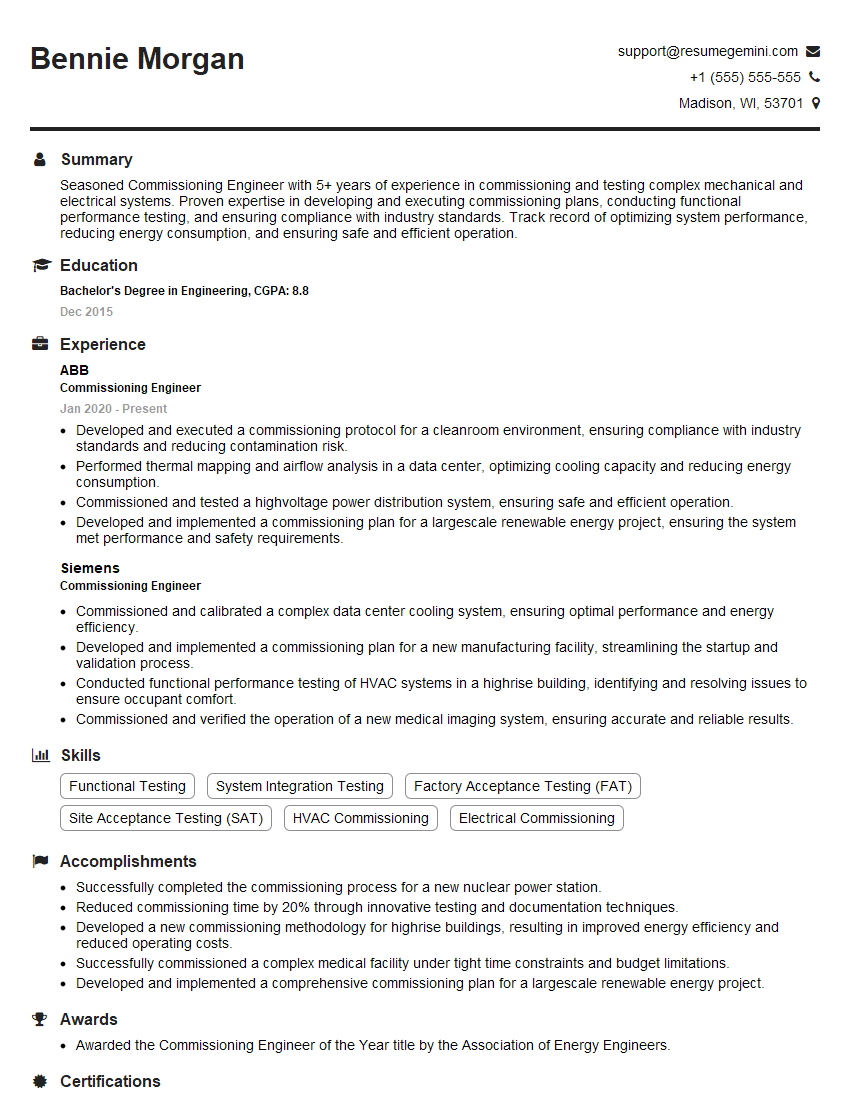
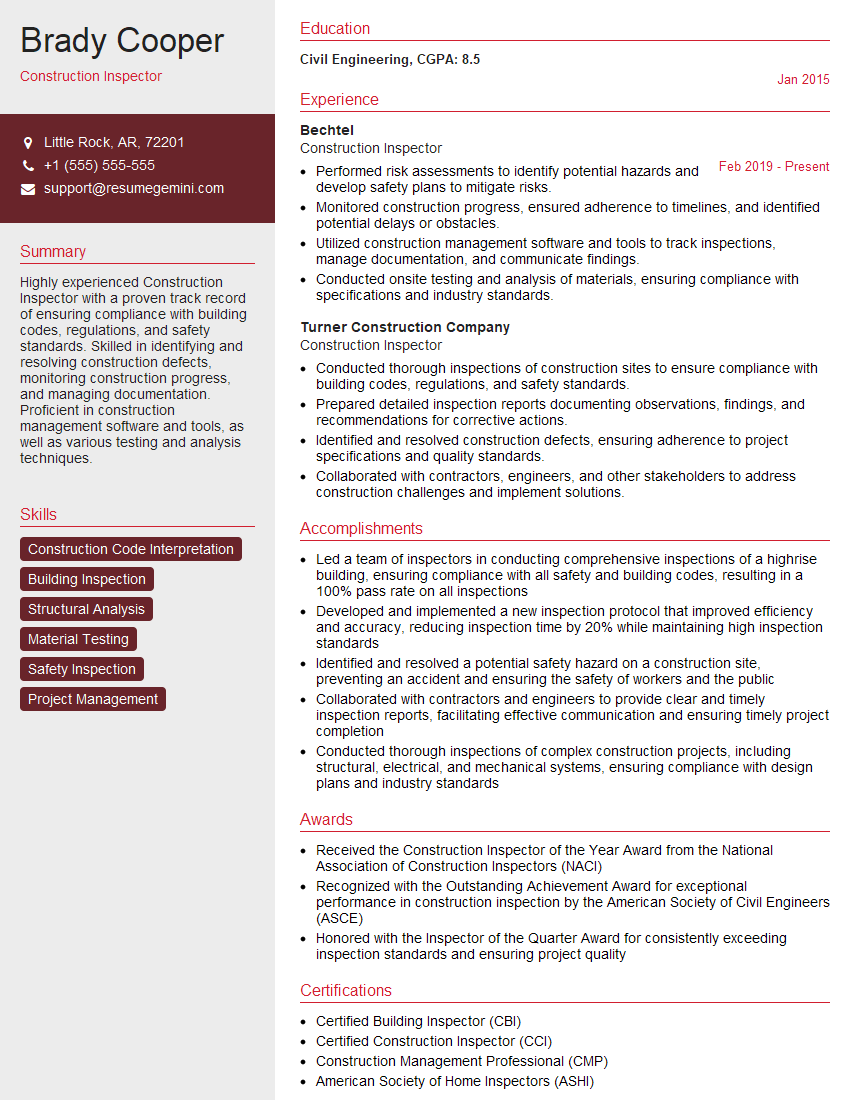
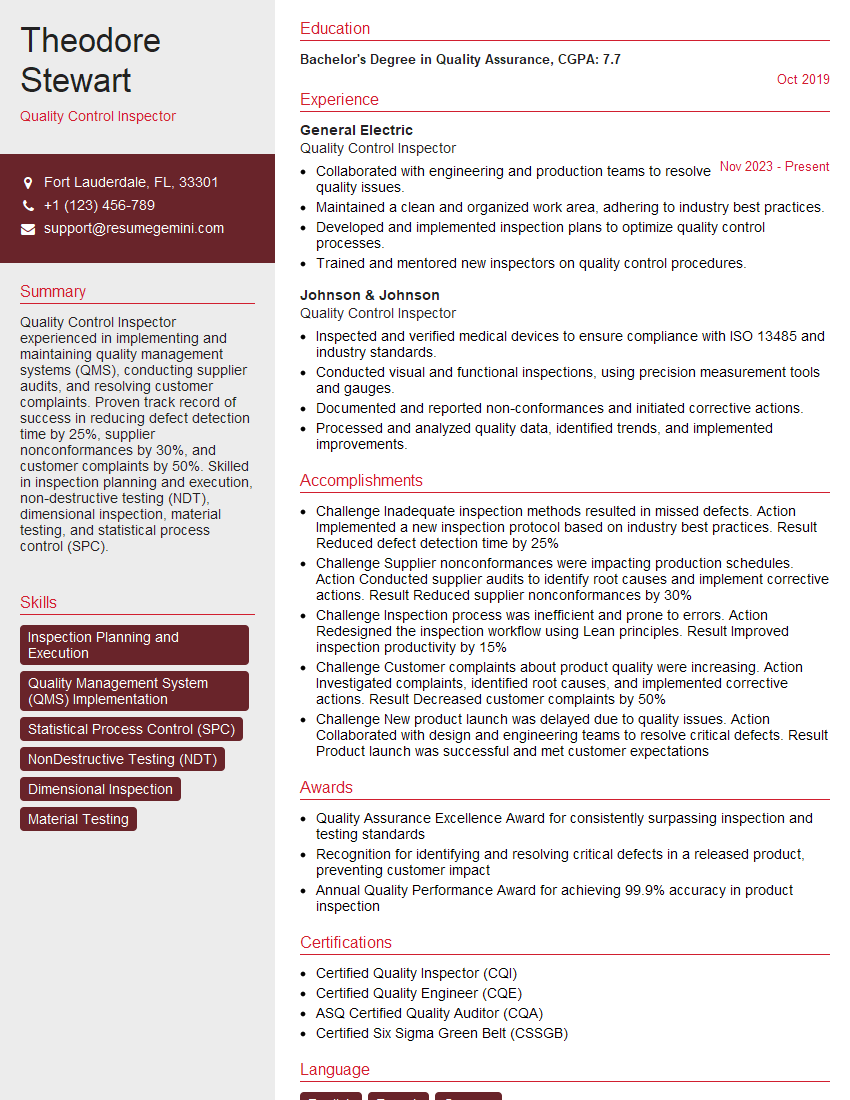
Mastering Site Inspection and Commissioning is crucial for career advancement in the construction and engineering industries. It demonstrates a strong understanding of technical details, problem-solving skills, and commitment to quality and safety. To significantly increase your job prospects, crafting an ATS-friendly resume is essential. ResumeGemini is a trusted resource to help you build a professional and effective resume that highlights your skills and experience. Examples of resumes tailored to Site Inspection and Commissioning are available to guide you. Invest time in creating a compelling resume – it’s your first impression on potential employers.
Explore more articles
Users Rating of Our Blogs
Share Your Experience
We value your feedback! Please rate our content and share your thoughts (optional).
What Readers Say About Our Blog
Very informative content, great job.
good