Every successful interview starts with knowing what to expect. In this blog, we’ll take you through the top Experience with Inventory Control and Tracking Systems interview questions, breaking them down with expert tips to help you deliver impactful answers. Step into your next interview fully prepared and ready to succeed.
Questions Asked in Experience with Inventory Control and Tracking Systems Interview
Q 1. Explain the difference between FIFO and LIFO inventory methods.
FIFO (First-In, First-Out) and LIFO (Last-In, First-Out) are two fundamental methods for costing inventory. They differ significantly in how they assign costs to goods sold and remaining inventory. Imagine a stack of pancakes:
- FIFO: With FIFO, you eat the bottom pancake (oldest) first. The cost of goods sold reflects the cost of the oldest items in your inventory, while the value of your remaining inventory reflects the cost of the newest items. This is often preferred because it keeps the inventory valuation more closely aligned with current market prices.
- LIFO: With LIFO, you eat the top pancake (newest) first. The cost of goods sold reflects the cost of the newest items, and the remaining inventory is valued at the cost of the oldest items. This can lead to a lower tax liability during periods of inflation, as the higher cost of newer items is used to calculate cost of goods sold, resulting in lower reported profits.
For example, let’s say you purchased 10 units at $10 and later 10 units at $12. With FIFO, if you sell 5 units, the cost of goods sold would be $50 (5 units x $10). With LIFO, the cost of goods sold would be $60 (5 units x $12). The choice between FIFO and LIFO depends on various factors including accounting standards, tax implications, and industry best practices.
Q 2. Describe your experience with cycle counting and its benefits.
Cycle counting is a process of regularly counting a small subset of inventory items rather than performing a complete physical inventory count. Think of it as a continuous, ongoing inventory check, not a big, disruptive event. I have extensive experience implementing and managing cycle counting programs. In a previous role, we implemented a system where we assigned different sections of the warehouse to team members for weekly cycle counts. This targeted approach significantly improved accuracy.
- Benefits: Improved inventory accuracy, reduced time spent on physical inventories, earlier detection of discrepancies, more efficient use of resources, and minimized disruptions to daily operations.
The success of cycle counting depends on clear procedures, well-trained staff, and an effective tracking system. Regular analysis of cycle count results helps identify areas needing improvement, such as in inventory management processes or staff training.
Q 3. How do you handle inventory discrepancies?
Handling inventory discrepancies requires a systematic approach. First, I’d investigate the root cause. Is it a data entry error? A scanning issue? Theft? A physical error in counting? Once identified, I’d implement corrective actions.
- Data entry errors: Improved training, double-checking procedures, and potentially automated data entry systems can mitigate these.
- Scanning issues: Regular maintenance and calibration of scanning equipment is essential.
- Theft: Enhanced security measures, including cameras, access controls, and improved employee vetting.
- Physical counting errors: More rigorous training on proper counting techniques, using standardized counting procedures, and potentially the implementation of independent verification checks.
Discrepancies are documented thoroughly, with detailed explanations of the cause and corrective actions taken. Regular review of these reports can highlight recurring problems and areas for process improvement.
Q 4. What inventory control software are you familiar with (e.g., SAP, Oracle, Fishbowl)?
I’m proficient in several inventory control software packages, including SAP MM (Materials Management), Oracle Inventory Management, and Fishbowl Inventory. My experience spans from implementing and configuring these systems to daily operations, reporting, and troubleshooting.
For example, in my role at [Previous Company Name], I was instrumental in implementing SAP MM, leading a team through the migration process, customizing the system to our specific needs, and training staff on its effective use. This resulted in significant improvements in inventory accuracy and efficiency, leading to reduced carrying costs and improved order fulfillment.
Q 5. Explain your experience with RFID or barcode scanning technology.
I have extensive hands-on experience with both RFID (Radio-Frequency Identification) and barcode scanning technologies. RFID offers greater speed and accuracy for tracking large numbers of items, especially in fast-paced environments. Barcodes are cost-effective and widely utilized for individual item tracking.
In a past project, we implemented RFID tags on pallets in a warehouse, significantly improving the accuracy and speed of inventory checks during stock movements and reducing the time required for cycle counts. We also successfully integrated both barcode and RFID systems to optimize for different needs. Understanding the strengths and limitations of both technologies is crucial for selecting the appropriate solution for specific inventory management challenges.
Q 6. How do you ensure accurate inventory data?
Ensuring accurate inventory data requires a multifaceted approach focusing on prevention and detection. This includes:
- Regular cycle counts: As discussed previously, these are essential for catching discrepancies early.
- Robust data entry and validation procedures: Implement checks and balances to minimize human error.
- Regular audits: Periodically review inventory data against physical counts to identify systematic errors.
- Technology integration: Utilize barcode scanners, RFID, and advanced inventory management software to minimize manual processes and human error.
- Staff training: Invest in training to ensure that staff properly utilizes the equipment and follows established procedures.
By combining these strategies, a comprehensive system is created to maintain data integrity and provide reliable inventory information for decision-making.
Q 7. Describe your process for forecasting inventory needs.
Inventory forecasting is crucial for preventing stockouts and minimizing excess inventory. My approach involves a combination of quantitative and qualitative methods.
- Quantitative methods: I utilize historical sales data, seasonality trends, and statistical forecasting techniques (e.g., moving averages, exponential smoothing) to predict future demand.
- Qualitative methods: This involves incorporating market intelligence, economic forecasts, promotional plans, and expert opinions to adjust the quantitative predictions. I often leverage collaborative forecasting techniques, getting input from sales, marketing, and operations teams.
For example, I’d use historical sales data to create a baseline forecast. Then, I would factor in any planned promotions or anticipated economic shifts, adjusting the forecast accordingly. The accuracy of the forecast depends heavily on data quality and the consideration of relevant factors. Regularly reviewing and adjusting the forecast is essential to maintain accuracy and responsiveness to changing market conditions.
Q 8. How do you manage obsolete or slow-moving inventory?
Managing obsolete or slow-moving inventory is crucial for maintaining profitability and efficient warehouse space. It’s like cleaning out your closet – you need to get rid of items that aren’t serving a purpose. My approach involves a multi-pronged strategy:
- Regular Inventory Reviews: I use ABC analysis (categorizing inventory by value and usage) to pinpoint slow-movers. This allows me to focus efforts on the items that are truly impacting profitability. For instance, items ranked ‘C’ (low value, low usage) are prime candidates for liquidation.
- Pricing Strategies: Discounting slow-moving items can stimulate sales. Offering bundled deals or promotions can also be effective. Think of it as a ‘clearance sale’ for your warehouse.
- Return to Supplier: If possible, I negotiate with suppliers to return obsolete stock for credit or replacement with current items. This minimizes losses and improves cash flow.
- Liquidation: For items that cannot be sold at a reasonable profit, I explore liquidation options such as auctions, online marketplaces, or donating to charity. Documentation is key here to properly record the disposal.
- Demand Forecasting Improvement: I analyze historical sales data and market trends to improve demand forecasting accuracy, thereby reducing the likelihood of future obsolete stock. This is a long-term solution focusing on prevention rather than cure.
By combining these methods, I ensure that obsolete inventory is addressed proactively, minimizing storage costs and maximizing return on investment.
Q 9. What are the key performance indicators (KPIs) you track for inventory control?
Key Performance Indicators (KPIs) are critical for monitoring inventory control effectiveness. I track a range of metrics, including:
- Inventory Turnover Rate: This shows how efficiently inventory is sold over a period. A high turnover rate indicates strong sales and efficient inventory management.
Inventory Turnover = Cost of Goods Sold / Average Inventory - Carrying Costs: This encompasses storage, insurance, taxes, and obsolescence costs. Lower carrying costs improve profitability.
- Stockout Rate: The percentage of times an item is out of stock when needed. A low stockout rate is vital for customer satisfaction and sales.
- Inventory Accuracy: The percentage of inventory records that match physical inventory counts. High accuracy minimizes discrepancies and improves decision-making.
- Order Fill Rate: Percentage of orders fulfilled completely and on time. Directly reflects inventory availability and logistical efficiency.
- Days Sales of Inventory (DSI): The number of days it takes to sell existing inventory. A lower DSI is generally more desirable.
Regular monitoring of these KPIs provides insights into inventory performance and identifies areas for improvement. I use dashboards and reporting tools to visualize these metrics and communicate them to stakeholders effectively.
Q 10. How do you identify and address inventory shrinkage?
Inventory shrinkage, the difference between recorded inventory and physical inventory, is a serious concern. My approach to identifying and addressing it is systematic:
- Regular Cycle Counting: Instead of large, infrequent physical inventories, I implement cycle counting – regularly counting smaller portions of inventory. This helps to catch discrepancies early and minimizes disruption.
- Technology Integration: Utilizing barcode scanners, RFID tags, and inventory management software improves accuracy and reduces manual errors, a major contributor to shrinkage.
- Security Measures: Implementing robust security measures such as surveillance cameras, access controls, and employee background checks helps deter theft.
- Root Cause Analysis: When shrinkage occurs, a thorough investigation is needed to determine the underlying cause – whether it’s theft, damage, inaccurate record-keeping, or something else. This helps prevent future issues.
- Employee Training: Training staff on proper inventory handling procedures reduces errors and promotes accountability.
By combining these methods, shrinkage can be minimized, leading to improved inventory accuracy and reduced financial losses.
Q 11. Explain your experience with implementing or improving an inventory control system.
In my previous role at [Previous Company Name], I spearheaded the implementation of a new inventory management system to replace an outdated, inefficient system. This involved several key phases:
- Needs Assessment: I started by thoroughly assessing the company’s inventory management needs and challenges, involving key stakeholders from different departments.
- System Selection: We evaluated different inventory management systems, considering factors such as functionality, scalability, integration with existing systems, and cost. We chose a system that could handle our current inventory and could scale with future growth.
- Data Migration: Migrating data from the old system to the new one was a critical step, requiring careful planning and execution to minimize disruptions. Data cleaning was essential to ensure data integrity.
- Training & Implementation: We provided comprehensive training to all staff on the new system. We launched the new system in phases, starting with a pilot group, to ensure a smooth transition.
- Post-Implementation Review: After the system was fully implemented, we regularly reviewed the performance of the system and made adjustments as needed. We tracked key performance indicators to measure success.
The new system resulted in a significant reduction in inventory discrepancies, improved order fulfillment, and reduced carrying costs. It also freed up staff time previously spent on manual tasks, allowing them to focus on more strategic activities.
Q 12. How do you handle returns and damaged goods?
Handling returns and damaged goods efficiently is crucial for minimizing losses and maintaining customer satisfaction. My approach involves:
- Clear Return Policy: A well-defined and communicated return policy sets expectations and simplifies the process. It outlines acceptable return reasons, timeframes, and procedures.
- Inspection and Grading: Upon receiving a return, a thorough inspection is conducted to assess its condition. Damaged goods are separated from reusable items.
- Inventory Updates: The inventory management system is updated to reflect returns and damaged goods. This ensures accuracy of inventory records.
- Disposition of Damaged Goods: Depending on the extent of damage, damaged goods are either repaired, salvaged, or disposed of responsibly and in compliance with relevant regulations. Careful documentation ensures accurate tracking of losses.
- Restocking and Repackaging: Reusable returned items are inspected, cleaned, and repacked for resale.
This structured approach ensures that returns and damaged goods are handled efficiently, minimizing waste and maximizing the recovery of value.
Q 13. Describe your experience with inventory audits.
I have extensive experience conducting and overseeing inventory audits. These audits are critical for verifying the accuracy of inventory records and identifying discrepancies. My approach involves:
- Planning and Preparation: This involves defining the scope of the audit, selecting a team, establishing a timeline, and preparing necessary documentation and equipment.
- Counting and Verification: The physical inventory is counted and compared to the records in the inventory management system. Discrepancies are noted and investigated.
- Documentation: All audit activities, including the counting process, discrepancies, and corrective actions, are thoroughly documented.
- Root Cause Analysis: Any significant discrepancies are investigated to identify the root cause. This could involve process improvements, staff training, or system adjustments.
- Reporting and Follow-up: A comprehensive audit report is prepared, detailing findings, recommendations, and corrective actions. Follow-up ensures that the recommendations are implemented.
Regular inventory audits ensure the reliability of inventory data, enabling informed decision-making and reducing the risk of stockouts or excess inventory.
Q 14. What are the challenges of managing inventory in a fast-paced environment?
Managing inventory in a fast-paced environment presents unique challenges. The key difficulties include:
- Rapid Changes in Demand: Fluctuations in demand make accurate forecasting difficult, increasing the risk of stockouts or excess inventory. Agile inventory management strategies are crucial.
- Time Sensitivity: The need for quick order fulfillment puts pressure on inventory processes. Efficient logistics and streamlined workflows are essential.
- Higher Risk of Errors: The fast pace can lead to increased human errors in inventory management, affecting accuracy and efficiency. Automation and technology are essential to mitigate this.
- Increased Complexity: Managing multiple product lines and SKUs requires sophisticated systems and processes. Inventory management software with strong reporting capabilities is a must.
- Maintaining Visibility: Tracking inventory in real-time is crucial to ensure timely responses to changes in demand. Real-time inventory tracking systems are essential for maintaining visibility.
To overcome these challenges, robust inventory management systems, advanced forecasting techniques, and a highly adaptable team are critical. Proactive monitoring of KPIs and a flexible response to market changes are essential for success.
Q 15. How do you maintain optimal stock levels?
Maintaining optimal stock levels is a delicate balancing act between meeting customer demand and minimizing storage costs and waste. It’s about finding the ‘sweet spot’ where you have enough inventory to fulfill orders promptly without overstocking. This involves a multi-faceted approach:
- Demand Forecasting: Accurately predicting future demand is crucial. I utilize various forecasting techniques, including moving averages, exponential smoothing, and even more sophisticated time series analysis, depending on the data available and the product’s characteristics. For example, seasonal items require more nuanced forecasting than consistently selling products.
- Lead Time Consideration: The time it takes to replenish stock from suppliers must be factored in. Longer lead times necessitate higher safety stock levels to buffer against potential delays.
- Inventory Turnover Rate: Regularly analyzing the inventory turnover rate (how quickly inventory is sold and replaced) helps identify slow-moving items and opportunities for optimization. A low turnover rate might indicate overstocking or a weak demand.
- Economic Order Quantity (EOQ): This is a classic inventory management model that calculates the optimal order size to minimize total inventory costs (ordering costs + holding costs). The EOQ calculation takes into account factors such as demand, ordering cost, and holding cost per unit.
- Regular Stock Reviews: Consistent monitoring of stock levels through automated systems and manual checks is essential. This allows for proactive adjustments based on real-time data and any unexpected changes in demand.
In a previous role, I implemented an EOQ model for a high-demand product, resulting in a 15% reduction in inventory holding costs while maintaining on-time delivery rates.
Career Expert Tips:
- Ace those interviews! Prepare effectively by reviewing the Top 50 Most Common Interview Questions on ResumeGemini.
- Navigate your job search with confidence! Explore a wide range of Career Tips on ResumeGemini. Learn about common challenges and recommendations to overcome them.
- Craft the perfect resume! Master the Art of Resume Writing with ResumeGemini’s guide. Showcase your unique qualifications and achievements effectively.
- Don’t miss out on holiday savings! Build your dream resume with ResumeGemini’s ATS optimized templates.
Q 16. Explain your understanding of safety stock.
Safety stock acts as a buffer against unexpected fluctuations in demand or lead times. Think of it as an insurance policy for your inventory. It protects against stockouts, which can lead to lost sales, unhappy customers, and damage to your reputation. The amount of safety stock needed depends on several factors:
- Demand Variability: Higher demand variability requires more safety stock.
- Lead Time Variability: Unpredictable supplier lead times necessitate a larger safety stock.
- Service Level: The desired probability of meeting customer demand (e.g., 95%, 99%) dictates the safety stock level. A higher service level requires more safety stock.
Determining the optimal safety stock level often involves statistical methods and simulations. For instance, I’ve used Monte Carlo simulations in the past to model various scenarios and determine the appropriate safety stock for a perishable product with a highly variable demand.
Q 17. How do you collaborate with other departments to ensure efficient inventory management?
Effective inventory management requires seamless collaboration across departments. I’ve found that open communication and data sharing are paramount. Here’s how I collaborate:
- Sales and Marketing: Close collaboration with these teams is vital for accurate demand forecasting. Sales data provides insights into actual customer demand, while marketing campaigns can influence future demand. Regular meetings and shared dashboards ensure everyone is on the same page.
- Procurement/Purchasing: I work closely with procurement to negotiate favorable pricing with suppliers, ensure timely deliveries, and manage supplier relationships. This includes sharing demand forecasts and inventory levels to optimize purchasing decisions.
- Warehouse and Logistics: Efficient warehouse operations are crucial. I work with the warehouse team to optimize storage space, improve picking and packing processes, and minimize handling errors. This often involves using warehouse management systems (WMS) and data analytics.
- Finance: Finance plays a key role in budget allocation for inventory and in monitoring inventory costs. Regular reporting and analysis helps maintain financial accountability and control.
In one instance, by closely collaborating with the sales team to understand upcoming promotions, I was able to proactively increase inventory levels and avoid stockouts during a high-demand period.
Q 18. How do you stay up-to-date with industry best practices in inventory control?
Staying current with industry best practices is crucial in the dynamic field of inventory control. I actively engage in several strategies:
- Professional Organizations: I’m a member of [mention relevant professional organizations, e.g., APICS], which provides access to training, conferences, and networking opportunities.
- Industry Publications and Journals: Regularly reading trade publications and journals keeps me informed about new technologies and methodologies.
- Webinars and Online Courses: Many online platforms offer valuable training on inventory management techniques and software.
- Networking: Connecting with other professionals at conferences and through online forums helps to share best practices and learn from others’ experiences.
- Vendor Training: Many inventory management software vendors offer training on their systems and best practices.
For example, recently I completed a course on using machine learning for demand forecasting, which significantly enhanced my forecasting accuracy.
Q 19. Describe your experience with inventory reporting and analysis.
Inventory reporting and analysis are essential for making data-driven decisions. My experience includes:
- Developing Key Performance Indicators (KPIs): I’ve developed and tracked several KPIs, including inventory turnover rate, carrying costs, stockout rates, and fill rates. These metrics provide insights into the effectiveness of inventory management strategies.
- Generating Regular Reports: I generate regular reports on inventory levels, sales trends, and potential stockouts. These reports are used for decision-making at various levels of the organization.
- Using Reporting Tools: I’m proficient in using various reporting and analytics tools, including Excel, SQL, and specialized inventory management software to generate customized reports and dashboards.
- Data Visualization: I’m adept at visualizing data through charts and graphs, making it easier for stakeholders to understand complex inventory trends and patterns.
In my last role, I developed a custom dashboard that provided real-time visibility into inventory levels, sales trends, and potential stockouts, enabling proactive decision-making and preventing significant losses.
Q 20. What are some common inventory control problems and how have you solved them?
I’ve encountered several common inventory control problems throughout my career. Here are a few examples and how I’ve addressed them:
- Inaccurate Inventory Data: This is a frequent issue. I’ve tackled this by implementing cycle counting procedures, regular inventory audits, and investing in improved barcode scanning and RFID technology to enhance data accuracy.
- High Inventory Carrying Costs: This can be due to overstocking or slow-moving items. I’ve addressed this by implementing EOQ models, improving demand forecasting, and identifying opportunities to reduce storage space and optimize warehouse layout. We also implemented ABC analysis to focus on high-value items that needed more stringent control.
- Stockouts: These lead to lost sales. I’ve addressed this by improving demand forecasting, increasing safety stock levels for critical items, and streamlining the procurement process to reduce lead times.
- Poor Inventory Visibility: This hinders effective decision-making. I’ve resolved this by implementing an inventory management system (IMS) that provides real-time visibility into inventory levels across all locations.
For instance, I once uncovered a significant discrepancy in inventory data due to manual entry errors. Implementing a barcode scanning system and retraining staff on proper inventory procedures eliminated this problem and significantly improved data accuracy.
Q 21. How do you use data analytics to improve inventory management?
Data analytics plays a crucial role in improving inventory management. I utilize data analytics in several ways:
- Demand Forecasting: Applying statistical models and machine learning algorithms to historical sales data to generate more accurate demand forecasts. This minimizes stockouts and reduces excess inventory.
- Identifying Slow-Moving Items: Analyzing sales data to identify products with low turnover rates and suggesting actions to improve sales or liquidate excess inventory. ABC analysis is a powerful tool in this context.
- Optimizing Safety Stock Levels: Using simulation techniques to model different scenarios and determine the optimal safety stock levels to balance the risk of stockouts against carrying costs.
- Identifying and Preventing Stockouts: Analyzing sales data and lead times to identify potential stockouts and take proactive measures to prevent them. Real-time dashboards help with this considerably.
- Improving Warehouse Efficiency: Analyzing warehouse data (e.g., picking times, storage locations) to identify areas for improvement and optimize warehouse processes.
In a previous role, I used regression analysis to identify key factors driving demand for a particular product, resulting in a significant improvement in forecasting accuracy and a reduction in inventory holding costs.
Q 22. Explain your experience with different inventory valuation methods.
Inventory valuation methods determine the value of goods in stock. Choosing the right method significantly impacts financial reporting and decision-making. I have extensive experience with several key methods:
- First-In, First-Out (FIFO): This assumes that the oldest items are sold first. In times of inflation, this leads to a higher reported net income because the cost of goods sold is lower. Example: If we received 100 units at $10 and later 100 units at $12, FIFO assumes the first 100 sold cost $10 each.
- Last-In, First-Out (LIFO): Here, the newest items are sold first. During inflation, LIFO results in a lower net income because the higher recent costs are used to calculate the cost of goods sold. This method is less commonly used due to tax implications but can provide a more accurate picture of current costs.
- Weighted-Average Cost: This method calculates the average cost of all units available for sale during a period. It’s simpler to implement than FIFO or LIFO but may not reflect the actual cost of goods sold as accurately.
- Specific Identification: This method tracks the cost of each individual item. It’s suitable for businesses with unique, high-value items but can be labor-intensive. Example: A jewelry store might track the cost of each individual diamond.
The choice of method depends on various factors, including the industry, tax regulations, and management’s objectives. In my previous role, we used FIFO for its simplicity and alignment with our actual sales process, while also regularly comparing results with a weighted-average calculation for a broader perspective.
Q 23. How do you handle emergency situations that disrupt inventory levels?
Emergency situations, such as unexpected demand surges or supply chain disruptions, require immediate action. My approach involves a multi-step process:
- Assess the situation: Identify the extent of the disruption and the impact on inventory levels. Is it a temporary spike in demand or a longer-term problem?
- Prioritize critical items: Focus on fulfilling orders for the most important products or those with the shortest lead times.
- Explore immediate solutions: This might involve expediting shipments, negotiating with suppliers, temporarily increasing production, or drawing on safety stock (if available). For example, during a sudden increase in demand for a specific product, we might initiate an expedited order from a secondary supplier.
- Communicate effectively: Keep customers and stakeholders informed about potential delays or changes in availability.
- Analyze and adjust: Once the crisis is over, analyze what caused it and implement changes to prevent similar situations in the future. This could involve revising safety stock levels, diversifying suppliers, or strengthening supply chain partnerships.
In one instance, a supplier’s unexpected factory closure threatened our inventory of a key component. We immediately secured an alternative supplier, communicating potential delays to clients transparently, and managed to mitigate the disruption with minimal impact.
Q 24. Describe your experience with implementing inventory control procedures.
Implementing inventory control procedures requires a structured and methodical approach. My experience includes:
- Defining clear procedures for receiving, storing, and issuing inventory: This includes creating standardized forms, assigning responsibilities, and implementing barcode or RFID scanning for tracking.
- Developing and implementing inventory tracking systems: I’ve worked with both manual and automated systems, ensuring accurate data entry and regular reconciliation.
- Establishing regular inventory counts and audits: This helps to identify discrepancies, improve accuracy, and prevent losses. We used cyclical counting – regular counts of smaller sections rather than one large annual count – to minimize disruption.
- Setting up appropriate safety stock levels: Determining optimal levels that balance the risk of stockouts with the cost of holding excess inventory. This required analyzing historical sales data, seasonality, lead times, and supplier reliability.
- Training staff on the new procedures: Clear communication and training are crucial for successful implementation. We used hands-on training sessions and provided clear documentation.
In a previous role, I successfully implemented a new inventory management system, reducing inventory discrepancies by 15% and improving order fulfillment accuracy by 10% within six months. This involved training all warehouse staff on the new system and processes, which required careful planning and ongoing support.
Q 25. How do you prioritize tasks related to inventory control?
Prioritizing inventory control tasks requires balancing urgency and importance. I use a framework combining urgency and impact:
- Urgent and High Impact: These tasks, such as resolving immediate stockouts or addressing critical inventory discrepancies, are top priority.
- Urgent and Low Impact: These tasks, such as minor data corrections, can be delegated or addressed after higher-priority items.
- Not Urgent but High Impact: These tasks, such as improving forecasting accuracy or implementing a new inventory management system, require proactive planning and scheduling.
- Not Urgent and Low Impact: These tasks, such as routine reports, can be scheduled less frequently or even eliminated.
I utilize project management tools and techniques like Kanban boards to visualize workflows and ensure that tasks are prioritized effectively, allowing me to address critical issues rapidly while also allocating time for strategic improvements.
Q 26. Explain your experience with physical inventory counts.
Physical inventory counts are essential for verifying the accuracy of recorded inventory levels. My experience includes conducting both full and cycle counts using various methods:
- Full Inventory Count: This involves a complete count of all inventory items. It’s time-consuming but provides a comprehensive overview. We typically scheduled these during periods of low activity to minimize disruption.
- Cycle Counting: This method involves counting smaller sections of inventory regularly. It’s less disruptive and allows for faster identification and correction of discrepancies.
- Technology Integration: I’ve utilized barcode scanners and handheld devices to speed up the counting process and minimize manual data entry errors.
- Teamwork and Quality Control: Accurate counts require a well-trained team, clear instructions, and robust quality control procedures to ensure consistency and accuracy.
In one instance, we implemented a cycle counting program that reduced inventory discrepancies by 20% and allowed us to address issues more promptly.
Q 27. How do you ensure the accuracy of inventory data in a multi-location environment?
Maintaining accurate inventory data across multiple locations requires a robust system and careful coordination. My strategies include:
- Centralized Inventory Management System: Employing a system that provides a real-time view of inventory levels across all locations. This system should integrate with all locations’ systems to allow for a single source of truth.
- Standardized Procedures: Implementing consistent inventory control procedures, including receiving, storing, and issuing inventory, across all locations.
- Regular Data Reconciliation: Conducting regular comparisons between physical counts and system records to identify and correct discrepancies.
- Technology Integration: Utilizing barcode or RFID technology to track inventory movement across locations in real time.
- Real-time Data Synchronization: Ensuring data is constantly updated and synchronized across all locations. This eliminates lags that create inaccurate reports.
- Designated Inventory Control Personnel: Having responsible personnel at each location to oversee inventory management and reporting.
In a previous role, we implemented a centralized inventory system that linked all our distribution centers, significantly improving data accuracy and reducing stockouts.
Q 28. What is your experience with inventory optimization techniques?
Inventory optimization techniques aim to minimize inventory holding costs while ensuring sufficient stock to meet demand. My experience includes:
- Demand Forecasting: Utilizing statistical methods and historical data to predict future demand accurately. This allows for more precise ordering and reduces the risk of overstocking or stockouts. We frequently utilized exponential smoothing and ARIMA models.
- ABC Analysis: Classifying inventory items based on their value and consumption rate. This prioritizes focus on high-value items, optimizing storage and control efforts.
- Economic Order Quantity (EOQ): Determining the optimal order quantity that minimizes total inventory costs, considering ordering costs and holding costs.
- Just-in-Time (JIT) Inventory: Minimizing inventory levels by receiving materials only when needed for production. This requires strong relationships with suppliers and accurate demand forecasting.
- Safety Stock Optimization: Calculating appropriate safety stock levels to buffer against unexpected demand fluctuations or supply chain disruptions.
By implementing these techniques, I have helped businesses reduce inventory holding costs, improve order fulfillment rates, and minimize the risk of stockouts. For example, through implementing ABC analysis and a refined EOQ calculation, we were able to reduce our warehouse storage costs by 12% while maintaining consistently high levels of customer satisfaction.
Key Topics to Learn for Experience with Inventory Control and Tracking Systems Interview
- Inventory Management Methodologies: Understanding different inventory control methods (FIFO, LIFO, weighted average cost), their applications, and advantages/disadvantages in various business contexts.
- Inventory Tracking Software & Systems: Familiarity with popular inventory management software (e.g., SAP, Oracle, NetSuite) and their core functionalities – data entry, reporting, analysis, and integration with other systems. Practical experience implementing and troubleshooting such systems is crucial.
- Data Analysis & Reporting: Ability to interpret inventory data, identify trends, and generate reports to support decision-making regarding stock levels, purchasing, and forecasting. This includes understanding key metrics like inventory turnover, carrying costs, and stock-out rates.
- Cycle Counting & Inventory Audits: Practical experience performing cycle counts and participating in full inventory audits, including understanding the importance of accuracy and identifying discrepancies. Discuss methodologies for improving accuracy and efficiency.
- Inventory Optimization Techniques: Knowledge of techniques to optimize inventory levels, minimize waste, and reduce storage costs. This could include just-in-time (JIT) inventory management or other demand forecasting models.
- Problem-Solving & Troubleshooting: Demonstrate your ability to identify and resolve inventory-related issues, such as stock discrepancies, inaccurate data, or system malfunctions. Use examples to showcase your analytical and problem-solving skills.
- Security and Control Measures: Understanding the importance of implementing robust security measures to protect inventory from loss, damage, or theft. Discuss physical security as well as data security best practices.
Next Steps
Mastering inventory control and tracking systems is vital for career advancement in logistics, supply chain management, and operations. A strong understanding of these systems significantly improves efficiency, reduces costs, and enhances overall business performance. To maximize your job prospects, create an ATS-friendly resume that highlights your skills and experience effectively. ResumeGemini is a trusted resource to help you build a professional and impactful resume. We provide examples of resumes tailored to Experience with Inventory Control and Tracking Systems to guide you. Take advantage of these resources to present your qualifications in the best possible light and land your dream job!

Operations Manager Resume Sample
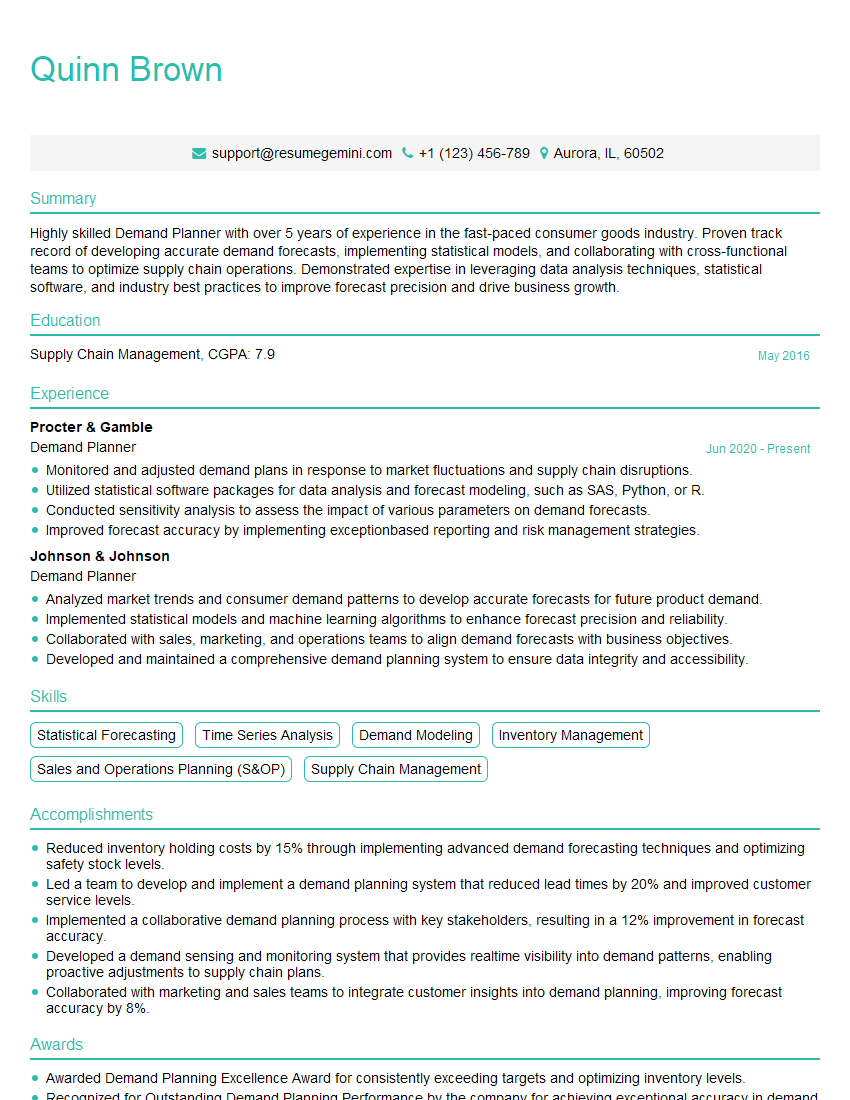
Demand Planner Resume Sample
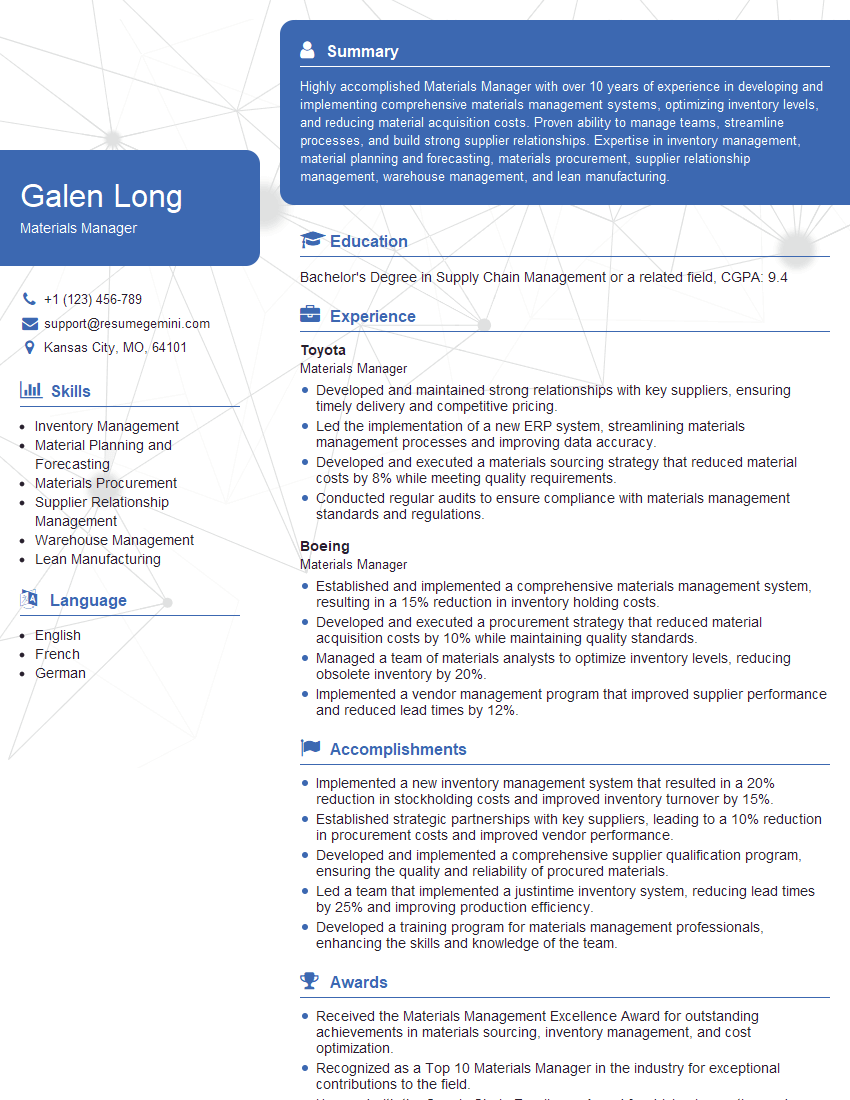
Materials Manager Resume Sample

Procurement Manager Resume Sample
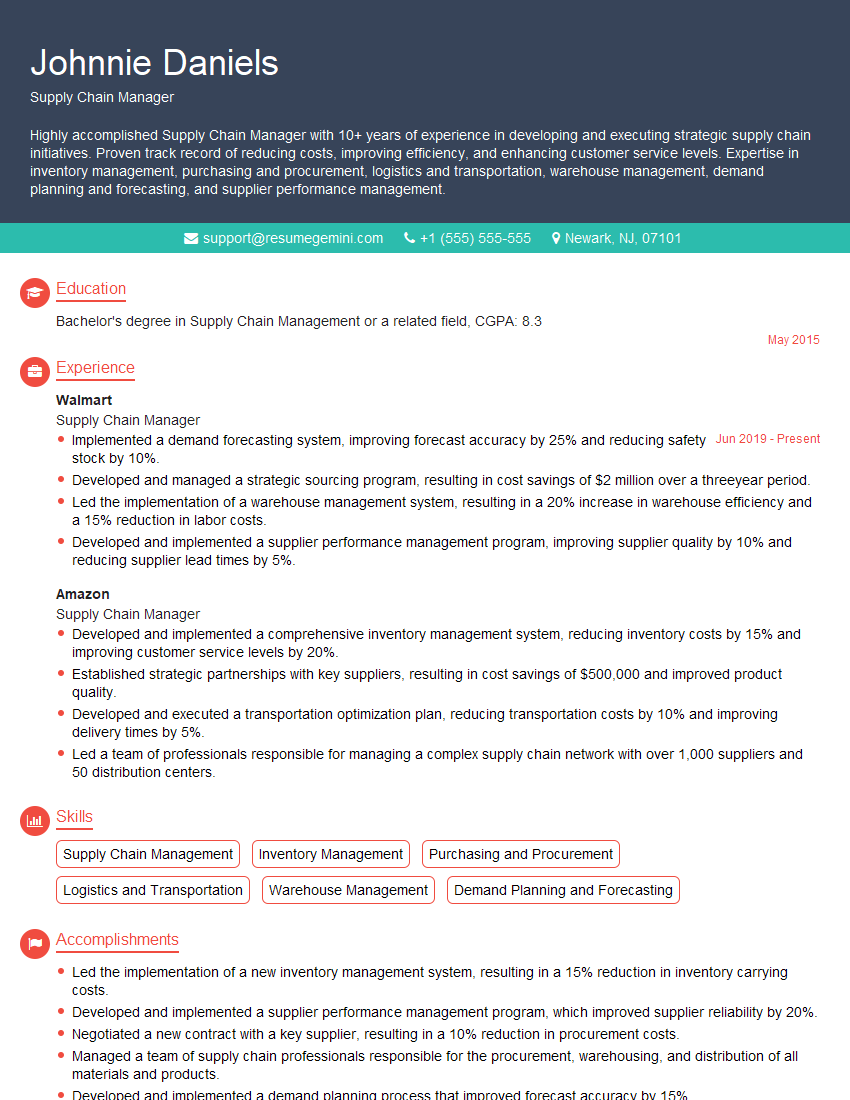
Supply Chain Manager Resume Sample
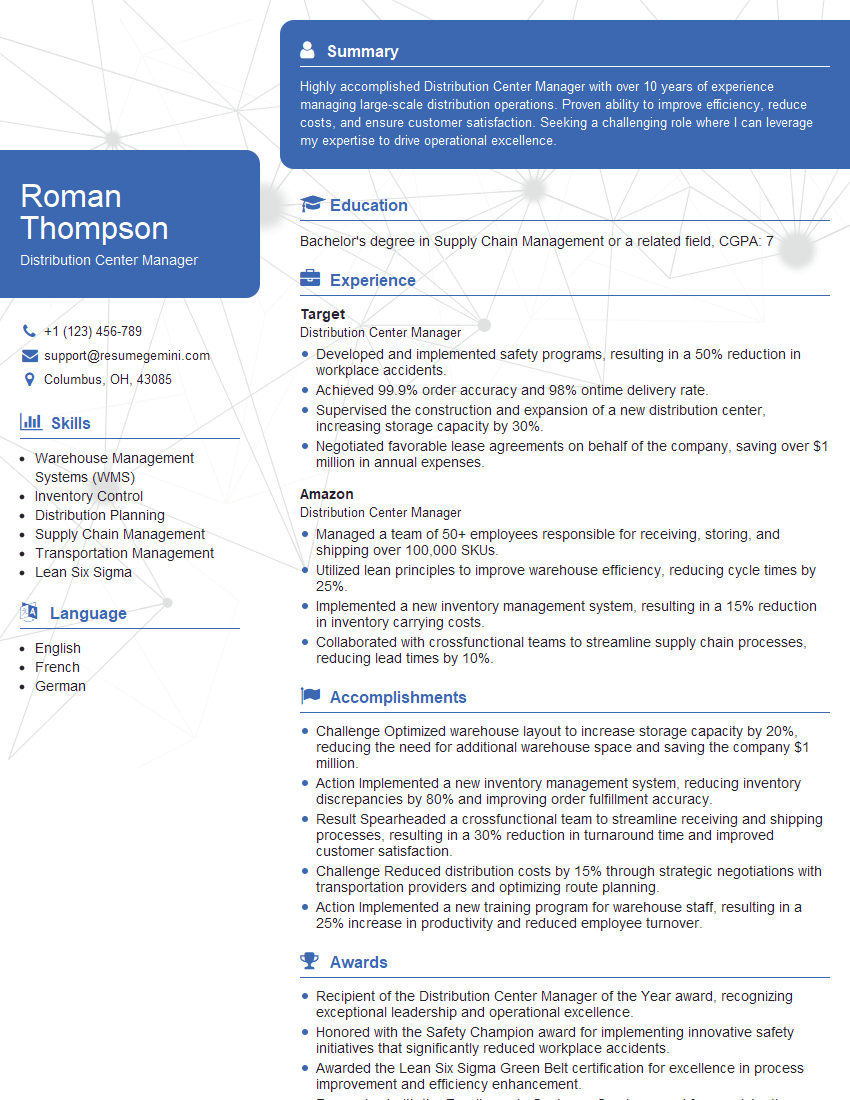
Distribution Center Manager Resume Sample
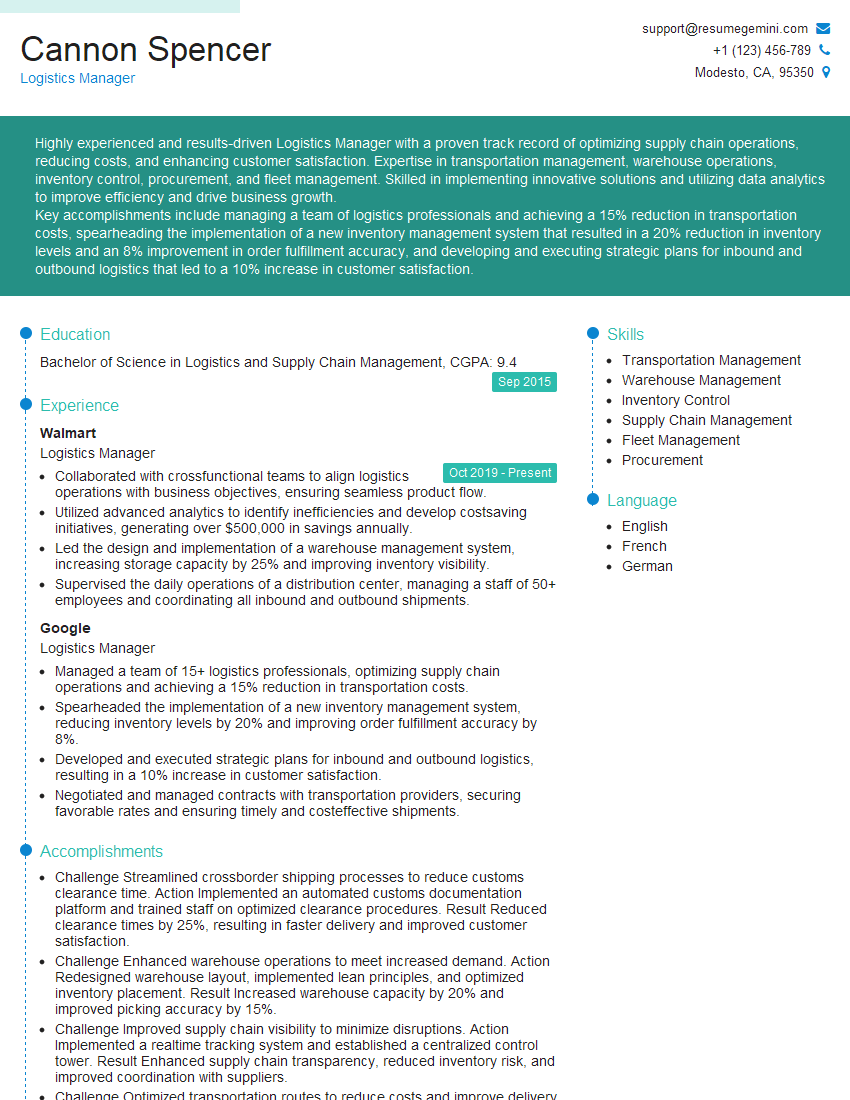
Logistics Manager Resume Sample
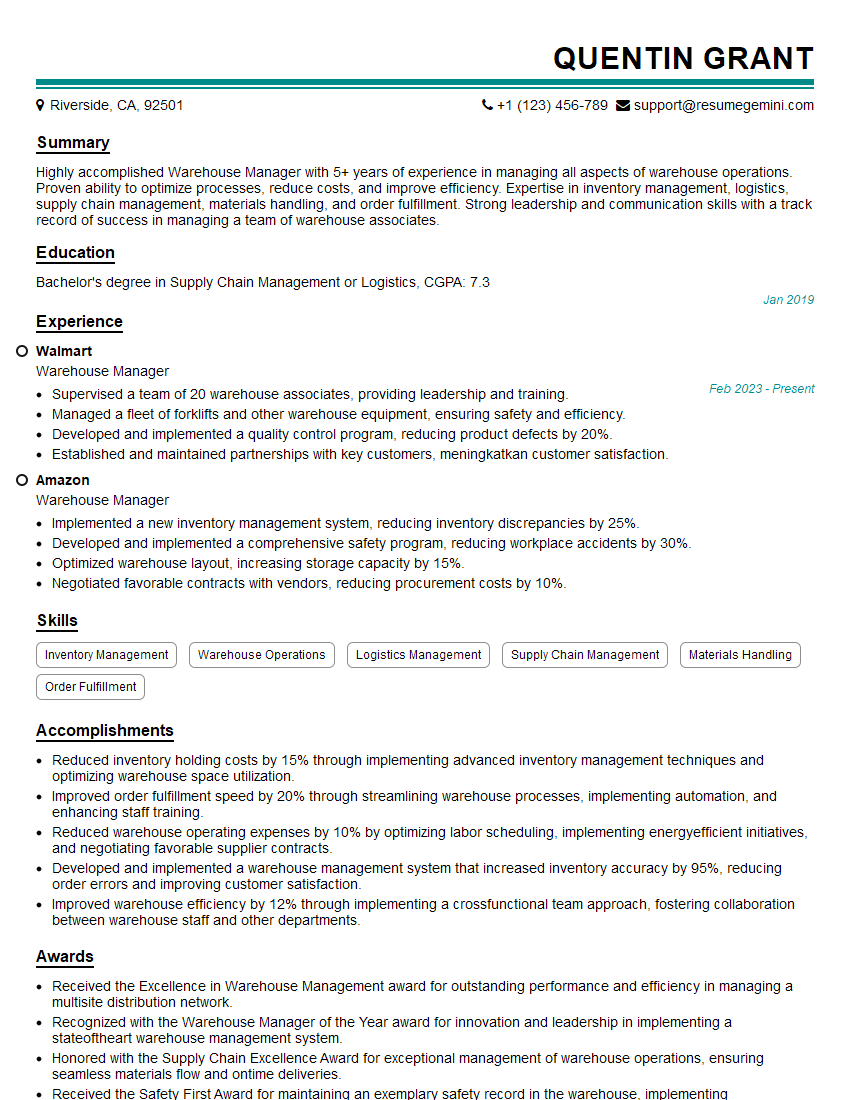
Warehouse Manager Resume Sample
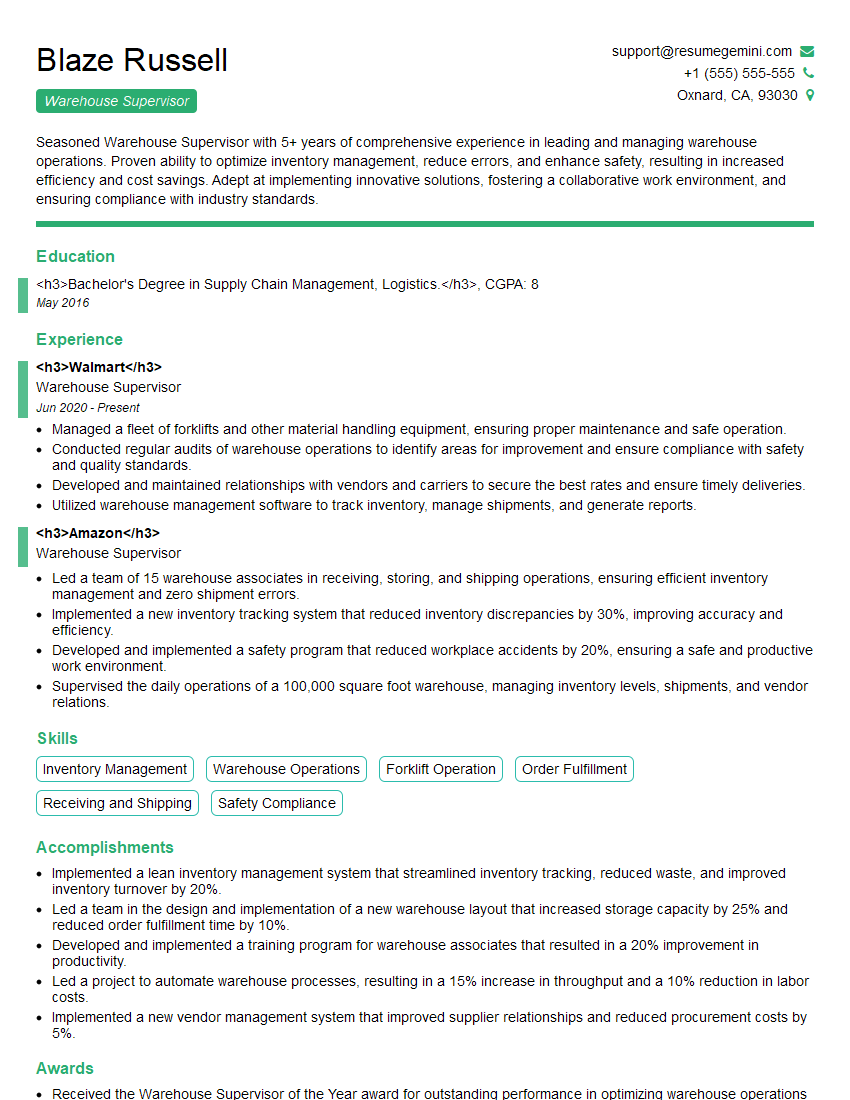
Warehouse Supervisor Resume Sample
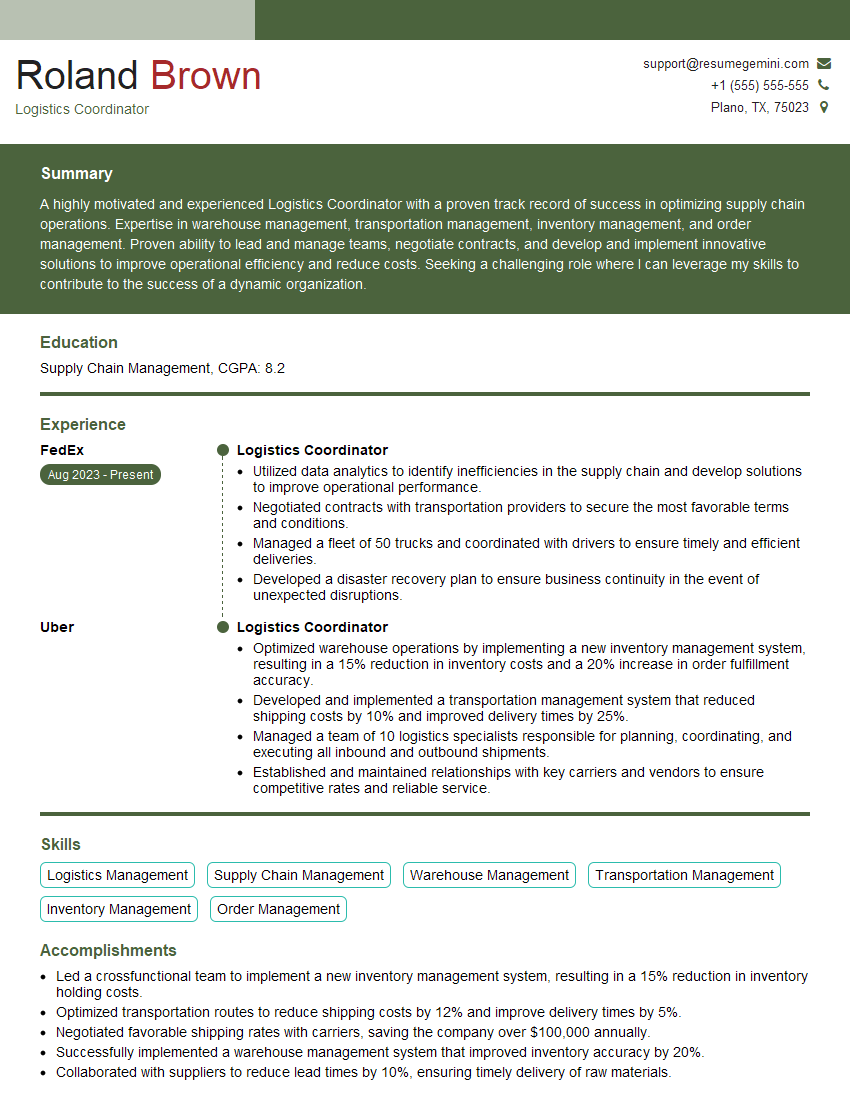
Logistics Coordinator Resume Sample
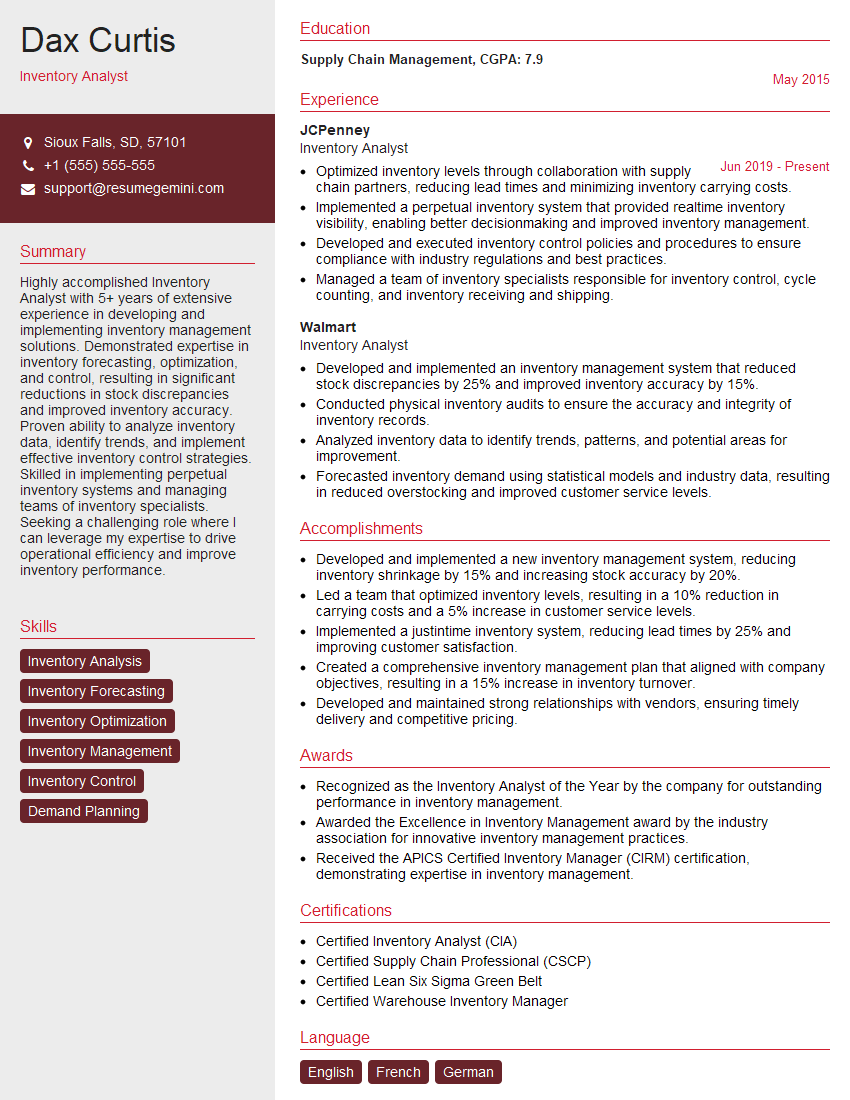
Inventory Analyst Resume Sample
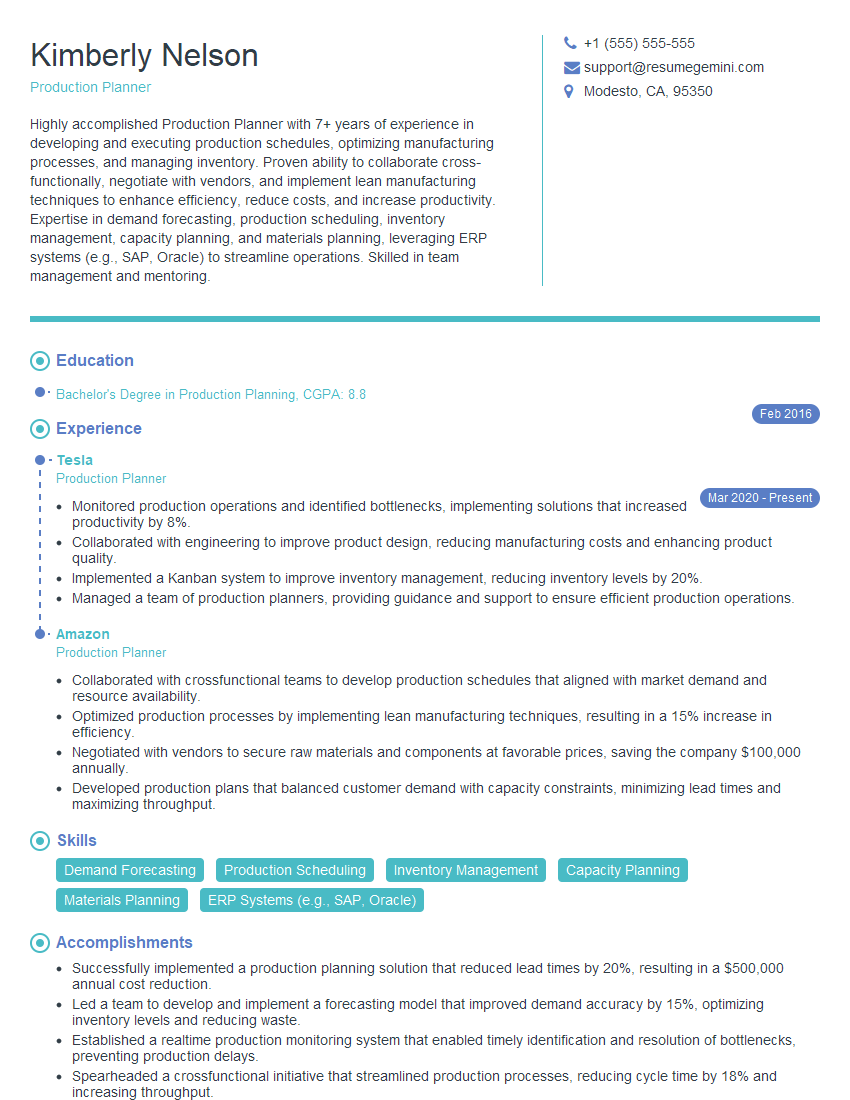
Production Planner Resume Sample
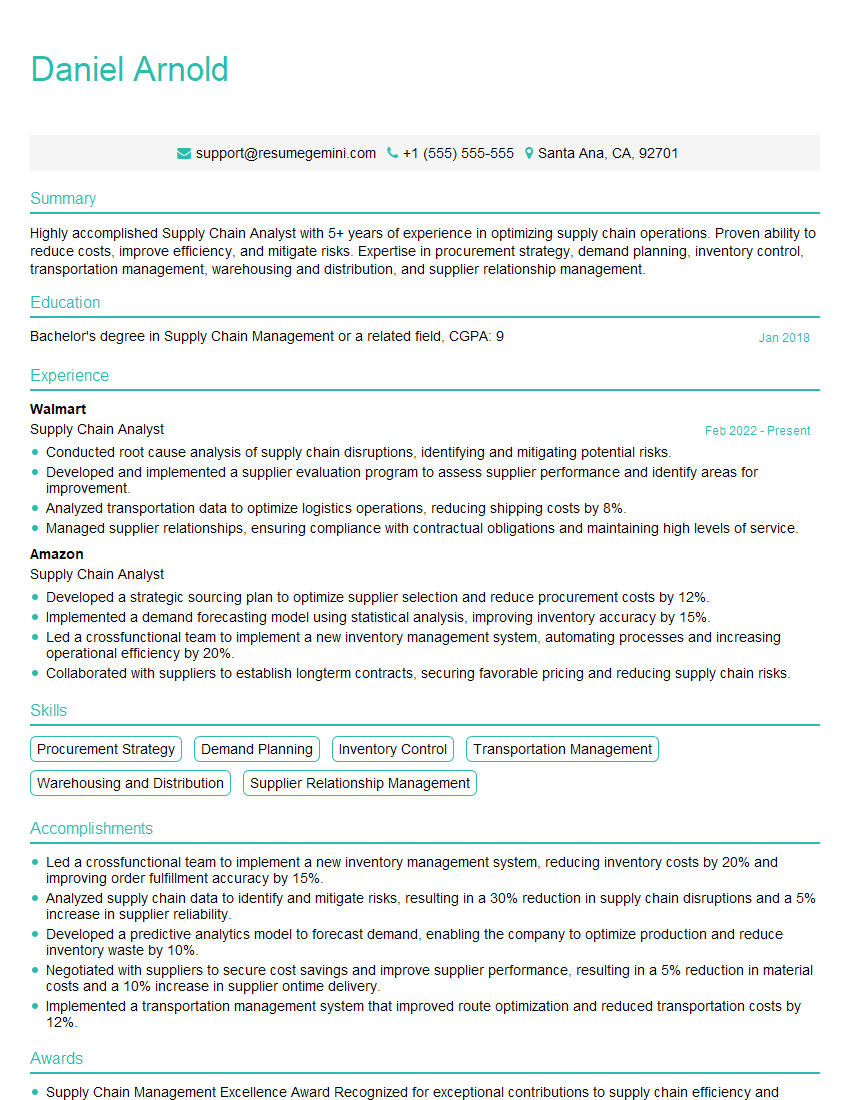
Supply Chain Analyst Resume Sample
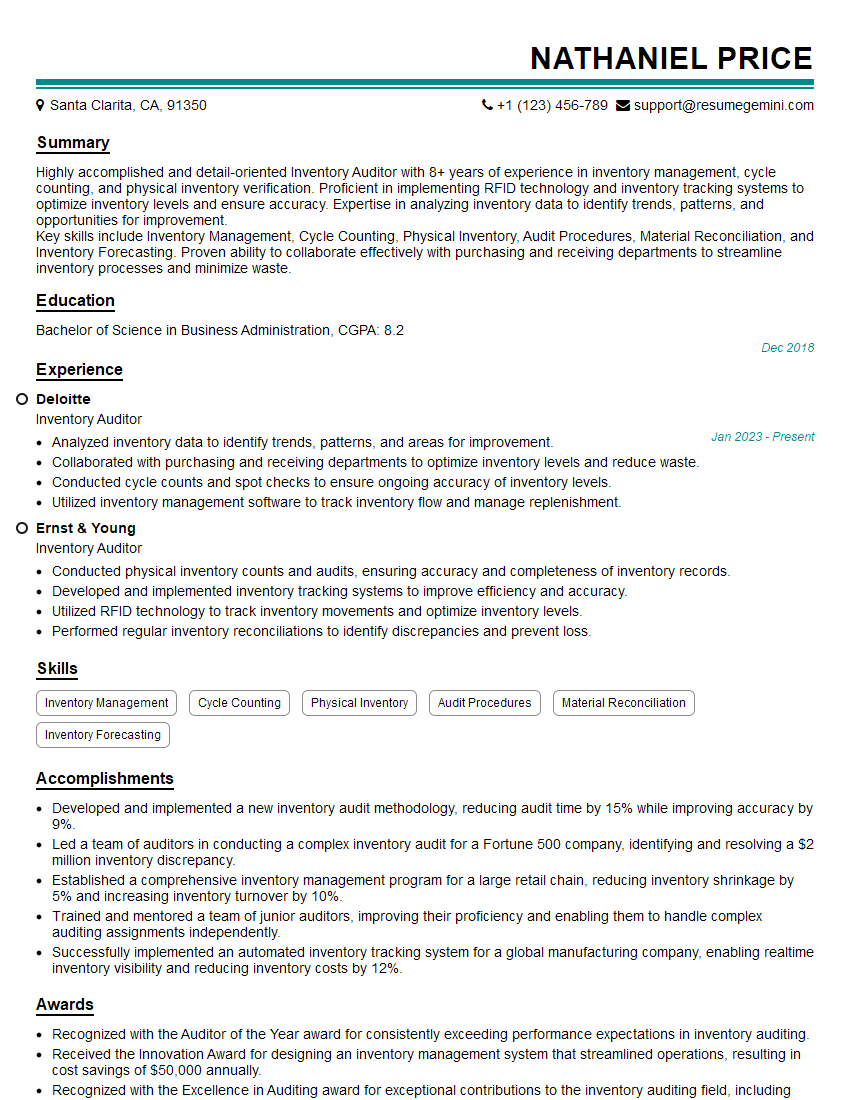
Inventory Auditor Resume Sample
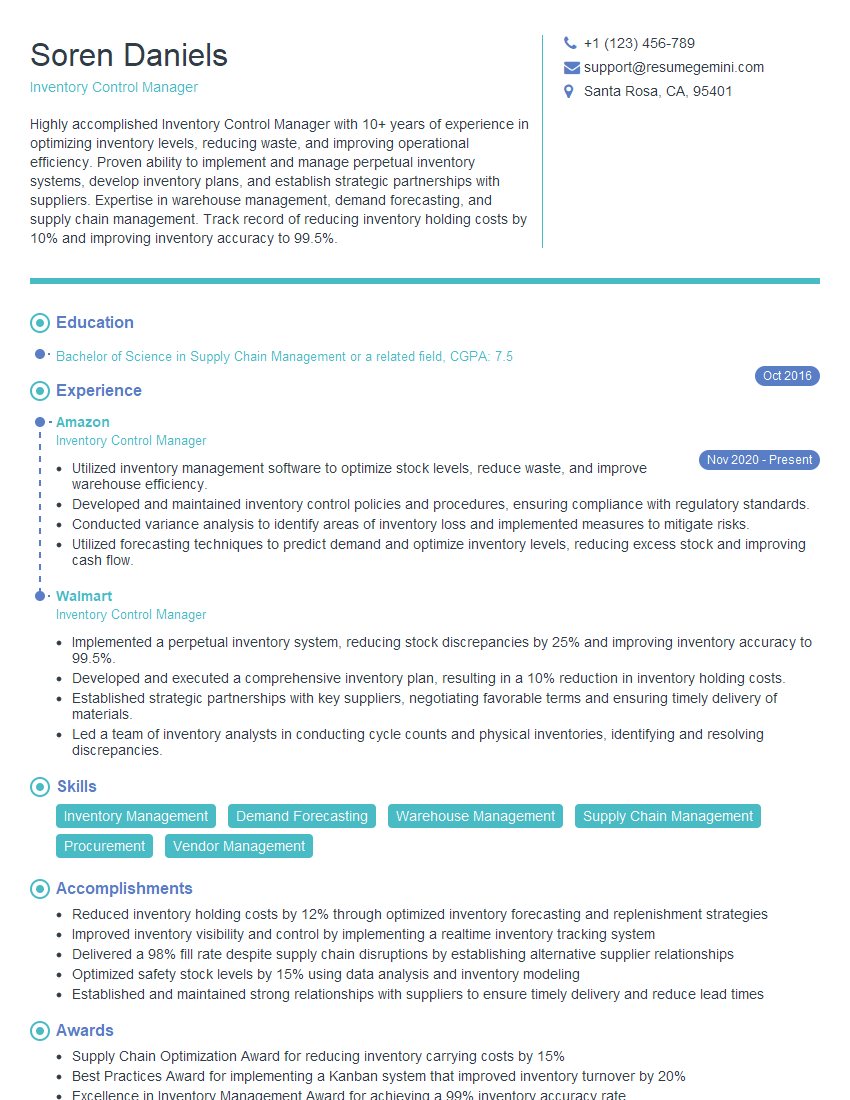
Inventory Control Manager Resume Sample
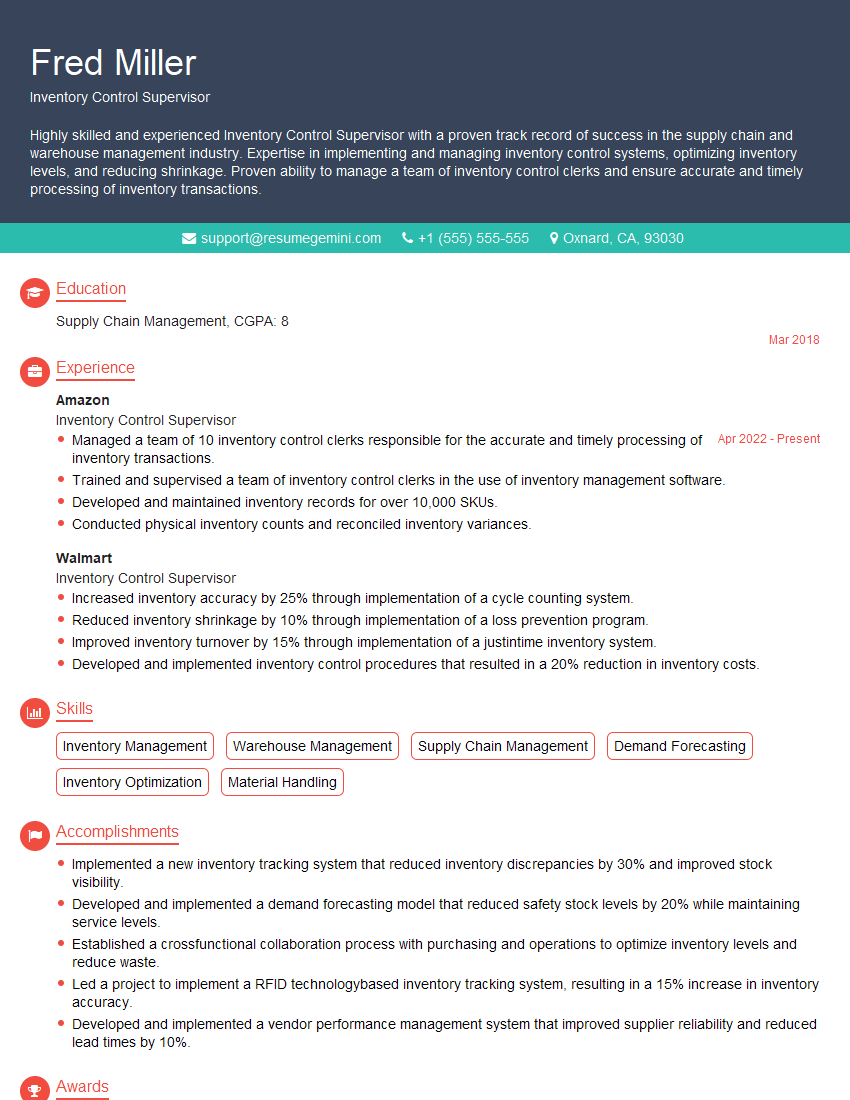
Inventory Control Supervisor Resume Sample
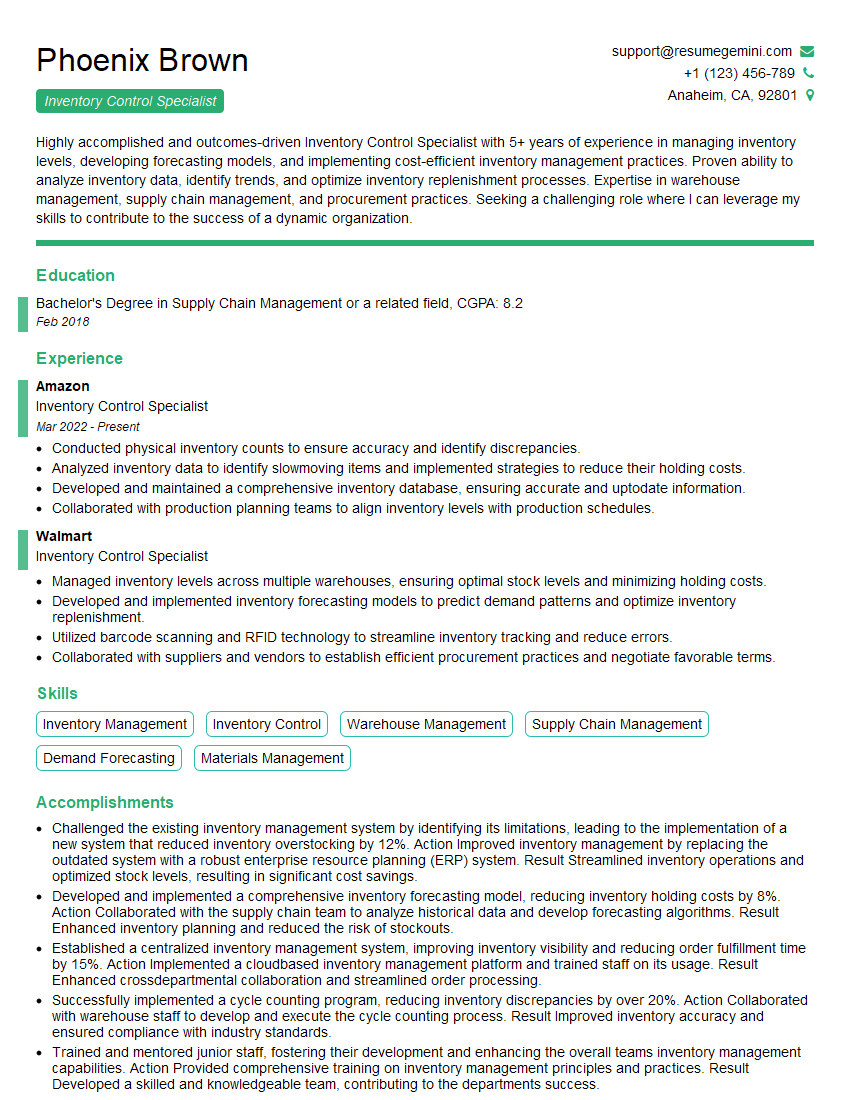
Inventory Control Specialist Resume Sample
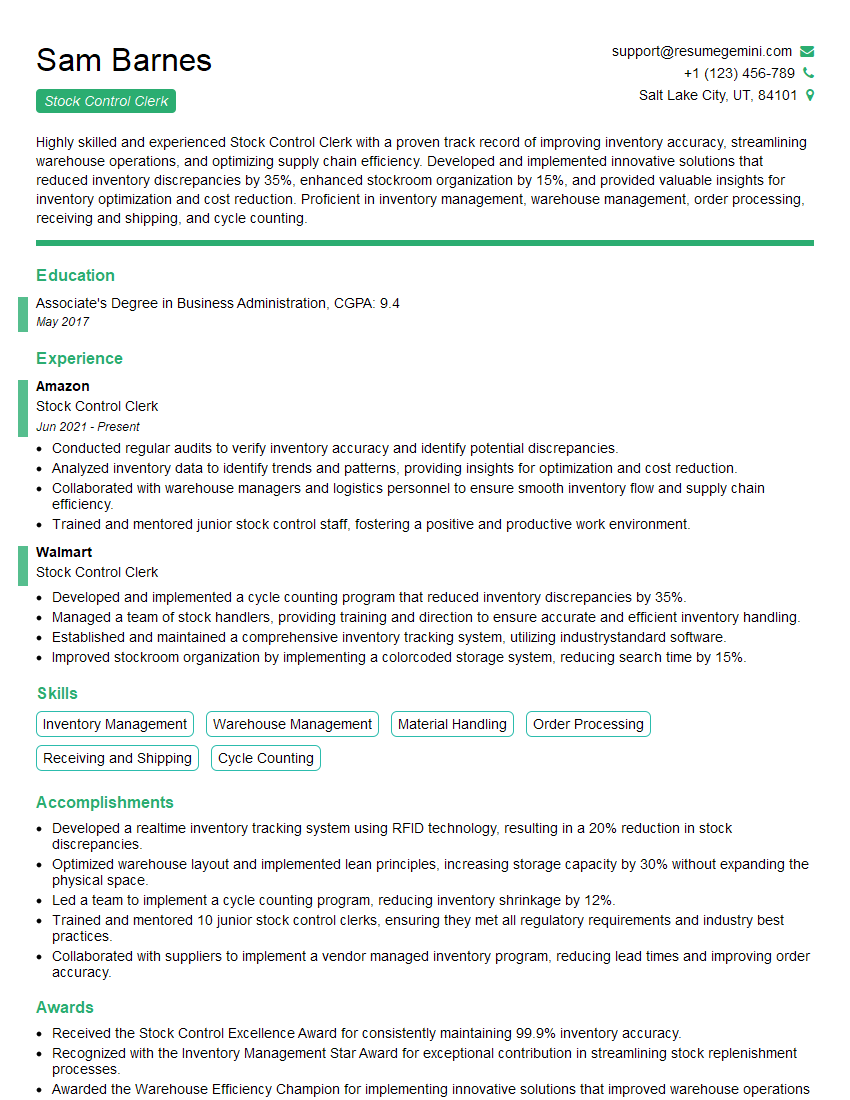
Stock Control Clerk Resume Sample
- Operations Manager
- Demand Planner
- Materials Manager
- Procurement Manager
- Supply Chain Manager
- Distribution Center Manager
- Logistics Manager
- Warehouse Manager
- Warehouse Supervisor
- Logistics Coordinator
- Inventory Analyst
- Production Planner
- Supply Chain Analyst
- Inventory Auditor
- Inventory Control Manager
- Inventory Control Supervisor
- Inventory Control Specialist
- Stock Control Clerk
Explore more articles
Users Rating of Our Blogs
Share Your Experience
We value your feedback! Please rate our content and share your thoughts (optional).
What Readers Say About Our Blog
Very informative content, great job.
good