Cracking a skill-specific interview, like one for Peanut Oil Extraction, requires understanding the nuances of the role. In this blog, we present the questions you’re most likely to encounter, along with insights into how to answer them effectively. Let’s ensure you’re ready to make a strong impression.
Questions Asked in Peanut Oil Extraction Interview
Q 1. Describe the different methods of peanut oil extraction.
Peanut oil extraction involves separating the oil from the peanut kernels. There are primarily two methods: mechanical pressing and solvent extraction.
- Mechanical Pressing: This traditional method uses pressure to squeeze the oil out of the crushed peanuts. It can be further categorized into cold pressing (low temperatures, preserving flavor and nutrients) and expeller pressing (higher temperatures, higher yield but potentially affecting flavor and nutrient profile).
- Solvent Extraction: This method uses a solvent (typically hexane) to dissolve the oil from the pre-treated peanut flakes. The solvent is then evaporated, leaving behind the oil. This method generally achieves higher oil yields compared to mechanical pressing.
A third, less common method, involves a combination of both pressing and solvent extraction, aiming to maximize yield while retaining some quality attributes.
Q 2. What are the advantages and disadvantages of solvent extraction versus mechanical pressing for peanut oil?
The choice between solvent extraction and mechanical pressing depends on several factors, primarily yield and quality.
- Solvent Extraction:
- Advantages: Higher oil yield, efficient extraction, cost-effective for large-scale production.
- Disadvantages: Potential for solvent residue in the oil (requiring rigorous purification), impact on the flavor and aroma profile, potential environmental concerns related to solvent use and disposal.
- Mechanical Pressing:
- Advantages: Produces higher quality oil with better flavor and aroma, retains more nutrients, considered more natural and better for consumers concerned about additives.
- Disadvantages: Lower oil yield, higher production cost, less efficient for large-scale operations.
Imagine comparing a freshly squeezed orange juice (mechanical pressing) to a commercially produced juice from concentrate (solvent extraction). The freshly squeezed juice has a superior taste and is richer in nutrients but yields less juice. The commercial juice has a higher yield but may have altered taste and nutrient profile.
Q 3. Explain the process of refining peanut oil.
Refining peanut oil aims to improve its clarity, stability, and shelf life. This multi-step process typically includes:
- Degumming: Removing gums and phospholipids which can cause cloudiness and instability.
- Neutralization: Removing free fatty acids that contribute to rancidity and affect flavor. This is often done using alkalis.
- Bleaching: Removing pigments and other impurities that affect color and clarity, using adsorbents like activated clay.
- Deodorization: Removing volatile compounds that cause undesirable odors, using steam distillation under vacuum.
- Winterization: Removing high melting point triglycerides that could crystallize at low temperatures, leading to cloudiness. This usually involves chilling and filtering the oil.
Each step is crucial in transforming the crude oil into a clear, stable, and palatable product. The degree of refinement can vary depending on the desired quality and application of the final oil.
Q 4. What are the key quality parameters for peanut oil?
Key quality parameters for peanut oil include:
- Free Fatty Acid (FFA) content: Indicates the degree of rancidity. Lower FFA content is desirable.
- Peroxide Value (PV): Measures the level of oxidation. Lower PV indicates higher quality and better stability.
- Color and Clarity: A clear, light-colored oil generally indicates better quality.
- Aroma and Flavor: Characteristic peanut aroma and flavor are desirable; off-flavors indicate defects.
- Moisture and Impurities: Should be minimal.
- Aflatoxin content: A critical safety parameter. Aflatoxins are carcinogenic mycotoxins produced by certain fungi that can contaminate peanuts.
These parameters are routinely assessed using standardized laboratory methods to ensure the oil meets quality and safety standards.
Q 5. How do you ensure the safety and hygiene of peanut oil production?
Ensuring safety and hygiene in peanut oil production involves implementing Good Manufacturing Practices (GMP) throughout the entire process, from raw material handling to packaging. This includes:
- Cleanliness and Sanitation: Maintaining a clean and sanitized processing environment to prevent microbial contamination.
- Pest Control: Implementing effective pest control measures to prevent insect infestation and contamination.
- Proper Storage and Handling: Storing raw materials and finished products under appropriate conditions to maintain quality and prevent spoilage.
- Personnel Hygiene: Ensuring that all personnel involved in production adhere to strict hygiene standards.
- Regular Monitoring and Testing: Implementing regular quality control checks and testing throughout the process to ensure the safety and quality of the final product.
- Traceability: Maintaining detailed records of the entire process to ensure traceability in case of any issues.
Adherence to these practices is essential for producing safe and high-quality peanut oil and complying with food safety regulations.
Q 6. What are the common quality defects in peanut oil and their causes?
Common quality defects in peanut oil and their causes:
- Rancidity: Caused by oxidation of fatty acids, leading to unpleasant odor and flavor. Factors influencing rancidity include exposure to air, light, and heat.
- Cloudiness: Caused by the presence of gums, phospholipids, or waxes. Improper degumming or winterization can lead to cloudiness.
- Off-flavors: Caused by various factors, including improper storage, contamination, or inadequate refining. It could also be due to the peanuts themselves being of poor quality or improperly stored.
- High FFA content: Indicates improper handling of the peanuts or incomplete neutralization during refining.
- Aflatoxin contamination: Caused by fungal infection of peanuts before or during storage. This is a significant safety concern.
Proper storage, careful handling of peanuts, and rigorous quality control during processing are crucial in preventing these defects.
Q 7. Describe the role of pre-treatment in peanut oil extraction.
Pre-treatment plays a vital role in optimizing peanut oil extraction, regardless of the method used. It prepares the peanuts for efficient oil extraction and improves the quality of the final product. Key pre-treatment steps include:
- Cleaning: Removing foreign materials like soil, debris, and other contaminants.
- Shelling: Separating the kernels from the shells.
- Blanching: Removing the peanut skins, improving oil yield and color.
- Drying: Reducing moisture content to optimal levels for efficient extraction and preventing microbial growth.
- Roasting (optional): Can improve the flavor of the oil in some cases, but might negatively impact the yield or require additional refining steps.
- Crushing/Flaking: Breaking down the kernels into smaller pieces or flakes to increase surface area for oil extraction, especially for solvent extraction.
Each step is meticulously designed to improve the efficiency and effectiveness of the subsequent oil extraction process, contributing to both higher yields and improved oil quality.
Q 8. Explain the principle of solvent extraction in detail.
Solvent extraction is a crucial process in peanut oil extraction, leveraging the principle of differential solubility. It involves using a solvent—a liquid that dissolves the oil—to separate the oil from the peanut solids. The process relies on the fact that peanut oil is far more soluble in the chosen solvent than in the peanut meal (the remaining solid material). The solvent is carefully chosen to selectively dissolve the oil while leaving behind most of the other components of the peanut. Imagine it like brewing tea: the hot water (solvent) dissolves the flavor compounds from the tea leaves, leaving the leaves (peanut meal) behind.
The process typically involves immersing the crushed peanuts in the solvent. The solvent permeates the peanut material, dissolving the oil. This solution is then separated from the solid residue, and the oil is subsequently recovered from the solvent.
Q 9. What are the different types of solvents used in peanut oil extraction?
Several solvents are used in peanut oil extraction, each with its own advantages and disadvantages. The most common include:
- Hexane: This is the most widely used solvent due to its high efficiency, low cost, and relatively low boiling point, making recovery easier. However, it’s a flammable and potentially toxic hydrocarbon, raising safety and environmental concerns.
- Isopropyl alcohol (IPA): This is a more environmentally friendly option than hexane, with lower toxicity. However, it’s generally less efficient and more expensive.
- Supercritical carbon dioxide (scCO2): This is a ‘green’ solvent that operates at supercritical conditions (above its critical temperature and pressure). It offers excellent selectivity, leaves minimal residue, and is environmentally benign. However, the high pressure equipment required makes it more expensive.
- Other solvents (less common): Other solvents like ethanol and ethyl acetate might be used, but they are often less efficient or more expensive compared to hexane.
The choice of solvent is a crucial decision based on factors such as cost, efficiency, safety, environmental impact, and the desired quality of the final oil.
Q 10. How is the solvent recovered after extraction?
Solvent recovery is critical for both economic and environmental reasons. After extraction, the solvent containing the extracted oil needs to be separated from the oil. This is typically achieved through a process called evaporation. The solvent-oil mixture is heated, causing the solvent to evaporate. The vaporized solvent is then condensed and collected for reuse, significantly reducing costs and environmental waste.
Different techniques are used to enhance solvent recovery efficiency. These include:
- Multiple-effect evaporators: These systems utilize the heat from the condensing solvent vapor to preheat the incoming solution, improving energy efficiency.
- Thin-film evaporators: These evaporators create a thin film of the solution, increasing the surface area for efficient evaporation.
- Rotary evaporators (for laboratory settings): Smaller-scale rotary evaporators are commonly used in research and quality control to recover solvent in smaller batches.
Proper solvent recovery is essential to minimize solvent losses, reduce environmental impact, and maintain the economic viability of the extraction process.
Q 11. Discuss the importance of proper temperature and pressure control during extraction.
Precise temperature and pressure control are paramount during solvent extraction to optimize efficiency and ensure product quality. Too high a temperature can degrade the oil, causing off-flavors and reducing its nutritional value. Conversely, too low a temperature can hinder solvent diffusion and reduce extraction efficiency.
Temperature affects the solubility of oil in the solvent, the viscosity of the oil, and the rate of solvent evaporation. Similarly, pressure plays a crucial role, especially when using supercritical solvents like CO2, where pressure directly influences the solvent’s density and its ability to extract oil.
Careful monitoring and control of temperature and pressure, often through automated systems with feedback loops, are crucial for maintaining optimal extraction conditions and consistent product quality.
Q 12. What are the environmental concerns associated with peanut oil extraction?
Environmental concerns associated with peanut oil extraction primarily revolve around solvent use and waste management. Hexane, a commonly used solvent, is a volatile organic compound (VOC) that can contribute to air pollution if not properly managed. Solvent spills can contaminate soil and water sources. Moreover, the disposal of spent peanut meal (the solid residue after extraction) requires careful consideration as it can be a source of environmental pollution.
Mitigation strategies include:
- Improved solvent recovery systems: Minimizing solvent loss through efficient recovery systems dramatically reduces environmental impact.
- Use of greener solvents: Transitioning to more environmentally friendly solvents like supercritical CO2 or isopropyl alcohol significantly reduces VOC emissions and toxicity.
- Responsible waste management: Proper disposal or recycling of spent peanut meal is critical to prevent environmental pollution.
Sustainable practices, including closed-loop solvent systems and efficient waste management, are vital to minimize the environmental footprint of peanut oil extraction.
Q 13. How is the quality of extracted oil analyzed?
The quality of extracted peanut oil is assessed through a series of analyses that evaluate various parameters such as:
- Free fatty acid (FFA) content: High FFA content indicates oil degradation and can affect flavor and shelf life.
- Peroxide value: This indicates the level of oxidation, a key factor in oil rancidity.
- Moisture and volatile matter content: These parameters affect oil stability and quality.
- Color and clarity: These are crucial for assessing the oil’s visual appeal.
- Fatty acid profile: This identifies the proportions of various fatty acids, affecting nutritional value.
Various analytical techniques are employed, including titrations, spectrophotometry, gas chromatography, and other standard methods. These analyses ensure the oil meets quality standards and is fit for consumption.
Q 14. What are the common types of equipment used in peanut oil extraction?
Peanut oil extraction utilizes various types of equipment, depending on the scale of operation and the chosen extraction method. Key equipment includes:
- Pre-processing equipment: This includes cleaning, shelling, and crushing equipment to prepare the peanuts for extraction.
- Extraction units: These can range from simple batch extractors to sophisticated continuous extraction systems. Different types include screw presses, expellers, and solvent extraction plants using specialized columns and tanks.
- Solvent recovery equipment: As discussed earlier, this includes evaporators, condensers, and other equipment to recover the solvent after extraction.
- Refining equipment: For further processing to remove impurities and improve quality, equipment like degumming, bleaching, and deodorizing units may be used.
- Storage and packaging equipment: This is vital for storing and packaging the finished oil.
The specific equipment choice depends on factors like the scale of operation, desired oil quality, and economic considerations.
Q 15. Describe the maintenance procedures for extraction equipment.
Maintaining peanut oil extraction equipment is crucial for optimal performance, product quality, and safety. A robust maintenance program involves regular inspections, cleaning, and preventative measures.
- Daily Checks: Inspect all moving parts for wear and tear, check for leaks in the oil lines and processing vessels, and ensure proper temperature and pressure readings. This is like performing a quick health check on your equipment each day.
- Weekly Cleaning: Thoroughly clean and sanitize all surfaces that come into contact with peanuts or oil. This prevents bacterial growth and ensures the oil maintains its freshness. We often use specialized cleaning agents approved for food processing.
- Monthly Maintenance: This includes more in-depth checks, such as lubricating moving parts, inspecting belts and chains for wear, and checking the functionality of safety mechanisms. It’s like performing routine servicing on your car.
- Annual Overhaul: A comprehensive inspection by qualified technicians is necessary, including a complete disassembly, cleaning, and repair or replacement of worn-out components. Think of this as a major service to keep the equipment running smoothly for years.
Proper documentation of all maintenance activities is essential for traceability and regulatory compliance. We use a computerized maintenance management system (CMMS) to schedule and track all maintenance tasks.
Career Expert Tips:
- Ace those interviews! Prepare effectively by reviewing the Top 50 Most Common Interview Questions on ResumeGemini.
- Navigate your job search with confidence! Explore a wide range of Career Tips on ResumeGemini. Learn about common challenges and recommendations to overcome them.
- Craft the perfect resume! Master the Art of Resume Writing with ResumeGemini’s guide. Showcase your unique qualifications and achievements effectively.
- Don’t miss out on holiday savings! Build your dream resume with ResumeGemini’s ATS optimized templates.
Q 16. How do you troubleshoot common problems in the extraction process?
Troubleshooting in peanut oil extraction involves systematic problem-solving. The approach often follows a ‘5 Whys’ methodology to identify root causes.
- Low Oil Yield: This could indicate issues with the expeller’s efficiency (worn parts, improper screw adjustment), inadequate pre-pressing, or poor peanut quality (moisture content, age).
- High Free Fatty Acid (FFA) Content: This often points to problems with storage and handling of peanuts (improper storage leading to rancidity), excessive heat during extraction, or inadequate refining.
- Cloudy or Off-Colored Oil: Possible causes include incomplete degumming, insufficient filtration, or the presence of impurities in the peanuts. Microscopic examination of the oil can help identify the issue.
- Malfunctioning Equipment: This may involve electrical problems, mechanical breakdowns, or issues with temperature or pressure control. Regular preventative maintenance significantly reduces such occurrences.
We always investigate the problem thoroughly, using analytical tools such as FFA titrations and viscosity measurements to pinpoint the exact cause and implement targeted corrective actions. Keeping detailed logs of our troubleshooting procedures helps us to prevent similar issues in the future.
Q 17. Explain the role of filtration in peanut oil production.
Filtration is a critical step in peanut oil production, responsible for removing impurities and ensuring the oil’s clarity, color, and stability. It’s like a purification process for the oil.
Several filtration methods are employed:
- Plate and Frame Filters: These are used for removing larger particles, such as peanut meal remnants.
- Cartridge Filters: These provide finer filtration, removing smaller impurities and improving the oil’s clarity.
- Centrifugal Filtration: This method uses centrifugal force to separate solids from the oil, improving efficiency and reducing processing time.
The choice of filtration method depends on the desired oil quality and production scale. Multiple stages of filtration may be employed to achieve the highest quality product. Post-filtration analysis ensures the oil meets our stringent quality standards.
Q 18. What are the different types of deodorization methods used for peanut oil?
Deodorization is a crucial step to remove volatile compounds responsible for undesirable odors and flavors in peanut oil, improving its shelf life and enhancing its sensory appeal. Think of it as a perfume for the oil, eliminating any unpleasant smells.
Two primary deodorization methods are used:
- Physical Deodorization (Steam Stripping): This method involves heating the oil under vacuum to remove volatile compounds using steam. It’s gentler on the oil and preserves more of its natural flavor profile.
- Chemical Deodorization: This involves using chemical treatments along with steam stripping to remove more volatile compounds and reduce unwanted flavors. This method typically achieves a higher degree of deodorization but could impact some of the oil’s natural characteristics.
The selection of the deodorization method depends on the desired quality of the final product and its intended application. We have experience with both methods and tailor our approach to the specific requirements.
Q 19. How do you manage waste generated during peanut oil extraction?
Waste management in peanut oil extraction is crucial for environmental responsibility and regulatory compliance. We follow a strict waste management plan that encompasses various aspects of the process.
- Peanut Meal: This by-product is a valuable source of protein and fiber and can be used as animal feed, fertilizer, or in other food applications. We have partnerships with local farmers and feed mills for utilizing this by-product.
- Spent Earth (from Bleaching): This is typically disposed of responsibly, often through incineration or specialized waste disposal facilities that comply with all environmental regulations.
- Wastewater: We treat wastewater before discharge to ensure it meets the stringent effluent standards set by local and national authorities. This involves processes such as coagulation, flocculation, and filtration.
We are committed to minimizing waste generation through process optimization and exploring innovative ways to utilize by-products, thereby contributing to a more sustainable operation. Regular audits ensure we maintain our commitment to environmental responsibility.
Q 20. What are the regulatory requirements for peanut oil production?
Peanut oil production is subject to stringent regulatory requirements aimed at ensuring food safety and quality. These vary depending on the location, but generally include:
- Food Safety Regulations: These cover aspects like Good Manufacturing Practices (GMP), Hazard Analysis and Critical Control Points (HACCP), and adherence to food safety standards like ISO 22000.
- Labeling Requirements: Regulations mandate accurate labeling, specifying ingredients, nutritional information, and any allergen warnings.
- Environmental Regulations: These govern waste disposal, wastewater treatment, and the overall environmental impact of the production process.
- Import/Export Regulations: If the oil is traded internationally, adherence to import and export regulations of different countries becomes necessary.
We maintain rigorous documentation and undergo regular audits to demonstrate compliance with all applicable regulations. Our commitment to these standards ensures product safety and consumer trust.
Q 21. Describe your experience with different types of expellers.
My experience with expellers encompasses various types, each with its own strengths and limitations. Expellers are the heart of mechanical oil extraction.
- Screw-Type Expellers: These are the most common type, using a rotating screw to press the oil from the peanuts. I’ve worked with both single-stage and multiple-stage screw expellers. Multiple-stage systems offer higher oil yields but are more complex and expensive to maintain.
- Chamber-Type Expellers: These use hydraulic pressure to extract oil, often providing a higher oil yield compared to screw-type expellers, but typically require higher initial investment.
The choice of expeller depends on factors like production scale, desired oil yield, budget, and the specific characteristics of the peanuts being processed. My expertise lies in selecting the most appropriate expeller type and optimizing its operating parameters for maximum efficiency and oil quality.
Q 22. What is the impact of peanut variety on oil yield and quality?
The peanut variety significantly impacts both the oil yield and its quality. Different varieties possess varying levels of oil content, ranging from approximately 45% to 55% by weight. For example, runner peanuts are known for their higher oil content and are frequently preferred for oil extraction. The oil’s fatty acid profile also varies depending on the variety. Some varieties might produce oil richer in oleic acid (monounsaturated), leading to a longer shelf life and better oxidative stability, while others may have higher levels of linoleic acid (polyunsaturated). This affects the oil’s flavor, nutritional value, and susceptibility to rancidity. Careful selection of peanut varieties is crucial for optimizing both yield and the desired quality characteristics of the final product.
In my experience, I’ve worked with several varieties, and we found that conducting thorough pre-harvest assessments, including oil content analysis and fatty acid profiling of samples, allows us to predict yields accurately and choose the optimal variety for our desired product specifications.
Q 23. How do you optimize the extraction process for maximum yield and quality?
Optimizing the peanut oil extraction process for maximum yield and quality requires a multi-faceted approach. It starts with proper pre-treatment of the peanuts, including cleaning, shelling, and dehulling to remove impurities and maximize the surface area available for oil extraction.
- Pre-Pressing: A preliminary pressing step significantly improves the efficiency of subsequent solvent extraction by reducing the oil content of the solids.
- Solvent Selection and Extraction: The choice of solvent (typically hexane) is critical. Efficient solvent-to-solid ratios and optimized extraction time and temperature are vital for maximizing oil recovery without compromising oil quality. Continuous solvent extraction systems are more efficient than batch systems.
- Solvent Removal: Effective solvent removal is crucial. This is often achieved through evaporation under controlled temperature and vacuum conditions. Residual solvent must be below legal limits.
- Refining: Post-extraction refining steps, such as degumming, neutralization, bleaching, and deodorization, further enhance the quality of the oil by removing impurities and improving its clarity, color, flavor, and stability.
Continuous monitoring and adjustments throughout the process, using techniques like process analytical technology (PAT), are essential for real-time optimization and quality control.
Imagine it like baking a cake – you need the right ingredients (peanut variety), the correct method (extraction techniques), and precise measurements (process parameters) to achieve the desired outcome (high-quality oil).
Q 24. Explain the concept of miscella in solvent extraction.
In solvent extraction of peanut oil, miscella is the solution of oil dissolved in the extraction solvent (typically hexane). It’s formed during the extraction process when the solvent permeates the peanut flakes, dissolving the oil. The miscella is then separated from the extracted solids (called meal) and undergoes further processing to remove the solvent and refine the oil. Think of it like brewing tea – the hot water (solvent) extracts the flavor compounds (oil) from the tea leaves (peanuts), forming a mixture (miscella) which then needs to be separated and processed further.
Q 25. What safety precautions are necessary during the operation of an extraction plant?
Safety is paramount in a peanut oil extraction plant. Several critical precautions must be implemented:
- Fire Prevention and Suppression: Hexane is highly flammable. The plant must have robust fire detection and suppression systems, including inert gas blanketing for storage tanks. Regular maintenance and employee training are essential.
- Personal Protective Equipment (PPE): Employees must wear appropriate PPE, including respirators, gloves, and safety glasses, to protect themselves from solvents, dust, and other hazards.
- Ventilation and Exhaust Systems: Adequate ventilation and exhaust systems are critical to prevent the buildup of flammable vapors and maintain a safe working environment.
- Emergency Procedures: Clear emergency procedures, including spill response plans, must be established and regularly practiced.
- Regular Inspections and Maintenance: Regular inspections and maintenance of equipment and safety systems are necessary to prevent accidents and ensure compliance with regulations.
In my experience, a proactive safety culture, involving regular training and drills, is the most effective way to minimize risks and create a safe working environment.
Q 26. Describe your experience with quality control procedures for peanut oil.
Quality control procedures for peanut oil are extensive and start from the raw material stage. They include:
- Incoming Raw Material Inspection: Checking peanut quality for moisture, aflatoxins, and other impurities.
- Process Monitoring: Continuous monitoring of parameters like temperature, pressure, and solvent levels throughout the extraction process.
- Oil Analysis: Regular testing of the extracted oil for parameters such as free fatty acids (FFA), peroxide value, color, and flavor.
- Solvent Residue Analysis: Ensuring that the final oil meets the regulatory limits for residual solvent.
- Microbial Analysis: Checking for microbial contamination.
- Sensory Evaluation: Evaluating the oil’s aroma, taste, and appearance.
These tests help ensure the oil meets the required standards for purity, safety, and quality, and to comply with all relevant food safety regulations. Statistical Process Control (SPC) charts are regularly utilized to monitor and track key parameters and identify trends or anomalies, which allows for timely interventions and adjustments.
Q 27. How do you ensure the traceability of peanut oil throughout the production process?
Traceability is crucial for ensuring product safety and meeting regulatory requirements. We implement a robust traceability system using batch numbers assigned at each stage of the process. Detailed records are maintained, including raw material sourcing, processing steps, and quality control test results. This information is readily available throughout the entire production process, from raw peanuts to the finished product. This allows us to track the origin of the peanuts, monitor the entire production journey, and facilitate swift response in case of any quality issues or recalls. Barcodes and RFID technology can enhance the efficiency and accuracy of this tracking system.
Q 28. Explain your experience with process optimization techniques in peanut oil extraction.
Process optimization in peanut oil extraction is an ongoing effort. My experience includes utilizing several techniques:
- Data Analytics: Analyzing historical data from the extraction process to identify areas for improvement.
- Statistical Process Control (SPC): Monitoring key process parameters and identifying deviations from established norms.
- Design of Experiments (DOE): Conducting planned experiments to optimize process parameters and maximize oil yield and quality.
- Lean Manufacturing Principles: Identifying and eliminating waste throughout the production process.
- Automation: Utilizing automated systems to improve efficiency and consistency.
For instance, by carefully analyzing data on extraction time, temperature, and solvent ratio, we were able to optimize our process resulting in a 5% increase in oil yield and a significant reduction in energy consumption. This involved a combination of data analysis, adjustments to the extraction parameters, and the implementation of a more efficient solvent recovery system.
Key Topics to Learn for Your Peanut Oil Extraction Interview
- Peanut Pre-processing: Understanding cleaning, shelling, and size reduction techniques and their impact on oil yield and quality. Consider the advantages and disadvantages of different methods.
- Oil Extraction Methods: Mastering the principles of mechanical pressing (screw press, expeller press), solvent extraction (hexane extraction), and supercritical fluid extraction. Be prepared to discuss the efficiency, cost-effectiveness, and environmental impact of each.
- Refining Processes: Familiarize yourself with the steps involved in refining crude peanut oil, including degumming, neutralization, bleaching, and deodorization. Understand the chemistry behind each process and its effect on the final product’s quality.
- Quality Control and Assurance: Learn about the various tests and analytical methods used to assess the quality of peanut oil (e.g., free fatty acid content, peroxide value, color, flavor). Understanding quality standards and regulations is crucial.
- Process Optimization and Troubleshooting: Be prepared to discuss strategies for improving efficiency, yield, and product quality. Think about common problems encountered in peanut oil extraction and how you would approach solving them.
- Safety and Regulations: Demonstrate knowledge of relevant health and safety regulations and best practices in the peanut oil extraction industry. This includes handling solvents, machinery safety, and waste management.
- Economic Aspects: Understand the market dynamics of peanut oil, including pricing, supply and demand, and competition. Discuss the factors influencing profitability in the industry.
Next Steps
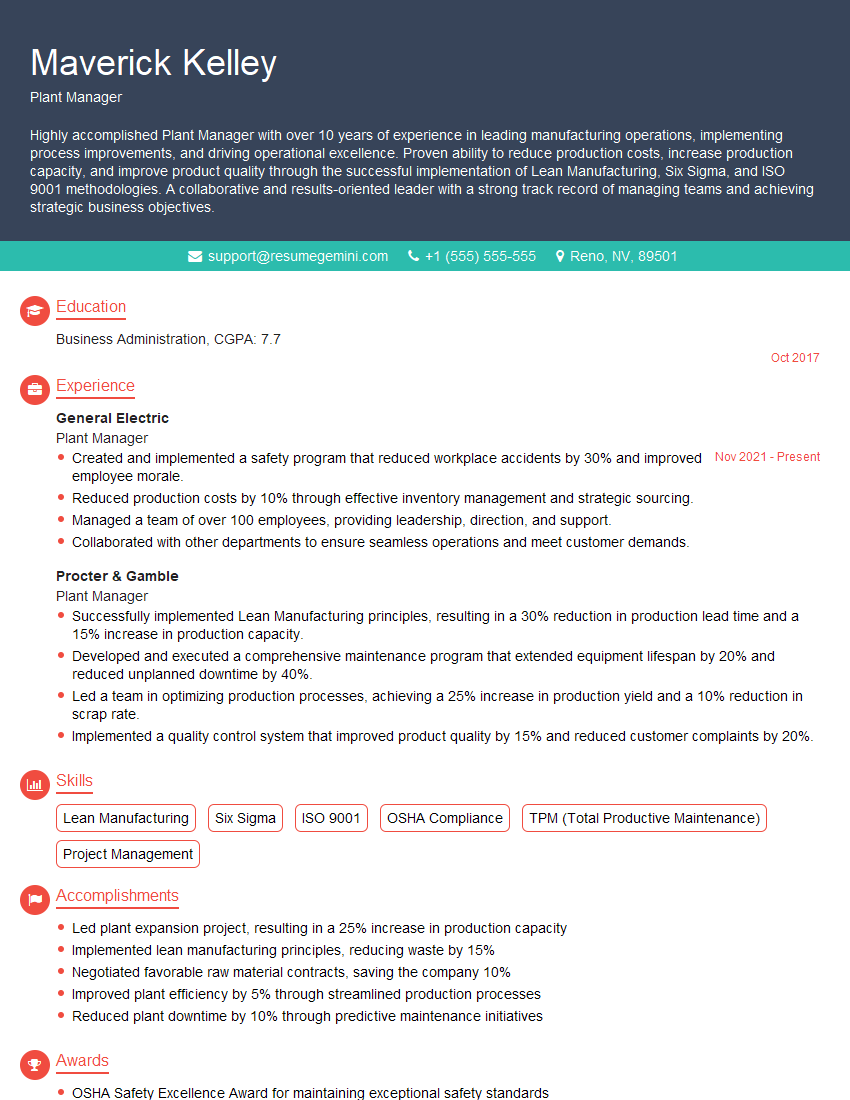
Mastering peanut oil extraction opens doors to exciting career opportunities in a growing food processing industry. To maximize your chances of success, a strong and ATS-friendly resume is essential. ResumeGemini can help you create a compelling resume that highlights your skills and experience effectively. ResumeGemini offers examples of resumes tailored to the peanut oil extraction industry, helping you showcase your qualifications to potential employers in the most impactful way. Take the next step in your career journey – build a winning resume with ResumeGemini today!




Explore more articles
Users Rating of Our Blogs
Share Your Experience
We value your feedback! Please rate our content and share your thoughts (optional).
What Readers Say About Our Blog
Very informative content, great job.
good