Unlock your full potential by mastering the most common RoHS Compliance interview questions. This blog offers a deep dive into the critical topics, ensuring you’re not only prepared to answer but to excel. With these insights, you’ll approach your interview with clarity and confidence.
Questions Asked in RoHS Compliance Interview
Q 1. What are the key restrictions imposed by RoHS?
RoHS, or the Restriction of Hazardous Substances directive, aims to reduce the use of hazardous materials in electrical and electronic equipment (EEE). Its key restrictions focus on six substances: lead (Pb), mercury (Hg), cadmium (Cd), hexavalent chromium (CrVI), polybrominated biphenyls (PBBs), and polybrominated diphenyl ethers (PBDEs). These substances are restricted because of their potential harm to human health and the environment. Think of it like this: RoHS is like a ‘cleaner’ version of electronics, minimizing the use of these potentially dangerous ingredients. The restrictions aren’t about completely banning these substances, but rather significantly limiting their concentration within EEE.
Q 2. Explain the different RoHS directives (e.g., RoHS 2).
While there’s been a progression of directives, RoHS 2 (officially Directive 2011/65/EU) is the current and most relevant version. It expanded upon the original RoHS directive, primarily by:
- Strengthening Enforcement: RoHS 2 implemented stricter enforcement mechanisms and clearer responsibilities for manufacturers and importers.
- Homogenous Materials: It clarified the definition of ‘homogenous materials,’ making it easier to determine compliance.
- Substances of Very High Concern (SVHCs): RoHS 2 introduced the concept of SVHCs, which are added to a Candidate List, and eventually can become restricted under RoHS. This allows for a more dynamic and adaptable approach to addressing emerging hazardous substances.
- CE Marking: Compliance with RoHS is often indicated with the CE marking, but it’s crucial to understand that the CE mark itself doesn’t automatically guarantee RoHS compliance; it shows compliance with various EU directives, including RoHS. Separate documentation and testing are still required.
Essentially, RoHS 2 provides a more comprehensive and robust framework for managing hazardous substances in EEE, making it more effective than its predecessor.
Q 3. Describe the process for RoHS compliance assessment.
RoHS compliance assessment is a multi-step process that typically involves:
- Material Identification: Identify all materials and components used in the product.
- Hazardous Substance Screening: Determine if any restricted substances are present in the identified materials. This often involves reviewing datasheets, conducting chemical analysis (e.g., XRF, ICP-OES), or obtaining Material Declarations (MDs) from suppliers.
- Concentration Measurement: If a restricted substance is identified, measure its concentration to ensure it’s below the permitted limits (usually 0.1% by weight for most restricted substances). The chosen analytical method must be compliant with relevant standards.
- Documentation: Maintain thorough documentation of the entire process, including material lists, test reports, and any granted exemptions.
- Compliance Declaration: Prepare a Declaration of Conformity (DoC) to confirm the product’s compliance with RoHS requirements.
This detailed approach is vital to demonstrate compliance to authorities and customers alike. Any deviation from these steps could lead to non-compliance, potentially resulting in penalties or product recalls.
Q 4. How do you identify hazardous substances in electronic components?
Identifying hazardous substances in electronic components requires a combination of approaches:
- Supplier Information: Obtain Material Declarations (MDs) from suppliers, which should list the materials and substances used in their components and specify if any restricted substances are present and at what concentration.
- Chemical Analysis: Employ analytical techniques like X-ray fluorescence (XRF) for screening and Inductively Coupled Plasma Optical Emission Spectrometry (ICP-OES) for precise concentration measurements. XRF is often used as a quick screening method, followed by ICP-OES for more accurate quantifications when necessary.
- Visual Inspection: A visual inspection might reveal obvious signs of prohibited substances, although this method is limited.
- Material Data Sheets (MSDS): Review the MSDS provided by suppliers; this document provides information on the chemical composition of the materials.
The choice of method depends on factors like the component’s material, suspected hazardous substances, and the required accuracy. Often, a combination of these techniques is used to ensure accurate and reliable results.
Q 5. What are the exemptions available under RoHS?
RoHS does allow for exemptions under specific circumstances. These exemptions are granted for certain applications where a suitable alternative to the restricted substance is not currently available. Exemptions are carefully reviewed and are time-limited, requiring regular reassessment. Examples might include specific lead-containing alloys in certain specialized applications where no suitable substitutes exist. These exemptions are listed in the Official Journal of the European Union, so it is important to consult this document for a constantly updated list. Obtaining an exemption usually requires a detailed justification supported by scientific evidence.
Q 6. How do you manage RoHS compliance throughout the product lifecycle?
Managing RoHS compliance across the entire product lifecycle requires a proactive and systematic approach. This includes:
- Design Phase: Select RoHS-compliant components and materials from the start. Early consideration minimizes costly changes later in the process.
- Manufacturing: Implement quality control measures during manufacturing to verify that the components used are compliant and the production process doesn’t introduce any prohibited substances.
- Supply Chain Management: Establish robust relationships with suppliers to ensure they provide accurate and reliable MDs and actively collaborate with them on maintaining compliance.
- End-of-Life Management: Plan for proper end-of-life disposal of the product to prevent environmental contamination. This includes compliance with WEEE (Waste Electrical and Electronic Equipment) directives.
- Continuous Monitoring: Regularly review the evolving RoHS regulations, the SVHC Candidate List, and assess if any changes might impact your product’s compliance status.
A well-defined compliance program ensures that your products remain RoHS compliant, reducing legal risks and safeguarding the environment.
Q 7. What is the role of Material Declaration (MD) in RoHS compliance?
The Material Declaration (MD) is a crucial document in RoHS compliance. It’s essentially a supplier’s declaration stating the materials and substances used in a component and whether those materials contain any restricted substances above the maximum permitted concentration. Think of it as the supplier’s assurance of compliance. It typically includes information about the part number, the composition of the material, and the concentration of any substances of concern. Manufacturers heavily rely on MDs to determine the overall compliance status of their products. Without accurate and reliable MDs from suppliers, manufacturers face significant challenges in achieving RoHS compliance.
Q 8. Explain the significance of Conflict Minerals regulations in relation to RoHS.
While RoHS (Restriction of Hazardous Substances) focuses on limiting hazardous materials in electrical and electronic equipment, Conflict Minerals regulations address the ethical sourcing of minerals like tantalum, tin, tungsten, and gold (3TG), often mined in conflict zones. They aren’t directly part of RoHS, but they’re critically important for responsible supply chain management. Think of it this way: RoHS ensures the *safety* of the product, while Conflict Minerals regulations ensure the *ethicality* of its creation.
Compliance with Conflict Minerals regulations often involves due diligence in tracing the origin of these minerals throughout the supply chain. Companies are required to investigate their suppliers and ensure that the 3TG used in their products aren’t fueling conflict or human rights abuses. Failure to comply can lead to reputational damage, legal action, and loss of business, even if the product itself is RoHS compliant.
For example, a company manufacturing electronics might be fully RoHS compliant, but if their supplier uses tantalum sourced from a conflict zone, they’re still at risk of violating Conflict Minerals regulations. This highlights the need for a holistic approach to responsible sourcing, combining RoHS and Conflict Minerals compliance.
Q 9. How do you ensure RoHS compliance in your supply chain?
Ensuring RoHS compliance in the supply chain requires a multi-pronged approach, starting with a strong commitment from leadership. It’s not just about ticking boxes; it’s about embedding responsible manufacturing into the company’s DNA.
- Supplier Selection and Management: We meticulously vet potential suppliers, requesting declarations of conformity (DoCs) and material composition reports. Regular audits of our key suppliers are conducted to verify their compliance and adherence to our standards.
- Material Traceability: We implement robust systems to track materials from raw materials to finished goods. This allows us to identify the source of any non-compliant components quickly and efficiently.
- Design for Compliance: Our engineering teams proactively design products with RoHS compliance in mind, choosing materials that meet the required standards. This minimizes the risk of non-compliance later in the process.
- Testing and Verification: We conduct rigorous testing at various stages of the manufacturing process, both internally and through accredited third-party labs, to validate compliance. This includes both incoming material inspection and final product testing.
- Documentation and Record Keeping: Comprehensive documentation, including DoCs, test reports, and internal audit findings, are meticulously maintained to demonstrate our ongoing compliance and facilitate any future audits.
Essentially, it’s a continuous process of proactive management, verification, and ongoing improvement.
Q 10. What are the potential penalties for non-compliance with RoHS?
The penalties for RoHS non-compliance vary depending on the jurisdiction and the severity of the violation. However, they can be significant and include:
- Fines: Substantial financial penalties can be imposed for each instance of non-compliance.
- Product Recalls: Non-compliant products may need to be recalled from the market, leading to significant financial losses and reputational damage.
- Import/Export Restrictions: Products that fail to meet RoHS standards may be prevented from entering certain markets.
- Legal Action: Consumers or regulatory bodies can initiate legal proceedings against companies found to be non-compliant.
- Market Withdrawal: In extreme cases, authorities may order the complete removal of a product from the market.
The cost of non-compliance can far outweigh the cost of implementing proactive measures to ensure compliance from the outset.
Q 11. Describe your experience with RoHS testing and analysis methods.
My experience encompasses a wide range of RoHS testing and analysis methods. I’ve been involved in projects using various techniques, depending on the specific substances and materials in question.
This includes:
- X-ray Fluorescence (XRF) Spectroscopy: A widely used technique for rapid screening of materials to determine the presence and concentration of restricted substances. It’s a non-destructive method, making it ideal for initial screening.
- Inductively Coupled Plasma Mass Spectrometry (ICP-MS): A highly sensitive technique used for accurate quantification of low concentrations of restricted substances, offering greater precision than XRF.
- Gas Chromatography-Mass Spectrometry (GC-MS): Used to identify and quantify volatile organic compounds (VOCs), such as polybrominated diphenyl ethers (PBDEs), which are restricted under RoHS.
- Atomic Absorption Spectroscopy (AAS): Another technique for measuring the concentration of metals, though generally less sensitive than ICP-MS.
I’m also proficient in interpreting the results from these tests and in using them to determine overall RoHS compliance.
Q 12. Explain the different types of RoHS testing and when each is appropriate.
The choice of RoHS testing method depends on several factors, including the type of material, the expected concentration of restricted substances, and the required level of accuracy.
- XRF: Ideal for rapid screening of a wide range of materials. Useful for initial checks and identifying potential issues before investing in more expensive and time-consuming analyses.
- ICP-MS: Provides highly accurate and precise quantification of trace elements, essential when dealing with low concentrations of restricted substances or when compliance requirements are stringent.
- GC-MS: Specifically designed for the analysis of volatile organic compounds, crucial for identifying specific restricted substances like PBDEs that are not easily detected by other methods.
- AAS: While less sensitive than ICP-MS, it remains a valuable technique for analyzing certain metals, especially in situations where ICP-MS is not readily available.
For example, XRF might be used for a quick initial check of a component, while ICP-MS could be employed for more in-depth analysis to confirm compliance if a potential issue is identified with XRF.
Q 13. How do you interpret and apply RoHS test reports?
Interpreting RoHS test reports requires careful attention to detail and a thorough understanding of the analytical methods used. I look for the following key aspects:
- Sample Identification: Verification that the sample tested is correctly identified and matches the component or material under investigation.
- Analytical Method Used: Understanding the limitations and capabilities of the method used, ensuring it’s appropriate for the material being tested.
- Results: Careful examination of the concentration levels of each restricted substance, comparing them to the regulatory limits.
- Detection Limits: Awareness of the detection limits of the analytical method, ensuring that substances below the detection limit are not falsely reported as absent.
- Accreditation: Confirmation that the laboratory performing the testing is accredited to the relevant standards (e.g., ISO/IEC 17025).
By critically assessing all these elements, I can confidently determine whether a test report indicates RoHS compliance. If a substance is reported as “not detected,” this needs to be considered within the context of the method’s detection limit. For example, if the detection limit is 100 ppm and a test reports 0 ppm, this only means that the concentration is below 100 ppm, but this doesn’t necessarily mean that it is completely absent.
Q 14. How do you handle discrepancies or conflicts in RoHS data from different sources?
Discrepancies in RoHS data from different sources are common and require a systematic approach to resolution. My strategy involves:
- Source Verification: Investigating the credibility and reliability of each source. This involves assessing the laboratory’s accreditation, the testing methods used, and the history of the data provider.
- Data Reconciliation: Attempting to identify the reasons for the discrepancies. Are the differences within the acceptable range of error for the testing methods? Were the samples taken differently?
- Retesting: If the discrepancies cannot be explained, we may consider retesting the material using a different laboratory or employing a more sensitive analytical method.
- Prioritization: If the discrepancies are minor and do not affect overall compliance, it might be acceptable to use the most conservative data. However, if the discrepancies are significant, further investigation is crucial.
- Documentation: Meticulous record-keeping of all data, including explanations for discrepancies and the actions taken to resolve them, is essential.
A collaborative approach, involving all relevant parties, including suppliers and testing labs, is key in resolving data conflicts and maintaining transparency throughout the process.
Q 15. What are the key challenges in maintaining RoHS compliance?
Maintaining RoHS compliance presents several significant challenges. One key hurdle is the ever-evolving nature of the regulations themselves. Amendments and updates are frequent, requiring constant vigilance and adaptation. Another challenge lies in the complexities of supply chains. Tracking the compliance status of every component and material used in a product, particularly those sourced from multiple global suppliers, can be incredibly demanding and requires robust traceability systems. Furthermore, accurately identifying and quantifying restricted substances within complex materials or in very small quantities can be technically difficult and expensive, requiring sophisticated analytical techniques. Finally, the cost of compliance, including material sourcing, testing, and documentation, can significantly impact profitability, forcing businesses to carefully balance cost and regulatory adherence.
- Example: A company might discover a previously compliant component now contains a newly restricted substance due to a change in the supplier’s manufacturing process.
- Example: A small manufacturing company might struggle with the cost of laboratory testing for RoHS compliance, especially for low-volume products.
Career Expert Tips:
- Ace those interviews! Prepare effectively by reviewing the Top 50 Most Common Interview Questions on ResumeGemini.
- Navigate your job search with confidence! Explore a wide range of Career Tips on ResumeGemini. Learn about common challenges and recommendations to overcome them.
- Craft the perfect resume! Master the Art of Resume Writing with ResumeGemini’s guide. Showcase your unique qualifications and achievements effectively.
- Don’t miss out on holiday savings! Build your dream resume with ResumeGemini’s ATS optimized templates.
Q 16. How do you stay updated with the latest changes and amendments to RoHS regulations?
Staying abreast of RoHS changes requires a multi-pronged approach. I actively subscribe to official publications from relevant regulatory bodies like the European Commission and national authorities. This includes newsletters, updates on their websites, and participation in industry webinars. I also leverage industry-specific publications, journals, and online resources that provide expert analysis and commentary on RoHS developments. Networking with colleagues and attending industry conferences is also vital for exchanging information and gaining insights from leading experts. Finally, working closely with our suppliers and engaging with them early in the design process facilitates early detection and proactive mitigation of potential compliance issues.
Q 17. Explain your experience with RoHS documentation and record-keeping.
My experience with RoHS documentation and record-keeping is extensive. I’ve implemented and managed comprehensive systems for tracking material declarations of conformity (DoCs) from suppliers, maintaining detailed records of all testing and analysis conducted to verify compliance, and producing comprehensive compliance documentation for internal audits and external regulatory inspections. This includes establishing a centralized database to store all relevant documents and ensuring version control to maintain traceability. We utilize a robust system for managing supplier communications and tracking the status of corrective actions whenever non-conformances are identified. A crucial aspect of my approach is the establishment of clear procedures and processes for documentation, ensuring that all records are accurate, complete, and easily retrievable.
Example: We developed a bespoke software system to manage our RoHS documentation, automatically generating reports and alerts for impending compliance deadlines. This has significantly improved our efficiency and reduced the risk of non-compliance.
Q 18. How would you handle a situation where a supplier fails to meet RoHS requirements?
If a supplier fails to meet RoHS requirements, a structured approach is necessary. First, I’d initiate immediate communication with the supplier, clearly outlining the non-compliance and requesting immediate corrective action, supported by evidence. We’d work collaboratively to identify the root cause of the non-compliance, explore alternative compliant components or materials, and establish a corrective action plan with clear deadlines. Depending on the severity and impact, we might consider alternative suppliers, but this decision would consider lead times and potential disruptions to our manufacturing schedule. In severe cases of persistent non-compliance or a lack of cooperation, we’d escalate the matter to senior management and potentially initiate legal proceedings if the impact is significant enough. Maintaining thorough documentation throughout this process is crucial for evidence purposes.
Q 19. What are the best practices for RoHS compliance in design and manufacturing?
Best practices for RoHS compliance during design and manufacturing involve integrating compliance considerations from the very beginning. This includes early engagement with suppliers to obtain material declarations of conformity (DoCs) and selecting materials with known RoHS compliance profiles. We utilize design-for-environment (DfE) principles to prioritize the use of inherently safer and more environmentally friendly materials. Regular internal audits and supplier assessments are crucial to ensure ongoing compliance. Implementing a robust traceability system throughout the supply chain enables efficient identification and tracking of materials and components. Finally, thorough testing and verification of the final product’s compliance are crucial before it is released to the market.
Q 20. How do you incorporate RoHS compliance into product design?
Incorporating RoHS compliance into product design requires a holistic approach. We begin by defining RoHS requirements specific to the target market and intended use of the product. Next, we consult with material experts and leverage material databases to identify suitable RoHS-compliant materials with the necessary mechanical, electrical, and thermal properties. The design process itself considers material selection as a critical parameter, factoring in the implications of each component and material on the final product’s compliance status. Detailed design specifications should clearly state the RoHS compliance requirements for each component. This allows our manufacturing team to build the product according to these specifications and maintain accurate records.
Q 21. How do you evaluate the environmental impact of RoHS-compliant materials?
Evaluating the environmental impact of RoHS-compliant materials goes beyond just the absence of restricted substances. We use Life Cycle Assessment (LCA) methodologies to analyze the environmental performance of the materials throughout their entire life cycle, from raw material extraction to end-of-life disposal. This includes analyzing energy consumption, greenhouse gas emissions, water usage, and the potential for pollution at each stage. We also consider the recyclability and potential for reuse of materials at the end of the product’s life. By integrating LCA data into our design decisions, we strive to choose materials that minimize the overall environmental footprint of our products, ensuring that we meet not only RoHS requirements but also broader sustainability goals.
Q 22. What is your experience with different RoHS certification bodies?
My experience encompasses working with several RoHS certification bodies, including internationally recognized organizations like TÜV Rheinland, Intertek, and UL. Each body has its own specific procedures and requirements, but they all fundamentally aim to verify compliance with the RoHS Directive. For instance, while TÜV might focus on a more rigorous audit process, UL may have a slightly streamlined approach for certain product categories. Understanding these nuances is crucial for efficient certification. I’ve found that proactively engaging with the chosen certification body early in the product development process ensures a smoother journey and avoids costly delays. This involves clarifying requirements, understanding their testing methodologies, and ensuring adequate documentation is prepared well in advance.
My experience also includes navigating the different accreditation schemes these bodies operate under, ensuring we select a certification that meets our specific needs and the requirements of our target markets. For example, if we’re targeting the European market, we’d prioritize certification bodies accredited by a notified body under the EU’s system.
Q 23. Describe your experience with implementing a RoHS management system.
Implementing a RoHS management system requires a systematic approach. It starts with identifying all restricted substances (lead, mercury, cadmium, hexavalent chromium, PBBs, PBDEs) potentially present in our products and their components. This necessitates close collaboration with our suppliers to obtain detailed Material Declarations (MDs) and Chemical Composition reports. We then establish a robust tracking system, often using specialized software, to manage these declarations throughout the product lifecycle. This system ensures traceability and helps us quickly identify any potential non-compliance issues. Further, we incorporate RoHS compliance checks into our design review process, considering material substitutions early on to avoid issues later. Regular internal audits verify the effectiveness of the system, and any identified gaps are addressed immediately. For instance, in one project, we discovered a component containing a higher-than-permitted level of lead. Our system allowed us to immediately trace the supplier, rectify the issue, and implement preventive measures to prevent recurrence.
Q 24. How would you develop a training program for employees on RoHS compliance?
A comprehensive RoHS training program needs to be tailored to different employee roles and levels of understanding. For engineers, the focus would be on material selection, design for compliance, and interpreting Material Declarations. For procurement personnel, training will cover supplier selection, contract negotiation (including RoHS clauses), and verification of compliance documentation. Production staff require training on handling procedures to minimize cross-contamination and on proper waste disposal practices. The training should be modular, incorporating presentations, workshops, hands-on exercises, and quizzes to enhance understanding and retention. Regular refresher courses are crucial to keep employees updated on evolving regulations and best practices. Real-world case studies of both successful compliance and non-compliance scenarios can make the training more engaging and impactful. Finally, a clear communication channel should be established to facilitate questions and address concerns.
Q 25. What are the key differences between RoHS and other similar environmental regulations?
While RoHS focuses specifically on hazardous substances in electrical and electronic equipment (EEE), other regulations address different aspects of environmental protection. For example, REACH (Registration, Evaluation, Authorisation and Restriction of Chemicals) covers a broader range of chemicals and applies to various product categories. WEEE (Waste Electrical and Electronic Equipment) focuses on the end-of-life management of EEE, emphasizing recycling and proper disposal. RoHS targets the *presence* of hazardous substances during *manufacturing* whereas WEEE focuses on the *management* of hazardous substances after the product’s *end-of-life*. Understanding the interplay between these regulations is essential. A product compliant with RoHS might still need to comply with REACH and WEEE directives, depending on its composition and intended use.
Q 26. How do you conduct a RoHS risk assessment for a new product?
Conducting a RoHS risk assessment for a new product involves a systematic approach. First, we create a detailed bill of materials (BOM), listing every component and its associated material composition. This data is obtained through communication with suppliers and thorough review of their provided Material Declarations (MDs). Then, we identify the potential presence of RoHS-restricted substances in each component. A critical analysis follows, considering the concentration levels of these substances and their potential migration into the environment. A risk matrix can be used to categorize components based on their risk level. High-risk components demand further investigation, possibly requiring material substitutions or alternative design approaches. Documentation of this entire process is crucial for demonstrating due diligence and facilitating future audits.
Q 27. Explain the importance of traceability in RoHS compliance.
Traceability is the cornerstone of RoHS compliance. It ensures that we can trace the origin and composition of every component used in our products. Without traceability, it’s impossible to confidently assert compliance. A robust system should document the entire supply chain, from raw material suppliers to component manufacturers to our final assembly. This often involves using unique identification numbers for each component, alongside detailed records of material declarations and test results. This system allows for prompt identification of non-compliant components, facilitating timely corrective actions and minimizing potential disruptions. In the event of a regulatory audit, readily available traceability records are essential for demonstrating compliance and avoiding penalties.
Q 28. How do you manage RoHS compliance for imported goods?
Managing RoHS compliance for imported goods requires diligent proactive measures. This begins with selecting reputable suppliers who understand and comply with RoHS requirements. We demand detailed Material Declarations (MDs) and test reports from our suppliers for every component imported. Independent third-party verification of the MDs may be needed, especially with new or less-familiar suppliers. Thorough inspection of incoming shipments is crucial, verifying that the supplied goods match the provided documentation. Any discrepancies require immediate investigation. Furthermore, we ensure that our import contracts clearly define RoHS compliance expectations and penalties for non-compliance. Maintaining a comprehensive record-keeping system for all imported goods and related documentation is crucial for audit preparedness.
Key Topics to Learn for RoHS Compliance Interview
- Directive Overview: Understand the core principles of the RoHS Directive, its history, and its ongoing evolution. Consider the differences between RoHS 2 and previous versions.
- Restricted Substances: Master the identification and limitations of the ten restricted substances. Be prepared to discuss their potential environmental and health impacts.
- Exemptions: Learn about the process of applying for and understanding RoHS exemptions. Be able to discuss the criteria for exemption and their limitations.
- Material Declaration (MD): Understand the importance of accurate and complete Material Declarations. Discuss the role of the MD in supply chain management and compliance.
- Compliance Testing & Analysis: Familiarize yourself with various testing methods used to determine RoHS compliance. Be able to discuss different analytical techniques and their limitations.
- Supply Chain Management: Discuss strategies for ensuring RoHS compliance throughout the entire supply chain, from material sourcing to product disposal. Consider the importance of supplier engagement.
- Documentation & Record Keeping: Understand the importance of meticulous record-keeping and the types of documentation required to demonstrate compliance.
- Enforcement & Penalties: Be aware of the potential consequences of non-compliance, including fines and market restrictions.
- Practical Application: Be prepared to discuss real-world scenarios and problem-solve hypothetical compliance challenges. Consider examples from different industries.
- Future Trends: Stay updated on emerging trends and challenges related to RoHS compliance, such as the increasing complexity of electronics and the development of new materials.
Next Steps
Mastering RoHS compliance is crucial for career advancement in electronics manufacturing, supply chain management, and environmental compliance. A strong understanding of this critical regulatory framework significantly enhances your marketability and opens doors to exciting opportunities.
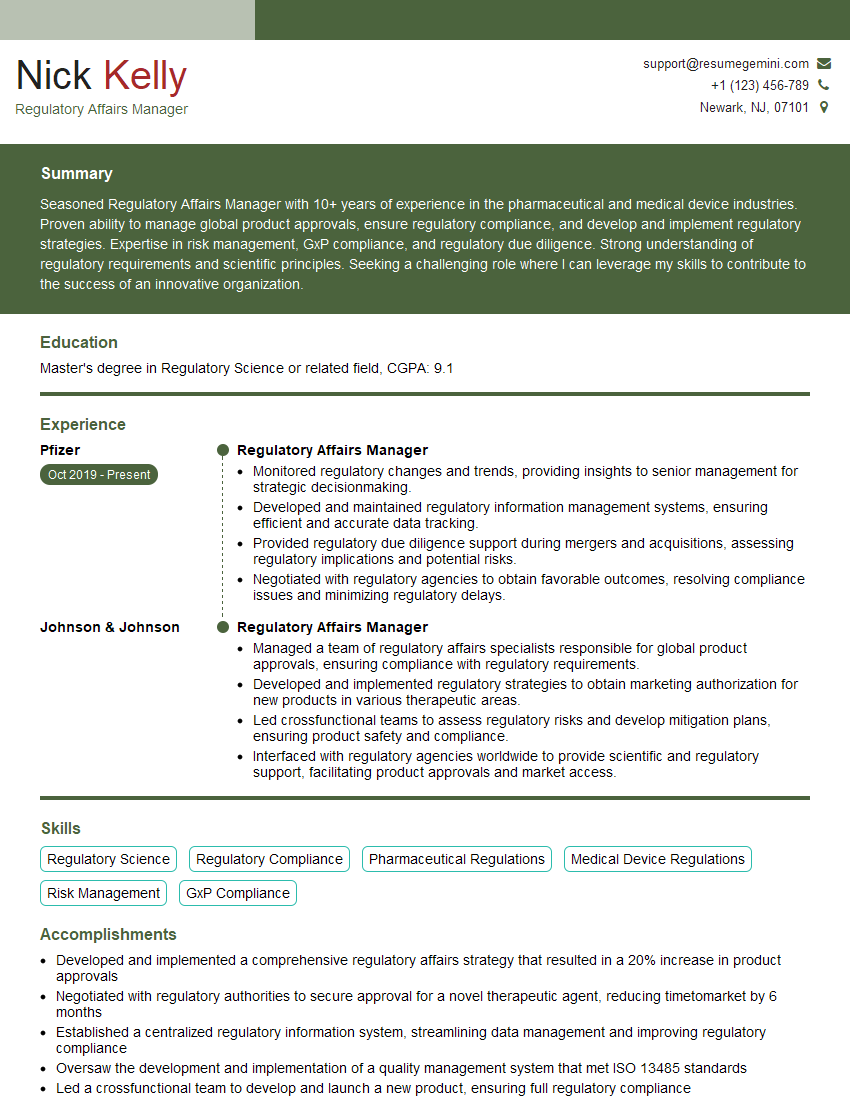
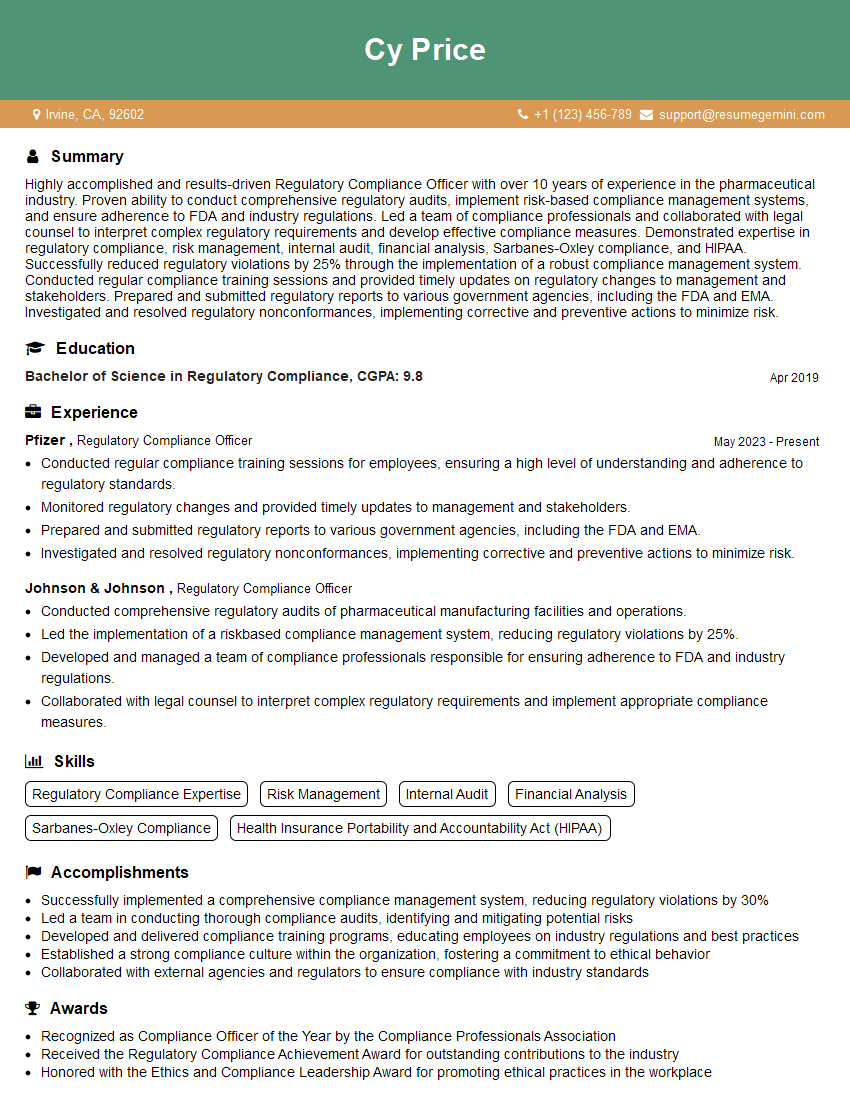
To maximize your job prospects, create an ATS-friendly resume that showcases your skills and experience effectively. ResumeGemini is a trusted resource that can help you build a professional and impactful resume tailored to the specific requirements of RoHS Compliance roles. Examples of resumes tailored to RoHS Compliance are provided to help you get started.




Explore more articles
Users Rating of Our Blogs
Share Your Experience
We value your feedback! Please rate our content and share your thoughts (optional).
What Readers Say About Our Blog
Very informative content, great job.
good