Preparation is the key to success in any interview. In this post, we’ll explore crucial Lighting for Retail and Commercial Spaces interview questions and equip you with strategies to craft impactful answers. Whether you’re a beginner or a pro, these tips will elevate your preparation.
Questions Asked in Lighting for Retail and Commercial Spaces Interview
Q 1. Explain the difference between ambient, accent, and task lighting.
In retail and commercial lighting design, we categorize lighting into three main types: ambient, accent, and task lighting. Think of it like this: ambient lighting sets the mood, accent lighting highlights key features, and task lighting ensures functionality.
- Ambient Lighting: This provides overall illumination, like the general light in a room. It’s the foundation, setting the atmosphere and visibility. In a retail store, this might be provided by recessed downlights or track lighting distributed evenly across the ceiling.
- Accent Lighting: This is used to highlight specific products, artwork, or architectural features. Think of the spotlight on a designer dress or the warm light illuminating a sculpture. Accent lighting uses directed light sources, often with adjustable beams, to draw the eye and create visual interest.
- Task Lighting: This provides focused light for specific activities. In a retail space, this might be lighting for checkout counters, fitting rooms, or display cases requiring detailed examination of merchandise. It’s designed to ensure sufficient illumination for specific tasks, minimizing eye strain and improving visibility.
Effective lighting design involves a careful balance of all three types. Too much of one and not enough of another will create an unbalanced and ineffective lighting scheme.
Q 2. Describe your experience with various lighting technologies (LED, fluorescent, incandescent).
My experience spans across various lighting technologies, each with its own strengths and weaknesses. I’ve worked extensively with LED, fluorescent, and incandescent lighting in various commercial projects.
- LED (Light Emitting Diode): LED technology is now dominant due to its energy efficiency, long lifespan, and design flexibility. I’ve used LEDs in various applications, from recessed downlights and track lighting to linear systems and custom-designed fixtures. Their ability to be dimmed and controlled precisely is invaluable for creating dynamic and energy-efficient lighting schemes. I’ve also seen advancements in LED color rendering, allowing for more accurate color representation, crucial for showcasing products accurately.
- Fluorescent: While becoming less common, I’ve worked with fluorescent lighting systems, particularly in older buildings. These were cost-effective initially but require more energy than LEDs and have a shorter lifespan. The challenge with fluorescents was often the harsh light and flickering that could affect the ambiance of a space.
- Incandescent: Incandescent lighting is rarely used in commercial spaces now due to its significant energy consumption and short lifespan. However, understanding its properties is beneficial in comparing with modern alternatives and in situations where a specific warm, soft light is desired, though LED alternatives provide more efficient and longer-lasting options for the same effect.
My design choices always consider the client’s needs, budget, and the specific characteristics of each technology to optimize both energy consumption and the desired aesthetic.
Q 3. How do you calculate the required lumens for a retail space?
Calculating the required lumens for a retail space involves several steps. It’s not a simple formula, but a process that considers several factors.
- Determine the area: Measure the square footage of the space to be lit.
- Determine the desired illuminance (footcandles or lux): This depends on the type of retail space. A high-end jewelry store needs significantly higher illuminance than a bookstore. Illuminance levels are typically found in lighting design guides or codes for different retail environments. For example, a clothing store might require 30-50 footcandles (323-538 lux), while a jewelry store may need 50-100 footcandles (538-1076 lux).
- Calculate the total lumens needed: Multiply the area (in square feet) by the desired illuminance (in footcandles). This gives you the total lumens required for the space.
Total Lumens = Area (sq ft) x Illuminance (footcandles) - Consider the light loss factor (LLF): This accounts for light lost due to absorption by walls, ceilings, fixtures, and other factors. The LLF is typically between 0.6 and 0.8, so the calculated total lumens needs to be divided by this factor to obtain the required lumen output from the light fixtures.
Adjusted Lumens = Total Lumens / LLF - Select appropriate luminaires: Based on the adjusted lumens, you can choose light fixtures that meet the required output. Consider the fixture’s efficacy (lumens per watt), which will influence energy efficiency.
It’s crucial to use a lighting design software or consult with a lighting professional to account for all variables accurately, including specific fixture selection and placement for optimal light distribution.
Q 4. What are the key considerations for lighting a high-end retail store?
Lighting a high-end retail store demands a sophisticated approach that goes beyond basic illumination. It’s about creating an experience.
- Highlighting the Merchandise: Precise accent lighting is crucial to showcase high-value items. This might involve using adjustable track lighting, fiber optics, or specialized display case lighting to highlight textures, colors, and details. The goal is to make products visually appealing and create a sense of luxury.
- Creating Ambiance: The lighting should support the overall brand identity and desired atmosphere. Warm, intimate lighting might be suitable for a boutique, while brighter, more modern lighting might work better for a contemporary fashion store. Careful selection of color temperature and CRI are essential.
- Energy Efficiency: Even in high-end spaces, energy efficiency is a priority. Using energy-efficient LED lighting with smart controls allows for optimized energy use while maintaining the desired aesthetic.
- Visual Comfort: Avoid harsh shadows or glare that can detract from the shopping experience. This requires careful planning of fixture placement and light levels.
- Integration with other design elements: The lighting design should be seamlessly integrated with the architecture, interior design, and visual merchandising elements to create a unified and cohesive experience.
For example, a high-end jewelry store would use carefully focused spotlights to highlight individual pieces, creating a sense of exclusivity and emphasizing the quality of the materials. The lighting would also be integrated with display cases to accentuate the gems’ brilliance. The lighting here is an integral part of the overall brand experience.
Q 5. How do you design for energy efficiency in commercial lighting projects?
Designing for energy efficiency in commercial lighting projects involves a multi-faceted approach.
- Energy-Efficient Lighting Sources: The most obvious step is to specify high-efficacy LED lighting. LEDs offer significant energy savings compared to traditional lighting technologies. Choosing fixtures with high lumen output per watt is crucial.
- Lighting Controls: Implementing intelligent lighting control systems is key. These systems can include occupancy sensors, daylight harvesting, and dimming capabilities to adjust lighting levels based on occupancy and natural light availability. This significantly reduces energy waste.
- Daylight Harvesting: Maximize the use of natural light. This involves strategically placing windows and designing the lighting system to supplement natural light instead of replacing it completely. Sensors can automatically adjust artificial lighting based on available daylight levels.
- Proper Fixture Selection and Placement: Efficient lighting fixtures should be selected, and proper spacing and orientation are crucial for optimizing light distribution, minimizing wasted light, and avoiding light trespass.
- Lighting Design Software: Using specialized lighting design software allows for simulating various scenarios and optimizing energy efficiency during the design phase, reducing energy usage from the start.
For instance, I recently designed a lighting system for an office building that incorporated occupancy sensors in each room. The lights automatically turn off when a room is unoccupied, resulting in a substantial reduction in energy consumption without compromising functionality or comfort.
Q 6. Explain your understanding of color rendering index (CRI) and its importance.
The Color Rendering Index (CRI) is a measure of how accurately a light source renders the colors of objects compared to a reference source (typically sunlight). It ranges from 0 to 100, with 100 being perfect color rendering.
The importance of CRI in retail and commercial spaces is paramount, particularly for businesses showcasing products where accurate color representation is crucial. A low CRI light source can distort colors, making products look dull, washed out, or even different from their true appearance. This is particularly important in fashion, food, and art, where color fidelity is essential for making sales and creating the correct atmosphere. For instance, a high-CRI light source will accurately render the colors of a dress, ensuring customers see its true shade and vibrancy. A low CRI light, however, could make the dress appear faded or dull.
Choosing light sources with a high CRI (typically 80 or higher) is essential to ensure accurate color rendering, especially in spaces requiring accurate color representation of goods.
Q 7. What are the common lighting control systems used in retail and commercial spaces?
Several lighting control systems are commonly used in retail and commercial spaces, each offering different levels of sophistication and functionality.
- 0-10V Dimming: This is a simple and cost-effective system that allows for dimming lights using a 0-10V signal. It’s often used in smaller spaces with less complex lighting needs.
- DALI (Digital Addressable Lighting Interface): DALI is a digital system that allows for individual control of multiple lights, offering sophisticated dimming and control options. It’s suitable for larger spaces requiring zone control and more advanced features.
- Wireless Control Systems: Systems like Bluetooth or Zigbee allow for remote control and monitoring of lighting systems through apps or smart devices. These systems offer flexibility and convenience, especially for dynamic lighting schemes.
- Building Management Systems (BMS): BMS integrates lighting control with other building systems, such as HVAC and security, allowing for comprehensive control and energy management. This is commonly found in large commercial buildings.
The choice of lighting control system depends on the size and complexity of the space, the budget, and the desired level of control and integration with other building systems. For instance, a large department store might utilize a BMS to integrate lighting control with other building operations for optimization, while a smaller boutique might opt for a simpler 0-10V dimming system.
Q 8. How do you handle glare control in lighting design?
Glare control is paramount in lighting design, as excessive brightness can cause discomfort, eye strain, and even reduce visibility. It’s about managing the distribution of light to minimize direct and reflected glare. We achieve this through a multi-pronged approach.
Fixture Selection: Using fixtures with appropriate shielding angles and diffusers is crucial. For instance, recessed downlights with parabolic louvers effectively control the direct glare by directing light downwards while minimizing upward spill.
Light Placement: Strategic positioning of luminaires is key. Avoiding placing lights directly in the line of sight is fundamental. For example, in retail settings, we often use indirect lighting or wall washing to illuminate displays without causing glare for customers.
Surface Finishes: The reflectivity of surfaces significantly impacts glare. Matte finishes absorb more light, reducing reflections, while glossy surfaces can exacerbate glare. We often recommend using low-gloss paints and materials in spaces requiring glare control.
Luminance Ratio Control: Controlling the brightness contrast between light sources and surrounding surfaces is important. A high luminance ratio (e.g., a bright light source against a dark background) leads to more glare. We meticulously calculate and adjust luminance levels to minimize such ratios. This is especially important in areas where users might be looking at screens, like office spaces.
Light Level Management: While providing ample illumination, we carefully manage the light levels to avoid overly bright spaces. We often use dimming systems to allow for dynamic adjustments based on occupancy and time of day, reducing glare at peak brightness.
Q 9. Describe your experience with lighting design software (e.g., DIALux, AGi32).
I’m proficient in several lighting design software packages, including DIALux evo and AGi32. DIALux evo is my go-to for quick calculations, initial designs, and energy efficiency estimations. Its user-friendly interface and comprehensive library of luminaires make it ideal for preliminary assessments and client presentations. For instance, I recently used DIALux evo to design the lighting for a small boutique, rapidly iterating through various fixture options to optimize both aesthetics and energy consumption.
AGi32, on the other hand, offers advanced capabilities for complex simulations, especially in larger-scale projects. Its ability to model light interactions with materials and the environment in great detail is invaluable for accurate predictions of luminance, illuminance, and glare. I used AGi32 on a recent project for a large office complex to precisely determine the optimal placement of high-bay luminaires to achieve uniform illumination across the vast open-plan space while minimizing energy usage. The software allowed me to visualize the resulting lighting scenario before implementation, ensuring optimal performance.
Q 10. What are the current lighting trends in retail and commercial spaces?
Current trends in retail and commercial lighting reflect a strong focus on human-centric design, sustainability, and technological advancements.
Human-centric lighting (HCL): This approach uses lighting to influence mood, productivity, and well-being. We are seeing increased adoption of dynamic lighting systems that adjust color temperature and intensity throughout the day, mimicking natural daylight patterns.
Smart Lighting and IoT Integration: Smart lighting systems offer remote control, automated scheduling, and energy optimization. Integration with building management systems enables real-time monitoring and control, leading to significant cost savings.
Sustainable Lighting Solutions: The industry is moving rapidly towards energy-efficient LED technology and sustainable materials. We often specify fixtures with high efficacy, long lifespans, and recyclable components.
Emphasis on Layering: Instead of relying on single lighting sources, we’re seeing a trend towards layering light—combining ambient, task, and accent lighting to create a dynamic and versatile lighting scheme. This allows for greater control and flexibility to suit different activities and moods.
Biophilic Design: Integrating natural light and bringing the outdoors in is a key aspect of current designs. We strive to maximize natural light penetration and use light sources that simulate natural light.
Q 11. How do you incorporate sustainability principles into your lighting designs?
Sustainability is a core principle in my designs. I incorporate sustainable practices at every stage, from fixture selection to energy management.
Energy-efficient LEDs: I prioritize high-efficiency LED fixtures with long lifespans to minimize energy consumption and reduce waste. I consider factors like efficacy (lumens per watt) and color rendering index (CRI) to ensure optimal performance while minimizing energy use.
Daylight Harvesting: Maximizing the use of natural daylight reduces reliance on artificial lighting. I strategically design spaces to take advantage of natural light sources, using light shelves, strategically placed windows and automated blinds to control daylight intrusion and glare.
Controls and Dimming: Implementing smart lighting controls with dimming capabilities allows for precise light level adjustments based on occupancy and time of day, reducing unnecessary energy consumption.
Sustainable Materials: I often specify fixtures made from recycled or recyclable materials to minimize environmental impact. I look for fixtures with certifications that ensure they meet environmental standards.
Lifecycle Cost Analysis: When making design choices, I consider the entire lifecycle costs of the lighting system, including initial investment, energy consumption, maintenance, and disposal, ensuring the most cost-effective and environmentally responsible solution.
Q 12. Explain your process for selecting appropriate lighting fixtures for a given space.
Selecting the right fixtures is a crucial step. My process involves a careful assessment of the space and its intended use.
Understanding the Space: I begin by thoroughly evaluating the space, considering its size, layout, ceiling height, ambient light levels, and the activities that will take place within it. For example, a retail space requires different lighting than an office environment.
Defining Lighting Requirements: I determine the required illuminance levels based on industry standards and client preferences. I use IES (Illuminating Engineering Society) guidelines and relevant codes to ensure appropriate illumination for different tasks.
Considering Aesthetics: I select fixtures that are aesthetically pleasing and complement the overall design scheme of the space. This often involves close collaboration with interior designers and architects.
Evaluating Technical Specifications: I meticulously review the technical specifications of potential fixtures, including their efficacy, CRI, color temperature, lifespan, and dimming capabilities. I also evaluate their thermal management and maintainability.
Budget Constraints: I work within the client’s budget, balancing quality, performance, and cost-effectiveness. This may involve comparing various fixture options to find the best value proposition.
Testing and Prototyping: In some cases, I conduct light testing and prototyping to ensure that the chosen fixtures meet the desired aesthetic and performance criteria before full-scale implementation.
Q 13. How do you ensure compliance with building codes and safety regulations regarding lighting?
Compliance with building codes and safety regulations is non-negotiable. I ensure adherence to these standards throughout the design and implementation process.
Code Research: I thoroughly research and understand all applicable building codes, safety regulations, and industry standards related to lighting. This includes local, state, and national codes.
Fixture Selection and Certification: I only specify fixtures that meet or exceed relevant safety and performance standards, often selecting fixtures with certifications from recognized testing organizations (e.g., UL, ETL).
Emergency Lighting Compliance: I carefully plan and design emergency lighting systems to meet code requirements for safe evacuation in case of power failure. This ensures that emergency lighting is properly placed and provides adequate illumination during emergencies.
Documentation and Reporting: I maintain detailed documentation of all lighting designs, ensuring compliance with relevant regulations and offering justification for design decisions. This may involve creating detailed lighting calculations, specifications, and as-built drawings.
Collaboration with Inspectors: I actively collaborate with building inspectors throughout the project, addressing any concerns or questions promptly and providing any necessary documentation to ensure smooth approvals.
Q 14. Describe your experience working with clients and stakeholders on lighting projects.
Effective client and stakeholder collaboration is essential for successful lighting projects. I foster strong relationships through open communication, active listening, and a collaborative approach.
Initial Consultations: I begin by meeting with clients to understand their vision, needs, and budget. This involves carefully listening to their needs and offering creative solutions that meet their goals.
Regular Updates and Presentations: I provide regular updates and presentations to keep clients informed throughout the project. This includes sharing design concepts, progress reports, and addressing any client concerns.
Addressing Concerns and Feedback: I actively address any client concerns and incorporate their feedback into the design. I believe that a collaborative approach helps create designs that truly meet the clients’ needs and expectations.
Post-Project Evaluation: After project completion, I often conduct post-project evaluations with clients to gather feedback and identify areas for improvement in future projects. This helps ensure client satisfaction and refine my own processes.
Stakeholder Management: When dealing with multiple stakeholders (architects, contractors, etc.), I employ clear communication strategies, regular meetings, and collaborative document management tools to ensure everyone is on the same page, resolving potential conflicts proactively.
Q 15. How do you manage a lighting project budget effectively?
Effective lighting project budgeting requires a multi-stage approach combining meticulous planning, accurate cost estimation, and proactive value engineering. It starts with a thorough understanding of the client’s needs and the project scope. This includes detailed space planning, specifying fixture types and quantities, and accounting for labor costs, materials, and potential contingencies.
I begin by creating a detailed budget breakdown, categorizing expenses into: fixture costs, installation labor, controls (dimmer switches, sensors, etc.), electrical work, design fees, and permits. I use industry-standard software like DIALux evo or Relux to estimate energy consumption and calculate the return on investment for energy-efficient fixtures like LEDs.
During the design phase, value engineering plays a critical role. This involves exploring alternative solutions that maintain the design intent while optimizing costs. For example, using a less expensive but equally effective luminaire in areas with less emphasis, or choosing a simpler control system if sophisticated features aren’t crucial. Regular monitoring and tracking of expenditures throughout the project, comparing actual costs against the budget, ensures early identification and mitigation of potential overruns.
For instance, on a recent retail project, we initially budgeted for custom-designed pendant lights. Through value engineering, we found equally aesthetically pleasing options from reputable manufacturers at a significantly lower cost, saving the client approximately 15% without compromising the overall design.
Career Expert Tips:
- Ace those interviews! Prepare effectively by reviewing the Top 50 Most Common Interview Questions on ResumeGemini.
- Navigate your job search with confidence! Explore a wide range of Career Tips on ResumeGemini. Learn about common challenges and recommendations to overcome them.
- Craft the perfect resume! Master the Art of Resume Writing with ResumeGemini’s guide. Showcase your unique qualifications and achievements effectively.
- Don’t miss out on holiday savings! Build your dream resume with ResumeGemini’s ATS optimized templates.
Q 16. What are the challenges of integrating smart lighting systems into existing infrastructure?
Integrating smart lighting systems into existing infrastructure presents several challenges. The most significant is often the existing wiring infrastructure. Older buildings may lack the necessary cabling or power capacity for smart lighting controls. Retrofitting can be expensive and disruptive, requiring significant rewiring, potentially impacting business operations.
Compatibility issues with existing lighting fixtures are another hurdle. Smart systems usually require specific types of dimmable LED drivers and communication protocols (like DALI, Zigbee, or Z-Wave). Integrating new controls with non-compatible fixtures can necessitate replacing the entire lighting system or using costly adaptors, impacting both budget and timeline.
Data integration and system compatibility are also key challenges. Integrating the smart lighting system with building management systems (BMS) or other smart building technologies requires careful planning and may necessitate employing specialized integration software and protocols. Finally, the complexity of programming and managing a smart lighting system can be intimidating for some clients, requiring robust training and ongoing support.
For example, in one project, we faced challenges integrating a new DALI-based lighting control system into an old building with outdated wiring. We had to strategically replace sections of the wiring while minimizing disruption to the client’s retail operation. This required careful project scheduling and coordination with the building management.
Q 17. Explain your understanding of light pollution and how it’s addressed in design.
Light pollution refers to the excessive or inappropriate use of artificial light, impacting the environment and human health. It involves unwanted light spilling into the sky, obscuring the night sky, disrupting ecosystems, and affecting human sleep patterns. In lighting design, addressing light pollution is crucial for both environmental responsibility and compliance with local regulations.
Strategies for mitigating light pollution include: using full-cutoff luminaires that prevent upward light spill; selecting fixtures with low color temperature (CCT) and avoiding high-intensity lights; employing shielding to control light distribution; and using motion sensors to activate lighting only when needed. Appropriate lighting levels tailored to specific areas, rather than excessive over-illumination, are also paramount.
In designing exterior lighting for a commercial building, for example, we would opt for shielded LED floodlights with low color temperature (e.g., 3000K) to illuminate the building facade while minimizing upward light trespass. We’d also incorporate motion sensors to reduce energy consumption and light pollution when the building is unoccupied.
Q 18. How do you assess the impact of lighting on the mood and atmosphere of a space?
Lighting significantly impacts the mood and atmosphere of a space. Color temperature (CCT) plays a vital role. Cool-toned whites (higher CCT, e.g., 5000K) create a more energizing and stimulating environment, suitable for retail spaces that want to promote activity and sales. Warmer tones (lower CCT, e.g., 2700K) create a more relaxed and inviting atmosphere, ideal for restaurants or lounges.
The intensity of light, or illuminance (measured in lux), also affects mood. High illuminance levels can be stimulating but also potentially overwhelming, while lower levels can create a sense of intimacy or calmness. Light distribution – whether the light is diffused, focused, or directional – shapes the ambiance. Diffused light creates a softer, more uniform glow, while focused light accentuates specific areas or features.
For instance, in a high-end clothing boutique, we might use track lighting with adjustable spotlights to highlight specific garments, creating a dramatic and luxurious atmosphere. In contrast, a coffee shop might employ warmer, diffused lighting from pendant lights to generate a cozy and inviting environment, encouraging customers to linger.
Q 19. Describe your experience with different types of dimming systems.
I have experience with various dimming systems, each with its strengths and weaknesses. These include: 0-10V dimming, DALI (Digital Addressable Lighting Interface), and leading-edge/trailing-edge dimming for incandescent and some LED lighting.
0-10V dimming is a simple and cost-effective solution but offers limited control capabilities and may not be suitable for all types of LED drivers. DALI is a more sophisticated digital dimming system offering addressable control over individual luminaires, allowing for greater flexibility and precise control in complex lighting scenarios. It facilitates sophisticated scene setting and energy management but is generally more expensive to implement.
Leading-edge/trailing-edge dimming, commonly used with incandescent and some LED lamps, are simpler to install but may be prone to incompatibility and flicker issues with certain LED drivers. Selection of the appropriate dimming system depends on factors such as the project budget, level of control required, compatibility with existing infrastructure and lighting fixtures.
For instance, in a large office building, DALI would be the preferred choice for its advanced control features and potential for energy savings. In a smaller residential project, 0-10V dimming could be sufficient and more cost-effective.
Q 20. How do you address lighting issues related to different ceiling heights?
Addressing lighting challenges related to varying ceiling heights necessitates a thoughtful approach tailored to each situation. High ceilings require luminaires with higher light output and potentially adjustable mounting options to ensure adequate illumination at floor level. Low ceilings necessitate more compact luminaires to prevent feeling claustrophobic. The choice of fixture also depends on the desired effect – direct, indirect, or a combination.
For high ceilings, we might use high-bay fixtures or linear pendant lights with adjustable arms to direct light downwards effectively. In spaces with low ceilings, recessed downlights, surface-mounted fixtures, or wall-washers might be suitable, depending on the application. Careful consideration must be given to the visual impact of the fixtures themselves – a large fixture in a low ceiling space will create a visual dominance.
In a warehouse with high ceilings, we might deploy high-bay LED luminaires with high lumen output to provide uniform illumination across the entire space. In a retail store with low ceilings, we might opt for smaller recessed downlights to avoid a visually overpowering effect.
Q 21. What are your preferred methods for conducting lighting calculations?
My preferred methods for conducting lighting calculations involve a combination of software tools and manual calculations for verification. I extensively use professional lighting design software like DIALux evo and Relux. These programs allow for accurate modeling of spaces, incorporating various luminaire data, and simulating lighting levels throughout the environment. They calculate illuminance, luminance, and other key parameters, ensuring compliance with relevant standards and codes (e.g., IES, ANSI).
While software is invaluable, I always perform manual calculations using the inverse square law and other relevant formulas to verify the software results and ensure a deeper understanding of the lighting design. This cross-checking helps identify potential errors or inconsistencies. In certain instances, simplified methods like the lumen method may be used as a quick initial estimate, but always complemented by more rigorous software-based analyses.
For a specific project, we might use DIALux evo to model a retail space, inputting fixture data, wall reflectance values, and ceiling height. The software then produces a detailed illumination map, showing light levels at various points in the room. We would then manually check key aspects of the software’s output using relevant formulas, ensuring accuracy and confirming that the design meets the required illuminance levels and the client’s specific requirements.
Q 22. Explain your understanding of the impact of lighting on merchandising and product display.
Lighting is paramount in merchandising and product display; it directly influences how customers perceive and interact with products. Think of it as the silent salesperson. The right lighting can highlight textures, colors, and details, enhancing the appeal and desirability of merchandise. Conversely, poor lighting can obscure features, make products look dull, and even negatively impact brand perception.
- Accent Lighting: Strategically placed spotlights can draw attention to key products or specific features, creating a focal point. For example, a jewelry store might use accent lighting to showcase the sparkle and brilliance of diamonds.
- Ambient Lighting: This provides overall illumination, setting the mood and atmosphere. A soft, warm ambient light might be suitable for a clothing boutique aiming for a relaxed, inviting atmosphere, while brighter, cooler lighting might be more appropriate for a high-energy electronics store.
- Task Lighting: This focuses on specific tasks, such as reading price tags or examining product details. Proper task lighting reduces eye strain and improves the overall shopping experience.
- Color Temperature: The color temperature of the light (measured in Kelvin) significantly impacts the perceived mood and atmosphere. Warmer temperatures (2700-3000K) create a cozy feel, ideal for boutiques or restaurants, while cooler temperatures (5000-6500K) appear more modern and are often preferred for supermarkets or tech stores.
By carefully balancing these lighting types and considering color temperature, retailers can dramatically improve their sales and brand image.
Q 23. How do you incorporate daylight harvesting into your designs?
Daylight harvesting leverages natural light to reduce reliance on artificial lighting, leading to energy savings and a more sustainable design. My approach involves a multi-step process:
- Site Analysis: I begin by analyzing the building’s orientation, window placement, and shading patterns to determine the availability and quality of natural light throughout the day. This includes considering seasonal variations in sunlight.
- Light Shelf Design: Incorporating light shelves—horizontal surfaces above windows—can reflect daylight deeper into the space, maximizing its reach and minimizing glare.
- Automated Lighting Controls: I integrate automated lighting control systems that detect the amount of available daylight and adjust artificial lighting accordingly. This ensures optimal illumination while minimizing energy consumption. Sensors monitor daylight levels and dim or switch off artificial lights as needed.
- Material Selection: Highly reflective surfaces on walls and ceilings can help distribute natural light more effectively throughout the space. Lighter colors reflect more light than darker colors.
- Fenestration Design: The size and placement of windows are critical considerations. Strategic window placement can maximize daylight penetration, while the use of high-performance glazing can minimize heat gain or loss.
For instance, in a retail store, I might design a system where sensors dim the interior lights as sunlight increases, gradually transitioning to full artificial lighting as daylight diminishes during the evening.
Q 24. Describe a time you had to solve a complex lighting problem. What was your approach?
I once faced a challenge designing lighting for an art gallery with extremely high ceilings and a wide variety of artwork, each requiring different lighting specifications. The challenge was to create even illumination without causing glare or damaging the delicate pieces. My approach was systematic:
- Detailed Inventory: I meticulously documented each piece of art, noting its size, color palette, fragility, and recommended lighting levels.
- Lighting Calculations: I used specialized lighting design software to calculate the precise number, placement, and intensity of the fixtures needed to achieve even illumination without causing glare or UV damage.
- Fixture Selection: I carefully selected fixtures with adjustable beams, color rendering index (CRI) of at least 90 to accurately represent colors, and UV filters to protect artwork. I opted for track lighting, offering flexibility and precise control.
- Mockup and Testing: I created a scaled mockup of the gallery to test different lighting scenarios before final installation. This allowed me to fine-tune the lighting design and address any potential issues early on.
- Client Collaboration: Throughout the process, I closely collaborated with the gallery curator and the artwork owners to ensure they were satisfied with the results and the lighting accurately represented the artwork.
The result was a beautifully illuminated gallery that showcased the artwork in its best light, demonstrating how a detailed, planned approach can successfully overcome complex lighting challenges.
Q 25. How do you balance aesthetics and functionality in your lighting designs?
Balancing aesthetics and functionality in lighting design is crucial for creating a successful space. It’s not just about illuminating the area; it’s about creating an atmosphere and enhancing the overall design.
- Fixture Selection: Choosing fixtures that are both aesthetically pleasing and functionally effective is key. This might involve selecting modern pendants for a contemporary space or more traditional sconces for a classic setting.
- Layering of Light: Using a combination of ambient, task, and accent lighting allows for greater control over the atmosphere and ensures that the space is adequately lit for various activities. This also provides design flexibility.
- Color Temperature and Rendering Index (CRI): The color temperature influences the mood, while the CRI ensures colors appear accurate and vibrant. A warm color temperature is comforting, while a cool one is energizing. A high CRI is essential for showcasing merchandise effectively.
- Integration with Architecture: The lighting should seamlessly integrate with the space’s architecture and design, complementing rather than clashing with existing elements. Recessed lighting can be unobtrusive, while statement fixtures can act as a focal point.
For example, in a retail environment, I might use sleek, modern track lighting to highlight merchandise while incorporating warm-toned downlights to create a welcoming ambiance. The balance is key to a well-designed space.
Q 26. What are the key factors to consider when designing lighting for a restaurant?
Restaurant lighting design is multifaceted, impacting both the dining experience and the overall atmosphere. Key factors include:
- Ambiance: The lighting should align with the restaurant’s concept and target audience. A romantic, intimate setting might require dim, warm lighting, while a lively bistro might benefit from brighter, more energetic illumination.
- Task Lighting: Adequate task lighting is necessary to allow customers to read menus and see their food clearly. This can be achieved through a combination of ambient lighting and strategically placed pendants or task lights.
- Accent Lighting: Accent lighting can be used to highlight architectural features, artwork, or decorative elements, adding visual interest and enhancing the restaurant’s aesthetic appeal.
- Energy Efficiency: Using energy-efficient lighting technologies, such as LEDs, is important for both environmental and economic reasons.
- Dimming Capabilities: Dimming capabilities allow for adjusting the lighting intensity to create different moods throughout the day, from a bright lunch atmosphere to a more subdued dinner setting.
- Color Temperature: Warm color temperatures are generally preferred for restaurants to create a welcoming and relaxing atmosphere.
For instance, a high-end steakhouse might utilize warm, dim lighting with accent spotlights on wine bottles and artwork, creating a sophisticated and inviting ambiance.
Q 27. How do you handle lighting design in spaces with varied ceiling materials?
Different ceiling materials affect the way light is reflected and absorbed, influencing both the design and the efficiency of the lighting system. My approach considers these factors:
- Material Properties: I assess the reflectivity and absorptivity of the ceiling material. Highly reflective materials, like white or metallic finishes, require less lighting to achieve a given illuminance level. Darker or matte materials absorb more light, requiring more fixtures or higher wattage.
- Fixture Selection: I choose fixtures appropriate for the ceiling material. For example, recessed fixtures are commonly used with drywall or drop ceilings, while surface-mounted fixtures are better suited for exposed beams or other non-recessed ceiling types.
- Light Distribution: I select fixtures with light distributions suitable for the ceiling material and the overall design. Wide-spread distributions are effective with highly reflective materials, while more focused beams might be necessary with absorbent materials.
- Light Spill: I carefully manage light spill, as some materials might reflect light in unexpected ways, causing glare or uneven illumination. Proper shielding and fixture design are crucial here.
For example, when working with a high-gloss ceiling, I might use fewer fixtures with wider light distributions to prevent excessive brightness or glare. Conversely, a space with dark, absorbent wooden beams may require more fixtures or higher wattage to achieve sufficient illumination.
Q 28. What is your experience with emergency and exit lighting systems?
Emergency and exit lighting systems are crucial for safety and compliance. My experience includes designing, specifying, and overseeing the installation of these systems in various commercial and retail settings.
- Code Compliance: I ensure all designs meet or exceed relevant building codes and regulations regarding emergency lighting placement, spacing, and maintenance. These requirements vary by location and building type.
- System Design: I design systems that provide adequate illumination in the event of a power outage, clearly marking exit routes and essential areas. This includes choosing appropriate fixtures with long battery life and ensuring sufficient redundancy.
- Testing and Maintenance: I specify regular testing and maintenance procedures to guarantee the system’s functionality. This includes routine battery checks and inspections to maintain compliance and safety. Regular testing is crucial to ensure the system operates reliably in an emergency.
- Integration with Existing Systems: I integrate emergency lighting seamlessly into the overall lighting design, ensuring aesthetic consistency while prioritizing functionality and safety.
For instance, I’ve worked on projects where we’ve integrated battery-backed LED exit signs into the overall aesthetic design, ensuring they are both functional and visually unobtrusive. The key is to design a system that is both compliant and aesthetically integrated into the space.
Key Topics to Learn for Lighting for Retail and Commercial Spaces Interview
- Understanding Lighting Design Principles: Explore the fundamentals of light, including color temperature, CRI (Color Rendering Index), and illuminance levels. Consider how these impact mood and perception.
- Types of Lighting Fixtures and Technologies: Become familiar with various fixtures (e.g., recessed, track, pendant, linear) and technologies (e.g., LED, fluorescent, incandescent) and their respective applications in retail and commercial settings. Understand the advantages and disadvantages of each.
- Illumination Design Calculations and Software: Practice calculating lighting levels using industry standards and familiarize yourself with lighting design software (e.g., Dialux, Relux) to demonstrate your ability to create efficient and effective lighting plans.
- Energy Efficiency and Sustainability: Discuss strategies for minimizing energy consumption through efficient fixture selection, control systems (e.g., dimming, occupancy sensors), and sustainable lighting practices.
- Lighting for Specific Retail Environments: Explore how lighting enhances various retail spaces, such as grocery stores, boutiques, showrooms, and department stores. Understand the unique needs of each environment (e.g., highlighting merchandise, creating ambiance).
- Lighting for Specific Commercial Environments: Understand the lighting requirements for different commercial spaces like offices, restaurants, hotels, and museums. Analyze how lighting contributes to functionality, aesthetics, and safety.
- Lighting Controls and Systems: Familiarize yourself with various lighting control systems, including manual switches, dimmers, automated systems, and smart lighting solutions. Discuss the benefits and applications of each.
- Safety Codes and Regulations: Understand relevant safety codes and regulations concerning lighting installations in retail and commercial spaces. This demonstrates your awareness of industry best practices.
- Troubleshooting and Problem Solving: Prepare examples of how you’ve solved lighting-related challenges. This could involve dealing with inadequate illumination, fixture malfunctions, or energy inefficiency issues.
- Budgeting and Cost Analysis: Discuss the process of developing and managing a lighting budget, including material costs, installation, and energy consumption over the lifetime of the project.
Next Steps
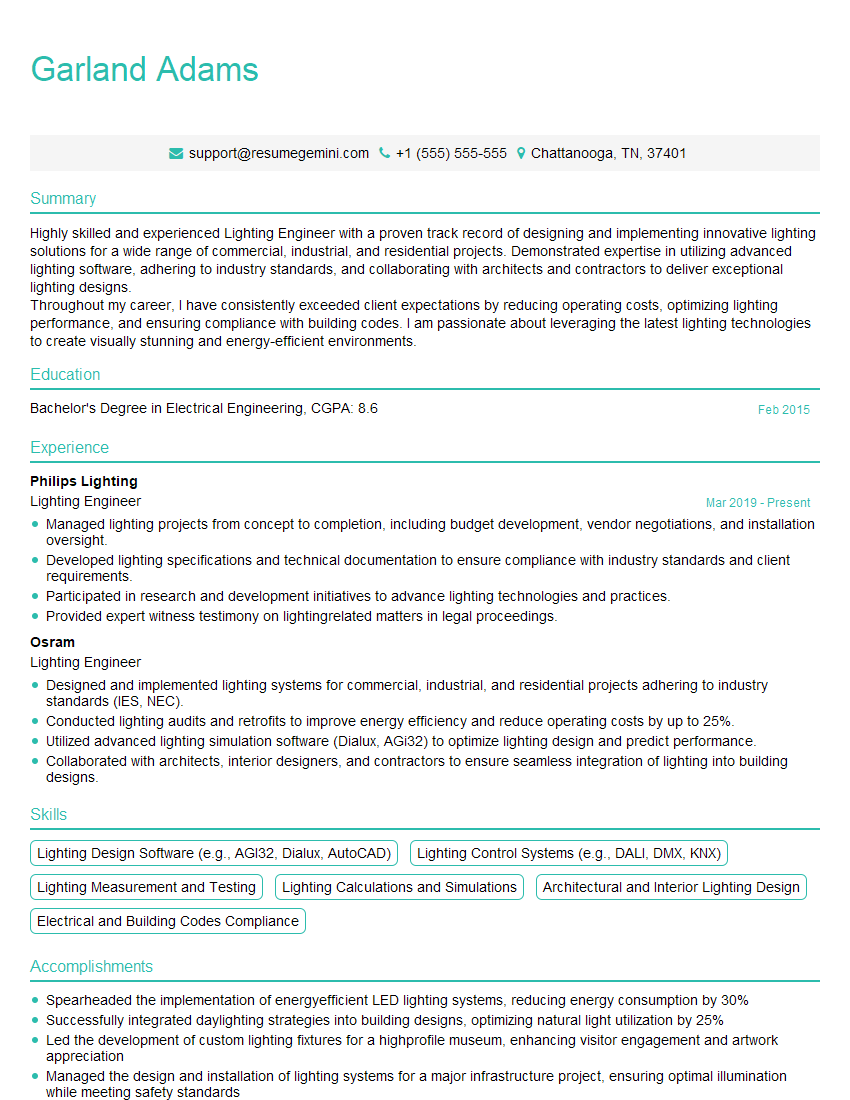
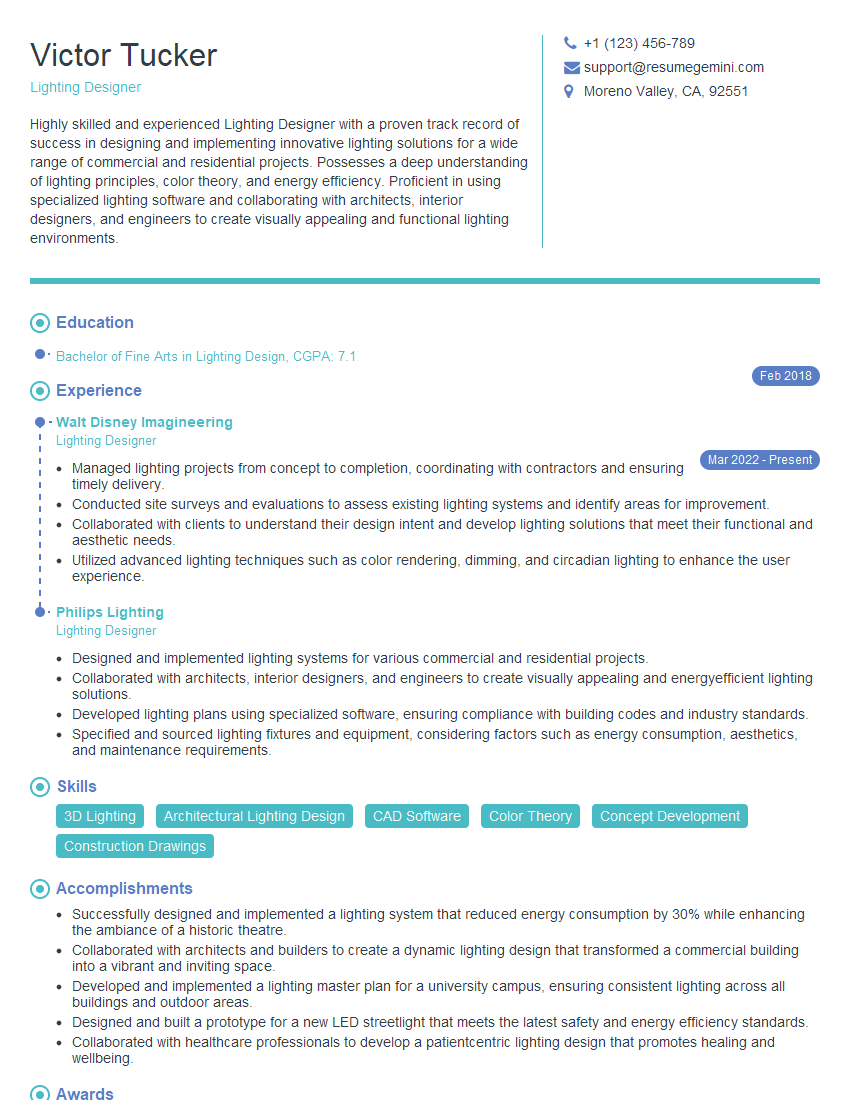
Mastering Lighting for Retail and Commercial Spaces opens doors to exciting career opportunities and higher earning potential. A strong resume is crucial in showcasing your skills to prospective employers. Creating an ATS-friendly resume is key to ensuring your application gets noticed. ResumeGemini is a trusted resource to help you build a professional and impactful resume that highlights your expertise in lighting design. Examples of resumes tailored to Lighting for Retail and Commercial Spaces are available to help you get started.
Explore more articles
Users Rating of Our Blogs
Share Your Experience
We value your feedback! Please rate our content and share your thoughts (optional).
What Readers Say About Our Blog
Very informative content, great job.
good